Universal Joint Shaft Coupling
In the entire field of mechanical power transmission, the connection and coordination between rotating shafts form the core foundation for the normal operation of all types of mechanical equipment, and the rational selection and application of shaft connecting components directly determine the transmission efficiency, operating stability, and service life of the entire mechanical system. Among numerous shaft connection devices developed and optimized with the progress of mechanical manufacturing technology, universal joint shaft coupling stands out as a vital mechanical component with unique structural design and excellent adaptive transmission performance, widely applied in various mechanical scenarios where driving shafts and driven shafts cannot maintain strict coaxial arrangement and need to stably transmit rotational torque and continuous motion. Unlike rigid shaft couplings that require precise alignment of connected shafts and have no capacity to adapt to shaft position deviation, and different from ordinary flexible couplings that mainly rely on elastic deformation of auxiliary materials to compensate for tiny misalignment, universal joint shaft coupling adopts a special spatial hinge connection structure, which can effectively cope with angular displacement, axial displacement and radial displacement between two connected shafts, and maintain stable torque transmission state even when the relative position of the two shafts changes dynamically during equipment operation. This unique functional advantage makes this type of coupling an indispensable key part in many industrial production equipment, transportation machinery, agricultural machinery and engineering construction machinery, playing an irreplaceable role in ensuring the smooth power output and stable operation of mechanical transmission systems under complex working conditions and variable operating environments.
The development and evolution of universal joint shaft coupling can be traced back to the early stage of mechanical mechanism research and mechanical equipment manufacturing. After long-term practical exploration and structural optimization by mechanical researchers and equipment manufacturers, the basic structural form and working mechanism of universal joint shaft coupling have gradually matured, and derivative structures suitable for different working loads, rotation speeds and application scenarios have been continuously developed and improved. The earliest prototype of the universal joint mechanism was designed and explored based on the basic principle of spatial linkage motion, aiming to solve the mechanical transmission problem between two shafts with fixed included angles that cannot be directly connected by rigid connecting parts. With the continuous expansion of mechanical application scenarios and the increasing complexity of equipment operating conditions, the original simple universal joint structure can no longer meet the transmission needs of heavy load, high speed and long-term continuous operation, so subsequent structural reinforcement, material upgrading and process optimization have been carried out in succession, gradually forming the diversified universal joint shaft coupling products and complete application matching system seen in the current mechanical market. After centuries of development and iteration, the core working principle of universal joint shaft coupling has not changed fundamentally, but there have been great improvements in structural processing accuracy, material mechanical properties, motion coordination stability and wear resistance, which also enables modern universal joint shaft couplings to adapt to more harsh working environments and more stringent mechanical transmission requirements, and always maintain good transmission performance and long-term service stability in actual operation.
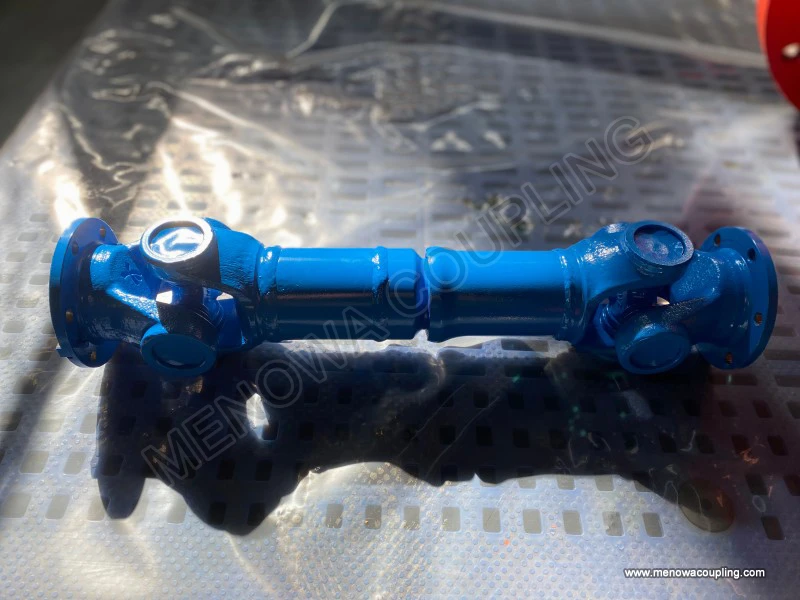
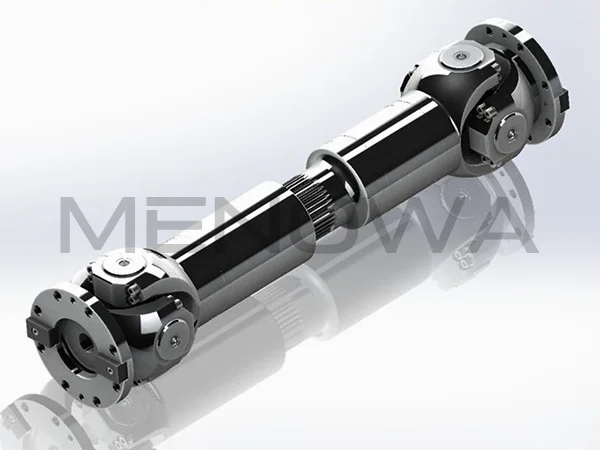
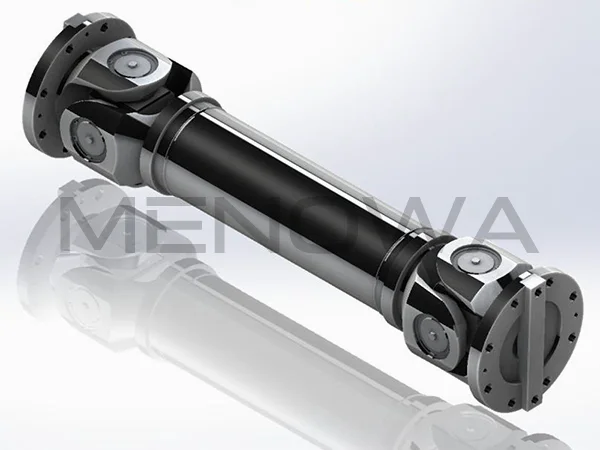
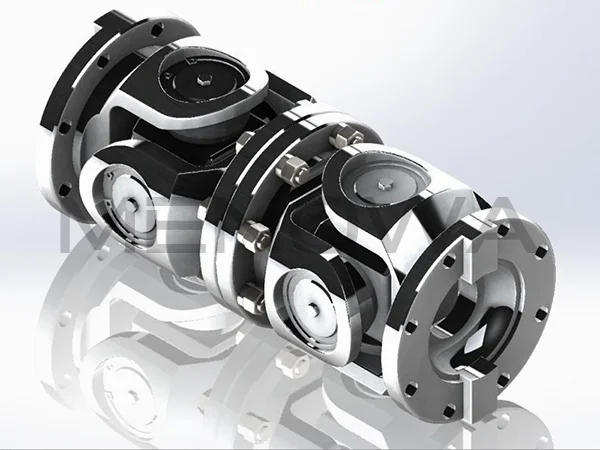
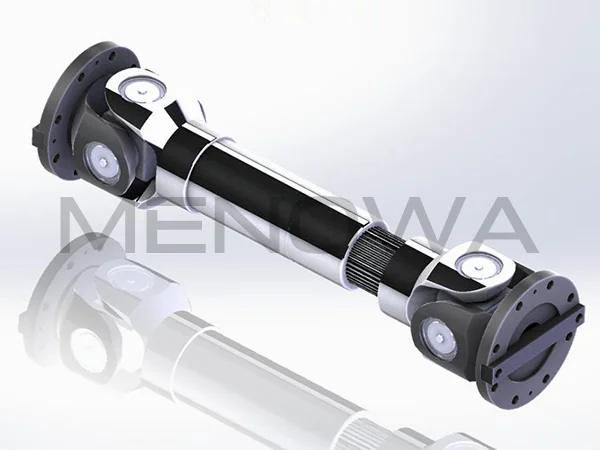
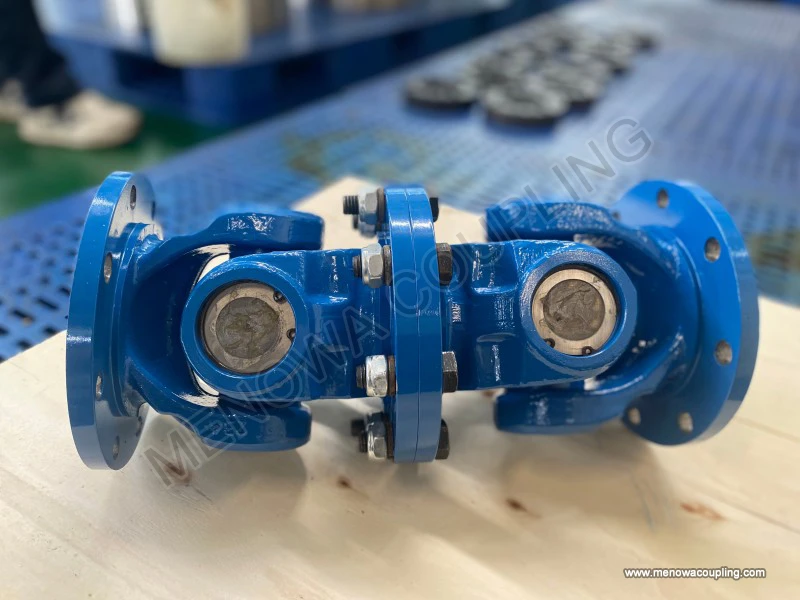
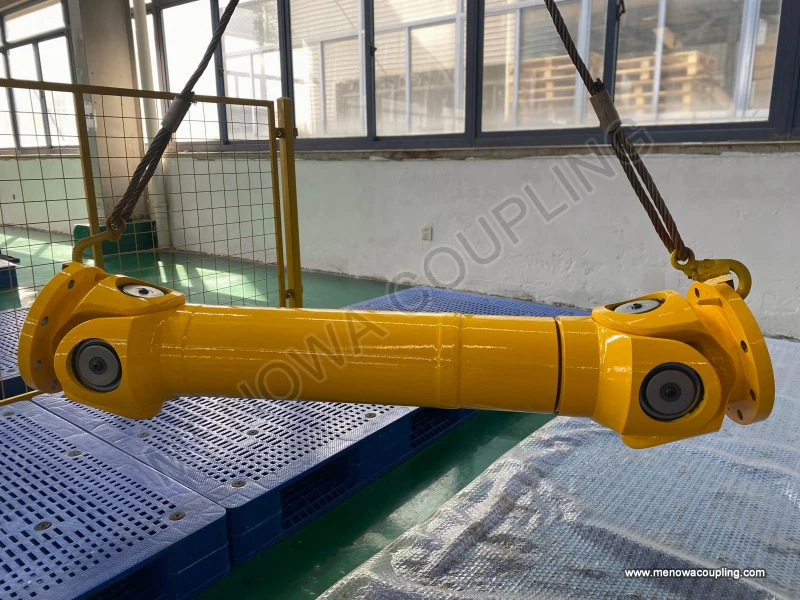
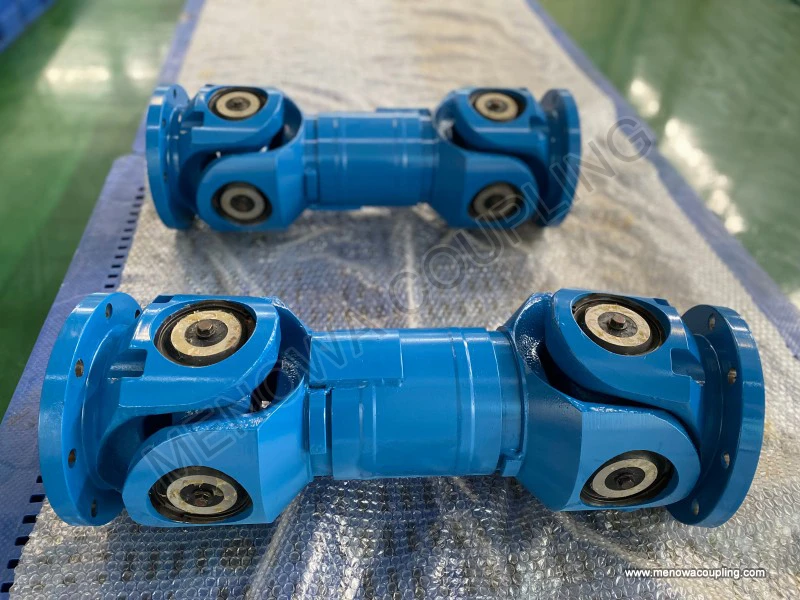
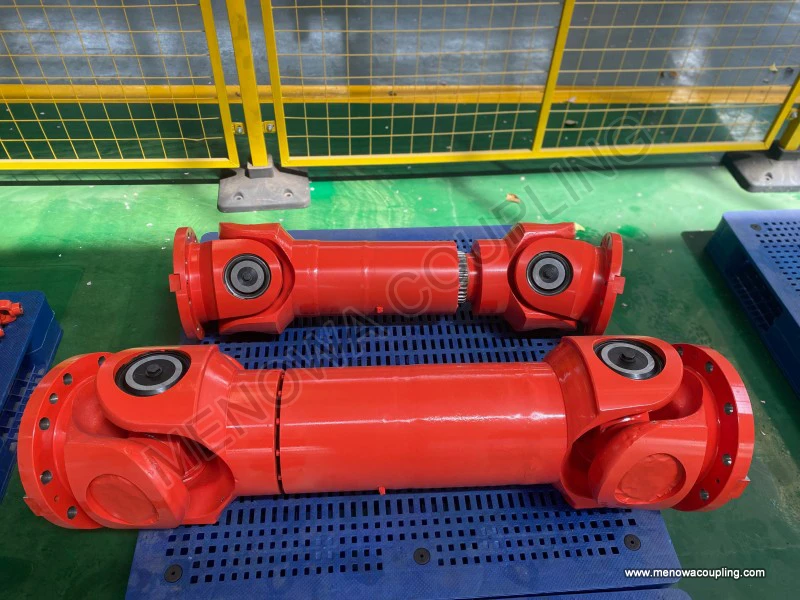
To understand the practical value and application advantages of universal joint shaft coupling in depth, it is first necessary to fully recognize the basic composition and structural characteristics of its standard configuration. The main body of a conventional universal joint shaft coupling is composed of two fork-shaped connecting parts, a cross-shaped intermediate connecting shaft and matching rotating bearing components, and auxiliary fastening and fixing parts used for assembly and positioning. The two fork-shaped connecting parts, usually processed into integrated rigid structures through forging and precision machining, are respectively fixedly connected with the driving shaft and the driven shaft of the mechanical transmission system through interference fit, key connection or clamping fixation. The fork head of each fork-shaped connecting part is processed with symmetric bearing installation holes, which are used for embedding and fixing the bearing components and realizing the flexible rotation connection between the fork head and the intermediate cross shaft. The cross-shaped intermediate connecting shaft is the core force transmission and motion coordination component of the entire universal joint shaft coupling, with four mutually perpendicular shaft ends distributed in a cross structure. Each shaft end is matched with the bearing parts installed in the fork head holes of the two connecting forks, forming a mutually perpendicular two-degree-of-freedom rotating hinge structure. This special structural design allows relative rotational movement between the cross shaft and each fork head around two mutually perpendicular axes, which also creates the basic conditions for the universal joint shaft coupling to adapt to the angular deviation between the driving shaft and the driven shaft. The bearing components matched with the cross shaft mostly adopt needle roller bearings or plain bearing structures, which can effectively reduce the friction resistance during the relative rotation between the cross shaft and the fork head, avoid excessive mechanical wear caused by long-term friction contact between metal rigid parts, and ensure the flexibility and smoothness of the relative hinge movement of each component during power transmission. All auxiliary fastening parts are mainly used to lock the bearing position and the connection state between the fork head and the shaft body, preventing component loosening and position deviation caused by vibration and torque impact during equipment operation, and ensuring the overall structural stability and transmission reliability of the universal joint shaft coupling in long-term working process.
The internal working principle of universal joint shaft coupling is based on the spatial multi-linkage mechanical motion theory, realizing the continuous and stable transmission of rotational motion and torque between two shafts with angular displacement through the coordinated hinge movement of internal components. When the driving shaft starts to rotate and output torque, the fork-shaped connecting part connected with the driving shaft will rotate synchronously with the shaft body, and drive the cross-shaped intermediate shaft to perform synchronous rotational motion through the matching relationship between the bearing and the cross shaft end. In this process, due to the existence of a certain included angle between the driving shaft and the driven shaft, the cross shaft will not only rotate synchronously with the two fork heads, but also generate regular reciprocating swinging motion around the two mutually perpendicular hinge axes formed by the bearings. This compound motion mode of rotation and swinging enables the cross shaft to always maintain an effective force connection state between the driving fork head and the driven fork head, and steadily transmit the input torque and rotational motion from the driving shaft side to the driven shaft side, so as to drive the driven shaft to rotate synchronously and complete the power transmission work of the mechanical system. It is worth noting that a single basic universal joint structure has the characteristic of non-constant velocity transmission in the working process. When there is an obvious angular deviation between the two connected shafts, the instantaneous rotation speed of the driven shaft will have periodic small fluctuations with the rotation cycle of the driving shaft. This periodic speed fluctuation will not cause obvious adverse effects on mechanical equipment with low rotation speed, low transmission precision requirements and insensitive motion stability, but for high-speed rotating equipment and mechanical systems requiring high transmission uniformity, this speed fluctuation needs to be eliminated through structural matching. In actual industrial application, two single universal joint structures are often used in combination and installed in a matching way with intermediate connecting shafts, and the dual universal joint shaft coupling formed by this matching installation can effectively offset the periodic speed fluctuation generated by a single universal joint, realize approximate constant velocity transmission effect, and meet the high-precision and high-stability transmission needs of high-speed mechanical equipment.
The material selection of universal joint shaft coupling is a key factor affecting its overall mechanical performance, load-bearing capacity, wear resistance and service life, and different application scenarios and working load conditions correspond to different material matching schemes. Most of the main structural components such as fork-shaped connecting parts and cross shafts of conventional universal joint shaft couplings are made of high-quality carbon structural steel or alloy structural steel, and the semi-finished components formed by forging processing are subjected to subsequent heat treatment processes such as quenching and tempering to optimize the internal metal structure of the materials. After heat treatment, the steel materials can obtain good comprehensive mechanical properties, including high structural strength, good impact toughness and strong fatigue resistance, which can effectively bear the torque load, mechanical vibration and instantaneous impact force generated during long-term power transmission, and avoid structural deformation, fracture and damage of key components under heavy load and impact working conditions. For the bearing parts inside the universal joint shaft coupling, special bearing steel with high hardness and strong wear resistance is usually selected, and after special surface quenching and fine grinding processing, the surface hardness of the bearing contact position is improved, the friction and wear degree in the long-term rotating hinge process is reduced, and the service life of the bearing components is prolonged. For some universal joint shaft couplings used in special working environments such as high temperature, low temperature and corrosive media, corresponding special alloy materials with high temperature resistance, low temperature toughness and corrosion resistance will be selected according to the actual working conditions, and targeted surface protection treatments such as galvanizing, anti-rust coating and oxidation resistance treatment will be carried out on the surface of the components. This scientific material selection and surface treatment mode not only ensures the basic mechanical transmission performance of the universal joint shaft coupling, but also improves its environmental adaptability and long-term working reliability in complex and harsh working environments.
Compared with other common types of shaft connecting couplings used in mechanical transmission systems, universal joint shaft coupling has prominent and unique comprehensive performance advantages, which make it widely used in various complex mechanical working conditions. First of all, this type of coupling has excellent misalignment adaptation capacity, and can work normally and stably under the condition of large angular displacement between driving shaft and driven shaft, which cannot be realized by rigid couplings and ordinary elastic couplings. Many mechanical equipment will produce dynamic changes in the relative position of the two connected shafts during operation due to the vibration of the fuselage, the deformation of the frame structure and the movement of the working parts. The universal joint shaft coupling can automatically adapt to such dynamic position changes through the internal hinge swinging motion without affecting the normal transmission of torque and motion, ensuring the continuous operation of the equipment. Secondly, the universal joint shaft coupling has strong torque load-bearing capacity and high transmission efficiency. Different from elastic couplings that rely on elastic deformation of flexible materials to transmit torque and are easy to deform and age under long-term heavy load, the universal joint shaft coupling adopts all-metal rigid force transmission structure, which can bear large torque load and maintain high mechanical transmission efficiency in the working process, with small power loss in the transmission process, and is very suitable for heavy-duty mechanical equipment that needs high-power torque transmission. In addition, the overall structural design of universal joint shaft coupling is compact and reasonable, the overall occupied installation space is small, and the assembly and disassembly process is simple and convenient. Under the premise of meeting the same torque transmission demand and misalignment adaptation demand, the overall volume and weight of the universal joint shaft coupling are smaller than many other types of heavy-duty couplings, which is convenient for installation and layout in mechanical equipment with limited internal installation space. At the same time, the all-metal structural design also gives the coupling good vibration absorption and impact resistance, which can buffer the instantaneous impact force generated during equipment start-up, shutdown and load mutation, reduce the vibration amplitude of the shaft system, and protect the normal operation of the motor, reducer and other key power components in the mechanical transmission system.
Universal joint shaft coupling has extremely wide application coverage in modern mechanical production and various industrial fields, almost involving all mechanical scenarios that need non-coaxial shaft power transmission. In the field of road transportation machinery, universal joint shaft coupling is one of the core components of vehicle transmission systems, applied to the connection between the engine rear drive shaft and the rear axle differential of various engineering vehicles, commercial transport vehicles and special operation vehicles. Due to the frequent jolting and shaking of the vehicle during driving, the relative position and angle between the drive shafts will change dynamically in real time, and the universal joint shaft coupling can well adapt to this dynamic angular displacement change, ensuring the stable transmission of power from the engine to the driving wheels and realizing the normal driving operation of the vehicle. In the field of industrial production and manufacturing, universal joint shaft couplings are widely used in steel rolling equipment in metallurgical industry, mixing and processing equipment in chemical industry, crushing and conveying equipment in mining industry, papermaking and calendaring equipment in paper industry, and various fan, water pump and generator sets. These industrial equipment often have large transmission load and harsh working environment, and some equipment will produce obvious shaft position deviation during long-term operation due to structural stress and mechanical vibration. The application of universal joint shaft coupling can effectively solve the problem of power transmission between misaligned shafts, ensure the continuous and stable operation of industrial production equipment, and reduce the failure rate and maintenance frequency of mechanical transmission systems. In the field of agricultural machinery and equipment, various farmland tillage machinery, harvesting machinery and irrigation and drainage machinery often work in complex field working environments with uneven ground. The fuselage vibration and component displacement are obvious during operation. Universal joint shaft coupling is used to connect the power output shaft of the tractor and the working shaft of the agricultural machinery, which can adapt to the complex position changes of the shaft body and ensure the normal output of agricultural machinery power. In the field of engineering construction machinery, engineering machinery such as excavators, loaders and road rollers need to work in complex construction sites with harsh conditions. The power transmission system of the equipment needs to adapt to frequent load changes and fuselage vibration. Universal joint shaft coupling provides reliable shaft connection and power transmission guarantee for these engineering machinery, ensuring the efficient operation of various construction operations.
The reasonable selection of universal joint shaft coupling is an important link to ensure the good matching effect and long-term stable operation of mechanical equipment, and the selection process needs to comprehensively consider multiple key factors related to the actual working conditions of the equipment. The first core factor to be considered is the torque demand of the mechanical transmission system, including the rated working torque required for the normal operation of the equipment and the instantaneous peak torque generated during equipment start-up, shutdown and load mutation. It is necessary to select the coupling model with matching load-bearing torque level according to the actual torque parameters, avoiding the problem of component damage and transmission failure caused by long-term overload operation of the coupling due to insufficient torque bearing capacity, and also avoiding the waste of installation space and cost caused by selecting a coupling with excessive torque performance. The second factor is the rotation speed of the transmission shaft and the working stability requirement. For mechanical equipment with low rotation speed and low transmission precision requirement, a single basic universal joint structure can be selected to meet the use demand; for high-speed rotating equipment and mechanical systems requiring high transmission uniformity and small speed fluctuation, it is necessary to select a dual universal joint matching structure to realize constant velocity transmission and ensure the stable operation of the equipment. In addition, the maximum angular displacement and axial displacement between the driving shaft and the driven shaft in actual operation of the equipment need to be fully considered, and the universal joint shaft coupling with adaptive displacement range should be selected according to the actual misalignment range, to ensure that the coupling can always work within the normal adaptation range and avoid transmission abnormal problems caused by exceeding the displacement adaptation limit. At the same time, the working environment conditions of the equipment, including ambient temperature, humidity, corrosive medium and dust pollution degree, also need to be taken into account, and the coupling with corresponding material configuration and surface protection treatment should be selected according to the environmental characteristics, to improve the environmental adaptability and service life of the coupling. Only by comprehensively considering all the above factors and carrying out scientific and standardized selection according to the actual working conditions of the equipment, can the universal joint shaft coupling give full play to its excellent transmission performance and ensure the long-term efficient and stable operation of the mechanical transmission system.
Daily maintenance and regular maintenance work play a decisive role in extending the service life of universal joint shaft coupling and maintaining its stable transmission performance. Although the all-metal structure of universal joint shaft coupling has good structural strength and durability, long-term continuous operation, mechanical friction, vibration impact and harsh environmental erosion will still cause certain wear and aging of internal components. If regular maintenance and inspection are not carried out, it is easy to produce problems such as excessive bearing wear, component connection loosening and surface corrosion, which will affect the transmission efficiency and even cause equipment failure and shutdown. The daily maintenance work mainly includes regular inspection of the connection fastening state of all components of the coupling, checking whether the fastening bolts and clamping parts are loose or displaced, and tightening and fixing the loose parts in a timely manner to avoid abnormal vibration and impact during operation caused by poor connection. Regular lubrication maintenance is also a key part of daily maintenance. The rotating hinge parts and internal bearing components of the universal joint shaft coupling need to be filled with professional high-quality lubricating grease regularly. The lubricating grease can form a protective oil film on the friction contact surface, reduce the friction coefficient between metal components, reduce mechanical wear, and also play a good role in heat dissipation, rust prevention and corrosion protection. For universal joint shaft couplings working in dusty, humid and corrosive environments, it is also necessary to do a good job in surface cleaning and anti-corrosion protection regularly, clean the surface dust and dirt, and check whether the surface anti-rust protective layer is damaged, and carry out supplementary anti-corrosion treatment in a timely manner. Regular professional maintenance and inspection work needs to be carried out according to the operating cycle of the equipment, including checking the wear degree of internal bearings and cross shaft components, detecting whether there is structural deformation and fatigue damage of fork-shaped connecting parts, and replacing severely worn and aging components in a timely manner. Through standardized daily maintenance and regular professional maintenance, the working state of the universal joint shaft coupling can always be kept in good condition, the occurrence of mechanical failures can be effectively reduced, the service life of the coupling can be extended, and the stable and reliable operation of the entire mechanical transmission system can be guaranteed for a long time.
With the continuous progress of modern mechanical manufacturing technology and the continuous upgrading of industrial mechanical equipment, the development trend of universal joint shaft coupling is constantly moving towards structural optimization, performance upgrading, lightweight design and intelligent matching application. In terms of structural design optimization, mechanical design researchers and processing manufacturers are constantly optimizing the internal structural layout of universal joint shaft coupling, adopting more precise finite element mechanical analysis technology to simulate the stress state of each component in the working process, optimizing the structural size and force transmission path of key components, reducing the stress concentration phenomenon in the structure, further improving the structural strength and fatigue resistance of the coupling, and reducing the overall weight and volume on the premise of ensuring load-bearing performance. In terms of material upgrading and processing technology innovation, with the continuous application of new high-strength alloy materials and precision forging and CNC precision machining technology, the overall processing accuracy and surface finish of universal joint shaft coupling components are continuously improved, the friction wear between components is further reduced, and the transmission efficiency and service life of the coupling are effectively improved. At the same time, aiming at the special working conditions of some extreme environments, special new materials and composite surface treatment processes are continuously applied to the production and manufacturing of couplings, improving the high temperature resistance, low temperature resistance and corrosion resistance of products. In terms of application matching and intelligent development, with the popularization of intelligent mechanical equipment and automated production lines, the matching application of universal joint shaft coupling is gradually developing towards intelligent monitoring and adaptive adjustment. By installing simple vibration and temperature sensing components on the coupling, the operating state, wear degree and abnormal fault information of the coupling can be monitored in real time, and early warning and prompt can be given for potential faults, so as to realize predictive maintenance of the coupling and avoid sudden equipment shutdown failures. In the future, with the continuous development of mechanical engineering technology and the continuous expansion of mechanical application scenarios, universal joint shaft coupling will continue to carry out structural innovation and performance optimization, adapt to higher standard mechanical transmission requirements and more complex working condition environments, and always maintain its important core position in the field of mechanical power transmission.
In conclusion, universal joint shaft coupling, as a special and important mechanical transmission connecting component, relies on its unique spatial hinge structure, excellent misalignment adaptation performance, strong torque transmission capacity and wide working condition adaptability, and has become an indispensable key part in various mechanical equipment and industrial production fields. From the basic mechanical structure composition and internal working principle to practical application scenarios, scientific selection methods and daily maintenance measures, every link is closely related to the operating effect and service life of mechanical equipment. In the actual mechanical design and equipment application process, only by deeply understanding the structural characteristics and performance advantages of universal joint shaft coupling, scientifically selecting the coupling matching the working conditions, and doing a good job in daily maintenance and regular maintenance, can the excellent transmission performance of the coupling be fully exerted, the stable operation of the mechanical transmission system be ensured, and strong support be provided for the efficient development of various industrial production and mechanical operation work. With the continuous progress of mechanical manufacturing technology and the continuous upgrading of mechanical equipment, universal joint shaft coupling will also keep pace with the times in structural optimization, performance improvement and application innovation, continuously meet the increasingly stringent mechanical transmission needs of various fields, and make continuous and important contributions to the stable operation and efficient development of modern mechanical engineering cause.
Post Date: Apr 25, 2026
https://www.menowacoupling.com/coupling-supplier/universal-joint-shaft-coupling.html
Products
Tags
Related Articles
Universal Coupling Vendor In China
Universal couplings stand as indispensable mechanical transmission components in modern industrial systems, serving as core connecting parts that transmit torque and rotational power between misaligned drive shafts. In China’s complete industrial manufacturing ecosystem, universal coupling production and supply have fo…What is Universal Coupling
A universal coupling, commonly referred to as a universal joint or U-joint, is a fundamental mechanical transmission component designed to connect two rotating shafts while enabling reliable transfer of torque and rotational motion under misaligned operating conditions. Unlike rigid coupling mechanisms that demand preci…Dimensions of Universal Coupling
Universal couplings, commonly known as universal joints or Cardan joints, serve as fundamental mechanical components for power transmission between misaligned rotating shafts in diverse mechanical systems. Their dimensional parameters are the core factors that determine structural compatibility, operational stability, l…Universal Coupling Exporter
As a vital component in mechanical transmission systems, universal couplings play an irreplaceable role in connecting two shafts that are not in the same axis or have relative displacement, ensuring stable and efficient torque transmission. For universal coupling exporters, understanding the product’s working principle…Universal Coupling Wholesale
In the global mechanical transmission industry, universal couplings have emerged as indispensable core components for power transmission systems, widely favored by downstream manufacturing, engineering, and transportation sectors across international markets. As global industrialization continues to advance and mechanic…Working Principle of Universal Coupling
A universal coupling, also widely known as a universal joint, is a fundamental mechanical transmission component designed to solve the core problem of power transmission between two non-collinear rotating shafts. Unlike rigid couplings that only work efficiently when connected shafts maintain perfect coaxial alignment, …Gap Chart of Universal Coupling
The operational stability and transmission accuracy of universal couplings are fundamentally determined by the internal gap distribution between mating components, making gap chart analysis a core technical method for evaluating assembly quality, predicting operating performance, and optimizing structural design. A univ…Universal Coupling For Ball Mill
In the complex and demanding operating environment of mineral processing, building materials production, chemical raw material grinding and other heavy industrial fields, ball mills stand as core processing equipment responsible for crushing and grinding various bulk raw materials into fine particles and powders that me…Universal Coupling Fabrication
Universal coupling fabrication stands as a foundational discipline within mechanical manufacturing, focusing on the precise production of flexible shaft connection components that enable reliable torque transmission between misaligned rotating shafts. As a core mechanical component widely adopted in power transmission s…Maintenance of Universal Coupling
Universal couplings serve as indispensable connecting components in mechanical transmission systems, designed to transmit rotational torque between two shafts that operate with angular misalignment, parallel offset, or variable positional relationships. Widely applied in industrial transmission equipment, mechanical eng…
 WeChat
 WhatsApp