Curved Tooth Coupling
In the entire field of mechanical power transmission systems, the connection between rotating shafts serves as one of the most fundamental and indispensable core links that determine the overall operating stability, transmission efficiency and service life of complete mechanical equipment. All types of rotating machinery, whether heavy-duty industrial production equipment, conventional mechanical transmission devices or continuous operating processing facilities, rely on reliable shaft connecting components to realize the stable transfer of torque, rotational speed and motion state between driving ends and driven ends. Among numerous shaft connection accessories developed and optimized for different working conditions and transmission demands, curved tooth coupling has gradually become a key transmission component widely adopted in medium and heavy-duty industrial scenarios and continuous operation mechanical systems by virtue of its unique tooth profile structural design, excellent displacement compensation capability and stable long-term operating performance. Unlike ordinary rigid couplings that can only achieve simple fixed connection and cannot adapt to shaft position deviation, and unlike common flexible couplings with limited torque bearing capacity, curved tooth coupling integrates the advantages of positive locking torque transmission and flexible adaptive compensation, balancing rigid transmission efficiency and flexible operation adaptability to meet the complex and diverse operating requirements of modern industrial mechanical transmission under variable load and multi-dimensional shaft offset conditions.
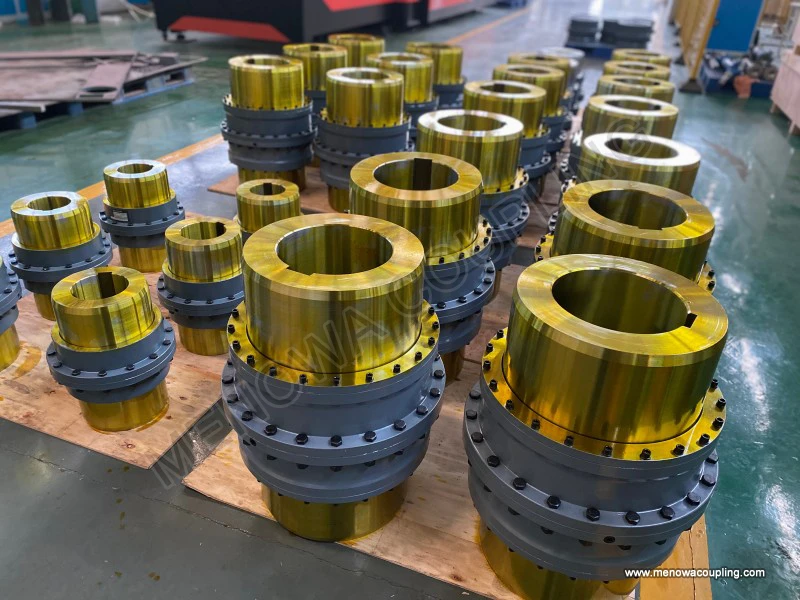
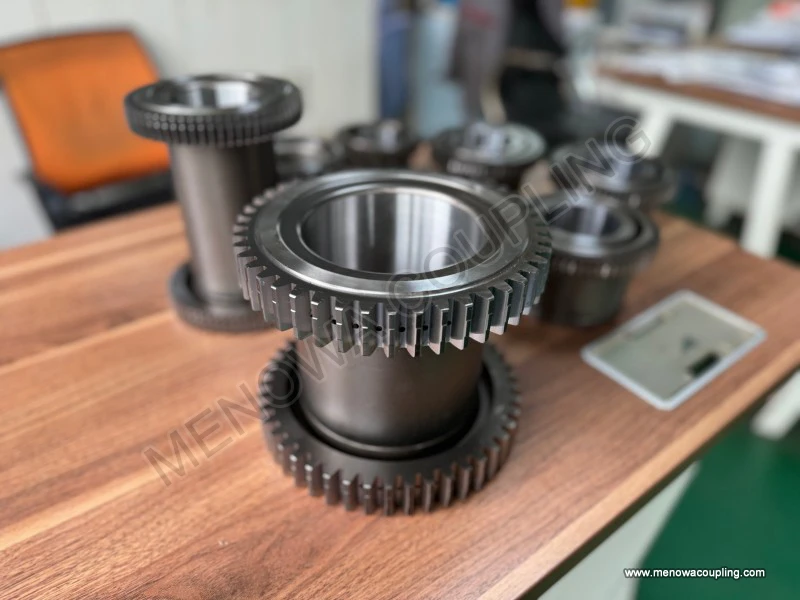
The essential design core of curved tooth coupling originates from the innovative optimization of traditional straight tooth gear coupling structure and tooth profile form, abandoning the planar meshing mode of conventional straight teeth that is prone to edge stress concentration and serious wear under misalignment conditions. The outer teeth of the coupling are processed into a special spherical curved structure, and the spherical center of the curved tooth profile is accurately located on the central axis of the gear hub, which fundamentally changes the contact state between meshing teeth during operation. This special tooth profile design enables the meshing contact surface between internal and external teeth to maintain uniform stress distribution all the time even when the connected two shafts produce axial, radial and angular displacement deviations due to installation errors, equipment operation vibration, thermal expansion and contraction of components and long-term mechanical fatigue deformation. In the transmission process, there will be no local edge pressure concentration or uneven tooth surface friction that often occurs in ordinary gear couplings, effectively reducing the wear degree of tooth surface contact parts and avoiding abnormal noise and transmission jitter caused by poor meshing fit. The reasonable tooth side clearance matching design further optimizes the meshing operation environment, not only ensuring the continuity and stability of torque transmission without idle running and power loss, but also reserving sufficient adaptive space for various slight displacements and position changes of the shaft system during long-term equipment operation, laying a solid structural foundation for the long-cycle stable operation of the coupling.
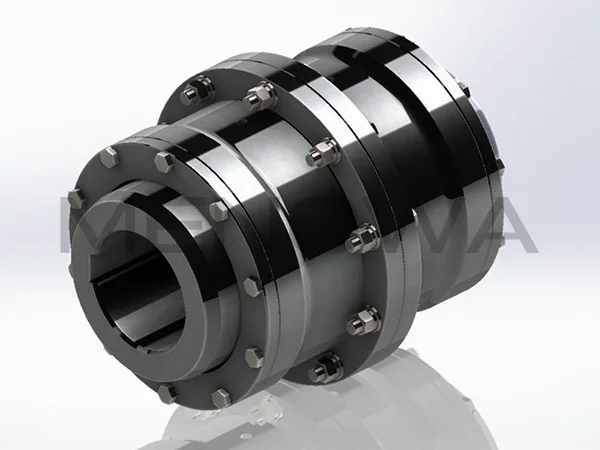
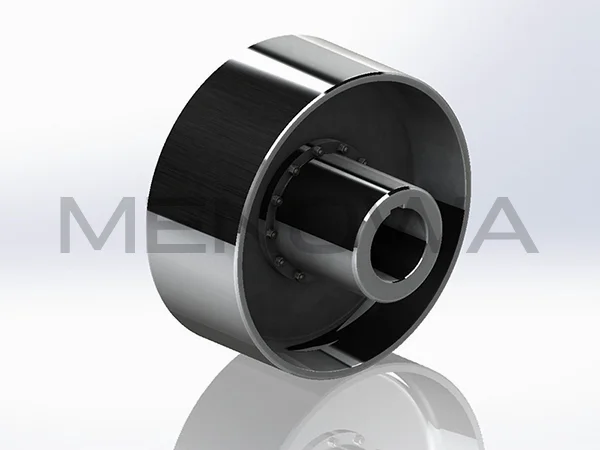
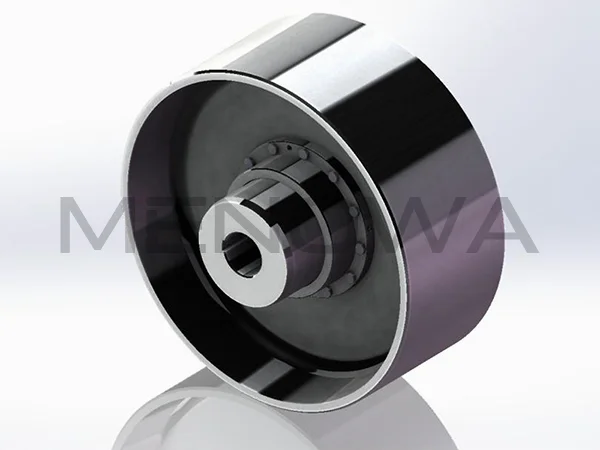
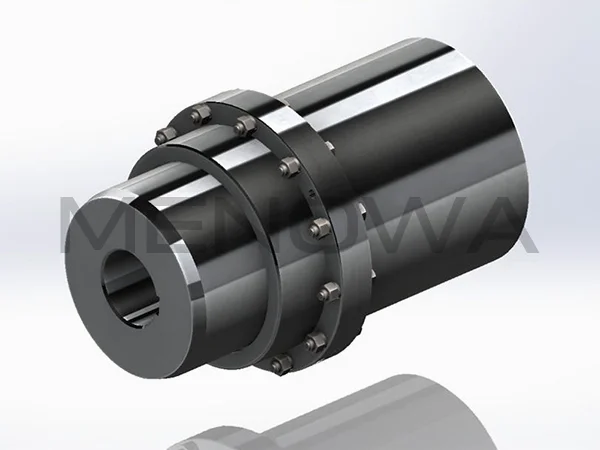
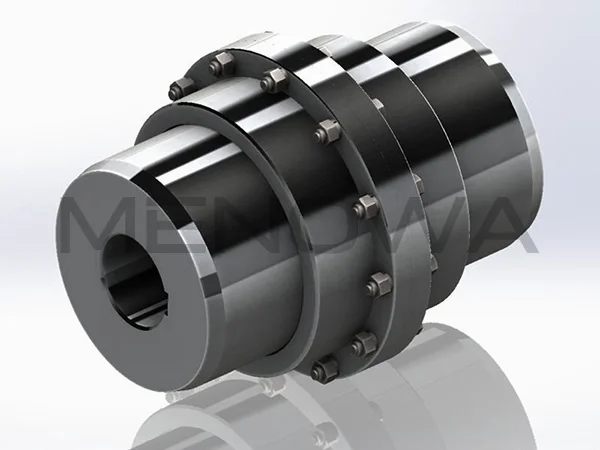
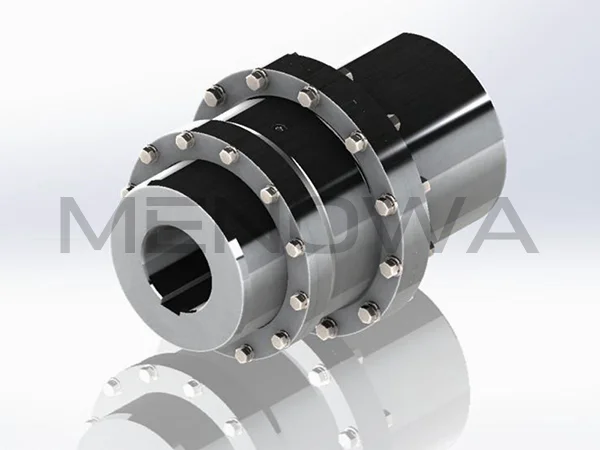
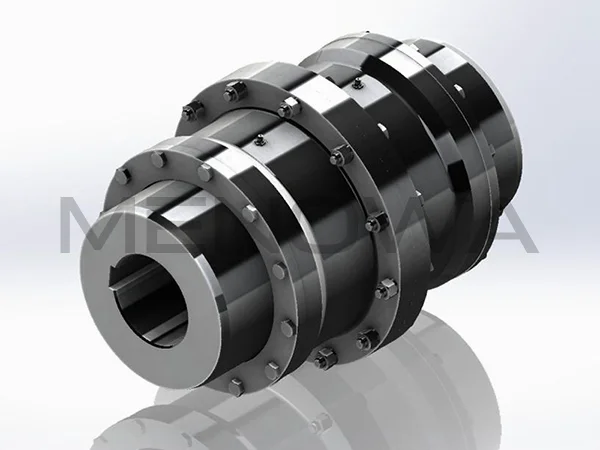
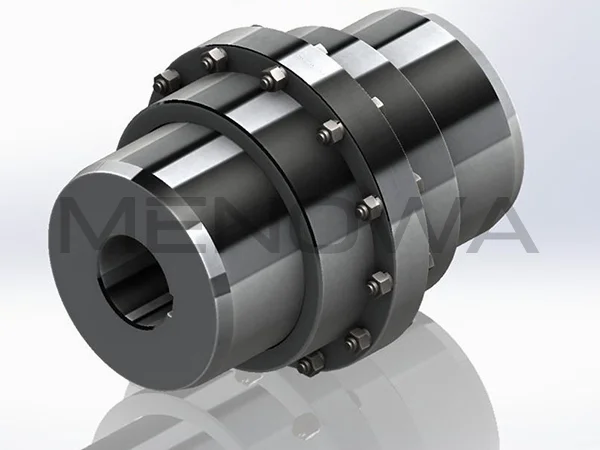
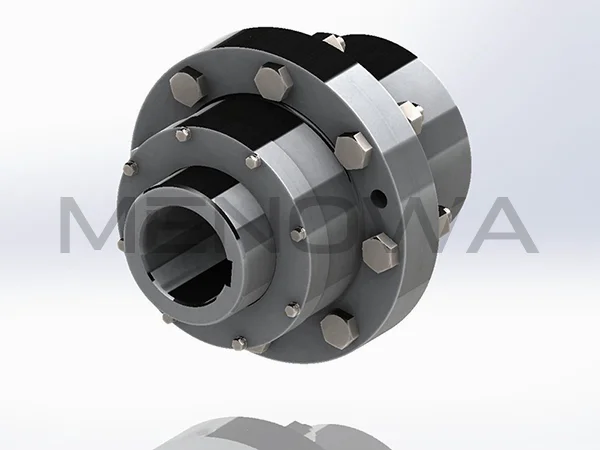
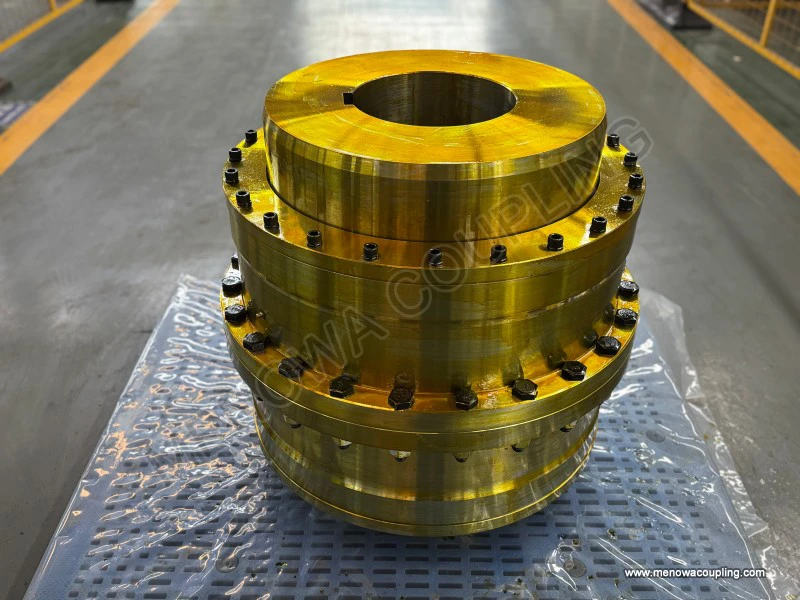
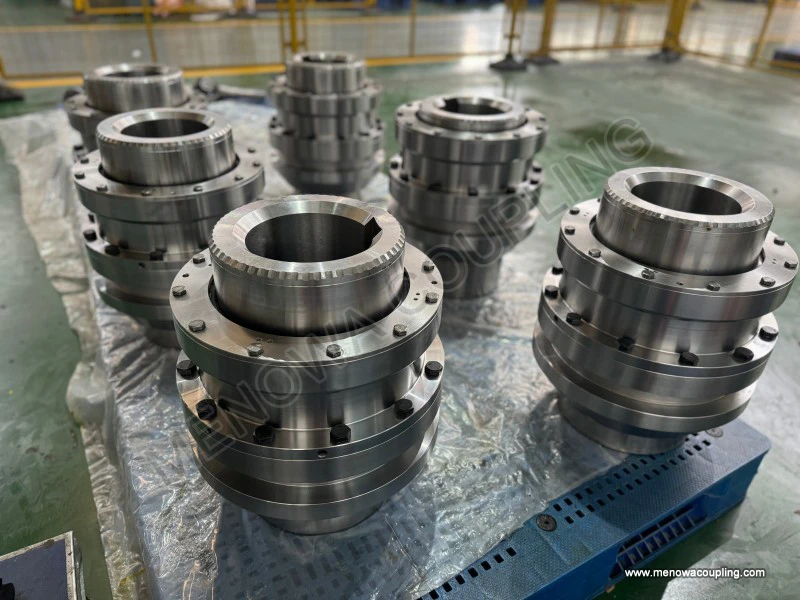
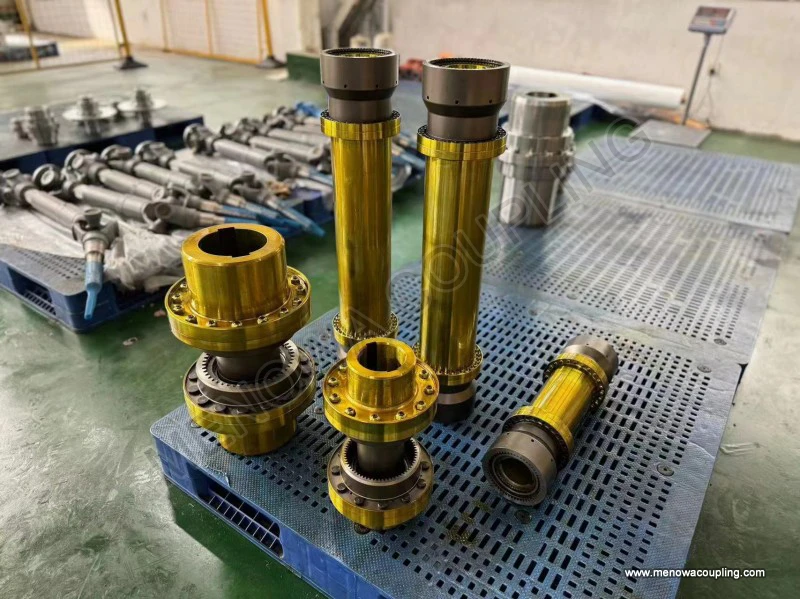
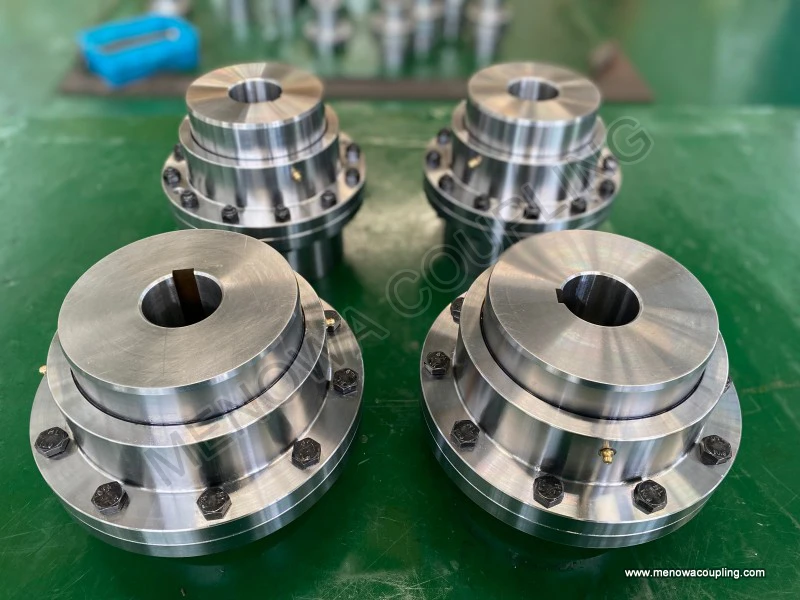
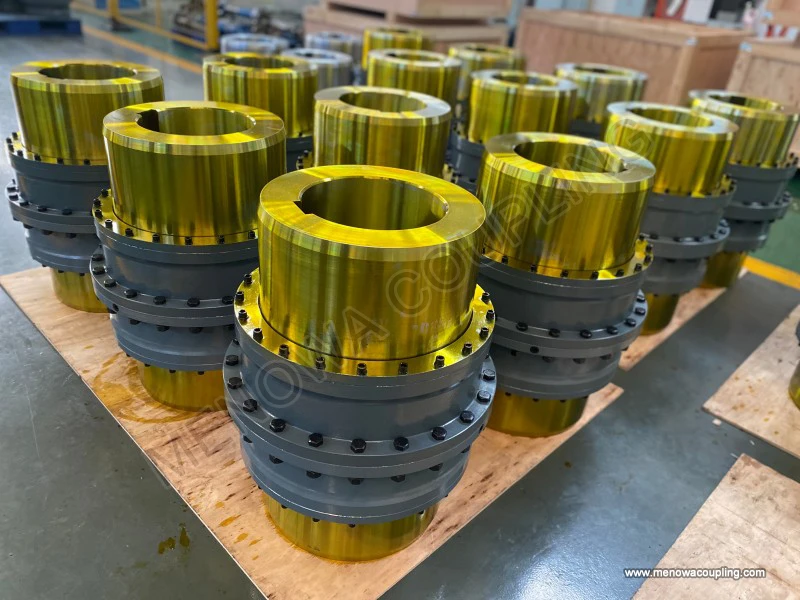
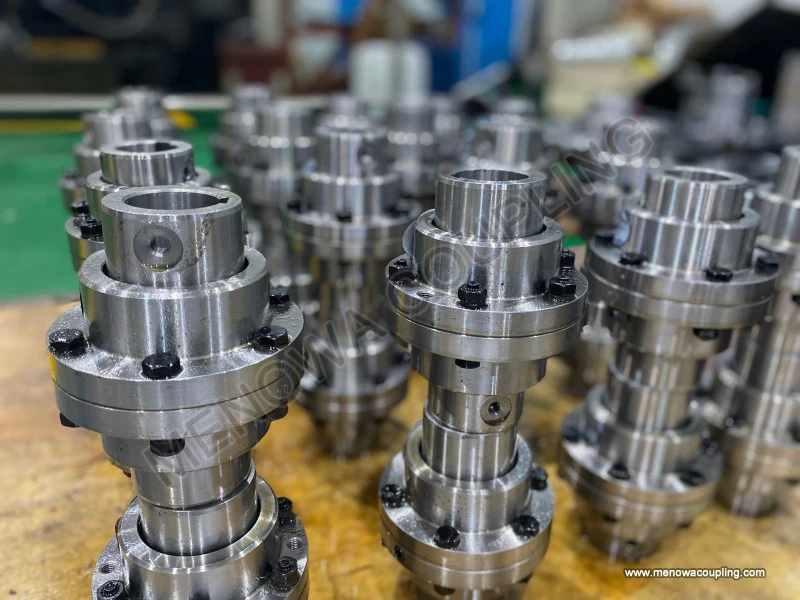
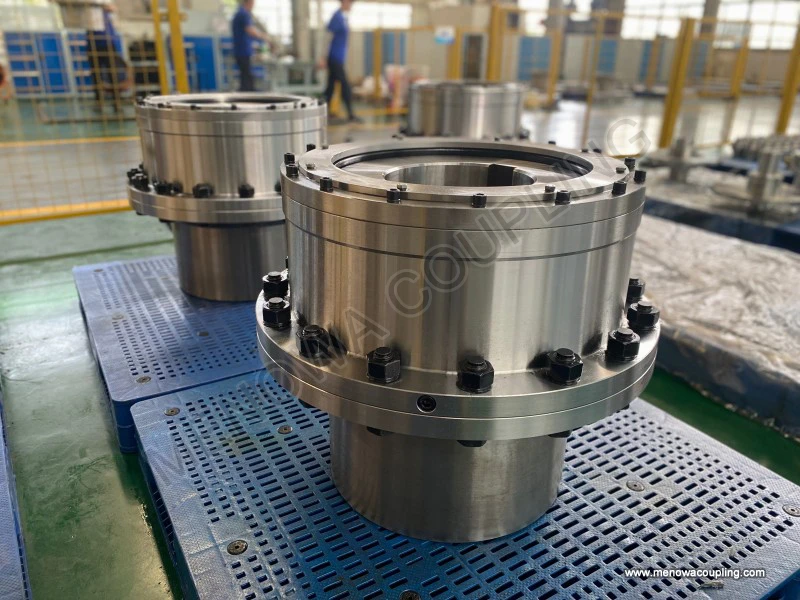
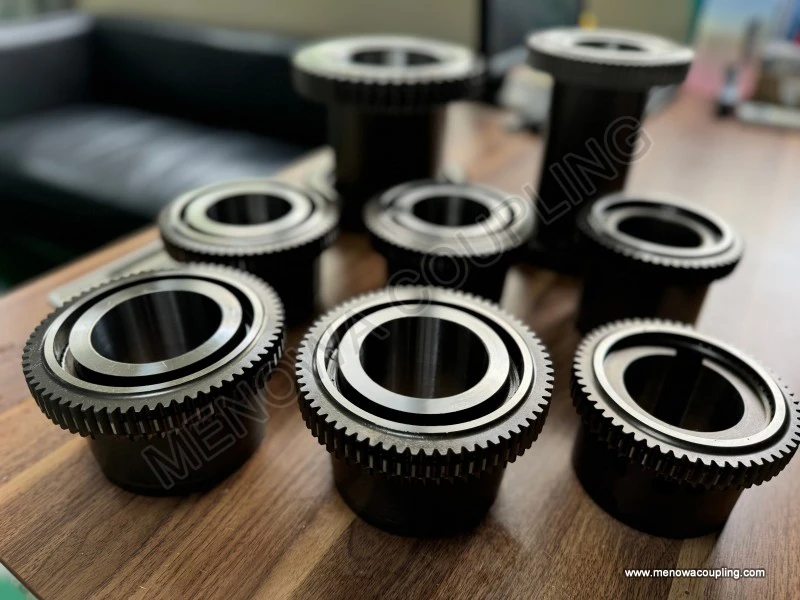
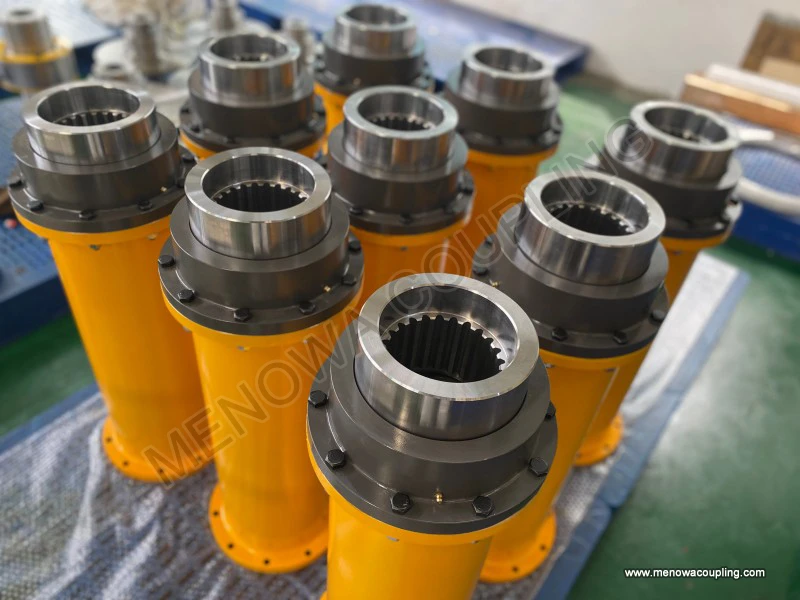
From the perspective of basic structural composition, curved tooth coupling adopts a compact and reasonable integrated assembly structure without redundant auxiliary parts, and the main components include two curved tooth outer hubs, two internal tooth sleeves and corresponding connecting fasteners, forming a complete double-cardanic transmission structure as a whole. The curved tooth outer hubs are respectively fixedly installed on the driving shaft and driven shaft of the mechanical equipment through interference fit or key connection, realizing synchronous rotation with the shafts; the internal tooth sleeves are sleeved on the outer sides of the two outer hubs, and the internal tooth profiles inside the sleeves are precisely matched with the curved outer tooth profiles of the hubs one by one to form a meshing transmission pair. All connecting fasteners are used to lock and fix the relative position between the internal tooth sleeves and the outer hubs, preventing axial displacement and relative rotation between components during high-speed rotation and torque transmission, and ensuring the overall structural rigidity of the coupling during operation. All core structural parts are made of high-strength alloy steel materials with good hardness, toughness and wear resistance, and undergo strict forging, heat treatment and precision machining processes in the production and manufacturing process. Forging treatment can refine the internal metal grain structure of the material, eliminate internal defects such as air holes and cracks, and improve the overall mechanical strength and impact resistance of the coupling parts; reasonable heat treatment processes including quenching and tempering and tooth surface quenching enhance the surface hardness and wear resistance of the meshing tooth parts, while maintaining the core toughness of the parts to avoid brittle fracture under sudden impact load; precision machining ensures the machining accuracy of tooth profile, tooth pitch and assembly matching size, so that the meshing clearance and contact fit degree of internal and external teeth reach the optimal state, reducing mechanical vibration and friction loss in the transmission process.
The working mechanism of curved tooth coupling follows the principle of positive locking mechanical meshing transmission, and the power and torque generated by the driving equipment are transmitted to the driven equipment through the meshing action between the curved outer teeth and internal teeth of the coupling. In the initial operating state of the equipment, when the driving shaft starts to rotate, the curved tooth outer hub fixed on the driving shaft rotates synchronously, and the curved outer teeth push the internal teeth of the sleeve through surface contact force to drive the internal tooth sleeve to rotate synchronously; then the internal tooth sleeve transmits rotational torque to the curved tooth outer hub on the driven shaft through meshing transmission, finally realizing the synchronous rotation of the driven shaft and the stable transfer of power. The most prominent advantage of this working transmission mode is that the torque transmission process is completely based on mechanical rigid meshing contact, without relying on elastic deformation of any flexible intermediate parts for power transmission, so the transmission efficiency remains at a high level under various load conditions, and there will be no power attenuation and rotational speed deviation caused by elastic element fatigue deformation. What distinguishes it from ordinary straight tooth gear couplings is the adaptive adjustment function brought by the curved tooth profile in the transmission process. When the two connected shafts have angular deviation, radial offset or axial displacement, the spherical curved tooth profile can automatically adjust the meshing contact angle and contact position between teeth according to the actual offset state of the shafts, keeping the tooth surface contact area always maintained at the optimal effective meshing position, avoiding the phenomenon that only the local edge of the tooth body bears load due to shaft misalignment. This automatic adjustment effect makes the coupling operate in a nearly wear-free state under normal working conditions, and the periodic angular velocity fluctuation and additional restoring force generated by shaft displacement in the transmission process are effectively controlled within a low range.
In actual industrial mechanical installation and long-term operation, shaft misalignment is an inevitable objective existence that cannot be completely eliminated by precise installation and debugging. Even if the most accurate alignment and calibration operations are carried out during the equipment installation stage, affected by many factors such as long-term operation vibration of mechanical equipment, thermal expansion and contraction of metal components after temperature rise during operation, slight foundation settlement of equipment installation base and mechanical wear of bearing parts, the relative position between the driving shaft and driven shaft will gradually change, resulting in different degrees of axial, radial and angular composite displacement deviations. Ordinary rigid couplings and simple straight tooth couplings have very low tolerance for such deviations. Once slight shaft misalignment occurs, the meshing parts will produce severe edge stress concentration, resulting in rapid wear of tooth surfaces, increased transmission vibration, and even additional alternating load on the shaft and bearing parts, accelerating the fatigue damage of key mechanical components and shortening the overall service life of the equipment. Curved tooth coupling is professionally designed to solve this industrial common problem, with excellent multi-dimensional displacement comprehensive compensation performance. For angular displacement deviation caused by non-parallel and non-coaxial rotation of two shafts, the curved tooth profile can rely on its spherical structural characteristics to adapt to the deflection angle of the shaft system, ensuring uniform stress on each meshing tooth without local overload; for radial offset deviation caused by horizontal or vertical dislocation of shaft centers, the reasonable tooth side clearance and curved tooth meshing space provide sufficient adaptive adjustment range to avoid rigid extrusion and friction between teeth; for axial displacement deviation caused by thermal expansion and contraction of shafts and equipment parts, the matching gap between internal and external tooth sleeves can absorb the axial telescopic change of the shaft system without generating additional axial pressure on the shaft and bearings. The superposition of these multiple compensation capabilities enables the coupling to always maintain a good meshing transmission state in the face of various complex shaft offset conditions, effectively protecting the shaft, bearings and other key mechanical components from damage caused by misalignment load.
In terms of transmission performance and comprehensive working characteristics, curved tooth coupling shows outstanding adaptability to heavy load and variable load working conditions, and can maintain stable transmission performance under long-term continuous operation, frequent start-stop switching and sudden impact load working environments. Due to the large effective meshing contact area between the curved teeth, the load borne by each single tooth in the torque transmission process is evenly distributed, avoiding the problem of excessive single tooth stress and easy tooth breakage often existing in other types of couplings. This uniform load distribution characteristic enables the coupling to bear large rated torque and peak impact torque, meeting the power transmission demands of heavy-duty mechanical equipment in metallurgy, mining, cement, chemical industry and other industrial fields. At the same time, the friction coefficient of the meshing contact surface of the curved tooth profile is low after precision machining and surface treatment, and the matching lubrication state further reduces the friction loss in the transmission process, so the overall transmission efficiency of the coupling is high, and the power energy loss in the torque transfer process is effectively reduced, which plays a positive role in reducing the overall energy consumption of mechanical equipment operation. In terms of operation stability, the double-cardanic operating principle of curved tooth coupling makes the restoring force generated by displacement compensation very small, and the vibration and impact generated during equipment operation are not easily transmitted between the driving end and the driven end, realizing stable and smooth power transmission. Even in the working state of high-speed rotation and frequent load change, the coupling will not produce obvious jitter, abnormal noise and rotational speed fluctuation, ensuring the stable operation of the entire mechanical transmission system and the consistent production and processing accuracy of the equipment.
Rational lubrication management is a key link to maintain the long-term stable operation and extend the service life of curved tooth coupling, and the lubrication state directly determines the wear degree of the meshing tooth surface and the overall operating performance of the coupling. Although the curved tooth profile design greatly reduces the wear trend of the meshing parts, the relative friction and meshing movement between the internal and external teeth still exist during the high-speed rotation and torque transmission process. Good lubrication oil film can form a protective layer on the tooth surface, isolating direct metal contact between meshing teeth, reducing friction resistance and wear loss, and also playing the role of heat dissipation and cooling of the tooth surface. A large amount of friction heat will be generated by the meshing friction of the tooth surface during the operation of the coupling. If the heat cannot be dissipated in time, the local temperature of the tooth surface will be too high, which will lead to the decline of material hardness, accelerated wear of the tooth surface, and even thermal deformation of parts, affecting the meshing accuracy and transmission stability. The lubricating oil can take away the friction heat generated by the meshing movement in time to keep the operating temperature of the coupling within a reasonable range. In addition, the lubricating oil can also play a certain role in rust prevention and dust prevention, isolating external dust, impurities and humid air from contacting the metal tooth surface, avoiding tooth surface corrosion, rust and abrasive wear caused by impurity deposition. In actual use, it is necessary to select suitable lubricating grease or lubricating oil according to the operating speed, load level and ambient temperature of the coupling. For low-speed and heavy-duty working conditions, high-viscosity extreme pressure lubricating grease should be selected to ensure that the oil film has sufficient bearing capacity; for high-speed rotating working conditions, low-viscosity fluid lubricating oil is more suitable to reduce lubrication resistance and improve heat dissipation efficiency. Regular lubrication inspection and oil replacement should be carried out according to the actual operating cycle of the equipment to ensure that the lubrication state is always good and avoid equipment failure caused by lack of lubrication or deterioration of lubricating materials.
Daily maintenance and scientific inspection work are essential to ensure the long-term reliable operation of curved tooth coupling and avoid unexpected equipment shutdown failures. Compared with other complex mechanical transmission components, the overall structure of curved tooth coupling is simple and compact, without easily damaged vulnerable parts and complex elastic components, so the daily maintenance workload is relatively small and the maintenance operation is convenient and efficient. The core of daily maintenance work lies in regular visual inspection, operating state monitoring and regular fastening inspection of connecting parts. In the daily equipment production and operation process, operators and maintenance personnel only need to regularly observe whether the coupling has abnormal vibration, abnormal noise and local temperature overheating phenomenon during operation. If obvious vibration or irregular noise is found, it indicates that the meshing state of the coupling may be abnormal or the shaft offset exceeds the allowable range, and the equipment should be shut down in time for inspection and alignment calibration. It is necessary to regularly check the fastening state of all connecting fasteners of the coupling to prevent the fasteners from loosening due to long-term vibration of equipment operation, which will lead to relative displacement of coupling components and affect the transmission stability. Regularly check the lubrication state inside the coupling, observe whether the lubricating material is deteriorated, reduced or mixed with impurities, and replenish or replace the lubricating material in time according to the inspection results. During the regular equipment shutdown maintenance every year, the coupling can be disassembled and inspected as a whole to check the wear degree of the curved tooth meshing surface, observe whether there are scratches, peeling, deformation and other damage phenomena on the tooth surface, and timely repair or replace the severely worn parts to avoid affecting the subsequent safe operation of the equipment. Scientific and standardized maintenance work can not only effectively extend the overall service life of the curved tooth coupling, but also reduce the failure rate of mechanical equipment, improve the continuous operation efficiency of production lines, and reduce the comprehensive maintenance cost of industrial production.
The correct type selection of curved tooth coupling is the primary premise to ensure that it can adapt to actual working conditions and give full play to its transmission performance advantages. The type selection work needs to comprehensively consider multiple core factors such as the rated torque of mechanical equipment transmission, actual operating peak torque, rotating speed level, shaft diameter size of driving and driven ends, installation space conditions and actual working environment characteristics. First of all, the basic model specification should be determined according to the rated transmission torque and peak impact torque of the equipment. It is necessary to reserve a reasonable torque safety margin on the basis of the actual operating torque to ensure that the coupling can bear the instantaneous impact load generated by equipment start-stop and load fluctuation without overload damage. Secondly, the matching relationship between the coupling allowable rotating speed and the equipment actual operating rotating speed should be fully considered to avoid resonance phenomenon caused by the coupling operating beyond the rated speed range, which leads to increased vibration and unstable operation. At the same time, the structural size of the coupling needs to be matched with the shaft diameter of the driving shaft and driven shaft of the equipment to ensure the assembly fit accuracy and firm installation connection, and the overall external dimension of the coupling should adapt to the on-site installation space of the equipment without installation interference and assembly difficulty. In addition, the influence of the actual working environment on the coupling operation should be considered in the type selection. For working environments with high temperature, low temperature, dust, humidity and corrosive medium, targeted protection measures and material matching selection should be carried out to ensure that the coupling can maintain stable mechanical performance and structural stability in special environments. Blindly selecting couplings with inappropriate model and specification will lead to insufficient bearing capacity, poor compensation effect and shortened service life, and even affect the normal operation of the entire mechanical equipment and production line.
Curved tooth coupling has a wide range of industrial application scenarios, covering almost all medium and heavy-duty mechanical transmission fields that require high torque transmission, multi-dimensional displacement compensation and long-term continuous stable operation. In the metallurgical industry, various rolling mill equipment, smelting auxiliary transmission equipment and metal processing machinery need to bear heavy load and frequent impact load during operation, and the shaft system is prone to offset due to high temperature thermal deformation and long-term vibration. Curved tooth coupling can meet the heavy-duty transmission demand of metallurgical equipment, adapt to high temperature working environment and shaft displacement changes, and ensure the continuous and stable operation of rolling production lines. In the mining industry, mining conveying equipment, crushing machinery and mineral processing equipment have harsh working conditions, with large load fluctuation, obvious vibration and serious dust interference. The strong load-bearing capacity and good vibration resistance of curved tooth coupling can adapt to the harsh mining working environment, reduce equipment failure caused by shaft misalignment, and improve the operation reliability of mining mechanical equipment. In the cement and building materials industry, rotary kilns, ball mills and large mixing equipment operate continuously for a long time, with high requirements for transmission stability and component durability. The long service life and maintenance convenience of curved tooth coupling reduce the shutdown maintenance times of cement production lines and improve the overall production efficiency.
In the chemical industry, various chemical reaction kettles, conveying pumps and chemical processing equipment need to operate stably for a long time under complex medium and temperature changing conditions. The reliable sealing performance and stable transmission performance of curved tooth coupling can adapt to the temperature change and slight shaft displacement of chemical equipment, avoiding production interruption caused by coupling failure. In the power industry, power generation equipment auxiliary transmission devices, fan and water pump supporting transmission systems require high transmission stability and low failure rate. The low wear and high efficiency characteristics of curved tooth coupling ensure the long-term stable operation of power transmission equipment and reduce the maintenance workload of power equipment. In addition, in ports, docks, logistics handling machinery, large fan equipment, water conservancy and hydropower transmission equipment and other fields, curved tooth coupling has become the preferred shaft connection component, providing reliable power transmission guarantee for various mechanical equipment with its excellent comprehensive performance. With the continuous development of modern industrial machinery towards large-scale, heavy-duty and high-efficiency direction, the application demand of curved tooth coupling in various industrial fields is constantly increasing, and its structural design and production manufacturing technology are also constantly optimized and upgraded to adapt to higher standard mechanical transmission requirements.
Looking at the overall development and application process of mechanical transmission coupling technology, curved tooth coupling has become an indispensable basic mechanical component in modern industrial transmission systems by virtue of its unique curved tooth profile design, excellent displacement compensation performance, strong heavy-load transmission capacity, high transmission efficiency and convenient later maintenance characteristics. It solves many practical pain points in the actual operation of traditional shaft connection components, such as poor misalignment adaptability, easy wear and short service life, provides a stable and reliable connection guarantee for the safe and efficient operation of various heavy-duty and continuous operating mechanical equipment. In the future, with the continuous progress of material science, precision machining technology and mechanical optimization design concept, the structural performance of curved tooth coupling will be further improved, the adaptability to extreme working conditions will be continuously enhanced, and the application scope in emerging industrial fields will be further expanded. Scientific selection, standardized installation, reasonable lubrication and regular maintenance are still the key to give full play to the performance advantages of curved tooth coupling, reduce equipment operation failure rate, extend service life and create higher production benefits for industrial production. As a key basic part of mechanical power transmission, curved tooth coupling will always play an important supporting role in the stable operation and high-quality development of modern industrial mechanical systems.
https://www.menowacoupling.com/industrial-coupling/curved-tooth-coupling.html
Products
Tags
Related Articles
Specification of Curved Tooth Coupling
Jun 26, 2026In the global industrial transmission equipment market, curved tooth couplings have emerged as one of the most reliable and versatile mechanical transmission components, occupying a core position in heavy-duty power transmission systems across various industrial sectors worldwide. With the continuous advancement of glob…Size Chart of Curved Tooth Coupling
Jun 26, 2026The global industrial transmission component market has maintained steady expansion alongside the continuous upgrading of industrial manufacturing, intelligent equipment iteration, and the vigorous development of heavy industry sectors worldwide. As a core high-efficiency power transmission component, curved tooth coupl…Parts of Curved Tooth Coupling
Jun 26, 2026Curved tooth couplings stand as one of the most reliable and widely adopted mechanical transmission components in the global industrial machinery sector, renowned for their superior torque transmission capacity, flexible misalignment compensation, and durable structural performance. As global industrialization continues…Material of Curved Tooth Coupling
Jun 26, 2026Curved tooth couplings have emerged as one of the most reliable and versatile mechanical transmission components in the global industrial machinery sector, serving as a core connecting unit for shaft torque transmission in heavy-duty, high-speed, and misalignment-tolerant operating environments. The unique curved tooth …Maintenance of Curved Tooth Coupling
Jun 26, 2026Curved tooth coupling, also widely known as crowned gear coupling, remains one of the most widely adopted positive-locking flexible transmission components across global heavy-duty industrial markets, thanks to its outstanding torque capacity, multi-directional misalignment compensation and stable torsional rigidity und…Gap Chart of Curved Tooth Coupling
Jun 4, 2026Global industrial transformation across manufacturing, energy exploitation, heavy engineering and marine equipment has steadily lifted market demand for curved tooth coupling in cross-continental industrial supply chains over recent years, with gap chart becoming an indispensable technical reference for product matching…Dimensions of Curved Tooth Coupling
Jun 4, 2026Global industrial development across diversified manufacturing sectors continues to push steady market expansion for curved tooth couplings, whose unique curved crowned tooth geometry distinguishes them from conventional straight-tooth gear couplings and enables outstanding comprehensive mechanical performance to match …Diagram of Curved Tooth Coupling
Jun 3, 2026The diagram of curved tooth coupling intuitively presents the structural layout, meshing logic and spatial assembly relationship of this mainstream flexible transmission component, serving as a core technical reference for design optimization, model selection, installation and maintenance in the global industrial machin…Components of Curved Tooth Coupling
Jun 3, 2026In the global industrial transmission market, curved tooth couplings have emerged as one of the most indispensable core mechanical components for high-torque, high-speed, and misalignment-tolerant shaft connection systems. Widely adopted in heavy manufacturing, energy production, marine engineering, mining, and precisio…Coaxiality of Curved Tooth Coupling
Jun 3, 2026In the global industrial transmission industry, curved tooth couplings have emerged as a core component of high-precision and high-torque shaft connection systems, widely adopted in heavy machinery, automated production lines, energy transmission equipment and cross-border industrial supporting fields. Coaxiality, as th…
 WeChat
 WhatsApp