Tooth Coupling
In the intricate and interconnected ecosystem of modern mechanical power transmission systems, the reliable connection between rotating shafts stands as a foundational prerequisite for the stable and continuous operation of all types of industrial machinery and mechanical equipment. Every mechanical device that relies on rotational power output and transmission, from large-scale heavy-duty processing and mining equipment to medium and small-sized industrial production supporting mechanical devices, needs a core connecting component that can efficiently transfer torque, buffer mechanical vibration, and adapt to subtle shaft position deviations during long-term cyclic operation. Among all mainstream mechanical connecting components used for shaft connection and power transmission in the industrial field, tooth coupling has always occupied an irreplaceable core position by virtue of its unique meshing transmission structure, excellent load-bearing adaptability, stable long-term operation reliability and strong environmental tolerance. Unlike flexible couplings that rely on elastic deformation of non-metallic materials to achieve torque transmission and displacement compensation, and unlike rigid couplings that pursue absolute shaft alignment and rigid fixed connection effects, tooth coupling perfectly balances the dual core needs of rigid torque transmission and flexible displacement compensation through precise internal and external tooth meshing mechanical design, forming a mechanical transmission connection mode that integrates high transmission efficiency, strong impact resistance and good adaptive adjustment performance. This kind of coupling does not depend on any auxiliary elastic parts to assist power transmission, nor does it require extremely high-precision installation alignment conditions between connected shafts, relying entirely on the mechanical cooperation and meshing fit between metal tooth structures to complete the whole process of power transmission, shaft position deviation adaptation and mechanical operation protection, making it widely used in various complex working condition scenarios involving heavy load operation, frequent start-stop circulation, long-term continuous operation and harsh industrial production environments. Understanding the internal structural composition, core working mechanism, unique performance advantages, key design optimization logic, scientific installation and commissioning essentials, standardized daily maintenance procedures and reasonable application scenario matching rules of tooth coupling is not only a necessary professional basis for mechanical design engineers to carry out mechanical power transmission system scheme design and component selection and matching, but also an important guarantee for equipment operation and maintenance personnel to ensure long-term stable operation of mechanical equipment, reduce mechanical failure rates, extend the overall service life of transmission systems and control industrial production operation costs.
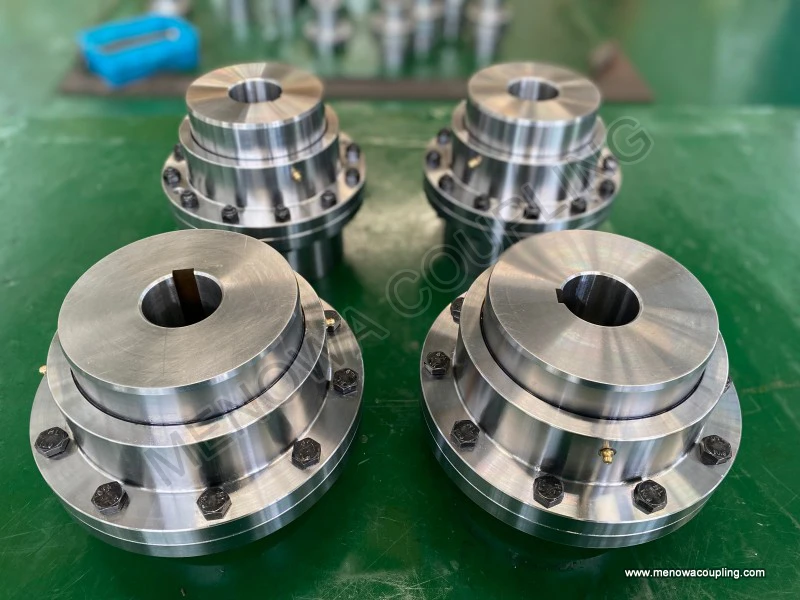
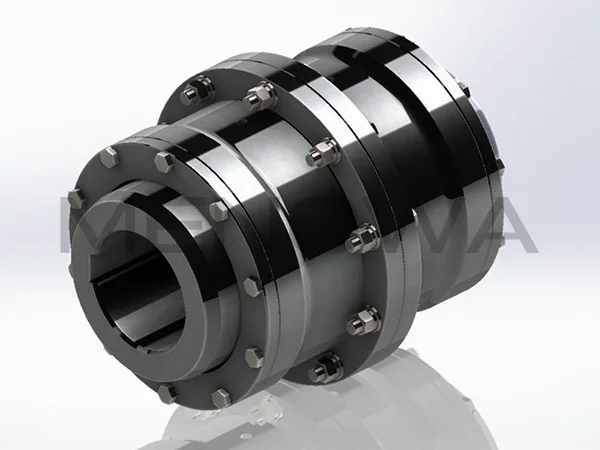
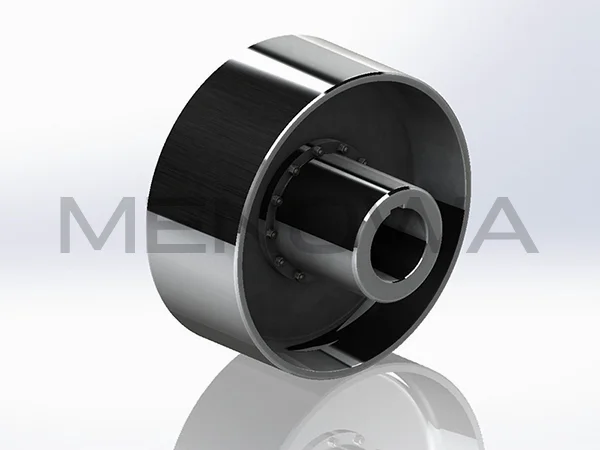
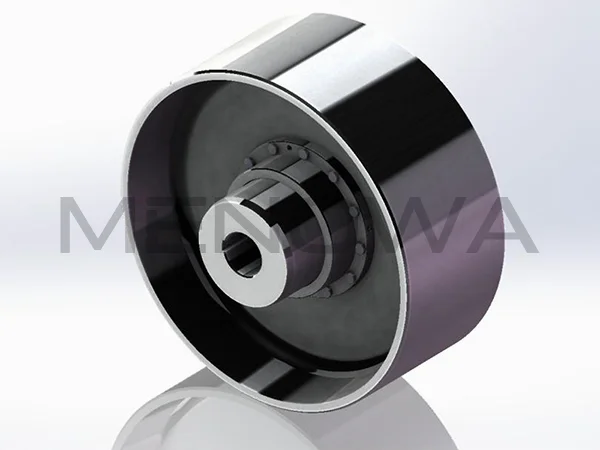
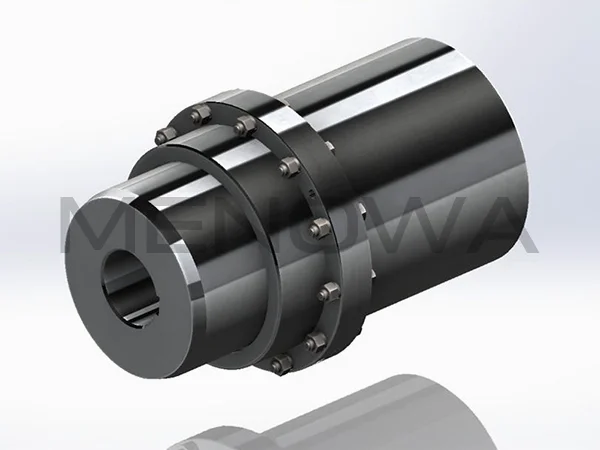
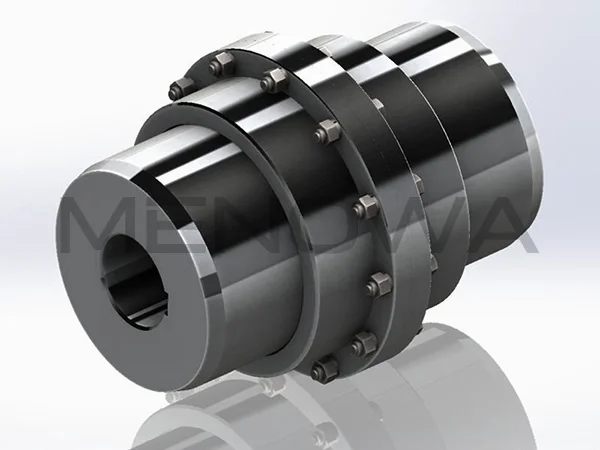
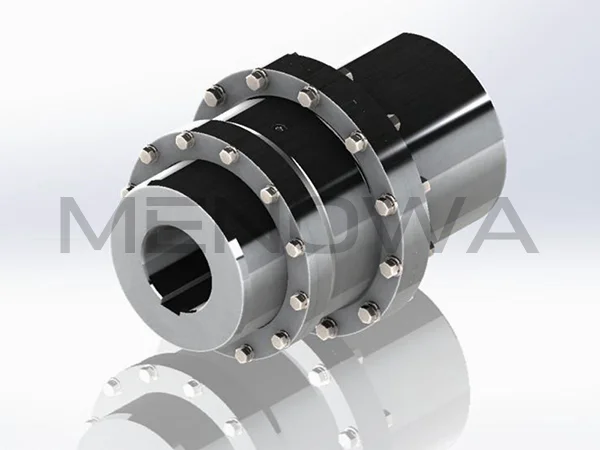
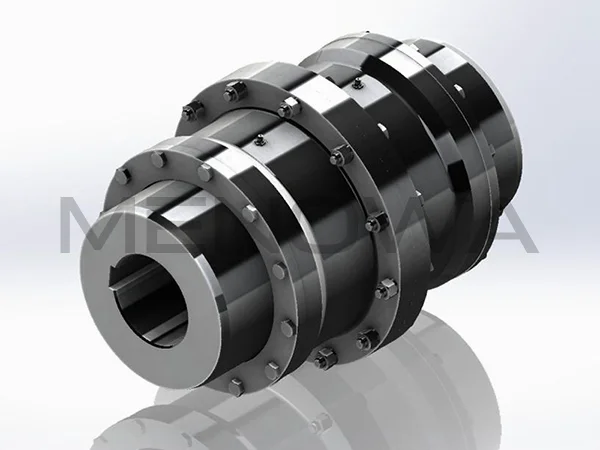
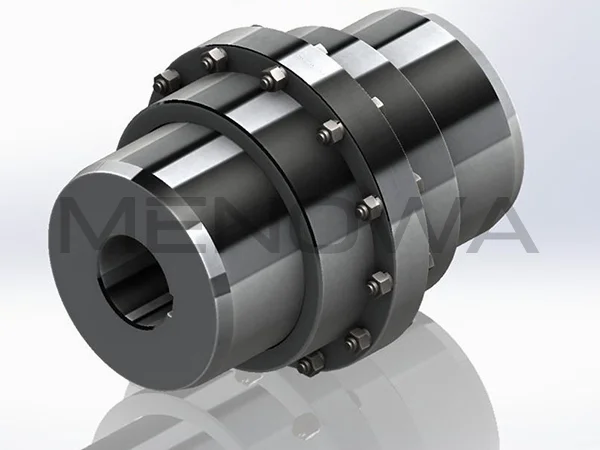
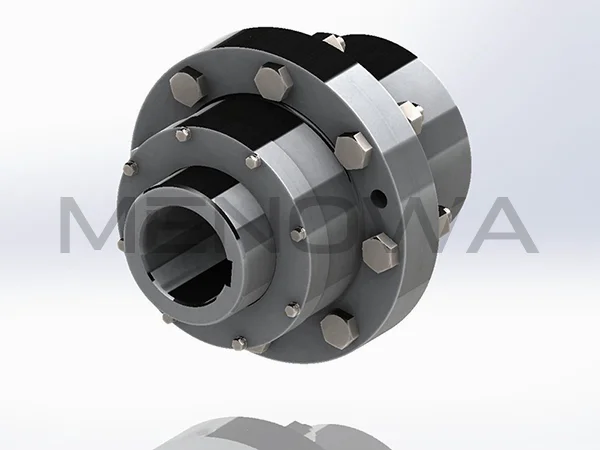
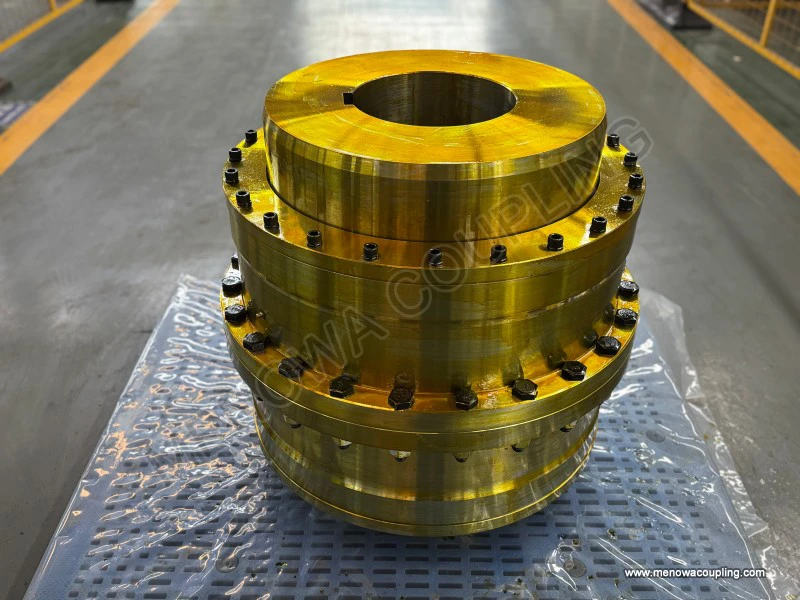
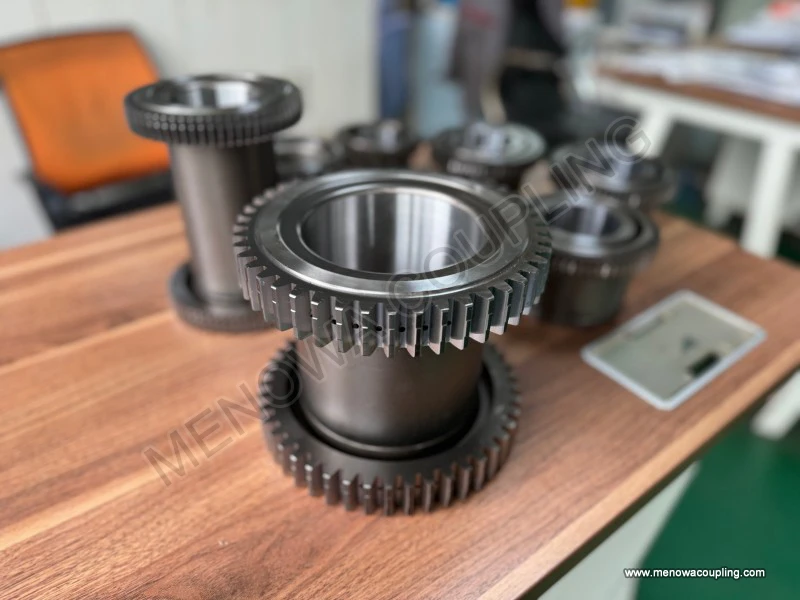
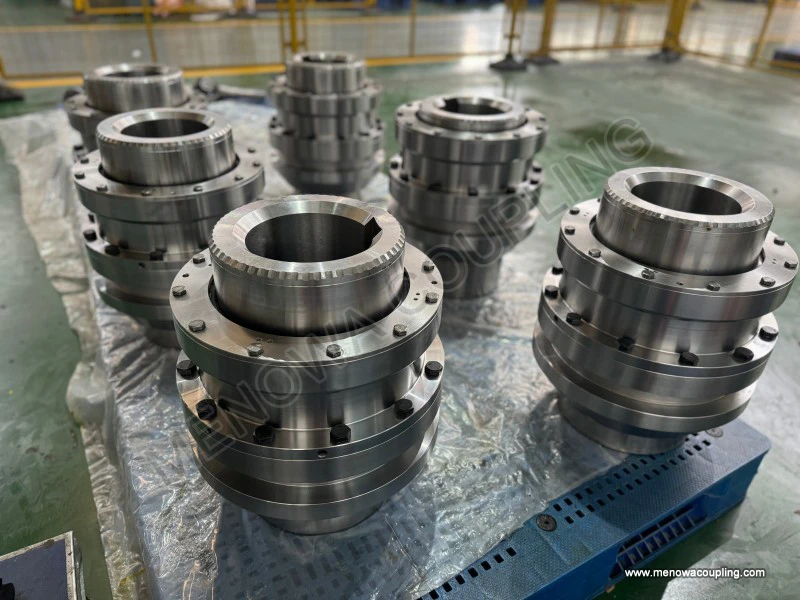
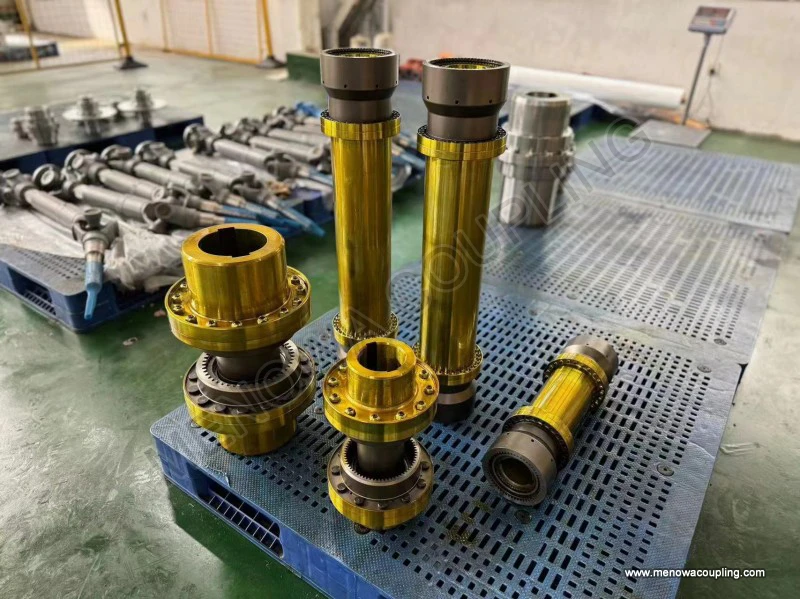
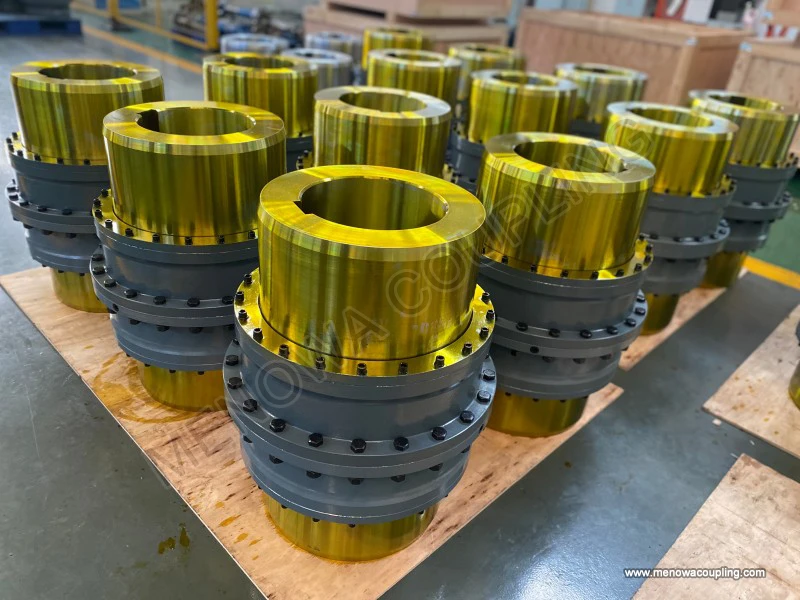
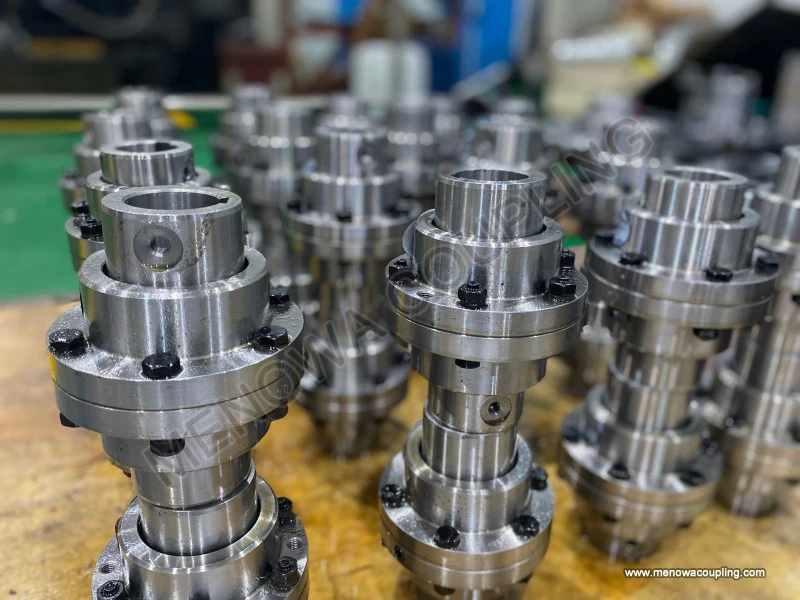
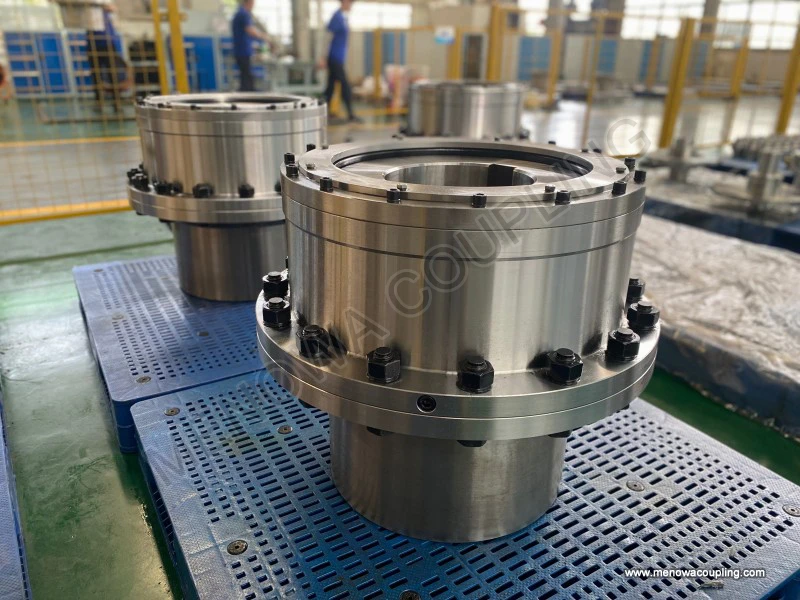
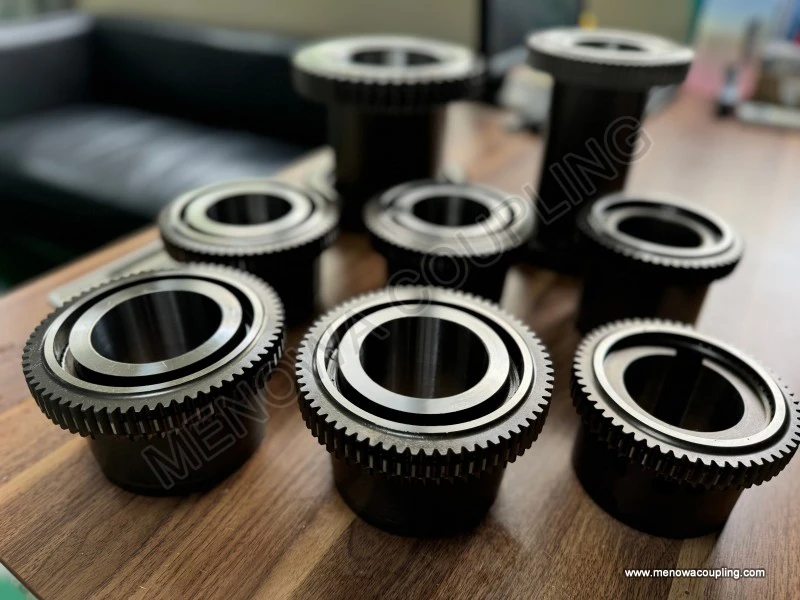
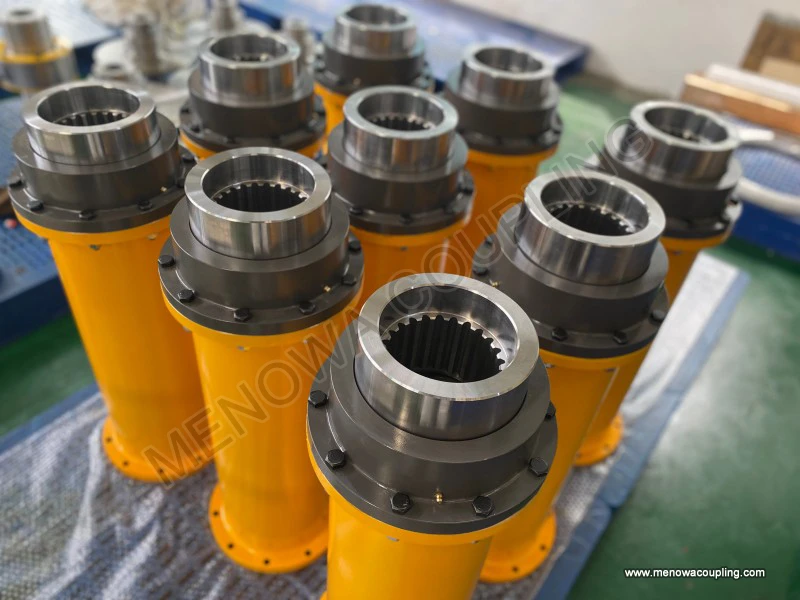
The basic structural composition of tooth coupling follows the mature mechanical transmission design logic derived from gear meshing transmission principles, and the overall structure is simple and compact without redundant auxiliary mechanical parts, which lays a solid foundation for its high mechanical strength and stable operation performance in practical industrial application. The main body of a complete tooth coupling is composed of two core half-coupling units with external teeth and an intermediate connecting sleeve processed with internal tooth structures, and all matching connecting and fixing parts are supporting metal fasteners and sealing protection components with simple structures and high matching accuracy. The two half-couplings with external tooth structures are the core force-bearing and power-input and output parts of the whole coupling, which are directly connected with the driving shaft and the driven shaft of the mechanical transmission system respectively through key connection or interference assembly mode in actual installation and use. The external tooth parts processed on the outer edge of the half-coupling are the key meshing structures for power transmission, and the tooth profile processing precision, tooth surface hardness treatment effect and tooth shape structural design directly determine the torque transmission capacity, wear resistance and service life of the whole coupling in subsequent operation. The intermediate connecting sleeve with internal tooth structure is the intermediate transmission and connecting component connecting the two external tooth half-couplings, and the internal tooth grooves processed on the inner wall of the sleeve are precisely meshed with the external teeth of the two half-couplings respectively, forming a closed cyclic power transmission loop between the driving shaft and the driven shaft. In order to further enhance the overall connection firmness of the coupling and avoid relative displacement and separation between the intermediate sleeve and the half-couplings during high-load and high-speed rotation operation, the two ends of the intermediate sleeve and the corresponding matching positions of the half-couplings are provided with flange structures matched with each other, and the flange parts are fastened and connected by high-strength metal bolts uniformly arranged along the circumferential direction. This flange bolt fastening design can ensure that the relative position between the internal tooth sleeve and the external tooth half-couplings remains stable during long-term high-speed rotation and heavy-load torque transmission, avoiding mechanical vibration and transmission efficiency reduction caused by loose connection and position deviation. In addition to the core transmission and connecting structures, tooth coupling is also equipped with professional sealing components and grease storage structures inside the meshing area of internal and external teeth. The sealing parts are installed at the gap between the two ends of the intermediate sleeve and the outer side of the half-couplings, which can effectively isolate the internal meshing tooth surface from the external industrial working environment, prevent external dust, metal debris, moisture and corrosive substances from entering the tooth meshing area and causing tooth surface wear, corrosion and jamming failure, and at the same time avoid the leakage of lubricating grease added inside the coupling, ensuring that the meshing tooth surface can always maintain a good lubrication state during long-term operation. The internal grease storage cavity reserved inside the coupling can store a sufficient amount of special lubricating grease for gear meshing transmission, providing continuous and stable lubrication protection for the friction and meshing parts of internal and external teeth, reducing friction resistance and mechanical wear in the torque transmission process, and further improving the transmission stability and service life of the coupling.
The core working principle of tooth coupling is based on the basic mechanical motion law of gear meshing transmission and the structural adaptive displacement compensation formed by the reasonable fit clearance between internal and external teeth, realizing efficient torque transmission and multi-dimensional shaft position deviation adaptation at the same time in the rotating operation process. When the mechanical equipment starts to operate, the driving shaft drives the half-coupling connected with it to rotate synchronously, and the external teeth on the half-coupling transmit rotational torque and power to the internal tooth structure of the intermediate connecting sleeve through precise meshing action. Under the drive of the meshing force between the teeth, the intermediate sleeve rotates synchronously with the driving half-coupling, and then the internal teeth on the other side of the intermediate sleeve mesh with the external teeth of the driven half-coupling, further transmitting the rotational torque and power to the driven half-coupling and the driven shaft connected with it, thus completing the whole power transmission process from the driving end to the driven end of the mechanical system. In the whole power transmission link, all torque is transmitted through the direct mechanical meshing contact between metal tooth surfaces, without the transfer of any intermediate elastic medium, so the power transmission loss in the operation process is extremely low, and the transmission efficiency can maintain a high level for a long time, which is far better than many flexible couplings that rely on elastic deformation for indirect transmission. What distinguishes tooth coupling from ordinary rigid gear connecting parts is the reasonable fit clearance reserved between the internal and external teeth and the optimized special tooth shape design, which endows the coupling with excellent multi-dimensional displacement compensation capability. In the actual installation and long-term operation of mechanical equipment, it is difficult to achieve absolute complete coaxiality between the driving shaft and the driven shaft due to various objective factors such as installation accuracy errors, mechanical equipment foundation settlement, thermal expansion and contraction of metal parts during operation, and slight mechanical deformation under long-term load. These unavoidable subtle deviations will lead to radial displacement, axial displacement and angular deflection between the two connected shafts. If rigid connecting parts without compensation capability are used, these deviations will cause additional mechanical stress and torsion on the shafts and related mechanical parts, resulting in increased equipment operation vibration, accelerated part wear, and even serious mechanical failure such as shaft deformation and part fracture in severe cases. The tooth coupling effectively solves this common mechanical operation problem through the movable fit relationship between internal and external teeth. The small gap between the meshing teeth can allow slight radial and axial relative displacement between the driving half-coupling and the driven half-coupling, and the optimized drum-shaped tooth profile design of part of the external teeth can well adapt to the small angular deflection between the two shafts. When position deviation occurs between the two shafts, the meshing contact position between the internal and external teeth will be slightly adjusted adaptively with the shaft displacement, without generating additional destructive mechanical stress on the shaft and coupling itself, ensuring that the power transmission process is still stable and smooth even with certain shaft position deviations, and effectively protecting the safety and integrity of the whole mechanical transmission system.
The unique structural design and working mechanism of tooth coupling make it have a series of prominent comprehensive performance characteristics that are suitable for complex industrial working conditions, showing incomparable application advantages in many key performance indicators compared with other types of couplings. First of all, tooth coupling has extremely strong load-bearing capacity and large torque transmission performance, which can meet the power transmission needs of high-power and heavy-load mechanical equipment. Since all power transmission links rely on the meshing contact of multiple metal teeth arranged circumferentially to bear torque together, the force-bearing area is large and the force-bearing distribution is uniform, avoiding the problem of local excessive stress and easy damage of single-point force-bearing structural couplings. The metal materials used for processing the coupling teeth are all high-strength alloy steel with strict heat treatment such as quenching and tempering and surface quenching, which has high mechanical strength, surface hardness and compression resistance, and can stably bear instantaneous impact load and long-term cyclic heavy load without tooth surface deformation, tooth root fracture and other mechanical damage. This excellent heavy-load bearing performance makes tooth coupling the preferred connecting component for heavy mechanical equipment that needs to transmit large torque. Secondly, tooth coupling has high power transmission efficiency and stable high-speed operation performance. The direct meshing transmission between metal teeth has almost no elastic deformation energy loss and relative sliding friction loss in the power transmission process, and the transmission efficiency remains at a high level stably for a long time. At the same time, the overall structure of the coupling is compact and symmetrical, the mass distribution is uniform, and the dynamic balance performance is good after precision processing and debugging. It will not produce obvious eccentric vibration and centrifugal force even under long-term high-speed rotation operation, and can maintain the stability and smoothness of the mechanical transmission system, which is suitable for both low-speed heavy-load and medium-high-speed stable operation mechanical scenarios. Thirdly, tooth coupling has excellent multi-dimensional displacement compensation performance and good error tolerance for installation and operation deviations. As mentioned above, the reasonable fit clearance between internal and external teeth and optimized tooth shape design can simultaneously adapt to radial, axial and angular deviations between connected shafts, reduce the installation difficulty of mechanical equipment, and avoid mechanical failure caused by installation accuracy errors. In the long-term operation process, it can also automatically adapt to the subtle shaft position changes caused by equipment aging, foundation deformation and thermal expansion, reducing the maintenance frequency and operation failure rate of equipment. In addition, tooth coupling has strong environmental adaptability and good wear resistance and corrosion resistance. The fully enclosed sealing structure can effectively block the erosion of external dust, moisture, high temperature and corrosive media, and the surface hardening treatment of the tooth structure can reduce the wear degree of the meshing surface during long-term friction operation. It can work stably for a long time in harsh industrial environments such as high dust, high humidity, outdoor open air and industrial corrosive gas, and is not easy to be affected by the external environment to cause performance degradation and structural damage. Finally, the overall structural durability of tooth coupling is outstanding, with long service life and low later operation and maintenance cost. The metal main body structure is not easy to age and deform, the wearing parts are few, and only regular lubrication maintenance and regular sealing component inspection and replacement are needed in the later stage. Compared with flexible couplings that need frequent replacement of elastic vulnerable parts, the long-term comprehensive use cost of tooth coupling is lower, and the operation stability is higher.
In the actual mechanical design and equipment supporting selection work, the reasonable optimization design of tooth coupling tooth profile structure and size parameters is the key core link to ensure that its performance matches the actual working conditions, and different tooth shape designs and parameter configurations will directly affect the displacement compensation ability, load-bearing effect and operation stability of the coupling. The two most common tooth profile types of tooth coupling in the industrial field are straight tooth structure and drum-shaped tooth structure, and the two tooth shapes have obvious differences in performance characteristics and applicable working conditions. The straight tooth structure is the most basic and traditional tooth profile design of tooth coupling, with simple processing technology and low processing and manufacturing difficulty. The tooth surface of straight tooth is flat and regular, the meshing processing and assembly matching are convenient, and it has good bearing effect under the condition of small shaft position deviation and stable operation load. However, the straight tooth coupling has certain limitations in displacement compensation ability, especially the adaptation effect of angular deflection deviation is general. When the angular deviation between the two shafts is large, the contact stress at the local position of the tooth surface will be too concentrated, resulting in accelerated local wear of the tooth surface and reduced service life. The drum-shaped tooth structure is an optimized upgraded design on the basis of straight tooth, the external tooth is processed into a smooth spherical curved surface structure with the center of the sphere on the shaft axis, and the tooth top and tooth side are all designed with circular arc transition structures. This optimized drum-shaped tooth profile design makes the meshing contact between internal and external teeth more uniform and flexible. When angular deflection occurs between the two connected shafts, the contact position between the teeth can be adjusted adaptively along the curved surface of the drum-shaped tooth, avoiding local stress concentration, greatly improving the angular displacement compensation ability of the coupling, and effectively reducing the friction and wear of the tooth surface under the condition of shaft deviation operation. Although the processing technology of drum-shaped tooth coupling is more complex and the manufacturing precision requirements are higher, its comprehensive operation performance and service life are significantly better than straight tooth coupling, so it is more widely used in modern industrial mechanical equipment with high operation requirements and complex working conditions. In addition to tooth shape selection, the design and configuration of core size parameters such as tooth number, tooth modulus, tooth width and coupling outer diameter also need to be reasonably matched according to the actual torque transmission demand, rotating speed and shaft diameter of the mechanical equipment. The number of teeth of the coupling determines the number of simultaneous meshing force-bearing teeth, the more the number of teeth, the more uniform the torque distribution, the smaller the single tooth bearing pressure, and the better the stability of long-term operation. The tooth modulus and tooth width determine the single tooth structural strength and load-bearing capacity, and the larger the modulus and tooth width, the stronger the heavy-load impact resistance of the tooth structure. In the design process, it is necessary to avoid excessive parameter configuration leading to increased coupling volume and weight, and also avoid too small parameters leading to insufficient load-bearing capacity, so as to achieve the best balance between structural size, weight and mechanical performance, ensuring that the coupling can meet the power transmission demand without causing excessive load burden on the mechanical equipment itself.
The installation and commissioning quality of tooth coupling is directly related to the subsequent operation stability, transmission efficiency and service life of the whole mechanical transmission system, and standardized and accurate installation operation steps and scientific commissioning and inspection work are essential links to give full play to the performance advantages of tooth coupling. Before the formal installation of the coupling, comprehensive pretreatment and inspection work must be carried out first. It is necessary to carefully check whether the dimensional parameters of the two half-couplings and the intermediate sleeve match the shaft diameter of the driving shaft and the driven shaft of the equipment, and confirm that there are no defects such as cracks, deformation, tooth surface damage and thread damage on the surface and internal structure of all coupling parts. At the same time, all meshing tooth surfaces, key grooves, flange connecting surfaces and bolt matching parts need to be thoroughly cleaned and polished to remove processing burrs, rust, oil stains and residual sundries, ensuring that all matching surfaces are smooth and clean without impurities, so as to avoid installation gaps and poor fit caused by sundries affecting the connection firmness and transmission accuracy. After the pretreatment inspection is completed, the two half-couplings are respectively installed on the driving shaft and the driven shaft in place through key connection or interference assembly process. In the installation process, attention should be paid to controlling the assembly position and coaxiality of the half-couplings and the shafts to ensure that the half-couplings are firmly fixed on the shafts without looseness and radial shaking, and the end face position of the half-couplings is kept parallel and consistent to lay a good foundation for the subsequent meshing assembly of the intermediate sleeve. After the half-couplings are installed and fixed, an appropriate amount of special high-temperature and wear-resistant lubricating grease for gear meshing transmission is injected into the internal tooth cavity of the intermediate sleeve, ensuring that all tooth meshing parts can be fully covered by lubricating grease, and the injection amount is controlled reasonably to avoid excessive grease causing high-speed rotation stirring resistance or insufficient grease leading to poor lubrication effect. Then the sealing components are installed at the two ends of the intermediate sleeve, and the intermediate sleeve is sleeved on the outer side of the two half-couplings to make the internal teeth and external teeth mesh accurately and in place. After the meshing is completed, the flange structures at the two ends of the intermediate sleeve are aligned with the flange positions of the half-couplings, and high-strength connecting bolts are inserted into the flange bolt holes in turn. When tightening the bolts, it is necessary to follow the symmetrical and uniform tightening sequence, and gradually tighten the bolts in batches with a torque wrench to ensure that the fastening force of each bolt is consistent, avoiding flange deformation and local loose connection caused by uneven bolt tightening force. After the installation and fastening work is completed, the final commissioning and inspection work must be carried out before the equipment is officially put into operation. It is necessary to manually rotate the driving shaft to drive the coupling to rotate slowly, check whether the coupling rotation is flexible and smooth without jamming, abnormal friction and stuck phenomenon, and observe whether there is obvious radial and axial shaking of the coupling during rotation. At the same time, the coaxiality of the two connected shafts and the connection tightness of all bolts and sealing parts are rechecked to ensure that all installation indicators meet the operation requirements. After the no-load manual commissioning is qualified, the equipment can be started for low-speed no-load trial operation for a certain period of time, and the operation vibration, noise and temperature change of the coupling are observed. If there is no abnormal vibration, sharp noise and excessive temperature rise, it indicates that the installation and commissioning work is qualified, and the equipment can be put into formal load production operation.
Scientific and standardized daily maintenance and regular inspection and maintenance work is an important guarantee to extend the service life of tooth coupling, maintain stable transmission performance and reduce mechanical operation failures in long-term industrial application. Tooth coupling has the characteristics of few vulnerable parts and simple maintenance work, but due to its long-term operation in heavy-load, high-speed and harsh industrial environments, regular targeted maintenance and inspection must not be ignored, otherwise it is easy to cause lubrication failure, tooth surface wear, sealing leakage and other problems, affecting the normal operation of the whole mechanical system. The daily routine maintenance work of the coupling is mainly carried out during the daily operation and shutdown maintenance of the equipment. During the daily operation of the equipment, equipment operators only need to regularly observe the operation state of the coupling, check whether there is abnormal vibration, abnormal friction noise and local overheating phenomenon on the coupling surface during operation. If abnormal operation signs are found, the equipment should be shut down in time for inspection and troubleshooting to avoid small problems evolving into large mechanical failures. After the equipment is shut down every day, simply clean the outer surface of the coupling to remove surface dust, debris and oil pollution, keep the outer structure of the coupling clean and tidy, and prevent a large amount of dust accumulation from affecting the heat dissipation and normal operation of the coupling. The regular inspection and maintenance work needs to be carried out regularly according to the equipment operation time and working condition severity, and the inspection cycle can be appropriately shortened for the coupling working in high dust, high humidity, heavy load and frequent start-stop working conditions, and the inspection cycle can be appropriately extended for the coupling working in stable and good working conditions. The core content of regular inspection includes the inspection of sealing performance, lubrication state, bolt fastening degree and tooth surface wear condition. First, check the sealing components at both ends of the coupling to see if there is grease leakage, sealing ring aging, deformation and damage. If grease leakage is found, it indicates that the sealing effect is invalid, and the aging and damaged sealing parts need to be replaced in time to prevent external impurities from entering the meshing tooth cavity and internal lubricating grease loss. Second, check the internal lubrication state of the coupling, regularly supplement or replace the lubricating grease according to the grease aging degree and operation time, remove the deteriorated and failed old grease, and inject new high-quality special lubricating grease to ensure that the tooth meshing surface is always in a good lubrication state and reduce friction and wear. Third, check the fastening state of all flange connecting bolts, re-tighten the loose bolts in time, and replace the bolts with thread damage and deformation to ensure that the coupling connection is firm and reliable without loose displacement. Fourth, for the tooth surface wear inspection, the intermediate sleeve can be disassembled regularly to check the wear degree of the internal and external tooth meshing surfaces, observe whether there are serious wear scratches, tooth surface peeling, tooth root deformation and damage on the tooth surface. If slight wear is found, it can be treated by re-lubrication and debugging. If serious wear and structural damage occur, the damaged coupling parts need to be replaced in time to ensure the safety of power transmission. In addition, during the long-term shutdown of mechanical equipment, the coupling should be properly rust-proof and moisture-proof protected to avoid tooth surface rust and structural corrosion affecting subsequent reuse performance.
With its comprehensive and excellent mechanical performance and strong working condition adaptability, tooth coupling has been widely applied and promoted in multiple industrial fields involving heavy machinery production, energy power operation, engineering construction operation and industrial transportation transmission, and has become a key basic connecting component to ensure the stable operation of various core mechanical equipment. In the metallurgical industry, various smelting, rolling and metal processing equipment needs to transmit huge torque power in the production and processing process, and the equipment often bears instantaneous impact load and high-temperature operation environment. Tooth coupling is used for the shaft connection of rolling mills, smelting conveying machinery and metallurgical supporting transmission equipment, relying on its heavy-load bearing capacity and high-temperature environmental adaptability to maintain stable power transmission in the high-temperature and heavy-load metallurgical production environment, and its displacement compensation performance can adapt to the mechanical deformation and shaft position deviation of metallurgical equipment under long-term high-temperature operation, effectively reducing the failure rate of metallurgical transmission equipment. In the mining industry, mining excavation, ore transportation and mineral processing production equipment mostly work in harsh working conditions such as high dust, outdoor open air and heavy-load impact, and the mechanical equipment has complex operation conditions and high requirements for coupling reliability and durability. Tooth coupling is applied to the power transmission connection of mining excavators, ore crushers, belt conveyors and mineral processing machinery, with strong dust resistance, wear resistance and impact resistance, which can adapt to the harsh mining operation environment, ensure the continuous and stable operation of mining production equipment, and reduce the production shutdown loss caused by coupling failure. In the engineering machinery and construction industry, various engineering equipment such as cranes, excavators, loaders and road construction machinery often have frequent start-stop, forward and reverse rotation and variable load operation states, and the shaft position deviation caused by equipment movement and load change is frequent. Tooth coupling can well adapt to frequent variable load operation and multi-dimensional shaft displacement changes, maintain the stability of power transmission of engineering machinery, and effectively protect the mechanical transmission structure of engineering equipment from damage caused by impact and deviation. In the electric power and energy industry, power generation equipment, power transmission supporting machinery and energy storage and conversion mechanical equipment need long-term uninterrupted continuous operation, and the stability and continuity of power transmission are extremely high. Tooth coupling is used for the shaft connection of power generation units, fan equipment, water pump equipment and power transmission auxiliary machinery, with high transmission efficiency and long-term operation stability, which can ensure the long-term continuous and trouble-free operation of electric power energy equipment and avoid power supply and energy supply interruption caused by coupling failure. In addition, tooth coupling is also widely used in chemical industry, cement production, port handling, railway transportation equipment and other industrial fields, playing an important basic supporting role in the stable operation of various industrial mechanical equipment. With the continuous upgrading and development of modern industrial machinery towards high power, large-scale and long-term continuous operation, the application demand of tooth coupling in the industrial field is also constantly increasing, and the continuous optimization of its structural design and processing technology will further expand its application scope and enhance its application value in the mechanical power transmission field.
Looking at the whole development and application process of tooth coupling in the field of mechanical power transmission machinery, from the initial simple straight tooth structural design to the current optimized drum-shaped tooth precision processing design, from single basic transmission function to comprehensive performance integration of high efficiency, wear resistance, displacement compensation and environmental adaptation, tooth coupling has been continuously optimized and improved along with the progress of industrial mechanical processing technology and the upgrading of industrial equipment operation requirements. As a rigid-flexible composite transmission connecting component integrating mature mechanical principle and practical structural design, tooth coupling has irreplaceable core advantages in heavy-load power transmission and complex working condition mechanical connection scenarios, which can not only meet the high-efficiency and stable torque transmission demand of mechanical equipment, but also effectively solve various shaft position deviation and mechanical vibration problems in the process of equipment installation and operation, providing reliable basic guarantee for the safe and stable operation of modern industrial mechanical systems. In the future, with the continuous progress of new material technology, precision processing and manufacturing technology and intelligent mechanical operation monitoring technology, the structural design of tooth coupling will be more refined and optimized, the processing and manufacturing accuracy will be further improved, and the application of new high-strength wear-resistant and corrosion-resistant materials will further enhance the comprehensive performance and service life of the coupling. At the same time, with the integration of intelligent monitoring technology, the operation state of tooth coupling can be monitored in real time, realizing early warning of potential faults and predictive maintenance, further reducing the operation and maintenance cost of industrial equipment and improving the overall operation efficiency of mechanical transmission systems. In the field of modern industrial mechanical power transmission that is constantly developing and progressing, tooth coupling will always maintain its important application status, continue to provide stable and reliable shaft connection and power transmission support for various industrial mechanical equipment, and make important basic contributions to the stable operation and high-quality development of all industrial production fields.
https://www.menowacoupling.com/industrial-coupling/tooth-coupling.html
Products
Tags
Related Articles
Specification of Curved Tooth Coupling
Jun 26, 2026In the global industrial transmission equipment market, curved tooth couplings have emerged as one of the most reliable and versatile mechanical transmission components, occupying a core position in heavy-duty power transmission systems across various industrial sectors worldwide. With the continuous advancement of glob…Size Chart of Curved Tooth Coupling
Jun 26, 2026The global industrial transmission component market has maintained steady expansion alongside the continuous upgrading of industrial manufacturing, intelligent equipment iteration, and the vigorous development of heavy industry sectors worldwide. As a core high-efficiency power transmission component, curved tooth coupl…Parts of Curved Tooth Coupling
Jun 26, 2026Curved tooth couplings stand as one of the most reliable and widely adopted mechanical transmission components in the global industrial machinery sector, renowned for their superior torque transmission capacity, flexible misalignment compensation, and durable structural performance. As global industrialization continues…Material of Curved Tooth Coupling
Jun 26, 2026Curved tooth couplings have emerged as one of the most reliable and versatile mechanical transmission components in the global industrial machinery sector, serving as a core connecting unit for shaft torque transmission in heavy-duty, high-speed, and misalignment-tolerant operating environments. The unique curved tooth …Maintenance of Curved Tooth Coupling
Jun 26, 2026Curved tooth coupling, also widely known as crowned gear coupling, remains one of the most widely adopted positive-locking flexible transmission components across global heavy-duty industrial markets, thanks to its outstanding torque capacity, multi-directional misalignment compensation and stable torsional rigidity und…Gap Chart of Curved Tooth Coupling
Jun 4, 2026Global industrial transformation across manufacturing, energy exploitation, heavy engineering and marine equipment has steadily lifted market demand for curved tooth coupling in cross-continental industrial supply chains over recent years, with gap chart becoming an indispensable technical reference for product matching…Dimensions of Curved Tooth Coupling
Jun 4, 2026Global industrial development across diversified manufacturing sectors continues to push steady market expansion for curved tooth couplings, whose unique curved crowned tooth geometry distinguishes them from conventional straight-tooth gear couplings and enables outstanding comprehensive mechanical performance to match …Diagram of Curved Tooth Coupling
Jun 3, 2026The diagram of curved tooth coupling intuitively presents the structural layout, meshing logic and spatial assembly relationship of this mainstream flexible transmission component, serving as a core technical reference for design optimization, model selection, installation and maintenance in the global industrial machin…Components of Curved Tooth Coupling
Jun 3, 2026In the global industrial transmission market, curved tooth couplings have emerged as one of the most indispensable core mechanical components for high-torque, high-speed, and misalignment-tolerant shaft connection systems. Widely adopted in heavy manufacturing, energy production, marine engineering, mining, and precisio…Coaxiality of Curved Tooth Coupling
Jun 3, 2026In the global industrial transmission industry, curved tooth couplings have emerged as a core component of high-precision and high-torque shaft connection systems, widely adopted in heavy machinery, automated production lines, energy transmission equipment and cross-border industrial supporting fields. Coaxiality, as th…
 WeChat
 WhatsApp