Universal Joint Shaft
In the vast and intricate system of mechanical power transmission, the universal joint shaft stands as one of the most fundamental and indispensable mechanical components, serving as a critical connecting link that bridges rotating shafts operating under non-coaxial, angular offset, and dynamically changing positional conditions. For centuries, mechanical designers and engineering practitioners have relied on the unique structural characteristics and motion coordination capabilities of the universal joint shaft to solve the core technical challenge of transmitting continuous and stable torque between shafts that cannot maintain perfect linear alignment due to equipment structural layout, operational vibration, thermal deformation, and mechanical movement displacement. Unlike rigid shaft couplings that only work efficiently under strict coaxial installation conditions and flexible couplings that mainly compensate for tiny radial and axial deviations, the universal joint shaft is uniquely designed to adapt to large angular misalignment between driving and driven shafts, while accommodating complex composite displacements generated during long-term mechanical operation, making it widely deployed in mobile mechanical equipment, heavy industrial production lines, power transmission systems, and various rotating mechanical devices that require flexible torque transmission. The practical value of the universal joint shaft is not only reflected in its basic function of power transmission, but also in its ability to balance mechanical transmission efficiency, structural durability, operational stability, and environmental adaptability in complex working scenarios, ensuring that mechanical equipment can maintain normal and reliable operation even under harsh working conditions and variable load environments.
The origin and iterative evolution of the universal joint shaft can be traced back to the early research and exploration of spatial linkage mechanisms by ancient mechanical craftsmen and early modern mechanical scientists. The initial prototype of the universal joint structure was first applied in ancient mechanical instrumentation and simple transmission devices, aiming to realize the directional conversion of rotational motion in limited space. With the continuous development of industrial production and mechanical manufacturing technology, especially after the emergence of large-scale machinery and power equipment in the industrial revolution era, the original simple universal joint structure could no longer meet the requirements of high torque transmission, long-term continuous operation, and complex angular deviation adaptation. Through continuous structural optimization, material upgrading, and processing technology improvement, the modern universal joint shaft has gradually formed a mature and standardized mechanical component system, shedding the limitations of ancient simple transmission structures and evolving into a core transmission part integrating mechanical kinematics principle, material mechanics performance, and precision manufacturing technology. Throughout the evolution process, the core design concept of the universal joint shaft has never changed, which is to use the spatial hinge connection structure to decouple the linear constraint between the driving shaft and the driven shaft, allow the two shafts to form a certain included angle in the spatial position, and realize the continuous transmission of rotational torque and motion without being restricted by the angular offset of the shafts. This inherent design logic makes the universal joint shaft irreplaceable in many special mechanical transmission occasions, and also promotes its continuous upgrading and iteration with the progress of mechanical engineering technology.
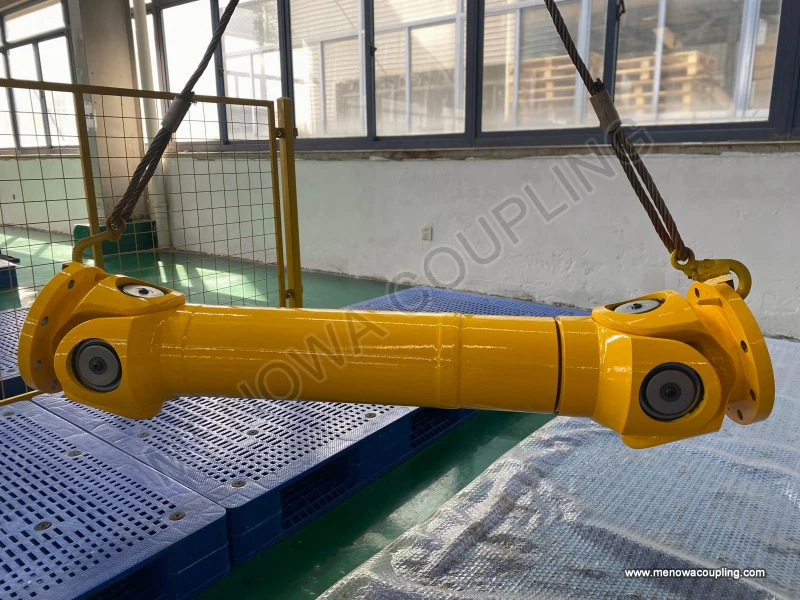
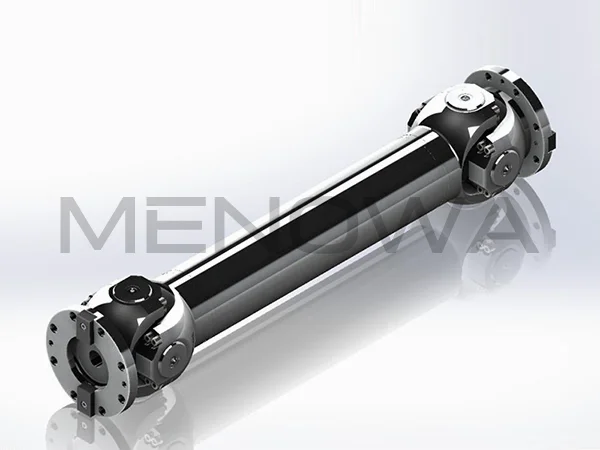
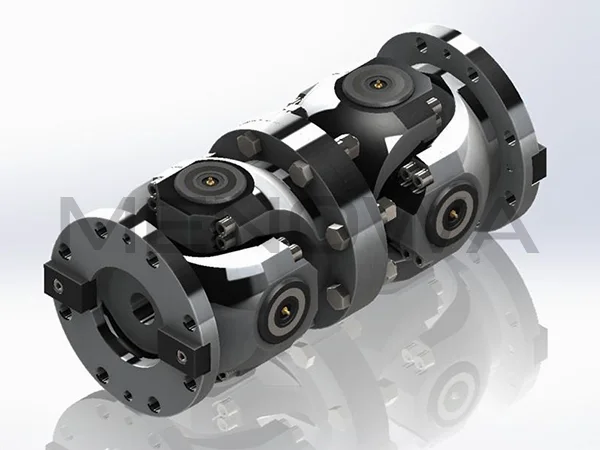
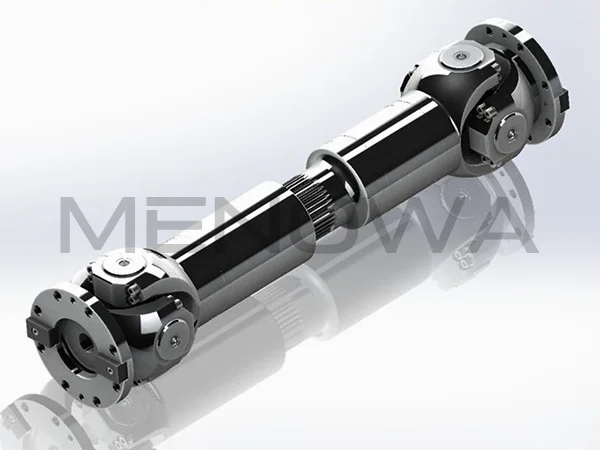
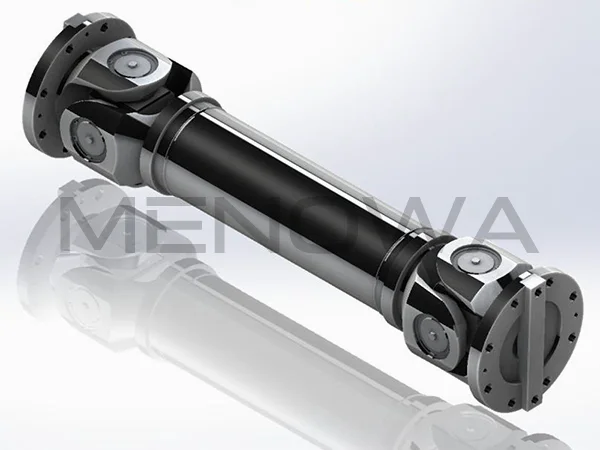
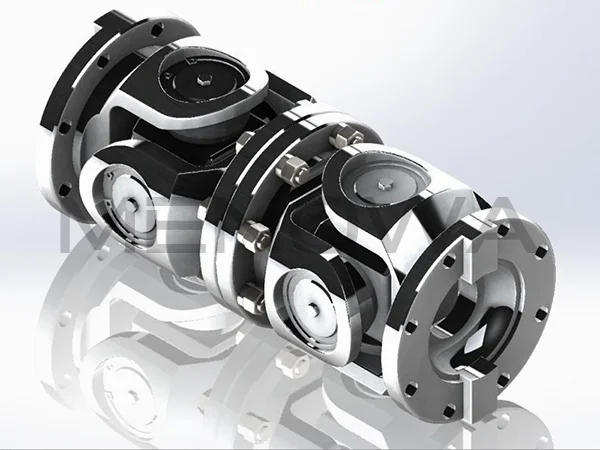
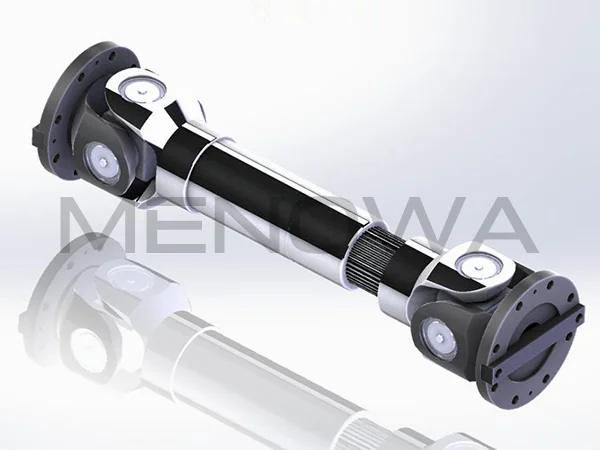
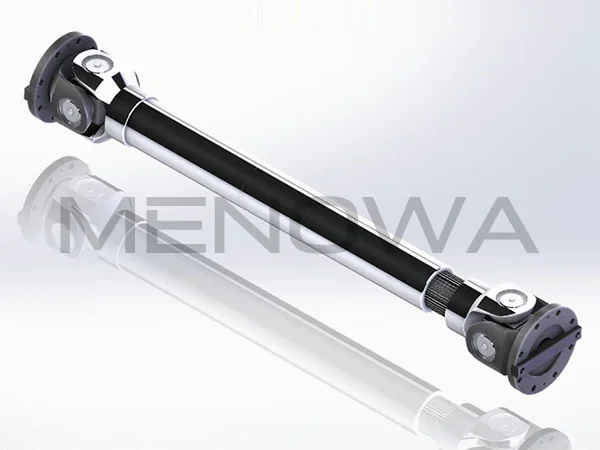
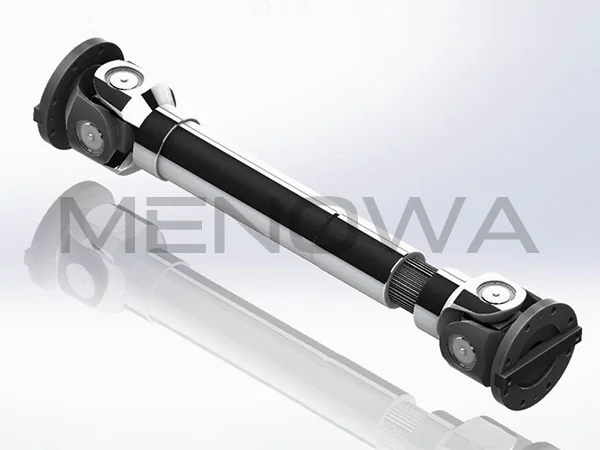
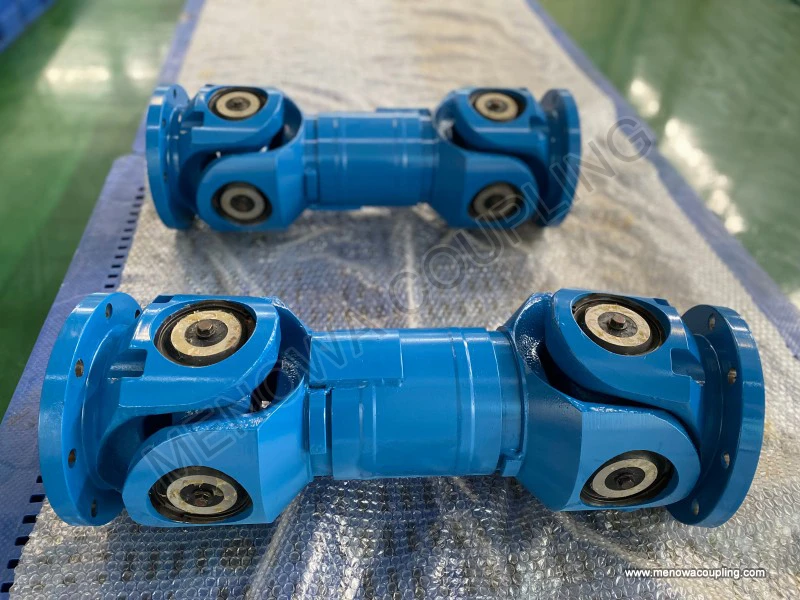
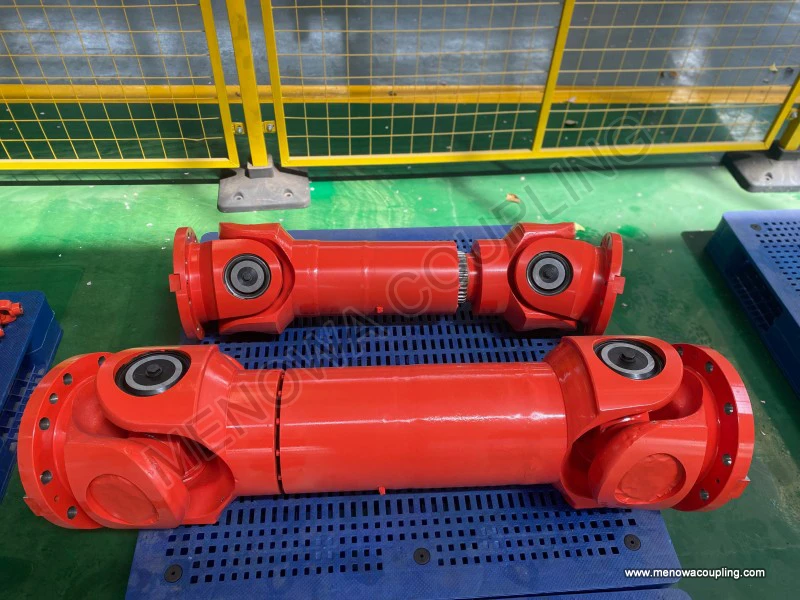
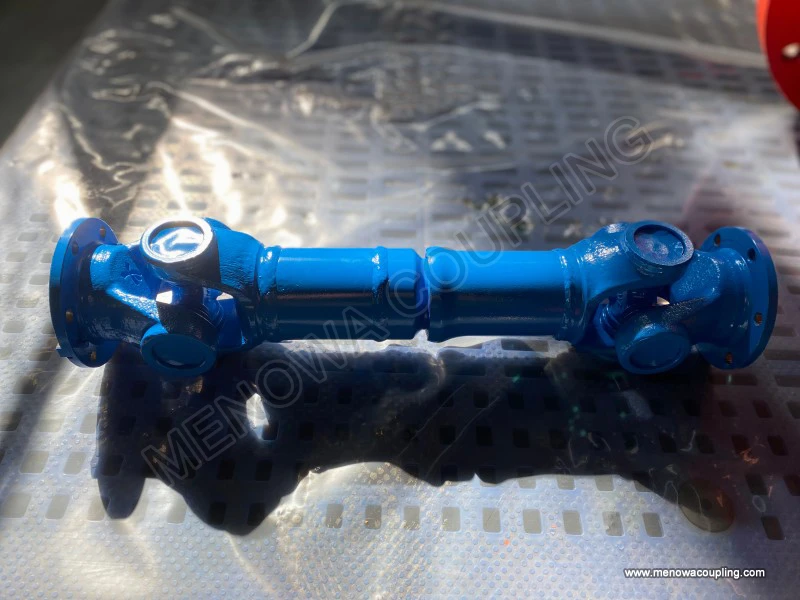
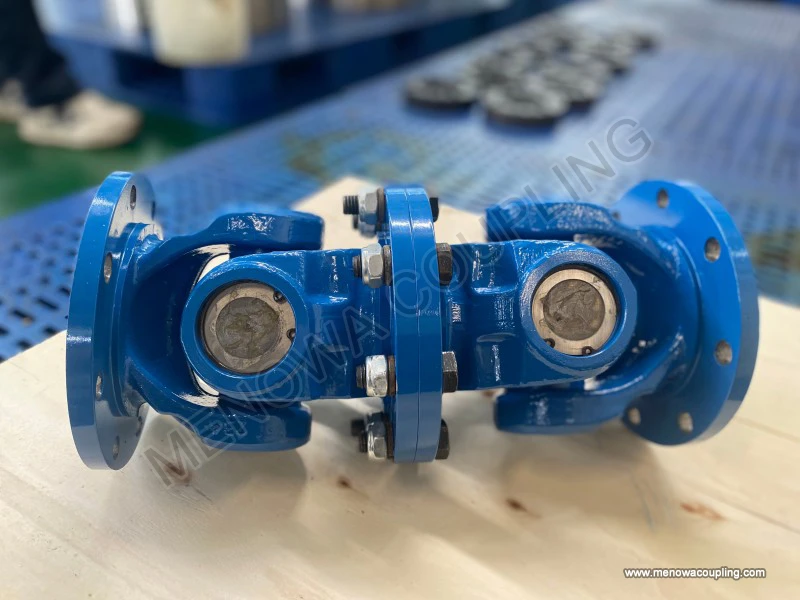
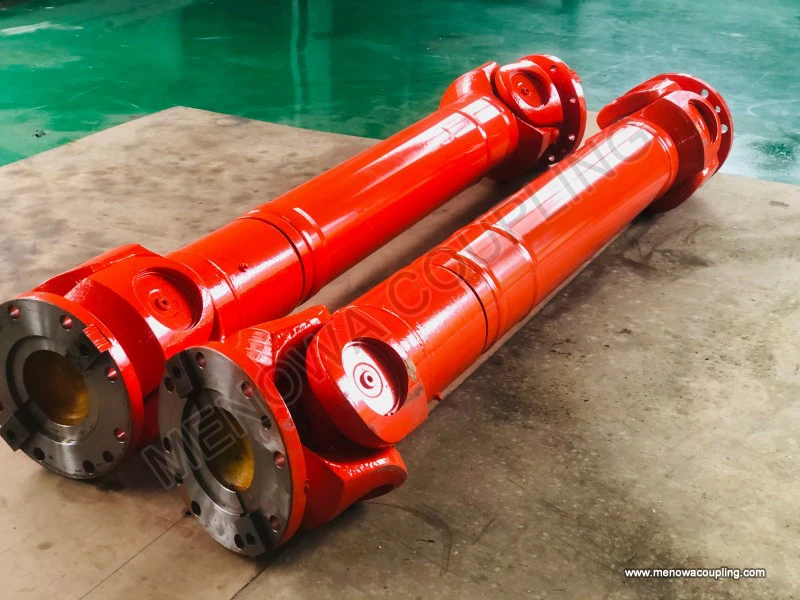
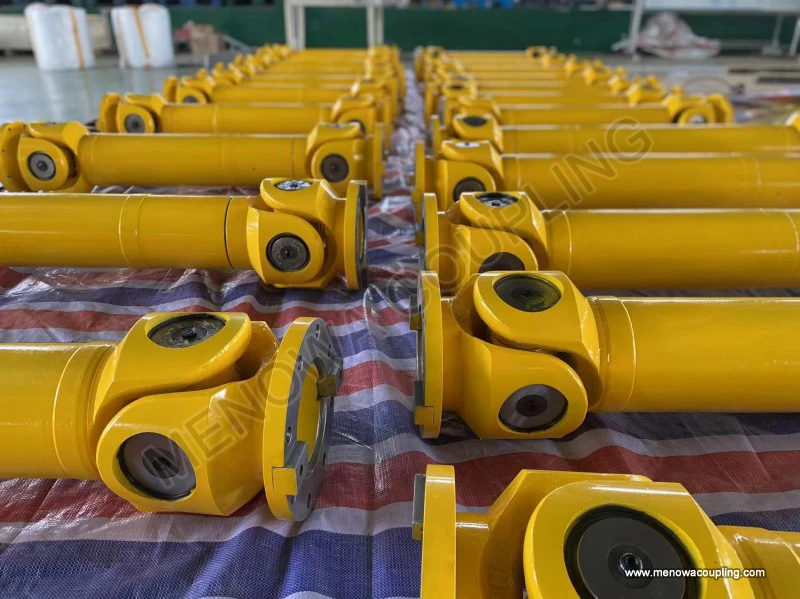
To understand the operational essence of the universal joint shaft, it is necessary to start with its basic structural composition and the internal mechanical kinematics principle that supports its stable operation. The mainstream cross-type universal joint shaft, which is most widely used in various mechanical fields, has a compact and reasonable structural layout, with all core components cooperating closely to jointly complete the torque transmission and displacement compensation work. The basic structural configuration mainly includes two fork-shaped connecting parts, a central cross-shaped spider shaft, and a set of rolling bearing assemblies matched with each shaft neck of the cross shaft. The two fork-shaped connecting parts are respectively fixed and installed on the end positions of the driving shaft and the driven shaft that need to realize power transmission, and the two forks are arranged perpendicular to each other in spatial orientation, forming a mutually constrained hinge connection state with the central cross shaft. Each shaft neck of the four ends of the cross shaft is equipped with an independent rolling bearing structure, which is embedded in the mounting hole of the fork-shaped connecting part. The bearing assembly plays a key role in reducing rotational friction and mechanical wear between the cross shaft and the fork during the power transmission process, ensuring the flexible rotation of the hinge joint and avoiding transmission jamming and mechanical failure caused by excessive friction resistance. In addition to the core force-bearing and rotating components, the universal joint shaft is also equipped with necessary auxiliary fixing and sealing parts, which are used to lock the installation position of bearings and forks, prevent component displacement and falling off during high-speed rotation and heavy load operation, and isolate external dust, moisture, and corrosive substances from entering the internal friction and rotating areas, so as to reduce abnormal wear and corrosion damage of core components and extend the overall service life of the universal joint shaft.
The working kinematics principle of the universal joint shaft follows the basic motion law of spatial multi-linkage mechanism, and its core operating state changes with the angular offset size between the driving shaft and the driven shaft and the fluctuation of operating load. When the driving shaft rotates under the drive of power equipment, the fork connected to the driving shaft will drive the central cross shaft to perform synchronous rotational motion, and the cross shaft will further transmit the rotational torque and motion to the fork connected to the driven shaft through the hinge connection relationship, finally realizing the synchronous rotation of the driven shaft and completing the whole process of power transmission. When the driving shaft and the driven shaft are kept in a completely coaxial linear state without any angular offset, the rotational speed and torque transmitted by the universal joint shaft remain stable and uniform in the whole rotation cycle, and the motion transmission ratio between the two shafts keeps consistent all the time, with no periodic speed fluctuation or torque change. However, in actual mechanical operation scenarios, the two connected shafts almost cannot maintain an absolute coaxial state due to equipment installation errors, mechanical structural design requirements, and deformation caused by load stress. Once a certain angular included angle is formed between the driving shaft and the driven shaft, the universal joint shaft will produce a periodic speed change characteristic in the rotation process. In one complete rotation cycle of the driving shaft, the rotational speed of the driven shaft will experience two acceleration and two deceleration processes periodically, resulting in slight fluctuation of instantaneous transmission torque. This inherent kinematic characteristic is a natural attribute of the single universal joint shaft structure, and it will not affect the normal use of most conventional mechanical equipment within a reasonable range of angular offset. For mechanical equipment that requires extremely stable transmission speed and torque, the design of double universal joint shafts or multiple combined universal joint shafts will be adopted in practical application, and the periodic speed fluctuation generated by a single universal joint can be mutually offset through the reasonable installation angle matching of the two groups of universal joints, so as to realize approximate constant-speed and stable torque transmission between the driving and driven shafts.
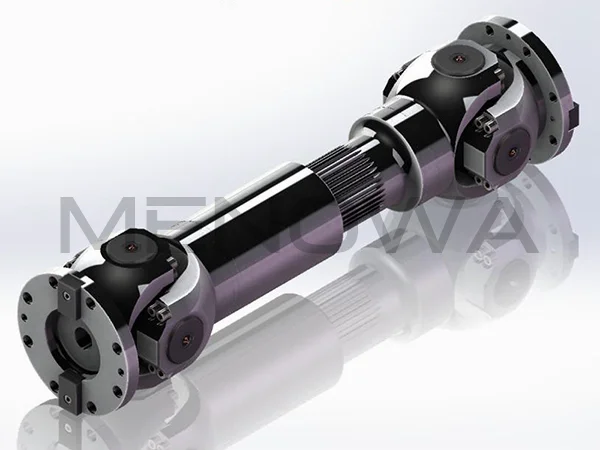
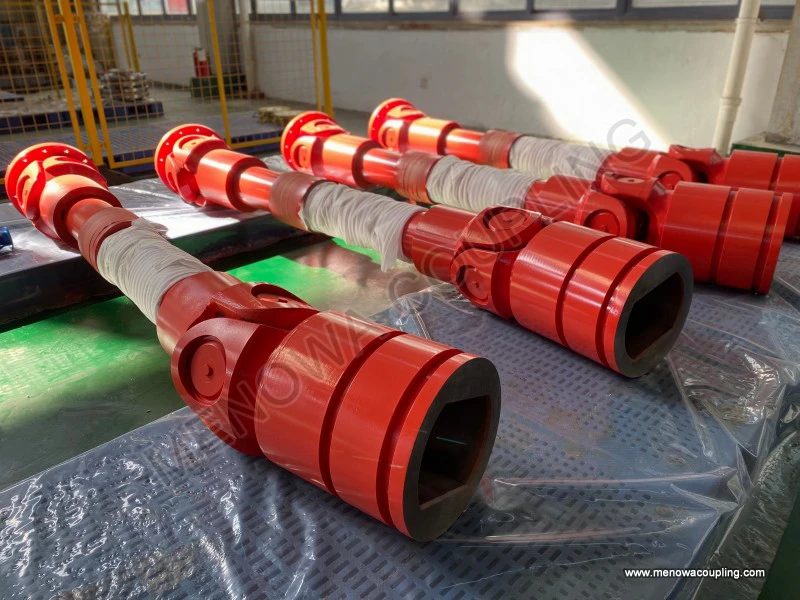
According to structural form, connection mode, and functional application differences, universal joint shafts can be divided into multiple classification types, each with unique structural characteristics and applicable working scenarios, meeting the diversified power transmission needs of different mechanical equipment. The single cross universal joint shaft is the most basic and simplest structural type, with the advantages of small overall size, light weight, convenient installation and disassembly, and low maintenance difficulty. This type of universal joint shaft is mainly suitable for mechanical transmission occasions with small angular offset, low and medium transmission load, and ordinary operating speed, and is commonly used in small and medium-sized mechanical equipment, auxiliary transmission devices, and conventional general machinery. The double universal joint shaft is assembled by two single universal joints matched with an intermediate connecting shaft, which effectively solves the periodic speed fluctuation problem of a single universal joint during operation. By adjusting the installation phase and distance between the two universal joints, the speed unevenness generated in the transmission process can be well compensated, achieving smooth and stable constant-speed transmission. It is widely used in equipment with high requirements for transmission stability, such as vehicle power transmission systems, medium and large industrial transmission machinery, and precision rotating equipment. In addition, there are telescopic universal joint shafts with axial displacement compensation function, which add a telescopic sliding structure on the basis of the traditional universal joint shaft, which can not only adapt to angular offset between shafts, but also compensate for axial position displacement caused by mechanical vibration, thermal expansion and contraction, and equipment operation movement, and is mostly used in mobile machinery and equipment with frequent position changes of transmission parts.
The material selection of each component of the universal joint shaft directly determines its mechanical bearing capacity, wear resistance, fatigue resistance, and overall operational reliability, and different working conditions correspond to targeted material matching schemes. The core force-bearing components such as the cross shaft and fork need to bear cyclic shear force, torque, and impact load during long-term operation, so high-strength alloy steel materials with good comprehensive mechanical properties are generally selected. These materials have high tensile strength, yield strength, and fatigue resistance after forging and heat treatment processes, which can resist long-term cyclic load impact and avoid structural deformation, fracture, and fatigue damage of core components. The bearing parts inside the universal joint shaft need to bear frequent rotational friction and contact wear, so high-hardness bearing steel materials are usually used, and after special quenching and tempering heat treatment, the surface hardness of the bearing parts is improved, enhancing wear resistance and pressure resistance, reducing friction loss in the rotation process, and maintaining the flexibility of hinge movement. The auxiliary sealing and fixing parts are mostly made of corrosion-resistant and aging-resistant metal and rubber composite materials, which can adapt to different environmental temperatures and working media, ensure the sealing effect of the internal structure, and prevent external impurities from interfering with the normal operation of the internal rotating components. The scientific matching of materials ensures that the universal joint shaft can maintain stable mechanical performance under different working loads and environmental conditions, and avoid premature failure caused by material performance mismatch.
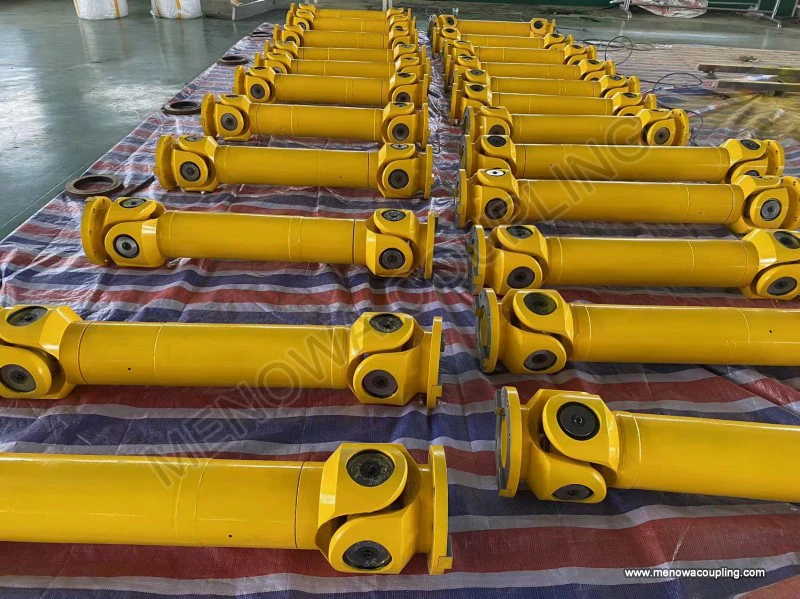
The application scope of universal joint shafts covers almost all industrial production fields and mechanical equipment types involving rotational power transmission, playing an irreplaceable core role in different industry scenarios. In the field of industrial manufacturing and heavy industry production, universal joint shafts are widely used in steel processing equipment, mining machinery, papermaking equipment, chemical production machinery, and large fan and generator transmission systems. In these heavy-load industrial scenarios, the equipment often has large structural layout space limitations, and the transmission shafts need to bear heavy torque and harsh working conditions such as high dust and high vibration. The universal joint shaft can adapt to the angular deviation and dynamic displacement generated during the operation of heavy industrial equipment, ensure the stable transmission of power between various production equipment, and support the continuous and efficient operation of the entire production line. In the field of mobile transportation machinery, universal joint shafts are key core components of vehicle power transmission systems, responsible for transmitting the power generated by the power unit to the walking and driving mechanism. Due to the complex and changeable road conditions during the driving process of transportation vehicles, the chassis and transmission structure will produce frequent vibration and position displacement, and the universal joint shaft can flexibly adapt to these dynamic changes, ensuring that the power transmission process is not affected by the jitter and displacement of the vehicle structure, and maintaining the stable driving power output of the vehicle.
In the field of mechanical processing and precision manufacturing equipment, universal joint shafts are used in various machine tools, cutting equipment, and precision rotating processing devices. Although the transmission load of these precision equipment is relatively small compared with heavy industrial machinery, the requirements for transmission stability and motion accuracy are higher. The matched high-precision universal joint shaft can realize accurate torque and motion transmission while compensating for tiny installation deviations and structural deformations of precision equipment, ensuring the processing accuracy and operational stability of mechanical processing equipment. In addition, in agricultural machinery, construction machinery, and special engineering equipment, universal joint shafts also have a large number of application layouts. These types of machinery often work in complex and harsh outdoor working environments, with large equipment operation vibration and frequent working position adjustment. The excellent displacement compensation and flexible transmission performance of universal joint shafts can fully adapt to the harsh working environment and variable working condition requirements, ensuring that all types of engineering and agricultural machinery can complete the set operation tasks smoothly. The wide application of universal joint shafts in multiple industries fully reflects the strong adaptability and practical value of this mechanical component in mechanical power transmission.
In the actual operation and application process of the universal joint shaft, the matching degree between structural design parameters and actual working conditions is a key factor affecting its transmission effect and service life, and reasonable working condition adaptation and parameter matching need to be carried out according to the actual use environment and load characteristics. The angular offset between the driving shaft and the driven shaft is the most core parameter in the use of the universal joint shaft. Each type of universal joint shaft has a reasonable allowable angular offset range designed according to its structural strength and kinematic performance. When the actual operating angular offset is within the allowable range, the universal joint shaft can maintain stable transmission performance and low wear degree; once the angular offset exceeds the design allowable value, the instantaneous torque fluctuation and mechanical stress of the universal joint shaft will increase significantly, the wear speed of internal bearings and hinge components will accelerate, and even structural deformation and component fracture failure will occur in a short time. The transmission load and operating speed are also important parameters that need to be matched reasonably. Heavy-load and high-speed working conditions require the selection of universal joint shafts with larger structural specifications and higher material strength, and the structural design needs to be optimized for heat dissipation and wear reduction; light-load and low-speed conventional working conditions can select conventional standard structural products to meet the use needs and control the overall mechanical configuration cost.
The ambient temperature and working medium environment of the equipment operation also have a significant impact on the service performance and service life of the universal joint shaft. In high-temperature working environments such as steel mills and thermal power plants, the internal lubricating grease of the universal joint shaft is prone to thinning and failure, and the metal components are prone to thermal deformation and accelerated wear; in low-temperature cold environments, the material toughness of the components will decrease, and the sealing parts are prone to aging and cracking, resulting in the loss of lubricating oil and the entry of impurities. In corrosive working environments such as chemical plants and coastal humid areas, the metal surface of the universal joint shaft is prone to corrosion and rust, which will affect the flexibility of hinge movement and reduce the structural strength of components. Therefore, for universal joint shafts used in special environments, targeted surface anti-corrosion treatment, high and low temperature resistant lubricating materials, and special sealing structural design are required to ensure that the universal joint shaft can maintain stable working performance in different harsh environments and avoid performance degradation and failure caused by environmental factors.
During the long-term continuous operation of the universal joint shaft, various forms of wear, fatigue loss, and structural aging will inevitably occur inside the components, and understanding the internal loss mechanism is the premise of realizing long-term stable operation and scientific maintenance of the universal joint shaft. The most common failure form of the universal joint shaft is friction wear of internal bearing assemblies and hinge connection parts. During the rotation and torque transmission process, relative rotational friction and sliding friction exist between the cross shaft and the bearing, and between the bearing and the fork. Under the action of long-term cyclic friction, the surface metal of the friction pair will gradually wear, resulting in increased matching clearance between components, reduced transmission accuracy, and increased vibration and noise during operation. With the continuous expansion of wear clearance, the impact load generated during torque transmission will increase, further accelerating the wear rate and forming a vicious cycle until the universal joint shaft cannot work normally. Fatigue damage is another important failure form of the universal joint shaft. The core components such as the cross shaft and fork bear cyclic alternating torque and shear load for a long time during operation. Under the repeated action of cyclic load, tiny fatigue cracks will be generated inside the metal material of the components. With the extension of operation time, the cracks will gradually expand, eventually leading to fatigue fracture of the core components and sudden failure of the transmission system.
In addition to wear and fatigue damage, seal failure and lubrication failure are also common hidden dangers affecting the normal operation of the universal joint shaft. The sealing structure of the universal joint shaft is responsible for isolating external dust, sediment, moisture, and corrosive substances, and maintaining the internal lubricating state of the rotating friction parts. After long-term operation, the sealing parts will produce aging, deformation, and wear, resulting in reduced sealing performance. External impurities will enter the internal friction area, causing abrasive wear of bearings and cross shafts; at the same time, internal lubricating grease will leak out, resulting in insufficient lubrication of friction parts, increased friction resistance, and accelerated component wear. Vibration and impact generated by mechanical equipment during operation will also cause loose installation and displacement of universal joint shaft components, changing the original matching state between components, increasing additional mechanical stress, and inducing abnormal noise, vibration, and early failure of the universal joint shaft. All these loss and failure mechanisms interact and influence each other, jointly determining the actual service life and operational stability of the universal joint shaft, and also putting forward clear requirements for daily maintenance and regular maintenance work.
Scientific and standardized daily maintenance and regular maintenance are effective means to reduce the loss rate of the universal joint shaft, delay component aging, extend service life, and ensure long-term stable and reliable operation. The core of daily maintenance work is to do a good job in the inspection of operating status and the maintenance of lubrication and sealing conditions. During the daily operation of mechanical equipment, operators and maintenance personnel need to regularly observe the operating state of the universal joint shaft, check whether there is abnormal vibration, abnormal noise, and obvious temperature rise during operation. Abnormal vibration and noise often indicate that the internal wear clearance of the universal joint shaft is too large or the components are loose, and excessive temperature rise usually reflects insufficient internal lubrication or excessive friction wear. Once abnormal phenomena are found, the equipment should be shut down in time for inspection and troubleshooting to avoid small faults evolving into large mechanical failures. Regular lubrication maintenance is crucial to the universal joint shaft. According to different working conditions and operating intensity, regular injection of special lubricating grease for bearings and hinge parts is required to ensure that all friction rotating surfaces are fully lubricated, reduce friction resistance and wear loss, and take away the heat generated by friction through lubricating grease to avoid overheating damage of components.
Regular disassembly, inspection and maintenance are essential maintenance links for the long-term operation of the universal joint shaft, and it is necessary to carry out comprehensive disassembly and detailed inspection according to the fixed maintenance cycle. During the maintenance process, all core components of the universal joint shaft need to be disassembled and cleaned to remove internal dust, dirt, and deteriorated residual lubricating grease. The wear degree of the cross shaft, bearing assembly, fork, and other key components should be carefully checked, and the components with excessive wear, obvious deformation, and fatigue cracks should be replaced in a timely manner to ensure that the matching clearance and structural strength of all components meet the operational requirements. The aging and damaged sealing parts need to be replaced comprehensively to restore the sealing performance of the universal joint shaft, prevent impurity intrusion and lubricating oil leakage. After the inspection and replacement of components, the universal joint shaft should be reassembled in strict accordance with the installation process requirements, ensuring that the installation position is accurate, the fastening torque is appropriate, and the matching state between components is good. After assembly, a trial run test is required to check whether the operation is stable and whether there is abnormal vibration and noise, ensuring that the universal joint shaft returns to the normal working state.
With the continuous progress of modern mechanical manufacturing technology and the upgrading and iteration of industrial mechanical equipment, the development trend of universal joint shafts is constantly moving towards structural optimization, material upgrading, performance improvement, and intelligent matching. In terms of structural design, with the help of modern computer simulation technology and finite element analysis technology, mechanical designers can carry out accurate stress analysis and motion simulation on the universal joint shaft structure, optimize the structural size and force-bearing layout of core components, reduce the overall weight of the universal joint shaft on the premise of ensuring structural strength and bearing capacity, improve transmission efficiency, and reduce energy consumption in the transmission process. In terms of material application, with the continuous emergence of new high-strength, wear-resistant, and corrosion-resistant alloy materials and composite materials, the comprehensive mechanical performance and environmental adaptability of universal joint shafts are continuously improved, which can adapt to more harsh working conditions and longer continuous operation time, reducing the frequency of component replacement and maintenance costs. In terms of processing and manufacturing technology, the application of precision forging, CNC precision machining, and advanced heat treatment technology makes the dimensional accuracy and surface processing quality of universal joint shaft components higher, the matching precision between components better, and the transmission stability and wear resistance further enhanced.
In the context of the rapid development of intelligent mechanical equipment and automated production lines, the universal joint shaft is also gradually developing in the direction of intelligent monitoring and adaptive adjustment. By matching with tiny sensor components, the operating torque, rotational speed, vibration amplitude, and temperature parameters of the universal joint shaft can be monitored in real time during the operation process. The operating state data is transmitted to the equipment control system, which can realize real-time early warning of abnormal wear, loose components, and potential failure hidden dangers of the universal joint shaft, so that maintenance personnel can carry out targeted maintenance and troubleshooting in advance, realizing predictive maintenance of the universal joint shaft and avoiding sudden shutdown and production loss caused by mechanical failure. In addition, aiming at the special working conditions of variable load and variable angular offset, the adaptive adjustable universal joint shaft structure is also constantly researched and developed, which can automatically adjust the internal matching state and force-bearing distribution according to the actual operating load and angular offset, further improving the operational stability and service adaptability of the universal joint shaft.
Throughout the entire development and application process of the universal joint shaft, this basic mechanical component has always adhered to the core design concept of flexible power transmission and displacement compensation, and has been continuously optimized and improved with the development of mechanical engineering technology and the changing market application needs. From the initial simple hinge transmission structure to the modern standardized, high-precision, and high-durability mechanical component system, the universal joint shaft has always played an important basic supporting role in the development of mechanical industry and the operation of various mechanical equipment. Although the structure of the universal joint shaft is relatively simple in the entire mechanical system, its functional importance and application value cannot be ignored. All mechanical transmission scenarios that need to adapt to angular offset and dynamic displacement are inseparable from the support and cooperation of the universal joint shaft. In the future, with the continuous upgrading of industrial manufacturing, intelligent equipment, and special mechanical equipment, the performance requirements for universal joint shafts will continue to increase, and the technological innovation and structural optimization of universal joint shafts will continue to advance accordingly. Through continuous improvement of structural design, material performance, manufacturing technology, and maintenance management level, the universal joint shaft will continue to adapt to more complex working conditions and higher standard mechanical transmission needs, maintain its important position in the field of mechanical power transmission, and provide stable and reliable basic guarantee for the safe and efficient operation of various mechanical equipment and the sustainable development of the mechanical industry.
Post Date: Apr 26, 2026
https://www.menowacoupling.com/coupling-supplier/universal-joint-shaft.html
Products
Tags
Related Articles
Universal Coupling Vendor In China
Universal couplings stand as indispensable mechanical transmission components in modern industrial systems, serving as core connecting parts that transmit torque and rotational power between misaligned drive shafts. In China’s complete industrial manufacturing ecosystem, universal coupling production and supply have fo…What is Universal Coupling
A universal coupling, commonly referred to as a universal joint or U-joint, is a fundamental mechanical transmission component designed to connect two rotating shafts while enabling reliable transfer of torque and rotational motion under misaligned operating conditions. Unlike rigid coupling mechanisms that demand preci…Dimensions of Universal Coupling
Universal couplings, commonly known as universal joints or Cardan joints, serve as fundamental mechanical components for power transmission between misaligned rotating shafts in diverse mechanical systems. Their dimensional parameters are the core factors that determine structural compatibility, operational stability, l…Universal Coupling Exporter
As a vital component in mechanical transmission systems, universal couplings play an irreplaceable role in connecting two shafts that are not in the same axis or have relative displacement, ensuring stable and efficient torque transmission. For universal coupling exporters, understanding the product’s working principle…Universal Coupling Wholesale
In the global mechanical transmission industry, universal couplings have emerged as indispensable core components for power transmission systems, widely favored by downstream manufacturing, engineering, and transportation sectors across international markets. As global industrialization continues to advance and mechanic…Working Principle of Universal Coupling
A universal coupling, also widely known as a universal joint, is a fundamental mechanical transmission component designed to solve the core problem of power transmission between two non-collinear rotating shafts. Unlike rigid couplings that only work efficiently when connected shafts maintain perfect coaxial alignment, …Gap Chart of Universal Coupling
The operational stability and transmission accuracy of universal couplings are fundamentally determined by the internal gap distribution between mating components, making gap chart analysis a core technical method for evaluating assembly quality, predicting operating performance, and optimizing structural design. A univ…Universal Coupling For Ball Mill
In the complex and demanding operating environment of mineral processing, building materials production, chemical raw material grinding and other heavy industrial fields, ball mills stand as core processing equipment responsible for crushing and grinding various bulk raw materials into fine particles and powders that me…Universal Coupling Fabrication
Universal coupling fabrication stands as a foundational discipline within mechanical manufacturing, focusing on the precise production of flexible shaft connection components that enable reliable torque transmission between misaligned rotating shafts. As a core mechanical component widely adopted in power transmission s…Maintenance of Universal Coupling
Universal couplings serve as indispensable connecting components in mechanical transmission systems, designed to transmit rotational torque between two shafts that operate with angular misalignment, parallel offset, or variable positional relationships. Widely applied in industrial transmission equipment, mechanical eng…
 WeChat
 WhatsApp