Flexible Coupling
In the complex and interconnected operating system of modern mechanical transmission engineering, the stable connection and efficient power transmission between rotating shafts have always been the core foundational link that determines the overall operating state of mechanical equipment. Every piece of rotating machinery, whether it is large-scale industrial production equipment supporting continuous manufacturing operations, precision mechanical devices engaged in high-precision processing and testing, or power propulsion systems operating in harsh and changeable working environments, relies on reliable connecting components to realize the synchronous rotation and torque transfer between driving parts and driven parts. Among various mechanical connecting components used for shaft connection and power transmission, flexible coupling stands out as a vital basic mechanical part that balances transmission efficiency, operational stability and environmental adaptability, playing an irreplaceable role in coordinating the coordinated operation of mechanical systems and protecting the long-term safe service of equipment components. Unlike rigid connecting structures that require absolute alignment of connected shafts and cannot tolerate any relative displacement or deformation during operation, flexible coupling is ingeniously designed with structural flexibility and elastic deformation characteristics, which can not only complete the basic torque transmission work between two rotating shafts stably and continuously, but also adapt to various inevitable axis deviations and mechanical vibrations generated in the actual operation of equipment, effectively resolving the mechanical conflicts caused by installation errors, operational deformation and environmental changes in mechanical transmission systems.
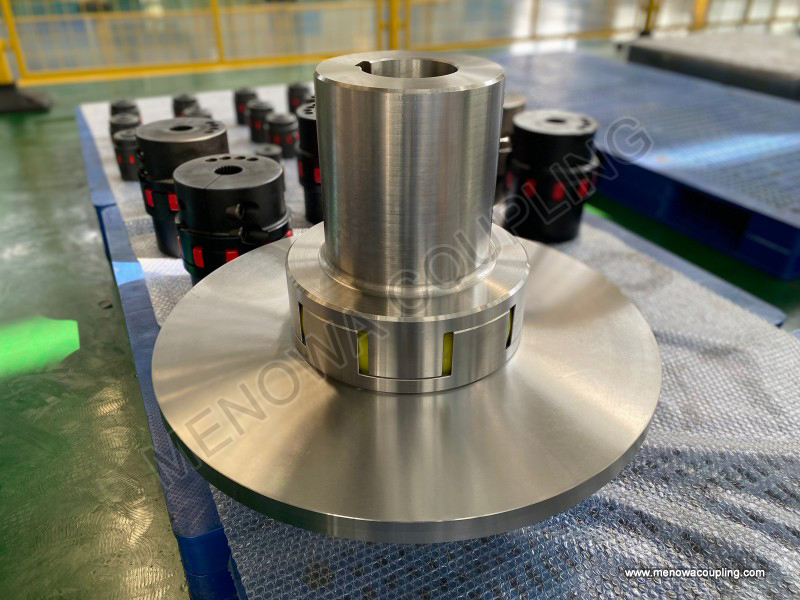
The basic design logic of flexible coupling originates from the practical pain points summarized in long-term mechanical operation practice. In the actual assembly and subsequent service process of any mechanical transmission equipment, it is almost impossible to achieve an absolute ideal alignment state of the two connected shafts. Due to the inherent errors in mechanical processing and manufacturing of shaft parts, subtle deviations in manual or mechanical assembly and installation work, slight structural deformation of the frame and base of the equipment after long-term load-bearing operation, gradual wear and aging of bearing components during continuous rotation, and thermal expansion and contraction deformation of metal materials caused by frequent changes in operating temperature of the equipment, various forms of misalignment will inevitably occur between the driving shaft and the driven shaft connected by the coupling. These misalignment states mainly include radial offset where the central lines of the two shafts are parallel but not coincident, angular offset where the central lines of the two shafts form a certain included angle, and axial displacement where the two shafts move back and forth along the rotation direction. If rigid connecting structures are used to connect the shafts with these unavoidable deviations, additional mechanical stress will be continuously generated inside the transmission system during the operation of the equipment. This extra stress will not only cause severe friction and extrusion between shaft parts and connecting components, accelerate the wear and damage of key parts such as bearings and shafts, but also lead to obvious vibration and noise during equipment operation, affect the transmission accuracy of the entire mechanical system, and even cause structural fatigue damage and sudden equipment shutdown in severe cases, bringing unnecessary operational risks and additional maintenance pressure to industrial production and mechanical application scenarios. It is precisely to solve these practical mechanical operation problems that flexible coupling adopts a special structural form and elastic material configuration, using the flexible deformation of internal components to absorb and compensate for various shaft misalignments, eliminate additional mechanical stress in the transmission process, and maintain the stability and continuity of power transmission under non-ideal alignment conditions.
The working mechanism of flexible coupling revolves around the organic combination of torque transmission and deformation compensation, forming a balanced mechanical operation mode that integrates rigidity for power transmission and flexibility for deviation adaptation. In the power transmission link, the flexible coupling relies on the basic structural connection between the two shaft ends and the internal load-bearing components to stably transmit the rotational torque generated by the driving equipment to the driven equipment, ensuring that the rotational speed and power output of the power source can be effectively converted and transmitted to the working execution components, and realizing the normal power supply required for the operation of mechanical equipment. In the deviation compensation and vibration damping link, the core advantage of flexible coupling is fully exerted by the elastic deformation of its internal flexible elements. When various misalignments occur between the connected two shafts, the flexible components inside the coupling will produce reversible elastic deformation according to the actual offset degree and direction. This subtle deformation does not affect the overall torque transmission effect, but can effectively offset the displacement deviation between the shafts, avoid the direct rigid collision and friction between the shaft bodies and connecting parts, and disperse and release the additional mechanical stress generated by shaft misalignment in time. At the same time, in the operation process of mechanical equipment, various mechanical shocks and vibration disturbances will be generated due to load changes, start-stop switching and uneven operation of internal parts. The flexible elements of the coupling can also absorb and buffer these vibration impacts through their own material elasticity and structural flexibility, reduce the vibration amplitude transmitted along the shaft system, weaken the resonance effect inside the mechanical equipment, and reduce the mechanical noise generated by vibration friction during equipment operation. This dual working mechanism enables flexible coupling to maintain efficient power transmission efficiency on the premise of adapting to various non-ideal working conditions, and effectively protect the safety and stability of each component of the mechanical transmission system.
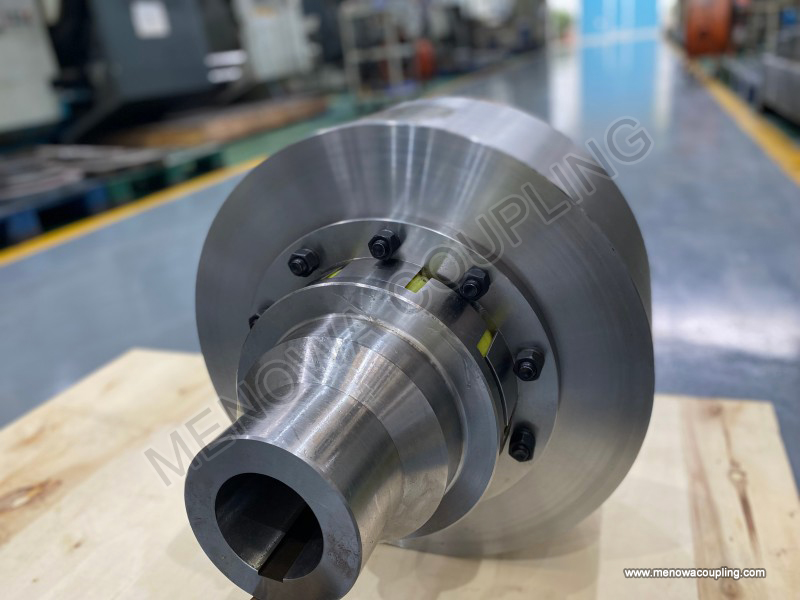
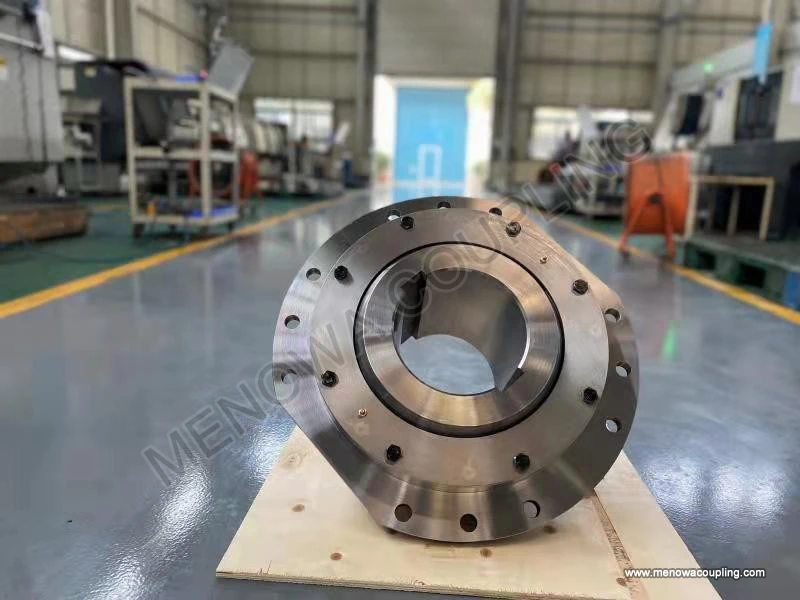
The structural design forms of flexible coupling are rich and diverse, and different structural types are designed and optimized according to different transmission torque ranges, misalignment compensation requirements, operating speed conditions and environmental application scenarios, but all structural forms follow the core design concept of combining basic rigid connection and flexible deformation coordination. Some flexible couplings realize flexible compensation through integral elastic structural parts, using the integral deformation characteristics of a single elastic component to cope with multi-directional shaft displacement and vibration buffering. This structural form is relatively simple in overall configuration, convenient for installation and disassembly work, and not easy to accumulate dust and sundries during long-term operation, with low daily maintenance difficulty. This kind of coupling structure is mostly suitable for conventional mechanical transmission scenarios with medium and low torque demand, general vibration intensity and ordinary operating environment, and can meet the daily stable operation needs of most common industrial mechanical equipment. Other flexible couplings adopt a combined structural form, composed of multiple rigid connecting parts and multiple distributed elastic flexible elements. The rigid parts are responsible for stabilizing the fixed connection with the shaft body and undertaking the main torque transmission task, while the distributed elastic flexible elements are responsible for deformation compensation and vibration damping work. This combined structural design can allocate the force-bearing and deformation functions in a targeted manner, making the torque transmission more uniform and the misalignment compensation more precise, and can withstand larger transmission torque and adapt to more complex and harsh operating working conditions. Different structural designs also determine the different deformation limits and stress bearing ranges of flexible couplings, making each type of flexible coupling have its own targeted application orientation in mechanical matching.
Material selection is one of the key factors that determine the comprehensive performance and service life of flexible coupling, and different material characteristics directly affect the deformation compensation ability, vibration damping effect, wear resistance and environmental adaptability of the coupling. The flexible elements of flexible couplings are mostly made of high-quality elastic materials with good comprehensive mechanical properties, including various elastic polymer materials and modified composite elastic materials. These materials have excellent elastic recovery performance, can produce stable reversible elastic deformation under long-term repeated stress, and will not easily produce permanent deformation or structural fatigue damage after long-term cyclic deformation work. At the same time, these elastic materials have good vibration absorption and energy dissipation characteristics, which can effectively convert the mechanical vibration energy and impact energy generated during the operation of the equipment into tiny internal energy consumption, so as to achieve the purpose of reducing vibration and noise. For the rigid connecting parts of flexible couplings, high-strength metal materials with good rigidity, wear resistance and structural stability are usually selected. These metal materials can ensure that the connecting parts will not deform or loosen during long-term torque transmission, maintain the stable connection state between the coupling and the shaft body, and ensure the continuity and stability of power transmission. In addition, for flexible couplings used in special working environments such as high temperature, low temperature, humid corrosion and dusty wear, the materials of flexible elements and rigid parts will be specially optimized and adjusted. Special high and low temperature resistant elastic materials are selected to ensure that the flexibility and deformation compensation performance will not fail under extreme temperature conditions, and anti-corrosion and wear-resistant metal materials are used to avoid structural damage and performance attenuation caused by environmental corrosion and particle wear. The scientific matching of different materials enables flexible couplings to maintain stable working performance in various complex working environments and extend the overall service cycle.
In the actual operation and application of mechanical systems, the protective value of flexible coupling for mechanical equipment is reflected in every link of equipment operation, maintenance and life cycle management. In the equipment start-stop and load switching stage, mechanical equipment will generate obvious instantaneous impact force due to the sudden change of power output and load bearing state. The flexible structure of the coupling can effectively buffer this instantaneous impact force, avoid the direct action of the impact load on the shaft body, bearings and core transmission parts, prevent the structural damage of key parts caused by frequent impact, and make the start-stop and load switching process of the equipment more gentle and stable. In the normal continuous operation stage of the equipment, the flexible coupling continuously compensates for the subtle shaft misalignment generated by operation deformation and part wear in real time, eliminates the additional fatigue stress inside the transmission system, reduces the friction and wear between rotating parts, and slows down the aging and wear speed of bearings, sealing parts and other vulnerable parts. Long-term stable operation without additional stress interference can effectively reduce the failure probability of mechanical equipment, reduce the frequency of unexpected equipment shutdown caused by transmission part damage, and ensure the continuity and stability of production and operation work. In the daily equipment maintenance and later overhaul work, the application of flexible coupling also reduces the maintenance difficulty and maintenance cost of mechanical equipment. Due to the good protection effect of the coupling on the core transmission parts, the wear and damage degree of key components is reduced, the replacement cycle of vulnerable parts is prolonged, and the workload of daily inspection and maintenance is reduced. At the same time, most flexible couplings have simple and convenient assembly and disassembly structures, which do not need complex professional operation steps and special tools during installation and replacement, saving time and labor costs for equipment maintenance and overhaul work.
The application scope of flexible coupling covers almost all industrial fields involving mechanical rotating transmission, showing strong environmental adaptability and working condition matching performance in different industry scenarios. In the field of industrial manufacturing and processing machinery, various production and processing equipment such as processing machine tools, conveying machinery, mixing and stirring equipment all need flexible couplings to connect the power motor and the working execution shaft. These processing and production equipment often run continuously for a long time, with certain vibration during operation and inevitable installation and operation misalignment. The application of flexible coupling ensures the stable power transmission of the production equipment, reduces the vibration impact on the processing accuracy and production stability, and maintains the efficient and continuous operation of the production line. In the field of fluid power equipment such as pump bodies and fan equipment, such mechanical equipment will generate obvious vibration and axial and radial displacement during operation due to the impact and flow change of fluid medium. Flexible coupling can well adapt to this working characteristic, compensate for the shaft displacement caused by fluid impact and equipment vibration, buffer the vibration generated by fluid operation, ensure the stable operation of pump and fan equipment, avoid equipment failure caused by long-term vibration, and maintain the stable output of fluid transmission and ventilation work.
In the field of transportation and mobile mechanical equipment, flexible coupling also plays an important role in the power transmission system of various mobile machinery and transportation equipment. The power propulsion system of mobile machinery will face complex and changeable working conditions during operation, with frequent load changes and obvious vibration impact caused by road conditions and working environment changes. Flexible coupling can buffer the vibration and impact in the power transmission process, adapt to the slight shaft displacement generated by the vibration of the mobile equipment body, ensure the stable transmission of power propulsion, improve the smoothness of equipment operation, and protect the power system and transmission components from impact damage. In the field of new energy and power generation equipment, various power generation devices that convert mechanical energy into electrical energy need stable mechanical transmission connection to ensure the stable operation of power generation components. The operating environment of new energy power generation equipment is mostly open and changeable, affected by environmental climate and natural conditions, and the mechanical parts are prone to thermal deformation and structural vibration. Flexible coupling can adapt to the environmental changes and operating characteristics of power generation equipment, compensate for shaft deviation caused by thermal deformation, buffer mechanical vibration in the power generation process, ensure the stability of mechanical energy transmission, and improve the overall operating efficiency and service life of power generation equipment.
In the field of precision machinery and testing equipment, the transmission accuracy and operational stability of mechanical systems are extremely high, and any slight vibration and shaft misalignment will affect the working accuracy and testing effect of precision equipment. Flexible coupling used in precision mechanical equipment adopts more refined structural design and high-precision elastic materials, which can accurately compensate for tiny shaft misalignment, reduce the vibration amplitude in the transmission process to a low level, ensure the synchronous rotation accuracy of the connected shafts, avoid the deviation of processing and testing results caused by transmission vibration and displacement, and meet the high-precision operation requirements of precision machinery and testing equipment. In the field of marine and offshore engineering equipment, the mechanical equipment used in marine working environment needs to face harsh conditions such as humid corrosion, wave impact and variable load operation. The specially designed flexible coupling for marine environment has good corrosion resistance and impact resistance, can adapt to the shaft displacement and vibration caused by wave impact and marine environmental changes, maintain the stable operation of marine mechanical transmission system, and resist the corrosion and damage of marine humid and salt spray environment to the connecting parts, ensuring the safety and reliability of marine engineering equipment in long-term marine operation.
The reasonable selection and matching of flexible coupling is an important prerequisite to give full play to its comprehensive performance and ensure the stable operation of mechanical equipment. In the selection process of flexible coupling, it is necessary to comprehensively consider multiple key factors related to the actual working conditions of the mechanical system, rather than blindly selecting according to a single parameter or simple matching standard. First of all, it is necessary to clarify the actual torque demand of the mechanical transmission system, including the rated torque during normal operation and the instantaneous peak torque during equipment start-stop and load impact, to ensure that the selected flexible coupling can bear the long-term stable torque transmission and instantaneous impact load without structural deformation or performance failure. Secondly, it is necessary to accurately evaluate the misalignment degree of the two connected shafts in the actual working state, including the radial, angular and axial displacement ranges generated by installation errors, operation deformation and temperature changes, and select a flexible coupling with matching deformation compensation capacity to ensure that all shaft deviations can be effectively compensated within the working range of the coupling.
In addition, the operating speed of the mechanical equipment and the vibration intensity of the working environment are also important selection indicators. For mechanical equipment with high operating speed, it is necessary to select a flexible coupling with stable structural operation and small vibration amplification effect, to avoid additional resonance and vibration problems caused by the coupling itself during high-speed rotation. For working environments with severe vibration and frequent impact, it is necessary to prioritize flexible couplings with good vibration damping and buffering performance, to reduce the vibration impact on the entire transmission system. At the same time, the environmental conditions of equipment operation, including operating temperature, ambient humidity, corrosive medium and dust wear degree, should also be fully considered, and the material and structural type of the coupling should be reasonably selected to ensure that the coupling can maintain stable working performance in the corresponding operating environment and will not have performance attenuation or structural damage due to environmental factors. Only through comprehensive consideration of various working condition factors and scientific selection and matching can the flexible coupling be perfectly adapted to the mechanical transmission system, give full play to its advantages of deviation compensation, vibration damping and impact buffering, and maximize the protection effect on mechanical equipment.
With the continuous progress of modern mechanical manufacturing technology and the continuous upgrading of industrial production demand, the design level and manufacturing process of flexible coupling are also constantly developing and optimizing, and the performance of flexible coupling is continuously improved to adapt to more complex and high-standard mechanical application scenarios. In terms of structural design, with the help of modern mechanical simulation technology and finite element analysis methods, the internal stress distribution and deformation state of flexible coupling under different working conditions can be accurately calculated and predicted, the structural size and stress-bearing form of the coupling can be optimized, the deformation compensation efficiency and torque transmission stability of the coupling can be improved, and the structural weight and material consumption can be reduced on the premise of ensuring performance. In terms of material research and development and application, with the continuous innovation of new elastic composite materials and high-strength metal materials, the new generation of flexible coupling has better elastic recovery performance, higher wear resistance and corrosion resistance, longer fatigue service life, and can adapt to more extreme working environments and longer continuous operation cycles.
In terms of application matching and personalized customization, flexible coupling is developing towards refined and specialized direction. According to the unique working condition characteristics and special operation requirements of different industries and different mechanical equipment, targeted personalized design and customized production can be carried out to meet the differentiated transmission and protection needs of various special mechanical systems. In the future development process, as the mechanical equipment continues to develop towards high precision, high efficiency, long life and high reliability, the importance of flexible coupling as a basic connecting component will be further highlighted. The continuous optimization and upgrading of flexible coupling technology will also provide more solid basic guarantee for the stable operation and efficient development of modern mechanical engineering and industrial production.
Throughout the entire mechanical transmission engineering system, flexible coupling is not a complex core mechanical component, but it undertakes the important basic work of connecting power transmission, adapting to working condition changes and protecting equipment safety. Its unique flexible deformation compensation principle and excellent comprehensive mechanical performance make it an indispensable key part in all rotating mechanical transmission systems. From conventional industrial production equipment to professional precision mechanical devices, from land transportation machinery to marine engineering equipment, from conventional normal temperature working conditions to extreme complex application environments, flexible coupling always relies on its stable and reliable working performance to coordinate the orderly operation of mechanical transmission links, reduce equipment operation failure risks, extend the overall service life of machinery and equipment, and create stable and reliable operating conditions for various mechanical application scenarios. Understanding the working principle, structural characteristics, material performance and application matching requirements of flexible coupling is not only conducive to the scientific selection and standardized application of couplings in mechanical design and equipment maintenance work, but also helps to better grasp the overall operation law of mechanical transmission systems, promote the stable operation and efficient development of modern mechanical industry, and lay a solid foundation for the continuous progress and innovation of mechanical engineering technology.
https://www.menowacoupling.com/industrial-coupling/flexible-coupling.html
Related Articles
Advantages Of Flexible Coupling
Apr 25, 2026In the complex and interconnected world of mechanical power transmission, the seamless transfer of torque and rotational motion between rotating shafts stands as a foundational requirement for the steady operation of all types of industrial and commercial machinery. Every mechanical system that relies on motors, engines…
 WeChat
 WhatsApp