Universal Joint Drive Shaft
In the intricate and interconnected ecosystem of mechanical power transmission, the universal joint drive shaft stands as one of the most fundamental and indispensable mechanical assemblies, serving as a critical bridging component that facilitates the seamless transfer of rotational torque and mechanical motion between two separate rotating shafts that cannot maintain perfect linear alignment in practical operating environments. Every mechanical system that relies on rotational power output and transmission, whether land-based mobile machinery, stationary industrial processing equipment, agricultural field operation machinery, or engineering construction machinery working in complex and harsh working conditions, inevitably faces the objective reality of shaft misalignment caused by structural layout design, equipment operation vibration, component thermal expansion and contraction, and mechanical deformation under long-term load. Without a reasonable and reliable flexible transmission connection structure, rigidly connected shafts would generate enormous additional mechanical stress during operation, leading to accelerated component wear, structural deformation of the transmission system, increased operational vibration and noise, and even sudden mechanical failure that interrupts normal production and operation processes. The universal joint drive shaft perfectly solves this core mechanical pain point through its unique structural design and flexible motion coordination mechanism, enabling stable and continuous power transmission even when the connected shafts produce angular deflection, axial displacement, and slight radial offset during operation, adapting to diverse and complex working condition changes and maintaining the overall stability and continuity of the mechanical power transmission process. This mechanical assembly is not a single simple part but a complete integrated combination of multiple precision processed mechanical components, each with independent structural functions and mechanical bearing characteristics, cooperating and restricting each other in the working process to jointly complete the whole process of power input, flexible transmission, motion adjustment and power output, and its structural design, material selection, processing precision, assembly process and later maintenance management all directly determine the overall service life, transmission efficiency and operational stability of the entire mechanical transmission system.
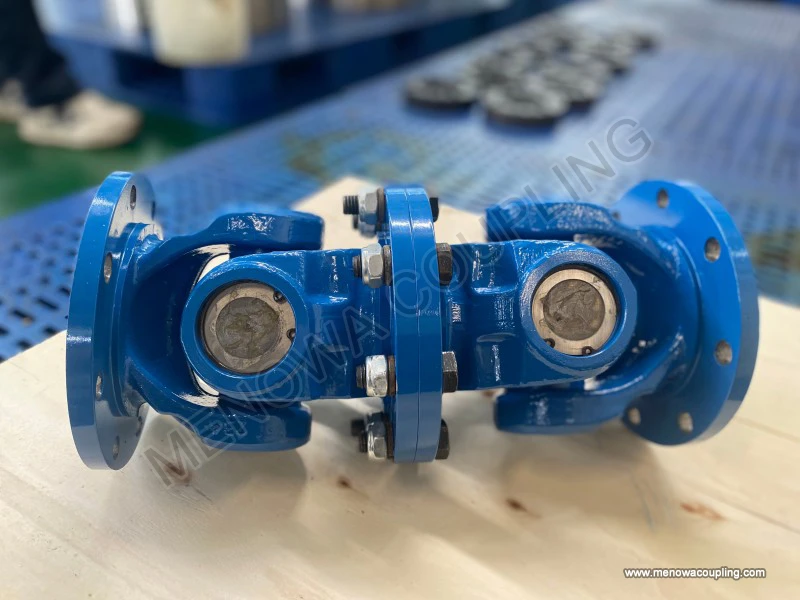
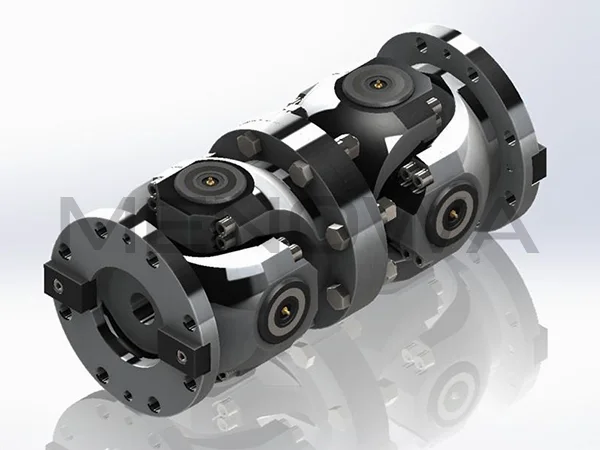
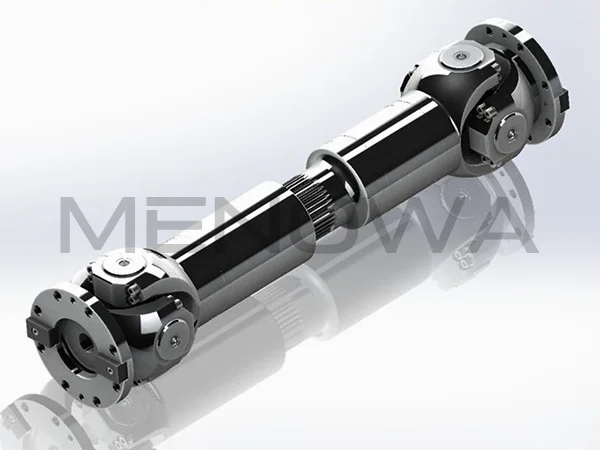
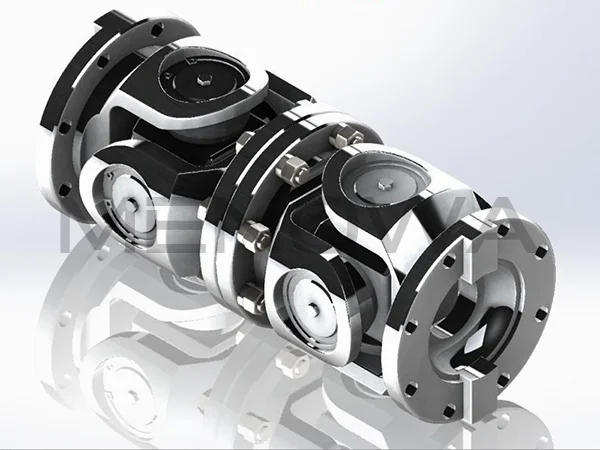
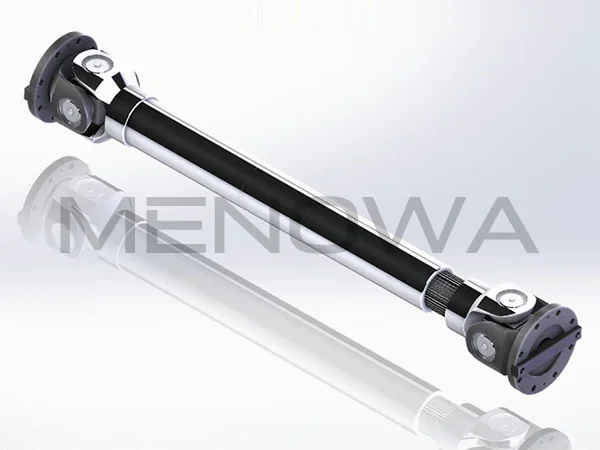
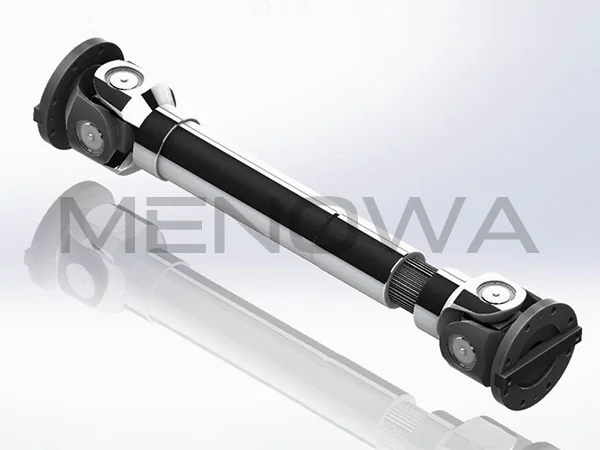
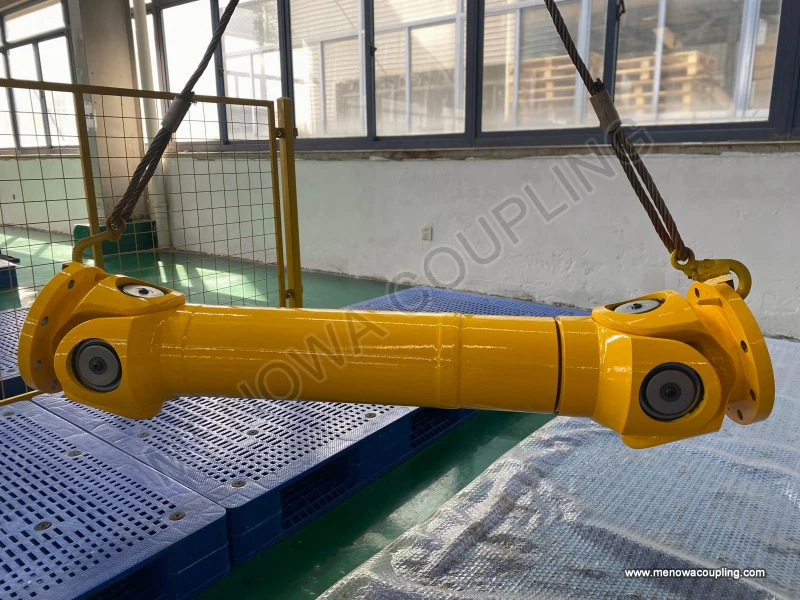
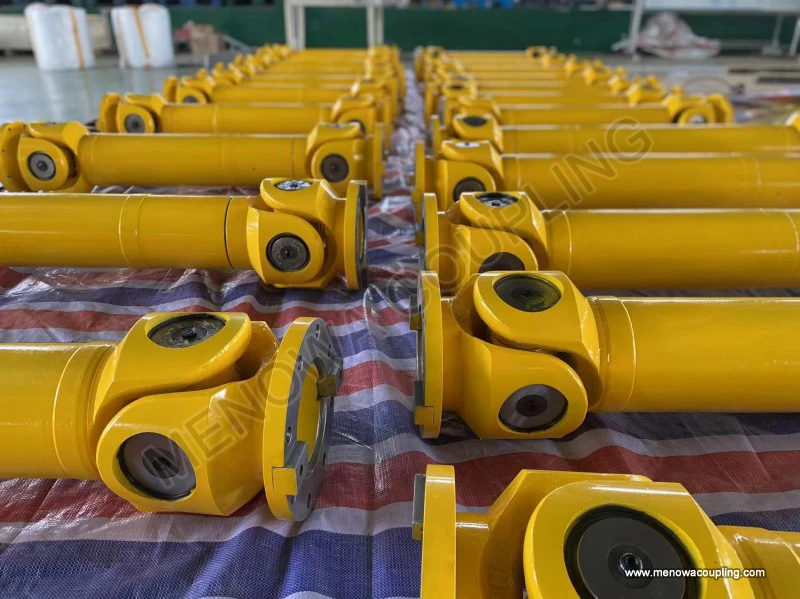
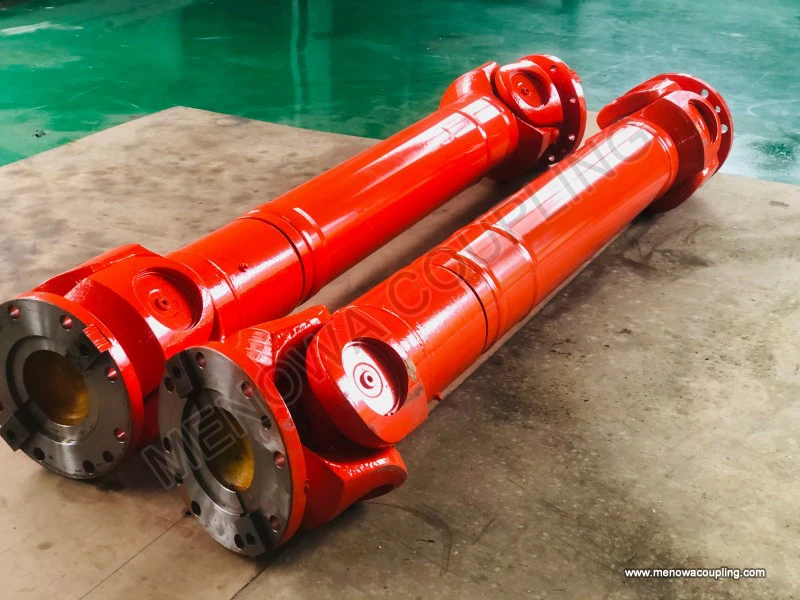
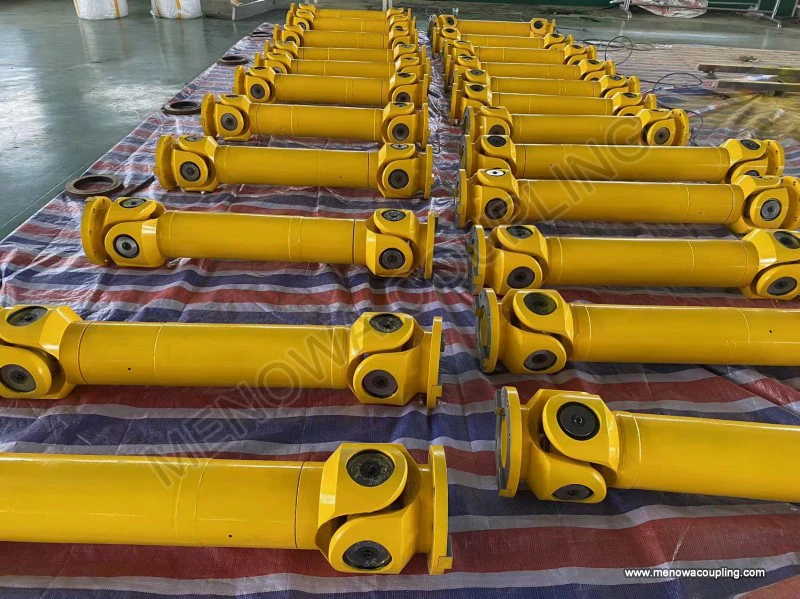
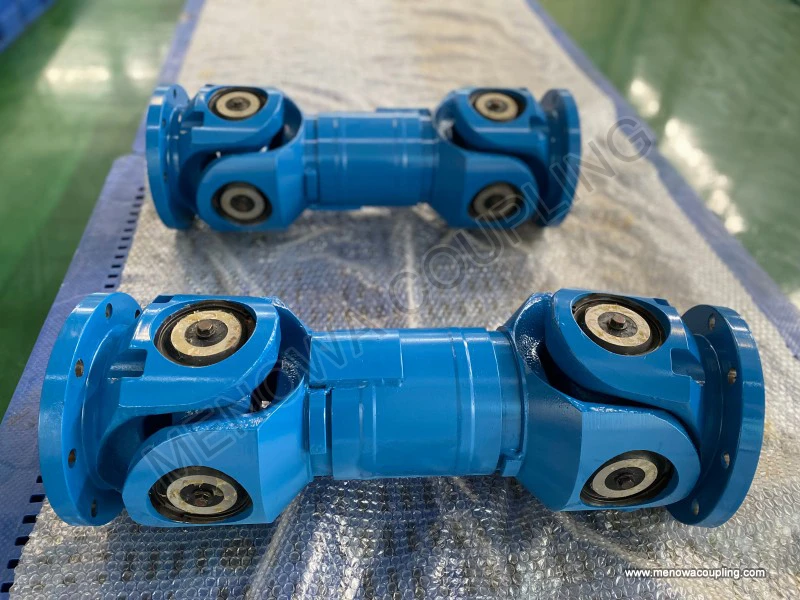
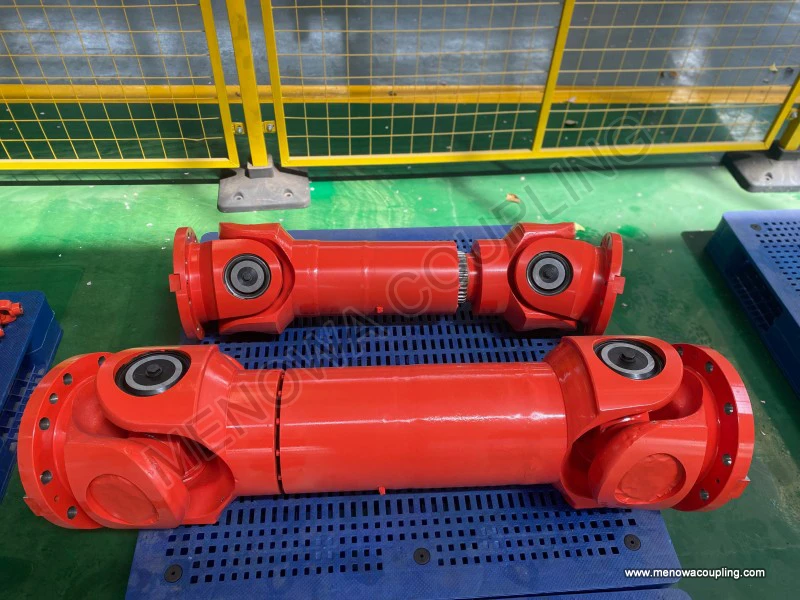
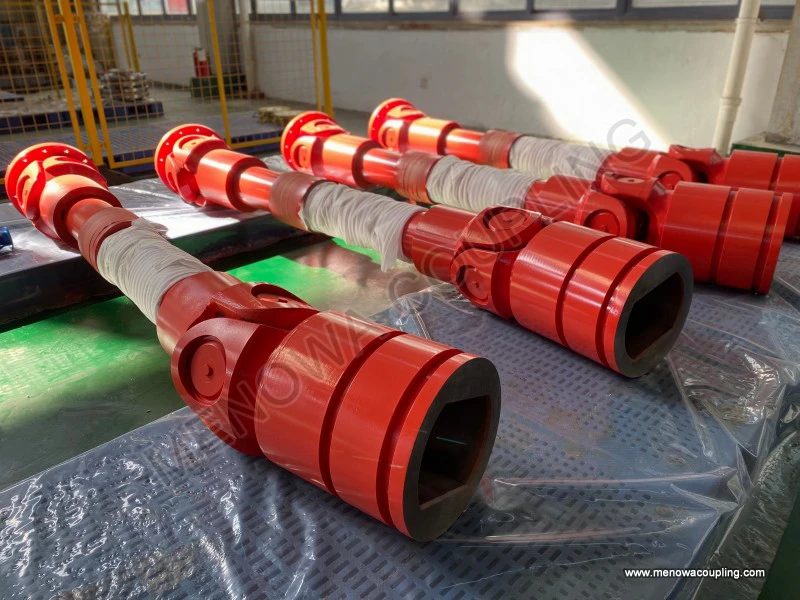
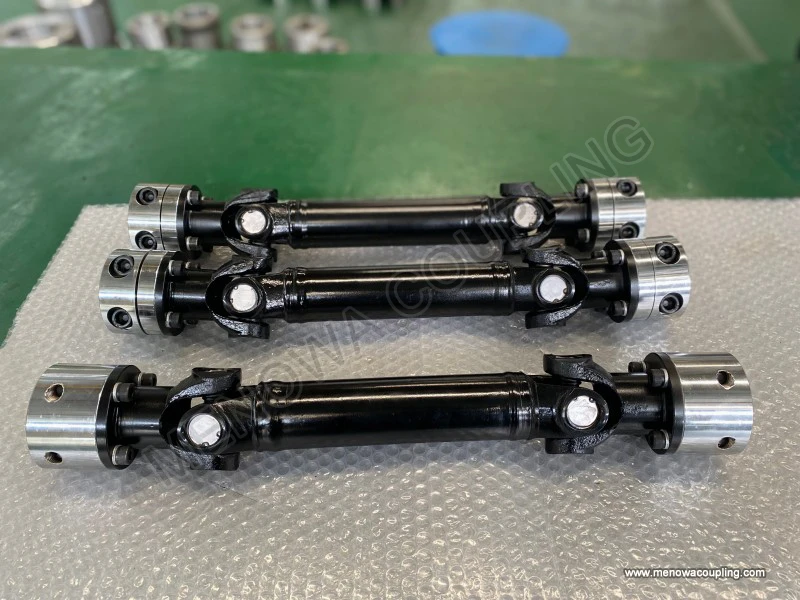
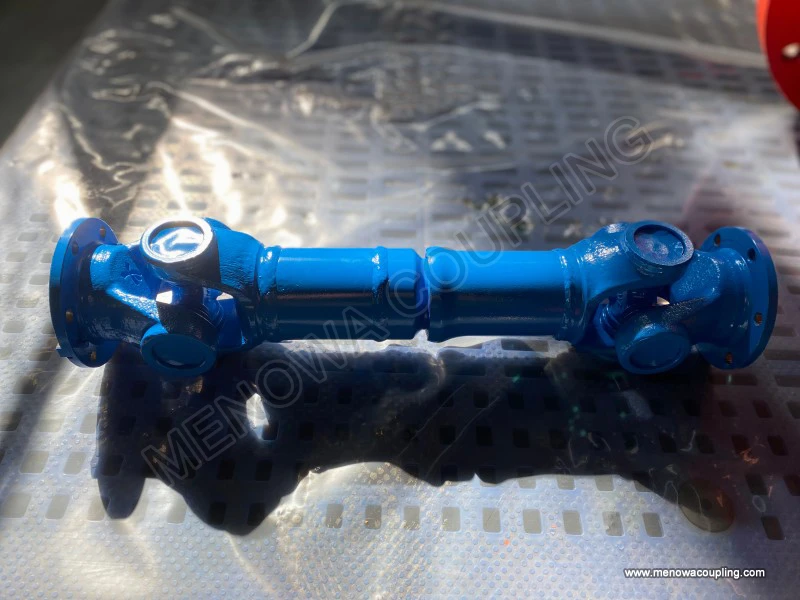
The basic composition of a universal joint drive shaft follows mature and standardized mechanical design logic, with each core component designed and manufactured to bear specific mechanical loads and undertake corresponding motion coordination tasks, forming a complete and coordinated transmission whole. The core functional core of the entire assembly is the universal joint, also commonly known as the U-joint or Cardan joint in mechanical engineering applications, which is the key flexible connection unit that realizes angular deflection adaptation between shafts. The most widely used structural form in various industrial and mechanical fields is the cross-type rigid universal joint, whose central core component is a cross-shaped metal structural part usually called a spider or cross shaft. This cross shaft is forged and processed from high-strength alloy structural steel materials, with four symmetrically distributed cylindrical trunnions extending outward in mutually perpendicular directions, and each trunnion undergoes precision surface finishing and heat treatment processes to ensure high surface hardness, strong wear resistance and good structural toughness, capable of withstanding long-term alternating torque load and frequent rotational friction extrusion in the working process. Each trunnion of the cross shaft is sleeved with a set of precision needle roller bearings, which are composed of a bearing outer cup, dense needle rollers, a bearing inner ring and sealing accessories. The needle roller bearings can effectively convert the sliding friction between the cross shaft trunnion and the connecting yoke into rolling friction, greatly reducing the friction resistance during the rotation process, lowering mechanical energy loss caused by friction, and improving the overall power transmission efficiency of the drive shaft. The outer side of each bearing is equipped with a fixed bearing cap and a reliable sealing structure, which not only plays a role in fixing the bearing position to prevent axial displacement and shedding during high-speed rotation and heavy load operation, but also isolates external dust, sediment, moisture and other corrosive and abrasive impurities from entering the bearing interior, avoiding bearing wear, corrosion and lubricant deterioration caused by external impurities invasion.
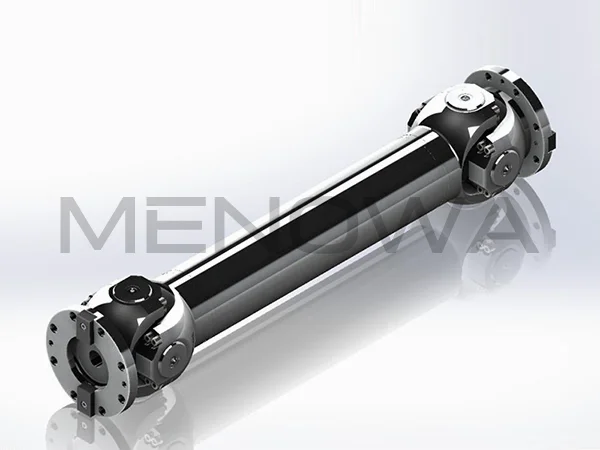
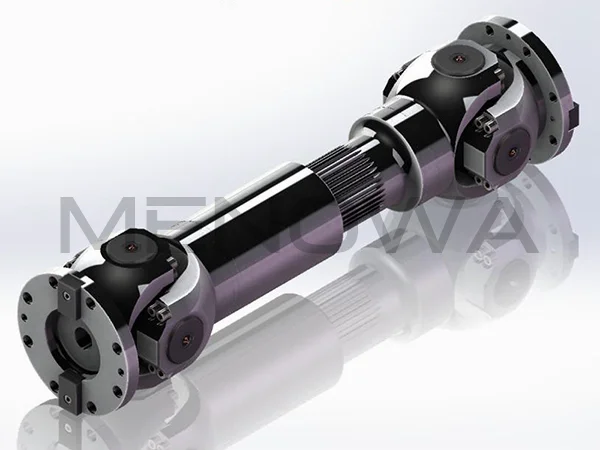
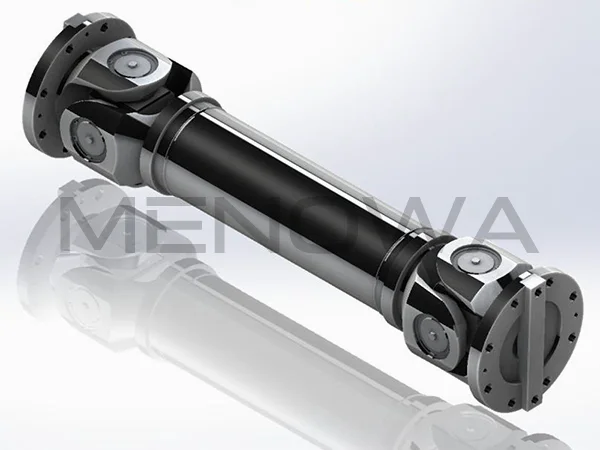
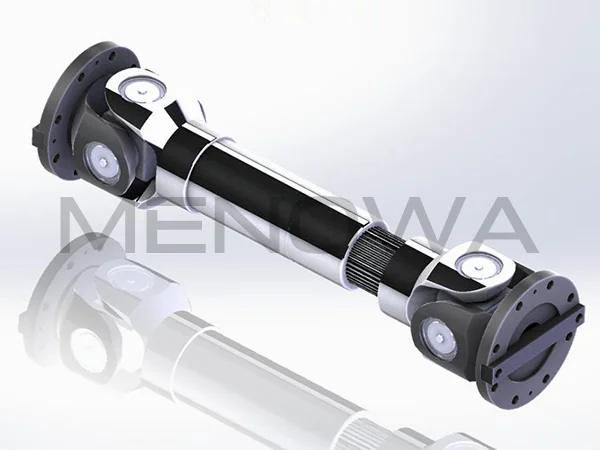
On both sides of the universal joint cross shaft and bearing assembly are symmetrically distributed connecting yokes, also referred to as fork heads in mechanical processing, which are divided into driving yokes and driven yokes according to the power transmission sequence. The two ends of each yoke are provided with precision machining assembly holes, which are tightly matched and connected with the outer wall of the universal joint bearing cup through interference fit or positioning fasteners, ensuring that the rotational motion of the yoke can be stably transmitted to the cross shaft through the bearings without relative rotation and displacement. The end of each yoke is integrally connected with the main shaft body of the drive shaft through welding, integral forging or flange connection processes. The drive shaft main body is usually a hollow thin-walled metal tube structure made of high-strength low-alloy steel materials. The hollow structural design not only effectively reduces the overall self-weight of the drive shaft assembly, reduces the additional inertial load generated by the drive shaft during high-speed rotation, and improves the dynamic balance performance of the rotating component, but also ensures that the drive shaft has sufficient torsional rigidity and bending resistance, avoiding shaft body deformation, distortion and resonance vibration caused by torque impact and external force extrusion during power transmission. For mechanical equipment with long transmission distance and large space span, the overall drive shaft assembly will be designed with a segmented structure, and multiple single-section drive shafts are connected in series through intermediate connecting flanges or auxiliary universal joints, ensuring that the drive shaft can still maintain good structural stability and transmission performance under the condition of long-distance power transmission. At the same time, some drive shaft assemblies are also equipped with telescopic sliding sleeve structures at the connecting parts, which can freely adjust the overall axial length of the drive shaft according to the actual working displacement of the mechanical equipment, adapting to the axial distance change between the power input end and the power output end caused by equipment vibration, mechanical movement and load deformation, avoiding additional tensile and compressive stress on the drive shaft and universal joint components caused by fixed axial length.
The working principle of the universal joint drive shaft follows the basic laws of mechanical kinematics and torsional mechanics, realizing flexible power transmission under misalignment conditions through the coordinated motion cooperation between the cross shaft, bearings and yokes. When the power input shaft starts to rotate and output rotational torque, the driving yoke connected to the input shaft synchronously rotates along with the input shaft, and the rotational motion and torque are transmitted to the cross shaft trunnion through the bearings assembled inside the driving yoke. Driven by the driving yoke, the cross shaft rotates around the central axis of the driving yoke, and at the same time, relying on the mutual perpendicular structural characteristics of the four trunnions of the cross shaft, the rotational motion is transmitted to the driven yoke on the other side. The driven yoke then drives the connected power output shaft to rotate synchronously, completing the whole process of power transmission from the input end to the output end. The core mechanical advantage of the universal joint lies in its unique angular adaptation capability. When there is a certain included angle between the central axis of the input shaft and the output shaft due to mechanical structure layout or equipment operation changes, the cross shaft can freely adjust the relative rotation angle between the driving yoke and the driven yoke through the rotational coordination of the bearings on the trunnions, always maintaining the effective connection between the two yokes, and ensuring that torque and rotational motion can be continuously and stably transmitted without interruption. Although a single ordinary cross-type universal joint has the characteristic of non-constant velocity transmission under the condition of large angular deflection, that is, the instantaneous rotational speed of the driven shaft will have slight periodic fluctuation compared with the driving shaft during the rotation process, this slight speed fluctuation will not have a negative impact on most conventional mechanical equipment with low and medium rotational speed and ordinary transmission precision requirements. For mechanical equipment with high requirements for rotational speed stability and transmission uniformity, the design of double universal joints or multiple groups of matched universal joints will be adopted in the drive shaft assembly. By reasonably arranging the installation angle and phase position of the front and rear universal joints, the speed fluctuation generated by a single universal joint can be mutually offset and balanced, realizing the approximate constant velocity transmission effect of the overall drive shaft assembly and meeting the high-precision operation requirements of sophisticated mechanical equipment.
In actual mechanical operation scenarios, the universal joint drive shaft needs to adapt to various complex and changeable working conditions, and its structural performance and working state will be affected by multiple external factors such as operating temperature, load intensity, rotational speed, working environment and mechanical vibration. Different application scenarios put forward differentiated performance requirements for the structural design, material selection and assembly process of the drive shaft assembly. In low-speed and heavy-load working conditions represented by engineering machinery and mining equipment, the drive shaft needs to bear huge instantaneous impact torque and long-term stable torsional load, so the universal joint and drive shaft main body adopt thicker structural design and higher-strength alloy steel materials, and the bearing components adopt enhanced load-bearing design to ensure that the assembly will not suffer structural damage, fracture or serious deformation under heavy impact load. In high-speed and light-load working conditions such as precision mechanical transmission and light industrial automation equipment, the drive shaft pays more attention to dynamic balance performance, low friction loss and stable rotational operation, so the processing precision of universal joint bearings and shaft body is higher, the overall structural weight is lighter, and the dynamic balance calibration process is strictly carried out after assembly to avoid vibration, noise and transmission efficiency reduction caused by unbalanced rotation at high speed. In extreme working environments such as high temperature, low temperature, humidity, dust and corrosion, the surface of the universal joint drive shaft components will be treated with special anti-corrosion, high-temperature resistance and wear-resistant surface processes, and the sealing structure of the bearings and connecting parts will be optimized and upgraded to prevent lubricant failure, component corrosion and wear acceleration caused by extreme environmental factors, ensuring that the drive shaft can maintain stable working performance for a long time in harsh environments.
The application scope of the universal joint drive shaft covers almost all mechanical fields that require non-linear aligned power transmission, showing strong universality and practicality in industrial production, agricultural production, engineering construction, transportation and other core industries. In the field of land transportation machinery, various road vehicles and off-road mobile equipment rely on universal joint drive shafts to complete the power transmission from the power output end of the power unit to the driving axle. Due to the needs of vehicle chassis suspension structural design and driving motion, the relative position and angle between the engine power output shaft and the driving axle will change constantly during vehicle driving, bumping and steering, and the universal joint drive shaft can well adapt to this dynamic angle and position change, ensuring continuous power transmission during vehicle driving. In the field of agricultural machinery and equipment, various farmland tillage machinery, harvesting machinery and irrigation operation machinery often work in complex field environments with uneven ground, muddy roads and frequent mechanical vibration. The universal joint drive shaft is used to connect the power output part of the agricultural machinery power device and the working execution part such as tillage blades and harvesting rollers, adapting to the violent vibration and structural position deviation generated during field operation, ensuring that the agricultural machinery can work stably and efficiently in harsh field working conditions without power transmission interruption.
In the field of engineering construction and mining machinery, large excavators, loaders, bulldozers, mining transport vehicles and underground mining equipment all take the universal joint drive shaft as the core component of the power transmission system. This kind of engineering and mining equipment often works in working conditions with heavy load, frequent impact and severe working environment, and the universal joint drive shaft bears huge torsional torque and impact load for a long time. Through its high-strength structural design and reliable flexible connection performance, it ensures that the power of the equipment can be efficiently transmitted to each working mechanism, supporting the completion of heavy-duty engineering operations and mining production work. In the field of industrial production and processing equipment, various factory production lines, mechanical processing equipment, conveying machinery and automated production equipment also widely use universal joint drive shafts to connect the power motor and mechanical transmission components. Due to the limited installation space of industrial equipment and the complex structural layout of production lines, many transmission shafts cannot be installed in a straight line. The universal joint drive shaft can realize flexible power transmission in a narrow space and complex layout, ensuring the stable operation of industrial production equipment and the continuous progress of production and processing work. In addition, in marine auxiliary machinery, aerospace ground support equipment and special mechanical equipment for professional fields, the universal joint drive shaft also plays an irreplaceable role, providing reliable power transmission guarantee for various special mechanical operations with different working condition requirements.
During the long-term service cycle of the universal joint drive shaft, various forms of mechanical wear, structural fatigue and performance attenuation will inevitably occur due to the combined action of mechanical load, friction operation, environmental erosion and periodic motion impact, and understanding the main causes of component damage and performance degradation is crucial to prolonging the service life of the drive shaft assembly and maintaining the normal operation of mechanical equipment. The most common failure form of the universal joint drive shaft is the wear and aging of the universal joint bearing parts. The needle roller bearings inside the universal joint are in a long-term rolling friction working state during operation, and the long-term friction and extrusion will cause gradual wear of the needle rollers and the bearing inner and outer walls, resulting in increased bearing clearance, reduced rotation flexibility, and increased friction resistance. At the same time, if the sealing structure of the bearing is damaged due to long-term use, external dust, sediment and moisture will enter the bearing interior, causing lubricant pollution and deterioration, forming abrasive wear between the bearing components, accelerating the wear speed of the bearings, and even causing bearing jamming and rotation failure in serious cases. Another common failure form is structural fatigue damage of the cross shaft and connecting yoke. The cross shaft and yoke bear alternating torsional load and impact load for a long time during the power transmission process, and long-term alternating load action will produce tiny fatigue cracks inside the metal structure of the components. With the continuous accumulation of working time, the fatigue cracks will gradually expand, eventually leading to structural deformation, fracture and damage of the cross shaft or yoke, resulting in the failure of the entire drive shaft power transmission function.
In addition, the main body of the drive shaft may also have problems such as bending deformation, corrosion damage and dynamic balance failure during use. The drive shaft main body will produce slight bending deformation under the action of long-term torsional load and external impact force. The continuous accumulation of deformation will affect the coaxiality of the drive shaft rotation, resulting in increased vibration and noise during operation, and aggravated wear of the universal joint components. The drive shaft working in humid and corrosive environments will have metal corrosion and rust on the surface, reducing the structural strength and torsional rigidity of the shaft body, affecting the overall transmission performance and service life. After long-term high-speed rotation, the internal stress distribution of the drive shaft assembly changes, and the tiny wear of each component will lead to the deviation of the overall dynamic balance of the drive shaft, resulting in obvious vibration and resonance during operation, further accelerating the wear and damage of various connecting components, forming a vicious cycle of mechanical failure. Improper installation and use operation in the early stage is also an important factor leading to the premature failure of the universal joint drive shaft. Excessive installation angle of the universal joint, unqualified assembly gap between components, and long-term overload operation of mechanical equipment beyond the design load range will all cause the drive shaft assembly to bear excessive mechanical stress, leading to accelerated component aging and early failure and damage.
Scientific and standardized daily maintenance and regular inspection and maintenance work are the key measures to effectively reduce the failure probability of the universal joint drive shaft, delay the attenuation of component performance, extend the overall service life of the assembly, and ensure the long-term stable and reliable operation of the mechanical power transmission system. The core content of daily maintenance work is the regular inspection and replacement of the internal lubricant of the universal joint bearing. The lubricant plays a vital role in reducing the friction and wear of the bearing components, cooling the friction parts, and isolating external corrosive impurities. According to the different working load and working environment of the equipment, the lubricant inside the universal joint bearing should be inspected regularly for deterioration, pollution and loss. When the lubricant becomes black, emulsified or mixed with impurities, the old lubricant should be completely cleaned and replaced with new professional lubricating grease suitable for the working temperature and load conditions, ensuring that the bearing is always in a good lubrication state during operation. At the same time, the sealing performance of the universal joint bearing sealing structure should be checked daily to see if there is lubricant leakage, sealing ring aging and damage, and the damaged sealing accessories should be replaced in a timely manner to prevent external impurities from invading the bearing interior and avoid lubricant loss and failure.
Regular professional inspection work needs to check the structural state of the universal joint cross shaft, connecting yoke and drive shaft main body in detail. It is necessary to observe whether there are obvious deformation, cracks, wear and corrosion on the surface of each component, check whether the connecting fasteners between the yoke and the drive shaft are loose or missing, and ensure that all connecting parts are firmly connected without relative displacement. The rotation flexibility of the universal joint should be checked manually or by professional testing equipment to confirm that there is no jamming, stagnation and abnormal friction during rotation. For the drive shaft assembly used for a long time, professional dynamic balance detection and calibration should be carried out regularly to correct the dynamic balance deviation caused by component wear and deformation, reducing vibration and resonance during operation. For the universal joint drive shaft working in harsh working conditions such as heavy load, high speed and strong corrosion, the frequency of inspection and maintenance should be appropriately increased, and the key stressed components should be regularly tested for fatigue performance to eliminate potential mechanical failure hidden dangers in advance. In the process of equipment daily use and operation, avoid long-term overload operation and sudden start and stop impact operation of the equipment, reduce the instantaneous impact torque borne by the universal joint drive shaft, and reduce the fatigue damage and wear degree of the components.
With the continuous progress of modern mechanical manufacturing technology and the continuous upgrading of industrial mechanical equipment performance, the design and manufacturing technology of universal joint drive shafts is also constantly innovating and optimizing, developing towards higher transmission efficiency, stronger environmental adaptability, longer service life and lower maintenance cost. In terms of material research and development, new high-strength, high-toughness and wear-resistant alloy materials and composite structural materials are gradually applied to the production and manufacturing of universal joint drive shaft components. Through the optimization of material ratio and heat treatment process, the structural strength, fatigue resistance and wear resistance of the components are further improved, reducing the self-weight of the assembly while improving the load-bearing capacity, and optimizing the dynamic operation performance of the drive shaft. In terms of structural design optimization, combined with modern computer simulation technology and mechanical finite element analysis technology, the stress distribution and motion state of the universal joint drive shaft under various working conditions are accurately simulated and analyzed, the structural size and stress concentration parts of the components are optimized and improved, the mechanical stress borne by key parts is reduced, and the overall structural stability and service life of the assembly are improved.
In terms of processing and manufacturing technology, the popularization and application of precision CNC machining technology and intelligent forging forming technology greatly improve the processing precision and assembly matching accuracy of universal joint drive shaft components, reduce the assembly gap and friction loss between components, further improve the power transmission efficiency, and reduce vibration and noise during operation. In terms of maintenance and use optimization, combined with intelligent monitoring technology, some new universal joint drive shaft assemblies are equipped with real-time monitoring sensors for operating temperature, vibration amplitude and torque load, which can monitor the working state of the drive shaft in real time during the operation of mechanical equipment, timely find abnormal working conditions and potential failure hidden dangers, and realize predictive maintenance of the drive shaft assembly, avoiding sudden mechanical failure and production operation interruption. With the continuous development of various new mechanical equipment and emerging industrial fields, the application scenarios and working condition requirements of universal joint drive shafts will continue to expand and change, and the continuous technological innovation and performance optimization of universal joint drive shafts will also provide more reliable and efficient power transmission support for the development of modern mechanical industry.
Throughout the entire development and application process of the universal joint drive shaft, this seemingly simple but technically sophisticated mechanical assembly has always been an indispensable basic core component in the field of mechanical power transmission. It does not have complex mechanical structure and cumbersome transmission procedures, but it undertakes the important mechanical task of connecting power sources and working mechanisms and realizing flexible power transmission under complex misalignment conditions. From small precision industrial automation equipment to large heavy-duty engineering construction machinery, from daily land transportation vehicles to professional agricultural production and mining operation equipment, the universal joint drive shaft silently provides stable and reliable power transmission guarantee for the normal operation of various mechanical equipment. Its structural rationality, working reliability and application universality make it occupy an important irreplaceable position in the entire mechanical engineering field. Understanding the structural composition, working principle, application characteristics, failure causes and maintenance management methods of the universal joint drive shaft is not only conducive to better applying this mechanical assembly to various mechanical design and equipment use work, but also helps to improve the overall operation efficiency and service life of mechanical equipment, reduce mechanical failure rates and later operation and maintenance costs, and lay a solid foundation for the stable and efficient development of various industrial production and mechanical operation work. In the future, with the continuous progress of mechanical technology and the continuous upgrading of industrial needs, the universal joint drive shaft will continue to carry out technological innovation and performance upgrading along the direction of adapting to more complex working conditions, higher transmission efficiency and longer service life, and continue to contribute basic mechanical power support to the innovation and development of the modern mechanical industry.
https://www.menowacoupling.com/industrial-coupling/universal-joint-drive-shaft.html
 WeChat
 WhatsApp