Flexible Gear Coupling
In the entire industrial power transmission system, the connection and coordination between rotating shafts form the core foundation for the stable operation of various mechanical equipment. Whether it is large-scale heavy-duty industrial production lines, continuous operating processing machinery, or material transportation and lifting equipment that runs for long hours, a reliable connecting component is always required to connect the driving shaft and the driven shaft, complete the efficient transmission of torque and rotational power, and ensure the synchronous operation of different mechanical parts. Flexible gear coupling stands out among various shaft connecting components by virtue of its unique mechanical structure, excellent load-bearing capacity and reliable misalignment compensation performance, becoming an indispensable key component in modern industrial mechanical transmission links. Different from rigid coupling structures that require extremely high installation accuracy and can hardly adapt to shaft position deviation, and different from ordinary elastic flexible couplings that rely on rubber or elastic polymer components for buffering and have limited torque transmission capacity, flexible gear coupling adopts a metal meshing transmission structure combining internal and external gears, integrates mechanical flexibility and structural rigidity, and can not only stably and continuously transmit large torque in complex working conditions, but also effectively adapt to various inevitable deviations and displacements between connected shafts generated during equipment installation and long-term operation. This type of coupling relies on the precise meshing fit between crowned external gear teeth on the hub and internal gear teeth on the outer sleeve to realize power transmission, and uses the reasonable gap and structural deformation between gear teeth to buffer vibration, absorb impact force, and compensate for angular deviation, parallel displacement and axial floating of the two connected shafts, creating a stable and safe operating environment for the entire mechanical transmission system.
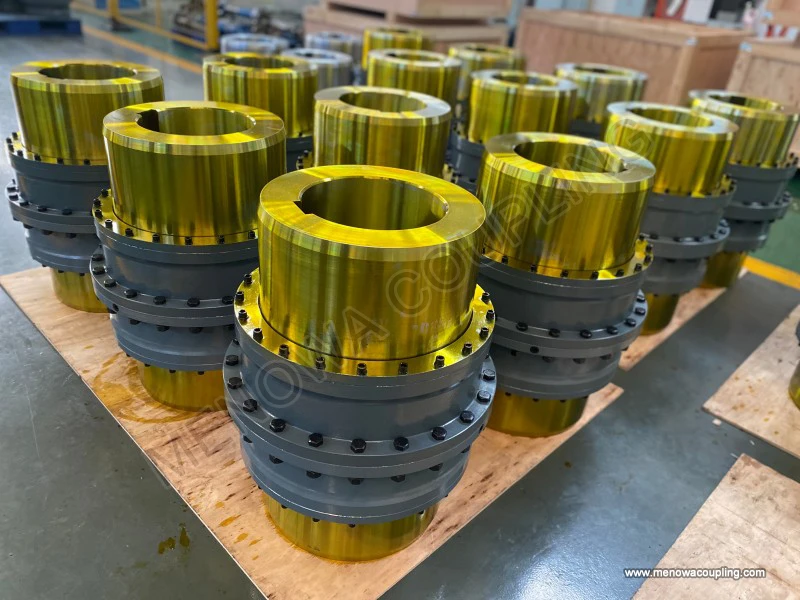
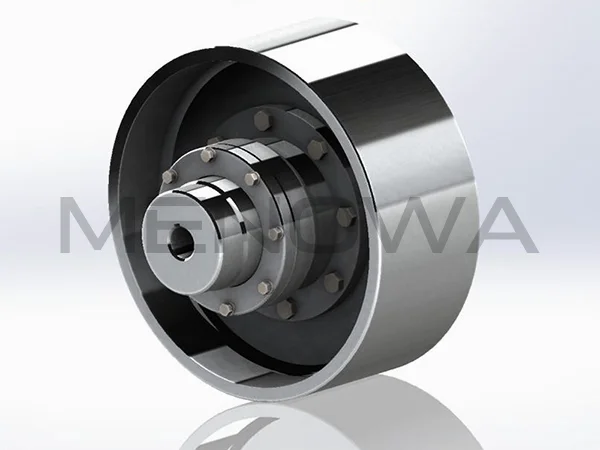
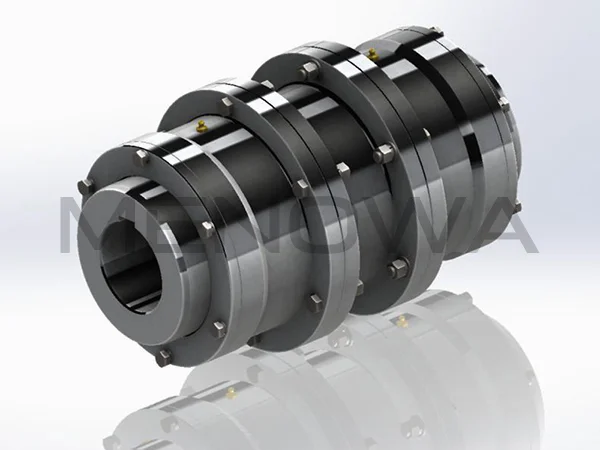
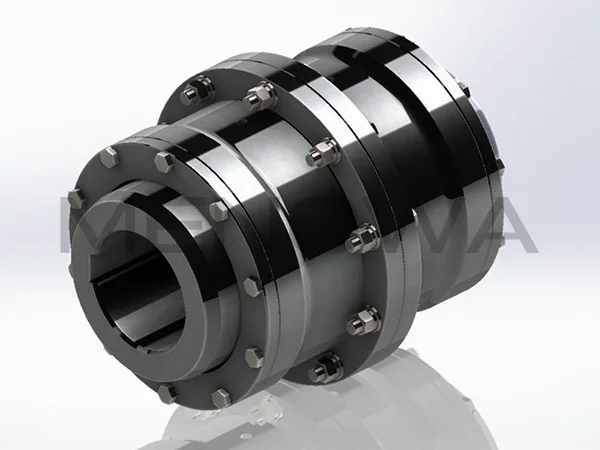
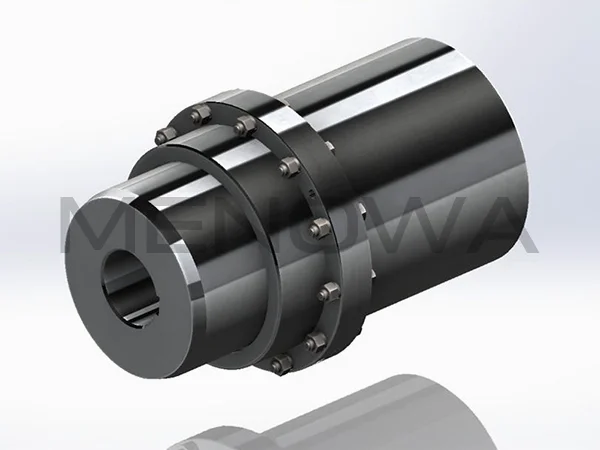
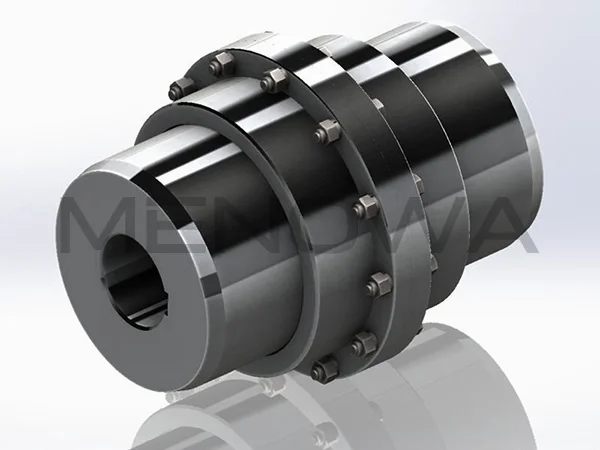
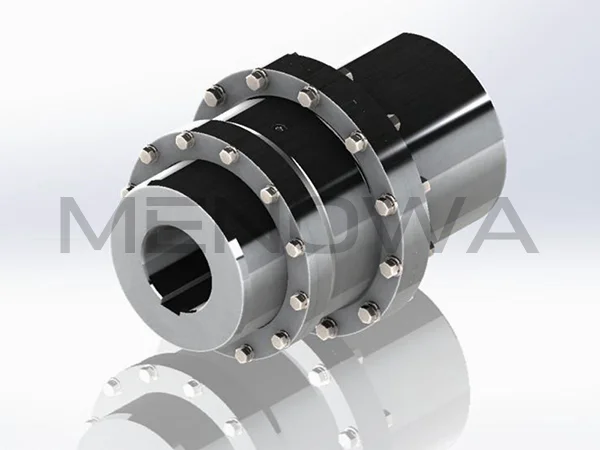
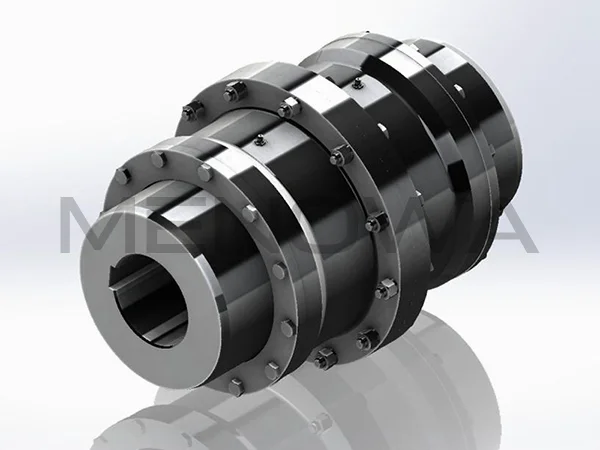
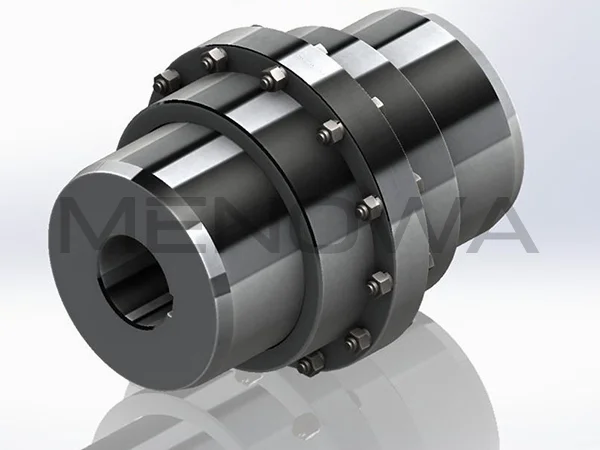
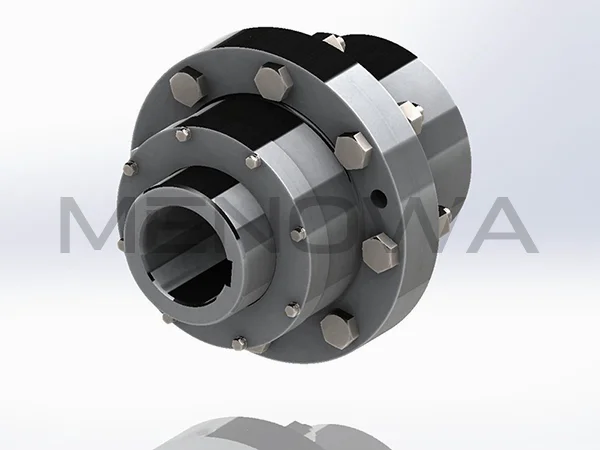
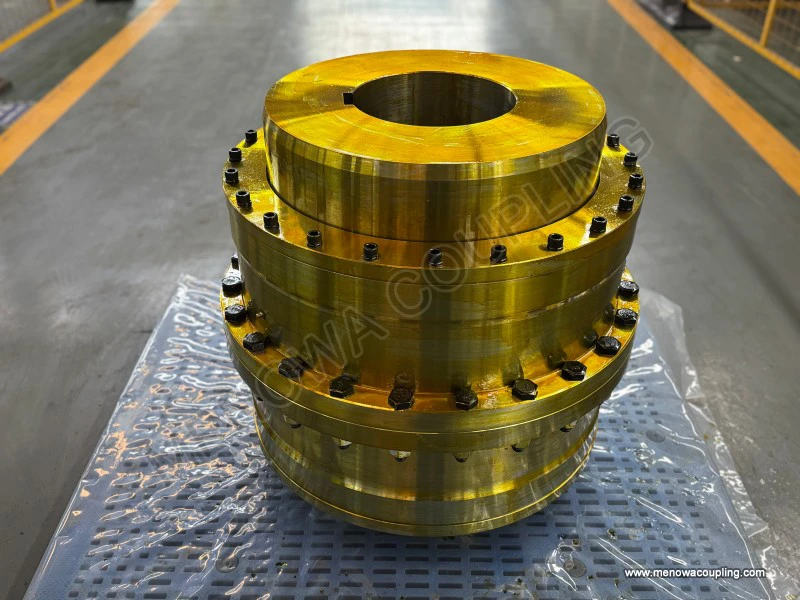
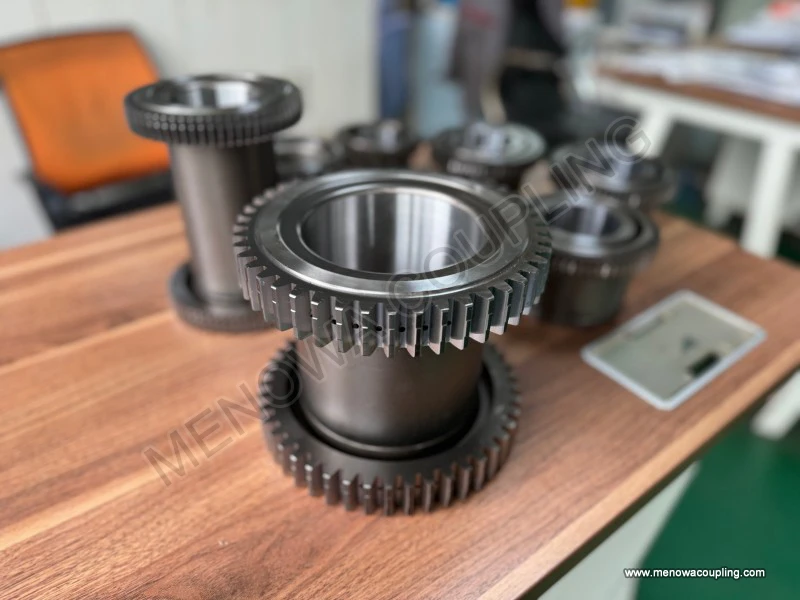
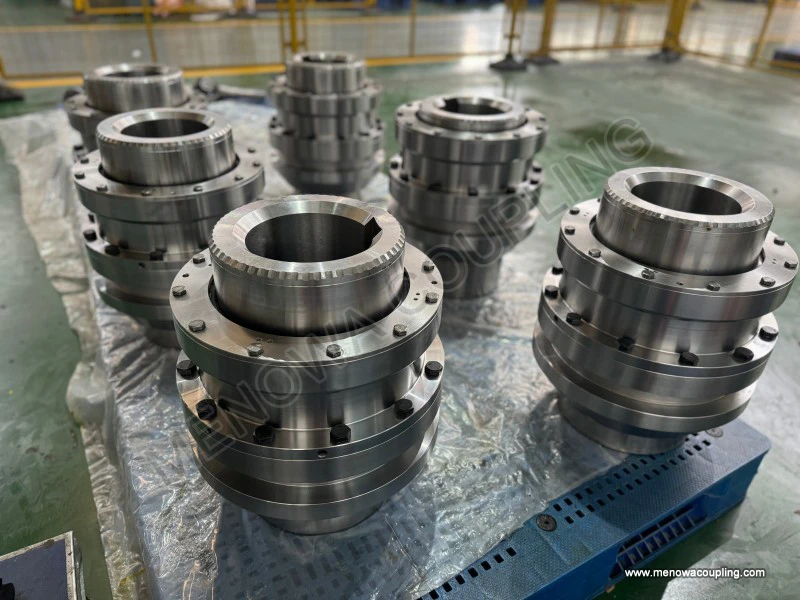
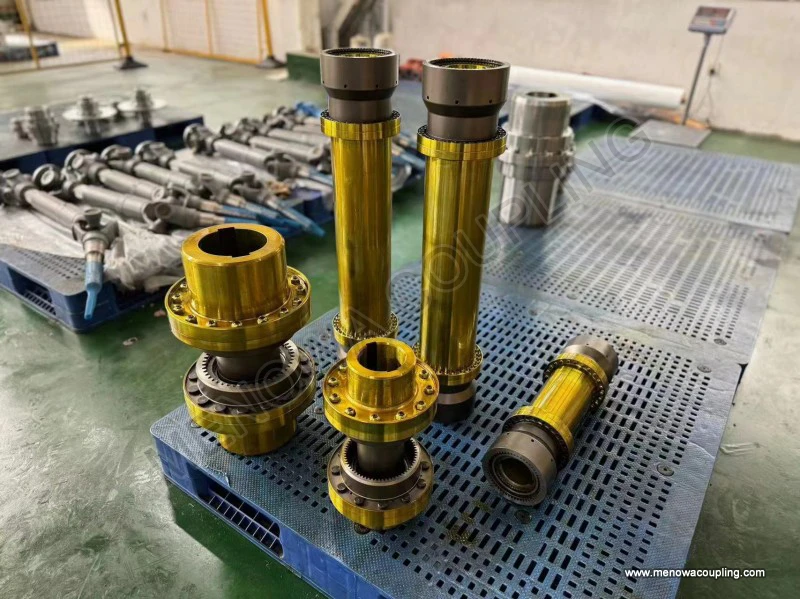
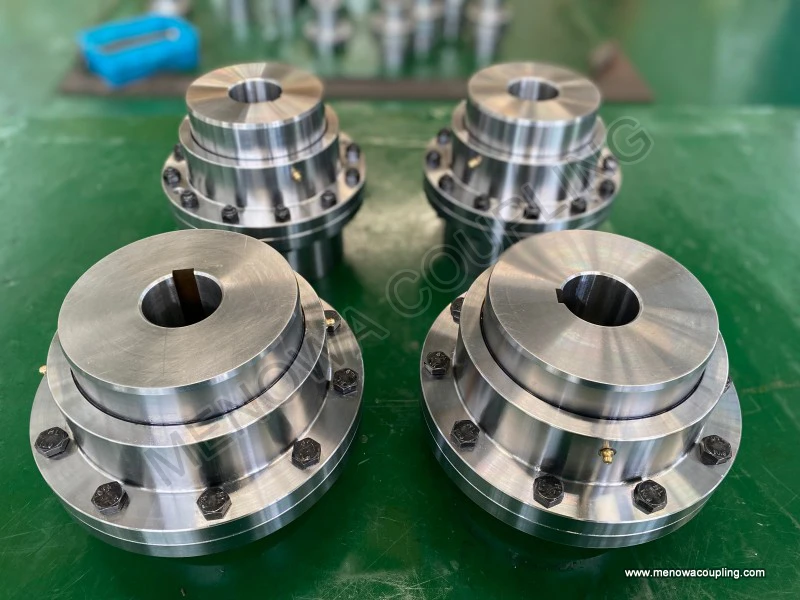
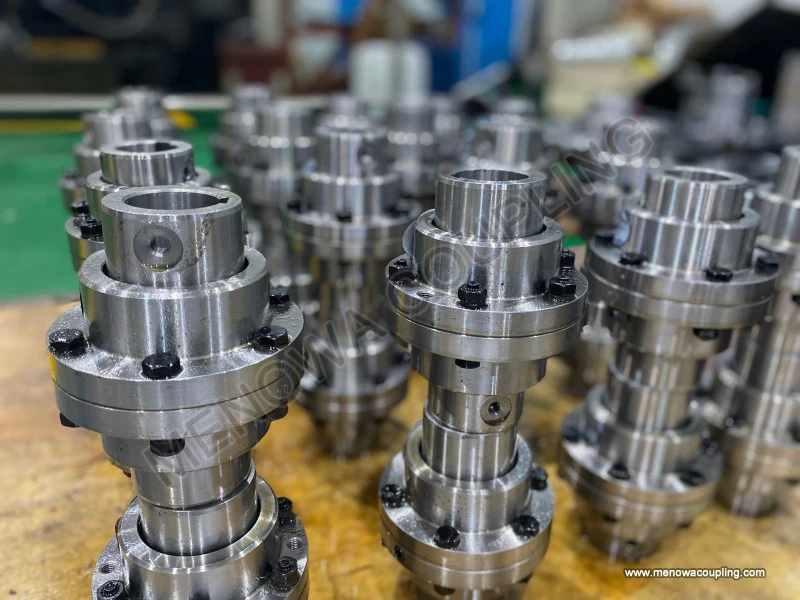
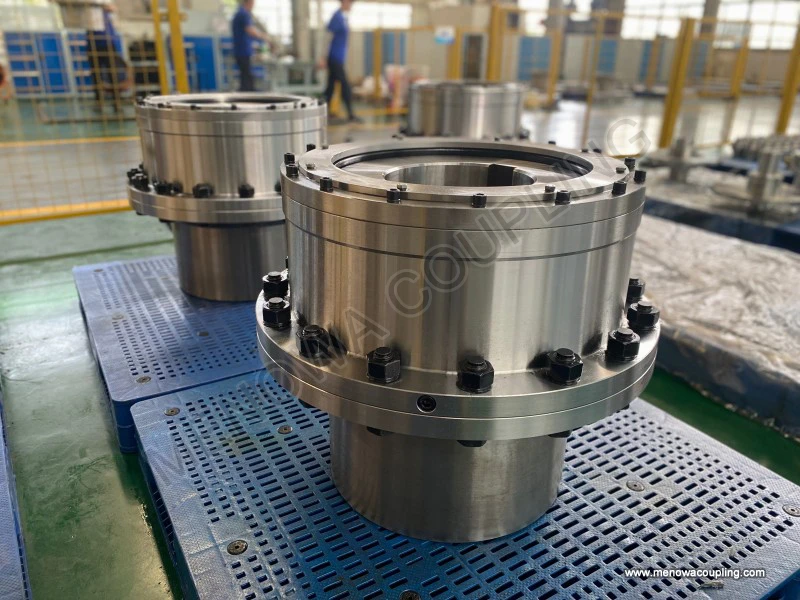
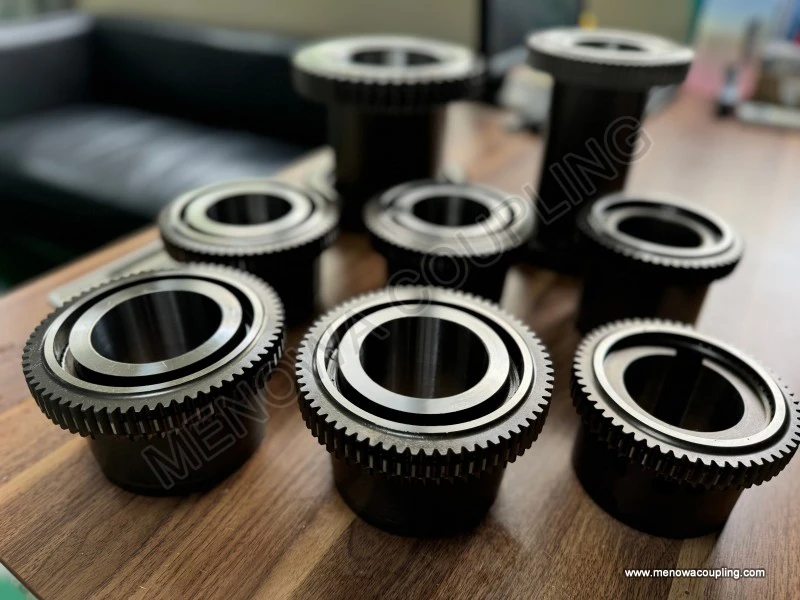
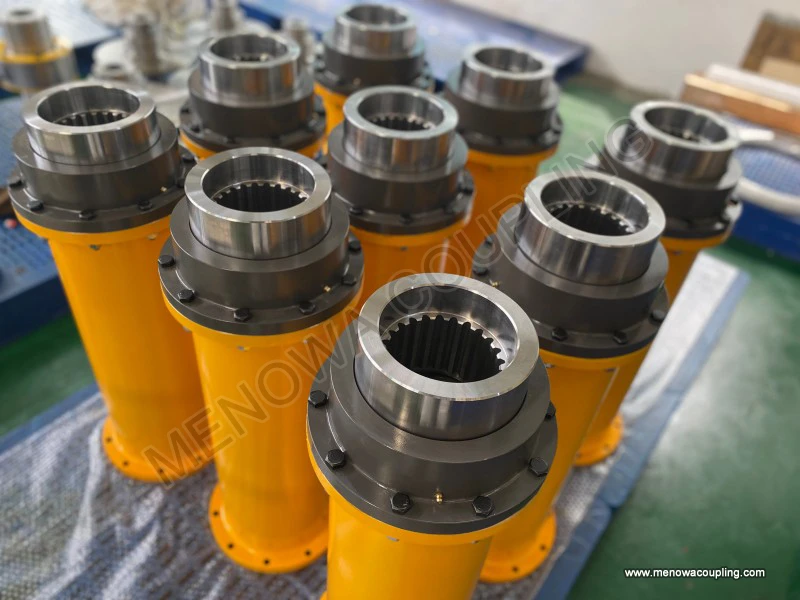
The basic structural composition of flexible gear coupling follows mature mechanical design logic, with a simple and robust overall layout, and each component bears clear and differentiated functional responsibilities, which jointly support the long-term stable operation of the coupling under various complex industrial working conditions. The main components of a complete flexible gear coupling include two independent gear hubs with external gear teeth, two outer flange sleeves processed with internal gear teeth, connecting bolts and sealing auxiliary parts such as gaskets and O-rings. The two gear hubs are respectively fixedly installed on the end parts of the driving shaft and the driven shaft through interference fit or key connection modes, and rotate synchronously with the respective shafts during equipment operation, serving as the core power input and output parts of the coupling. The external gear teeth on the surface of the gear hubs are processed into a crowned tooth profile through fine machining, and this special tooth profile design is the core key to realizing the flexible compensation function of the coupling, distinguishing it from ordinary rigid gear transmission structures with straight tooth profiles. The two outer sleeves with internal gear teeth are connected and fixed by flange structures and bolts, forming a closed outer protective and meshing constraint structure, which wraps the meshing parts of the internal and external gear teeth inside, not only ensuring the stable meshing transmission of gear teeth, but also providing protection for the internal meshing parts to avoid external dust, debris and moisture from entering the meshing area and affecting the transmission effect and service life. All the main load-bearing and transmission parts of flexible gear coupling are mostly made of high-quality carbon steel or alloy steel materials, which are processed through forging, rough machining, finish machining and subsequent heat treatment processes. The heat treatment process can effectively improve the surface hardness and overall structural toughness of the gear teeth and hubs, enhance the wear resistance and fatigue resistance of the components, and enable the coupling to maintain stable mechanical performance even under long-term continuous operation, frequent load changes and heavy-load working conditions. The sealing auxiliary parts installed at the flange connection and the matching gap between the sleeve and the hub play a vital role in maintaining the internal operating environment of the coupling, which can effectively prevent the lubricating grease filled inside the coupling from leaking outward, and also block external harmful substances from invading the meshing area of the gear teeth, ensuring that the gear teeth are always in a good lubrication state during operation.
The working operation principle of flexible gear coupling is based on the mechanical meshing transmission of internal and external gear teeth and the flexible displacement compensation brought by the crowned tooth profile and meshing gaps. When the industrial equipment starts to operate, the driving shaft drives the connected gear hub to rotate synchronously, and the external crowned gear teeth on the hub transmit rotational torque and power to the internal gear teeth of the outer sleeve through meshing action, and then the outer sleeve drives the other gear hub and the connected driven shaft to rotate synchronously, thus completing the whole process of power and torque transmission from the driving end to the driven end. In the ideal installation state, the two connected shafts are in a completely coaxial state, the internal and external gear teeth are in uniform and full meshing contact, the stress on each gear tooth is evenly distributed, and the coupling only needs to complete the basic torque transmission work without bearing additional displacement stress and shear force. However, in actual industrial on-site installation and long-term equipment operation, the ideal coaxial state of the two shafts is almost difficult to maintain for a long time. On the one hand, limited by the accuracy of on-site installation tools and the technical operation level of installation personnel, there will inevitably be certain position deviations between the driving shaft and the driven shaft during the initial installation of the equipment. On the other hand, during the long-term continuous operation of the equipment, factors such as mechanical vibration generated by equipment operation, thermal expansion and contraction of metal components caused by operating temperature changes, slight wear of bearing parts, and foundation settlement of mechanical equipment will lead to gradual relative displacement and position deviation between the two connected shafts. These deviations, if not effectively compensated and buffered, will generate huge additional stress and shear force on the shaft and connecting components, accelerate the wear and fatigue damage of parts, lead to increased equipment vibration and noise, and even cause shaft deformation, component fracture and equipment shutdown failure in serious cases.
The flexible compensation performance of flexible gear coupling perfectly solves the adverse effects caused by various shaft misalignments, and the crowned tooth profile design of the external gear teeth is the core guarantee for realizing multi-dimensional misalignment compensation. Different from straight gear teeth that can only bear unidirectional meshing force and have no displacement adjustment space, the curved surface structure of crowned gear teeth can adapt to angle changes and position offsets in multiple directions during meshing with internal gear teeth. The coupling can effectively compensate for three main types of common shaft misalignments in industrial operation, including angular misalignment, parallel radial misalignment and axial displacement floating. Angular misalignment refers to the state where the center lines of the driving shaft and the driven shaft are not parallel and intersect at a certain small angle. In this case, the crowned gear teeth can rely on their curved tooth surface to adjust the meshing contact angle in real time, avoid the edge contact and local excessive stress of the gear teeth, and ensure that the meshing transmission process remains stable without generating additional bending stress on the shaft. Parallel radial misalignment means that the two shafts are parallel to each other but have a certain radial offset in the horizontal or vertical direction. The reasonable meshing gap between the internal and external gear teeth of the flexible gear coupling can adapt to this radial offset, and the flexible fit between the gear teeth can offset the additional shear force caused by the offset, so that the torque transmission is not affected by the radial position deviation. Axial displacement floating is the axial reciprocating slight movement of the two shafts caused by thermal expansion and contraction of equipment parts or mechanical operation vibration. The internal meshing structure of the coupling reserves a certain axial movement space, which can adapt to the axial floating of the shaft without generating axial compression and tension stress on the shaft and coupling parts, ensuring the free expansion and contraction of components and stable axial operation.
In addition to the core misalignment compensation function, flexible gear coupling also has excellent vibration buffering and impact load resistance performance, which is crucial for mechanical equipment with frequent start-stop, sudden load change and impact load in industrial production. Many industrial mechanical equipment will generate instantaneous impact torque at the moment of starting, stopping or load switching. If the impact force is directly transmitted to the shaft and precision mechanical parts, it will easily cause fatigue damage to the parts and affect the overall operating stability and service life of the equipment. The internal meshing gap of flexible gear coupling and the certain structural fit clearance between gear teeth can play a good buffering role. When instantaneous impact load is generated, the slight flexible displacement between the meshing gear teeth can absorb and disperse the impact force, reduce the instantaneous peak torque transmitted to the driven end, and avoid the rigid impact of load on the equipment transmission system. At the same time, the metal gear meshing structure of the coupling has good rigidity and stability, will not produce excessive elastic deformation like elastic couplings, and can maintain accurate synchronous rotation of the two shafts while buffering vibration and impact, without affecting the transmission accuracy and operating efficiency of the equipment. This combination of flexibility and rigidity makes flexible gear coupling have unique application advantages in both heavy-load steady transmission working conditions and variable-load impact working conditions, and can balance the two core needs of equipment transmission efficiency and component protection.
The material selection and processing technology of flexible gear coupling directly determine its mechanical performance, operating stability and long-term service life, and each link of material forging, machining and heat treatment has strict process requirements to adapt to harsh industrial working conditions. The main body hubs and gear sleeves of the coupling are mostly made of medium carbon steel or low alloy steel with good comprehensive mechanical properties. This type of steel material has high structural strength, good toughness and excellent machinability, and can withstand long-term torque transmission and alternating stress without structural deformation or fracture. After the initial forging forming of the steel material, the internal metal structure of the component becomes denser, the internal defects such as air holes and cracks generated in the casting process are eliminated, and the overall load-bearing capacity and fatigue resistance of the coupling parts are effectively improved. After forging, the components are processed by rough turning, fine turning, gear hobbing and gear grinding in sequence. The fine machining of gear teeth is particularly important, and the crowned tooth profile is processed by professional gear processing equipment to ensure the smoothness of the tooth surface and the accuracy of the tooth shape, so as to ensure the uniform meshing of internal and external gear teeth, reduce meshing friction and wear, and reduce operating vibration and noise. After the completion of mechanical processing, all gear transmission parts will undergo targeted heat treatment processes such as quenching and tempering. Quenching treatment can improve the surface hardness of the gear teeth, enhance the wear resistance and pressure resistance of the tooth surface, and avoid rapid wear of the gear teeth during long-term meshing operation. Tempering treatment can eliminate the internal stress generated during quenching and machining, improve the structural toughness of the components, prevent the parts from becoming brittle and cracking due to excessive hardness, and ensure that the coupling can withstand alternating load and impact load without damage in long-term operation. The sealing auxiliary parts such as gaskets and O-rings are made of wear-resistant and high-temperature resistant rubber and polymer materials, which can maintain good elasticity and sealing performance in a certain temperature range, adapt to the temperature changes during equipment operation, and ensure the long-term sealing effect inside the coupling.
Flexible gear coupling has a wide range of industrial application scenarios, covering almost all heavy-duty, continuous and high-load mechanical transmission links in various industrial fields, and can adapt to different working environment conditions such as normal temperature, high temperature, indoor and outdoor open-air operation. In the metallurgical and metal rolling industry, various rolling mills, smelting auxiliary equipment and metal processing machinery need to transmit huge torque during operation, and the equipment runs continuously for a long time with frequent load changes and obvious mechanical vibration. Flexible gear coupling is used to connect the main drive shaft and the reduction gearbox shaft of the rolling mill, which can stably transmit heavy torque, compensate for shaft misalignment caused by thermal expansion of rolling mill equipment and long-term vibration wear, buffer the impact load generated during metal rolling processing, and ensure the continuous and stable operation of the rolling mill production line. In the cement building materials industry, cement production equipment such as rotary kilns, ball mills and conveying elevators have heavy overall equipment weight, large operating load and harsh on-site working environment with much dust. The application of flexible gear coupling in these equipment can adapt to the harsh working conditions of dust and high temperature, maintain reliable transmission performance for a long time, compensate for shaft displacement caused by foundation settlement and equipment operation vibration, and reduce the failure rate of transmission components.
In the lifting and transportation machinery industry, cranes, dredgers, conveyors and elevators need to bear variable loads and frequent start-stop operations during operation, and the shaft position is prone to slight deviation due to load changes. Flexible gear coupling is applied to the power transmission connection of these lifting and transportation equipment, which can effectively resist impact load during start-stop and load lifting, compensate for shaft misalignment caused by variable load, ensure the accurate and synchronous operation of the lifting and transportation mechanism, and improve the safety and stability of equipment operation. In the paper making and rubber plastic processing industry, various processing machinery and production line equipment require stable and accurate power transmission, and the equipment runs continuously for a long time with high requirements for transmission stability. Flexible gear coupling can provide stable torque transmission, reduce equipment vibration and noise, avoid product processing quality problems caused by transmission vibration, and ensure the continuous and efficient operation of the processing production line. In the fan, compressor and pump industry, these types of mechanical equipment run at high speed for a long time, and the shaft is prone to axial floating and angular deviation due to high-speed operation and temperature rise. Flexible gear coupling can adapt to the high-speed operating state, compensate for various shaft misalignments generated during high-speed operation, reduce the additional stress of high-speed rotation, ensure the stable operation of high-speed rotating equipment, and extend the service life of the equipment and supporting bearings.
Compared with other common types of flexible couplings in the industrial market, flexible gear coupling has obvious comprehensive performance advantages in heavy-load transmission, misalignment compensation and long-term stable operation, and has better adaptability to complex industrial working conditions. Elastomeric flexible couplings that rely on rubber or elastic plastic parts for flexibility have good vibration damping effect, but their torque transmission capacity is limited, and elastic parts are prone to aging, deformation and damage under high temperature, heavy load and long-term continuous operation, requiring frequent replacement and maintenance, which is not suitable for heavy-duty industrial equipment transmission occasions. Disc couplings have good misalignment compensation performance, but their structural design is complex, the processing and assembly requirements are high, the impact load resistance is weak, and they are easy to damage under frequent impact working conditions. Grid couplings rely on metal grid elastic parts for buffering and transmission, with good vibration damping performance, but their bearing capacity for heavy torque is lower than that of flexible gear couplings, and the grid parts are prone to fatigue wear and need regular inspection and replacement. Flexible gear coupling, with its all-metal gear meshing structure, has ultra-high torque transmission capacity, strong impact resistance and fatigue resistance, long service cycle of main components, low frequency of replacement, and can adapt to high temperature, dust, heavy load and other harsh working environments. Although its vibration damping performance for high-frequency small vibration is slightly lower than that of elastic couplings, it can balance the dual needs of high-power transmission and basic vibration buffering, and is more suitable for heavy industrial production scenarios that prioritize transmission stability and load-bearing capacity.
The installation, commissioning and daily maintenance work of flexible gear coupling are important links to ensure its long-term efficient and stable operation, and standardized operation in each link can effectively extend the service life of the coupling and reduce equipment operating failures. In the installation stage, firstly, the surface of the driving shaft, driven shaft, gear hub and coupling sleeve should be cleaned to remove oil stains, rust and processing debris, ensuring that the matching surface is clean and flat, avoiding installation deviation caused by sundries. The gear hubs are respectively installed on the two shafts through key connection or interference fit, and the installation position accuracy is calibrated to ensure that the initial coaxiality of the two shafts is controlled within a reasonable range, reducing the initial misalignment of the coupling and avoiding excessive stress on the gear teeth during initial operation. After the hub is installed in place, an appropriate amount of high-quality lubricating grease is filled into the internal meshing cavity of the coupling sleeve. The lubricating grease needs to match the equipment operating temperature and working conditions, which can reduce the meshing friction and wear of gear teeth, take away the heat generated by meshing friction, and prevent gear tooth corrosion and rust. Then the two outer sleeves are butted and fixed with connecting bolts, and the bolts are tightened evenly and symmetrically to ensure the tight connection of the flange joint surface and the good sealing effect of the internal sealing parts, avoiding lubricating grease leakage and external dust ingress. After the installation is completed, the equipment needs to be commissioned in no-load and low-load state first, check whether the coupling has abnormal vibration, noise and oil leakage, confirm that the meshing operation is stable, and then gradually put into normal load operation.
In the daily operation and maintenance process, regular inspection and maintenance of flexible gear coupling should be carried out in combination with the equipment operating cycle and working condition characteristics. The daily inspection work mainly includes observing whether the coupling has abnormal vibration and abnormal noise during equipment operation, checking whether there is lubricating grease leakage at the flange connection and shaft matching position, and judging whether the sealing parts are intact and the meshing operation state is normal. Regular maintenance work needs to be carried out after the equipment is shut down and powered off, including checking the tightening state of the connecting bolts to prevent bolt loosening caused by long-term vibration, which will lead to poor flange sealing and unstable coupling operation. The wear degree of the internal gear teeth is checked regularly, and the lubricating grease is replaced on schedule. The old deteriorated lubricating grease is cleaned up, and new lubricating grease is refilled to ensure the good lubrication state of the gear teeth meshing area. For the equipment operating in high temperature, heavy load and dusty harsh working conditions, the frequency of inspection and lubricating grease replacement should be appropriately increased to avoid gear tooth dry friction wear and sealing failure caused by lubrication failure. During the long-term operation, if slight wear of gear teeth or aging of sealing parts is found, replacement and maintenance should be carried out in a timely manner to avoid small faults evolving into large equipment failures, ensuring that the flexible gear coupling always maintains good working performance during the entire equipment operation cycle.
With the continuous upgrading and development of modern industrial production technology, industrial mechanical equipment is developing towards larger load, higher operating efficiency, longer continuous operation cycle and more complex working condition adaptation, which also puts forward higher requirements for the performance and quality of supporting flexible gear coupling. In the future, with the continuous progress of metal material smelting technology and mechanical precision processing technology, the comprehensive mechanical performance of flexible gear coupling will be further optimized and improved. The application of new alloy materials will make the coupling have higher strength, wear resistance and high temperature resistance, adapt to more extreme industrial working conditions, and further extend the service life of components. The continuous optimization of gear tooth profile design and processing technology will make the misalignment compensation accuracy of the coupling higher, the meshing friction loss smaller, the transmission efficiency further improved, and the equipment energy consumption reduced. At the same time, combined with the actual needs of different industrial segmentation fields, the personalized and targeted optimized design of flexible gear coupling will be continuously carried out to meet the differentiated transmission needs of different mechanical equipment in different working scenarios. As a key basic component of industrial mechanical transmission, flexible gear coupling will always rely on its reliable structural design and excellent comprehensive performance, provide stable and solid guarantee for the safe and efficient operation of various industrial equipment, and play an irreplaceable important role in the steady development of modern industrial production.
https://www.menowacoupling.com/industrial-coupling/flexible-gear-coupling.html
 WeChat
 WhatsApp