In the complex and interconnected mechanical transmission systems that form the backbone of modern industrial production and mechanical engineering design, the reliable connection between rotating shafts of different mechanical equipment stands as an indispensable foundational link that directly determines the overall operational stability, transmission continuity, and long-term service cycle of the entire mechanical unit. Various types of coupling devices have been developed and optimized over decades of mechanical innovation to meet diverse transmission demands ranging from low-speed heavy-load mechanical operation to high-speed precision power output, and among all these coupling types, diaphragm coupling has gradually become a core preferred transmission component in numerous key industrial fields due to its unique structural design, reliable elastic deformation compensation mechanism, excellent mechanical rigidity coordination performance, and adaptive capacity to complex and harsh operating environments. Unlike traditional rigid coupling structures that lack displacement compensation capability and flexible coupling products that rely on rubber or other polymer elastic components for deformation buffering, diaphragm coupling adopts all-metal structural configuration as the main body of torque transmission and displacement adjustment, abandoning the dependence on lubricating media, wearing friction parts, and easily aging non-metal auxiliary materials, which enables it to maintain stable and consistent transmission performance under long-term continuous operation, frequent start-stop cycles, and fluctuating load working conditions. The core functional logic of this type of coupling lies in the elastic deformation characteristics of precision-processed metal diaphragm components, which can effectively connect two independently installed rotating shafts, stably transmit rotational torque and motion power, and automatically and flexibly compensate for various inevitable installation deviations and operational displacement changes generated during the actual operation of mechanical equipment. In the actual assembly and operation process of mechanical equipment, it is almost impossible to achieve absolute perfect coaxial alignment between the driving shaft and the driven shaft of any two connected mechanical devices, affected by many objective factors including manufacturing tolerance of mechanical parts, assembly operation accuracy of construction personnel, slight structural deformation of equipment base under long-term load bearing, thermal expansion and contraction of metal components caused by continuous operation temperature rise, and subtle foundation settlement of industrial production workshops. These unavoidable deviations will manifest as axial displacement, radial displacement, and angular displacement between the two connected rotating shafts, and if such displacements cannot be effectively and reasonably compensated by the connecting coupling, they will directly generate additional alternating stress and mechanical vibration on the shaft body, bearing components, and key transmission parts of the equipment, leading to accelerated wear of mechanical parts, increased operational vibration and noise, reduced transmission accuracy of the equipment, and even serious mechanical failure and equipment shutdown in severe cases, bringing unnecessary production losses and maintenance costs to industrial production and mechanical operation. Diaphragm coupling is precisely designed and manufactured to solve such practical mechanical transmission pain points, integrating high-efficiency torque transmission function and multi-dimensional displacement compensation function into one compact and reasonable structural design, balancing the high rigidity required for stable power transmission and the appropriate flexibility needed for displacement buffering, and filling the performance gap between rigid couplings and traditional flexible couplings in medium and high-speed, high-precision, and long-cycle stable operation scenarios.
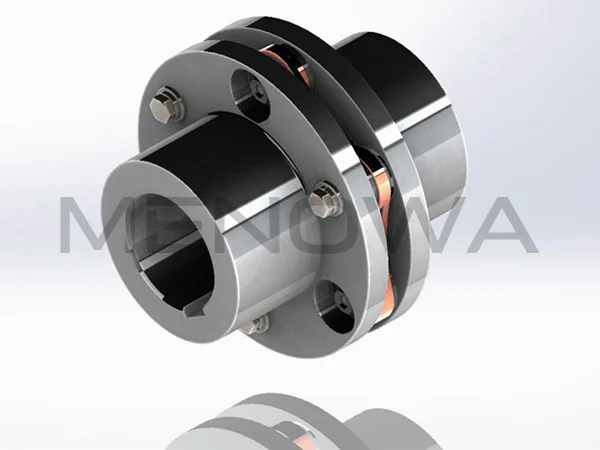
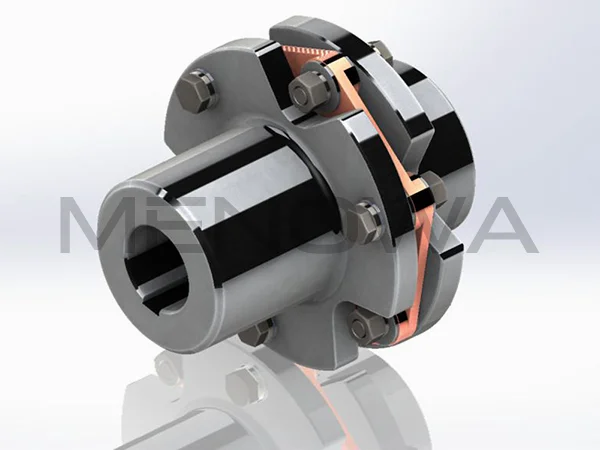
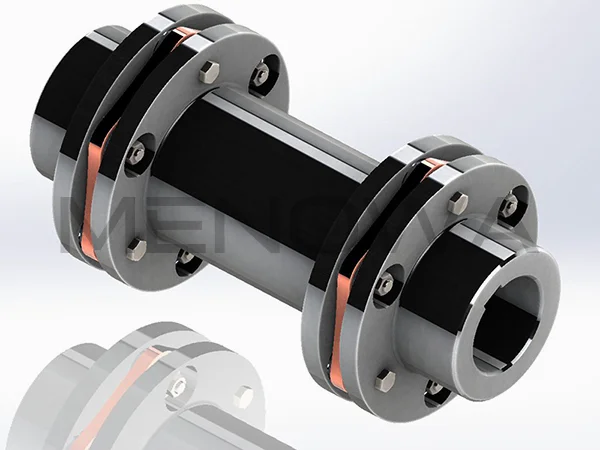
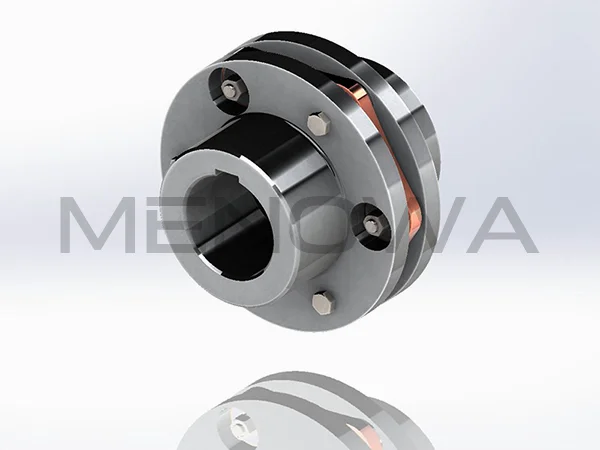
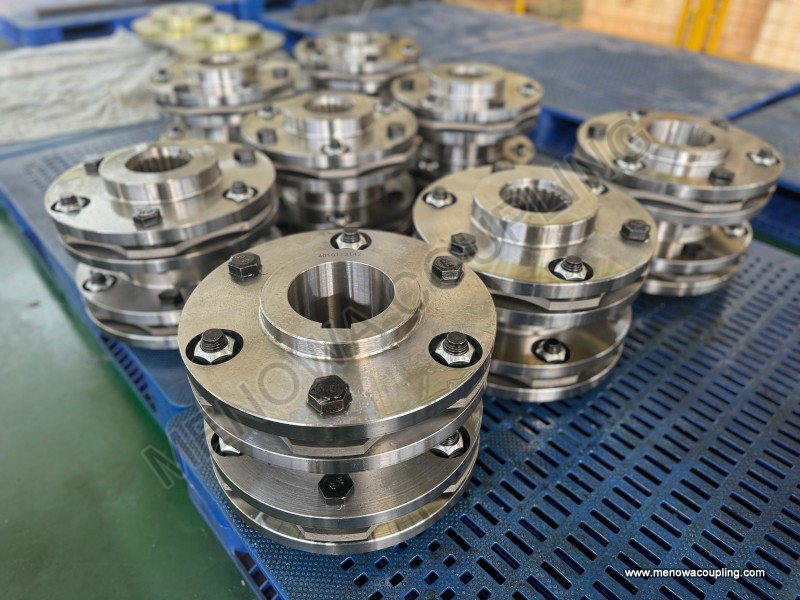
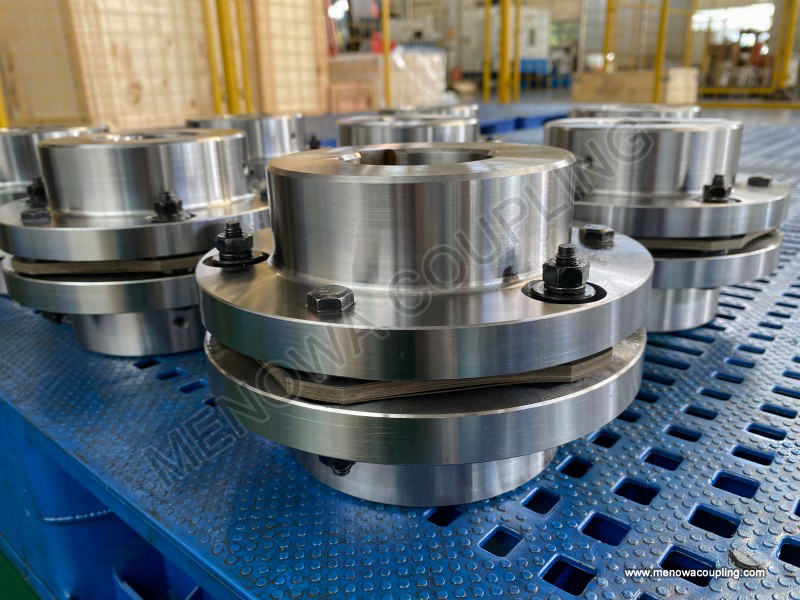
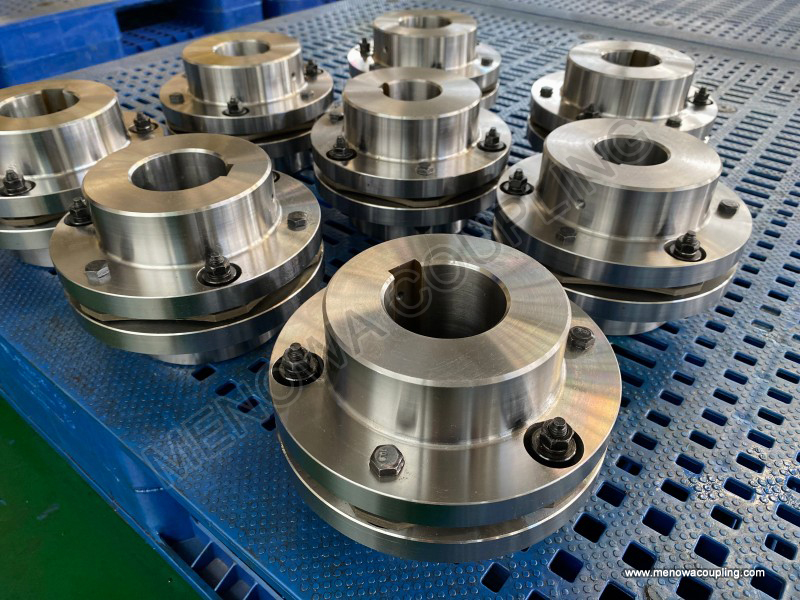
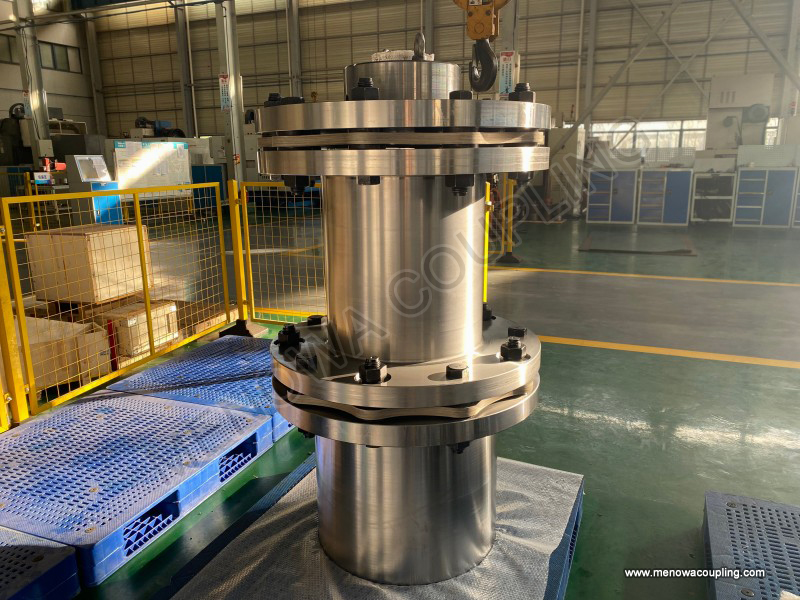
To fully understand the inherent advantages and application value of flexible diaphragm coupling in modern mechanical transmission systems, it is first necessary to conduct a detailed analysis of its internal structural composition and the core working mechanism behind torque transmission and displacement compensation. The overall structural composition of diaphragm coupling follows a simple and practical design concept without redundant auxiliary parts and complex transmission structures, and the whole set of coupling equipment is mainly composed of two symmetrical shaft hubs used for connecting the driving shaft and driven shaft respectively, a set of precision assembled metal diaphragm groups arranged between the two shaft hubs, and high-strength fasteners used for fixed connection and assembly positioning between the diaphragm groups and the shaft hubs. Each component in the overall structure has clear division of labor and coordinated functions, and the dimensional matching accuracy and assembly precision of each part directly affect the final transmission effect and service life of the entire coupling. The shaft hubs, also commonly known as half couplings in mechanical configuration description, are the basic connecting parts of the entire coupling and the direct medium for realizing the fixed assembly of the coupling and the rotating shafts of mechanical equipment. These parts are generally processed and manufactured from high-strength alloy steel materials with good overall mechanical performance, after overall forging and heat treatment processes to ensure uniform internal metal structure, high structural rigidity, strong pressure resistance and torsion resistance, and not easy to produce permanent deformation or structural damage under long-term torque transmission and alternating load impact. The inner hole of the shaft hub is designed according to the outer diameter and connection requirements of the matching mechanical shaft, and various mature connection modes can be adopted according to different equipment working conditions and assembly requirements, including keyway connection, interference fit connection, and expansion sleeve locking connection. Different connection modes have their own applicable characteristics and scenario advantages: keyway connection is suitable for conventional general industrial transmission occasions, with simple assembly process and convenient disassembly and replacement; interference fit connection can achieve high-precision coaxial positioning effect, suitable for mechanical equipment with high requirements for transmission accuracy and small vibration operation; expansion sleeve locking connection does not require complicated key processing and high-precision interference machining, and can realize quick assembly and disassembly without moving the main equipment body, bringing great convenience to later equipment maintenance and coupling replacement work.
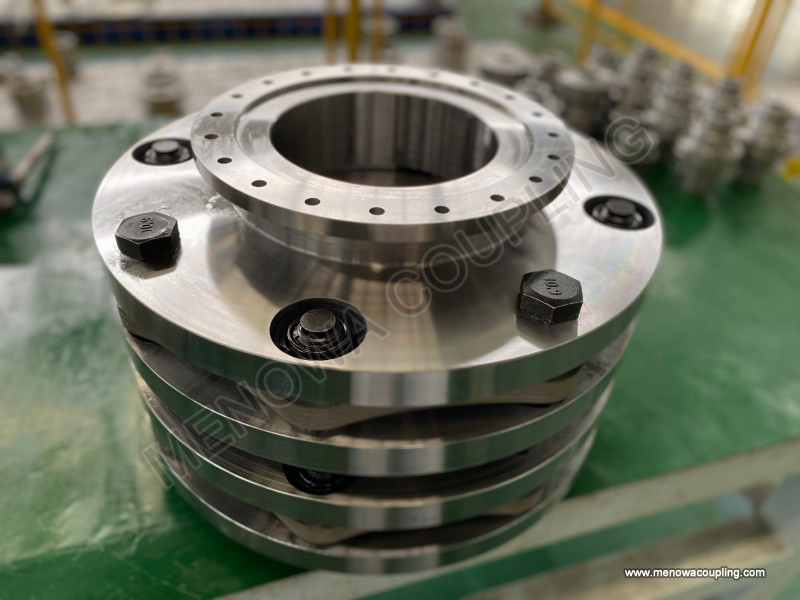
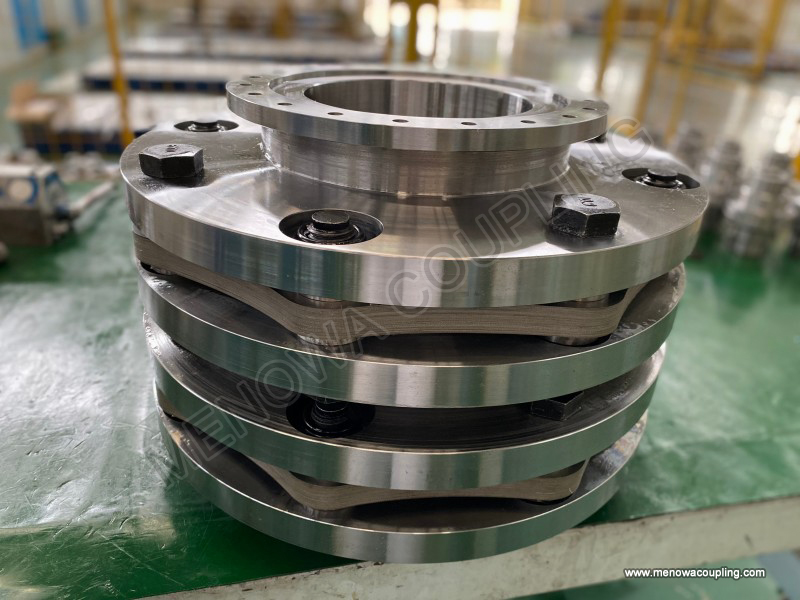
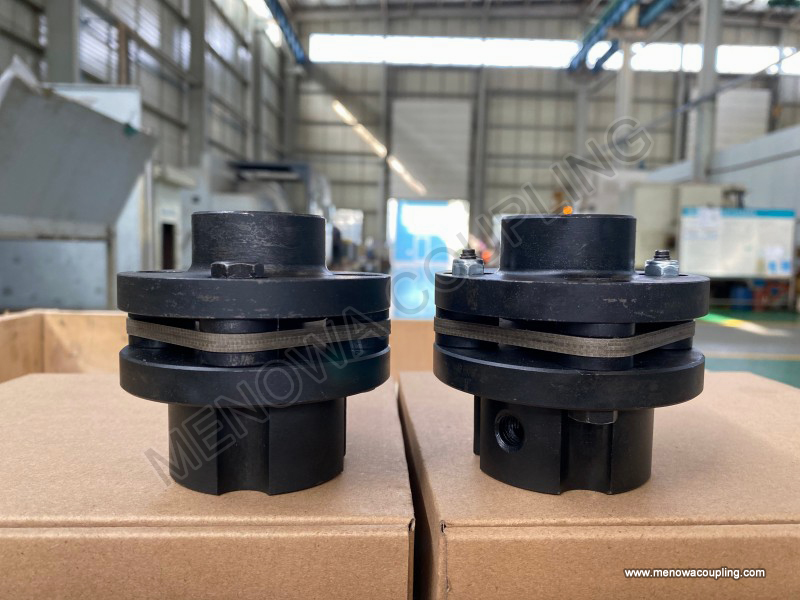
The diaphragm group is undoubtedly the most core and functional key component of the entire steel laminae coupling, and it is also the core part that undertakes both torque transmission and multi-dimensional displacement compensation tasks. The diaphragm group is usually composed of multiple ultra-thin metal diaphragm sheets stacked and combined together, each single diaphragm sheet is processed from high-quality high-strength stainless steel raw materials with excellent corrosion resistance, fatigue resistance and elastic deformation recovery performance, and the thickness of a single diaphragm sheet is kept within a reasonable thin plate range through precision stamping and finishing processes, which can ensure that the diaphragm has sufficient elastic deformation space while maintaining basic torsional rigidity. According to different structural design schemes and torque transmission capacity requirements, the shape of the diaphragm sheet has various mature forms in industrial production and application, including linear profile, conical profile and curved profile, and each structural profile is designed for different stress distribution optimization goals. The linear profile diaphragm has a simple processing technology and uniform basic stress distribution, suitable for conventional medium-load transmission working conditions; the conical profile diaphragm is optimized for uniform centrifugal stress distribution, which can reduce the stress concentration phenomenon of the diaphragm during high-speed rotation and improve the stability of high-speed operation; the curved profile diaphragm is designed to realize uniform shear stress distribution, which can effectively enhance the deformation coordination ability of the diaphragm under complex displacement conditions and extend the fatigue service life of the diaphragm under long-term alternating deformation. In the actual assembly process, multiple diaphragm sheets are stacked in a standardized order and fixed alternately on the connecting bosses of the two shaft hubs through high-strength precision bolts, so that the entire diaphragm group forms an integrated elastic connection structure between the driving shaft hub and the driven shaft hub. This alternate fixing structure enables the torque output by the driving equipment to be transmitted from the driving shaft hub to the diaphragm group through the fastening bolts, and then the torque is continuously transmitted to the driven shaft hub through the elastic connection effect of the diaphragm group, finally realizing the synchronous rotation and power transmission of the driving shaft and the driven shaft.
The fundamental working principle of laminated membrane coupling is based on the controllable elastic deformation characteristics of metal diaphragm materials under the action of torque and displacement deviation. During the normal operation of mechanical equipment, when there is ideal coaxial alignment between the driving shaft and the driven shaft without any displacement deviation, the diaphragm group only bears uniform torsional load generated by torque transmission, and the deformation of the diaphragm is extremely small and basically kept within the elastic deformation range of the metal material, ensuring that the coupling can transmit torque stably and efficiently without relative sliding and motion loss. Once installation deviations or operational displacement changes occur between the two rotating shafts, forming axial, radial or angular misalignment, the metal diaphragm group will produce micro elastic bending and telescopic deformation corresponding to the displacement deviation under the action of these misalignment forces. Through this natural and reversible elastic deformation, the diaphragm can flexibly adapt to the position difference between the two shafts, offset the additional mechanical stress and vibration impact caused by misalignment, and ensure that the torque transmission process between the driving shaft and the driven shaft is still stable and continuous without being affected by shaft displacement deviations. It is crucial to distinguish diaphragm coupling from other flexible coupling products in terms of working mechanism: many traditional flexible couplings rely on the compression and rebound deformation of non-metal elastic materials such as rubber and polyurethane to achieve displacement compensation and vibration buffering, while diaphragm coupling completely relies on the elastic deformation of all-metal diaphragm components, without any non-metal vulnerable parts and easily aging materials. This fundamental difference in working mechanism and structural materials makes diaphragm coupling have unique performance advantages in high temperature resistance, low temperature resistance, corrosion resistance and long-term fatigue operation resistance, and avoids the common problems of non-metal elastic components such as aging deterioration, deformation failure and performance attenuation after long-term use.
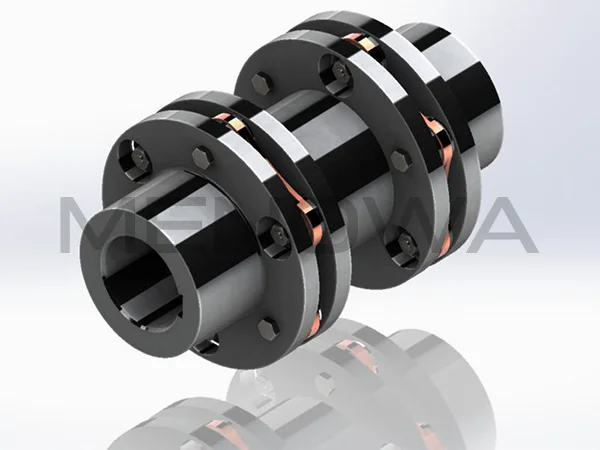
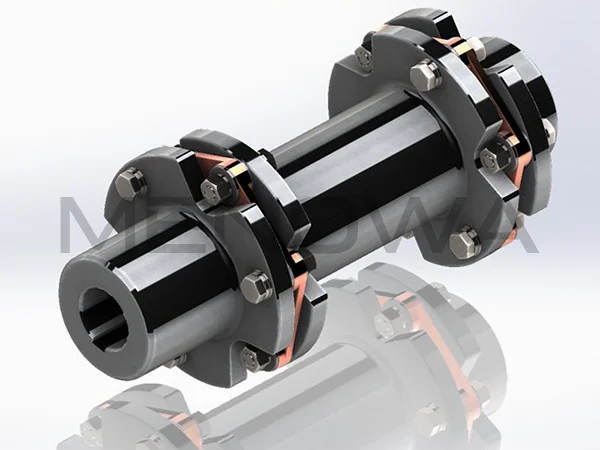
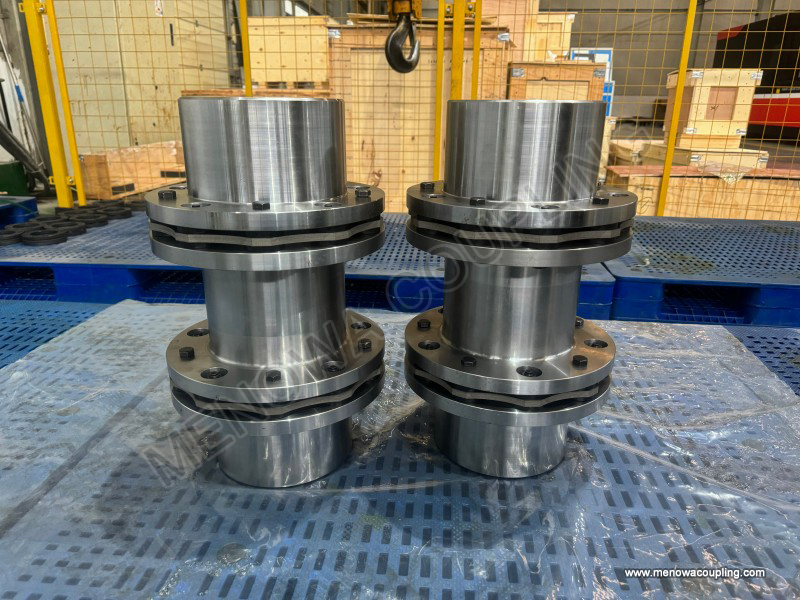
According to the different structural combination forms and displacement compensation capacities, membrane couplings can be divided into two main mainstream types in industrial practical application, namely single diaphragm coupling and double diaphragm coupling, and the two types have obvious differences in structural layout, compensation performance and applicable working scenarios. Single diaphragm coupling adopts a single set of diaphragm group structural design, with the overall structure more compact and the overall volume smaller, and the assembly and installation process more simple and convenient. This type of coupling has basic axial and angular displacement compensation capacity, and can meet the displacement compensation and torque transmission requirements of mechanical equipment with small installation misalignment, simple working conditions and low vibration requirements. Due to the limited number of diaphragm groups and simple structural layout, the radial displacement compensation capacity of single diaphragm coupling is relatively weak, so it is mostly suitable for conventional general mechanical transmission equipment with low misalignment requirements and stable operating load. Double diaphragm coupling adopts two sets of diaphragm groups arranged symmetrically with a certain intermediate spacing, and the two sets of diaphragms work together to produce coordinated elastic deformation during operation. The overall displacement compensation capacity of double diaphragm coupling is significantly improved compared with single diaphragm coupling, especially the angular displacement and radial displacement compensation effect is more prominent, and it can cope with complex and diverse installation deviations and operational displacement changes in harsh working conditions. The double diaphragm structural design can also disperse the stress borne by a single diaphragm group, reduce the single deformation amplitude of each diaphragm sheet, effectively reduce the fatigue loss of the diaphragm during long-term operation, and further prolong the overall service life of the coupling. Therefore, double diaphragm coupling is widely used in high-speed operation, high-precision transmission, heavy-load torque output and complex harsh industrial working conditions, becoming the most widely used structural form in the current diaphragm coupling market and industrial supporting applications.
The excellent comprehensive performance of shim pack coupling in various industrial application scenarios is inseparable from the scientific and reasonable selection of manufacturing materials and strict material performance control standards, and the material quality of each key component directly determines the mechanical performance, environmental adaptability and service life of the entire coupling. For the shaft hub parts that bear main torque and assembly locking force, high-quality alloy steel materials are generally selected, which have high tensile strength, good torsional resistance and structural stability, and can avoid structural deformation and damage under long-term heavy-load torque transmission and frequent start-stop impact. After forging forming, the shaft hub will undergo professional heat treatment processes such as quenching and tempering to optimize the internal metal grain structure, eliminate internal processing stress, and improve the overall mechanical toughness and fatigue resistance of the shaft hub, ensuring that the shaft hub will not produce permanent deformation or structural cracking during long-term continuous operation. For the core diaphragm group components that undertake elastic deformation and displacement compensation, special high-strength stainless steel materials are mainly selected, which have excellent comprehensive properties such as high elastic modulus, good elastic deformation recovery ability, strong fatigue resistance, outstanding corrosion resistance and stable temperature adaptability. The diaphragm materials can maintain stable mechanical properties in a wide temperature range, and will not produce performance attenuation or structural brittle failure in low-temperature cold environments or high-temperature heat generation working conditions. At the same time, the stainless steel diaphragm materials have good resistance to chemical corrosion, and can adapt to industrial working environments with humid air, dust erosion and weak chemical medium contact, avoiding diaphragm corrosion, rust and performance failure caused by environmental factors. The fastening bolts used for connecting and fixing the diaphragm group and the shaft hub are made of high-strength alloy steel with high precision machining and surface anti-rust treatment, which have high tensile strength and locking stability, will not loose or deform under long-term vibration and alternating load, and ensure the long-term assembly firmness and structural stability of the entire coupling. All material selection and processing procedures do not use any special harmful components and easily aging auxiliary materials, ensuring that the plate coupling can maintain consistent and stable performance throughout the entire service cycle.
Compared with other traditional coupling products commonly used in mechanical transmission systems, shim coupling has a series of prominent comprehensive performance advantages in structural design, operational performance, environmental adaptability and later maintenance management, which make it stand out in various industrial transmission equipment supporting selection. First of all, diaphragm coupling has extremely high torque transmission efficiency, and the all-metal rigid transmission structure ensures that there is no relative sliding, friction loss and motion hysteresis in the torque transmission process. The power generated by the driving equipment can be almost completely transmitted to the driven equipment, avoiding energy waste and transmission power loss in the transmission link, which is very suitable for mechanical equipment with high requirements for energy utilization efficiency and transmission power accuracy. Secondly, the all-metal structural design of diaphragm coupling does not need to be equipped with any lubricating oil, grease and other lubricating media during the entire service process, and there is no sliding friction and wearing parts inside the coupling. This fundamentally eliminates the maintenance work of regular oil injection, oil change and wearing part replacement required by gear couplings and other traditional coupling products, greatly reducing the daily maintenance workload and later operation and maintenance costs of mechanical equipment, and realizing long-term maintenance-free stable operation in most conventional working conditions. Thirdly, diaphragm coupling has excellent vibration damping and noise reduction performance during operation. The elastic deformation of the metal diaphragm can effectively buffer and absorb the mechanical vibration and impact load generated by equipment start-stop, load fluctuation and operational misalignment, reduce the vibration amplitude of the shafting system and the operating noise of the equipment, and improve the overall operating stability and working environment comfort of mechanical equipment.
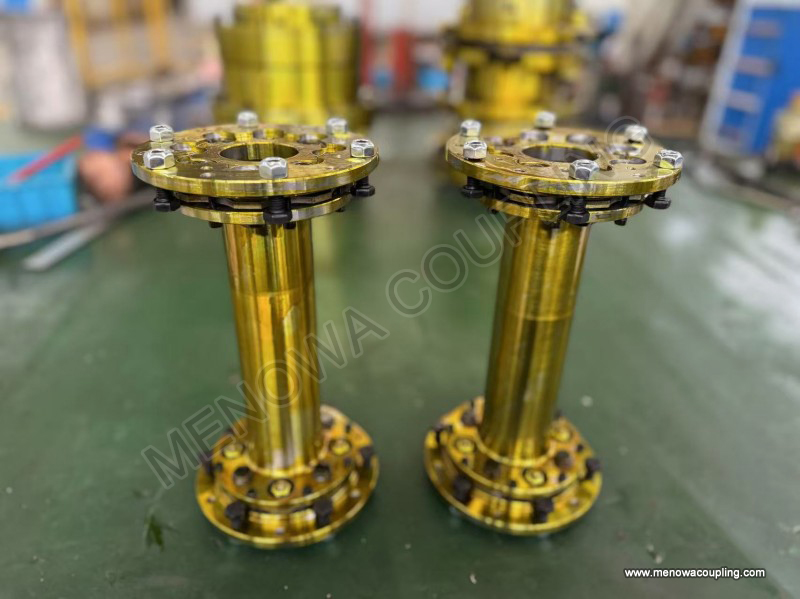
In addition to the above core performance advantages, diaphragm coupling also has outstanding extreme environmental adaptability, and can maintain normal and stable operation in low-temperature cold environments, high-temperature heat generation working conditions, humid and dusty industrial sites, and corrosive medium contact scenarios. The metal materials used in the coupling will not be affected by temperature changes to produce softening, hardening or aging failure, and the structural performance is stable in a wide temperature range, which can meet the operation requirements of special industrial equipment in extreme working conditions. At the same time, the overall structure of diaphragm coupling is compact in size, light in weight and small in occupied installation space, which is convenient for installation and layout in mechanical equipment with compact internal structural space and limited installation position. The assembly and disassembly operation of the coupling is simple and fast, especially the diaphragm coupling with intermediate shaft structure can be disassembled and replaced without moving the main equipment body, which greatly improves the convenience of equipment maintenance and coupling replacement, and reduces the downtime loss caused by equipment maintenance. Moreover, diaphragm coupling can realize precise synchronous rotation transmission without motion deviation and rotation hysteresis, which can ensure the strict synchronization of the rotation speed and motion state between the driving shaft and the driven shaft, and meet the high-precision transmission requirements of precision mechanical equipment and automated production equipment for motion accuracy and position synchronization.
Diaphragm coupling has a wide range of practical industrial application scenarios, covering almost all mechanical transmission fields that require stable torque transmission, multi-dimensional displacement compensation and long-term stable operation, and it has important application value in energy power, industrial manufacturing, petrochemical industry, metallurgical mining, environmental protection equipment, automated production lines and many other core industrial fields. In the energy power industry, diaphragm coupling is widely used in the shafting connection and power transmission of power generation equipment, fan equipment, water pump equipment and compressor equipment. These power equipment often runs continuously for a long time, with high operating speed, large transmission torque and high requirements for operational stability. The displacement compensation and vibration damping performance of diaphragm coupling can effectively cope with the shaft misalignment caused by long-term operation and thermal deformation, ensure the stable operation of power equipment, and avoid equipment failure and power supply interruption caused by shafting vibration and stress concentration. In the petrochemical industry, the production and processing equipment often works in harsh environments such as high temperature, high pressure and corrosive medium, and the non-metal elastic parts of traditional flexible couplings are easy to age and fail in such environments. The all-metal structure of diaphragm coupling has corrosion resistance and high and low temperature resistance, which can adapt to the long-term operation requirements of petrochemical pumping equipment, stirring equipment and transmission machinery, and ensure the continuous and stable operation of chemical production processes.
In the metallurgical and mining industry, mechanical equipment is often in heavy-load operation state, with frequent load impact and large equipment vibration, and the shafting misalignment caused by long-term heavy-load operation is obvious. Diaphragm coupling can bear heavy-load torque transmission, buffer impact load, compensate shaft displacement deviation, reduce the failure rate of metallurgical rolling equipment and mining transmission equipment, and extend the service life of key mechanical parts. In the field of environmental protection equipment such as sewage treatment and waste gas treatment, the operating environment of the equipment is humid and dusty, and there are certain corrosive substances. Diaphragm coupling does not need lubrication and has corrosion resistance, which can adapt to the harsh working environment of environmental protection equipment, reduce maintenance frequency, and ensure the long-term stable operation of environmental protection treatment equipment. In automated production and precision mechanical processing industry, mechanical equipment has high requirements for transmission accuracy and motion synchronization. Diaphragm coupling can realize high-precision synchronous transmission without rotation hysteresis, ensure the precise coordination of each processing link and production process of automated production lines and precision processing equipment, and improve production efficiency and product processing quality. In addition, diaphragm coupling also has important application in marine equipment, transportation machinery and other fields, adapting to the complex working conditions and special environmental requirements of different industries, and providing reliable basic guarantee for the stable operation of various mechanical transmission systems.
Although diaphragm coupling has excellent comprehensive performance and wide application adaptability, reasonable installation operation, correct use matching and regular daily inspection and maintenance are still important prerequisites to ensure its long-term stable operation and give full play to its performance advantages. In the equipment assembly and coupling installation stage, construction and maintenance personnel need to strictly follow the mechanical assembly process requirements to ensure that the coaxiality of the driving shaft and driven shaft is controlled within the reasonable deviation range specified by the design standard, reducing the excessive initial misalignment caused by improper installation, so as to avoid the diaphragm bearing excessive deformation stress at the initial stage of operation and accelerate fatigue loss. During the installation process, the fastening bolts of the diaphragm group and the shaft hub need to be tightened evenly according to the specified torque standard, avoiding uneven bolt locking force leading to unilateral stress concentration of the diaphragm, which affects the structural stability and service life of the coupling. After the installation is completed, it is necessary to conduct trial operation and vibration detection of the equipment to check whether the coupling has abnormal vibration and noise during operation, and adjust the shaft alignment in time if abnormal conditions are found to ensure that the coupling is in the best operating state.
In the daily operation and use stage of the equipment, regular visual inspection and operational state monitoring of the diaphragm coupling should be done well. The inspection work mainly includes checking whether the fastening bolts of the coupling are loose or rusted, whether the metal diaphragm has obvious deformation, corrosion, cracks and other damage phenomena, and whether the coupling has abnormal vibration and abnormal noise during equipment operation. For diaphragm couplings operating in high-speed, heavy-load and harsh environments, the inspection cycle can be appropriately shortened to timely discover potential hidden dangers of equipment operation. Once abnormal problems such as bolt looseness and diaphragm corrosion are found, timely tightening and anti-rust treatment should be carried out; if the diaphragm has fatigue cracks and permanent deformation, the diaphragm group should be replaced in time to avoid mechanical failure caused by coupling damage affecting the normal operation of the entire equipment. It is worth noting that diaphragm coupling basically does not need special maintenance such as lubrication and oil change during use, which greatly reduces the difficulty of daily maintenance, but regular inspection and timely troubleshooting are still essential links to maintain its long-term reliable operation.
Looking at the overall development trend of modern mechanical transmission technology, with the continuous upgrading of industrial production automation degree, the continuous improvement of mechanical equipment operation precision requirements, and the increasing demand for equipment long-cycle stable operation and low maintenance cost, diaphragm coupling, as a high-performance all-metal flexible transmission component, will have broader application prospects and greater market demand in the future mechanical engineering field. With the continuous progress of metal material processing technology, precision manufacturing technology and mechanical optimization design concept, the structural design of diaphragm coupling will be further optimized, the material performance will be continuously improved, and the displacement compensation capacity, fatigue resistance and high-speed operation stability of the product will be further enhanced to adapt to the more stringent working condition requirements of emerging industrial equipment and high-end mechanical transmission systems. At the same time, with the increasing attention paid to energy conservation and efficient production in various industrial fields, the high transmission efficiency and low energy loss characteristics of diaphragm coupling will also make it gradually replace some traditional backward coupling products, becoming the mainstream matching choice of modern new mechanical equipment. In the future mechanical transmission system design and industrial equipment supporting selection work, diaphragm coupling will rely on its unique structural advantages, excellent comprehensive performance and strong environmental adaptability, continue to play an irreplaceable core role in ensuring the stable operation of mechanical equipment, improving transmission efficiency, reducing maintenance costs and extending equipment service life, and provide solid basic technical support for the high-quality development of various industrial production fields and the progress of mechanical engineering technology.
 WeChat
 WhatsApp