Jaw Coupling
In the vast and intricate landscape of mechanical power transmission systems, the reliable connection between rotating shafts stands as a foundational prerequisite for the stable and continuous operation of all types of mechanical equipment. Every mechanical device that relies on rotational power output and transmission, from small precision motion control equipment used in automated production lines to large-scale industrial processing machinery operating in harsh production environments, requires a stable and adaptable connecting component to link driving shafts and driven shafts, complete torque transfer, and buffer various mechanical stresses generated during operation. Among numerous types of flexible coupling structures developed and optimized for shaft connection and power transmission needs, jaw coupling has always occupied a core and irreplaceable position in the industrial field by virtue of its simple and compact structural design, excellent comprehensive mechanical performance, convenient installation and later maintenance characteristics, and strong adaptability to diverse working conditions. Unlike rigid coupling structures that pursue absolute rigidity and precise shaft alignment and lack buffer and deformation compensation capabilities, jaw coupling belongs to the category of elastomeric flexible couplings, which integrates basic torque transmission function, mechanical vibration damping effect, shaft misalignment compensation performance and impact load buffering capacity into one complete mechanical component. It effectively solves various common operational problems in mechanical transmission processes, including inevitable shaft position deviation caused by equipment installation errors, structural thermal deformation during long-term mechanical operation, slight mechanical vibration generated by rotational operation, and instantaneous impact load caused by equipment start-stop and working condition switching. These common problems, if not properly buffered and compensated by professional coupling components, will directly lead to excessive wear of shaft parts, premature damage to bearings and gears, increased mechanical operating noise, reduced equipment operation accuracy, and even shortened overall service life of the entire mechanical system, bringing unnecessary operational risks and additional maintenance burdens to industrial production and mechanical operation management. The practical value and application significance of jaw coupling lie in its ability to balance rigid torque transmission requirements and flexible mechanical protection needs, ensuring efficient and stable power transmission between shafts while providing effective protection for key mechanical components, making it one of the most widely used general-purpose transmission couplings in both general industrial mechanical transmission and precision motion control scenarios.
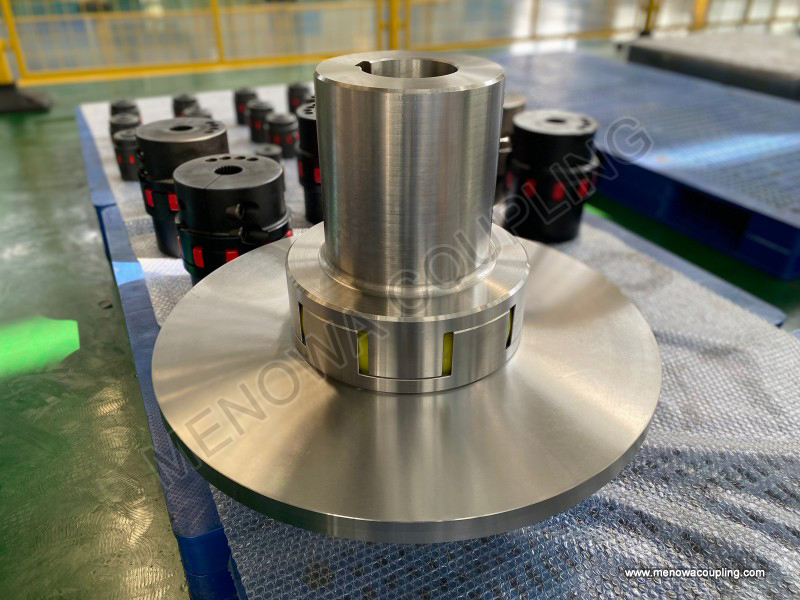
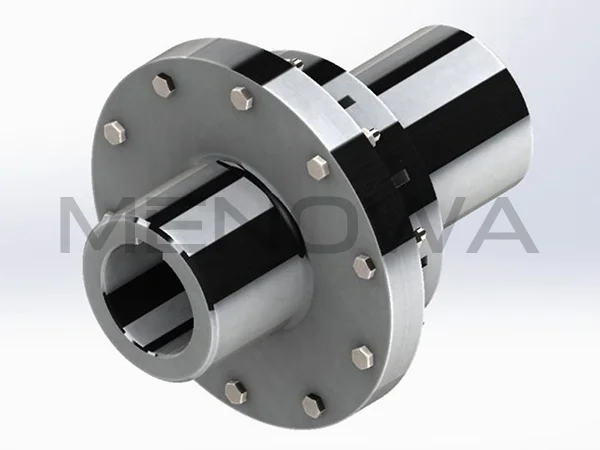
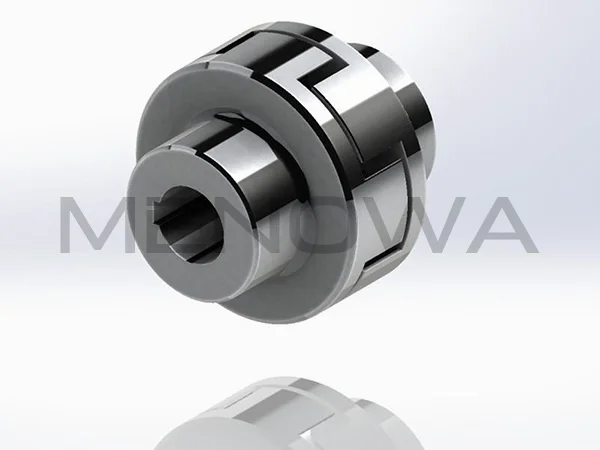
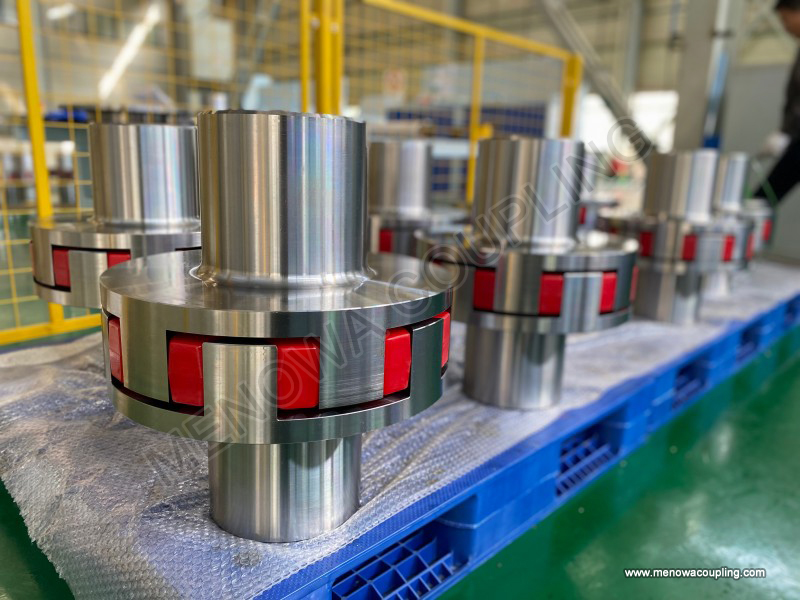
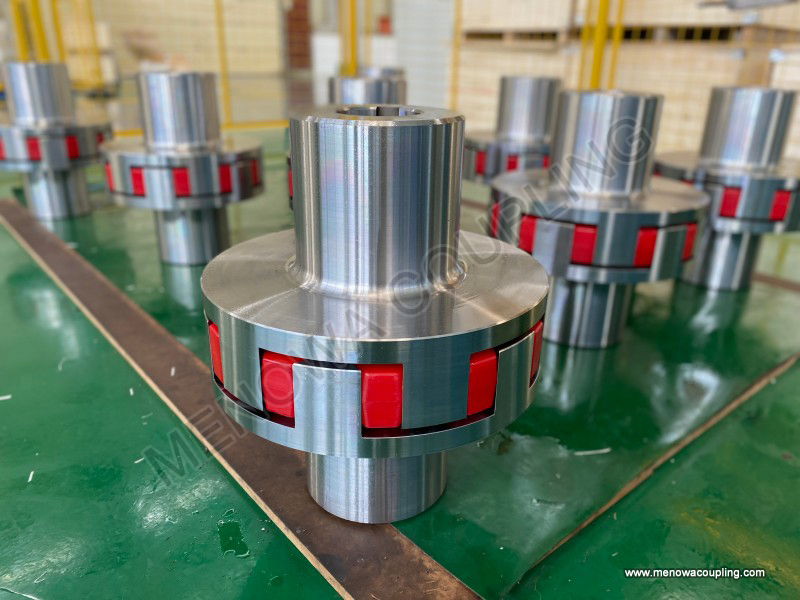
The basic structural composition of jaw coupling follows a simple and scientific integrated design logic, without complex accessory structures and redundant connecting parts, and the whole equipment is composed of three core basic components that cooperate with each other to realize all functional attributes of power transmission and mechanical protection. The two outer components are metal hubs with evenly distributed jaw structures processed on the outer edge, and the middle core functional component is an elastomer insert widely known as a spider due to its special plum-blossom or multi-lobe geometric shape. The overall assembly mode of the jaw coupling is extremely intuitive and reasonable: the jaw parts of the two metal hubs are arranged in a staggered interlocking state, and the elastomer spider is tightly embedded in the gap formed by the staggered jaws of the two hubs, forming a complete and closed power transmission and buffer integration structure. This unique assembly structure enables the entire coupling to rely on the compression deformation of the elastomer spider between the staggered jaws to complete torque transmission, rather than relying on rigid contact and friction between metal components for power transfer. The metal hubs on both sides undertake the basic connection work with the driving shaft and driven shaft respectively, and the inner hole of each hub is precisely processed according to the shaft diameter specifications of matching mechanical equipment, which can be tightly sleeved and fixed on the surface of the rotating shaft through conventional fastening connection methods, ensuring that the hubs and the shafts maintain synchronous rotation without relative sliding during operation. The jaws uniformly distributed on the outer circumference of the metal hubs are processed with high precision to ensure consistent size, uniform spacing and smooth surface, which can evenly apply pressure to each lobe of the intermediate elastomer spider during rotation, avoiding local stress concentration caused by uneven force and preventing premature local deformation and damage of the elastomer insert. The intermediate elastomer spider is the most critical functional core of the entire jaw coupling, undertaking multiple core tasks including torque conduction, vibration damping, misalignment compensation and impact buffering. All the functional characteristics and application performance differences of different specifications and types of jaw couplings are mostly determined by the material characteristics, hardness grade, geometric thickness and structural toughness of this elastomer insert. The overall structural design without complex bolts, flanges and other additional connecting accessories not only reduces the overall weight and external volume of the jaw coupling, making it suitable for installation in narrow and compact mechanical assembly spaces, but also greatly simplifies the subsequent disassembly, replacement and maintenance work of the coupling, avoiding the tedious operation steps of disassembling multiple fastening parts required by other complex coupling structures during maintenance and replacement.
The working principle of jaw coupling is based on the elastic compression deformation characteristics of polymer elastomer materials and the staggered meshing transmission mode of metal jaws, realizing organic integration of rigid power transmission and flexible mechanical buffering in the shaft connection process. When the driving mechanical equipment starts to operate and the driving shaft begins to rotate, the metal hub connected to the driving shaft rotates synchronously with the shaft, and the jaws on the driving hub continuously apply uniform compression force to each lobe of the embedded elastomer spider in the rotating direction. Under the action of continuous compression force, the elastomer spider generates controllable elastic deformation within its material tolerance range, and transmits the rotational torque received from the driving hub to the jaws of the driven hub on the other side through the elastic restoring force generated by deformation. Subsequently, the driven hub drives the connected driven shaft to rotate synchronously, completing the whole process of power and torque transmission from the driving end to the driven end. In the whole torque transmission process, there is no direct rigid metal-to-metal contact between the driving hub and the driven hub, and all force transmission and power conversion are completed through the intermediate elastomer spider. This core working mechanism brings two core functional advantages that rigid couplings do not have. On the one hand, when the mechanical equipment is started, stopped or switched between different working loads, instantaneous impact torque and fluctuating load will be generated in the transmission system. The elastomer spider can absorb and disperse most of the instantaneous impact force through its own elastic deformation, avoid the direct action of impact load on the shaft, bearing and gear components of the mechanical system, and effectively reduce the vibration and noise generated by mechanical operation. On the other hand, affected by various objective factors in actual mechanical operation, it is difficult to achieve absolute perfect alignment between the driving shaft and the driven shaft in any mechanical equipment. There will always be different degrees of tiny misalignment deviations between shafts, including axial misalignment formed by the axial spacing deviation between the two shafts, radial misalignment caused by the center height deviation of the two shafts, and angular misalignment generated by the slight angle inclination between the two shaft centerlines. The elastomer spider of jaw coupling can rely on its flexible deformation performance to automatically adapt to these three types of common shaft misalignment deviations within a reasonable allowable range, compensate for position and angle differences between shafts through slight elastic distortion and deformation, avoid additional bending stress and shear stress on the shaft and connecting parts caused by shaft misalignment, and reduce abnormal wear and fatigue loss of mechanical components caused by long-term misalignment operation. All the deformation and buffering processes of the jaw coupling are carried out within the elastic limit of the elastomer material, and after the impact load and misalignment stress disappear, the elastomer spider can quickly return to its original shape and state, ensuring that the coupling can maintain stable and consistent transmission performance during long-term cyclic operation.
Material selection is the core factor that determines the comprehensive performance, service life and application scope of jaw coupling, and the two core components of metal hubs and elastomer spiders have corresponding diversified material matching schemes according to different working conditions, load requirements and operating environment characteristics. For the metal hubs responsible for shaft connection and torque conduction, the commonly used processing and manufacturing materials mainly include cast iron, carbon steel and aluminum alloy, and each material has its own unique performance advantages and applicable working condition scenarios. Cast iron materials have good casting performance, low production and processing cost, excellent structural rigidity and compression resistance, and can maintain stable structural shape and size under conventional medium and low torque transmission working conditions. Cast iron jaw hubs are suitable for general industrial mechanical transmission scenarios with stable operating load, low operating speed and no harsh environmental corrosion, and meet the basic use needs of most conventional mechanical equipment. Carbon steel materials have higher mechanical strength, better toughness and fatigue resistance compared with cast iron, with stronger torque bearing capacity and impact resistance. Carbon steel metal hubs are often used in jaw couplings applied to medium and high load, frequent start-stop and long-term continuous operation working conditions, which can avoid structural deformation and metal fatigue damage of hubs under long-term high-load operation and ensure the long-term stable use of the coupling main body. Aluminum alloy materials are characterized by light weight, high strength, good thermal conductivity and easy precision processing. Aluminum alloy jaw hubs are mostly used in precision motion control equipment, light-duty automated machinery and high-speed rotating mechanical systems. The light weight characteristics of aluminum alloy can effectively reduce the overall rotational inertia of the coupling during high-speed operation, reduce the dynamic load of mechanical operation, and improve the motion control accuracy and response speed of precision equipment. For the elastomer spider which plays the role of buffering, damping and misalignment compensation, the commonly used manufacturing materials mainly include natural rubber, nitrile rubber, polyurethane and thermoplastic elastomer materials, and the difference in material hardness, elasticity, wear resistance, temperature resistance and chemical resistance directly changes the core performance of the jaw coupling. Natural rubber materials have excellent elastic deformation performance and vibration damping effect, good flexibility and low-temperature resistance, and are suitable for conventional room temperature working environments with low load and small vibration requirements, with good buffering effect on ordinary mechanical vibration and impact. Nitrile rubber materials have outstanding oil resistance, wear resistance and aging resistance, and can maintain stable elastic performance in working environments containing lubricating oil, hydraulic oil and other oily media, avoiding material aging, hardening and failure caused by long-term contact with oil products, and are widely used in mechanical equipment in hydraulic transmission and lubrication-intensive industrial fields. Polyurethane materials have high structural strength, strong wear resistance, good tear resistance and moderate hardness, balancing elasticity and torque bearing capacity. Polyurethane spiders can bear higher transmission torque compared with ordinary rubber materials, with longer service life and better wear resistance, suitable for medium and high load working conditions and long-term continuous industrial production operation scenarios. Thermoplastic elastomer materials have excellent high and low temperature resistance, chemical corrosion resistance and stable physical properties, and can maintain stable deformation and buffering performance in extreme high temperature, low temperature and corrosive working environments, suitable for special industrial production scenarios with harsh environmental conditions and high requirements for material stability.
The reasonable selection of jaw coupling needs to be closely combined with the actual operating parameters of mechanical equipment, working condition characteristics and environmental factors, and comprehensive judgment and selection should be made from multiple dimensions such as transmission torque, operating speed, shaft misalignment degree, operating environment and load fluctuation characteristics, so as to ensure that the selected jaw coupling can meet the actual use needs and achieve the best matching effect between transmission performance and mechanical protection. First of all, the rated transmission torque of the coupling is the primary selection basis. It is necessary to calculate the normal operating torque and instantaneous peak impact torque of the mechanical transmission system according to the power and operating state of the driving equipment, and select the jaw coupling with appropriate torque bearing level. It is necessary to reserve a certain torque safety margin according to the frequency of equipment start-stop and load fluctuation, so as to avoid the deformation and damage of the elastomer spider caused by long-term overload operation of the coupling. Secondly, the operating speed of mechanical equipment is also an important selection factor. Different materials and structural specifications of jaw couplings have different allowable maximum operating speeds. High-speed rotating mechanical systems need to select jaw couplings with small rotational inertia and high dynamic balance performance, usually matching aluminum alloy hubs and high-strength lightweight elastomer materials, to avoid vibration and dynamic unbalance problems caused by excessive rotational inertia during high-speed operation. For low-speed and heavy-load mechanical equipment, priority should be given to couplings with high structural strength and large torque bearing capacity, without excessive pursuit of lightweight design. Thirdly, the actual misalignment deviation between the driving shaft and the driven shaft of the equipment needs to be fully considered. Different elastomer spider materials and hardness correspond to different allowable misalignment ranges. For equipment with large installation deviation or easy thermal deformation during operation, flexible elastomer materials with low hardness and good deformation performance should be selected to improve the misalignment compensation ability of the coupling; for precision motion control equipment with high shaft alignment accuracy, elastomer materials with moderate hardness and small deformation should be selected to ensure the transmission accuracy while meeting the basic buffering needs. In addition, the actual operating environment of the equipment cannot be ignored. For conventional indoor dry working environments, ordinary rubber and cast iron matching jaw couplings can meet the use requirements; for outdoor open-air working environments with humidity, dust and temperature change, it is necessary to select couplings with aging-resistant and corrosion-resistant elastomer materials and surface-treated metal hubs; for industrial environments with oil pollution, chemical corrosion and extreme temperature changes, oil-resistant, corrosion-resistant and temperature-resistant special materials must be selected to ensure that the coupling will not fail due to environmental factors during long-term operation.
The installation and subsequent daily maintenance work of jaw coupling is simple and convenient, which is one of the important reasons why it is widely promoted and applied in various industrial fields, and the standardized installation and scientific maintenance can effectively extend the service life of the coupling and maintain the stable transmission performance of the mechanical system. In terms of installation operation, the whole process does not need complex professional installation tools and complicated construction steps. Firstly, clean the inner holes of the two metal hubs and the surface of the driving shaft and driven shaft to ensure that there is no dust, iron filings, oil dirt and other impurities on the matching surface, avoiding the influence of impurities on the matching tightness and rotation balance after installation. Then, sleeve the two metal hubs on the corresponding driving shaft and driven shaft respectively, adjust the axial position of the hubs to ensure that the distance between the two hubs meets the assembly requirements of the elastomer spider, and initially fix the hubs on the shaft through the conventional fastening structure. After that, adjust the position of the mechanical equipment to minimize the misalignment deviation between the two shafts within the allowable range of the coupling, so as to reduce the additional stress generated by misalignment during the subsequent operation of the coupling. Finally, insert the elastomer spider into the staggered gap of the two hub jaws, and complete the final fastening and fixing of the hubs after confirming that the assembly position of all components is accurate and the fitting is tight. After the installation is completed, manual trial rotation of the mechanical equipment can be carried out to check whether the coupling rotates smoothly, whether there is jamming, abnormal friction and uneven rotation, and put it into formal operation after confirming that there is no abnormal condition. In terms of daily maintenance, jaw coupling basically belongs to maintenance-free mechanical components in conventional working conditions, without the need for regular oiling, lubrication and frequent fastening inspection required by other transmission components. The daily maintenance work only needs to carry out regular visual inspection and simple cleaning work regularly. In the daily production and operation process, regularly observe the operating state of the coupling, check whether the elastomer spider has obvious deformation, aging, cracking, wear and damage, and check whether the metal hubs have looseness, displacement and abnormal wear. For the working environment with more dust and dirt, regularly clean the surface of the coupling to prevent dust and impurities from accumulating in the gap between the jaws and the spider, avoiding the influence of impurity accumulation on the elastic deformation performance and normal torque transmission of the elastomer. When the elastomer spider is found to have aging damage and obvious wear during inspection, it only needs to stop the equipment for simple disassembly and replace the new elastomer insert, without replacing the metal hubs with long service life, which greatly reduces the later maintenance cost and equipment downtime caused by maintenance. The simple maintenance mode and low maintenance cost make jaw coupling very suitable for industrial production lines and mechanical equipment that require long-term continuous operation and low maintenance frequency.
Jaw coupling has a wide range of practical industrial application scenarios, covering almost all mechanical fields that need shaft connection and power transmission, from light-duty precision automation equipment to heavy-duty industrial processing machinery, and can achieve good matching use effect. In the field of automated production and motion control equipment, jaw coupling is used in robotic arms, automated assembly lines, servo motor transmission systems and precision conveying machinery. The compact structural size, low rotational inertia and good vibration damping performance of the coupling can ensure the high-precision motion response and stable operation of precision automation equipment, avoid motion accuracy deviation caused by mechanical vibration and shaft misalignment, and meet the high-precision transmission and positioning needs of automated production. In the field of industrial processing and manufacturing machinery, jaw coupling is applied to printing and paper processing equipment, food and beverage production and processing machinery, plastic processing machinery and textile machinery. These mechanical equipment have stable operating load and continuous cyclic operation characteristics, and the good buffering and wear resistance of jaw coupling can adapt to long-term continuous production operation, reduce mechanical operating noise and component wear, and ensure the stable operation of production machinery and the continuity of production work. In the field of hydraulic and pneumatic transmission equipment, jaw coupling is used for the connection of hydraulic pumps, air compressors and supporting power motors. The oil-resistant and impact-resistant performance of the coupling can adapt to the working characteristics of frequent load fluctuation and certain impact load in hydraulic and pneumatic transmission systems, buffer the pressure impact generated by hydraulic and pneumatic power transmission, and protect hydraulic components and motor equipment from impact damage. In the field of fan, water pump and general power transmission equipment, jaw coupling is widely used for the shaft connection of various ventilation fans, water supply and drainage pumps and conventional power transmission machinery. These devices have the characteristics of long-term continuous operation and low operation precision requirements, and the simple structure, low cost and stable performance of jaw coupling can fully meet the basic power transmission needs, reducing the failure rate and maintenance difficulty of conventional power transmission equipment. In the field of construction machinery and light industrial supporting equipment, jaw coupling is also used in various small and medium-sized construction auxiliary machinery and light industrial transmission equipment, adapting to complex working conditions and frequent start-stop operation needs, providing reliable shaft connection and mechanical protection for various types of mechanical equipment.
In the long-term application practice and continuous mechanical performance optimization process, jaw coupling has shown outstanding comprehensive advantages that are difficult to replace by other types of couplings, and also has certain applicable limitation boundaries, which need to be reasonably distinguished and selected according to actual working conditions. The core advantages of jaw coupling are reflected in many aspects such as simple and compact structure, convenient installation and maintenance, good vibration damping and impact buffering effect, reliable misalignment compensation performance, wide material matching range and strong working condition adaptability. Compared with rigid couplings, it has obvious flexible protection performance, which can effectively protect mechanical components and reduce equipment wear and failure rate; compared with other complex flexible couplings, it has simpler structure, lower failure probability and lower later maintenance cost, with higher cost performance in long-term use. At the same time, the diversified material matching scheme enables jaw coupling to be adapted from light-duty precision transmission to heavy-duty industrial transmission, from conventional room temperature environment to special harsh environment, with extremely wide application coverage. However, jaw coupling also has certain use limitations. Due to the inherent material characteristics of elastomer spider, the high-temperature resistance and ultra-high load bearing capacity of jaw coupling have certain upper limits, and it is not suitable for ultra-high temperature working environments and ultra-heavy load impact transmission scenarios that require long-term operation. In addition, although jaw coupling can compensate for conventional shaft misalignment, it cannot adapt to excessive shaft position deviation and large-angle angular misalignment. Excessive misalignment will lead to accelerated wear and rapid aging of the elastomer spider, reducing the service life of the coupling. Therefore, in the actual selection and use process, it is necessary to give full play to the performance advantages of jaw coupling, avoid its application limitations, and match the most appropriate jaw coupling specifications and materials according to the actual working condition parameters, so as to maximize the transmission efficiency and mechanical protection effect of the coupling.
With the continuous progress of industrial mechanical manufacturing technology and the continuous upgrading of mechanical equipment towards high efficiency, precision and stability, the performance optimization and structural upgrading of jaw coupling are also constantly advancing with the development of the industry. On the basis of maintaining the classic simple and efficient structural design of traditional jaw coupling, modern manufacturing technology continuously optimizes the processing precision of metal hub jaws and the formula of elastomer spider materials, further improving the torque transmission efficiency, vibration damping effect and service life of the coupling. The continuous innovation of new elastomer materials makes jaw coupling more adaptable to extreme working environments, and the continuous optimization of structural technology makes the coupling have higher transmission accuracy and lower rotational inertia, meeting the increasingly stringent transmission needs of modern precision mechanical equipment and high-efficiency industrial production lines. As a basic and core mechanical transmission component, jaw coupling will always rely on its excellent comprehensive performance and wide adaptability to occupy an important position in the field of mechanical power transmission. Through reasonable type selection, standardized installation and scientific daily maintenance, jaw coupling can always maintain stable and efficient operating state in various mechanical systems, provide reliable guarantee for the stable operation of mechanical equipment and the continuous progress of industrial production, and play an indispensable basic supporting role in the development of various mechanical industrial fields.
https://www.menowacoupling.com/industrial-coupling/jaw-coupling.html

 WeChat
 WhatsApp