Flexible Grid Coupling
In the complex and diverse modern industrial transmission systems, the stable connection between driving equipment and driven equipment has always been a key link affecting the overall operating efficiency, mechanical safety and service life of the entire production line. All kinds of mechanical transmission equipment need reliable connecting components to complete the torque transmission task, while adapting to various inevitable deviations and dynamic load changes generated during long-term operation. Flexible grid coupling, as a mature and practical mechanical transmission connecting component, has been widely used in various industrial production scenarios that require torque transmission, vibration buffering and misalignment compensation. Different from other types of connecting parts with single transmission function, this kind of coupling integrates multiple practical performances such as efficient torque conduction, flexible vibration damping, impact load buffering and multi-dimensional displacement adaptation, and can well coordinate the operating state between power sources and working machinery, effectively reduce the additional mechanical stress caused by installation deviation, equipment operation wear and dynamic load fluctuation, and create a stable and reliable operating environment for the entire mechanical transmission system. In the actual industrial operation process, no matter it is heavy-duty mechanical equipment running continuously for a long time, processing equipment with frequent start-stop and variable load operation, or conveying machinery with complex operating conditions and unstable load changes, flexible grid coupling can show good adaptive performance, effectively alleviate the rigid collision and mechanical fatigue between components caused by harsh working conditions, and maintain the continuity and stability of power transmission under various complex working conditions.
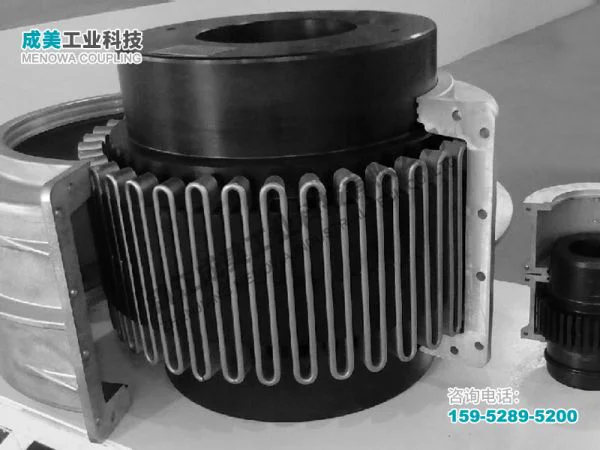
The basic design concept of flexible grid coupling originates from the core demand of balancing rigid torque transmission and flexible mechanical protection. In the traditional mechanical transmission design, many connecting components often focus too much on the torque transmission capacity while ignoring the buffering and protection of the equipment itself, resulting in that although the power transmission can be completed in a short time, the connected driving and driven shafts, bearings, seals and other vulnerable parts are prone to excessive wear and fatigue damage under the action of vibration, impact and misalignment for a long time. On the contrary, some flexible connecting parts with excessive focus on buffering performance often have insufficient torque bearing capacity and poor structural stability, which cannot meet the transmission needs of heavy-duty and high-power mechanical equipment. The flexible grid coupling perfectly balances the two core requirements of transmission efficiency and mechanical protection through ingenious structural layout and flexible component design. Its overall structure is composed of two symmetrical hubs and a flexible grid elastic connecting body matched with the hub grooves. The two hubs are respectively fixed on the driving shaft and the driven shaft of the mechanical equipment, and the flexible grid is embedded in the special grooves processed on the outer circumference of the two hubs. Through the flexible deformation and elastic reset of the grid structure itself, the coupling realizes the seamless transmission of torque between the two shafts, and at the same time uses the elastic buffering characteristics of the grid to absorb the vibration energy generated during equipment operation and disperse the instantaneous impact load generated by start-stop, load mutation and mechanical collision.
The internal structural design details of flexible grid coupling determine its excellent comprehensive performance in actual industrial application. The hub part of the coupling is usually made of high-strength metal materials with good rigidity and wear resistance. The surface of the hub is precisely processed with continuous curved grooves with specific profiles. These grooves are not simple straight-line notches, but adopt a flared gradual change design structure. This special groove design enables the flexible grid embedded inside to have a longer flexible deformation span under conventional operating load conditions, and can gradually increase the contact area between the grid and the groove wall as the transmission load increases. The progressive contact mode formed by this structural design is the key for the flexible grid coupling to adapt to variable loads and buffer impact forces. When the mechanical equipment is running under low load and stable working conditions, the grid only contacts the local position of the groove wall, and the flexible deformation of the grid is small, ensuring the accurate and efficient transmission of torque without obvious power loss. When the equipment encounters instantaneous load increase, sudden start-stop or external impact interference, the grid will produce slight elastic deformation, the contact area with the hub groove will gradually expand, and the impact energy generated by load fluctuation will be evenly dispersed on the whole grid structure rather than concentrated on a single local position. This dispersion and buffering effect avoids the local stress concentration of the coupling and the connected shaft parts, and effectively reduces the risk of structural damage and mechanical fatigue caused by instantaneous impact load.
The flexible grid element, as the core functional component of the flexible grid coupling, undertakes multiple important tasks such as torque transmission, vibration damping, impact buffering and misalignment compensation. This grid component is usually made of high-quality spring steel materials with good elastic performance and fatigue resistance. After special processing and heat treatment technology, the grid has stable elastic deformation capacity and long-term fatigue resistance, and can maintain good flexible performance and structural integrity after repeated deformation and reset for a long time. The overall structure of the grid presents a continuous serpentine or wave-shaped bending state, and the whole grid forms an integrated elastic connecting body after being installed in the hub grooves. This integrated structural design makes the stress distribution of the grid more uniform during torque transmission, avoids the problem of easy damage and loose connection caused by the separation of multiple small connecting parts. In the process of equipment operation, the elastic deformation of the grid can adapt to three common forms of misalignment between the driving shaft and the driven shaft in mechanical operation, including radial parallel misalignment, angular deflection misalignment and axial displacement misalignment. These three types of misalignment are almost unavoidable in the actual use of mechanical equipment. They are mainly caused by installation and assembly errors, long-term operation vibration leading to equipment foundation settlement, component wear and thermal expansion and contraction of mechanical parts during operation. If these misalignments cannot be effectively compensated by the coupling, additional radial force, axial force and bending moment will be continuously generated between the two shafts, which will accelerate the wear of bearings and seals, cause shaft deformation and fracture in serious cases, and directly affect the safe and stable operation of the entire mechanical equipment.
The working mechanism of flexible grid coupling in torque transmission and vibration damping follows the basic principle of energy absorption and gradual release of elastic components. When the driving equipment starts to operate and output torque, the driving hub fixed on the driving shaft first receives the power signal, and transmits the torque to the flexible grid through the contact between the hub groove and the grid. The flexible grid relies on its own structural rigidity to transmit the torque to the driven hub connected with the driven shaft, thus realizing the synchronous rotation and power transmission between the driving shaft and the driven shaft. In this conventional stable transmission process, the grid only produces small elastic deformation, the torque transmission path is stable and efficient, and the power loss in the transmission process remains at a low level, which ensuring the high-efficiency operation of the mechanical transmission system. When the operating load of the equipment changes suddenly or the mechanical equipment starts and stops frequently, the instantaneous torque impact will be generated in the transmission system. At this time, the flexible grid will produce relatively large elastic deformation under the action of instantaneous impact force. This deformation process can absorb a large amount of impact energy generated by load mutation, and slowly release the absorbed energy through the gradual reset of elastic deformation, instead of releasing all the impact energy in an instant. This energy absorption and slow release mode greatly reduces the peak load borne by the driving and driven equipment and various connecting parts in the transmission system, avoids the rigid impact between mechanical components, and plays a good protective role for the power source equipment, working machinery and various auxiliary connecting parts.
Compared with other common types of flexible couplings and rigid couplings used in industrial transmission, flexible grid coupling has unique comprehensive performance advantages in practical application scenarios. Rigid couplings have high structural rigidity and can transmit large torque, but they have no misalignment compensation and vibration buffering capacity at all. All vibration and impact generated during equipment operation will be directly transmitted to all parts of the transmission system, resulting in fast component wear and short equipment service life. Ordinary elastic sleeve pin couplings rely on rubber or elastic plastic sleeves for flexible buffering, but these elastic materials have poor high temperature resistance and fatigue resistance, are easy to aging and damage under long-term high-load operation, and have limited torque transmission capacity, so they can only be used in light-load and low-power transmission occasions. Diaphragm couplings and disc couplings have good misalignment compensation performance, but their structural design is complex, the installation and disassembly process is cumbersome, and the buffering effect on instantaneous impact load is weak, which is not suitable for mechanical equipment with frequent load changes and severe impact vibration. Flexible grid coupling, on the other hand, combines the high torque transmission capacity of metal structural parts and the flexible buffering performance of elastic grid components. It not only meets the transmission needs of high-power and heavy-duty mechanical equipment, but also has excellent vibration damping and impact buffering effects, and can adapt to harsh working environments such as high temperature, low temperature and dust. At the same time, its overall structural layout is simple and compact, the installation, disassembly and daily maintenance processes are convenient, and the replacement of vulnerable parts is fast and simple, which will not cause long-term shutdown and production interruption for industrial production lines.
In terms of vibration reduction and noise control, flexible grid coupling can play a significant positive role in optimizing the operating state of mechanical equipment. All mechanical transmission equipment will produce certain vibration and noise during operation, which are mainly derived from the friction between components, load fluctuation, misalignment operation and mechanical collision. Excessive vibration will not only accelerate the wear and aging of mechanical parts, reduce the operating accuracy of equipment, but also affect the stability of the entire production workshop environment. Long-term high vibration operation will also cause loosening of equipment foundation bolts, displacement of equipment installation position, and even affect the normal operation of other surrounding mechanical equipment. The flexible grid element of the coupling can effectively absorb and isolate the vibration energy generated during equipment operation. The elastic deformation of the grid can weaken the vibration transmission path between the driving shaft and the driven shaft, reduce the vibration amplitude transmitted from the power source to the working machinery, and avoid the resonance phenomenon of the transmission system caused by the matching of equipment operating frequency and mechanical natural frequency. At the same time, the progressive contact between the grid and the hub groove avoids the rigid friction and collision between metal parts in the transmission process, reduces the mechanical friction noise and impact noise generated during equipment operation, makes the overall operation of the mechanical equipment more stable and quiet, and improves the working environment of the production workshop.
The adaptive performance of flexible grid coupling under different working conditions makes it suitable for a wide range of industrial transmission scenarios. In the field of mining and metallurgical machinery, many heavy-duty crushing equipment, grinding equipment and material conveying equipment need to operate under harsh working conditions with heavy load, frequent impact and severe dust pollution. These equipment are often faced with instantaneous load mutation and continuous vibration impact during operation, and the installation misalignment caused by long-term foundation vibration is also prominent. The flexible grid coupling can rely on its high torque transmission capacity and excellent impact buffering performance to adapt to the heavy-load impact working state of mining and metallurgical equipment, compensate for the shaft misalignment caused by long-term operation vibration, and protect the key components of the equipment from impact damage and excessive wear. In the field of chemical and petroleum machinery, many production equipment need to operate continuously for a long time without shutdown, and the working environment is often accompanied by high temperature, humidity and corrosive media. The metal materials used in flexible grid coupling have good high temperature resistance and corrosion resistance, will not be easily damaged by the influence of external environmental factors, and can maintain stable transmission performance during long-term continuous operation, ensuring the continuity and stability of chemical and petroleum production operations.
In the field of building materials and cement production machinery, rotary kilns, ball mills and other core production equipment have the characteristics of large operating load, slow start-up speed and frequent load changes. The flexible grid coupling can slowly buffer the torque change during equipment start-up and shutdown, avoid the instantaneous torque impact on the equipment body and transmission parts, and effectively extend the service life of the equipment. In the field of water conservancy and power machinery, water pumps, fans and ventilation equipment need to run stably for a long time, and the vibration and noise control requirements of the equipment are high. The vibration damping and noise reduction performance of the flexible grid coupling can ensure the stable operation of these equipment, reduce the vibration damage to the equipment foundation and surrounding facilities, and reduce the operating noise of the equipment. In the field of general mechanical processing and manufacturing, various processing machine tools and conveying machinery have high requirements for transmission accuracy and operating stability. The flexible grid coupling can not only ensure the accurate transmission of torque and maintain the operating accuracy of the equipment, but also compensate for the small misalignment generated by installation and operation, ensuring the stable processing and production of mechanical products.
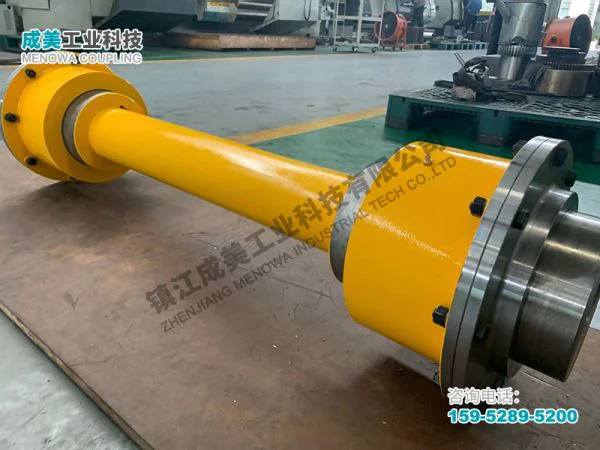
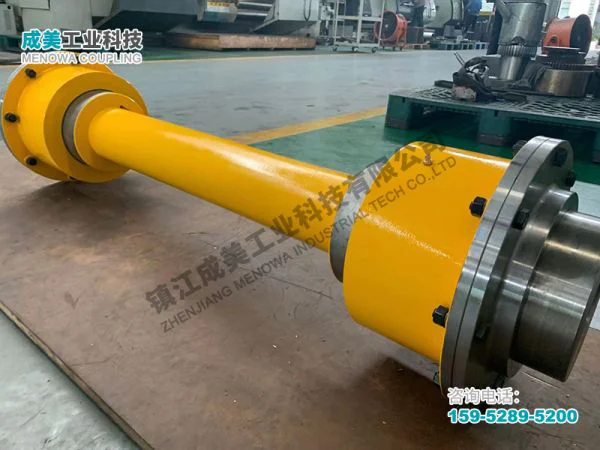
The installation and commissioning process of flexible grid coupling is simple and convenient, which is also an important reason for its wide application in various industrial fields. Before installation, it is only necessary to check whether the size of the coupling hub matches the diameter of the driving shaft and the driven shaft, and clean the surface of the shaft and the inner hole of the hub to ensure that there is no dirt, rust and sundries affecting the installation accuracy. During installation, the two hubs are respectively sleeved on the driving shaft and the driven shaft, and the fixed bolts are tightened to ensure that the hubs and the shafts are tightly connected without relative rotation and loosening. After the hub is fixed, the flexible grid is evenly embedded along the hub grooves, and the two hubs are properly adjusted to ensure that the position of the grid is accurate and the contact with the grooves is uniform. After the installation is completed, simple rotation debugging can be carried out to check whether the coupling runs smoothly without jamming and abnormal friction. The whole installation process does not need complex professional equipment and complicated operation steps, and ordinary mechanical maintenance personnel can complete the installation and commissioning work efficiently. In the daily operation and use process, the maintenance work of the flexible grid coupling is also relatively simple. It is only necessary to regularly check whether the grid has obvious deformation, fatigue damage and wear, whether the hub fixing bolts are loose, and clean the dust and sundries in the hub grooves regularly to ensure the flexible deformation and normal operation of the grid.
The service life cycle management of flexible grid coupling is closely related to its material performance, working conditions and daily maintenance. The grid element made of high-quality spring steel has good fatigue resistance and structural stability, and can maintain long-term stable working performance under normal working load and standard maintenance conditions. Under long-term stable operation and regular maintenance, the coupling can maintain good transmission performance for a long time, and the frequency of replacement and maintenance is low. For the equipment operating under harsh working conditions such as heavy load, frequent impact and high temperature, the wear and fatigue speed of the grid element will be relatively accelerated. At this time, the regular inspection cycle can be appropriately shortened, and the damaged grid can be replaced in time when local deformation, crack and wear of the grid are found. The replacement of the grid does not need to disassemble the entire coupling and the connected shaft equipment, which can be completed only by taking out the old grid and embedding a new grid, with short replacement time and little impact on production work. This convenient maintenance and replacement feature reduces the daily operation and maintenance cost of industrial production lines, improves the overall operation efficiency of the equipment, and avoids production loss caused by long-term equipment shutdown and maintenance.
In the design and selection process of mechanical transmission system, the reasonable selection of flexible grid coupling needs to be combined with the actual operating parameters and working conditions of the equipment. The main factors to be considered include the rated operating torque of the equipment, the maximum instantaneous impact torque generated during operation, the rotating speed of the transmission shaft, the type and degree of misalignment between the driving and driven shafts, the operating environment temperature and the continuous operating time of the equipment. According to these key parameters, select the coupling with appropriate specification and model, ensure that the torque transmission capacity of the coupling matches the actual operating load of the equipment, and the flexible deformation range of the grid can meet the misalignment compensation demand of the shaft. Reasonable selection can not only ensure the stable and efficient operation of the transmission system, but also avoid the premature damage of the coupling caused by overload operation and excessive deformation, and give full play to the comprehensive performance advantages of the flexible grid coupling. In the mechanical design work, the flexible grid coupling is often used as a conventional and reliable connecting component, which is favored by mechanical designers because of its balanced performance, wide adaptability and convenient use and maintenance.
With the continuous development of modern industrial production technology and the continuous improvement of mechanical equipment operation requirements, the performance requirements for transmission connecting components in various industrial fields are also constantly improving. Industrial production is developing towards high efficiency, stability, energy saving and low consumption, and mechanical equipment is gradually developing towards high power, high precision and long-term continuous operation. In this development trend, the role of flexible grid coupling in mechanical transmission systems will become more and more important. Its core advantages of efficient torque transmission, flexible vibration damping, impact load buffering and multi-dimensional misalignment compensation can well meet the development needs of modern industrial mechanical equipment. At the same time, with the continuous progress of material processing technology and structural optimization design technology, the comprehensive performance of flexible grid coupling is also constantly improved, the material fatigue resistance and environmental adaptability are further enhanced, and the structural design is more compact and reasonable, which can adapt to more complex and harsh industrial working conditions.
In the actual industrial production practice, many mechanical equipment operation failures and production shutdown problems are not caused by the damage of the core main equipment, but by the failure and damage of small connecting components such as couplings. The importance of flexible grid coupling lies in that it acts as a buffer protection and stable connection link in the entire mechanical transmission system, protects the core expensive mechanical equipment from impact damage and excessive wear with its own structural flexibility, and ensures the long-term stable and efficient operation of the entire production line. It is not only a simple torque transmission connecting part, but also an important mechanical protection component in the industrial transmission system. Through reasonable selection, standard installation and regular maintenance, the flexible grid coupling can always maintain good operating state, provide reliable guarantee for the safe operation of various industrial mechanical equipment, create stable production conditions for industrial production activities, and make a positive contribution to improving production efficiency and reducing equipment operation and maintenance costs.
To sum up, flexible grid coupling relies on its unique structural design, excellent working mechanism and comprehensive performance advantages, and has become an indispensable and important connecting component in the field of modern industrial mechanical transmission. It has irreplaceable application value whether in heavy-duty industrial production equipment with harsh working conditions or conventional mechanical processing equipment with stable operation requirements. Its perfect balance of rigidity and flexibility, efficient transmission and effective protection, simple installation and convenient maintenance, as well as wide working condition adaptability, make it widely used in various industrial fields. With the continuous progress of industrial technology and the continuous upgrading of mechanical equipment, the application scope and application value of flexible grid coupling will continue to expand and improve, and continue to provide solid and reliable support for the stable operation and efficient development of modern industrial mechanical transmission systems.
https://www.menowacoupling.com/industrial-coupling/flexible-grid-coupling.html
 WeChat
 WhatsApp