Types of Universal Coupling
In the complex and interconnected mechanical transmission systems that power modern industrial production, automotive operation, engineering machinery movement, and various precision mechanical equipment, universal couplings stand as indispensable basic mechanical components that undertake the core task of transmitting rotational torque and motion between two shafts that are not strictly aligned on the same central axis. In actual mechanical installation and long-term operation, it is almost impossible to keep the driving shaft and the driven shaft in a perfect coaxial state all the time, affected by factors such as manufacturing dimensional tolerances of mechanical parts, assembly installation deviations, thermal deformation of metal components during continuous operation, mechanical vibration and impact load generated by equipment movement, and slight settlement of equipment installation foundations. Universal couplings are specially designed and manufactured to solve this practical mechanical problem, enabling stable and continuous transmission of rotational power even when there are angular deviations, radial offsets, and axial displacements between the connected two shafts. These mechanical connecting parts can effectively adapt to various misalignment conditions between shafts, buffer part of the vibration and impact generated during power transmission, reduce the additional mechanical stress and wear on shafts, bearings, and other core supporting parts of the equipment, and extend the overall service life and stable operation cycle of the entire mechanical system. With the continuous diversification of mechanical equipment functional requirements and the gradual expansion of application scenarios in various industries, the structural design and functional differentiation of universal couplings have become more and more refined, and different types of universal couplings have been developed and optimized to adapt to different transmission torque ranges, rotation speed levels, misalignment compensation requirements, and working environment conditions. Each type of universal coupling has its own unique structural characteristics, working mechanism, performance advantages, and applicable application scope, and the reasonable selection of universal coupling types according to the actual working conditions of mechanical equipment is a key link to ensure the efficient operation, low failure rate, and convenient later maintenance of the transmission system.
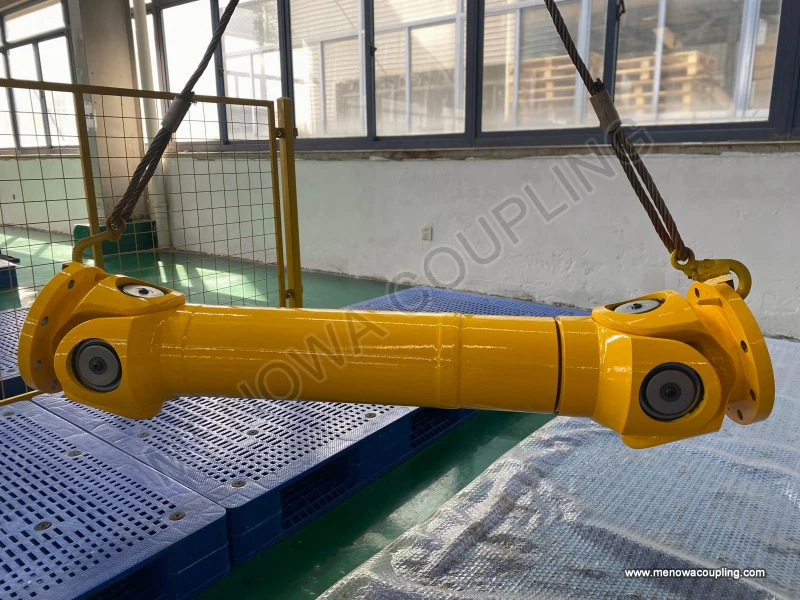
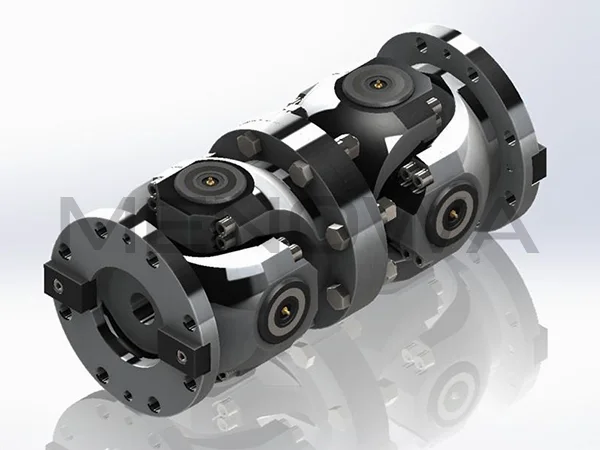
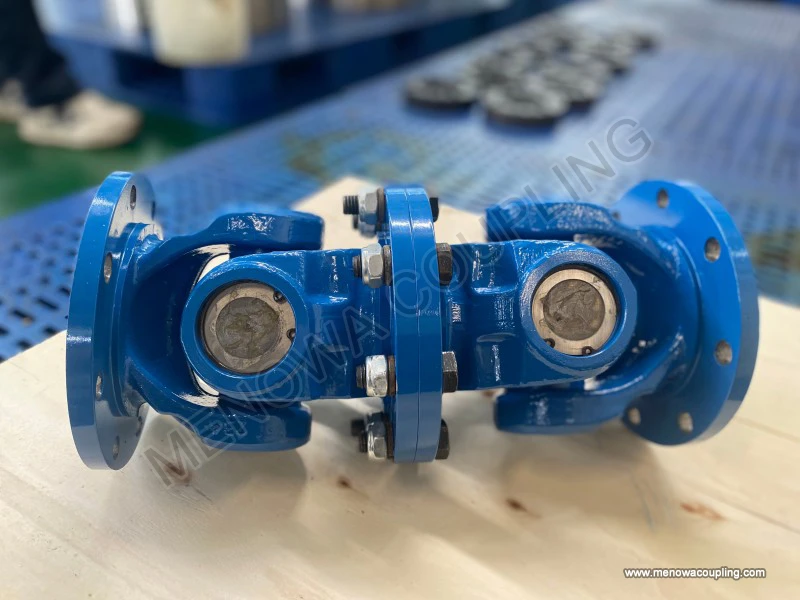
The most basic and widely used type of universal coupling in the mechanical industry is the single universal joint coupling, which is also the most original structural form of universal coupling with a simple and straightforward working principle and relatively low structural complexity. This type of coupling is mainly composed of two fork-shaped joint heads and a middle cross-shaped connecting shaft pin, and the two fork-shaped joint heads are respectively fixedly connected with the driving shaft and the driven shaft through key connection or interference fit structure. The cross-shaped shaft pin penetrates through the hinge holes of the two fork-shaped joint heads, forming a flexible hinge connection structure that can rotate freely in multiple directions between the two shafts. The core working characteristic of the single universal joint coupling is that it can realize effective torque transmission under the condition of a certain angle deviation between the driving shaft and the driven shaft, and the allowable deflection angle between the two shafts can meet the basic misalignment compensation needs of most ordinary low-speed and medium-torque mechanical equipment. However, the inherent structural defect of the single universal joint coupling is obvious in the actual power transmission process. When the driving shaft rotates at a constant and stable speed, the rotation speed of the driven shaft will produce periodic instantaneous fluctuation and non-uniform rotation change with the rotation of the shaft angle. This uneven motion transmission state will produce additional alternating mechanical vibration and dynamic load in the transmission system, and the amplitude of the speed fluctuation will increase correspondingly with the increase of the deflection angle between the two shafts. Due to this inherent performance limitation, single universal joint couplings are mostly used in mechanical transmission scenarios that do not require high transmission stability and motion uniformity, such as ordinary agricultural machinery, simple conveying equipment, and low-speed engineering auxiliary mechanical devices. In these application scenarios, the slight vibration and speed fluctuation generated during operation will not affect the normal use function and overall working performance of the equipment, and the simple structure and convenient installation and maintenance of the single universal joint coupling also make it have good applicability and economy in conventional low-demand transmission occasions.
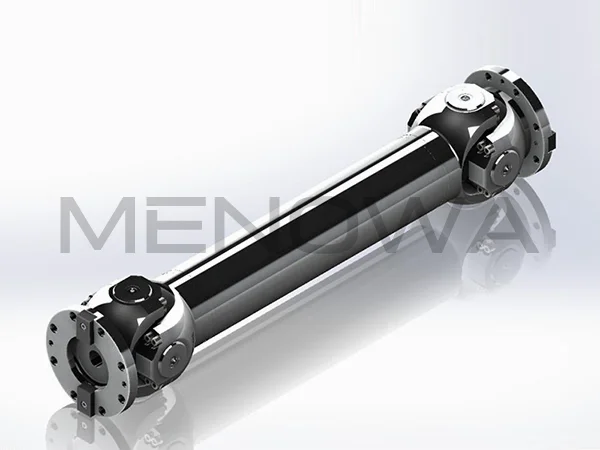
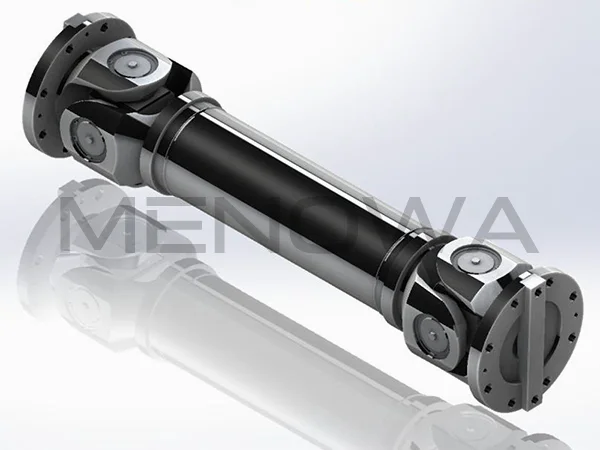
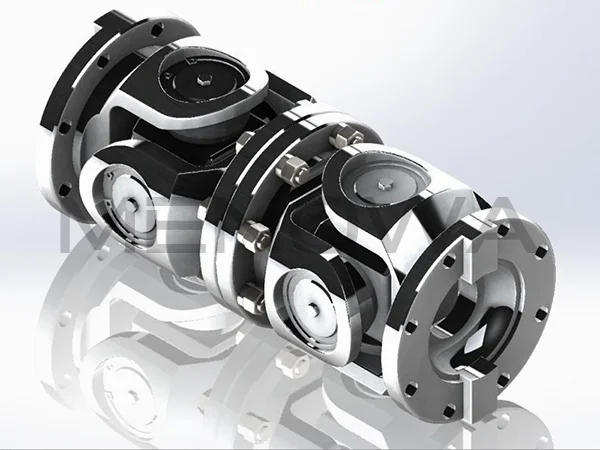
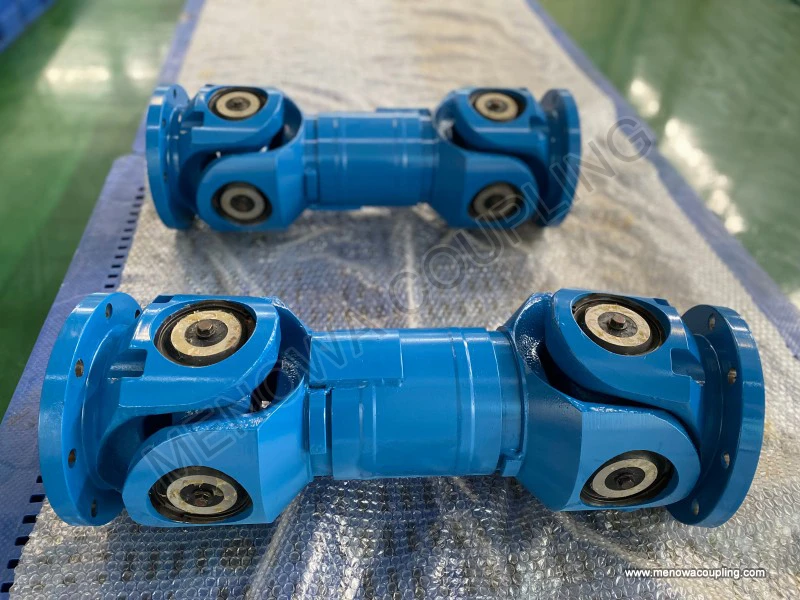
To effectively make up for the speed fluctuation and uneven motion transmission defect of the single universal joint coupling, the double universal joint coupling has been developed and widely popularized in industrial and automotive transmission fields, which is formed by connecting two single universal joint couplings in series through an intermediate connecting shaft. The structural design of the double universal joint coupling follows the principle of mutual offsetting of motion errors, and the two single universal joints are arranged and installed in a specific symmetrical position, so that the instantaneous speed fluctuation generated by the first universal joint in the transmission process can be completely offset by the opposite speed change generated by the second universal joint. Through this reasonable structural combination design, the double universal joint coupling can realize constant and uniform rotation speed transmission between the driving shaft and the driven shaft on the premise of allowing a large angular deflection between the two shafts, completely eliminating the periodic vibration and additional dynamic load caused by speed unevenness in the transmission system. In addition to maintaining the angular misalignment compensation capability of the single universal joint coupling, the double universal joint coupling also has a certain compensation effect on the radial offset and axial displacement between the two shafts due to the existence of the intermediate connecting shaft, further improving the adaptability to various shaft misalignment conditions in complex working environments. This type of universal coupling has excellent comprehensive transmission performance, stable and reliable operation state, and can adapt to medium and high rotation speed working conditions while transmitting large torque, so it is widely used in core transmission parts with high requirements for transmission stability in many fields. The most typical application is the power transmission device of automobile chassis drive shafts, which needs to adapt to the up and down jitter and position deviation of the axle caused by road surface bumps during vehicle driving, and stably transmit the power of the engine and gearbox to the driving wheels. At the same time, double universal joint couplings are also commonly used in heavy-duty engineering machinery, metallurgical transmission equipment, and large-scale industrial production line transmission systems, providing stable and reliable power transmission support for various mechanical equipment that requires both large misalignment compensation and uniform motion transmission.
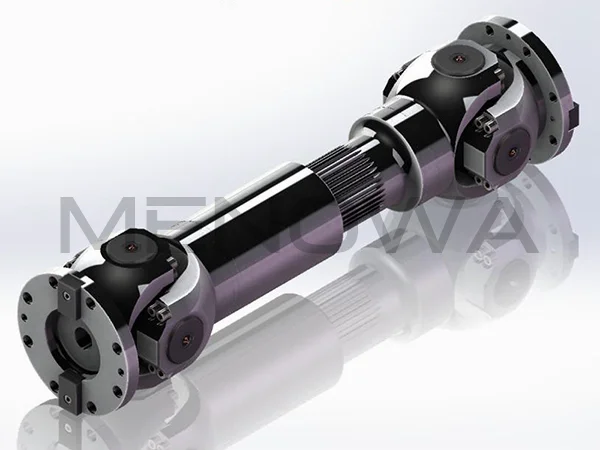
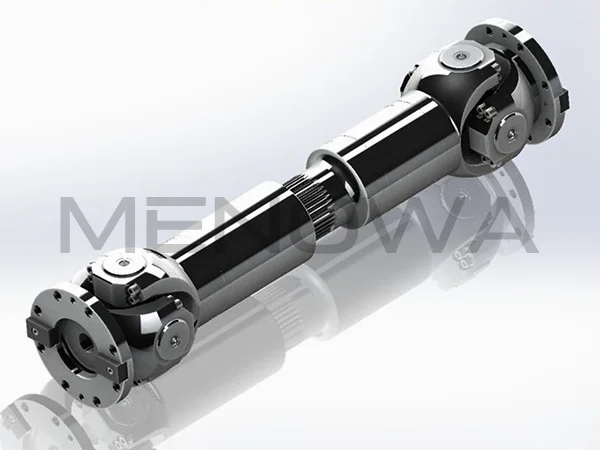
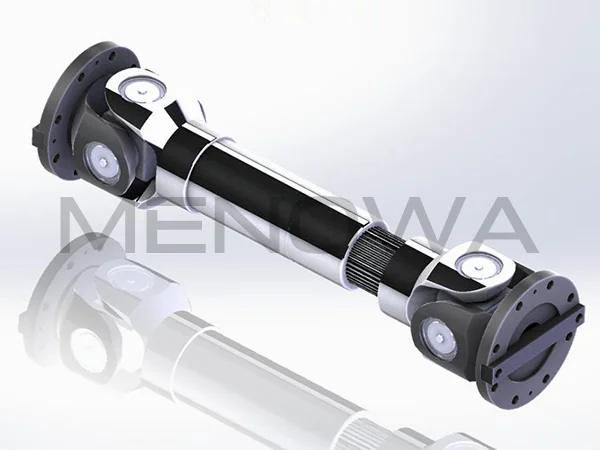
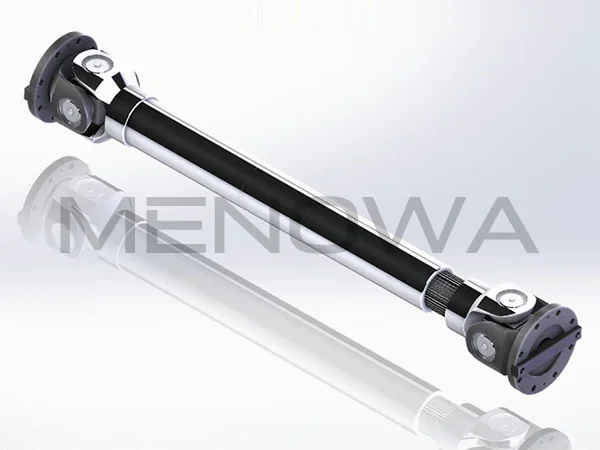
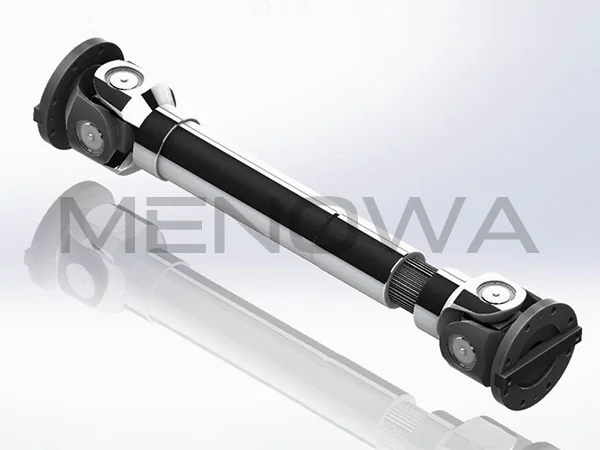
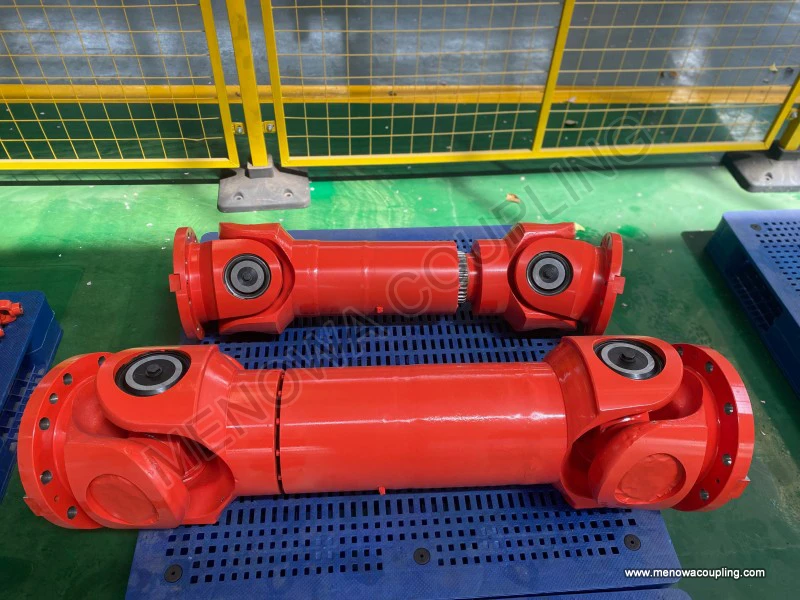
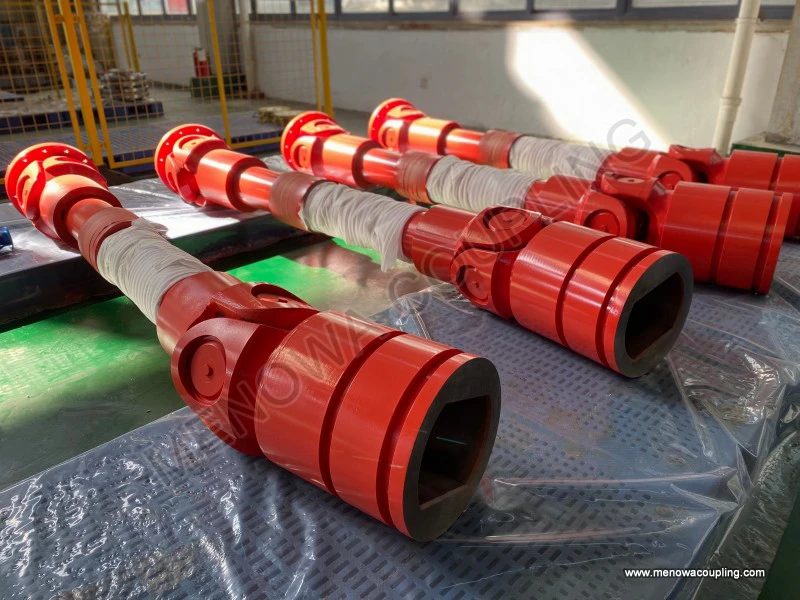
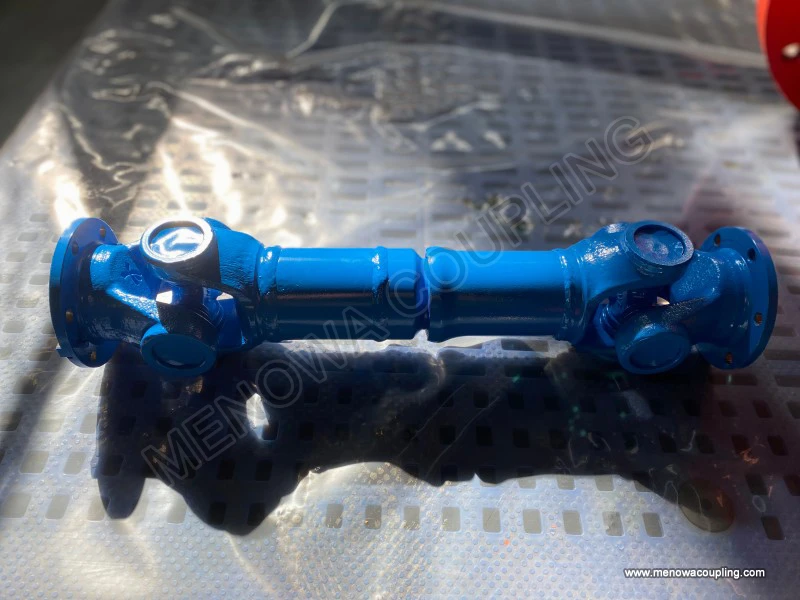
Another important category of universal couplings is the telescopic universal coupling, which is improved and optimized on the basis of the double universal joint coupling, adding a telescopic sliding structure on the intermediate connecting shaft part to adapt to the frequent axial distance change between the driving shaft and the driven shaft in special mechanical working conditions. In some mechanical equipment, the relative position of the two connected shafts will not only produce angular and radial offset during operation, but also have continuous and frequent axial telescopic displacement due to the working movement of the equipment itself. Ordinary double universal joint couplings cannot adapt to this large-range axial position change, and long-term operation will lead to additional extrusion tension on the coupling and the connected shafts, resulting in increased component wear and even structural deformation and damage. The intermediate shaft of the telescopic universal coupling adopts a spline telescopic matching structure, which can freely stretch and contract along the axial direction during the operation of the equipment, automatically adjusting the total length of the coupling according to the real-time axial distance change between the two shafts, while ensuring the normal transmission of rotational torque without generating additional axial mechanical stress. The spline matching part of the telescopic universal coupling is usually equipped with lubricating and sealing structures to reduce the friction and wear of the telescopic moving parts, prevent external dust, impurities, and moisture from entering the hinge and telescopic matching parts, and ensure the long-term flexible telescopic movement and stable transmission performance of the coupling. This type of universal coupling is mostly used in mechanical equipment with frequent axial position changes during operation, such as mobile engineering machinery, hydraulic transmission equipment, and telescopic mechanical transmission devices in automated production equipment. It can effectively cope with the combined misalignment state of angle, radial direction, and axial direction between shafts, and maintain the continuity and stability of power transmission in the dynamic position change state of the equipment.
For precision mechanical transmission scenarios that require high transmission accuracy, small vibration and low noise, the flexible universal coupling has become the preferred type of universal coupling, which abandons the traditional rigid hinge connection structure of metal parts and adds elastic flexible components inside the coupling to realize flexible connection and torque transmission between shafts. The internal flexible components of flexible universal couplings are usually made of high-quality elastic materials with good fatigue resistance and elastic deformation performance, which can not only compensate for the slight angular deviation, radial offset and axial displacement between the connected shafts, but also play an excellent role in vibration damping and impact buffering. During the start-up, stop and load sudden change stages of mechanical equipment, the elastic flexible components can absorb the instantaneous impact load and vibration energy generated in the transmission system, reduce the impact of sudden load changes on the shafts, bearings and other precision parts, and avoid the resonance phenomenon of the transmission system during operation. Different from rigid universal couplings, flexible universal couplings have small transmission clearance and high motion synchronization, will not produce obvious motion hysteresis and speed fluctuation during operation, and can ensure high-precision synchronous transmission of rotational motion and torque. Due to the limitation of the bearing capacity of elastic materials, flexible universal couplings are not suitable for heavy-duty and large-torque transmission working conditions, but they have irreplaceable advantages in precision instrument transmission, small and medium-sized precision mechanical equipment, servo motor transmission systems, and automated precision control mechanical devices. In these precision transmission fields, the stability of motion transmission, low vibration and low noise operation requirements are far higher than the demand for large torque transmission, and the flexible universal coupling can well meet the core working performance requirements of such equipment.
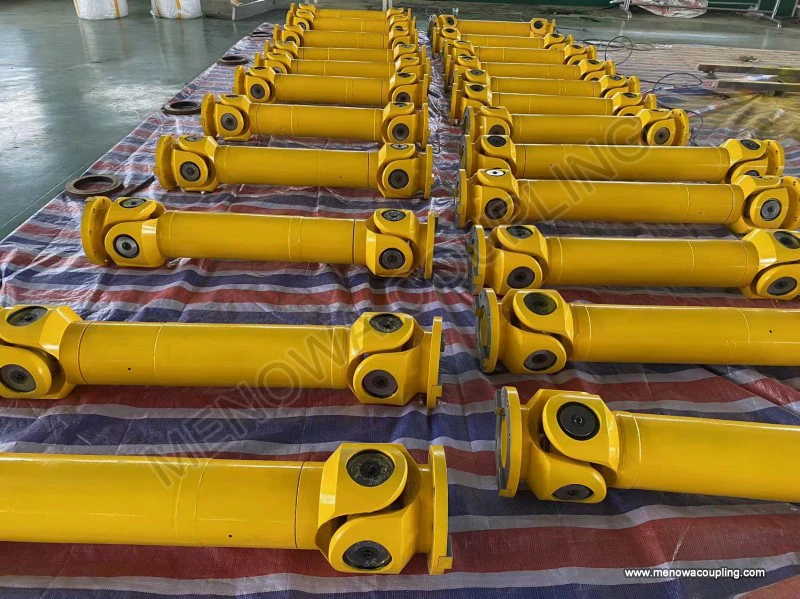
Heavy-duty universal couplings, also known as heavy-load universal joint couplings, are specially designed and manufactured for large-torque and heavy-duty mechanical transmission working conditions, and are structurally reinforced and thickened on the basis of traditional universal joint couplings, with larger structural size, thicker load-bearing parts, and higher structural rigidity and mechanical strength. The fork-shaped joint heads, cross shaft pins and other core load-bearing components of heavy-duty universal couplings are made of high-strength alloy materials through special forging and heat treatment processes, which have strong compression resistance, torsion resistance and fatigue resistance, and can bear huge instantaneous impact torque and long-term stable working torque. The hinge connection part of the coupling is equipped with reinforced bearing and lubricating maintenance structures, which can reduce the friction and wear of the rotating hinge parts under heavy-load operation, ensure the flexible rotation of the hinge structure while bearing large loads, and avoid structural jamming and part damage caused by heavy load extrusion. This type of universal coupling usually allows a certain range of angular misalignment between shafts, and has strong resistance to deformation and damage in harsh working environments such as high load, strong impact and complex dust pollution. Heavy-duty universal couplings are widely used in heavy metallurgical machinery, mining machinery, large-scale crushing equipment, heavy-duty forging machinery and other heavy industrial mechanical equipment. These equipment need to transmit huge power and torque in harsh working conditions, and the heavy-duty universal coupling can reliably bear the heavy transmission load, maintain the stability of the transmission system, and reduce the failure probability of key transmission components under long-term heavy-load operation.
Miniature universal couplings are a special small-sized universal coupling category developed for micro and small precision mechanical equipment and miniature transmission systems, with compact overall structure, small external size, light weight and high transmission flexibility. The structural working principle of miniature universal couplings is basically the same as that of ordinary single or double universal joint couplings, but all structural parts are miniaturized and refined in design and manufacturing, and the assembly precision of parts is higher to adapt to the small installation space and micro torque transmission requirements of miniature mechanical equipment. Miniature universal couplings can adapt to small-angle misalignment and tiny position offset between micro transmission shafts, realize stable and flexible transmission of micro rotational torque, and have the characteristics of flexible rotation, small installation space and convenient assembly and disassembly. They are mostly used in micro precision instruments, electronic automation small equipment, miniature medical mechanical devices, small intelligent robot transmission parts and other micro mechanical transmission scenarios. In these application scenarios, the installation space of mechanical parts is extremely limited, the transmission torque is small, but the flexibility and precision of motion transmission are required to be high, and miniature universal couplings can perfectly match the use needs of these micro mechanical systems.
In the actual mechanical design and equipment maintenance work, the selection of the appropriate type of universal coupling needs to comprehensively consider multiple key factors, including the magnitude of the transmission torque of the equipment, the working rotation speed of the transmission shaft, the size of the misalignment angle and offset between the connected shafts, the axial displacement change range during equipment operation, the working environment temperature and pollution degree, and the actual functional requirements for transmission stability and vibration damping. It is necessary to avoid blindly selecting universal couplings with excessive structural performance leading to increased unnecessary mechanical configuration costs, and also to prevent selecting couplings with insufficient performance leading to frequent failures of the transmission system and shortened equipment service life. Different types of universal couplings have their own targeted application positioning and performance characteristics, from basic single universal joint couplings for ordinary low-demand transmission, to double universal joint couplings for stable uniform transmission, telescopic universal couplings for dynamic axial displacement working conditions, flexible universal couplings for precision vibration damping transmission, heavy-duty universal couplings for large-torque heavy-load work, and miniature universal couplings for micro precision machinery. All types of universal couplings together form a complete and diversified mechanical transmission coupling system, meeting the power transmission needs of various mechanical equipment in different industries and different working conditions. With the continuous progress of mechanical manufacturing technology and the continuous upgrading of mechanical equipment performance requirements, the structural design of various universal couplings will continue to be optimized and improved, and new types of universal couplings with better performance, longer service life and stronger environmental adaptability will continue to emerge, providing more reliable and efficient basic component support for the development of modern mechanical transmission technology and the stable operation of various mechanical equipment.
Post Date: Apr 25, 2026
https://www.menowacoupling.com/china-coupling/types-of-universal-coupling.html
Products
Tags
Supply
Related Articles
Universal Coupling For Ball Mill
In the complex and demanding operating environment of mineral processing, building materials production, chemical raw material grinding and other heavy industrial fields, ball mills stand as core processing equipment responsible for crushing and grinding various bulk raw materials into fine particles and powders that me…Universal Coupling Fabrication
Universal coupling fabrication stands as a foundational discipline within mechanical manufacturing, focusing on the precise production of flexible shaft connection components that enable reliable torque transmission between misaligned rotating shafts. As a core mechanical component widely adopted in power transmission s…Maintenance of Universal Coupling
Universal couplings serve as indispensable connecting components in mechanical transmission systems, designed to transmit rotational torque between two shafts that operate with angular misalignment, parallel offset, or variable positional relationships. Widely applied in industrial transmission equipment, mechanical eng…Characteristics of Universal Coupling
A universal coupling, also commonly referred to as a universal joint or U-joint, is a critical mechanical component designed to connect two rigid shafts whose axes are inclined to each other, enabling the transmission of rotary motion and torque even when the shafts are not perfectly aligned. This versatile component ha…Universal Coupling Factory
In the intricate ecosystem of modern mechanical transmission systems, universal couplings stand out as indispensable foundational components, serving as the critical bridge that connects rotating shafts and ensures stable power transmission across complex operating conditions. As core mechanical parts designed to resolv…Material of Universal Coupling
Universal couplings serve as indispensable mechanical transmission components in modern industrial and mechanical systems, dedicated to transmitting torque and rotational power between two misaligned rotating shafts. Their core operational value lies in adapting to angular deviation, axial displacement and radial offset…
 WeChat
 WhatsApp