Cross Cardan Shaft
The cross cardan shaft stands as one of the most fundamental and ingeniously engineered mechanical transmission components in the entire field of mechanical engineering, serving as a reliable and indispensable link for power and rotational motion transfer between non-collinear, spatially offset, and angularly deflected rotating shafts across countless industrial and mobile mechanical systems. For centuries, mechanical designers and equipment engineers have relied on the core structural logic and flexible transmission performance of the cross cardan shaft to resolve the inherent challenges of power delivery in complex mechanical layouts, where driving and driven shafts cannot maintain perfect coaxial alignment due to installation spatial constraints, structural vibration during operation, thermal expansion and contraction of equipment components, and dynamic displacement caused by mechanical movement and load changes. Unlike rigid shaft connection structures that can only work stably under strict coaxial conditions and fail to adapt to any slight angular or positional deviation, the cross cardan shaft adopts a unique articulated connection structure centered on a cross-shaped intermediate component, which fundamentally breaks the limitations of traditional rigid transmission and realizes continuous, stable, and efficient torque and rotation transmission while allowing a certain range of angular deflection and axial displacement between connected shafts. This distinctive combination of simple mechanical structure, strong environmental adaptability, flexible displacement compensation capability, and long-term operational stability has made the cross cardan shaft widely adopted in heavy industrial machinery, mobile engineering equipment, automotive transmission systems, agricultural machinery, metallurgical production equipment, mining machinery, and various general mechanical transmission scenarios, becoming a core basic component that supports the normal and efficient operation of the entire mechanical transmission chain.
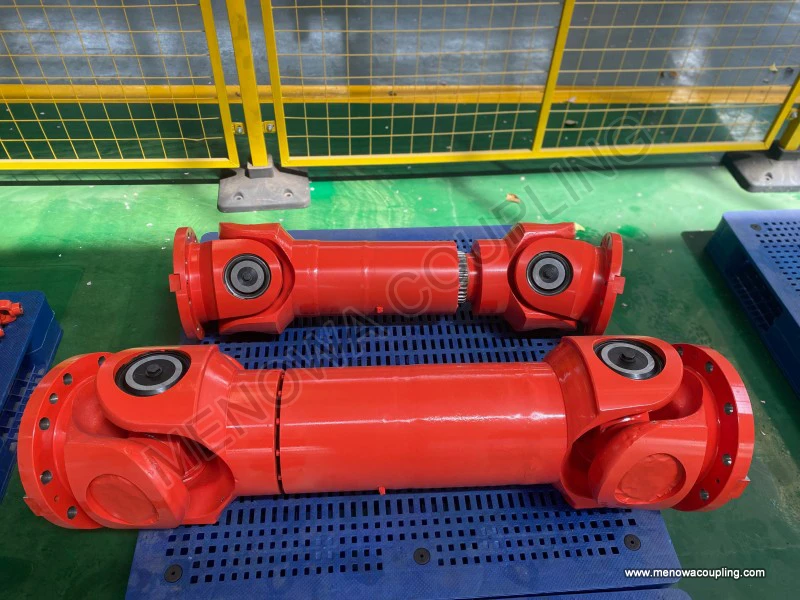
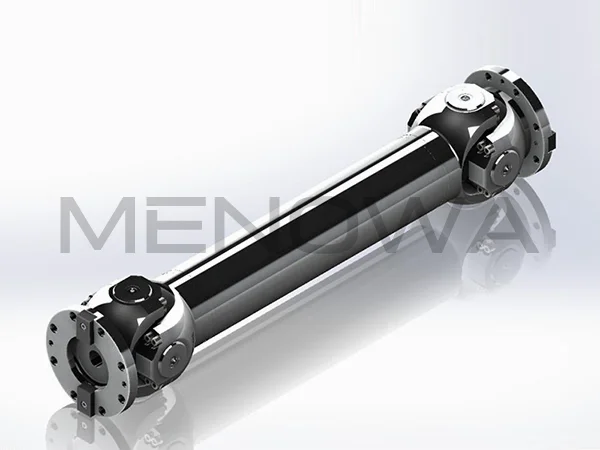
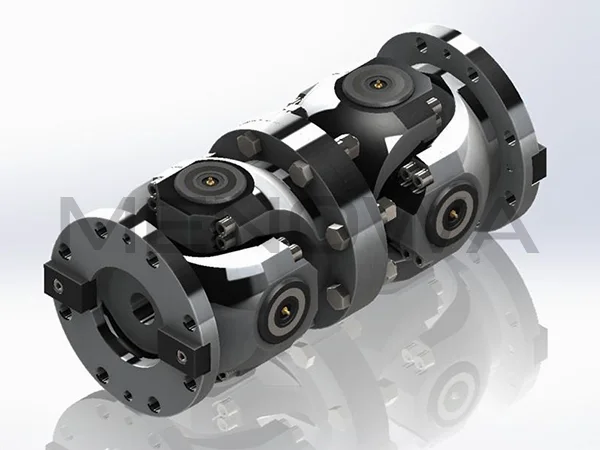
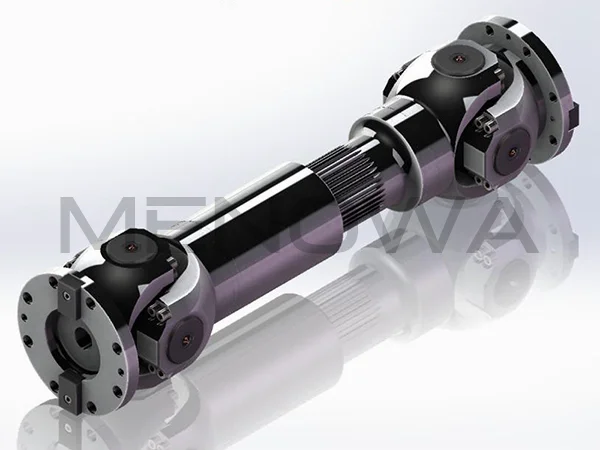
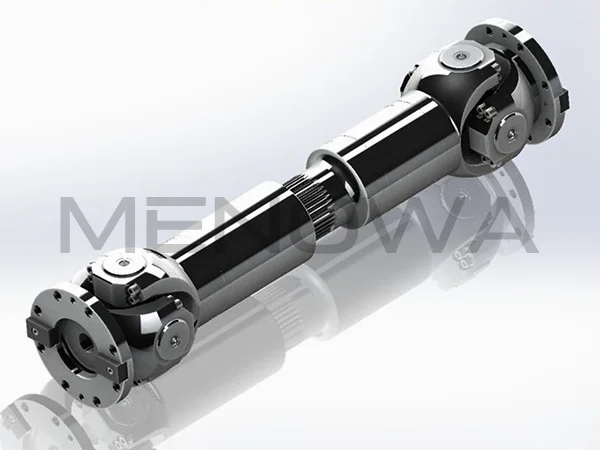
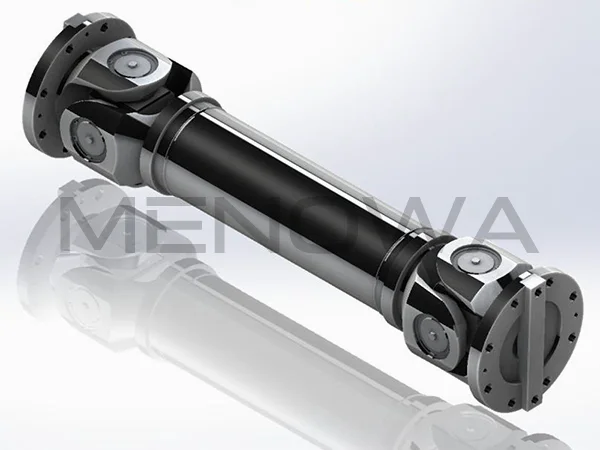
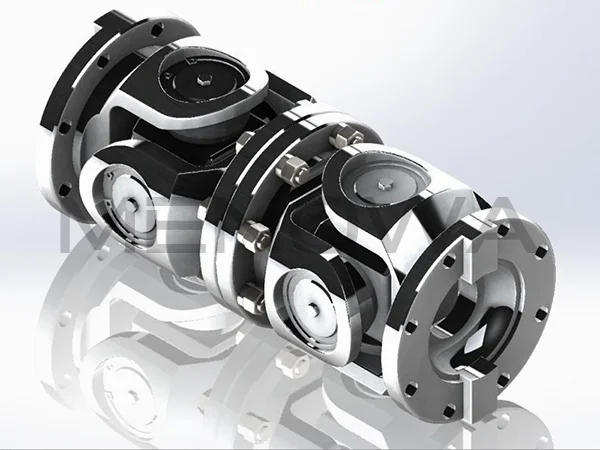
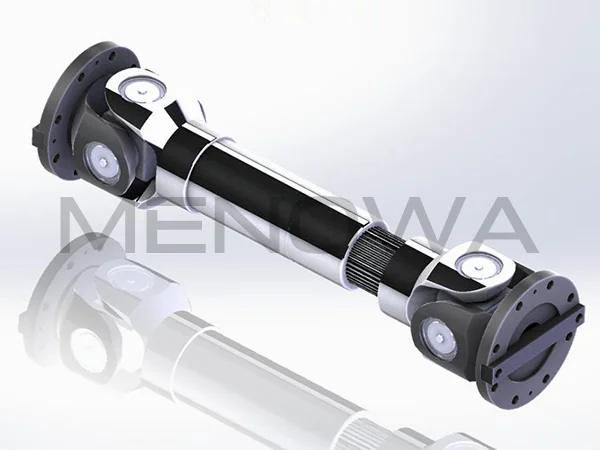
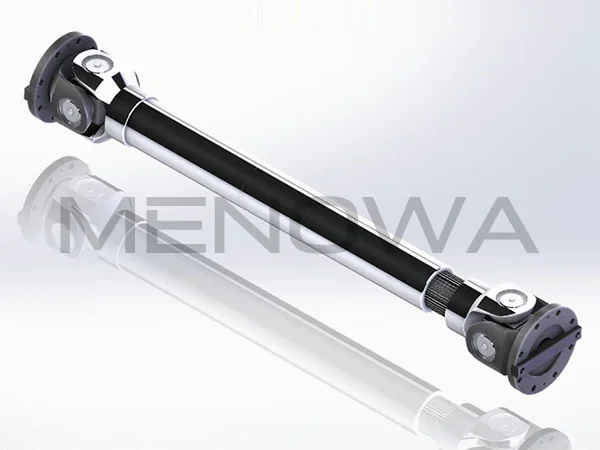
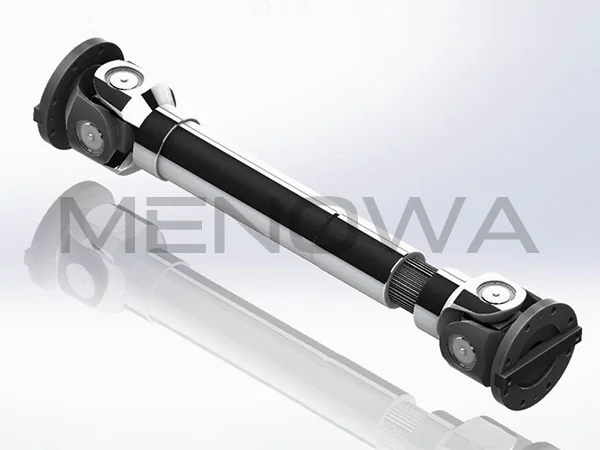
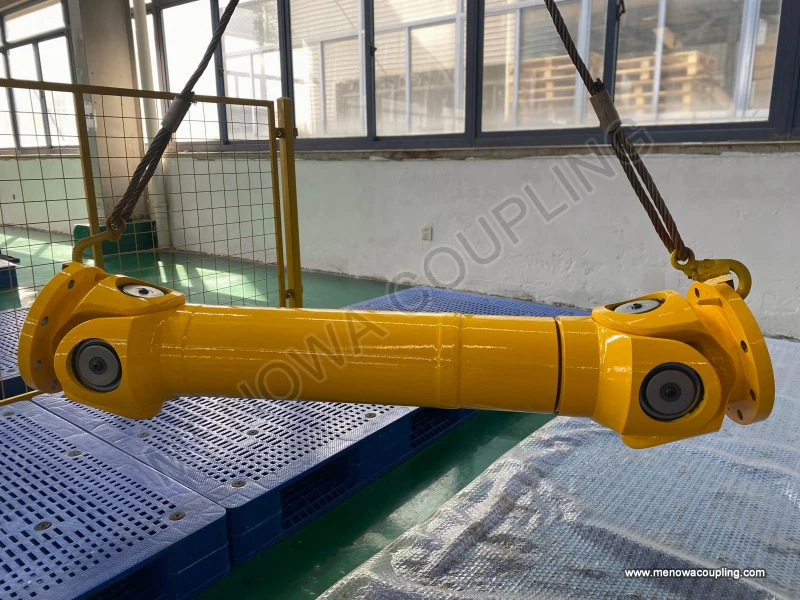
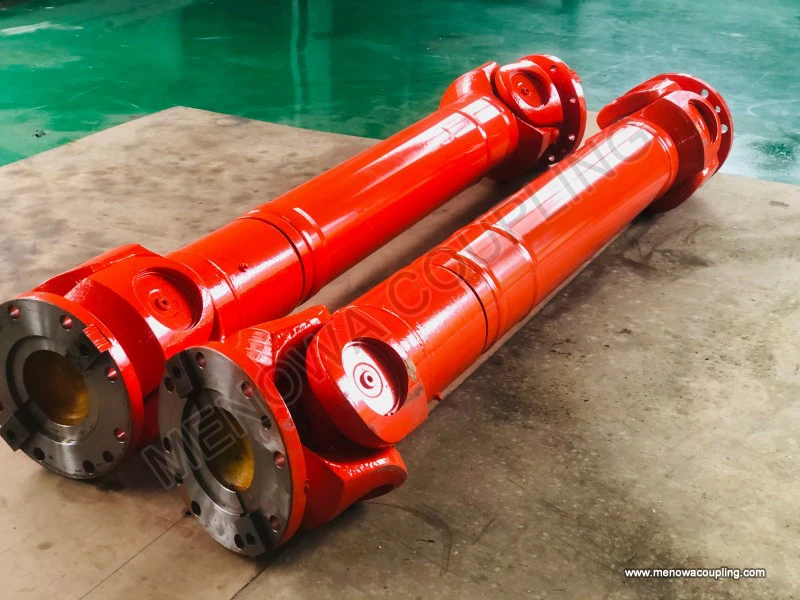
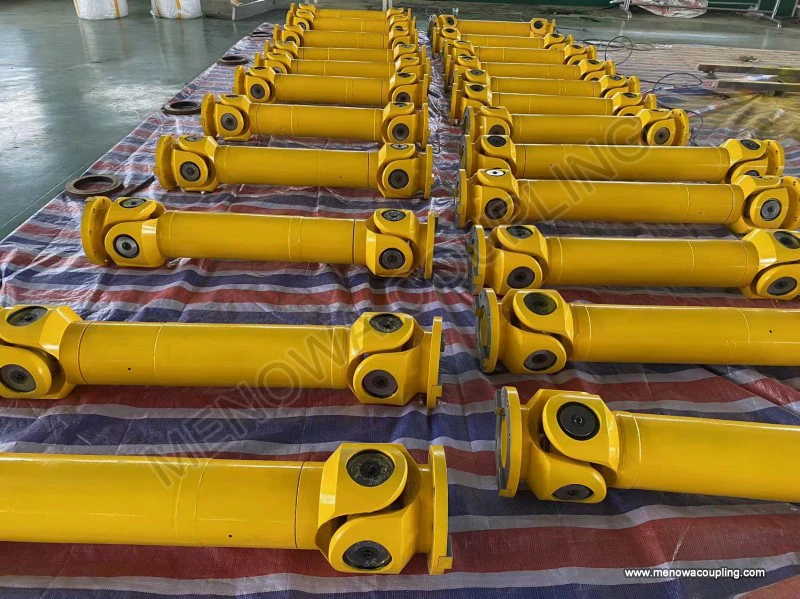
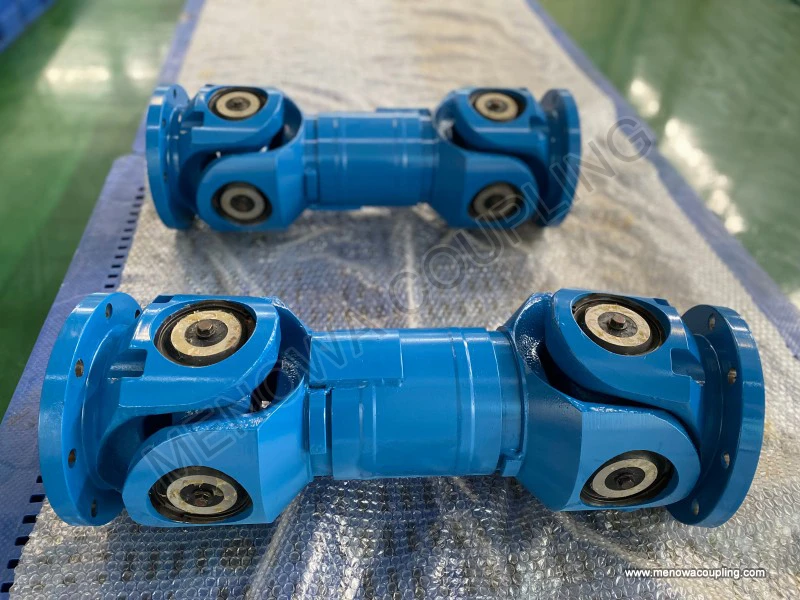
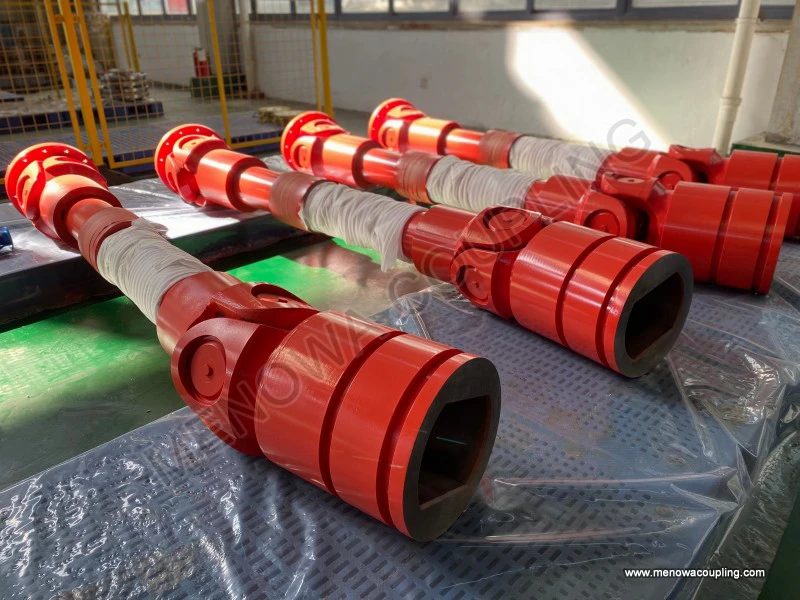
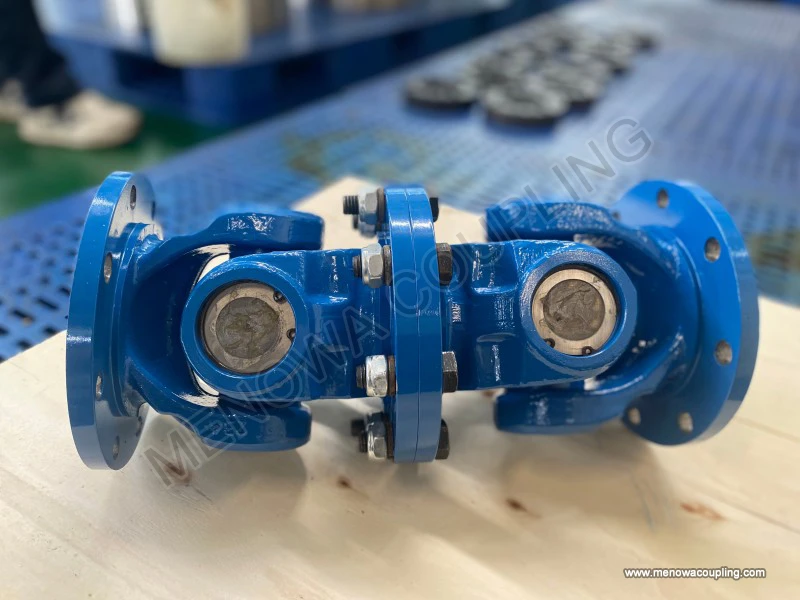
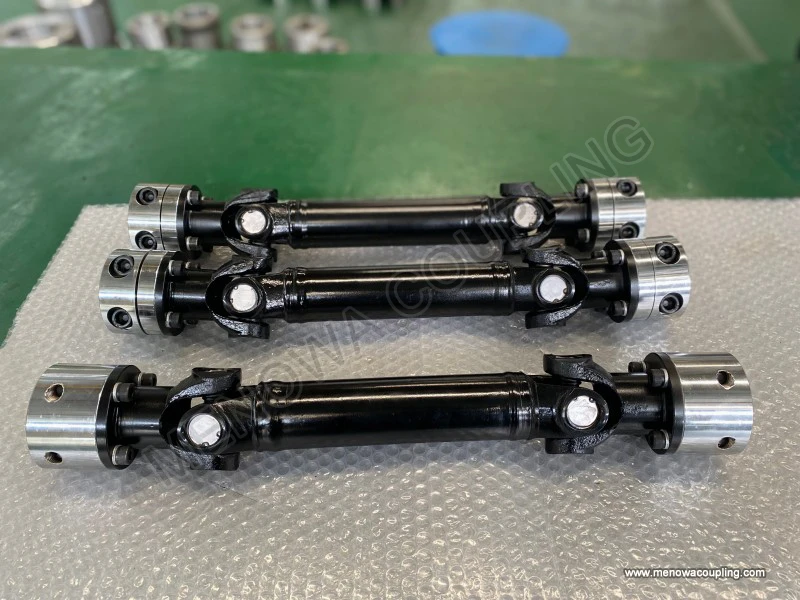
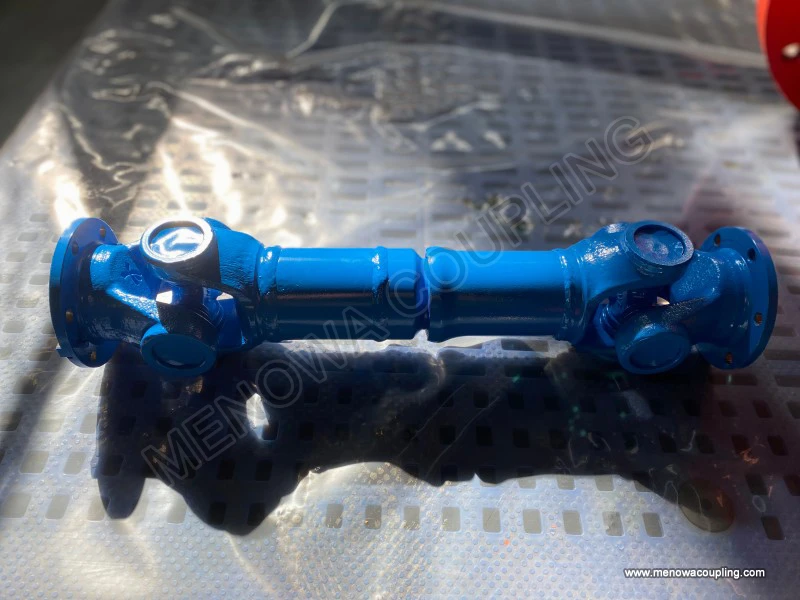
To fully understand the inherent value and working advantages of the cross cardan shaft, it is necessary to start with its basic structural composition and the functional positioning of each internal component, as every part of the shaft body and connecting joint is carefully designed and precisely matched to coordinate with each other to complete the whole transmission function. The overall structure of a standard cross cardan shaft mainly consists of two symmetrical joint yokes, a central cross-shaped spindle component usually referred to as the spider or crosspiece, high-precision needle roller bearing assemblies installed at each shaft neck of the cross spindle, sealing protection parts, and a middle connecting shaft tube that can be designed with telescopic adjustment function according to actual usage needs. The two joint yokes, processed with high-strength alloy steel materials, present a fork-shaped structural form, with one end fixedly connected to the driving shaft and driven shaft of the mechanical equipment respectively through reliable connection methods such as spline connection or flange connection, and the other end processed with precise mounting holes for matching and connecting with the four shaft necks of the cross spindle. The cross spindle, as the core force-bearing and transmission connecting component of the entire cross cardan shaft, adopts an integrated forging and molding process, with four mutually perpendicular shaft necks distributed in a cross layout, each neck serving as a rotating hinge connection point between the two joint yokes. The needle roller bearings installed between the cross spindle shaft necks and the inner wall of the yoke mounting holes play a key role in reducing friction resistance during relative rotation, avoiding direct metal friction and wear between rigid contact parts, and ensuring the flexibility and smoothness of angular deflection movement between the joint yokes during power transmission. The sealing components matched with the bearings are mainly used to isolate external dust, moisture, corrosive media, and mechanical impurities from entering the bearing working area and the internal hinge gap of the joint, while locking the internal lubricating grease to maintain a stable lubrication state for a long time and reduce wear and corrosion of moving parts. The middle connecting shaft tube connects the two joint yokes into a complete transmission whole, and in most practical application scenarios, the shaft tube is designed with a telescopic spline structure, which can effectively compensate for axial displacement changes between the driving and driven shafts caused by equipment operation vibration, mechanical structural deformation, and thermal expansion, further improving the adaptability of the cross cardan shaft to complex working conditions.
The working principle of the cross cardan shaft is based on the basic mechanical motion law of spatial hinge rotation and torque transfer through the cross spindle, and its core operating logic can be clearly sorted out through the power transmission path and angular deflection coordination motion process. When the driving shaft of the mechanical equipment starts to rotate, the rotational torque and power are first transmitted to the driving-side joint yoke fixedly connected with it, and the driving yoke drives the cross spindle connected through the needle roller bearings to perform synchronous rotational motion around the main rotation axis. Under the mutual hinge action of the four shaft necks of the cross spindle, the rotational motion and torque are stably transmitted to the driven-side joint yoke, and then the driven yoke drives the connected driven shaft to rotate synchronously, thus completing the whole process of power transmission between the two spatially offset and angularly deflected shafts. The most critical functional advantage reflected in this working process is the excellent angular deviation compensation capability. Benefiting from the mutually perpendicular hinge structure formed by the cross spindle and the two joint yokes, the cross cardan shaft can allow a certain angle of deflection between the driving shaft and the driven shaft during normal operation, and the deflection angle range can meet the usage requirements of most conventional mechanical equipment after structural optimization and reasonable component matching. In the actual rotation process, each relative rotation between the joint yoke and the cross spindle is completed through the flexible rotation of the needle roller bearings, which will not cause mechanical jamming, torque transmission interruption, or excessive additional mechanical stress due to angular deviation, ensuring the continuity and stability of power output. It is worth noting that a single cross cardan joint structure will produce slight periodic speed fluctuation during operation when the deflection angle between the two shafts is relatively large, which is a natural mechanical characteristic determined by the structural motion law of the single cross joint itself. To eliminate this speed fluctuation and ensure the uniformity and stability of rotational speed and torque transmission, most industrial mechanical equipment that requires high transmission smoothness will adopt a double cross cardan shaft combined structure, by rationally arranging the installation angle and structural position of the two cross joints, the speed fluctuation generated by a single joint can be mutually offset, realizing constant-speed and stable power transmission between the driving and driven shafts.
The selection of manufacturing materials for the cross cardan shaft directly determines its load-bearing capacity, operational durability, fatigue resistance, and adaptability to different working environments, and different parts of the shaft body have targeted material selection standards based on their different force-bearing characteristics and functional requirements. The cross spindle, as the core force-bearing component that bears alternating torque, shear force, and impact load for a long time during operation, is mostly made of high-strength alloy structural steel with good hardenability, high tensile strength, and excellent fatigue resistance. This type of material can maintain stable mechanical performance under long-term alternating load operation, effectively avoiding structural deformation, fracture, or fatigue damage of the cross spindle under heavy load and frequent starting and stopping working conditions. The joint yokes, which need to bear both torque transmission and impact load and ensure structural rigidity and connection stability, are usually made of medium-carbon alloy steel after integral forging and heat treatment processes such as quenching and tempering, which can balance structural rigidity and impact toughness, prevent brittle fracture or plastic deformation during operation, and ensure the firmness of the connection with the driving and driven shafts. The needle roller bearing parts in the hinge area are made of high-carbon chromium bearing steel with high hardness and wear resistance, and after precision heat treatment and surface finishing, the bearing parts have high surface hardness and good wear resistance, reducing friction and wear during long-term high-speed rotation and ensuring the long-term flexible rotation performance of the hinge structure. The middle connecting shaft tube can be selected according to different load levels and working conditions, using ordinary high-quality carbon steel for light-load and low-speed transmission occasions, and high-strength low-alloy steel for heavy-load and high-impact working scenarios, which can reduce the overall weight of the shaft body while ensuring structural strength and improving the mechanical operation efficiency. For cross cardan shafts used in special working environments such as high humidity, strong corrosion, and high-temperature oxidation, corresponding corrosion-resistant alloy materials and high-temperature resistant materials will be selected for key components, and surface anti-corrosion treatment processes such as galvanizing, paint spraying, and surface quenching will be added to further enhance the environmental adaptability and service life of the entire shaft body.
The processing and manufacturing technology of the cross cardan shaft is a key link to ensure its transmission accuracy, operational reliability, and service life, and every processing procedure from blank forging, rough machining, finish machining to heat treatment and assembly debugging has strict technical standards and process specifications. The blank of key components such as the cross spindle and joint yoke adopts die forging or free forging process instead of ordinary casting molding, because the forging process can make the internal metal fiber structure of the material continuous and uniform, eliminate internal pores, shrinkage cavities, and other casting defects, and significantly improve the structural compactness, mechanical strength, and fatigue resistance of the components. After forging molding, the components first undergo rough machining to remove excess material on the surface, preliminarily shape the overall structure, and reserve a reasonable machining allowance for subsequent finish machining. Then, heat treatment processes such as quenching and tempering and surface carburizing and quenching are carried out according to the material characteristics and performance requirements of different components, to adjust the internal hardness and toughness of the parts, eliminate internal stress generated during forging and machining, and prevent structural deformation and cracking during subsequent use. After heat treatment, precision finish machining is carried out on key matching surfaces such as the shaft necks of the cross spindle, the bearing mounting holes of the joint yokes, and the spline connection parts, using high-precision machining equipment to ensure the dimensional accuracy and surface roughness of the matching parts, so that the matching gap between the cross spindle, bearings, and joint yokes is controlled within a reasonable small range, avoiding excessive matching gap leading to vibration and impact during operation, or too small gap causing inflexible rotation and increased friction. In the final assembly stage, strict cleaning and deburring treatment are carried out on all parts first, then lubricating grease is injected into the bearing and hinge working areas in a standardized manner, sealing components are installed in place, and the overall assembly and debugging of the cross cardan shaft are completed. After assembly, dynamic balance detection and rotation debugging will be carried out to ensure that the shaft body does not have obvious unbalanced vibration during high-speed rotation, and the angular deflection rotation is flexible and free of jamming, ensuring that all performance indicators meet the actual use requirements of mechanical equipment.
The operational performance characteristics of the cross cardan shaft determine its irreplaceable position in various mechanical transmission systems, and it has multiple comprehensive advantages that other rigid transmission components and single coupling structures do not possess. First of all, it has excellent multi-dimensional displacement compensation capability, which can not only adapt to angular deflection deviation between driving and driven shafts, but also compensate for axial displacement and radial slight displacement changes caused by equipment installation errors, operational vibration, and thermal deformation, effectively avoiding additional mechanical stress and transmission failure caused by shaft position deviation, and reducing the installation accuracy requirements of mechanical equipment. Secondly, the cross cardan shaft has a compact and reasonable overall structural layout, the spatial occupation range is small, and it can be installed and used in narrow mechanical internal spaces that are not suitable for large-scale transmission components, with strong structural adaptability to different equipment installation layouts. In terms of load-bearing performance, the cross cardan shaft has strong torque transmission capacity and impact load resistance, can work stably under heavy-load, frequent starting, and alternating load working conditions, and will not have structural damage or transmission failure due to instantaneous load impact. In terms of transmission efficiency, the friction loss generated during the operation of the cross cardan shaft is small, the power transmission efficiency is maintained at a good level, and the energy loss in the mechanical transmission process is reduced, which helps to improve the overall operating efficiency of the equipment. In addition, the structural design of the cross cardan shaft is simple and intuitive, the number of internal components is moderate, and the daily maintenance and later disassembly and replacement are very convenient. Compared with complex constant-velocity transmission structures, the maintenance difficulty and later use cost are lower, and it is easier to carry out daily inspection and fault maintenance in actual industrial production and equipment use. At the same time, through reasonable material selection and process optimization, the cross cardan shaft can adapt to different harsh working environments such as low temperature, high temperature, dust, humidity, and slight corrosion, with stable long-term operation performance and low failure rate.
The cross cardan shaft has a very wide range of application scenarios, covering almost all mechanical fields that need non-coaxial power transmission, and it presents different application forms and functional matching requirements in different industries and mechanical equipment. In the field of engineering machinery and construction equipment, the cross cardan shaft is applied to the power transmission parts of excavators, loaders, bulldozers, road rollers, and other mobile engineering equipment. These equipment often have complex working conditions, with frequent walking and operating actions, large vibration and impact during operation, and obvious dynamic displacement and angular deviation between the power output end of the engine and the working mechanism and walking transmission mechanism. The cross cardan shaft can well adapt to these complex working conditions, stably transmit power, and ensure the normal operation of engineering machinery in various harsh construction environments. In the automotive industry, the cross cardan shaft is an important part of the vehicle transmission system, applied to the transmission connection between the automobile gearbox and the drive axle. During the driving process of the automobile, the body will jitter and the suspension structure will deform due to road surface bumps, resulting in constant angular and positional changes between the gearbox and the drive axle. The cross cardan shaft can flexibly compensate for these changes, ensuring continuous and stable power transmission and normal driving of the automobile. In the field of agricultural machinery, agricultural equipment such as tractors, harvesters, and tillers often work in field environments with uneven road surfaces, large dust, and complex working loads. The cross cardan shaft is used for power transmission between the engine and various working accessories of agricultural machinery, with strong dust resistance, vibration resistance, and load adaptability, meeting the power transmission needs of agricultural machinery in harsh field operation scenarios.
In the metallurgical and mining industry, various heavy-duty production and mining equipment such as rolling mills, mine hoists, and crushing machinery need to transmit large torque and bear strong impact load during operation. The cross cardan shaft with heavy-duty structural design is adopted for power transmission between the main motor and the working host, relying on its strong load-bearing capacity and stable transmission performance to ensure the continuous operation of metallurgical production and mining work. In general industrial manufacturing and mechanical processing equipment, such as machine tools, conveyor lines, packaging machinery, and textile machinery, the cross cardan shaft is used for power connection between various transmission motors and working shafts. These equipment have high requirements for transmission stability and low vibration operation, and the double cross cardan shaft structure is mostly used to achieve constant-speed transmission, ensuring the processing accuracy and operation stability of mechanical equipment. In addition, in the fields of ship machinery, railway transportation equipment, and special industrial automation equipment, the cross cardan shaft also has corresponding application layouts, adjusting structural parameters and component matching according to different working load levels, operating speeds, and environmental characteristics, to meet the personalized power transmission needs of different professional equipment.
Daily maintenance and reasonable use management are important guarantees to extend the service life of the cross cardan shaft and maintain its long-term stable transmission performance. Although the cross cardan shaft has good durability and stable structural performance, long-term operation under high load, high vibration, and harsh environmental conditions will still cause normal wear of internal moving parts and aging of sealing components. If daily maintenance is neglected, it is easy to cause problems such as insufficient lubrication, dust and impurities entering the hinge interior, bearing wear and aging, and sealing failure and oil leakage, which will affect the transmission efficiency and operational stability of the shaft body, and even lead to mechanical failure and equipment shutdown in serious cases. The core content of daily maintenance work includes regular lubrication maintenance, regularly injecting special high-temperature and wear-resistant lubricating grease into the bearing and hinge working areas of the cross cardan shaft according to the operating frequency and working environment, to ensure that the moving friction parts are always in a good lubrication state, reduce metal friction and wear, and avoid dry friction damage of components. It is necessary to regularly check the tightness of the connecting parts of the cross cardan shaft, check whether the connecting bolts and spline connection parts between the joint yokes and the driving and driven shafts are loose or displaced, and fasten and fix the loose parts in time to avoid vibration and impact during operation caused by loose connection, which will accelerate component wear. Regular inspection of the sealing components is also essential, checking whether the sealing sleeves and sealing gaskets are aged, damaged, or leaking grease, replacing the failed sealing parts in a timely manner, and preventing external dust, moisture, and corrosive media from entering the internal working structure to cause rust and wear of bearings and cross spindle.
In addition, during the operation of mechanical equipment, avoid long-term overload operation and frequent sudden starting and braking of the cross cardan shaft as much as possible. Long-term overload operation will cause the cross spindle and bearing parts to bear excessive torque and shear force, accelerating fatigue damage of components, while frequent sudden starting and braking will generate large instantaneous impact load, causing structural vibration and internal part impact wear. For the cross cardan shaft used in high-temperature, high-humidity and corrosive environments, the surface anti-corrosion protective layer should be checked regularly, and the damaged protective layer should be repaired in time to prevent the shaft body components from rusting and corroding and affecting the structural strength and transmission performance. When the cross cardan shaft has abnormal vibration, abnormal noise, and inflexible rotation during operation, the equipment should be shut down for inspection in a timely manner to find out the cause of the fault, such as bearing wear, lack of lubrication, loose connection, or structural deformation, and carry out targeted maintenance and replacement of damaged parts, avoiding small faults evolving into large mechanical failures and affecting the normal production and operation of the equipment. Scientific and standardized maintenance management can not only effectively extend the service life of the cross cardan shaft, reduce the frequency of equipment failure and later replacement and maintenance costs, but also ensure the long-term stable and efficient operation of the entire mechanical transmission system.
With the continuous progress of mechanical manufacturing technology and the continuous upgrading of industrial mechanical equipment, the design, manufacturing process and performance optimization of cross cardan shafts are also constantly developing and improving, adapting to the increasingly stringent working condition requirements of modern mechanical transmission systems. In the early stage of mechanical development, the structural design of cross cardan shafts was relatively simple, the manufacturing process was relatively backward, the material performance was limited, and the application scope was mostly limited to simple low-speed and light-load mechanical transmission occasions. With the rapid development of modern forging technology, heat treatment technology, precision machining technology and material science, the structural design of cross cardan shafts has become more refined and optimized, the material performance of key components has been greatly improved, the load-bearing capacity, wear resistance, fatigue resistance and environmental adaptability of the products have been continuously enhanced, and the application scenarios have expanded from traditional light-load machinery to heavy-duty industrial equipment, high-speed mobile machinery and special working condition mechanical systems. In recent years, with the popularization of lightweight design concepts in mechanical engineering, the optimization design of cross cardan shafts has also begun to pay attention to the balance between structural strength and lightweight, through finite element simulation analysis to optimize the structural size of each component, reduce redundant structural design, select high-strength and lightweight new alloy materials, reduce the overall weight of the shaft body on the premise of ensuring load-bearing performance, reduce the rotational inertia during operation, and further improve the transmission efficiency and operational stability.
At the same time, with the improvement of intelligent manufacturing and intelligent equipment operation management requirements, the production and application of cross cardan shafts are also gradually developing in the direction of precision manufacturing and condition monitoring. In the production and manufacturing link, intelligent processing equipment and automated production lines are used to realize precision machining and automatic assembly of cross cardan shaft components, further improving the dimensional accuracy and assembly consistency of products, ensuring the stability and uniformity of product performance. In the application and operation link, some high-end heavy-duty mechanical equipment has begun to match the cross cardan shaft with vibration monitoring and temperature sensing detection components, real-time monitoring the operating vibration state, temperature change and operation load of the shaft body, realizing early warning of potential faults, avoiding sudden mechanical failures caused by sudden damage to the cross cardan shaft, and improving the safety and reliability of equipment operation. In the future, with the continuous innovation of new materials, new processes and new mechanical design concepts, the comprehensive performance of cross cardan shafts will continue to be optimized, the structural design will be more reasonable and compact, the service life will be further extended, the adaptability to extreme working conditions will be stronger, and it will continue to play an irreplaceable core role in various mechanical transmission fields, supporting the stable operation and innovative development of various industrial and mobile mechanical equipment.
https://www.menowacoupling.com/industrial-coupling/cross-cardan-shaft.html
 WeChat
 WhatsApp