Cross Joint Coupling
In the intricate and interconnected ecosystem of modern mechanical power transmission systems, the reliable transfer of rotational torque and continuous motion between independent rotating shafts stands as a foundational prerequisite for the stable operation of all types of mechanical equipment. Whether in heavy industrial production equipment that undertakes long-duration and high-load operation tasks, conventional mechanical transmission devices for daily industrial manufacturing, or mobile mechanical equipment that needs to adapt to complex and changing working postures and installation environments, the rational connection between driving shafts and driven shafts directly determines the overall operating efficiency, structural stability, and service life of the entire mechanical system. Among the diverse array of mechanical connection components developed to meet different shaft connection and power transmission demands, cross joint coupling has always occupied an irreplaceable core position by virtue of its unique structural form, excellent misalignment compensation capability, stable torque transmission performance, and strong adaptability to complex working conditions. Unlike many rigid coupling structures that require strict coaxial alignment of connected shafts and lack the ability to adapt to installation deviations and operational displacement, or flexible coupling structures that rely on elastic deformation of auxiliary components to achieve buffering and have limited torque bearing capacity, cross joint coupling balances structural rigidity and flexible adaptability in a highly ingenious way. It can not only efficiently and stably transmit continuous rotational power and high torque between two shafts that are not strictly collinear but also effectively adapt to various forms of shaft misalignment generated during equipment installation, mechanical operation, and long-term structural deformation, providing a reliable and durable connection solution for mechanical transmission scenarios with complex spatial layout and variable operating states.
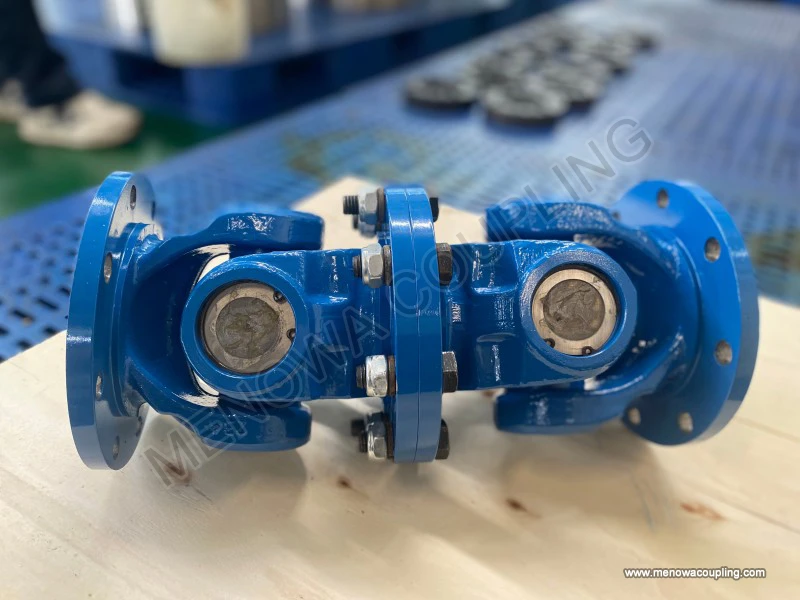
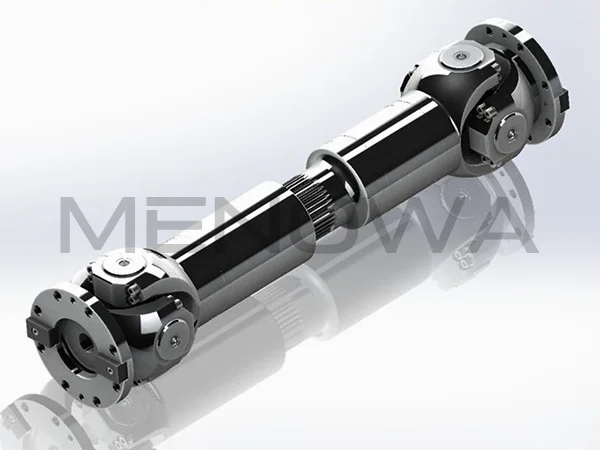
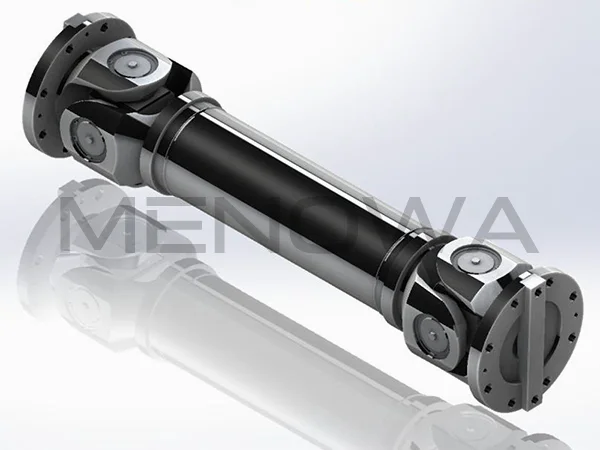
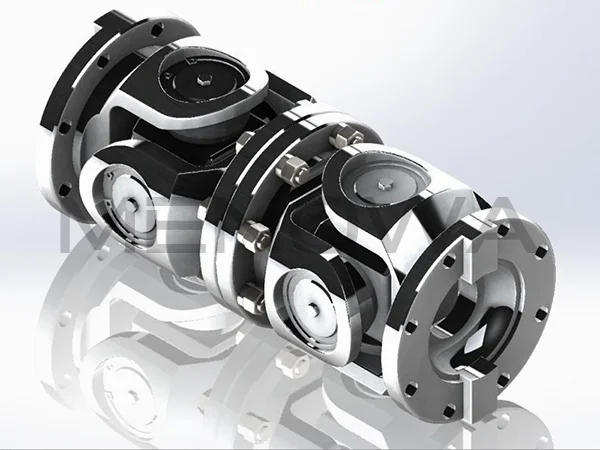
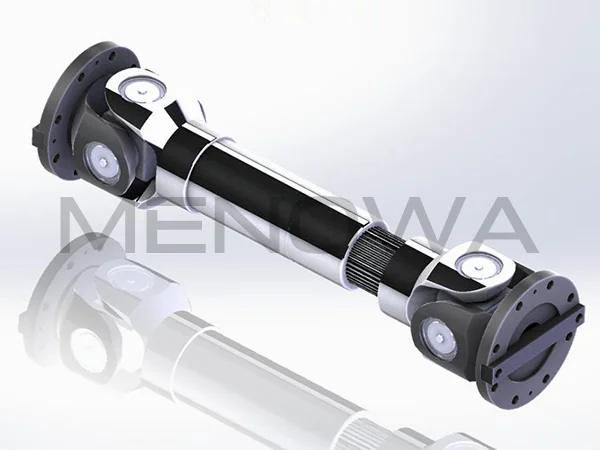
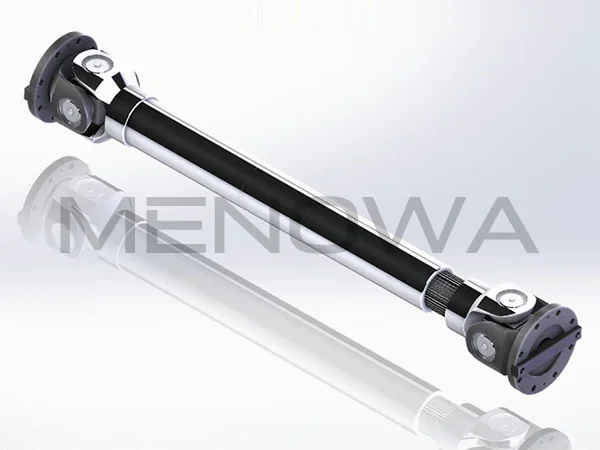
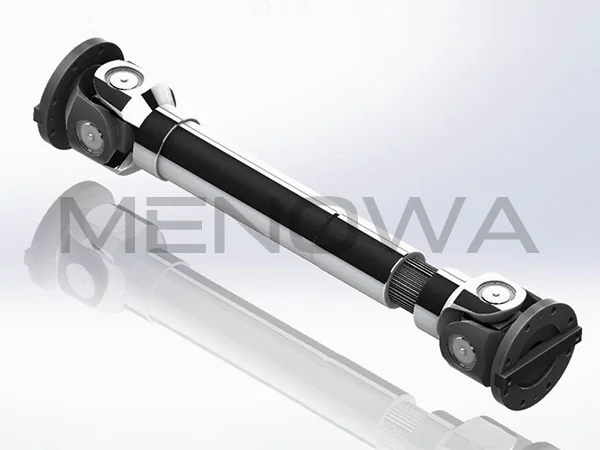
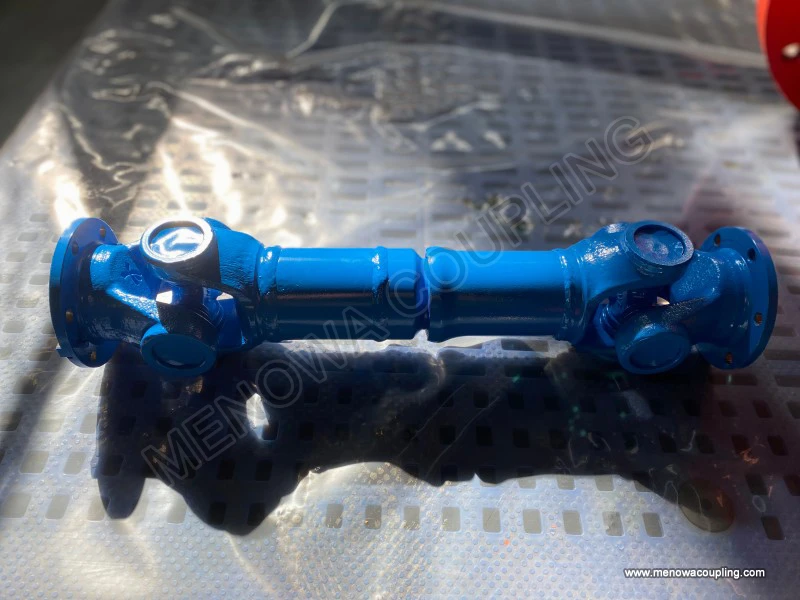
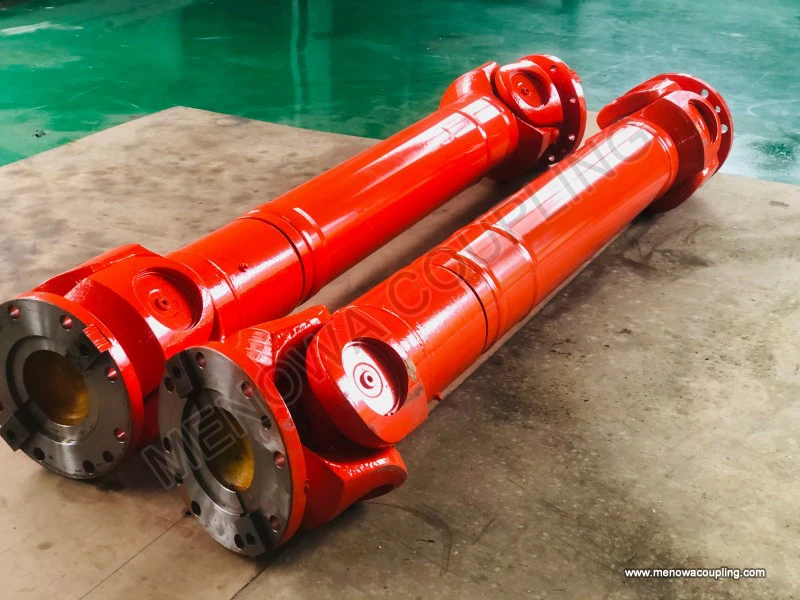
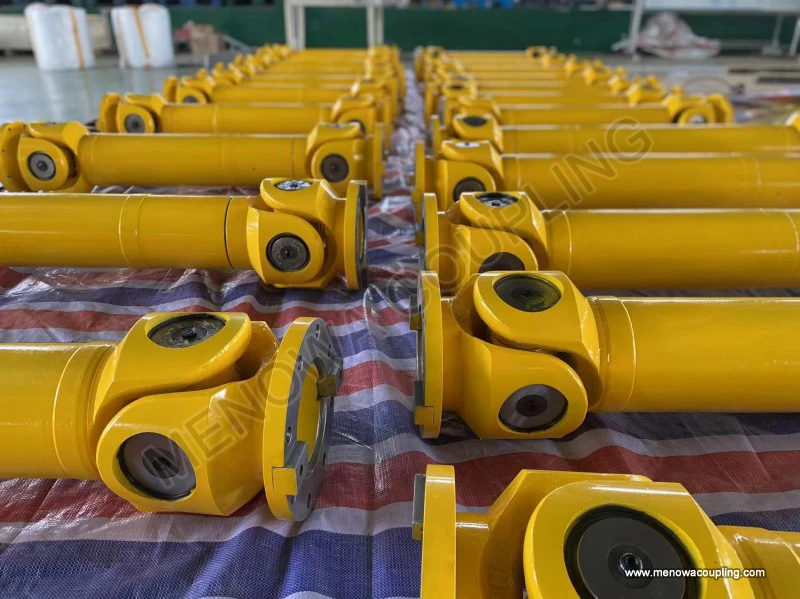
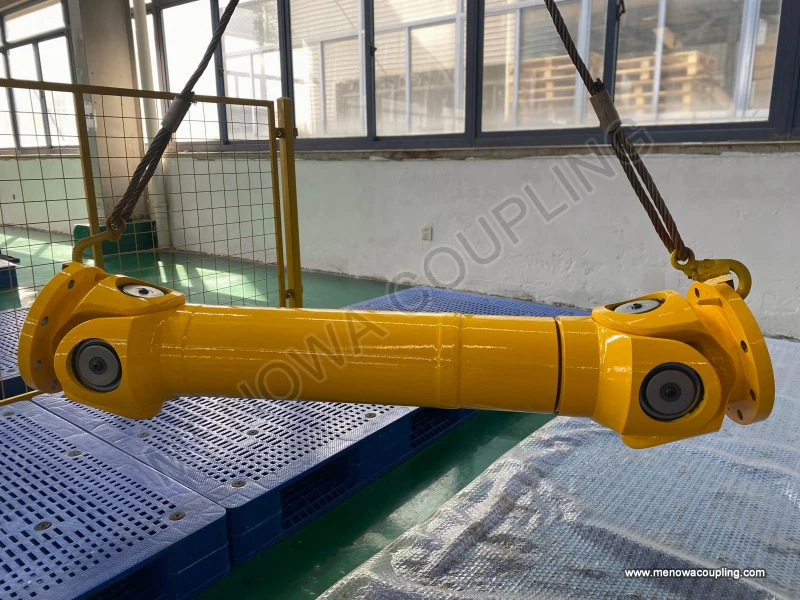
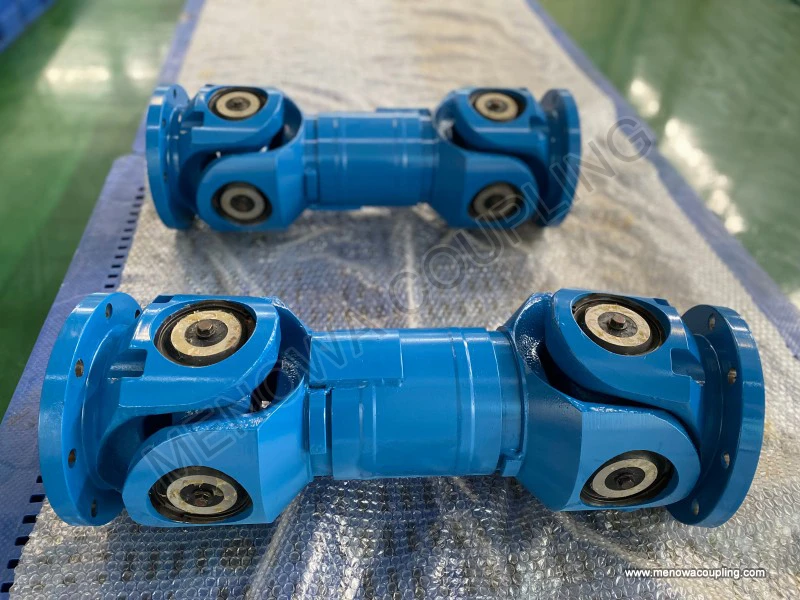
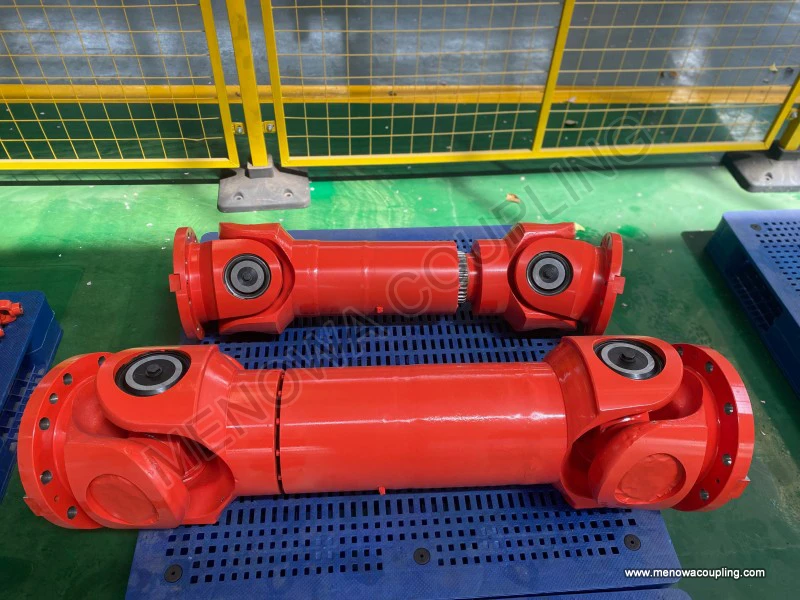
The fundamental design concept of cross joint coupling originates from the basic mechanical demand of realizing power transmission between intersecting or non-parallel rotating shafts, and its overall structural layout follows the minimalist and practical design logic derived from long-term mechanical engineering practice. The entire coupling device is assembled and combined by several core basic mechanical components, and each component bears a clear and independent mechanical function, forming a coordinated and interactive mechanical motion relationship during operation. The main structural composition of conventional cross joint coupling includes two symmetrical yoke assemblies, a central cross-shaped intermediate connecting component commonly referred to as a spider, and four sets of precision rotating bearing components installed at the four end shaft heads of the cross-shaped structure. The two yoke assemblies are the basic connecting carriers of the entire coupling, which are respectively fixedly connected with the end parts of the driving shaft and the driven shaft in the mechanical transmission system through reliable connection methods. Each yoke assembly is designed with a fork-shaped structure at the outer end, and the fork-shaped part is processed with precise assembly holes, which are used for matching and installing the bearing components and the end shaft heads of the cross-shaped intermediate part. The cross-shaped intermediate component is the core force-bearing and motion-converting part of the cross joint coupling. Its symmetrical cross structure enables it to form a flexible rotational connection with the two yoke assemblies respectively through the bearings at the four ends, realizing the mutual conduction of rotational motion and torque between the two yokes. The precision bearing components arranged between the cross shaft and the yoke assembly are mostly needle roller bearings with compact structure and strong pressure resistance. These bearings can effectively reduce the frictional resistance generated during the relative rotational movement between the cross shaft and the yoke, avoid excessive wear and mechanical loss caused by dry friction between metal components, and ensure the flexibility and smoothness of the coupling during angle adjustment and rotational operation. All core components of cross joint coupling are manufactured and processed according to strict mechanical processing precision standards, and the matching tolerance between assembly parts is precisely controlled, so that the entire coupling can maintain stable mechanical coordination under high-speed rotation and high-load torque transmission conditions, without obvious motion jitter or mechanical impact.
The internal working principle of cross joint coupling is based on the spatial rotation kinematics and mechanical torque transmission law between non-collinear shafts, and the unique cross hinge connection structure enables it to break through the limitation that traditional rigid transmission components can only work under strict coaxial conditions. When the mechanical equipment starts to operate, the driving shaft connected to one yoke assembly generates continuous rotational motion and outputs rotational torque, and the torque and motion are transmitted to the cross-shaped intermediate component through the matching structure and bearings of the yoke. Under the action of the cross structure, the torque is evenly distributed to the other two opposite end shaft heads of the cross shaft, and then transmitted to the driven yoke assembly through the corresponding bearings, finally driving the driven shaft connected to the other yoke to rotate synchronously, completing the whole process of power transmission. The core functional advantage reflected in this working process is that the cross-shaped intermediate component can perform small-angle rotational deflection and spatial position adjustment relative to the two yoke assemblies through the bearing sets during operation. This flexible deflection characteristic allows the cross joint coupling to naturally adapt to angular misalignment, axial displacement, and slight parallel offset between the driving shaft and the driven shaft, which are inevitably generated in actual mechanical installation and operation. In the actual mechanical assembly process, due to the limitation of processing accuracy of mechanical parts, installation operation errors of construction personnel, and spatial layout constraints of equipment installation positions, it is almost impossible to achieve absolute coaxial alignment between the driving shaft and the driven shaft. Even if the coaxial accuracy meets the standard at the initial stage of installation, long-term mechanical vibration, equipment load impact, structural thermal deformation during equipment operation, and slow aging deformation of mechanical base will cause gradual deviation of the relative position of the two connected shafts. For mechanical transmission systems using rigid couplings, such small deviations will cause additional alternating mechanical stress on the shafts, bearings and related connection parts, resulting in increased equipment operation vibration, intensified component wear, increased transmission power loss, and even early fatigue damage and failure of key mechanical parts in severe cases. The cross joint coupling perfectly solves this common mechanical transmission pain point by virtue of its adjustable hinge structure. It can automatically compensate for various minor misalignments and displacements in the operation process, isolate the additional mechanical stress caused by shaft position deviation outside the coupling structure, and avoid the transfer of abnormal stress to the main shaft and core equipment components, thus protecting the long-term stable operation of the entire transmission system.
The selection of manufacturing materials for cross joint coupling directly affects its mechanical bearing capacity, wear resistance, fatigue resistance, and overall service life under different working conditions, and the material matching design is always carried out in combination with the actual application scenarios and load characteristics of the coupling. Most of the main force-bearing structural parts such as the yoke assemblies and the central cross shaft are made of high-quality alloy steel materials with high strength, high toughness and good hardenability. This type of steel material has excellent comprehensive mechanical properties after forging forming and professional heat treatment processes, including high tensile strength, good impact resistance and fatigue resistance, and can withstand long-term repeated torque impact and alternating load without structural deformation or fracture failure. In the production and processing process, these core components will undergo standardized forging treatment first to optimize the internal metal fiber structure of the material, eliminate internal defects such as pores and impurities generated in the raw material smelting process, and improve the overall structural compactness and mechanical uniformity of the parts. After forging, the components will be subjected to heat treatment processes such as quenching and tempering according to specific performance requirements. Quenching treatment can significantly improve the surface hardness and wear resistance of the parts, while tempering treatment can effectively reduce the internal stress generated by quenching, balance the hardness and toughness of the material, and prevent the parts from brittle fracture during high-load operation. For the needle roller bearing components matched with the cross shaft and yoke, special bearing steel materials with extremely high hardness and wear resistance are selected. After fine grinding and surface strengthening treatment, the bearing parts have low surface friction coefficient and strong anti-wear ability, ensuring that the friction loss of the coupling during long-term high-speed rotation is maintained at a low level. For some cross joint couplings used in special working environments, such as outdoor humid environments, corrosive medium environments or high-temperature working scenarios, the surface of the coupling components will also be treated with anti-corrosion and high-temperature resistant surface processes. These surface treatment measures can effectively prevent the metal surface from oxidation rust, chemical corrosion and high-temperature oxidation damage, expand the adaptability of the coupling to harsh working conditions, and extend the overall service cycle of the equipment.
In the actual mechanical transmission system matching design, cross joint coupling shows extremely strong working condition adaptability, and can be applied to various transmission scenarios with different rotational speeds, load magnitudes and installation space conditions. In terms of rotational speed adaptation, this type of coupling can operate stably not only in low-speed and heavy-load mechanical transmission equipment that requires large torque output, but also in medium and high-speed rotating mechanical devices that need continuous and stable power transmission. Its internal flexible hinge connection structure will not produce excessive centrifugal force or motion imbalance during high-speed operation, and the precisely matched bearing components ensure the smoothness of high-speed rotation without obvious vibration and noise. In terms of load adaptation, due to the high-strength structural design and high-quality material selection, cross joint coupling can bear continuous rated load and instantaneous impact load generated by equipment startup, shutdown and load sudden change. The cross-shaped force-bearing structure can evenly disperse the concentrated torque and impact force, avoid local stress concentration of components, and maintain structural stability under long-term variable load operation. In terms of installation space adaptation, the overall structural size of cross joint coupling is compact and reasonable, and no extra large installation space and complex fixing auxiliary structures are required. It can be flexibly installed in mechanical equipment with narrow internal space and compact structural layout, and the installation and disassembly operation processes are simple and convenient, which is convenient for daily equipment maintenance and later component replacement. Compared with some large-scale flexible transmission coupling devices that require complex installation calibration and occupy large space, cross joint coupling has obvious advantages in space utilization and installation convenience, and can meet the connection and transmission needs of most conventional and special mechanical equipment.
The reasonable matching and application of cross joint coupling in different mechanical equipment can effectively optimize the overall transmission performance of the mechanical system and reduce the comprehensive operating cost of equipment operation and maintenance. In the field of heavy industrial machinery and equipment manufacturing, such as metallurgical production equipment, mining machinery, cement processing equipment and large engineering machinery, cross joint coupling is widely used in the power transmission connection between main drive motors and working hosts, as well as between various intermediate transmission shafts. These heavy industrial equipment often works under harsh working conditions with heavy load, frequent startup and shutdown, and large vibration impact, and the shaft connection parts need to bear huge torque and alternating impact force. The excellent load-bearing capacity and misalignment compensation performance of cross joint coupling can ensure stable power transmission of heavy equipment, reduce the failure rate of shaft connection parts, and avoid production interruption and economic losses caused by coupling damage and equipment shutdown. In the field of general mechanical manufacturing and automated production equipment, including mechanical processing machine tools, automated assembly lines, conveying machinery and light industrial production equipment, cross joint coupling is used for the transmission connection of medium and small torque rotating shafts. Its stable transmission effect and low vibration and noise characteristics can ensure the precise operation of automated production equipment, improve the stability of product processing and production, and reduce the vibration interference of transmission components on the processing accuracy of mechanical equipment. In the field of mobile mechanical equipment and special engineering vehicles, due to the frequent change of working posture and driving posture of such equipment, the relative position of the internal transmission shafts will change dynamically in real time during operation. The flexible angle adjustment function of cross joint coupling can well adapt to this dynamic position change, ensure continuous and uninterrupted power transmission during the movement and posture adjustment of mobile equipment, and maintain the normal driving and working functions of the equipment.
Although cross joint coupling has excellent structural performance and strong working condition adaptability, long-term stable operation and extended service life still depend on scientific daily maintenance, regular inspection and standardized lubrication management. Lubrication maintenance is the core link in the daily maintenance of cross joint coupling, because the relative rotational friction between the cross shaft, bearings and yoke assemblies inside the coupling needs to be reduced by high-quality lubricating grease. Good lubrication conditions can not only reduce mechanical friction loss and improve transmission efficiency, but also take away the heat generated by friction during operation, avoid component overheating and surface wear, and prevent rust and corrosion of internal metal parts. In the actual maintenance work, it is necessary to select lubricating grease with suitable viscosity and temperature resistance according to the operating speed, load size and working environment temperature of the coupling, and regularly supplement and replace the lubricating grease according to the equipment operation cycle. It is necessary to avoid long-term lack of lubrication, which will lead to dry friction of internal components, accelerated wear of bearings and cross shaft, and even mechanical jamming and coupling failure. At the same time, regular visual inspection and mechanical performance inspection of cross joint coupling in operation should be done in daily work. The inspection content includes checking whether the coupling has abnormal vibration and abnormal noise during operation, whether the connection parts between the yoke and the shaft are loose or displaced, whether the surface of the coupling components has obvious wear, deformation, rust and cracks, and whether the flexible rotation and angle adjustment of the cross hinge part are smooth and free of jamming. Once abnormal phenomena are found in the inspection, timely shutdown inspection and maintenance adjustment should be carried out to eliminate potential mechanical faults in the initial stage and avoid small faults evolving into large-scale equipment failures.
In addition to daily maintenance and regular inspection, the correct installation and commissioning of cross joint coupling in the initial installation stage also play a decisive role in its later operating state and service life. In the installation process, it is necessary to ensure that the coaxiality and installation position of the driving shaft and driven shaft are calibrated within the reasonable allowable deviation range specified by the design, and excessive initial misalignment caused by careless installation should be avoided. Although cross joint coupling has misalignment compensation capability, long-term operation under excessive misalignment will still increase the mechanical load and friction loss of the coupling, accelerate component wear, and reduce the overall service life. During the installation of the coupling, the connection between the yoke and the shaft should be firmly fixed, and the fastening bolts and connecting parts should be tightened in place to prevent the coupling from loosening and displacement during operation, resulting in transmission failure and equipment vibration. After the installation is completed, no-load trial operation and load test operation should be carried out first to observe the operating state of the coupling, check whether there is abnormal vibration, noise and heating phenomenon, and adjust and optimize in time until the coupling operates stably and meets the production and operation requirements. For cross joint couplings that have been used for a long time, regular aging assessment and component replacement management should be done. With the increase of equipment operation time, the internal bearings and wearing parts of the coupling will have natural wear and fatigue aging. When the wear degree reaches the service limit, timely replacement of worn components should be carried out to ensure that the coupling always maintains good transmission performance and operating stability.
With the continuous progress of modern mechanical design technology and manufacturing process level, the structural optimization design and performance upgrading of cross joint coupling have been continuously promoted, and new structural forms and improved processes suitable for emerging mechanical equipment working conditions have been derived on the basis of traditional basic structures. Modern optimized cross joint coupling fully combines computer simulation analysis technology to carry out finite element stress analysis on the core force-bearing components, optimize the structural size and force-bearing distribution of key parts, reduce the weight of the coupling on the premise of ensuring mechanical strength, and further improve the transmission efficiency and operation flexibility. At the same time, with the development of new metal materials and surface treatment processes, the corrosion resistance, high temperature resistance and wear resistance of cross joint coupling in harsh working environments have been further improved, and the application scope in special working conditions such as deep mining, high-temperature metallurgy and coastal humid corrosion environments has been continuously expanded. In the future, with the continuous development of intelligent mechanical equipment and automated production systems, cross joint coupling, as a basic and important mechanical transmission connection component, will continue to be optimized and upgraded in combination with intelligent monitoring technology. By integrating simple vibration and temperature sensing components, the real-time operating state and internal wear degree of the coupling can be monitored in real time, realizing predictive maintenance and fault early warning, further improving the safety and stability of the mechanical transmission system, and providing more reliable basic support for the efficient operation of various modern mechanical equipment.
Throughout the entire development and application process of cross joint coupling, its core value lies in taking simple and reliable mechanical structure as the carrier, perfectly solving the basic mechanical problem of stable power transmission between non-collinear rotating shafts, and adapting to the diverse and complex working condition needs of modern mechanical equipment. It neither relies on complex mechanical transmission mechanisms nor depends on fragile elastic buffer parts, but realizes the organic unity of rigid torque transmission and flexible misalignment compensation through mature and reliable hinge connection structure. From heavy industrial production to general mechanical manufacturing, from fixed production equipment to mobile engineering machinery, cross joint coupling has always maintained stable and reliable application performance, and has become an indispensable basic component in the field of mechanical power transmission. Through scientific material selection, standardized production and processing, standardized installation and commissioning, and meticulous daily maintenance management, cross joint coupling can give full play to its structural advantages and performance characteristics, ensure the long-term stable and efficient operation of mechanical transmission systems, reduce equipment operating failure rates and comprehensive maintenance costs, and make continuous and important basic contributions to the stable development of various industrial production and mechanical engineering fields.
Post Date: Apr 26, 2026
https://www.menowacoupling.com/coupling-supplier/cross-joint-coupling.html
Products
Tags
Related Articles
Universal Coupling Wholesale
In the global mechanical transmission industry, universal couplings have emerged as indispensable core components for power transmission systems, widely favored by downstream manufacturing, engineering, and transportation sectors across international markets. As global industrialization continues to advance and mechanic…Working Principle of Universal Coupling
A universal coupling, also widely known as a universal joint, is a fundamental mechanical transmission component designed to solve the core problem of power transmission between two non-collinear rotating shafts. Unlike rigid couplings that only work efficiently when connected shafts maintain perfect coaxial alignment, …Gap Chart of Universal Coupling
The operational stability and transmission accuracy of universal couplings are fundamentally determined by the internal gap distribution between mating components, making gap chart analysis a core technical method for evaluating assembly quality, predicting operating performance, and optimizing structural design. A univ…Universal Coupling For Ball Mill
In the complex and demanding operating environment of mineral processing, building materials production, chemical raw material grinding and other heavy industrial fields, ball mills stand as core processing equipment responsible for crushing and grinding various bulk raw materials into fine particles and powders that me…Universal Coupling Fabrication
Universal coupling fabrication stands as a foundational discipline within mechanical manufacturing, focusing on the precise production of flexible shaft connection components that enable reliable torque transmission between misaligned rotating shafts. As a core mechanical component widely adopted in power transmission s…Maintenance of Universal Coupling
Universal couplings serve as indispensable connecting components in mechanical transmission systems, designed to transmit rotational torque between two shafts that operate with angular misalignment, parallel offset, or variable positional relationships. Widely applied in industrial transmission equipment, mechanical eng…Characteristics of Universal Coupling
A universal coupling, also commonly referred to as a universal joint or U-joint, is a critical mechanical component designed to connect two rigid shafts whose axes are inclined to each other, enabling the transmission of rotary motion and torque even when the shafts are not perfectly aligned. This versatile component ha…Types of Universal Coupling
In the complex and interconnected mechanical transmission systems that power modern industrial production, automotive operation, engineering machinery movement, and various precision mechanical equipment, universal couplings stand as indispensable basic mechanical components that undertake the core task of transmitting …Universal Coupling Factory
In the intricate ecosystem of modern mechanical transmission systems, universal couplings stand out as indispensable foundational components, serving as the critical bridge that connects rotating shafts and ensures stable power transmission across complex operating conditions. As core mechanical parts designed to resolv…Material of Universal Coupling
Universal couplings serve as indispensable mechanical transmission components in modern industrial and mechanical systems, dedicated to transmitting torque and rotational power between two misaligned rotating shafts. Their core operational value lies in adapting to angular deviation, axial displacement and radial offset…
 WeChat
 WhatsApp