Flexible Membrane Coupling
In the complex and interconnected field of mechanical power transmission, the stable and reliable connection between rotating shafts serves as a fundamental guarantee for the continuous operation of various industrial mechanical systems. Every rotating mechanical device that relies on power input and output transmission needs a key connecting component that can not only stably transmit rotational torque and mechanical power, but also adapt to various inevitable deviations and deformations generated during long-term equipment operation. Flexible membrane coupling has emerged as a vital core transmission component in modern industrial mechanical systems relying on its unique metal elastic deformation working mode, reasonable structural layout and excellent comprehensive mechanical adaptability. Different from traditional coupling products that rely on rubber elastic deformation, gear meshing or friction contact to complete power transmission, flexible membrane coupling takes metal elastic membrane as the core flexible force-bearing and deformation compensation element, and realizes the dual core functions of efficient torque transmission and multi-dimensional shaft misalignment compensation through the controllable elastic deformation of the membrane itself in the working process. This special working principle and structural design make it avoid many inherent defects of traditional coupling structures in actual operation, such as easy aging of non-metal elastic parts, large friction and wear of meshing parts, frequent need of lubrication maintenance and obvious transmission vibration during high-speed operation, and gradually become the preferred transmission connecting part for high-speed operation, long-term continuous work, complex working conditions and high-precision transmission mechanical equipment in various industrial fields.
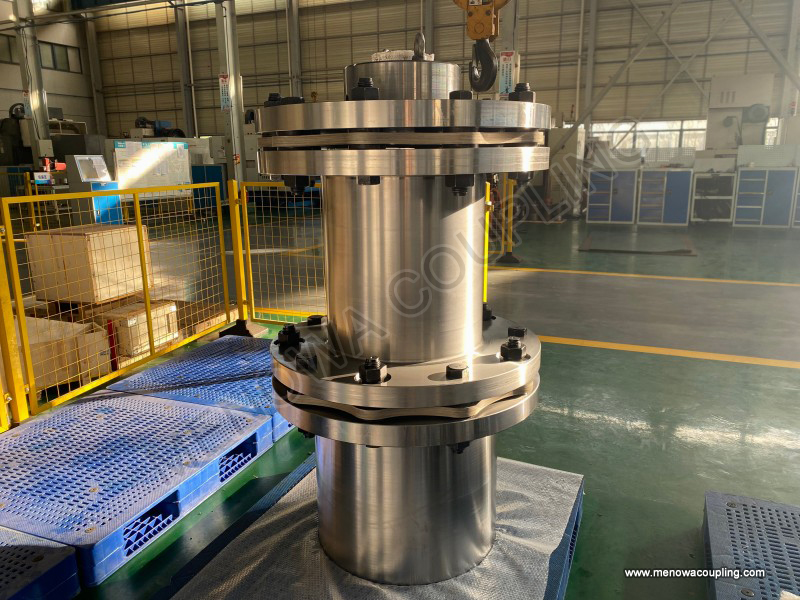
The basic working logic of flexible membrane coupling is built on the elastic mechanics characteristics of high-strength metal materials and the structural coordination design between multiple mechanical components. The overall operation process does not involve any relative sliding, friction contact or meshing movement between internal parts, and all power transmission and displacement compensation work are completed by the elastic deformation of the membrane component within the safe elastic range. In the actual power transmission process, the driving shaft connected with the power equipment drives one side of the coupling hub to rotate synchronously, and the rotational torque is evenly transmitted to the metal membrane group fastened and connected with the hub through high-strength connecting fasteners. The membrane group receives the torque load and completes the stable transfer of rotational force through the rigid bearing part of its own structure, and then transmits the torque to the other side of the coupling hub connected with the driven equipment shaft, finally realizing the synchronous rotation and power transmission between the driving shaft and the driven shaft. When the mechanical equipment is in the initial installation stage or long-term continuous operation process, affected by installation accuracy deviation, equipment foundation settlement, thermal expansion and contraction of mechanical parts during operation, mechanical vibration and impact load, there will inevitably be different degrees of axial displacement, radial displacement and angular deflection deviation between the driving shaft and the driven shaft. These deviations will not cause rigid extrusion, structural damage or abnormal torque transmission fluctuation to the connected shafts and equipment, because the flexible membrane can produce micro elastic bending, stretching and twisting deformation corresponding to the deviation state according to the actual misalignment situation between the two shafts. This passive elastic deformation can effectively absorb and offset all kinds of misalignment displacements generated between the shafts, keep the stress state of the whole shafting transmission system balanced and stable at all times, and avoid additional bending stress, shear stress and vibration impact caused by shaft misalignment acting on the rotating shaft, bearings and other core components of the equipment, so as to protect the long-term stable operation of the whole mechanical transmission system.
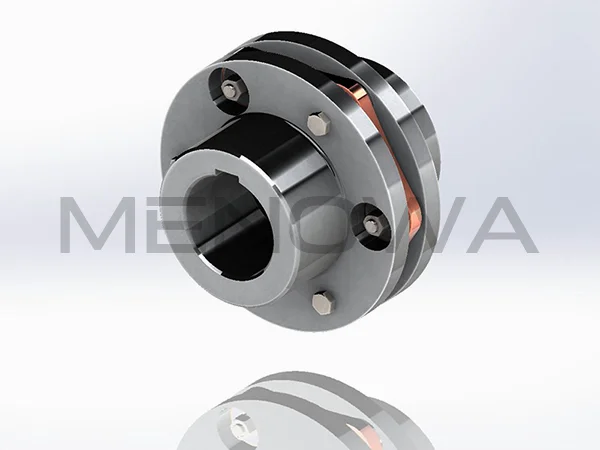
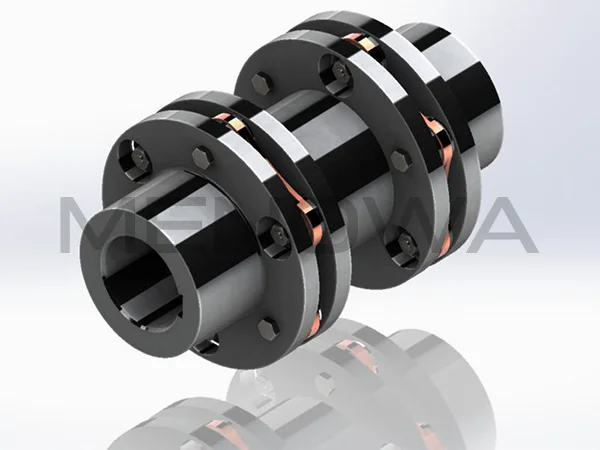
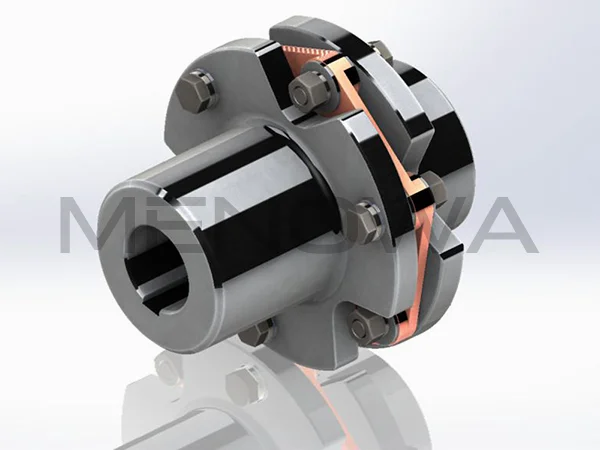
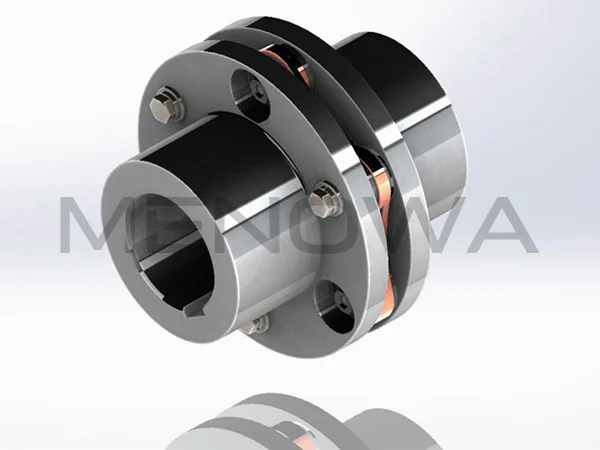
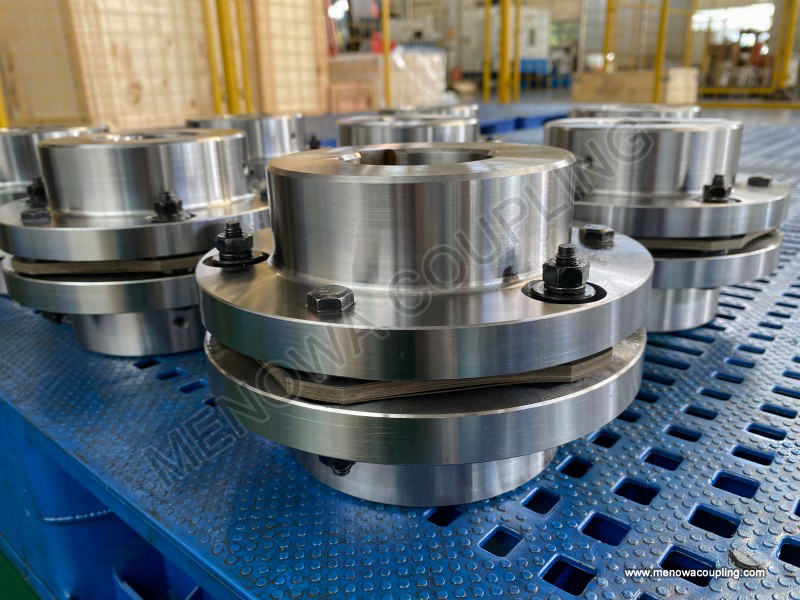
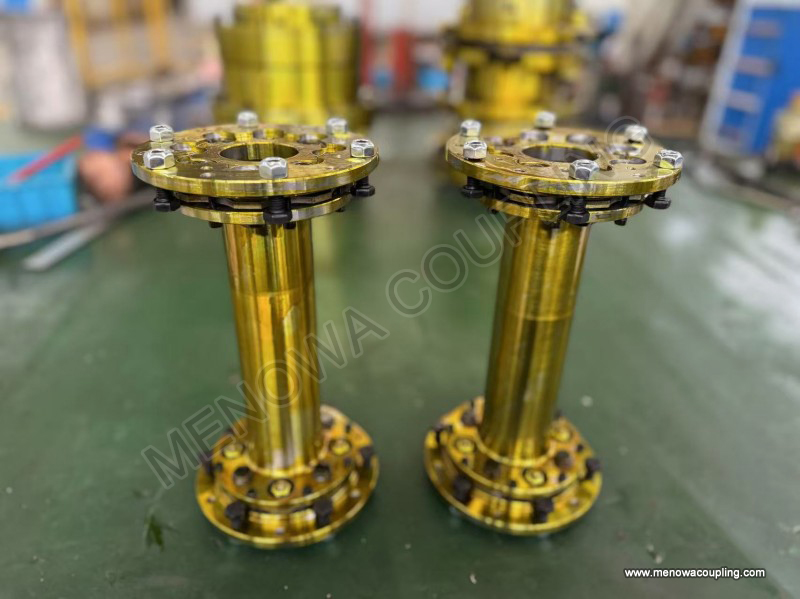
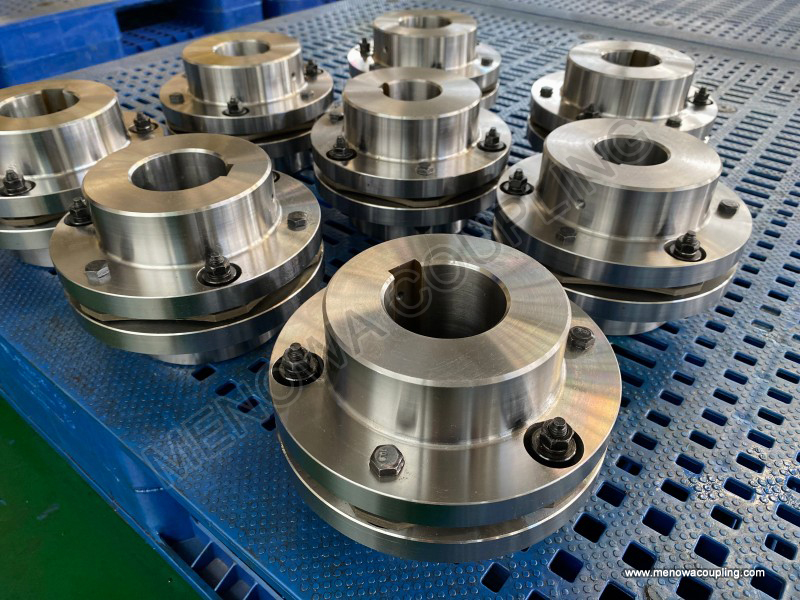
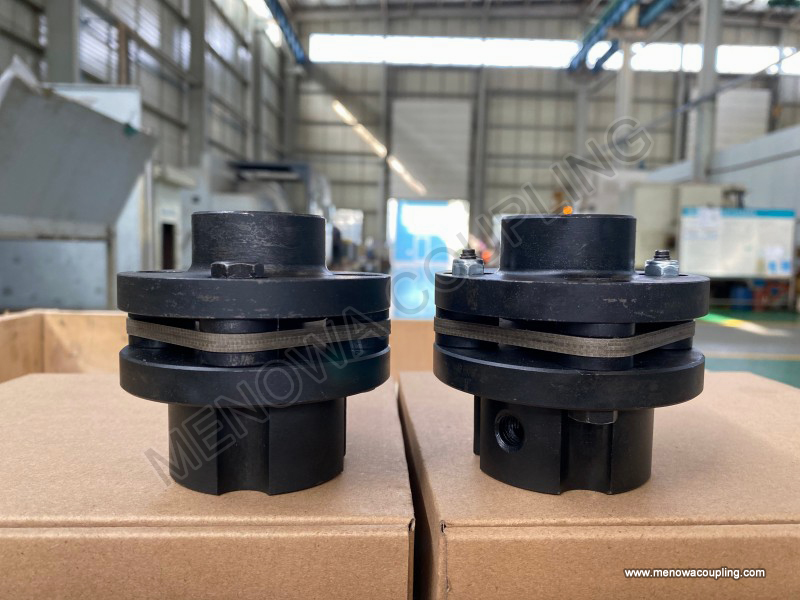
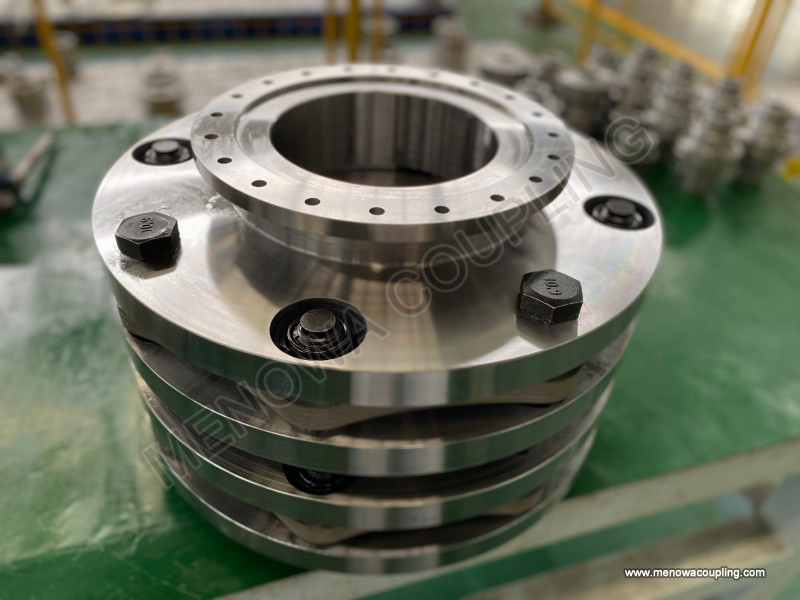
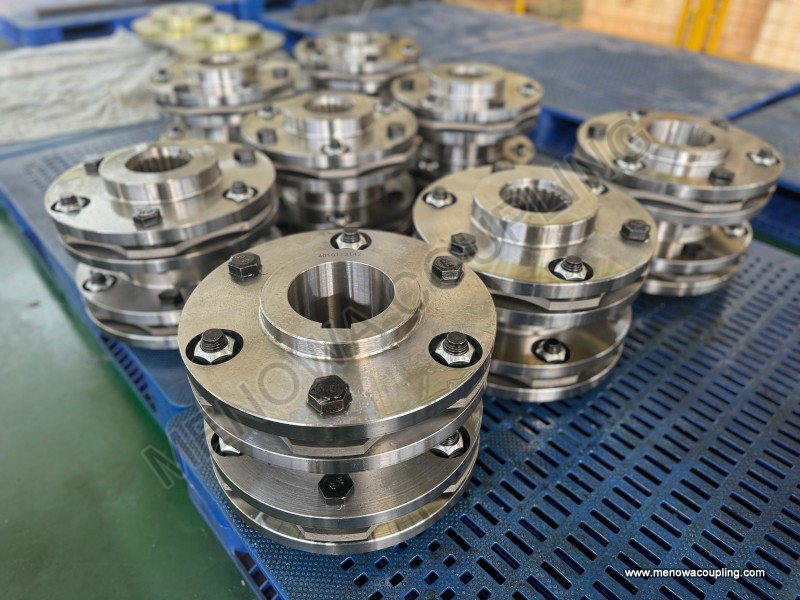
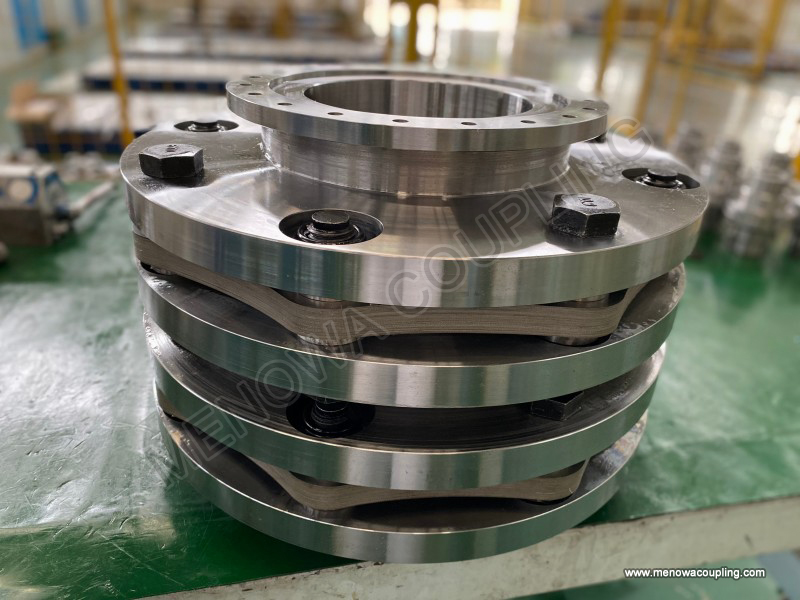
The structural composition of flexible membrane coupling follows the design concept of simplicity, compactness and high integration, and the whole equipment is composed of several core basic parts without redundant auxiliary transmission structures or easily damaged vulnerable parts. The main components include two coupling hubs matched and installed with the driving shaft and driven shaft respectively, a flexible metal membrane group undertaking deformation compensation and torque transmission tasks, and high-strength connecting fasteners used to fasten the membrane group and the two hubs into a whole. The coupling hub is usually made of high-quality alloy steel materials processed by precision machining technology, with high structural rigidity, good mechanical strength and excellent machining accuracy. The inner hole of the hub is designed according to the standard shaft body matching size, which can realize tight and stable assembly with the rotating shaft, ensuring no relative rotation or looseness between the hub and the shaft body during long-term high-speed rotation and torque transmission. The core functional component membrane group is generally formed by stacking multiple layers of ultra-thin high-strength stainless steel metal membranes according to actual transmission demand design. The number of membrane layers, membrane thickness and membrane shape can be adjusted and optimized according to different torque transmission requirements and misalignment compensation demands of different application scenarios. The membrane itself has good elastic recovery performance and fatigue resistance, and can maintain stable elastic deformation performance after millions of repeated deformation cycles, without permanent deformation, structural fracture or performance attenuation. The connecting fasteners adopt high-strength bolts and matching nuts with precise positioning design. The fastening position and installation spacing are arranged according to the mechanical stress distribution law, which can ensure uniform stress on each stress point of the membrane group during torque transmission, avoid local stress concentration caused by uneven fastening force, and prevent membrane damage or torque transmission instability caused by local excessive stress. The overall compact structural layout enables the flexible membrane coupling to be installed in a limited mechanical installation space, and will not occupy excessive equipment assembly space or affect the structural layout and normal operation of other surrounding mechanical components, which is very suitable for various mechanical equipment with compact internal structure and high space utilization requirements.
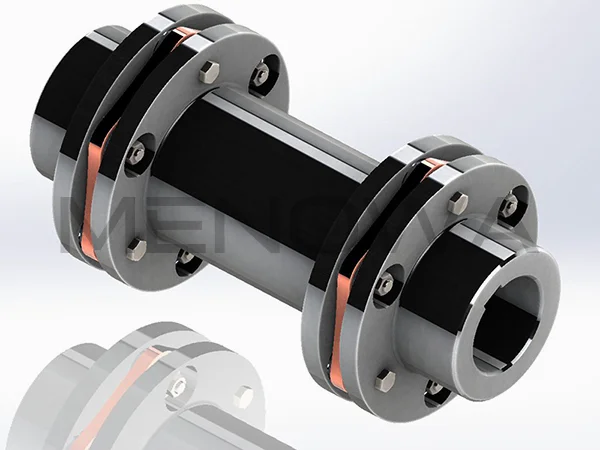
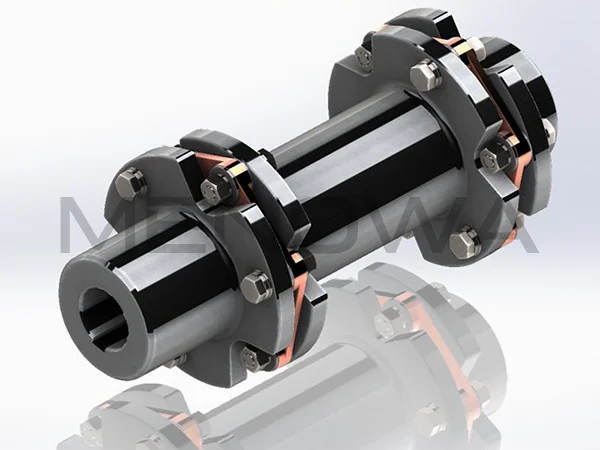
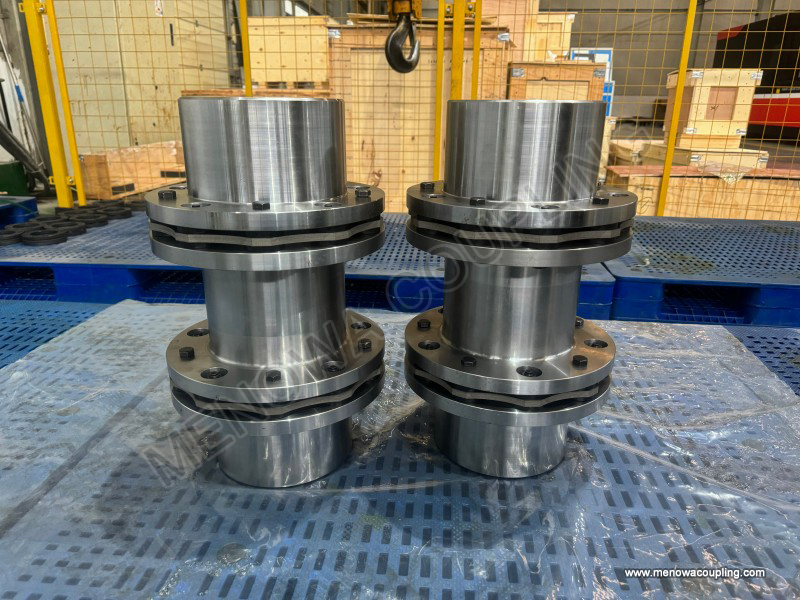
According to the different structural forms and misalignment compensation capabilities of the membrane group, flexible membrane couplings can be divided into two main structural types: single membrane structure and double membrane structure, and each structural type has its own applicable working condition scenarios and transmission performance characteristics. The single membrane flexible coupling adopts a single group of integral flat metal membrane as the core deformation component, with the simplest overall structure, fewer assembly parts and convenient installation and disassembly operation. This structural design has relatively limited multi-dimensional misalignment compensation capacity, and is more suitable for mechanical transmission systems with small shaft installation deviation, stable equipment operation load, low angular deflection demand and medium and low torque transmission working conditions. In the actual operation process, the single membrane can effectively absorb conventional axial and small radial displacement deviations, maintain stable torque transmission efficiency, and has low operation vibration and small running noise. The double membrane flexible coupling is equipped with two independent membrane groups and a middle connecting sleeve structure between the two hubs, and the two membrane groups cooperate with each other to produce synchronous elastic deformation to deal with various complex shaft misalignment conditions. The cooperative deformation effect of the double membrane structure makes its angular displacement compensation capacity significantly improved compared with the single membrane structure, and can cope with larger radial and axial comprehensive displacement deviations generated in the operation of mechanical equipment. This structural form is mostly used in mechanical systems with high installation and operation misalignment risks, large torque transmission demand and long-term continuous uninterrupted operation requirements. In addition to the classification by membrane quantity, flexible membrane couplings can also be optimized and adjusted in membrane shape design according to actual working conditions. Flat disc membrane with uniform planar structure provides consistent elastic deformation characteristics in all directions, ensuring uniform torque distribution and predictable deformation effect under misalignment conditions; linkage integrated membrane structure can balance structural rigidity and deformation flexibility, meeting the dual needs of high torque transmission and certain displacement compensation.
The unique structural design and working principle of flexible membrane coupling endow it with remarkable comprehensive performance advantages that many traditional coupling products cannot match in actual industrial operation. First of all, since the power transmission and displacement compensation of the whole coupling rely entirely on the elastic deformation of the metal membrane, there is no relative movement, friction contact or meshing friction between any internal parts during the whole operation process. This fundamental working feature eliminates the wear problem of wearing parts in traditional couplings, and there is no need to add lubricating oil, grease and other lubricating media for regular maintenance and replenishment in the daily operation process. It also avoids equipment operation failure and transmission performance degradation caused by lubricant deterioration, leakage or insufficient lubrication. The maintenance-free operation mode greatly reduces the daily operation and maintenance workload and later maintenance input of industrial enterprises, and avoids production interruption and economic loss caused by frequent maintenance and replacement of coupling parts. Secondly, the metal membrane material adopted by flexible membrane coupling has excellent high temperature resistance, low temperature resistance and corrosion resistance, and can maintain stable mechanical performance and elastic deformation capacity in harsh working environments such as high temperature heating, low temperature cooling, humid and dusty, and weak chemical corrosion. It will not be affected by environmental temperature changes or external environmental media erosion to produce performance aging, structural deformation or functional failure, and has strong environmental adaptability compared with couplings using non-metal elastic parts which are easy to aging and deteriorate in harsh environments.
In terms of transmission performance, flexible membrane coupling has high torsional rigidity and stable torque transmission efficiency, and can realize precise and synchronous power transmission between driving shaft and driven shaft without obvious torque loss and transmission hysteresis. In the high-speed rotation working state commonly used in modern industrial mechanical equipment, the coupling can maintain good dynamic balance performance, will not generate additional vibration and centrifugal force due to structural deformation or unbalanced rotation, and can effectively reduce the overall operation vibration and running noise of the mechanical system. The elastic deformation of the membrane can also play a certain role in vibration buffering and impact absorption, and can weaken the vibration impact and torque fluctuation generated by the sudden start, stop and load change of the equipment, protect the rotating shaft, bearings, motors and other precision core components from impact damage, and prolong the overall service life of the mechanical equipment system. In addition, the stress distribution of the flexible membrane coupling in the working process is uniform and reasonable, and the local stress concentration phenomenon is effectively avoided through structural optimization design and reasonable fastening layout. The membrane material has excellent fatigue resistance, and can maintain stable working performance after long-term repeated deformation and cyclic torque load, with long service cycle and low failure probability in actual operation. Even in the long-term continuous operation state of industrial production line equipment that runs all year round without stopping, the coupling can keep stable working state for a long time, and will not cause frequent equipment shutdown and maintenance due to coupling failure.
Flexible membrane coupling has a wide range of industrial application scenarios, covering many core industrial fields that require high-precision transmission, long-term stable operation and harsh working condition adaptation, and plays an indispensable basic supporting role in the normal operation of various mechanical equipment. In the field of power generation equipment, many rotating power generation devices such as industrial steam turbines, gas turbines, wind power generation equipment and generator sets need flexible and stable shaft connecting components to complete power transmission. These power generation equipment usually runs at high speed for a long time, and the shafting is prone to misalignment deviation due to thermal expansion and contraction during operation. The flexible membrane coupling can adapt to high-speed operation and temperature change deformation, ensure stable power transmission of generator sets, avoid vibration and power generation efficiency fluctuation caused by shaft misalignment, and maintain the stable output of power generation equipment. In the field of petrochemical and chemical industry, most of the production equipment operates in harsh working environments such as high temperature, high pressure and corrosive medium, and the production process requires continuous and uninterrupted operation. Various pumping equipment, compressor units and chemical reaction kettle transmission devices in chemical production lines all need couplings with corrosion resistance, high temperature resistance and maintenance-free performance. Flexible membrane coupling can adapt to the harsh chemical production environment, resist the erosion of corrosive media, reduce equipment maintenance frequency, and ensure the continuous and stable operation of chemical production processes without frequent shutdown maintenance affecting production progress.
In the field of metallurgical and mining machinery, the working environment of equipment is harsh, with large operation load, frequent load impact and obvious equipment foundation vibration. Various rolling mill transmission equipment, mine hoisting equipment and mineral processing mechanical transmission devices need couplings with strong impact resistance, vibration buffering performance and large torque transmission capacity. Flexible membrane coupling can absorb vibration and impact generated by equipment operation through membrane elastic deformation, stabilize shafting transmission state, protect metallurgical and mining equipment from impact damage, and improve the overall operation stability and production efficiency of heavy-duty mechanical equipment. In the field of precision mechanical processing and automated production equipment, high-precision machine tools, automated assembly lines, precision transmission machinery and other equipment have extremely high requirements for transmission accuracy and synchronization performance. The flexible membrane coupling has high transmission synchronization and no transmission hysteresis, will not produce transmission error and position deviation due to deformation and wear, can ensure the precise coordination and synchronous operation of each processing and transmission link of precision equipment, and meet the high-precision production and processing needs of modern precision manufacturing industry. In addition, in the fields of water conservancy and hydropower equipment, transportation machinery, pharmaceutical equipment and food processing machinery, flexible membrane couplings are also widely used in various shafting transmission systems, adapting to different working condition needs and environmental characteristics of different industries, and providing stable and reliable transmission connection guarantee for various mechanical equipment.
In the practical application and selection process of flexible membrane coupling, it is necessary to comprehensively consider multiple key factors such as the actual torque transmission demand of the mechanical system, equipment operation speed, shaft misalignment degree, working environment conditions and equipment operation cycle, so as to select the most appropriate structural type and membrane parameter configuration, and ensure that the coupling can give full play to its comprehensive performance advantages in the matching working conditions. First of all, the torque load of the mechanical equipment in normal operation and peak operation should be accurately calculated, and the coupling with appropriate torque transmission specification should be selected to avoid insufficient torque bearing capacity leading to membrane overload deformation or structural damage, or excessive specification configuration causing unnecessary structural redundancy and installation space waste. Secondly, according to the actual installation accuracy and long-term operation misalignment deviation range of the driving shaft and driven shaft, the single membrane or double membrane structural type should be reasonably selected. For equipment with small installation deviation and stable operation, single membrane structure can meet the use demand and reduce equipment configuration cost; for equipment with large misalignment deviation and complex operation working conditions, double membrane structure with strong compensation capacity should be selected to ensure the safe and stable operation of shafting transmission.
The operation speed of equipment is also a key factor affecting the selection and use of flexible membrane coupling. For high-speed rotating mechanical equipment, it is necessary to ensure that the selected coupling has good dynamic balance performance and high structural stability, avoid structural resonance and excessive centrifugal force generated during high-speed rotation, and ensure the safety and stability of high-speed operation. At the same time, according to the actual working environment temperature, humidity and medium corrosion degree of the equipment, the membrane material and surface treatment process of the coupling should be reasonably matched to ensure that the coupling can maintain stable mechanical performance and structural state in the corresponding working environment and avoid performance attenuation and structural damage caused by environmental factors. In the installation and debugging stage of flexible membrane coupling, it is necessary to strictly follow the precision installation operation specifications, ensure the coaxiality of the driving shaft and driven shaft is controlled within a reasonable range, standardize the fastening operation of connecting fasteners, ensure uniform fastening force of each fastener, avoid local stress concentration of membrane group caused by uneven fastening, and ensure that the coupling can exert the best deformation compensation and transmission performance in the working process.
With the continuous upgrading and development of modern industrial mechanical equipment towards high speed, high precision, high efficiency and long-term continuous operation, the performance requirements for supporting transmission connecting components such as flexible membrane couplings are also constantly improving. In the future, with the continuous progress of metal material technology, mechanical structure optimization design technology and precision machining manufacturing technology, the comprehensive performance of flexible membrane coupling will be further optimized and upgraded. The continuous research and development and application of new high-strength, fatigue-resistant and corrosion-resistant metal membrane materials will make the coupling adapt to more extreme harsh working conditions and longer service cycle requirements. The continuous optimization of membrane structure design and mechanical stress simulation analysis technology will further improve the misalignment compensation capacity and transmission efficiency of the coupling, reduce the stress load of membrane components in operation, and extend the service life of products. The continuous improvement of precision machining and integrated manufacturing technology will make the overall structural matching degree and dynamic balance performance of the coupling better, meet the higher precision transmission needs of emerging high-end mechanical equipment, and expand the application scope of flexible membrane coupling in more emerging industrial fields.
Throughout the whole development and application process of flexible membrane coupling, its core value lies in breaking through the inherent defects of traditional coupling products, relying on simple and reliable metal elastic deformation working mode, realizing the organic unity of efficient power transmission and multi-dimensional misalignment compensation, and adapting to the diversified and high-standard operation needs of modern industrial mechanical systems. In the current industrial production and mechanical manufacturing field, stable and reliable power transmission is the basic premise to ensure the normal operation of all mechanical equipment, and flexible membrane coupling, as a key core component in the transmission system, provides a solid guarantee for the efficient and stable operation of various industrial equipment with its excellent mechanical performance, strong environmental adaptability, low maintenance demand and long service life. With the continuous progress of industrial modernization and the continuous development of mechanical equipment upgrading and iteration, flexible membrane coupling will always maintain irreplaceable application value in the field of mechanical power transmission, and continue to contribute basic supporting power to the stable operation and efficient production of various industrial fields.
https://www.menowacoupling.com/industrial-coupling/flexible-membrane-coupling.html
 WeChat
 WhatsApp