Diaphram Coupling
In the complex and interconnected ecosystem of modern mechanical power transmission, the reliable connection between driving equipment and driven machinery stands as a fundamental prerequisite for stable operational performance, continuous production cycles, and prolonged equipment service longevity. Every rotating mechanical system, whether deployed in large-scale industrial manufacturing lines, precision automated processing equipment, energy generation facilities, or transportation supporting machinery, relies heavily on connecting components that can seamlessly transfer rotational torque while adapting to the inevitable physical deviations and dynamic changes that occur during long-term operation. Among the diverse range of flexible coupling solutions developed to meet these evolving industrial demands, diaphragm coupling has emerged as a remarkably dependable and widely adopted transmission component, distinguished by its all-metal elastic structural configuration, non-lubricated operating mode, excellent deformation compensation capacity, and stable high-speed transmission performance. Unlike traditional coupling types that depend on rubber elastic components, gear meshing friction, or spring buffer structures to achieve flexible transmission, diaphragm coupling utilizes the controlled elastic deformation of stacked metal diaphragm assemblies to fulfill two core functional goals simultaneously: efficient and consistent torque transmission between interconnected shafts and effective compensation for various forms of shaft misalignment generated during equipment installation and continuous runtime operation. This unique working mechanism and structural characteristic enable diaphragm coupling to avoid the common operational drawbacks plaguing conventional coupling products, including elastomer aging and degradation, friction component wear and tear, regular lubrication maintenance requirements, and obvious transmission vibration and noise interference, making it an indispensable core component in medium and high-speed, high-precision, and high-stability mechanical transmission scenarios across diverse industrial sectors.
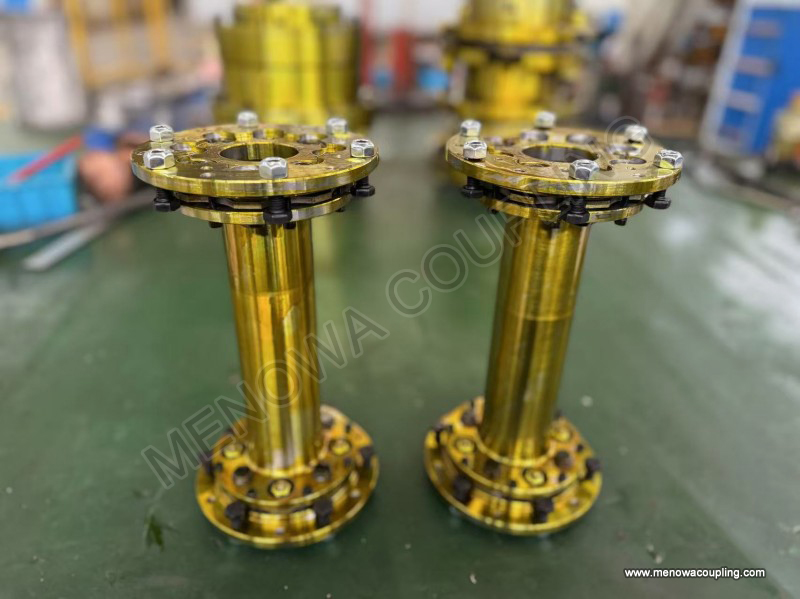
To fully comprehend the inherent advantages and extensive application adaptability of diaphragm coupling, it is essential to start with its basic working principle and explore how the coordinated deformation of metal diaphragms converts rotational power into stable transmitted torque while offsetting the various displacement deviations between the driving shaft and driven shaft. At its core operational level, the entire torque transmission process of diaphragm coupling follows a simple yet highly sophisticated mechanical logic that combines rigid force transmission and flexible elastic deformation in perfect balance. When the driving end equipment starts to operate and generate rotational power, the torque output by the driving shaft is first transmitted to the two hub components of the diaphragm coupling that are tightly fitted and fixed with the shaft ends. These hub parts, manufactured from high-strength alloy metal materials through precision machining processes, maintain excellent structural rigidity and dimensional stability, ensuring that the initial torque input is transferred without loss or relative sliding to the diaphragm assembly connected between the two hubs. The diaphragm assembly, typically composed of multiple layers of ultra-thin high-strength stainless steel sheets stacked together and fixed by high-precision fasteners, serves as the only elastic force-bearing and deformation core component of the entire coupling structure. As torque acts on the diaphragm assembly, the rigid stress-bearing areas of the diaphragms bear the main torsional force to complete the basic transmission of rotational power, while the flexible transition areas of the diaphragms produce tiny, controllable elastic deformation under the action of torque and shaft displacement. This subtle elastic deformation does not affect the overall efficiency of torque transmission but plays a decisive role in absorbing and compensating for the three main types of shaft misalignment that are unavoidable in actual mechanical installation and operation, including axial displacement, radial displacement, and angular displacement between the driving and driven shafts.
Axial misalignment generally arises from thermal expansion and contraction of mechanical equipment components during long-term continuous operation, as well as minor axial position deviations caused by equipment installation errors and foundation settlement over time. All mechanical rotating parts will generate a certain degree of thermal expansion after prolonged high-speed operation, leading to slight axial elongation of the shaft body, and if the connecting coupling cannot effectively adapt to this axial dimensional change, additional axial stress will accumulate inside the shaft and equipment bearings, resulting in accelerated bearing wear, increased shaft body fatigue load, and even subtle deformation of the shaft structure in severe cases. Radial misalignment mainly stems from installation positioning errors during equipment assembly, long-term mechanical vibration causing slight displacement of equipment fixing bases, and minor wear of equipment supporting parts after years of operation, leading to the central axes of the driving shaft and driven shaft not being on the same horizontal straight line. Angular misalignment refers to the slight angle deviation between the central axes of the two connected shafts, which is often caused by uneven stress on the equipment frame and subtle deformation of the mounting base. These three types of misalignment are objective and unavoidable in all mechanical transmission systems, and their long-term existence will produce additional alternating load and mechanical vibration on the shaft system and related supporting components, seriously affecting the operational stability and service life of the entire mechanical equipment. The structural design of diaphragm coupling precisely targets these practical operational pain points, using the excellent elastic deformation recovery performance of metal diaphragms to flexibly offset all three forms of misalignment in real time. Each tiny elastic deformation of the diaphragm can absorb the instantaneous displacement deviation between the shafts, and after the external load and displacement change disappear, the metal diaphragm can quickly return to its original initial state without permanent deformation or structural damage, ensuring that the coupling maintains stable transmission performance and consistent compensation capacity throughout the long service cycle.
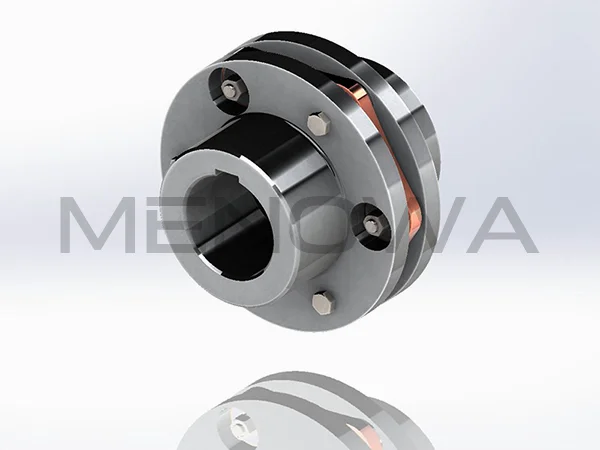
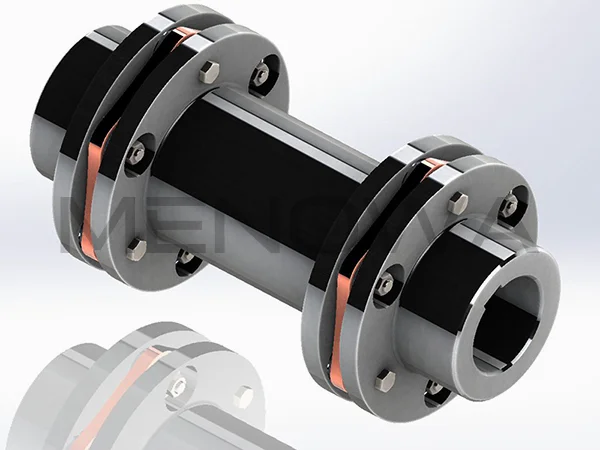
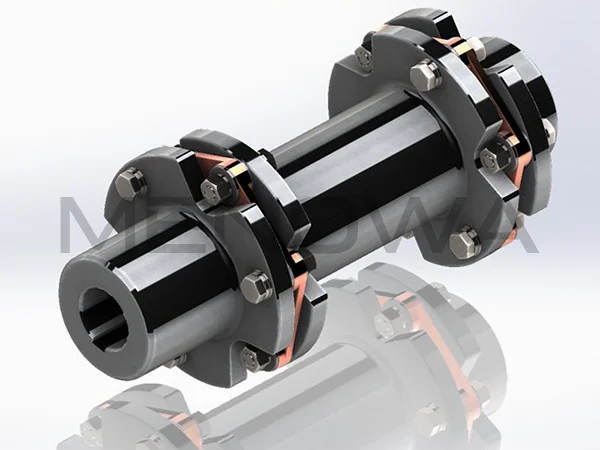
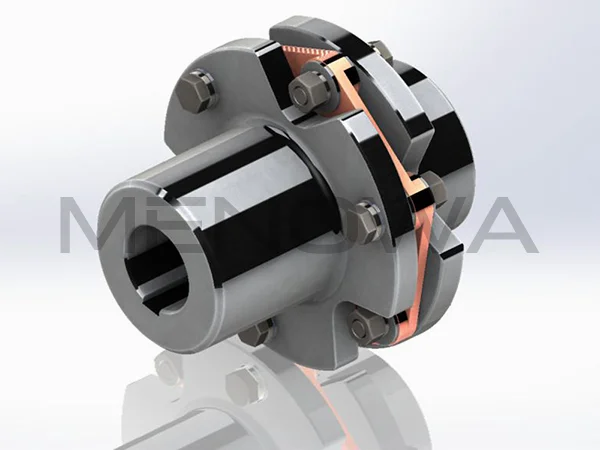
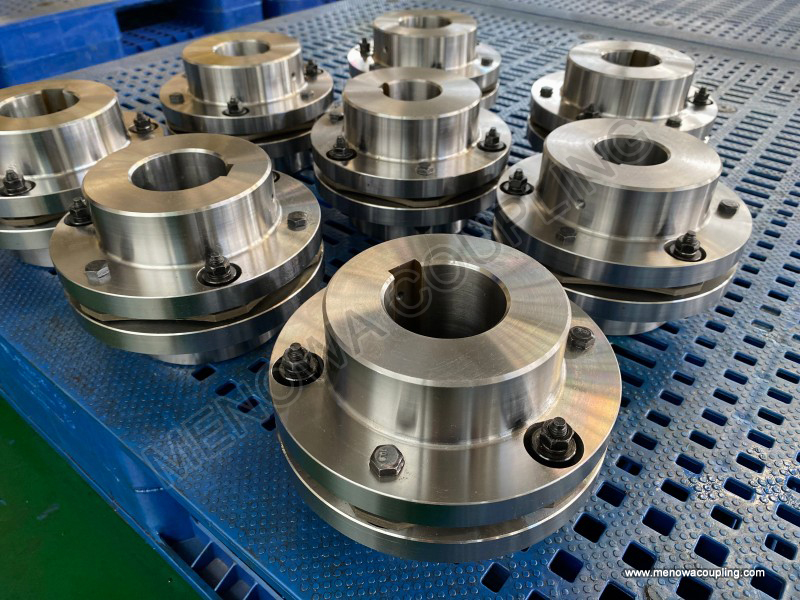
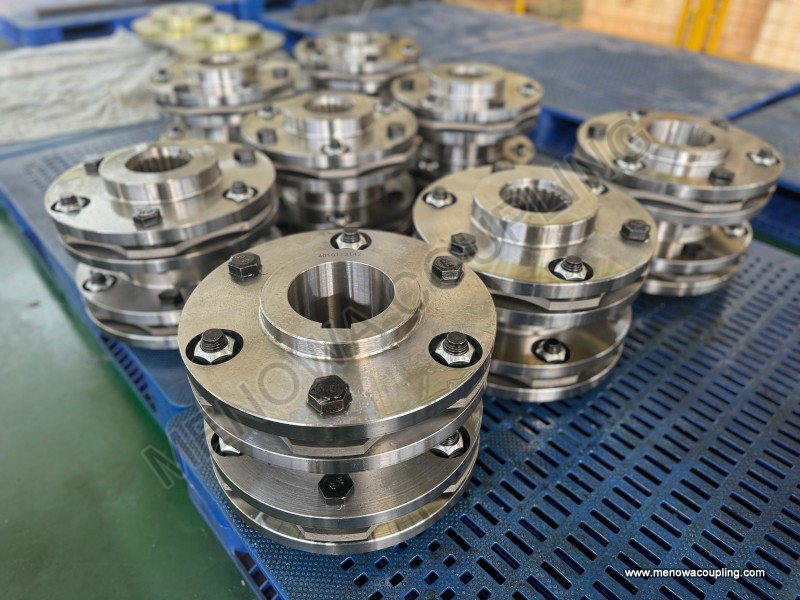
The basic structural composition of diaphragm coupling is concise and compact, without redundant auxiliary transmission parts or complex buffer mechanisms, and the overall structure can be divided into three core functional modules: two independent hub components installed on the driving shaft and driven shaft respectively, the middle diaphragm assembly responsible for elastic deformation and torque transmission, and high-strength fastening connecting parts used to tightly combine the hubs and diaphragm assembly into a unified whole. Each component undergoes strict precision machining and material selection processing, and the dimensional tolerance and assembly accuracy of all matching parts are controlled within a very small range, which lays a solid foundation for the high-precision and high-stability operation of the entire coupling. The hub components, as the rigid connection base between the coupling and the equipment shaft, are usually made of high-strength alloy steel with good hardness, toughness, and structural rigidity. The surface of the hub is processed through fine turning and grinding to ensure smooth and precise matching with the shaft end, and the internal keyway or clamping structure is machined with high precision to achieve a tight fit with the shaft body. This precise matching design can effectively prevent relative sliding and rotational deviation between the hub and the shaft during high-speed rotation and torque transmission, avoid transmission power loss caused by connection looseness, and eliminate abnormal vibration and impact noise generated by relative displacement between parts. The structural design of the hub fully considers the actual installation space and shaft connection requirements of different mechanical equipment, retaining a reasonable assembly gap and fixing stroke to facilitate on-site installation, disassembly, and later inspection and maintenance operations without requiring complex professional tools or complicated assembly processes.
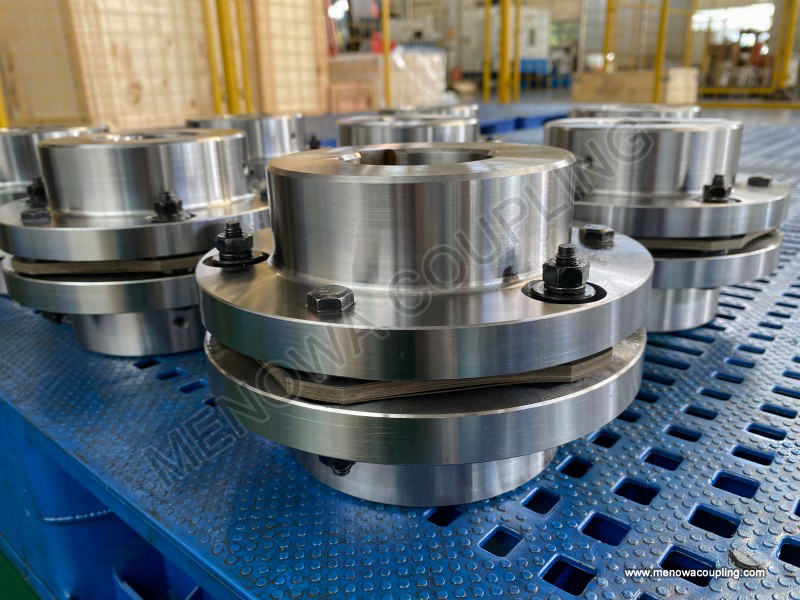
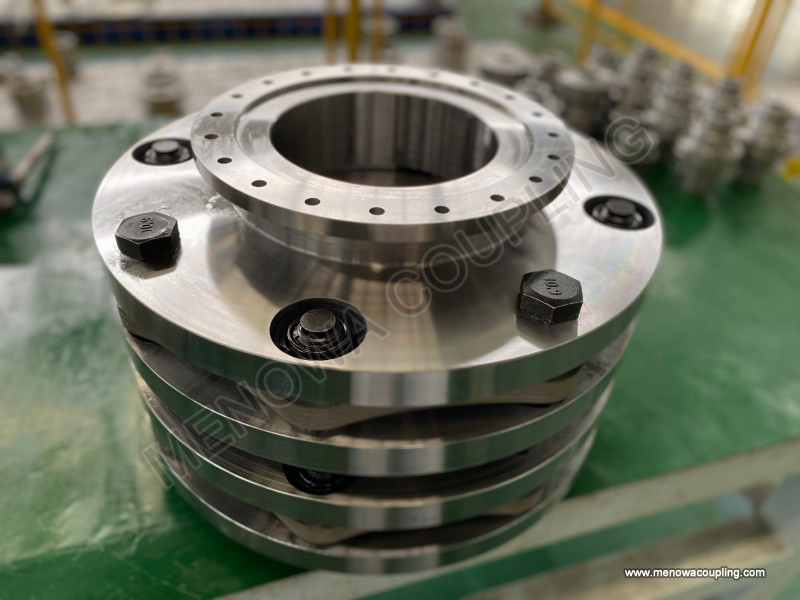
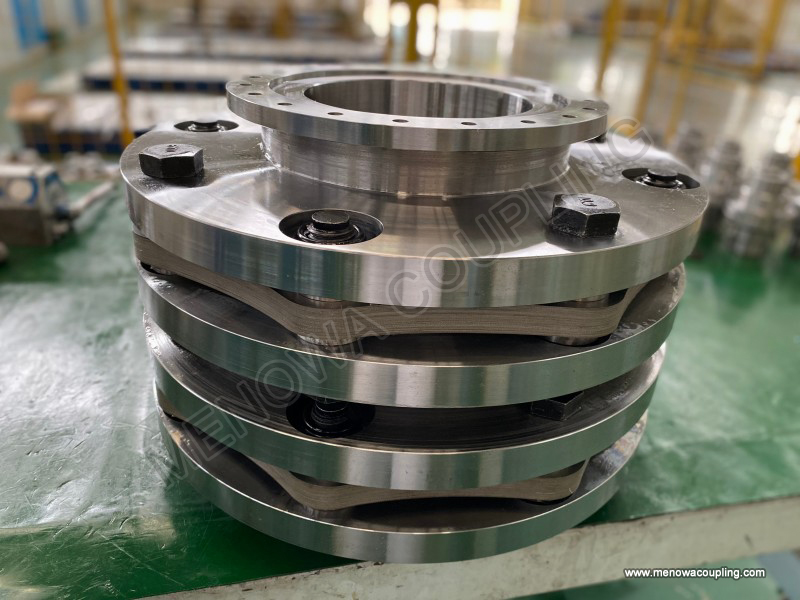
The diaphragm assembly, as the most critical functional core of the entire diaphragm coupling, determines the compensation performance, torque transmission capacity, fatigue resistance, and overall service life of the coupling. The diaphragms are mostly made of high-quality stainless steel materials with excellent fatigue resistance, elastic recovery performance, and corrosion resistance. This type of metal material can withstand millions of repeated elastic deformation cycles without permanent structural damage or material fatigue failure, and can maintain stable mechanical performance even in harsh working environments such as high temperature, low temperature, and humid industrial conditions. The shape of a single diaphragm has diverse design forms according to different transmission torque requirements and misalignment compensation needs, including polygonal integral structure, special-shaped hole distributed structure, and circular thin plate structure. Each structural shape is optimized through mechanical stress simulation calculation and repeated practical tests to ensure that the diaphragm can evenly bear torsional load during torque transmission, avoid local stress concentration that easily causes fatigue fracture, and maximize the elastic deformation space for misalignment compensation. In actual production and manufacturing, multiple single diaphragms are stacked in a certain order and fixed together by high-strength bolts to form a complete diaphragm group. The number of stacked diaphragms can be adjusted according to the actual torque demand of the mechanical system: more stacked diaphragms can provide greater torsional rigidity and higher torque transmission capacity, suitable for heavy-duty and high-torque transmission working conditions; fewer stacked diaphragms can obtain better flexible deformation performance and higher misalignment compensation sensitivity, suitable for precision micro-transmission and high-speed low-load operating scenarios.
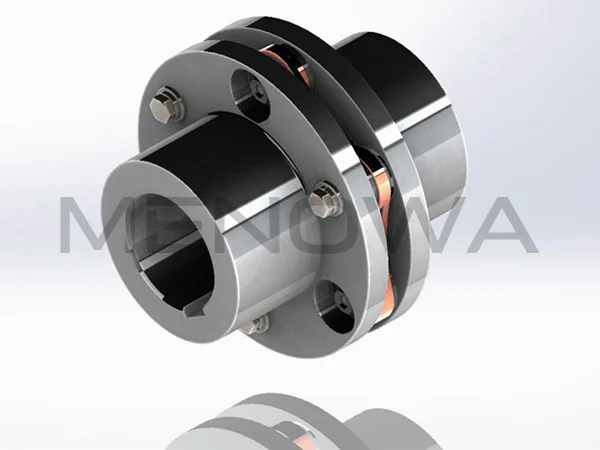
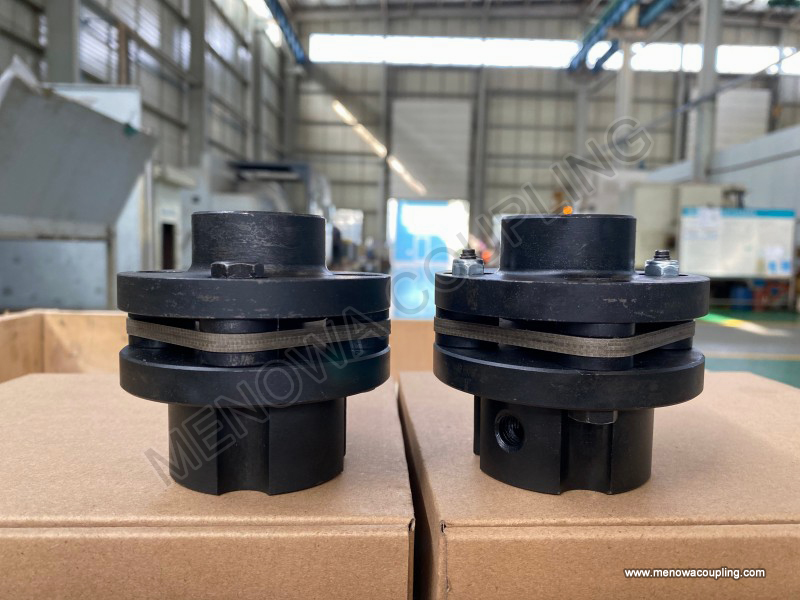
According to the different combination forms and structural layout of diaphragm assemblies, diaphragm couplings are mainly divided into two mainstream structural types in the industrial field: single diaphragm coupling and double diaphragm coupling, each with distinct performance characteristics and applicable working condition scenarios to meet the differentiated transmission needs of various mechanical equipment. Single diaphragm coupling adopts a single set of diaphragm assembly to connect the two hubs, with an extremely simple overall structure, small overall volume, light weight, and low rotational inertia. This structural design makes single diaphragm coupling very suitable for mechanical transmission systems with limited installation space, low misalignment deviation requirements, and medium and low torque transmission demands. In actual operation, the single diaphragm can rely on its own elastic deformation to compensate for basic axial and radial displacement deviations between shafts, and can maintain stable transmission performance under conventional steady-state operation conditions. However, due to the limitations of the single diaphragm structural form, its angular displacement compensation capacity is relatively limited, and it is not suitable for working conditions with large angular deviation between shafts or frequent dynamic load changes. Therefore, single diaphragm coupling is mostly applied in conventional general mechanical transmission equipment with stable operating load and small installation misalignment, achieving cost-effective and reliable basic power transmission functions.
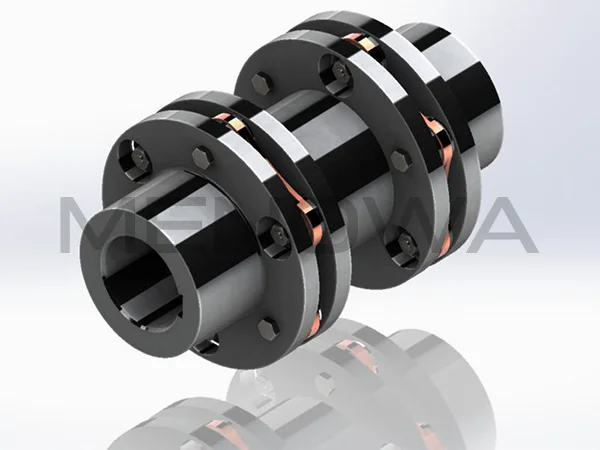
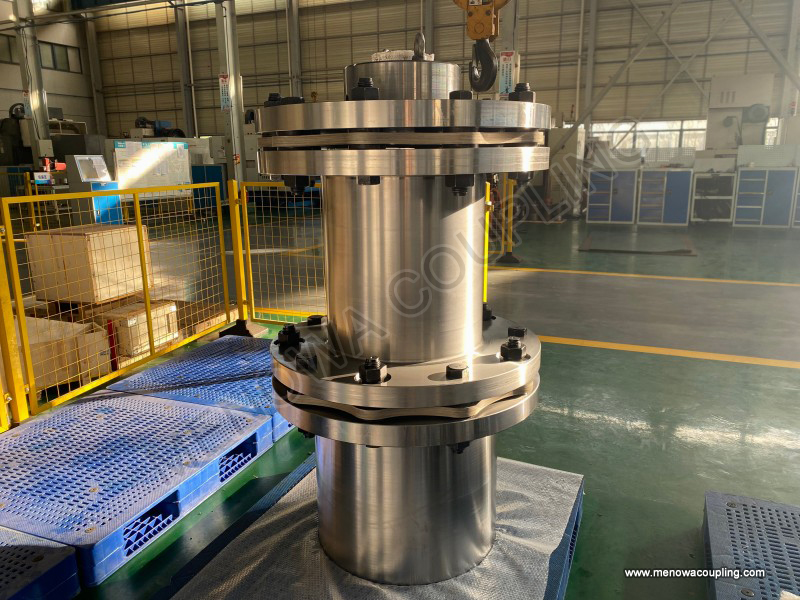
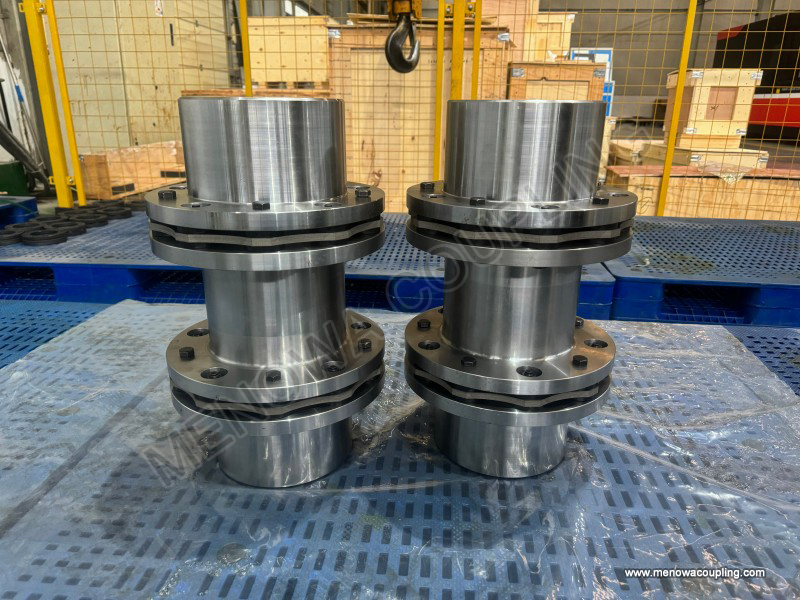
Double diaphragm coupling, by contrast, adopts two sets of independent diaphragm assemblies arranged in parallel and connected by intermediate connecting components, forming a dual elastic deformation structural system. The two sets of diaphragm assemblies can produce coordinated and synchronous elastic deformation during operation, which greatly improves the comprehensive misalignment compensation capacity of the coupling, especially the angular displacement compensation effect, which is significantly enhanced compared with single diaphragm structural products. The dual-diaphragm collaborative deformation design can evenly disperse the stress generated by torque transmission and shaft misalignment on the two sets of diaphragms, effectively reducing the single-point stress load of a single diaphragm, slowing down the material fatigue aging speed of the diaphragms, and further extending the overall service life of the coupling. In addition, double diaphragm coupling has higher torsional rigidity and better dynamic load resistance, can withstand instantaneous impact load and frequent start-stop torque changes in the mechanical system, and maintain stable transmission accuracy without obvious torsional deformation or rotational speed fluctuation. This superior comprehensive performance makes double diaphragm coupling widely used in high-speed operation, high-precision transmission, large misalignment compensation, and frequent variable load working conditions, becoming the preferred connecting component for core transmission parts of high-end industrial mechanical equipment.
One of the most prominent inherent advantages of diaphragm coupling compared with other types of flexible couplings is its non-lubricated and maintenance-free operating characteristic throughout the entire service cycle. Many traditional flexible couplings, such as gear couplings and slider couplings, rely on mutual friction and meshing between metal parts to transmit torque, and long-term friction operation will inevitably cause continuous wear of contact parts, increased friction resistance, and reduced transmission efficiency. To reduce wear and ensure normal operation, such couplings must be regularly filled with lubricating grease or lubricating oil, and regular lubricant replacement and sealing inspection are required in daily operation. This regular maintenance work not only increases the daily operation and maintenance cost of mechanical equipment but also requires equipment shutdown for maintenance operations, affecting the continuity and efficiency of industrial production. Moreover, in some special working environments such as high temperature, high dust, and clean production workshops, the use of lubricating oil is easy to cause dust accumulation and environmental pollution, and the lubricant is prone to deterioration and failure under high-temperature conditions, further increasing the maintenance frequency and hidden operational risks. Diaphragm coupling completely abandons the structural design of friction transmission and relative sliding between parts. All torque transmission and misalignment compensation are completed by the elastic deformation of all-metal components, and there is no mutual friction, sliding contact, or meshing wear between any parts during the entire operation process. This fundamental structural feature eliminates the need for any lubricating medium, does not require regular lubricant replacement and sealing maintenance, and can operate stably for a long time only relying on the inherent mechanical properties of metal materials, greatly reducing the daily maintenance workload and long-term operation cost of mechanical equipment.
In addition to the maintenance-free advantage, diaphragm coupling also has excellent vibration damping performance and low-noise operating characteristics, which plays an important role in improving the operational stability of mechanical systems and optimizing the working environment of industrial production workshops. In the process of mechanical power transmission, torque fluctuation generated by equipment start-stop, load change, and rotational speed adjustment will produce certain mechanical vibration and impact, which will be transmitted along the shaft system to the entire equipment and even the production workshop foundation, resulting in equipment operation noise, component vibration fatigue, and reduced processing accuracy of precision equipment. Traditional rigid couplings cannot absorb and buffer these vibration impacts at all, and will directly transmit all vibration and impact to the entire shaft system, aggravating equipment vibration and noise problems. Although some elastomer flexible couplings can absorb part of the vibration through the deformation of rubber components, rubber materials are prone to aging and hardening after long-term use, resulting in gradual attenuation of vibration damping effect, and easy to produce elastic hysteresis and deformation loss during high-speed operation, affecting transmission stability. The metal diaphragm assembly of diaphragm coupling can effectively absorb and buffer the instantaneous torque fluctuation and mechanical vibration generated in the transmission process through micro elastic deformation, convert the instantaneous impact energy into tiny elastic potential energy and release it slowly, avoid the resonance phenomenon of the shaft system, and reduce the vibration amplitude of the equipment during operation. At the same time, since there is no friction and collision between internal parts during operation, the coupling will not generate additional mechanical friction noise, ensuring that the entire mechanical transmission system operates in a low-vibration and low-noise state, which is particularly suitable for precision processing equipment and production occasions with high requirements for environmental noise control.
The transmission efficiency of diaphragm coupling has always maintained a high and stable level during long-term operation, which provides a reliable guarantee for the efficient energy utilization of mechanical equipment and the reduction of operational energy consumption. In the process of power transmission, any connecting coupling will produce certain power loss due to structural deformation, friction resistance, and connection clearance, and the size of transmission loss directly determines the energy utilization efficiency of the entire mechanical system. Traditional couplings with complex friction structures and large connection clearances often have relatively high power transmission loss, and the loss will gradually increase with the wear and aging of parts, resulting in increased energy consumption of equipment operation and higher production operation costs. The all-metal integrated structural design of diaphragm coupling minimizes the internal connection clearance, and the torque transmission process relies on rigid stress transmission and regular elastic deformation without friction resistance and sliding loss. The elastic deformation of the diaphragm is tiny and controllable, and the energy consumed by deformation is almost negligible and will not cause obvious power attenuation. This excellent structural design enables diaphragm coupling to maintain high transmission efficiency in various operating states, and the efficiency will not decrease significantly with the extension of service time or the change of operating load. Stable and efficient transmission performance not only reduces the invalid energy consumption of mechanical equipment operation but also helps the equipment maintain stable output power and rotational speed, improving the overall production efficiency and operational economy of industrial production lines.
In terms of environmental adaptability and working condition tolerance, diaphragm coupling shows strong comprehensive performance and can operate stably in various complex and harsh industrial working environments that are not suitable for elastomer couplings and traditional friction couplings. The all-metal manufacturing material has excellent high-temperature resistance, low-temperature resistance, corrosion resistance, and aging resistance, and will not experience performance degradation, structural softening, or brittle failure under extreme temperature conditions. In high-temperature working environments such as thermal power generation, metallurgical processing, and chemical production, rubber elastic components of ordinary flexible couplings are easy to soften, deform, and age rapidly, losing elastic compensation capacity and vibration damping effect, while metal diaphragms can maintain stable mechanical properties and structural strength under long-term high-temperature operation without performance attenuation. In low-temperature working environments such as cold storage equipment, polar engineering machinery, and low-temperature processing equipment, rubber materials are prone to hardening and brittleness, easy to crack and damage under slight impact and deformation, while alloy steel and stainless steel materials used in diaphragm coupling have good low-temperature toughness and will not produce brittle fracture or structural failure due to temperature reduction. In addition, in humid, dusty, and slightly corrosive industrial environments, the surface of diaphragm coupling can resist oxidation and corrosion without rusting and performance deterioration, and the compact structural design is not easy to accumulate dust and impurities, avoiding structural blockage and functional failure caused by dust accumulation, ensuring long-term reliable operation in various harsh working conditions.
The installation and alignment process of diaphragm coupling follows simple and standardized operation procedures, and the requirements for on-site installation and debugging personnel are relatively moderate, without the need for complex professional debugging equipment and complicated calibration steps. Before installation, it is only necessary to ensure that the coaxiality of the driving shaft and driven shaft is adjusted within the allowable deviation range of conventional mechanical installation, and there is no need for extremely high-precision strict alignment like precision rigid couplings. Even if there is a certain minor installation deviation during the initial installation, the elastic deformation of the diaphragm can automatically compensate for the deviation in subsequent operation, avoiding equipment failure caused by installation alignment errors. During the installation process, the two hubs only need to be respectively fixed on the driving shaft and driven shaft through fastening structures, and then the diaphragm assembly is connected and fixed with the hubs through high-strength bolts. The entire installation process is simple and efficient, and the disassembly and replacement operations in the later stage are also very convenient, which will not cause damage to the shaft body and matching parts of the equipment. After installation and commissioning, the coupling basically does not need regular inspection and debugging, and can operate automatically and stably for a long time. Only during the routine overall maintenance of the equipment, a simple visual inspection of the diaphragm assembly and fastening bolts is needed to check for obvious deformation and looseness, which greatly simplifies the daily equipment management work.
In the field of practical industrial application, diaphragm coupling has covered almost all medium and high-end mechanical transmission scenarios with high requirements for transmission stability, operational precision, and maintenance convenience, showing strong industry applicability and practical application value. In the field of precision mechanical processing and automated production equipment, such as CNC machine tools, robotic production lines, and precision testing instruments, the high-precision transmission and low-vibration characteristics of diaphragm coupling can ensure that the rotational speed and torque output of the equipment are stable without fluctuation, avoiding processing accuracy errors and product quality problems caused by transmission vibration and rotational speed deviation. In the field of energy power generation equipment, including wind power generation units, thermal power auxiliary transmission equipment, and new energy power transmission machinery, the non-maintenance and high-reliability performance of diaphragm coupling can adapt to long-term uninterrupted continuous operation requirements, reducing equipment shutdown maintenance time and improving the continuous power generation efficiency of power generation equipment. In the field of metallurgy, chemical industry, and building materials production machinery, the harsh working environment adaptability of diaphragm coupling enables it to operate stably in high-temperature, dusty, and corrosive working conditions, reducing the failure rate of transmission components and extending the service cycle of production equipment.
In the field of transportation supporting machinery and large engineering equipment, diaphragm coupling is used in the transmission system of large fans, water pumps, compressors, and engineering machinery power devices. Its high torque transmission capacity and impact load resistance can adapt to frequent start-stop and variable load operation conditions, ensuring the stable power output of engineering equipment and transportation supporting facilities. In the field of light industry, food processing, and pharmaceutical production equipment with high requirements for production environment cleanliness, the non-lubricated and pollution-free characteristics of diaphragm coupling avoid the environmental pollution problem caused by lubricating oil leakage, meeting the clean production standards of the industry and ensuring the safety and hygiene of production products. With the continuous upgrading and development of modern industrial machinery towards high speed, high precision, high efficiency, and low maintenance, the application scope of diaphragm coupling is still expanding, and it is gradually replacing traditional gear couplings, elastomer couplings, and other old-fashioned connecting components to become the mainstream choice for modern mechanical power transmission connection.
In the long-term service process, the service life and stable performance retention of diaphragm coupling are closely related to the reasonable type selection matching in the early stage and the standardized use management in the later stage. In the type selection design stage of mechanical equipment, it is necessary to scientifically select the structural type, diaphragm quantity, and material specification of diaphragm coupling according to the actual operating parameters of the mechanical system, including rated transmission torque, operating rotational speed, installation space size, shaft misalignment range, and actual working environment conditions. Reasonable type selection matching can ensure that the coupling always operates within the optimal load range, avoid long-term overload operation exceeding the bearing capacity of the diaphragm, and prevent fatigue damage and premature failure of the diaphragm assembly caused by overload and over-deformation. In the daily use process, although diaphragm coupling has excellent maintenance-free performance, it is still necessary to avoid long-term frequent overload impact and excessive man-made misalignment deviation caused by improper equipment operation. Excessively large shaft misalignment beyond the compensation range of the diaphragm will cause long-term excessive deformation of the diaphragm, accelerating material fatigue and shortening service life; frequent instantaneous overload impact load will also produce excessive alternating stress on the diaphragm, easily causing local stress concentration and fatigue fracture.
Looking at the overall development trend of modern mechanical transmission technology, with the continuous progress of material science, mechanical processing technology, and mechanical system optimization design, the structural performance of diaphragm coupling is also constantly optimized and upgraded, and its application advantages in the field of mechanical transmission will become more prominent. The continuous innovation of high-strength and high-fatigue-resistant metal materials further improves the deformation resistance and service life of the diaphragm assembly; the continuous optimization of structural simulation design and precision processing technology further reduces the internal stress of the coupling and improves transmission accuracy and operational stability; the continuous simplification of installation and matching structure further reduces the on-site installation and maintenance difficulty. As modern industrial production puts forward higher requirements for equipment operational efficiency, operational stability, energy conservation and consumption reduction, and low maintenance management, diaphragm coupling, with its all-metal flexible deformation working mechanism, non-lubricated maintenance-free characteristics, high-efficiency and low-vibration transmission performance, and strong harsh environment adaptability, will continue to play an irreplaceable core role in the field of mechanical power transmission. It not only provides a solid reliable connection guarantee for the stable operation of various mechanical equipment but also makes an important contribution to improving the overall operational efficiency of industrial production, reducing production and operation costs, and promoting the high-quality development of modern mechanical manufacturing industry.
https://www.menowacoupling.com/industrial-coupling/diaphram-coupling.html
 WeChat
 WhatsApp