Croix Shaft Coupling
Mechanical transmission systems form the foundational backbone of all industrial production and mechanical operation, serving as the critical medium that connects power output components and working execution components to realize the stable transfer of rotational force and kinetic energy. In the complex and diverse mechanical operation environment, the alignment state between driving shafts and driven shafts can hardly maintain an ideal collinear state all the time, affected by equipment installation deviation, structural thermal deformation during long-term operation, mechanical vibration displacement and structural layout limitations of different mechanical equipment. Various angular, radial and axial misalignment phenomena between shafts are inevitable in actual working conditions, which puts forward higher requirements for connecting components used for shaft connection and torque transmission. A reliable shaft connecting component not only needs to complete basic power transmission work efficiently and stably, but also needs to effectively adapt to various misalignment states between shafts, buffer mechanical vibration and impact load generated during operation, reduce mechanical friction loss between matching parts, and extend the overall service life of the entire transmission system and supporting mechanical equipment. Among numerous mechanical transmission connecting parts, croix shaft coupling has always occupied an indispensable core position in medium and heavy-duty mechanical transmission scenarios by virtue of its unique spatial linkage structural design, excellent angular compensation performance, stable load-bearing capacity and strong adaptability to complex working environments. This kind of coupling relies on ingenious mechanical structural coordination to break through the transmission limitations of traditional rigid connecting parts for collinear shaft operation, and can maintain continuous and stable torque and rotational motion transmission between two intersecting or misaligned shafts, showing outstanding practical value in various industrial manufacturing, engineering machinery, transportation operation and special mechanical equipment supporting fields.
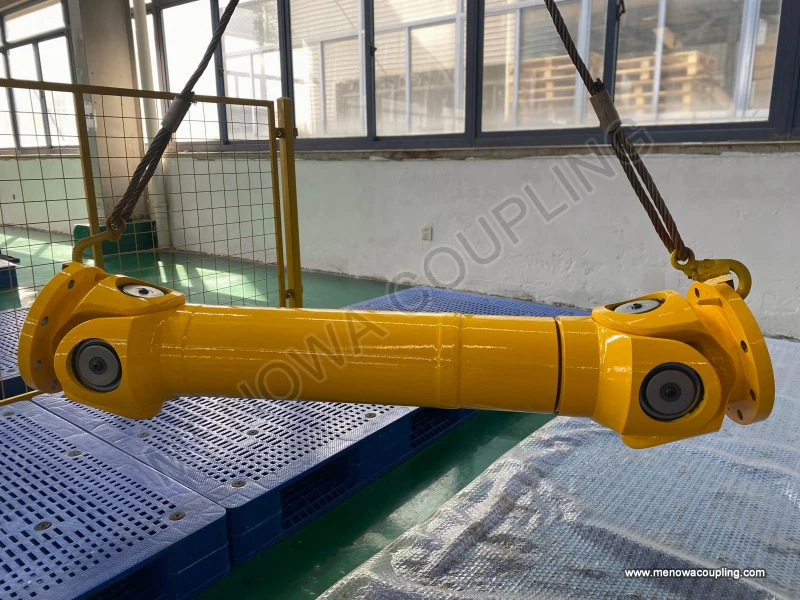
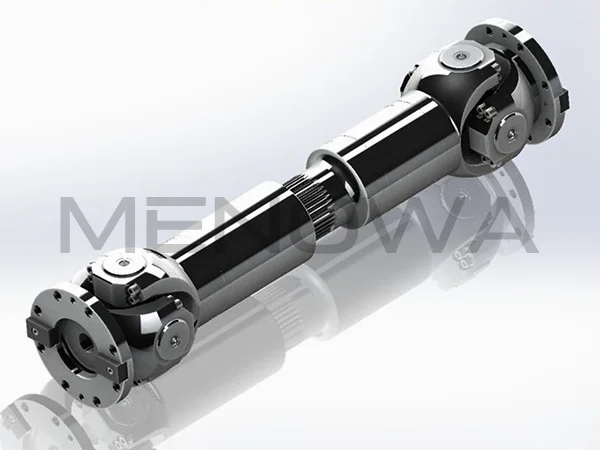
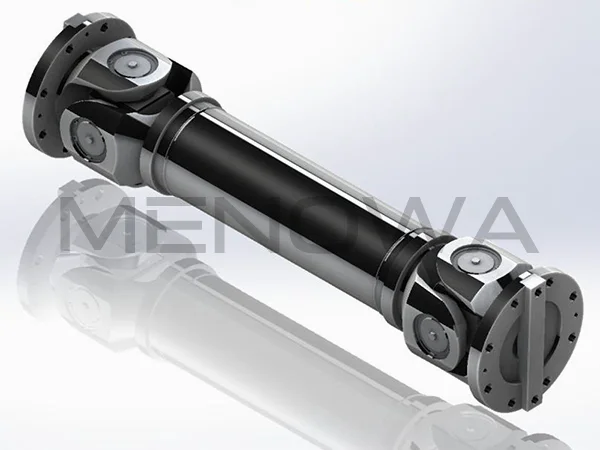
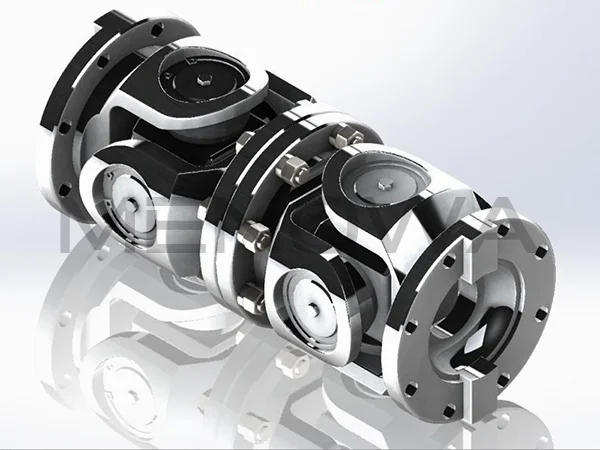
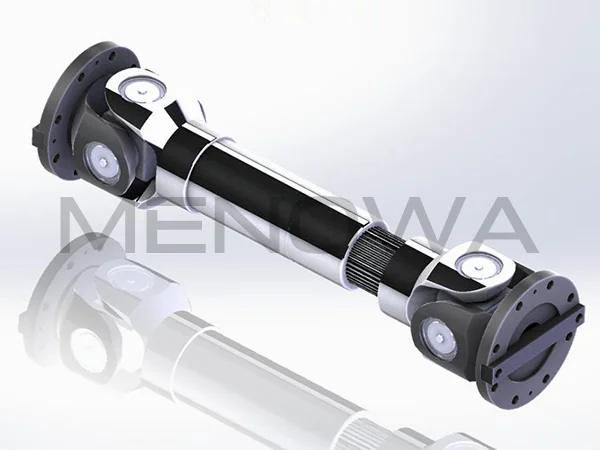
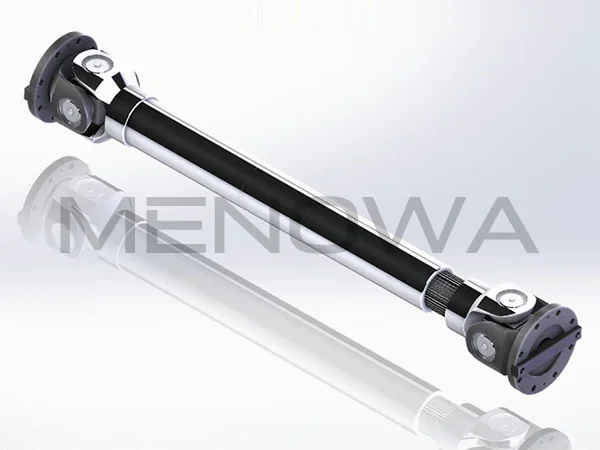
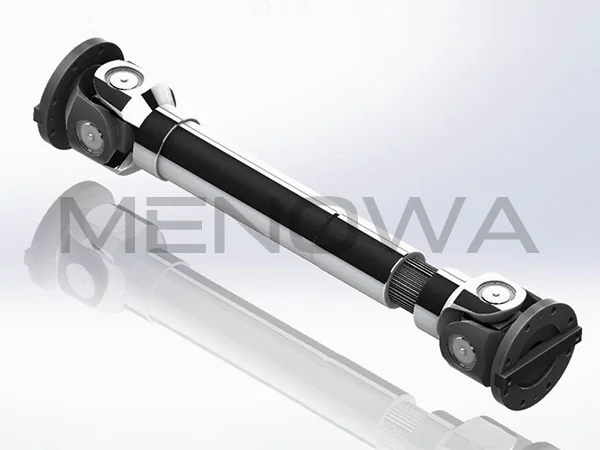
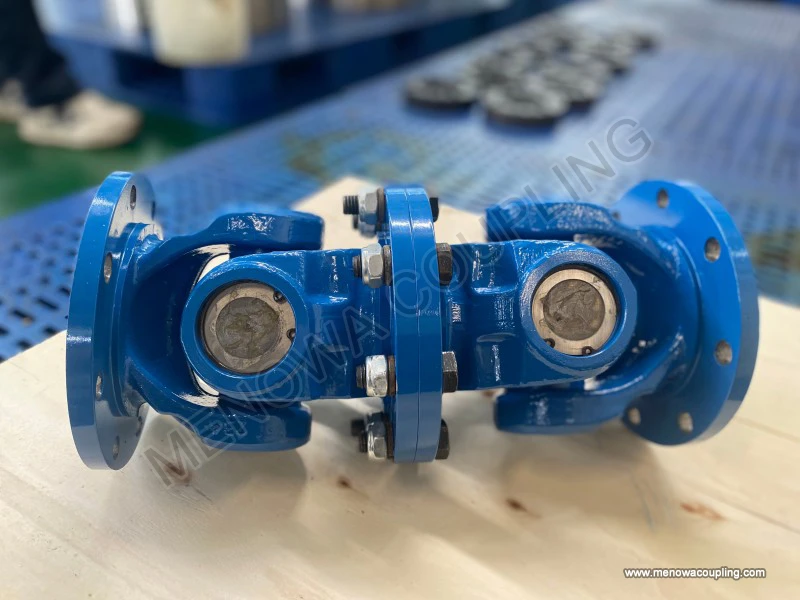
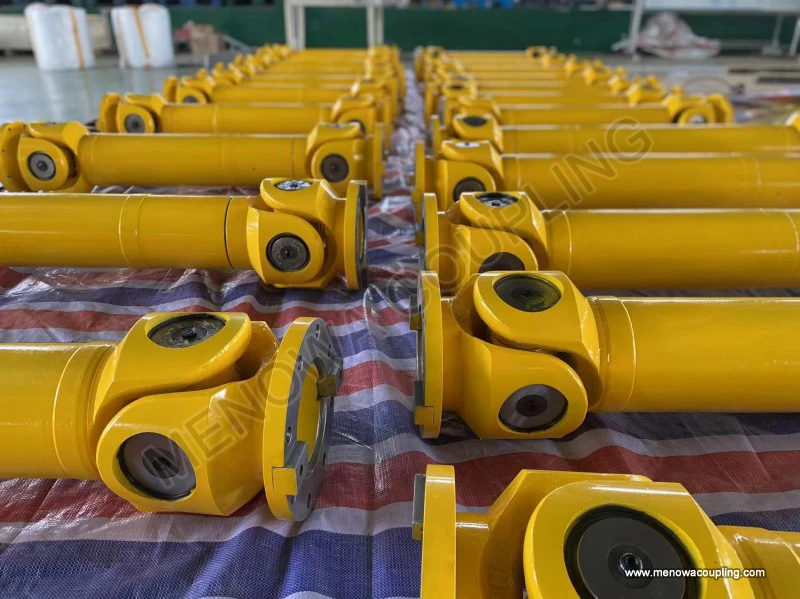
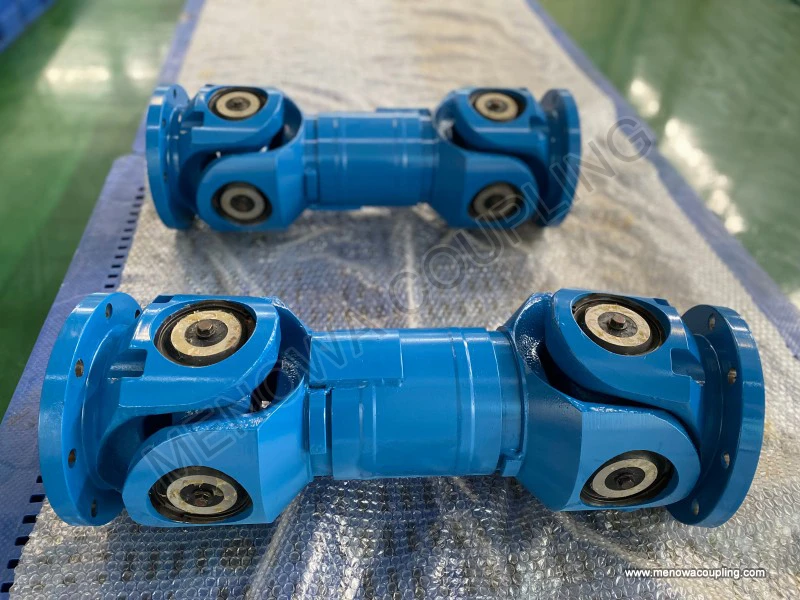
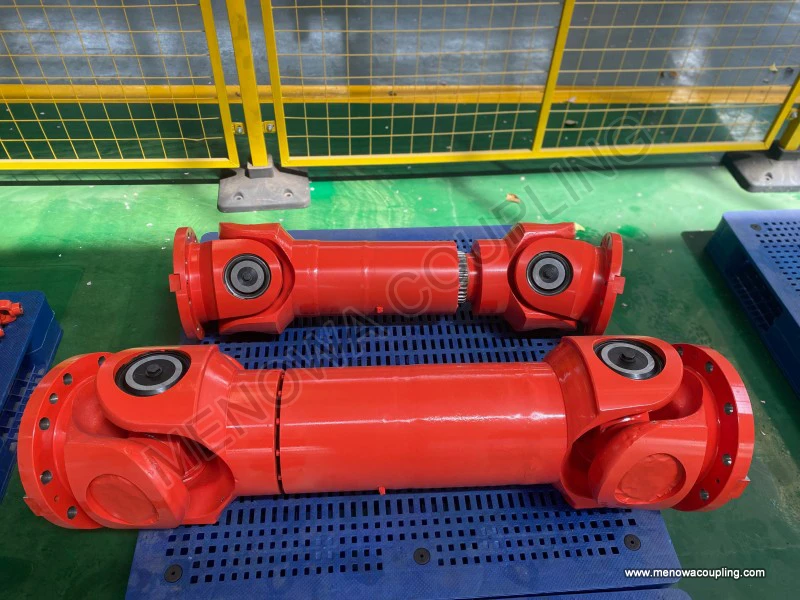
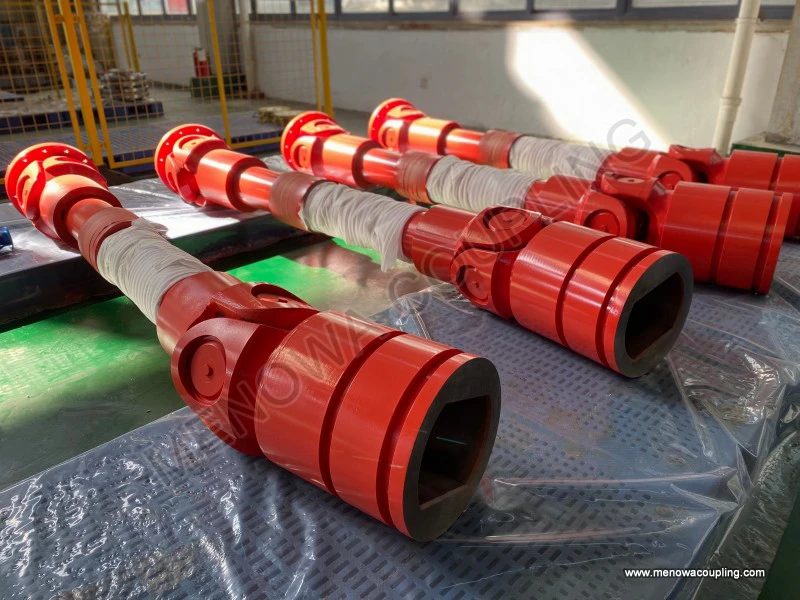
The overall structural design of croix shaft coupling follows the basic principles of spatial mechanical linkage and mechanical friction reduction, adopting a simple and robust integrated assembly structure without redundant complex auxiliary parts, which lays a solid foundation for its stable operation and convenient maintenance in harsh working conditions. The whole equipment is composed of several core basic components with clear division of labor and mutual coordination, and each component is designed and processed according to professional mechanical load-bearing standards, ensuring that each matching part can bear alternating mechanical stress and torsional load generated during long-term continuous rotation operation. The two yoke assemblies are the main connecting and fixing parts of the coupling, which are respectively installed and fixed on the end positions of the driving shaft and the driven shaft through reliable connection methods. The structural shape of the yoke assembly is designed in a fork-shaped structure, which can form a stable clamping and matching space for the central connecting core part, and can effectively transmit the torsional torque transmitted by the shaft body to the middle connecting structure without power loss. The dimensional precision of the yoke fork mouth and the matching surface directly affects the running stability of the entire coupling, and the surface hardness and structural toughness of the yoke body are professionally processed to resist shear force and torsional deformation generated during frequent forward and reverse rotation and variable load operation. The central core component of the entire coupling is the cross-shaped shaft structure, which is also the key part that determines the angular compensation and flexible transmission performance of the coupling. The cross-shaped shaft is arranged in a mutually orthogonal spatial structure, with four symmetrically distributed shaft necks at the ends, and each shaft neck is designed with a precise matching structure for installing bearing components. This central cross shaft acts as a bridge connecting the two yoke assemblies, realizing the flexible connection between the driving side yoke and the driven side yoke, and enabling the two yokes to produce relative angular displacement within a certain spatial range without affecting the basic transmission of rotational motion and torque.
Bearing components are essential auxiliary matching parts of croix shaft coupling, and most supporting structures adopt precision needle roller bearing configuration to adapt to the high-frequency rotation and flexible deflection operation state of the coupling. Each shaft neck of the central cross shaft is equipped with an independent bearing assembly, which is installed between the cross shaft neck and the inner wall of the yoke fork mouth matching hole. The core function of the bearing assembly is to isolate direct rigid friction between the metal contact surfaces of the cross shaft and the yoke, convert sliding friction into rolling friction during relative movement, greatly reduce friction resistance and mechanical wear between matching parts, and ensure that the cross shaft can flexibly rotate and swing with the yoke during operation. The internal structure of the bearing is compactly arranged, which can adapt to the limited installation space inside the coupling, and at the same time has good pressure resistance and impact resistance, and can withstand instantaneous impact load and alternating pressure generated during mechanical equipment start-up, shutdown and load sudden change. In order to ensure the long-term stable operation of the bearing and cross shaft matching structure, the coupling is also equipped with corresponding sealing and lubricating auxiliary structures. The sealing parts can effectively block external dust, moisture, particulate impurities and corrosive media from entering the internal matching gap of the coupling, avoid bearing abrasion, cross shaft corrosion and matching part jamming caused by impurity invasion, and maintain the good matching state of internal components for a long time. The lubricating structure is convenient for regular injection of professional lubricating grease, which can form a stable lubricating oil film on the friction surface of bearings and rotating matching parts, further reduce friction loss, reduce operating temperature rise caused by mechanical friction, and delay the wear aging speed of core components. All core components are assembled in a modular way, with compact overall structure and reasonable spatial layout, which does not occupy too much installation space of mechanical equipment, and is convenient for on-site installation, disassembly and subsequent daily maintenance and replacement of parts.
The internal working operation principle of croix shaft coupling is based on the spatial multi-linkage mechanical motion theory, realizing the flexible conversion and stable transmission of rotational motion between misaligned shafts through the mutual coordination and relative motion between the cross shaft and the two yoke assemblies. When the mechanical equipment starts to operate, the driving shaft drives the connected driving side yoke to perform continuous rotational motion around the shaft axis, and the rotational torque and motion are transmitted to the central cross shaft through the matching bearing structure. Driven by the driving side yoke, the cross shaft not only rotates synchronously with the overall rotation direction of the yoke, but also produces regular small-amplitude swinging and rotating motion relative to the two yokes under the action of shaft misalignment angle. This compound motion state of the cross shaft is the core reason why the coupling can adapt to the angular misalignment between the driving shaft and the driven shaft. The cross shaft continuously adjusts its spatial posture and relative rotation angle during the operation process, and steadily transmits the received rotational torque and motion to the driven side yoke, and then the driven side yoke drives the driven shaft to rotate synchronously, finally completing the whole process of power transmission from the driving end to the driven end. Different from rigid couplings that can only work normally under strict collinear shaft conditions, croix shaft coupling does not require absolute collinearity between the two connected shafts, and can allow a certain range of angular deviation between the shaft axes during normal operation.
In the actual operation process, even if the relative position of the two shafts changes slightly due to equipment vibration, thermal expansion and contraction or mechanical structural deformation, the flexible matching structure composed of the cross shaft and bearings can automatically adapt to such position changes through self-adjusting swinging and rotating motion, without generating additional mechanical stress and extrusion pressure between the shafts and the coupling. This automatic compensation function effectively avoids the additional bending stress and torsional shear stress on the shaft body and coupling caused by shaft misalignment, reduces the load of shaft support bearings and other auxiliary parts of the transmission system, and fundamentally reduces the risk of shaft body deformation, coupling cracking and equipment transmission failure caused by long-term stress accumulation. Although the rotational speed of the driving shaft remains stable in the continuous operation state, the coupling will produce slight periodic speed fluctuation in the process of single-circle rotation due to the spatial motion characteristics of the single croix structure. This slight speed change belongs to the normal mechanical motion characteristics of the structural design, and will not have a negative impact on the operation of most mechanical equipment with general speed stability requirements. For mechanical equipment with extremely high requirements for rotational speed uniformity and transmission stability, the combined installation mode of two croix shaft couplings matched with intermediate connecting shafts can be adopted. Through the complementary coordination of the two groups of croix structures, the periodic speed fluctuation generated by a single coupling can be mutually offset, realizing more constant and stable rotational motion and torque transmission, and meeting the high-precision operation requirements of precision mechanical transmission scenarios.
Croix shaft coupling has remarkable comprehensive performance advantages in practical application, which makes it widely used in various complex and harsh mechanical transmission working conditions, and its application advantages are mainly reflected in misalignment compensation, load-bearing performance, operation stability and environmental adaptability. In terms of angular compensation capability, this type of coupling can adapt to a relatively large range of angular misalignment between two shafts, far exceeding the compensation range of traditional rigid couplings and some elastic couplings. In the actual installation and use process, there is no need for extremely high-precision shaft alignment operation, which reduces the difficulty of equipment installation and debugging work, and allows for certain installation errors reserved during equipment assembly. Even in the working scenario where the shaft misalignment angle changes dynamically in real time with equipment operation, the coupling can still maintain stable transmission state without transmission interruption or mechanical jamming. In terms of load-bearing performance, the overall structural strength and torsional rigidity of the coupling are designed for medium and heavy-duty load transmission, and can bear large torsional torque and alternating load generated in industrial production and engineering mechanical operation. The core components are made of high-strength alloy materials through professional forging and heat treatment processing, with good structural toughness and fatigue resistance, and can adapt to long-term continuous operation and frequent start-stop working cycles without structural deformation and fatigue damage.
In terms of vibration and impact buffering, although croix shaft coupling is not equipped with elastic buffer parts like elastic couplings, its flexible movable matching structure can absorb and relieve part of the mechanical vibration and instantaneous impact load generated during equipment start-up, shutdown and load mutation. When the mechanical equipment is subjected to sudden load impact, the relative flexible motion between the cross shaft and the yoke can buffer the instantaneous impact force, avoid the direct rigid impact between the driving shaft and the driven shaft, protect the shaft body, motor, reducer and other core equipment parts from impact damage, and reduce the vibration noise generated during equipment operation. In terms of environmental adaptability, the compact and sealed structural design enables the coupling to work normally in various harsh working environments, including high-temperature operation environment generated by long-term mechanical friction, low-temperature outdoor working environment, dusty mining and construction sites, and humid and corrosive industrial production workshops. The surface of core components is treated with anti-corrosion and wear-resistant process, which can resist environmental corrosion and mechanical wear, and maintain stable working performance for a long time in harsh working conditions. In addition, the whole structure of the coupling is simple, the number of parts is small, and the disassembly and assembly process is convenient. Daily maintenance work only needs regular lubrication and sealing part inspection, without complex maintenance procedures and high maintenance costs, which is very suitable for industrial equipment that requires continuous and uninterrupted operation and reduces later operation and maintenance investment.
In the long-term operation and use process, the service life and working stability of croix shaft coupling are closely related to daily maintenance management, reasonable installation operation and scientific working condition matching, and standardized use and maintenance measures can effectively reduce component wear and failure probability and extend the continuous service cycle of the coupling. Installation operation is the primary link affecting the working state of the coupling, and standardized installation procedures must be followed in the actual assembly process. Before installation, all core components should be carefully inspected to check whether the cross shaft, bearings, yokes and sealing parts have obvious wear, deformation, cracks and damage, and whether the dimensional matching precision of each matching surface meets the assembly requirements. The sundries, rust and oil stains on the matching surface of the shaft end and the coupling connecting parts need to be thoroughly cleaned to ensure that the assembly matching surface is clean and flat, avoiding assembly deviation and poor contact caused by sundries, which affects the transmission stability. During the installation process, the coaxiality and installation position of the driving shaft and the driven shaft should be adjusted reasonably within the allowable misalignment range of the coupling, and excessive angular misalignment and radial displacement should not be pursued blindly, so as to avoid excessive additional friction and stress on the coupling components and accelerate the wear and aging of parts. After the assembly is completed, the connecting fasteners should be locked and fixed firmly to prevent the fasteners from loosening and falling off due to long-term mechanical vibration, which leads to the separation of coupling parts and transmission failure.
Daily lubrication maintenance is the key work to ensure the flexible operation and wear resistance of croix shaft coupling. The bearing and cross shaft matching parts inside the coupling rely on lubricating grease to reduce friction and heat dissipation, and long-term lack of lubrication will lead to dry friction between metal parts, resulting in rapid wear of bearings and cross shaft, increased operating temperature, and even jamming and shaft holding in serious cases. According to different working intensity and operating environment, regular lubricating grease injection should be carried out for the coupling. For equipment working under high-load and high-frequency operation conditions, the lubrication cycle should be appropriately shortened, and the lubricating grease suitable for the working temperature and load characteristics should be selected to ensure that a stable lubricating oil film is formed inside the matching gap. At the same time, the sealing performance of the coupling sealing parts should be checked regularly. If aging, deformation, damage and oil leakage of the sealing parts are found, they should be replaced in a timely manner to prevent external impurities from entering the interior and internal lubricating grease from leaking out, maintaining the good internal lubrication environment of the coupling. Regular operational inspection work is also essential. During the daily operation of the equipment, the running state of the coupling should be observed frequently. If abnormal vibration, abnormal noise, temperature rise and torque transmission instability are found, the equipment should be shut down for inspection in a timely manner to find out potential faults such as component wear, fastener loosening and lubrication failure, and timely maintenance and adjustment should be carried out to avoid small faults evolving into large equipment failures affecting normal production and operation.
Timely fault judgment and component replacement are important links to maintain the long-term stable operation of the transmission system. After the coupling has been used for a long time, the core wearing parts such as bearings will inevitably produce normal wear and aging, and when the wear degree reaches a certain limit, the matching precision and working performance of the coupling will be affected, and the worn parts need to be replaced in a timely manner. In the process of fault judgment, the abnormal operation state of the coupling can be used as the basis for judgment. For example, the obvious increase of vibration and noise during operation indicates that the internal bearing wear is serious or the lubrication state is poor; the unstable torque transmission and occasional jamming during operation indicate that the cross shaft is deformed or the matching gap is too large; oil leakage at the sealing position indicates that the sealing parts are aging and invalid. In the process of replacing parts, it is necessary to select matching parts with qualified dimensional precision and material performance, ensure that the new parts are consistent with the original equipment matching specifications, and carry out standardized assembly and debugging after replacement to ensure that the coupling returns to the optimal working state. Scientific maintenance and fault handling can not only reduce the failure rate of croix shaft coupling, but also effectively protect the entire mechanical transmission system, reduce equipment downtime and maintenance costs, and improve the overall operation efficiency of mechanical equipment.
The selection of croix shaft coupling in practical engineering application needs to be based on the actual working conditions and transmission parameters of mechanical equipment, and comprehensive consideration should be given to transmission torque magnitude, operating rotational speed, shaft misalignment degree, working environment characteristics and equipment operation cycle requirements, so as to ensure that the selected coupling matches the actual use scenario and achieves the best transmission effect and service life. First of all, the rated transmission torque of the coupling should be matched according to the maximum torsional torque generated during the operation of the mechanical equipment. It is necessary to reserve a certain torque bearing margin on the basis of the actual working torque, avoiding long-term overload operation of the coupling, which leads to accelerated component wear and structural damage. For mechanical equipment with frequent start-stop and variable load operation, the torque margin should be appropriately increased to adapt to the instantaneous impact torque generated during load change. Secondly, the operating rotational speed of the equipment should be considered. Although the structural design of croix shaft coupling can adapt to a wide range of rotational speed operation, different structural specifications of couplings have different applicable rotational speed ranges. Matching should be carried out according to the rated working rotational speed of the equipment to avoid excessive rotational speed causing excessive centrifugal force and vibration of the coupling, affecting operation stability.
The degree of shaft misalignment generated during equipment installation and operation is also a key selection factor. According to the actual angular deviation and radial displacement between the driving shaft and the driven shaft, the coupling with corresponding compensation range specifications should be selected to ensure that the coupling can fully adapt to the misalignment state and give full play to its automatic compensation performance. For the working scenario where the misalignment angle changes dynamically for a long time, the coupling structure with enhanced flexible matching performance should be preferentially selected to ensure the stability of long-term operation. In addition, the influence of working environment on the coupling should be fully considered. For high-temperature, low-temperature, humid, corrosive and dusty harsh working environments, couplings with anti-corrosion, high-temperature resistance and dustproof sealing performance should be selected, and the material and surface treatment process of core components should meet the requirements of the working environment to avoid performance attenuation and component damage caused by environmental factors. After completing the selection work according to the above parameters, the installation space and structural matching size of the equipment should be further verified to ensure that the selected coupling can be smoothly installed in the limited equipment space and matched with the shaft end structure, without structural interference and installation difficulties. Scientific and reasonable selection can make croix shaft coupling give full play to its structural advantages and transmission performance, meet the transmission needs of different mechanical equipment, and realize the long-term efficient and stable operation of the mechanical transmission system.
Croix shaft coupling has been widely applied and promoted in multiple industrial fields and mechanical equipment types due to its excellent comprehensive performance and strong working condition adaptability, covering industrial manufacturing, engineering machinery, mining and metallurgy, transportation and shipping, agricultural machinery and many other downstream industries. In the field of engineering machinery, various construction equipment such as excavators, loaders, bulldozers and road rollers often face complex and changeable working site conditions, with uneven ground and large vibration during equipment operation, resulting in frequent misalignment changes between power output shafts and walking or working mechanism shafts. Croix shaft coupling is used in the power transmission part of these engineering machinery, which can adapt to the angular displacement and vibration displacement generated during equipment walking and operation, stably transmit power, and ensure the normal operation of the walking system and working device of engineering machinery. In the metallurgy and mining industry, mining machinery, metallurgical rolling equipment and mineral processing equipment often work under heavy load, high dust and long-term continuous operation conditions, with high requirements for the load-bearing capacity and durability of transmission connecting parts. The heavy-duty croix shaft coupling is used in the transmission system of these equipment, which can bear large torsional load and impact load, adapt to harsh working environments, reduce equipment failure rate, and ensure the continuous and efficient operation of metallurgical and mineral production lines.
In the field of transportation and shipping, large transport vehicles, ship power propulsion systems and port handling machinery all need reliable shaft connecting components to complete power transmission. The power transmission process of transportation equipment is often accompanied by vibration impact and shaft position change, and croix shaft coupling can effectively adapt to these working characteristics, ensure the stable transmission of power in the vehicle and ship operation process, and improve the safety and stability of transportation operation. In the field of agricultural machinery and equipment, various farmland operation machinery such as tractors, harvesters and tillers work in complex farmland terrain with large environmental changes and poor working conditions. The coupling used for agricultural machinery transmission needs to have simple structure, convenient maintenance and strong adaptability, and croix shaft coupling fully meets these characteristics, providing reliable power transmission guarantee for farmland operation machinery. In addition, in paper making machinery, rubber processing equipment, chemical production equipment and general industrial mechanical transmission equipment, croix shaft coupling also plays an important role, providing stable and reliable shaft connection and power transmission support for various mechanical equipment.
With the continuous progress of modern mechanical manufacturing technology and the continuous upgrading of industrial production equipment, the design and processing technology of croix shaft coupling is also constantly optimized and improved, and the comprehensive performance of products is continuously improved to adapt to the higher standard transmission needs of emerging mechanical equipment. In the early stage of development, the structural design of croix shaft coupling was relatively simple, the processing precision of components was low, and the wear resistance and compensation performance were limited, which could only adapt to some simple low-load and low-speed transmission scenarios. With the development of forging technology, heat treatment technology and precision mechanical processing technology, the material performance of coupling core components has been significantly improved, the structural design has been more optimized and reasonable, the internal matching precision has been continuously improved, and the wear resistance, fatigue resistance and compensation performance of the coupling have been comprehensively upgraded. At the same time, with the continuous improvement of sealing technology and lubrication technology, the environmental adaptability and long-term operation stability of croix shaft coupling have been further enhanced, and the application scope has been expanded from traditional general mechanical transmission to high-load, high-precision and harsh working condition transmission scenarios.
In the future development trend, with the continuous advancement of industrial intelligent manufacturing and mechanical equipment automation, the mechanical transmission system is developing towards high efficiency, energy saving, high precision and long life, and croix shaft coupling will also develop in the direction of structural lightweight, performance high efficiency, maintenance cycle extension and intelligent condition monitoring. Through the application of new high-strength and wear-resistant materials, the structural weight of the coupling will be reduced on the premise of ensuring load-bearing performance, reducing the self-consumption of mechanical power and realizing energy-saving transmission. Through the further optimization of structural design and friction reduction technology, the mechanical friction loss of the coupling operation will be reduced, the transmission efficiency will be improved, and the service life of core components will be extended. With the integration of intelligent monitoring technology, real-time monitoring of the operating temperature, vibration state and wear degree of the coupling can be realized, potential faults can be predicted in advance, predictive maintenance can be carried out, and the intelligent operation and maintenance level of the mechanical transmission system can be improved. As an important basic connecting component in mechanical transmission systems, croix shaft coupling will always rely on its mature mechanical structure and excellent practical performance, continuously adapt to the development and upgrading of modern mechanical equipment, and provide solid and reliable support for the stable operation of various industrial mechanical transmission work.
Post Date: Apr 26, 2026
https://www.menowacoupling.com/coupling-supplier/croix-shaft-coupling.html
Products
Tags
Related Articles
Universal Coupling Price
Universal coupling manufacture stands as a sophisticated and precise mechanical production discipline focused on crafting flexible transmission components that serve as critical connecting parts in mechanical power systems. These specialized mechanical structures are designed to transmit rotational torque and motion bet…Parts of Universal Coupling
A universal coupling, widely recognized as a flexible mechanical transmission component, serves as a critical connection between two rotating shafts in diverse mechanical systems. Its core value lies in its ability to transmit continuous torque and rotational motion while accommodating angular misalignment, axial displa…Classification of Universal Coupling
Universal couplings are indispensable mechanical transmission components widely applied in modern mechanical systems, serving the core function of transmitting rotational torque and motion between two shafts with angular misalignment, parallel offset, or axial displacement. Unlike rigid couplings that require precise sh…Universal Coupling Manufacture
In the complex landscape of mechanical power transmission, universal couplings stand out as indispensable components that bridge the gap between misaligned shafts, enabling the seamless transfer of torque and rotational motion across a wide range of industrial and mechanical applications. Unlike rigid couplings that dem…Universal Coupling Production
Universal couplings stand as indispensable mechanical components in modern industrial transmission systems, serving as flexible connection units that enable stable torque and rotational motion transfer between misaligned rotating shafts. Unlike rigid connecting structures that demand precise coaxial alignment of paired …Specification of Universal Coupling
Universal couplings represent a fundamental category of mechanical transmission components engineered to transmit rotational torque and motion between two shafts that operate with intentional or unavoidable misalignment. Widely adopted in mechanical transmission systems across industrial machinery, transportation equipm…Coaxiality of Universal Coupling
Coaxiality stands as one of the most fundamental and influential precision indicators governing the operational performance of universal couplings, serving as the core benchmark for evaluating the alignment accuracy between driving and driven shafts in mechanical transmission systems. A universal coupling, as a flexible…Size Chart of Universal Coupling
A universal coupling, also known as a universal joint, is a critical mechanical component designed to transmit torque between two shafts that are not aligned perfectly, allowing for angular misalignment while maintaining efficient power transfer. The size chart of a universal coupling serves as a fundamental reference t…Universal Coupling Supplier
In the complex and interconnected system of modern mechanical transmission equipment, universal couplings stand out as one of the most fundamental and indispensable functional components, serving as a critical bridge for power and motion transmission between rotating shafts in diverse mechanical structures. Unlike rigid…Structure of Universal Coupling
A universal coupling, widely recognized as a core mechanical transmission component in modern machinery systems, serves as a flexible connection device designed to transmit rotational torque and motion between two shafts that present angular, parallel, or axial misalignment. Its unique structural configuration enables s…
 WeChat
 WhatsApp