Barrel Gear Coupling
In the entire mechanical power transmission industry, the stable connection between driving equipment and driven equipment has always been a core link that determines the overall operating efficiency, operational stability and long-term service cycle of mechanical systems. Various types of coupling components undertake the key task of transmitting torque, coordinating shaft position deviation and buffering mechanical vibration in mechanical transmission lines, and different working scenarios and load conditions put forward differentiated performance requirements for coupling structural design and functional attributes. Among numerous coupling types developed for heavy-duty transmission and complex working condition adaptation, barrel gear coupling stands out with its unique curved tooth profile design, reasonable internal force transmission mechanism and excellent comprehensive adaptability to various harsh operating environments. Unlike conventional straight-tooth gear couplings that adopt traditional linear tooth meshing structure, barrel gear coupling optimizes the external tooth profile of the half-coupling into a smooth barrel-shaped curved structure, and matches with properly designed internal tooth gaps and flexible meshing spaces, which fundamentally improves the comprehensive performance of the coupling in accommodating shaft misalignment, bearing alternating impact load and reducing meshing wear during long-term continuous operation. This kind of coupling has become an indispensable basic transmission component in heavy machinery manufacturing, industrial production line operation, engineering equipment configuration and other fields, and its structural characteristics, operating mechanism and practical application value are worthy of systematic and in-depth analysis and discussion to provide reliable theoretical reference and practical guidance for mechanical design selection, equipment operation scheduling and daily maintenance work of mechanical transmission systems.
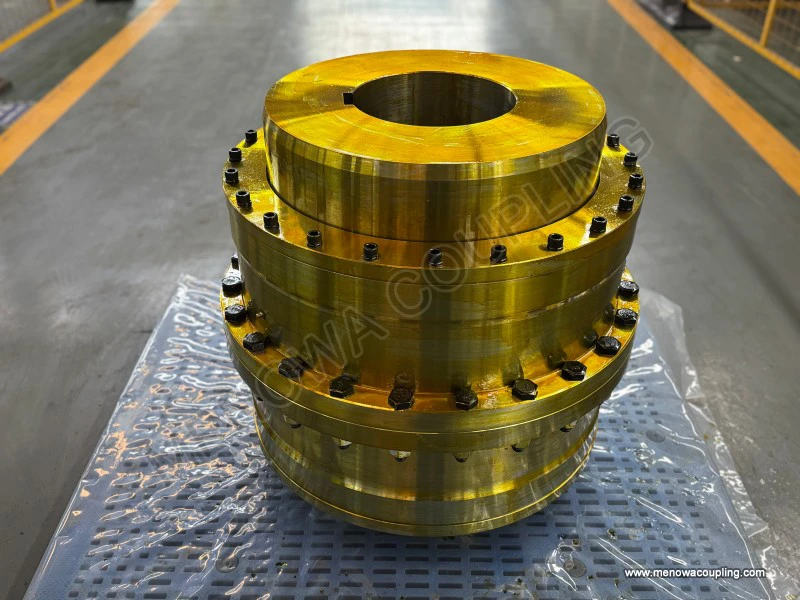
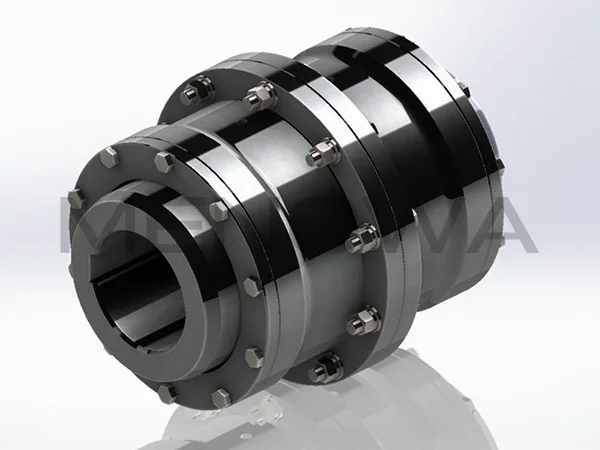
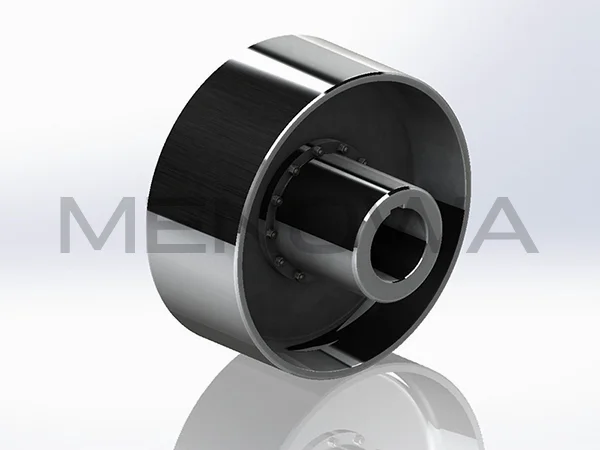
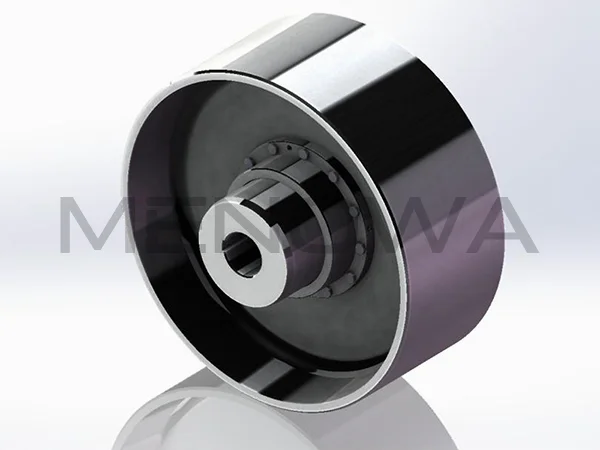
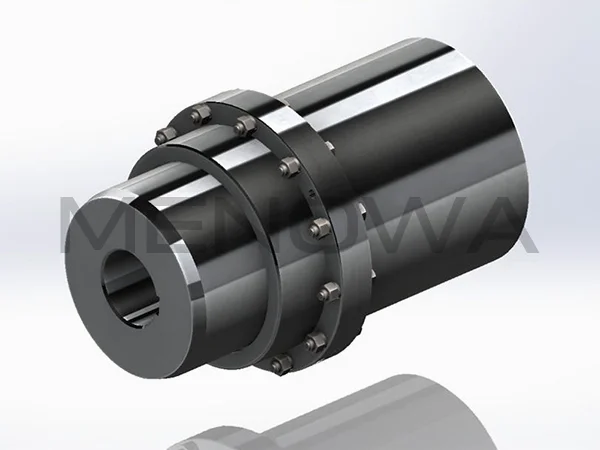
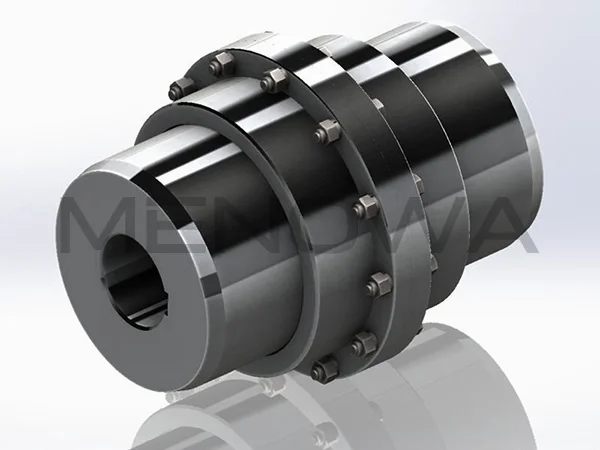
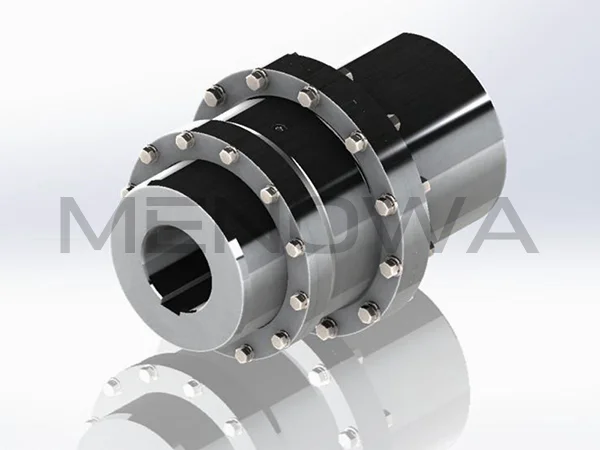
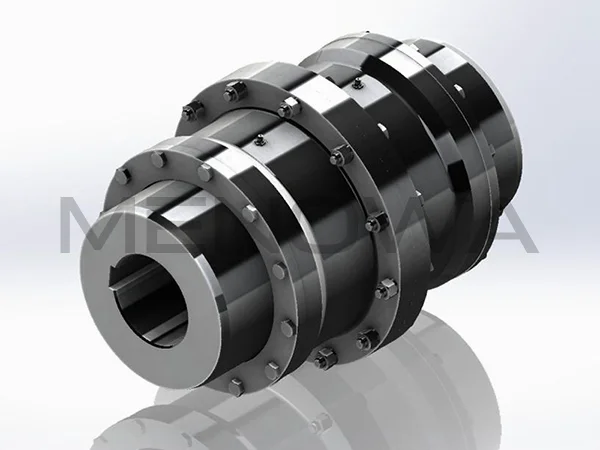
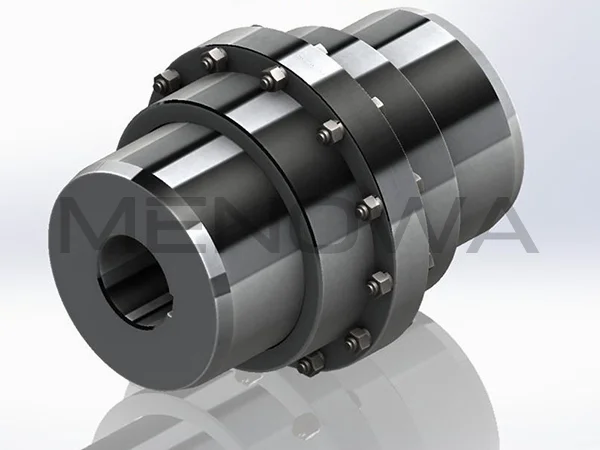
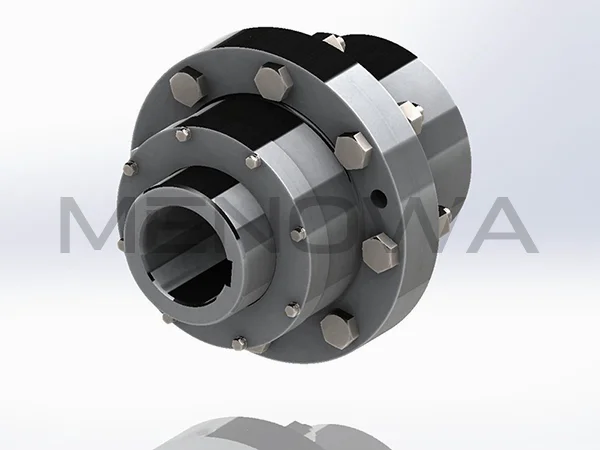
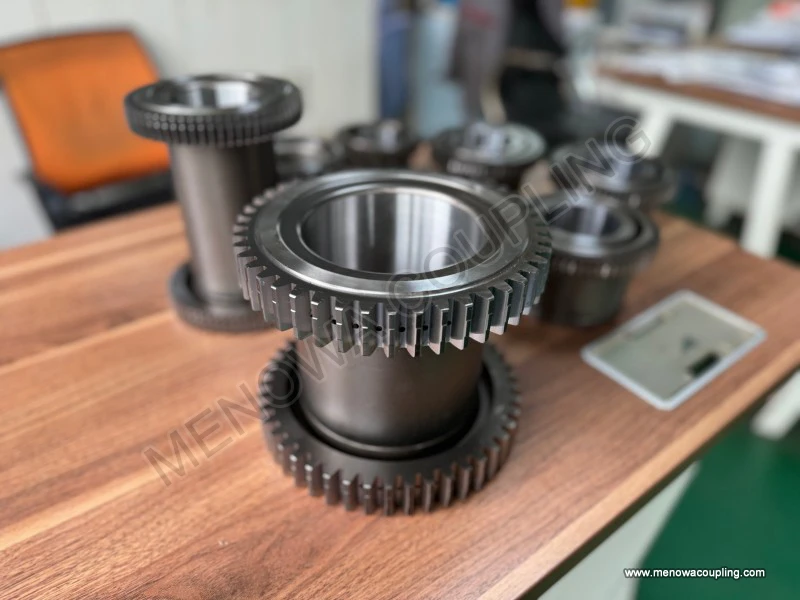
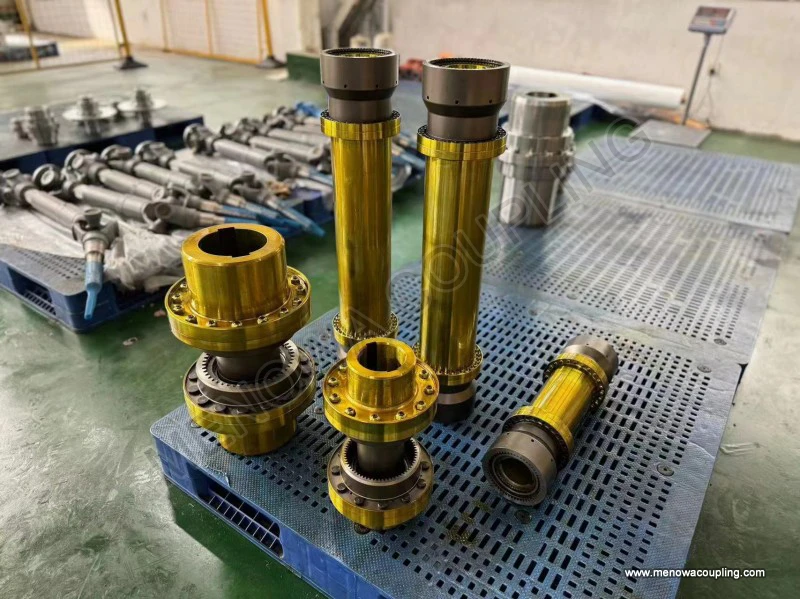
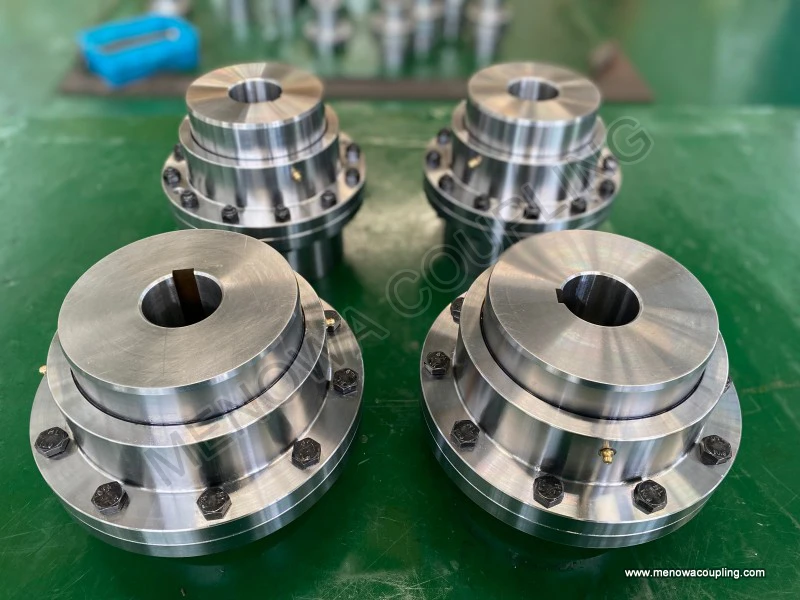
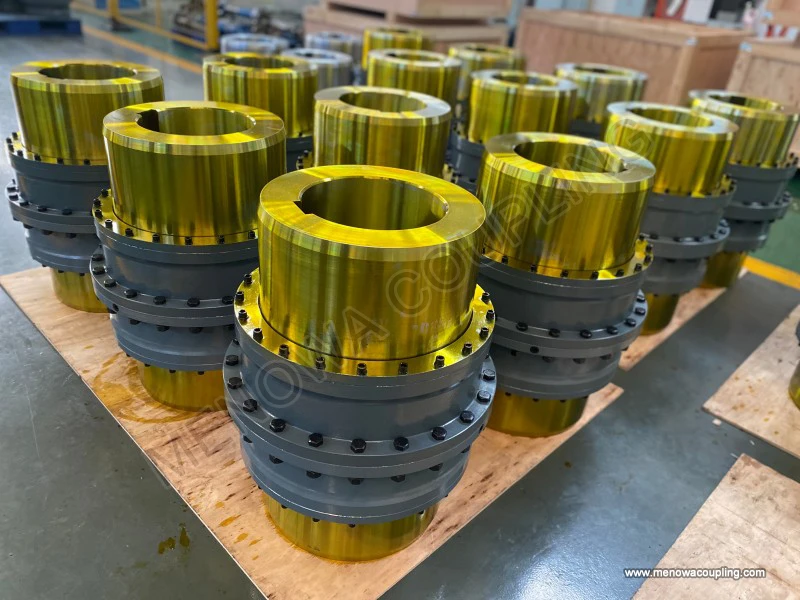
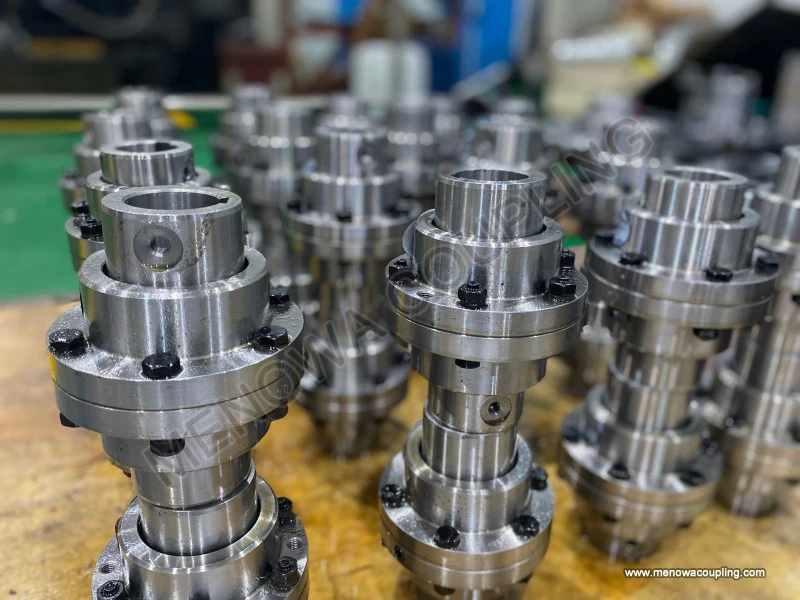
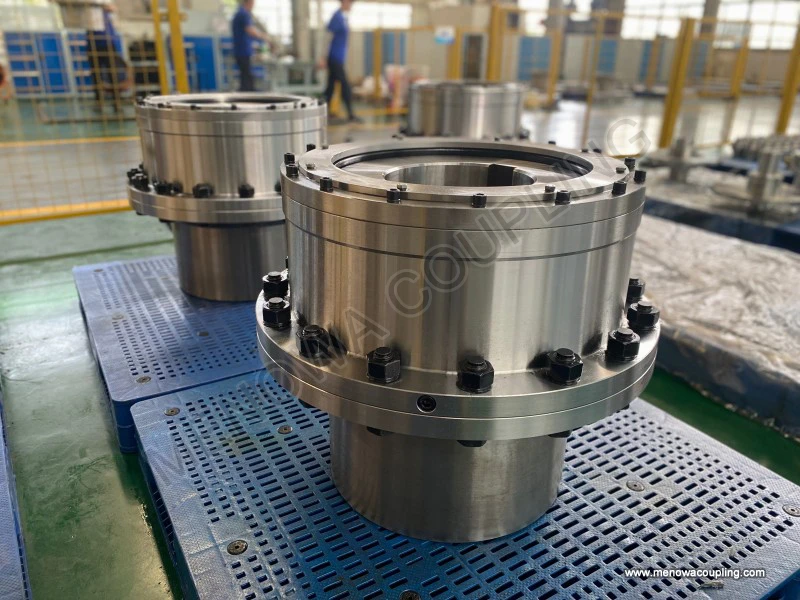
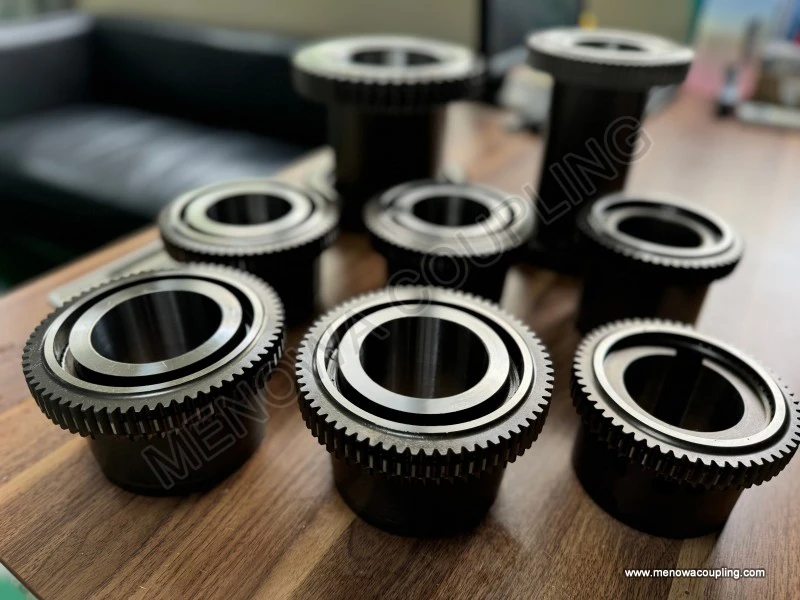
The basic structural composition of barrel gear coupling follows the core design logic of torque transmission through gear meshing, and at the same time carries out targeted structural optimization and detail upgrading on the basis of traditional gear coupling structure, forming a compact, robust and efficient overall assembly structure suitable for heavy-load working conditions. The whole equipment assembly is mainly composed of two independent half-coupling parts connected with the driving shaft and driven shaft respectively, an outer sleeve with complete internal tooth structure, a professional sealing protection system and auxiliary limit and fixing parts matched with the main components. Each component has clear functional division and precise dimensional matching relationship, and every structural detail is designed around the core goals of stable torque transmission, reliable misalignment compensation and effective operation protection. The two half-couplings are the core connecting parts responsible for docking with the power input shaft and power output shaft of the equipment respectively. The outer circle of each half-coupling is processed with integrally formed barrel-shaped external teeth through precision forging and finish machining processes. The spherical center of the curved tooth profile of these external teeth is always kept on the central axis of the coupling shaft, which is the most intuitive and core structural difference between barrel gear coupling and ordinary gear coupling with straight tooth design. The outer sleeve is the intermediate connecting component that connects the two half-couplings into a complete transmission whole. The inner wall of the outer sleeve is processed with standard internal tooth structures that mesh with the barrel-shaped external teeth of the half-couplings. The dimensional tolerance and tooth surface finish of the internal teeth are strictly controlled to ensure uniform contact and stable meshing with the external teeth in various operating states. The internal tooth clearance of barrel gear coupling is appropriately increased compared with that of conventional gear couplings, and this reasonable gap setting does not affect the basic torque transmission capacity of the coupling, but creates sufficient movable space for the meshing teeth when the connected shafts produce position deviation, effectively avoiding tooth jamming and rigid friction problems caused by misalignment during operation.
The sealing system of barrel gear coupling is an important guarantee to maintain the long-term stable operation of the internal meshing structure and extend the overall service life of the coupling, and its structural design and material selection directly determine the internal lubrication stability and external pollution isolation effect of the coupling. The sealing components are installed at the assembly gap between the two ends of the outer sleeve and the half-couplings, forming a fully closed internal accommodating space for the gear meshing area. The main sealing parts are made of wear-resistant, high-temperature resistant and aging-resistant elastic materials, which can maintain good sealing performance under the conditions of long-term rotational operation, slight shaft displacement and continuous temperature change of the equipment. The core functions of the sealing system are mainly reflected in two key aspects. On the one hand, it can effectively lock the lubricating grease or lubricating oil injected into the internal meshing cavity, prevent the loss of lubricating medium caused by centrifugal force during high-speed rotation of the coupling, and ensure that the tooth meshing surface can always form a stable and continuous lubricating oil film. On the other hand, it can effectively isolate external dust, sediment, moisture and other corrosive and abrasive impurities from entering the internal gear meshing area, avoid abrasive wear and chemical corrosion of the tooth surface caused by external pollutants, and prevent the failure of lubrication performance caused by the mixing of impurities into the lubricating medium. In addition to the main sealing rings, the coupling is also equipped with simple retaining rings and axial limit parts on both sides of the meshing teeth. These auxiliary parts can effectively limit the axial displacement range of the half-couplings and outer sleeve during operation, ensure that the gear meshing position is always kept within the optimal design range, avoid abnormal tooth surface wear caused by axial deviation, and further improve the overall operation stability of the coupling.
The internal torque transmission principle of barrel gear coupling is based on the precise meshing cooperation between barrel-shaped external teeth and internal teeth, and realizes the efficient and reliable transfer of power from the driving shaft to the driven shaft through the uniform interaction force between tooth surfaces. When the mechanical equipment starts to operate, the driving shaft drives the connected half-coupling to rotate synchronously, and the barrel-shaped external teeth on the half-coupling transmit rotational torque to the internal teeth of the outer sleeve through meshing contact, and then the outer sleeve drives the other half-coupling and the connected driven shaft to rotate synchronously, thus completing the whole process of power transmission of the mechanical system. The unique advantage of the barrel-shaped curved tooth profile in the torque transmission process is very prominent. Different from the linear contact stress formed by the meshing of straight teeth of conventional gear couplings, the meshing of barrel-shaped curved teeth forms a larger-area surface contact state. This contact mode can disperse the concentrated stress generated during torque transmission to a wider tooth surface area, effectively reduce the pressure per unit area of the tooth surface, avoid local stress concentration and local excessive wear of individual teeth, and greatly improve the bearing capacity and fatigue resistance of the coupling under long-term load operation. Especially in the working state of frequent starting, sudden load change and forward and reverse rotation switching, the curved tooth profile can buffer the instantaneous impact force generated by load fluctuation, avoid rigid collision between meshing teeth, and reduce the vibration and impact of the transmission system during power switching.
In the actual operation process of mechanical equipment, it is difficult to achieve absolute coaxial installation between the driving shaft and the driven shaft due to installation errors, equipment foundation settlement, mechanical component wear and thermal expansion and contraction of parts during operation. Various inevitable shaft misalignments including angular misalignment, radial misalignment and axial displacement will be generated between the two connected shafts. If the coupling cannot effectively compensate for these misalignments, additional bending stress, shear stress and alternating load will be generated on the shaft, bearings and related transmission parts, which will not only accelerate the wear and aging of mechanical parts, reduce the operation efficiency of the equipment, but also cause serious mechanical failure and equipment shutdown in severe cases. Barrel gear coupling is designed with excellent misalignment compensation performance for this common mechanical operation problem. The larger tooth meshing gap and flexible curved tooth meshing structure enable the coupling to adapt to a certain range of angular deflection and radial deviation between the two connected shafts without generating additional harmful stress. When the shaft produces misalignment deviation, the barrel-shaped external teeth can automatically adjust the meshing angle and contact position along the curved tooth profile, always maintain the stable meshing state between the external teeth and internal teeth, and will not affect the normal transmission of torque. This good misalignment adaptation effect protects the connected shafts, bearings and other key mechanical parts from excessive alternating stress, reduces the failure rate of auxiliary components of the equipment, and maintains the continuous and stable operation of the whole mechanical transmission system.
Compared with other common types of couplings used in mechanical transmission systems, barrel gear coupling has comprehensive and prominent comprehensive performance advantages in structural durability, load adaptability, operation stability and later maintenance cost control, and these advantages make it more suitable for heavy-duty and complex industrial working conditions. In terms of load-bearing performance, the surface contact meshing mode of barrel-shaped teeth enables the coupling to bear larger torque load and impact load than elastic couplings and ordinary straight-tooth gear couplings of the same specification. It can stably cope with the mechanical load generated by heavy-duty starting, intermittent operation and sudden load increase, and will not produce tooth surface deformation, meshing failure and power transmission interruption due to instantaneous load impact. In terms of wear resistance and service life, the tooth surface of the coupling is processed by high-precision finishing and surface hardening treatment processes, with high surface hardness and good wear resistance. Combined with the stable lubrication protection formed by the sealing system, the wear degree of the meshing tooth surface is very small during long-term continuous operation, and the service cycle of the coupling assembly is effectively prolonged. In terms of vibration and noise control, the flexible meshing and buffer performance of the curved tooth profile can effectively absorb the mechanical vibration generated during equipment operation, reduce the meshing collision noise between gears, and make the whole transmission system run more smoothly and quietly, which also helps to improve the overall working environment of the production workshop and reduce the vibration fatigue loss of mechanical equipment.
In terms of structural design and later maintenance convenience, barrel gear coupling adopts a simplified and robust overall structural layout, with fewer internal movable parts and compact assembly structure. This structural design not only improves the overall structural rigidity and impact resistance of the coupling, but also greatly reduces the difficulty of daily maintenance and later overhaul work. Unlike some complex couplings that require professional disassembly tools and complicated disassembly steps for maintenance, the daily maintenance work of barrel gear coupling is mainly concentrated on regular inspection of sealing performance and timely replenishment of lubricating medium. The disassembly and assembly process of the coupling is simple and convenient, and the replacement of worn parts can be completed in a short time without long-term shutdown of the production line, which effectively reduces the maintenance time cost and production loss caused by equipment shutdown. In addition, the main components of the coupling are made of high-strength alloy steel materials with good pressure resistance, wear resistance and corrosion resistance, which can maintain stable working performance in high temperature, low temperature, dust and humid working environments, and will not have performance attenuation and structural failure due to the change of external working environment. This excellent environmental adaptability enables barrel gear coupling to be applied to various harsh industrial production scenarios that are not suitable for ordinary precision couplings.
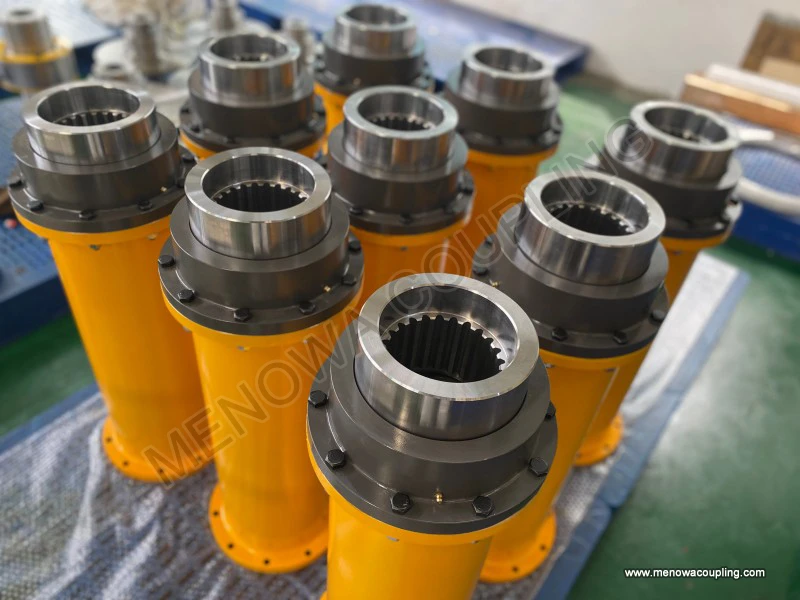
Barrel gear coupling has a wide range of practical application scenarios, covering multiple industrial fields such as heavy machinery manufacturing, engineering construction equipment, material handling and conveying equipment, and industrial production line transmission equipment, and it plays an irreplaceable core role in various heavy-load and long-term continuous operation mechanical systems. In the field of hoisting and handling machinery, barrel gear coupling is often used for the connection transmission between the gearbox output shaft and the cable drum shaft of cranes, hoists and winch equipment. Hoisting machinery needs to bear heavy weight load, frequent starting and braking, and forward and reverse rotation switching during operation, and the shaft is prone to misalignment deviation due to long-term heavy-load operation and equipment vibration. The good load-bearing capacity and misalignment compensation performance of barrel gear coupling can fully meet the operation needs of hoisting equipment, ensure the stable transmission of power during hoisting and handling operations, and avoid equipment failure and safety accidents caused by transmission system failure. In the field of engineering construction machinery, this kind of coupling is applied to the power transmission connection of mixing equipment, crushing equipment and rolling engineering machinery. These engineering equipments often work in harsh working environments with large dust and strong vibration, and the load during operation is unstable with frequent impact fluctuations. The wear resistance, sealing performance and impact resistance of barrel gear coupling can adapt to the harsh working conditions, maintain the long-term stable operation of the transmission system of engineering machinery, and reduce the frequency of equipment maintenance and failure shutdown.
In the field of industrial production and material conveying, barrel gear coupling is widely used in the power connection of large conveyor lines, rotating machinery and production line driving equipment. Industrial production lines need long-term uninterrupted continuous operation, and the stability of the transmission system directly affects the production efficiency and production progress of the whole factory. The stable operation performance and long service life of barrel gear coupling ensure the continuous and reliable operation of the production line transmission equipment, avoid production interruption caused by coupling failure, and effectively improve the overall production efficiency of industrial production. In addition, in the field of metallurgical equipment, mining machinery and thermal power generation auxiliary equipment, which have high requirements for torque transmission and equipment operation stability, barrel gear coupling also has a large number of application cases. These industrial fields have high requirements for the load-bearing capacity, continuous operation performance and anti-fatigue performance of transmission components, and the comprehensive performance advantages of barrel gear coupling can fully meet the stringent equipment operation standards, providing a solid guarantee for the stable operation of heavy industrial mechanical equipment.
The installation and commissioning work of barrel gear coupling is the key link to ensure its subsequent stable operation and give full play to its comprehensive performance. Standardized and accurate installation and commissioning can effectively reduce the initial installation deviation of the coupling, reduce the additional stress generated during subsequent operation, and lay a foundation for long-term low-wear operation of the coupling. Before the formal installation work, relevant preparation work needs to be completed first, including checking the dimensional accuracy and surface integrity of each component of the coupling, confirming that there are no cracks, deformation, tooth surface damage and other quality problems in the half-couplings, outer sleeve and sealing parts, and cleaning the surface of all parts to remove rust, oil stains and sundries generated during processing and storage. At the same time, the coaxiality of the driving shaft and driven shaft of the equipment needs to be preliminarily adjusted to minimize the initial installation misalignment between the two shafts, reduce the compensation pressure of the coupling in subsequent operation, and avoid excessive dependence on the coupling's misalignment compensation performance leading to accelerated wear of the meshing teeth. During the formal installation process, the two half-couplings are respectively installed and fixed on the driving shaft and driven shaft according to the assembly process requirements, and the fastening tightness of the connecting parts is adjusted to ensure that the half-couplings and the shafts are firmly connected without relative rotation and axial displacement. Then the outer sleeve is sleeved on the outside of the two half-couplings to make the internal teeth and barrel-shaped external teeth mesh naturally, and the sealing parts and auxiliary limit parts are installed in place to ensure that the internal meshing cavity forms a fully closed sealing space.
After the installation of all components is completed, the coaxiality and meshing state of the coupling need to be carefully debugged and inspected. The detection tool is used to measure the radial runout and axial deflection of the coupling during manual rotation, adjust the installation position of the two shafts again according to the detection results, control the misalignment deviation within the optimal allowable range, and ensure that the meshing teeth are in the optimal contact state. After the debugging is completed, quantitative lubricating medium is injected into the closed meshing cavity according to the equipment operation requirements. The selection of lubricating medium needs to be matched according to the operating speed, load size and working environment temperature of the coupling. High-quality lubricating grease or lubricating oil can form a uniform and stable oil film on the tooth meshing surface, reduce friction and wear during gear meshing, and play a role in heat dissipation and cooling during high-load operation. After the installation and lubrication injection work is completed, no-load test operation and low-load trial operation should be carried out first to observe the operation state of the coupling, check whether there is abnormal vibration, meshing noise and oil leakage, and put it into formal full-load operation only after confirming that all operation indexes are normal.
Daily operation maintenance and regular inspection and maintenance are essential measures to prolong the service life of barrel gear coupling, maintain its stable transmission performance and avoid sudden mechanical failures. In the daily operation process of the equipment, the operation management personnel only need to regularly observe the overall operation state of the coupling, pay attention to whether there is abnormal vibration, unusual meshing noise and local temperature overheating during the operation of the coupling, and check whether the sealing parts have oil leakage and dust infiltration problems at any time. If abnormal operation phenomena are found, the equipment should be shut down for inspection in time to find out the causes of the abnormalities and deal with them accordingly, so as to avoid small hidden dangers evolving into large mechanical failures and affecting the normal operation of the whole mechanical system. Regular professional maintenance work needs to be carried out according to the operating time and load intensity of the equipment. For the coupling working under conventional load and normal working environment, regular maintenance and inspection should be carried out every fixed operation cycle; for the coupling working under heavy load, frequent impact and harsh working environment, the maintenance cycle should be appropriately shortened to strengthen the inspection and maintenance intensity.
The core content of regular maintenance includes checking the wear degree of the gear meshing tooth surface, supplementing or replacing the aging lubricating medium, inspecting the aging and damage state of the sealing parts, and fastening the loose connecting and limiting parts. When checking the tooth surface wear, the coupling needs to be properly disassembled to observe the wear degree of the barrel-shaped external teeth and internal teeth, check whether there are local abrasion, tooth surface peeling, fatigue cracks and other wear and failure problems on the tooth surface. If slight wear is found, it can be dealt with by re-lubrication and operation state adjustment; if serious wear or structural damage occurs, the worn components should be replaced in time to ensure the transmission performance of the coupling. The lubricating medium will gradually age, deteriorate and lose lubrication effect after long-term high-temperature operation and mechanical stirring. Regular replacement of the lubricating medium can ensure that the tooth meshing surface always has good lubrication protection effect and reduce meshing friction and wear. The sealing parts will gradually age and deform after long-term use, resulting in reduced sealing performance and oil leakage and dust ingress. Regular inspection and replacement of aging sealing parts can maintain the tightness of the internal meshing cavity and protect the internal gear structure from pollution and corrosion.
In the long-term use process of barrel gear coupling, there are some common abnormal failure problems that are easily affected by installation quality, operation load, maintenance management and working environment, and understanding the causes and targeted prevention methods of these common failures is of great significance to improving the stable operation rate of the coupling. Tooth surface excessive wear is the most common failure phenomenon, which is mainly caused by insufficient lubricating medium, aging and deterioration of lubricant, poor sealing leading to dust and impurities entering the meshing area, long-term operation under overload state and excessive initial installation misalignment. Long-term excessive wear will lead to thinning of tooth thickness, reduced meshing contact area, decreased torque transmission capacity, and even tooth surface meshing failure in serious cases, resulting in power transmission interruption. To prevent this problem, it is necessary to strictly control the installation accuracy, regularly replace the lubricating medium and sealing parts, and avoid long-term overload operation of the equipment. Abnormal vibration and noise of the coupling during operation are mostly caused by unqualified coaxiality of the two shafts, loose connecting parts, gear meshing deviation and uneven tooth surface wear. Long-term abnormal vibration will accelerate the fatigue damage of the coupling and the connected shaft parts, affect the operation stability of the whole equipment, and need to be adjusted and fastened in time to eliminate vibration sources.
Oil leakage of the coupling sealing part is also a common daily failure, which is mainly due to aging and deformation of sealing materials, improper installation of sealing parts and wear of sealing contact surface. Oil leakage will lead to loss of internal lubricating medium, affect the lubrication effect of gear meshing, and may also cause environmental pollution and equipment surface dirt accumulation. Timely replacement of sealing parts and standardized installation operation can effectively avoid oil leakage problems. In addition, tooth surface fatigue crack and tooth breakage failure often occur in couplings that have been operated under heavy impact load for a long time or have serious structural wear. This kind of failure is sudden and destructive, which will directly lead to the paralysis of the mechanical transmission system. The fundamental prevention method is to standardize equipment operation management, avoid frequent impact overload operation, do a good job in daily inspection and maintenance, and replace aging and severely worn coupling components in a timely manner before fatigue failure occurs.
With the continuous progress of mechanical manufacturing technology and the continuous upgrading of industrial production requirements, the design level and manufacturing process of barrel gear coupling are also constantly optimized and improved, and the performance of this type of coupling is constantly adapted to the higher standard mechanical transmission needs of modern industry. In the early stage of the development of gear coupling technology, most products adopt straight tooth meshing structure, which has limited misalignment compensation ability and poor impact resistance, and can only adapt to simple working conditions with stable load and low operation requirements. With the development of heavy industry and large-scale mechanical equipment, the demand for couplings with large torque transmission capacity, strong misalignment adaptation performance and long service life is increasing, which promotes the structural innovation of gear couplings and the emergence of barrel gear coupling. Through the continuous optimization of tooth profile curvature design, material smelting process and surface heat treatment technology, the load-bearing performance, wear resistance and fatigue resistance of barrel gear coupling have been continuously improved, and the application scope has been expanded from traditional heavy machinery to various emerging industrial fields such as new energy equipment and intelligent production line equipment.
In the future development of mechanical transmission component design, the optimization and upgrading direction of barrel gear coupling will be more focused on lightweight structural design, intelligent condition monitoring and more adaptable environmental protection performance. On the premise of ensuring structural rigidity and load-bearing capacity, optimizing the internal structural layout of the coupling and adopting new high-strength lightweight materials can reduce the overall weight of the coupling, reduce the rotational inertia during operation, and further improve the operation efficiency of the transmission system. Combining with intelligent monitoring technology, installing simple sensing components on the coupling to monitor the operation vibration, temperature and wear state in real time can realize early warning of potential failures, realize predictive maintenance of the coupling, and avoid sudden equipment shutdown caused by failure. At the same time, with the continuous improvement of industrial environmental protection requirements, the lubricating medium and sealing materials matched with barrel gear coupling will also develop towards environmental protection and low consumption, reducing the impact on the external environment while ensuring the operation performance of the coupling.
In conclusion, barrel gear coupling, as a high-performance gear coupling optimized and upgraded on the basis of traditional transmission components, has excellent structural rationality, reliable operating principle and comprehensive application adaptability. Its unique barrel-shaped curved tooth meshing design solves the common problems of poor misalignment compensation effect, easy local wear and weak impact resistance of traditional gear couplings, and provides a stable and reliable core connection guarantee for the power transmission of various heavy-duty and complex working condition mechanical equipment. Through reasonable structural design, standardized installation and commissioning, scientific daily operation management and regular professional maintenance work, barrel gear coupling can maintain long-term stable and efficient operation state, give full play to its advantages of large load-bearing capacity, good vibration buffering effect and long service life, reduce the overall operation and maintenance cost of mechanical equipment, and improve the operation efficiency and production stability of industrial mechanical systems. In the field of mechanical power transmission that is constantly developing and upgrading, barrel gear coupling will always maintain irreplaceable application value, and continuously adapt to the changing industrial production and mechanical equipment operation needs with continuous technological optimization and performance improvement, and make important support for the stable operation and efficient development of various industrial mechanical systems.
https://www.menowacoupling.com/industrial-coupling/barrel-gear-coupling.html
Products
Tags
Related Articles
Barrel Gear Coupling Sleeves
Apr 25, 2026Barrel gear coupling sleeves stand as essential structural and functional components within modern mechanical power transmission systems, serving as the central connecting medium that bridges driving and driven shafts across a vast range of industrial machinery and rotating equipment. In every mechanical setup that reli…Barrel Gear Coupling Hubs
Apr 25, 2026Barrel gear coupling hubs stand as indispensable foundational mechanical components within modern power transmission systems, serving as the key connecting medium that links driving shafts and driven shafts to achieve stable torque transfer, rotational motion synchronization, and effective compensation for various shaft…
 WeChat
 WhatsApp