Shim Pack Coupling
In the field of mechanical power transmission, couplings play an indispensable role as key components that connect two shafts to transmit torque and motion while accommodating various forms of misalignment. Among the diverse range of couplings available, the shim pack coupling stands out as a high-performance metal flexible coupling, renowned for its unique structural design, reliable performance, and wide adaptability to different industrial scenarios. Unlike rigid couplings that require precise alignment and are prone to damage under misalignment conditions, shim pack couplings utilize the elastic deformation of thin metal sheets to achieve both efficient torque transmission and effective compensation for shaft misalignments, making them a preferred choice in numerous industrial applications where reliability, precision, and durability are critical.
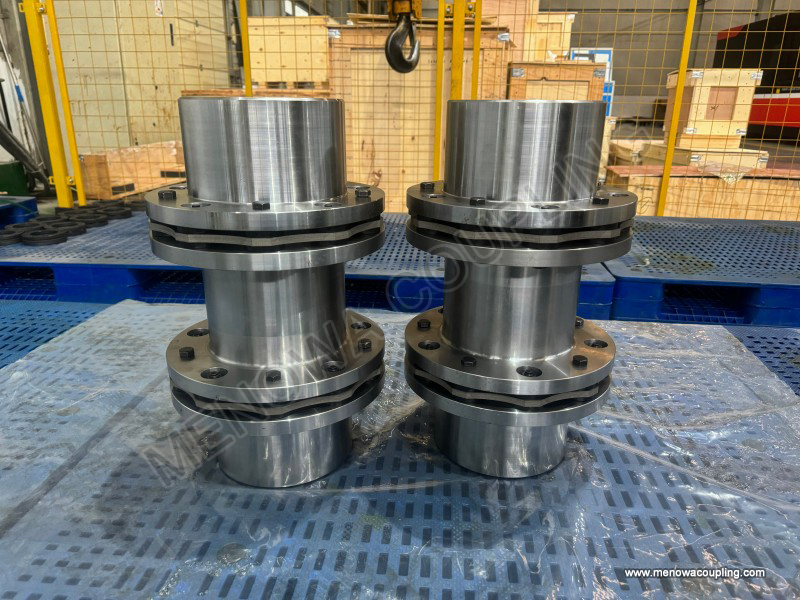
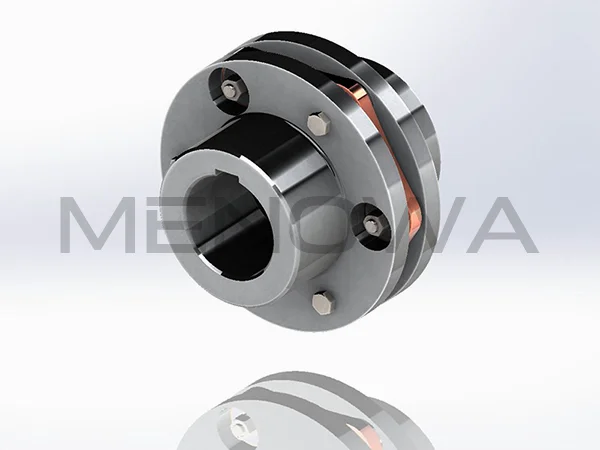
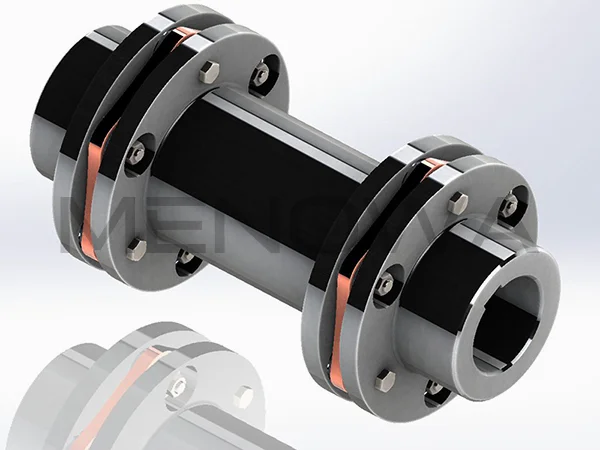
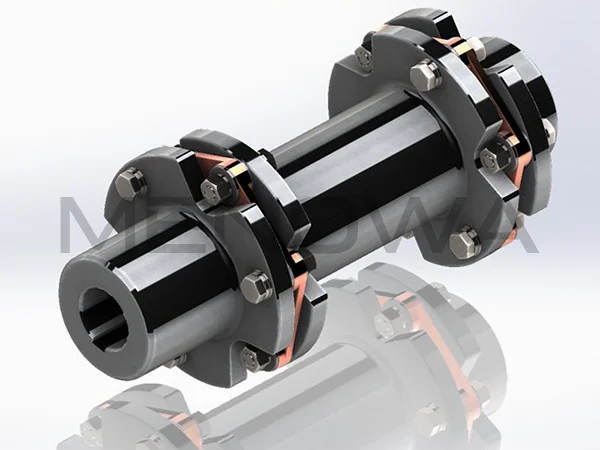
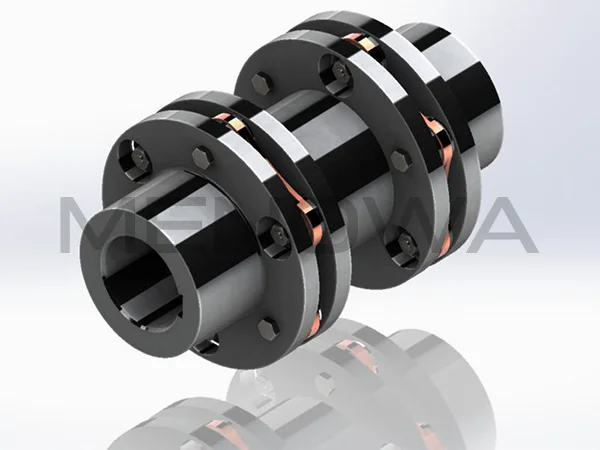
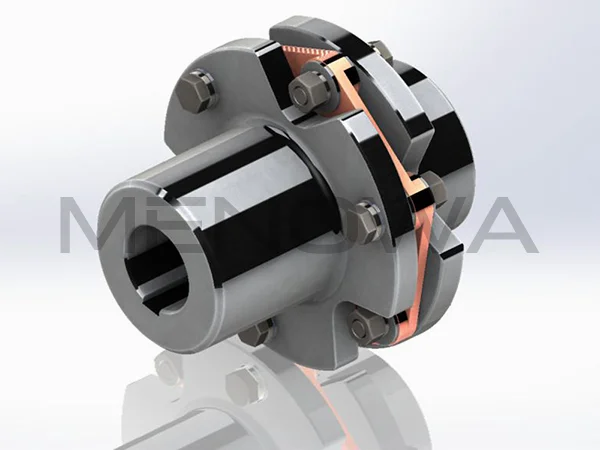
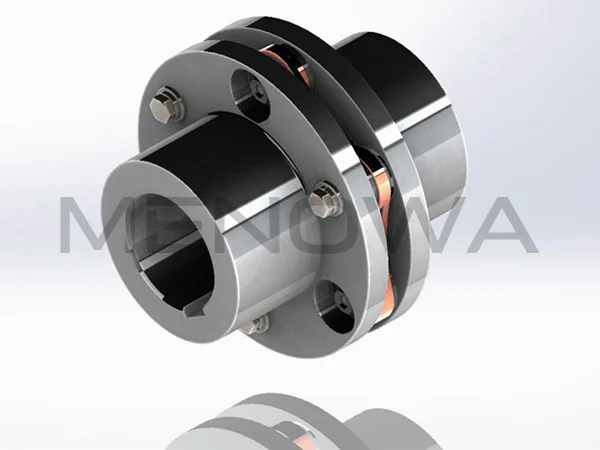
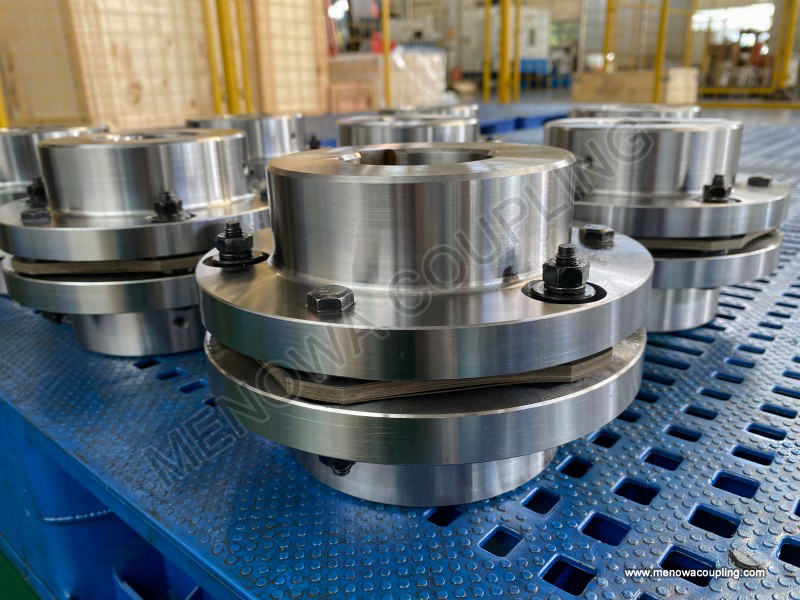
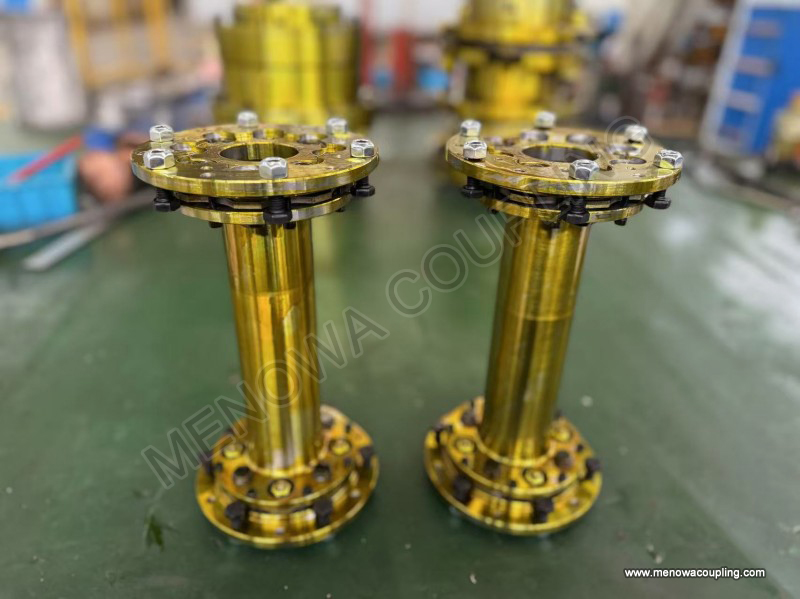
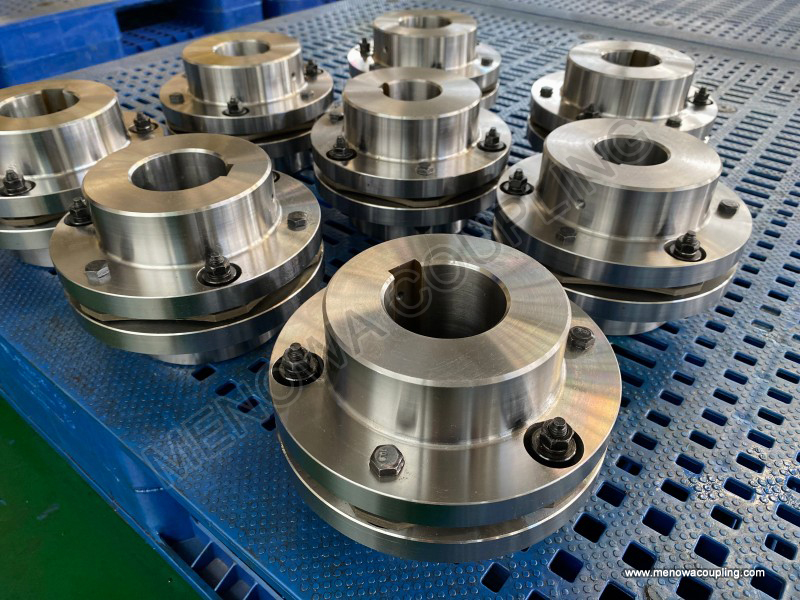
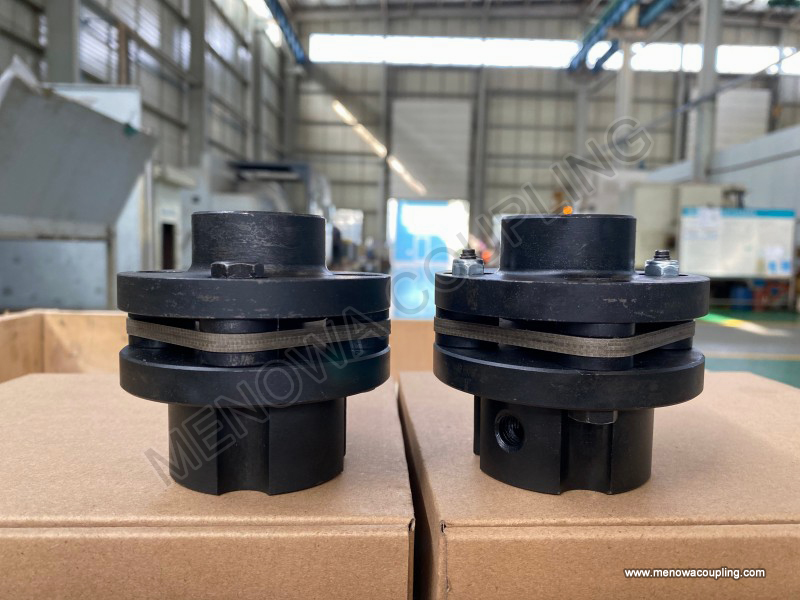
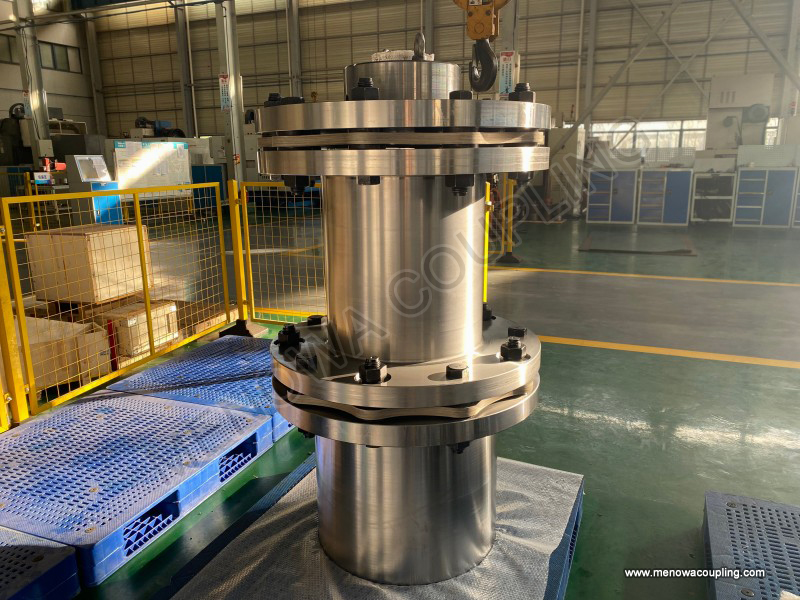
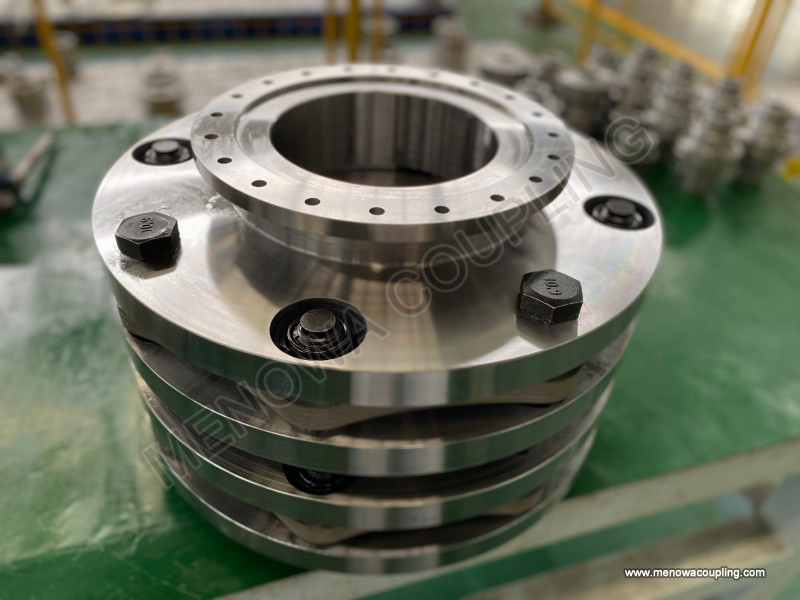
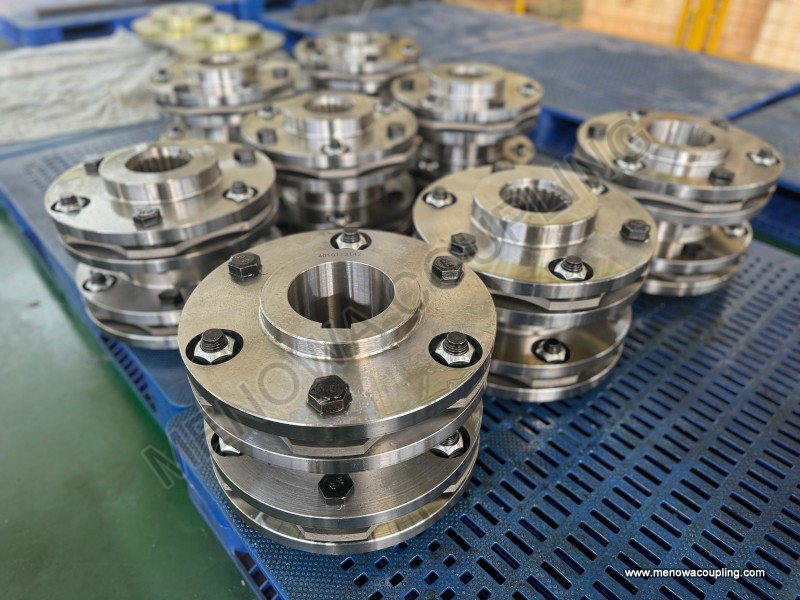
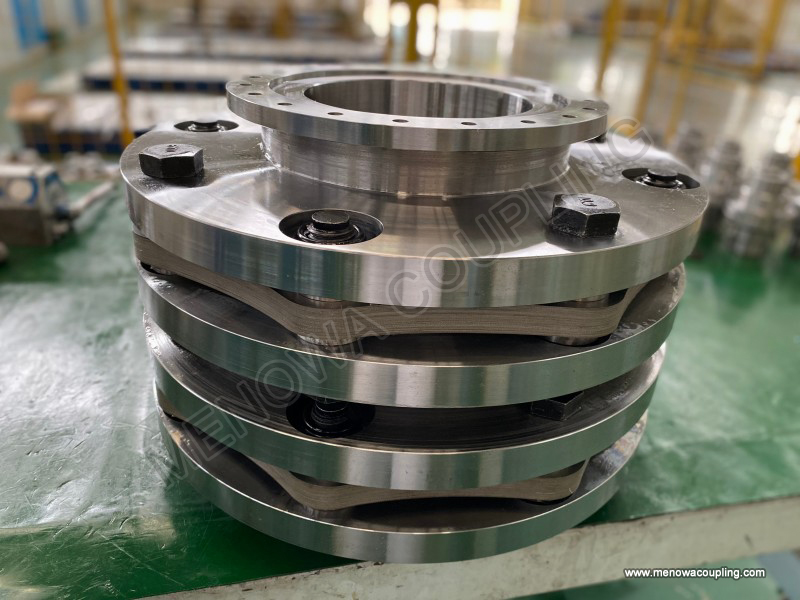
The structure of a shim pack coupling is relatively simple yet meticulously designed to fulfill its dual functions of torque transmission and misalignment compensation. At its core, a typical shim pack coupling consists of several key components that work together seamlessly to ensure stable and efficient operation. The primary components include two half-couplings, a shim pack (also known as a laminated group), connecting bolts, and in some cases, auxiliary components such as intermediate shafts, bushings, and washers. The half-couplings are the connecting elements that attach to the driving and driven shafts, respectively; they are usually made of high-strength materials to withstand the torque and stress generated during operation. The design of the half-couplings may vary slightly depending on the application, with some featuring counterbores to facilitate shaft end fixing and others adopting a compact, counterbore-free design for short-distance transmission. The shim pack, which is the defining component of this type of coupling, is composed of multiple thin, flat metal sheets stacked together in a specific arrangement. These metal sheets, often referred to as shims or laminations, are typically made of high-strength materials such as stainless steel, alloy steel, or in some cases, titanium or composite materials, depending on the performance requirements of the application. The thickness of each individual shim usually ranges from 0.2 to 0.5 millimeters, and the number of shims in a pack can be adjusted to achieve the desired flexibility and misalignment compensation capacity. The shims are precision-shaped, with various configurations such as circular, polygonal, or concave arc shapes, and are equipped with connecting holes—usually 4-hole, 6-hole, or 8-hole designs—that align with the holes on the half-couplings to facilitate assembly with connecting bolts. The connecting bolts are high-strength fasteners that secure the shim pack between the two half-couplings, ensuring that torque is efficiently transmitted from the driving half-coupling through the shim pack to the driven half-coupling. In designs that include intermediate shafts, the intermediate shaft serves to extend the distance between the driving and driven shafts, making the coupling suitable for long-distance transmission applications. Bushings and washers may also be incorporated to reduce friction, distribute stress evenly, and enhance the overall stability and service life of the coupling.
The working principle of a shim pack coupling is based on the elastic deformation of the metal shims. When the driving shaft rotates, it transmits torque to the driving half-coupling, which in turn transfers this torque to the shim pack through the connecting bolts. The shim pack, composed of multiple thin metal sheets, undergoes slight elastic deformation—including bending and torsional deformation—under the action of the torque. This elastic deformation allows the shim pack to transmit the rotational motion and torque smoothly to the driven half-coupling and ultimately to the driven shaft. When there is relative misalignment between the driving and driven shafts—whether angular, parallel, or axial—the shims in the pack absorb these deviations through their own elastic bending deformation, thereby avoiding rigid impact and reducing stress on the shafts and other connected components. Unlike some flexible couplings that rely on the elastic deformation of a single element, shim pack couplings utilize the relative movement and combined deformation of multiple shims to accommodate misalignments, which enhances their flexibility and reliability. The adjustability of the shim pack is another key aspect of its working principle: by adding or removing shims, or by changing the thickness of the shims, the alignment of the coupling can be fine-tuned to meet the specific requirements of the application, making it highly versatile and adaptable to changing operating conditions.
The performance characteristics of shim pack couplings are closely linked to their structural design and the materials used, and these characteristics make them suitable for a wide range of industrial applications. One of the most prominent performance features of shim pack couplings is their high torque transmission capacity. Due to the use of high-strength materials for the shims and half-couplings, these couplings can handle large torque loads, making them suitable for both light-duty and heavy-duty applications. The torque transmission efficiency of shim pack couplings is also very high, as there is no significant energy loss during the transmission process—this is largely due to the rigid connection between the shims and the half-couplings, which minimizes slippage and energy dissipation. Another key performance characteristic is their excellent misalignment compensation capability. Shim pack couplings can effectively accommodate angular, parallel, and axial misalignments between the driving and driven shafts. The maximum misalignment capacity varies depending on the design of the shim pack, with corrugated shims (if used) offering greater angular misalignment compensation compared to flat shims. Typically, these couplings can accommodate angular misalignments of up to a few degrees, parallel misalignments of several millimeters, and axial misalignments of a few millimeters, which is crucial for applications where precise alignment is difficult to maintain or where thermal expansion and contraction of components may cause shaft misalignment.
Shim pack couplings also exhibit excellent resistance to harsh operating conditions, including high temperatures, corrosive environments, and oil pollution. The metal shims, especially those made of stainless steel or alloy steel, have high temperature resistance, allowing the couplings to operate in environments with temperatures ranging from extreme cold to several hundred degrees Celsius without significant degradation in performance. Additionally, these materials offer good acid resistance, alkali resistance, and corrosion resistance, making shim pack couplings suitable for use in chemical processing, marine, and other environments where corrosive media are present. Unlike elastomeric couplings, which are susceptible to degradation from heat, oil, or chemicals, shim pack couplings have no rubber or plastic components, so they are not affected by these factors and have a longer service life. Another important performance feature is their low maintenance requirement. Due to their simple design with no complex moving parts, shim pack couplings require minimal maintenance—there is no need for regular replacement of wearing components, as the metal shims are highly durable and resistant to wear. In most cases, periodic inspection and tightening of the connecting bolts are sufficient to ensure the coupling’s continued reliable operation. Furthermore, shim pack couplings have no rotational clearance or backlash, which is essential for applications that require precise control of shaft rotation, such as servo systems, precision machining tools, and robotics. The absence of backlash ensures that there is no delay or error in torque transmission, leading to improved precision and stability in the overall system.
The lightweight design of some shim pack couplings is another notable performance characteristic, especially for applications where weight reduction is a priority, such as aerospace and automotive systems. By using lightweight materials such as titanium or composite materials for the shims and half-couplings, the overall weight of the coupling can be reduced without compromising its strength or torque transmission capacity. This not only helps to reduce the overall weight of the equipment but also minimizes the moment of inertia, which improves the responsiveness and efficiency of the system. Additionally, shim pack couplings operate with low noise and vibration, which is beneficial for applications that require quiet operation, such as precision machinery and medical equipment. The smooth elastic deformation of the shims ensures that there is no harsh impact or vibration during operation, reducing noise levels and improving the comfort and safety of the working environment.
Shim pack couplings can be classified into several different types based on their structural design, shim configuration, and application requirements. These types are designed to cater to the diverse needs of various industrial scenarios, ensuring that there is a suitable shim pack coupling for almost any torque transmission application. One common classification is based on the presence or absence of an intermediate shaft. Single-section shim pack couplings, which do not have an intermediate shaft, are designed for short-distance transmission between two shafts. These couplings have a compact structure and are easy to install, making them suitable for applications where space is limited. Single-section shim pack couplings may also be further divided into those with a counterbore and those without: counterbore designs facilitate the fixing of the shaft end, while counterbore-free designs are even more compact and suitable for applications where shaft end space is extremely limited. Double-section or multi-section shim pack couplings, on the other hand, include an intermediate shaft, which allows for long-distance transmission between the driving and driven shafts. These couplings are ideal for applications where the two shafts are separated by a significant distance, such as in large industrial machinery, pumps, and turbines.
Another classification of shim pack couplings is based on the configuration of the shim pack. Flat shim pack couplings use flat, thin metal sheets as the shims, which offer good torque transmission capacity and moderate misalignment compensation. These couplings are suitable for applications where the misalignment is relatively small and torque requirements are moderate. Corrugated shim pack couplings, by contrast, use shims with a corrugated design, which enhances their flexibility and allows for greater misalignment compensation—especially angular misalignment. The corrugations act like small springs, allowing the shims to deform more easily in response to misalignment, making these couplings suitable for applications where shaft alignment is difficult to maintain, such as in heavy machinery or equipment subject to vibration. Polygonal shim pack couplings use shims with a polygonal shape, which provides a more uniform distribution of torque and stress, making them suitable for high-torque applications. Concave arc shim pack couplings, with their curved shim design, offer a balance between flexibility and strength, making them versatile for a wide range of applications.
Shim pack couplings can also be classified based on the material of the shims. Stainless steel shim pack couplings are the most common type, as stainless steel offers excellent corrosion resistance, high temperature resistance, and durability, making them suitable for most industrial applications, including chemical processing, food processing, and marine environments. Alloy steel shim pack couplings are designed for high-torque and high-temperature applications, as alloy steel has higher strength and heat resistance compared to stainless steel. These couplings are commonly used in heavy-duty machinery, power generation, and aerospace applications. Titanium shim pack couplings are lightweight and offer superior corrosion resistance and strength-to-weight ratio, making them ideal for aerospace, automotive, and other applications where weight reduction is critical. Composite material shim pack couplings, though less common, are used in specialized applications where high corrosion resistance and lightweight design are required, such as in the chemical and marine industries; however, they may have lower temperature limits compared to metal shim pack couplings.
Additionally, there are specialized types of shim pack couplings designed for specific applications. For example, expansion sleeve-type shim pack couplings use a keyless connection, which is convenient for maintenance and disassembly, making them preferred for chemical pumps and other equipment that requires regular maintenance. Reverse-mounting shim pack couplings, with their single or double shaft sleeve reverse installation design, are suitable for occasions where the shaft head distance is limited, such as in compact machinery. High-speed shim pack couplings are designed to operate at extremely high speeds—up to 15,000 rpm or more—and are used in applications such as turbines, compressors, and high-speed pumps. These high-speed couplings are typically made of lightweight, high-strength materials and feature a balanced design to minimize vibration and ensure stability at high rotational speeds.
The wide range of performance characteristics and types of shim pack couplings makes them suitable for a diverse array of industrial applications, spanning various sectors such as manufacturing, power generation, chemical processing, aerospace, automotive, and more. In the manufacturing industry, shim pack couplings are widely used in precision machining tools, such as lathes, milling machines, and grinders, where precise torque transmission and misalignment compensation are critical to ensuring the accuracy of the machined parts. The absence of backlash and high precision of these couplings make them ideal for servo systems and robotics, where precise control of motion is essential. In robotics, for example, shim pack couplings are used to connect the motors to the robot arms, ensuring smooth and accurate movement while accommodating any minor misalignments that may occur during operation.
In the power generation industry, shim pack couplings play a vital role in connecting turbines, generators, and other equipment. Steam turbines and gas turbines, which operate at high temperatures and high speeds, require couplings that can withstand large torques, high temperatures, and slight misalignments. Shim pack couplings, with their high temperature resistance, high torque capacity, and misalignment compensation capability, are well-suited for these applications. They are also used in wind power generation systems, where they connect the wind turbine blades to the generator, accommodating the misalignments caused by wind loads and thermal expansion while transmitting torque efficiently.
The chemical processing industry is another major application area for shim pack couplings. In chemical plants, equipment such as pumps, compressors, and mixers often operate in harsh environments with corrosive media, high temperatures, and high pressures. Shim pack couplings made of stainless steel or alloy steel offer excellent corrosion resistance and durability, making them suitable for use in these conditions. They are used to connect the motors to the pumps and compressors, ensuring reliable torque transmission while accommodating any misalignments caused by the thermal expansion of the equipment or the piping system. For example, chemical pumps that handle corrosive liquids require couplings that are resistant to the corrosive media, and shim pack couplings with stainless steel shims are an ideal choice for this purpose.
Aerospace and automotive industries also rely heavily on shim pack couplings due to their lightweight design, high strength, and reliability. In the aerospace industry, shim pack couplings are used in aircraft engines, landing gear systems, and other critical components, where weight reduction and high performance are essential. The lightweight materials used in these couplings help to reduce the overall weight of the aircraft, improving fuel efficiency and performance. In the automotive industry, shim pack couplings are used in transmission systems, engines, and other components, where they transmit torque efficiently while accommodating misalignments and reducing vibration. They are also used in electric vehicles, where their high efficiency and low maintenance requirements make them suitable for use in the drive train.
Marine applications also benefit from the use of shim pack couplings. Ships and offshore platforms have equipment such as propeller shafts, pumps, and generators that operate in harsh marine environments, exposed to saltwater and high humidity. Shim pack couplings made of corrosion-resistant materials such as stainless steel or titanium are able to withstand these conditions, ensuring reliable operation even in the presence of corrosive media. They are used to connect the engines to the propellers, pumps, and generators, transmitting torque efficiently while accommodating the misalignments caused by the movement of the ship and thermal expansion.
Other applications of shim pack couplings include medical equipment, such as MRI machines and surgical tools, where precision and quiet operation are critical; food processing equipment, where corrosion resistance and hygiene are important; and mining equipment, where durability and high torque capacity are required. In each of these applications, the unique performance characteristics of shim pack couplings—such as their misalignment compensation capability, high torque transmission efficiency, durability, and resistance to harsh environments—make them a superior choice compared to other types of couplings.
In conclusion, the shim pack coupling is a versatile and high-performance metal flexible coupling that plays a crucial role in mechanical power transmission. Its unique structural design, featuring a pack of thin metal shims, allows it to achieve efficient torque transmission while effectively compensating for angular, parallel, and axial misalignments between shafts. The performance characteristics of shim pack couplings, including high torque capacity, high temperature resistance, corrosion resistance, low maintenance requirements, and no backlash, make them suitable for a wide range of industrial applications. With various types available—classified based on structural design, shim configuration, and material—shim pack couplings can be tailored to meet the specific requirements of different applications, from precision machining and robotics to power generation and aerospace. As industrial technology continues to advance, the demand for reliable, efficient, and adaptable couplings is expected to grow, and the shim pack coupling is likely to remain a key component in many mechanical systems, contributing to the efficiency, reliability, and performance of industrial equipment worldwide.
https://www.menowacoupling.com/industrial-coupling/shim-pack-coupling.html
Products
Tags
Related Articles
Types of Shim Pack Coupling
Apr 24, 2026Shim pack couplings stand as a vital category of metal flexible transmission components widely applied in modern industrial mechanical shaft connection systems, serving the core purpose of stable torque transmission between driving and driven equipment while effectively absorbing and compensating for various minor misal…What is Shim Pack Coupling
Apr 24, 2026In the vast and interconnected field of mechanical power transmission systems, the reliable connection between rotating shafts stands as one of the most foundational and functionally critical elements for the stable operation of all types of industrial machinery and mechanical equipment. Every rotating mechanical device…
 WeChat
 WhatsApp