Plate Coupling
In the complex and interconnected operating system of modern industrial mechanical transmission, the connection and coordination between rotating shafts directly determine the overall operating stability, running smoothness and long-term service cycle of complete mechanical equipment. All mechanical transmission systems that rely on rotational power output and power conversion need reliable connecting components to connect driving shafts and driven shafts, realize continuous and stable torque transmission, and buffer and adapt to various minor deviations and external interference generated during equipment installation and long-term operation. Among various types of flexible connecting components used for shaft connection in the industrial field, plate coupling has gradually become a widely adopted basic transmission part in high-precision, high-speed and long-cycle continuous working industrial scenarios by virtue of its unique all-metal flexible deformation structure, reasonable force transmission logic and excellent environmental adaptability. Unlike traditional rigid connecting parts that pursue absolute fixed connection and lack deformation buffer space, and unlike rubber-containing flexible connecting parts that rely on non-metal materials for shock absorption and have limited temperature and corrosion resistance, plate coupling adopts an all-metal integrated flexible design, relying solely on the elastic deformation characteristics of thin metal plate components to complete torque transmission and displacement compensation, balancing the dual core demands of structural rigidity for efficient power transmission and flexible buffering for adaptive misalignment adjustment, and adapting to the diversified and harsh operating conditions that many other connecting structures cannot cope with in industrial production.
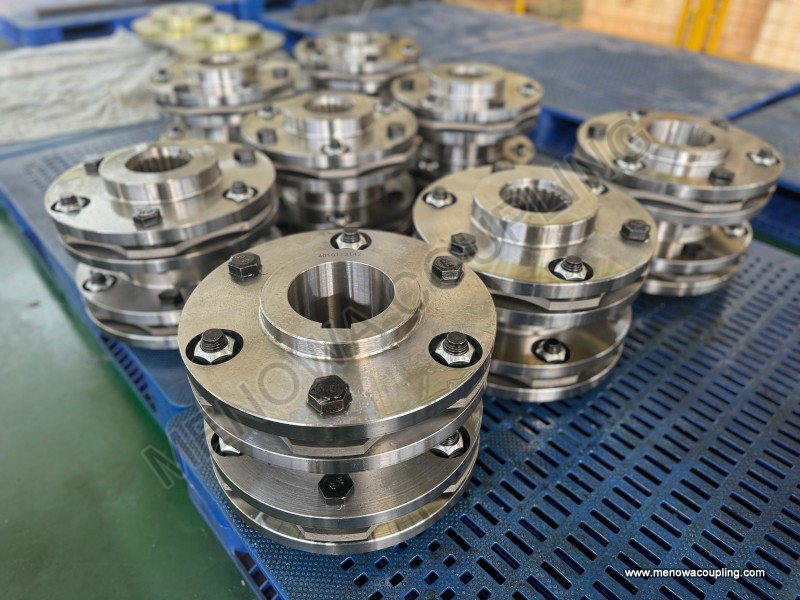
The basic design concept of plate coupling originates from the most essential demand of mechanical shaft transmission, that is, to maintain stable and efficient torque transmission under the premise of allowing reasonable relative displacement between two connected shafts. In the actual installation process of industrial mechanical equipment, it is almost impossible to achieve absolute perfect coaxial alignment between the driving shaft and the driven shaft due to the influence of installation operation errors, foundation settlement deviation, equipment assembly tolerance and other objective factors. Even if the alignment accuracy meets the standard requirements at the initial stage of installation, after a long period of continuous operation of the equipment, affected by mechanical operation vibration, component thermal expansion and contraction, structural stress release and other dynamic factors, different degrees of relative displacement will inevitably occur between the two shafts connected by the coupling. These displacements mainly include axial displacement along the shaft rotation direction, radial parallel deviation perpendicular to the shaft centerline, and angular deflection where the centerlines of the two shafts form a certain included angle. If the connecting component cannot effectively compensate for these displacements, additional mechanical stress will be continuously generated at the shaft connection position, which will not only cause severe vibration and noise during equipment operation, reduce the efficiency of power transmission, but also lead to accelerated wear of shaft parts, bearings and other matching components, even cause shaft deformation and component fatigue fracture in serious cases, resulting in equipment shutdown and production interruption. It is precisely to solve this series of practical problems in shaft transmission that plate coupling takes the elastic deformation of metal plates as the core compensation method, realizing the organic unity of rigid torque transmission and flexible displacement adaptation in a single structural component.
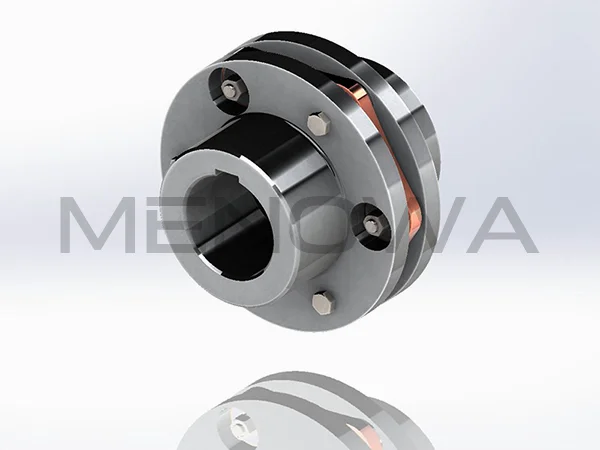
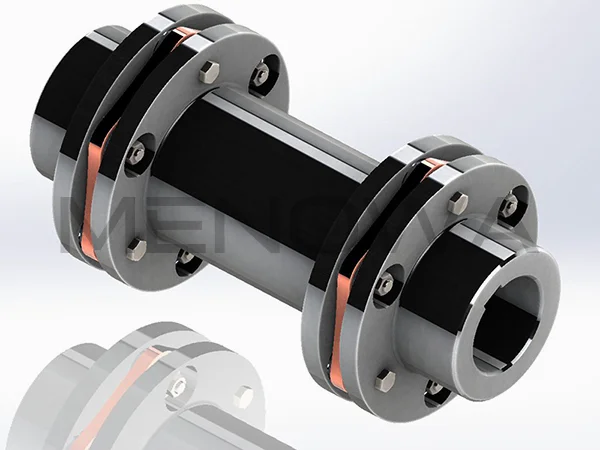
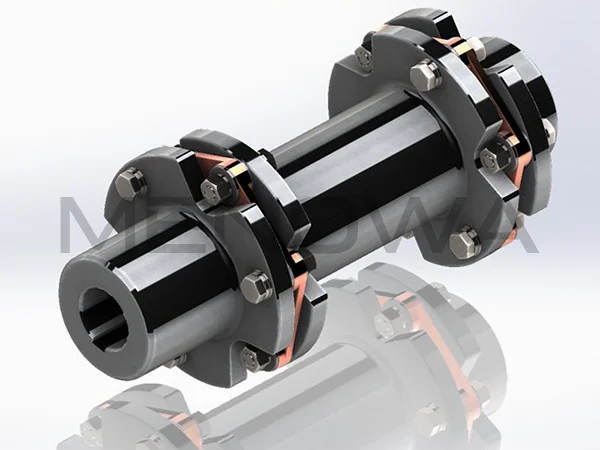
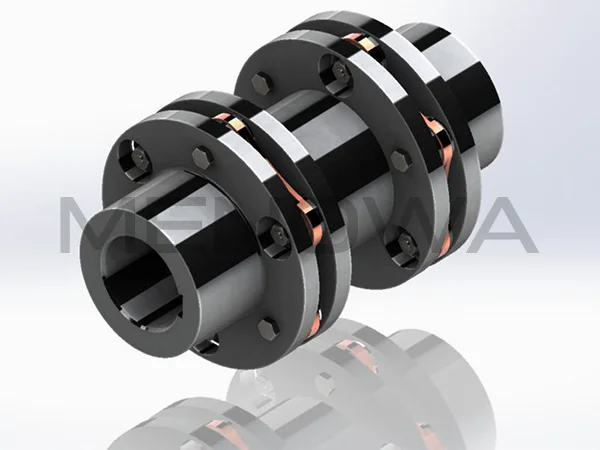
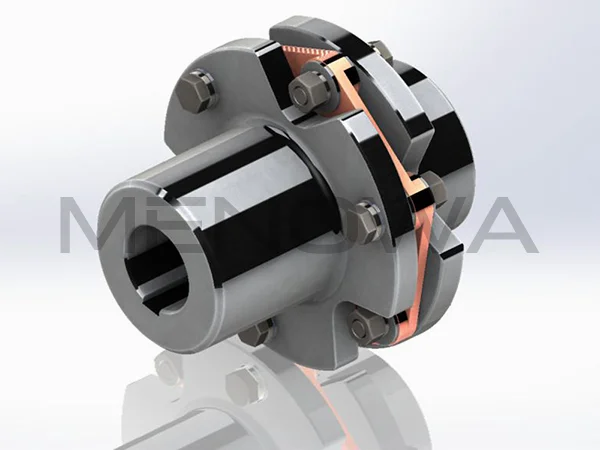
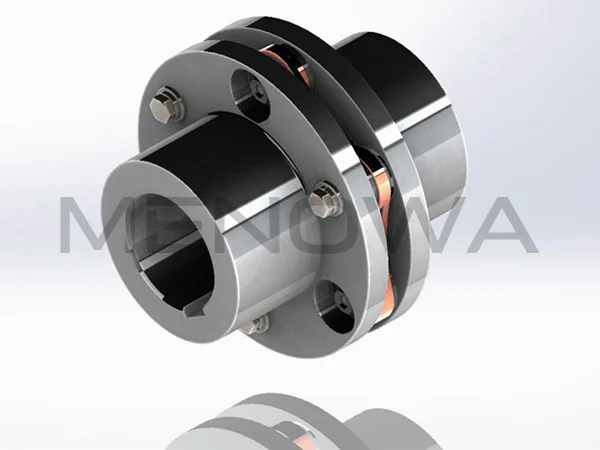
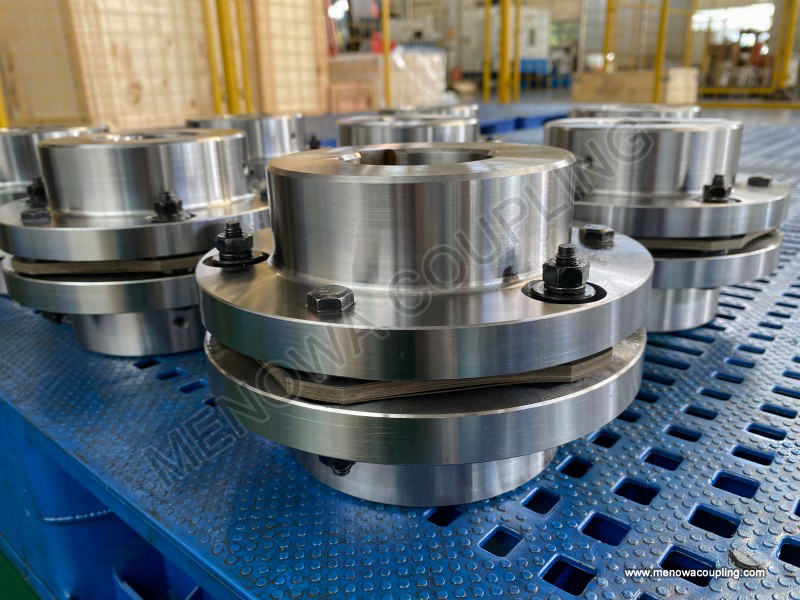
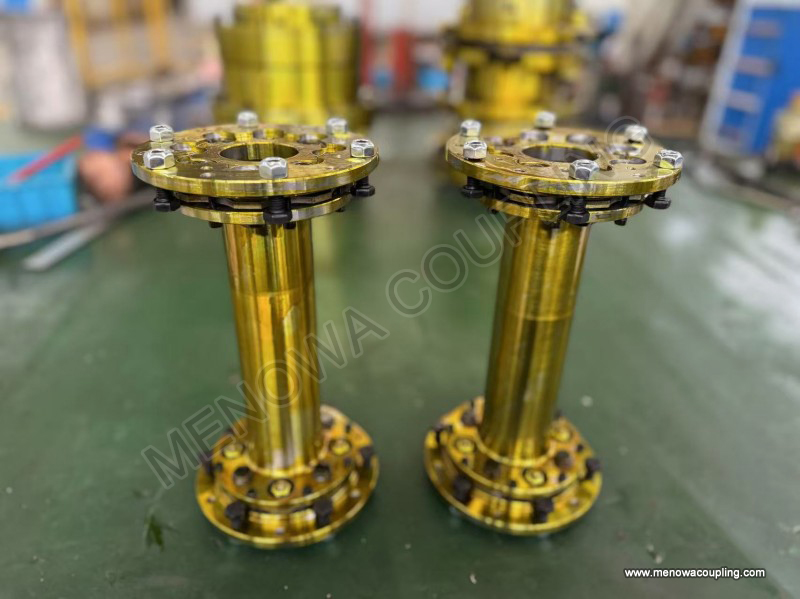
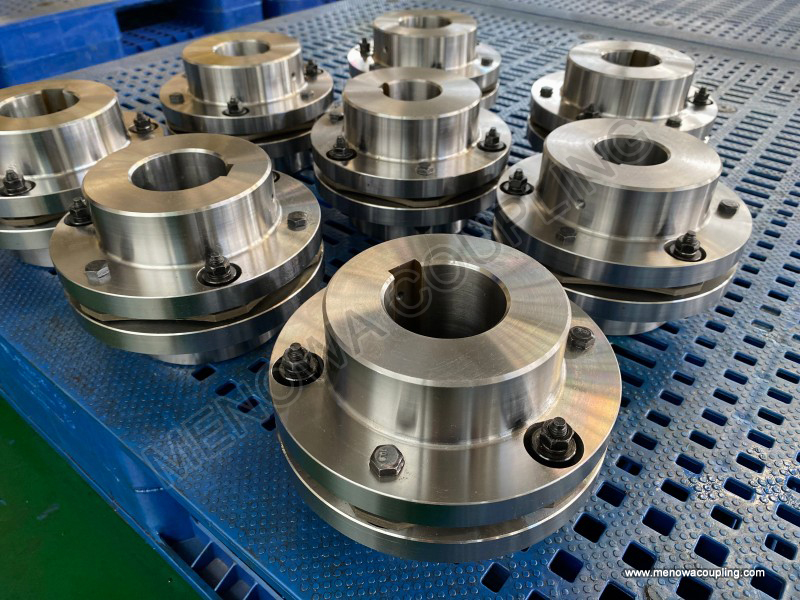
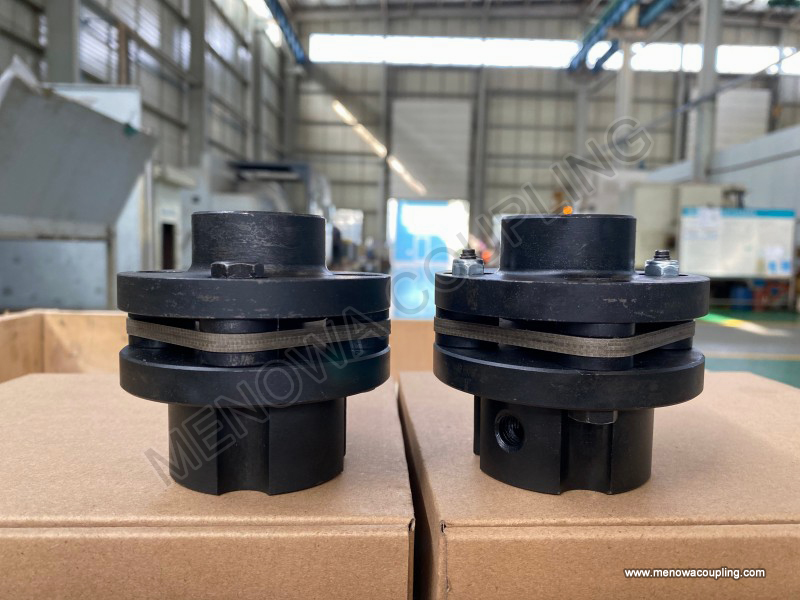
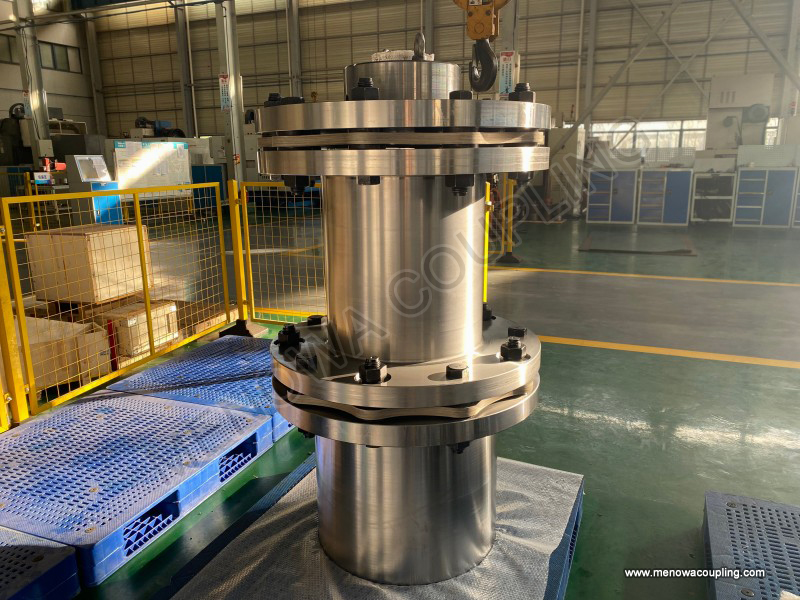
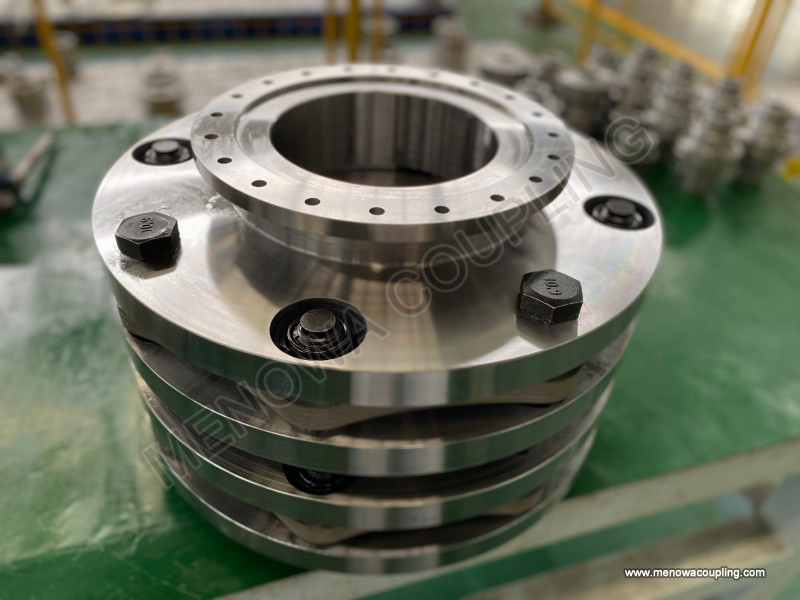
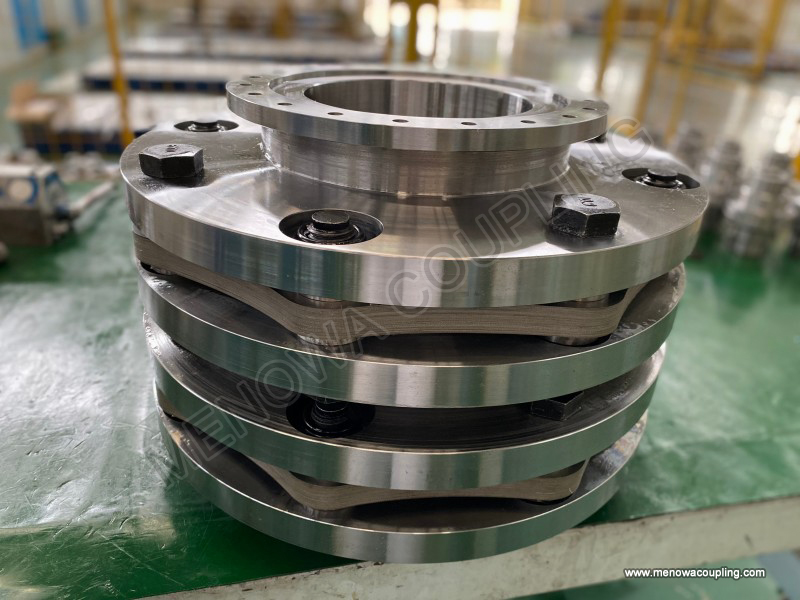
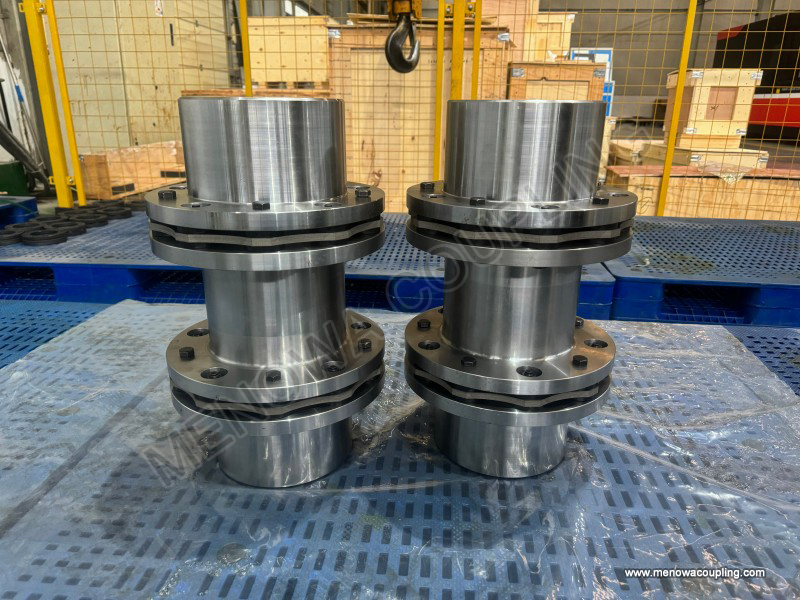
The overall structural composition of plate coupling is concise and compact, without redundant auxiliary transmission parts and complex transmission accessories, and the whole set of connecting structure is mainly composed of metal diaphragm plate groups, high-strength connecting fasteners and two half-coupling bodies used for connecting driving and driven shafts respectively. Each component has clear division of labor and coordinated force bearing, and there is no relative sliding friction between parts during the whole power transmission and displacement compensation process, which fundamentally avoids the wear and loss caused by mechanical friction between traditional transmission parts and greatly reduces the daily maintenance workload of the coupling in the later stage. The metal diaphragm plate group is the core functional component of the entire plate coupling, and is usually formed by stacking multiple layers of thin stainless steel metal plates according to scientific design specifications. These thin metal plates are processed into specific shapes through precision stamping and cutting processes, with uniform thickness, stable material texture and consistent elastic deformation performance, which can bear cyclic torque load for a long time and maintain stable elastic recovery capacity without permanent deformation. The number, thickness and shape distribution of the diaphragm plates are designed according to the actual torque transmission demand and displacement compensation range of different industrial equipment. More diaphragm plate layers and appropriate plate thickness can improve the overall torque bearing capacity of the coupling, while reasonable structural shape design can optimize the flexibility of deformation and ensure that the coupling can efficiently complete displacement compensation without affecting the stability of torque transmission.
The two half-coupling bodies are the basic connecting carriers of the plate coupling and are directly fixedly installed on the outer circle of the driving shaft and the driven shaft respectively. The structural design of the half-coupling body focuses on the firmness of shaft connection and the uniformity of force transmission. The inner hole of the half-coupling body is precisely processed to match the outer diameter of the rotating shaft, ensuring that there is no gap or relative rotation between the coupling body and the shaft after installation, so as to ensure that the torque can be accurately transmitted from the driving shaft to the coupling and then stably output to the driven shaft without power loss. The high-strength connecting fasteners connect the half-coupling bodies and the diaphragm plate groups into a complete whole in a circular evenly distributed arrangement. The fastening pressure of the fasteners ensures that the contact surfaces between all connecting parts are closely fitted, avoiding relative displacement and friction between components during torque transmission. The whole assembly structure does not need any non-metallic gaskets, buffer pads and other vulnerable auxiliary materials, and all structural components are made of all-metal materials, which lays a solid foundation for the plate coupling to adapt to high temperature, low temperature, corrosive and other harsh working environments.
The working principle of plate coupling follows the basic laws of mechanical material elasticity and mechanical power transmission, and the whole power transmission and displacement compensation process is completed relying on the micro elastic deformation of the metal diaphragm plate group without any mechanical transmission medium conversion and complex mechanical movement conversion. In the normal operation of the equipment, the rotational torque generated by the driving equipment is first transmitted to the half-coupling connected to the driving shaft, and then the torque is transmitted to the metal diaphragm plate group through the fastening fasteners. Under the action of torque, the metal diaphragm plates produce micro elastic torsion deformation within the allowable elastic range of the material, and the torque is transmitted from the outer diameter position of the diaphragm plate to the inner diameter position, and then transmitted to the other half-coupling connected to the driven shaft through the same deformation and force transmission path, finally realizing the synchronous rotation and stable torque output of the driving shaft and the driven shaft. When relative displacement such as axial, radial or angular deviation occurs between the two shafts due to installation errors or dynamic operation changes, the metal diaphragm plate group will produce corresponding adaptive bending and telescopic elastic deformation according to the displacement state. This natural elastic deformation can offset the misalignment deviation between the two shafts, avoid the generation of additional mechanical stress at the shaft connection, and always maintain the stable coaxial transmission state between the driving shaft and the driven shaft during the operation of the equipment.
The deformation mode of the diaphragm plate group under different displacement states has obvious pertinence and regularity. When axial displacement occurs between the two shafts, the diaphragm plates produce slight telescopic deformation along the axial direction of the shaft. This deformation is uniform and gentle, will not cause excessive local stress on the plate body, and can effectively absorb the axial position change caused by thermal expansion and contraction of equipment components and slight axial movement of the shaft during operation. When radial parallel misalignment occurs between the two shafts, the diaphragm plates produce symmetric bending deformation in the radial direction. The multi-layer stacked structural design of the diaphragm plates can evenly distribute the bending stress on each layer of thin plates, avoid local stress concentration of a single component, and ensure that the overall structural performance of the coupling is not affected while compensating for radial deviation. When angular deflection occurs between the centerlines of the two shafts, the diaphragm plate group produces differential micro-deformation at different circumferential positions, adapting to the angle change between the two shafts through the coordinated deformation of different parts of the plate body, so as to keep the torque transmission path stable and unobstructed. All these deformation processes are completed within the elastic limit of the metal material. After the external displacement interference disappears, the diaphragm plates can quickly and automatically recover to the initial state without permanent deformation or structural damage, ensuring the repeated cycle use and long-term stable operation of the coupling.
The material selection of each component of plate coupling is directly related to its service performance, service life and environmental adaptability, and all materials are selected according to the actual industrial working conditions and mechanical performance requirements, focusing on the balance of mechanical strength, elastic fatigue resistance and environmental corrosion resistance. The metal diaphragm plate group, as the core deformation and force-bearing component, is mostly made of high-quality stainless steel alloy materials with excellent comprehensive performance. This type of stainless steel material has high tensile strength and yield strength, can withstand long-term cyclic torque load and frequent elastic deformation without fatigue damage, and has good resistance to metal fatigue and stress corrosion. In the long-term high-frequency cyclic working state, the diaphragm plate will not have micro-cracks, deformation failure and other problems caused by fatigue accumulation, maintaining consistent elastic deformation performance for a long time. At the same time, stainless steel materials have good resistance to high temperature oxidation, low temperature brittleness and chemical corrosion, and can maintain stable physical and mechanical properties in high-temperature heating environment, low-temperature cold working environment and industrial environments with weak acid, weak alkali and humid media, without performance attenuation caused by environmental changes.
The half-coupling body is usually made of high-strength alloy steel through integral forging and precision machining. The integral forging process makes the internal structure of the coupling body dense and uniform, without internal pores, sand holes and other structural defects, ensuring that the coupling body will not have structural cracking and local damage under high torque load. The high-strength mechanical properties of alloy steel can meet the torque bearing requirements of various heavy-duty transmission equipment, and the surface of the coupling body is treated with anti-rust and anti-corrosion protection process, which can effectively avoid surface oxidation and rust corrosion in long-term outdoor and humid industrial working environments. The connecting fasteners used for assembly are made of special high-strength alloy steel materials after quenching and tempering heat treatment, with high fastening strength and anti-loosening performance. These fasteners can maintain stable fastening pre-tightening force under long-term vibration and high-load operation conditions, and will not loose or fall off due to mechanical vibration, ensuring that the overall structural tightness and connection firmness of the plate coupling are always maintained during the whole service cycle.
Compared with other common types of flexible couplings used in industrial transmission, plate coupling has prominent comprehensive performance advantages in structural design, operating characteristics and later use management, and these advantages make it widely used in many key industrial production fields. Different from gear couplings that rely on gear meshing for torque transmission and have large meshing wear and high vibration noise, plate coupling has no meshing friction and relative sliding between components during operation, the whole transmission process is smooth and stable, the vibration and noise generated during operation are kept at a low level, and the transmission efficiency of mechanical power is effectively improved. Different from rubber flexible couplings that rely on non-metal rubber for buffering and shock absorption, plate coupling adopts an all-metal structure, will not have aging, hardening, cracking and other failure problems of rubber materials due to temperature changes and long-term use, and has a much longer service life than rubber couplings, and can adapt to high-temperature and low-temperature working conditions that rubber materials cannot bear.
In terms of operating maintenance, plate coupling has obvious practical advantages in industrial production and operation management. Due to the all-metal integrated structure and no relative friction and wear between internal components, the coupling does not need regular lubrication, oiling, replacement of vulnerable parts and other daily maintenance work in the whole process of use. After one-time installation and alignment calibration, it can run stably for a long time with almost no later maintenance investment, which greatly reduces the daily operation and maintenance cost of industrial equipment and avoids the production shutdown and economic loss caused by frequent maintenance and replacement of connecting parts. For modern industrial production lines that pursue continuous uninterrupted operation and low maintenance management cost, this maintenance-free operating characteristic of plate coupling provides strong support for the stable operation of the production line and the improvement of production efficiency.
In terms of operating speed and transmission accuracy, plate coupling is very suitable for high-speed rotating transmission equipment and mechanical systems requiring high-precision power transmission. The structural design of the coupling has small rotational inertia and high structural rigidity. During high-speed rotation, it will not produce large centrifugal force and structural deformation, can maintain high rotational stability and dynamic balance, and will not cause equipment vibration and transmission deviation due to high-speed operation. At the same time, the plate coupling has no transmission backlash in the torque transmission process, the torque transmission response is sensitive and accurate, and the synchronous rotation performance of the driving shaft and the driven shaft is good, which can meet the high-precision transmission requirements of precision processing equipment, high-speed power equipment and other mechanical systems for shaft connection.
Plate coupling is widely used in various industrial fields involving mechanical shaft power transmission, covering energy power production, industrial processing and manufacturing, chemical production and processing, environmental protection water treatment, metallurgical mineral processing and many other core industrial sectors. In the field of energy power production, plate coupling is used for the shaft connection of power generation equipment, fan power transmission equipment and water pump power output equipment. These equipment need long-term continuous uninterrupted operation, and the working environment has certain temperature changes and vibration interference. The all-metal structure and maintenance-free characteristics of plate coupling can adapt to the long-term continuous working state, ensuring the stable power output of power equipment and avoiding equipment failure and power supply instability caused by coupling damage.
In the field of industrial processing and manufacturing, various mechanical processing equipment, automated production lines and transmission machinery need high-precision and stable shaft connection. Plate coupling is applied to the power transmission connection of precision processing machine tools, automated transmission equipment and mechanical processing production lines. Its high transmission accuracy and low vibration operation characteristics ensure the processing accuracy of mechanical products and the stable operation of automated production lines, avoiding product processing quality deviation and production line operation failure caused by unstable shaft transmission. In the chemical production and processing industry, many production equipment are in corrosive media and high-temperature working environments. The stainless steel and alloy steel materials of plate coupling have good corrosion resistance and high temperature resistance, and can work stably in harsh chemical production environments for a long time without structural corrosion and performance attenuation, ensuring the normal operation of chemical production equipment.
In the environmental protection water treatment and metallurgical mineral processing industries, the operating working conditions of the equipment are complex, with large equipment load, serious working vibration and more dust and humid environmental factors. The high structural strength and good vibration buffering performance of plate coupling can adapt to the heavy-load operation state of the equipment, and the all-metal structure is not affected by dust and humid environment, maintaining stable connection performance and long service life. In addition, plate coupling also has important application value in marine engineering equipment, transportation mechanical equipment and other fields, providing reliable shaft connection guarantee for various mechanical equipment operating in complex and harsh environments.
In the actual installation and commissioning process of plate coupling, standardized operation and reasonable alignment calibration work are important prerequisites to ensure its subsequent stable operation and long service life. Although the plate coupling itself has good displacement compensation capacity, excessive installation misalignment will still cause the diaphragm plate group to bear excessive deformation stress for a long time, accelerate the fatigue loss of metal plates, and affect the overall service life of the coupling. Therefore, in the installation process, professional alignment tools should be used to calibrate the coaxiality of the driving shaft and the driven shaft in strict accordance with the installation operation specifications, minimize the initial installation deviation of the two shafts, and ensure that the coupling only bears small adaptive deformation during subsequent operation, reducing the long-term stress load of the diaphragm plates.
During the installation and fastening of connecting fasteners, the fastening operation should be carried out in a symmetrical and uniform sequence to ensure that the fastening pre-tightening force of all fasteners is consistent, the stress on each position of the diaphragm plate group and the half-coupling body is uniform, and local stress concentration caused by uneven fastening force is avoided. After the installation is completed, it is necessary to conduct a trial run test of the equipment, check the vibration, noise and rotation state of the coupling during operation, confirm that there is no abnormal operation state, and then put the equipment into formal production and operation. In the daily operation and use process, regular visual inspection of the plate coupling can be carried out to observe whether there are obvious deformation, cracks and loose fasteners on the surface of the diaphragm plate group. If abnormal conditions are found, timely inspection and adjustment can be carried out to ensure the continuous and stable operation of the coupling.
In the long-term service cycle of plate coupling, the main form of performance attenuation is metal fatigue loss of the diaphragm plate group after long-term cyclic elastic deformation. Although the stainless steel material used for the diaphragm plate has excellent fatigue resistance, with the increase of service time and the accumulation of cyclic deformation, the metal material will inevitably produce slight fatigue aging, resulting in the gradual reduction of elastic deformation performance. In view of this characteristic, according to the actual operating load and operating time of the equipment, the diaphragm plate group can be inspected and replaced regularly as a vulnerable core component. The replacement operation of the diaphragm plate group is simple and convenient, without disassembling the whole mechanical equipment, which can complete the component replacement in a short time, effectively extending the overall service life of the plate coupling and ensuring the continuous stability of equipment transmission performance.
With the continuous upgrading and development of modern industrial mechanical equipment towards high speed, high precision and long-cycle continuous operation, the performance requirements for various basic transmission connecting components are also constantly improving. Plate coupling, as a mature and reliable all-metal flexible connecting component, keeps pace with the development of industrial equipment in structural design and material optimization. Through continuous improvement of diaphragm plate structure design, optimization of material ratio and upgrading of processing technology, the comprehensive performance of plate coupling is continuously improved, meeting the higher standard transmission requirements of new industrial mechanical equipment. In the future industrial mechanical transmission field, plate coupling will still rely on its unique structural advantages, stable working performance and wide environmental adaptability, and continue to be an indispensable and important basic component in mechanical shaft connection and power transmission.
The core value of plate coupling lies in that it solves the inherent contradiction between rigid torque transmission and flexible displacement adaptation in mechanical shaft transmission with the simplest all-metal elastic deformation structure. It does not rely on complex mechanical structures and vulnerable non-metal materials, but relies on the basic elastic mechanical properties of metal materials to realize efficient and stable power transmission and effective misalignment compensation. In all industrial production scenarios that require long-term stable operation, low maintenance cost and high-precision transmission, plate coupling can show excellent application effects, reduce the failure rate of mechanical equipment operation, extend the overall service life of equipment, and create stable and reliable basic conditions for the efficient development of industrial production. Whether it is conventional industrial production equipment or special mechanical equipment working in harsh environments, plate coupling can provide reliable shaft connection guarantee with its stable performance, compact structure and long service cycle, and play an irreplaceable basic supporting role in the whole modern industrial mechanical transmission system.
https://www.menowacoupling.com/industrial-coupling/plate-coupling.html
 WeChat
 WhatsApp