Barrel Coupling
In the vast and intricate ecosystem of mechanical power transmission systems, the reliable connection between rotating shafts stands as one of the most fundamental and indispensable foundations for the stable operation of all types of industrial machinery and heavy-duty mechanical equipment. Every mechanical device that relies on rotational power output and power transfer, whether engaged in material handling, industrial processing, engineering lifting, continuous production line operation or heavy industrial manufacturing, requires a stable and durable connecting component that can effectively transmit rotational torque, buffer operational vibrations, and adapt to various inevitable deviations and deformations generated during long-term mechanical operation. Among the numerous types of shaft connection components developed and optimized for different working conditions and transmission requirements, barrel coupling has gradually become a core transmission part widely favored in heavy-load, high-torque and long-cycle continuous working scenarios by virtue of its unique structural design, excellent load-bearing performance, reliable misalignment compensation capability and stable long-term operation durability. Unlike many traditional coupling structures that rely on simple meshing transmission, elastic component deformation or rigid connection locking to complete torque transmission, barrel coupling adopts a special rolling contact transmission mode with hardened steel barrel parts as the core force-bearing and transmission medium, which fundamentally changes the stress distribution form in the torque transmission process, avoids the local stress concentration and rapid wear problems common in traditional coupling operation, and creates a more reasonable and efficient power transmission path for various complex and harsh industrial working environments. The application value of barrel coupling is not only reflected in its basic function of connecting driving shafts and driven shafts to complete torque transmission, but more importantly, it can effectively cope with various mechanical displacement deviations and operational vibrations that are unavoidable in the actual operation of mechanical equipment, protect the core components such as connected shafts, bearings and reducers from excessive impact load and alternating stress damage, reduce the failure probability of the entire transmission system, and extend the overall service cycle and stable operation cycle of mechanical equipment in practical industrial production.
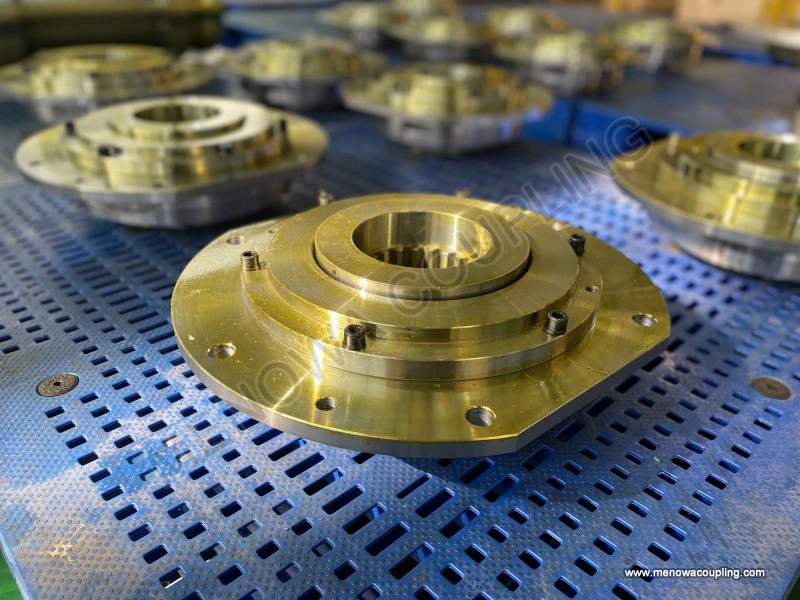
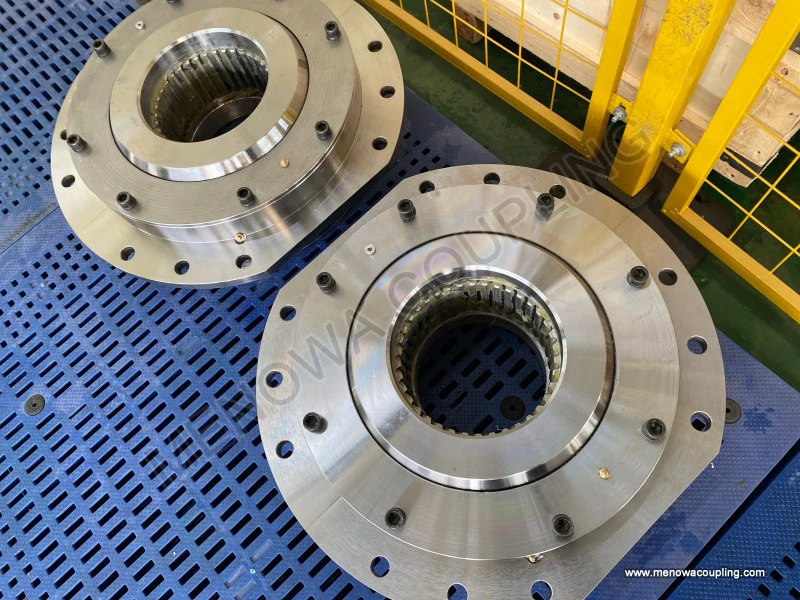
To fully understand the inherent advantages and industrial application significance of barrel coupling, it is first necessary to conduct a detailed and comprehensive analysis of its overall structural composition and the functional attributes of each core component, because all the excellent working performance and operational stability of this coupling are derived from its scientific and targeted structural design, and every part and structural detail is carefully arranged and optimized for heavy-load transmission and misalignment compensation needs. The overall structure of barrel coupling presents a compact and robust integrated assembly form, and the whole device is mainly composed of two core main parts and a set of intermediate force-bearing transmission components, without redundant auxiliary structures or easily damaged fragile parts, which also lays a solid foundation for its low maintenance demand and long service life in subsequent operation. The two core main parts are respectively the hub and the outer sleeve, which are the basic mounting and connecting carriers of the entire coupling, and also the key structures responsible for connecting the driving end power component and the driven end load component. The hub is designed as the inner connecting structure of the coupling, which is directly installed and fixed on the surface of the driving shaft of the mechanical equipment through precise shaft hole matching and conventional fastening connection methods. The outer circular surface of the hub is processed with evenly distributed semicircular arc-shaped groove structures according to professional mechanical processing standards. These grooves are arranged in a regular circumferential array, with smooth and precise inner wall surfaces and consistent structural dimensions, providing stable and accurate limiting and bearing positions for the intermediate transmission barrels. The outer sleeve is the outer protective and connecting structure matched with the hub, sleeved on the outer side of the hub in a coaxial state during assembly. The inner circular surface of the outer sleeve is also processed with semicircular arc-shaped grooves corresponding to the number and position of the grooves on the outer circular surface of the hub one by one. The concave directions of the two groups of grooves are opposite to each other, forming a closed and regular accommodating space between each pair of corresponding grooves. This special matching groove structure is the key structural basis for realizing the rolling contact transmission of the barrel coupling and the flexible compensation of shaft misalignment.
The intermediate transmission core of the barrel coupling is a series of independently processed hardened steel barrels, which are the most critical force-bearing and torque-transmitting components in the entire coupling structure and directly determine the load-bearing capacity and operational stability of the coupling. These barrels are made of high-strength alloy steel materials with excellent compressive resistance, wear resistance and fatigue resistance, and undergo strict overall heat treatment and surface hardening treatment in the production and processing process, so that the surface hardness and internal structural toughness of the barrels reach a balanced and optimal state. This processing technology enables the barrels to withstand long-term high-pressure extrusion load and frequent rolling friction without surface deformation, wear and cracking damage. The overall shape of each barrel is a regular cylindrical structure with smooth and seamless outer surface, and the dimensional precision of each barrel is strictly controlled to ensure that all barrels can be in close and uniform contact with the inner walls of the grooves on the hub and the outer sleeve after being installed in the accommodating space formed by the matching grooves. Unlike the point contact or line contact stress form adopted by many traditional couplings in the torque transmission process, the barrel coupling realizes surface contact stress transmission through the fit between the outer circular surface of the barrel and the arc-shaped groove wall. This contact mode can disperse the concentrated torque load acting on a single point or line into a larger contact area, effectively reducing the stress value per unit area of the contact part, avoiding local excessive stress leading to rapid wear and structural fatigue damage, and greatly improving the overall load-bearing limit and long-term operational stability of the coupling. In addition to the above core components, the barrel coupling is also equipped with necessary simple sealing structures and limiting fastening parts. The sealing structures are arranged at the assembly gaps between the hub and the outer sleeve, which can effectively isolate the external dust, moisture, industrial debris and other impurities in the working environment from entering the internal rolling contact area of the coupling, prevent the impurities from causing abrasive wear to the barrels and groove walls, and also lock the lubricating grease filled inside the coupling to avoid lubricant loss and failure. The limiting fastening parts are used to fix the relative assembly position of the hub and the outer sleeve to prevent axial displacement and separation of the two main parts during high-speed rotation and heavy-load operation, ensuring that the entire coupling always maintains a stable assembly state during power transmission operation.
The working principle of barrel coupling is based on the mechanical transmission logic of compressive force transfer and rolling contact coordination, and the whole torque transmission and misalignment compensation process is efficient, smooth and without rigid impact, which is fundamentally different from the rigid meshing transmission of gear couplings and the elastic deformation transmission of elastic couplings. When the mechanical equipment starts to operate, the driving shaft connected to the hub starts to rotate synchronously, and the rotational torque generated by the power source is first transmitted to the hub of the coupling. As the hub rotates, the arc-shaped grooves on its outer circular surface will exert uniform thrust on the installed hardened steel barrels. Under the action of rotational thrust, the barrels are tightly pressed against the inner wall of the corresponding grooves on the outer sleeve, and the torque is further transmitted to the outer sleeve through the compressive contact force between the barrels and the outer sleeve grooves. Finally, the outer sleeve drives the connected driven shaft and the subsequent load equipment to rotate synchronously, completing the whole process of power and torque transmission from the driving end to the driven end. In this continuous transmission process, the barrels do not produce sliding friction with the groove walls of the hub and the outer sleeve, but perform regular low-resistance rolling motion inside the closed accommodating space formed by the two groups of grooves. This rolling friction mode greatly reduces the friction resistance and friction heat generation during the operation of the coupling, avoids the rapid wear and thermal deformation of transmission components caused by long-term sliding friction, and ensures that the coupling can maintain stable transmission efficiency even after long-term continuous operation.
The more core functional advantage reflected in the working process of barrel coupling is its excellent self-aligning and misalignment compensation capability, which is also the key reason why it can adapt to complex and harsh industrial working conditions for a long time. In the actual installation and long-term operation of mechanical equipment, it is almost impossible to keep the driving shaft and driven shaft in an absolute ideal coaxial state all the time. On the one hand, there are inevitable tiny installation deviations during the equipment assembly process, resulting in slight radial and angular misalignment between the two shafts. On the other hand, during the long-term operation of the equipment, the mechanical vibration generated by load operation, the structural deformation caused by long-term heavy-load pressure, the thermal expansion and contraction deformation caused by the temperature change of the equipment during operation, and the slight foundation settlement of the equipment installation position will all lead to continuous small changes in the relative position and coaxiality between the driving shaft and the driven shaft. If the coupling used cannot effectively compensate for these misalignments, alternating bending stress and additional impact load will be continuously generated on the shaft, bearing and coupling itself, which will not only reduce the power transmission efficiency, but also easily cause premature fatigue damage and failure of key components, affecting the normal operation of the entire mechanical system. The special structural design of the barrel coupling perfectly solves this problem. The reserved reasonable gap between the barrels and the arc-shaped grooves, combined with the flexible rolling movement space of the barrels inside the grooves, enables the coupling to automatically adapt to axial displacement, radial deviation and slight angular deflection between the two connected shafts during operation. When misalignment occurs between the shafts, the barrels can appropriately adjust their rolling position and contact angle inside the grooves according to the actual deviation state, always maintaining a uniform and stable contact stress state, without generating additional bending moment and impact load on the shaft and related components. This automatic compensation function does not require manual auxiliary adjustment or additional control equipment, and can run synchronously with the mechanical equipment in real time, always keeping the transmission system in a stable and low-stress operating state.
Compared with other common types of couplings widely used in the industrial field, barrel coupling has prominent comprehensive performance advantages in load-bearing capacity, operational stability, environmental adaptability and later maintenance cost control, and these advantages make it show better application matching in heavy-load and continuous operation scenarios. Traditional gear couplings rely on gear meshing for torque transmission, and the meshing contact part is prone to local stress concentration and gear tooth surface wear. After long-term operation, gear tooth meshing clearance will increase, resulting in transmission vibration and torque transmission instability, and the later maintenance of gear couplings is complicated, requiring regular gear tooth wear detection and lubrication system maintenance. Elastic couplings rely on the deformation of elastic components to transmit torque and buffer vibration, but elastic components are prone to fatigue aging and deformation failure after long-term alternating load operation, especially in high-temperature and heavy-load working environments, the aging speed of elastic components will be significantly accelerated, requiring frequent replacement of elastic parts, increasing equipment downtime and operational maintenance costs. Rigid couplings have simple structure and low cost, but they have no misalignment compensation capability at all. Any slight shaft misalignment will be directly converted into structural stress and impact load, which is easy to cause shaft deformation and bearing damage, and is only suitable for simple working conditions with extremely high installation accuracy and small load fluctuation.
Barrel coupling integrates the high load-bearing advantage of rigid transmission couplings and the flexible compensation advantage of elastic transmission couplings, abandoning the inherent defects of various traditional coupling structures. Its all-metal structural design without any elastic vulnerable parts enables it to withstand long-term high-torque and alternating load operation without aging and deformation failure, and the rolling contact transmission mode ensures low wear and low heat generation during operation. The surface contact stress distribution form greatly improves the overall load-bearing capacity, enabling it to meet the torque transmission needs of heavy mechanical equipment. At the same time, the built-in automatic misalignment compensation function can cope with various shaft deviations generated by installation and operation, protecting the entire transmission system from additional stress damage. In terms of operational vibration buffering, although the barrel coupling does not rely on elastic component deformation for vibration reduction, the rolling contact structure and uniform stress distribution can effectively absorb and weaken the mechanical vibration generated by load fluctuation and equipment operation, avoiding the resonance phenomenon of the transmission system and ensuring the smooth and stable operation of the equipment. In terms of temperature adaptability, the all-metal steel structure of the barrel coupling will not be affected by high temperature, low temperature or complex chemical atmospheric environment, and will not have performance attenuation and structural aging problems like elastic components, so it can work stably in high-temperature production workshops, outdoor open-air operation sites and industrial environments with slight corrosive media.
The industrial application scenarios of barrel coupling cover almost all heavy-duty mechanical operation fields that require high-torque transmission, long-term continuous operation and high operational stability, and it plays an irreplaceable core role in the normal production and operation of various industries. In the engineering machinery and lifting equipment industry, barrel coupling is widely used in the connection of reducer output shafts and winding drums of various cranes, winches and lifting platforms. Lifting equipment needs to bear large heavy-load impact load during the lifting and lowering of heavy materials, and the frequent start and stop of the equipment will generate instantaneous torque fluctuation and mechanical vibration. At the same time, the long-term operation of the winding drum will cause slight structural deformation and shaft position deviation. The excellent load-bearing capacity and misalignment compensation performance of barrel coupling can well adapt to this working condition, stably transmit lifting torque, buffer start-stop impact, protect the reducer and lifting shaft structure from damage, and ensure the safety and stability of lifting operation. In the heavy industrial manufacturing field such as steel metallurgy and mineral processing, various rolling equipment, crushing equipment and material conveying equipment need continuous uninterrupted operation for a long time, with large transmission torque and harsh working environment, accompanied by a lot of dust, vibration and load fluctuation. Barrel coupling is used for the shaft connection of these production equipment, which can maintain stable transmission efficiency in harsh environments, reduce equipment failure rate caused by coupling problems, and ensure the continuity and efficiency of industrial production line operation.
In the port logistics and bulk material handling industry, large-scale conveyor equipment, stacker-reclaimer equipment and port loading and unloading machinery need to run continuously for a long time, with complex load changes and large shaft operation deviation. The application of barrel coupling can effectively adapt to the frequent load changes and operational misalignment of port equipment, reduce the maintenance frequency of transmission components, and improve the overall operational efficiency of port logistics transportation. In the chemical industry, building materials production and thermal power generation industry, many rotating mechanical equipment such as fans, pumps and stirring devices need long-term stable operation, and some working environments have high temperature and certain corrosiveness. The all-metal anti-aging and corrosion-resistant structural characteristics of barrel coupling make it have a long service life in these working conditions, avoiding frequent equipment shutdown maintenance caused by coupling damage, and ensuring the stable operation of industrial production and energy supply. In addition, in the field of mining machinery and tunnel engineering machinery, the harsh underground working environment and heavy-load operation requirements put forward high standards for the reliability and durability of coupling components, and barrel coupling has become the preferred connecting component for mining mechanical transmission systems by virtue of its strong environmental adaptability and stable operational performance.
The scientific installation, standardized commissioning and reasonable daily maintenance management are important prerequisites to ensure that the barrel coupling gives full play to its excellent performance and maintains a long service life. Even if the coupling itself has superior structural design and performance, if the installation operation is not standardized and the daily maintenance is neglected, it will still lead to premature wear, abnormal operation and early failure of the coupling, affecting the normal operation of the entire mechanical equipment. In the installation stage of the barrel coupling, the first thing to do is to check the processing dimensional accuracy and surface quality of all components, ensure that there are no processing defects, deformation and damage on the hub, outer sleeve and steel barrels, and clean up the rust, oil stains and sundries on the surface of all components to ensure that the matching contact surface is clean and smooth. During the assembly process, the coaxiality of the driving shaft and the driven shaft must be strictly calibrated according to the mechanical installation specifications, minimizing the installation misalignment error in the initial state, which can reduce the compensation pressure of the coupling in subsequent operation and reduce the wear degree of the internal rolling components. After the hub and outer sleeve are respectively installed and fixed on the two connecting shafts, the steel barrels should be placed into the matching arc-shaped grooves in order to ensure that each barrel is installed in place with uniform stress, and then an appropriate amount of high-quality special lubricating grease should be filled into the internal accommodating space of the coupling. The lubricating grease can form a stable lubricating film on the rolling contact surface of the barrels and grooves, reduce rolling friction and wear, reduce friction heat generation, and play a certain role in buffering contact pressure and protecting the contact surface. Finally, install the sealing structure and limiting fastening parts to ensure tight sealing and firm assembly, preventing lubricant leakage and external impurity intrusion.
In the daily operation and maintenance management of barrel coupling, regular inspection and scientific lubrication maintenance are the core work contents. During the normal operation of the equipment, the staff should regularly observe the operating state of the coupling, check whether there is abnormal vibration, abnormal noise and local temperature overheating phenomenon in the coupling operation part. Abnormal vibration and noise usually indicate that the internal rolling components are worn, the lubrication state is poor or the shaft misalignment exceeds the normal compensation range, and timely inspection and adjustment are required once found. Regularly check the sealing performance of the coupling sealing structure to see if there is lubricating grease leakage. If leakage is found, the sealing parts should be replaced in time and supplementary lubrication should be carried out to avoid dry friction operation of internal barrels caused by lubricant loss, which will lead to accelerated wear. According to the different working load and working environment of the equipment, regularly replenish and replace the internal lubricating grease of the coupling. For equipment with heavy load, high operation frequency and harsh working environment, the cycle of lubrication maintenance and inspection should be appropriately shortened to ensure that the internal rolling contact parts are always in a good lubrication state. In the regular equipment overhaul work, the coupling should be disassembled and inspected comprehensively, check the wear degree of the surface of the steel barrels and the arc-shaped groove walls, observe whether there is surface scratch, deformation, fatigue peeling and other damage, and replace the severely worn and damaged barrels in time to ensure the overall load-bearing capacity and transmission stability of the coupling. At the same time, re-calibrate the coaxiality of the two connecting shafts during each overhaul, eliminate the shaft position deviation caused by long-term operation and structural deformation, and reduce the long-term compensation load of the coupling.
The reasonable type selection and parameter matching of barrel coupling according to the actual working conditions of mechanical equipment are the key links to ensure the matching degree between the coupling performance and the equipment operation demand, and also the primary work to avoid model mismatch and insufficient performance affecting the operation effect. In the type selection process, the first core parameter to be considered is the rated transmission torque required by the mechanical equipment. The actual operating torque of the equipment includes the rated working torque under normal operation and the instantaneous impact torque generated during equipment start-stop and load fluctuation. The selected barrel coupling needs to have a sufficient torque bearing margin on the basis of meeting the normal rated torque demand, to ensure that it can withstand the instantaneous impact torque without structural deformation and damage. The second key parameter is the operating speed of the equipment shaft. Although the structural design of barrel coupling is suitable for medium and low speed heavy-load operation, different structural specifications of couplings have different applicable speed ranges. It is necessary to select the appropriate coupling specification according to the actual rotating speed of the shaft to avoid abnormal vibration and unbalanced stress caused by speed mismatch. In addition, the degree of shaft misalignment generated by equipment installation and long-term operation, the ambient temperature and environmental conditions of the working site, the continuous operation time and load fluctuation frequency of the equipment all need to be comprehensively considered in the type selection process.
For mechanical equipment with large shaft misalignment and frequent load fluctuation, it is necessary to select a barrel coupling with stronger misalignment compensation ability and higher load-bearing stability; for equipment working in high-temperature and dusty harsh environments, it is necessary to focus on selecting couplings with good sealing performance and high-temperature resistant structural materials; for production equipment that runs continuously all year round and has high requirements for maintenance cycle, it is necessary to prioritize coupling specifications with simple structure, fewer vulnerable parts and lower maintenance demand. Blindly selecting couplings with excessive or insufficient parameters will bring adverse effects to equipment operation. Excessively large coupling specifications will increase the overall structural size and equipment cost, and also increase the unnecessary weight burden of the transmission system; insufficient coupling parameters will lead to long-term overload operation of the coupling, accelerated component wear, frequent failure and shortened service life, which will affect the normal production and operation of the equipment.
With the continuous progress of industrial mechanical manufacturing technology and the continuous upgrading of industrial production demand, the structural design and processing technology of barrel coupling are also constantly optimized and improved, and its application scope in the industrial field is also expanding day by day. In the modern intelligent manufacturing and automated production industry, higher requirements are put forward for the stability, low failure rate and long-cycle stable operation of mechanical transmission systems. As a reliable and durable core transmission component, barrel coupling is constantly optimized in structural details, material formula and processing technology to adapt to the new development needs of modern industry. The optimized barrel coupling has more compact structural layout, higher dimensional processing precision, better wear resistance and fatigue resistance, stronger misalignment compensation ability and lower operational vibration, which can better meet the high-precision and high-stability operation needs of modern automated mechanical equipment. At the same time, with the continuous development of green energy-saving and low-consumption industrial production concepts, the low wear and low energy consumption operation characteristics of barrel coupling in the power transmission process also make it more in line with the modern industrial energy-saving and emission-reduction development requirements, helping various industrial enterprises reduce equipment operation energy consumption and mechanical maintenance costs.
In conclusion, barrel coupling, with its unique scientific structural design, reasonable torque transmission mode, excellent misalignment compensation performance, strong environmental adaptability and long-term operational durability, has become an indispensable and important core component in the field of modern industrial mechanical power transmission. It not only undertakes the basic core function of connecting rotating shafts and transmitting rotational torque for various heavy-duty mechanical equipment, but also effectively protects the safety and stability of the entire mechanical transmission system through buffering operational vibration, compensating shaft misalignment and reducing component wear, reducing equipment failure rate and later maintenance cost, and providing reliable basic guarantee for the stable operation and efficient production of various industrial mechanical equipment. In the future industrial development and mechanical equipment upgrading process, barrel coupling will continue to rely on its inherent performance advantages and continuous technological optimization and innovation, play a more important core role in more industrial application scenarios, and make continuous contribution to the stable and efficient operation of modern industrial mechanical systems and the long-term healthy development of various industrial production industries.
https://www.menowacoupling.com/industrial-coupling/barrel-coupling.html
Tags
Related Articles
Barrel Coupling Wholesale
Apr 25, 2026Barrel couplings stand as indispensable mechanical transmission components in modern heavy industrial and general mechanical operation systems, serving as the key connecting medium between rotating shafts in diverse mechanical equipment sets. Their core working principle relies on precision-machined barrel-shaped rollin…Barrel Coupling For Drums
Apr 25, 2026In the complex and demanding landscape of industrial power transmission systems, the reliable connection between drive components and load-bearing operating parts stands as a foundational factor in maintaining stable mechanical operation across heavy-duty working scenarios. Among the critical connecting components speci…
 WeChat
 WhatsApp