Curved Tooth Gear Coupling
Curved tooth gear coupling stands as a fundamental mechanical transmission component widely deployed in modern industrial mechanical transmission systems, serving the core purpose of connecting two independent rotating shafts within mechanical equipment to achieve stable and continuous torque and rotational motion transmission between driving ends and driven ends. In the actual operation of various mechanical devices, the coaxiality between connected shafts can hardly remain in an ideal absolute alignment state all the time, affected by multiple objective factors including equipment installation deviation, structural thermal deformation generated during long-term operation, mechanical foundation settlement after long-term service, and micro displacement caused by component mechanical wear and operational vibration. These unavoidable deviations will trigger different forms of misalignment between the driving shaft and driven shaft, covering radial misalignment, angular misalignment, and axial misalignment, all of which will bring additional mechanical load, contact friction stress and structural fatigue loss to the transmission connection parts if not properly compensated and buffered. Unlike traditional straight tooth gear coupling structures that are prone to concentrated edge contact stress and rapid component wear under misalignment operating conditions, curved tooth gear coupling adopts a specially optimized curved tooth profile design for external gear teeth, which fundamentally improves the meshing contact state between internal and external gear pairs during transmission operation. This unique structural design enables the coupling to effectively adapt to various common shaft misalignment conditions in industrial production while maintaining efficient torque transmission, reducing extra mechanical loss caused by misalignment, lowering the wear degree of meshing components, and extending the overall service cycle of the entire transmission connection structure. As a rigid-flexible integrated transmission connection part, it combines the high structural rigidity required for heavy-load torque transmission and the flexible compensation performance for shaft displacement deviation, making it applicable to complex and harsh industrial working conditions that require both stable large-torque transmission and reliable misalignment compensation, and it has become an indispensable key connecting component in heavy machinery manufacturing, metallurgical production, mineral processing equipment, chemical industrial transmission systems, and engineering construction machinery fields.
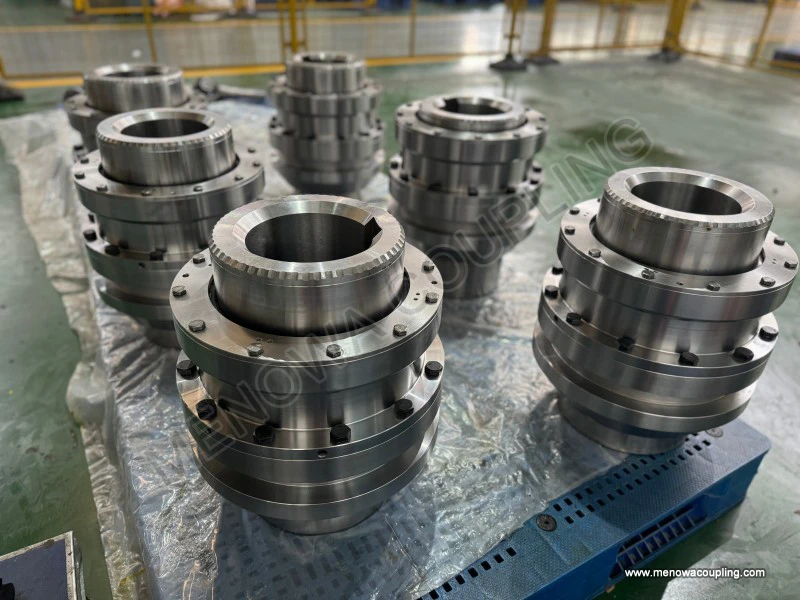
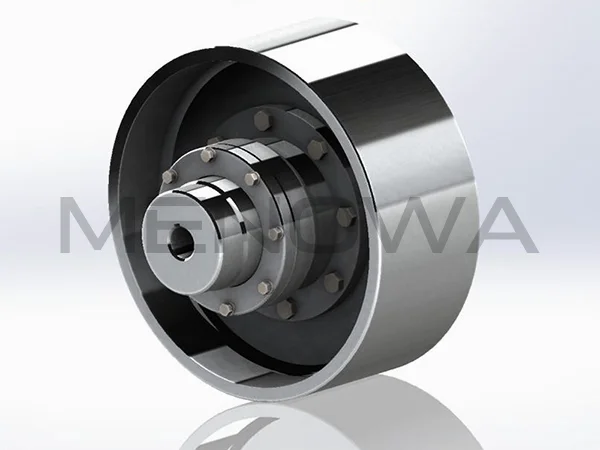
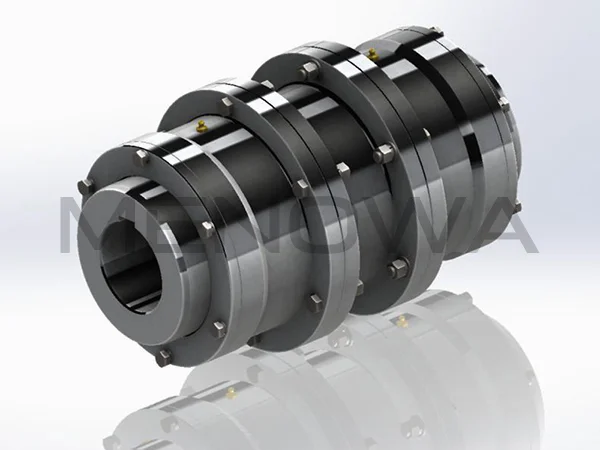
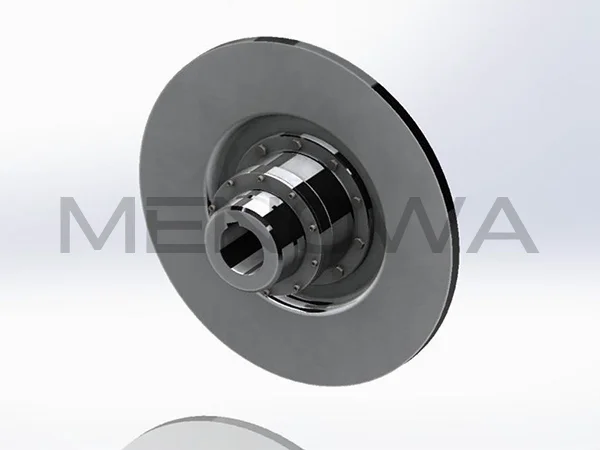
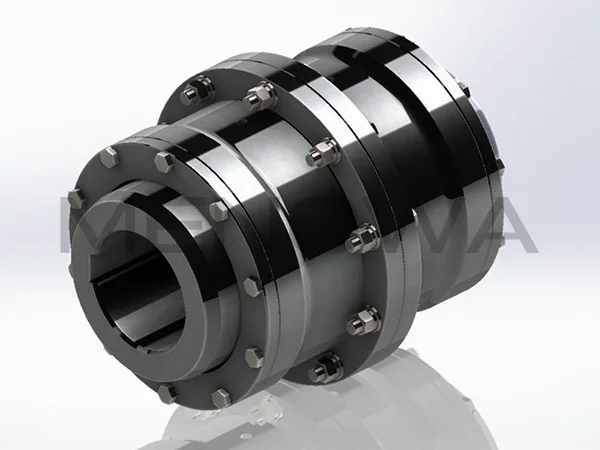
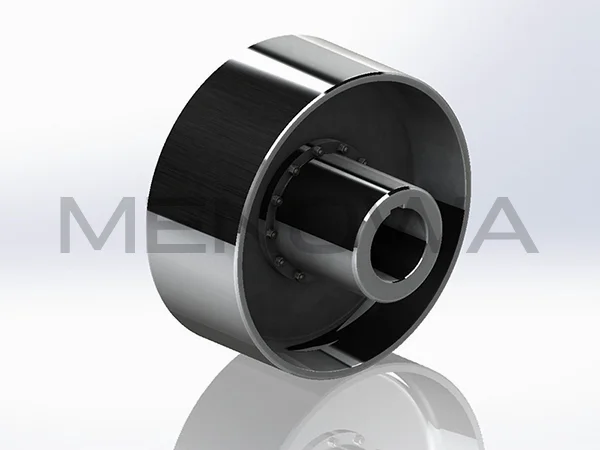
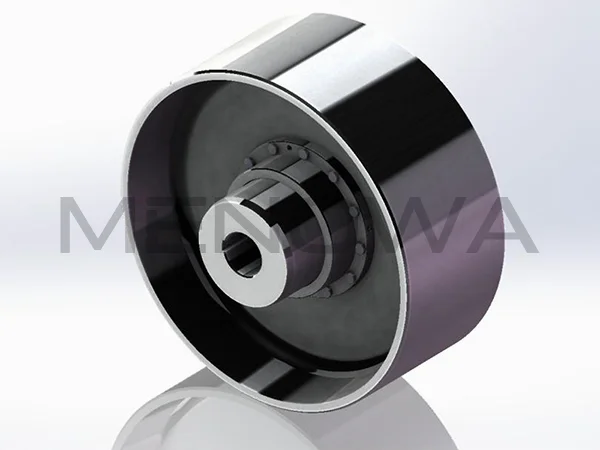
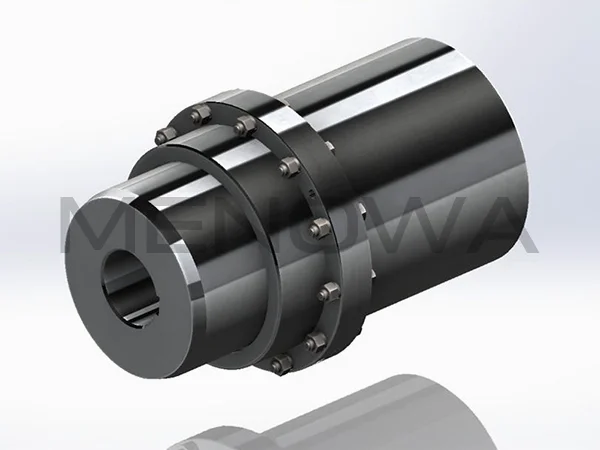
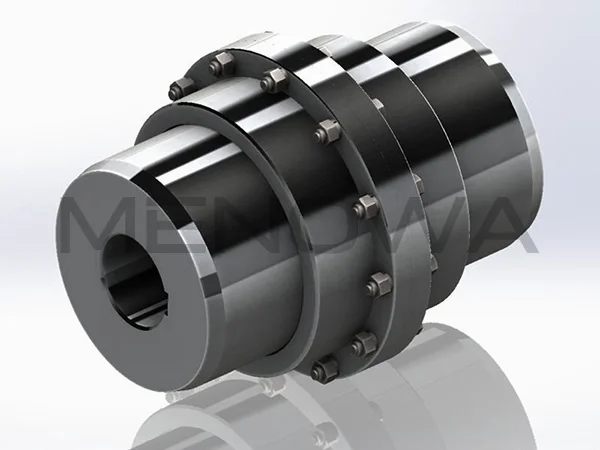
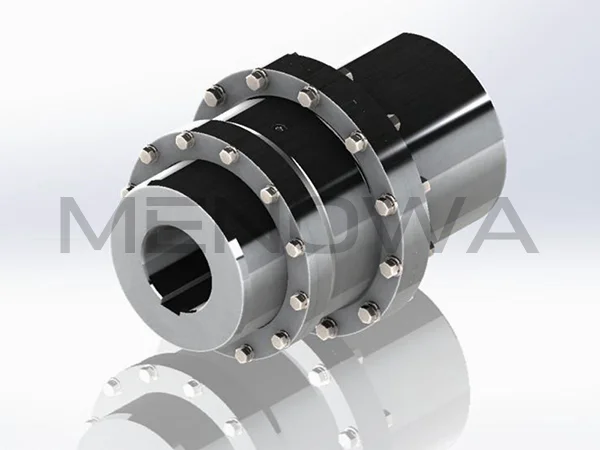
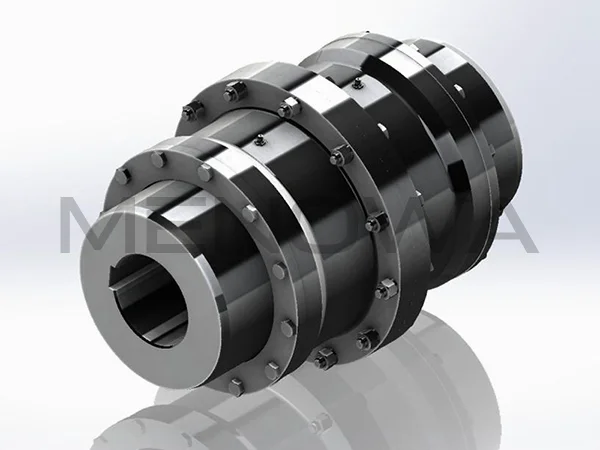
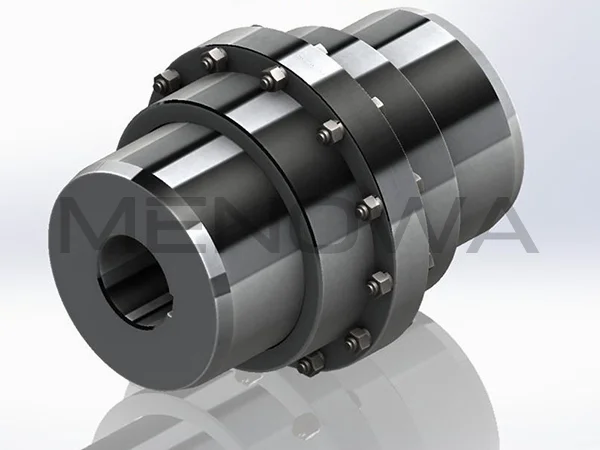
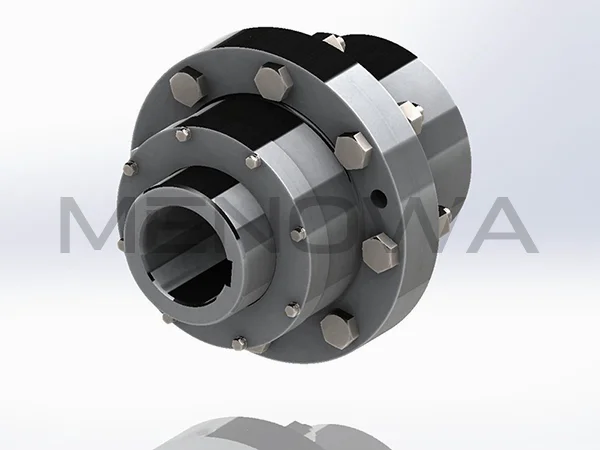
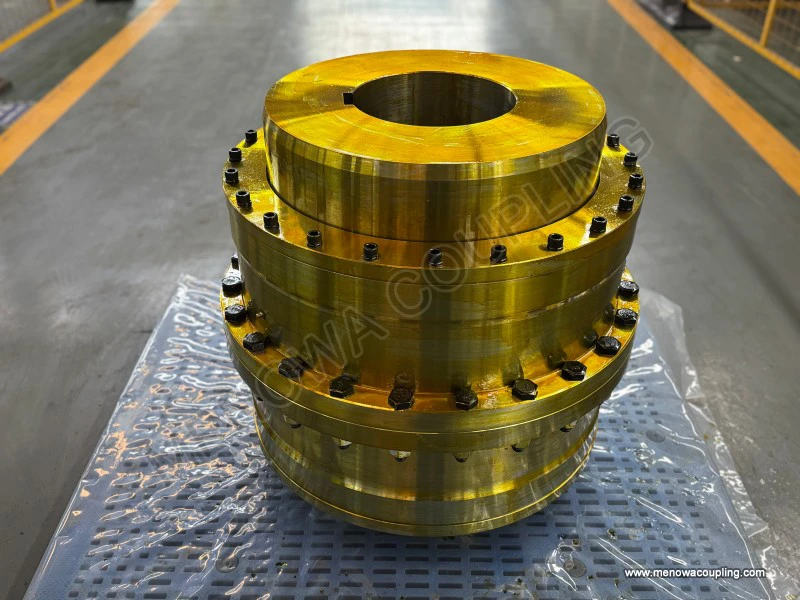
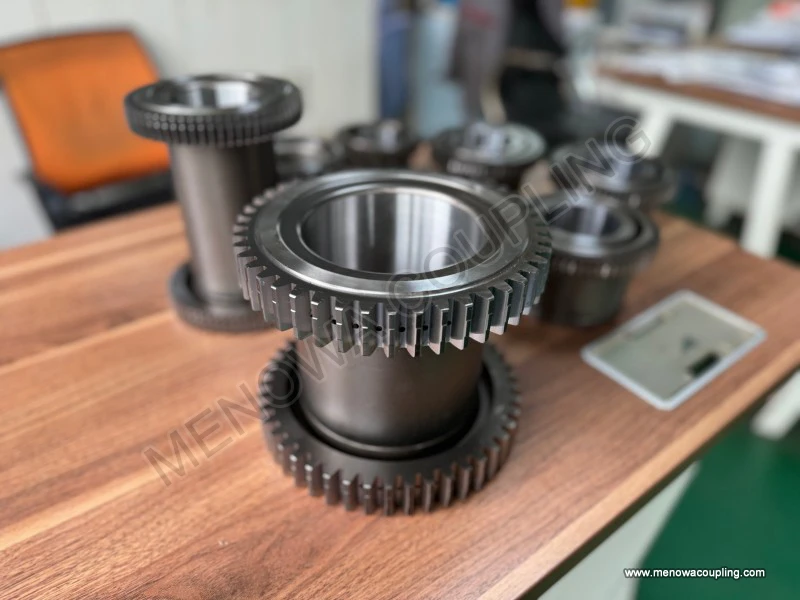
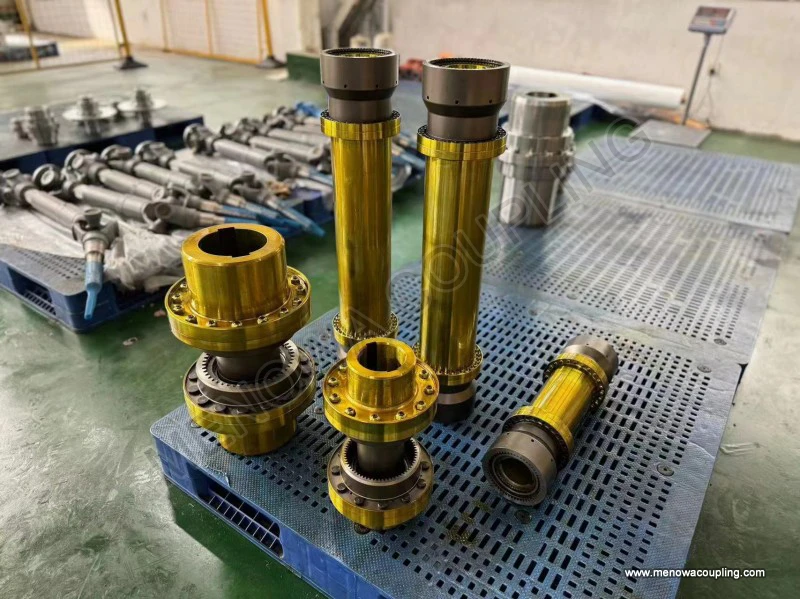
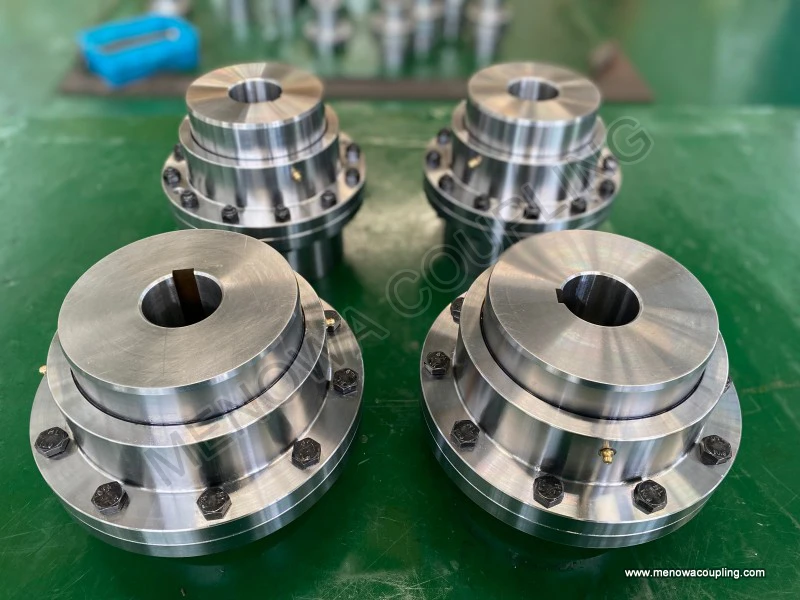
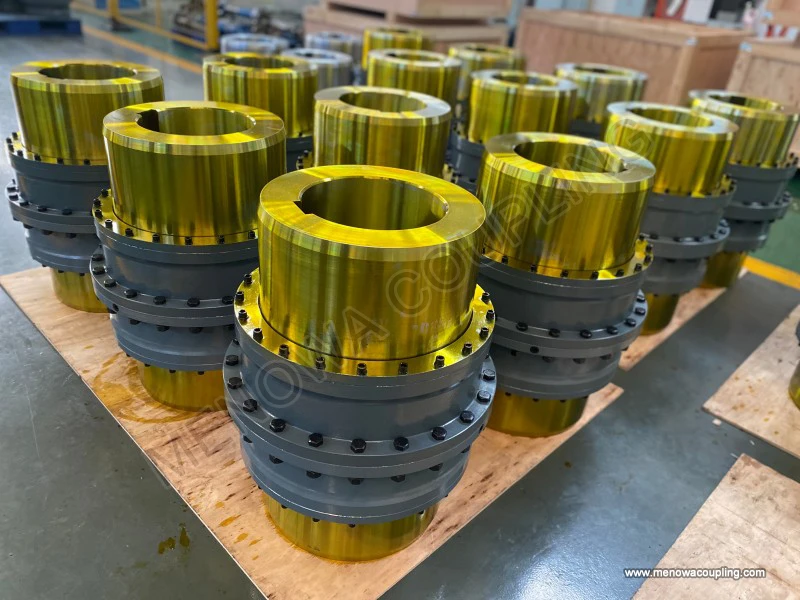
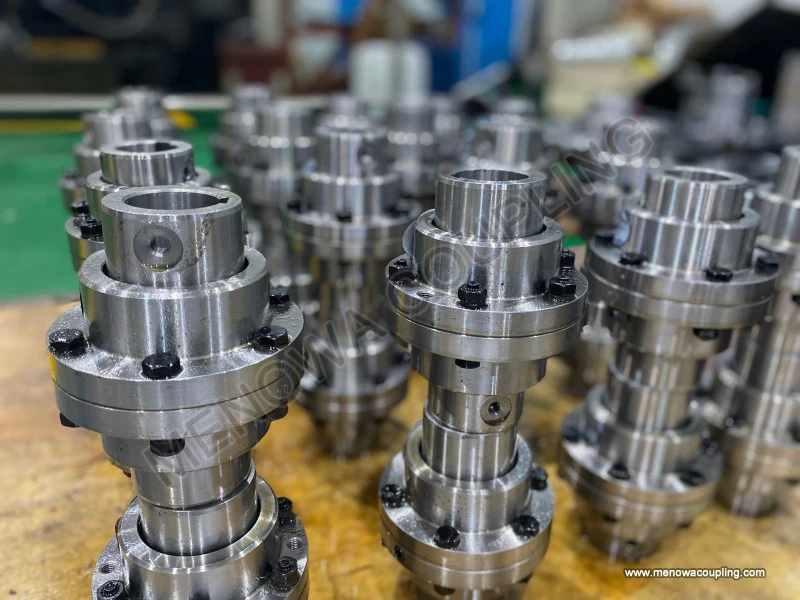
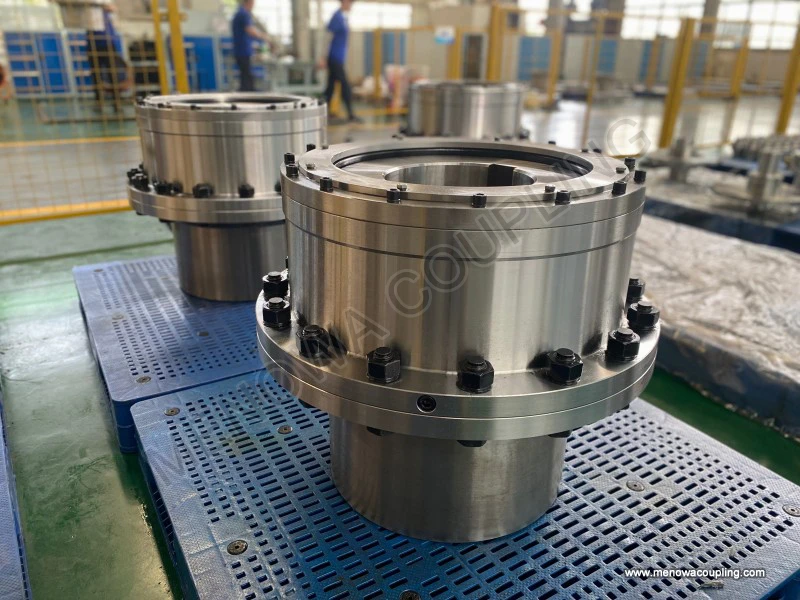
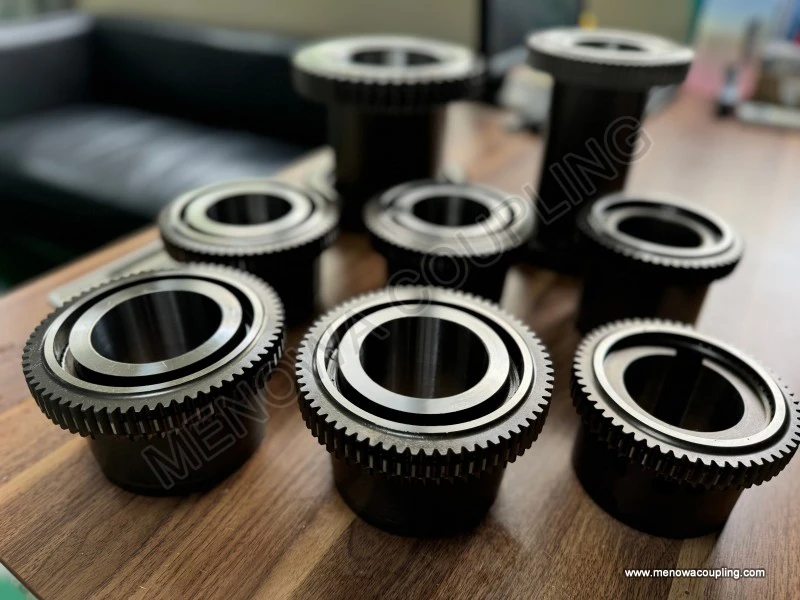
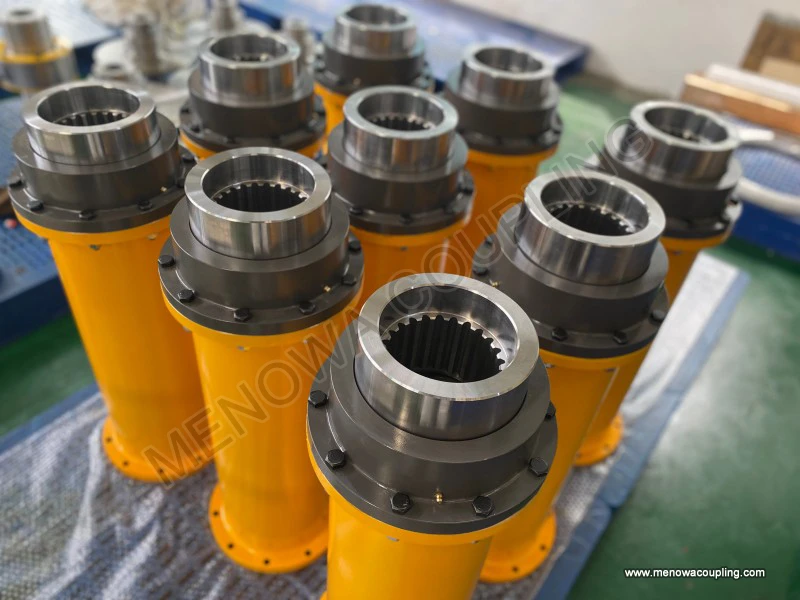
The basic structural composition of curved tooth gear coupling follows a mature and reliable modular assembly design concept, with the main body composed of two external gear hubs with curved tooth profiles, one internal gear sleeve matched with the external gear hubs, and corresponding auxiliary fastening and positioning parts for assembly and fixation. Each external gear hub is processed with continuous curved gear teeth on the outer circular surface, and the curvature center of all curved teeth is uniformly set on the central axis of the gear hub, forming a smooth and reasonable curved tooth meshing profile different from linear straight teeth. The internal gear sleeve is processed with standard internal gear teeth on the inner wall, and the basic tooth shape parameters of internal gear teeth are precisely matched with the curved external gear teeth of the two gear hubs to ensure accurate meshing fit during rotation and torque transmission. In the actual assembly process, the two external gear hubs are respectively fixedly installed on the driving shaft and driven shaft that need to be connected and transmitted, and the internal gear sleeve is sleeved on the outer side of the two groups of meshed internal and external gear teeth, forming a closed meshing transmission whole. Some optimized structural configurations of curved tooth gear coupling will add simple sealing protection structures on both ends of the internal gear sleeve, which can effectively isolate external dust, moisture, industrial corrosive media and granular impurities in the working environment from entering the internal gear meshing area, avoiding abrasive wear and chemical corrosion of the gear meshing contact surfaces, and maintaining the stability of the internal working environment of the coupling for a long time. The overall structural layout of the coupling is compact and reasonable, without redundant protruding parts and complex transmission auxiliary structures, which not only saves the installation and arrangement space of mechanical equipment transmission parts, but also facilitates the subsequent assembly, disassembly, inspection and daily maintenance work of staff in industrial production sites. The modular structural design also enables each component of the coupling to be independently processed, manufactured and replaced, reducing the difficulty of later component maintenance and replacement, and improving the overall convenience of equipment operation and management.
The core working mechanism of curved tooth gear coupling is based on the precise meshing transmission between curved external gear teeth and internal gear teeth, and the flexible displacement compensation function derived from the special curved tooth profile fit clearance and structural deformation adaptability. When the mechanical equipment starts to operate, the driving shaft drives the connected external gear hub to perform synchronous rotational motion, and the curved gear teeth on the gear hub mesh with the internal gear teeth of the outer internal gear sleeve through surface contact, efficiently transmitting rotational torque and power to the internal gear sleeve. Subsequently, the internal gear sleeve drives the other external gear hub meshed with it and the connected driven shaft to rotate synchronously, realizing the continuous and stable transmission of power and motion between the two shafts. The most critical functional advantage reflected in this working process is that the curved tooth profile can automatically adjust the gear meshing contact position according to the actual misalignment state between the two connected shafts. When radial misalignment or angular misalignment occurs between the driving shaft and the driven shaft, the curved gear teeth will not produce sharp edge contact and local stress concentration like straight gear teeth. Instead, the contact area between internal and external gear teeth can always maintain a uniform surface contact state, dispersing the contact stress on the entire tooth surface meshing area rather than concentrating on the local edge part of the gear teeth. This uniform stress distribution state fundamentally avoids the rapid wear, tooth surface scratching and tooth root fatigue crack damage caused by local excessive pressure of gear teeth under misalignment conditions. At the same time, the reasonable fit clearance reserved between the curved meshing gear teeth provides a certain movable adjustment space for axial displacement, radial offset and angular deflection between the two shafts, enabling the coupling to automatically and flexibly compensate for various slight misalignments generated during equipment installation and operation without generating additional restraining torque and extra mechanical load on the shaft and equipment bearings. In the whole torque transmission and displacement compensation process, the basic rotational speed and torque transmission stability of the coupling will not be affected by normal shaft misalignment, ensuring the consistent and reliable operation state of the mechanical transmission system.
The unique curved tooth profile design is the core technical feature that distinguishes curved tooth gear coupling from traditional straight tooth gear coupling and other types of flexible couplings, and it is also the key core factor for its excellent comprehensive transmission performance and long service life. The curved processing design of the external gear teeth takes the central axis of the gear hub as the curvature reference center, and each gear tooth presents a smooth and symmetrical curved outline in the axial direction. This special tooth shape enables the contact point of internal and external gear teeth meshing to be dynamically adjusted in real time with the deflection and offset of the connected shaft during operation, always maintaining the optimal surface meshing state. In the straight tooth gear coupling structure, once angular misalignment occurs between the two connected shafts, the meshing state of straight gear teeth will change from uniform surface contact to sharp line contact or even edge contact, resulting in instantaneous sharp increase of local contact pressure on the tooth surface, severe friction and wear of the contact part, and easy generation of vibration and impact during rotation transmission. Long-term operation under this working state will lead to gradual tooth surface wear and thinning, tooth root stress fatigue accumulation, and eventually premature failure and damage of the coupling transmission structure. In contrast, the curved tooth profile completely eliminates the hidden danger of edge contact in the meshing process. Even under relatively obvious angular and radial misalignment conditions, the gear meshing part can still maintain large-area uniform contact, the tooth surface friction is mild and uniform, and the wear rate of gear components is effectively controlled at a low level. In addition, the curved tooth design optimizes the stress conduction path of gear teeth during torque transmission, making the torque stress evenly distributed along the tooth surface and tooth root of each gear tooth, avoiding the problem of excessive concentrated stress at the tooth root caused by local load bearing, reducing the probability of tooth root fracture and fatigue damage, and greatly improving the structural bearing capacity and operational stability of the coupling under long-term heavy-load working conditions. The reasonable tooth profile curvature design also makes the meshing process of gear teeth smoother, reduces the meshing impact and rotational vibration generated in the transmission process, and optimizes the overall operation stability of the mechanical transmission system.
The selection of manufacturing materials for curved tooth gear coupling directly determines its mechanical bearing performance, wear resistance, fatigue resistance and environmental adaptability in different industrial working conditions, and the material matching design is carried out according to the actual load level and working environment characteristics of different application scenarios. Most of the main load-bearing components such as external gear hubs and internal gear sleeves are made of high-strength alloy steel materials with excellent mechanical properties. This type of alloy steel has high tensile strength, yield strength and good toughness, which can withstand the impact load and cyclic fatigue load generated by long-term heavy-load torque transmission, and will not produce permanent structural deformation and mechanical performance attenuation under continuous high-load operation. After the completion of rough machining and finish machining of gear hubs and gear sleeves, professional heat treatment processes such as carburizing and quenching or high-frequency quenching are usually carried out on the gear tooth meshing surface. The heat treatment process can significantly improve the surface hardness and wear resistance of the gear teeth, while maintaining the good toughness of the core part of the gear components, ensuring that the gear teeth have both strong wear resistance and impact resistance, avoiding tooth surface wear and tooth root brittle fracture in long-term meshing operation. For some light-load and medium-load transmission scenarios with low operating frequency and mild working environment, a small number of couplings will adopt the matching form of steel gear hubs and nylon elastic sleeves. The nylon material has the characteristics of low friction coefficient, good wear resistance and certain vibration and noise reduction effects. This material matching form does not need additional lubrication maintenance in the use process, realizing long-term maintenance-free operation, and is suitable for conventional light industrial mechanical transmission equipment with low torque demand and low misalignment compensation requirements. For curved tooth gear couplings used in special harsh working environments such as high temperature, low temperature and chemical corrosion, corresponding anti-corrosion and high-temperature resistant alloy materials will be selected, and surface anti-rust and anti-corrosion treatment will be carried out on the outer surface of components to adapt to the complex environmental media and extreme temperature working conditions, ensuring that the coupling can maintain stable working performance and structural integrity in harsh environments for a long time.
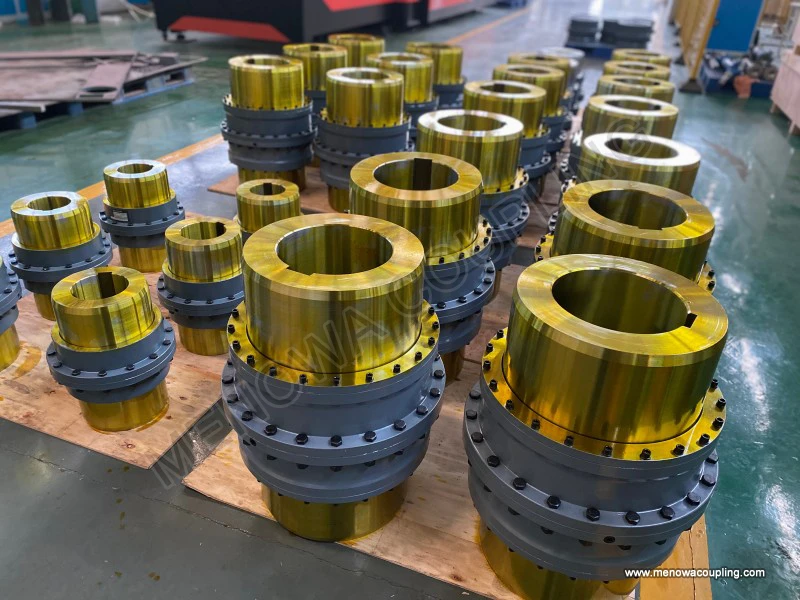
Curved tooth gear coupling has a wide range of industrial application scenarios, covering almost all mechanical transmission fields that require heavy-load torque transmission and shaft misalignment compensation, and it shows excellent adaptability and operational reliability in different industrial production links. In the metallurgical industry, various rolling mill production lines, smelting auxiliary transmission equipment and metal material processing machinery need to transmit large torque for a long time, and the equipment will generate obvious structural thermal deformation and foundation micro-displacement during continuous high-temperature operation, resulting in frequent shaft misalignment problems. Curved tooth gear coupling can stably transmit heavy torque and automatically compensate for various misalignments, ensuring the continuous operation of metallurgical production equipment and avoiding production interruption and equipment failure caused by coupling transmission failure. In the mineral processing and mining industry, mining crushing equipment, ore conveying machinery and mineral processing transmission devices often work in dusty, high-vibration and heavy-impact working environments, with harsh working conditions and high requirements for coupling wear resistance and impact resistance. The sturdy structural design and excellent wear resistance of curved tooth gear coupling enable it to adapt to the severe working conditions of mining operations, maintain stable transmission performance under long-term vibration and impact load, and reduce the frequency of equipment maintenance and downtime. In the chemical industry, various chemical reaction kettles, fluid conveying pumps and chemical production supporting transmission machinery have high requirements for the sealing stability and operational reliability of transmission parts, and the working environment contains certain corrosive media. The sealed structural form and optional anti-corrosion material configuration of curved tooth gear coupling can effectively resist chemical corrosion, ensure the stable operation of transmission connections, and avoid equipment leakage and production safety hazards caused by coupling damage. In engineering construction machinery, such as excavators, cranes, concrete mixing equipment and road construction machinery, the transmission system needs to bear variable load and impact load frequently, and the equipment will produce frequent shaft offset during mobile operation and construction work. The good misalignment compensation performance and heavy-load bearing capacity of curved tooth gear coupling meet the dynamic transmission needs of construction machinery, ensuring the flexible and stable power output of construction equipment. In addition, it is also widely used in power generation equipment, papermaking machinery, textile industrial transmission equipment, cement production lines and other industrial fields, becoming a reliable transmission connection guarantee for various mechanical equipment.
The installation and commissioning work of curved tooth gear coupling is an important link to ensure its subsequent stable operation and give full play to its comprehensive performance, and standardized installation operation and accurate alignment commissioning can effectively reduce the initial operating wear of the coupling and extend its overall service life. Before formal installation, staff need to carefully check the processing quality and structural integrity of each component of the coupling, confirm that there are no obvious scratches, deformation, tooth surface damage and casting forging defects on the external gear hub, internal gear sleeve and auxiliary fastening parts, and clean the surface dirt, rust and residual processing impurities of all components to ensure that the gear meshing surface and assembly contact surface are clean and smooth without foreign matter interference. During the formal assembly process, the external gear hubs need to be respectively installed on the driving shaft and driven shaft in place, and the fastening connecting parts are tightened evenly according to the assembly operation specifications to ensure that the gear hubs and the shafts are fixedly connected without relative rotation and axial displacement. After the installation of the two gear hubs is completed, the coaxiality and parallelism of the two connected shafts are preliminarily adjusted to reduce the initial installation misalignment error within a reasonable range, avoiding excessive initial misalignment leading to excessive meshing wear of the coupling in the initial operation stage. Then the internal gear sleeve is sleeved on the outer side of the two groups of curved gear teeth to complete the meshing assembly of internal and external gears, and the sealing protection parts at both ends are installed and fixed to ensure the tightness of the internal meshing cavity. After the assembly is completed, precision alignment commissioning is required by professional detection tools to fine-tune the radial, angular and axial position of the two shafts, control the misalignment error within the optimal compensation range allowed by the coupling design, and avoid excessive misalignment exceeding the compensation limit and affecting the transmission performance and service life. After the completion of installation and commissioning, no-load trial operation shall be carried out first to check whether the coupling has abnormal vibration, abnormal noise and rotational jamming during operation. After confirming that the no-load operation is stable, load test operation can be carried out, and the operation state of the coupling can be observed to ensure that there is no abnormal temperature rise and vibration impact during formal load operation, and then the equipment can be put into long-term formal production and operation.
Daily maintenance and regular maintenance management are essential to maintain the long-term stable performance and extend the service cycle of curved tooth gear coupling, and scientific and standardized maintenance measures can effectively reduce component wear, avoid sudden failure and reduce equipment operation and maintenance costs. For curved tooth gear couplings adopting all-steel structural configuration and requiring lubrication protection, regular inspection and replacement of internal lubricating grease are key maintenance contents. Long-term meshing operation of gear teeth will lead to gradual aging and deterioration of lubricating grease, reduced lubricating performance, and easy generation of wear impurities. Regular replacement of lubricating grease can maintain good lubrication effect on the gear meshing surface, reduce friction and wear between gear teeth, and take away the fine wear debris generated by meshing operation, avoiding abrasive wear caused by impurity accumulation. In the daily equipment inspection work, staff need to regularly check the operating vibration, operating temperature and running noise of the coupling during equipment operation. If abnormal vibration, excessive temperature rise and sharp abnormal noise are found, it indicates that the coupling may have excessive misalignment, insufficient lubrication or gear tooth wear and failure, and the equipment should be shut down in time for inspection and troubleshooting to avoid small faults evolving into major structural damage and affecting normal production. It is also necessary to regularly check the fastening state of all connecting and fastening parts of the coupling to prevent the fastening parts from loosening due to long-term vibration operation, resulting in displacement and meshing deviation of coupling components and affecting transmission stability. For couplings working in dusty, humid and corrosive environments, the sealing protection structure needs to be inspected regularly to check for sealing damage, aging and failure, and replace the aging sealing parts in time to prevent external harmful media from entering the internal meshing cavity and causing gear tooth corrosion and abrasive wear. For long-term idle equipment, the coupling components should be regularly inspected for rust and corrosion, and anti-rust maintenance treatment should be carried out to ensure that the structural performance of the coupling will not be affected by long-term storage. Through systematic daily inspection and regular maintenance, the curved tooth gear coupling can always maintain a good working state, reduce the failure rate in the operation process, and ensure the long-term stable and efficient operation of the mechanical transmission system.
In the actual industrial operation process, curved tooth gear coupling may encounter some common minor faults and wear problems due to long-term load operation, working environment impact and installation and commissioning errors, and targeted fault analysis and reasonable troubleshooting and repair measures can quickly restore the working performance of the coupling and avoid affecting production progress. The common abnormal phenomena in operation mainly include excessive operating vibration, abnormal meshing noise, obvious temperature rise of the coupling shell and accelerated wear of gear teeth. Excessive operating vibration is mostly caused by excessive misalignment of the two connected shafts, loosening of fastening parts or uneven wear of gear teeth meshing surfaces. At this time, it is necessary to shut down for re-alignment calibration, re-tighten all fastening parts, and check the wear degree of gear teeth, and repair or replace the severely worn gear components in time. Abnormal meshing noise is usually due to insufficient internal lubrication of the coupling, aging and failure of lubricating grease, or foreign impurities entering the meshing cavity, resulting in dry friction and abrasive friction between gear teeth. The solution is to clean the internal meshing cavity thoroughly, remove internal impurities, and refill with new high-quality lubricating grease to restore the lubrication effect between gear teeth. Obvious temperature rise of the coupling shell is generally caused by excessive load operation for a long time, excessive misalignment leading to increased meshing friction, or blocked heat dissipation of the sealed cavity. It is necessary to check whether the equipment load exceeds the bearing range of the coupling, readjust the shaft misalignment to the standard range, and ensure the normal heat dissipation condition of the coupling installation position. Accelerated gear tooth wear is mostly related to poor working environment sealing, long-term lack of maintenance and unreasonable material matching. It is necessary to strengthen the sealing protection maintenance of the coupling, strictly implement the regular maintenance plan, and replace the coupling with appropriate material configuration according to the actual working conditions. Timely and effective troubleshooting and targeted repair can not only quickly eliminate the abnormal operation state of the coupling, but also avoid further expansion of component damage, reduce maintenance costs and shorten equipment downtime.
With the continuous upgrading and development of modern industrial mechanical equipment towards high power, heavy load, high efficiency and long-cycle stable operation, the performance requirements for various mechanical transmission connecting components are also constantly improving, and curved tooth gear coupling is also constantly optimized and upgraded in structural design, material technology and processing technology to adapt to the evolving industrial production needs. In terms of structural optimization, the overall structural layout of the coupling is more compact and lightweight on the premise of ensuring bearing capacity, which is convenient for installation and arrangement in small-space mechanical equipment. The tooth profile design is further optimized by using professional mechanical simulation calculation technology to make the meshing contact stress distribution more uniform, the misalignment compensation range more reasonable, and the transmission efficiency further improved. In terms of material processing technology, new high-strength and wear-resistant alloy materials are continuously applied to the production and manufacturing of couplings, and more precise heat treatment processes and finish machining technologies are adopted to improve the machining accuracy and surface finish of gear teeth, reduce meshing friction loss, and further improve the wear resistance and fatigue resistance of products. In terms of functional adaptation, more diversified structural forms are derived for different special working conditions, including high-temperature resistant structural configurations, low-temperature anti-brittle configurations, and high-corrosion resistant configurations, which can meet the transmission connection needs of various special industrial scenarios. In the future industrial mechanical transmission field, curved tooth gear coupling will still rely on its unique structural advantages, excellent comprehensive performance and wide scene adaptability, and continue to play an irreplaceable core role in heavy-load mechanical transmission and shaft misalignment compensation, providing reliable basic component guarantee for the stable operation and efficient production of various industrial mechanical equipment.
https://www.menowacoupling.com/industrial-coupling/curved-tooth-gear-coupling.html
 WeChat
 WhatsApp