Flexible Diaphragm Coupling
In the complex and interconnected mechanical transmission systems that underpin modern industrial production and precision mechanical operation, the reliable connection between rotating shafts of different power equipment has always been a core link that determines the overall operating stability, operational efficiency and long-term service cycle of the entire mechanical unit. Various types of coupling components have been developed and optimized continuously with the upgrading of industrial manufacturing technology and the diversification of equipment operating conditions, each adapting to specific torque transmission requirements, shaft alignment states and environmental operating scenarios. Among all these coupling types, flexible diaphragm coupling has gradually become a mainstream connecting component widely used in high-speed operation, precision transmission and harsh working condition scenarios by virtue of its unique metal elastic deformation working mode, compact structural layout, stable torque transmission performance and excellent displacement compensation capacity. Unlike traditional coupling products that rely on rubber elastic parts, gear meshing or friction sliding structures to realize power transmission and shaft deviation adaptation, flexible diaphragm coupling adopts all-metal structural design without any vulnerable rubber accessories, lubrication-dependent friction parts or complex meshing transmission structures, which fundamentally avoids many common operating problems such as aging failure of non-metal parts, lubrication oil deterioration and leakage, meshing wear and transmission backlash that often occur in other coupling forms. This inherent structural advantage makes flexible diaphragm coupling maintain stable and consistent working performance for a long time in various extreme working environments including high temperature, low temperature, chemical corrosion and high-speed continuous operation, and effectively reduce the additional maintenance workload and equipment downtime caused by coupling failure in industrial production and mechanical operation processes.
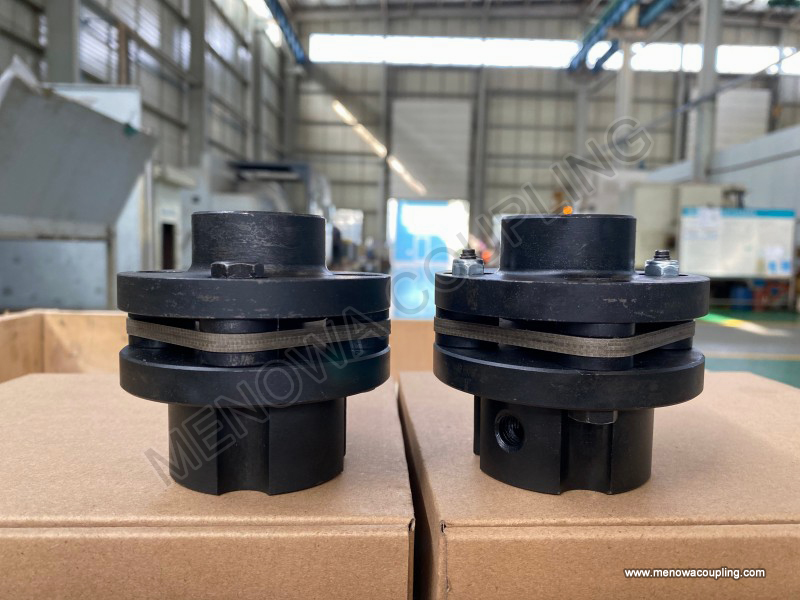
The essential working logic of flexible diaphragm coupling is based on the elastic deformation characteristics of thin metal diaphragm components, which realizes dual core functions of stable torque transmission between driving shaft and driven shaft and automatic compensation of various shaft misalignment deviations through controllable and reversible elastic deformation of diaphragms during rotating operation. In the actual assembly and operation process of mechanical equipment, it is almost impossible to achieve absolute perfect coaxial alignment between the driving shaft and the driven shaft connected by the coupling due to various objective factors. These influencing factors include inevitable machining errors in the production and manufacturing process of mechanical equipment components, tiny position deviations generated during equipment installation and debugging, slight structural deformation of the equipment base caused by long-term load operation, thermal expansion and contraction deformation of shaft components caused by continuous high-speed operation and temperature change, and subtle vibration displacement generated during equipment startup, shutdown and variable load operation. All these factors will lead to three typical forms of misalignment between the two connected shafts, namely angular misalignment, axial misalignment and radial misalignment. Angular misalignment means that the central axes of the driving shaft and the driven shaft are not parallel and intersect at a certain tiny angle; axial misalignment refers to the relative displacement of the two shafts along the axial direction due to thermal expansion and contraction or installation gaps; radial misalignment is the radial offset of the central axes of the two shafts in the horizontal and vertical directions. If these misalignment deviations cannot be effectively compensated by the coupling during equipment operation, huge additional radial force, axial force and bending moment will be continuously generated between the shafts and the connected bearings, gears and other core components, which will not only cause severe vibration and noise during equipment operation, reduce the accuracy of power transmission and mechanical operation, but also accelerate the wear and fatigue damage of bearings and shaft parts, greatly shorten the overall service life of the equipment, and even lead to sudden equipment failure and production shutdown in severe cases. Flexible diaphragm coupling perfectly solves this series of problems through the reasonable structural design and elastic deformation performance of metal diaphragms, absorbing and adapting to various misalignment deviations through the slight elastic bending and stretching deformation of diaphragms in the working process, ensuring that torque can be transmitted smoothly and stably between the two shafts without generating excessive additional load on the shafting and supporting components, and maintaining the smooth and reliable operation of the entire transmission system.
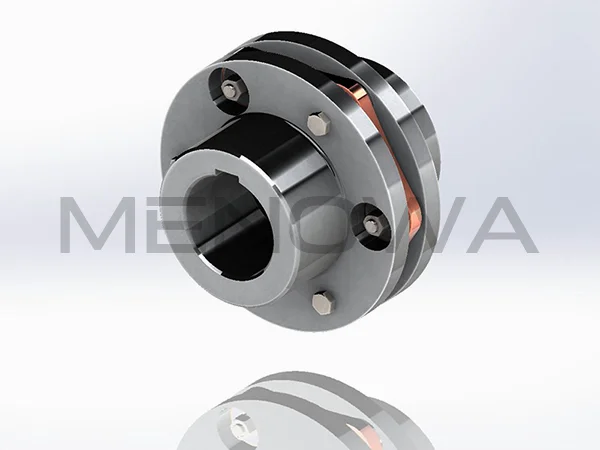
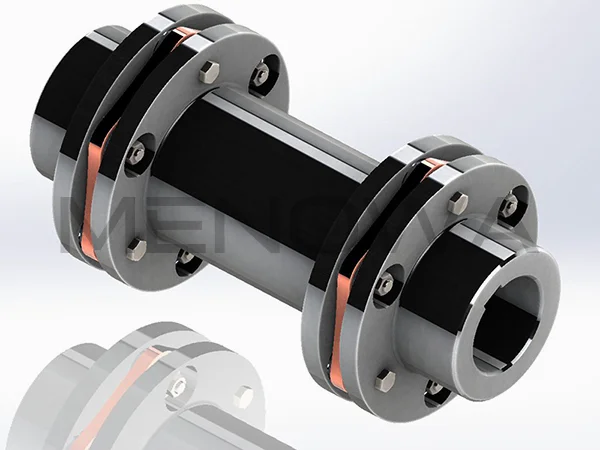
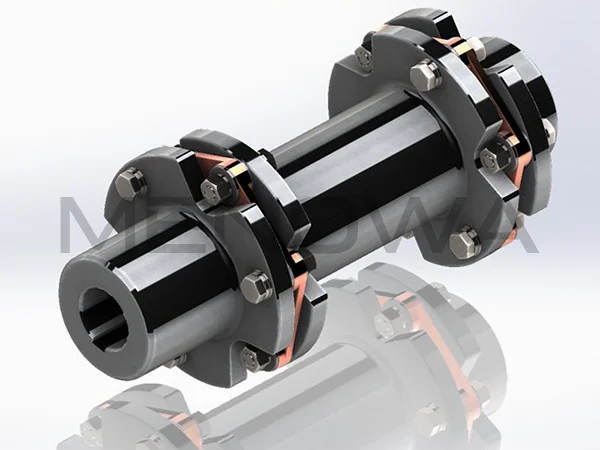
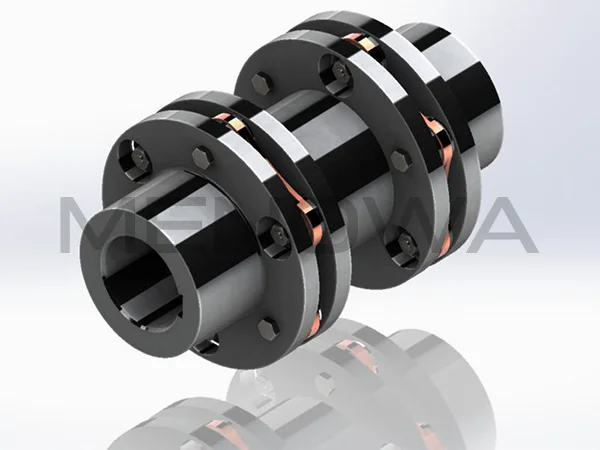
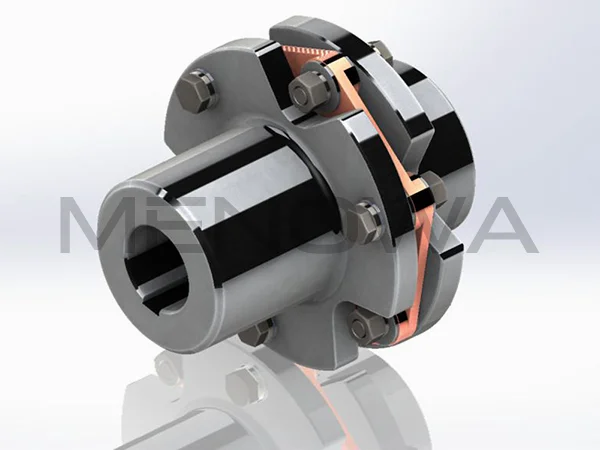
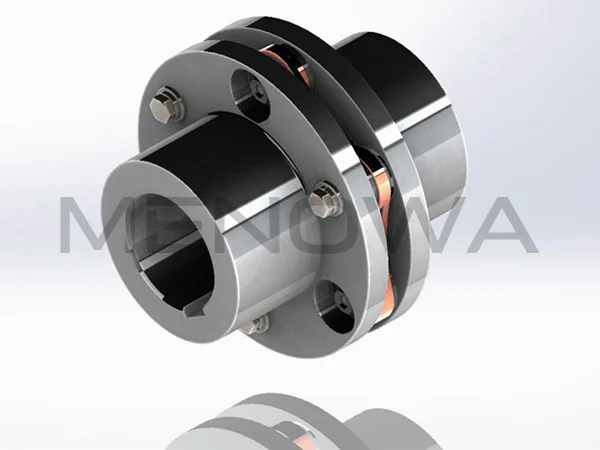
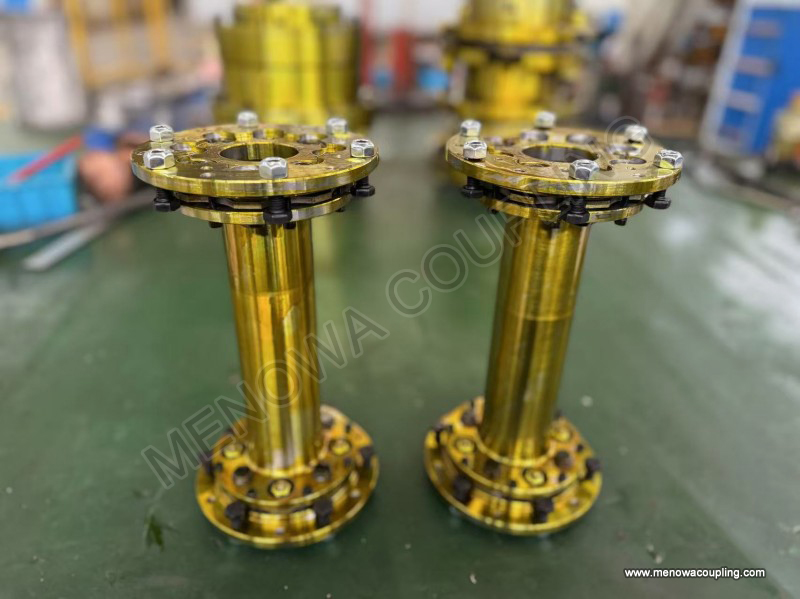
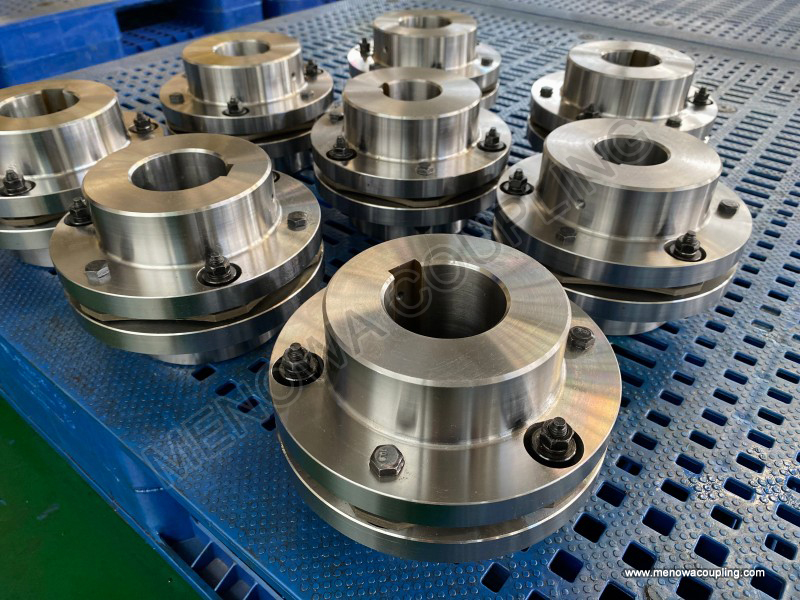
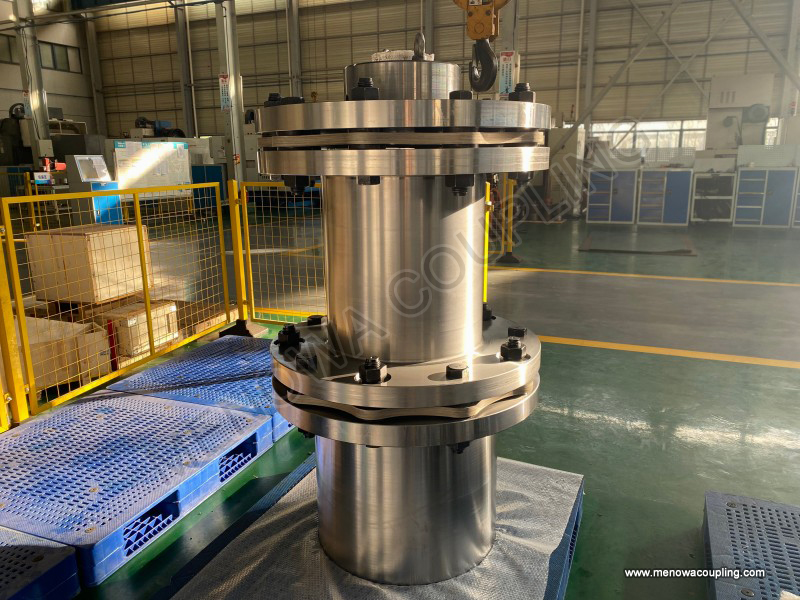
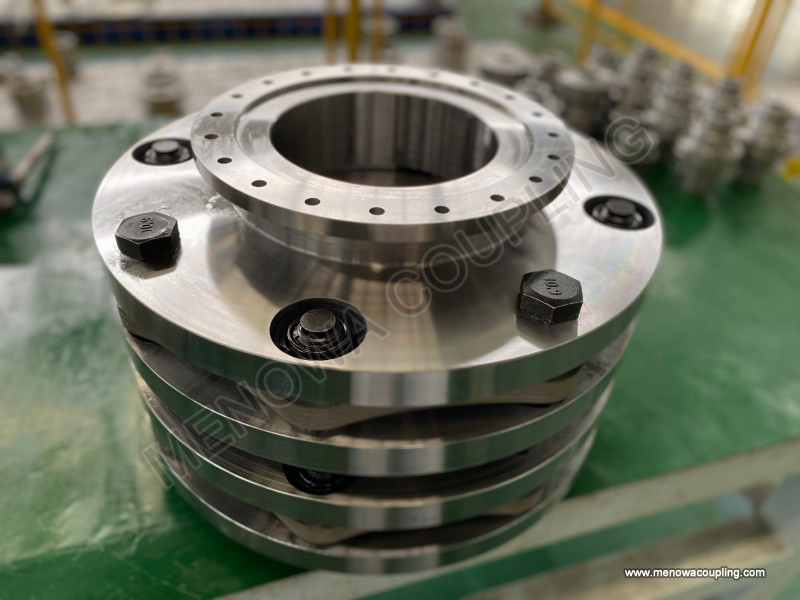
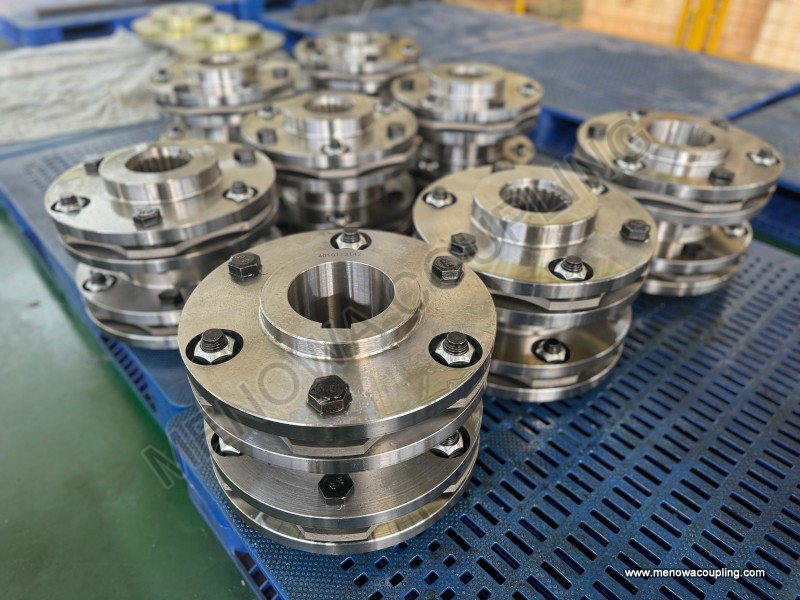
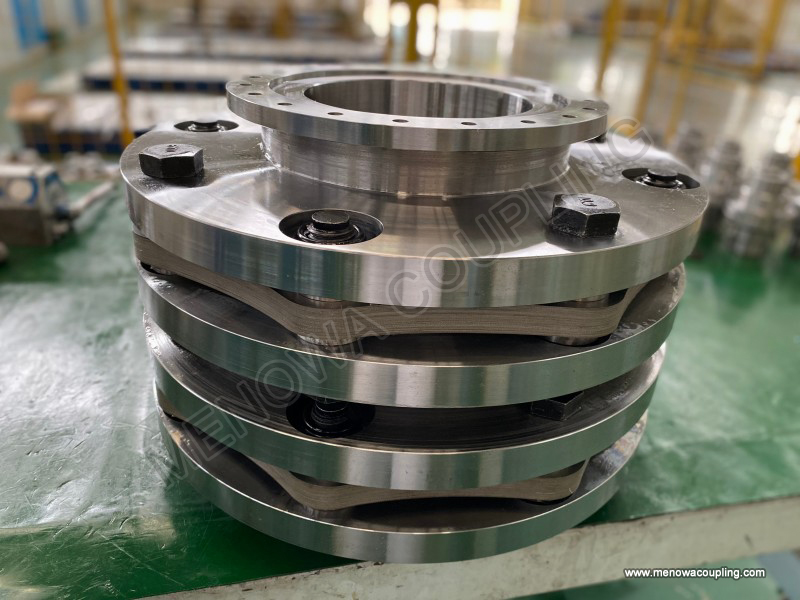
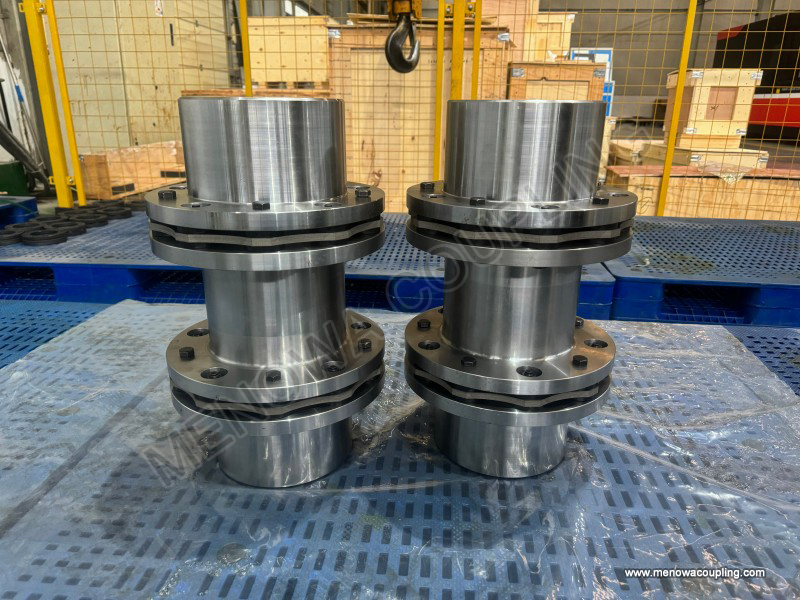
The basic structural composition of flexible diaphragm coupling is concise and reasonable, with no redundant auxiliary parts, and the overall structural layout is compact and neat, which is convenient for equipment installation, disassembly and later routine inspection and maintenance. The main components of the coupling include left and right connecting hubs, high-strength connecting fasteners and core flexible diaphragm components. The connecting hubs on both sides are respectively sleeved and fixed on the driving shaft and the driven shaft of the mechanical equipment, relying on the precise matching between the inner hole of the hub and the outer diameter of the shaft to ensure the stable connection and synchronous rotation between the coupling and the shaft body. The high-strength fasteners mostly adopt bolt and nut combinations made of high-quality alloy materials, which are responsible for closely connecting the connecting hubs on both sides with the intermediate diaphragm components, ensuring that no relative displacement occurs between the hubs and the diaphragms during high-speed rotation and torque transmission, and avoiding transmission failure caused by loose connection. The metal diaphragm is the most critical core functional component of the entire flexible diaphragm coupling, and all the flexible deformation and displacement compensation functions as well as stable torque transmission tasks are completed by this part alone. According to different structural forms and displacement compensation capabilities, flexible diaphragm couplings can be divided into single-diaphragm structural type and double-diaphragm structural type, and different structural types correspond to different application scenarios and working condition requirements respectively. The single-diaphragm flexible diaphragm coupling has an extremely simple overall structure and a small number of components, with low overall weight and compact installation space occupation, and is more suitable for mechanical transmission occasions where the misalignment deviation between shafts is small, the operating load is stable and the rotation speed is relatively moderate. Its single-layer diaphragm structure can realize basic axial and angular displacement compensation, and can meet the daily operation needs of conventional general mechanical equipment. The double-diaphragm flexible diaphragm coupling is equipped with two sets of independent metal diaphragm components and a middle spacing connecting structure on the basis of the single-diaphragm structure, and the two sets of diaphragms cooperate with each other through synchronous elastic deformation during operation, which greatly improves the comprehensive compensation capability for angular, axial and radial misalignment. The compensation range of angular displacement of the double-diaphragm structure is significantly improved compared with the single-diaphragm structure, and it can bear larger radial offset and axial telescopic displacement, making it more suitable for high-speed operation, large torque transmission and complex working condition scenarios with frequent shaft misalignment changes.
The material selection of each component of flexible diaphragm coupling, especially the metal diaphragm material, directly determines the overall mechanical performance, deformation resistance, fatigue life and environmental adaptability of the coupling, and the material selection process needs to comprehensively consider multiple key factors such as torque transmission demand, operating rotation speed, working temperature range, environmental corrosion degree and long-term cyclic load resistance. Metal diaphragms need to have excellent comprehensive mechanical properties, including high tensile strength, good elastic recovery performance, strong fatigue resistance and stable mechanical performance retention under long-term cyclic deformation. In the actual production and manufacturing process, high-quality stainless steel materials and special titanium alloy materials are the most commonly used diaphragm manufacturing raw materials. Stainless steel materials have moderate strength and elasticity, good corrosion resistance and low comprehensive production cost, and can maintain stable performance in conventional industrial environments with normal temperature and common atmospheric corrosion, meeting the use needs of most general industrial mechanical transmission equipment. Titanium alloy materials have higher specific strength, better high-temperature resistance and low-temperature resistance, stronger corrosion resistance to various chemical corrosive media, and more excellent fatigue resistance under long-term high-frequency cyclic deformation, so they are often used in flexible diaphragm couplings applied in special harsh working conditions such as high-temperature industrial production lines, low-temperature refrigeration mechanical equipment and chemical industry corrosion environments. The connecting hubs on both sides of the coupling are mostly made of high-strength alloy steel through integral forging and precision machining. The integral forging process ensures the overall structural rigidity and impact resistance of the hub, avoiding structural deformation or cracking of the hub under large torque and impact load; precision machining ensures the dimensional accuracy of the inner hole and connecting bolt holes of the hub, ensuring the assembly accuracy and rotation balance of the entire coupling. The connecting fasteners are made of high-strength alloy steel with special heat treatment process, which has high tensile strength and shear resistance, ensuring that the fasteners will not deform, loosen or break during long-term high-speed rotation and torque transmission, and maintaining the connection stability and operational safety of the coupling for a long time.
In the actual torque transmission process of flexible diaphragm coupling, the entire power transmission process is efficient and direct with no intermediate transmission links and no energy loss caused by friction and sliding. When the driving shaft of the mechanical equipment starts to rotate and output power and torque, the torque is first transmitted to the connecting hub on the driving side fixed on the shaft body, and then the torque is transmitted to the metal diaphragm component through the fastening action of high-strength connecting bolts. Under the action of torque, the metal diaphragm undergoes slight elastic shear and bending deformation, and the torque is stably transmitted to the connecting hub on the driven side through the rigid force transmission part of the diaphragm, and finally the torque is transmitted to the driven shaft connected with the driven hub, realizing the synchronous rotation and power transmission between the driving equipment and the driven equipment. Throughout the whole torque transmission process, the flexible deformation part of the metal diaphragm can freely produce tiny elastic displacement according to the actual misalignment state between the two shafts, automatically adapting to angular, axial and radial misalignment deviations, without generating additional restraint force and bending moment on the shafting system. This unique force transmission and deformation mode enables the flexible diaphragm coupling to achieve almost lossless torque transmission, with high transmission efficiency and no power attenuation in the transmission process. At the same time, since there is no relative sliding, friction and meshing movement between any components inside the flexible diaphragm coupling, there will be no mechanical wear between parts, no need to add any lubricating oil or grease for lubrication and maintenance, and no wear debris and lubricant pollution will be generated during operation. This maintenance-free working feature not only reduces the daily operation and maintenance cost of mechanical equipment, but also avoids equipment operation faults caused by lubricant deterioration, leakage and insufficient lubrication, and is particularly suitable for mechanical equipment that is not easy to disassemble and maintain or has high requirements for production environment cleanliness.
The dynamic balance performance of flexible diaphragm coupling is extremely excellent, which is an important reason why it is widely used in various high-speed rotating mechanical equipment. In the structural design and manufacturing process of flexible diaphragm coupling, all components are processed with high precision, and the overall structural symmetry is strictly controlled. After the completion of component processing and assembly, the overall dynamic balance calibration treatment will be carried out to ensure that the coupling will not generate unbalanced centrifugal force during high-speed rotation. For high-speed mechanical equipment such as high-speed fans, centrifugal pumps, turbine machinery and precision motor transmission equipment, the unbalanced centrifugal force generated by rotating components will cause severe equipment vibration, affecting the stability of equipment operation and the accuracy of mechanical processing, and even causing damage to equipment components in serious cases. Flexible diaphragm coupling effectively avoids this problem by virtue of its symmetrical structural design and precise dynamic balance processing, and can maintain stable rotation state even under ultra-high-speed operating conditions, with small vibration amplitude and low operating noise. In addition, the all-metal elastic structure of the flexible diaphragm coupling has good vibration damping and buffering performance. When the equipment is started, stopped or operated under variable load conditions, the elastic deformation of the metal diaphragm can absorb and buffer the instantaneous impact vibration and load fluctuation generated in the transmission process, reduce the vibration resonance phenomenon of the shafting system, protect the motor, bearing and other precision core components from impact damage, and extend the overall service life of the equipment.
Compared with other common types of couplings used in industrial mechanical transmission, flexible diaphragm coupling has many prominent comprehensive performance advantages in structural design, operating performance and application adaptability. Different from elastomeric flexible couplings that rely on rubber or plastic elastic parts for deformation and compensation, flexible diaphragm coupling adopts all-metal structural design, so it will not face the problem of aging, hardening, softening and failure of non-metal elastic parts due to long-term use, temperature change and environmental erosion. Elastomeric couplings have a limited service life and need regular replacement of elastic parts, otherwise they will easily cause transmission failure and shafting vibration, while flexible diaphragm coupling has a long service life and stable performance attenuation speed, and can work continuously for a long time without frequent replacement and maintenance. Compared with gear couplings that rely on gear meshing for torque transmission, flexible diaphragm coupling has no gear meshing wear and backlash problems, no need for regular lubrication and oil replacement, low operating noise and small additional load on bearings. Gear couplings are prone to meshing wear and tooth surface damage after long-term operation, resulting in reduced transmission accuracy and increased vibration and noise, while flexible diaphragm coupling can maintain accurate synchronous rotation transmission without transmission backlash, which is very suitable for precision mechanical transmission occasions requiring high rotation accuracy. Compared with rigid couplings that cannot compensate shaft misalignment, flexible diaphragm coupling has reliable multi-directional displacement compensation capability, which can effectively protect shafting components from additional stress damage caused by installation deviation and operation deformation, and improve the overall operation stability and safety of equipment.
Flexible diaphragm coupling has a wide range of industrial application scenarios, covering almost all fields of mechanical transmission requiring stable torque transmission and shaft misalignment compensation, and can adapt to different working conditions from conventional general mechanical equipment to high-precision and high-end special mechanical equipment. In the field of industrial pump transmission, various water supply pumps, chemical delivery pumps, oil transfer pumps and circulating water pumps need to be connected with driving motors through couplings. These pump equipment will generate certain shaft misalignment due to installation deviation and thermal deformation during long-term operation. Flexible diaphragm coupling can effectively compensate these deviations, ensure the stable operation of pump body and motor, reduce vibration and noise, and avoid bearing damage and pump body failure caused by misalignment. In the field of fan and blower equipment, high-speed industrial fans, ventilation blowers and dust removal fans operate continuously for a long time with high rotation speed and large vibration amplitude. The excellent dynamic balance performance and vibration damping performance of flexible diaphragm coupling can ensure the synchronous stable operation of fan and driving motor, reduce equipment vibration, and extend the service life of fan blades and motor bearings. In the field of precision mechanical processing equipment, various machine tools, precision machining centers and automation processing equipment have extremely high requirements for transmission accuracy and rotation stability. Flexible diaphragm coupling can realize backlash-free precision torque transmission, ensure the processing accuracy of mechanical equipment, and will not affect the processing quality due to shafting vibration and transmission deviation.
In the petrochemical and chemical industry production environment, many mechanical equipment need to operate in high-temperature, low-temperature and chemical corrosive media for a long time, and the requirements for coupling corrosion resistance and high and low temperature resistance are very strict. Flexible diaphragm coupling made of stainless steel and titanium alloy materials can resist the corrosion of various chemical liquids and gases, and maintain stable mechanical performance under extreme temperature conditions, avoiding coupling failure caused by corrosion and temperature deformation. In the field of power generation and energy equipment, power generation turbines, generator sets and energy transmission mechanical equipment have large torque transmission and high operating speed, and require couplings to have high torque bearing capacity and stable high-speed operation performance. The compact structure and high mechanical strength of flexible diaphragm coupling can meet the large torque transmission demand, and the excellent dynamic balance performance ensures the safe and stable operation of power generation equipment. In the field of metallurgy and mining machinery, metallurgical rolling equipment and mining transmission machinery have heavy operating load and frequent impact load. The good fatigue resistance and impact buffering performance of flexible diaphragm coupling can adapt to the harsh load operation conditions, reduce the impact damage of load fluctuation on equipment, and ensure the continuous and efficient operation of metallurgical and mining production lines.
In the daily operation and use of flexible diaphragm coupling, although the product itself has maintenance-free structural characteristics, simple and necessary regular inspection work can further prolong the service life of the coupling and ensure the long-term stable operation of the transmission system. The main daily inspection content includes checking the fastening state of the connecting bolts regularly to ensure that the bolts do not loosen or fall off due to long-term vibration and rotation; observing the surface state of the metal diaphragm to check whether there are obvious deformation, cracks, corrosion and fatigue damage on the diaphragm surface; checking the operation vibration and noise state of the coupling during equipment operation to judge whether the coupling has abnormal stress and unbalanced operation. In the process of equipment installation and alignment, it is necessary to strictly operate in accordance with the installation specifications, minimize the initial misalignment deviation between the driving shaft and the driven shaft, avoid long-term operation of the coupling under excessive misalignment state, and prevent the metal diaphragm from premature fatigue damage due to long-term excessive elastic deformation. When the equipment is overhauled, the surface of the coupling and the diaphragm components can be simply cleaned to remove surface dust and dirt, avoid long-term accumulation of corrosive substances on the surface, and maintain the good working state of the coupling components. As long as the installation is standardized and the daily inspection is in place, the flexible diaphragm coupling can maintain stable and reliable working performance for a long time, reduce the failure rate of mechanical transmission system, and create stable operating conditions for industrial production and mechanical operation.
With the continuous progress of industrial manufacturing technology and the continuous upgrading of mechanical equipment towards high speed, high precision and high efficiency, the performance requirements for various supporting mechanical components such as couplings are also constantly improving. Flexible diaphragm coupling, as a high-performance all-metal flexible transmission component, will continue to be optimized and upgraded in structural design, material application and manufacturing process to adapt to more complex and harsh industrial working conditions and higher precision mechanical transmission requirements. The continuous innovation of metal material technology will further improve the high temperature resistance, corrosion resistance and fatigue resistance of diaphragm components; the progress of precision machining and finite element simulation optimization technology will make the structural design of flexible diaphragm coupling more reasonable, the displacement compensation performance more excellent, and the torque transmission efficiency higher. In the future industrial development and mechanical equipment upgrading process, flexible diaphragm coupling will always rely on its unique structural advantages and stable working performance, occupy an important position in the field of mechanical shafting transmission, and provide reliable basic guarantee for the stable operation and efficient production of various industrial mechanical equipment. Whether it is conventional general industrial transmission occasions or special high-precision and harsh working condition application scenarios, flexible diaphragm coupling can always give full play to its excellent comprehensive performance, realize efficient and stable power transmission and reliable shaft misalignment compensation, and promote the stable and orderly development of various industrial mechanical transmission work.
https://www.menowacoupling.com/industrial-coupling/flexible-diaphragm-coupling.html
Products
Tags
Related Articles
Working Principle of Flexible Diaphragm Coupling
May 25, 2026Flexible diaphragm couplings are essential mechanical transmission components widely applied in modern industrial power transmission systems, serving as a critical bridge between driving and driven shafts to realize stable torque transmission while accommodating various shaft misalignments. Unlike rigid coupling structu…What is Flexible Diaphragm Coupling
May 25, 2026Flexible diaphragm coupling is a high-performance metal flexible transmission component widely used in modern mechanical shafting systems, designed to connect driving and driven shafts while achieving efficient torque transmission and adaptive compensation of shaft misalignment. Unlike traditional rigid couplings that r…Uses of Flexible Diaphragm Coupling
May 25, 2026In modern mechanical transmission systems, the stable connection and efficient torque transmission between rotating shafts are the core guarantees for the normal operation of all kinds of mechanical equipment. As a high-performance metal flexible transmission component, flexible diaphragm coupling has gradually become a…Types of Flexible Diaphragm Coupling
May 25, 2026Types of Flexible Diaphragm CouplingFlexible diaphragm couplings are essential mechanical transmission components designed to connect two rotating shafts while compensating for various forms of shaft misalignment, absorbing vibration, and ensuring precise and efficient torque transmission in mechanical systems. Unlike r…Structure of Flexible Diaphragm Coupling
May 25, 2026Flexible diaphragm coupling serves as a vital mechanical transmission component widely applied in high-precision and high-speed mechanical transmission systems, relying on elastic deformation of metal diaphragm components to realize torque transmission and shaft misalignment compensation. Different from traditional flex…Specification of Flexible Diaphragm Coupling
May 25, 2026Flexible diaphragm couplings represent a pivotal category of metal elastic transmission components widely adopted in high-precision mechanical power transmission systems, serving the core function of connecting driving and driven shafts to achieve stable torque transmission while accommodating inevitable shaft misalignm…Parts of Flexible Diaphragm Coupling
May 25, 2026A flexible diaphragm coupling stands as a vital mechanical transmission component widely adopted in high-precision and high-speed industrial transmission systems, serving the core purpose of connecting driving and driven shafts to achieve stable torque transmission while compensating for diverse shaft misalignments gene…Material of Flexible Diaphragm Coupling
May 25, 2026Flexible diaphragm couplings stand as critical mechanical components in modern power transmission systems, renowned for their exceptional alignment compensation capability, high transmission efficiency, and maintenance-free operational characteristics. Unlike traditional flexible couplings that rely on elastomer deforma…Maintenance of Flexible Diaphragm Coupling
May 25, 2026Flexible diaphragm couplings serve as indispensable components in modern mechanical power transmission systems, designed to transmit torque between rotating shafts while compensating for minor axial, angular, and radial misalignments through the elastic deformation of metal diaphragm elements. Unlike rigid coupling stru…Gap Chart of Flexible Diaphragm Coupling
May 25, 2026The gap chart of flexible diaphragm couplings serves as a core technical reference that quantifies the spatial clearance parameters between key structural components under diverse operating conditions, laying a foundational role in installation calibration, operational condition monitoring, and service life prediction o…
 WeChat
 WhatsApp