Geared Coupling
In the entire field of mechanical power transmission systems, the connection and coordination between rotating shafts form the fundamental guarantee for the stable operation of all industrial mechanical equipment. Various types of shaft connecting components have been developed and optimized according to different load conditions, operating environments and transmission accuracy requirements, each adapting to specific mechanical operation scenarios and functional demands. Among all these essential mechanical components, geared coupling stands out as a vital and widely adopted transmission connecting part, occupying an irreplaceable position in heavy-duty industrial production, mechanical transmission engineering and large-scale power supporting facilities. Unlike ordinary rigid connecting parts that only realize simple shaft fixing and torque transmission, or flexible connecting parts that rely on elastic deformation to buffer vibration, geared coupling integrates the dual characteristics of rigid transmission stability and flexible displacement compensation performance, achieving efficient and reliable torque transmission between driving shafts and driven shafts while effectively coping with various unavoidable installation deviations and operational deformation displacements in actual mechanical operation processes. This comprehensive performance advantage enables geared coupling to be applied in almost all industrial scenarios involving medium and heavy-load power transmission, from large metallurgical rolling equipment and mining conveying machinery to industrial fan sets, water pump units, engineering hoisting equipment and chemical production transmission systems, demonstrating stable and lasting working performance in complex and harsh operating environments that put forward high requirements for mechanical component durability and transmission efficiency.
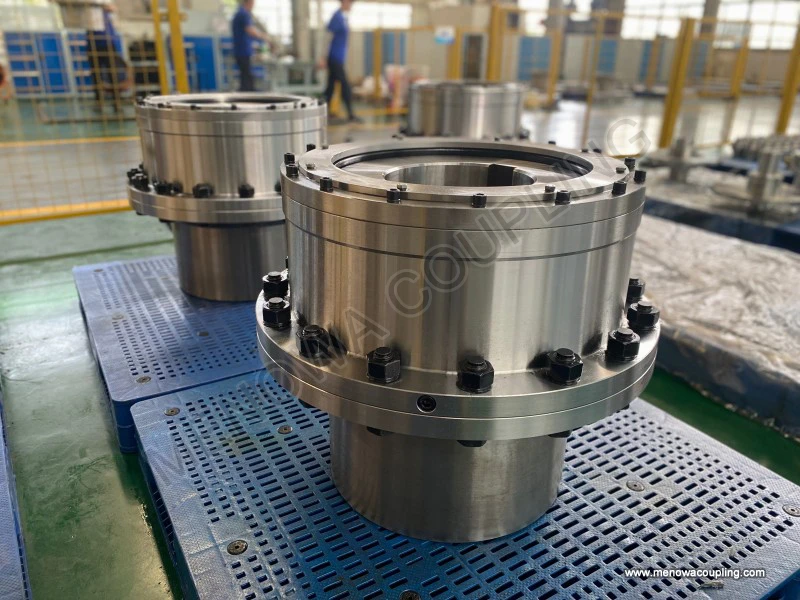
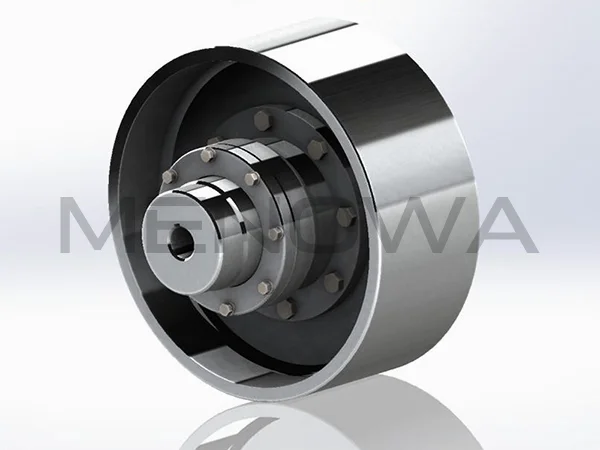
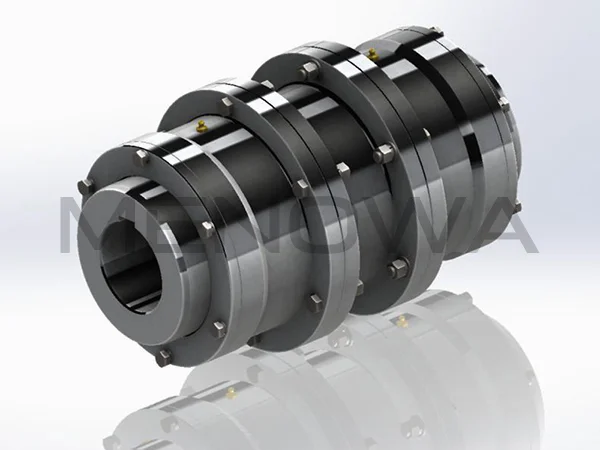
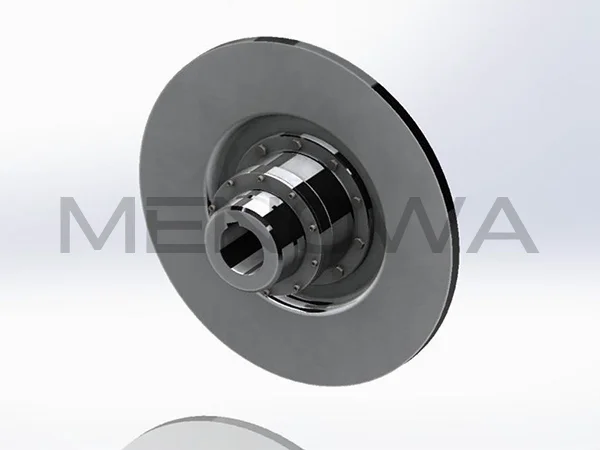
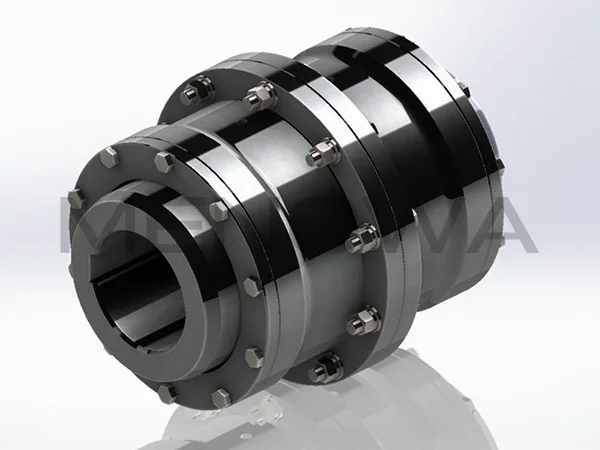
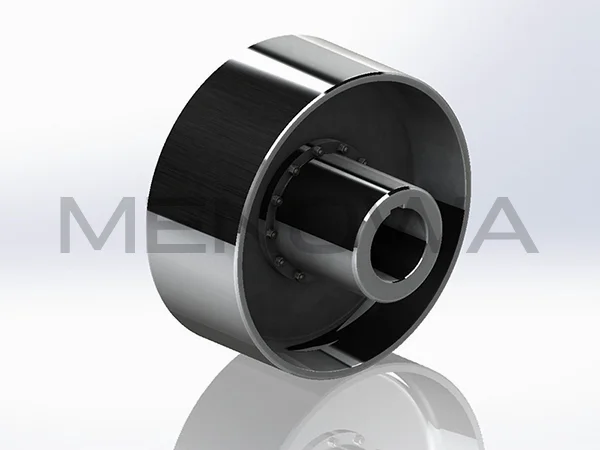
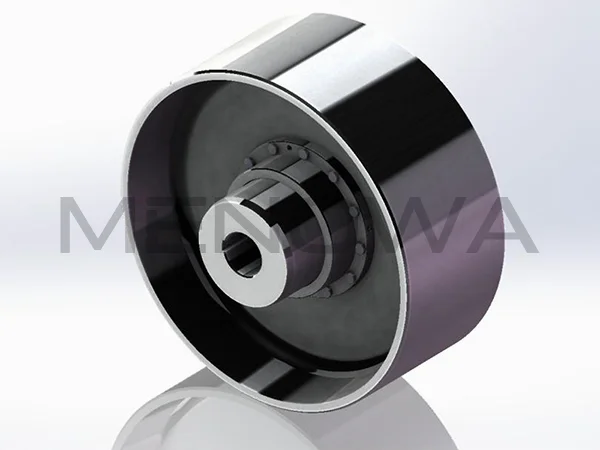
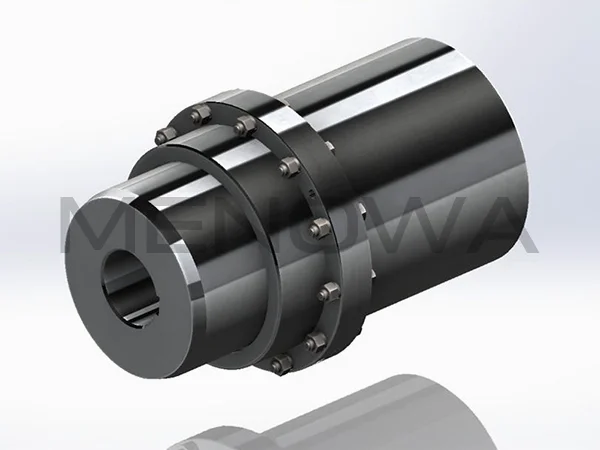
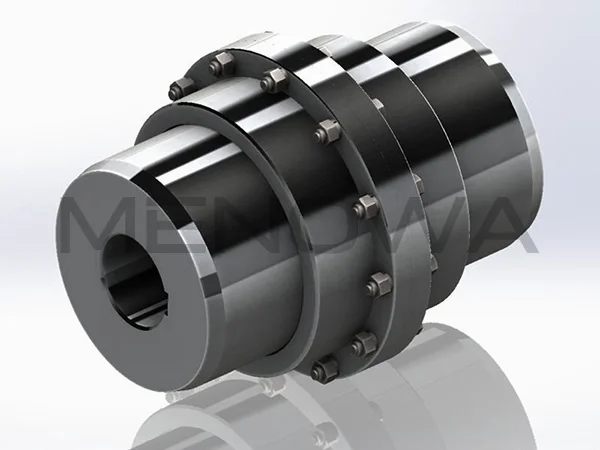
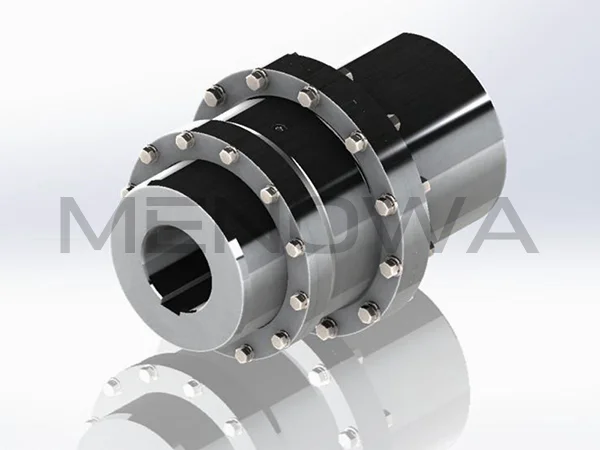
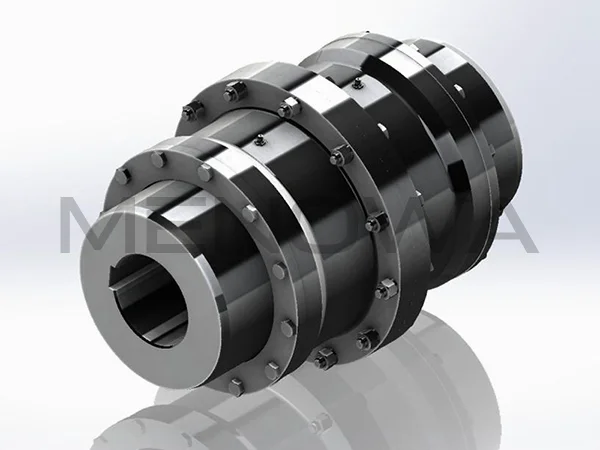
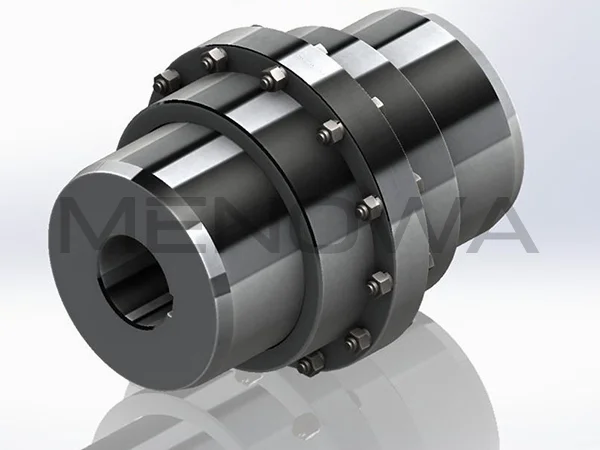
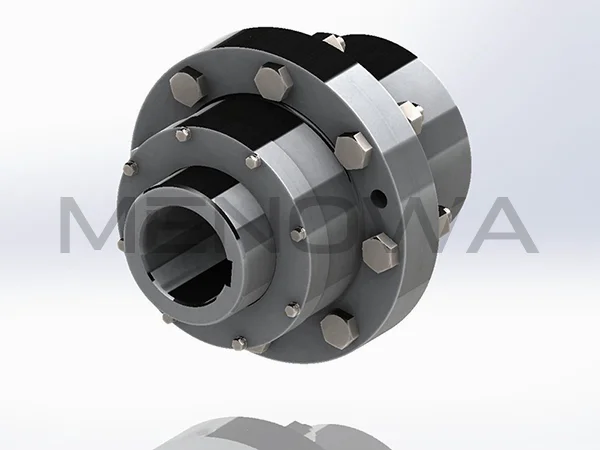
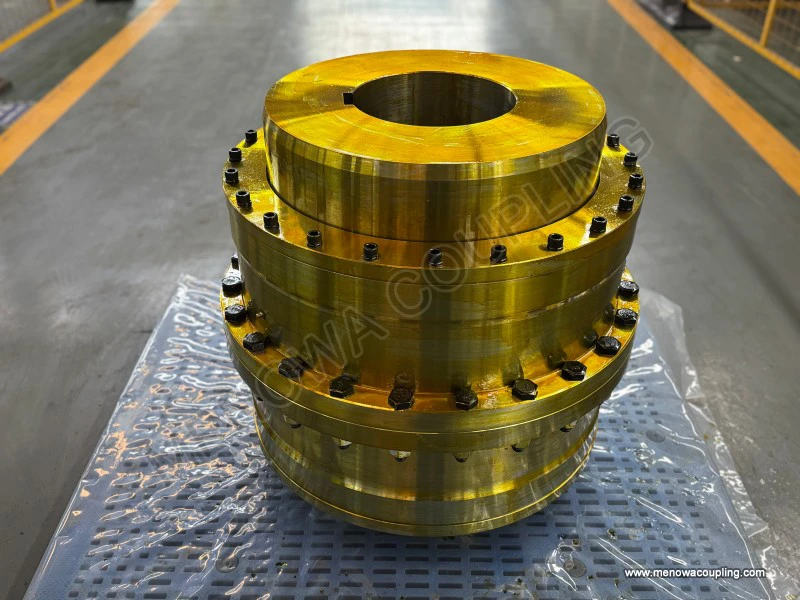
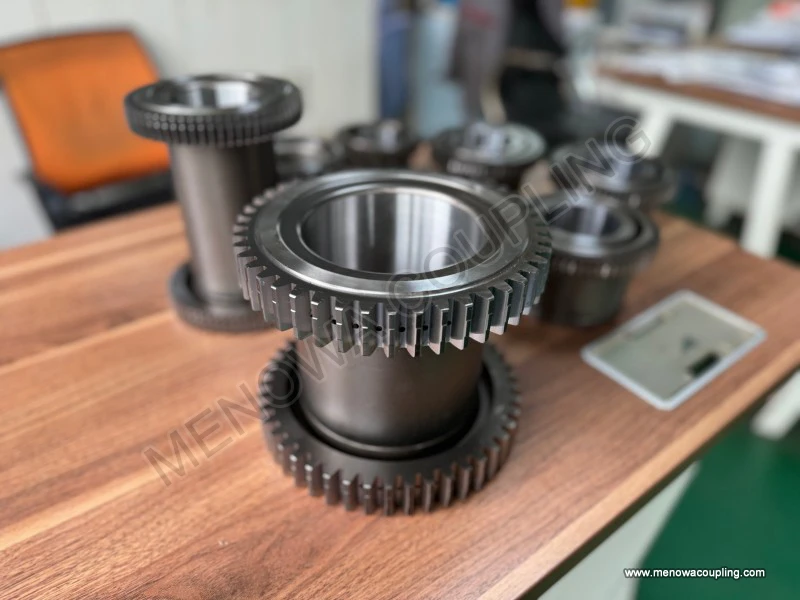
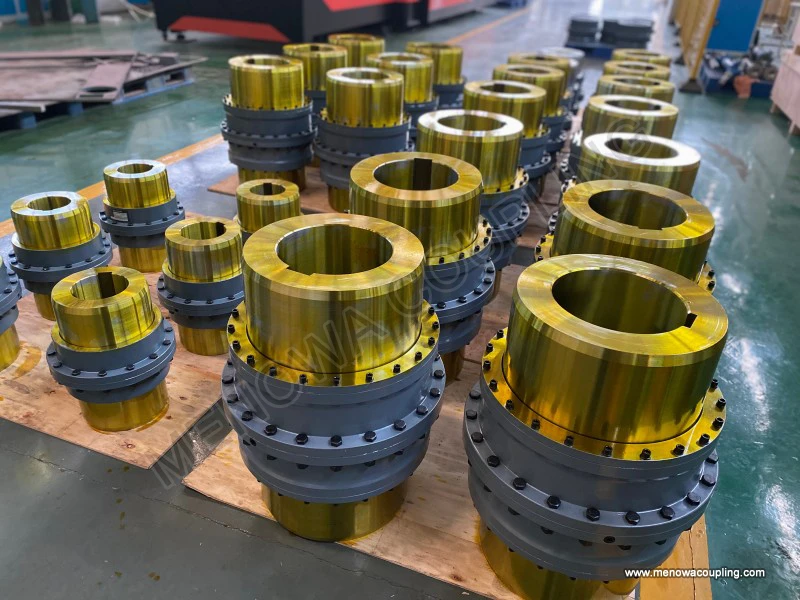
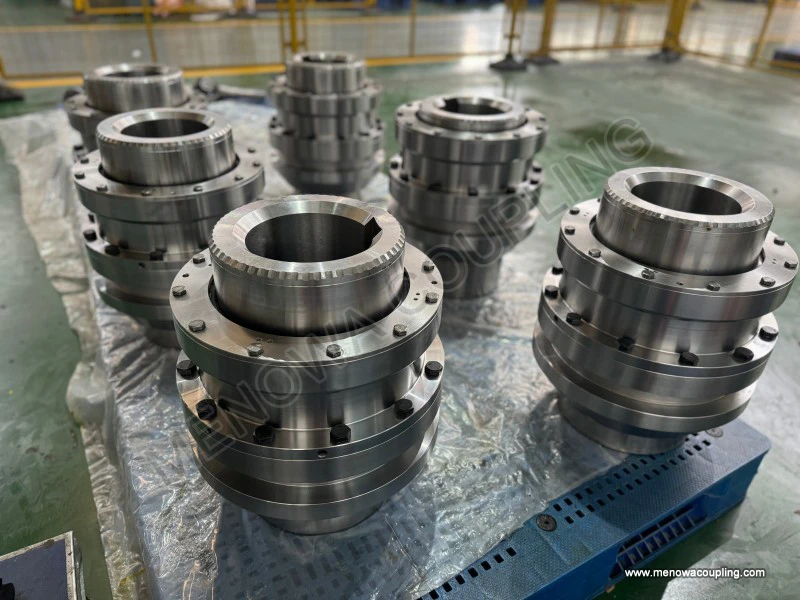
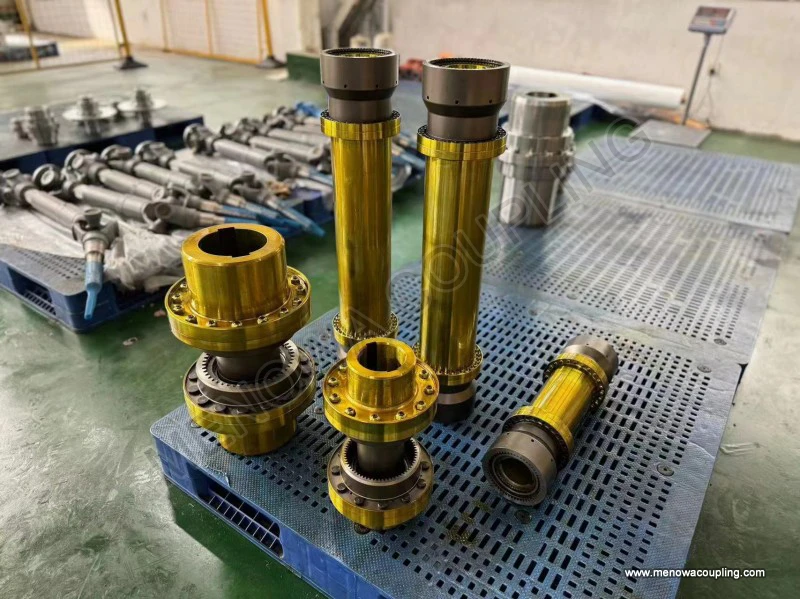
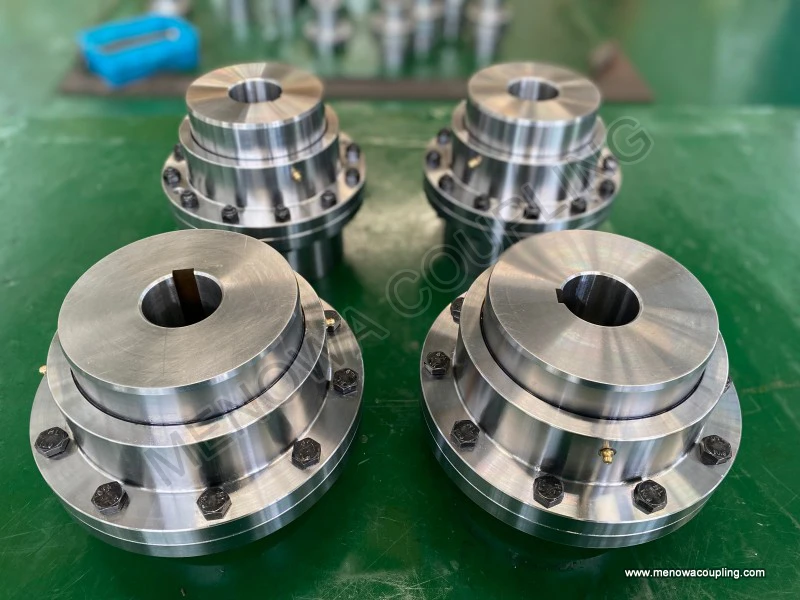
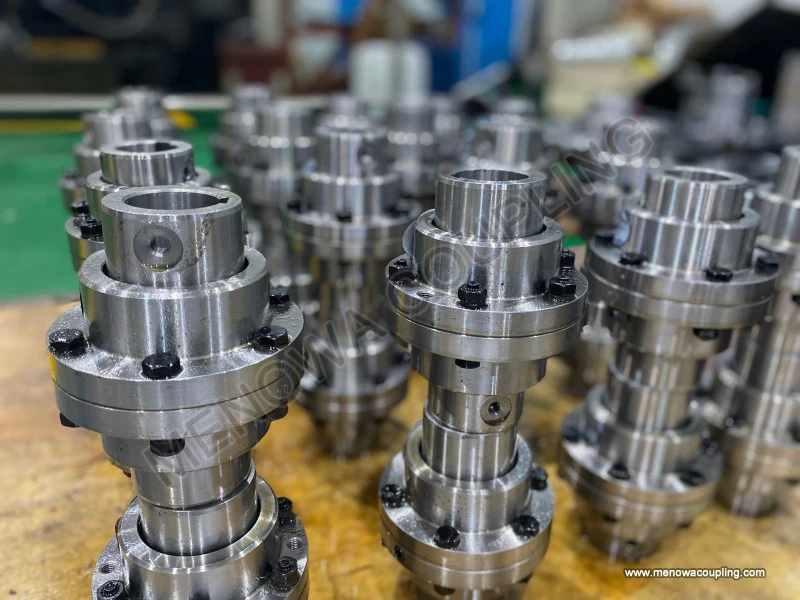
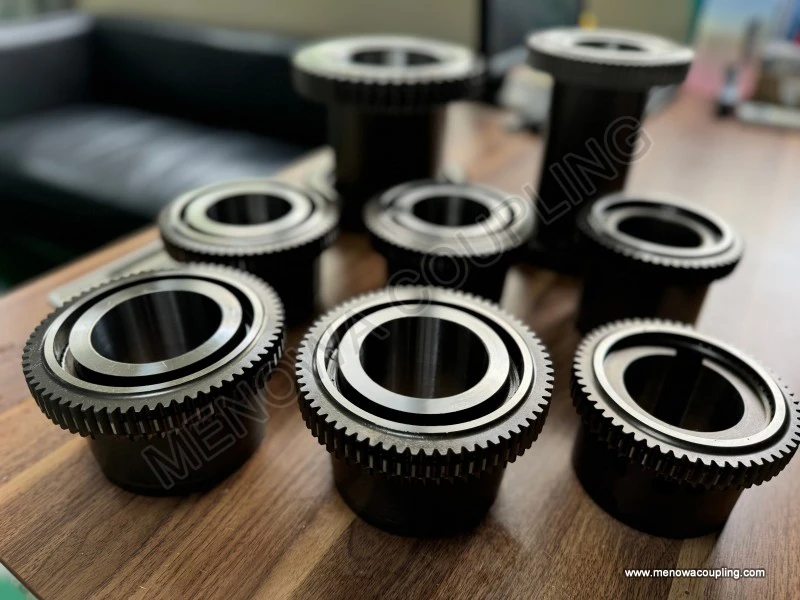
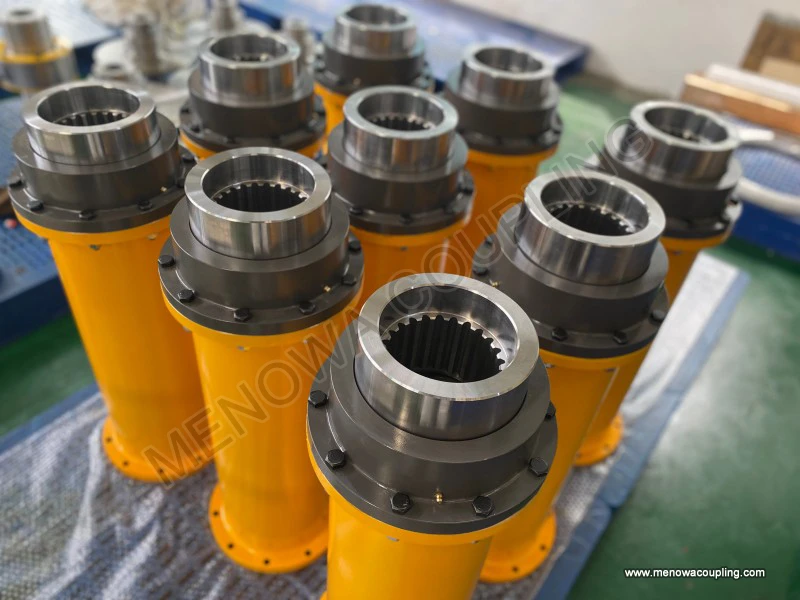
The basic design and structural composition of geared coupling follow the core mechanical principle of gear meshing transmission, and the overall structural layout is simple and rigorous without redundant auxiliary parts, which lays a solid foundation for its stable mechanical performance and convenient subsequent assembly and maintenance work. The main body of a standard geared coupling is composed of two external gear hubs and one or two internal gear sleeves matched with each other, forming a complete meshing transmission and shaft connection structure. The two external gear hubs are respectively fixed on the end parts of the driving shaft and the driven shaft through interference fit or key connection modes, ensuring that the hubs and the shafts can maintain synchronous rotation without relative sliding during the entire power transmission process. The internal gear sleeves are sleeved on the outer sides of the two external gear hubs, and the internal gear teeth processed on the inner wall of the sleeves are precisely meshed with the external gear teeth on the outer circle of the hubs. Torque and rotational power are steadily transmitted from the driving shaft to the driving-side external gear hub, then to the internal gear sleeve through gear meshing action, and finally transmitted to the driven-side external gear hub and the connected driven shaft, completing the whole power transmission cycle of the mechanical system. In order to ensure the tight connection of the overall structure and prevent relative separation and dislocation between internal gear sleeves during high-speed rotation and heavy-load operation, flange connection structures and fastening bolts are arranged at the joint positions of the internal gear sleeves. The matching surfaces between flanges are equipped with sealing auxiliary parts, which not only ensure the firm connection of the overall coupling structure, but also effectively seal the internal meshing gear cavity, providing a closed working space for the lubricant inside the coupling and avoiding the leakage of lubricating substances during long-term operation.
The tooth profile design of gear meshing parts is the core key link that determines the working performance, displacement compensation ability and service life of geared coupling, and different tooth profile processing designs directly affect the stress distribution, wear degree and deviation adaptation effect of gear teeth in the meshing process. In the early development stage of geared coupling design, straight gear tooth profiles were mostly adopted for processing and production, with simple tooth shape structure and convenient processing and manufacturing technology, which could meet the basic torque transmission demands of general light and medium-load mechanical equipment. However, in the actual long-term operation process, straight gear geared couplings show obvious limitations when facing shaft misalignment and alternating load impact. When there is angular deviation or radial displacement between the driving shaft and the driven shaft, the contact position of straight gear teeth will produce sharp edge contact and local stress concentration phenomenon. The long-term action of local high stress will accelerate the wear and fatigue damage of gear tooth surfaces, easily cause tooth surface peeling, tooth root crack and other failure problems, and greatly reduce the stable operation cycle and overall service life of the coupling. With the continuous upgrading of industrial mechanical equipment and the increasing demand for heavy-load, high-speed and long-cycle operation of transmission systems, crowned gear tooth profile design has gradually become the mainstream processing form of geared coupling gear teeth. The external gear teeth of the coupling hub are processed into a smooth curved spherical crown structure through precise machining technology, and the curved transition design is adopted at the tooth top and tooth root positions of the gear teeth. This optimized tooth profile structure can effectively change the contact mode between meshing gear teeth, realizing uniform surface contact instead of local edge contact during meshing transmission. When the connected two shafts produce angular deviation, radial deviation or axial displacement due to installation errors, equipment operation vibration or mechanical component thermal deformation, the crowned gear teeth can freely slide and adapt along the curved contact surface without generating excessive additional bending stress and extrusion pressure on the gear teeth. This structural design fundamentally reduces the wear loss of gear meshing parts, avoids local stress concentration caused by shaft misalignment, and significantly improves the running stability and fatigue resistance of geared coupling under complex displacement conditions.
The excellent displacement compensation capability is one of the most prominent functional characteristics of geared coupling, and also an important reason why it can be widely used in various complex industrial mechanical transmission scenarios. In the actual installation and operation process of all mechanical shafting systems, it is almost impossible to achieve absolute perfect coaxiality between the driving shaft and the driven shaft. Various objective factors will lead to different degrees of relative displacement and deviation between the two connected shafts. These influencing factors include inevitable tiny position errors generated during equipment assembly and installation, slight deformation of mechanical base and support structure caused by long-term equipment operation and foundation settlement, thermal expansion and contraction displacement of shafts and related components caused by temperature rise during mechanical operation, and vibration displacement of shafting caused by alternating load impact and mechanical operation vibration. All these deviations and displacements will have a direct impact on the transmission performance and service life of shaft connecting components. If rigid couplings without displacement compensation function are used, the uncompensated shaft misalignment will generate huge additional radial force and axial torque on the shafts, bearings and related mechanical parts, resulting in accelerated bearing wear, shaft bending deformation, serious equipment vibration and even sudden failure of transmission system. Geared coupling relies on the matching clearance between meshing gear teeth and the flexible adaptation space brought by crowned tooth profile design, which can effectively compensate three main types of common shaft misalignment in mechanical operation. It can adapt to angular misalignment formed by the non-parallel axes of the two shafts, parallel radial misalignment formed by the radial offset of the two shaft centerlines, and axial displacement generated by the axial thermal expansion and contraction of the shafts during operation. The reasonable tooth side clearance reserved in the gear meshing design ensures that there is no rigid extrusion and collision between gear teeth when the shafting is displaced and deviated, and the gear meshing transmission can always maintain a stable and smooth state, ensuring that the power transmission process is not affected by shaft misalignment, and effectively protecting the safety and stability of the entire mechanical transmission system and related supporting components.
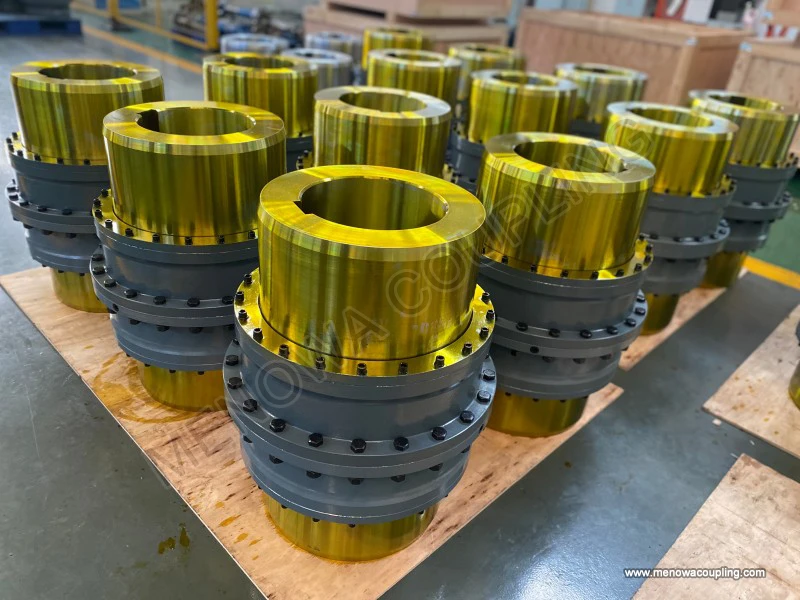
Material selection and heat treatment processing technology are crucial basic factors that determine the mechanical strength, load-bearing capacity, wear resistance and environmental adaptability of geared coupling. As a core component undertaking heavy-load torque transmission and frequent alternating load impact for a long time, geared coupling needs to have high tensile strength, good impact toughness, excellent surface wear resistance and stable structural rigidity, so as to cope with harsh working conditions such as heavy load, frequent start and stop, large vibration and dust humidity in industrial production. At present, the mainstream raw materials for manufacturing geared couplings are high-quality carbon structural steel and low-alloy structural steel with stable mechanical properties and good processing performance. These steel materials have uniform internal structure, stable mechanical indexes and good comprehensive mechanical properties, which can meet the basic strength and rigidity requirements of coupling main body and gear teeth parts. In order to further improve the surface hardness and wear resistance of gear meshing teeth while maintaining the impact toughness of the coupling overall structure, professional heat treatment processes will be carried out on the geared coupling after rough machining and finish machining. The tooth surface parts of external gear hubs and internal gear sleeves are treated with surface quenching and tempering treatment, so that the surface hardness of gear teeth reaches a high level, effectively resisting friction and wear caused by long-term gear meshing sliding and external load extrusion. The core parts of the coupling hubs and sleeves maintain good toughness through overall tempering treatment, avoiding brittle fracture and structural damage of the coupling main body under strong impact load and sudden load change. For geared couplings used in special harsh working environments such as high temperature, high humidity and strong corrosion, targeted surface anti-corrosion and anti-rust treatment will be carried out on the basis of conventional heat treatment, including surface painting, galvanizing and other protective processes, which can effectively isolate the erosion of humid air, corrosive medium and dust impurities on the coupling metal structure, delay the oxidation and corrosion rate of parts, and further extend the overall service life of the coupling in special working conditions.
Lubrication management is an indispensable key link in the daily operation and long-term stable use of geared coupling, and the lubrication state directly determines the wear degree of gear meshing parts, operating friction resistance, transmission efficiency and overall service life of the coupling. Different from elastic couplings and other connecting parts that do not need additional lubrication maintenance, the internal gear meshing parts of geared coupling will produce continuous relative sliding friction during power transmission and displacement compensation operation. If there is no effective lubricating medium for isolation and protection, the direct dry friction between metal gear tooth surfaces will cause rapid wear of gear teeth, generate a large amount of friction heat, lead to local high temperature deformation of gear teeth, and even cause serious failure problems such as gear tooth biting and meshing jamming in a short time. The internal closed cavity structure of geared coupling provides a good sealed lubrication space for the meshing gear teeth. Before the geared coupling is put into formal operation, professional lubricating grease or industrial gear oil needs to be injected into the closed cavity according to the specifications and operating conditions of the coupling. The lubricating medium can form a uniform and stable oil film on the contact surface of meshing gear teeth, isolating direct metal contact between gear teeth, reducing friction coefficient in the meshing process, lowering friction heat generation and mechanical wear loss. At the same time, the lubricating medium also has good heat dissipation, rust prevention and damping buffering effects. It can take away the friction heat generated by gear meshing in time to avoid thermal deformation of parts, prevent oxidation and rust of internal gear teeth and metal parts in humid environment, and absorb part of the vibration and impact generated by load fluctuation in the transmission process, further improving the running stability of the coupling. In the actual operation process, with the extension of service time, the lubricating medium inside the coupling will gradually age, deteriorate and be polluted by metal wear debris, resulting in the decline of lubrication performance. Therefore, regular lubrication inspection and replacement maintenance work need to be carried out according to the operating intensity and working environment of the equipment to ensure that the gear meshing parts are always in a good lubrication state and avoid equipment operation failure caused by poor lubrication.
Geared coupling has extremely high torque density and excellent heavy-load transmission performance, which is the core performance advantage that makes it widely used in heavy industrial mechanical equipment. Compared with other types of flexible couplings with the same outer diameter and overall structural size, geared coupling can transmit far greater torque power, and can maintain stable transmission state under long-term heavy-load operation and large torque impact conditions. The gear meshing transmission mode adopted by geared coupling belongs to multi-tooth synchronous meshing transmission. The load is evenly distributed on multiple meshing gear teeth for bearing and transmission, avoiding the problem of local excessive load concentration caused by single-point or few-point stress of other elastic couplings. The overall structural rigidity of the coupling is high, the deformation under heavy load is small, the torsional rigidity is stable, and the torque transmission loss in the operation process is low, which can effectively improve the overall transmission efficiency of the mechanical system. This performance characteristic makes geared coupling the preferred connecting component for large-scale heavy-load mechanical equipment that needs to transmit high power and large torque, such as metallurgical rolling mills, mine hoists, large-scale conveyor belts, cement production grinding equipment and heavy-duty engineering machinery. These mechanical equipments need to output huge power and torque in the working process, and the transmission system has high requirements for the load-bearing capacity and structural stability of shaft connecting parts. Geared coupling can perfectly adapt to such harsh load conditions, maintain stable torque transmission without structural deformation and transmission failure, and ensure the continuous and efficient operation of heavy industrial production lines.
In addition to heavy-load industrial production equipment, geared coupling also shows good adaptability and stable working performance in medium-speed and high-speed mechanical transmission equipment and mechanical systems with frequent start and stop and alternating load changes. Many industrial fan units, large water pump equipment, power generation supporting machinery and chemical fluid conveying equipment belong to typical high-speed continuous operation mechanical systems. These equipments have high requirements for the rotational stability, vibration resistance and transmission smoothness of shafting connecting parts. Geared coupling can not only realize efficient torque transmission, but also effectively reduce the vibration and impact generated in the process of equipment start-stop and load switching through the reasonable coordination of gear meshing clearance and lubrication buffering effect. The crowned tooth profile design ensures that the meshing process of gear teeth is smooth and stable without meshing impact and abnormal noise, and the vibration and noise generated in the transmission process are kept at a low level, which meets the operation requirements of high-speed mechanical equipment for low vibration and low noise. For mechanical equipment that needs frequent start and stop and repeated load switching, the impact resistance and fatigue resistance of geared coupling are fully reflected. The overall structural rigidity and good material toughness enable the coupling to withstand frequent instantaneous impact load without structural damage and performance attenuation, and can maintain stable transmission performance after long-term repeated start-stop operation, reducing the failure rate of equipment shutdown and maintenance caused by coupling damage.
The installation and disassembly process of geared coupling is convenient and simple, and the later daily maintenance and component replacement work are easy to operate, which also becomes an important practical advantage in industrial practical application. The overall split structure design of internal gear sleeves and the separate arrangement of external gear hubs make the on-site installation work of the coupling not need complex professional tools and complicated installation procedures. During installation, only the two external gear hubs need to be fixedly installed on the driving shaft and the driven shaft respectively according to the coaxiality installation standards, then the internal gear sleeves are sleeved on the outside of the hubs, and finally the flange bolts are fastened and sealed to complete the whole installation work. The installation process does not need large-scale mechanical hoisting and complex debugging work, and the installation cycle is short and the efficiency is high. In the daily equipment operation and maintenance process, the daily inspection work of geared coupling is mainly concentrated on checking the fastening state of flange connecting bolts, the sealing performance of internal lubrication cavity and the deterioration degree of internal lubricant. The inspection items are simple and intuitive, and the daily maintenance workload is small. When individual parts of the coupling are worn and damaged after long-term operation and need to be replaced, the split structural design enables the damaged parts to be replaced separately without disassembling the whole mechanical shafting system and related equipment components. The maintenance and replacement work can be completed in a short time, the equipment shutdown maintenance time is greatly shortened, the impact of coupling maintenance work on industrial production progress is reduced, and the production continuity and operation efficiency of industrial enterprises are effectively guaranteed.
In the long-term service life cycle of geared coupling, the correct selection in the early stage, standardized installation and commissioning, and scientific daily maintenance management are three core key factors that jointly determine the actual service life and operation stability of the coupling. In the early selection stage, it is necessary to reasonably select the specification and model of geared coupling according to the actual transmission torque, operating speed, shaft installation deviation range and working environment conditions of the mechanical equipment. Excessively small coupling specifications will lead to insufficient load-bearing capacity, resulting in accelerated fatigue damage of gear teeth and early failure of the coupling; excessively large coupling specifications will increase the overall structural size and equipment cost, and also cause unnecessary waste of resources. In the installation and commissioning stage, it is necessary to strictly control the coaxiality error of the two connected shafts within the allowable compensation range of the coupling, avoid excessive installation deviation exceeding the adaptation limit of the coupling, and prevent additional excessive stress caused by excessive deviation from affecting the service life of the coupling. In the daily maintenance stage, it is necessary to regularly check the sealing condition of the coupling to prevent lubricant leakage and dust impurities from entering the internal meshing cavity, regularly replace the aging and deteriorated lubricating medium, and timely check the wear state of gear teeth and fastening bolts. Through standardized whole-process management, the geared coupling can always maintain the best working state, give full play to its excellent transmission performance and displacement compensation ability, and realize long-term stable and reliable operation.
With the continuous progress of industrial mechanical design technology and the continuous upgrading of industrial production equipment, the design and manufacturing technology of geared coupling is also constantly optimized and improved, and new structural forms and processing technologies are constantly emerging to adapt to more diversified and harsh industrial application scenarios. On the basis of traditional straight tooth and common crowned tooth geared couplings, special structural geared couplings such as spherical tooth geared couplings have been gradually promoted and applied. The spherical tooth structure design can provide larger displacement compensation range and better meshing stress distribution performance, and can adapt to mechanical equipment with larger installation deviation and more complex operation deformation conditions. At the same time, with the popularization of precision machining technology and intelligent production equipment, the machining precision of geared coupling gear teeth and structural parts is continuously improved, the meshing fit degree of gear teeth is more precise, the transmission efficiency is further improved, and the operation wear and vibration noise are further reduced. In the future, with the continuous development of heavy industry, new energy equipment and high-end mechanical manufacturing industry, the application scope of geared coupling will be further expanded, and its core role in mechanical power transmission systems will become more prominent. Through continuous structural optimization, material upgrading and maintenance technology improvement, geared coupling will continue to maintain its unique performance advantages, provide stable and reliable shaft connection and power transmission guarantee for various industrial mechanical equipment, and support the stable operation and efficient production of various industrial fields.
https://www.menowacoupling.com/industrial-coupling/geared-coupling.html
 WeChat
 WhatsApp