Membrane Coupling
In the modern mechanical transmission field, the stable and efficient connection between rotating shafts of various core industrial equipment has always been a key link determining the overall operating efficiency, operational stability and long-term service cycle of mechanical systems. All mechanical transmission equipment that relies on rotating power output and power input conversion inevitably faces the problem of shaft connection and power transmission, and the alignment state between the driving shaft and the driven shaft directly affects the load distribution, vibration amplitude and component wear degree of the entire transmission system. In the actual industrial production and equipment operation process, it is almost impossible to achieve absolute perfect alignment between two connected rotating shafts due to the influence of many objective factors, including installation and assembly errors during equipment commissioning, thermal expansion and contraction of metal components caused by long-term continuous operation temperature changes, slight foundation settlement of equipment fixed base, mechanical vibration and alternating load impact generated during equipment startup, shutdown and variable load operation, as well as natural wear and fatigue deformation of parts after long-term service. These unavoidable deviations will form different types of misalignment between the driving shaft and the driven shaft, and if these misalignment states cannot be effectively buffered and compensated by reliable connecting components, they will directly lead to additional radial force, axial force and torsional shear force acting on the shaft body, bearings and related transmission parts, resulting in increased equipment operating vibration, obvious noise generation, accelerated wear of bearing components and sealing parts, even causing shaft body deformation, component fatigue fracture and unexpected equipment shutdown in severe cases, bringing unnecessary operational risks and additional maintenance burden to industrial production. As a high-performance metal flexible connecting component designed to solve the above shaft connection and misalignment compensation problems, membrane coupling has become one of the most widely used core transmission accessories in high-speed, high-load, high-precision and harsh working condition industrial scenarios by virtue of its unique elastic deformation working mechanism, all-metal structural design, excellent torque transmission performance and good multi-directional misalignment compensation capability. Unlike traditional rigid couplings that can only achieve simple fixed connection and cannot bear any shaft misalignment and elastic buffer, and unlike rubber elastic couplings that rely on non-metal elastic materials for deformation compensation and are limited by temperature resistance, corrosion resistance and aging resistance, membrane coupling takes high-strength metal membrane sheets as the core flexible deformation and torque transmission medium, realizing organic integration of efficient and stable torque transmission and flexible compensation of various shaft misalignments, and adapting to complex and changeable industrial operating environments and long-term continuous operating working conditions, showing incomparable comprehensive application advantages in many key industrial production fields.
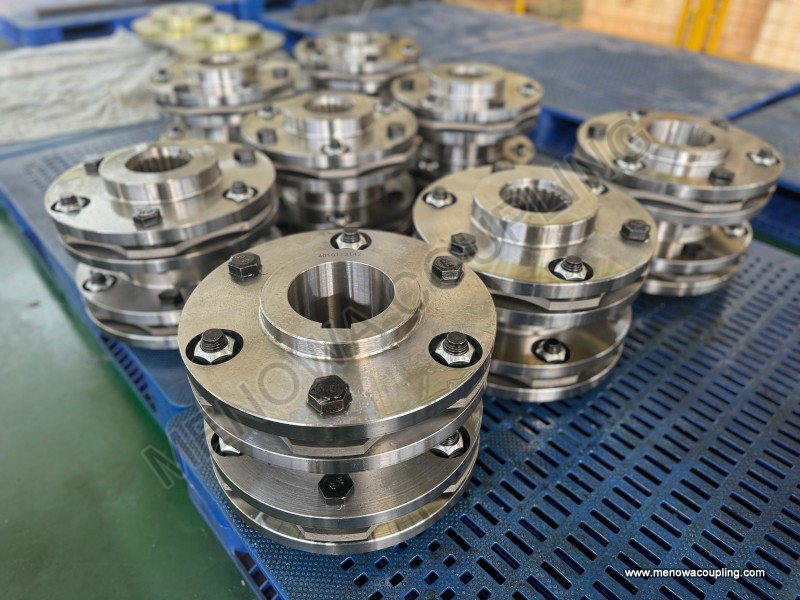
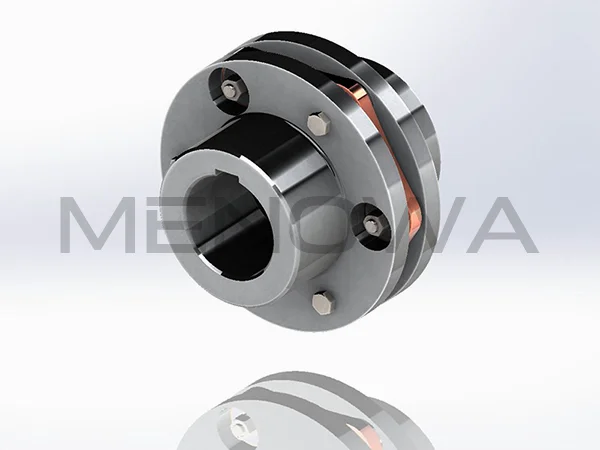
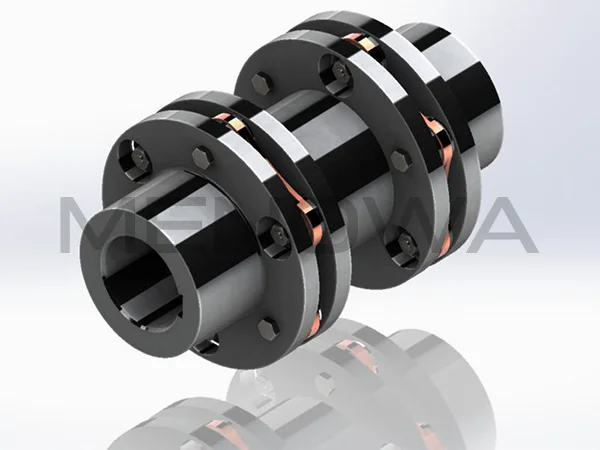
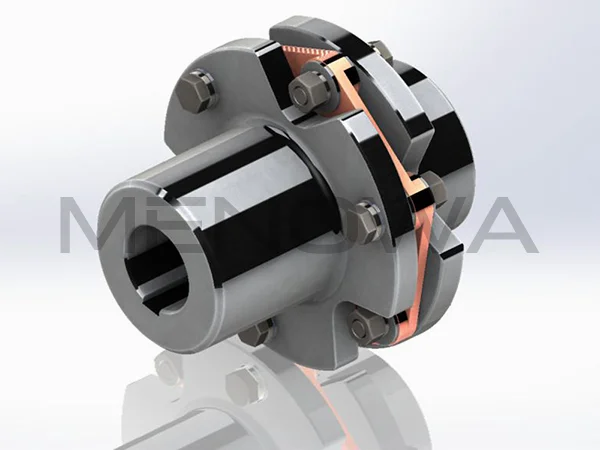
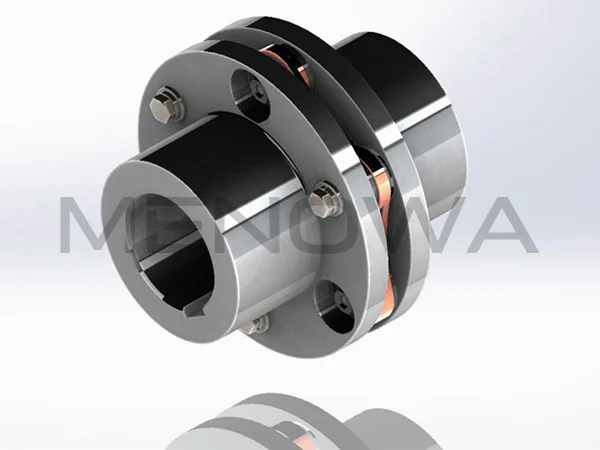
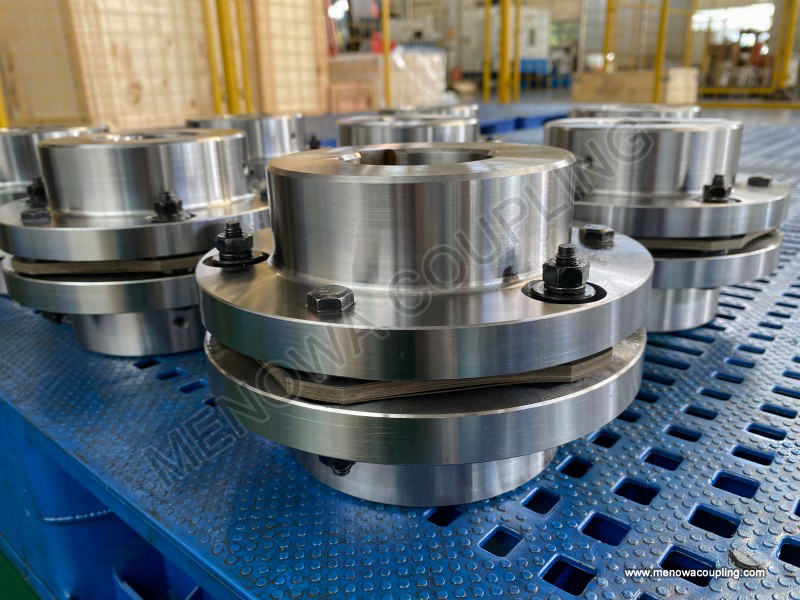
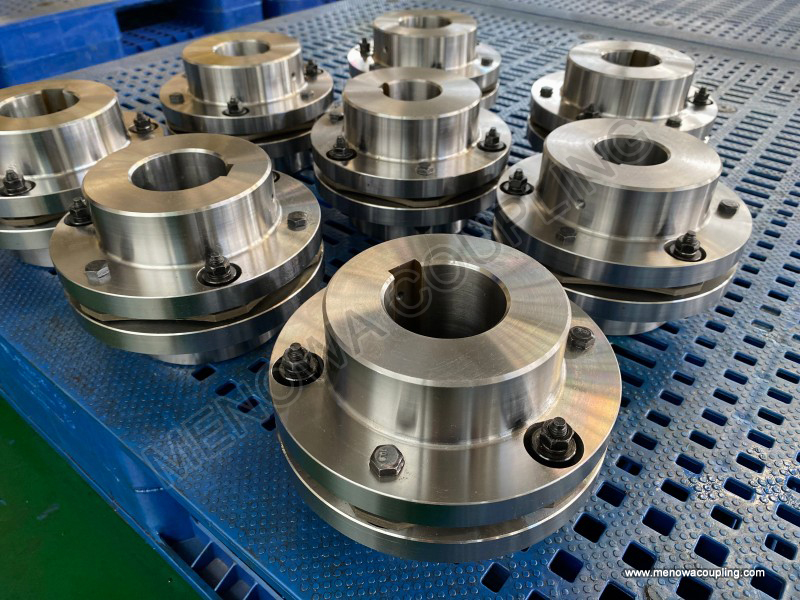
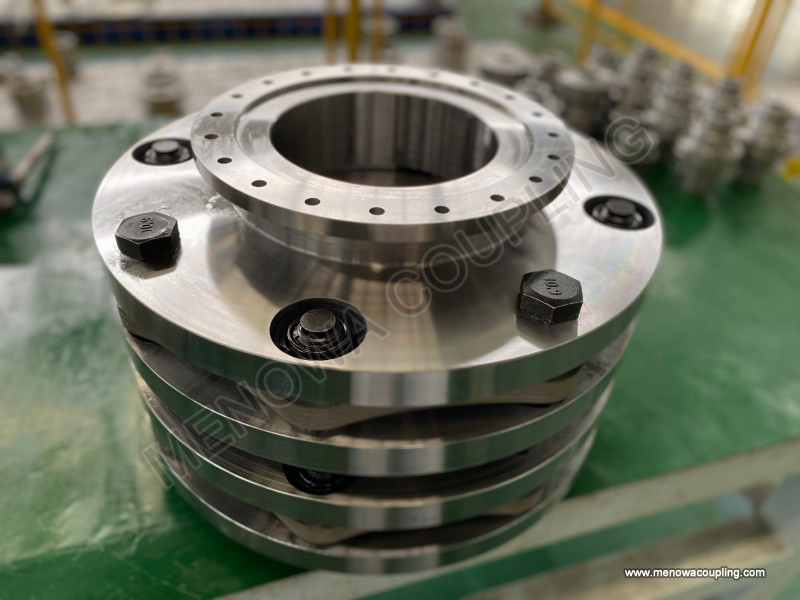
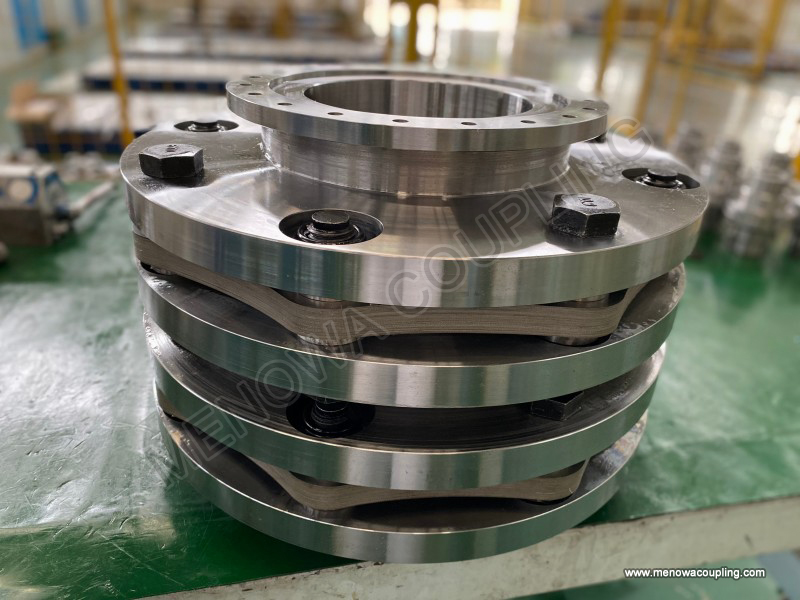
The basic composition and structural layout of membrane coupling are developed around the dual core functional requirements of torque transmission and misalignment compensation, and the overall structural design is compact and reasonable without redundant transmission parts and complex friction moving structures. The whole set of membrane coupling is mainly composed of two symmetrical shaft sleeve components installed on the driving shaft and the driven shaft respectively, one or more groups of stacked metal membrane groups arranged between the two shaft sleeves, and high-strength connecting fasteners used to fix the membrane groups and shaft sleeves into a whole. Each component has clear division of labor and coordinated operation, and there is no relative sliding friction or rotational friction between any parts during the entire power transmission and deformation compensation process, which fundamentally avoids the wear and loss caused by mechanical friction operation and eliminates the need for regular lubrication maintenance and friction part replacement work required by traditional friction-type transmission couplings. The shaft sleeve part of the membrane coupling is also called the half coupling in the industrial transmission field, which is processed and formed by integral high-strength metal materials with good rigidity and structural stability. The inner hole of the shaft sleeve is precisely machined according to the outer diameter size of the matching rotating shaft, which can realize tight and stable assembly and fit with the driving shaft and the driven shaft, ensuring that the torque can be stably transmitted from the shaft body to the coupling itself without relative rotation and displacement between the shaft sleeve and the shaft body during operation. The outer side of the shaft sleeve is provided with a flange structure with evenly distributed fixing holes, which is the key connecting part for assembling and fixing the membrane groups and undertaking torque transmission. The membrane group, as the most core functional component of the entire membrane coupling, is generally formed by stacking multiple ultra-thin high-strength stainless steel membrane sheets according to specific thickness and quantity specifications. The metal membrane sheets used for processing the membrane group have excellent elastic deformation performance, high tensile strength, good fatigue resistance and stable structural toughness, and can undergo reversible elastic deformation within a certain range under the action of external force without permanent deformation or structural damage. The number and thickness of the stacked membrane sheets in the membrane group can be adjusted according to the actual torque transmission demand and misalignment compensation range of different equipment working conditions. More stacked membrane sheets and thicker single membrane sheets can improve the overall torsional rigidity and torque bearing capacity of the coupling, while appropriately reducing the number of membrane sheets can enhance the flexible deformation ability and misalignment compensation effect of the coupling, realizing flexible adaptation to different load levels and working condition requirements. The high-strength connecting fasteners adopt standardized high-precision bolt and nut matching structure, which passes through the reserved fixing holes on the flange of the shaft sleeve and the membrane group in turn to tightly connect the two shaft sleeves and the middle membrane group into a unified whole. The fastening state of the fasteners is strictly controlled during assembly to ensure that there is no looseness, displacement or gap between the membrane sheets and between the membrane group and the shaft sleeve flange during high-speed rotation and alternating load operation, avoiding impact and vibration caused by component loosening and ensuring the stability and safety of long-term operation.
The working operation mechanism of membrane coupling is based on the elastic deformation characteristics of metal membrane materials and the structural coordination effect of each component, realizing synchronous completion of efficient torque transmission and multi-dimensional misalignment compensation in the rotating process of the shaft system. When the industrial equipment starts to operate, the power generated by the driving equipment is transmitted to the driving shaft, and the driving shaft drives the connected shaft sleeve of the membrane coupling to rotate synchronously. The rotating torque is transmitted to the tightly fixed membrane group through the fastening bolts on the driving side shaft sleeve flange, and the torque is evenly distributed to each stacked metal membrane sheet inside the membrane group through the structural stress conduction effect between the membrane sheets. Relying on the good rigidity of the metal membrane in the torque transmission direction, the membrane group can stably and efficiently transmit the received torque to the driven side shaft sleeve through the connecting fasteners, and then the driven side shaft sleeve drives the driven shaft to rotate synchronously, completing the whole process of power and torque transmission between the driving equipment and the driven equipment. In this normal torque transmission process, each metal membrane sheet mainly bears uniform tensile and shear stress, and the stress distribution is balanced and reasonable without local stress concentration, which ensures the continuity and stability of torque transmission and will not cause power loss and transmission efficiency reduction due to structural deformation. When various unavoidable misalignments exist between the driving shaft and the driven shaft due to installation errors, thermal deformation and other factors, the metal membrane group of the membrane coupling will produce micro reversible elastic deformation corresponding to the misalignment state under the action of stress. This elastic deformation does not affect the basic torque transmission function of the coupling, but can effectively absorb and buffer various deviation displacements between the two shafts, realizing flexible compensation of shaft misalignment. Different types of shaft misalignments correspond to different deformation forms of the membrane group: angular misalignment formed when the central axes of the driving shaft and the driven shaft are not parallel and have a certain included angle will cause the membrane group to produce uniform bending elastic deformation in the circumferential direction; axial misalignment formed by the relative axial displacement of the two shafts due to thermal expansion and contraction of equipment parts will lead to tensile or compressive elastic deformation of the membrane group in the axial direction; radial misalignment caused by the deviation of the central radial position of the two shafts will make the membrane group produce coordinated tensile and shear composite elastic deformation. Through the diversified elastic deformation of the membrane group, the membrane coupling can offset the additional mechanical stress caused by various misalignments to the shaft system, bearings and equipment components, keep the stress state of the entire transmission shaft system in a stable and reasonable range, and avoid equipment vibration and component damage caused by misalignment.
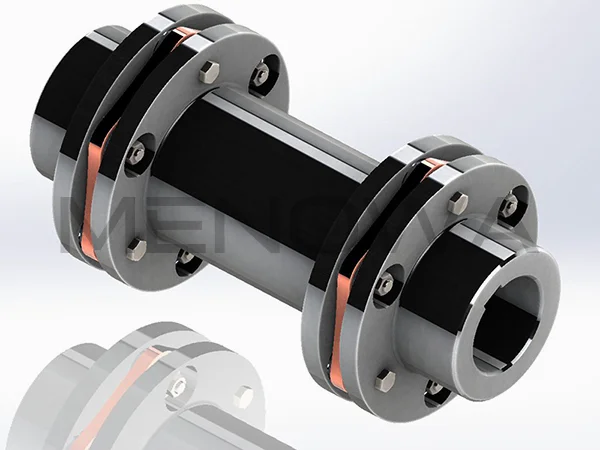
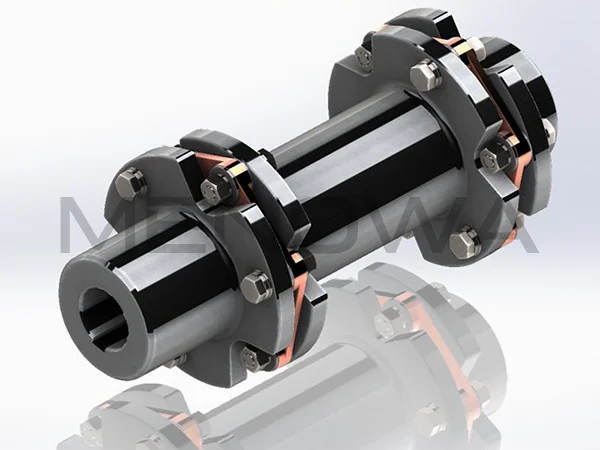
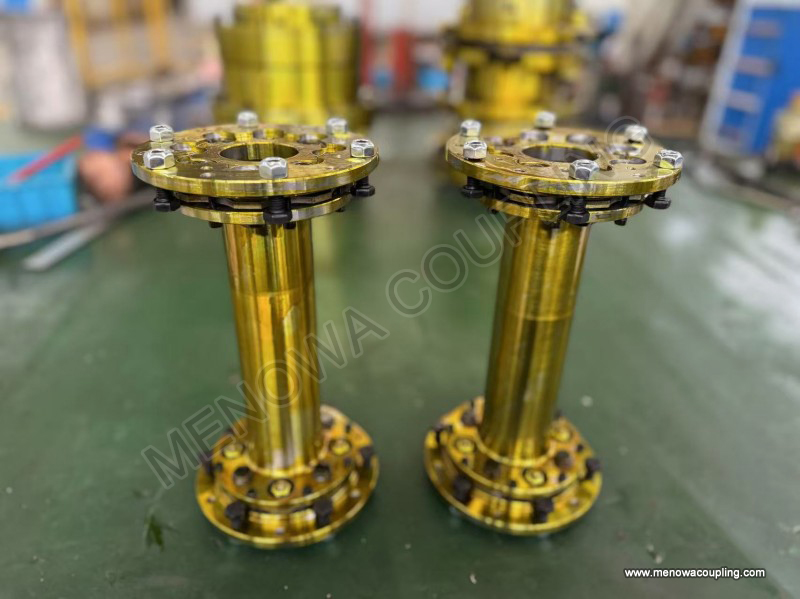
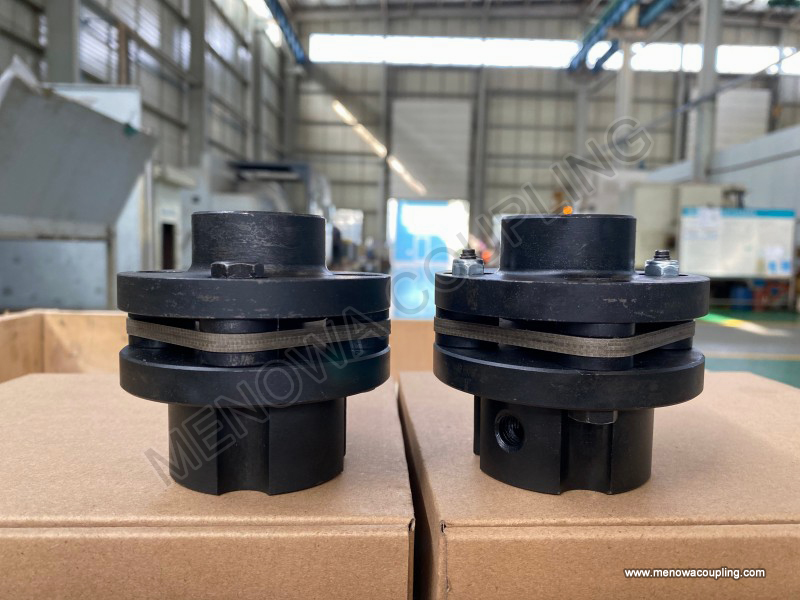
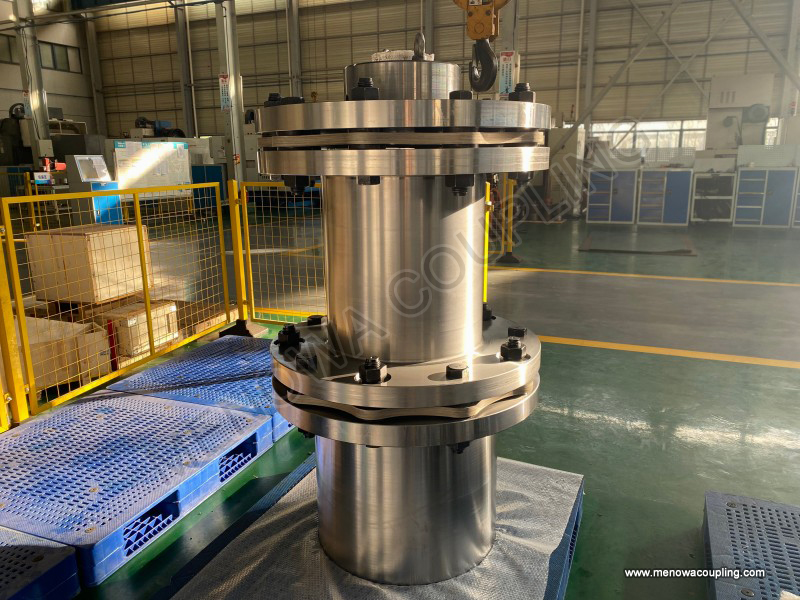
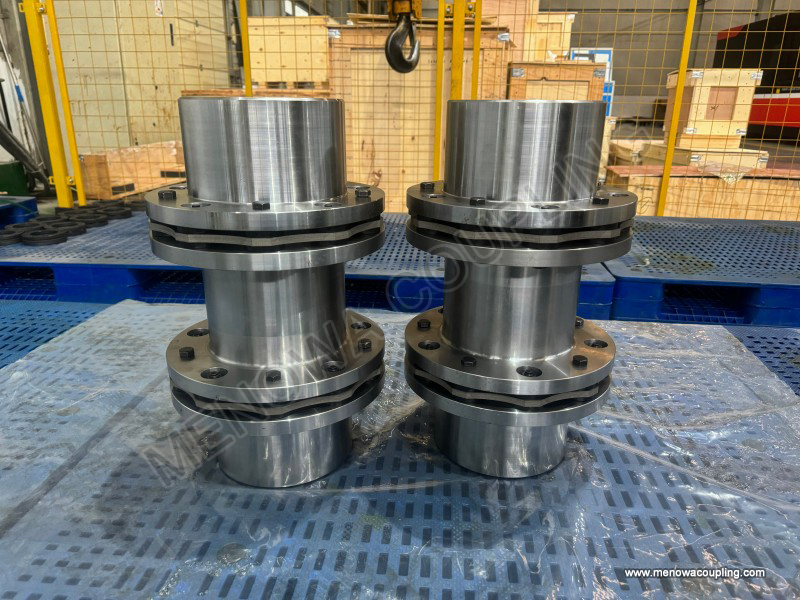
According to the different structural forms and membrane group layout modes, membrane couplings can be divided into two main types: single membrane group structure and double membrane group structure, and the two structural types have different performance characteristics and applicable working condition scenarios, which can meet the differentiated transmission needs of different industrial equipment. The single membrane group membrane coupling is the most basic and simplified structural form, which only adopts one group of stacked metal membrane sheets to connect the two shaft sleeves on the driving side and the driven side. This structural coupling has the characteristics of compact overall structure, small overall volume and light self-weight, and the assembly and disassembly process is simple and convenient with low assembly process requirements. The single membrane group structure can achieve good compensation effect for small-range angular misalignment and axial misalignment between shafts, and can meet the torque transmission and basic misalignment compensation needs of light-load, low-speed and small-power transmission equipment. However, due to the limitation of single membrane group structural layout, the compensation capacity for radial misalignment is relatively weak, and the buffering effect on strong alternating impact loads is limited, so it is mostly suitable for conventional light industrial transmission equipment with stable operation load, low vibration requirements and small shaft misalignment deviation, such as small-sized conveying equipment, ordinary stirring machinery and low-power auxiliary transmission devices. The double membrane group membrane coupling is the mainstream structural form widely used in heavy-duty and high-precision industrial transmission scenarios. On the basis of retaining the basic structural composition of the single membrane group coupling, it adds an intermediate spacing sleeve structure between two independent membrane groups, and the two membrane groups are respectively installed at the two ends of the spacing sleeve and connected with the driving side and driven side shaft sleeves correspondingly. The setting of the intermediate spacing sleeve effectively increases the flexible deformation space and overall structural flexibility of the coupling, greatly improves the compensation capacity for radial misalignment on the basis of maintaining good compensation effect for angular misalignment and axial misalignment, and can cope with multiple types of misalignment deviations existing at the same time in the shaft system. In addition, the double membrane group coordinated deformation structure has better buffering and damping performance for sudden load impact and alternating torque fluctuation in the operation process, can effectively reduce the vibration amplitude of the equipment during startup, shutdown and variable load switching, and maintain the stable operation state of high-speed and high-load equipment. Although the overall structure of the double membrane group membrane coupling is relatively complex and the assembly precision requirements are higher, its comprehensive transmission performance and misalignment compensation performance are more excellent, which can adapt to harsh working conditions such as high speed, heavy load, large temperature change and complex misalignment deviation, and is widely used in core key equipment in petrochemical industry, power generation industry, metallurgical industry and large-scale mechanical processing industry.
Compared with other common types of flexible couplings widely used in the mechanical transmission industry, membrane coupling has prominent comprehensive performance advantages in structural stability, environmental adaptability, operating maintenance and service life, which makes it stand out in high-end and harsh industrial transmission scenarios. In terms of structural material performance, membrane coupling adopts all-metal structural design, and the core flexible deformation component is high-strength stainless steel membrane sheet, which has excellent high temperature resistance, low temperature resistance, corrosion resistance and aging resistance. It can maintain stable elastic deformation performance and structural strength in high-temperature working environments generated by long-term operation of equipment, low-temperature cold working environments and corrosive working environments containing chemical media such as acid and alkali, and will not suffer from performance degradation, structural aging and deformation failure like non-metal elastic components such as rubber and plastic. In terms of operating maintenance, there is no relative sliding, rolling friction and wearing parts inside the membrane coupling, and the whole operation process does not need to add lubricating oil, grease and other lubricating media, avoiding the performance failure and equipment operation failure caused by lubricant deterioration, leakage and volatilization. The whole life cycle maintenance work of the coupling is extremely simple, only needing regular visual inspection of the fastening state of connecting fasteners and the surface integrity of the membrane group, without frequent replacement of wearing parts and regular lubrication maintenance, effectively reducing the daily maintenance workload and long-term operation cost of industrial equipment. In terms of transmission precision and vibration control, the membrane coupling has small torsional deformation and high transmission rigidity during torque transmission, which can realize precise synchronous rotation of the driving shaft and the driven shaft without rotation hysteresis and angle deviation, meeting the high-precision transmission needs of precision mechanical equipment and high-speed rotating machinery. At the same time, the elastic deformation of the metal membrane group can effectively absorb and isolate the vibration and impact generated by the equipment operation, reduce the vibration transmission between the driving equipment and the driven equipment, reduce the overall operating noise of the unit, and create a stable operating environment for the equipment. In terms of service life and fatigue resistance, the metal membrane sheet has good anti-fatigue performance and structural stability, and can withstand long-term high-speed rotation, alternating load and repeated elastic deformation without fatigue fracture and permanent deformation. Under the condition of normal installation and use in accordance with operating specifications, the service life of membrane coupling is far longer than that of traditional non-metal elastic couplings and friction-type couplings, reducing the frequency of coupling replacement and equipment downtime caused by component failure.
In the actual industrial equipment selection and matching application process, the reasonable selection of membrane coupling needs to comprehensively consider multiple key factors such as the actual operating torque of the equipment, rotating speed level, shaft misalignment range, operating environment conditions and equipment transmission precision requirements, so as to ensure that the selected membrane coupling can match the actual working conditions and give full play to its optimal transmission and compensation performance. The first core factor to be considered is the rated torque and peak torque of equipment operation. The basic specification model of membrane coupling is directly related to the torque bearing capacity. It is necessary to select the appropriate coupling specification according to the rated torque during normal operation of the equipment and the instantaneous peak torque generated during startup and load switching, to ensure that the torsional stress borne by the membrane group during operation is within the allowable safe range and avoid membrane deformation and damage caused by overload operation. The second key factor is the operating rotating speed of the equipment. Different structural sizes of membrane couplings have different critical rotating speed values. When selecting, it is necessary to ensure that the normal operating rotating speed of the equipment is lower than the critical rotating speed of the coupling, avoiding resonance phenomenon between the coupling and the shaft system during high-speed operation, which leads to increased equipment vibration and structural damage. The third important factor is the actual misalignment deviation range between the driving shaft and the driven shaft after equipment installation and commissioning. Different structural types of membrane couplings have different compensation capacities for angular, axial and radial misalignments. It is necessary to select a single or double membrane group structure according to the actual measured misalignment deviation data, to ensure that the coupling has sufficient compensation margin to absorb all misalignment deviations and avoid additional stress caused by insufficient compensation capacity. In addition, the operating environment temperature, medium corrosion degree and installation space size of the equipment also need to be comprehensively considered. For working environments with high temperature and strong corrosion, membrane couplings made of higher corrosion-resistant and high-temperature resistant stainless steel materials can be selected; for equipment with limited installation space, compact small-size single membrane group structural couplings can be selected to meet the installation and use requirements.
The installation and commissioning quality of membrane coupling directly determines its misalignment compensation effect, torque transmission stability and long-term service life, and standardized installation and accurate alignment commissioning are essential prerequisites to ensure the optimal performance of the coupling. Before formal installation, it is necessary to carefully clean the matching surface of the driving shaft and driven shaft, the inner hole of the coupling shaft sleeve and the flange connecting surface, remove all dirt, rust, burrs and sundries on the surface, ensure that the matching surface is smooth and flat without impurities, and avoid assembly gap and installation deviation caused by sundries. During the assembly process of the shaft sleeve and the rotating shaft, slow and uniform pressing assembly should be adopted instead of violent knocking and impact assembly, to ensure the tight fit between the shaft sleeve inner hole and the shaft body, and avoid shaft sleeve deformation and shaft surface damage caused by impact. After the two shaft sleeves are respectively installed and fixed on the driving shaft and the driven shaft, preliminary alignment adjustment of the two shafts should be carried out first to reduce the initial misalignment deviation to the minimum range, which can reduce the elastic deformation degree of the membrane group during subsequent operation and prolong the service life of the membrane sheet. Then install the membrane group and intermediate spacing sleeve (for double membrane group structure), and sequentially install high-strength connecting bolts. During the bolt fastening process, it is necessary to adopt the symmetrical gradual fastening method, fasten the bolts in the circumferential symmetrical sequence in multiple times, and control the fastening torque of each bolt to be consistent, to ensure uniform stress on the membrane group and no local stress concentration. After the installation is completed, precision alignment detection and fine adjustment should be carried out by using professional alignment detection tools, accurately measuring the angular, axial and radial misalignment values between the two shafts, and fine-tuning the equipment position according to the detection results to ensure that the misalignment deviation is within the optimal compensation range of the membrane coupling. After the installation and commissioning work is all completed, no-load trial operation should be carried out first to observe the operating vibration, noise and rotation state of the coupling, and formal load operation can be carried out only after confirming that there is no abnormal condition.
Daily maintenance and regular inspection management are important guarantees to maintain the long-term stable operation of membrane coupling and avoid sudden failure. Although the membrane coupling has the advantage of maintenance-free in the conventional operation process, long-term high-load operation and complex working environment will still cause certain changes in the fastening state of fasteners and the stress state of the membrane group, so regular inspection and maintenance work cannot be ignored. In the daily equipment operation management, the operator only needs to regularly observe the operating state of the coupling during equipment operation, check whether there is abnormal vibration, unusual noise and local temperature rise on the surface of the coupling, and if any abnormal phenomenon is found, stop the machine in time for inspection and troubleshooting, to avoid small faults evolving into major equipment failures. In the regular maintenance cycle, it is necessary to regularly check the fastening state of all connecting bolts of the membrane coupling, check whether there is bolt looseness, nut displacement and thread aging, and timely re-fasten the loose bolts and replace the aging and failed fasteners to ensure the stable connection of all components. At the same time, the surface state of the metal membrane group should be carefully inspected to check whether there are cracks, deformation, corrosion, wear and other damage on the surface of each membrane sheet. For the membrane group with slight corrosion and dirt, surface cleaning and anti-corrosion treatment should be carried out in time; for the membrane sheet with cracks and permanent deformation, the membrane group should be replaced immediately to avoid sudden fracture failure during operation. In addition, for the membrane coupling operating in high-temperature and corrosive working environments, the frequency of regular inspection should be appropriately increased, and the anti-corrosion protection work of the coupling surface should be done well to reduce the impact of harsh environment on the structural performance of the coupling. Through standardized daily management and regular maintenance, the membrane coupling can always maintain good working performance, reduce the failure rate of transmission components, and ensure the continuous and stable operation of industrial equipment.
Membrane coupling has been widely applied and promoted in many core industrial fields due to its excellent comprehensive performance, covering petrochemical production, thermal power and new energy power generation, metallurgical smelting processing, large-scale pump and compressor equipment, industrial stirring and conveying machinery and many other important industrial sectors. In the petrochemical industry, various production equipment such as chemical centrifugal pumps, chemical reactors, raw material conveying compressors and refining processing equipment need to operate continuously for a long time in high-temperature, high-pressure and corrosive chemical media environment. The all-metal corrosion-resistant structure of membrane coupling can adapt to such harsh working conditions, stably transmit high torque, compensate shaft misalignment caused by thermal expansion and equipment vibration, avoid equipment shutdown and production interruption caused by coupling failure, and ensure the continuity and stability of chemical production processes. In the power generation industry, steam turbines, gas turbines, generators and auxiliary power transmission equipment have the characteristics of high-speed operation, large transmission torque and high precision transmission requirements. Membrane coupling can realize precise synchronous rotation between turbine and generator shafts, compensate shaft displacement caused by thermal expansion during unit operation, reduce equipment vibration and operating noise, and improve the overall operating efficiency and safety of power generation units. In the metallurgical industry, large-scale smelting equipment, rolling machinery and metal processing transmission equipment have heavy operating load and large alternating impact load. The double membrane group membrane coupling has good load buffering capacity and fatigue resistance, can withstand long-term heavy-load impact operation, stabilize the power transmission of metallurgical equipment, and reduce component wear and failure probability. In the field of fluid transportation and compression equipment, various water pumps, oil pumps, air compressors and refrigeration compressors often have shaft misalignment caused by installation deviation and foundation vibration. Membrane coupling can effectively compensate various misalignments, ensure the stable operation of pump body and compressor, improve fluid transportation and compression efficiency, and reduce equipment energy consumption and operating failure rate. With the continuous upgrading and development of modern industrial equipment towards high speed, high precision, high load and long-cycle continuous operation, the application scope and market demand of membrane coupling are constantly expanding, and it has become an indispensable key basic component in the modern mechanical transmission system.
Looking at the overall development and application prospect of membrane coupling in the mechanical transmission industry, with the continuous progress of metal material processing technology, precision manufacturing process and mechanical design optimization technology, the comprehensive performance of membrane coupling is constantly improved and optimized, and the application adaptability in more extreme working conditions and high-precision transmission scenarios is constantly enhanced. In the future, with the accelerated upgrading of industrial intelligent manufacturing and high-efficiency green production, the requirements for the stability, efficiency, energy saving and long-cycle operation of mechanical transmission components will continue to increase, and membrane coupling, as a high-performance maintenance-free flexible transmission component, will gradually replace more traditional backward coupling products and become the mainstream choice of industrial shaft connection and torque transmission. At the same time, through the continuous optimization of membrane sheet material formula, structural design parameters and processing and manufacturing technology, the misalignment compensation capacity, torque transmission efficiency and fatigue resistance of membrane coupling will be further improved, which can adapt to more extreme working conditions such as ultra-high speed, ultra-low temperature and strong corrosion, and provide more reliable core guarantee for the stable operation of modern high-end industrial equipment. In the whole mechanical transmission system, the important role of membrane coupling in connecting rotating shafts, stabilizing power transmission and buffering equipment vibration will become more prominent, and it will continue to make important contributions to the efficient operation and safe production of various industrial fields.
https://www.menowacoupling.com/industrial-coupling/membrane-coupling.html
 WeChat
 WhatsApp