Cardan Shaft
Mechanical power transmission forms the fundamental foundation of all modern industrial production, mobile equipment operation, and engineering machinery movement, connecting power generation sources with working execution parts to ensure the continuous and stable transfer of rotational force and kinetic energy across diverse mechanical systems. Among countless mechanical transmission components designed to realize power connection under complex operating conditions, the cardan shaft stands out as a uniquely practical and functionally vital mechanical part, dedicated to transmitting torque and rotational motion between driving and driven components that cannot maintain perfect coaxial alignment during installation and long-term operation. Unlike rigid transmission shafts that rely on precise linear alignment and fixed spacing to complete power delivery, the cardan shaft integrates flexible articulated structural design into rigid force-bearing components, perfectly balancing structural rigidity for torque bearing and flexible adaptability for position and angle deviation compensation, making it an irreplaceable core component in both mobile mechanical equipment and fixed industrial production lines. Its application scenarios span countless mechanical fields that require dynamic power transmission, from daily used road vehicles and engineering construction machinery to heavy industrial production equipment, marine propulsion systems, and agricultural farming machinery, silently supporting the normal operation of various mechanical equipment and ensuring the efficient conversion and transfer of mechanical energy in complex working environments.
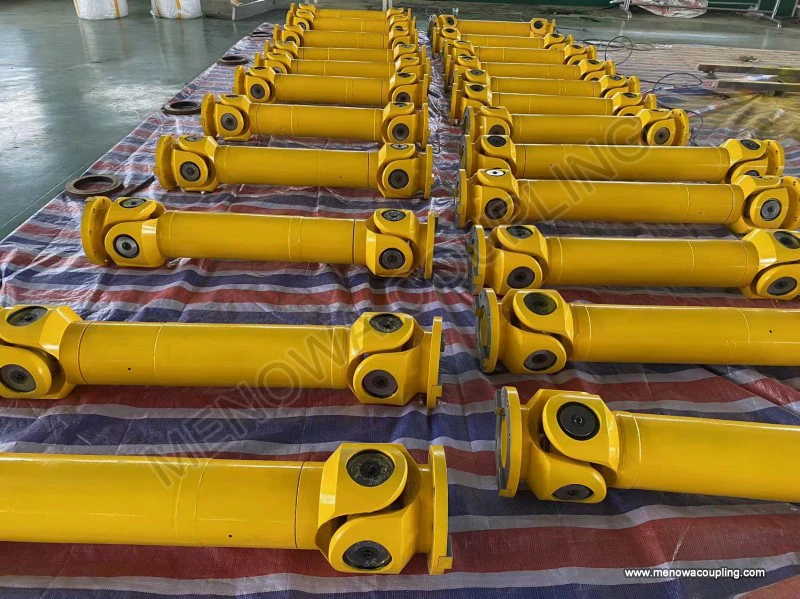
The embryonic form of the cardan shaft can be traced back to the early stage of mechanical development, when mechanical designers and engineers gradually realized the limitations of rigid transmission structures in practical application. In the initial stage of mechanical manufacturing, most power transmission between various mechanical components adopted integrated rigid shaft connection or simple flange fixed connection structures, which could only adapt to ideal working conditions with fixed positions, unchanged angles, and stable spacing between driving and driven ends. However, in actual mechanical operation processes, affected by equipment installation errors, structural vibration during operation, thermal expansion and contraction of metal components under long-term load, terrain jitter of mobile equipment, and gradual structural deformation after long-term service, the relative position and connection angle between power input ends and power output ends often produce continuous and irregular changes. Rigid transmission structures cannot adapt to these subtle and dynamic deviations, which easily leads to excessive local stress on the shaft body, structural deformation and bending, accelerated wear of connecting parts, and even sudden fracture of transmission components in severe cases, directly causing mechanical equipment shutdown, production interruption, and even potential safety hazards for operators. To solve this core mechanical pain point, mechanical researchers began to explore articulated connection structures that can maintain stable power transmission while allowing angular and axial displacement compensation, and after continuous structural optimization and practical verification, the original cardan shaft structure with simple universal joint connection was initially formed, laying a solid structural foundation for the later widespread popularization and continuous upgrading of cardan shaft products.
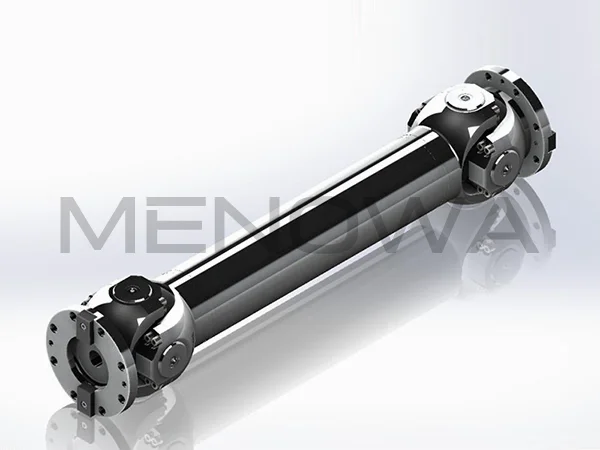
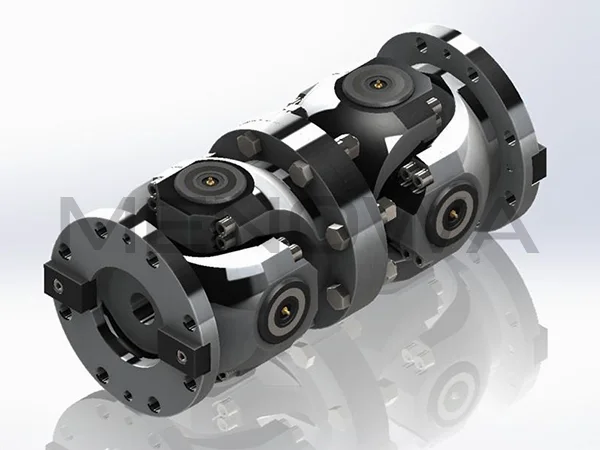
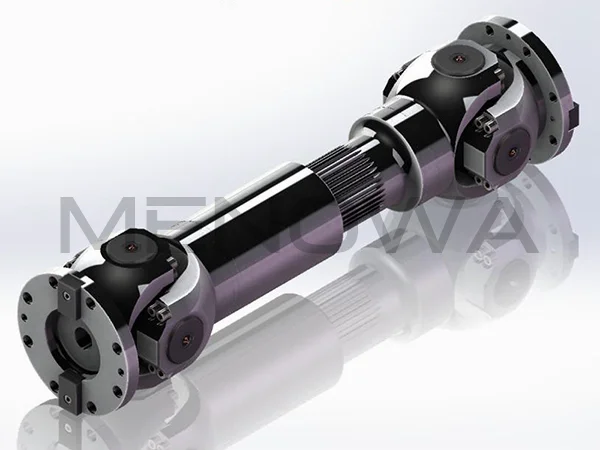
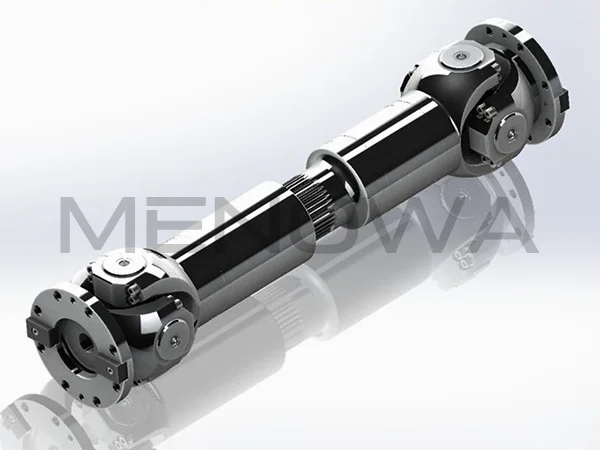
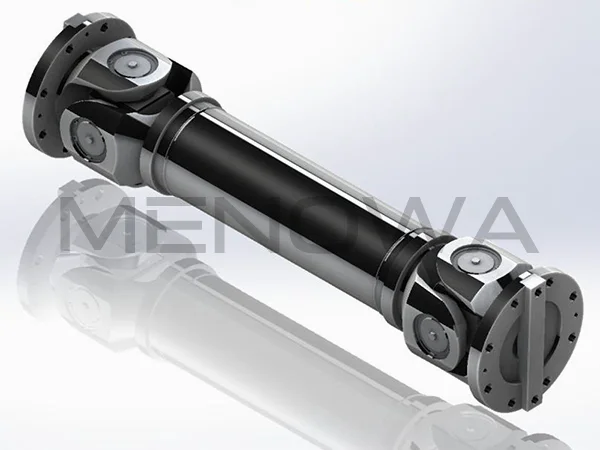
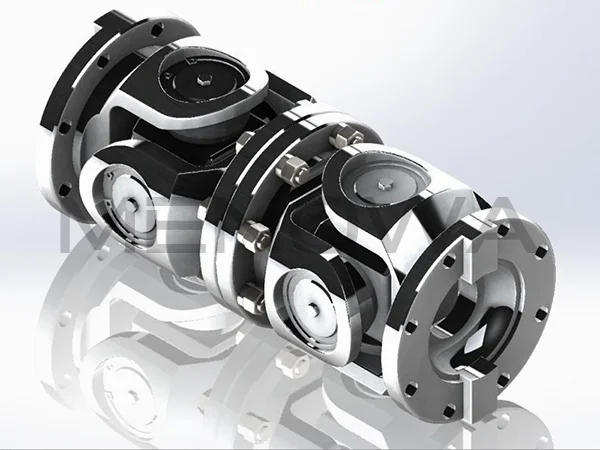
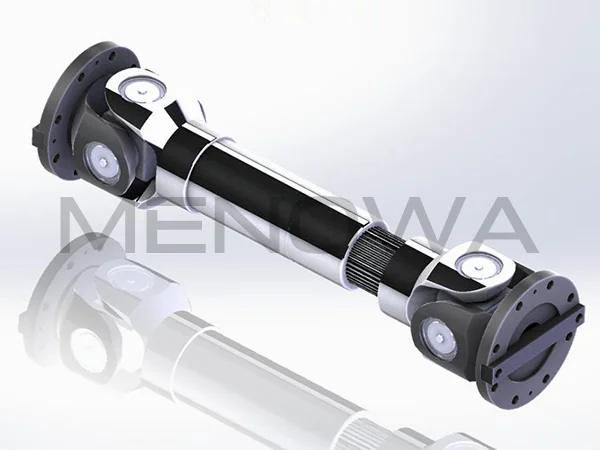
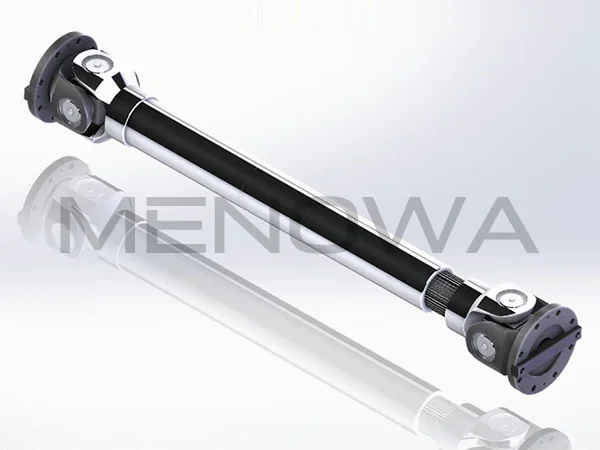
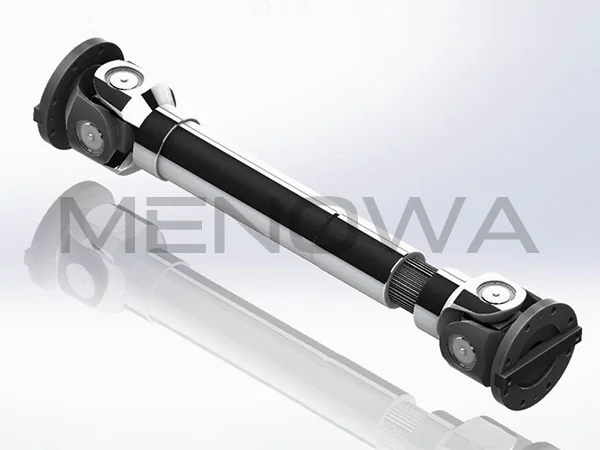
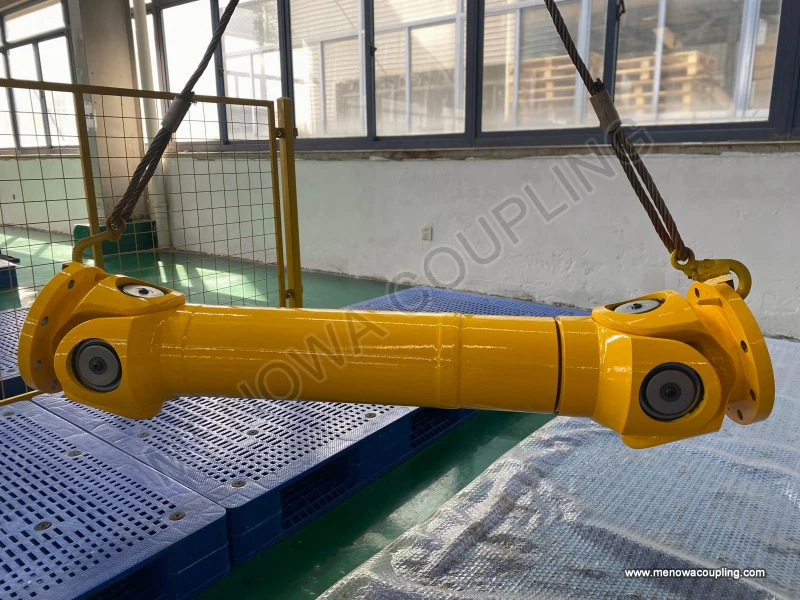
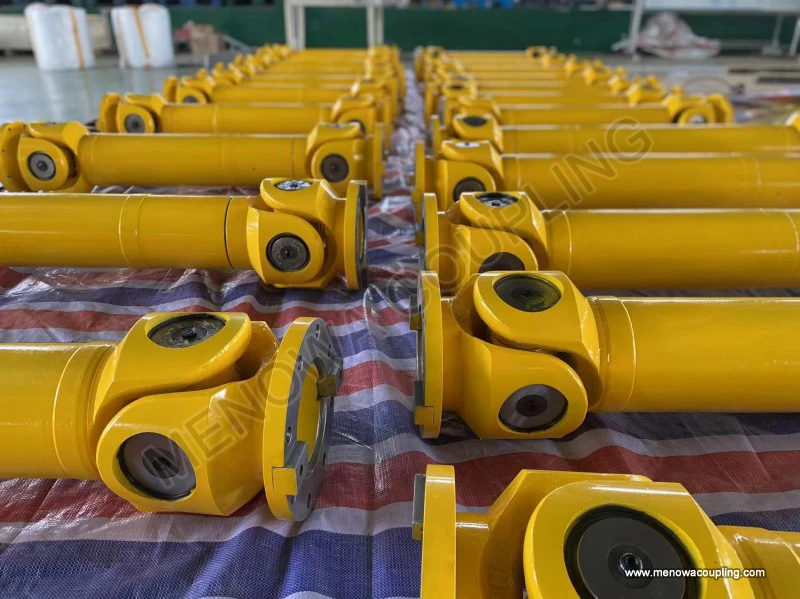
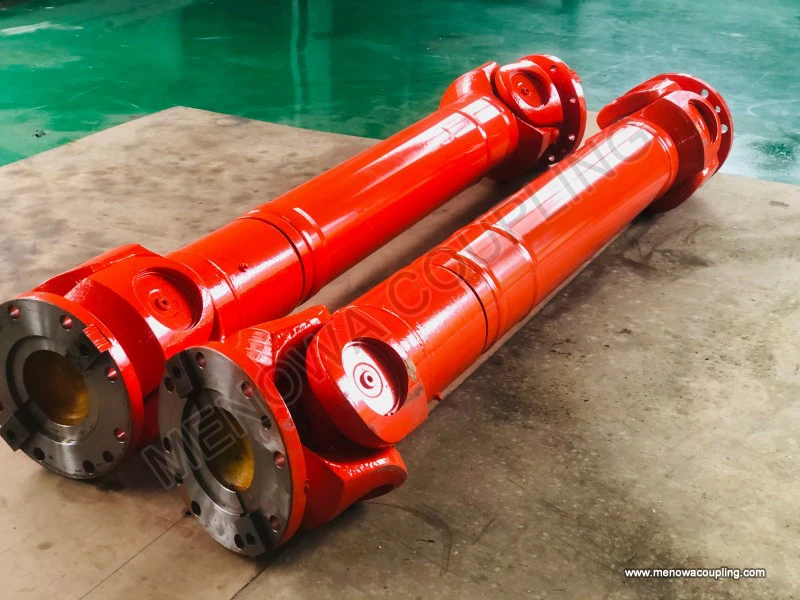
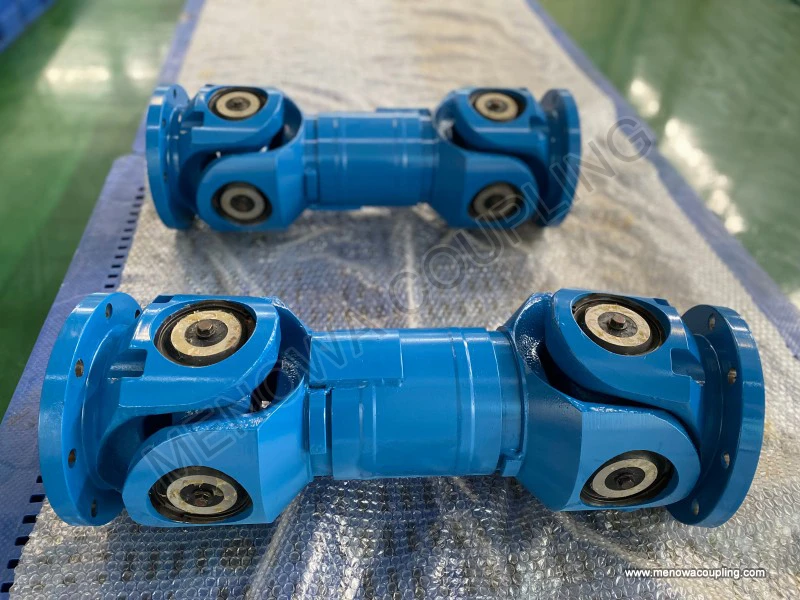
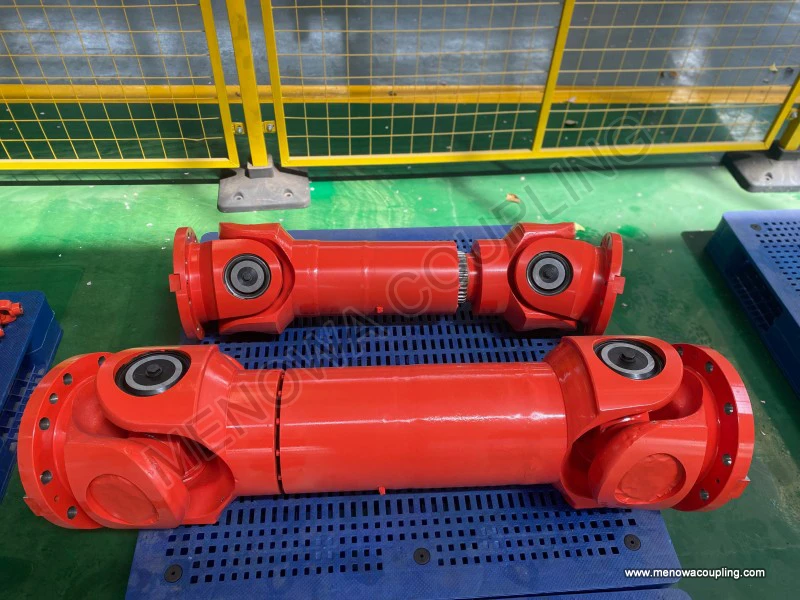
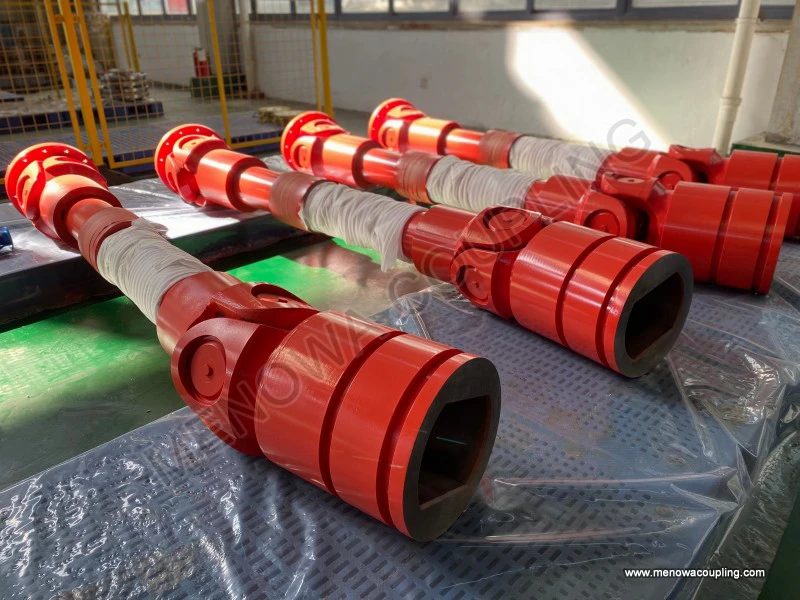
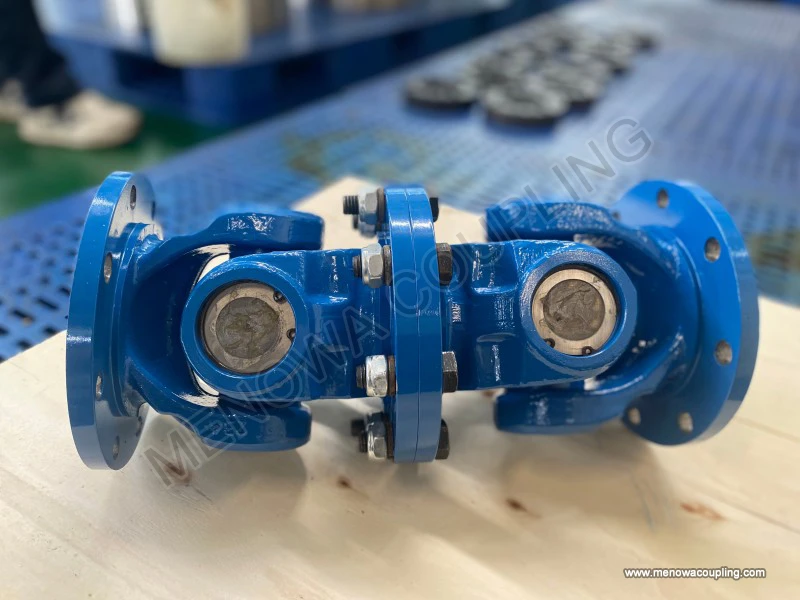
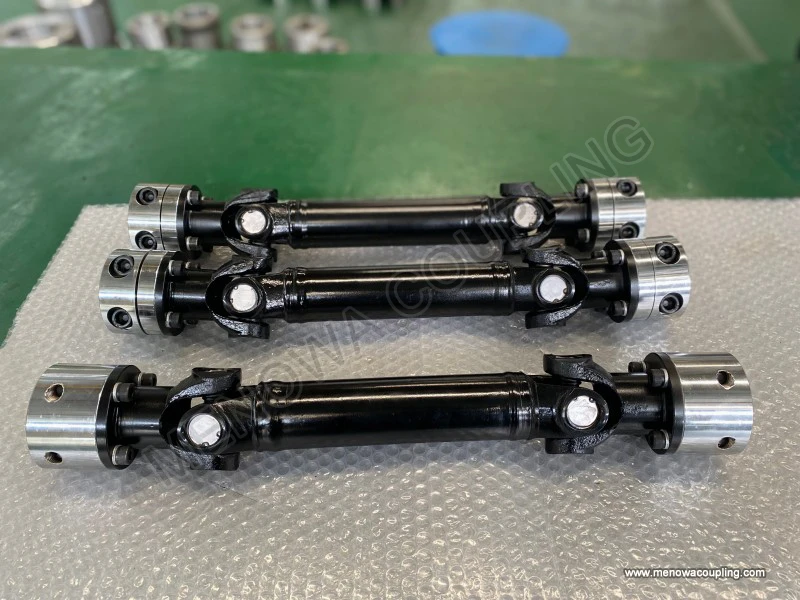
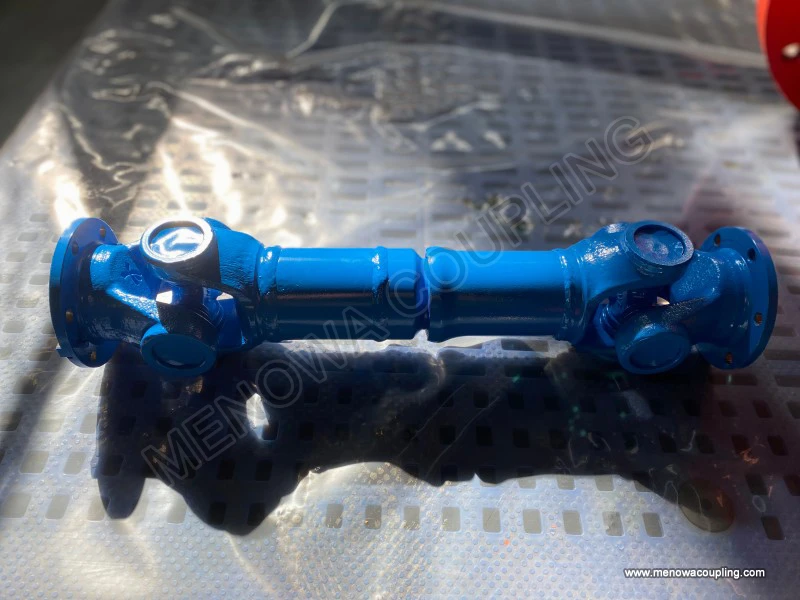
After centuries of structural iteration, material innovation, and application practice accumulation, the modern cardan shaft has evolved from the original simple single-section universal connection structure into a mature and standardized mechanical transmission component with complete structural configuration, reasonable stress distribution, and strong environmental adaptability. The basic structural composition of a conventional cardan shaft follows a scientific and unified mechanical design logic, mainly including universal joint assemblies arranged at both ends, intermediate shaft body, splined telescopic connection parts, and fixed connection yokes and flanges used for docking with driving and driven equipment. Each component undertakes an independent core mechanical function, and all parts cooperate and coordinate with each other to jointly complete the whole process of torque transmission, deviation compensation, and buffering vibration in mechanical operation. The universal joint assembly is the most core functional part of the entire cardan shaft, also known as the key flexible connection unit of the equipment, which is composed of cross shaft parts, bearing assemblies, and joint yoke structures. The special geometric structure formed by the mutual assembly of these parts enables the connected driving shaft and driven shaft to generate reasonable angular deflection within a certain range while maintaining synchronous rotational operation, effectively compensating for angular misalignment caused by equipment installation offset and dynamic operation vibration. The cross shaft inside the universal joint acts as the central force-bearing and connecting pivot, bearing the main torque shear force and rotational friction force during power transmission, and its structural precision and surface processing quality directly determine the rotational flexibility and long-term service stability of the entire universal joint.
The intermediate shaft body of the cardan shaft is the main force-bearing component for long-distance torque transmission, usually made of high-strength alloy steel materials with excellent mechanical properties, processed through integral forging or seamless pipe finishing forming processes to ensure the overall structural rigidity and torsional resistance of the shaft body. In the working process, the intermediate shaft body needs to bear huge torsional load and alternating stress for a long time, so the structural design must take into account both light weight requirements to reduce mechanical operation inertia and high rigidity requirements to avoid torsional deformation. The wall thickness and outer diameter of the shaft body are designed according to the actual torque demand of different application scenarios, realizing the matching of structural strength and working load and avoiding energy transmission loss caused by excessive shaft body weight or structural damage caused by insufficient rigidity. The splined telescopic structure installed in the middle or connecting position of the cardan shaft is another key functional design, mainly used to compensate for axial displacement changes between the driving end and the driven end during equipment operation. When mobile mechanical equipment travels on uneven roads or fixed industrial equipment produces thermal expansion and contraction deformation after long-term high-load operation, the distance between the two connected mechanical structures will change dynamically, and the splined structure can freely stretch and retract within a designed stroke range, ensuring that the cardan shaft will not be subjected to additional axial tension or compression, avoiding structural damage caused by rigid extrusion and effectively protecting the overall structural integrity of the transmission shaft.
The working principle of the cardan shaft follows basic mechanical kinematics and torque transmission laws, realizing continuous and stable power transmission through the coordinated movement of multiple flexible connection structures. When the driving mechanical component starts to rotate and output torque, the rotational power is first transmitted to the joint yoke of the cardan shaft driving end, and then the torque is transferred to the cross shaft through the bearing assembly inside the universal joint. The cross shaft relies on its multi-directional rotational flexibility to transmit rotational motion to the driven joint yoke, and then the power is transmitted to the intermediate shaft body and the driven end universal joint in turn, finally realizing the synchronous rotation of the driven mechanical equipment. In this whole transmission process, even if a certain angular deviation exists between the driving shaft and the driven shaft, the universal joint can rely on the rotational deflection of the cross shaft and the bearing to adapt to the angle change, ensuring that the torque transmission process will not be interrupted or distorted. The cardan shaft can not only compensate for single angular misalignment but also effectively cope with the superposition of axial, radial, and angular multi-dimensional deviations, adapting to installation errors generated during equipment assembly and position displacement changes generated during long-term dynamic operation, ensuring that the power transmission efficiency remains stable in various complex working states.
In practical mechanical design and application, most cardan shaft configurations adopt a double universal joint matching structure instead of a single universal joint layout, which is an important structural optimization design formed to avoid uneven rotation speed in the transmission process. A single universal joint structure will produce periodic rotational speed fluctuation when transmitting power under the condition of angular deflection, resulting in unstable torque output, easy vibration of mechanical equipment, and increased running noise. By adopting the double universal joint design and reasonably adjusting the installation angle and phase position of the two universal joints, the speed fluctuation generated by the front universal joint can be completely offset by the rear universal joint, realizing constant-speed and stable torque transmission between the driving end and the driven end. This constant-speed transmission design greatly improves the operation stability of mechanical equipment, reduces vibration and friction loss during power transmission, extends the service life of the cardan shaft and supporting mechanical parts, and also reduces the energy consumption of equipment operation. The splined telescopic structure cooperates with the double universal joint structure to form a complete flexible transmission system, which can cope with all conventional displacement and angle changes in mechanical operation and meet the diverse power transmission needs of different mechanical equipment.
Material selection is a key factor determining the overall performance, load-bearing capacity, and service life of the cardan shaft, and different structural parts have targeted material selection standards according to their respective stress characteristics and working environments. The cross shaft and bearing components bearing frequent friction and high shear stress are usually made of high-quality alloy structural steel with high hardness, high wear resistance, and good fatigue resistance, and after precision forging, heat treatment, and surface quenching and tempering processes, the surface hardness and internal toughness of the parts are improved, ensuring that they can resist friction wear and impact load during long-term rotational operation and avoid fatigue fracture under alternating stress. The intermediate shaft body needs to balance torsional rigidity and impact resistance, so high-strength seamless alloy steel pipes or integral forged steel pieces are mostly selected, with excellent torsional resistance and structural stability, not easy to deform under long-term high torque load. The connecting yoke and flange parts need to bear fixed connection pressure and instantaneous impact load, so materials with good structural rigidity and welding performance are selected, and after finishing processing, the connection flatness and assembly accuracy are guaranteed to ensure the firmness of the docking position with mechanical equipment. For cardan shafts used in special harsh working environments such as high humidity, heavy corrosion, and low temperature, the surface of the parts will be treated with anti-corrosion, rust-proof, and low-temperature toughening treatments to adapt to extreme working conditions and maintain stable working performance for a long time.
The application scope of the cardan shaft covers almost all mechanical fields that require flexible power transmission, showing extremely high practical value and industrial universality. In the field of road transportation vehicles, the cardan shaft is an essential core component of the transmission system of rear-wheel drive and four-wheel drive vehicles, responsible for transmitting the power output by the engine and gearbox to the rear drive axle. During the driving process of the vehicle, the body will jitter up and down with the road surface, and the relative position and angle between the gearbox and the drive axle will change constantly. The cardan shaft can well adapt to this dynamic change, ensuring that the power is continuously transmitted to the drive wheels and the vehicle runs smoothly. In the field of engineering machinery, various excavators, loaders, cranes, and road construction equipment often work on complex and uneven construction sites, with harsh working conditions and large equipment vibration. The cardan shaft is used for power connection between the engine, hydraulic pump, and walking and working devices of engineering machinery, adapting to strong vibration and large angle deviation during equipment operation, ensuring the normal output of construction power and the stable operation of engineering equipment.
In the field of industrial manufacturing and production equipment, cardan shafts are widely used in steel rolling equipment, conveyor production lines, large fan systems, and mechanical transmission parts of processing machine tools. In industrial production, many large-scale mechanical equipment have long transmission distances, and the equipment will generate thermal expansion and contraction after long-term high-load operation, resulting in position changes between transmission components. The cardan shaft can compensate for these subtle displacements and angle deviations, ensuring the stable operation of the production line transmission system, avoiding production shutdowns caused by transmission component failure, and improving the continuity and efficiency of industrial production. In the field of agricultural machinery, farming machinery such as tractors, harvesters, and soil preparation machines often work in complex farmland environments with uneven terrain and muddy roads. The cardan shaft is used for power connection between the tractor engine and various agricultural working tools, adapting to the bumpy vibration during farmland operation and ensuring that the agricultural machinery can complete farming, harvesting, and other operations smoothly. In the marine equipment field, cardan shafts are applied to the power transmission system of small and medium-sized ships and marine engineering equipment, adapting to the hull shaking and structural displacement caused by water waves, ensuring the stable transmission of propulsion power and the normal operation of marine mechanical equipment.
In the actual operation process of the cardan shaft, its operating state is affected by many external factors and internal structural conditions, and reasonable working condition adaptation and load matching are crucial to maintaining its long-term stable operation. Each cardan shaft has a reasonable working angle range and rated torque bearing capacity designed according to structural parameters, and long-term operation exceeding the designed angle and load will cause accelerated wear of internal bearings and cross shafts, increased structural stress, and even early fatigue damage. In the equipment installation process, workers need to strictly follow mechanical assembly specifications to ensure that the installation angle of the cardan shaft is within the optimal design range, the coaxiality of the connecting flange meets the standard requirements, and excessive installation deviation caused by improper assembly is avoided. For mobile equipment working in a bumpy environment, it is necessary to regularly check the running state of the cardan shaft during daily operation, avoid long-term overload operation of the equipment, and reduce instantaneous impact torque damage to the cardan shaft structure. At the same time, the operating temperature of the working environment also has a certain impact on the performance of the cardan shaft; too high temperature will cause lubricating oil deterioration and reduced structural toughness, and too low temperature will lead to increased brittleness of metal parts, so targeted protection measures need to be taken according to different environmental temperatures to ensure stable transmission performance.
Wear and fatigue loss are the main natural attenuation forms of the cardan shaft during long-term service, which are unavoidable mechanical aging phenomena in the use process. The internal bearings and cross shaft friction pairs of the universal joint will produce continuous mechanical friction during rotational operation, and tiny metal wear particles will be generated over time, leading to increased friction clearance, reduced rotational flexibility, and increased vibration and noise during operation. The intermediate shaft body and connecting parts will bear alternating torsional stress and impact load for a long time, resulting in metal fatigue accumulation inside the structure, and tiny fatigue cracks will gradually appear on the surface and inside of the parts with the extension of service time. If not maintained and inspected in time, the fatigue cracks will continue to expand, eventually leading to structural deformation or even fracture of the cardan shaft. The splined telescopic structure will also produce reciprocating friction during long-term stretching and retraction, resulting in surface wear of the spline teeth, reduced telescopic flexibility, and easy jamming and failure. These wear and fatigue losses are normal aging problems in the mechanical operation process, and the key to delaying the aging speed and extending the service life lies in daily standardized maintenance and regular professional inspection and maintenance.
Scientific and standardized daily maintenance and regular maintenance work can effectively reduce the wear speed of cardan shaft parts, delay structural fatigue aging, reduce failure probability, and ensure long-term stable and efficient operation. The core of daily maintenance work is to keep the cardan shaft clean and well lubricated; regular cleaning of dust, sediment, and dirt on the surface of the shaft body and universal joint can avoid abrasive wear of internal parts caused by hard impurities entering the friction pair. Regular replacement and supplementation of special lubricating grease for the universal joint and splined structure can reduce friction resistance between moving parts, reduce friction heat generation, and slow down surface wear of parts. During regular maintenance, it is necessary to carefully check the fastening state of all connecting bolts and flange parts of the cardan shaft to avoid bolt loosening caused by long-term vibration, which leads to increased assembly clearance and unstable transmission operation. It is also necessary to detect the wear degree of internal bearings and cross shafts, check whether there is obvious deformation, crack, or excessive vibration during rotation, and timely replace severely worn parts and repair potential hidden dangers.
In addition to daily maintenance, regular dynamic balance detection and correction of the cardan shaft are also important maintenance links that cannot be ignored. After long-term operation, the shaft body of the cardan shaft may have slight mass unevenness due to wear, dirt adhesion, or minor structural deformation, resulting in unbalanced centrifugal force during rotation, causing mechanical vibration, increased running noise, and accelerated wear of supporting parts. Regular dynamic balance detection can accurately find the unbalanced position of the shaft body, and through reasonable weight correction and balancing treatment, the rotational balance of the cardan shaft can be restored, reducing vibration and friction loss in operation. For cardan shafts that have been used for a long time or worked under heavy load conditions for a long time, regular structural fatigue inspection should be carried out to check for hidden cracks and deformation problems, eliminate potential safety hazards in advance, and avoid sudden failure of the cardan shaft affecting the normal operation of mechanical equipment.
With the continuous progress of mechanical manufacturing technology and the continuous upgrading of industrial equipment performance, the design and manufacturing technology of cardan shafts are also constantly innovating and developing, moving towards lighter structural weight, higher transmission efficiency, stronger environmental adaptability, and longer service life. In terms of material research and development, new high-strength lightweight alloy materials and composite materials are gradually applied to the production and manufacturing of cardan shafts, which can reduce the overall weight of the shaft body while ensuring structural rigidity and load-bearing capacity, reduce mechanical operation inertia, and improve power transmission efficiency. In terms of structural design, with the help of computer simulation and finite element analysis technology, mechanical designers can optimize the stress distribution structure of the cardan shaft, reduce local stress concentration, improve the fatigue resistance and impact resistance of parts, and further optimize the flexible connection structure to improve the deviation compensation capacity and transmission stability.
In terms of processing technology, the application of precision CNC machining and intelligent forging forming technology improves the processing precision and assembly accuracy of cardan shaft parts, reduces assembly clearance and friction loss, and makes the power transmission process more efficient and stable. In terms of intelligent maintenance, with the development of industrial Internet and sensor monitoring technology, more cardan shafts are equipped with real-time operation state monitoring sensors, which can monitor the operating temperature, vibration amplitude, torque load, and wear state of the cardan shaft in real time, realize early warning of potential failures, and change the traditional passive maintenance mode into active predictive maintenance, further improving the operation reliability and service life of the cardan shaft. In the future, with the continuous development of intelligent manufacturing and high-end mechanical equipment, the cardan shaft, as a basic flexible power transmission component, will continue to carry out technological innovation and structural upgrading, adapt to more complex and harsh working conditions and higher mechanical operation requirements, and continue to play an irreplaceable core role in the development of various mechanical industries.
Throughout the entire development and application process of the cardan shaft, this seemingly simple mechanical component carries the core mechanical demand of flexible power transmission in modern mechanical systems, and is an important mechanical foundation for realizing the normal operation of various mobile and fixed mechanical equipment. From the initial simple articulated transmission structure to the modern mature and intelligent optimized transmission component, the cardan shaft has been continuously optimized and upgraded in structure, material, technology, and maintenance, always adapting to the changing mechanical application needs and solving various power transmission problems under complex working conditions. Its unique flexible connection design, reliable torque transmission capacity, and wide application adaptability make it an indispensable key part in the mechanical transmission field. Whether in industrial production, engineering construction, transportation, agricultural production, or marine equipment operation, the cardan shaft silently provides stable power transmission support for all mechanical equipment, promoting the stable operation and continuous development of various industries. Understanding the structural characteristics, working principle, application value, and maintenance management methods of the cardan shaft is not only conducive to better applying this mechanical component to mechanical design and equipment use, but also helps to extend the service life of mechanical equipment, reduce operation and maintenance costs, and ensure the safe and efficient operation of various mechanical systems in long-term production and operation activities.
https://www.menowacoupling.com/industrial-coupling/cardan-shaft.html
 WeChat
 WhatsApp