Claw Coupling
In the entire industrial power transmission ecosystem, the stable and efficient connection between driving equipment and driven equipment lays a solid foundation for the normal operation of all mechanical production and processing links. Various mechanical transmission accessories undertake different connection and transmission tasks according to structural characteristics and performance attributes, and claw coupling has always occupied an indispensable and core position in medium and conventional torque transmission scenarios relying on its simple and reliable structural design, excellent elastic buffering effect and convenient daily operation and maintenance conditions. As a common flexible connecting component widely used in mechanical transmission systems, it effectively connects two independent rotating shafts in mechanical equipment, realizes the stable transmission of rotational torque and power, and at the same time ingeniously uses the elastic deformation characteristics of intermediate flexible components to resolve various adverse factors generated during the operation of the transmission system, including mechanical vibration, rotational impact and inevitable axis offset caused by installation deviation and long-term operation wear. Different from rigid connecting parts that pursue rigid and fixed connection effects and lack buffer space, claw coupling focuses on balancing the stability of power transmission and the flexibility of mechanical operation, ensuring that while completing continuous power output, it can protect key mechanical parts from excessive mechanical stress damage, extend the overall service life of transmission equipment, and reduce the potential failure risks caused by rigid collision and friction between parts in the long-term working process. In all kinds of industrial production lines, mechanical processing equipment, conveying and handling machinery, and supporting power facilities of light and heavy industrial production, claw coupling can be seen almost everywhere, adapting to different working environments and operating frequencies, and showing strong environmental adaptability and structural stability in both continuous long-term operation and intermittent frequent start-stop working conditions.
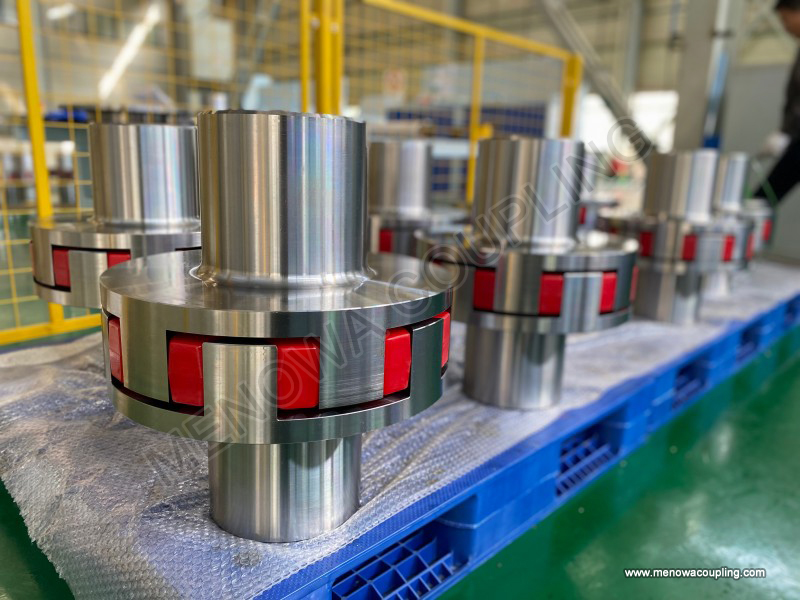
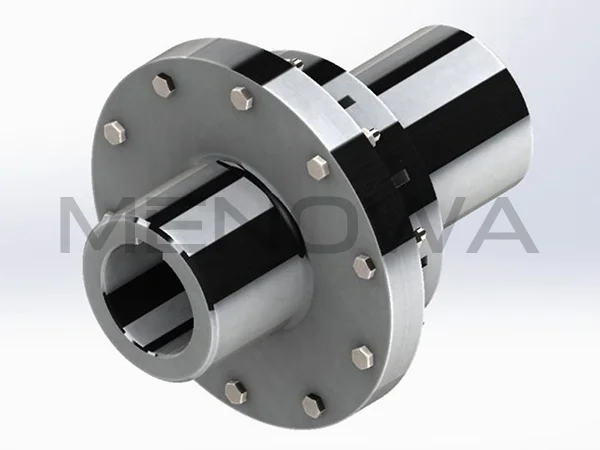
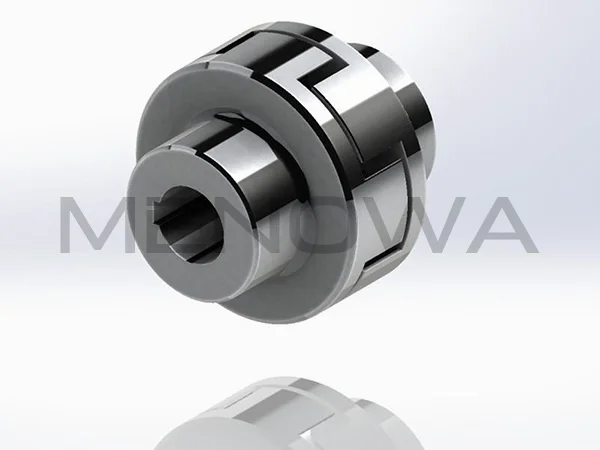
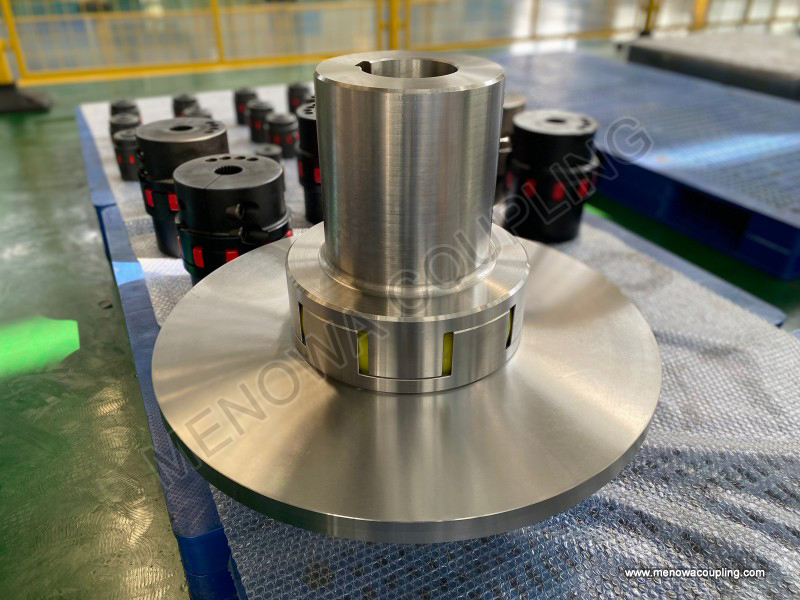
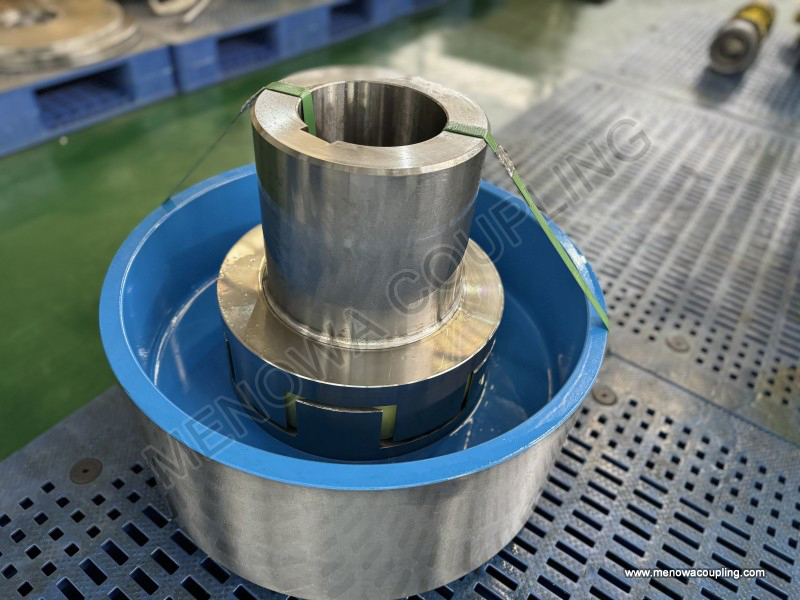
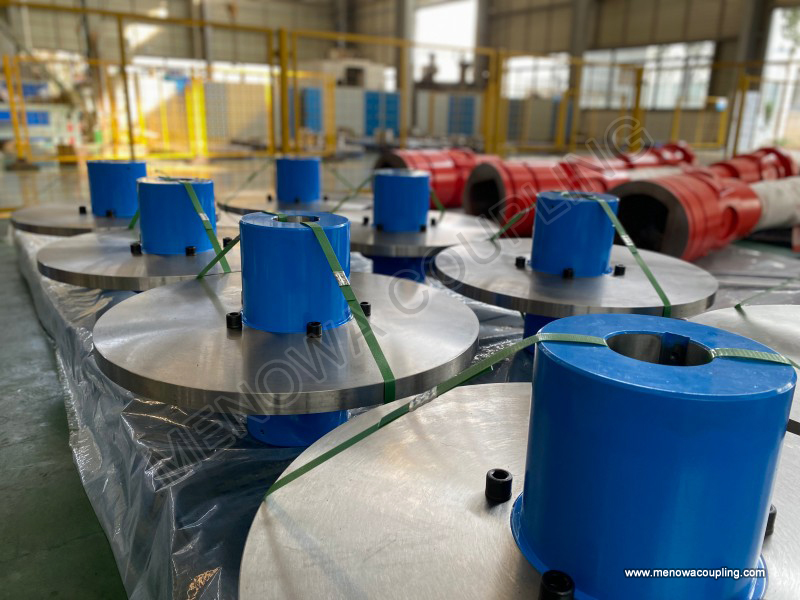
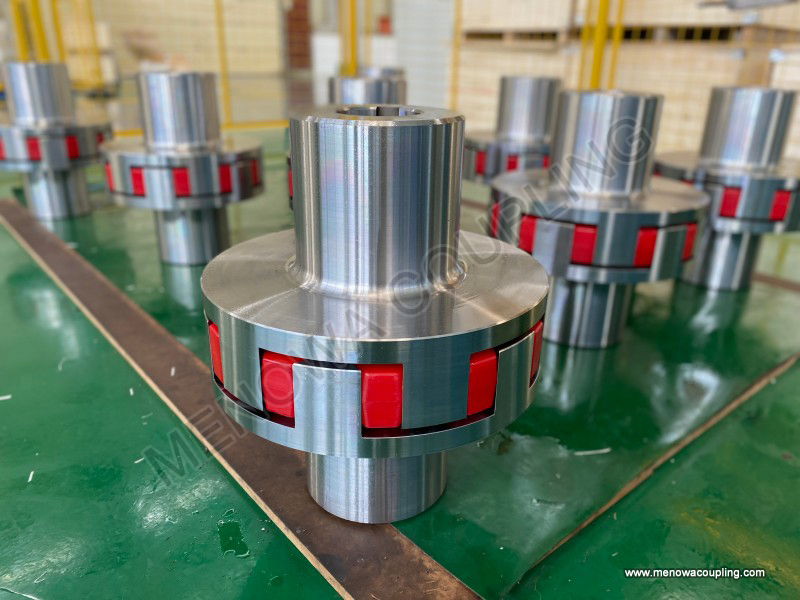
The basic structural composition of claw coupling follows the design concept of simplicity and practicality, without complex superimposed parts and cumbersome assembly structures, and the whole is mainly composed of two symmetrical claw-shaped metal half-couplings and a central elastic intermediate element commonly known as a spider insert. The two half-couplings are processed with regularly arranged convex claw structures on the opposite matching surfaces, and the claw bodies are distributed in a symmetrical and uniform circumferential layout, with the number of claw lobes designed and adjusted according to different torque transmission requirements and equipment operation specifications, covering common specifications such as four lobes, six lobes, eight lobes and ten lobes to meet the transmission needs of different power levels. The two half-couplings are respectively fixed on the driving shaft and the driven shaft of the mechanical equipment through reliable shaft connection structures, ensuring that each half-coupling can rotate synchronously with the corresponding rotating shaft without relative rotation and slipping during operation. The core elastic intermediate element is embedded and installed in the gap formed by the staggered engagement of the claw bodies of the two half-couplings, presenting a special petal-shaped structure that fits perfectly with the gap between the claws. This elastic intermediate element is the key functional part of the entire claw coupling, undertaking multiple core tasks such as torque transmission, vibration buffering, impact absorption and axis deviation compensation in the working process. All structural parts are designed with standardized assembly dimensions, which makes the overall assembly and disassembly process of the coupling very convenient, and no complicated professional tools and tedious assembly procedures are required in the whole process, which creates favorable conditions for subsequent daily maintenance and regular replacement of wearing parts. The metal half-couplings are mostly made of high-strength cast iron, carbon steel or lightweight aluminum alloy materials, and different metal substrates are selected according to the working load and environmental conditions of different equipment. Cast iron materials are suitable for conventional medium-load working scenarios, with good overall rigidity and compression resistance, and stable structural performance under long-term conventional operation; carbon steel materials have higher tensile strength and impact resistance, and can adapt to working conditions with large instantaneous load fluctuation and occasional strong mechanical impact; aluminum alloy materials are lightweight and have good heat dissipation performance, suitable for high-speed light-load transmission occasions, which can effectively reduce the overall self-weight of the transmission system and reduce the additional rotational inertia generated during equipment operation.
The working principle of claw coupling is based on the basic mechanical meshing transmission and elastic deformation buffering mechanism, and the whole power transmission process is smooth and efficient with low mechanical loss. When the driving equipment starts to operate and drive the driving shaft to rotate, the half-coupling fixed on the driving shaft rotates synchronously with the shaft body, and the convex claw bodies on the driving side will continuously and evenly squeeze the petal-shaped elastic intermediate element embedded in the middle. Under the continuous action of rotational thrust, the elastic element transmits the received torque force to the claw bodies of the driven-side half-coupling through elastic compression and force transfer, thereby driving the driven half-coupling and the connected driven shaft to rotate synchronously, realizing the continuous and stable transmission of power and torque from the driving end to the driven end. In the whole rotation and transmission process, the metal claw bodies on both sides do not directly contact and collide with each other, and all contact and force transfer links are completed through the buffer transition of the intermediate elastic element. This core working mode fundamentally avoids rigid friction and hard collision between metal parts, effectively reduces the generation of mechanical noise and running vibration during equipment operation, and eliminates the mechanical wear and part fatigue damage caused by long-term rigid contact. When the transmission system encounters instantaneous load changes, equipment start-stop impact or external mechanical vibration interference, the elastic intermediate element will produce controllable elastic compression and rebound deformation according to the magnitude of the external force. This elastic deformation process can effectively absorb and dissipate instantaneous impact force and vibration energy, avoid the direct transmission of impact load to the driving and driven shafts and the core equipment body, and protect the motor, reducer, bearing and other key precision parts in the transmission system from impact damage. At the same time, when there is a certain relative axis offset between the driving shaft and the driven shaft due to installation errors, equipment operation vibration or long-term component wear, the elastic element can also rely on its own flexible deformation performance to automatically compensate for radial deviation, angular deviation and axial deviation within a reasonable range, ensuring that the power transmission process remains stable and continuous even if the two shafts are not completely concentric, without causing additional bending stress and shear stress on the shaft body and related parts.
The material selection of the intermediate elastic element directly determines the comprehensive working performance and service cycle of the claw coupling, and different elastic materials endow the coupling with different adaptability to working conditions and functional characteristics. The commonly used materials for the elastic intermediate element mainly include high-quality rubber, high-strength wear-resistant polyurethane and special engineering plastics, and each material has unique performance advantages and applicable working scenario ranges. Rubber elastic elements have excellent comprehensive elasticity and low-temperature resistance, with good softness and buffering performance, which can absorb low-frequency vibration and weak mechanical impact in the transmission system to the greatest extent, and are very suitable for conventional indoor working environments with stable load and small temperature change. The rubber material has good fitting performance with metal claw bodies, will not produce excessive friction and wear during long-term cyclic compression deformation, and has stable performance in conventional medium-speed and medium-torque transmission work. Polyurethane elastic materials have outstanding wear resistance, high-temperature resistance and compression resistance on the basis of maintaining good elasticity, with stronger bearing capacity and anti-aging performance. This material can maintain stable elastic deformation performance under long-term high-load compression and frequent start-stop impact working conditions, is not easy to produce permanent deformation, cracking and wear damage, and can adapt to harsh working environments such as high temperature, dust and slight humidity changes. Polyurethane elastic elements are widely used in industrial transmission links with large load fluctuation and high operation frequency, and their service life is significantly longer than that of ordinary rubber materials under the same working conditions. Special engineering plastic elastic elements have the characteristics of high hardness, oil resistance and corrosion resistance, and have good stability in working environments with oil pollution, chemical medium erosion and high-speed operation. The engineering plastic material has small deformation under high-speed rotation, good rigidity of torque transmission, small rotational clearance, and can meet the transmission requirements of mechanical equipment that requires high rotational precision and stable torque output. Different hardness grades can be adjusted for all types of elastic materials, and the hardness configuration can be reasonably selected according to the actual working load, vibration demand and operation precision requirements of the equipment, so as to balance the buffering and shock absorption effect and torque transmission efficiency of the coupling, and ensure that the coupling can give full play to the best working performance in matching working conditions.
One of the most prominent practical advantages of claw coupling in industrial application is its excellent multi-directional axis deviation compensation capability, which solves many practical pain points in the actual operation of mechanical transmission systems. In the actual on-site installation process of mechanical equipment, it is difficult to achieve absolute precise alignment and complete concentricity between the driving shaft and the driven shaft due to the limitation of installation space, installation technology and on-site construction conditions, and there will inevitably be a certain degree of radial displacement, angular deflection and axial spacing deviation between the two shafts. In addition, after long-term continuous operation of the equipment, the vibration during operation, the slight wear of fixed parts and the thermal expansion and contraction of metal parts caused by temperature changes will further increase the axis offset between the two shafts. If rigid couplings without deviation compensation function are used for connection, the uncompensated axis offset will generate huge additional bending stress and shear stress on the shaft body, bearings and connected equipment, resulting in accelerated wear of bearing parts, shaft body deformation and bending, increased equipment operation failure rate, and even serious mechanical equipment shutdown and damage in severe cases. The claw coupling relies on the flexible deformation of the intermediate elastic element, which can effectively compensate for radial deviation, angular deviation and axial deviation within a reasonable design range. When radial deviation occurs between the two shafts, the elastic element produces uniform lateral compression deformation to adapt to the radial displacement of the shaft body and maintain stable torque transmission; when angular deviation occurs, the elastic element produces uneven compression deformation in the circumferential direction to balance the angular deflection of the two shafts and avoid additional stress concentration; when axial deviation occurs, the elastic element relies on its own axial compression performance to adapt to the axial spacing change of the two shafts and ensure the continuous fit between the coupling parts. This reliable deviation compensation performance enables the transmission system to maintain stable operating state for a long time, reduce the failure loss caused by axis misalignment, and greatly improve the overall operational reliability of mechanical equipment.
The vibration reduction and impact buffering performance of claw coupling is another key core feature that makes it widely used in various industrial fields, especially suitable for mechanical equipment with frequent start-stop, intermittent operation and unstable load operation characteristics. In the working process of many industrial mechanical equipment, instantaneous impact force will be generated at the moment of equipment start-up, shutdown, load sudden change and forward and reverse rotation switching. If this part of impact force is directly transmitted to the internal structure of the equipment and the transmission shaft system, it will cause strong mechanical vibration, resulting in loose fixed parts, accelerated fatigue aging of mechanical components, increased equipment operating noise, and even affect the processing accuracy and working stability of precision mechanical equipment. The intermediate elastic element of claw coupling can effectively absorb and weaken instantaneous impact force and running vibration energy through repeated compression and rebound deformation. When the equipment starts suddenly, the elastic element slowly compresses and buffers the instantaneous torque impact, avoiding the rigid instantaneous force on the motor and the reducer; when the equipment load changes suddenly, the elastic deformation of the elastic element balances the load fluctuation, stabilizes the torque transmission state, and maintains the stable operation of the transmission system; when the equipment runs for a long time to generate continuous slight vibration, the elastic element can dissipate vibration energy step by step, reduce the vibration amplitude of the shaft system and the equipment body, and reduce the adverse effect of vibration on the overall performance of the equipment. This excellent vibration damping and buffering effect not only optimizes the operating environment of the mechanical transmission system, reduces mechanical noise and vibration pollution in the production workshop, but also effectively protects the core precision components of the equipment, prolongs the overall service life of the equipment, and reduces the frequency of equipment maintenance and parts replacement in the later stage.
Claw coupling has extremely wide industrial application coverage, and can be reasonably matched and used according to different working load, operating speed, environmental conditions and transmission precision requirements, covering light industry manufacturing, heavy industry production, mechanical processing, material conveying, environmental protection equipment, power supporting and many other industrial sectors. In the field of general mechanical processing and manufacturing, claw coupling is widely used in various machine tool auxiliary equipment, small and medium-sized processing machinery and automated production supporting equipment. These devices have medium torque transmission demand, frequent daily start-stop operation, and certain requirements for operating stability and low noise. The simple structure and stable performance of claw coupling can fully meet the daily production and operation needs, and the convenient disassembly and assembly characteristics are also convenient for daily equipment maintenance and regular inspection. In the material conveying and handling machinery industry, various belt conveyors, screw conveyors and lifting handling equipment need to maintain continuous and stable power transmission in long-term continuous operation, and often face the working condition of occasional load fluctuation. The deviation compensation and vibration damping performance of claw coupling can adapt to the vibration and axis offset generated during the operation of conveying equipment, ensure the continuous operation of conveying machinery, and avoid equipment shutdown and material conveying interruption caused by transmission failure. In the field of environmental protection and water treatment equipment, many stirring devices, water pump power transmission systems and sewage treatment supporting mechanical equipment work in humid and dusty working environments. The claw coupling has good environmental adaptability, no need for lubrication and complicated maintenance in the working process, and the metal and elastic materials can resist the influence of conventional humid and dusty environments, maintaining long-term stable operation effect. In the light industrial production industry, food processing machinery, textile machinery and packaging production machinery have high requirements for equipment operation stability and low failure rate. The low wear and low noise operation characteristics of claw coupling can ensure the smooth progress of light industrial production and processing, and will not affect the production quality and processing efficiency due to transmission system failure. In the supporting power transmission links of some heavy-duty auxiliary equipment, after selecting high-strength metal half-couplings and high-wear-resistant polyurethane elastic elements, claw coupling can also adapt to medium and heavy load transmission working conditions, showing good load-bearing performance and structural stability.
The installation and daily maintenance work of claw coupling is extremely simple and convenient, which is an important reason why it is favored by various industrial production enterprises and mechanical equipment operation and maintenance personnel. Compared with other complex types of flexible couplings that require precise alignment, professional debugging and regular lubrication maintenance, the installation process of claw coupling does not require high-precision professional installation equipment and complex debugging technology. The whole installation process only needs to fix the two half-couplings on the driving shaft and the driven shaft respectively according to the assembly marks, embed the elastic intermediate element into the claw gap of the two half-couplings, and adjust the relative position of the two shafts to keep the coupling in a natural fitting state. There is no need for complicated calibration procedures and additional auxiliary accessories during installation, and ordinary operation and maintenance personnel can complete the whole installation work in a short time. In the daily operation process, the claw coupling belongs to maintenance-free mechanical parts in conventional working conditions, without regular oiling, greasing and other lubrication maintenance work, and will not produce lubricant leakage and pollution problems, which is very suitable for production environments with high environmental hygiene requirements. The main wearing part of the claw coupling is the intermediate elastic element. With the increase of operation time and the number of start-stop impacts, the elastic element will produce normal wear and aging deformation. The later replacement work only needs to disassemble the two half-couplings slightly, take out the old elastic element and replace it with a new one, and the whole replacement process is completed quickly without disassembling the overall structure of the equipment and affecting the normal production operation arrangement for a long time. The simple installation and maintenance characteristics effectively reduce the time cost and labor cost of equipment operation and maintenance, improve the overall operation efficiency of industrial production, and avoid production delay and economic loss caused by long-term equipment maintenance and shutdown.
In terms of long-term operation economy and transmission system matching rationality, claw coupling also shows outstanding comprehensive advantages. The overall structural design of the coupling is simple, the number of parts is small, and the processing and manufacturing process of each component is mature and standardized. The overall matching cost in the mechanical equipment configuration process is reasonable, and it will not bring excessive equipment configuration pressure to production enterprises. In the long-term operation process, due to the good protection effect on the transmission shaft system and core equipment parts, the failure rate of bearings, shafts and other key components of the equipment is significantly reduced, the number of equipment maintenance and parts replacement is reduced, and the later operation and maintenance investment of the enterprise is saved. At the same time, the power transmission efficiency of claw coupling is high, the mechanical friction loss and energy loss in the torque transmission process are small, which can effectively convert the power output of the driving equipment into the effective power required by the driven equipment, reduce the invalid energy consumption in the production process, and play a positive role in energy saving and consumption reduction in industrial production. In the actual equipment transformation and upgrading work of industrial enterprises, the standardized structural size of claw coupling makes it have strong interchangeability and compatibility, which can be conveniently used for the replacement and upgrading of old equipment couplings, and can also be well matched with various new mechanical equipment, with wide application flexibility and strong practical value.
In the continuous development and upgrading of modern industrial mechanical transmission technology, the performance optimization and structural upgrading of claw coupling have never stopped, and the continuous progress of material technology and mechanical design technology has further improved the comprehensive performance and working adaptability of claw coupling. With the continuous emergence of new high-elasticity and wear-resistant composite materials, the service life of the intermediate elastic element is continuously extended, and the adaptability to extreme working environments such as high temperature, low temperature, corrosion and heavy load is constantly enhanced. The optimized design of the claw structure and the lobe number distribution makes the torque transmission of the coupling more uniform and stable, the stress distribution of each part more reasonable, and the structural strength and load-bearing capacity further improved. At the same time, with the improvement of industrial equipment automation and intelligent operation level, the matching design of claw coupling is more in line with the operation characteristics of intelligent automated production equipment, meeting the higher requirements of modern industrial production for transmission system stability, low failure rate and low energy consumption. Although various new types of flexible couplings with special structures continue to appear in the market, claw coupling still maintains a stable market application position relying on its mature technology, simple structure, reliable performance and convenient maintenance advantages. It has become a basic and essential connecting component in the field of industrial mechanical transmission, and plays an important basic supporting role in ensuring the stable operation of various mechanical equipment and the smooth progress of industrial production.
In conclusion, claw coupling integrates simple and reliable structural design, excellent elastic buffering and vibration reduction performance, reliable multi-directional axis deviation compensation capability, convenient installation and maintenance conditions and good long-term operation economy, and fully adapts to the diversified and practical operation needs of various industrial mechanical transmission systems. From conventional light-load and medium-load daily production equipment to auxiliary transmission links of heavy-duty industrial machinery, from indoor stable working environment to outdoor harsh working conditions with dust and humidity, claw coupling can show stable and reliable working performance, effectively complete power and torque transmission tasks, protect the safe and stable operation of mechanical equipment, and reduce the operation and maintenance cost of industrial production. With the continuous advancement of industrial modernization and the continuous improvement of mechanical equipment operation requirements, claw coupling will continue to rely on its own inherent advantages and continuous technological optimization and upgrading, always maintain an important core position in the field of mechanical connection and power transmission, and provide solid and reliable basic guarantee for the efficient and stable operation of all kinds of industrial mechanical equipment and the long-term stable development of industrial production.
https://www.menowacoupling.com/industrial-coupling/claw-coupling.html

 WeChat
 WhatsApp