Cross Axis Joint Coupling
In the complex and interconnected system of modern mechanical power transmission, the stable and reliable transfer of rotational torque and motion between rotating shafts serves as the fundamental guarantee for the normal operation of all kinds of mechanical equipment. Different mechanical operation scenarios present diverse and harsh requirements for shaft connection components, including the adaptation to shaft misalignment caused by installation deviation, mechanical operation vibration, equipment structural deformation and long-term load fatigue, as well as the maintenance of continuous and efficient power transmission efficiency under variable working conditions, alternating loads and complex spatial layout constraints. Among numerous mechanical coupling components developed to meet such practical engineering demands, cross axis joint coupling stands out as a vital and widely applied transmission basic part, relying on its unique spatial linkage structural form, flexible angular compensation capability and excellent heavy-load operation adaptability. This type of coupling is essentially a spatial motion transmission mechanism designed for connecting two intersecting or non-collinear rotating shafts, realizing the continuous transmission of rotational motion and torque while allowing a certain range of angular displacement and spatial position deviation between the input shaft and output shaft during the entire operation cycle of the equipment. Unlike rigid couplings that require high coaxiality of connected shafts and flexible couplings that rely on elastic deformation for slight compensation, cross axis joint coupling combines mechanical rigid transmission strength and structural flexible adjustment performance, balancing the rigidity required for high torque transmission and the flexibility needed for misalignment adaptation, thus becoming an indispensable key component in heavy machinery, transportation equipment, industrial production lines and various special mechanical transmission systems.
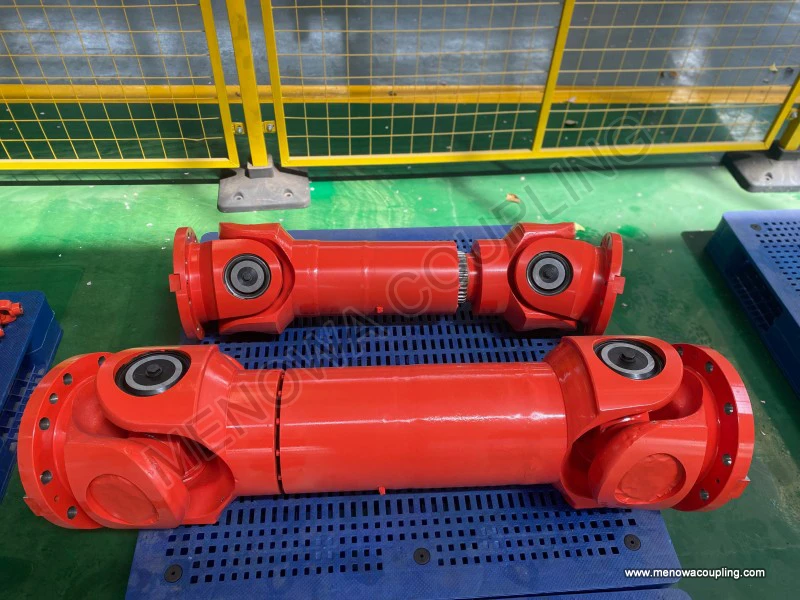
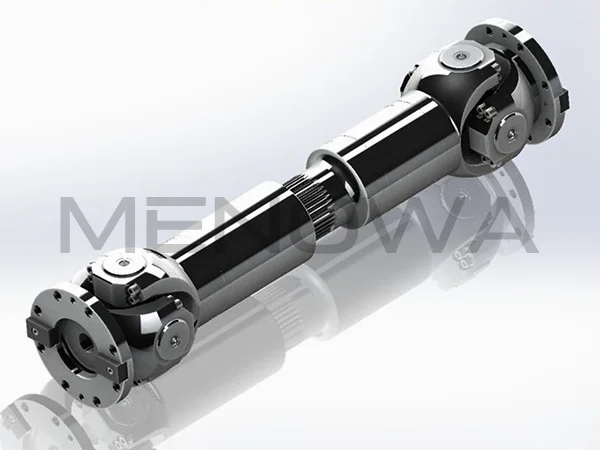
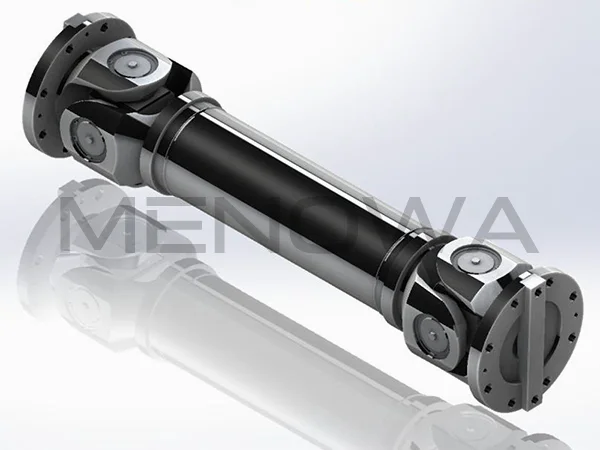
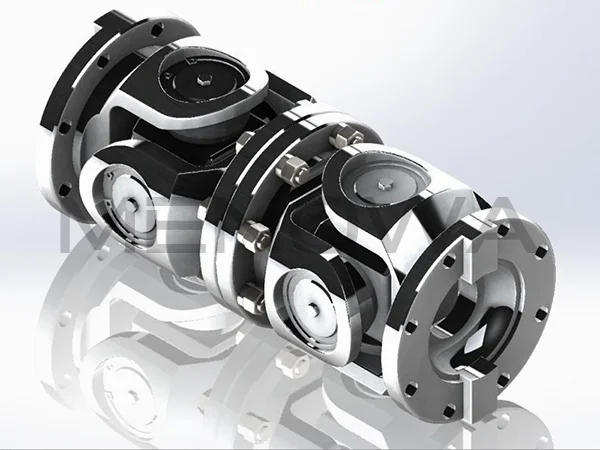
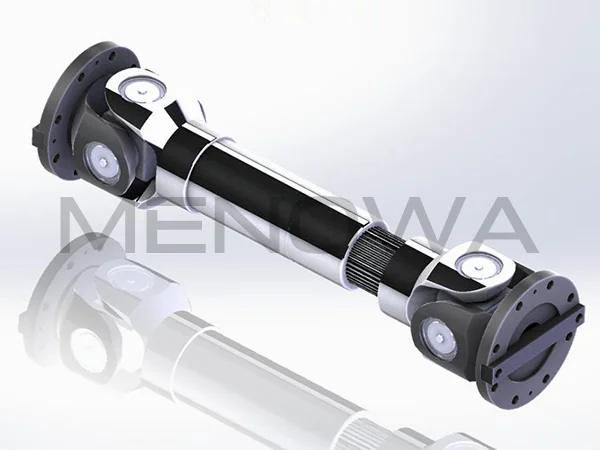
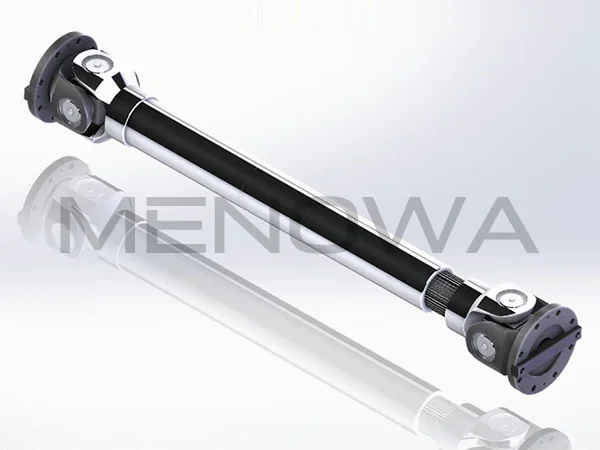
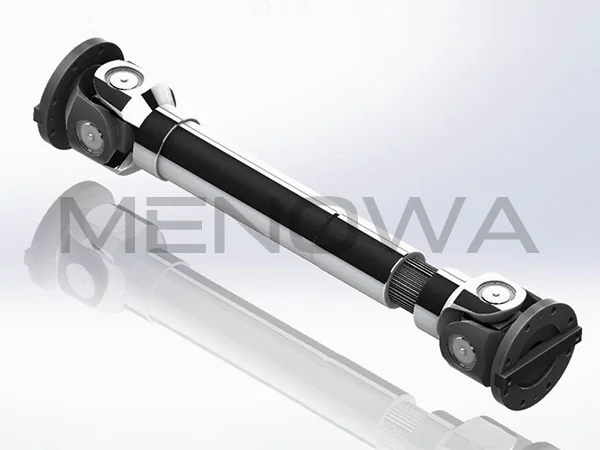
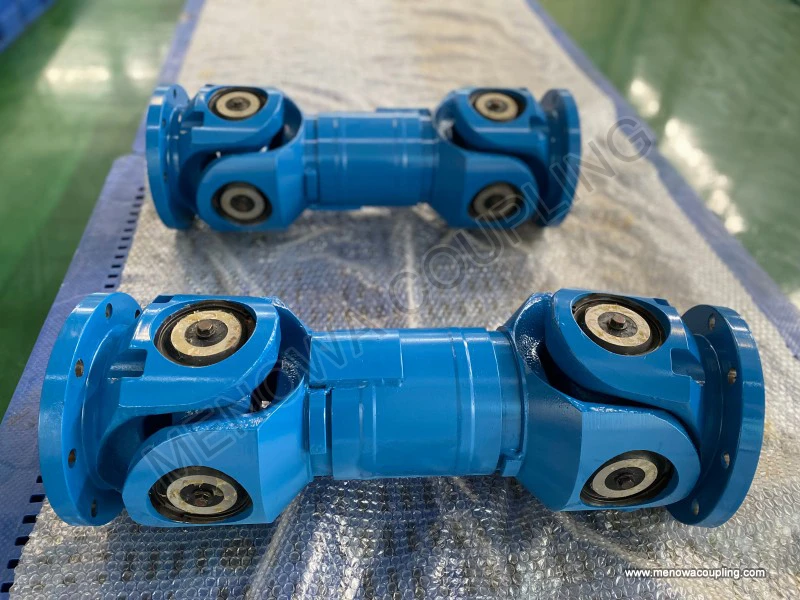
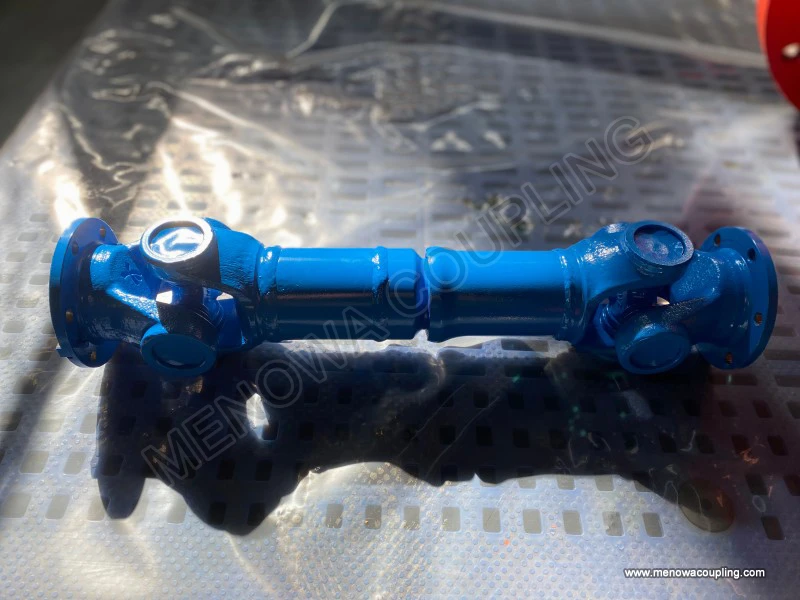
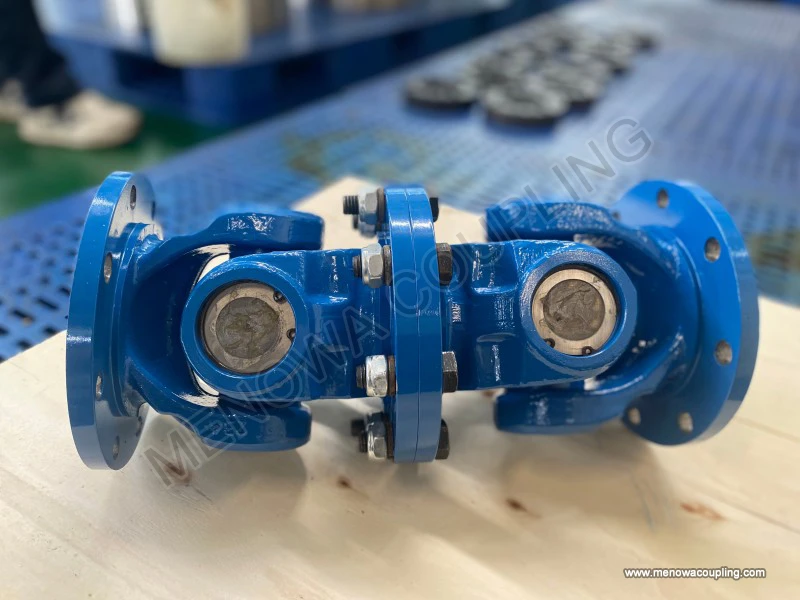
The formation and continuous optimization of cross axis joint coupling structure is derived from the in-depth summary and practical iteration of spatial motion transmission theory and mechanical component design experience. The core design concept of this coupling originates from the basic principle of spatial four-bar linkage mechanism, which converts the fixed-axis rotation of the driving shaft into the spatial swing and rotation composite motion of the intermediate connecting component, and then re-converts this composite motion into stable fixed-axis rotation of the driven shaft, completing the whole process of power and motion transfer. The overall structural composition of cross axis joint coupling follows a simple and practical design logic, with all core components designed for mechanical stress resistance, motion coordination and friction reduction during long-term continuous operation. The basic structural configuration mainly includes two fork-shaped yoke assemblies distributed symmetrically at both ends, a central cross-shaped intermediate connecting part commonly referred to as spider, and four sets of precision matching rolling bearing parts installed at the four end shaft necks of the cross component. Each component has clear division of labor and coordinated operation, and the dimensional accuracy and assembly matching degree of each part directly affect the transmission stability, service life and operation noise level of the entire coupling. The two yoke assemblies are the direct connecting carriers between the coupling and the input and output shafts respectively, and the structural design of the yoke inner groove ensures that it can be firmly matched with the end shaft necks of the cross component, forming a flexible rotatable connection structure. The central cross-shaped spider is the core force-bearing and motion conversion component of the entire coupling, with four mutually perpendicular shaft necks distributed in a cross spatial structure, which can realize the free rotation and angle adjustment between the two yoke assemblies in different spatial planes, and bear the main torque and shear force generated during power transmission. The four sets of rolling bearings arranged at the matching positions of the cross shaft necks and yoke grooves are key auxiliary components to reduce mechanical friction and wear, avoiding direct metal contact and dry friction between the cross component and the yoke assemblies during high-speed rotation and angle change, effectively reducing operation energy consumption and mechanical loss, and extending the continuous working cycle of the coupling under various load conditions.
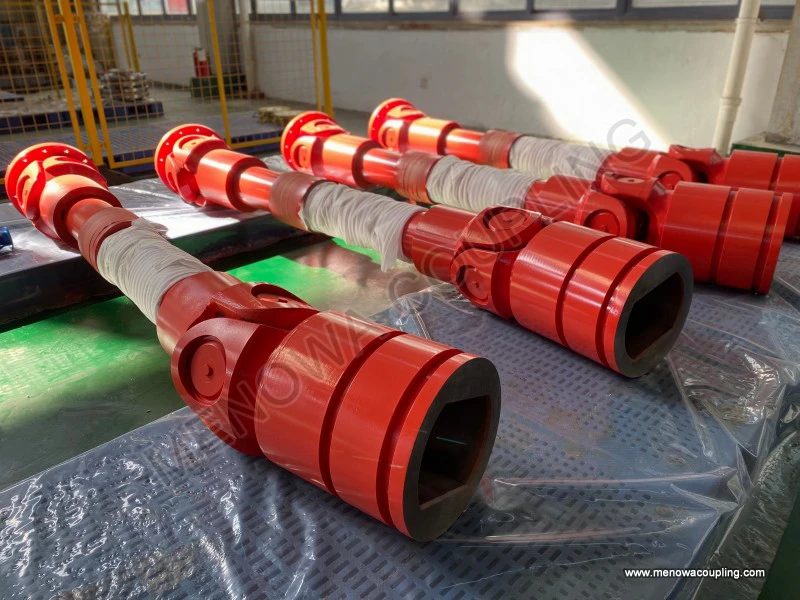
The internal working and power transmission principle of cross axis joint coupling can be analyzed and explained from the perspective of spatial kinematics and mechanical dynamics. When the driving shaft connected to one end yoke starts to rotate under the drive of power equipment, the rotational torque and circular motion will be directly transmitted to the cross spider through the rigid connection of the yoke structure. Driven by the driving yoke, the cross component not only rotates synchronously around the axis of the driving shaft, but also produces regular spatial swing and angle deflection according to the misalignment angle between the driving shaft and the driven shaft. This composite motion state of rotation and swing is the core reason why the cross axis joint coupling can adapt to non-coaxial shaft transmission. The cross component further transmits the received rotational torque and composite motion to the driven yoke at the other end, and the driven yoke converts the spatial composite motion of the cross component into stable unidirectional rotational motion of the driven shaft, realizing the continuous output of power. In the actual operation process, the magnitude of the misalignment angle between the two connected shafts directly affects the motion state and transmission characteristics of the coupling. Within the allowable design angle range, the cross component can continuously adjust its spatial posture in real time with the rotation of the shafts, offsetting the motion deviation caused by shaft angular misalignment, and ensuring that the basic torque transmission is not interrupted and the power output remains continuous. It is necessary to note that a single cross axis joint coupling has non-constant velocity transmission characteristics in the working process. When there is a fixed angular deviation between the input shaft and the output shaft, the instantaneous rotational speed of the driven shaft will produce periodic slight fluctuation with the rotation cycle of the driving shaft. This periodic speed fluctuation will not cause obvious adverse effects on mechanical equipment with low operation speed, low transmission precision requirement and insensitive to motion stability, but for high-speed operation equipment and mechanical systems requiring precise and stable rotational speed output, the single-section coupling structure cannot meet the actual use demand. Based on this structural transmission characteristic, the engineering field usually adopts the form of double cross axis joint coupling combination for assembly application, two single cross joint couplings are connected through an intermediate connecting shaft, and the installation angles and assembly positions of the two couplings are reasonably arranged and calibrated during installation. Through the complementary coordination of the two non-constant velocity transmission processes, the periodic speed fluctuation generated by the former coupling is offset by the latter one, so as to realize the approximate constant velocity transmission effect between the final input shaft and output shaft, meeting the high-precision and stable operation requirements of high-speed mechanical transmission scenarios.
The material selection of each core component of cross axis joint coupling is a key link that determines its mechanical bearing capacity, wear resistance, fatigue resistance and overall service performance, and the material matching design fully combines the stress characteristics of different components and the actual harsh working conditions of industrial application. The two yoke assemblies need to bear large tensile force, shear force and alternating torque during long-term operation, and also need to resist mechanical impact load and structural deformation caused by sudden load changes in the working process. Therefore, the yoke parts are mostly made of high-strength alloy structural steel with good comprehensive mechanical properties, which has high tensile strength, yield strength and structural rigidity, and can maintain stable structural shape and connection firmness under long-term heavy load and alternating load working conditions, without permanent deformation or structural fracture failure. The central cross spider bears the most complex composite force in the entire coupling structure, including torsion, shear, bending and contact fatigue stress generated by continuous rotation and swing. The material of the cross component needs to have excellent hardness, toughness and fatigue resistance, so as to avoid surface wear, internal crack propagation and structural fatigue damage after long-term cyclic motion and force bearing. For this reason, the cross component is usually made of high-quality carburized alloy steel, and after precision forging forming and professional heat treatment processes such as carburizing and quenching, the surface of the cross shaft neck has high hardness and wear resistance, while the core part maintains good toughness, effectively resisting impact load and preventing brittle fracture. The rolling bearing parts matched with the cross shaft neck are mainly subjected to rolling friction and contact pressure during operation, and the bearing inner and outer rings and rolling elements are made of high-carbon chromium bearing steel with high hardness and wear resistance, after fine grinding and surface strengthening treatment, ensuring low friction coefficient during high-speed rolling operation, reducing wear loss, and maintaining long-term rotation flexibility. In addition to the main load-bearing components, some auxiliary connecting and sealing parts of the coupling are made of wear-resistant and aging-resistant rubber and polymer materials, which play the roles of internal lubrication sealing, dust and impurity isolation, and buffer vibration reduction, preventing external dust, moisture and corrosive substances from entering the bearing friction area, avoiding lubricating oil deterioration and friction pair corrosion, and further optimizing the internal operation environment of the coupling.
Cross axis joint coupling has remarkable and unique comprehensive operational characteristics compared with other types of mechanical couplings, which makes it adaptable to a wide range of complex working conditions and diverse transmission demands. The most prominent advantage lies in its excellent angular misalignment compensation capability, which can adapt to the power transmission between two shafts with large angular deviation. In actual engineering installation, due to the limitation of equipment structural layout, installation and construction accuracy deviation, and structural thermal deformation and mechanical vibration displacement during equipment operation, it is difficult to ensure absolute coaxiality between the driving shaft and the driven shaft. Many traditional rigid couplings and ordinary flexible couplings can only adapt to very small coaxiality deviation, and slight shaft misalignment will lead to increased transmission resistance, aggravated component wear and even equipment operation failure. In contrast, cross axis joint coupling can normally work stably under the condition of large angle between connected shafts, and can also adapt to small axial displacement and radial displacement generated during operation, with comprehensive displacement compensation performance meeting the requirements of complex installation and variable operation conditions. Secondly, this coupling has high torque transmission capacity and strong load-bearing adaptability, the overall structural design is compact and robust, the force transmission path is direct and efficient, and there is no elastic element with low bearing capacity inside. It can stably transmit large torque and bear heavy impact load and alternating load, and is very suitable for heavy-load mechanical transmission systems with high power output and large load fluctuation. Thirdly, the structural motion coordination mode of the coupling ensures low power transmission loss and high transmission efficiency in the working process. The friction between internal moving components is mainly rolling friction with small friction coefficient, and the mechanical energy loss caused by friction heat generation and component deformation in the power transmission process is kept at a low level, which is conducive to improving the overall energy utilization efficiency of mechanical equipment and reducing the operating energy consumption cost. In addition, the overall structural design of cross axis joint coupling is simple and reasonable, the number of internal components is small, the structural stability is strong, and the failure rate in long-term operation is low. The disassembly and assembly process of the coupling is simple and convenient, and the daily maintenance and replacement of wearing parts can be completed without complex professional equipment and tedious operation steps, reducing the daily operation and maintenance difficulty and maintenance cost of mechanical equipment. At the same time, the coupling can maintain stable operation performance in a wide temperature range and harsh working environments such as dust, humidity and certain corrosive medium, with strong environmental adaptability and long continuous service cycle.
With the continuous development of modern industrialization and the continuous expansion of mechanical equipment application scenarios, cross axis joint coupling has been widely used in almost all industrial fields involving mechanical power transmission, covering heavy industry manufacturing, transportation machinery, agricultural production equipment, engineering construction machinery, metallurgical and mining equipment, chemical industrial machinery and many other key industries. In the field of engineering construction machinery, various construction equipment such as excavators, loaders, cranes and road rollers need to realize power transmission between multiple groups of non-collinear rotating shafts due to complex working movement and structural layout. These equipment often work under harsh working conditions such as heavy load, frequent starting, impact vibration and large movement displacement, and cross axis joint coupling provides reliable power transmission guarantee for the walking system, rotation system and hydraulic power output system of these construction machinery with its heavy load resistance and large misalignment adaptation performance, ensuring that the equipment can complete various construction operations stably and efficiently. In the field of transportation machinery manufacturing, cross axis joint coupling is an important basic component in the power transmission system of various special transport vehicles and engineering vehicles. The power output shaft of the vehicle engine and the input shaft of the walking drive system often have angular deviation and displacement change due to the vibration of the vehicle body and the deformation of the chassis structure during driving. The coupling can effectively adapt to this dynamic displacement change, stably transmit engine power to the walking drive mechanism, and ensure the smooth running and power output stability of the vehicle. In the field of agricultural production machinery, various farmland operation equipment such as tractors, harvesters and tillage machines work in complex and harsh field environments with large dust, humid environment and uneven operation ground, and the mechanical power transmission system is prone to vibration and shaft displacement. Cross axis joint coupling has strong environmental adaptability and vibration resistance, which can meet the power transmission demand of agricultural machinery in complex field working conditions, and ensure the continuous and reliable operation of agricultural production equipment.
In the metallurgical and mining industry, the production and operation of metallurgical smelting equipment and mining crushing and conveying equipment have the characteristics of high load, continuous operation and harsh working environment. The mechanical transmission system of such equipment needs to operate stably for a long time under heavy alternating load and high-temperature dust environment. Cross axis joint coupling relies on its high structural strength, strong fatigue resistance and good high-temperature operation stability, and is applied to the power transmission connection of mining conveyors, crushing equipment, metallurgical rolling equipment and smelting auxiliary machinery, ensuring the continuous operation of industrial production lines and avoiding production interruption and economic losses caused by coupling failure. In the chemical industry, many chemical production equipment needs to work in corrosive medium and variable temperature environment, and the mechanical transmission components are required to have good corrosion resistance and structural stability. After special surface treatment and material optimization, cross axis joint coupling can adapt to the working environment of chemical equipment, realizing stable power transmission of chemical mixing equipment, conveying pumps and chemical reaction auxiliary equipment, and meeting the continuous production demand of chemical industry. In addition, in the field of general industrial manufacturing, various production line transmission equipment, mechanical processing equipment, fan and water pump power transmission systems also widely use cross axis joint coupling. For the transmission equipment with complex spatial layout and non-coaxial shaft connection in the production line, the coupling provides reliable angular compensation and power transmission functions, ensuring the stable operation of automated production lines and improving production efficiency and production continuity.
Although cross axis joint coupling has excellent comprehensive performance and wide application adaptability, its long-term stable operation and extended service life are closely related to reasonable type selection, standardized installation and scientific daily maintenance and management. In the engineering type selection stage, mechanical design and engineering personnel need to reasonably select the coupling with appropriate structural specification and load level according to the actual working parameters of mechanical equipment, including transmission torque magnitude, operating speed range, shaft misalignment angle, working environment conditions and load fluctuation degree. It is necessary to avoid the problem of insufficient bearing capacity caused by blind selection of small-specification coupling, and also avoid the waste of mechanical structure space and increased equipment cost caused by excessive selection of large-specification coupling. In the equipment installation and assembly stage, the assembly accuracy of the coupling must be strictly controlled, the coaxiality and angle deviation of the input and output shafts should be calibrated in accordance with the installation process specifications, and the assembly position and installation angle of the double-section coupling should be accurately adjusted to ensure that the coupling works within the optimal allowable misalignment angle range, reducing additional mechanical stress and periodic vibration caused by excessive angle deviation. The fastening connection between the coupling and the rotating shaft should be firm and reliable to avoid loosening and displacement during operation, which may cause transmission failure and equipment vibration. In the daily equipment operation and maintenance process, regular inspection and maintenance of cross axis joint coupling should be done well, including checking the fastening state of connecting parts, the operation flexibility of rotating and swinging parts, and the wear degree of internal bearings and cross components. Timely supplement and replace special lubricating grease for the coupling to ensure good lubrication state of internal friction pairs, reduce friction and wear, and avoid lubrication failure leading to dry friction and component damage. For the worn and aging parts inside the coupling, regular replacement and maintenance should be carried out according to the operation cycle and wear condition, eliminating potential operation faults in advance and ensuring the long-term stable and safe operation of the coupling and the entire mechanical equipment.
With the continuous progress of mechanical design technology, material processing technology and intelligent manufacturing level, the design and manufacturing technology of cross axis joint coupling is also constantly innovating and optimizing, and the overall performance of the coupling is continuously improved to adapt to the increasingly stringent working condition requirements of modern high-end mechanical equipment. In terms of structural optimization design, with the help of modern computer simulation technology and finite element stress analysis method, the internal stress distribution and motion state of the coupling under different load and angle conditions are accurately simulated and analyzed. The structural shape and size parameters of the yoke, cross component and bearing matching parts are optimized and adjusted, the structural stress concentration phenomenon is reduced, the mechanical bearing capacity and structural fatigue resistance of the coupling are further improved, and the overall structural weight is reduced while ensuring strength, realizing lightweight and high-strength structural design. In terms of material processing and manufacturing, the application of new high-strength wear-resistant alloy materials and advanced precision forging and finishing processes improves the dimensional accuracy and surface processing quality of coupling components, reduces the assembly gap and operation friction of matching parts, and further improves the transmission efficiency and operation stability of the coupling. At the same time, the surface anti-corrosion and wear-resistant treatment process of the coupling is continuously upgraded, enhancing the environmental adaptability of the coupling in high temperature, corrosion, dust and other harsh working environments, and extending the overall service life. In terms of application matching design, aiming at the special working condition demands of different professional mechanical fields, targeted personalized optimization design of cross axis joint coupling is carried out, and special structural couplings suitable for high-speed operation, ultra-heavy load, low-temperature environment and special corrosion medium are developed to meet the diversified and refined power transmission demands of different mechanical equipment.
In the whole field of mechanical power transmission, cross axis joint coupling, as a classic and continuously optimized basic transmission component, has irreplaceable application value and development significance. Its unique spatial linkage structure and angular compensation performance solve the core problem of stable power transmission between non-collinear shafts in complex mechanical systems, and its excellent load-bearing performance, simple structural form and convenient maintenance characteristics make it always maintain strong application vitality in various industrial fields. From traditional heavy industrial machinery to modern intelligent manufacturing equipment, from agricultural production and engineering construction to transportation and chemical production, cross axis joint coupling silently provides reliable basic guarantee for the normal operation of various mechanical equipment, and plays an important supporting role in the stable development and efficient operation of modern industrial economy. With the continuous upgrading of modern mechanical equipment towards high power, high precision, high efficiency and strong environmental adaptability, cross axis joint coupling will continue to rely on structural innovation, material upgrading and process optimization to continuously improve its comprehensive operation performance, adapt to more complex and harsh working condition requirements, and make more important contributions to the steady development of mechanical transmission technology and the progress of modern industrial manufacturing industry. The in-depth understanding of the structural principle, operational characteristics, application scope and maintenance management points of cross axis joint coupling is not only conducive to the reasonable selection and standardized application of the coupling in engineering design and equipment operation, but also promotes the continuous improvement and innovative development of coupling design and manufacturing technology, laying a solid foundation for the reliable and efficient operation of various mechanical transmission systems in the long run.
Post Date: Apr 26, 2026
https://www.menowacoupling.com/coupling-supplier/cross-axis-joint-coupling.html
Products
Tags
Related Articles
Universal Coupling Supply
In the intricate ecosystem of mechanical power transmission, universal couplings stand out as indispensable foundational components that bridge the functional gaps of traditional rigid connection structures. Serving as a core link between rotating shafts in mechanical systems, these mechanical devices are engineered to …Uses of Universal Coupling
In the intricate ecosystem of mechanical transmission systems, universal couplings stand out as one of the most versatile and indispensable mechanical components, serving as a critical bridge for power and motion transmission across countless industrial and civilian mechanical devices. Also widely known as universal joi…Diagram of Universal Coupling
A universal coupling, widely recognized as a core mechanical component for flexible power transmission, serves as a pivotal connecting structure in mechanical transmission systems to transfer rotational torque and motion between two shafts with angular misalignment. The structural diagram of a universal coupling intuiti…Universal Coupling Vendor In China
Universal couplings stand as indispensable mechanical transmission components in modern industrial systems, serving as core connecting parts that transmit torque and rotational power between misaligned drive shafts. In China’s complete industrial manufacturing ecosystem, universal coupling production and supply have fo…What is Universal Coupling
A universal coupling, commonly referred to as a universal joint or U-joint, is a fundamental mechanical transmission component designed to connect two rotating shafts while enabling reliable transfer of torque and rotational motion under misaligned operating conditions. Unlike rigid coupling mechanisms that demand preci…Dimensions of Universal Coupling
Universal couplings, commonly known as universal joints or Cardan joints, serve as fundamental mechanical components for power transmission between misaligned rotating shafts in diverse mechanical systems. Their dimensional parameters are the core factors that determine structural compatibility, operational stability, l…Universal Coupling Exporter
As a vital component in mechanical transmission systems, universal couplings play an irreplaceable role in connecting two shafts that are not in the same axis or have relative displacement, ensuring stable and efficient torque transmission. For universal coupling exporters, understanding the product’s working principle…Universal Coupling Wholesale
In the global mechanical transmission industry, universal couplings have emerged as indispensable core components for power transmission systems, widely favored by downstream manufacturing, engineering, and transportation sectors across international markets. As global industrialization continues to advance and mechanic…Working Principle of Universal Coupling
A universal coupling, also widely known as a universal joint, is a fundamental mechanical transmission component designed to solve the core problem of power transmission between two non-collinear rotating shafts. Unlike rigid couplings that only work efficiently when connected shafts maintain perfect coaxial alignment, …Gap Chart of Universal Coupling
The operational stability and transmission accuracy of universal couplings are fundamentally determined by the internal gap distribution between mating components, making gap chart analysis a core technical method for evaluating assembly quality, predicting operating performance, and optimizing structural design. A univ…
 WeChat
 WhatsApp