Universal Shaft Coupling
In the entire system of mechanical power transmission, the connection between rotating shafts stands as a fundamental and indispensable link that determines whether mechanical equipment can operate stably, transmit power efficiently, and adapt to complex and changeable working conditions. Various mechanical devices in industrial production, transportation engineering, agricultural operation equipment and special engineering machinery all need to connect driving shafts and driven shafts to complete the continuous transmission of rotational torque and motion. In actual installation and long-term operation, it is almost impossible to keep the centerlines of two connected shafts completely and permanently coaxial. Affected by initial installation deviation, mechanical operation vibration, thermal expansion and contraction of metal components under long-term load, structural deformation of equipment frame, and slight displacement caused by equipment aging, different forms of misalignment will inevitably occur between the driving shaft and the driven shaft during the service cycle. Some shafts produce angular deflection and form a certain included angle in the spatial position, some present parallel offset without overlapping centerlines, and others generate axial telescoping displacement due to thermal changes and mechanical stress. Under such non-ideal connection conditions, ordinary rigid connecting components cannot work normally, because rigid connection will directly transfer all additional stress, vibration and bending moment caused by shaft misalignment to the shaft body, bearings and equipment base, resulting in severe component wear, increased operating vibration, reduced transmission efficiency, and even early fatigue damage and sudden failure of key mechanical parts in severe cases. The universal shaft coupling emerges as a reliable and professional mechanical component specially designed to solve the problem of power transmission between misaligned shafts, and it has become one of the most widely used basic transmission parts in modern mechanical engineering by virtue of its unique spatial motion adaptation performance, flexible displacement compensation capability and stable torque transmission effect under complex misalignment conditions.
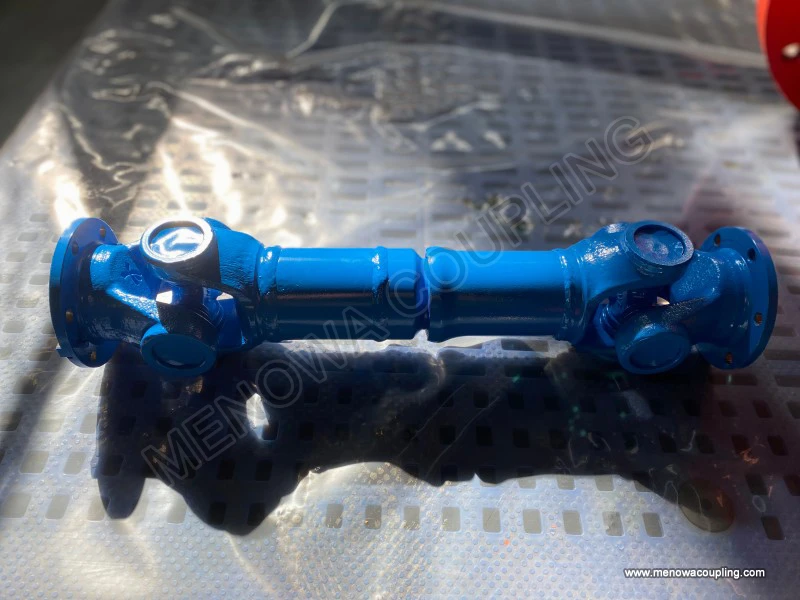
The essence of a universal shaft coupling is a spatial multi-link mechanical mechanism built according to the principles of mechanical kinematics and dynamics, which takes the cross-axis connecting structure as the core basic form and derives various optimized structural deformations according to different working condition requirements. Its core design purpose is not only to complete the basic transmission of rotational motion and torque between two shafts, but more importantly, to effectively accommodate multiple forms of misalignment between shafts in the working process, absorb slight vibration and impact generated during equipment operation, isolate partial mechanical vibration transmission between the driving end and the driven end, and protect the shaft system, bearings, gearboxes and other core precision components of the entire mechanical transmission system from additional damage caused by misalignment stress. Unlike flexible couplings that rely on elastic deformation of rubber or polymer materials for compensation and rigid couplings that pursue absolute coaxial fixation, universal shaft couplings rely on the mechanical rotation and swing coordination of internal metal structural parts to realize rigid torque transmission and flexible spatial position compensation. This structural characteristic enables it to maintain stable power transmission performance under large angular misalignment and long-term continuous rotating working conditions, and it has excellent bearing capacity for heavy load, alternating load and impact load, which makes it have irreplaceable application value in many heavy-duty and high-strength mechanical transmission scenarios.
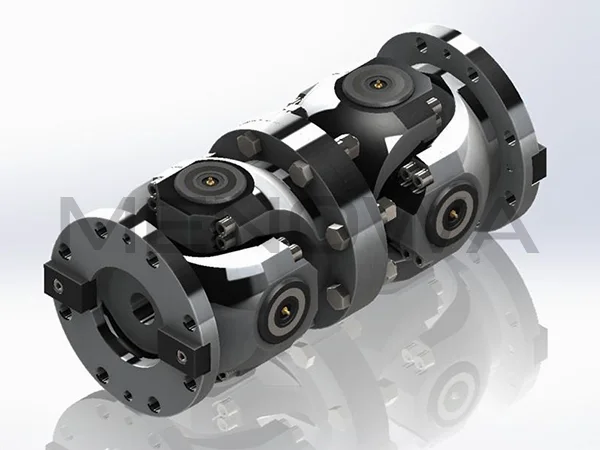
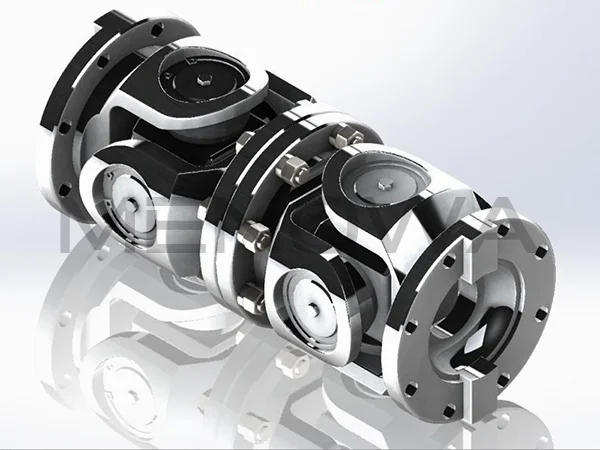
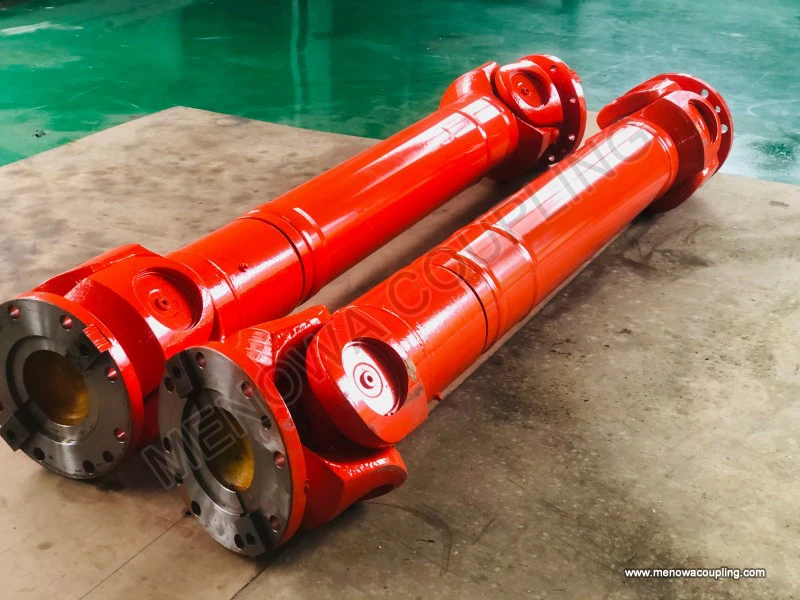
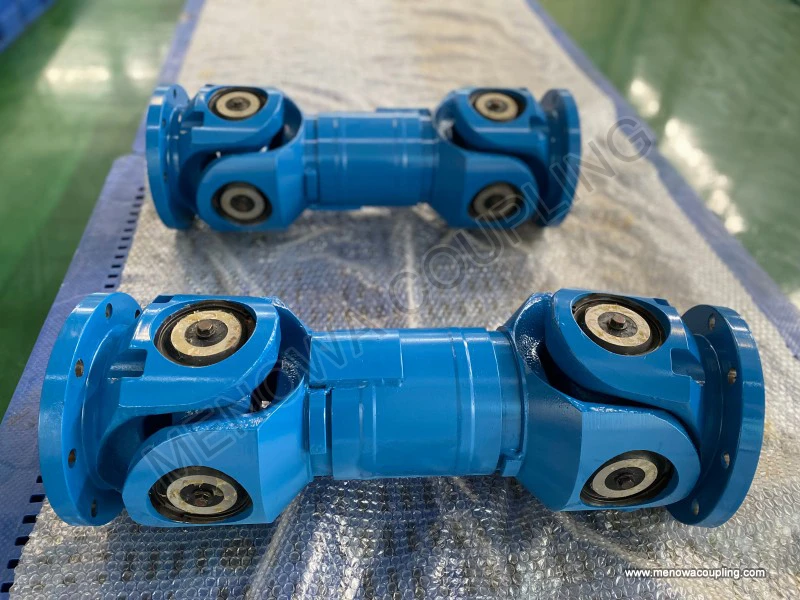
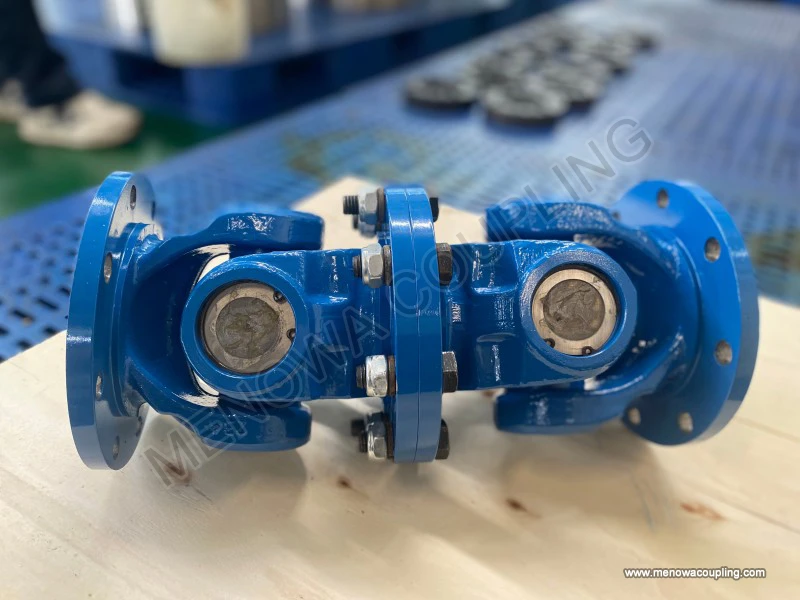
To understand the practical value and application advantages of universal shaft couplings in depth, it is necessary to start with the most basic core composition of the product and clarify the functional division and coordination relationship of each internal component. The most conventional and widely applied basic universal shaft coupling is the cross-axis universal coupling, also known as the Hooke’s joint in traditional mechanical design, and all other derived types of universal couplings are optimized and upgraded on the basis of this basic structural form. The basic composition of the core structure mainly includes two fork-shaped structural parts distributed at the input end and the output end respectively, a central cross-shaped connecting component responsible for intermediate transmission and motion conversion, precision rotating bearing parts installed at each connecting joint of the cross shaft, and fastening and sealing auxiliary parts used for fixing assembly positions and isolating external impurities. The two fork-shaped parts are fixedly connected to the driving shaft and the driven shaft respectively through assembly and fixing structures, and each fork head is provided with two symmetrically distributed assembly holes, which are used for docking and assembly with the four shaft ends of the central cross component. The central cross component is the core force-bearing and motion conversion part of the entire universal shaft coupling, with four mutually perpendicular shaft necks distributed in spatial symmetry, forming a mutually perpendicular two-axis rotation structure in space. Each shaft neck of the cross component is matched with the bearing part installed inside the fork head assembly hole, which can realize flexible relative rotation and swing between the cross shaft and the fork head without excessive friction and mechanical jamming during operation. The bearing parts play a key role in reducing rotational friction resistance, reducing mechanical wear during relative motion, and ensuring the flexibility of spatial swing of the coupling. The sealing and fastening auxiliary parts can prevent external dust, moisture, granular impurities and corrosive media from entering the internal friction and rotating matching surfaces, avoid abrasive wear and corrosion damage of precision matching parts, and ensure that the assembly position of each component does not shift or loosen under long-term rotating torque and vibration working conditions, so as to maintain the long-term stable operation of the entire coupling.
The working mechanism of the universal shaft coupling follows the basic laws of spatial mechanical kinematics, and its core motion principle lies in converting the fixed-axis rotational motion of the input shaft into the spatial swing compound motion of the central cross component, and then converting the compound motion into the fixed-axis rotational motion of the output shaft, so as to realize the continuous and uninterrupted transmission of torque and rotational power even when there is a significant angular included angle between the input shaft and the output shaft. When the central lines of the input shaft and the output shaft are completely coaxial without any misalignment, the motion state of the universal shaft coupling is basically consistent with that of an ordinary rigid coupling, and the cross component only rotates synchronously with the two shafts without additional swing displacement, and the transmission process is stable and uniform. Once there is a certain angular misalignment between the two shafts, the spatial position advantage of the cross-axis structure will be reflected immediately. In the process of continuous rotation of the input shaft, the cross component will continuously adjust its spatial swing angle in real time according to the rotation phase, and the two fork heads connected to the input and output ends will rotate relatively around the mutually perpendicular shaft necks of the cross component respectively. This relative rotation and swing coordination can well adapt to the angular deviation between the two shafts and will not generate excessive bending moment and additional stress on the shaft body. It is worth noting that a single basic universal shaft coupling has the characteristic of non-constant speed transmission in the working process. When the input shaft rotates at a constant angular velocity, the angular velocity of the output shaft will produce periodic slight fluctuation with the rotation cycle, and the fluctuation amplitude is positively correlated with the size of the angular misalignment between the two shafts. The larger the included angle between the shafts, the more obvious the periodic change of the output angular velocity. This periodic velocity fluctuation will produce certain alternating torque and slight vibration in the transmission process, which has little impact on ordinary low-speed and heavy-load mechanical equipment with low requirements for transmission stability, but will affect the operating smoothness of high-speed rotating equipment and mechanical devices requiring precise transmission ratio.
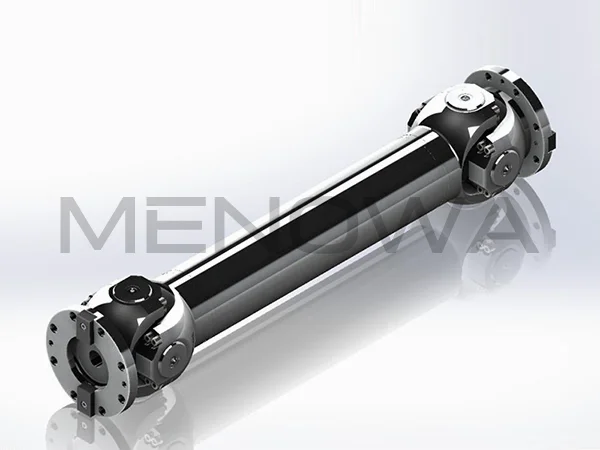
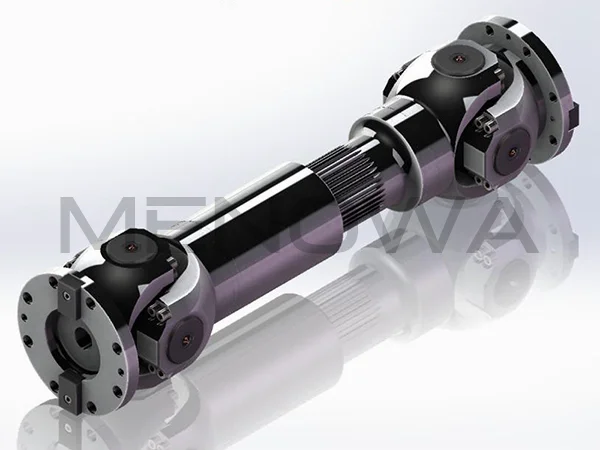
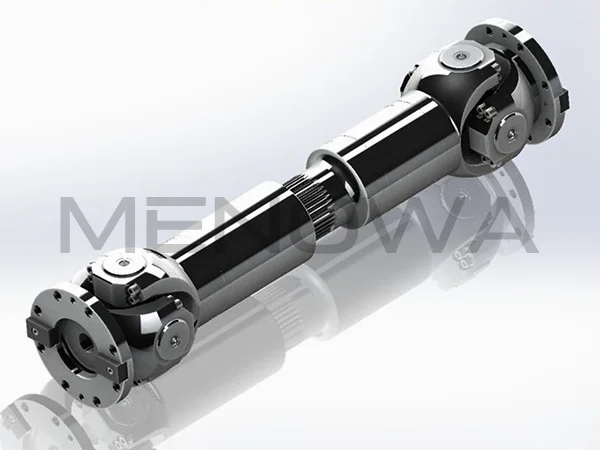
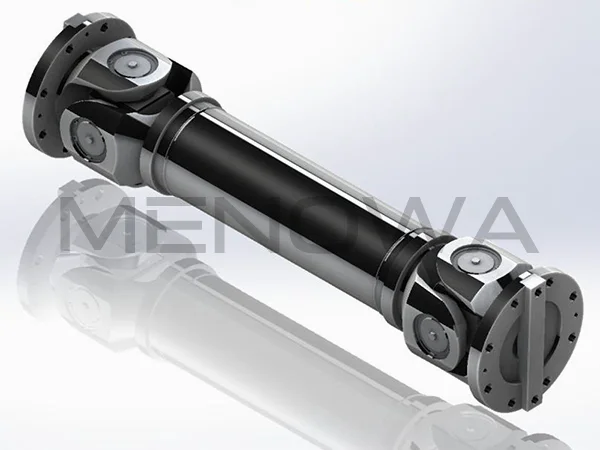
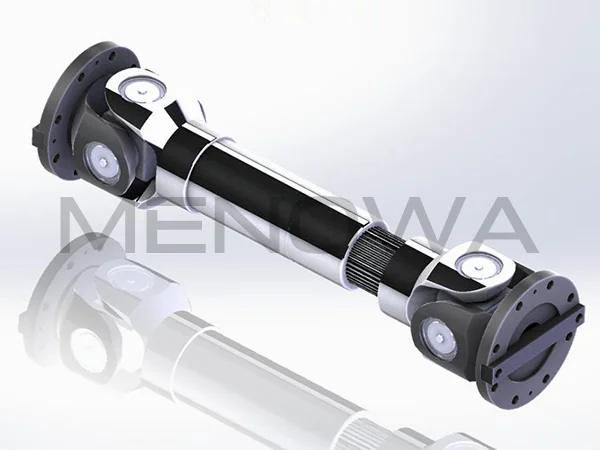
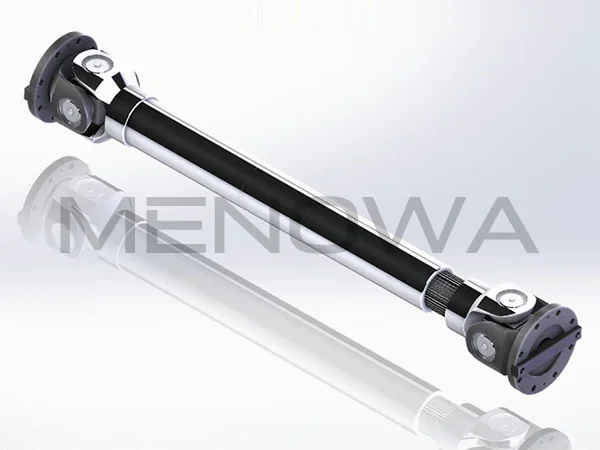
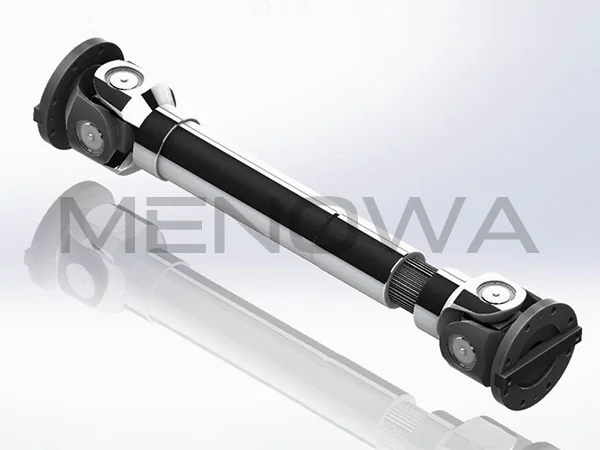
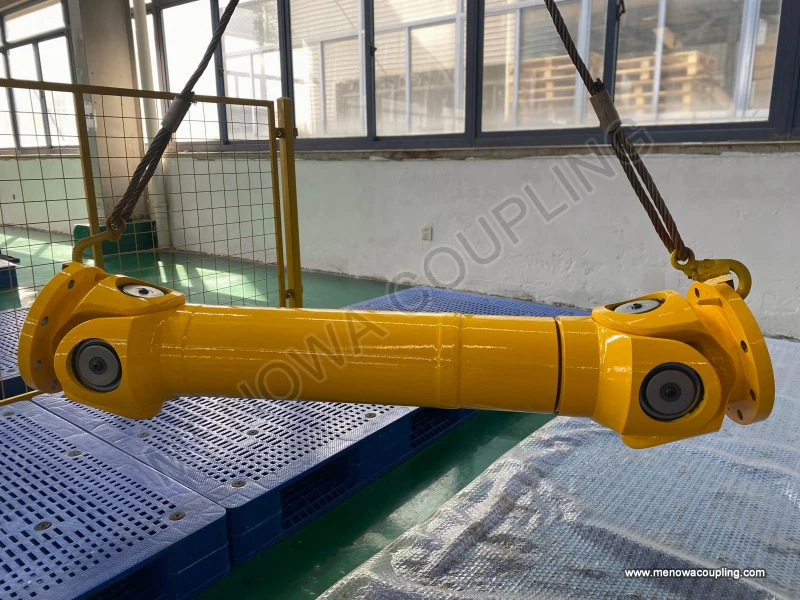
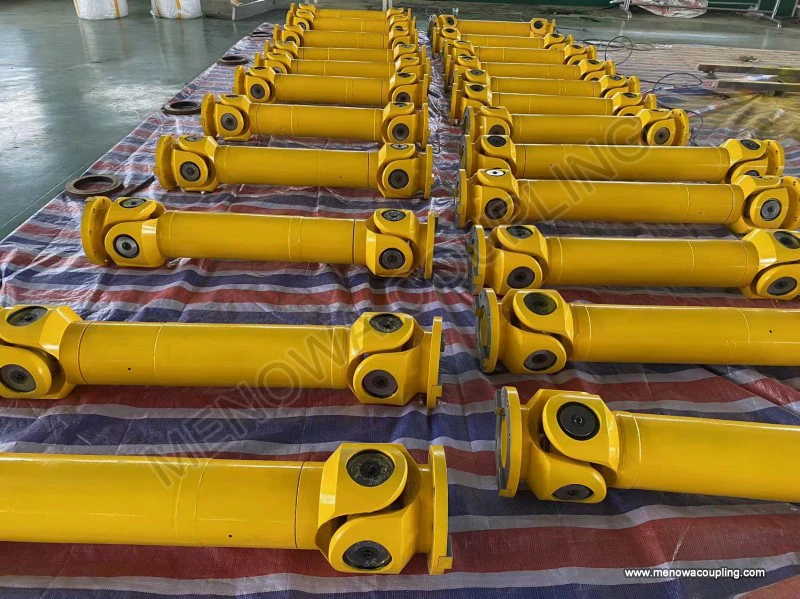
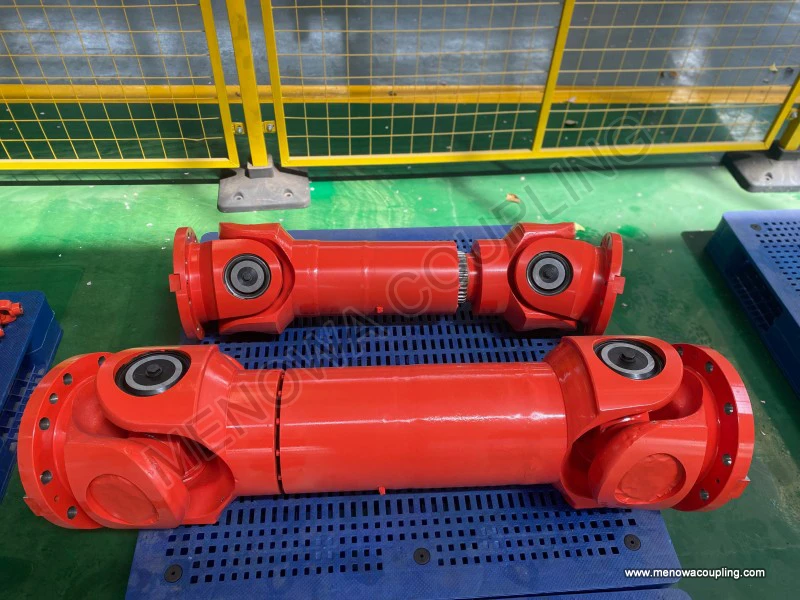
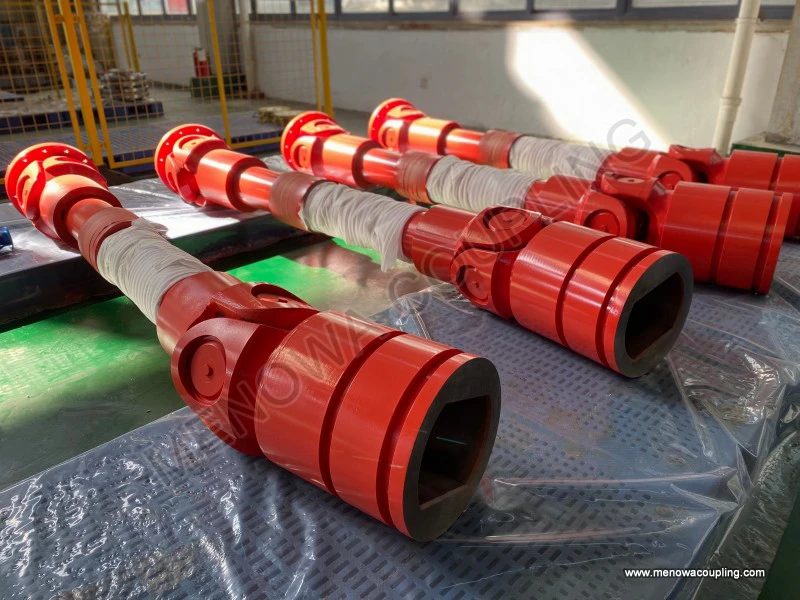
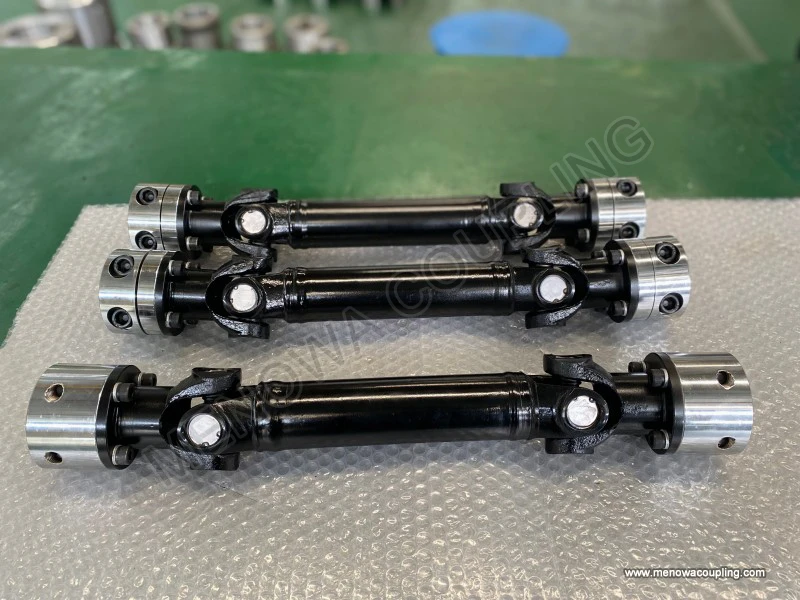
To solve the problem of non-constant speed transmission of single universal shaft coupling and meet the working requirements of large angular misalignment and high smoothness transmission in more mechanical scenarios, the double-section universal shaft coupling structure has been developed and widely popularized in practical industrial applications. The double-section universal shaft coupling is composed of two single universal joint structures connected in series through an intermediate connecting yoke or intermediate shaft, and the two universal joints are arranged in a back-to-back symmetrical layout in spatial structure. Through reasonable structural layout and installation angle matching, the periodic angular velocity fluctuation generated by the first single universal joint in the transmission process can be completely offset by the opposite periodic angular velocity change generated by the second single universal joint. As long as the angular misalignment between the input shaft and the intermediate connecting part is kept equal to the angular misalignment between the intermediate connecting part and the output shaft during installation, the final output angular velocity of the entire coupling can be consistent with the input angular velocity, realizing real constant speed and smooth power transmission. This structural optimization design not only retains the excellent angular misalignment adaptation capability of the universal shaft coupling, but also eliminates the adverse effect of periodic velocity fluctuation, making the coupling suitable for high-speed rotation, precise transmission and equipment operation with high requirements for vibration stability. On the basis of the double-section structure, the telescopic universal shaft coupling is further derived. This type of coupling adds a telescopic sliding matching structure on the basis of the double universal joint, which can not only adapt to angular misalignment and parallel offset between shafts, but also effectively compensate for axial displacement and length change between shafts caused by thermal expansion and contraction, mechanical vibration and equipment position movement. The telescopic structure usually adopts precise spline sliding matching, which can ensure flexible axial telescoping while transmitting stable torque without generating radial additional load, and is very suitable for mechanical equipment with dynamic changes in shaft spacing during operation.
Different types of universal shaft couplings have formed a complete product system with differentiated performance characteristics through continuous structural optimization and iteration, and each type has targeted applicable working condition scenarios and performance advantages, covering various mechanical transmission needs from light-load low-speed to heavy-load high-strength, from fixed installation to dynamic displacement operation. In addition to the basic single-section type, double-section constant speed type and telescopic adjustable type, there are also ball trunnion type universal couplings specially optimized for special working conditions. This structural form combines the sliding compensation structure and the traditional cross-axis universal joint structure, adopting ball contact matching instead of traditional bearing rotating matching, which can bear larger impact load and has better adaptability to harsh working environments with serious dust and mud pollution. The overall structural design is more compact, and the required installation space is smaller, which is convenient for installation and layout in mechanical equipment with compact internal structure and narrow assembly space. Different from other flexible transmission components, all core force-bearing parts of universal shaft couplings are made of high-strength metal materials processed by precision forging and heat treatment. The material selection and processing technology ensure that the coupling has high mechanical strength, good fatigue resistance and strong wear resistance, can withstand long-term continuous operation and frequent start-stop impact load, and will not produce structural deformation and performance attenuation under long-term heavy load working conditions. Compared with elastic couplings, universal shaft couplings will not have aging, deformation and failure of elastic materials, and have longer service life and more stable transmission performance in high-temperature, low-temperature, oil-polluted and harsh industrial working environments.
The application scope of universal shaft couplings covers almost all fields involving mechanical rotational power transmission, and it plays an irreplaceable core role whether it is large industrial production and manufacturing equipment, mobile engineering operation machinery, agricultural field operation equipment or special transportation and transmission devices. In the field of industrial manufacturing and mechanical processing, various machine tool processing equipment, conveyor transmission lines, fan and pump power devices, and large mechanical pressing equipment all need universal shaft couplings to connect power motors and working host equipment. Due to the long-term operation vibration of these equipment and the thermal deformation of the frame structure during continuous work, misalignment between the motor shaft and the working shaft is easy to occur. The application of universal shaft couplings can effectively compensate for various misalignments, ensure stable power transmission, reduce the vibration and noise of equipment operation, and reduce the failure rate of bearings and shaft parts. In the field of engineering machinery and construction equipment, various excavators, loaders, cranes and road construction machinery often work in complex and changeable site environments. The equipment frame will produce structural deformation under heavy load and uneven ground support, and the relative position between the power output shaft and the working mechanism shaft will change dynamically at any time. Universal shaft couplings can adapt to this dynamic misalignment change, maintain continuous power transmission during equipment operation, and ensure the normal operation of engineering machinery under harsh working conditions.
In agricultural production machinery, various field operation equipment such as tractors, harvesters and agricultural tillage machines often work in muddy, dusty and bumpy field environments. The working process is accompanied by strong vibration and impact load, and the connection position between the power shaft and the agricultural working tool shaft is often offset due to uneven road surface and complex operation resistance. Universal shaft couplings have strong environmental adaptability and impact resistance, can work stably for a long time in harsh agricultural working environments, and effectively transmit power to various agricultural working components to ensure the smooth progress of agricultural production operations. In the field of special equipment and auxiliary transmission devices, some mechanical devices with variable working positions and movable operating mechanisms also rely on universal shaft couplings to complete power transmission. For example, the adjusting transmission mechanism of special processing equipment, the rotating power connection of mobile auxiliary devices, and the transmission structure of small and medium-sized movable mechanical equipment all use universal shaft couplings to meet the power transmission requirements under the condition of frequent position changes and angular deflection of shafts. With the continuous development of mechanical equipment towards large-scale, high-power and high-efficiency, the application demand of universal shaft couplings in various emerging mechanical fields is also increasing, and the structural design and performance parameters of products are also constantly optimized and upgraded to adapt to more stringent working condition requirements.
The correct selection of universal shaft coupling is the key premise to ensure its long-term stable operation and give full play to its transmission performance. The selection process needs to comprehensively consider multiple core factors such as actual working load characteristics, rotating speed range, misalignment degree between shafts, working environment conditions and equipment operation cycle, rather than simply matching according to the basic connection size. First of all, the torque bearing capacity of the coupling should be matched according to the actual working torque of the mechanical transmission system. It is necessary to consider not only the rated continuous torque during normal operation, but also the additional impact torque and alternating torque generated during equipment start-stop, load change and sudden working condition adjustment. Sufficient torque margin should be reserved to avoid overload operation of the coupling, which leads to accelerated wear and structural damage. Secondly, the appropriate structural type should be selected according to the actual misalignment situation between the two connected shafts. For mechanical equipment with small angular misalignment and low requirements for transmission smoothness, a single-section universal coupling can be selected to reduce equipment cost and simplify structural layout. For equipment with large angular misalignment or high requirements for transmission stability and low vibration operation, a double-section constant speed universal coupling needs to be selected. For equipment with both angular misalignment and axial telescopic displacement requirements, a telescopic universal coupling should be preferred to meet the comprehensive compensation demand.
In addition, the rotating speed of the equipment is also an important factor affecting the selection. High-speed rotating mechanical transmission systems need to prioritize the structural dynamic balance performance of the universal shaft coupling, select products with precise processing and good dynamic balance treatment, avoid vibration and resonance problems caused by unbalanced rotation at high speed, and ensure the smooth operation of the shaft system. The working environment conditions also need to be fully considered. For working environments with high dust, moisture, corrosion and low temperature or high temperature, universal shaft couplings with good sealing performance and corrosion-resistant and temperature-resistant material properties should be selected, and auxiliary protective structures can be matched according to the actual situation to reduce the erosion and damage of external harsh media to the coupling internal components. At the same time, the installation space and assembly conditions of the equipment should also be taken into account. For equipment with narrow internal installation space, compact structural universal couplings with small overall volume and simple assembly structure should be selected to facilitate installation, debugging and later maintenance and replacement. Only by comprehensively balancing all the above factors and selecting the most suitable universal shaft coupling according to the actual working conditions, can the transmission efficiency be maximized, the service life be prolonged, and the stable and reliable operation of the entire mechanical transmission system be guaranteed.
Daily maintenance and regular maintenance work are crucial to prolong the service life of universal shaft couplings and maintain stable transmission performance, and scientific and standardized maintenance management can effectively reduce component wear, avoid sudden failure and reduce equipment operation and maintenance costs. The core of maintenance work is to keep the internal matching parts of the coupling in good lubrication state and good sealing effect, and regularly check the assembly fastening state and component wear degree. Lubrication maintenance is the most basic and important link in the daily maintenance of universal shaft couplings. The rotating bearings and cross shaft matching parts inside the coupling need long-term stable lubrication to reduce friction and wear between metal contact surfaces, reduce heat generation during operation, and avoid dry friction damage of precision matching parts. According to different working speed and load conditions, appropriate lubricating grease or lubricating oil should be selected, and regular lubrication and oil supplement should be carried out in accordance with the maintenance cycle. For couplings working under high load and high speed conditions, the lubrication cycle should be appropriately shortened to ensure sufficient lubricating oil film between matching surfaces. At the same time, it is necessary to regularly check the sealing performance of the coupling sealing parts. If sealing aging, damage and oil leakage are found, the sealing parts should be replaced in time to prevent lubricating oil leakage from causing poor lubrication, and also prevent external dust and impurities from entering the interior to cause abrasive wear of internal components.
Regular inspection of assembly fastening state is also an essential maintenance content. Due to long-term rotating vibration and impact load during equipment operation, the fastening parts of the universal shaft coupling may become loose, resulting in assembly position deviation of internal components, increased vibration during operation, and even abnormal wear and failure of the coupling. It is necessary to regularly check all fastening bolts and assembly fixing parts, and tighten and fix the loose parts in time to ensure that the assembly position of each component is firm and reliable. In addition, regular disassembly and inspection of component wear should be carried out according to the equipment operation cycle. Focus on checking the wear degree of cross shaft, bearing parts and fork head matching surfaces. If excessive wear, surface scratch, deformation and damage are found, the worn components should be replaced in time to avoid affecting the transmission accuracy and operation safety of the coupling. For universal shaft couplings working in harsh working environments, the surface cleaning work should be done regularly to remove surface dust, sediment and corrosive attachments, avoid long-term corrosion of the coupling surface and internal components, and maintain the good working state of the coupling. Scientific daily maintenance and regular inspection can not only effectively prolong the service life of universal shaft couplings, but also timely find potential hidden dangers of equipment failure, avoid equipment shutdown and production interruption caused by coupling failure, and ensure the continuous and efficient operation of mechanical equipment.
With the continuous progress of mechanical manufacturing technology and the continuous upgrading of industrial equipment performance, the design and manufacturing technology of universal shaft couplings are also constantly developing and innovating, and the overall development direction is towards compact structural layout, higher transmission efficiency, stronger environmental adaptability, longer service life and lower operation maintenance cost. In terms of structural design, through finite element mechanical simulation analysis and kinematic dynamic optimization design, the internal structural layout of universal shaft couplings is continuously optimized, the stress concentration of key force-bearing parts is reduced, the mechanical strength and fatigue resistance of the product are improved under the premise of reducing the overall structural size, and the coupling can meet the higher load transmission requirements under the condition of more compact installation space. In terms of material processing, new high-strength alloy materials and advanced precision forging and heat treatment processes are gradually applied to the production and manufacturing of universal shaft couplings, which further improves the wear resistance, corrosion resistance and impact resistance of products, and enables the couplings to work stably for a long time under more harsh working conditions. In terms of lubrication and sealing technology, new high-efficiency lubricating materials and multi-channel composite sealing structures are continuously adopted to improve the lubrication effect and sealing reliability, reduce the maintenance cycle and maintenance difficulty of the coupling, and realize long-term maintenance-free operation in a certain service cycle.
At the same time, with the popularization and application of intelligent mechanical equipment and automated production lines, universal shaft couplings are also developing towards the direction of matching intelligent monitoring functions. By installing simple vibration and temperature sensing auxiliary structures, the operating state of the coupling can be monitored in real time, the abnormal vibration and temperature rise signals generated by wear, looseness and failure of the coupling can be fed back in time, so as to realize early warning of failure and predictive maintenance, further improve the operation reliability of mechanical equipment, and reduce the loss caused by sudden equipment failure. As an important basic mechanical transmission component, universal shaft coupling will always play an irreplaceable core role in the field of mechanical power transmission. With the continuous innovation of technology and the continuous expansion of application scenarios, its product performance and application scope will continue to be improved and expanded, providing solid and reliable basic support for the stable operation and efficient transmission of various mechanical equipment in all industrial fields.
https://www.menowacoupling.com/industrial-coupling/universal-shaft-coupling.html
 WeChat
 WhatsApp