Laminated Membrane Coupling
In the complex and interconnected operating system of modern mechanical transmission equipment, the connection and coordination between driving shafts and driven shafts directly determine the overall operating stability, transmission efficiency and long-term service cycle of the entire mechanical system. As a vital all-metal flexible transmission component deeply applied in high-precision and high-load industrial transmission scenarios, laminated membrane coupling has gradually become an indispensable core connecting part in various mechanical power transmission links relying on its unique laminated elastic structure, reliable torque transmission capacity and multi-directional displacement compensation performance. Different from traditional rigid couplings that lack deformation buffer space and elastomeric flexible couplings that rely on non-metal elastic materials for displacement adjustment, laminated membrane coupling takes stacked multi-layer metal thin plates as the core force-bearing and elastic deformation components, realizing synchronous completion of stable torque transmission and automatic compensation of various shaft misalignments in the actual operating process of mechanical equipment. This dual functional characteristic enables the coupling to adapt to diverse complex working conditions such as high-speed rotation, variable load impact, high and low temperature alternating environment and corrosive medium erosion, and it has been widely promoted and applied in many industrial fields including power generation equipment, petrochemical production machinery, metallurgical rolling equipment, precision manufacturing machine tools and large-scale transportation supporting mechanical systems. The continuous iterative upgrading of mechanical transmission technology and the gradual improvement of industrial equipment operation precision requirements have further promoted the continuous optimization of the structural design, material selection and processing technology of laminated membrane coupling, making its comprehensive mechanical properties and environmental adaptability continuously meet the increasingly stringent operating standards of modern industrial mechanical systems.
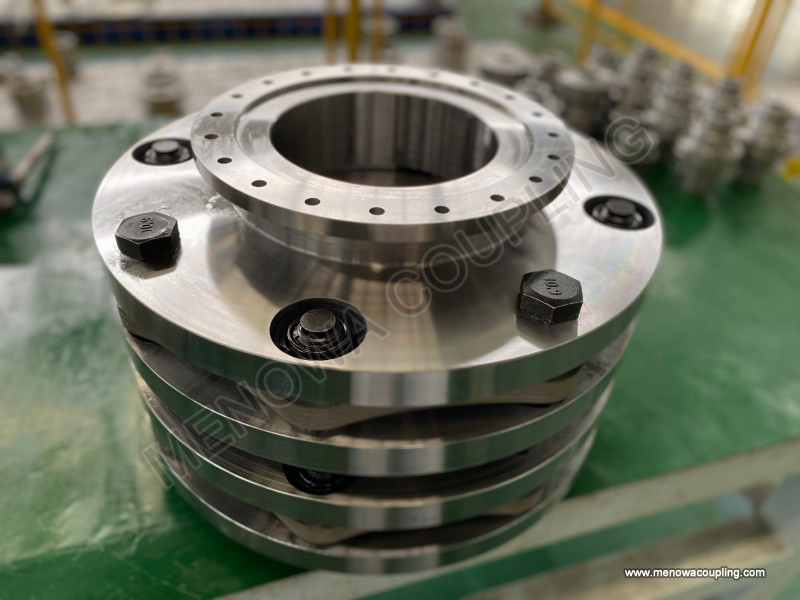
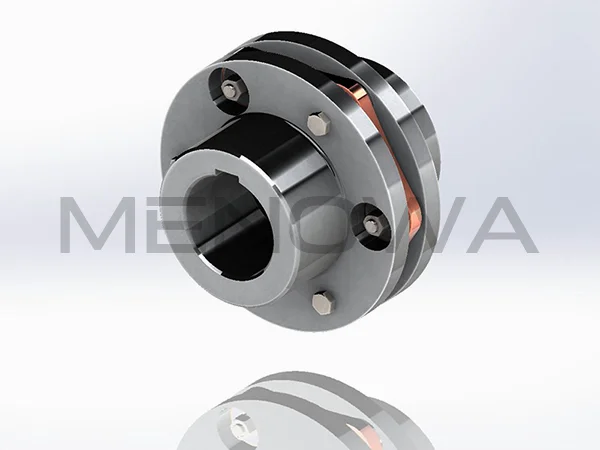
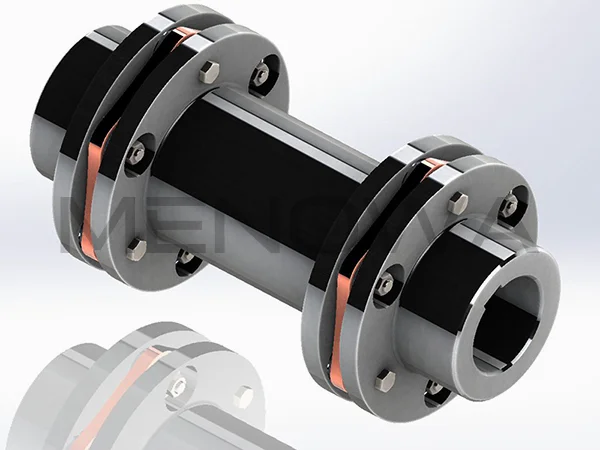
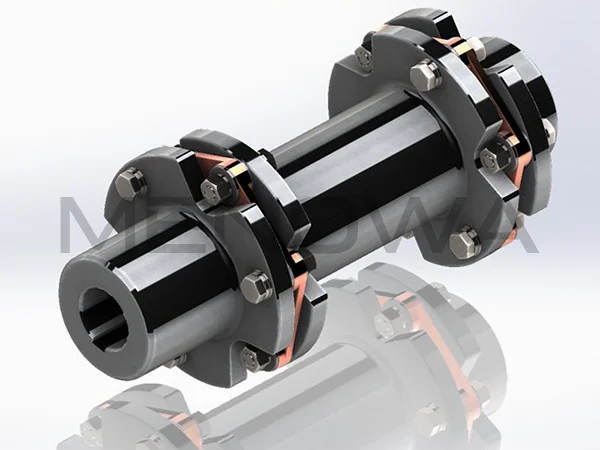
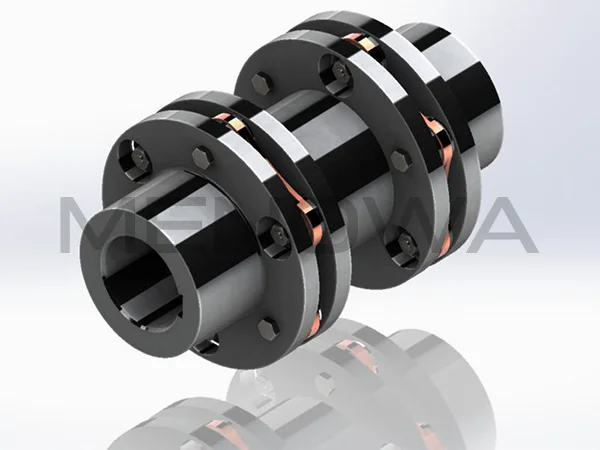
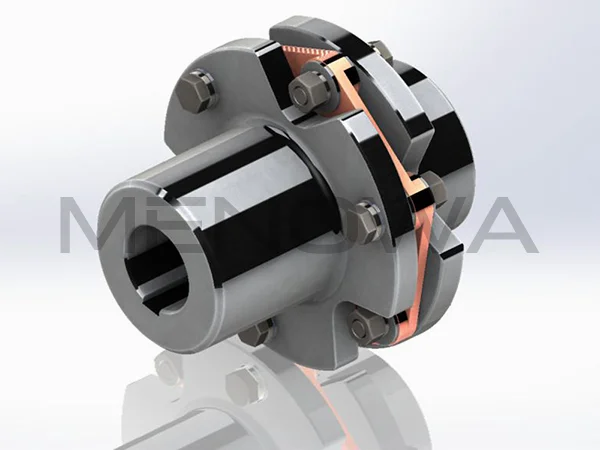
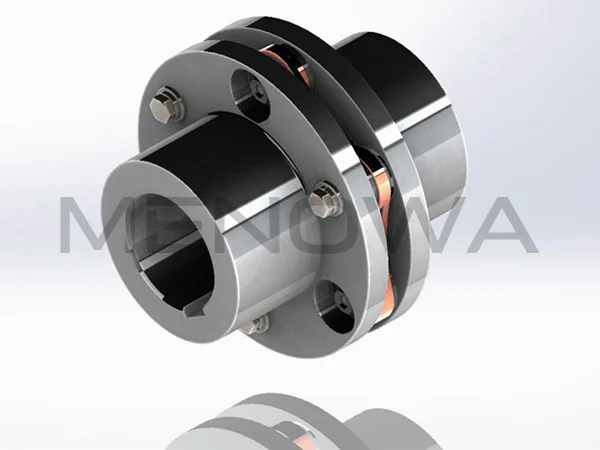
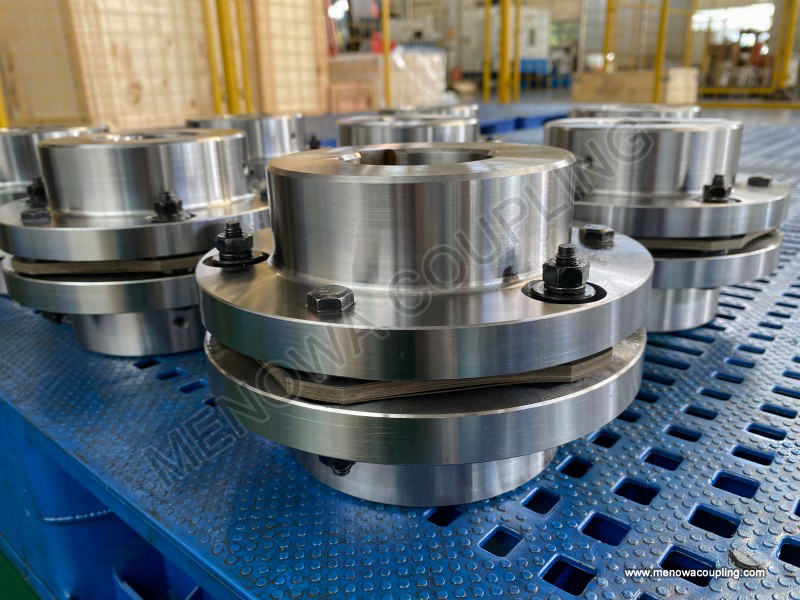
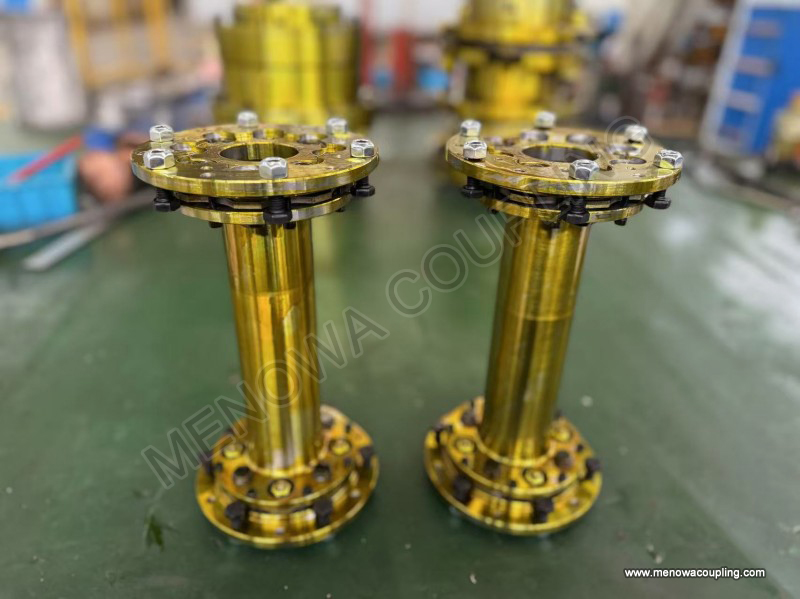
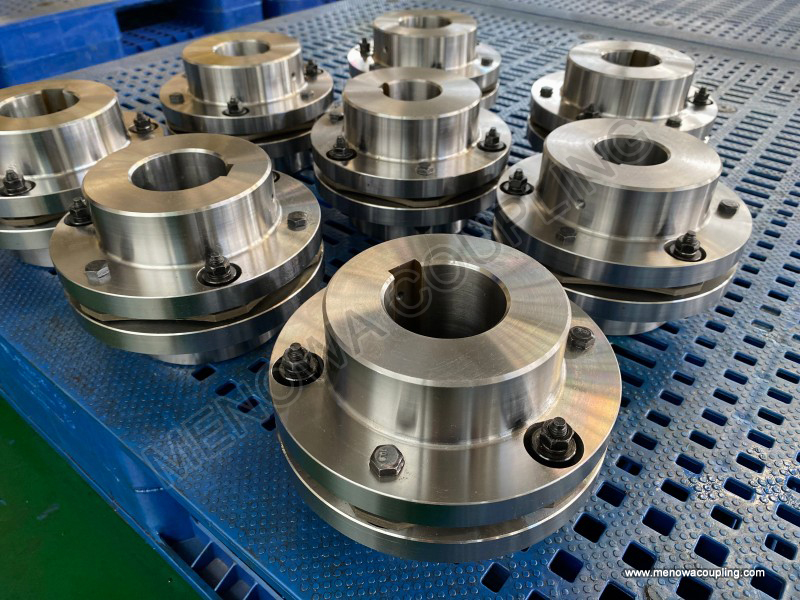
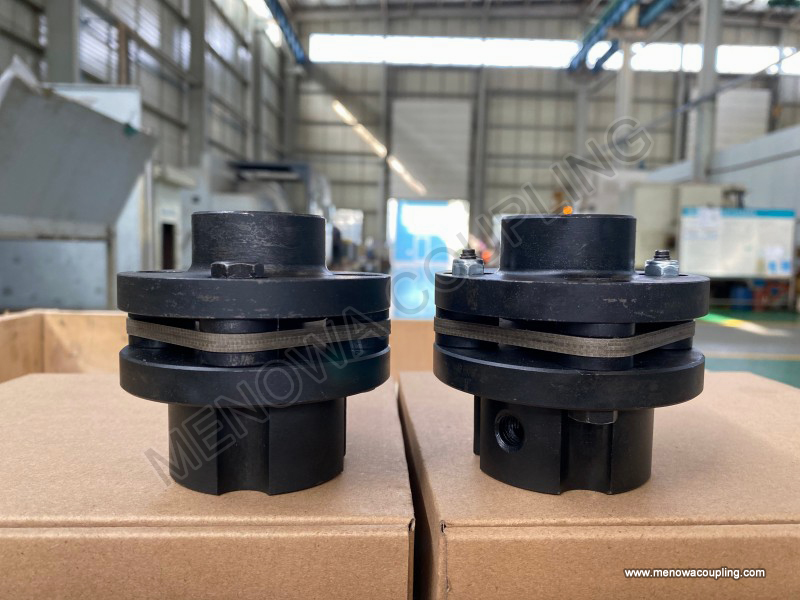
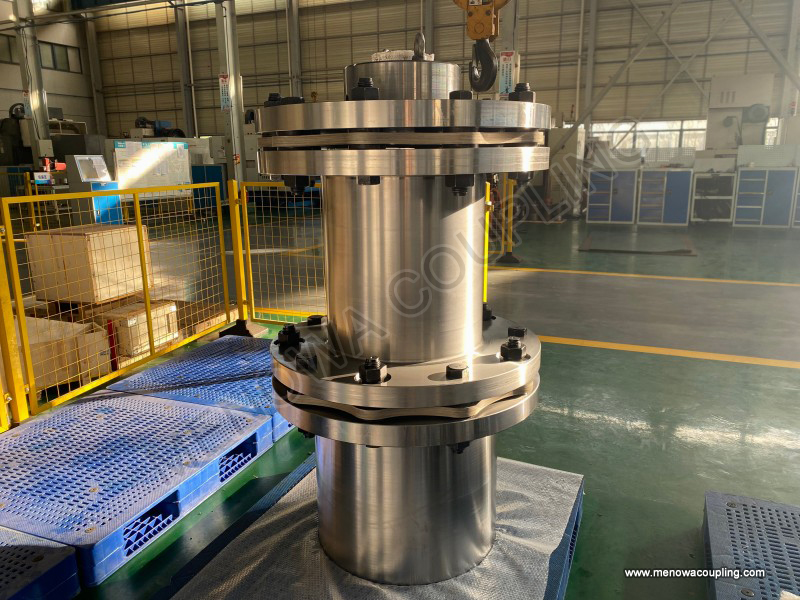
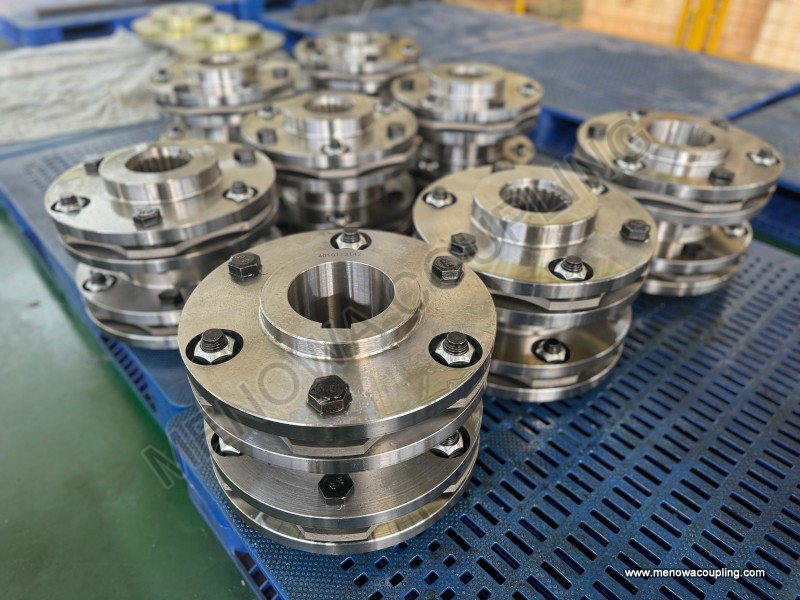
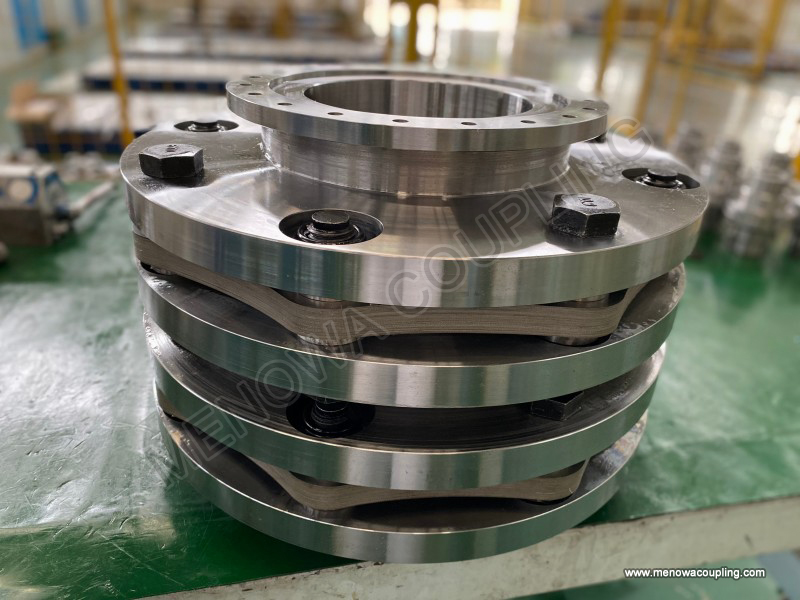
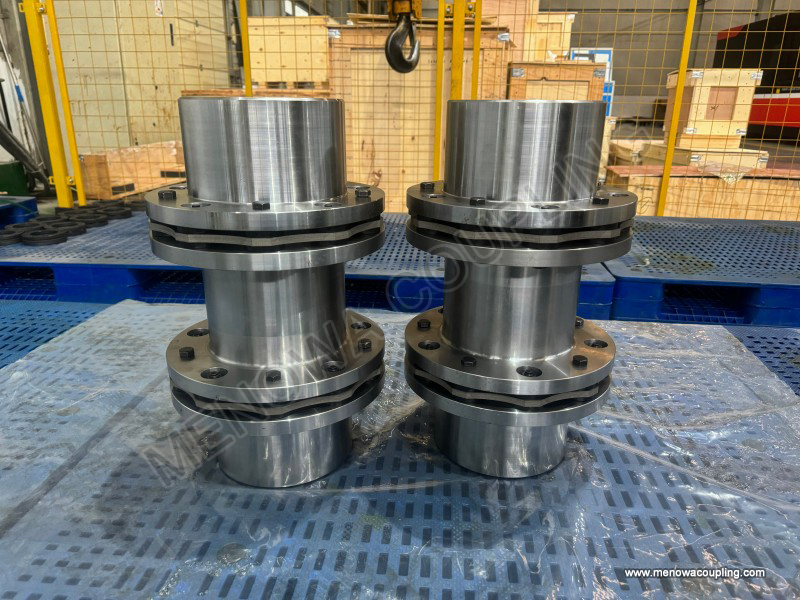
The basic structural composition of laminated membrane coupling follows the design concept of integrating rigid connection and flexible deformation, and the overall structure does not contain any easily worn sliding parts, friction transmission components or non-metal vulnerable accessories, which lays a solid foundation for its long-term stable operation and low maintenance demand in industrial application scenarios. The main components of the coupling include driving end flange, driven end flange, precision connecting fasteners and laminated membrane assembly, and all parts are processed and assembled with high precision to ensure the coaxiality matching and force transmission uniformity of the overall structure during operation. The driving end flange and driven end flange are usually made of high-strength alloy steel materials with good rigidity and pressure resistance, which can bear the instantaneous torque impact and long-term cyclic load generated in the process of mechanical power transmission, and avoid structural deformation or local stress concentration caused by long-term load operation. The two flanges are symmetrically arranged on both sides of the laminated membrane assembly, and the laminated membrane assembly is firmly connected and fixed with the two flanges through a number of evenly distributed precision bolts. The laminated membrane assembly, as the core functional component of the entire coupling, is formed by stacking multiple thin metal membrane plates in a specific order and spacing, and each membrane plate maintains a reasonable gap fit during the stacking process, which can ensure that each membrane plate can independently produce uniform elastic deformation when bearing force, and can also realize the coordinated force bearing and deformation coordination between multiple membrane plates to jointly complete the displacement compensation and torque transmission work. The number of stacked membrane plates and the thickness of each single membrane plate can be adjusted according to the actual transmission torque demand and misalignment compensation range of different mechanical equipment, so as to realize the personalized matching of structural performance and working condition requirements. In the overall assembly structure, there is no direct rigid contact between the driving end flange and the driven end flange, and all power transmission and displacement buffering work are completed by the laminated membrane assembly in the middle, which fundamentally avoids the rigid collision and mechanical vibration caused by shaft misalignment in the operation process of the transmission system, and effectively reduces the vibration and noise generated during the operation of the equipment.
The core working mechanism of laminated membrane coupling is based on the basic principle of metal elastic deformation, relying on the reversible elastic deformation of the laminated membrane assembly to realize two core functions: efficient torque transmission and multi-dimensional shaft misalignment compensation. In the actual operation process of mechanical equipment, the power generated by the driving equipment is first transmitted to the driving end flange of the coupling through the driving shaft, and the driving end flange transmits the torque to the laminated membrane assembly through the uniformly arranged connecting bolts. Under the action of torque load, each metal membrane plate in the laminated membrane assembly produces micro elastic shear deformation and tensile deformation, and the torque is gradually transmitted from the connecting part of the driving end to the connecting part of the driven end through the continuous deformation and force transfer of the membrane plates, and finally the torque is transmitted to the driven end flange and the driven shaft, realizing the continuous and stable transmission of mechanical power. In this torque transmission process, the elastic deformation of the metal membrane plates is always kept within the reversible elastic range of the material, and after the torque load is stabilized or eliminated, the membrane plates can quickly return to the initial state without permanent plastic deformation, ensuring the long-term repeated use performance of the coupling. In addition to basic torque transmission, another key core function of laminated membrane coupling is to compensate for various misalignments inevitably generated between the driving shaft and the driven shaft during equipment installation and long-term operation. In the actual industrial production and equipment operation process, due to installation accuracy errors, long-term equipment operation vibration, mechanical foundation settlement, thermal expansion and contraction of parts caused by temperature changes and other multiple factors, the driving shaft and driven shaft connected by the coupling will produce three main types of misalignment deviations, including axial displacement, radial displacement and angular displacement. These deviations, if not effectively compensated, will lead to excessive local stress in the transmission shaft system, increased equipment operation vibration, accelerated wear of shaft parts and bearings, and even cause equipment failure and shutdown in serious cases. The laminated membrane assembly of the coupling can produce targeted adaptive elastic deformation according to different types of misalignment deviations, absorb and offset the displacement differences between the two shafts in all directions, keep the transmission shaft system in a relatively stable operating state at all times, and avoid additional mechanical stress and vibration impact caused by shaft misalignment.
The selection of manufacturing materials is the key factor determining the mechanical performance, service life and environmental adaptability of laminated membrane coupling, especially the material of the laminated membrane assembly, which directly affects the elastic deformation capacity, fatigue resistance, corrosion resistance and high and low temperature resistance of the coupling. In the current industrial production and manufacturing process, the laminated membrane plates are mostly made of high-quality stainless steel materials with excellent comprehensive performance, which have good metal elasticity, high tensile strength and strong fatigue resistance, and can withstand millions of times of cyclic elastic deformation without fatigue damage or performance attenuation in the long-term alternating load operating environment. This type of stainless steel material also has stable chemical properties, good corrosion resistance to common corrosive media such as acid, alkali and salt in industrial production, and can maintain stable structural performance and elastic deformation capacity in humid, corrosive and other harsh working environments, avoiding membrane plate corrosion, thinning or performance degradation caused by medium erosion. For the flange parts and connecting bolt parts of the coupling, high-strength alloy steel materials are generally selected after forging and heat treatment processing. After forging, the internal structure of the alloy steel material is more compact, with higher structural rigidity and impact resistance, which can effectively bear the instantaneous torque impact and long-term static load in the transmission process. The heat treatment process further optimizes the mechanical properties of the material, improves the hardness and toughness matching of the flange and bolts, avoids thread loosening, bolt fracture or flange deformation caused by long-term load operation, and ensures the overall structural firmness and connection reliability of the coupling. In view of some special extreme working conditions, such as ultra-high temperature operation environment, ultra-low temperature cold storage mechanical transmission links and strong corrosive chemical production scenarios, the material selection of laminated membrane coupling will be further optimized and adjusted, and special alloy materials with high temperature resistance, low temperature brittleness resistance and stronger corrosion resistance will be selected to meet the special performance requirements of extreme working conditions. The scientific matching of different materials for different components ensures that each part of the laminated membrane coupling can give full play to its respective performance advantages, and the overall comprehensive performance reaches a balanced and stable state.
Compared with other types of flexible couplings commonly used in the current mechanical transmission market, laminated membrane coupling has prominent comprehensive performance advantages in structural design, operating performance and later operation and maintenance, and these advantages make it more suitable for high-end and high-precision industrial transmission scenarios with high requirements for transmission stability and long-term operation reliability. Different from elastomeric flexible couplings that use rubber and other non-metal materials as elastic deformation components, laminated membrane coupling adopts an all-metal structural design, without any non-metal vulnerable parts, so there is no aging, deformation, failure and other problems of non-metal materials caused by long-term operation, temperature change and environmental erosion. Elastomeric flexible couplings need regular inspection and replacement of elastic accessories in the later use process, with high maintenance frequency and high operating cost, while laminated membrane coupling basically does not need daily maintenance and regular replacement of parts in the whole service cycle, realizing maintenance-free long-term operation and effectively reducing the later operation and maintenance workload and cost of mechanical equipment. Compared with traditional gear couplings and chain couplings, laminated membrane coupling has no sliding friction and meshing wear parts in the internal structure, does not need to be filled with lubricating oil or grease for lubrication and protection during operation, avoids equipment failure caused by lubricant deterioration, leakage and insufficient lubrication, and also eliminates the environmental pollution problem caused by lubricant leakage. At the same time, the operation vibration and noise of laminated membrane coupling are lower during the power transmission process, the transmission torque is more stable, and it will not produce large impact and vibration even under variable load and instantaneous start-stop working conditions, which can effectively protect the supporting bearings, shafts and other precision parts of mechanical equipment and extend the overall service life of the equipment transmission system. In terms of displacement compensation performance, laminated membrane coupling can simultaneously and efficiently compensate axial, radial and angular multi-directional misalignment deviations, with balanced compensation performance for all kinds of displacements, and will not produce excessive stress concentration in local structures during the compensation process. Its compact overall structural design also makes the coupling occupy a small installation space, convenient for installation, disassembly and debugging in various mechanical equipment with compact structural layout, and strong applicability to different installation forms and working space conditions.
In the actual high-speed and heavy-load operation process of mechanical equipment, the laminated membrane coupling will bear multiple complex stresses such as torque shear stress, centrifugal stress, bending stress and alternating fatigue stress, and the reasonable structural design and material performance matching ensure that the coupling can effectively disperse and bear all kinds of stresses without structural damage and performance attenuation. When the coupling transmits torque, the laminated membrane plates mainly bear uniform shear stress and tensile stress, and the stacked multi-layer membrane plate structure can disperse the overall torque load to each membrane plate, avoiding the problem of local stress overload caused by single-layer stress bearing. When the equipment runs at high speed, the coupling will generate centrifugal force due to rotational movement, and the high-strength metal material and compact structural design can effectively resist the centrifugal stress generated by high-speed rotation, avoid structural deformation and radial runout of the coupling during high-speed operation, and ensure the coaxiality and rotation stability of the transmission shaft system. When there is misalignment deviation between the driving shaft and the driven shaft, the elastic deformation of the laminated membrane plates will generate corresponding bending stress, and the good toughness and elastic deformation performance of the metal material enable the membrane plates to bear cyclic bending stress for a long time without fatigue fracture. In the long-term cyclic alternating load operation environment, the laminated membrane coupling needs to bear millions of repeated stress cycles, and the excellent fatigue resistance of the selected metal materials and the reasonable structural stress distribution design enable the coupling to maintain stable mechanical performance for a long time, without fatigue failure and torque transmission attenuation due to long-term cyclic stress. The scientific stress bearing and dispersion mechanism makes the laminated membrane coupling always maintain a safe and stable operating state under various complex stress conditions, and provides reliable basic guarantee for the long-term stable operation of mechanical transmission equipment.
Laminated membrane coupling has a wide range of industrial application scenarios, covering almost all mechanical transmission links that require high-precision torque transmission and reliable misalignment compensation, and it shows excellent adaptability and stable operating effect in different industrial fields and working condition environments. In the field of power generation equipment manufacturing and operation, laminated membrane coupling is applied to the shaft connection and power transmission of steam turbine generator sets, wind power generation equipment, hydraulic power generation supporting transmission machinery and other core power equipment. Power generation equipment has high requirements for transmission stability and continuous and stable operation, and the maintenance-free performance and low vibration transmission characteristics of laminated membrane coupling can ensure that the power generation equipment operates continuously and stably for a long time, reduce equipment shutdown maintenance time, and improve the overall power generation efficiency and operating benefit. In the petrochemical industry, the production equipment often operates in high temperature, high pressure and corrosive medium environment, and the transmission machinery such as chemical pumps, compressors and stirring equipment need couplings with strong corrosion resistance and high temperature resistance. The all-metal structure and excellent material performance of laminated membrane coupling can adapt to the harsh working environment of petrochemical production, avoid coupling failure caused by medium corrosion and temperature change, and ensure the continuous operation of chemical production processes. In the metallurgical and rolling industry, rolling equipment, smelting supporting transportation machinery and other equipment are often in heavy-load impact and variable load operation state, and the laminated membrane coupling can bear large torque impact and load change, compensate the shaft misalignment caused by equipment vibration and foundation settlement, and ensure the stable operation of metallurgical rolling production lines.
In the field of precision mechanical manufacturing and machine tool equipment, precision processing machine tools, automated production equipment and precision testing machinery have extremely high requirements for transmission accuracy and vibration control. The low vibration, low noise and high-precision torque transmission performance of laminated membrane coupling can avoid transmission vibration affecting the processing accuracy of mechanical parts, ensure the stable operation of precision machine tool transmission systems, and improve the processing quality and production precision of mechanical products. In the large-scale engineering machinery and transportation supporting industry, engineering excavators, cranes, port handling machinery and other equipment have complex and changeable working conditions, frequent load changes and large equipment operation vibration. The good displacement compensation and impact resistance of laminated membrane coupling can adapt to the complex operating conditions of engineering machinery, ensure the reliability of power transmission of engineering equipment, and reduce the failure rate of mechanical transmission parts. In addition, in the pharmaceutical machinery, food processing machinery, environmental protection dust removal equipment and other light industrial and environmental protection fields, laminated membrane coupling is also widely used due to its maintenance-free, clean operation and no lubricant pollution characteristics, meeting the sanitary and environmental protection operation requirements of light industrial production and environmental protection equipment. With the continuous development of industrial intelligence and mechanical equipment upgrading, the application scope of laminated membrane coupling is still expanding, and it gradually replaces some traditional couplings with poor performance and high maintenance demand, and becomes the mainstream matching part of modern high-performance mechanical transmission systems.
The installation, commissioning and later maintenance management of laminated membrane coupling are simple and convenient, and the low operation and maintenance threshold further improves its practical application value in industrial production. In the equipment installation and commissioning stage, the overall structural assembly of the coupling is simple, the number of parts is small, and the installation and disassembly steps are not complicated. Workers can complete the positioning installation and coaxiality debugging of the coupling according to the conventional mechanical equipment installation specifications without complex professional operation skills and special installation tools. In the installation process, only need to ensure that the coaxiality deviation and installation gap between the driving shaft and the driven shaft are controlled within the reasonable range specified by the design, and the connecting bolts are tightened evenly in sequence to ensure the firm connection of each part, which can complete the installation work of the coupling. After the installation is completed, simple equipment trial operation and vibration detection can be carried out to confirm whether the coupling operates stably and the displacement compensation function is normal, and the subsequent formal production operation can be carried out after all indexes are qualified. In the daily operation process of the equipment, the laminated membrane coupling does not need regular lubrication, oil change, parts inspection and other daily maintenance work, and the staff only need to carry out conventional equipment daily patrol inspection. Under the normal operating condition of the equipment, the coupling will not have performance failure and structural damage, and can operate stably for a long time. Only in the equipment major maintenance and overhaul cycle, simple appearance inspection and bolt fastening inspection can be carried out to check whether the laminated membrane assembly has micro deformation, corrosion and other abnormal conditions, and whether the connecting bolts are loose. If no abnormal problems are found, the coupling can continue to be used without replacement and maintenance. This simple installation and maintenance mode greatly reduces the daily management workload and operation cost of enterprise equipment, avoids the production shutdown loss caused by coupling maintenance and replacement, and creates stable production conditions for industrial enterprises.
With the continuous progress of modern mechanical design technology, material processing technology and industrial manufacturing level, the structural design, processing technology and performance optimization of laminated membrane coupling are also constantly developing and improving, adapting to the higher standard requirements of future industrial mechanical transmission systems. In terms of structural design optimization, with the help of finite element simulation analysis technology, designers can accurately simulate the stress distribution, deformation state and displacement compensation effect of laminated membrane coupling under different working conditions, optimize the number of laminated membrane plates, membrane plate thickness, bolt distribution position and flange structural size, further improve the stress uniformity and deformation coordination of the coupling structure, and enhance the comprehensive mechanical performance of the product. In terms of material processing technology, the continuous upgrading of metal material smelting and precision processing technology makes the membrane plate processing precision higher, the material internal structure more uniform, and the fatigue resistance and corrosion resistance of the coupling further improved. The application of precision stamping and CNC finishing technology ensures that the dimensional accuracy and surface flatness of each membrane plate and flange parts meet the high-precision assembly requirements, reducing the assembly error and internal stress of the coupling itself. In terms of performance personalized customization, according to the different working condition characteristics and transmission requirements of different industries and different mechanical equipment, laminated membrane coupling can realize personalized customized production in terms of torque transmission range, displacement compensation capacity, high and low temperature resistance and corrosion resistance, meeting the differentiated use needs of various special working conditions.
In the future development trend of industrial mechanical transmission, high precision, high efficiency, low energy consumption and low maintenance will become the core development direction of mechanical supporting parts. As a high-performance all-metal flexible coupling, laminated membrane coupling is highly consistent with the future development trend of the industry due to its excellent transmission performance, reliable displacement compensation capacity and low operation and maintenance characteristics. With the continuous acceleration of industrial intelligent upgrading and the continuous improvement of equipment operation precision and reliability requirements, the market application demand of laminated membrane coupling will continue to grow, and its technical research and development and production manufacturing level will continue to make breakthroughs. Through continuous structural optimization, material innovation and process upgrading, laminated membrane coupling will have stronger environmental adaptability, higher transmission efficiency and longer service life, and play a more important core role in more industrial mechanical transmission scenarios. As an important basic component of modern mechanical engineering, laminated membrane coupling will always rely on its unique structural mechanism and excellent comprehensive performance to provide solid and reliable basic support for the stable operation and efficient production of various industrial mechanical equipment, and promote the continuous progress and innovative development of the entire mechanical transmission industry.
https://www.menowacoupling.com/industrial-coupling/laminated-membrane-coupling.html
 WeChat
 WhatsApp