Universal Coupling For Ball Mill
In the complex and demanding operating environment of mineral processing, building materials production, chemical raw material grinding and other heavy industrial fields, ball mills stand as core processing equipment responsible for crushing and grinding various bulk raw materials into fine particles and powders that meet production process requirements. The stable and continuous operation of a ball mill directly determines the overall production efficiency of the entire production line, the stability of product quality and the comprehensive operating cost of the industrial plant. Behind the normal rotation and material grinding work of each ball mill, a complete and reliable power transmission system is indispensable, and the universal coupling, as a key connecting component in the middle link of the ball mill power transmission chain, undertakes the important task of transmitting rotary torque and power between the driving motor, speed reducer and the main rotating shaft of the ball mill cylinder. Unlike ordinary mechanical couplings used in light-duty and low-load equipment, the universal coupling matched for ball mills needs to adapt to extremely harsh working conditions for a long time, including heavy load impact, continuous cyclic operation, complex shaft misalignment, severe mechanical vibration and harsh on-site environmental interference such as dust and humidity, and its structural design, material selection and operating performance are all tailored to meet the special operation needs of ball mill grinding work. Understanding the functional value, working mechanism, application advantages and daily maintenance management of universal couplings for ball mills is not only conducive to industrial production personnel to grasp the core logic of ball mill power transmission operation, but also helps to extend the service life of supporting transmission components, reduce unexpected equipment shutdown failures, and maintain the long-term stable and efficient operation of the entire grinding production system.
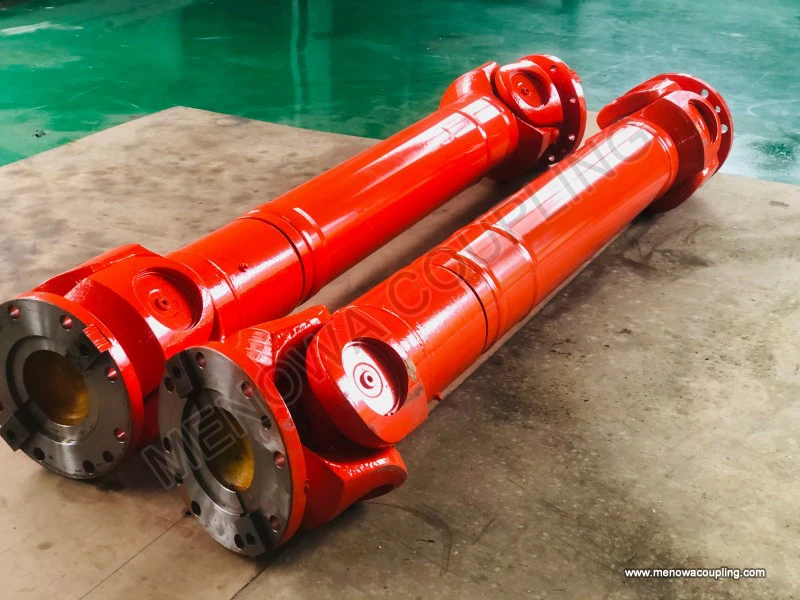
Ball mills rely on the rotational drive of the cylinder to drive internal grinding media such as steel balls, steel forgings and ore materials to generate impact, extrusion and friction effects, so as to complete the refinement processing of raw materials. In the whole power transmission process, the high-speed rotation power output by the driving motor needs to be adjusted to the low-speed and high-torque power state required for ball mill operation through the speed reducer, and then the adjusted power is stably transmitted to the pinion shaft and the girth gear meshing structure of the ball mill, finally driving the cylinder to rotate at a constant and reasonable speed. In this series of power transmission links, there is inevitably a certain degree of axial, radial and angular misalignment between the output shaft of the speed reducer and the input shaft of the ball mill main drive part. This kind of misalignment is caused by many objective factors, including installation and assembly errors during equipment commissioning, slight deformation of the equipment base under long-term heavy load pressure, mechanical vibration displacement during continuous operation, and thermal expansion and contraction of metal components caused by temperature changes in the production workshop. Ordinary rigid couplings cannot adapt to this kind of unavoidable shaft misalignment state in the working process. Rigid connection will cause additional mechanical stress to accumulate on the shaft body, bearings and gear components of the ball mill drive system. Long-term stress accumulation will lead to accelerated wear of shaft parts, bearing heating and damage, gear meshing deviation and abnormal tooth surface wear, and even cause serious faults such as shaft body fracture and gear tooth breakage in severe cases, forcing the ball mill to stop production for maintenance and bringing unnecessary economic losses to industrial production. The universal coupling for ball mills is designed and manufactured to solve this core problem in heavy-duty power transmission. With its unique flexible connection structure and angular compensation performance, it can effectively absorb and offset various misalignment deviations between the connected two shafts, ensure that the power transmission process maintains a stable and smooth state, and avoid additional mechanical stress damage to various key components of the ball mill drive system.
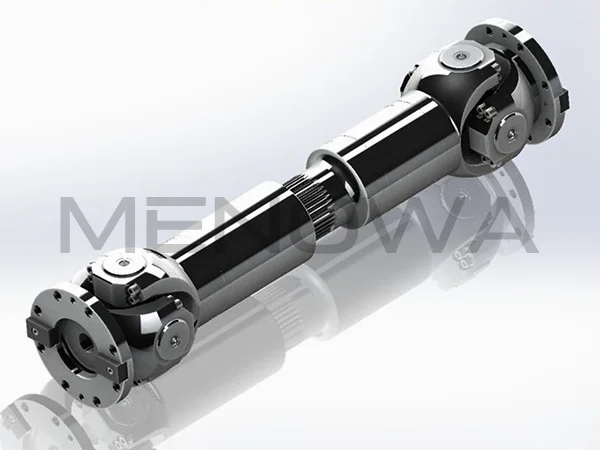
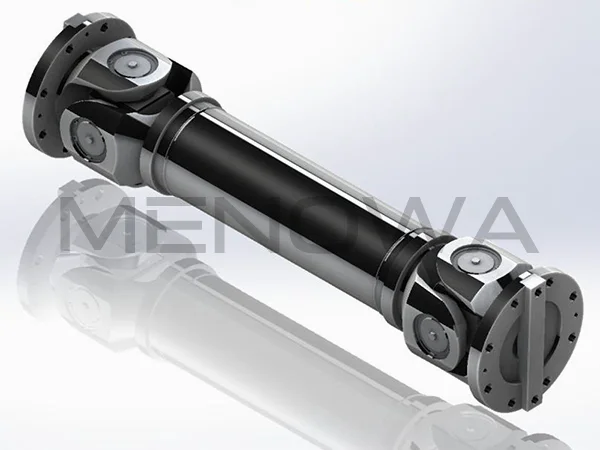
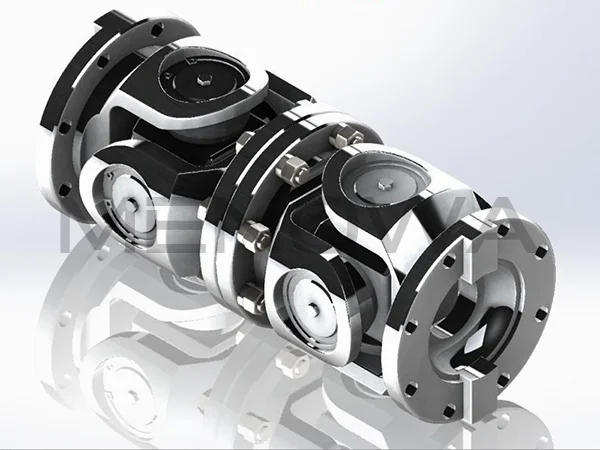
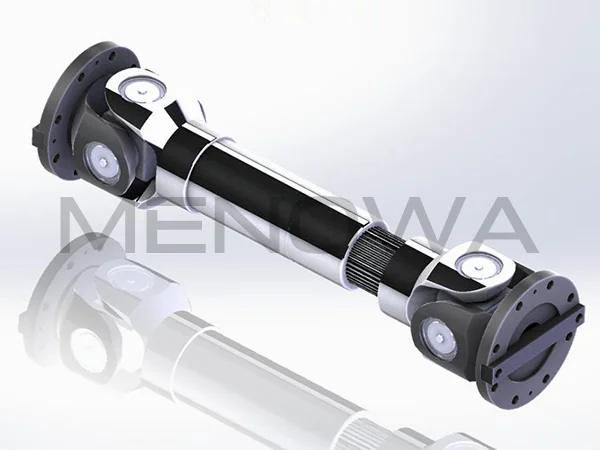
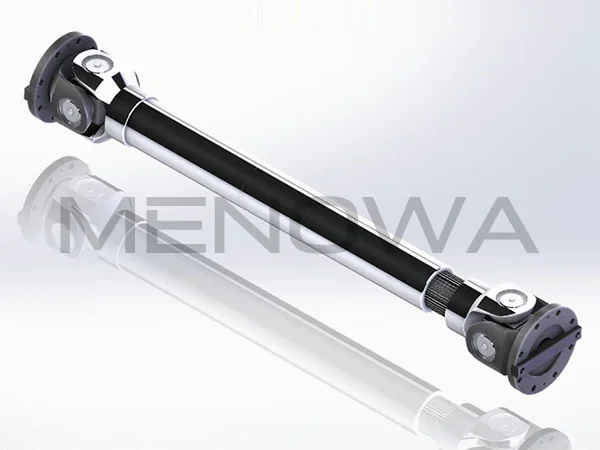
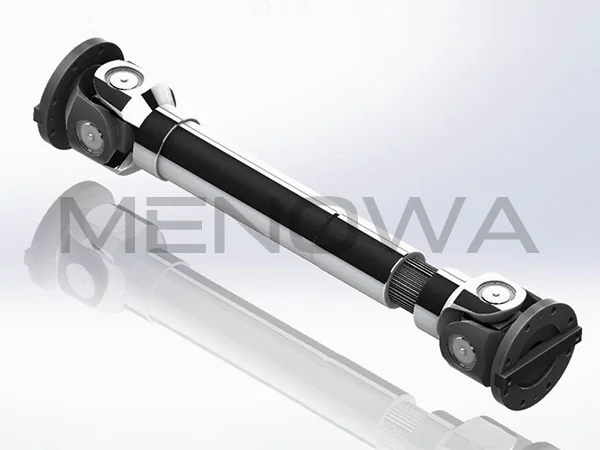
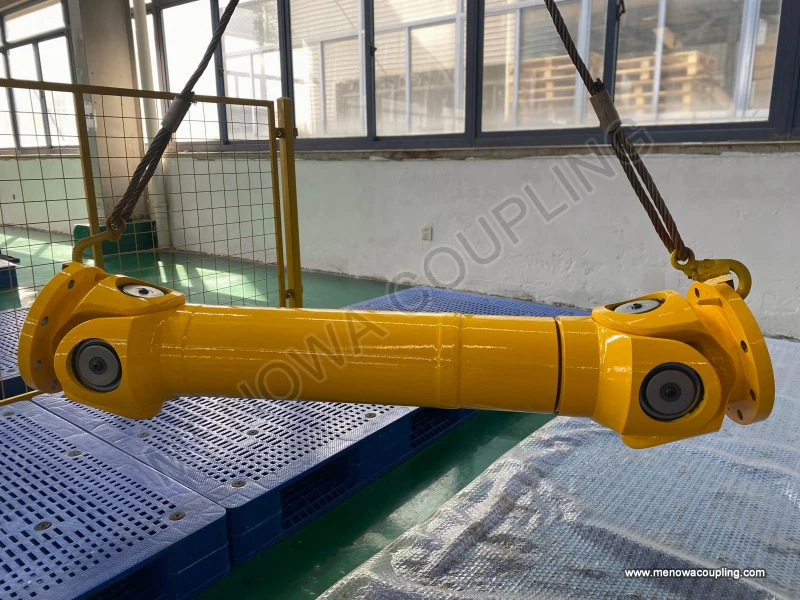
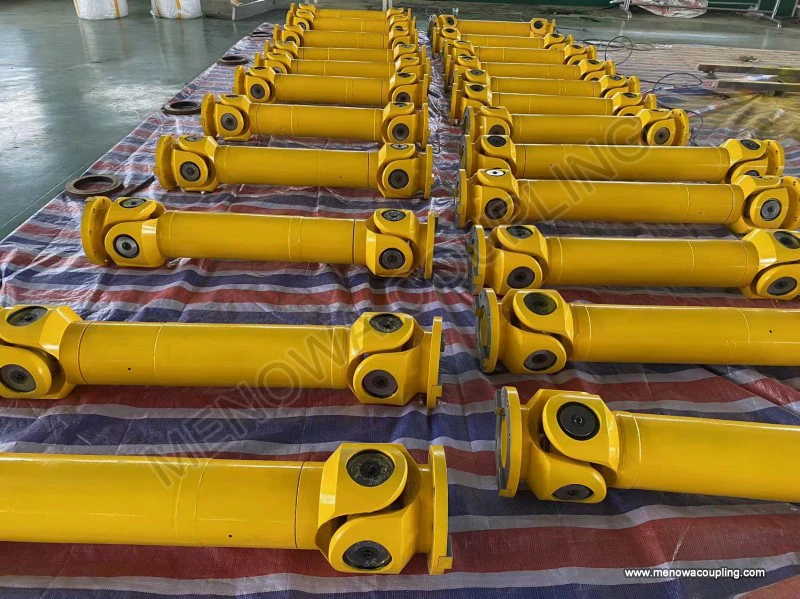
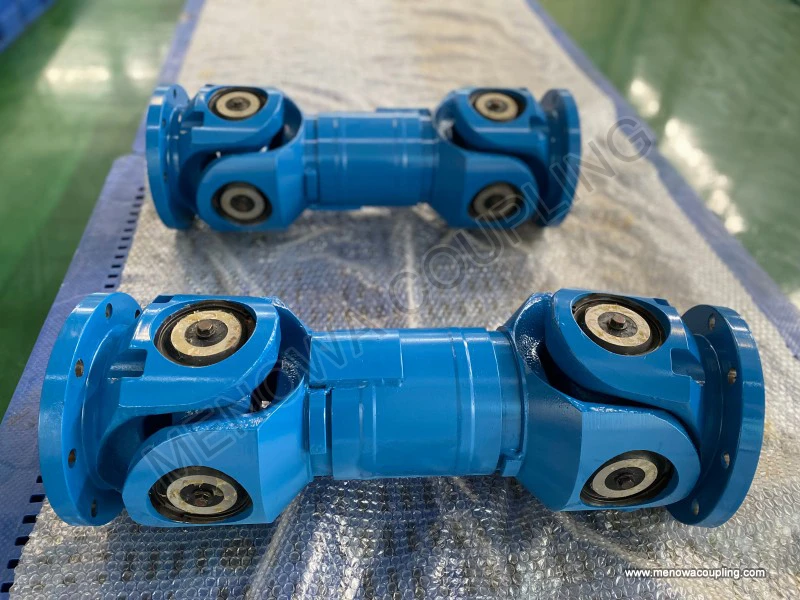
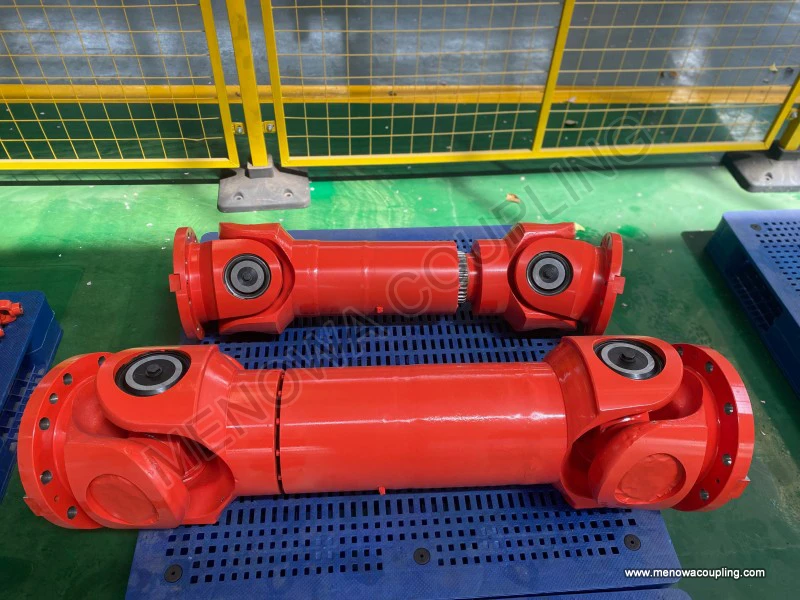
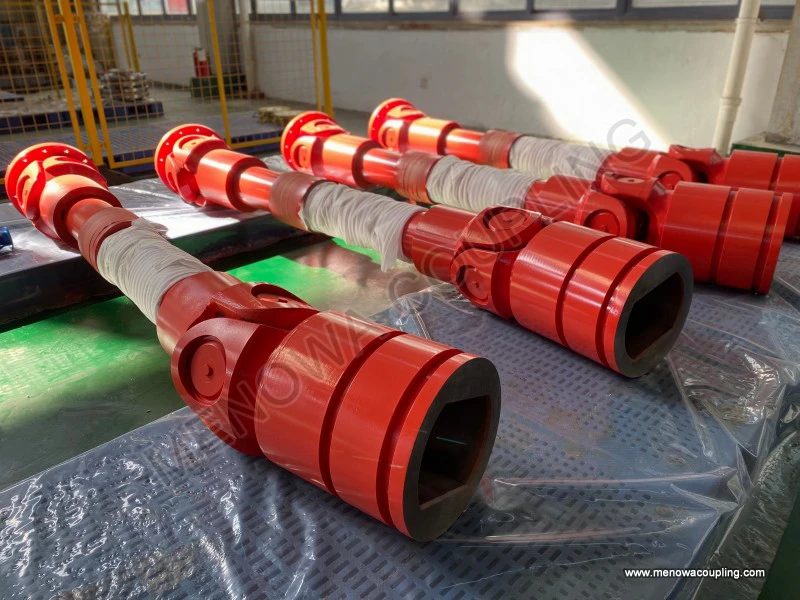
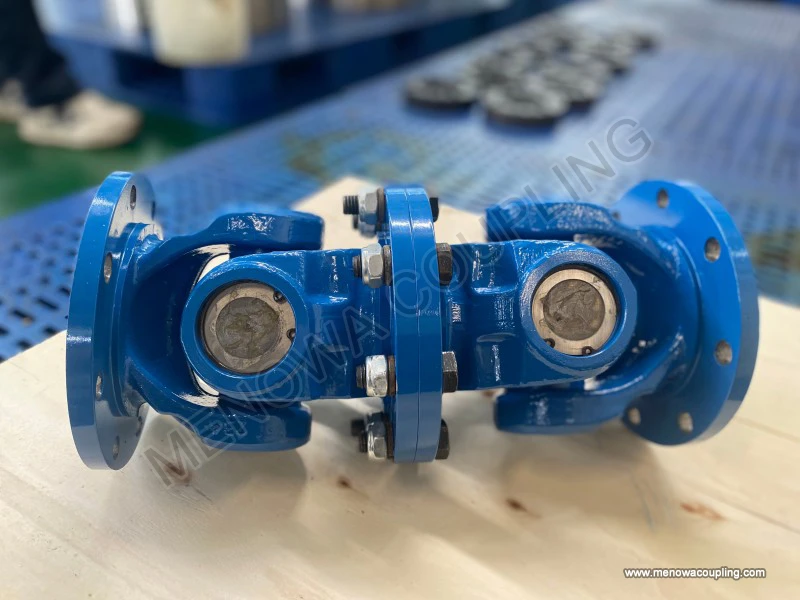
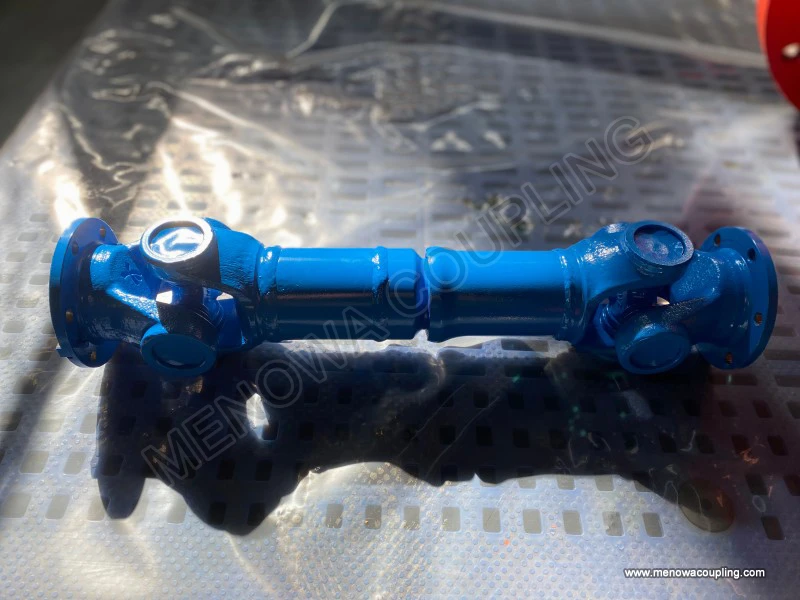
The basic structural composition of the universal coupling used in ball mill scenarios follows the classic design principle of universal transmission components, mainly consisting of two symmetrically arranged fork-shaped joint yokes, a cross-shaped intermediate connecting spider and supporting needle roller bearing assemblies. The two joint yokes are respectively fixedly connected with the driving shaft and the driven shaft of the ball mill transmission system through fastening connection structures, and the cross spider is installed between the two joint yokes, with each end of the cross structure matched with the bearing parts inside the yoke holes. This structural layout enables the universal coupling to have excellent flexible rotation and angular adjustment capabilities. When the driving shaft rotates, the torque and rotary motion are transmitted to the driven shaft through the mutual cooperation of the joint yokes and the cross spider. Even when there is a certain included angle between the axes of the two connected shafts, the cross shaft can continuously adjust its working attitude during the rotation process, ensuring that the rotary motion and torque can be transmitted continuously and stably without obvious power loss and motion jitter. The internal needle roller bearings play a key role in reducing friction resistance during the relative rotation of the coupling components, making the whole transmission process more flexible and efficient, and reducing the mechanical wear and heat generation caused by friction between parts in long-term operation. For the heavy-load working characteristics of ball mills, the structural thickness of the joint yokes and the overall structural rigidity of the cross spider of the supporting universal couplings are appropriately optimized and strengthened. The overall structural stability is improved through reasonable mechanical structure design, so that the coupling can bear the huge instantaneous impact torque generated when the ball mill starts, stops and runs with fluctuating material feeding, and avoid structural deformation or component damage under sudden load changes.
The material selection of universal couplings for ball mills is directly related to their bearing capacity, wear resistance, fatigue resistance and overall service life in long-term heavy-duty operation. Considering that the coupling needs to withstand cyclic alternating load, frequent impact force and long-term friction and wear in the working process, high-strength alloy steel materials with good comprehensive mechanical properties are mostly selected for the main stressed components such as the joint yokes and cross spiders. After strict forging forming and heat treatment processes such as quenching and tempering, the materials have high structural strength, good toughness and excellent fatigue resistance, which can effectively resist the mechanical fatigue damage caused by long-term cyclic rotation and load impact. The bearing parts inside the coupling are made of wear-resistant alloy materials with high hardness, and the surface is treated with special wear-resistant and anti-corrosion processes. This not only reduces the friction loss during the relative movement of parts, but also enhances the adaptability of the coupling to the harsh on-site working environment of ball mills filled with dust and moisture. In the actual production and operation process, the ball mill workshop often has a large amount of mineral dust, raw material powder and humid gas. Ordinary low-strength and poor anti-corrosion materials are prone to surface oxidation, corrosion and rapid wear, which will lead to increased transmission clearance of the coupling, reduced transmission accuracy and even failure of power transmission. The targeted material selection and surface treatment of ball mill dedicated universal couplings can well cope with these adverse environmental factors, maintain the stable structural performance of the coupling for a long time, and reduce the frequency of component replacement and maintenance work.
In the actual operation and application of ball mills, the universal coupling plays multiple core functional roles beyond basic power transmission, and its comprehensive application value runs through the whole cycle of equipment starting, stable operation and load adjustment. First of all, the most prominent function is the misalignment compensation function. As the ball mill belongs to large-scale heavy equipment, the installation and positioning of the drive shaft system cannot achieve absolute precise alignment in the actual assembly process, and the long-term operation will further cause slight displacement and deviation of the shaft position. The universal coupling can flexibly adapt to axial, radial and angular comprehensive misalignment within a reasonable range, ensure that the power transmission between the speed reducer and the ball mill main shaft is not affected by shaft deviation, and avoid the vibration and noise generated by rigid connection due to misalignment. Secondly, the universal coupling has a good buffering and shock absorption effect. When the ball mill starts from a static state to a rotating state, the instantaneous starting torque is large, and the material load inside the cylinder is uneven during operation, which will generate periodic impact load on the drive shaft system. The flexible connection structure of the universal coupling can absorb part of the impact vibration energy, reduce the rigid impact between the driving part and the driven part, protect the motor, speed reducer, bearings and gear components in the transmission system from impact damage, and reduce the vibration amplitude of the whole equipment during operation. In addition, the universal coupling can effectively improve the overall transmission efficiency of the ball mill power transmission system. Its internal low-friction bearing structure and reasonable transmission mechanical design make the power loss in the torque transmission process kept at a low level, ensuring that most of the power output by the motor is used for the rotation and grinding work of the ball mill, avoiding energy waste caused by excessive transmission loss, and helping industrial enterprises reduce energy consumption in the production process.
Different types and specifications of ball mills have different power matching and load-bearing requirements, so the type selection and matching of supporting universal couplings need to be combined with the actual operating parameters of the ball mill to carry out reasonable configuration. The main reference factors for selection include the rated operating power of the ball mill, the rated rotation speed of the drive shaft, the maximum instantaneous impact torque during operation, the actual misalignment angle between the connected shafts and the on-site installation space conditions. In the selection process, it is necessary to ensure that the load-bearing capacity and torque transmission range of the selected universal coupling are compatible with the long-term operation and instantaneous impact working conditions of the ball mill. Too small specification model will lead to the coupling being overloaded for a long time, resulting in accelerated fatigue damage and early failure; too large specification model will increase the overall equipment configuration cost, and the excessive structural size will also bring inconvenience to installation, disassembly and subsequent maintenance work. At the same time, the structural form of the universal coupling should also be adapted according to the installation layout of the ball mill drive system. For ball mill production lines with compact installation space, universal couplings with compact structure and small installation size are preferred; for ball mill equipment with large misalignment angle of the drive shaft, couplings with strong angular compensation performance and flexible adjustment range need to be selected to ensure that the coupling can maintain stable transmission performance under long-term offset working conditions. Reasonable type selection and matching are the premise to give full play to the use effect of universal couplings and ensure the long-term reliable operation of ball mill drive system.
Daily maintenance and regular inspection work of universal couplings for ball mills are key links to prolong their service life and maintain stable transmission performance. Although the universal coupling has strong structural stability and environmental adaptability, long-term continuous operation under heavy load and harsh working conditions will inevitably cause normal wear of internal parts and aging of connecting fastening parts, so standardized daily management and maintenance measures must be implemented in place. In the daily equipment inspection work, operators need to regularly check the operating state of the universal coupling during the operation of the ball mill, observe whether there is abnormal vibration, abnormal noise and obvious shaking at the coupling connection position. If abnormal operating phenomena are found, the equipment should be shut down in time for inspection and troubleshooting to avoid small faults evolving into large equipment failures. Regularly check the fastening state of all connecting bolts and fastening parts of the coupling. Due to the long-term vibration and impact of the ball mill operation, the fastening bolts are prone to loosening, which will lead to increased transmission clearance of the coupling, unstable power transmission and accelerated wear of internal components. It is necessary to regularly tighten the fastening parts according to the equipment maintenance specifications to ensure that all connecting structures are firm and reliable. In addition, regular lubrication maintenance of the bearing parts inside the universal coupling is essential. Good lubrication can reduce the friction and wear of the bearing and cross shaft moving parts, reduce heat generation during operation, and prevent component wear and ablation caused by poor lubrication. According to the different operating intensity and working environment of the ball mill, regular lubricating grease replacement and lubrication maintenance should be carried out to ensure that the internal moving parts of the coupling are always in a good lubrication state.
In the regular maintenance and overhaul work of ball mill equipment, the universal coupling needs to be comprehensively inspected and maintained synchronously. During the equipment shutdown and overhaul period, the coupling can be properly disassembled to check the wear degree of the joint yokes, cross spider and internal bearing parts. For parts with obvious wear, deformation or fatigue damage, timely replacement and maintenance should be carried out to avoid affecting the normal power transmission work after the equipment is restarted. At the same time, check the alignment state of the drive shafts connected by the coupling, readjust and correct the shaft misalignment that exceeds the normal allowable range, reduce the additional working load of the coupling caused by excessive misalignment, and reduce the wear speed of the coupling components. After the maintenance and inspection work is completed, the coupling shall be reinstalled and debugged in strict accordance with the assembly process requirements to ensure that the assembly clearance and connection accuracy meet the operating standards, and ensure that the coupling can resume the stable power transmission function after the ball mill is put into operation again. Scientific and standardized maintenance and overhaul management can not only effectively extend the service life of universal couplings for ball mills, reduce the frequency of equipment failure shutdown and component replacement costs, but also keep the ball mill running in a stable and efficient working state for a long time, creating stable production benefits for industrial production.
With the continuous development of industrial grinding production technology, the automation level and operating load of ball mill equipment are constantly improving, and the technical requirements for supporting universal couplings are also constantly upgrading. Modern industrial production pays more attention to the continuous operation rate of equipment, energy-saving and consumption reduction and low maintenance cost management, which also puts forward higher requirements for the transmission stability, durability and low energy consumption performance of universal couplings for ball mills. In the future, with the continuous optimization of mechanical structure design and the continuous upgrading of high-performance metal materials, the structural performance of universal couplings for ball mills will be further improved, with stronger load-bearing capacity, better misalignment compensation performance, lower friction energy consumption and longer service life. At the same time, with the popularization of intelligent equipment operation and maintenance management technology, the operating state monitoring of universal couplings will be more refined and intelligent, which can realize early warning of potential faults, reduce unplanned shutdown maintenance, and further improve the overall operation efficiency of ball mill production lines. As an indispensable key connecting component in the ball mill power transmission system, the universal coupling will always play an irreplaceable core role in ensuring the stable operation of ball mill equipment, efficient power transmission and long-term reliable production, and provide solid basic guarantee for the stable development of mineral processing, building materials, chemical industry and other related heavy industrial production fields.
Post Date: Apr 25, 2026
https://www.menowacoupling.com/china-coupling/universal-coupling-for-ball-mill.html
Products
Tags
Supply
Related Articles
Universal Coupling Supply
In the intricate ecosystem of mechanical power transmission, universal couplings stand out as indispensable foundational components that bridge the functional gaps of traditional rigid connection structures. Serving as a core link between rotating shafts in mechanical systems, these mechanical devices are engineered to …Uses of Universal Coupling
In the intricate ecosystem of mechanical transmission systems, universal couplings stand out as one of the most versatile and indispensable mechanical components, serving as a critical bridge for power and motion transmission across countless industrial and civilian mechanical devices. Also widely known as universal joi…Diagram of Universal Coupling
A universal coupling, widely recognized as a core mechanical component for flexible power transmission, serves as a pivotal connecting structure in mechanical transmission systems to transfer rotational torque and motion between two shafts with angular misalignment. The structural diagram of a universal coupling intuiti…Universal Coupling Vendor In China
Universal couplings stand as indispensable mechanical transmission components in modern industrial systems, serving as core connecting parts that transmit torque and rotational power between misaligned drive shafts. In China’s complete industrial manufacturing ecosystem, universal coupling production and supply have fo…What is Universal Coupling
A universal coupling, commonly referred to as a universal joint or U-joint, is a fundamental mechanical transmission component designed to connect two rotating shafts while enabling reliable transfer of torque and rotational motion under misaligned operating conditions. Unlike rigid coupling mechanisms that demand preci…Dimensions of Universal Coupling
Universal couplings, commonly known as universal joints or Cardan joints, serve as fundamental mechanical components for power transmission between misaligned rotating shafts in diverse mechanical systems. Their dimensional parameters are the core factors that determine structural compatibility, operational stability, l…
 WeChat
 WhatsApp