Drive Shaft
In the intricate and interconnected ecosystem of mechanical power transmission systems across mobile machinery and industrial rotating equipment, the drive shaft stands as an indispensable foundational component that quietly undertakes the critical mission of transferring rotational torque and mechanical motion between separated power generating units and load executing units. Far more than a simple tubular metal component designed for basic rotation, this mechanical element is a precision-engineered assembly crafted to adapt to dynamic working conditions, offset structural misalignments, and maintain stable power output amid continuous mechanical deformation and positional changes during long-term operation. Every form of wheeled mobile equipment, from conventional passenger vehicles and light commercial carriers to heavy-duty engineering machinery, agricultural farming equipment, and large-scale industrial transmission devices, relies entirely on the reliable operation of drive shafts to convert the initial power generated by power sources into effective driving force that propels equipment movement and mechanical functional execution. Without the reasonable configuration, precise manufacturing, and stable operation of drive shaft assemblies, the power generated by engines or power motors would remain confined to the initial power generation position, unable to cross structural gaps, adapt to operating posture changes, or reach the terminal working components that need to perform actual work, making all mechanical power output meaningless and unutilizable in practical production and daily application scenarios.
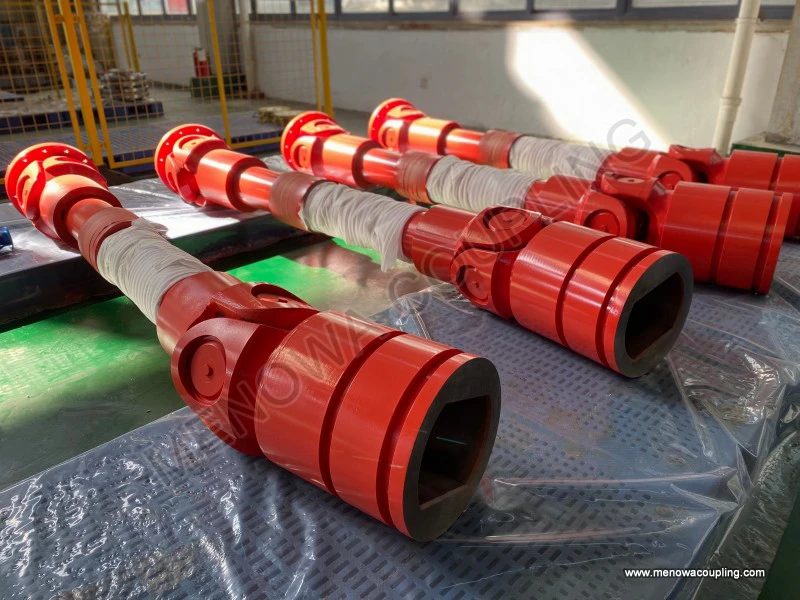
To fully comprehend the intrinsic value and mechanical significance of the drive shaft, it is essential to start with the basic working logic of the entire power transmission chain and clarify the core positioning of this component in the overall mechanical system. In most typical mechanical layout designs, the power source and the terminal load structure cannot be fixedly installed on the same horizontal or vertical central axis, nor can they maintain a completely static relative position during the entire working process. Various objective factors such as equipment structural layout space limitations, suspension buffer vibration reduction requirements, terrain adaptation and displacement changes during operation, and mechanical rotation angle adjustment needs will lead to continuous and real-time changes in the relative distance and angular deflection between the power output end and the power input end. Ordinary fixed rigid connecting shafts cannot cope with such dynamic changes in relative positions; rigid connection will directly cause excessive mechanical stress concentration, component deformation and damage, power transmission jamming, and even overall mechanical system failure in a short period of time. The drive shaft is specially designed and manufactured to solve this core mechanical contradiction, achieving efficient and continuous transmission of rotational torque while flexibly adapting to angular deviation between connecting parts and linear distance telescopic changes, ensuring that power transmission is not interrupted or attenuated due to positional changes of mechanical components during equipment operation.
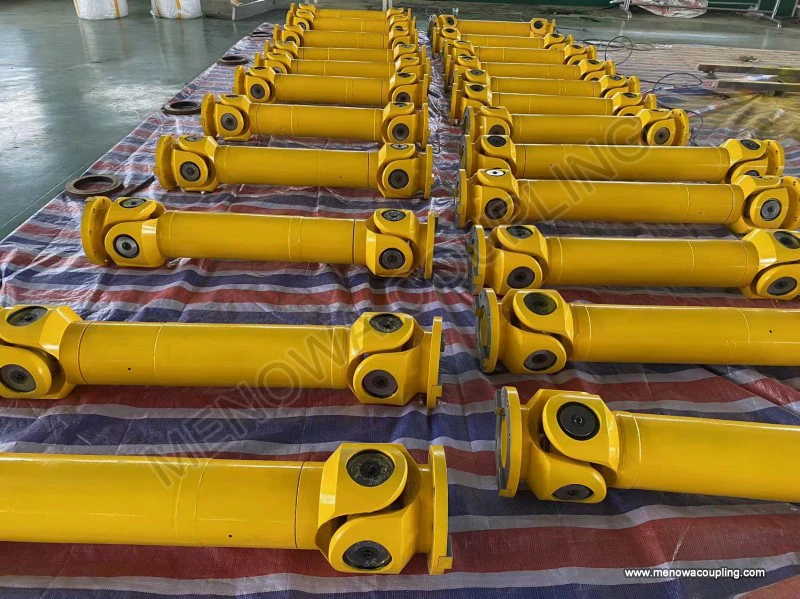
The basic structural composition of a standard drive shaft assembly follows mature mechanical design principles formed through long-term engineering practice, with each matching component performing its own duties and cooperating closely to jointly complete the power transmission and dynamic adaptation functions. The main body of the drive shaft is usually a hollow tubular metal structure, a structural form chosen after comprehensive consideration of mechanical strength, torsional rigidity, and overall weight balance. Compared with solid shaft structures of the same outer diameter, the hollow tubular design can effectively reduce the overall mass of the component, lower the rotational inertia generated during high-speed rotation, reduce additional energy consumption caused by self-weight rotation, and simultaneously maintain sufficient torsional resistance and bending resistance to withstand the alternating torque and mechanical impact generated during equipment acceleration, deceleration, and load changes. At both ends of the tubular main shaft and the key connecting positions in the middle of the assembly, universal joints are installed as the core flexible connecting structures, serving as the key bridge to realize angular deflection adaptation during power transmission. Each universal joint is built around a cross-shaped metal spider component with four cylindrical trunnions distributed in a cross arrangement, matched with rotating bearings and connecting yokes on all sides, enabling the connected shaft sections to freely rotate within a certain angular range in multiple directions without affecting the normal transmission of rotational torque.
In addition to universal joints, the slip joint, also known as the splined telescopic structure, is another vital auxiliary component indispensable to the drive shaft assembly, undertaking the important task of adapting to linear distance changes between connected mechanical parts. This structure is composed of matched internal splines and external splines, with precise tooth profile machining and gap control between the splines, ensuring that while the shaft can freely telescopically adjust the overall length according to the working stroke and positional displacement of the equipment, it can still stably transmit rotational torque without relative sliding and power loss between the connecting parts. During the operation of mobile equipment, especially vehicles equipped with independent suspension systems, the up and down jitter of the suspension and the elastic deformation of shock absorption components will cause continuous small changes in the distance between the transmission output end and the differential input end. The telescopic function of the slip joint can well offset these distance changes, avoiding extrusion deformation, structural pulling, and component damage caused by rigid length fixation of the drive shaft. All connecting parts of the entire drive shaft assembly are fastened with high-strength fasteners, and the connecting surfaces are precisely machined and dynamically balanced to ensure that no eccentric rotation or excessive vibration occurs during high-speed operation, maintaining the smoothness and stability of the power transmission process.
The working mechanical principle of the drive shaft involves comprehensive professional knowledge of torsional mechanics, rotational dynamics, and mechanical vibration balance, and its internal stress changes and power transmission rules are closely related to the operating state of the equipment in real time. When the power source starts to output rotational power, torque is first transmitted to the front-end connecting yoke of the drive shaft, and then sequentially transmitted to the tubular main shaft, the middle universal joint and slip joint structure, and finally to the terminal mechanical components such as the differential and driving wheels. In this process, the universal joint continuously adjusts the rotation angle according to the real-time angular misalignment between the front and rear shaft sections, converting the rotational motion of the input shaft with a fixed angle into the rotational motion adapted to the output shaft angle, ensuring the continuity of torque transmission. Although a single universal joint will produce slight periodic speed fluctuation during the rotation process due to structural characteristics, the reasonable arrangement of multiple universal joints in the drive shaft assembly can effectively offset this speed fluctuation phenomenon, realizing constant-speed and stable power transmission effect and avoiding abnormal vibration and power jitter caused by uneven rotational speed.
The slip joint performs linear telescopic movement synchronously with the angular adjustment of the universal joint during the working process, automatically compensating for the linear displacement generated by the bounce and deformation of the equipment chassis and suspension system. The spline teeth inside the slip joint bear the shear force and friction force generated by torque transmission during telescopic movement, so the surface of the spline teeth needs to have high hardness and wear resistance, and good lubrication conditions must be maintained for a long time to reduce friction loss and mechanical wear. The tubular main shaft bears the main torsional load and alternating bending load during the entire power transmission process. When the equipment is running smoothly at a constant speed, the torsional stress borne by the main shaft is relatively stable; when the equipment starts, accelerates, climbs, or carries heavy loads, the instantaneous torque increases sharply, and the main shaft needs to withstand instantaneous impact torsional stress. All structural designs and material selection of the drive shaft are based on adapting to such alternating load and impact load working conditions, ensuring that the component will not produce plastic deformation or fatigue fracture under long-term complex stress circulation.
Different application scenarios and equipment types have put forward differentiated performance requirements for drive shafts, thus deriving various drive shaft types with different structural forms and performance characteristics to meet the diversified needs of mechanical power transmission. In conventional rear-wheel drive and four-wheel drive passenger vehicles, the drive shaft is usually designed as a segmented lightweight structure, matched with small and flexible universal joints and compact slip joints. The overall structural design focuses on lightweight performance, low noise during high-speed rotation, and good vibration reduction effect, adapting to the smooth driving and high-speed running working conditions of passenger vehicles on conventional roads. The length and diameter of the drive shaft are precisely designed according to the wheelbase and chassis layout of the vehicle, and the dynamic balance accuracy of the finished product is strictly controlled to ensure that no obvious vibration and noise are generated during high-speed driving, affecting driving comfort and mechanical stability.
In heavy-duty engineering machinery and large agricultural equipment, the drive shaft adopts an enhanced thickened structural design, with thicker tubular main shaft walls, larger-size universal joints and high-load-bearing spline slip structures. Such equipment often works in harsh working environments such as muddy roads, uneven terrain, and heavy-load operation for a long time, and the drive shaft needs to bear greater impact torque and heavy-load torsional stress. Therefore, the structural design pays more attention to overall structural strength, impact resistance, and fatigue resistance, abandoning excessive lightweight design and prioritizing long-term operational reliability under harsh working conditions. The universal joints of heavy-duty drive shafts are equipped with thicker bearing structures and reinforced connecting yokes, which can withstand greater load pressure and reduce the probability of structural damage under strong impact and heavy load working conditions.
In addition to vehicle and engineering machinery applications, drive shafts also play an important role in various fixed industrial mechanical transmission systems. In some large-scale production and processing equipment, due to the limitation of production line layout, the power motor and the processing execution equipment need to be arranged at a certain distance, and there is a certain structural height difference and angular deviation between the two. The drive shaft can be used as a power transmission connecting piece to realize long-distance and offset power transmission, ensuring the coordinated operation of all links of the production line. The drive shafts used in industrial equipment usually run at a relatively fixed rotational speed and load, with fewer frequent impact loads and positional changes, so the structural design is more focused on transmission efficiency and long-term stable operation, and the requirements for telescopic stroke and angular deflection range are relatively low compared with mobile equipment drive shafts.
Material selection is the core link that determines the overall performance and service life of the drive shaft, and different material formulas and processing technologies directly affect the torsional strength, wear resistance, fatigue resistance, and weight performance of the finished drive shaft. Most traditional drive shaft main bodies are made of high-quality alloy steel materials with reasonable carbon content and alloy element ratio. This type of steel material has excellent comprehensive mechanical properties, including high torsional strength, good toughness, and strong fatigue resistance, and can withstand long-term alternating torque and instantaneous impact load without structural fracture. After forging and heat treatment processes such as quenching and tempering, the alloy steel drive shaft can further improve the internal structural uniformity and surface hardness, reducing mechanical deformation and wear during operation.
With the continuous advancement of mechanical lightweight technology and energy-saving and consumption reduction requirements in the mechanical industry, more and more drive shaft products for light-duty equipment and passenger vehicles have begun to adopt lightweight metal materials such as aluminum alloy in recent years. Aluminum alloy drive shafts have the advantages of low overall density, light self-weight, and small rotational inertia, which can effectively reduce the overall weight of the equipment drivetrain, reduce energy consumption during operation, and improve the power transmission response speed. Although the torsional strength and impact resistance of aluminum alloy materials are slightly lower than those of high-strength alloy steel, through optimized structural design and wall thickness adjustment, it can fully meet the daily operation needs of light-load and medium-load equipment, and has become an important development direction of lightweight drive shaft manufacturing. In some special high-end mechanical equipment, composite materials are also tried to be used in drive shaft manufacturing, relying on the characteristics of high strength, light weight, and strong corrosion resistance of composite materials to further improve the comprehensive performance of drive shafts, adapting to some special working environments with high corrosion and high precision requirements.
The manufacturing and processing technology of the drive shaft is a systematic and refined engineering process, involving multiple links such as raw material forging, precision machining, heat treatment, surface treatment, component assembly, and dynamic balance calibration, and each link directly determines the final quality and operational performance of the drive shaft. The initial raw material processing usually adopts die forging technology, which makes the internal metal structure of the shaft blank more compact through forging pressure, eliminates internal defects such as pores and cracks in the raw material, and improves the overall structural strength and toughness of the drive shaft. After forging, the tubular main shaft and various connecting accessories need to undergo precision turning, milling, and grinding processing to ensure that the dimensional accuracy and surface finish of all connecting parts and matching surfaces meet the design standards, avoiding assembly gaps and matching errors caused by insufficient machining accuracy, which lead to vibration and wear during operation.
Heat treatment processing is an indispensable key process in drive shaft production. Through quenching and tempering treatment, the internal hardness and toughness of the drive shaft are adjusted to achieve the best matching state, ensuring that the drive shaft has sufficient hardness to resist wear and deformation, and will not be too brittle to cause sudden fracture under impact load. The spline parts and universal joint friction parts of the drive shaft also need surface hardening treatment separately, improving the surface wear resistance while maintaining the toughness of the internal structure, avoiding rapid wear and failure of key matching parts during long-term friction and rotation. After the completion of mechanical processing and heat treatment, all components of the drive shaft need to be assembled in strict accordance with the assembly process specifications, and special attention should be paid to the installation angle and fastening torque of connecting fasteners to avoid assembly deviation and loose connection.
Dynamic balance calibration is the final core processing link before the drive shaft leaves the factory, and it is also a key process to ensure the smooth operation of the drive shaft at high speed. Due to inevitable tiny dimensional deviations and material density differences in the production and processing process, the drive shaft will have slight mass imbalance after assembly. If this imbalance is not corrected, high-speed rotation will produce obvious centrifugal force, causing mechanical vibration, noise, and even accelerated wear of related components during equipment operation. Professional dynamic balance detection equipment is used to detect the unbalanced position and unbalanced weight of the drive shaft during rotation, and the unbalanced mass is eliminated by cutting or adding balancing weights, so that the drive shaft can maintain a balanced and stable rotating state at all designed rotational speeds, reducing vibration and noise and extending the overall service life of the drivetrain system.
In the long-term operation process, the drive shaft, as a component in frequent mechanical movement and load-bearing state, will inevitably produce normal mechanical wear and aging fatigue, and daily maintenance and regular inspection work are crucial to maintaining its stable performance and prolonging service life. The most common daily maintenance work is the regular lubrication of universal joints and slip joint spline parts. These parts are in frequent friction and relative movement for a long time, and good lubrication can reduce direct metal friction, reduce wear rate, and avoid dry friction heating leading to component deformation and damage. It is necessary to select lubricating grease suitable for different working temperature ranges and load conditions, and replenish and replace lubricating grease regularly according to the frequency of equipment use and working environment conditions to ensure the lasting effect of lubrication protection.
Regular inspection of the drive shaft mainly includes checking whether the connecting fasteners are loose, whether the surface of the tubular main shaft has cracks, deformation and corrosion, whether the universal joint has abnormal jitter and stuck rotation, and whether the slip joint has unsmooth telescopic movement and abnormal noise. For equipment that often works in harsh working environments such as heavy load, bumpy terrain and high dust, the inspection cycle needs to be appropriately shortened, and the surface dirt and corrosive attachments of the drive shaft should be cleaned regularly to avoid long-term corrosion affecting the structural strength of the component. Once abnormal phenomena such as obvious vibration during operation, abnormal noise during acceleration and deceleration, and unsmooth power transmission are found, the equipment should be stopped in time for comprehensive inspection and maintenance, and worn and aging parts should be replaced in a timely manner to avoid small faults evolving into major mechanical failures, affecting normal equipment operation and causing higher maintenance costs.
The common failure forms of drive shafts in actual operation are mostly related to long-term wear, fatigue aging, improper use and insufficient maintenance. The wear of universal joint bearings and spline teeth of slip joints is the most common failure form. Long-term friction without timely lubrication will lead to continuous wear of matching surfaces, increased matching gaps, and then abnormal vibration and noise during operation, and serious wear will lead to unstable power transmission and even component jamming. Fatigue fracture of the tubular main shaft usually occurs in drive shafts that have been used for a long time or often bear overload impact. Long-term alternating torque and impact load will produce tiny fatigue cracks inside the shaft body, and the cracks will gradually expand with the increase of service time, eventually leading to sudden fracture of the drive shaft and direct interruption of power transmission.
Loose connection of fasteners and deformation of connecting yokes are also common drive shaft failures, mostly caused by violent vibration and impact during equipment operation and irregular assembly and maintenance. Loose fasteners will lead to relative displacement of connecting parts during rotation, causing severe vibration and wear; deformed connecting yokes will change the matching angle of the universal joint, resulting in unbalanced rotation and increased torque transmission resistance, affecting the normal operation of the entire power transmission system. Most of these failures can be effectively avoided through standardized daily maintenance, regular inspection and avoiding long-term overload operation of equipment, reflecting the mutual matching relationship between the service life of drive shaft components and use management and maintenance work.
With the continuous development of mechanical manufacturing technology and the continuous upgrading of equipment performance requirements, the design and manufacturing technology of drive shafts are also constantly evolving and optimizing, moving towards the development direction of lighter weight, higher transmission efficiency, stronger durability and lower operation noise. In the field of structural design, through the application of computer simulation technology and finite element analysis, the stress distribution and deformation law of the drive shaft under various working conditions can be accurately predicted, the structural size and wall thickness of each part can be optimized, unnecessary structural weight can be reduced on the premise of ensuring structural strength, and the lightweight level and transmission efficiency of the drive shaft can be improved. In terms of material research and development, new high-strength and lightweight composite materials and alloy materials are continuously applied to drive shaft manufacturing, balancing the three core performance indicators of strength, weight and durability.
In terms of processing technology, with the popularization of intelligent precision processing equipment and automated production lines, the machining accuracy and assembly consistency of drive shafts have been greatly improved, the unbalanced rate and assembly errors of finished products have been reduced, and the operational stability and service life of drive shafts have been further enhanced. In addition, with the rapid development of new energy power equipment and intelligent mechanical equipment, the operating conditions and power transmission modes of drive shafts are also changing, and higher requirements are put forward for the shock resistance, high-speed adaptability and low energy consumption performance of drive shafts. The future drive shaft design will not only focus on the basic power transmission function, but also integrate low vibration, low noise, energy saving and environmental protection, long life and other comprehensive performance indicators, adapting to the iterative upgrading and development needs of various new mechanical equipment.
Looking at the entire mechanical industry development and practical application scenarios, the drive shaft, as a basic and core power transmission component, although inconspicuous in the overall mechanical structure and rarely the focus of public attention, undertakes the vital connection function connecting power generation and power execution links. All technological upgrades and structural optimizations around drive shafts are essentially to make mechanical power transmission more efficient, stable and reliable, and to ensure that various mechanical equipment can give full play to their functional effects in different working environments and operating conditions. From daily road transportation to engineering construction operations, from agricultural production and harvesting to industrial production and processing, the stable operation of every mechanical equipment is inseparable from the silent dedication of drive shafts. Understanding the structural principle, working characteristics, maintenance management and development evolution of drive shafts is not only conducive to better mastering the basic mechanical operation logic, but also helps to better carry out equipment use and maintenance work, extend the service life of mechanical equipment, and ensure the stable and efficient operation of various production and transportation activities. With the continuous progress of mechanical technology, the drive shaft, as an important basic mechanical component, will also continue to innovate and develop, constantly adapting to the changing mechanical application needs, and providing solid basic support for the efficient operation of various mechanical systems.
https://www.menowacoupling.com/industrial-coupling/drive-shaft.html
 WeChat
 WhatsApp