In the complex and interconnected operating system of modern industrial mechanical equipment, the stable transmission of power between rotating shafts has always been a core link that determines the overall operating efficiency, operational stability and service cycle of the entire mechanical system. All mechanical transmission equipment that relies on rotational power output and input connection needs a reliable intermediate connecting component to undertake the basic task of torque transmission, and at the same time cope with various unavoidable abnormal operating states that occur during long-term mechanical operation. In the actual industrial production environment, no matter how precise the mechanical equipment is processed and installed, it is impossible to achieve complete absolute coaxiality between the driving shaft and the driven shaft. Various forms of misalignment will inevitably occur due to installation deviations, thermal expansion and contraction of metal components during operation, mechanical foundation settlement, long-term operational wear and external environmental vibration interference. These subtle deviations and dynamic changes in the operating state will produce additional mechanical stress, vibration impact and load fluctuation on the shafting system, which will not only affect the smooth operation of the equipment, but also easily cause premature wear of core components such as bearings, seals and transmission shafts, increase the frequency of equipment failure and maintenance costs, and even lead to unexpected production shutdowns in severe cases, causing unnecessary losses to industrial production operations. Flexible grid coupling as a typical metal flexible transmission connecting component developed and optimized for such practical industrial transmission needs, has gradually become one of the indispensable basic components in various medium and heavy-duty mechanical transmission scenarios by virtue of its unique structural form, excellent elastic deformation buffering performance and reliable misalignment compensation capability. Different from rigid coupling structures that can only achieve simple torque transmission without any deformation buffer and displacement compensation functions, and also different from elastic couplings that rely on non-metallic elastic elements and are limited in torque bearing capacity and high temperature resistance, flexible grid coupling balances the dual core needs of high-efficiency torque transmission and dynamic operating state adjustment of mechanical equipment, and can adapt to complex and changeable working conditions while maintaining stable and continuous power transmission, effectively protecting the integrity and operating stability of the entire shafting mechanical system.
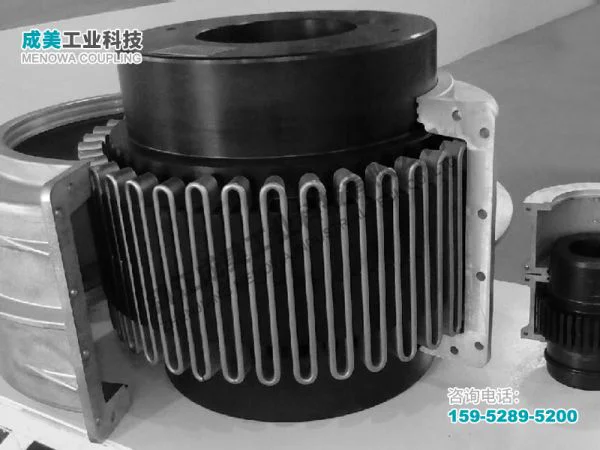
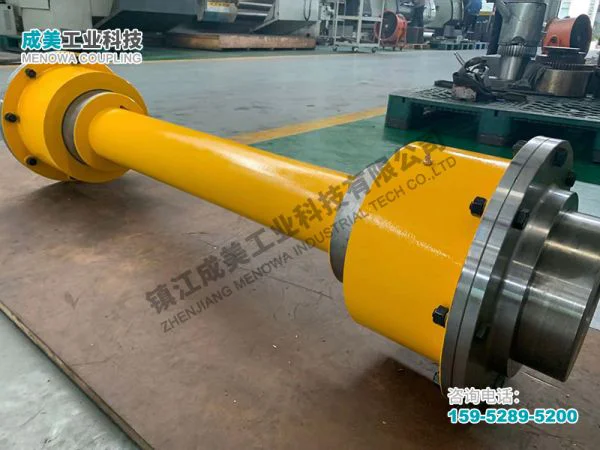
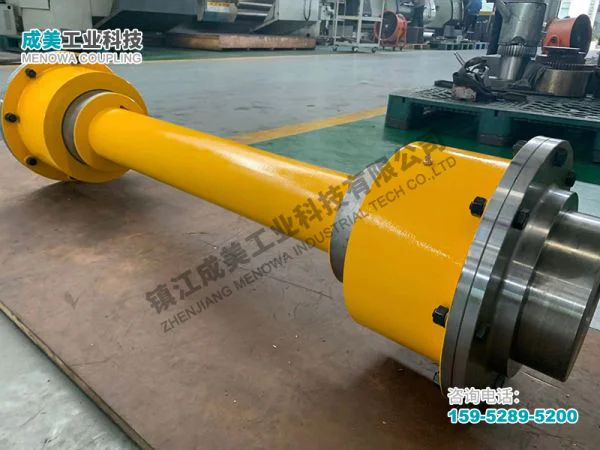
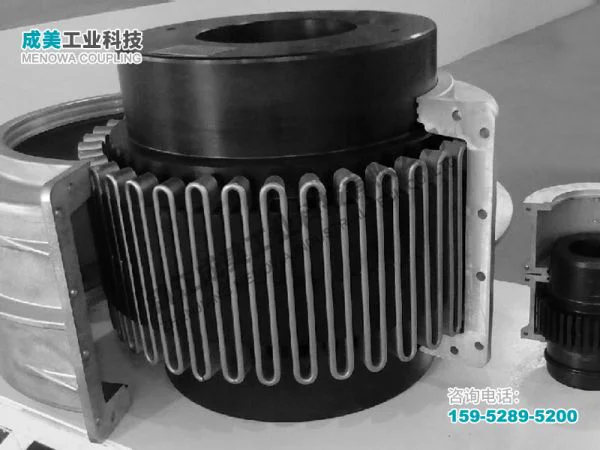
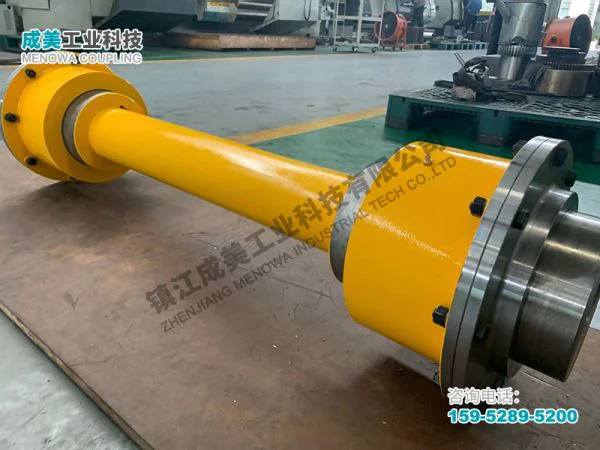
The basic structural composition of flexible grid coupling follows a mature mechanical design logic that integrates rigidity and flexibility, and each component has a clear division of labor and coordinated cooperation, jointly supporting the overall functional performance of the coupling. The main body of the coupling is composed of two symmetrical metal hubs and a flexible metal grid elastic component that connects the two hubs, and no additional complex auxiliary transmission structures or redundant connecting parts are added in the overall design, which makes the structural layout simple and compact, and convenient for subsequent installation, disassembly and daily maintenance operations. The two hubs are respectively installed and fixed on the driving shaft and the driven shaft of the mechanical equipment through fastening connection methods, and the outer peripheral surface of each hub is processed with regularly arranged curved grooves according to professional mechanical processing standards. These grooves are designed with special curved profiles instead of simple straight grooves, and the flared structural form at the two ends of the grooves lays a good foundation for the flexible deformation and progressive contact of the subsequent grid components during operation. The flexible metal grid embedded in the grooves of the two hubs is the core functional component of the entire grid coupling, and is usually made of high-quality spring steel materials with excellent mechanical properties after special forging, heat treatment and precision processing technology. This grid structure presents a continuous spring-like integral structure, with good structural elasticity and mechanical fatigue resistance, and can undergo reversible elastic deformation under the action of external load and displacement without permanent structural damage or performance attenuation. In the assembled state, the grid spans the grooves of the two hubs, forming a resilient connecting bridge between the driving hub and the driven hub. The torque generated by the driving equipment is transmitted to the driven equipment through the mutual contact and force transmission between the hub grooves and the grid structure. The ingenious cooperation between the rigid hub and the flexible grid makes the coupling have both the structural rigidity required for basic torque transmission and the elastic flexibility required for buffering and compensation, forming a unique mechanical transmission characteristic that other types of couplings do not possess.
The internal working mechanism of flexible grid coupling is based on the elastic deformation characteristics of metal materials and the progressive contact force transmission principle between structural components, and realizes the integration of multiple functions such as torque transmission, vibration damping, shock absorption and misalignment compensation in the power transmission process. When the mechanical equipment starts to operate stably and runs under conventional rated load conditions, the driving shaft drives the active hub to rotate synchronously, and the curved groove inner wall of the active hub closely contacts the local area of the flexible grid, and transmits rotational torque to the grid through static friction and structural extrusion. The grid then transmits the torque to the driven hub connected to the driven shaft through the contact force between the other side and the driven hub groove, thus realizing the synchronous rotation and stable power transmission between the driving shaft and the driven shaft. In this conventional operating state, the deformation degree of the flexible grid is small and uniform, the force on each part of the structure is balanced, and the power transmission process is smooth and efficient with no obvious vibration or impact fluctuation. When the equipment is subjected to sudden load changes, frequent start-stop operations or instantaneous impact loads generated by external working condition fluctuations, the flexible grid will rely on its own spring-like elastic structure to undergo mild and gradual elastic deformation. This deformation process can effectively disperse and absorb the instantaneous impact energy generated by load fluctuations, and release the accumulated impact energy slowly in the continuous operation process, avoiding the instantaneous peak load directly acting on the driving and driven shafts and core supporting components. Unlike the sudden force transfer mode of rigid couplings, the progressive contact design between the curved hub grooves and the grid enables the contact area between the grid and the hub to increase synchronously with the gradual increase of the transmission load. This progressive contact force transmission mode ensures that the stress on the structural components is always kept within a reasonable and stable range, eliminates local stress concentration problems, and greatly reduces the impact damage of instantaneous load changes on the mechanical shafting system.
In terms of misalignment compensation performance, snake coupling can effectively adapt to three common forms of shaft misalignment in actual industrial operation, including angular misalignment, parallel radial misalignment and axial displacement misalignment, which are the three most common abnormal installation and operation deviations in mechanical shaft connection. Angular misalignment refers to the phenomenon that there is a certain included angle between the central axes of the driving shaft and the driven shaft, which is mostly caused by installation angle deviation or slight deformation of the mechanical frame structure during long-term operation. Parallel radial misalignment means that the two shafts are kept parallel in posture but have a certain offset in the radial position, which is usually related to foundation settlement of mechanical equipment, wear of installation base and long-term operational vibration displacement. Axial displacement misalignment is the axial telescopic displacement between the two shafts caused by thermal expansion and contraction of metal components during equipment operation and alternating cold and heat changes in the external environment. For all these common misalignment states, the flexible grid inside the coupling can rely on its own elastic deformation and the flexible fit gap between the grid and the hub grooves to carry out effective adaptive compensation without generating additional restraining stress on the shafting system. When misalignment occurs, the grid will produce corresponding gentle bending and telescopic deformation according to the actual displacement deviation, ensuring that the torque transmission between the two shafts is still carried out smoothly without additional friction and extrusion force caused by misalignment. This good misalignment compensation capability avoids the additional mechanical fatigue and wear of bearings, shaft sleeves and seals caused by long-term misalignment operation, effectively reduces the failure rate of wearing parts of the equipment, and prolongs the overall service life of the mechanical transmission system.
Compared with other commonly used flexible coupling types in the industrial field, flexible grid coupling shows unique comprehensive performance advantages in terms of load adaptation range, environmental adaptability, vibration reduction effect and long-term operational stability, and has formed a clear differentiated application positioning. Gear couplings, which are also widely used in heavy-duty torque transmission scenarios, mainly rely on the meshing of internal and external gear teeth for torque transmission. Although they can bear large torque load, their overall structural rigidity is too high, the vibration and shock absorption effect is weak, and they cannot effectively buffer instantaneous impact loads. In addition, the gear meshing part is prone to wear and tooth surface ablation after long-term operation, requiring regular lubrication maintenance and frequent inspection of gear meshing wear status. Diaphragm couplings and disc couplings have good high-speed operation performance and certain misalignment compensation capability, but their structural design is relatively complex, the manufacturing and processing requirements are high, and the buffering and absorption effect on strong shock loads is insufficient, so they are more suitable for high-speed, stable and low-impact transmission working conditions, and not suitable for working scenarios with frequent load fluctuations and obvious impact vibration. Elastic sleeve pin couplings and other non-metallic elastic element couplings rely on rubber or plastic elastic parts for buffering and transmission, which have good vibration reduction effect, but are limited by the material characteristics of non-metallic materials, poor high temperature resistance, easy aging and deformation after long-term use, low torque bearing capacity, and not suitable for medium and heavy-duty industrial production environments with high load and harsh working conditions. In contrast, flexible grid coupling uses all-metal structural design, with excellent high temperature resistance, low temperature resistance and aging resistance, and can work stably in harsh working environments such as high temperature, low temperature, dust and humidity for a long time. Its vibration reduction and shock absorption performance can reduce the vibration amplitude of the transmission system by a large margin, effectively lowering the noise generated by mechanical operation, and creating a more stable and low-noise operating environment for mechanical equipment. At the same time, the all-metal grid structure has strong fatigue resistance and load-bearing capacity, which can meet the torque transmission needs of medium and heavy-duty equipment, and balance the performance advantages of shock absorption, compensation and high load resistance that cannot be achieved by other single-type couplings.
The excellent comprehensive performance of snake spring coupling makes it widely applicable to various core industrial production fields involving mechanical power transmission, covering traditional heavy industry, modern manufacturing, logistics and transportation equipment and many other downstream industrial scenarios. In the field of metallurgical and mining machinery, various mining crushing equipment, ore conveying machinery and metallurgical rolling equipment often need to bear heavy starting load, continuous impact load and harsh on-site working environment with large dust and high temperature. The power transmission shaft connection of these equipments puts forward high requirements on the load-bearing capacity, shock resistance and environmental adaptability of couplings. Flexible grid coupling can stably transmit large torque, buffer the strong impact generated by equipment start-stop and material crushing operation, compensate the shaft misalignment caused by long-term vibration and foundation changes, and effectively protect the key transmission components of mining and metallurgical equipment from impact damage, ensuring the continuous and stable operation of production machinery. In the field of building materials and cement production machinery, rotary kilns, ball mills and mixing equipment have the characteristics of long-term continuous operation, large operational vibration and frequent load changes. The application of grid spring coupling can effectively reduce the vibration and shock in the power transmission process, reduce the wear of bearings and sealing parts of the equipment, extend the maintenance cycle of the equipment, and avoid production interruption caused by frequent equipment failures. In the field of general industrial manufacturing, fans, water pumps, compressors and other common auxiliary mechanical equipment are widely used in various factory production lines. Such equipment runs for a long time every day, and is prone to shaft misalignment and operational vibration after long-term operation. The use of flexible grid spring coupling can ensure the stable operation of such general machinery, reduce operational noise and vibration, improve the overall operating efficiency of the equipment, and reduce the daily operational energy consumption and maintenance cost.
In the field of logistics and port handling machinery, various conveyor equipment, loading and unloading machinery and transportation transmission equipment often face frequent start-stop operations and unstable load changes due to the needs of production and handling operations. The instantaneous impact load generated by frequent start and stop has a great impact on the shafting transmission system of the equipment. Flexible grid coupling can well absorb the impact energy generated by frequent start-stop and load switching, avoid fatigue damage of transmission shafts and connecting parts caused by frequent impact, and ensure the safety and efficiency of logistics handling operations. In addition, in the field of power generation and energy equipment, some medium-speed and heavy-duty power transmission auxiliary equipment also needs reliable flexible connecting components to stabilize the power transmission process. The misalignment compensation and vibration damping performance of flexible grid coupling can effectively optimize the operating state of power transmission equipment, reduce the mechanical loss in the energy transmission process, and improve the overall energy utilization efficiency of the equipment. With the continuous upgrading of modern industrial production automation and the continuous improvement of equipment operation stability requirements, the application scope of flexible grid coupling is also expanding day by day, and it has become a key basic component for optimizing the operating performance of mechanical transmission systems in various industries.
The installation, commissioning and daily maintenance management of flexible grid coupling are important links to ensure its long-term stable operation and give full play to its comprehensive performance. Although the overall structural design of the coupling is simple and the installation operation process is not complicated, standardized installation and accurate commissioning work directly affect the subsequent operating effect and service life of the coupling and even the entire mechanical equipment. Before the formal installation operation, it is necessary to carefully check the processing quality and structural integrity of the two hubs and the flexible grid components, confirm that there are no cracks, deformation, wear and other defects on the surface and inside of the metal parts, and clean up the sundries, rust and oil stains in the hub grooves and the surface of the grid to ensure that the contact surfaces of all force transmission parts are clean and smooth, avoiding the impact of impurities on the contact force transmission effect and causing local stress concentration. During the installation process, the two hubs need to be accurately installed and fixed on the driving shaft and the driven shaft respectively, and the coaxiality and horizontal position of the two shafts are adjusted as much as possible to reduce the initial installation misalignment within a reasonable allowable range. Although the coupling has good misalignment compensation capability, excessive initial installation deviation will increase the long-term deformation and operation load of the flexible grid, accelerate the fatigue wear of the grid structure, and reduce the service life of the coupling. After the hub is fixed, the flexible grid is smoothly embedded into the corresponding grooves of the two hubs in sequence, ensuring that the grid is fully fitted with the groove curve without distortion, extrusion and dislocation installation. After the installation is completed, simple manual rotation and no-load test operation are required to check whether the rotation of the coupling is smooth, whether there is abnormal jamming, friction and abnormal noise, and confirm that all components are in normal matching working state.
In the daily operation and maintenance stage, the maintenance work of flexible grid coupling is relatively simple and convenient, without complex maintenance procedures and high maintenance costs, which is also one of its important practical advantages in industrial application. In the daily production and operation process, regular visual inspection and operational state observation are the main maintenance methods. It is necessary to regularly check whether the flexible grid has obvious deformation, fatigue cracks, surface wear and structural loosening, and observe whether the coupling has abnormal vibration, abnormal noise and temperature rise during equipment operation. If any abnormal phenomenon is found, it is necessary to stop the machine for inspection in time, find out the cause of the abnormality and deal with it accordingly, so as to avoid small faults evolving into large equipment failures. For the coupling working in high-load and harsh working conditions, regular disassembly and inspection can be carried out according to the actual operating time and working condition intensity, the wear degree of the grid and the hub groove contact surface can be checked, and the aging and severely worn grid components can be replaced in a timely manner to ensure the continuous and stable performance of the coupling. It is worth noting that during the long-term operation, the friction and wear between the grid and the hub groove will generate tiny metal wear debris. Regular cleaning of the internal fitting gap can effectively reduce the abrasive wear of the components and prolong the service life of the coupling. Compared with other complex transmission connecting components, the maintenance cycle of serpentine spring coupling is longer, the maintenance operation is simpler, and the replacement of vulnerable parts is more convenient, which can effectively reduce the manpower and material resources investment in equipment maintenance for industrial enterprises, and improve the overall operational efficiency of production and maintenance work.
With the continuous progress of industrial mechanical design technology and the continuous improvement of industrial production efficiency and equipment stability requirements, the design optimization and performance upgrading of flexible grid coupling are also constantly advancing with the development of the times. In recent years, with the innovation of metal material smelting and heat treatment processing technology, the comprehensive mechanical properties of the spring steel materials used to manufacture flexible grid couplings have been continuously improved. The optimized grid materials have higher mechanical fatigue resistance, stronger impact load resistance and better elastic deformation recovery performance, which can adapt to more severe working conditions and longer continuous operation time, and further extend the service life of the coupling. In terms of structural design optimization, through the finite element mechanical simulation analysis technology, the stress distribution and deformation state of the flexible grid and hub in various working states are accurately calculated and analyzed. The curve profile of the hub groove and the structural size of the grid are optimized and adjusted, so that the force distribution of the coupling in the torque transmission process is more uniform, the stress concentration phenomenon is further reduced, and the misalignment compensation range and vibration damping effect are further improved. At the same time, combined with the development trend of lightweight and compact design of modern mechanical equipment, the overall structural size of flexible grid coupling is continuously optimized on the premise of ensuring load-bearing performance, making it suitable for more mechanical equipment installation spaces with compact structure and limited installation position.
In the future development of modern industrial mechanical transmission systems, the core status and application value of flexible grid coupling will continue to be highlighted. As industrial production continues to develop in the direction of high efficiency, automation, stability and low energy consumption, all mechanical production equipment puts forward higher and higher requirements for the smoothness, safety and low failure rate of power transmission links. The traditional single-function coupling can no longer meet the comprehensive use needs of complex working conditions, and the flexible grid coupling with integrated multiple performance advantages will become the preferred connecting component for more mechanical transmission equipment. In the fields of new energy equipment, intelligent manufacturing machinery and modern logistics transportation equipment that are emerging in recent years, the diversified working condition requirements and high-precision operation standards also provide new development space for the performance optimization and application expansion of flexible grid coupling. Through continuous material innovation, structural optimization and process upgrading, flexible grid coupling will continue to improve its comprehensive performance, adapt to more diversified and complex industrial application scenarios, provide reliable basic guarantee for the stable operation of various mechanical transmission systems, and make a continuous contribution to the efficient and stable operation and long-term development of modern industrial production.
 WeChat
 WhatsApp