Elastomeric Coupling
In the intricate and interconnected ecosystem of modern mechanical engineering and industrial power transmission, the seamless and reliable transfer of rotational force and torque between adjacent rotating shafts stands as one of the most fundamental and indispensable operational requirements for all types of mechanical equipment and production machinery. Every mechanical system that relies on rotational motion to drive production processes, facilitate material handling, or support operational functions depends on stable shaft connection to maintain continuous and consistent power output, ensuring coordinated movement between driving components and driven components throughout the entire mechanical workflow. Among the various mechanical connection components developed and optimized for this core purpose, elastomeric couplings have emerged as a foundational and widely applied mechanical component, distinguished by their unique structural design, inherent elastic performance, and multifunctional comprehensive advantages that perfectly align with the complex and diverse operational demands of contemporary industrial production and mechanical operation scenarios. Unlike rigid connection components that focus solely on rigid shaft fixation and unyielding torque transmission without any adaptive deformation capacity, elastomeric couplings integrate flexible elastomer materials into their overall structural composition, combining basic mechanical connection functionality with elastic deformation characteristics, vibration absorption performance, and displacement compensation capabilities into a single integrated mechanical unit. This unique combination of structural rigidity for basic power transmission and material flexibility for adaptive operational adjustment makes elastomeric couplings an irreplaceable part of mechanical transmission systems, effectively solving many common operational problems that plague traditional rigid connection structures in long-term mechanical operation, including unavoidable shaft misalignment, mechanical vibration and resonance impact, instantaneous load shock fluctuation, and excessive component wear and fatigue aging caused by inconsistent shaft operation deviation.
To fully understand the practical value and working significance of elastomeric couplings in modern mechanical systems, it is essential to start with the basic operational realities of mechanical shaft operation in actual industrial working environments. In any mechanical equipment assembly process, no matter how precise the processing technology and rigorous the assembly operation are applied in the production and installation stage, it is practically impossible to achieve complete and absolute coaxial alignment between the driving shaft and the driven shaft in any two connected rotating mechanical parts. Minor deviations and subtle offsets between connected shafts are inevitable objective phenomena in mechanical assembly and subsequent long-term operation, stemming from multiple internal and external influencing factors throughout the entire service cycle of mechanical equipment. These influencing factors include tiny dimensional tolerances generated during component processing and manufacturing, subtle position deviations formed during manual or mechanical assembly and installation, slow structural deformation and slight foundation settlement of mechanical equipment bases after long-term fixed placement, gradual component wear and minor structural aging accumulated during continuous mechanical operation, as well as external environmental factors such as temperature change-induced thermal expansion and contraction of metal components and subtle vibration displacement caused by surrounding equipment operation. All these factors will lead to three main types of misalignment states between connected rotating shafts during the formal operation of mechanical equipment, including axial misalignment where the two shafts have relative position deviation in the linear direction of the shaft centerline, radial misalignment where the two shaft centerlines are parallel but have offset distances in the radial direction, and angular misalignment where the two shaft centerlines form a certain included angle and cannot maintain complete parallelism and collinearity. Without the adaptive adjustment function provided by elastomeric couplings, these unavoidable misalignment states will directly lead to severe rigid friction and continuous extrusion stress between connected shafts and matching mechanical components during equipment operation, resulting in intensified wear of shaft bearings, shaft sleeves, and other key supporting parts, increased operational friction resistance of the entire transmission system, obvious rise in equipment operating energy consumption, and even local stress concentration of mechanical components, eventually leading to premature fatigue damage, shortened overall service life of equipment, and unexpected shutdown and production interruption caused by mechanical failure.
The core working principle of elastomeric couplings fundamentally revolves around the excellent elastic deformation and recovery characteristics of internal elastomer materials, which serve as the key functional core connecting the two halves of the coupling and realizing torque transmission and adaptive misalignment compensation. The basic structural composition of all conventional elastomeric couplings follows a unified core design logic, mainly including two metal coupling hubs connected to the driving shaft and driven shaft respectively, and a central elastomer flexible component clamped and fixed between the two metal hubs. In the actual power transmission process, the rotational torque generated by the driving power component is first transmitted to the metal hub on the driving side, then evenly transferred to the intermediate elastomer flexible component through the structural matching between the metal hub and the elastomer, and finally transmitted to the metal hub on the driven side by the elastomer component, thereby realizing the continuous and stable transfer of rotational torque and rotational motion between the two independent shafts. The entire torque transmission process relies on the elastic deformation of the elastomer material under stress rather than rigid contact and hard extrusion between metal structures, which creates the core functional advantages of elastomeric couplings. When misalignment occurs between the driving shaft and the driven shaft during equipment operation, the intermediate elastomer component will produce corresponding mild elastic deformation following the relative displacement and angular deviation between the two shafts. This passive and adaptive elastic deformation does not generate additional rigid stress on the connected shafts and key mechanical components, but instead automatically offsets and compensates for various misalignment deviations between the shafts, ensuring that the power transmission process can still proceed smoothly and stably under the condition of non-absolute coaxial operation. At the same time, the elastomer material itself has good damping and buffering properties, which can effectively absorb and weaken instantaneous impact loads and torsional vibration generated during equipment start-up, shutdown, sudden load change, and alternating operation. These impact forces and vibration fluctuations, which are harmful to the stable operation of mechanical systems, are dissipated and attenuated through the repeated elastic deformation and recovery of the elastomer material, avoiding the continuous transmission of vibration and impact to the entire mechanical transmission system and subsequent production components, thus maintaining the overall operational stability and smoothness of mechanical equipment.
The comprehensive performance and practical application effect of elastomeric couplings are directly determined by the material characteristics of the intermediate elastomer flexible component, and the selection of appropriate elastomer materials has always been a key link in the design, production, and type selection application of elastomeric couplings for different working conditions. The commonly used elastomer materials for manufacturing flexible components of elastomeric couplings mainly include various synthetic rubber materials and polyurethane polymer materials, each with distinct performance characteristics and applicable working condition ranges to meet the differentiated operational requirements of different industrial scenarios. Synthetic rubber materials used in couplings have excellent natural elasticity, good low-temperature resistance, and outstanding comprehensive vibration absorption and buffering performance, showing strong adaptability to conventional normal temperature working environments and working conditions with frequent vibration and small and medium impact loads. The molecular structure of synthetic rubber can produce uniform and stable elastic deformation under long-term cyclic stress, with good fatigue resistance in conventional operating environments, and can maintain stable elastic performance after long-term repeated deformation and recovery, ensuring the long-term stable misalignment compensation and vibration reduction function of couplings. Polyurethane elastomer materials, by contrast, have higher structural strength, better wear resistance, excellent oil resistance, and chemical corrosion resistance, as well as stronger bearing capacity for large torque and heavy load operation conditions. Polyurethane materials have higher hardness adjustability, and can be processed into flexible components with different hardness levels according to actual torque transmission demands, meeting the application requirements of both light-load high-speed operation and heavy-load low-speed operation scenarios. In addition, polyurethane elastomers have better aging resistance and high-temperature resistance compared with ordinary synthetic rubber, and can maintain stable structural performance and elastic deformation capacity in working environments with slightly higher ambient temperature or long-term continuous uninterrupted operation, avoiding rapid performance attenuation and structural aging damage of flexible components caused by harsh environmental factors. In the actual production and manufacturing process, mechanical engineers will adjust the material formula, hardness parameters, and structural thickness of elastomer flexible components according to the actual operating torque, rotating speed, working environment temperature, misalignment degree, and load fluctuation frequency of mechanical equipment, so as to ensure that the selected elastomer material can balance the three core performances of elastic deformation compensation, vibration damping and buffering, and long-term structural durability, avoiding the problem of insufficient flexibility leading to poor compensation effect or excessive softness leading to insufficient torque transmission stability.
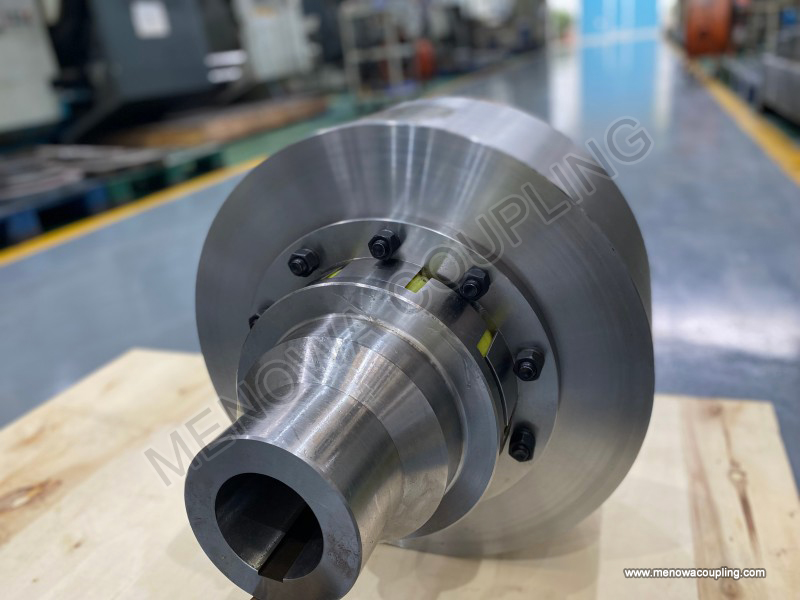
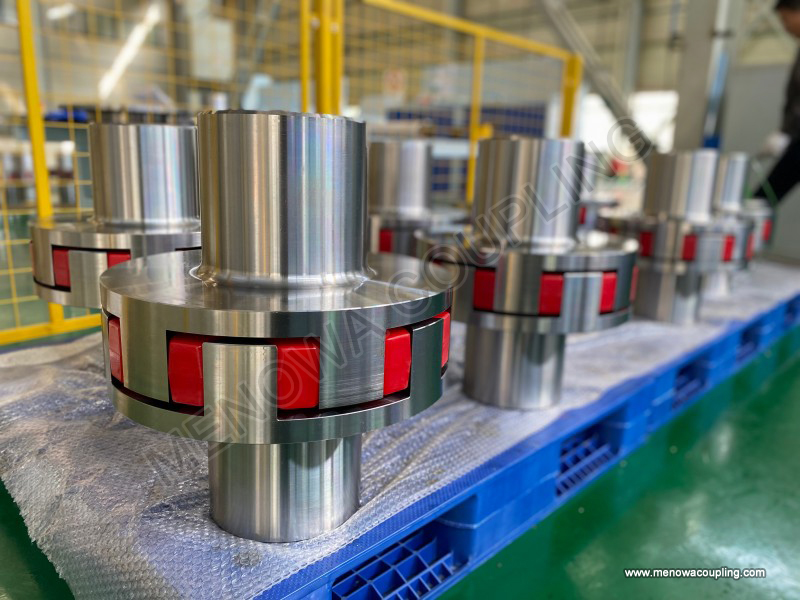
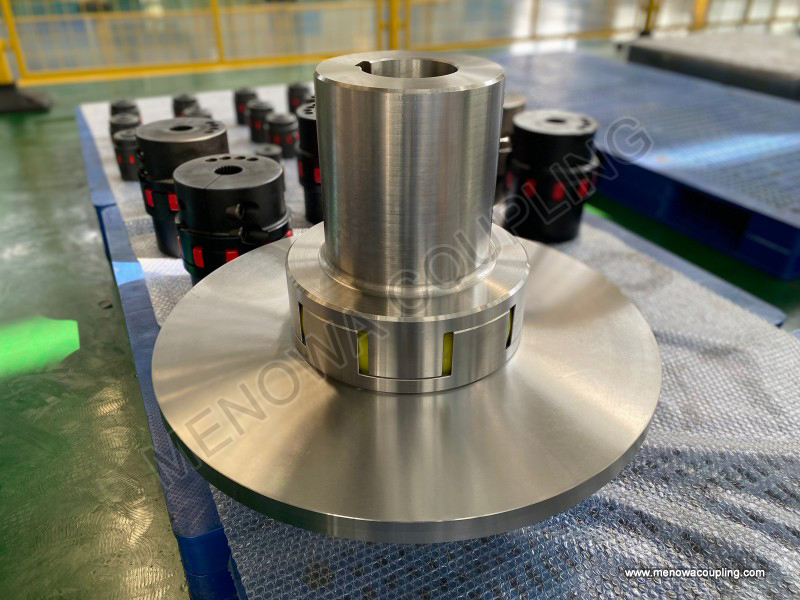
Elastomeric couplings have derived a variety of mature and optimized structural forms after long-term engineering practice and continuous technical iteration, and different structural designs correspond to different misalignment compensation capabilities, torque transmission ranges, rotating speed adaptability, and installation and maintenance characteristics, covering almost all conventional and special power transmission connection demands in the industrial mechanical field. The most common structural type of elastomeric couplings in industrial applications is the jaw type elastomeric coupling, which features a compact and simple overall structure, small radial occupied space, light overall weight, and low moment of inertia during operation. This structural design makes jaw type elastomeric couplings very suitable for medium and high-speed rotating operation scenarios with limited installation space and high requirements for operational response sensitivity. The internal structure of jaw type couplings is composed of two metal hubs with symmetrical jaw structures and an integral plum-blossom-shaped elastomer flexible component clamped between the jaws. The torque transmission is realized by the contact extrusion between the metal jaws and the elastomer plum-blossom pad, and the elastic gap between the jaws and the flexible component can well adapt to small and medium axial, radial, and angular misalignment. The operation process is stable and reliable, the vibration and noise reduction effect is obvious, and the installation and disassembly operation is very convenient without the need for complex professional tools and complicated disassembly steps, bringing great convenience to daily equipment maintenance and component replacement work. Another widely used classic structural form is the tyre type elastomeric coupling, which adopts a tyre-shaped integral elastomer structure as the core flexible component, connected and fixed with the two side metal flanges through bolt fastening. The most prominent advantage of tyre type elastomeric couplings lies in their extremely strong comprehensive misalignment compensation capability, especially excellent adaptive compensation effect for angular misalignment, far exceeding that of many other types of coupling structures. The special tyre-shaped curved structure of the elastomer component can produce large-range gentle elastic deformation under stress, which can cope with large shaft deviation caused by harsh working conditions and long-term equipment operation deformation, and has outstanding vibration absorption and impact resistance performance. This type of coupling is mostly suitable for heavy-load operation equipment and working conditions with severe working environments, such as mining crushing machinery, lifting and handling equipment, and heavy industrial production machinery, which are often accompanied by frequent impact loads and large operational vibration.
In addition to the two mainstream structural types mentioned above, there are many other differentiated structural designs of elastomeric couplings developed for special working condition requirements, each with targeted performance advantages and application positioning. Sleeve type elastomeric couplings adopt an integral cylindrical elastomer sleeve structure, with simple overall structure, low production and processing cost, and convenient installation and use, mainly suitable for light-load, low-speed, and conventional simple mechanical transmission occasions with low misalignment and vibration requirements. Multi-plate elastomeric couplings combine multiple layers of elastomer flexible plates with metal connecting plates, with higher torsional stiffness and more stable torque transmission performance, suitable for mechanical equipment that requires both certain vibration reduction effect and high-precision torque transmission synchronization. Split type elastomeric couplings adopt a split structural design for flexible components, allowing radial installation and disassembly without the need to move the connected shafts and related equipment during maintenance and replacement, greatly improving the efficiency of equipment maintenance and reducing the downtime loss caused by coupling replacement. Regardless of the specific structural form, all elastomeric couplings follow the same core design concept of relying on elastomer elastic deformation to realize integration of power transmission, misalignment compensation, and vibration damping, and the difference in structure only adjusts and optimizes the performance proportion of each function to adapt to different industrial application scenarios and mechanical operation needs.
In the actual operation and application process of mechanical equipment, the functional value of elastomeric couplings is reflected in many key links of equipment operation, maintenance, and service life management, bringing multiple practical benefits to industrial production and mechanical operation management. The most direct and core function is to protect key mechanical components and reduce equipment wear and failure probability. By compensating for various unavoidable misalignments between shafts and buffering impact and vibration during operation, elastomeric couplings effectively avoid excessive local stress, rigid friction, and alternating fatigue load on key components such as bearings, shafts, gears, and reducers in the transmission system. These key mechanical components are often the core precision parts of mechanical equipment with high replacement cost and complex maintenance process. Long-term operation under rigid stress and vibration impact will easily lead to precision damage, structural wear, and functional failure, while the flexible protection effect of elastomeric couplings can greatly reduce the wear degree of these precision components, reduce the frequency of mechanical failure, and extend the overall service life of the entire mechanical equipment and transmission system. On the basis of reducing component wear, elastomeric couplings also effectively reduce the daily maintenance workload and later operation and maintenance investment of mechanical equipment. Mechanical equipment without effective vibration reduction and misalignment compensation components often requires frequent regular inspection, component lubrication, and wear replacement work, and unexpected failure shutdown caused by component wear will also bring additional production loss and maintenance cost. After applying matching elastomeric couplings, the operation stability of equipment is significantly improved, the wear speed of key parts is slowed down, the cycle of regular maintenance and component replacement is greatly prolonged, the daily maintenance work pressure of equipment management personnel is reduced, and the comprehensive operation cost of industrial production and mechanical equipment management is effectively controlled.
Another important application value of elastomeric couplings is to optimize the operational stability and working performance of mechanical equipment, improving the overall operation efficiency and production continuity of industrial production lines. Mechanical vibration and impact load generated during equipment operation will not only cause component wear and damage, but also affect the operational precision of mechanical equipment and the stability of production process. For production machinery and processing equipment that require high operation precision and stable production rhythm, excessive mechanical vibration will lead to unstable equipment operation, reduced processing accuracy, inconsistent product processing quality, and even abnormal noise and equipment jitter affecting the normal progress of production work. The excellent vibration damping and buffering performance of elastomeric couplings can effectively weaken and eliminate harmful vibration and impact in the transmission process, make the rotational speed and torque transmission of the transmission system more uniform and stable, ensure that the mechanical equipment maintains a smooth operating state in all working stages such as start-up, stable operation, and load change, stabilize the production process and product processing quality, and avoid production quality problems and production efficiency reduction caused by equipment vibration and jitter. At the same time, the stable power transmission state can also reduce the extra energy loss caused by friction resistance and vibration energy dissipation in the mechanical operation process, making the power output of power components more effectively applied to actual production and operation work, achieving the effect of optimizing energy utilization efficiency and reducing unnecessary energy consumption in industrial production.
The correct type selection, standardized installation, and scientific daily maintenance are essential prerequisites to ensure that elastomeric couplings give full play to their comprehensive performance and maintain long-term stable and reliable operation in mechanical systems. In the type selection stage of elastomeric couplings, it is necessary to comprehensively consider multiple key operational parameters of mechanical equipment, including the rated transmission torque of the equipment, actual operating rotating speed, axial, radial and angular misalignment range generated during long-term operation, ambient temperature and environmental medium conditions of the working site, load fluctuation frequency and impact degree in the operation process, and installation space and assembly structure limitations of the equipment. Only by comprehensively matching these parameters with the performance parameters, structural characteristics, and material adaptability of different elastomeric couplings can the most suitable coupling product be selected, avoiding performance mismatch problems such as insufficient torque transmission capacity, poor misalignment compensation effect, or material aging and damage caused by environmental inadaptability due to blind type selection. In the installation process, it is necessary to strictly follow the standardized assembly process requirements, ensure that the two metal hubs are firmly and fixedly connected with the driving shaft and driven shaft respectively, the clamping and matching between the elastomer flexible component and the metal hubs is tight and uniform, and the installation position and coaxiality are adjusted to the optimal state within the allowable misalignment range, avoiding installation position deviation and fixed instability affecting the normal use effect and service life of the coupling.
Daily maintenance and regular inspection work of elastomeric couplings is relatively simple and convenient compared with other complex mechanical transmission components, which is also one of their important application advantages. The daily maintenance work mainly includes regular visual inspection of the appearance state of the elastomer flexible component, checking whether there are obvious cracks, deformation, aging hardening, wear and damage, or permanent deformation caused by long-term stress extrusion. At the same time, it is necessary to regularly check the fastening state of the connecting bolts and the matching tightness between the hubs and the shafts, ensuring that there is no looseness, displacement or abnormal gap in the installation and connection parts. For elastomeric couplings operating in harsh working environments such as high temperature, humidity, dust, and chemical corrosion, the inspection cycle can be appropriately shortened, and regular cleaning of dust and dirt on the coupling surface can be carried out to avoid long-term erosion of the elastomer material by harmful environmental substances accelerating aging and performance attenuation. When abnormal phenomena such as obvious vibration increase, abnormal operation noise, unstable torque transmission, and equipment jitter are found during equipment operation, the coupling state should be inspected in a timely manner. If the elastomer component is found to be seriously aged, damaged or failed, it should be replaced in a timely manner to avoid mechanical failure and production safety problems caused by continued use of faulty components. Scientific and standardized maintenance work can not only ensure the stable performance of elastomeric couplings, but also effectively extend their service cycle, reduce the frequency of component replacement, and give full play to the long-term economic and practical value of the couplings.
With the continuous progress of modern industrial manufacturing technology and the continuous upgrading and iteration of mechanical equipment towards high efficiency, stability, energy saving and long service life, the application scope of elastomeric couplings in various industrial fields is constantly expanding, and the technical performance requirements for elastomeric couplings are also continuously improving. In the field of industrial manufacturing and production line equipment, elastomeric couplings are widely used in various conveyor transmission equipment, processing machinery, automated production equipment, and power transmission supporting facilities, providing stable power transmission and vibration protection for automated production lines, ensuring the continuity and stability of production work. In the field of construction machinery and mining equipment, various heavy-duty elastomeric couplings are applied to crushing machinery, excavator supporting equipment, lifting machinery, and mining transportation equipment, adapting to harsh working environments and heavy impact load operation conditions, protecting heavy-duty mechanical equipment from vibration and misalignment damage. In the field of fan, water pump and general power transmission equipment, elastomeric couplings provide efficient and low-noise power transmission connection for various rotating fluid machinery, reducing equipment operation vibration and noise pollution, and improving the overall operating environment and equipment stability. In the field of precision mechanical transmission and light industrial equipment, small and compact elastomeric couplings are used in precision transmission machinery and light processing equipment, ensuring both precise power transmission and micro vibration reduction, and meeting the high-precision operation requirements of precision mechanical equipment.
Looking at the overall development and application process of elastomeric couplings, although this type of mechanical component has a simple and basic structural form and working principle, it undertakes an important basic guarantee role that cannot be replaced by other mechanical components in the entire mechanical power transmission system. From the most basic torque transmission function to the core comprehensive functions of misalignment compensation, vibration damping and buffering, component protection, and operation stability optimization, elastomeric couplings run through the entire life cycle of mechanical equipment operation, maintenance and management, and are important basic components related to the operational efficiency, production stability, service life and comprehensive operation cost of mechanical equipment. With the continuous development of new elastomer materials, optimized structural design technology and refined mechanical application management concepts, the performance of elastomeric couplings will continue to be improved and optimized, the adaptability to various harsh working conditions and high-precision operation scenarios will be further enhanced, and the application value and development potential in modern mechanical engineering and industrial production fields will become more prominent. All mechanical design engineers, equipment management personnel and industrial production practitioners need to fully understand the working principle, performance characteristics and application management key points of elastomeric couplings, attach importance to the reasonable selection, standardized installation and scientific maintenance of couplings, give full play to the basic protection and optimization role of elastomeric couplings in mechanical transmission systems, and lay a solid and reliable foundation for the stable, efficient and long-term safe operation of various modern mechanical equipment and industrial production systems.
https://www.menowacoupling.com/industrial-coupling/elastomeric-coupling.html
 WeChat
 WhatsApp