Crown Gear Coupling
In the intricate and interconnected ecosystem of modern mechanical power transmission systems, the stable and efficient transfer of rotational force and torque between interconnected rotating shafts stands as a foundational requirement for the normal operation of all types of industrial machinery and mechanical equipment. Every mechanical device that relies on rotational motion to complete production processing, material handling, power output and operational drive processes depends heavily on reliable connecting components that can bridge the connection between driving ends and driven ends, coordinate the synchronous operation of different mechanical units, and buffer and resolve various adverse mechanical stresses generated during long-term continuous operation. Among the numerous types of shaft connection components developed and optimized through decades of mechanical engineering iteration and practical industrial verification, crown gear coupling has gradually become a mainstream connecting component widely adopted in heavy-duty industrial production, high-speed mechanical operation and complex working condition mechanical transmission scenarios by virtue of its unique crown-shaped tooth profile design, reasonable internal structural layout, excellent torque transmission capacity and outstanding misalignment compensation performance. Unlike ordinary rigid coupling components that can only maintain fixed shaft connection and lack adaptive adjustment capability, and unlike flexible coupling parts that rely on elastic deformation of non-metallic materials to achieve buffering but have limited torque bearing range, crown gear coupling perfectly balances the dual core mechanical properties of structural rigidity and operational flexibility, realizing efficient and stable torque transmission while effectively coping with various inevitable shaft misalignment problems that occur in equipment installation, long-term operation and complex environmental changes, providing a solid and reliable basic guarantee for the continuous and efficient operation of mechanical transmission systems in various industrial fields.
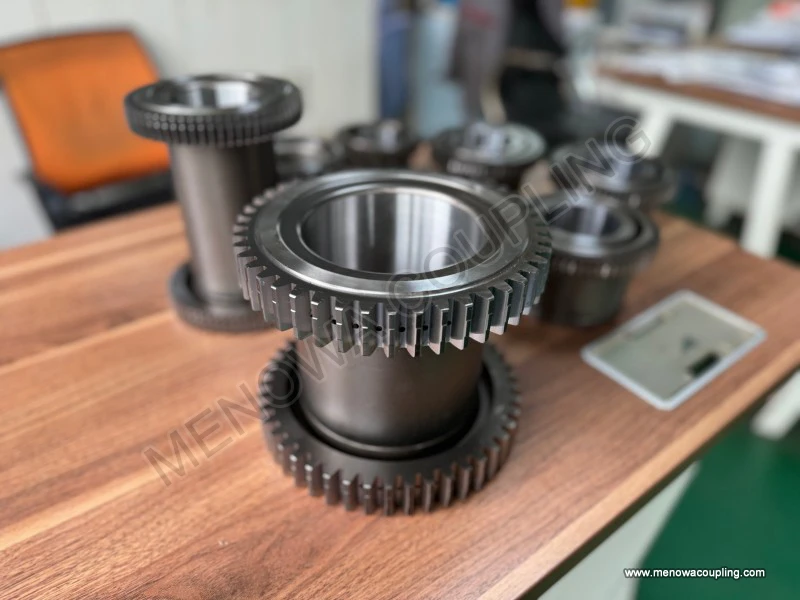
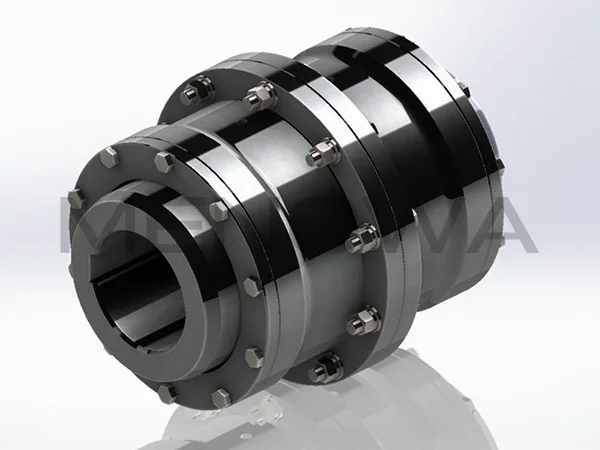
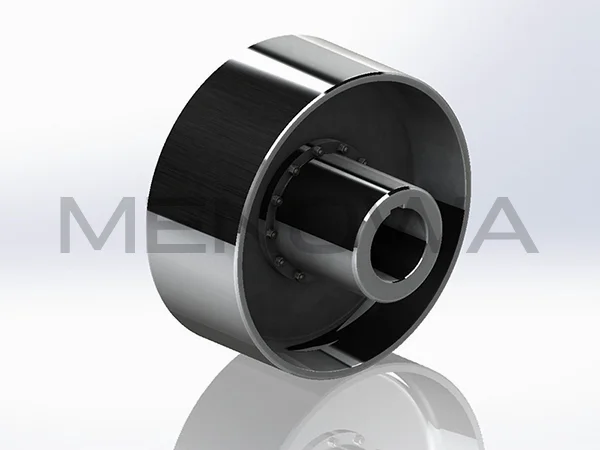
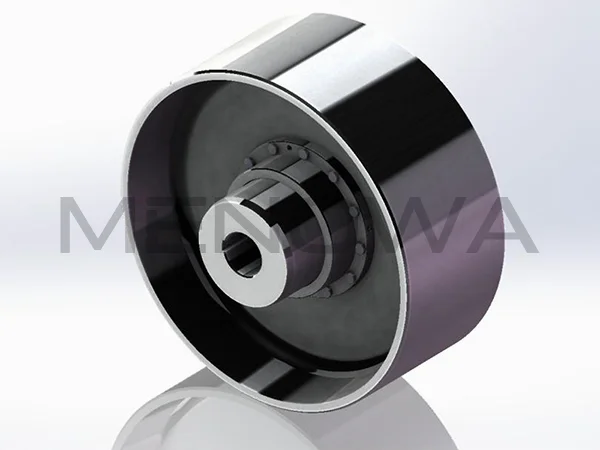
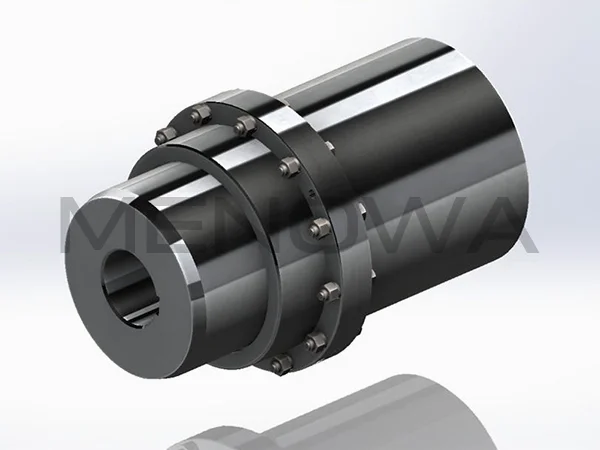
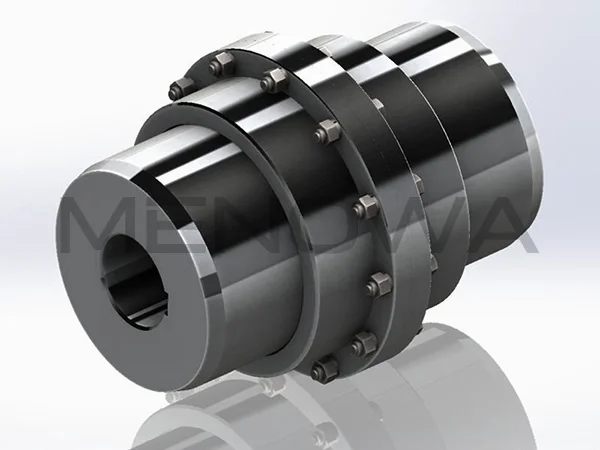
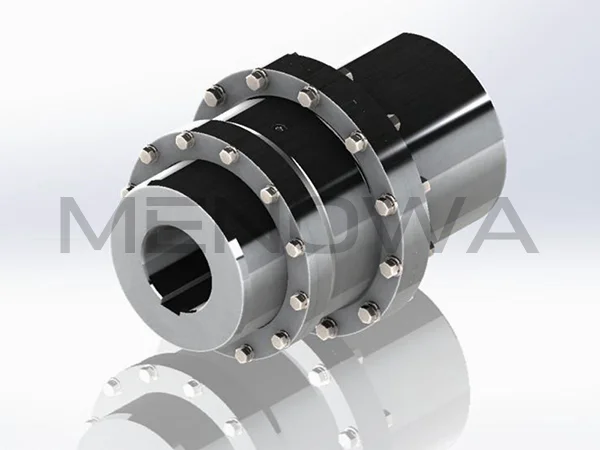
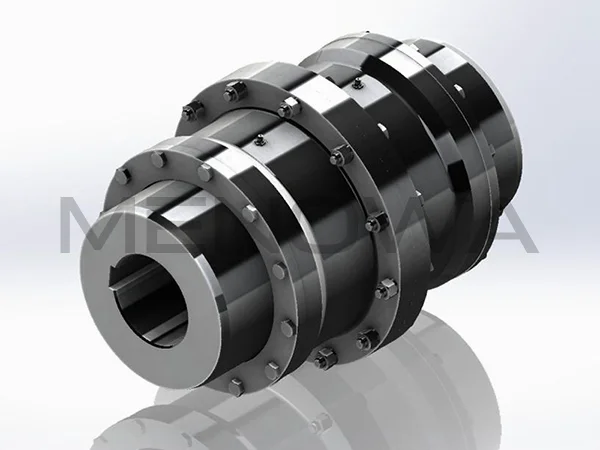
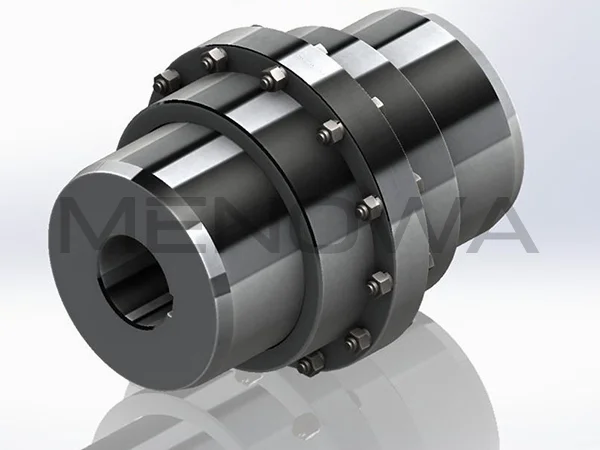
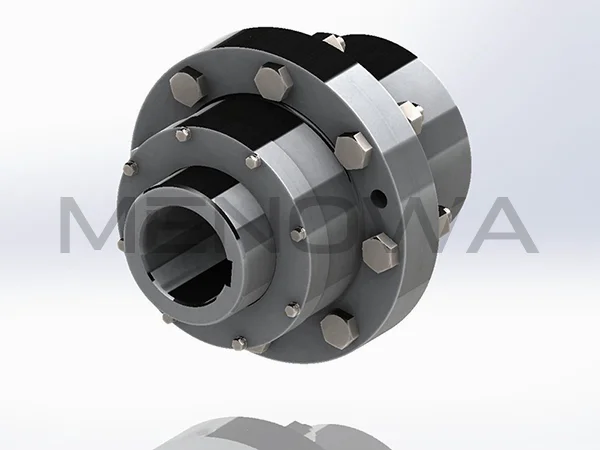
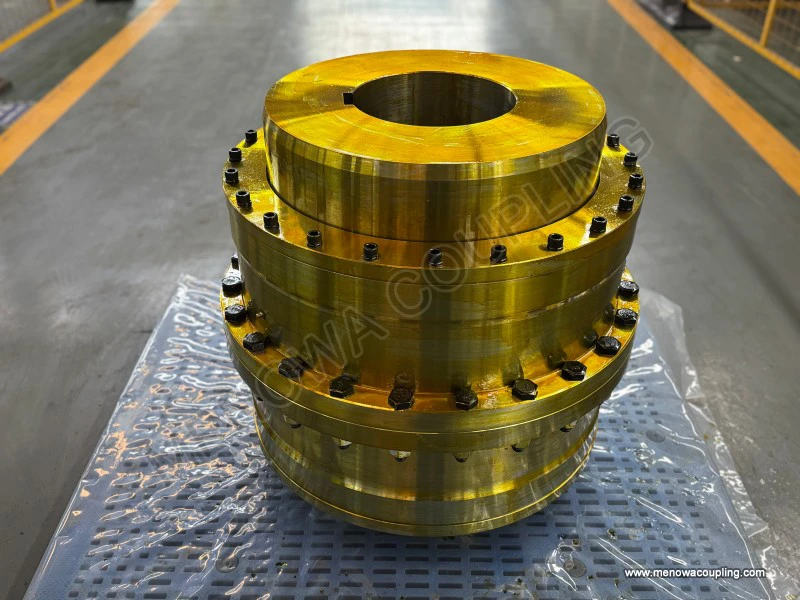
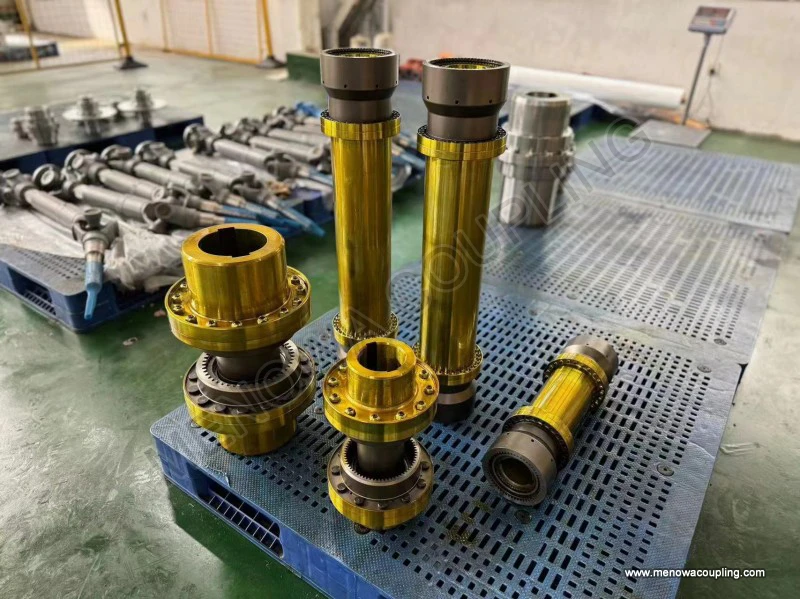
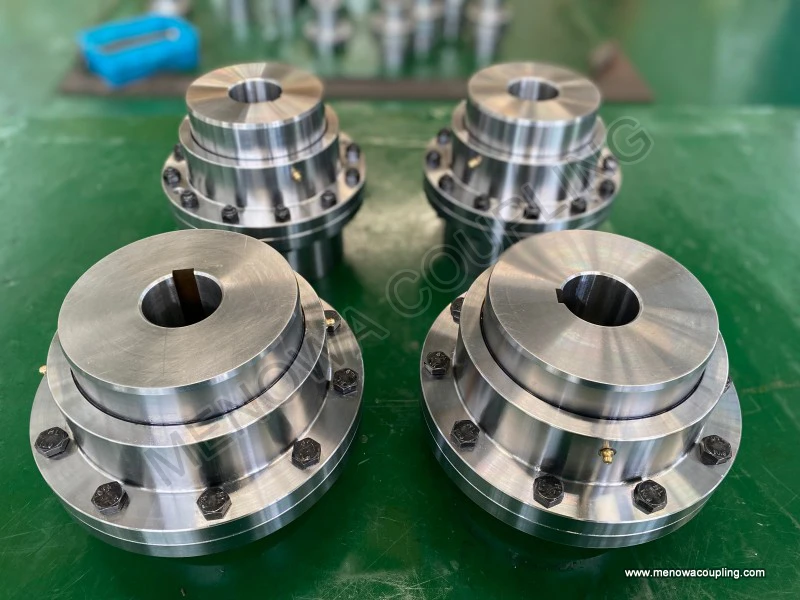
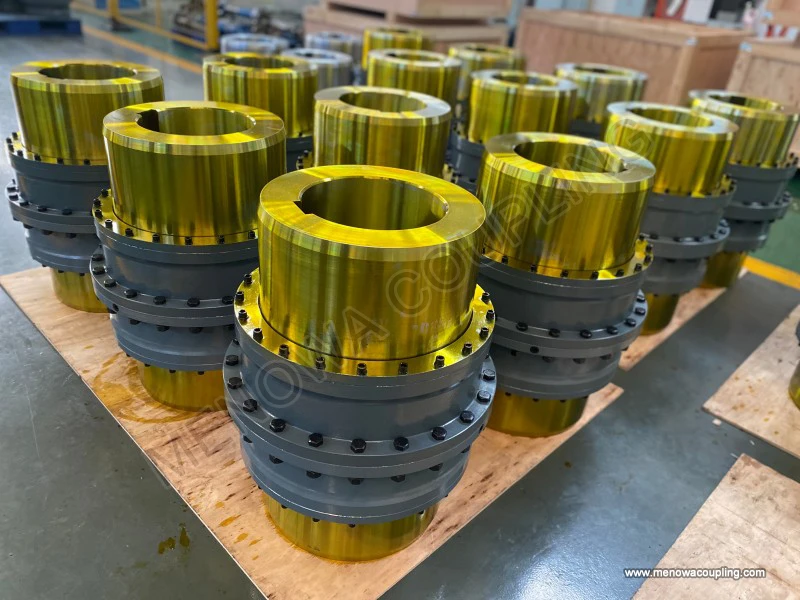
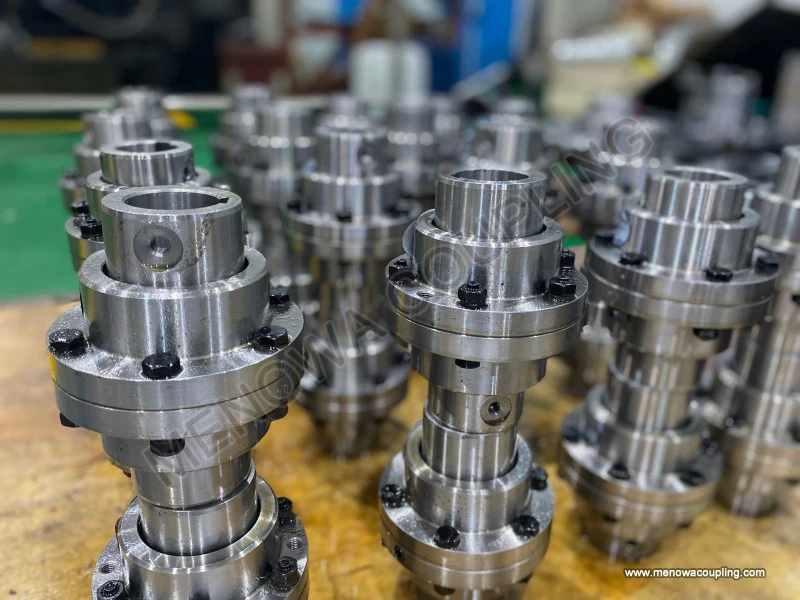
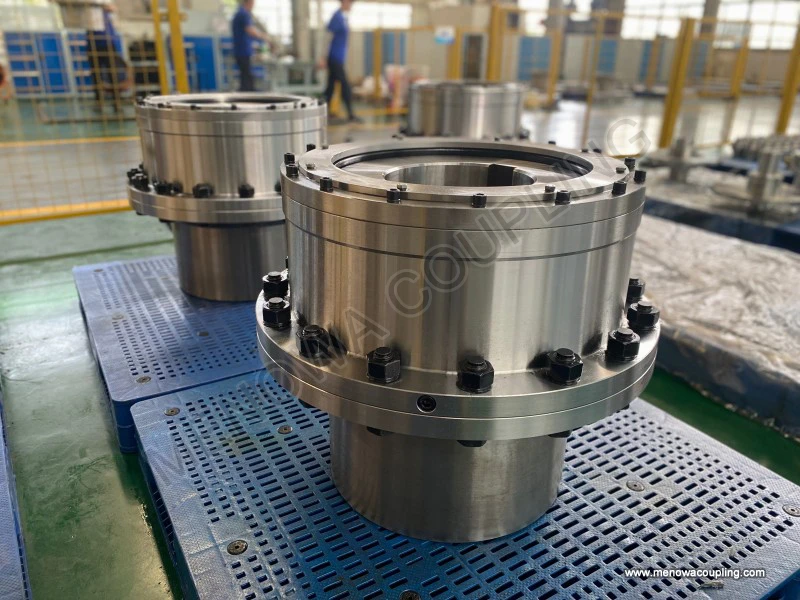
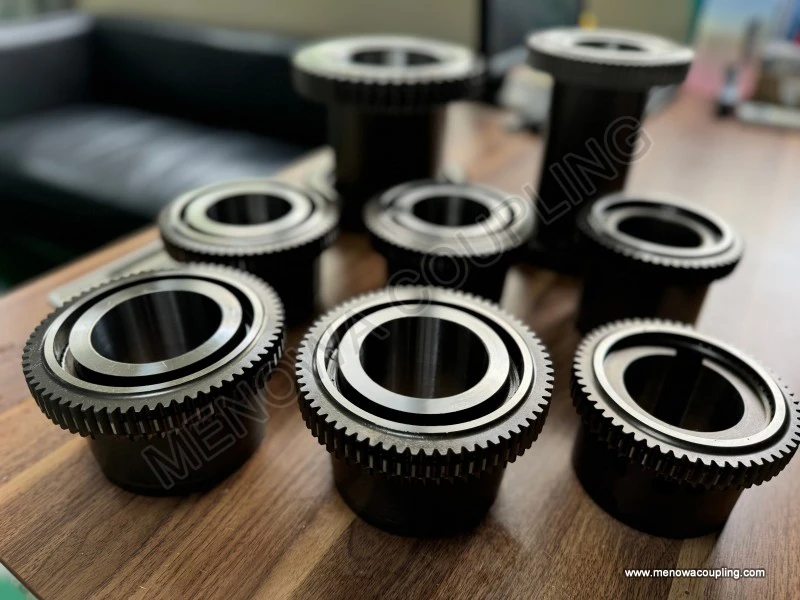
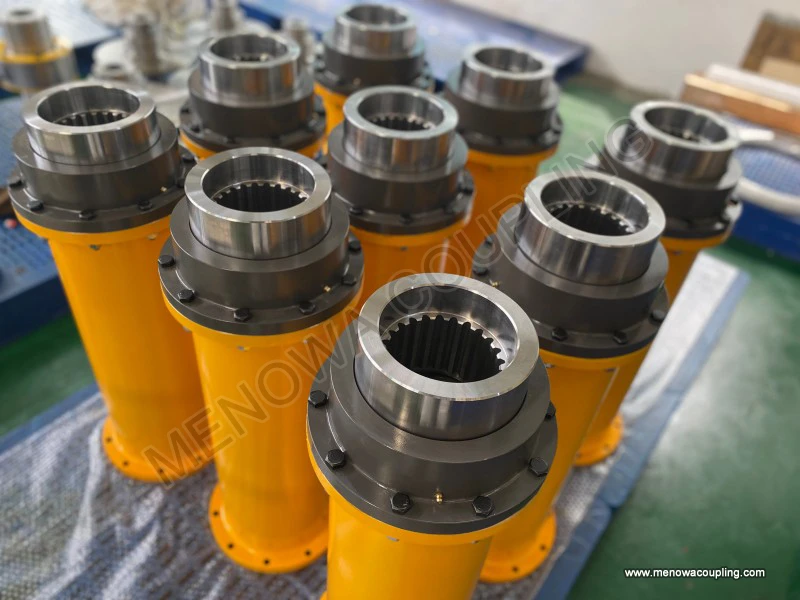
To fully understand the inherent advantages and practical application value of crown gear coupling in mechanical transmission work, it is first necessary to deeply analyze its basic structural composition and the unique design characteristics of each core component, as the scientific and reasonable structural layout is the fundamental premise for it to achieve excellent working performance and long service life in various complex working environments. The overall structure of crown gear coupling follows the mature design logic of gear meshing transmission, and the whole equipment is mainly composed of two symmetrical crowned tooth half-coupling hubs, two internal straight tooth flange rings, high-strength connecting fasteners and internal sealing and lubrication auxiliary components, each part with a clear division of labor and closely matched with each other to jointly complete the whole process of torque transmission and shaft misalignment compensation. The most distinctive core design of crown gear coupling different from ordinary straight tooth gear coupling lies in the special processing and shaping of the external teeth on the half-coupling hubs. The external teeth of the half-coupling hubs of crown gear coupling are processed into a smooth crown spherical curved structure along the longitudinal direction of the tooth body, and the spherical center of each crowned tooth is accurately located on the central axis of the connected rotating shaft, forming a natural curved transition structure from the tooth root to the tooth top and from the two ends of the tooth surface to the middle position. This special crowned tooth profile design fundamentally changes the contact form between meshing gear teeth during operation, converting the linear contact state between straight gear teeth in traditional gear couplings into a uniform surface contact state between crowned curved tooth surfaces, which greatly optimizes the stress distribution state of the gear teeth meshing area and avoids local stress concentration and excessive tooth surface wear caused by linear contact extrusion during torque transmission.
In addition to the unique crowned tooth profile design, the tooth clearance reserved between the crowned external teeth and the internal straight teeth of the matching flange ring in crown gear coupling is also scientifically and reasonably optimized and adjusted compared with that of ordinary straight tooth gear couplings. The reserved tooth gap of crown gear coupling is appropriately increased within the safe range of gear meshing transmission, which provides sufficient movable space for the relative sliding and slight displacement of meshing gear teeth when shaft misalignment occurs, and effectively prevents the gear teeth from jamming and abnormal friction and abrasion caused by excessive fit clearance tightening during the compensation of angular displacement and radial displacement. The two half-coupling hubs with crowned external teeth are respectively installed and fixed on the driving shaft and the driven shaft of the mechanical transmission system through precise shaft hole matching and positioning connection, ensuring that the hubs and the rotating shafts maintain synchronous rotational motion without relative rotation and displacement. The two internal straight tooth flange rings are respectively sleeved on the outer sides of the two crowned tooth half-coupling hubs, and the internal straight teeth of the flange rings are precisely meshed and matched with the crowned external teeth of the hubs. The two flange rings are tightly connected and fixed as a whole through high-strength bolt groups and positioning connecting pieces, ensuring that the meshing position of the gear teeth remains relatively stable during high-speed rotation and heavy-load torque transmission, and will not produce overall separation or displacement due to instantaneous impact load and rotational vibration.
The internal sealing components equipped inside the crown gear coupling play an indispensable protective role in the long-term stable operation and service life extension of the whole coupling. These sealing structures are installed at the meshing gap between the flange ring and the half-coupling hub and the outer edge of the gear teeth meshing area, which can effectively isolate the internal gear meshing working area from the external complex working environment, preventing external dust, metal debris, moisture, corrosive medium and other impurities from entering the gear meshing interior. If external impurities enter the meshing gap of gear teeth for a long time, it will cause abrasive wear on the tooth surface, accelerate the corrosion and aging of gear metal materials, and even lead to gear tooth meshing jamming and transmission failure in serious cases. At the same time, the sealing components can also effectively lock the internal lubricating medium inside the coupling, avoid the leakage of lubricating grease or lubricating oil during high-speed rotation and long-term operation, maintain the stable lubrication state of the gear meshing surface for a long time, and reduce the friction resistance and wear loss between meshing gear teeth. Some optimized structural designs of crown gear coupling are also equipped with special lubrication filling ports and grease storage structures, which facilitate regular manual or automatic supplement of lubricating medium in the later operation and maintenance process, ensuring that the gear meshing area always maintains a good lubrication environment and providing basic conditions for reducing operational energy consumption and prolonging the service life of components.
The working operation principle of crown gear coupling is based on the basic mechanical law of gear meshing transmission and the adaptive displacement adjustment characteristics brought by the crowned tooth profile design, and the whole torque transmission and misalignment compensation process is smooth, efficient and highly coordinated without additional complex auxiliary power drive and control system. In the actual working process of the mechanical transmission system, the rotational power and torque generated by the driving power equipment are first transmitted to the half-coupling hub fixed on the driving shaft, and the driving hub rotates synchronously with the driving shaft. Through the meshing engagement between the crowned external teeth on the driving hub and the internal straight teeth of the connected flange ring, the rotational torque is stably transmitted from the driving hub to the flange ring assembly. Then, the flange ring assembly transmits the torque to the driven half-coupling hub connected with the driven shaft through the secondary gear meshing between the internal straight teeth and the crowned external teeth of the driven hub, and finally the driven hub drives the driven shaft to rotate synchronously, completing the whole process of power and torque transmission from the driving end to the driven end. In the whole torque transmission process, the surface contact meshing form formed by the crowned tooth profile enables the stress generated by torque transmission to be evenly distributed on the whole tooth surface of each meshing gear tooth, avoiding the problem of local overload and excessive pressure on individual gear teeth existing in traditional straight tooth gear transmission, and enabling the coupling to bear and transmit large torque stably under heavy-load working conditions.
The core functional advantage of crown gear coupling reflected in the actual operation process is its excellent multi-directional misalignment compensation capability, which is also the key reason why it can adapt to various complex and harsh industrial working conditions and maintain long-term stable transmission operation. In the actual installation and long-term operation of mechanical equipment, it is almost impossible to achieve absolute perfect coaxial alignment between the driving shaft and the driven shaft. Various objective factors will lead to different degrees of misalignment between the two connected shafts, including radial displacement misalignment caused by installation positioning errors and foundation fixation deviations, angular deflection misalignment caused by equipment foundation settlement and mechanical structural deformation after long-term operation, axial displacement misalignment caused by thermal expansion and cold contraction of metal components during equipment heating and cooling, and comprehensive multi-dimensional misalignment formed by the superposition of multiple displacement states. These unavoidable shaft misalignment problems will bring great hidden dangers to the operation of mechanical transmission system. If there is no effective coupling for compensation and adjustment, shaft misalignment will cause great additional bending stress and shear stress on the rotating shaft and connecting components, resulting in severe vibration and noise during equipment operation, accelerated wear of shaft parts and bearing components, and even mechanical shaft fracture and equipment shutdown failure in severe cases.
Benefiting from the special crown curved tooth profile and the properly increased meshing tooth clearance design, crown gear coupling can effectively adapt and compensate for various types of shaft misalignment in the working process. When angular deflection misalignment occurs between the driving shaft and the driven shaft, the crowned curved tooth surface can produce smooth rolling and slight sliding displacement between the meshing gear teeth along the curved direction of the tooth profile, and the spherical center design of the crowned tooth enables the gear teeth to always maintain a good uniform contact state in the deflection state, without tooth surface extrusion and meshing jamming. This flexible adaptive adjustment mode can effectively offset the additional mechanical stress caused by angular misalignment, avoid the transmission of deflection stress to the rotating shaft and bearing components, and keep the whole transmission system running smoothly. For radial displacement misalignment and axial displacement misalignment, the reserved reasonable tooth clearance inside the crown gear coupling provides sufficient movable buffer space for the relative displacement between the two half-coupling hubs. The slight relative displacement and sliding between the meshing gear teeth can naturally absorb and resolve the displacement deviation, ensuring that the torque transmission process is not affected by shaft displacement, and the synchronous rotation relationship between the driving shaft and the driven shaft remains stable and unchanged.
In terms of material selection and manufacturing process, crown gear coupling adopts high-quality forged steel materials as the main raw material for core components, which lays a solid foundation for its high structural rigidity, strong torque bearing capacity and good fatigue resistance. Forged steel materials have dense internal metal structure, uniform material texture, and excellent mechanical properties such as high tensile strength, high compressive strength and strong impact resistance, which can withstand long-term heavy-load torque transmission and instantaneous impact load impact in industrial production processes, and will not produce structural deformation, metal fatigue damage and component fracture due to long-term mechanical stress action. In the manufacturing and processing process of crown gear coupling components, advanced precision machining equipment and professional gear processing technology are adopted to carry out fine turning, gear hobbing, tooth profile crowning finishing and surface heat treatment processing on the half-coupling hubs and flange rings. The tooth surface heat treatment process can significantly improve the surface hardness and wear resistance of the crowned gear teeth, reduce the tooth surface wear degree during long-term meshing operation, and maintain the accuracy and stability of the gear tooth profile for a long time. At the same time, the precision machining technology ensures that the meshing fit accuracy between the crowned external teeth and the internal straight teeth is within the reasonable design range, the gear teeth meshing is tight and uniform, the torque transmission loss is small, and the mechanical transmission efficiency of the whole coupling is maintained at a high level.
The torsional stiffness performance of crown gear coupling is also one of its important core characteristics suitable for industrial heavy-duty transmission scenarios. Different from flexible couplings made of elastic materials which are easy to produce large torsional deformation during torque transmission, crown gear coupling maintains high overall torsional stiffness on the basis of having certain misalignment compensation flexibility. The high torsional stiffness enables the coupling to keep the torsional deformation of the whole structure extremely small during the torque transmission process, ensuring that the rotation speed and phase synchronization between the driving shaft and the driven shaft are highly consistent, without rotation angle hysteresis and torque transmission delay. This performance is particularly important for mechanical equipment that requires high-precision synchronous transmission and stable rotational speed output, such as industrial rolling mill transmission systems, large fan and pump unit drive systems, and mechanical processing equipment with high operational precision requirements. These mechanical devices need to maintain stable rotational speed and accurate power output in the working process, and any torsional deformation and rotation hysteresis will affect the processing quality and operational stability of the equipment. The high torsional stiffness design of crown gear coupling perfectly meets the high-precision synchronous transmission requirements of such equipment, ensuring that the power transmission process is accurate and efficient.
In terms of environmental adaptability, crown gear coupling can work stably within a wide temperature range and various complex industrial working environments, with strong environmental tolerance and anti-interference ability. The metal forging structure and stable sealing design enable the coupling to work normally in low-temperature cold environments and high-temperature heating working conditions, and the metal material will not produce performance aging and structural deformation due to temperature changes. In harsh working environments such as outdoor open-air operation, dusty industrial workshops, and humid and corrosive production sites, the reliable sealing structure and high-hardness metal surface treatment of crown gear coupling can effectively resist the erosion of external adverse environmental factors, slow down the corrosion and aging speed of components, and maintain stable working performance for a long time. Whether it is continuous long-term uninterrupted operation in heavy industrial production lines or intermittent frequent start-stop operation in mechanical equipment, crown gear coupling can adapt to different operational working modes, maintain stable transmission performance, and will not have performance attenuation and functional failure due to frequent start-stop and load changes.
The application fields of crown gear coupling cover almost all heavy-duty industrial production and mechanical transmission industries involving large torque transmission and complex working condition operation, showing extremely wide practical application value and strong working condition adaptability. In the metallurgical and steel industry, large-scale rolling mill production lines need to transmit huge rotational torque to complete the rolling processing of steel raw materials. The production equipment has large load changes, frequent start-stop operations, and inevitable shaft misalignment caused by foundation vibration and thermal deformation during the rolling process. Crown gear coupling is used as the core connecting component of the rolling mill main transmission shaft system, which can stably bear the heavy-load torque transmission, compensate for various shaft misalignments generated during the rolling process, reduce equipment vibration and operation noise, and ensure the continuous and stable operation of the rolling mill production line and the stable processing quality of steel products. In the mining machinery industry, various mining conveying equipment, crushing machinery and hoisting machinery work in harsh underground mining environments with heavy dust, high humidity and large load impact. These mining mechanical equipment have high requirements for the reliability and impact resistance of connecting components. Crown gear coupling can adapt to the harsh mining working environment, resist instantaneous impact load during mechanical operation, compensate for shaft displacement caused by mechanical vibration and structural deformation, and ensure the safe and reliable operation of mining machinery and equipment.
In the field of power energy industry, large-scale power generation fan units, water pump transmission systems and power transmission mechanical equipment need long-term continuous uninterrupted operation, and the stability and durability of transmission components are extremely high. Crown gear coupling is applied to the shaft connection of these power equipment, which can maintain long-term stable torque transmission, reduce equipment wear and failure rate, extend the overall service life of power generation and water supply equipment, and ensure the continuous and stable supply of power energy and water resources. In the field of marine engineering and ship machinery, the ship propulsion shaft system and marine auxiliary mechanical transmission equipment will produce shaft misalignment due to hull deformation caused by wave impact and sea condition changes during navigation. At the same time, the marine working environment is humid and corrosive, and the requirements for the corrosion resistance and misalignment compensation performance of coupling components are strict. Crown gear coupling relies on its excellent comprehensive performance to adapt to the special working conditions of marine ships, ensure the stable operation of ship propulsion and auxiliary mechanical systems, and provide reliable guarantee for ship navigation safety. In addition, crown gear coupling is also widely used in cement building materials production machinery, chemical industrial transmission equipment, port handling and transportation machinery, heavy-duty transportation equipment and many other industrial fields, playing an irreplaceable important role in the stable operation of various mechanical transmission systems.
Daily operation maintenance and regular scientific inspection and maintenance are important links to ensure the long-term stable operation of crown gear coupling, maintain its excellent transmission performance and extend its overall service life. Although crown gear coupling has the advantages of stable structure, wear resistance and reliable operation, long-term high-load operation and complex environmental impact will still cause normal wear and aging of internal components. Only through standardized daily maintenance and regular maintenance can potential operational hidden dangers be eliminated in advance, abnormal component wear and accidental equipment failure be avoided. The core content of daily maintenance of crown gear coupling is to maintain the good sealing state and stable internal lubrication environment of the coupling. Operators need to regularly check the integrity of the external sealing components of the coupling every day during equipment operation, observe whether there is lubricating medium leakage at the sealing position, and check whether there is dust and debris accumulation on the outer surface of the coupling and the meshing gap. Once sealing damage and lubricant leakage are found, timely replacement of sealing components and supplementary filling of lubricating medium are required to prevent the loss of internal lubrication and the entry of external impurities from affecting the normal meshing operation of gear teeth.
Regular professional maintenance of crown gear coupling needs to be carried out in accordance with the actual operation intensity and working environment conditions of the equipment. For couplings working in heavy-load, high-frequency operation and harsh working environments, the maintenance cycle should be appropriately shortened, and for equipment working in light-load, stable operation and good environmental conditions, the maintenance cycle can be reasonably extended. The main contents of regular maintenance include thoroughly cleaning the dust and dirt on the surface of the coupling and the internal meshing area, checking the wear degree of the crowned gear tooth surface and the internal straight tooth surface, observing whether there are tooth surface scratches, wear marks, corrosion spots and tooth root fatigue cracks and other abnormal conditions. At the same time, it is necessary to check the fastening state of all connecting bolts of the coupling flange ring, tighten the loose bolts in time, and replace the bolts with aging and deformation to ensure that the overall structural connection of the coupling is firm and reliable. During the maintenance process, the old deteriorated lubricating medium inside the coupling needs to be completely removed, and new high-quality special lubricating grease or lubricating oil should be refilled to ensure that the gear meshing surface obtains sufficient and effective lubrication protection. In addition, it is also necessary to regularly check the coaxiality of the two connected shafts connected by the coupling, fine-tune the installation position of the equipment in time when excessive shaft misalignment is found, reduce the long-term compensation pressure of the coupling, and slow down the wear speed of gear teeth components.
In the process of selection and matching of crown gear coupling, mechanical engineering designers and equipment users need to reasonably select the coupling specification and model according to the actual working parameters and operational requirements of the mechanical transmission system, to ensure that the selected coupling matches the actual working conditions of the equipment and gives full play to its optimal transmission performance. The key selection parameters mainly include the rated torque required for equipment operation, the maximum instantaneous impact torque generated during start-stop and operation, the working rotation speed of the transmission shaft, the type and degree of shaft misalignment that need to be compensated, the working environment temperature and the continuous operation time of the equipment. In the selection process, it is necessary to comprehensively calculate and match according to these core parameters, avoid the problem that the coupling specification is too small to bear the equipment working load and cause overload damage, and also avoid the problem that the coupling specification is too large to cause unnecessary waste of resources and increased equipment installation cost. At the same time, according to the actual distance between the driving shaft and the driven shaft and the structural layout characteristics of the equipment, the crown gear coupling with appropriate structural form and connection mode should be selected to ensure convenient installation and disassembly, stable connection and convenient later maintenance of the coupling.
With the continuous progress of modern mechanical engineering technology and the continuous upgrading and development of industrial production equipment, the performance requirements for mechanical transmission connecting components in various industrial fields are constantly improving, and crown gear coupling, as a mature and reliable transmission connecting component, is also constantly optimized and upgraded in structural design, material application and manufacturing technology. Through continuous geometric optimization of crowned tooth profile structure, the stress distribution of gear teeth meshing is further improved, the misalignment compensation range of the coupling is expanded, and the wear resistance and fatigue life of the gear teeth are enhanced. Through the application of new high-strength wear-resistant alloy materials and advanced surface strengthening treatment technology, the overall mechanical performance and environmental adaptability of the coupling are further improved, and it can adapt to more extreme working conditions and higher load transmission requirements. Through the optimization of internal sealing and lubrication structure design, the later maintenance cycle of the coupling is prolonged, the maintenance difficulty and maintenance cost are reduced, and the overall operational efficiency of the mechanical transmission system is improved.
In the long-term development process of industrial mechanical power transmission, crown gear coupling has always occupied an important position in the field of shaft connection transmission by virtue of its reasonable structural design, excellent comprehensive performance, strong working condition adaptability and reliable long-term operation stability. It solves many practical pain problems in the operation of traditional mechanical transmission systems, such as difficult misalignment compensation, easy component wear, poor transmission stability and high failure rate, and provides a solid and reliable basic component guarantee for the efficient and stable operation of various heavy-duty industrial mechanical equipment. Whether in traditional heavy industrial production fields or emerging mechanical equipment transmission scenarios, crown gear coupling can give full play to its unique performance advantages, realize efficient and stable torque transmission and multi-directional shaft misalignment compensation, reduce equipment operational failure rate and maintenance cost, extend the service life of mechanical equipment, and make important positive contributions to the stable operation and efficient production of modern industrial mechanical systems. With the continuous development of industrialization and the continuous innovation of mechanical manufacturing technology, crown gear coupling will continue to be optimized and improved in performance and structure, and its application scope and application value in the field of mechanical power transmission will be further expanded and enhanced.
https://www.menowacoupling.com/industrial-coupling/crown-gear-coupling.html
 WeChat
 WhatsApp