Cross Universal Joint Coupling
In the entire field of mechanical power transmission, the connection and coordination between rotating shafts form the core foundation for the normal operation of all mechanical equipment, and the stability, flexibility and reliability of shaft connection components directly determine the operating efficiency, service life and working stability of the entire mechanical system. In actual industrial production and mechanical operation scenarios, it is almost impossible to achieve absolute coaxial alignment between the driving shaft and the driven shaft of various power transmission equipment. Due to objective factors such as mechanical installation errors, equipment operation vibration, thermal deformation of metal components during long-term high-load work, and structural position adjustment of mechanical parts, different degrees of angular deviation, axial displacement and radial offset will inevitably occur between the connected shafts. Under such working conditions, ordinary rigid shaft connection structures cannot adapt to the complex displacement changes between shafts, and rigid connection will not only cause severe mechanical vibration and torque transmission loss during equipment operation, but also generate huge additional mechanical stress on the shaft body, bearings and related matching parts, accelerating the wear and fatigue damage of key components, and even leading to sudden failure of power transmission and forced shutdown of mechanical equipment in severe cases. The cross universal joint coupling, as a classic and versatile flexible transmission connection component designed for misaligned shaft power transmission, has been widely used in various mechanical equipment and industrial production links relying on its unique cross shaft hinge structure, excellent displacement compensation performance and stable torque transmission capacity. This mechanical component perfectly balances the dual core requirements of efficient rotational torque transmission and flexible adaptive compensation for shaft misalignment, and can maintain continuous and stable power output under various complex working conditions with variable angles and displacements, becoming an indispensable basic mechanical part in modern mechanical transmission systems.
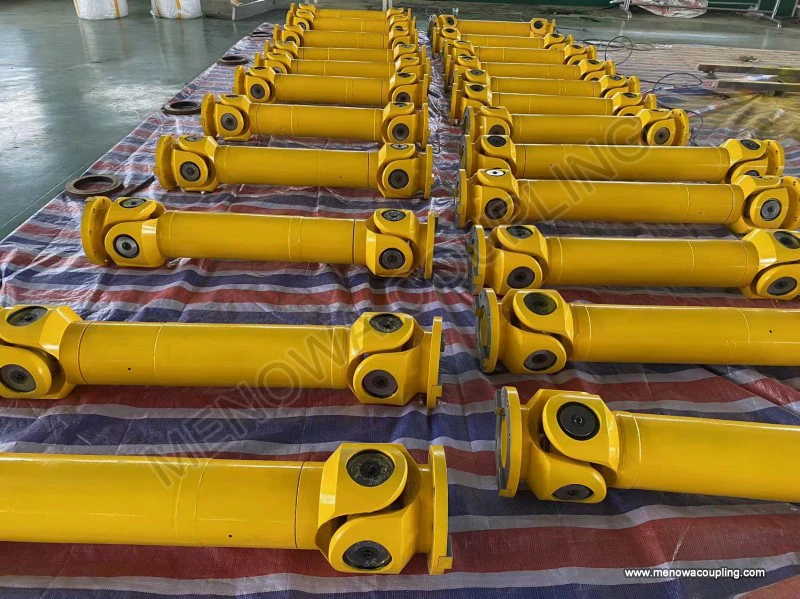
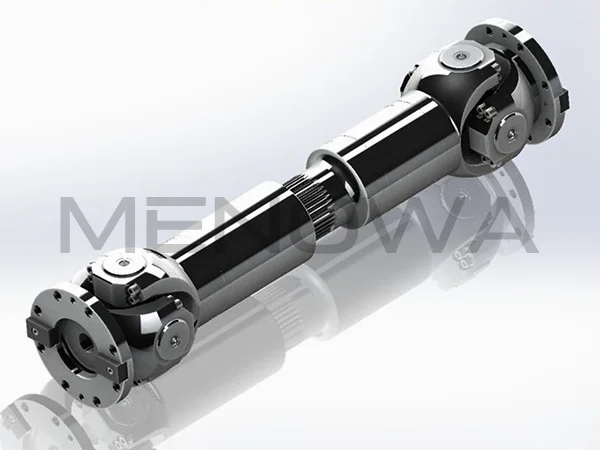
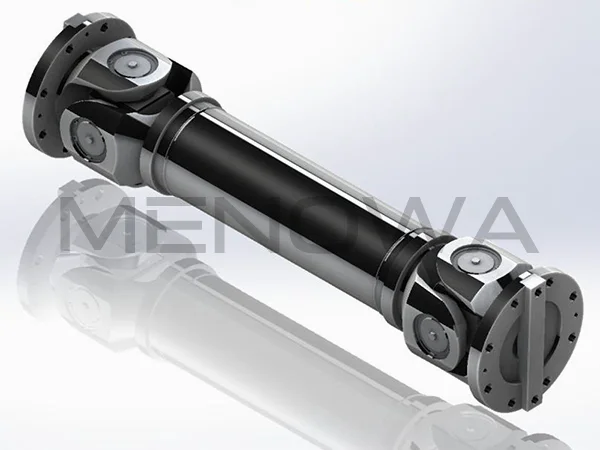
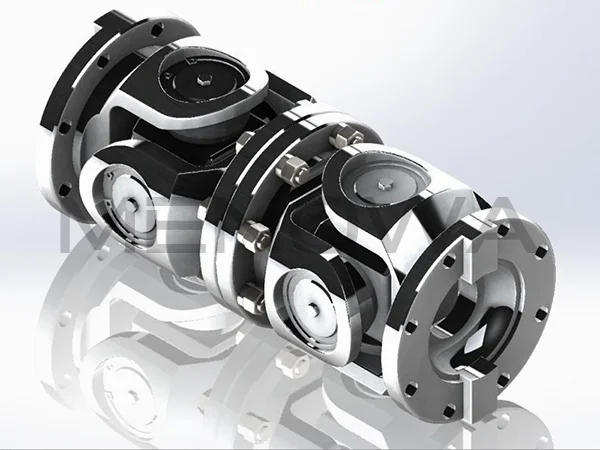
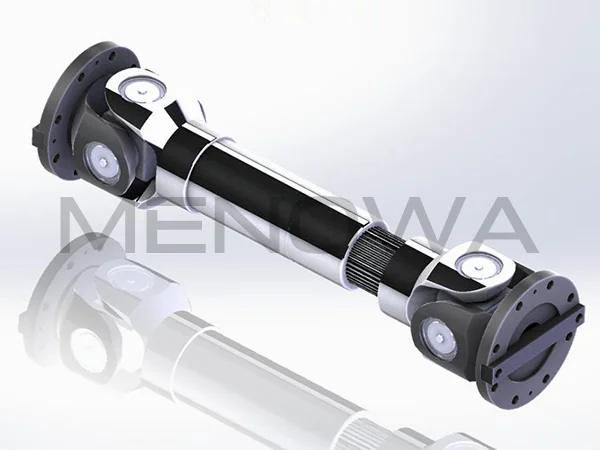
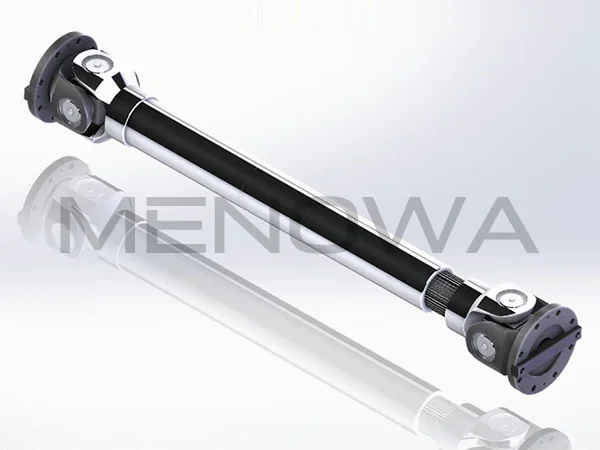
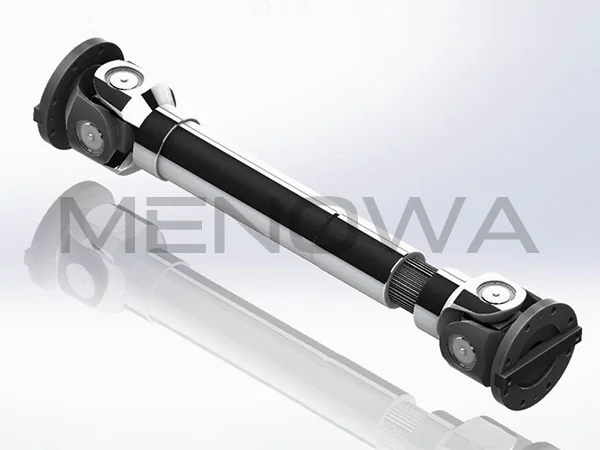
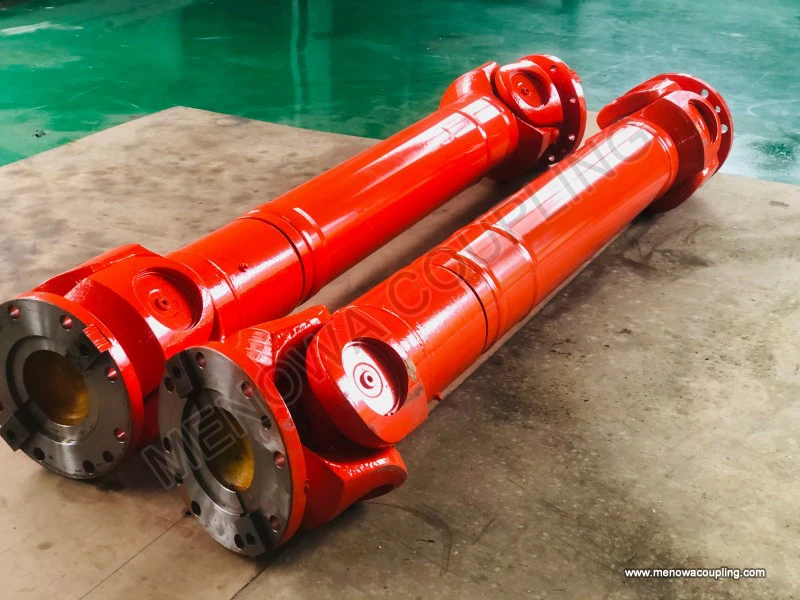
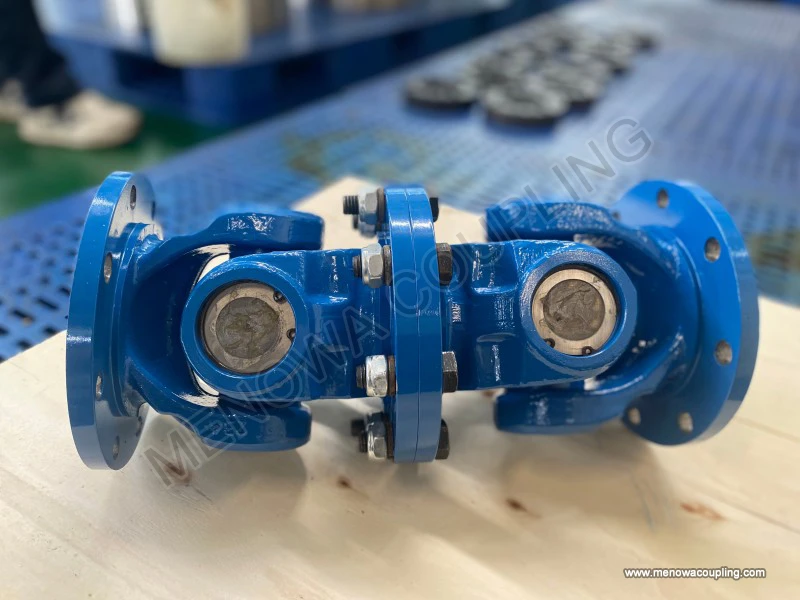
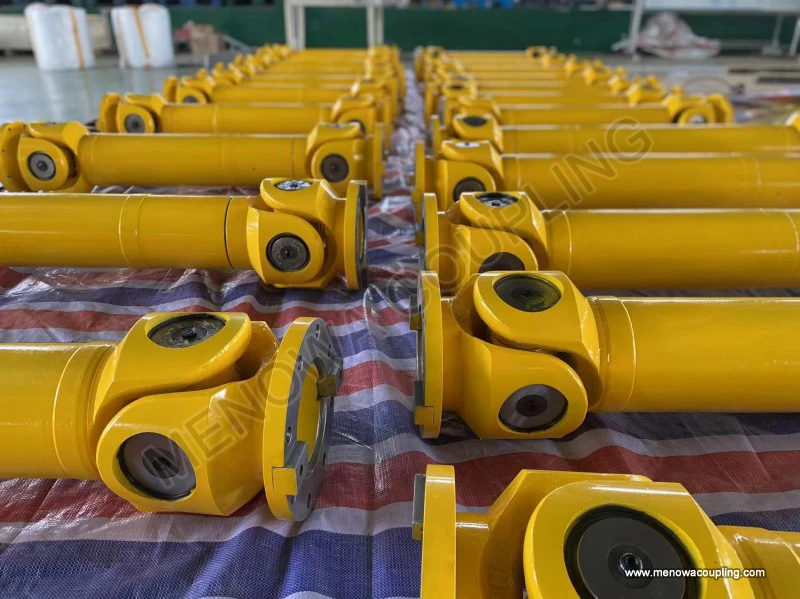
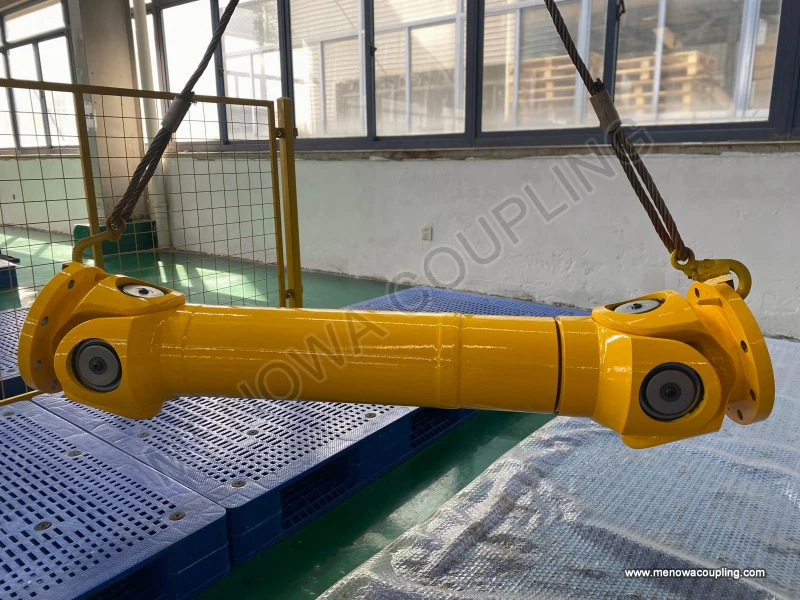
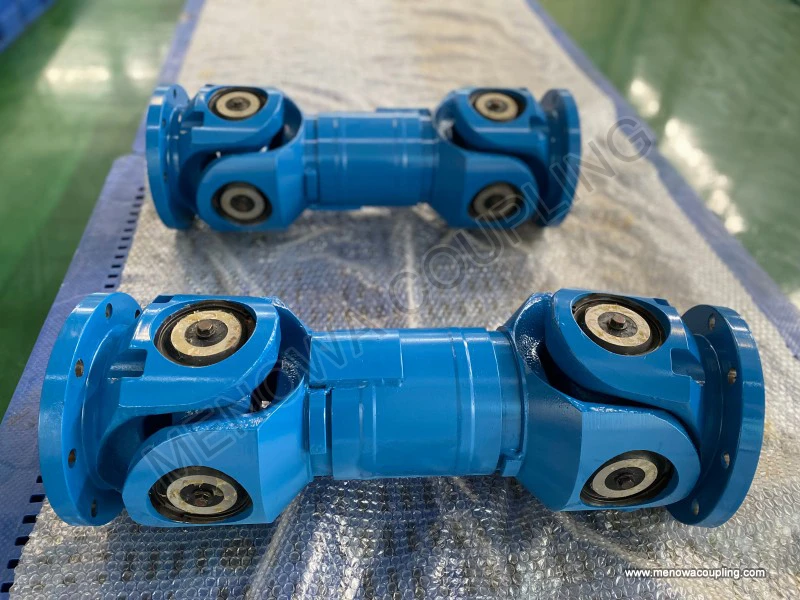
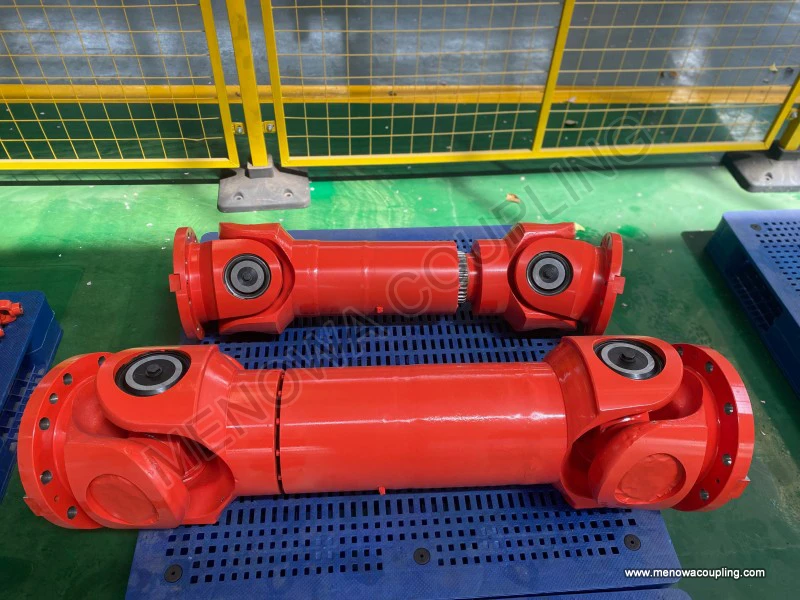
The basic structural composition of the cross universal joint coupling follows a minimalist and practical mechanical design concept, and the overall structure is compact and rugged, composed of several core mechanical parts that cooperate with each other and restrict each other to complete the whole power transmission and displacement compensation work. The core components that constitute the main body of the coupling include two symmetrical fork-shaped yoke joints, a central cross-shaped intermediate shaft commonly known as the spider, four sets of precision matching needle roller bearings, and auxiliary fixing and connecting parts used for positioning and assembly between components. Each core component has its own independent mechanical functions, and the precise assembly and cooperative operation of all parts jointly realize the basic working performance of torque transmission and misalignment compensation. The two fork-shaped yoke joints are the main connecting carrier of the coupling and the direct connection part between the coupling and the driving and driven shafts respectively. One yoke joint is fixedly installed on the end of the driving shaft that outputs power, and the other yoke joint is stably connected to the end of the driven shaft that receives power and drives subsequent mechanical components to operate. The structural design of the yoke joint adopts an integrated or split fork body structure according to different load-bearing requirements and application scenarios. The integrated fork body has overall structural rigidity and good mechanical integrity, which can bear relatively stable torque load and is suitable for conventional medium and light-load transmission occasions; the split fork body is assembled and fixed by high-strength fasteners, which is convenient for disassembly, maintenance and replacement of internal parts, and can adapt to heavy-duty and impact-load working environments with frequent equipment start and stop.
The central cross shaft spider is the core force-transmitting and connecting hub of the entire cross universal joint coupling, and it is also the key component that realizes the flexible rotation and angular displacement compensation function between the two yoke joints. The cross shaft is designed with four mutually perpendicular shaft trunnions distributed in a cross shape, and the structural symmetry of the four trunnions ensures the uniformity of force transmission and the stability of rotational motion in all directions during the operation of the coupling. Each trunnion of the cross shaft is correspondingly matched with the bearing installation position of the fork-shaped yoke joint, forming a rotatable hinge connection structure between the cross shaft and the two yoke joints. The four sets of needle roller bearings installed between the cross shaft trunnions and the yoke joint bearing holes are key components to reduce mechanical friction and wear during the relative rotation of parts. Different from ordinary sliding bearings, needle roller bearings use slender needle rollers as the rolling friction medium, which can effectively reduce the contact friction coefficient between the rotating matching surfaces while bearing large radial mechanical pressure. This rolling friction working mode greatly reduces the friction resistance generated when the cross shaft and the yoke joint rotate relatively, avoids severe wear and heating of matching parts caused by long-term sliding friction, and ensures the flexibility and smoothness of the coupling during angular displacement adjustment and rotational operation. All auxiliary fixing parts such as bearing caps and positioning snap rings are used to limit the axial displacement of needle roller bearings and cross shaft trunnions, prevent the bearings from loosening and shifting during high-speed rotation and heavy-load operation, ensure the stability of the overall assembly structure of the coupling, and avoid mechanical impact and transmission failure caused by parts falling off or displacement.
The working principle of the cross universal joint coupling is based on the spatial hinge motion mechanism and the mechanical motion transmission law between misaligned rotating shafts, and its core operation logic is to rely on the rotational hinge movement formed by the cross shaft and the two yoke joints to realize the continuous transmission of rotational torque and rotational motion between two shafts with angular deviation and displacement offset. When the mechanical equipment starts to operate, the driving shaft starts to rotate and output rotational torque, and the driving yoke joint fixed on the driving shaft rotates synchronously with the driving shaft. At this time, the driving yoke joint drives the connected cross shaft trunnion to move synchronously, and the cross shaft transmits the rotational torque and rotational motion to the other two trunnions through its own rigid structural force transmission, and then drives the driven yoke joint connected with the driven shaft to rotate synchronously, finally realizing the synchronous rotation and power transmission between the driving shaft and the driven shaft. In this whole motion transmission process, the most critical functional advantage of the cross universal joint coupling is that it does not require absolute coaxial alignment between the driving shaft and the driven shaft. When there is a certain angular inclination between the two shafts, the cross shaft can perform adaptive hinge rotation around the bearing matching position of the two yoke joints in real time with the rotation of the shafts. This flexible hinge rotation can automatically compensate for the angular deviation between the driving shaft and the driven shaft, and always maintain the effective connection and stable force transmission between the two yoke joints during the continuous rotation of the shafts.
It is necessary to clearly recognize the basic motion transmission characteristics of a single cross universal joint coupling in actual operation, that is, a single universal joint cannot achieve strict constant velocity rotation transmission when the two connected shafts have angular deviation. When the driving shaft rotates at a constant rotational speed, the rotational speed of the driven shaft will produce periodic small fluctuations and changes with the rotation cycle of the shaft, and the fluctuation range of the rotational speed is positively correlated with the angle of angular deviation between the two shafts. The larger the angular inclination between the driving shaft and the driven shaft, the more obvious the periodic fluctuation of the driven shaft speed. This periodic speed fluctuation will produce certain alternating mechanical vibration and small torque pulsation during the operation of the equipment. For most conventional industrial mechanical transmission occasions with low requirements for rotation stability and no high-precision motion control needs, this slight speed fluctuation and vibration will not have a substantial impact on the normal operation and working performance of the equipment, and can be completely ignored in actual production and operation. For mechanical equipment that requires high rotation stability, precise motion transmission and low vibration operation, the problem of periodic speed fluctuation of a single universal joint can be effectively solved by adopting a double cross universal joint coupling combination design. By reasonably arranging the installation angle and phase position of the two universal joints, the speed fluctuation generated by the first universal joint can be completely offset by the complementary motion of the second universal joint, so as to realize the approximate constant velocity rotation transmission between the driving shaft and the driven shaft, meet the high-precision and high-stability operation requirements of high-end mechanical equipment, and expand the application scope of cross universal joint couplings in high-precision mechanical transmission fields.
The mechanical performance and service life of the cross universal joint coupling are closely related to the material selection and heat treatment process of its core components, and reasonable material matching and standardized heat treatment processing are the fundamental guarantees for the coupling to withstand long-term heavy-load operation, impact load and alternating mechanical stress. The core force-bearing components such as the cross shaft and the fork-shaped yoke joint need to bear large torque load, radial pressure and alternating fatigue stress during long-term operation, so the selected materials must have high structural strength, good impact toughness, excellent fatigue resistance and wear resistance. Most of the high-quality cross universal joint couplings are made of high-quality alloy steel materials with stable mechanical properties. This type of alloy steel has uniform internal metal structure, good hardenability and mechanical processing performance, and can maintain stable structural rigidity and mechanical bearing capacity under long-term high-load and variable-load working conditions. For the needle roller bearings and their matching contact surfaces that need frequent relative rotation and friction, in addition to using high-hardness bearing steel materials, special surface quenching and tempering heat treatment processes are also required. The surface of the bearing raceway and the cross shaft trunnion is treated with high-frequency quenching to form a high-hardness wear-resistant surface layer, which can effectively resist friction wear and contact fatigue damage during long-term rolling friction work; the internal matrix of the parts maintains good toughness through tempering treatment, avoiding brittle fracture of parts under sudden impact load and ensuring the overall mechanical safety and structural stability of the coupling.
In addition to the main force-bearing rotating parts, the auxiliary fixing fasteners and positioning parts of the cross universal joint coupling also adopt high-strength carbon steel or alloy steel materials, and undergo strict forging processing and anti-corrosion surface treatment. Forging processing can refine the internal metal grain structure of the parts, eliminate internal metal defects such as pores and shrinkage cavities generated in the casting process, and significantly improve the structural strength and impact resistance of the fasteners; anti-corrosion surface treatments such as galvanizing and oxidation are carried out on the surface of the parts to avoid rust and corrosion of metal parts in humid, dusty and corrosive industrial working environments, prevent the reduction of assembly connection strength and part failure caused by corrosion, and extend the overall service life of the coupling. The material selection and processing technology of each component of the cross universal joint coupling are formulated according to the actual working load, operating environment and service life requirements, and the matching design of different materials and processes ensures that the coupling can always maintain stable mechanical performance and structural integrity in various harsh industrial working conditions.
In the complex and diverse industrial production and mechanical operation scenarios, the cross universal joint coupling has extremely wide application value and application scope due to its excellent comprehensive performance of angular compensation, axial displacement adaptation, strong load-bearing capacity and stable torque transmission. In the field of heavy industrial machinery and engineering construction machinery, various large-scale mechanical equipment such as excavators, loaders, cranes, bulldozers and mining machinery often have complex structural layout and harsh working conditions. The power transmission shafts of these equipment often need to work under the conditions of large angular deviation, frequent start-stop impact load and severe vibration. The cross universal joint coupling can well adapt to these harsh working environments, stably transmit high-power rotational torque, compensate for the shaft displacement and angular deviation generated by equipment vibration and structural deformation, and ensure the continuous and reliable operation of heavy engineering machinery in complex construction and mining working conditions. In the field of metallurgical industry production, the rolling production line, conveyor equipment and metal processing machinery need to operate continuously for a long time without shutdown, and the shaft connection parts need to bear continuous alternating load and high-temperature thermal deformation. The cross universal joint coupling has good thermal stability and fatigue resistance, can adapt to the thermal deformation displacement of the shaft caused by long-term high-temperature operation, maintain the stability of power transmission of the metallurgical production line, and avoid production interruption and economic loss caused by coupling failure.
In the field of agricultural machinery and equipment, the operating environment of farmland operation machinery such as tractors, harvesters and agricultural tillage machines is complex and changeable, with uneven road surfaces, muddy working environment and large vibration amplitude during equipment operation. The power transmission system of agricultural machinery often produces obvious shaft misalignment and displacement due to bumpy vibration and uneven stress. The cross universal joint coupling has strong vibration resistance and displacement compensation capacity, can adapt to the frequent position changes and angular deviation of the transmission shaft during farmland operation, ensure the stable output of power of agricultural machinery, and meet the operation needs of various farmland tillage, sowing and harvesting work. In the field of general mechanical manufacturing and automated production equipment, various machine tools, conveying machinery, packaging equipment and automated production lines have high requirements for the stability and continuity of power transmission. The cross universal joint coupling is used for the shaft connection of these equipment, which can compensate for the installation deviation generated in the equipment assembly process and the small displacement change generated during long-term operation, reduce the mechanical vibration and operation noise of the equipment, improve the operation stability and processing accuracy of automated production equipment, and ensure the smooth progress of industrial automated production work.
In addition to the above conventional industrial and mechanical application fields, the cross universal joint coupling also plays an important role in the fields of transportation equipment, special mechanical equipment and marine engineering machinery. In various special transportation vehicles and mobile mechanical equipment, the power transmission system needs to adjust the shaft position in real time with the driving and running state of the equipment. The flexible connection performance of the cross universal joint coupling can adapt to the dynamic position change of the transmission shaft during the operation of the equipment, maintain the continuity of power transmission, and ensure the safe and stable operation of mobile equipment. In marine engineering and port handling machinery, the equipment is in a humid and salt-spray corrosive working environment for a long time, and the cross universal joint coupling after anti-corrosion treatment can resist marine environmental corrosion, maintain stable mechanical performance in humid and corrosive working conditions, and meet the long-term operation needs of marine and port machinery and equipment.
The daily installation, use, maintenance and lubrication management of the cross universal joint coupling are important links to ensure its long-term stable operation, reduce mechanical wear and extend service life. Scientific and standardized installation operation can avoid assembly stress and installation deviation caused by incorrect installation, and lay a good foundation for the long-term operation of the coupling. Before the formal installation of the coupling, it is necessary to carefully check the dimensional accuracy and surface quality of all components, clean the rust, oil stains and sundries on the matching surface of the cross shaft, yoke joint and bearings, ensure that the matching parts are clean and free of impurities, and avoid mechanical wear and bearing jamming caused by sundries entering the rotating matching gap during operation. During the installation process, the coaxiality and assembly position of the driving shaft and the driven shaft should be adjusted as far as possible to reduce the initial angular deviation and radial offset between the shafts, reduce the long-term alternating stress and wear of the coupling, and improve the operation stability of the coupling. The fastening bolts and positioning parts of the coupling need to be tightened evenly according to the standard assembly requirements to avoid loose connection and parts displacement caused by uneven fastening force, so as to prevent mechanical impact and transmission failure during equipment operation.
Lubrication maintenance is the core key to reduce the friction and wear of the cross universal joint coupling and ensure the flexible rotation of internal parts. The needle roller bearings and the hinge rotating matching parts between the cross shaft and the yoke joint need long-term stable lubrication protection. Good lubrication can form a uniform oil film on the friction contact surface, reduce the friction coefficient between rotating parts, reduce wear and heating during operation, and also play a good role in damping vibration, reducing operation noise and rust prevention of internal parts. According to different operating load and environmental temperature conditions, select lubricating grease with suitable viscosity and wear resistance performance, and regularly fill and replace the lubricating grease inside the coupling in accordance with the maintenance cycle requirements. For the coupling operating under high-load, high-speed and harsh environmental conditions, the frequency of lubrication maintenance should be appropriately increased to ensure that the internal friction parts are always in a good lubrication state. In the daily operation and use of the equipment, the operation state of the cross universal joint coupling should be checked regularly, focusing on observing whether there is abnormal vibration, abnormal noise, oil leakage and parts loosening during the operation of the coupling. If abnormal operation phenomena are found, the equipment should be shut down in time for inspection and maintenance to eliminate potential mechanical faults in the initial stage, avoid small faults evolving into large-scale mechanical damage, and prevent equipment failure and production shutdown caused by coupling damage.
With the continuous progress of modern mechanical manufacturing technology and the continuous upgrading of industrial production equipment, the performance requirements for basic mechanical transmission components such as cross universal joint couplings are also constantly improving, and the development and optimization direction of cross universal joint couplings is gradually moving towards lightweight structure, high load-bearing efficiency, long service life, low energy consumption and intelligent maintenance. In the traditional manufacturing and application process, the structural design of the cross universal joint coupling is relatively conventional, and there is still room for optimization in structural weight reduction and force transmission efficiency. Through modern finite element mechanical simulation analysis technology, the stress distribution and force-bearing weak points of the coupling components under different working loads can be accurately calculated, and the structural optimization design of the yoke joint and cross shaft can be carried out on the premise of ensuring structural strength and load-bearing capacity, reducing the redundant structural weight of the coupling, realizing lightweight design, reducing the overall rotational inertia of the coupling during operation, reducing power transmission energy consumption, and improving the overall transmission efficiency of the mechanical system.
In terms of material technology innovation, with the continuous development of new high-strength wear-resistant alloy materials and surface strengthening treatment processes, the comprehensive mechanical performance of cross universal joint couplings is constantly improved. The application of new wear-resistant and corrosion-resistant materials enables the coupling to adapt to more harsh working environments, further reduce the wear rate of core components, and extend the overall service life of the coupling. At the same time, with the popularization and application of intelligent mechanical operation monitoring technology, some cross universal joint couplings used in key important mechanical equipment have begun to be equipped with simple vibration and temperature monitoring sensing components. Through real-time monitoring of the operation vibration amplitude and operating temperature of the coupling, the operating state and internal wear degree of the coupling can be judged in real time, realizing early warning of potential faults, changing the traditional passive maintenance mode of regular inspection and replacement, and realizing intelligent active maintenance management of the coupling, ensuring the long-term safe and stable operation of key mechanical equipment.
Throughout the entire development process and application practice of the cross universal joint coupling, this classic mechanical transmission component has maintained strong vitality and application value in the mechanical industry relying on its simple and reasonable structural design, mature and reliable working principle and excellent adaptive compensation performance. Although with the continuous innovation of mechanical technology, various new types of flexible coupling products continue to emerge, the cross universal joint coupling still occupies an irreplaceable core position in the field of misaligned shaft power transmission by virtue of its unique advantages of large angular compensation range, strong heavy-load bearing capacity, simple structure, convenient installation and maintenance and wide adaptability. In the future industrial production and mechanical equipment upgrading and development process, with the continuous optimization of structural design, continuous innovation of material technology and continuous integration of intelligent monitoring technology, the comprehensive performance of cross universal joint couplings will be further improved, and its application scope in various emerging industrial fields and high-end mechanical equipment will be further expanded. As an important basic guarantee component for mechanical power transmission, the cross universal joint coupling will continue to support the stable operation and efficient production of various mechanical equipment, and make continuous contribution to the high-quality development of modern mechanical manufacturing industry and industrial production construction.
Post Date: Apr 26, 2026
https://www.menowacoupling.com/coupling-supplier/cross-universal-joint-coupling.html
Products
Tags
Related Articles
Universal Coupling Fabrication
Universal coupling fabrication stands as a foundational discipline within mechanical manufacturing, focusing on the precise production of flexible shaft connection components that enable reliable torque transmission between misaligned rotating shafts. As a core mechanical component widely adopted in power transmission s…Maintenance of Universal Coupling
Universal couplings serve as indispensable connecting components in mechanical transmission systems, designed to transmit rotational torque between two shafts that operate with angular misalignment, parallel offset, or variable positional relationships. Widely applied in industrial transmission equipment, mechanical eng…Characteristics of Universal Coupling
A universal coupling, also commonly referred to as a universal joint or U-joint, is a critical mechanical component designed to connect two rigid shafts whose axes are inclined to each other, enabling the transmission of rotary motion and torque even when the shafts are not perfectly aligned. This versatile component ha…Types of Universal Coupling
In the complex and interconnected mechanical transmission systems that power modern industrial production, automotive operation, engineering machinery movement, and various precision mechanical equipment, universal couplings stand as indispensable basic mechanical components that undertake the core task of transmitting …Universal Coupling Factory
In the intricate ecosystem of modern mechanical transmission systems, universal couplings stand out as indispensable foundational components, serving as the critical bridge that connects rotating shafts and ensures stable power transmission across complex operating conditions. As core mechanical parts designed to resolv…Material of Universal Coupling
Universal couplings serve as indispensable mechanical transmission components in modern industrial and mechanical systems, dedicated to transmitting torque and rotational power between two misaligned rotating shafts. Their core operational value lies in adapting to angular deviation, axial displacement and radial offset…Universal Coupling For Sale
A universal coupling, also commonly referred to as a universal joint or U-joint, is a critical mechanical component designed to connect two rigid shafts whose axes are inclined to each other, enabling the transmission of rotary motion and torque even when there is a misalignment between the two shafts. This versatile co…Universal Coupling Price
Universal coupling manufacture stands as a sophisticated and precise mechanical production discipline focused on crafting flexible transmission components that serve as critical connecting parts in mechanical power systems. These specialized mechanical structures are designed to transmit rotational torque and motion bet…Parts of Universal Coupling
A universal coupling, widely recognized as a flexible mechanical transmission component, serves as a critical connection between two rotating shafts in diverse mechanical systems. Its core value lies in its ability to transmit continuous torque and rotational motion while accommodating angular misalignment, axial displa…Classification of Universal Coupling
Universal couplings are indispensable mechanical transmission components widely applied in modern mechanical systems, serving the core function of transmitting rotational torque and motion between two shafts with angular misalignment, parallel offset, or axial displacement. Unlike rigid couplings that require precise sh…
 WeChat
 WhatsApp