Universal Coupling
Mechanical transmission forms the fundamental backbone of all industrial production, transportation operation, and engineering machinery movement, serving as the critical bridge that converts original power generated by power units into usable rotational torque and mechanical motion for driven equipment. Within the entire transmission system, various connecting components undertake the vital task of linking different rotating shafts, ensuring stable and continuous power transfer while adapting to complex and changeable installation environments and operating working conditions. Among all such connecting mechanical parts, the universal coupling stands out as a uniquely functional and widely applied transmission component, distinguished by its exceptional capacity to achieve reliable torque and motion transmission between two shafts that are not strictly collinear, present angular deflection, or produce relative displacement during long-term operation. Unlike rigid connecting components that require precise coaxial alignment of connected shafts and cannot tolerate any installation deviation or operational displacement, the universal coupling integrates flexible connection characteristics with rigid torque transmission performance, perfectly balancing the stability of power output and the adaptability of mechanical structure, making it an irreplaceable core part in countless mechanical equipment layouts across multiple industries and fields. From daily road transportation vehicles that travel on various road conditions to heavy-duty industrial production equipment that runs continuously for long hours, from agricultural machinery operating in complex field environments to special engineering machinery coping with harsh working scenarios, the universal coupling silently provides stable transmission guarantee for mechanical operation, becoming an essential foundational element supporting the normal and efficient operation of modern mechanical systems.
The evolution and development of universal coupling design and manufacturing have gone through a long historical process, accompanied by the continuous progress of mechanical design theory, metal material smelting technology, precision processing technology and mechanical operation practical experience. Since ancient times, human beings have begun to explore mechanical structures that can transmit motion between misaligned rotating components, trying to solve the transmission difficulties caused by irregular component installation and structural position changes in simple mechanical devices. In the early stage of mechanical industry development, most transmission connections adopted rigid connection methods, which had extremely high requirements for installation accuracy of equipment shafts. Any slight installation error, component thermal deformation during operation or mechanical vibration displacement would cause excessive additional load on the transmission system, accelerate component wear and tear, lead to increased equipment failure frequency, and seriously affect the service life and operating efficiency of the entire mechanical equipment. With the continuous expansion of industrial production scale and the diversification of mechanical equipment application scenarios, mechanical equipment has gradually developed towards larger load bearing, longer continuous operation time, more complex structural layout and harsher operating environments. The traditional rigid connection mode can no longer meet the actual use demands of modern machinery, and mechanical designers urgently needed a new type of connecting component that can adapt to shaft misalignment, compensate for various displacements and maintain stable torque transmission. It was against this industrial development background that the original prototype of the universal coupling was continuously optimized and iterated, gradually evolving from simple articulated mechanical structures to standardized, serialized and refined modern transmission components. After centuries of technical precipitation and practical verification, the structural design of universal coupling has become increasingly mature, the manufacturing process has been continuously improved, and the applicable working condition range has been constantly expanded, adapting from initial low-speed and light-load simple mechanical transmission to current high-speed, heavy-load, high-precision and long-cycle complex mechanical transmission scenarios, always keeping pace with the development progress of the entire mechanical industry.
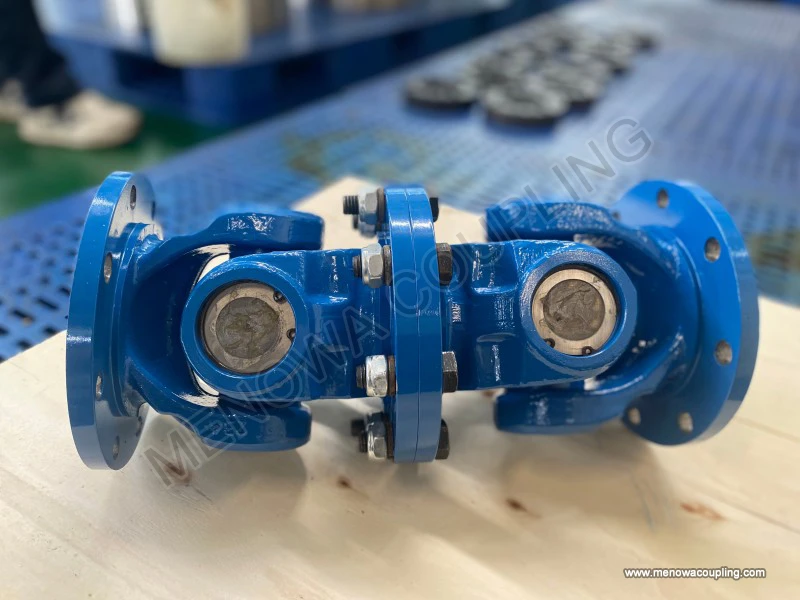
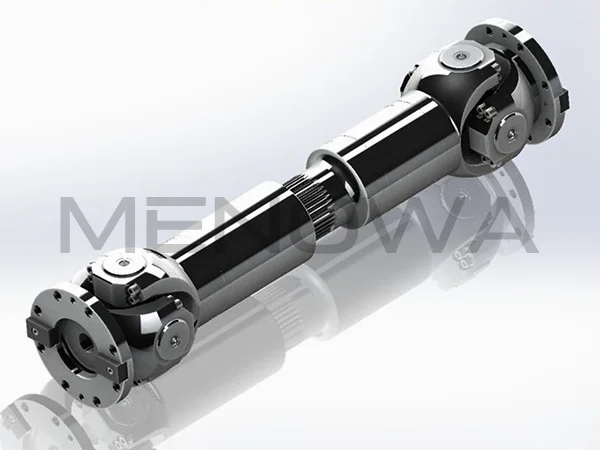
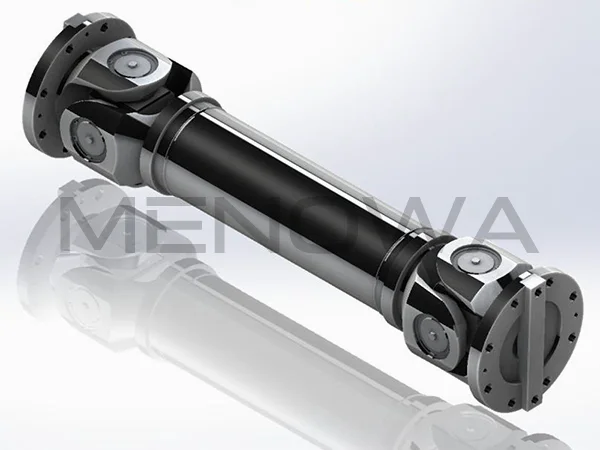
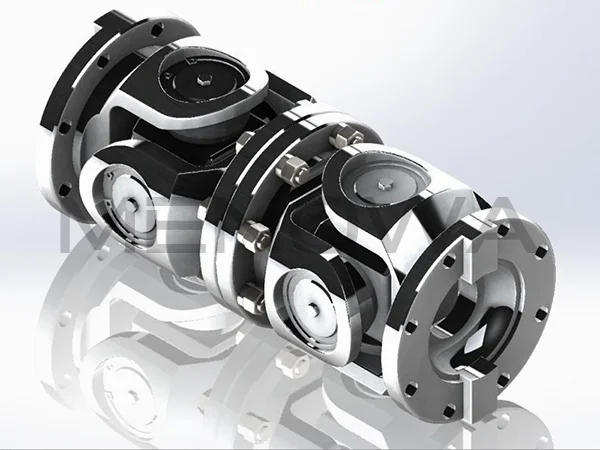
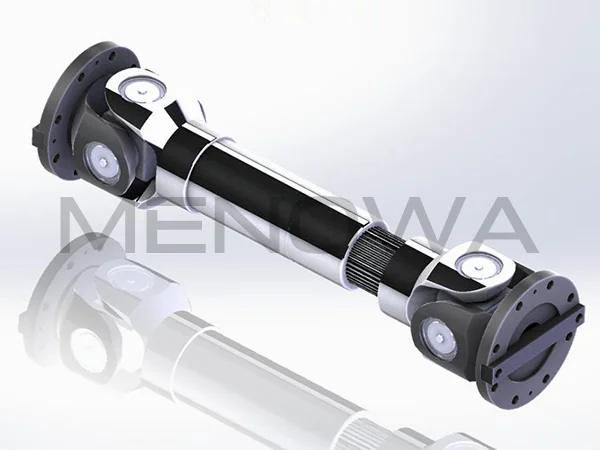
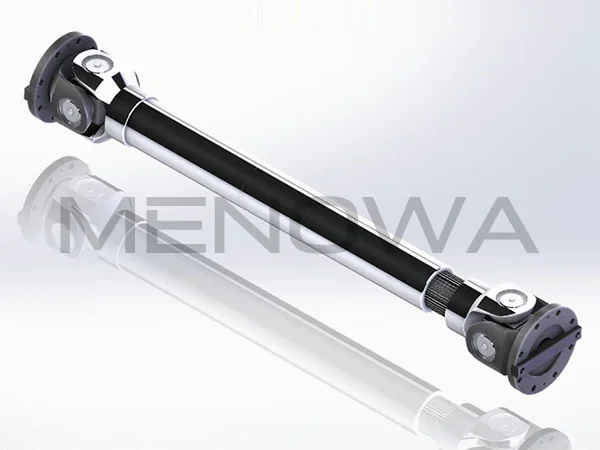
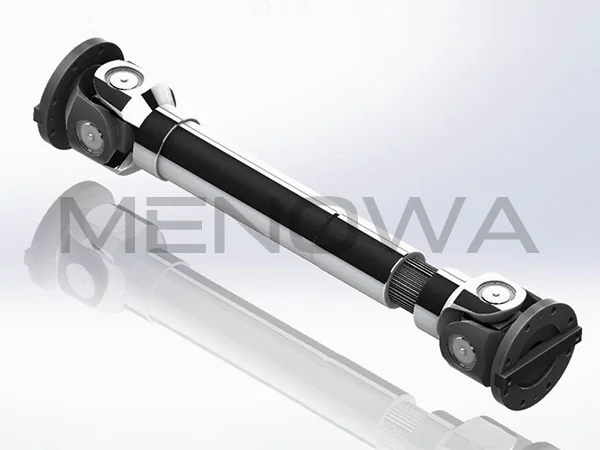
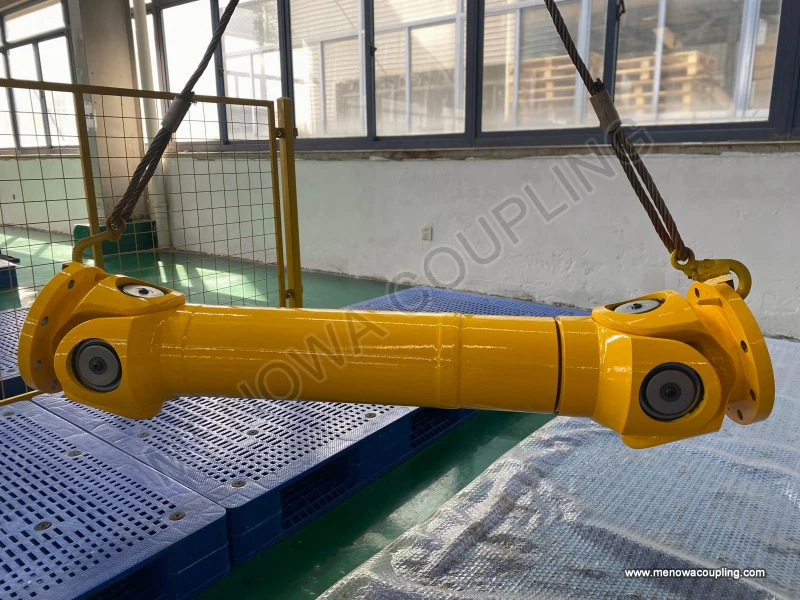
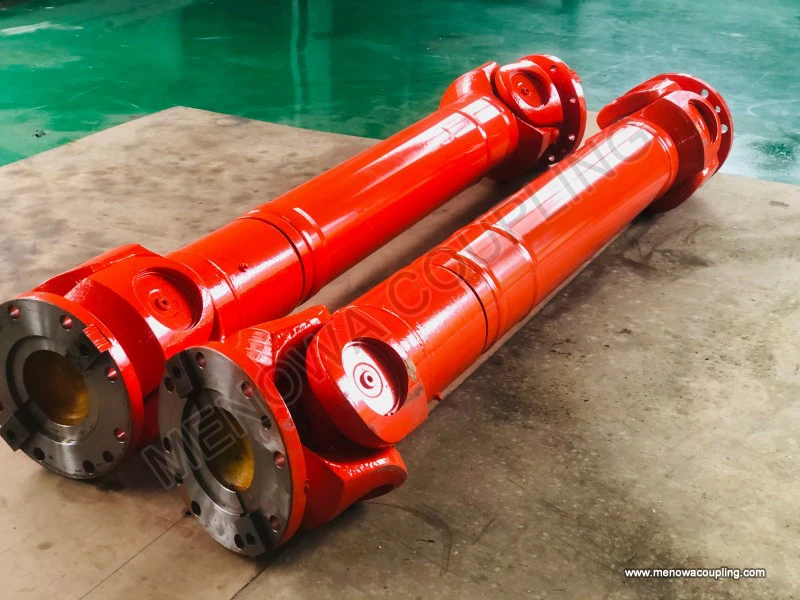
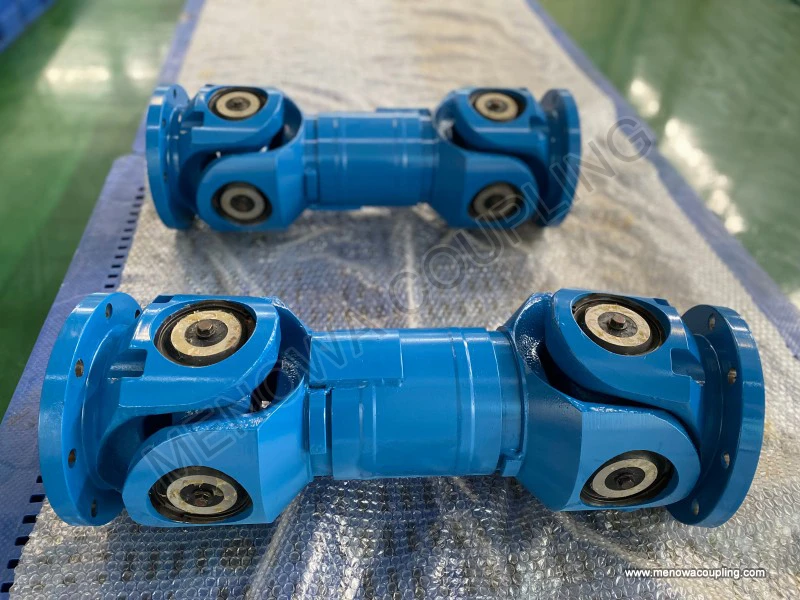
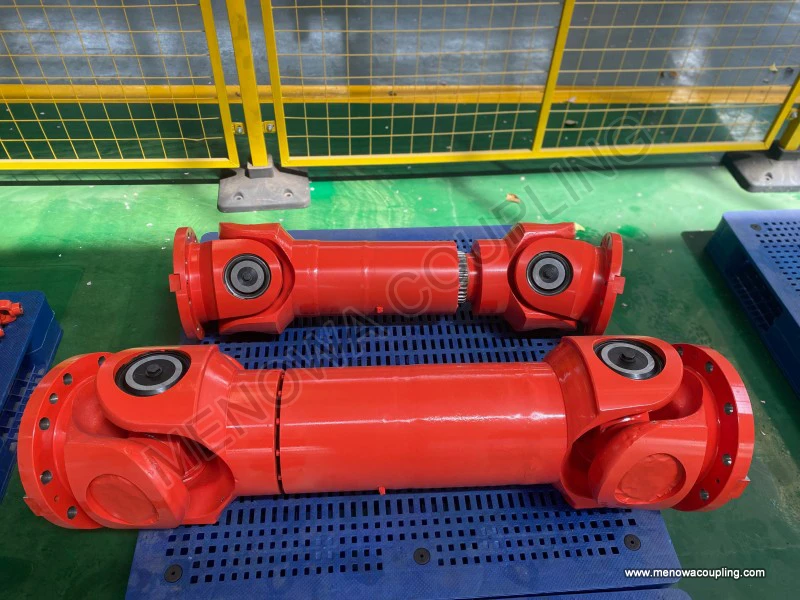
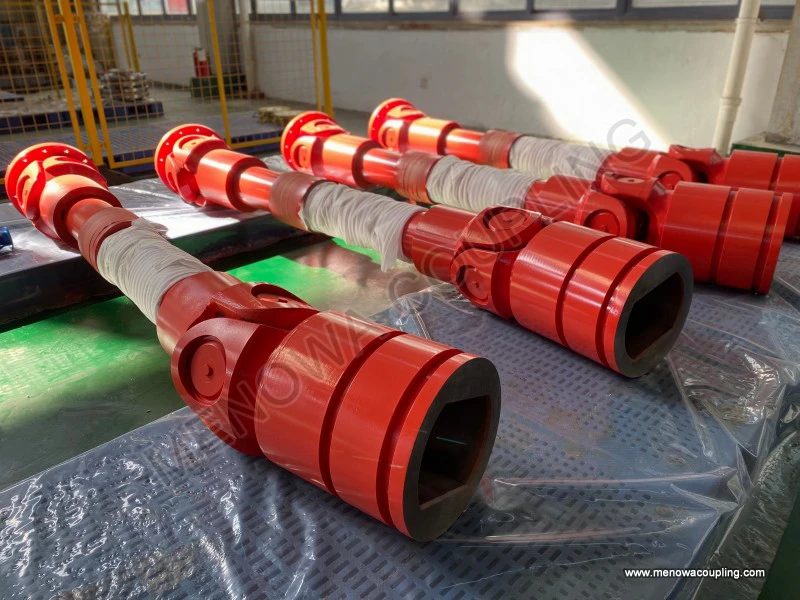
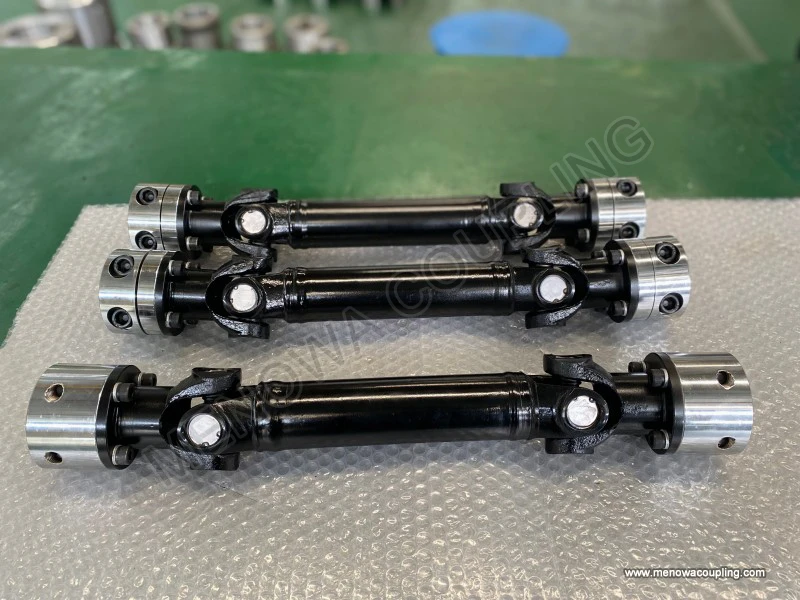
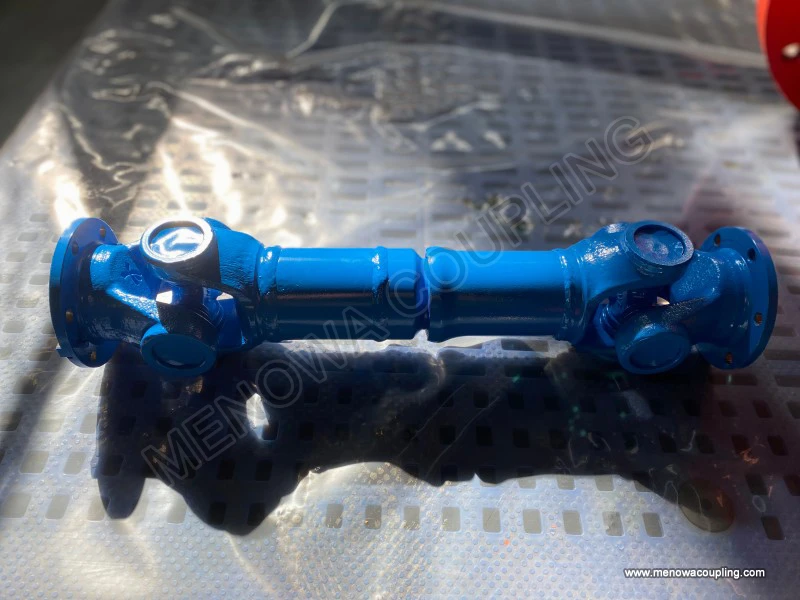
To understand the inherent advantages and application value of the universal coupling, it is necessary to deeply analyze its basic structural composition and the mechanical coordination relationship between each core component, as the reasonable structural design is the fundamental premise for it to realize flexible transmission and displacement compensation functions. The basic configuration of a standard universal coupling follows a mature and stable mechanical structure logic, and although there are slight structural differences in optimized designs for different working conditions and load types, the core composition and force transmission principle remain consistent without fundamental changes. The main structural parts of a conventional universal coupling include two symmetrical fork-shaped yoke components, a central cross-shaped force transmission core component usually called cross shaft or spider, and auxiliary rotating and connecting parts such as needle roller bearings and bearing sealing assemblies matched with the cross shaft. The two fork-shaped yokes are the main connecting and fixing parts of the universal coupling and are respectively fixedly installed on the driving shaft and driven shaft of the transmission system, closely connected with the end of the rotating shaft through reliable fastening structures to ensure no relative rotation or displacement between the yoke and the shaft during torque transmission. The cross shaft located in the middle position is the core force transmission and articulated connecting part of the entire coupling, with four mutually perpendicular shaft arms distributed in a cross layout, and each shaft arm is correspondingly assembled with the bearing installation position of the two fork-shaped yokes one by one. The needle roller bearings installed between the cross shaft arms and the yoke inner holes play a key role in reducing friction resistance and realizing flexible rotational movement, enabling the cross shaft to perform free rotational deflection around two mutually perpendicular axes relative to the two yokes respectively. The matching sealing and fastening auxiliary parts are mainly used to lock the bearing installation position, prevent lubricating grease leakage inside the bearing and external dust, impurities and moisture from entering the friction moving parts, effectively reducing the wear degree of core moving components and prolonging the overall service cycle of the universal coupling. Each component in the structural design has clear division of labor and close coordination, and no single part can independently complete the flexible torque transmission work; only through the precise assembly and mechanical cooperation of all parts can the universal coupling achieve the core function of transmitting rotational motion and torque while allowing angular deflection and relative displacement between the driving shaft and the driven shaft.
The working mechanical principle of the universal coupling is based on the spatial articulated rotation characteristics of the cross shaft and yoke matching structure, realizing the effective transfer of rotational power under the premise of allowing shaft misalignment and angular deviation, and the whole transmission process follows basic mechanical motion and force transmission laws without relying on any additional auxiliary power or complex control devices. When the power unit drives the driving shaft to start rotating, the fork-shaped yoke fixed on the driving shaft rotates synchronously with the shaft, and the rotational torque and motion are transmitted to the cross shaft through the matching bearing part. Driven by the rotational force of the driving side yoke, the cross shaft rotates around its own central axis and drives the fork-shaped yoke on the driven side to rotate synchronously, thereby realizing the transmission of rotational motion and torque from the driving shaft to the driven shaft and driving the normal operation of subsequent driven mechanical equipment. The core mechanical advantage of this transmission mode lies in the spatial deflection capability brought by the cross shaft structure. The two sets of rotational movement pairs formed by the cross shaft and the two yokes are perpendicular to each other in spatial orientation, which enables the two connected shafts to form a certain angular deflection angle within a reasonable range during operation, and the universal coupling can still maintain continuous and effective power transmission without motion interruption or torque failure. In actual mechanical operation, the connected shafts of mechanical equipment often produce three main types of displacement deviations due to installation errors, thermal expansion and contraction of components, mechanical vibration and structural deformation during operation, including angular deviation where the two shafts are not on the same central axis and form a certain included angle, axial displacement where the two shafts have relative position movement along the shaft length direction, and radial displacement where the two shafts have offset in the radial direction of the shaft. The special structural design of the universal coupling can effectively compensate for these three common deviations at the same time, avoiding additional bending stress and shear stress generated by rigid connection on the shafts and related components, reducing the vibration and impact of the transmission system during operation, and making the power transmission process more stable and smooth. It is worth noting that a single universal coupling has the characteristic of non-constant velocity transmission in the working process. When the deflection angle between the two shafts is relatively large, the instantaneous rotational speed of the driven shaft will have slight periodic fluctuation with the rotation of the driving shaft. This small speed fluctuation will not have a significant impact on most conventional mechanical transmission equipment, but for mechanical equipment requiring extremely high rotational speed stability and precise transmission accuracy, the engineering design usually adopts the combined installation form of double universal couplings. By reasonably matching the installation angles and structural positions of the two universal couplings, the speed fluctuation generated by a single coupling can be mutually offset, realizing the constant velocity transmission effect of the entire transmission system and meeting the high-precision operation requirements of professional mechanical equipment.
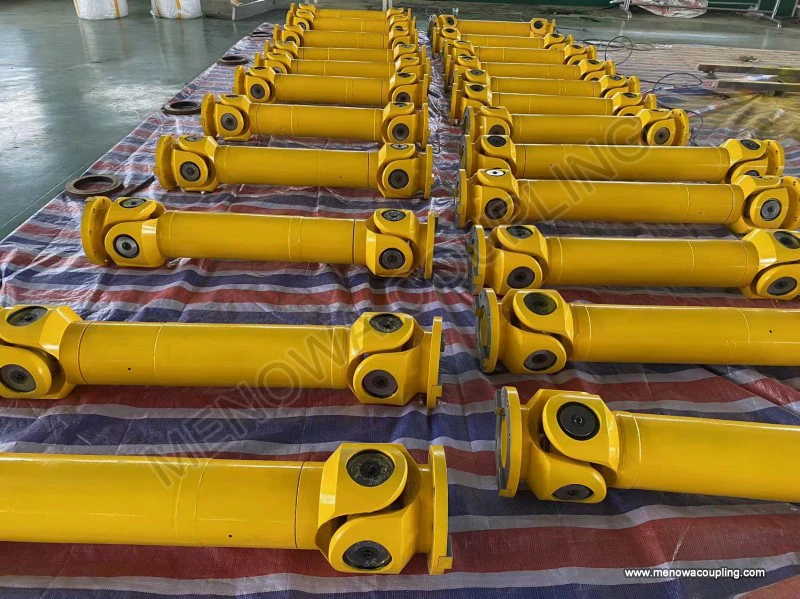
According to different load bearing capacities, rotational speed requirements, working environment conditions and transmission accuracy standards, universal couplings can be divided into multiple structural types and performance grades, each adapted to targeted mechanical application scenarios and working condition requirements, forming a complete and rich product application system in the mechanical industry. The most widely used basic type in the market is the cross shaft universal coupling with simple structure and strong practicability, which is mainly designed and manufactured according to conventional industrial transmission standards, with moderate load bearing capacity, stable basic transmission performance and low daily maintenance difficulty. This type of universal coupling is mostly used in conventional industrial production machinery, general transportation equipment and ordinary agricultural machinery equipment, meeting the daily operation and conventional power transmission demands of most ordinary mechanical devices. On the basis of the basic structure, the heavy-duty optimized universal coupling is specially improved and designed for large-load, high-torque and long-term continuous operation working conditions. Its core components such as cross shaft and fork-shaped yoke adopt high-strength alloy metal materials with better mechanical properties, and the structural size and wall thickness of key stress parts are optimized and thickened. The bearing structure is also upgraded and reinforced to enhance the overall compression resistance, torsion resistance and impact resistance of the coupling. Heavy-duty universal couplings are mainly applied to heavy industrial machinery, large engineering equipment, mining machinery and metallurgical production equipment that need to bear huge working torque and impact load, ensuring stable transmission without structural deformation or component damage under long-term heavy-load operation. In addition, there are high-speed optimized universal couplings designed for high-precision and high-speed rotating mechanical transmission scenarios. This type of coupling focuses on optimizing the dynamic balance performance of the overall structure and the friction coordination accuracy of moving parts, reducing the dynamic unbalance and friction heat generation during high-speed rotation, avoiding vibration, noise and component overheating failure caused by high-speed operation. High-speed universal couplings are mostly used in precision mechanical processing equipment, high-speed rotating power transmission devices and special mechanical equipment requiring stable high-speed operation. Different types of universal couplings have their own targeted performance characteristics and applicable scope, and mechanical designers will select the appropriate type and specification of universal coupling according to the actual working condition parameters such as equipment transmission torque, rotational speed, deflection angle and operating environment, ensuring the matching between coupling performance and equipment operation demands.
The application scope of universal couplings covers almost all mainstream mechanical operation fields, playing an irreplaceable basic role in different industries and different types of mechanical equipment, and its flexible transmission and displacement compensation characteristics solve many practical transmission pain points in mechanical operation. In the field of road transportation machinery, universal couplings are important core connecting components in the power transmission system of various vehicles. The power output position of the vehicle power unit and the installation position of the driving wheel cannot be strictly kept collinear due to chassis structural layout, suspension vibration and road surface bumping deformation during driving. The universal coupling can well adapt to the angle change and displacement deviation between the transmission shaft and the driving shaft during vehicle driving, ensuring that the power generated by the power unit is stably transmitted to the driving wheel, realizing normal driving, acceleration and deceleration of the vehicle. Whether it is ordinary passenger vehicles, logistics transport vehicles or special engineering vehicles, the reliable operation of the universal coupling is directly related to the driving safety and running stability of the whole vehicle. In the field of industrial production and processing machinery, various production equipment such as metallurgical rolling equipment, chemical production machinery, food processing equipment and mechanical processing machine tools need to transmit power between multiple rotating shafts. Due to the large volume of industrial equipment, complex structural layout and obvious thermal deformation of components during long-term continuous operation, it is inevitable to have shaft body misalignment and displacement deviation. The application of universal couplings can effectively compensate for these deviations, reduce the failure rate of transmission equipment, ensure the continuous and stable operation of industrial production lines, and avoid production interruption and economic losses caused by transmission component failure. In the field of agricultural machinery operation, agricultural equipment such as farmland tillage machinery, crop harvesting machinery and agricultural irrigation machinery often works in complex and harsh field environments with uneven ground and large equipment vibration. During the operation of agricultural machinery, the relative position of each transmission shaft changes frequently, and the working load has obvious periodic impact characteristics. The universal coupling has strong environmental adaptability and impact resistance, can adapt to frequent angle changes and complex load fluctuations in agricultural machinery operation, and provides reliable power transmission guarantee for farmland operation machinery. In the field of engineering and mining machinery, large excavators, loaders, mining conveyors and tunnel engineering machinery often work under heavy load and strong impact working conditions. The heavy-duty universal coupling selected for such equipment can bear huge torque and impact load, adapt to severe working environment and complex structural displacement, and ensure that engineering and mining machinery can maintain stable transmission performance under harsh operation conditions and complete various engineering construction and mineral exploitation work efficiently.
In addition to excellent structural performance and wide application scope, the daily installation, operation maintenance and regular inspection and maintenance work of universal couplings are also key factors affecting their service life and operating effect. Even if the universal coupling itself has excellent structural design and manufacturing quality, irregular installation operation and long-term lack of effective maintenance will still lead to accelerated component wear, increased transmission failure probability and shortened overall service cycle, affecting the normal operation of the entire mechanical equipment. In the installation process of the universal coupling, it is necessary to strictly follow the mechanical assembly process requirements, ensure that the matching size of the coupling and the connected shaft meets the assembly standards, the fastening parts are installed in place and locked reliably, and the initial deflection angle and installation position deviation of the two shafts are controlled within the reasonable range allowed by the coupling design. Excessively large initial installation deviation will increase the working load of the universal coupling in the initial operation stage, accelerate the wear of bearings and cross shaft components, and cause early failure of the coupling. In the daily operation process of mechanical equipment, it is necessary to avoid long-term overload operation and frequent sudden start and stop impact on the equipment as much as possible. Long-term overload torque will exceed the bearing capacity of the universal coupling, resulting in structural deformation of core stress components and damage of connecting parts; frequent start-stop impact will produce instantaneous impact load on the coupling, aggravating the fatigue wear of moving parts. Regular maintenance work mainly includes lubrication maintenance and sealing condition inspection. The friction moving parts inside the universal coupling rely on lubricating grease to reduce friction and wear. It is necessary to regularly replenish and replace professional lubricating grease according to the operation time and working environment to ensure good lubrication effect of the bearings and cross shaft rotating parts. At the same time, check the sealing assembly state regularly to prevent lubricating grease leakage and external dust, moisture and corrosive impurities from entering the interior of the coupling, avoiding corrosion and abnormal wear of internal components. In addition, regular visual inspection and running state detection of the universal coupling should be carried out to observe whether there is abnormal vibration, abnormal noise and structural looseness during equipment operation. Once potential hidden dangers such as component wear and fastening looseness are found, timely adjustment and replacement maintenance should be carried out to avoid small faults evolving into large equipment failures and affecting the normal production and operation progress.
With the continuous development of modern mechanical technology and the continuous upgrading of industrial production demands, the technical research and product optimization of universal couplings are also constantly advancing towards higher performance, longer service life, stronger environmental adaptability and more intelligent maintenance direction. In terms of material research and development, with the continuous innovation of new alloy materials and wear-resistant and corrosion-resistant special metal materials, the core components of universal couplings can adopt higher-performance new materials to further improve the overall strength, wear resistance, corrosion resistance and high-temperature resistance of the coupling, adapting to more extreme working environments such as high temperature, low temperature, corrosion and dust. In terms of structural optimization design, relying on modern computer simulation technology and mechanical finite element analysis technology, mechanical designers can carry out more refined stress analysis and structural optimization on the key stress parts and moving parts of universal couplings, optimize the structural force transmission path, reduce structural stress concentration, further improve the mechanical transmission efficiency and structural stability of the coupling, and reduce the generation of vibration and noise during operation. In terms of processing and manufacturing technology, the popularization and application of precision CNC processing technology and intelligent manufacturing equipment make the processing dimensional accuracy and assembly matching accuracy of universal coupling components higher, the coordination between moving parts more precise, and the overall operation stability better. In terms of intelligent operation and maintenance management, with the development of industrial Internet and intelligent monitoring technology, more and more mechanical equipment is equipped with operating state monitoring sensors. The operating temperature, vibration amplitude and torque load of the universal coupling can be monitored in real time during equipment operation. The operation data can be analyzed through the system to judge the operating state of the coupling, predict potential failure risks, and realize predictive maintenance of the coupling, avoiding unplanned shutdown maintenance caused by sudden failure. With the continuous progress of these related technologies, the comprehensive performance of universal couplings will be further improved, and their application fields and working condition adaptation range will be further expanded, continuing to provide solid and reliable flexible transmission support for the development of modern mechanical industry.
Looking at the entire development process and application practice of mechanical transmission technology, the universal coupling, as a simple in structure but powerful in function basic mechanical connecting component, has always occupied an important position in the mechanical industry chain and transmission system layout. It does not have complex mechanical structure and cumbersome control system, but it solves the core transmission problem that rigid connecting components cannot adapt to shaft misalignment and operational displacement, fills the functional gap between rigid connection and flexible connection in mechanical transmission, and provides a simple, efficient and reliable solution for power transmission of various complex mechanical equipment. From small ordinary mechanical devices to large heavy industrial equipment, from conventional room temperature and normal pressure working environments to harsh extreme working conditions, the universal coupling always adheres to the basic mechanical transmission function, ensures the stable transmission of torque and motion of mechanical equipment, and escorts the normal operation of various mechanical systems. With the continuous advancement of industrial modernization and the continuous innovation of mechanical technology, the development potential and application value of universal couplings will be further explored and exerted. Through continuous material upgrading, structural optimization, process improvement and intelligent management, universal couplings will adapt to more diversified and high-standard mechanical operation demands, continue to play an irreplaceable core role in the field of mechanical transmission, and become an important basic guarantee for promoting the stable development and technological progress of the modern mechanical industry.
https://www.menowacoupling.com/industrial-coupling/universal-coupling.html
Products
Tags
Related Articles
Universal Coupling Wholesale
Jun 3, 2026In the global mechanical transmission industry, universal couplings have emerged as indispensable core components for power transmission systems, widely favored by downstream manufacturing, engineering, and transportation sectors across international markets. As global industrialization continues to advance and mechanic…Universal Coupling Vendor In China
Jun 3, 2026Universal couplings stand as indispensable mechanical transmission components in modern industrial systems, serving as core connecting parts that transmit torque and rotational power between misaligned drive shafts. In China’s complete industrial manufacturing ecosystem, universal coupling production and supply have fo…Universal Coupling Supply
Jun 3, 2026In the intricate ecosystem of mechanical power transmission, universal couplings stand out as indispensable foundational components that bridge the functional gaps of traditional rigid connection structures. Serving as a core link between rotating shafts in mechanical systems, these mechanical devices are engineered to …Universal Coupling Supplier
Jun 3, 2026In the complex and interconnected system of modern mechanical transmission equipment, universal couplings stand out as one of the most fundamental and indispensable functional components, serving as a critical bridge for power and motion transmission between rotating shafts in diverse mechanical structures. Unlike rigid…Universal Coupling Production
Jun 3, 2026Universal couplings stand as indispensable mechanical components in modern industrial transmission systems, serving as flexible connection units that enable stable torque and rotational motion transfer between misaligned rotating shafts. Unlike rigid connecting structures that demand precise coaxial alignment of paired …Universal Coupling Price
Jun 3, 2026Universal coupling manufacture stands as a sophisticated and precise mechanical production discipline focused on crafting flexible transmission components that serve as critical connecting parts in mechanical power systems. These specialized mechanical structures are designed to transmit rotational torque and motion bet…Universal Coupling Factory
Jun 3, 2026In the intricate ecosystem of modern mechanical transmission systems, universal couplings stand out as indispensable foundational components, serving as the critical bridge that connects rotating shafts and ensures stable power transmission across complex operating conditions. As core mechanical parts designed to resolv…Universal Coupling Fabrication
Jun 3, 2026Universal coupling fabrication stands as a foundational discipline within mechanical manufacturing, focusing on the precise production of flexible shaft connection components that enable reliable torque transmission between misaligned rotating shafts. As a core mechanical component widely adopted in power transmission s…Working Principle of Universal Coupling
Jun 3, 2026A universal coupling, also widely known as a universal joint, is a fundamental mechanical transmission component designed to solve the core problem of power transmission between two non-collinear rotating shafts. Unlike rigid couplings that only work efficiently when connected shafts maintain perfect coaxial alignment, …What is Universal Coupling
Jun 3, 2026A universal coupling, commonly referred to as a universal joint or U-joint, is a fundamental mechanical transmission component designed to connect two rotating shafts while enabling reliable transfer of torque and rotational motion under misaligned operating conditions. Unlike rigid coupling mechanisms that demand preci…
 WeChat
 WhatsApp