Grid Spring Coupling
Mechanical power transmission systems form the foundational backbone of all modern industrial production and mechanical operation processes, serving as the critical connecting link that transfers rotational motion and torque between driving equipment and driven mechanical components. In every mechanical setup where two rotating shafts need reliable connection and power transfer, the selection of a suitable coupling component directly determines the overall operational stability, service life of matched equipment, maintenance cycle of the entire transmission system, and the smooth progress of daily production work. Among the diverse types of flexible coupling solutions developed to adapt to complex industrial operating conditions, grid spring coupling stands out as a highly practical and widely applied mechanical transmission component, perfectly balancing rigid torque transmission capacity and flexible buffering performance to meet the dual core demands of stable power delivery and effective mechanical protection under diverse working environments. Unlike traditional rigid coupling structures that lack adaptive deformation capacity and simple flexible coupling products with limited load-bearing range, grid spring coupling adopts a unique elastic grid spring structural design, which integrates the basic functions of shaft connection, torque transmission, vibration damping, impact buffering and misalignment compensation into one integrated mechanical unit, making it adaptable from conventional light-duty general mechanical transmission scenarios to heavy-duty continuous operation industrial production links with complex load changes and frequent start-stop cycles. The inherent structural characteristics and working mechanism of grid spring coupling enable it to effectively resolve various common pain points in mechanical transmission processes, including mechanical vibration caused by unstable load operation, equipment impact generated by sudden start and stop or load fluctuation, and component wear and mechanical stress concentration caused by inevitable shaft misalignment during long-term equipment operation, providing stable and reliable basic guarantee for the long-term safe and efficient operation of various mechanical equipment.
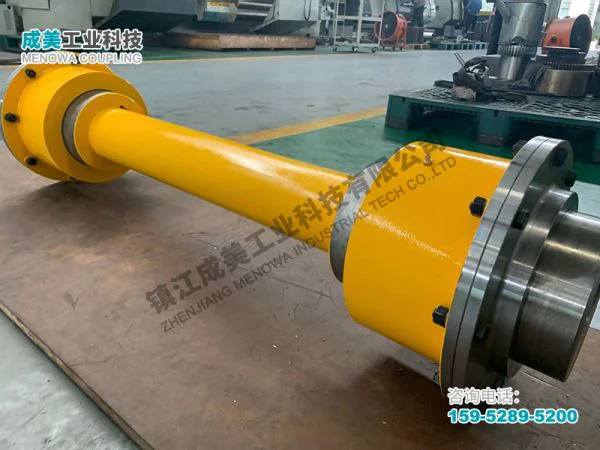
The overall structural composition of grid spring coupling follows a simple and practical mechanical design concept, with all core components closely matched and coordinated to jointly complete the whole process of power transmission and mechanical protection, and each structural part bears irreplaceable functional responsibilities in the actual operation process. The basic assembly of the coupling mainly includes two symmetrical shaft hubs with special tooth-shaped groove structures, a flexible metal grid spring element serving as the core force-bearing and elastic deformation part, and a protective outer cover used for internal structure protection and lubrication medium sealing. The two shaft hubs are processed with precision-machined curved tooth grooves on the outer peripheral position, and the structural radian and groove spacing of these tooth grooves are scientifically designed according to mechanical mechanics principles and load-bearing operation requirements, ensuring that the grid spring can be tightly embedded and stably fitted without excessive assembly gap or installation tension. The two shaft hubs are respectively fixed on the driving shaft and driven shaft of the mechanical equipment through standard connection structures, realizing the fixed connection between the coupling and the power input and output ends of the transmission system, and laying a solid foundation for subsequent torque transmission and rotational motion transfer. The flexible grid spring element is the most critical functional component of the entire grid spring coupling, usually made of high-quality alloy steel materials with excellent elastic fatigue resistance and mechanical strength, processed into an integrated continuous grid-shaped elastic structure with good overall flexibility and uniform force-bearing performance. This grid spring is installed across the tooth grooves of the two connected shaft hubs, relying on its own elastic structural characteristics to form the only force transmission bridge between the driving hub and the driven hub, and all torque and rotational power in the transmission process are transmitted through the contact and elastic deformation between the grid spring and the hub tooth grooves. The protective outer cover of the coupling adopts a split structural design, which is convenient for daily assembly, disassembly, inspection and maintenance work in practical industrial applications. After the overall assembly of the coupling is completed, the outer cover can completely wrap the internal grid spring and hub tooth groove parts, effectively preventing external dust, moisture, industrial debris and other impurities from entering the internal working area of the coupling, avoiding abrasive wear and corrosion damage to the grid spring and tooth groove contact surfaces caused by external pollutants. At the same time, the sealed space formed by the outer cover can store a certain amount of lubricating medium, ensuring that the contact friction parts between the grid spring and the hub tooth grooves are always in a good lubrication state, reducing friction resistance and mechanical wear during operation, and further optimizing the overall operating efficiency and service life of the coupling.
The working operation mechanism of grid spring coupling is based on the elastic deformation characteristics of the metal grid spring and the progressive contact force transmission mode between the grid spring and the hub curved tooth grooves, realizing organic integration of rigid power transmission and flexible mechanical buffering. When the driving equipment starts to operate and output rotational torque, the driving shaft hub rotates synchronously with the driving shaft, and the tooth groove structure on the driving hub acts on the embedded grid spring through contact force. At the initial stage of torque transmission and low-load operation state, the contact area between the hub tooth grooves and the grid spring is relatively small, and the grid spring produces slight elastic deformation under the action of small torque. At this time, the coupling maintains low torsional stiffness, which can effectively buffer the small vibration and slight impact generated during the initial operation of the equipment, ensuring the smooth start and stable low-speed operation of the mechanical system. With the gradual increase of transmission load and torque, the elastic deformation degree of the grid spring increases correspondingly, the contact area between the grid spring and the hub curved tooth grooves gradually expands, and more tooth groove surfaces are involved in the force transmission process. The progressive contact design of the curved tooth grooves enables the torsional stiffness of the grid spring coupling to increase synchronously with the increase of the transmission load, forming a natural adaptive adjustment characteristic of stiffness following load change. This unique working mechanism enables the coupling to maintain good flexibility under light-load and no-load conditions to adapt to small vibration and minor misalignment, and have sufficient rigid bearing capacity under heavy-load operation conditions to ensure stable and efficient transmission of large torque without excessive elastic deformation affecting the transmission accuracy of the mechanical system. In the whole process of power transmission, the grid spring does not rigidly transmit torque like a solid metal component, but absorbs and decomposes the instantaneous impact energy and vibration energy generated by load fluctuation, equipment start-stop and external working condition changes through its own elastic deformation process. The impact energy that would otherwise form instantaneous torque spikes and cause damage to driving and driven equipment components is gradually dispersed and consumed through the continuous elastic deformation of the grid spring, effectively reducing the peak load borne by each part of the transmission system and avoiding fatigue damage and structural deformation of mechanical parts caused by long-term impact load action.
One of the most prominent core functional performances of grid spring coupling is its excellent misalignment compensation capacity, which can effectively adapt to three common types of shaft misalignment inevitably generated in the actual installation and long-term operation of mechanical transmission systems. In the actual industrial equipment assembly process, due to the limitation of installation precision of mechanical equipment, manufacturing tolerance of component parts, and foundation settlement and equipment vibration displacement after long-term operation, it is difficult to achieve absolute precise coaxial alignment between the driving shaft and the driven shaft, and axial misalignment, radial misalignment and angular misalignment are almost unavoidable in all mechanical transmission shaft systems. If a rigid coupling without misalignment compensation function is used in such a working state, the unbalanced stress caused by shaft misalignment will be directly applied to the coupling and the connected shaft parts, resulting in serious eccentric wear of shaft bodies, excessive bearing load, increased equipment operation vibration, and even early fatigue fracture of key mechanical components in severe cases. The grid spring coupling relies on the good overall flexibility and multidirectional elastic deformation capacity of the grid spring element, which can automatically and adaptively compensate for axial displacement deviation, radial offset deviation and angular deflection deviation between the two connected shafts during normal operation. When axial misalignment occurs between the shafts, the grid spring produces slight telescopic elastic deformation along the axial direction to adapt to the axial position change of the two hubs, avoiding axial extrusion stress between the coupling and the shaft parts. When radial misalignment occurs, the grid spring generates flexible bending deformation in the radial direction to balance the radial offset between the driving hub and the driven hub, reducing radial friction and eccentric load on the shaft and bearings. When angular misalignment exists, the grid spring forms uneven elastic deformation at different positions to adapt to the angular deflection between the two shafts, ensuring that the torque transmission process remains smooth without additional bending stress inside the transmission system. This reliable misalignment compensation function does not require additional manual adjustment and auxiliary mechanical structures, and can automatically adapt to the dynamic misalignment changes of the shaft system during equipment operation, greatly reducing the mechanical failure rate caused by shaft misalignment and lowering the daily maintenance pressure of mechanical transmission equipment.
Vibration damping and impact buffering performance are also important functional advantages of grid spring coupling, making it highly suitable for industrial application scenarios with frequent load changes, periodic vibration and sudden impact loads. Many industrial mechanical equipment will produce obvious mechanical vibration and instantaneous impact during operation due to the characteristics of working procedures and load changes. For example, mechanical equipment with periodic reciprocating operation, production machinery with frequent start-stop and forward-reverse switching, and processing equipment with unstable intermittent load output will generate continuous vibration and periodic impact in the transmission shaft system during working. These vibration and impact forces will not only cause abnormal noise in equipment operation and affect the working stability of mechanical components, but also cause long-term fatigue vibration wear of transmission parts, reduce the overall service life of equipment, and even affect the processing accuracy and production quality of industrial products in some precision production links. The grid spring element of grid spring coupling has natural vibration absorption and energy dissipation characteristics. The metal grid structure can effectively absorb the vibration energy generated during equipment operation in the form of elastic deformation, and gradually dissipate the vibration energy in the repeated deformation and recovery process of the spring, avoiding the long-term transmission of vibration between the driving equipment and the driven equipment and preventing vibration resonance in the mechanical system. For the instantaneous impact load generated by sudden load increase, equipment start-up and emergency stop, the grid spring can quickly absorb the impact peak energy through instant elastic deformation, weaken the instantaneous torque shock in the transmission process, protect motors, reducers, bearings and other key expensive mechanical equipment parts from impact damage, and maintain the continuity and stability of mechanical operation. Compared with other types of flexible coupling products that rely on non-metallic elastic materials for vibration damping, grid spring coupling adopts all-metal elastic structure design, which will not produce aging, deformation and failure of elastic components due to long-term vibration and impact, and has more stable vibration damping performance and longer service life in long-term continuous industrial operation.
In terms of material selection and structural durability design, grid spring coupling fully considers the harshness and continuity of industrial working conditions, with excellent wear resistance, fatigue resistance and environmental adaptability, meeting the long-term stable operation requirements of various industrial mechanical equipment. The core grid spring element is made of high-strength alloy steel materials processed through special heat treatment processes, which have high tensile strength, good elastic recovery performance and excellent fatigue resistance. After repeated elastic deformation and long-term load-bearing operation, the grid spring will not produce permanent deformation, elastic attenuation and fatigue fracture, and can maintain stable elastic performance and force transmission capacity for a long time. The shaft hub parts are made of high-strength cast steel or forged steel materials, with high overall structural rigidity and surface hardness. The tooth groove contact surfaces that are frequently rubbed and stressed are processed with precision finishing and surface strengthening treatment, effectively improving wear resistance and pressure resistance, reducing abrasion and deformation caused by long-term friction contact with the grid spring. The protective outer cover is made of sturdy and durable metal materials, with strong structural pressure resistance and impact resistance, which can not only resist the impact of external mechanical force and the erosion of industrial harsh working environment, but also maintain the stable sealing state of the internal lubrication system for a long time. In different industrial working environments including high-temperature operation environment, dusty working conditions and conventional indoor production environment, the all-metal structural design of grid spring coupling will not be affected by temperature change, environmental humidity and external chemical slight corrosion, avoiding the performance degradation and structural aging problems easily occurred in non-metallic elastic coupling products. Even in heavy-duty industrial production links with continuous 24-hour uninterrupted operation, the coupling can maintain stable working performance without frequent replacement and maintenance of parts, effectively reducing the downtime loss caused by equipment maintenance and improving the overall production efficiency of industrial enterprises.
The installation, daily operation and later maintenance work of grid spring coupling have obvious simplicity and convenience, which is very in line with the actual operation and management needs of industrial production sites, and can effectively reduce the professional technical requirements and human resource investment for equipment operation and maintenance personnel. In the equipment installation and commissioning stage, the overall structural assembly of the grid spring coupling is simple and intuitive, without complex assembly procedures and precise debugging steps. The two shaft hubs only need to be fixedly installed on the driving shaft and driven shaft respectively according to the standard mechanical installation specifications, then the grid spring is embedded in the aligned tooth grooves of the two hubs, and finally the split protective outer cover is installed and fixed, and the whole installation work can be completed efficiently. The installation process does not require complex professional installation tools and high-precision debugging instruments, and conventional mechanical installation equipment and basic operation skills can meet the installation and positioning requirements, saving a lot of installation time and engineering cost for equipment commissioning and production line construction. In the daily normal operation stage, the grid spring coupling basically does not need special real-time monitoring and frequent manual intervention work. After the initial installation and lubrication work is completed, the coupling can operate stably with the mechanical equipment for a long time, and will not affect the normal production process due to minor parameter changes and slight working condition fluctuations. In the later daily maintenance and regular equipment overhaul work, the split outer cover design makes the disassembly and inspection work of the coupling very convenient. Maintenance personnel only need to remove the fixing parts of the outer cover to directly observe the wear state of the internal grid spring and hub tooth grooves, check the lubrication condition of the internal contact parts, and carry out simple lubricating medium replacement and dirt cleaning work. If individual parts need to be replaced after long-term operation, the replacement and maintenance work can be completed quickly without disassembling a large number of adjacent mechanical components, greatly shortening the maintenance time of equipment and minimizing the impact of equipment maintenance on industrial production progress.
Grid spring coupling has a very wide range of practical industrial application scenarios, covering almost all mechanical transmission links that need torque transmission, vibration reduction, impact resistance and misalignment compensation, and showing good application adaptability in different industry fields and different working condition characteristics. In the heavy industry fields such as metallurgy and mining, many large-scale mining machinery, metallurgical rolling equipment and mineral processing production equipment need to transmit large torque power, and the operation process is accompanied by strong impact load and severe mechanical vibration. The heavy-duty grid spring coupling can bear large transmission torque, absorb strong impact vibration, and compensate for shaft misalignment caused by heavy equipment operation and foundation vibration, ensuring the stable operation of large heavy-duty mechanical equipment and reducing the failure rate of key transmission parts. In the lifting and transportation industry, various cranes, conveying machinery and logistics transportation equipment have frequent start-stop actions and forward-reverse switching operations during work, and the instantaneous impact load in the transmission process is large. The buffering and vibration damping performance of grid spring coupling can effectively relieve the impact stress generated by frequent start-stop and commutation, protect the transmission shaft and lifting mechanism parts, and ensure the safety and stability of lifting and transportation operation. In the petrochemical industry, various chemical production reactors, pumping equipment and compression machinery need long-term continuous uninterrupted operation, and the working environment has certain corrosive factors and temperature changes. The all-metal structure of grid spring coupling has good environmental adaptability and continuous operation performance, which can meet the long-term stable operation needs of petrochemical equipment and avoid production interruption caused by coupling failure. In the general manufacturing industry including machinery processing, textile production and light industrial manufacturing, various processing machine tools, textile machinery and light industrial production equipment have high requirements for transmission stability and operation smoothness. The vibration damping and misalignment compensation functions of grid spring coupling can reduce equipment operation vibration, ensure the stability of mechanical processing and production operation, and improve the qualification rate of processed products and production efficiency. In addition, in the supporting mechanical equipment such as fans, water pumps and compressors widely used in various industries, grid spring coupling can also play a good role in stable power transmission and vibration reduction, reducing the operation noise and vibration of fluid conveying equipment, and extending the overall service life of fans, water pumps and supporting motor equipment.
In the actual selection and matching application process of grid spring coupling, it is necessary to comprehensively consider various key factors such as the actual transmission torque of the mechanical system, the operating speed of the equipment, the working condition characteristics of frequent start-stop or continuous operation, the installation space size of the transmission shaft system and the ambient working environment, so as to select the coupling with appropriate specification and model to ensure the matching degree between the coupling and the mechanical equipment and the optimal operation effect of the transmission system. The core basis for selection is the actual rated transmission torque required by the mechanical equipment. It is necessary to fully consider the additional impact torque and instantaneous load fluctuation torque generated during equipment operation on the basis of the basic rated torque, and avoid the problem of insufficient bearing capacity of the coupling caused by only referring to the static rated torque parameter. The operating speed of the equipment is also an important selection factor. Different specifications of grid spring coupling have suitable operating speed ranges, and matching according to the actual rotating speed of the shaft system can avoid excessive centrifugal force generated by high-speed operation affecting the structural stability and operation safety of the coupling. At the same time, the working condition type of the equipment should be fully considered. For equipment with frequent start-stop, periodic impact and heavy-load intermittent operation, the coupling with enhanced buffering and fatigue resistance needs to be preferentially selected; for equipment with long-term continuous stable operation, the conventional durable and wear-resistant matching specification can be selected. The installation space and shaft connection size of the mechanical equipment also need to be accurately matched to ensure that the overall external dimension and shaft hole connection size of the selected grid spring coupling are compatible with the installation space and shaft diameter parameters of the equipment, avoiding installation difficulty and poor assembly matching. In addition, the influence of ambient temperature, environmental humidity and external corrosive substances in the working environment on the coupling operation should be considered, and appropriate material surface treatment and lubrication protection measures should be selected according to the actual environmental conditions to further optimize the long-term operation reliability of the coupling.
With the continuous upgrading and development of modern industrial production technology and mechanical equipment manufacturing level, the performance requirements for various mechanical transmission supporting components are constantly improving, and grid spring coupling, as a mature and reliable flexible transmission component, is also constantly optimized and upgraded in structural design, material application and performance improvement to adapt to the increasingly complex industrial working conditions and higher standard mechanical operation requirements. In the modern mechanical design and manufacturing field, the design of grid spring coupling is more refined and specialized. Through finite element mechanical simulation analysis and structural optimization calculation, the tooth groove structure radian of the hub and the structural shape of the grid spring are further optimized, making the force transmission of the coupling more uniform, the elastic deformation coordination more reasonable, and the vibration damping and impact buffering performance further improved. In terms of material innovation application, new high-strength alloy materials and advanced surface treatment processes are continuously applied to the production and manufacturing of grid spring coupling, further improving the fatigue resistance, wear resistance and environmental corrosion resistance of the coupling, and adapting to the more harsh industrial production working environment. In the trend of intelligent and automated industrial production, grid spring coupling, as the basic transmission component of mechanical equipment, provides stable basic operation guarantee for the normal operation of various intelligent automated production lines and intelligent mechanical equipment. Its reliable performance and simple maintenance characteristics meet the high requirements of modern intelligent production for equipment operation stability and low failure rate. In the future industrial mechanical transmission field, grid spring coupling will still rely on its unique structural advantages, comprehensive functional performance and wide application adaptability, maintain an important position in various mechanical connection and power transmission links, and continuously provide solid and reliable basic support for the stable operation and efficient production of various industrial mechanical equipment.
https://www.menowacoupling.com/industrial-coupling/grid-spring-coupling.html
Related Articles
Grid Spring Coupling Wholesale
May 13, 2026In the complex ecosystem of industrial machinery, the role of coupling components cannot be overstated. They serve as the critical link between driving and driven shafts, ensuring the smooth transmission of power while accommodating misalignments, absorbing vibrations, and protecting expensive equipment from damage. Amo…Grid Spring Coupling Vendor In China
May 13, 2026In the global mechanical transmission industry, grid spring couplings play an indispensable role as key components that connect rotating shafts, transmit torque, and compensate for relative displacements between shafts. As one of the world’s largest manufacturing hubs, China has nurtured a large number of professional …Grid Spring Coupling Production
May 13, 2026Grid spring couplings are essential mechanical components widely used in various industrial applications to connect two rotating shafts, transmit torque, and compensate for axial, radial, and angular misalignments between them. Unlike rigid couplings that require precise alignment and offer no flexibility, grid spring c…Grid Spring Coupling Price
May 13, 2026In the realm of mechanical power transmission, grid spring couplings stand out as a versatile and reliable component, widely used across various industries to connect rotating shafts and ensure efficient torque transfer. While their functionality and performance are critical considerations for engineers and procurement …Grid Spring Coupling For Sale
May 13, 2026In the complex world of mechanical power transmission, the search for reliable, efficient, and durable coupling solutions is a constant priority for industries across the globe. Grid spring couplings have emerged as a versatile and high-performance option, designed to address the challenges of connecting rotating shafts…Grid Spring Coupling Factory
May 13, 2026In the complex ecosystem of industrial machinery, the role of grid spring couplings is often underestimated, yet they are the unsung heroes that ensure the smooth and efficient transmission of power between rotating shafts. These precision components are integral to a wide range of industrial applications, from heavy-du…Grid Spring Coupling Exporter
May 13, 2026In the field of industrial power transmission, the role of couplings is irreplaceable. They serve as the critical connection between driving devices and driven equipment, ensuring the stable transfer of torque while compensating for alignment errors and reducing operational vibrations. Among the various types of couplin…Working Principle of Grid Spring Coupling
May 13, 2026In the complex and dynamic field of mechanical power transmission, couplings serve as the critical link between driving and driven shafts, ensuring the smooth and efficient transfer of torque while accommodating inevitable misalignments and mitigating operational stresses. Among the diverse range of coupling types avail…What is Grid Spring Coupling
May 13, 2026In the complex world of mechanical power transmission, the need to connect two rotating shafts efficiently, reliably, and with minimal wear has led to the development of various coupling devices. Among these, the grid spring coupling stands out as a versatile and robust solution, widely used in industrial applications w…Uses of Grid Spring Coupling
May 13, 2026In the realm of mechanical power transmission, the grid spring coupling stands as a versatile and reliable component that plays a critical role in connecting rotating shafts across a wide range of industrial applications. Unlike rigid couplings that demand precise alignment and offer no flexibility, or flexible coupling…
 WeChat
 WhatsApp