Metal Diaphragm Coupling
In the entire system of mechanical power transmission, the connection between rotating shafts serves as a fundamental foundational link that determines the stability, continuity, and long-term operational reliability of complete mechanical equipment sets. Various mechanical devices involved in industrial production, energy conversion, manufacturing processing, and power operation all require stable shaft connection components to complete the transfer of rotational torque, the synchronization of rotational speed, and the coordination of mechanical motion between driving equipment and driven equipment. In actual on-site operating environments, ideal coaxial alignment between connected rotating shafts hardly exists for a long time. Influenced by multiple objective factors including installation assembly deviations, mechanical equipment base slight settlement, thermal expansion and contraction of metal components during long-term operation, mechanical vibration generated by equipment cyclic operation, and subtle structural deformation of equipment under long-term load bearing, different degrees of relative displacement and angular offset will inevitably occur between the driving shaft and the driven shaft of mechanical equipment. These subtle deviations, if not effectively buffered and compensated by professional connecting components, will directly generate additional mechanical stress on shaft parts, bearings, and key transmission structures, accelerate the wear and fatigue damage of core mechanical components, cause obvious vibration and noise during equipment operation, reduce the overall transmission efficiency of the mechanical system, and even lead to frequent equipment failure shutdowns and shortened overall service life of the entire mechanical unit in severe cases. Among numerous shaft connection and torque transmission components developed to solve such practical industrial operation problems, metal diaphragm coupling has gradually become a widely adopted connecting part in high-precision, high-speed, and long-cycle continuous operation working conditions by virtue of its unique all-metal elastic deformation working mode, stable displacement compensation performance, maintenance-free operation characteristics, and strong environmental adaptability, distinguishing itself from traditional rigid couplings and ordinary elastic couplings with non-metal flexible elements. Different from rigid couplings that completely limit all relative displacement between shafts and cannot adapt to any installation and operation deviation, and different from rubber or plastic elastic couplings that rely on non-metal materials for buffering but are prone to aging, deformation, and failure under high temperature and harsh chemical corrosion environments, metal diaphragm coupling takes high-strength metal thin diaphragm sheets as the core elastic force-bearing and deformation component, relying entirely on the controllable elastic deformation of metal materials itself to realize torque transmission between rotating shafts and multi-directional displacement compensation at the same time, achieving an effective balance between rigid torque transmission rigidity and flexible deviation buffering flexibility, and adapting to increasingly stringent and diversified mechanical transmission application requirements in modern industrial production.
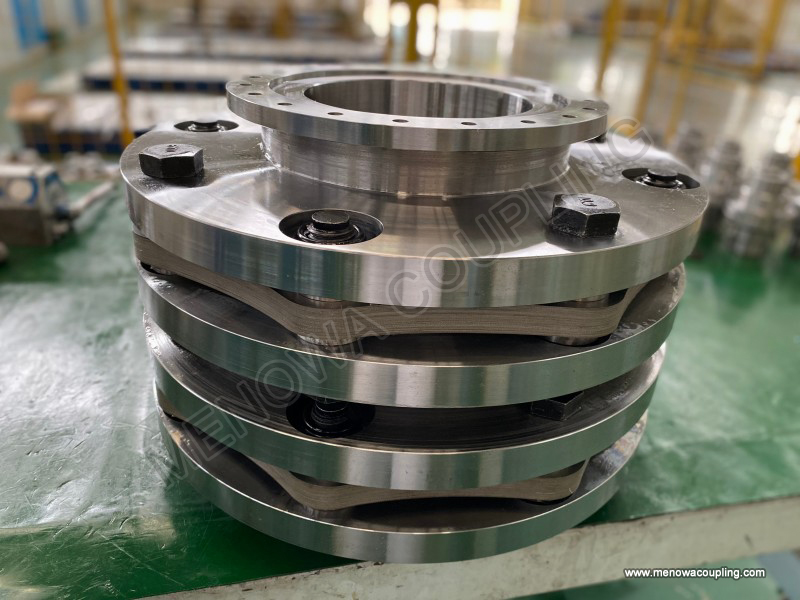
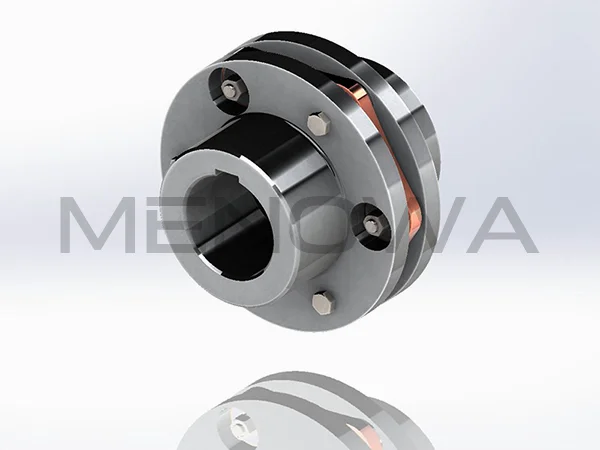
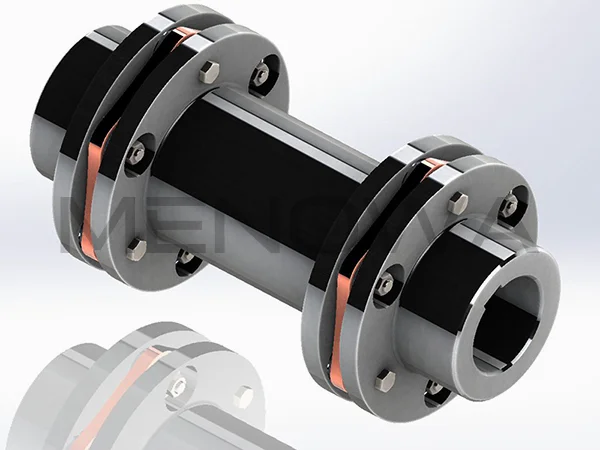
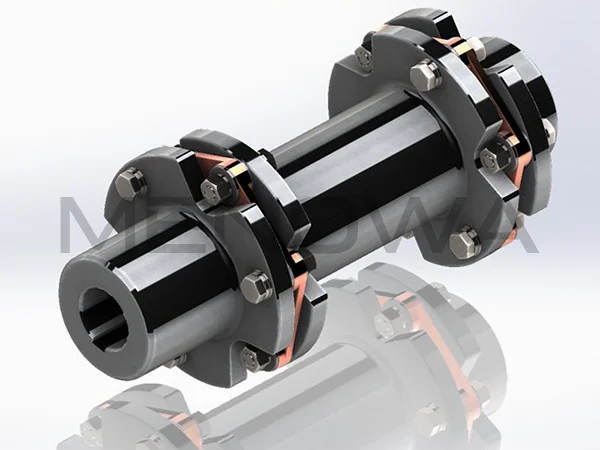
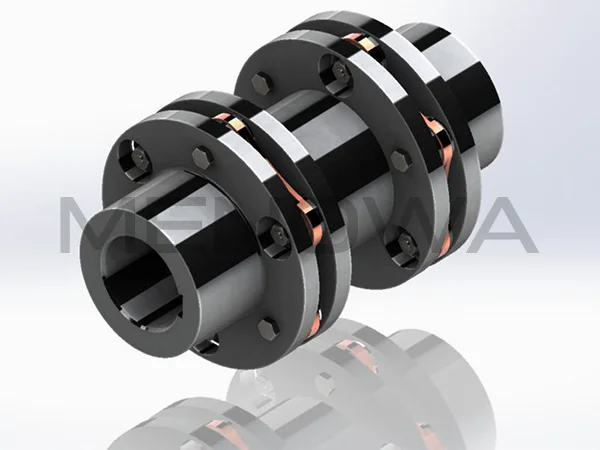
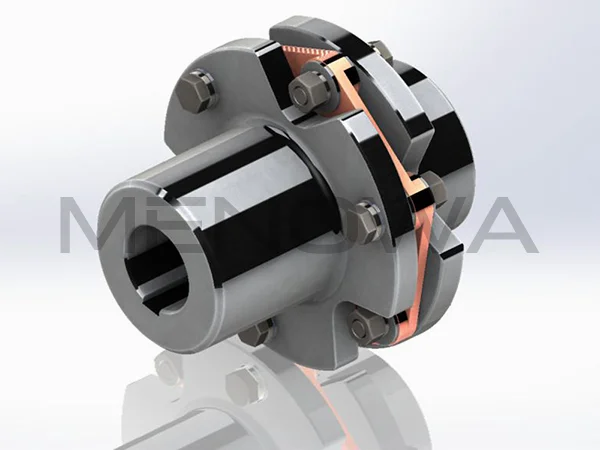
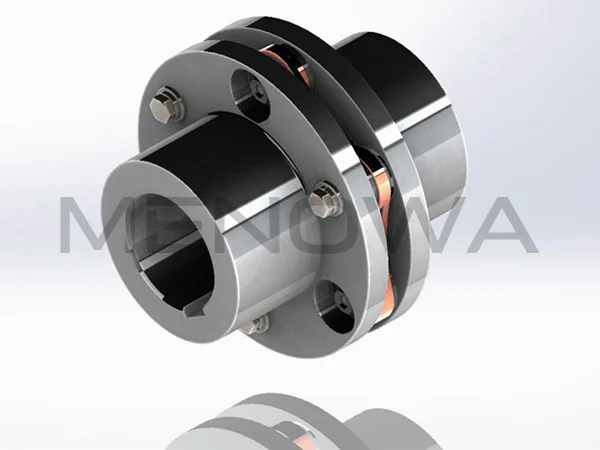
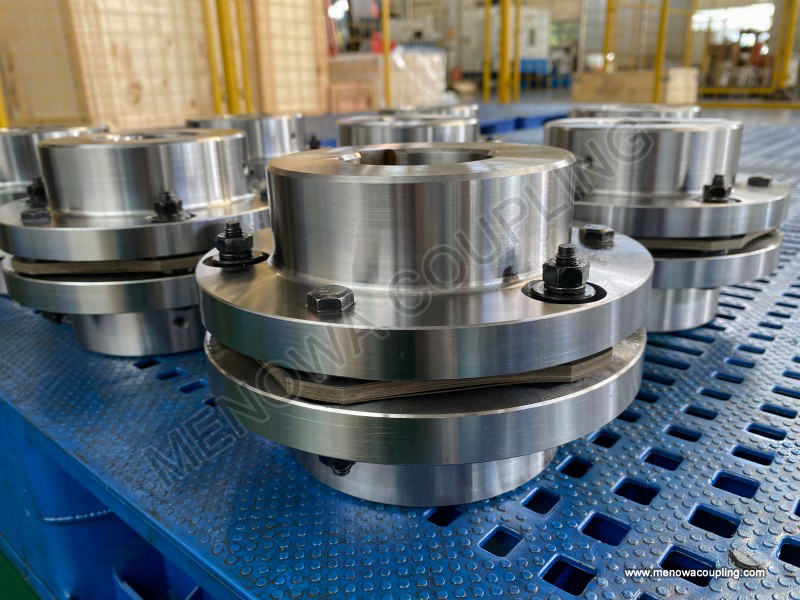
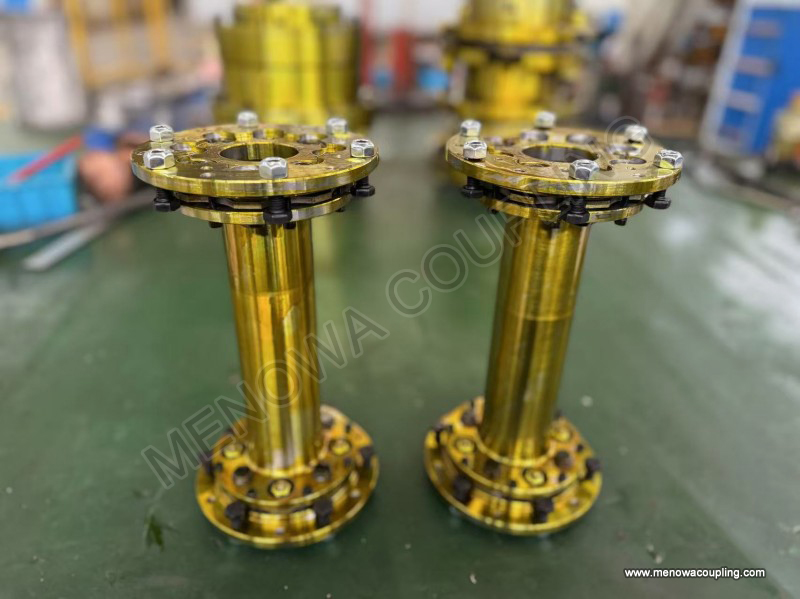
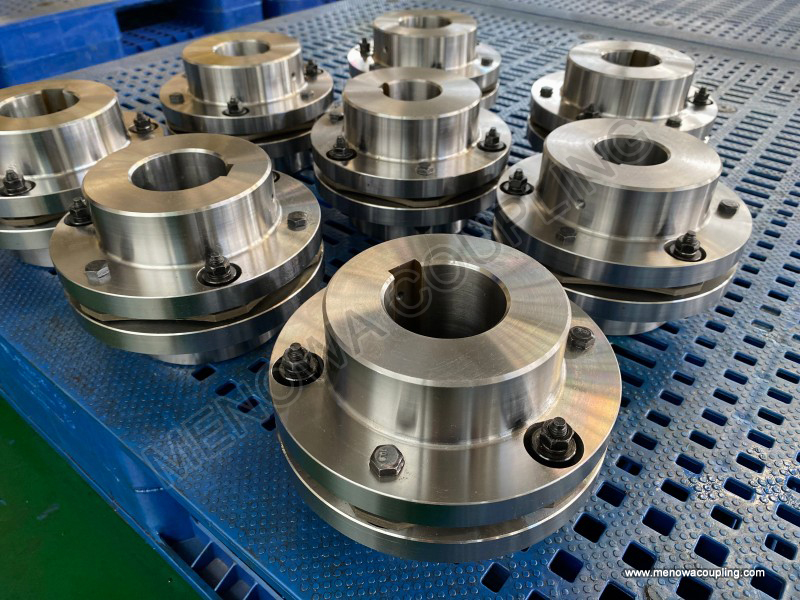
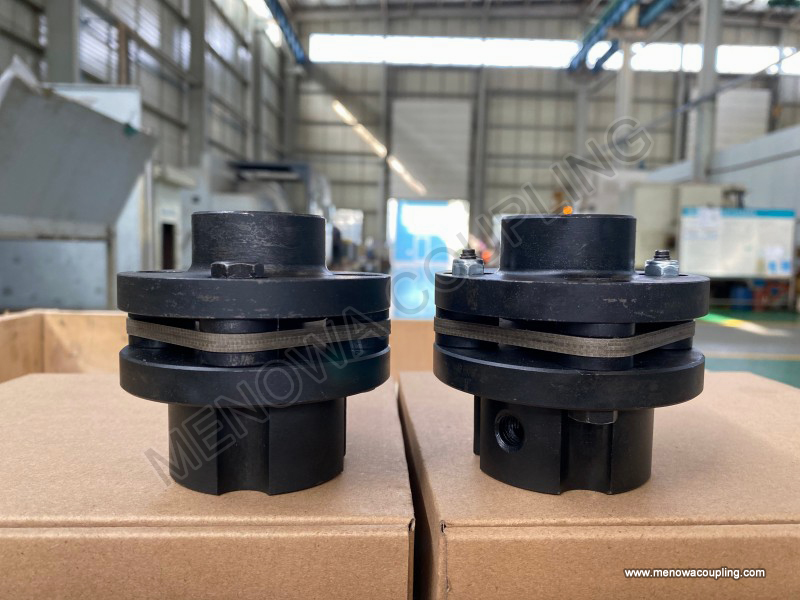
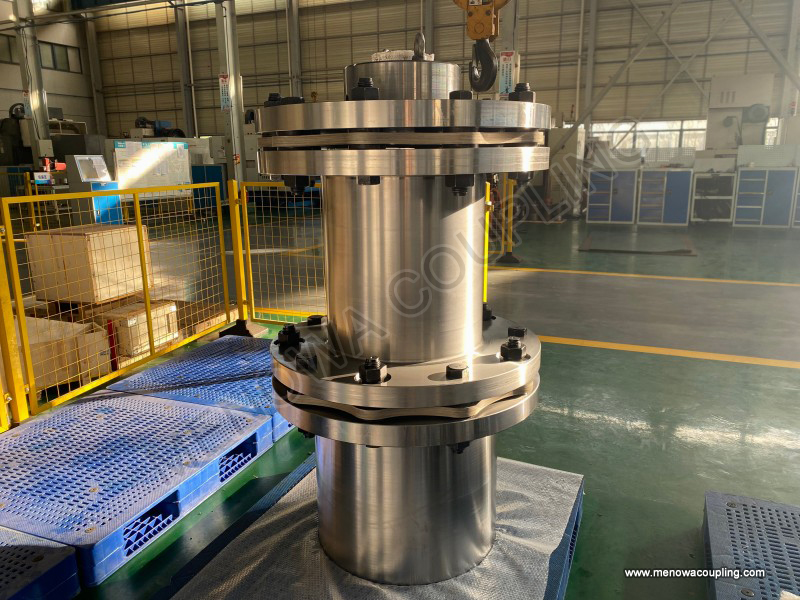
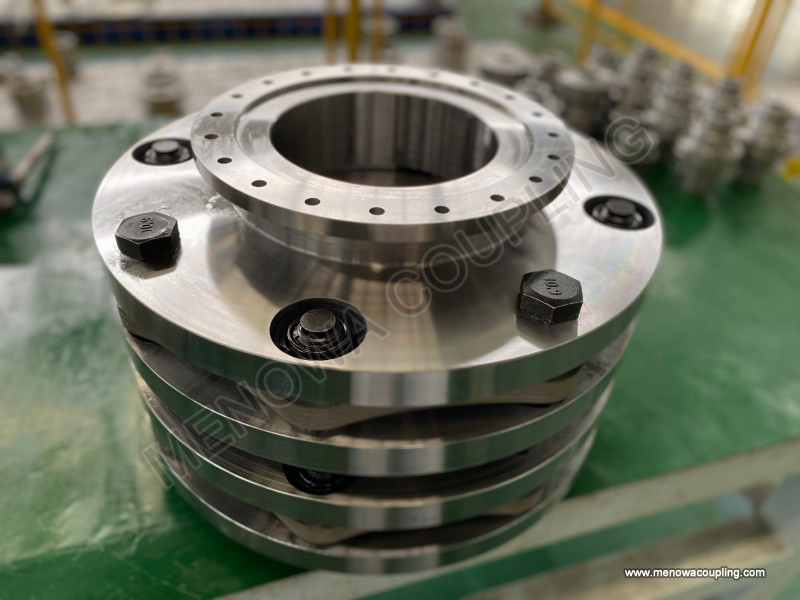
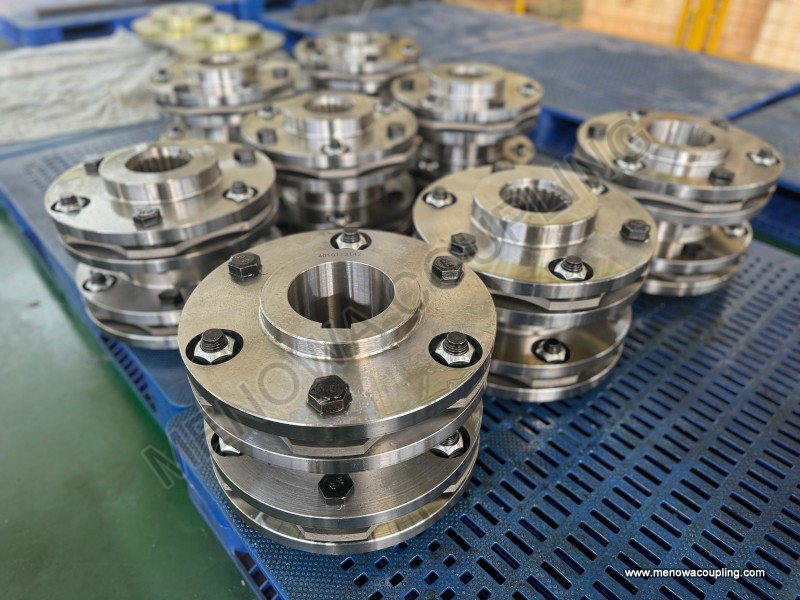
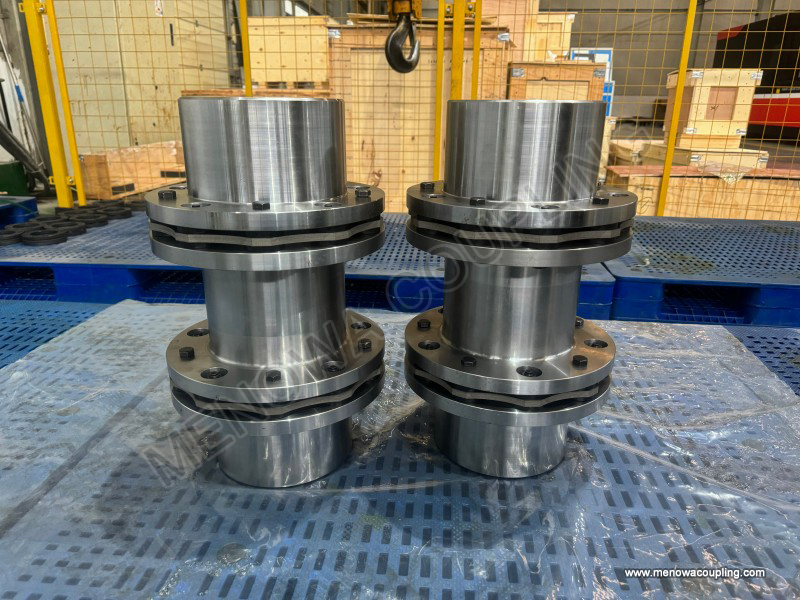
The basic structural composition of metal diaphragm coupling follows a simple and practical mechanical design logic, without complex transmission accessories or easily damaged movable friction parts, and the overall structural layout is compact and reasonable, which is convenient for on-site installation, assembly and later routine inspection work. The main components constituting the complete metal diaphragm coupling system include two shaft sleeves used for fastening and connecting with the driving shaft and driven shaft respectively, high-strength connecting fasteners used for fixing and assembling each component, and one or multiple groups of metal diaphragm sets serving as the core functional components for torque transmission and displacement compensation. Each part cooperates closely and bears different mechanical functions in the torque transmission and deviation compensation process, forming a complete and stable power transmission and buffer integration structure. The shaft sleeves on both sides are usually designed with standard shaft hole structures, which can be closely matched and fixedly connected with the rotating shafts of driving and driven equipment through interference assembly or fastening connection methods, ensuring that the rotational torque output by the driving equipment can be stably transmitted to the coupling itself without relative slipping and torque loss during the high-speed rotation and load operation process. The high-strength connecting fasteners adopt special structural design and precise processing technology, which can maintain stable fastening performance under long-term high-speed rotation and alternating load working conditions, avoid loosening and displacement between components caused by mechanical vibration and cyclic torque impact, and ensure the overall structural stability of the coupling during long-term service. The metal diaphragm set, as the most critical core component of the entire coupling, is assembled and fixed between the two shaft sleeves through fasteners, and is the key carrier for realizing torque transmission and elastic deformation compensation. According to different structural design forms and actual application working condition requirements, metal diaphragm couplings can be divided into single diaphragm structural form and double diaphragm structural form, and different structural configurations bring different displacement compensation capabilities and application scenario applicability. The single diaphragm coupling has a relatively simpler overall structure and fewer assembly components, with a compact overall volume and convenient installation and arrangement, and is mostly suitable for mechanical transmission occasions where the installation deviation between shafts is small, the operating load is stable, and the rotation speed fluctuation range is small. Its internal single-layer or single-group diaphragm structure can realize basic axial and slight angular displacement compensation, meet the conventional operation requirements of general industrial mechanical equipment, and maintain stable transmission performance under mild and stable working conditions. The double diaphragm coupling is composed of two sets of independent metal diaphragm groups and an intermediate connecting sleeve structure, and the two diaphragm groups cooperate with each other through synchronous elastic deformation during operation, possessing stronger comprehensive compensation capability for multi-directional complex displacement deviations. This structural design can not only cope with larger axial displacement and angular offset between shafts, but also effectively compensate for radial displacement deviations that are difficult to adjust by single diaphragm structures, and is more suitable for complex working conditions with harsh installation conditions, large equipment operation vibration, and obvious thermal deformation of components.
The core working principle of metal diaphragm coupling is based on the basic elastic deformation characteristics of metal materials and the mechanical transmission law of torque transfer between components, and all power transmission and displacement compensation processes are completed through the natural elastic deformation of metal diaphragms without relying on any friction movement, relative sliding of parts, or auxiliary lubricating media. When the mechanical equipment starts to operate, the driving shaft drives the connected coupling shaft sleeve to rotate synchronously, and the rotational torque is evenly transmitted to the metal diaphragm group through the fastened connecting parts. Under the action of torque load, the metal diaphragm undergoes slight and controllable elastic deformation within the allowable stress range of the material, and the torque is continuously and stably transmitted from the diaphragm group to the other shaft sleeve and the driven shaft connected to it, thus realizing the synchronous rotation and power transmission between the driving equipment and the driven equipment. In this whole torque transmission process, all components of the coupling keep fixed assembly positions without any relative movement or friction wear between parts, which fundamentally avoids the mechanical loss and component aging problems caused by long-term friction and abrasion in traditional coupling operation. At the same time, when relative displacement and angular misalignment occur between the two connected rotating shafts due to installation errors, thermal expansion, mechanical vibration and other factors, the metal diaphragm group will automatically produce corresponding adaptive elastic deformation according to the actual deviation state. This elastic deformation can effectively absorb and buffer various irregular displacements and offsets generated between the shafts, avoid the transfer of additional bending stress and radial thrust caused by shaft misalignment to the bearings and shaft bodies of the equipment, protect the core rotating components of the equipment from damage caused by abnormal stress, and ensure that the torque transmission process always maintains a stable and efficient state even under the condition of shaft misalignment. In the high-speed rotation state, the metal diaphragm will bear multiple types of mechanical stress simultaneously, including membrane stress generated by torque transmission, centrifugal stress generated by high-speed rotational operation, bending stress caused by shaft misalignment displacement, and alternating fatigue stress generated by long-term cyclic operation. The structural design and material selection of the metal diaphragm are precisely optimized according to the superposition law of these stresses, ensuring that the diaphragm always works within the safe elastic deformation range without plastic deformation or fatigue fracture, maintaining the long-term stability of deformation recovery performance, and realizing continuous and reliable displacement compensation and torque transmission functions throughout the entire service cycle of the equipment.
Material selection and structural profile design of metal diaphragms are crucial factors affecting the overall performance, service life and environmental adaptability of metal diaphragm couplings, and different material characteristics and diaphragm structural shapes directly determine the mechanical bearing capacity, deformation flexibility, high temperature resistance and corrosion resistance of the coupling. The metal materials used for processing and manufacturing diaphragm components are mostly high-quality alloy metal materials with high tensile strength, good elastic recovery performance, strong fatigue resistance and excellent corrosion resistance. These metal materials have stable mechanical properties under high temperature, low temperature and alternating load working conditions, will not produce performance attenuation, structural aging or elastic failure due to changes in external ambient temperature and long-term cyclic stress action, and can maintain consistent elastic deformation and torque transmission effects for a long time. Compared with ordinary carbon steel materials, the special alloy materials selected for diaphragms have better fatigue resistance, can withstand millions of times of cyclic deformation and alternating torque impact without fatigue damage, and are very suitable for mechanical equipment that needs continuous and uninterrupted operation for a long time. In terms of diaphragm structural profile design, metal diaphragms have three common structural profile forms, including linear profile, conical profile and curved profile, and each profile design has unique mechanical stress distribution characteristics and applicable working condition scenarios. The linear profile diaphragm has a simple processing technology and uniform overall thickness, with stable basic stress distribution, suitable for conventional load and conventional speed transmission occasions, and can meet the displacement compensation and torque transmission requirements of most general industrial equipment. The conical profile diaphragm is designed according to the uniform centrifugal stress distribution principle, which can make the centrifugal stress borne by each position of the diaphragm tend to be consistent during high-speed rotation, avoid local stress concentration caused by rotational operation, reduce the fatigue loss of the diaphragm in high-speed working state, and is more suitable for high-speed rotating mechanical transmission systems. The curved profile diaphragm adopts the design concept of uniform shear stress distribution, which can evenly distribute the shear stress generated by torque transmission and displacement deformation on the entire diaphragm structure, reduce the local maximum stress value of the diaphragm, improve the deformation flexibility and stress bearing capacity of the diaphragm, and adapt to working conditions with large torque transmission and complex multi-directional displacement compensation requirements. In addition to diaphragm materials and profiles, the structural thickness of the diaphragm, the number of diaphragm groups and the aperture layout of fastening connection positions will also affect the overall performance of the coupling. Reasonable matching of diaphragm thickness and quantity can balance the torsional stiffness and deformation flexibility of the coupling, adjust the critical speed of the shaft system, effectively optimize the torsional vibration characteristics of the mechanical transmission system, and avoid resonance problems during equipment operation.
Compared with other types of couplings commonly used in mechanical transmission systems, metal diaphragm couplings have prominent comprehensive performance advantages in structural design, operating performance, later maintenance and environmental adaptation, making them stand out in various complex and harsh industrial application scenarios. First of all, the all-metal structural design of metal diaphragm couplings enables them to have excellent high temperature resistance and low temperature resistance, and can work normally and stably in extreme temperature environments where non-metal elastic couplings cannot operate. Non-metal elastic elements such as rubber and plastic are prone to softening, deformation, aging and failure in high temperature environments, and will become brittle and cracked in low temperature environments, losing elastic buffering and displacement compensation functions, while metal diaphragm couplings rely entirely on metal elastic deformation, with stable material performance in a wide temperature range, and can adapt to high-temperature production links in thermal energy, chemical industry and metallurgical industries as well as low-temperature operation environments in cold storage and cryogenic equipment. Secondly, metal diaphragm couplings have good corrosion resistance, and the selected alloy diaphragm materials can resist the erosion of various chemical media such as weak acid, weak alkali and humid corrosive gas, and will not be corroded, deformed or damaged in humid, dusty and chemically corrosive working environments, maintaining long-term stable working performance. Thirdly, the internal structure of metal diaphragm couplings has no relative friction parts and no wearing parts, and the whole operation process does not need any lubricating oil, grease and other lubricating media, realizing truly maintenance-free operation. Traditional gear couplings and chain couplings need regular lubrication maintenance and oil replacement, with high later maintenance cost and complex operation, and are prone to equipment failure caused by insufficient lubrication or lubricant deterioration, while metal diaphragm couplings reduce later maintenance work to a minimum, effectively reducing the operation and maintenance cost of mechanical equipment and improving the overall operation efficiency of the production line. In addition, metal diaphragm couplings have small reaction force during displacement compensation, high transmission accuracy, stable rotational speed synchronization performance, can maintain precise torque transmission and rotational speed coordination in high-precision mechanical transmission occasions, and will not affect the transmission accuracy of the equipment due to shaft displacement and vibration. At the same time, the all-metal structure has long service life, strong anti-fatigue ability, and can adapt to long-term continuous uninterrupted operation of industrial equipment, reducing the frequency of coupling replacement and equipment shutdown maintenance, and improving the continuous operation capacity of the entire production system.
Metal diaphragm couplings are widely used in multiple industrial fields and mechanical equipment types, covering high-speed power transmission, precision manufacturing and processing, energy power operation, chemical industrial production, metallurgical rolling processing, environmental protection water treatment and many other core industrial sectors, and can meet the differentiated transmission needs of different working conditions and different mechanical equipment. In the field of energy power equipment, metal diaphragm couplings are applied to the shaft connection and torque transmission of various power generation equipment, fans, water pumps and compressor units. Such equipment usually operates continuously for a long time, with high rotation speed, large operation load and high requirement for equipment operation stability, and slight shaft misalignment will cause large equipment vibration and power loss. The displacement compensation and stable torque transmission performance of metal diaphragm couplings can effectively buffer the vibration generated by the operation of power equipment, ensure the stable operation of power transmission shaft systems, and reduce the failure rate of power equipment. In the field of precision mechanical manufacturing and processing equipment, metal diaphragm couplings are used in the transmission connection of precision machine tools, automated processing equipment and servo transmission systems. These mechanical equipment have extremely high requirements for transmission accuracy and rotational speed synchronization, and need to ensure the precise coordination of mechanical motion and processing accuracy. The high transmission accuracy and small vibration characteristics of metal diaphragm couplings can avoid transmission errors caused by shaft displacement, ensure the processing precision and operation stability of precision equipment, and meet the production and processing requirements of high-precision mechanical parts. In the chemical and petrochemical industry, the production equipment often works in high-temperature, high-pressure and corrosive medium environments, and ordinary non-metal couplings are easy to age and fail, while metal diaphragm couplings have high temperature resistance and corrosion resistance, adapting to the harsh working environment of chemical production equipment, ensuring the stable operation of chemical reaction equipment, conveying pumps and mixing equipment, and maintaining the continuity of chemical production processes. In the metallurgical and rolling industry, the production equipment has heavy operation load, frequent load changes and large mechanical vibration, and the metal diaphragm coupling has strong load-bearing capacity and anti-fatigue performance, which can withstand the impact of alternating load and mechanical vibration in the metallurgical production process, ensure the stable operation of rolling equipment and conveying equipment, and avoid production interruption caused by coupling failure. In the environmental protection and water treatment industry, various water pumps, blowers and sewage treatment conveying equipment need long-term continuous operation, with humid and dusty working environment. The maintenance-free and corrosion-resistant characteristics of metal diaphragm couplings reduce the maintenance work of environmental protection equipment, ensure the long-term stable operation of water treatment and environmental protection equipment, and reduce the operation cost of environmental protection projects.
In the actual selection, installation and operation and maintenance management process of metal diaphragm couplings, standardized operation and reasonable selection matching are needed to give full play to the comprehensive performance advantages of the coupling and extend its effective service life. In the selection stage, it is necessary to comprehensively consider multiple key factors such as the actual transmission torque of the equipment, working rotation speed, installation space size, shaft misalignment degree, external ambient temperature and medium corrosion degree. According to the actual working condition parameters of the mechanical equipment, select the appropriate coupling structural type, diaphragm material specification and diaphragm group quantity configuration, avoid performance mismatch caused by blind selection, and prevent the problem of insufficient compensation capacity or excessive structural redundancy of the coupling. For working conditions with large torque and high rotation speed, priority should be given to double diaphragm structural couplings with strong compensation capacity and high structural stability, and high-strength alloy diaphragm materials with better fatigue resistance should be matched; for conventional low-load and small-deviation working conditions, single diaphragm structural couplings with simple structure and compact volume can be selected to meet the basic transmission needs and save installation space. In the installation and assembly stage, it is necessary to strictly follow the mechanical assembly process requirements, ensure the coaxiality of the two connected shafts is adjusted within the optimal allowable range, reduce the initial installation deviation of the shaft system, avoid long-term overload deformation of the diaphragm caused by excessive initial misalignment, and reduce the additional stress of the coupling during operation. The fastening force of connecting fasteners should be uniformly controlled during installation to avoid structural deformation and local stress concentration of the diaphragm caused by uneven fastening force, ensuring the uniform stress of each part of the coupling. In the daily operation and use stage, although metal diaphragm couplings have maintenance-free characteristics, regular visual inspection and equipment operation vibration monitoring can be carried out regularly to observe whether the diaphragm has abnormal deformation, fatigue cracks and fastener loosening problems, and timely handle potential hidden dangers found to avoid small faults evolving into equipment shutdown failures. During the long-term operation of the equipment, attention should be paid to avoiding long-term overload operation and frequent sudden start-stop impact on the equipment, reducing the alternating fatigue stress of the diaphragm, and maintaining the long-term elastic deformation performance and structural stability of the metal diaphragm.
With the continuous upgrading and development of modern industrial mechanical equipment towards high speed, high precision, high efficiency and long-cycle continuous operation, the requirements for the comprehensive performance of shaft connection and torque transmission components in mechanical systems are constantly improving, and metal diaphragm couplings will have broader application prospects and greater development space in the field of mechanical transmission. The continuous progress of metal material smelting technology and mechanical precision processing technology further optimizes the mechanical performance and structural processing accuracy of metal diaphragm couplings, making their displacement compensation ability, transmission stability and fatigue resistance continuously improved, and they can adapt to more extreme and complex industrial working conditions. At the same time, with the increasing attention of various industrial enterprises to equipment operation efficiency and later maintenance cost control, the maintenance-free, long-life and high-efficiency operation characteristics of metal diaphragm couplings are more in line with the current industrial production development demand, helping enterprises reduce equipment operation and maintenance costs, improve production line operation efficiency, and ensure the stable and continuous progress of industrial production activities. As a key basic component in modern mechanical transmission systems, metal diaphragm couplings rely on their unique all-metal elastic deformation working mechanism, reasonable structural design, excellent comprehensive performance and wide environmental adaptability, and will always play an irreplaceable important role in various industrial mechanical equipment power transmission work, providing reliable basic guarantee for the stable operation and efficient production of various mechanical systems.
https://www.menowacoupling.com/industrial-coupling/metal-diaphragm-coupling.html
 WeChat
 WhatsApp