Teeth Coupling
In the complex and interconnected operational framework of modern industrial mechanical transmission systems, the stable and efficient transfer of rotational motion and torque between adjacent rotating shafts stands as an indispensable foundational requirement for the normal operation of all types of mechanical equipment. Various mechanical connection components have been developed and optimized over decades of industrial iteration to meet diverse transmission demands, adapting to different working environments, load conditions, and installation deviation scenarios. Among all these mechanical transmission connecting parts, teeth coupling has gradually become a core component widely adopted in heavy-duty industrial production, medium and high-speed transmission equipment, and mechanical systems requiring long-term continuous stable operation, relying on its unique meshing transmission structure, reliable load-bearing performance, and excellent comprehensive displacement compensation capacity. Unlike ordinary flexible couplings that rely on elastic deformation of intermediate components for power transmission and rigid couplings that lack any deviation compensation function and require extremely high installation alignment accuracy, teeth coupling integrates the structural advantages of rigid transmission and flexible adaptive adjustment, perfectly balancing high torque transmission efficiency and certain shaft misalignment tolerance, making it irreplaceable in many key industrial transmission links that cannot be replaced by other types of coupling structures.
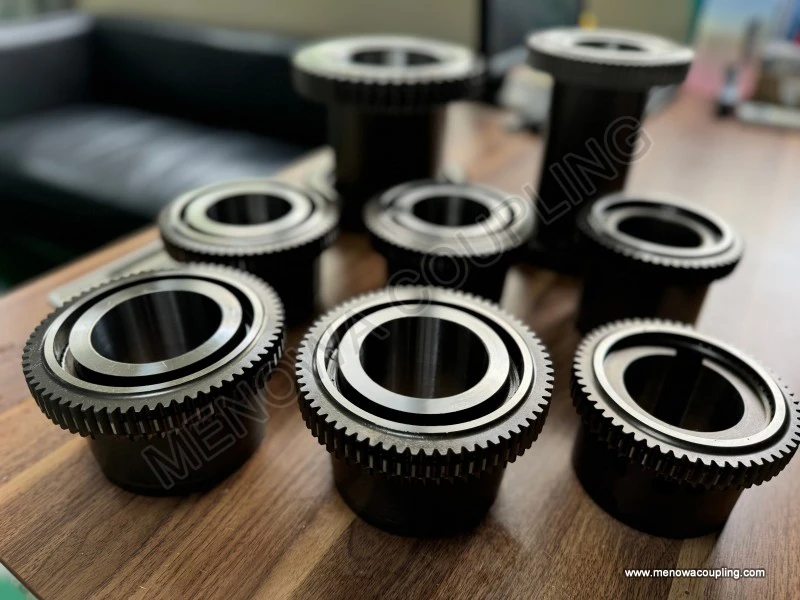
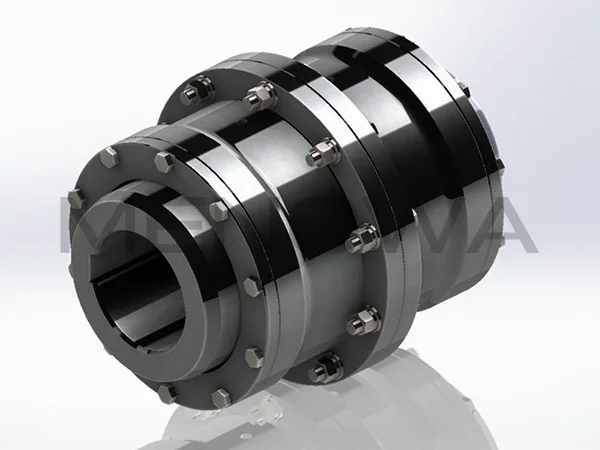
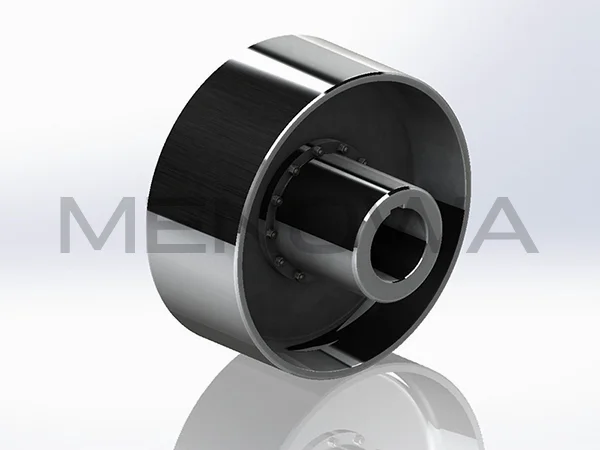
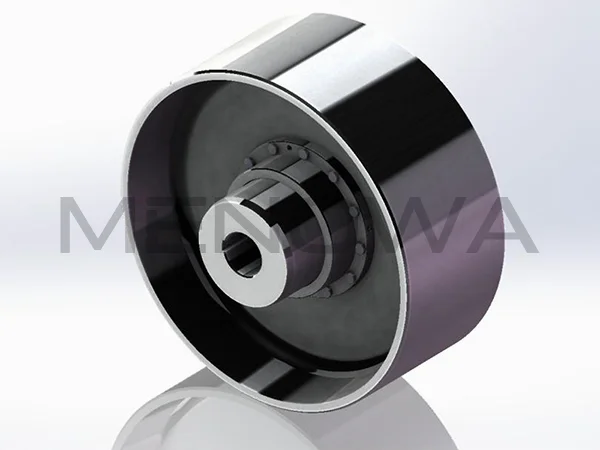
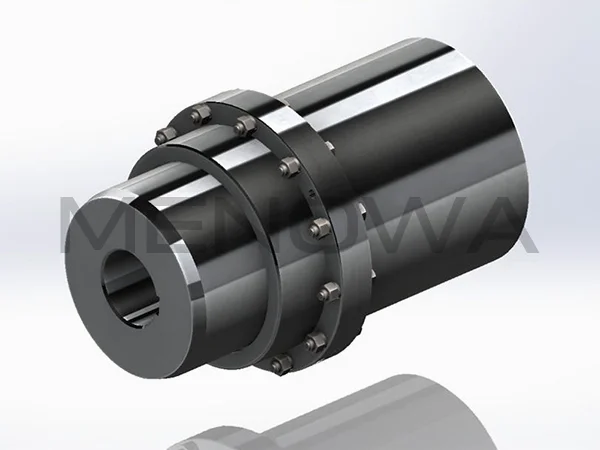
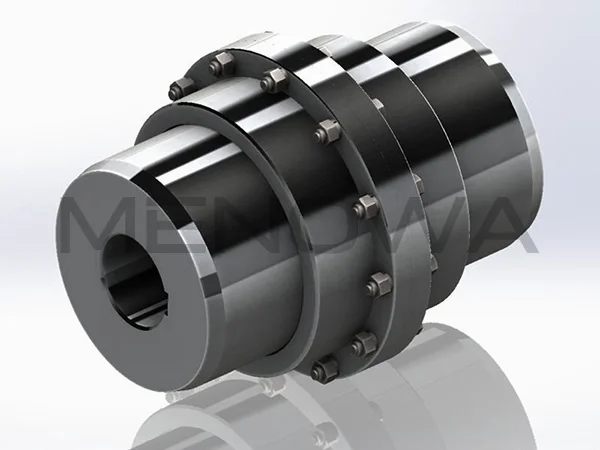
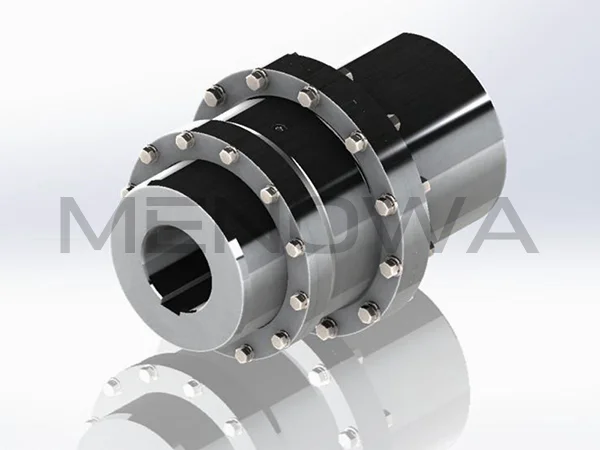
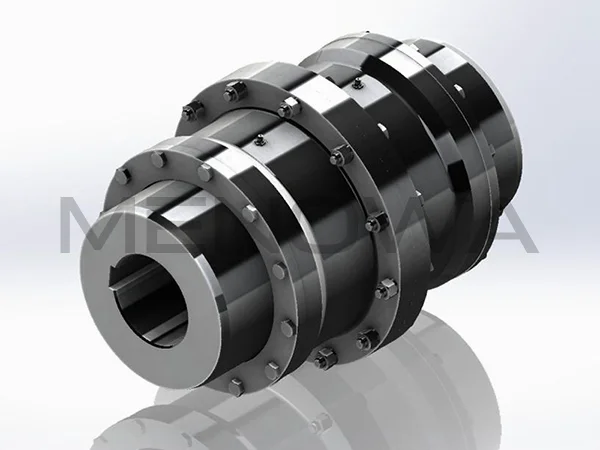
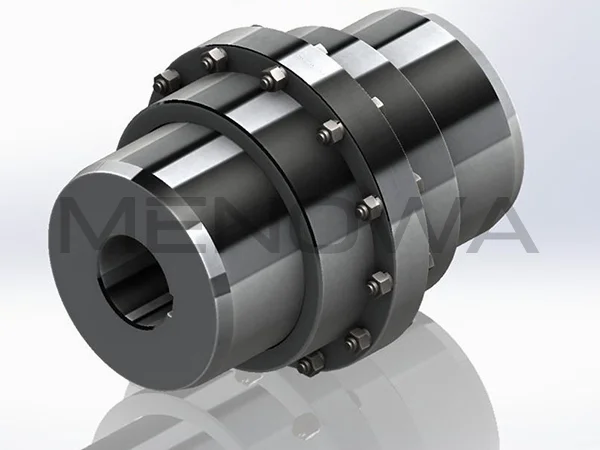
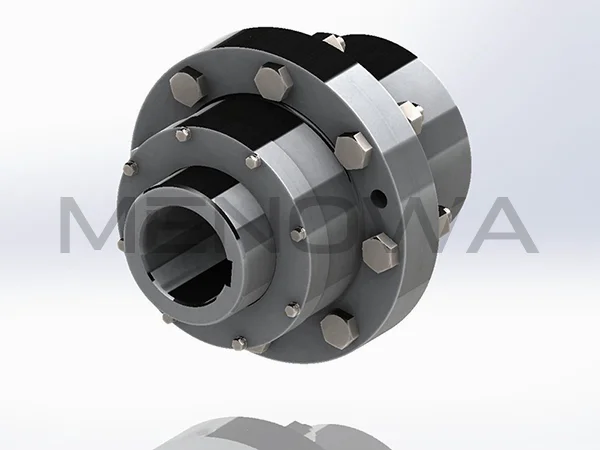
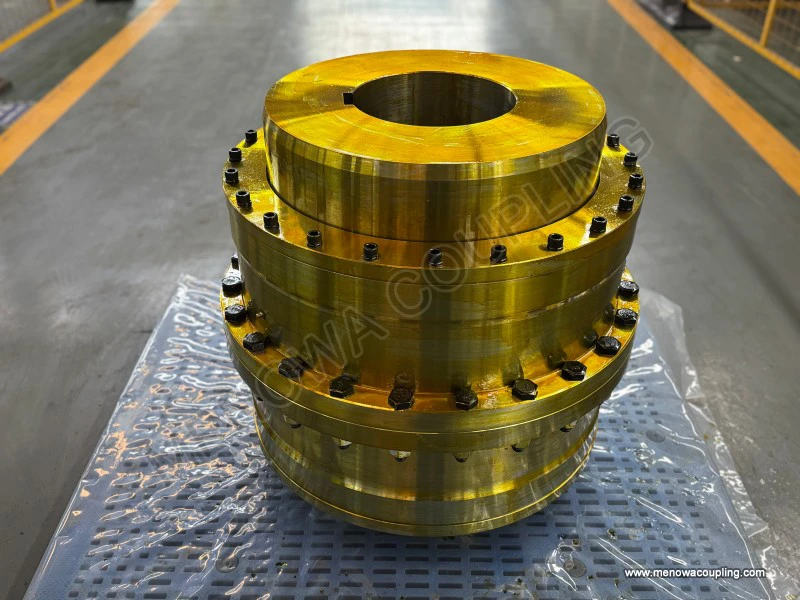
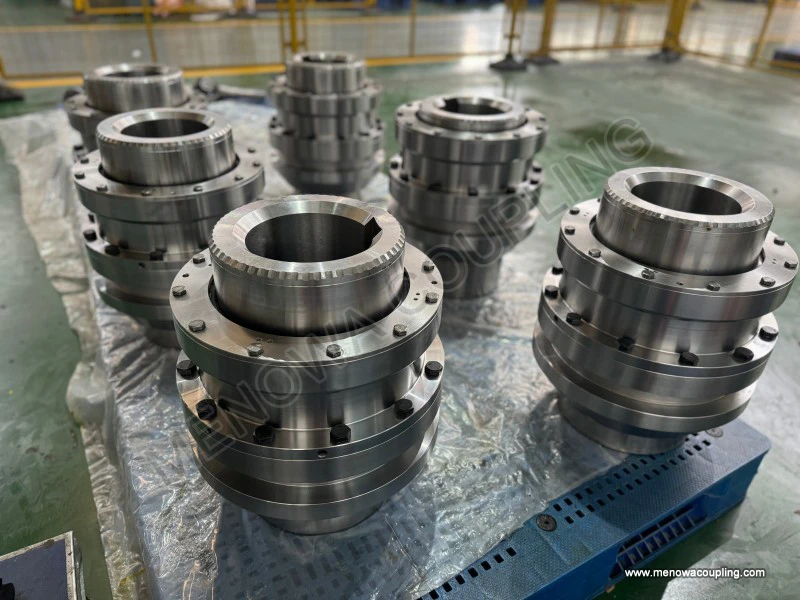
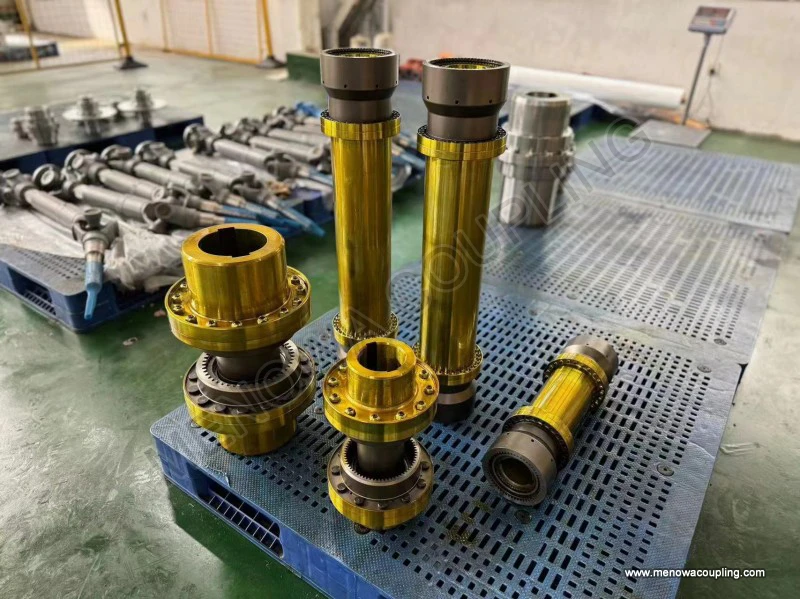
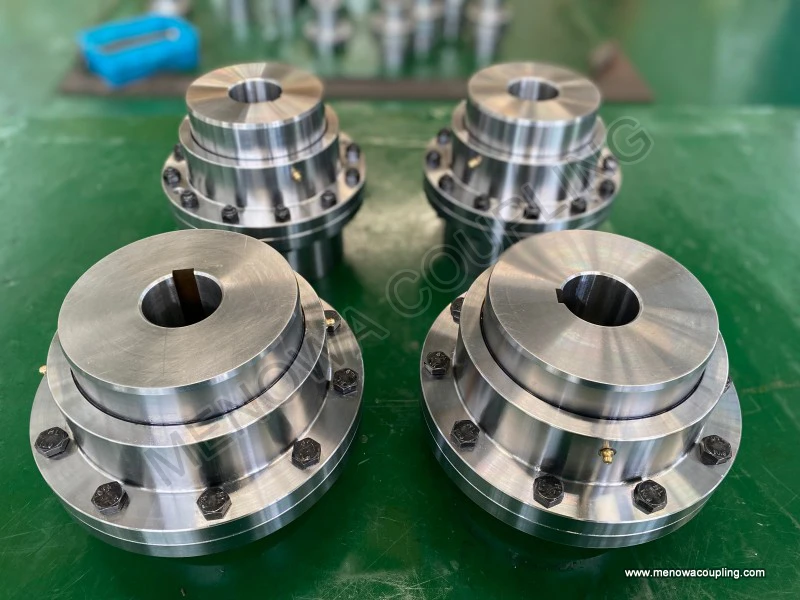
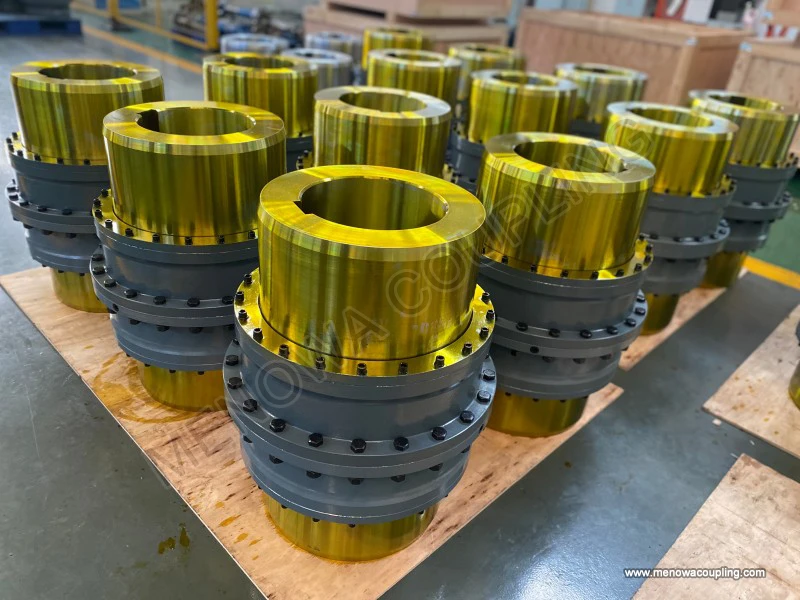
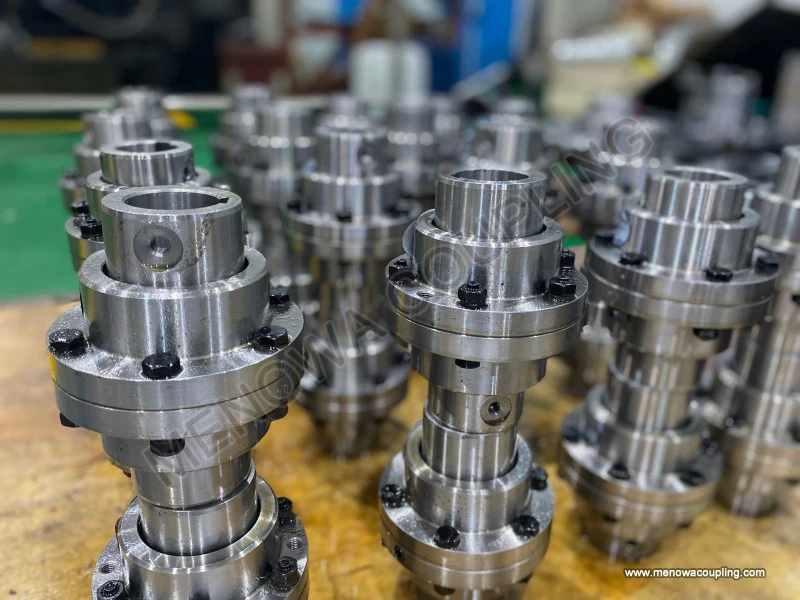
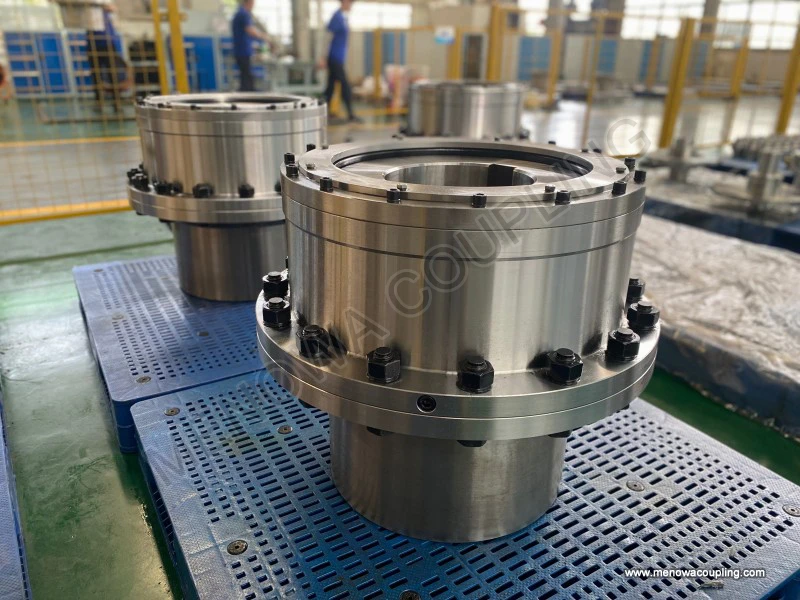
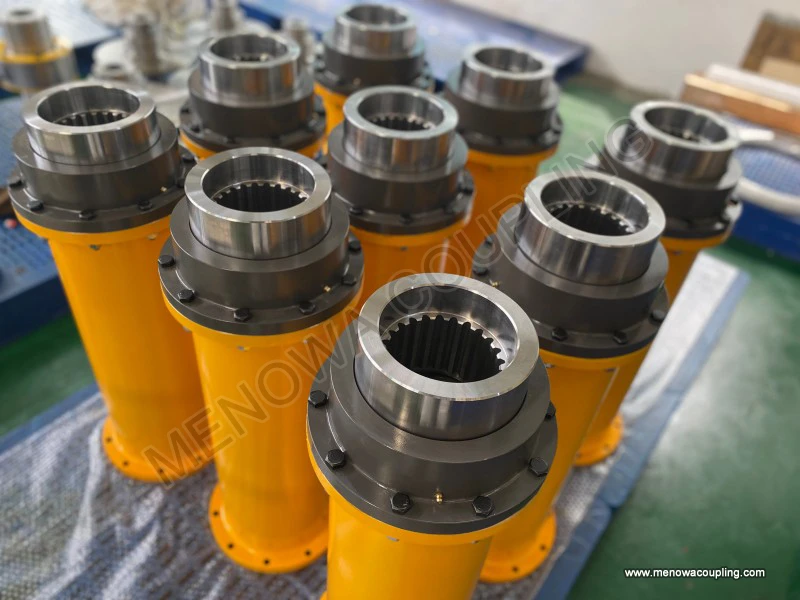
The basic composition and structural layout of teeth coupling are derived from the precise meshing cooperation between internal and external gear parts, and the overall structural design follows the mechanical principles of gear transmission and mechanical connection locking, without redundant auxiliary structures that affect transmission stability and service life. The main body of a standard teeth coupling is composed of two core matching parts, including external gear half couplings installed and fixed on the driving shaft and driven shaft respectively, and internal gear rings that mesh and cooperate with the external teeth. In the actual assembly process, each external gear half coupling is firmly connected to the shaft end of the driving and driven equipment through key connection structures or shrink-fit connection methods, ensuring that there is no relative rotational sliding between the coupling and the shaft during the entire power transmission process, avoiding power loss and mechanical vibration caused by connection looseness. The internal gear rings are sleeved on the outer side of the external teeth, and the two internal gear rings are tightly connected as a whole through high-strength fastening bolts and locking parts, forming a closed meshing transmission space inside the coupling. This compact structural layout enables the teeth coupling to maintain a small overall installation size and occupy limited axial and radial space of the equipment while bearing large torque loads, which is very suitable for mechanical equipment with compact internal structural arrangement and limited installation space for transmission components.
The core working mechanism of teeth coupling centers on the gear meshing transmission principle and the relative sliding adaptive adjustment characteristics between meshing tooth surfaces during operation. When the driving equipment starts to operate and drive the driving shaft to rotate synchronously, the external gear half coupling fixed on the driving shaft will rotate synchronously with the shaft body, and the rotational torque and power will be transmitted to the internal gear ring through the continuous meshing contact between the external teeth and the internal teeth. Then, the integrated internal gear ring drives the external gear half coupling on the driven shaft side to rotate synchronously through the same meshing action, finally realizing the synchronous rotation and stable power transmission between the driving shaft and the driven shaft. In the ideal installation state where the driving shaft and the driven shaft are completely coaxial without any radial, axial, or angular deviation, the meshing contact between the internal and external teeth is uniform and stable, the stress distribution on each tooth surface is balanced, and the coupling only undertakes the basic torque transmission work without any additional friction and wear caused by relative displacement. However, in actual industrial on-site installation and long-term equipment operation, it is almost impossible to maintain the absolute coaxial state of the two shafts all the time. On the one hand, limited by the precision of mechanical processing equipment and manual installation operation errors, there will inevitably be tiny initial alignment deviations between the driving shaft and the driven shaft during the equipment assembly stage. On the other hand, under the influence of long-term equipment operation vibration, mechanical component wear, thermal expansion and contraction of metal materials caused by equipment heating, and slight foundation settlement of mechanical equipment, various relative displacements between the two shafts will gradually occur and accumulate in the later operation process.
It is in this actual working scenario with inevitable shaft misalignment that the outstanding adaptive compensation performance of teeth coupling is fully reflected. When radial deviation, axial displacement, and angular deflection occur between the driving shaft and the driven shaft, the meshing tooth surfaces of the internal and external teeth of the coupling will produce regular and gentle relative axial sliding and slight contact angle adjustment during each rotation cycle. This natural relative movement between tooth surfaces does not affect the basic torque transmission function of the coupling, but can automatically offset and adapt to various comprehensive deviations between the two shafts, avoiding additional bending stress, shear stress, and mechanical vibration generated on the shaft body and transmission components due to shaft misalignment. This effective compensation function fundamentally solves the common mechanical failure problems of traditional rigid couplings, such as easy shaft deformation, serious component wear, and frequent equipment shutdown and maintenance caused by inability to adapt to shaft displacement. At the same time, compared with elastic couplings that rely on elastic parts to absorb vibration and compensate deviation, teeth coupling will not produce elastic fatigue deformation and aging failure of intermediate materials due to long-term high-load operation, so it can maintain stable transmission performance and long service life even under harsh working conditions such as heavy load, high torque, and continuous long-term operation.
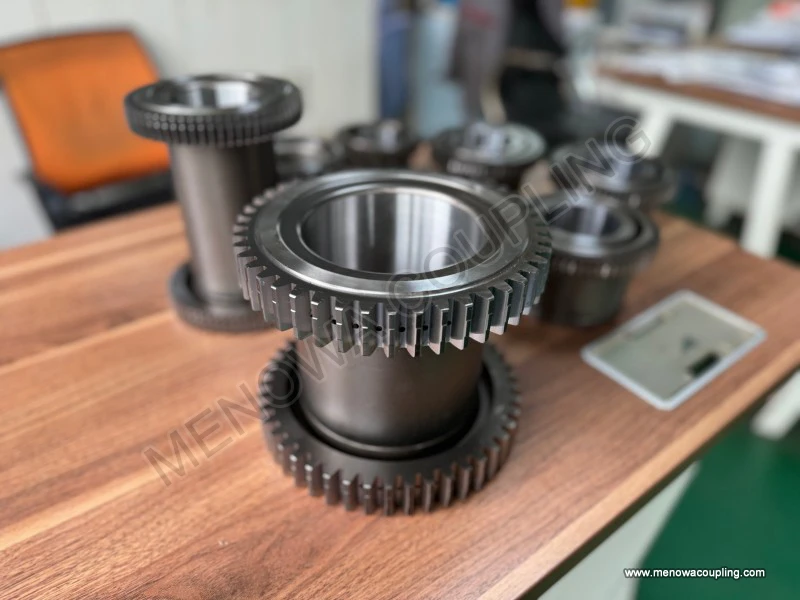
Tooth profile design is the key core factor that determines the load-bearing capacity, compensation effect, wear degree and overall service life of teeth coupling, and different tooth shape structures are designed and optimized according to different industrial application scenarios and load working conditions. The two most mainstream tooth profile types used in teeth coupling production and manufacturing are straight tooth structure and drum-shaped tooth structure, and the two tooth shapes have obvious differences in structural characteristics and applicable working scenarios. The straight tooth structure is the most basic and traditional tooth profile design of teeth coupling, with simple processing technology and low manufacturing difficulty. The tooth surface of straight teeth is flat and regular, the meshing contact area is stable, and it has good performance in transmitting stable torque under the condition of small shaft misalignment and stable load operation. However, straight tooth teeth coupling has certain limitations in deviation compensation ability. When the angular deviation between the two shafts is relatively large, the contact stress at the edge of the straight tooth surface will be concentrated, resulting in uneven tooth surface wear, local excessive friction and even tooth surface damage in severe cases. Therefore, straight tooth teeth coupling is mostly used in conventional industrial transmission occasions with low operation speed, small load fluctuation and high installation alignment accuracy.
The drum-shaped tooth structure is an optimized upgraded design based on the straight tooth structure, and it is also the most widely used tooth profile form in modern high-performance teeth coupling. The external teeth of the drum-shaped tooth coupling are processed into a spherical curved structure, the center of the sphere is located on the central axis of the gear, and the tooth top and tooth root of the external teeth present a smooth curved transition shape. This special curved tooth surface design enables the meshing contact position between internal and external teeth to be automatically adjusted according to the angular and radial deviation of the two shafts during operation. Even when there is a relatively large angular deflection and comprehensive displacement between the driving shaft and the driven shaft, the meshing contact between the tooth surfaces can still remain in the middle area of the tooth surface, avoiding edge stress concentration and local excessive wear. The drum-shaped tooth structure greatly improves the angular displacement compensation capacity of the teeth coupling, enhances the uniformity of tooth surface stress distribution, and effectively reduces the friction and wear degree of the meshing parts during operation. Although the processing and manufacturing process of drum-shaped teeth is more complex and the processing precision requirements are higher, its comprehensive mechanical performance and operation stability are far better than straight tooth structure, so it is widely used in heavy machinery transmission, high-speed operation equipment, and mechanical systems with large load impact and frequent start-stop working conditions.
Material selection and surface heat treatment process of teeth coupling components directly determine the mechanical strength, wear resistance, pressure resistance and fatigue resistance of the coupling, and are the basic guarantee for the long-term reliable operation of the coupling under various harsh working conditions. Teeth coupling needs to bear instantaneous impact load, cyclic shear stress and continuous friction wear during long-term operation, so the selected metal materials must have high hardness, good toughness, strong fatigue resistance and excellent hardenability. Conventional teeth coupling blanks are mostly made of high-quality alloy steel materials with stable chemical composition and uniform internal metal structure. This type of alloy steel has good mechanical properties after forging and forming, with high overall structural strength, not easy to produce deformation and fracture under heavy torque and impact load, and has good processing performance, which is convenient for subsequent gear tooth cutting, finishing and other processing procedures. After the rough processing of the coupling blank and the finishing of the gear tooth profile, strict surface heat treatment will be carried out on the meshing tooth surface and the key stress-bearing parts. The main purpose of the heat treatment process is to significantly improve the surface hardness and wear resistance of the tooth meshing area, while maintaining the good toughness of the coupling matrix part, avoiding the overall brittle fracture of the coupling while ensuring that the tooth surface is not easy to wear and scratch.
After heat treatment and finishing processing, the tooth surface of the teeth coupling has high surface smoothness and precise meshing size accuracy, which can reduce the friction coefficient during meshing operation and ensure the stability of power transmission. In addition to the gear parts, the fastening bolts and connecting locking parts used for assembling the internal gear ring also adopt high-strength alloy materials and special strengthening treatment processes. These fastening parts need to maintain stable locking force under long-term vibration and load impact, avoiding bolt loosening, connection displacement and other problems that affect the safe operation of the coupling. The scientific matching of material performance and heat treatment process makes the teeth coupling adapt to low-temperature cold environment, high-temperature heating environment, dusty working environment and other complex industrial scenarios, and will not have obvious performance attenuation and structural failure due to changes in external environmental conditions.
Lubrication and sealing system is an indispensable auxiliary functional part of teeth coupling, and its good working state is directly related to the operation friction degree, wear rate and overall service life of the coupling. Different from some open transmission mechanical parts, the internal meshing tooth surface of teeth coupling is in a closed working space, and the relative sliding friction between tooth surfaces occurs continuously during operation. If there is no effective lubrication protection, the direct dry friction between metal tooth surfaces will lead to rapid tooth surface wear, sharp temperature rise during operation, increased transmission resistance, and even tooth surface gluing, scratching and early failure of the coupling in a short time. The lubrication work of teeth coupling mainly relies on filling high-performance lubricating grease or liquid lubricating oil inside the closed meshing cavity. The lubricating medium can form a uniform and stable oil film on the surface of each meshing tooth, isolating the direct contact between metal tooth surfaces, reducing friction resistance and mechanical wear during relative sliding, and taking away part of the heat generated by friction during operation to avoid excessive temperature accumulation inside the coupling.
The sealing structure of teeth coupling is set at the assembly gap between the internal gear ring and the external gear half coupling, adopting reliable sealing accessories with good wear resistance and aging resistance. The core function of the sealing system is to lock the internal lubricating medium inside the coupling meshing cavity to prevent lubricating grease or lubricating oil from leakage caused by long-term rotation and vibration, and at the same time block external dust, metal debris, moisture and other impurities from entering the internal meshing area. If the sealing effect is not good, on the one hand, the loss of internal lubricating medium will lead to insufficient lubrication of tooth surfaces and accelerated wear of parts; on the other hand, the entry of external impurities will cause abrasive wear between meshing tooth surfaces, damage the precision of tooth profile structure, and affect the stability of power transmission. In the daily operation and maintenance process of teeth coupling, regular inspection of sealing structure integrity and lubricating medium capacity is required, and timely supplement of lubricating materials and replacement of aging sealing accessories are carried out according to the actual operation condition, so as to ensure that the lubrication and sealing system is always in a good working state and lay a foundation for the long-term stable operation of the coupling.
The installation and commissioning process of teeth coupling is an important link to give full play to its comprehensive performance, and standardized installation operation and accurate alignment debugging can effectively reduce the initial operation wear of the coupling and extend the overall service life of the equipment. Before the formal installation of the teeth coupling, the first step is to carefully clean all coupling components and the shaft end parts of the driving and driven equipment, remove processing burrs, rust, oil stains and sundries on the surface of parts, ensure that the matching surface and meshing tooth surface are clean and smooth without any foreign matter interference. Then, the external gear half couplings are respectively installed on the shaft ends of the driving shaft and the driven shaft, and the axial installation position of the half couplings is adjusted according to the equipment transmission design requirements, so that the two half couplings are kept at the optimal meshing assembly position. After the preliminary installation and positioning of the half couplings, the coaxiality and parallelism of the two shafts need to be accurately detected and adjusted by professional detection tools, minimizing the initial radial, axial and angular deviation between the driving shaft and the driven shaft within the allowable compensation range of the teeth coupling.
After the shaft alignment is completed, the internal gear rings are sleeved on the outer side of the external teeth in place, and the high-strength fastening bolts are used for symmetrical locking and fixing. In the bolt fastening process, it is necessary to adopt the method of symmetrical gradual tightening to ensure that the locking force of each bolt is uniform, avoiding the displacement of the internal gear ring caused by uneven bolt tightening force and affecting the meshing uniformity of the tooth surfaces. After the assembly of the coupling main body is completed, the lubricating medium is injected into the closed meshing cavity according to the specified filling standard, and the sealing structure is installed and checked to ensure no leakage at all sealing positions. After the installation is completed, it is not allowed to put the equipment into full-load operation directly. Instead, no-load test operation and low-load trial operation should be carried out first to observe whether the coupling has abnormal vibration, abnormal noise and local temperature rise during operation. If abnormal operation conditions are found, the equipment should be shut down in time for rechecking and adjustment, and the formal full-load production operation can be carried out only after the test operation is stable and no abnormal problems exist. Standardized installation and commissioning can effectively avoid abnormal wear and mechanical failure of teeth coupling caused by installation deviation and assembly problems, and ensure that the coupling gives full play to its excellent transmission and compensation performance.
Daily maintenance and regular fault inspection of teeth coupling are key measures to maintain long-term efficient operation and reduce equipment failure rate and maintenance cost. In the daily equipment operation process, operators and maintenance personnel only need to conduct regular visual inspection and operation state monitoring of the teeth coupling in normal working scenarios. The main monitoring contents include whether the coupling has obvious abnormal vibration and abnormal friction noise during operation, whether there is lubricating medium leakage at the sealing parts, and whether the surface temperature of the coupling is too high. For teeth coupling operating under conventional working conditions, regular comprehensive maintenance and inspection should be carried out according to the equipment operation cycle. The maintenance work includes checking the fastening state of all connecting bolts, tightening the loose bolts in time, replacing the bolts with aging and deformation; checking the wear degree of the sealing accessories, replacing the aging and failed sealing parts to ensure good sealing effect; detecting the deterioration degree of the internal lubricating medium, cleaning the residual old lubricating materials and filling new high-performance lubricating medium regularly.
In the regular fault inspection process, it is necessary to focus on checking the wear state of the meshing tooth surface of the internal and external teeth, observe whether there are scratches, gluing, deformation and excessive wear on the tooth surface, and check whether the tooth profile integrity is good. If local excessive wear or minor damage to individual tooth surfaces is found, targeted maintenance and adjustment can be carried out in time to avoid the expansion of minor faults into major mechanical failures. For the teeth coupling that has been used for a long time and has reached the service life cycle, the key components should be regularly inspected for fatigue deformation and structural damage, and the aging and failed parts should be replaced in time. Scientific and standardized daily maintenance and regular inspection work can not only effectively reduce the failure probability of teeth coupling in the operation process, ensure the continuous and stable operation of mechanical equipment, but also prolong the overall service life of the coupling, reduce the frequency of equipment shutdown maintenance and replacement cost of parts, and create stable and reliable operating conditions for industrial production.
Teeth coupling has a wide range of practical application scenarios in modern industrial production, covering heavy industry production, mechanical equipment manufacturing, material handling and transportation, metallurgical processing, mining operation, chemical production and many other industrial fields, and it plays an irreplaceable core transmission role in different types of mechanical equipment. In the field of metallurgical industry production, many core equipment such as rolling mills, smelting auxiliary transmission equipment and metallurgical material conveying machinery need to transmit large torque and bear continuous impact load during operation, and the equipment will generate obvious mechanical vibration and component thermal expansion during long-term high-temperature operation. Teeth coupling is used in the transmission connection of these metallurgical equipment, relying on its high load-bearing capacity and good angular and radial displacement compensation performance, it can stably transmit power, adapt to shaft deviation caused by thermal expansion and vibration, and ensure the continuous operation of metallurgical production equipment under harsh high-temperature and high-load working conditions.
In the mining industry, mining excavation equipment, ore crushing and screening equipment, and mine material lifting and transportation equipment often work in dusty, high-vibration and heavy-impact working environments. The transmission shafts of these mining equipment are prone to installation deviation and operation displacement due to harsh working conditions and complex mechanical vibration. Teeth coupling can adapt to the harsh working environment of the mine, rely on its wear-resistant and pressure-resistant structural characteristics and effective deviation compensation function, maintain stable power transmission of mining equipment, reduce equipment failure caused by shaft misalignment and component wear, and ensure the smooth progress of mining operation and material transportation work. In the lifting and transportation industry, various cranes, hoisting machinery and long-distance material conveying equipment need to start and stop frequently and bear variable impact loads during operation. The excellent fatigue resistance and stable transmission performance of teeth coupling can adapt to frequent start-stop and variable load working conditions, avoid transmission failure caused by load impact, and ensure the safety and stability of lifting and transportation operation.
In the chemical industry and power production industry, many mechanical equipment such as chemical reaction stirring equipment, power generation auxiliary transmission equipment and fluid conveying pump equipment need to run continuously for a long time without frequent shutdown. The long-term continuous operation will lead to slight shaft displacement and component wear of the equipment transmission system. Teeth coupling can maintain long-term stable operation without frequent maintenance, ensure the continuous operation of chemical production and power generation equipment, avoid production interruption caused by coupling failure, and guarantee the continuity and stability of industrial production. In addition, in the field of general mechanical equipment manufacturing and precision transmission machinery, teeth coupling is also widely used in reducer matching transmission, mechanical host and auxiliary equipment connection transmission and other links, adapting to different speed and load requirements, and providing reliable basic guarantee for the normal operation of various mechanical equipment.
Compared with other common types of couplings in the market, teeth coupling has comprehensive and prominent performance advantages in structural reliability, transmission efficiency, deviation compensation capacity and service life cycle, which is why it has been widely used in industrial transmission for a long time. Compared with rigid couplings with no deviation compensation ability, teeth coupling can adapt to various shaft misalignments generated during installation and operation, avoid shaft deformation and component damage caused by rigid connection, and greatly reduce equipment maintenance frequency and failure rate. Compared with ordinary elastic couplings that rely on elastic parts for buffering and compensation, teeth coupling will not have aging failure and elastic fatigue deformation of elastic materials under long-term high-load and high-speed operation, with longer service life and more stable transmission performance, and will not produce obvious power loss caused by elastic deformation. Compared with other flexible couplings with complex structures, teeth coupling has a compact overall structure, convenient installation and maintenance, low later maintenance cost, and strong adaptability to working environment, and can maintain good working performance in various harsh industrial working conditions.
With the continuous progress of modern industrial manufacturing technology and the continuous upgrading of mechanical equipment towards high power, high load and high efficiency, the performance optimization and structural upgrading of teeth coupling are also constantly advancing. In recent years, with the development of precision machining technology, new metal material smelting technology and intelligent heat treatment process, the manufacturing precision of teeth coupling is continuously improved, the tooth profile structure design is more optimized, the material mechanical properties are further enhanced, and the lubrication and sealing structure design is more reasonable and efficient. The optimized and upgraded teeth coupling has stronger load-bearing capacity, higher transmission efficiency, better displacement compensation effect and longer service life, and can meet the higher standard transmission requirements of modern large-scale industrial mechanical equipment. At the same time, with the popularization of intelligent equipment operation and maintenance management mode, the state monitoring technology of teeth coupling is also constantly improved, which can realize real-time monitoring of the operation state, wear degree and lubrication state of the coupling, further reducing the hidden danger of equipment failure and ensuring the safe and stable operation of the transmission system.
In the overall development layout of modern mechanical power transmission systems, teeth coupling, as a key basic transmission component, will always occupy an important core position in the industrial field. Its unique meshing transmission principle, scientific and reasonable structural design, excellent comprehensive mechanical performance and wide industrial adaptability make it an indispensable important connecting part for heavy-duty, high-efficiency and long-term continuous operation mechanical transmission equipment. From basic working principle and core structural design to material selection and heat treatment processing, from installation and commissioning operation to daily maintenance and fault inspection, every link determines the overall operation effect and service life of teeth coupling. In the future industrial production and mechanical equipment upgrading process, teeth coupling will continue to rely on continuous technological innovation and performance optimization, adapt to the changing industrial transmission needs, provide stable, efficient and reliable power transmission guarantee for various industrial mechanical equipment, and make continuous contribution to the stable operation and efficient production of modern industrial systems.
https://www.menowacoupling.com/industrial-coupling/teeth-coupling.html
 WeChat
 WhatsApp