Toothed Coupling
In the intricate and interconnected framework of modern industrial mechanical transmission systems, the reliable connection between rotating shafts serves as a fundamental guarantee for the stable operation of various mechanical equipment, and toothed couplings have long occupied an indispensable core position in this vital link. As a classic type of rigid movable transmission component widely adopted in heavy-duty, medium-speed, and continuous operating industrial scenarios, toothed couplings rely on the precise meshing cooperation between internal and external gear structures to complete the efficient transmission of rotational torque and motion between adjacent driving and driven shafts. Unlike flexible couplings that rely on elastic deformation of intermediate components to achieve buffering and deviation compensation, or rigid fixed couplings that require extremely high coaxiality of installed shafts and can hardly adapt to any axis displacement, toothed couplings strike a scientific and practical balance between rigid torque transmission performance and flexible displacement compensation capability, making them suitable for complex and harsh working environments where both high torque bearing capacity and certain axis position deviation adaptation are required. The practical application value of toothed couplings lies not only in their basic mechanical connection function, but also in their excellent comprehensive performance in resisting impact loads, adapting to long-term continuous operation, coping with installation errors and shaft system runtime displacement changes, and maintaining stable transmission efficiency under diverse industrial working conditions. From heavy mining machinery and large steel metallurgical production equipment to port handling facilities, industrial fan and pump sets, and mechanical transmission systems for construction engineering equipment, toothed couplings can be seen in almost all industrial fields that require long-term stable and high-power shaft transmission, and their operating state directly affects the overall operating efficiency, equipment safety stability and subsequent maintenance cycle of the entire mechanical production line. Understanding the structural composition, working mechanism, design characteristics, application adaptation rules, installation specifications, daily maintenance logic and common failure causes of toothed couplings is not only a necessary basic knowledge for mechanical design engineers to carry out reasonable transmission system matching design, but also an important prerequisite for equipment operation and maintenance personnel to ensure long-term reliable operation of industrial equipment, reduce unnecessary equipment downtime, and extend the overall service life of transmission components.
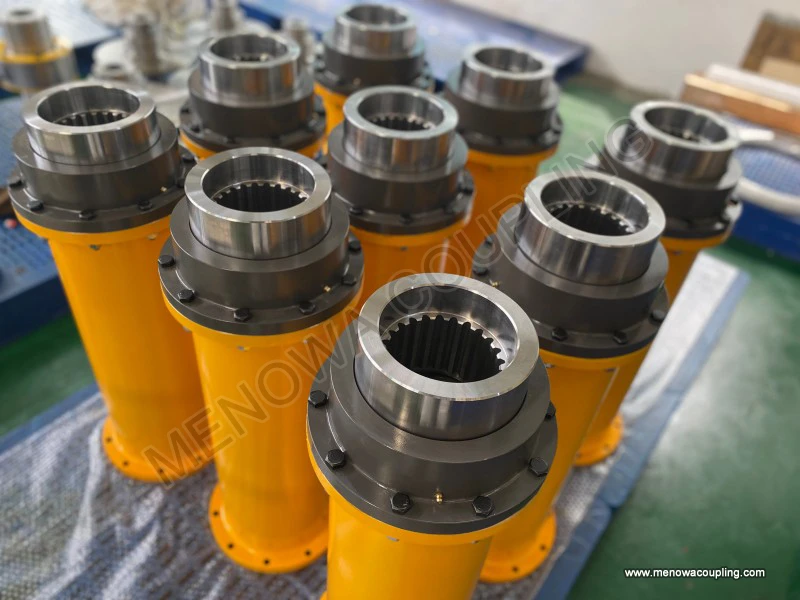
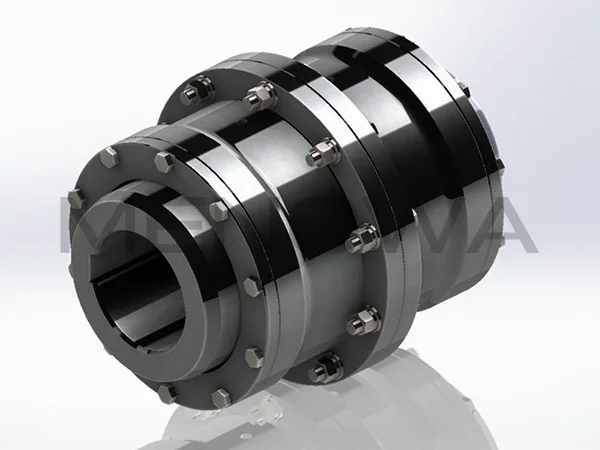
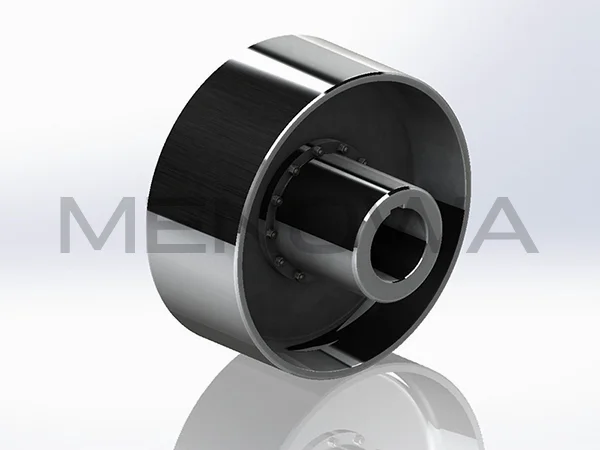
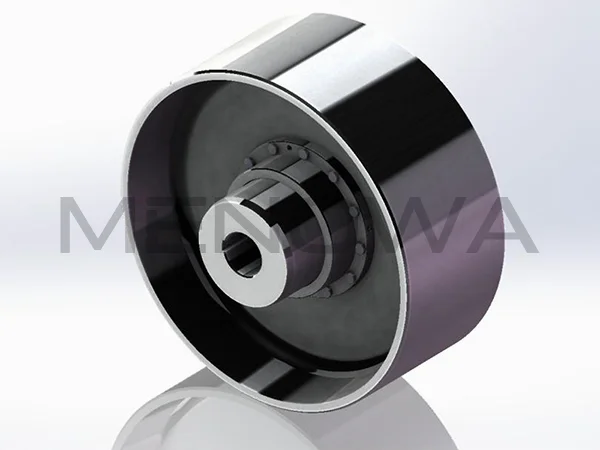
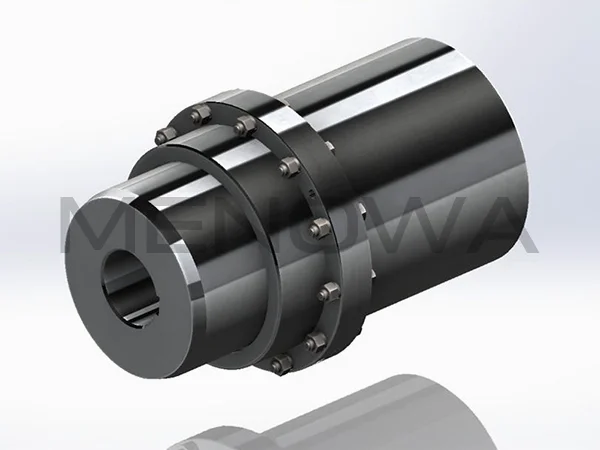
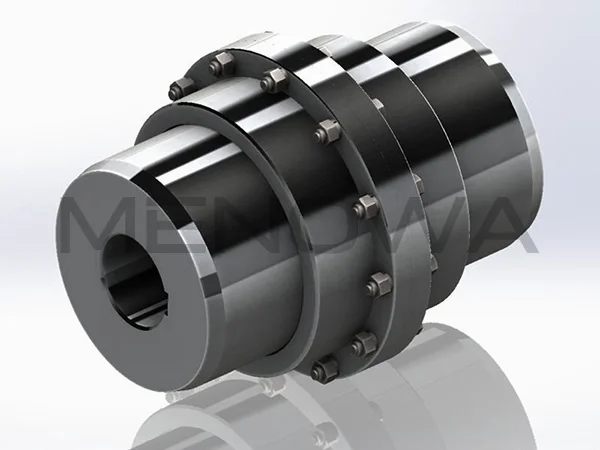
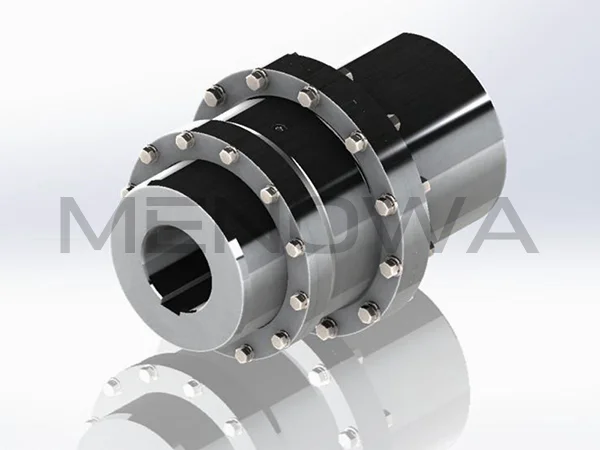
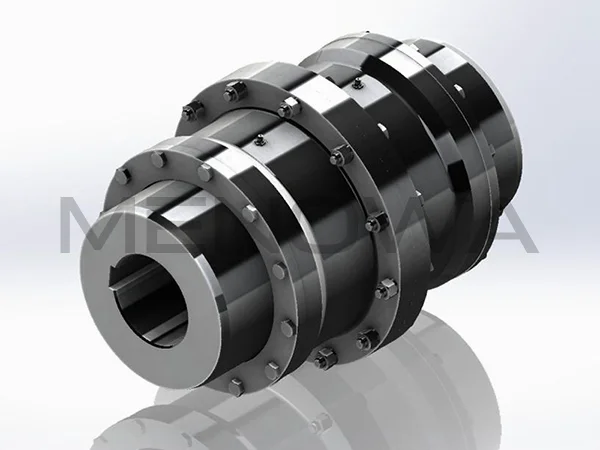
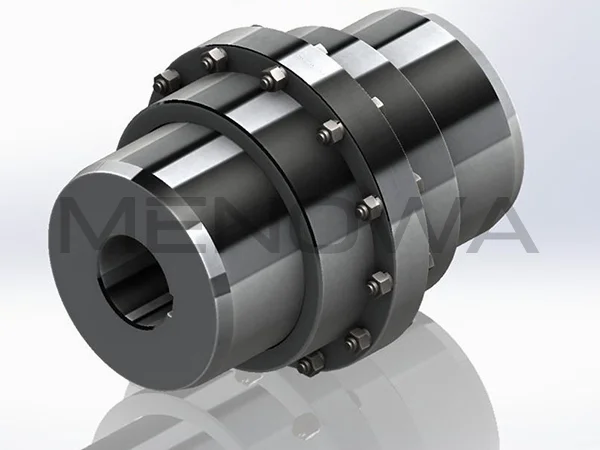
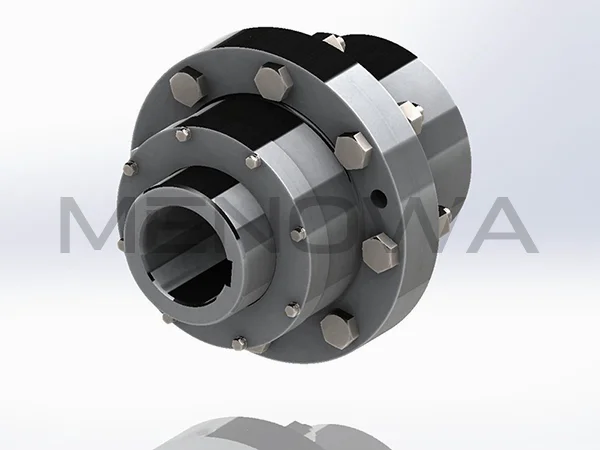
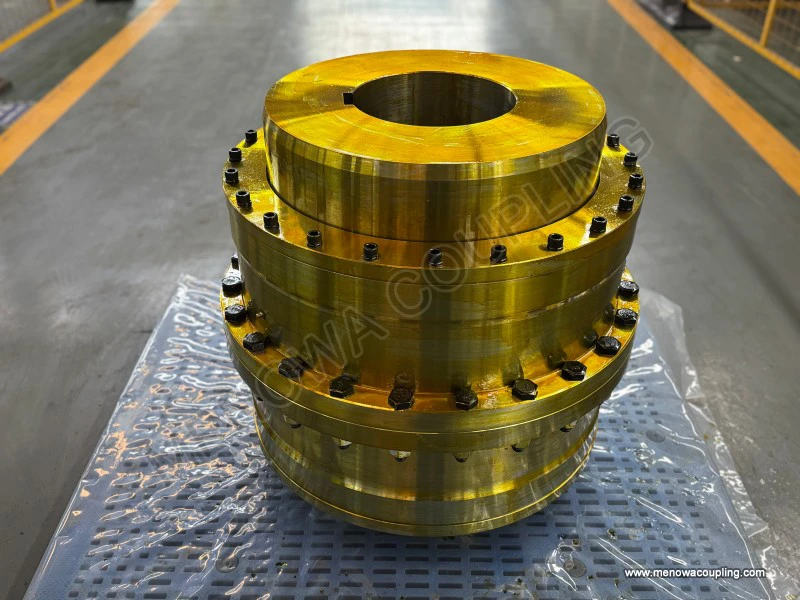
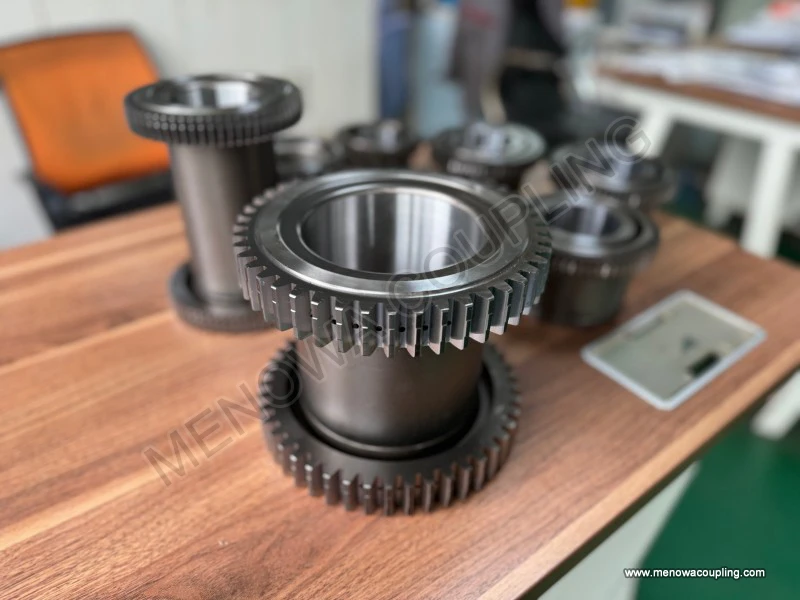
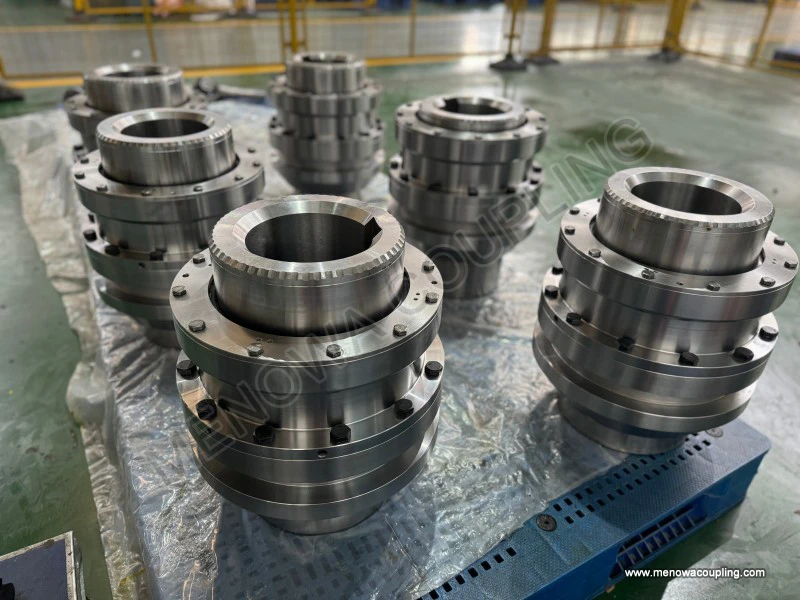
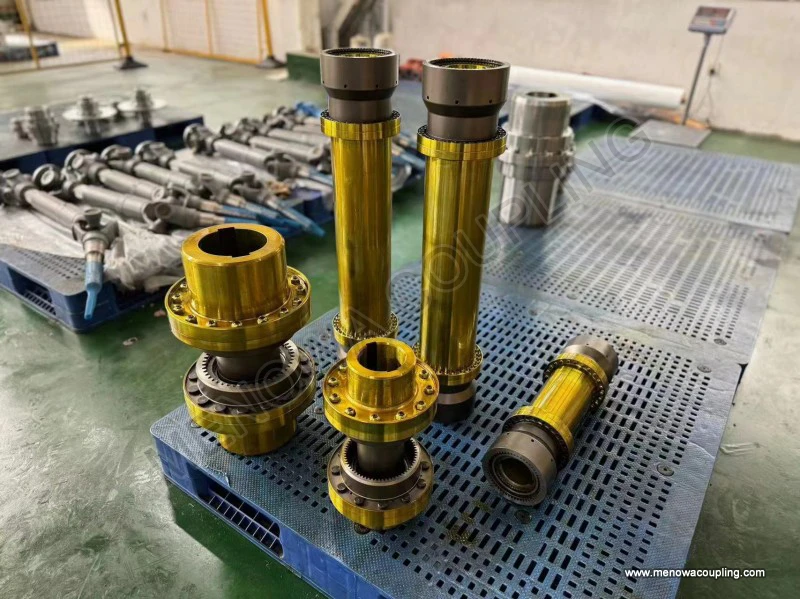
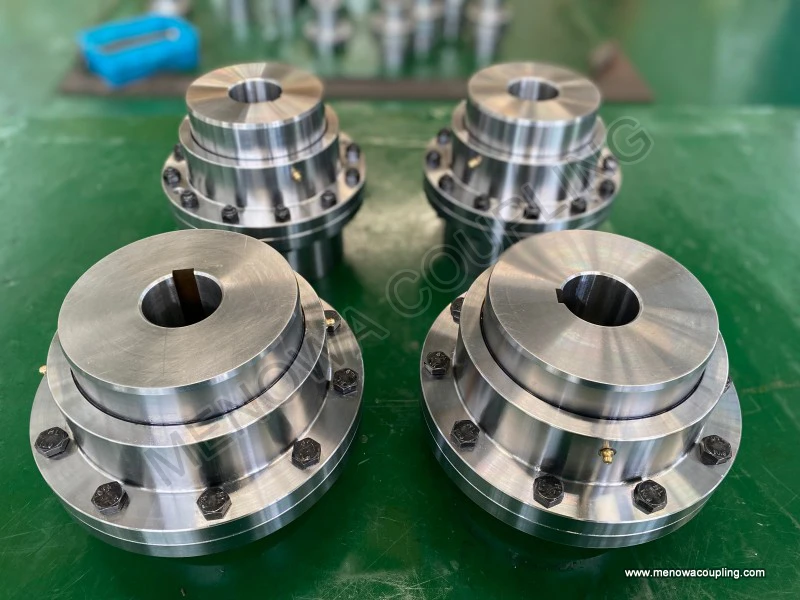
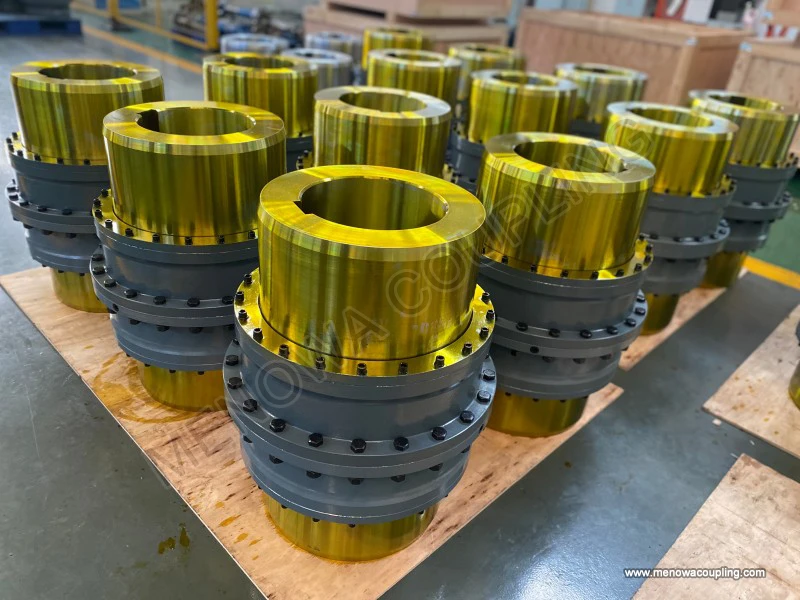
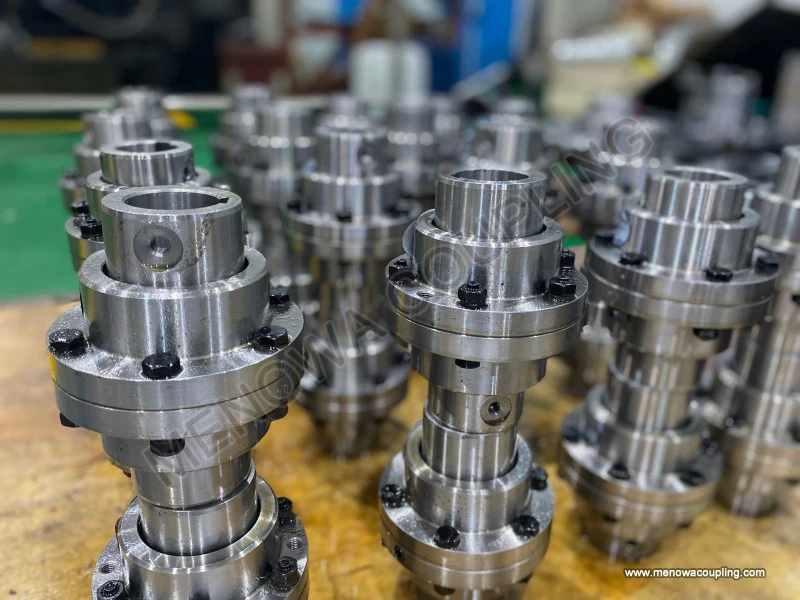
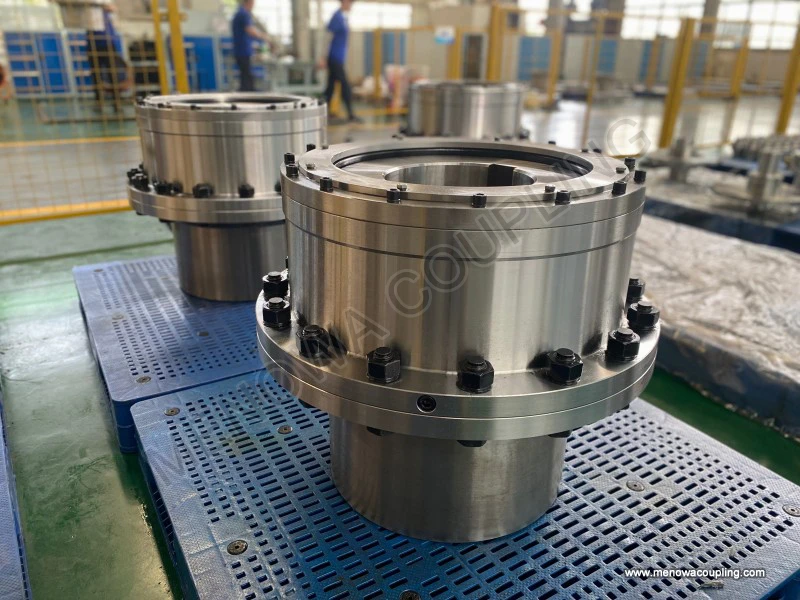
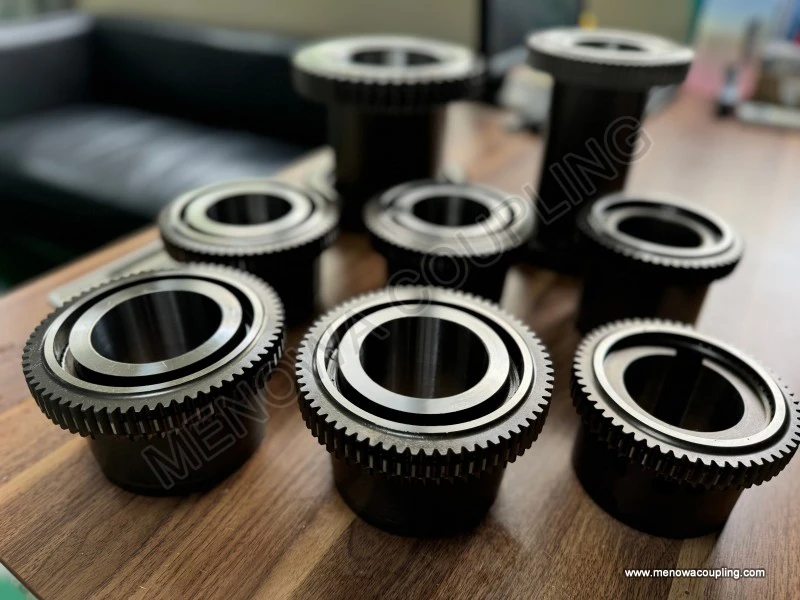
The basic structural composition of toothed couplings follows a mature and optimized mechanical design logic formed through long-term industrial practice, and all core components are designed around the two core functional goals of stable torque transmission and effective displacement compensation. The overall structure of a standard toothed coupling is mainly composed of two outer gear half couplings processed with external gear teeth, an integral internal gear sleeve with complete internal gear tooth profiles, and corresponding fastening connecting parts and sealing and lubricating auxiliary components. The two outer gear half couplings are respectively fixedly installed on the end parts of the driving shaft and the driven shaft through interference fit or key connection structures, realizing the synchronous rotation of the half couplings and the connected shafts. The internal gear sleeve is sleeved on the outer sides of the two outer gear half couplings at the same time, and the internal gear teeth processed on the inner wall of the gear sleeve are precisely meshed with the external gear teeth on the outer circumference of the two half couplings, forming the core meshing transmission pair of the entire coupling. The number of internal gear teeth of the internal gear sleeve is consistent with the number of external gear teeth of the matched outer gear half couplings, which ensures uniform stress on each gear tooth during the meshing process and avoids local overload and excessive wear of individual gear teeth due to inconsistent tooth number matching. In order to further optimize the stress state of the gear teeth during operation and enhance the displacement compensation ability of the coupling, most toothed couplings used in modern industrial production adopt crowned tooth profile design for the external gear teeth. This special tooth profile processing method makes the tooth surface of the external gear present a gentle curved transition shape in the axial direction, different from the straight tooth profile of ordinary standard gears. This subtle but crucial structural improvement enables the gear tooth contact surface to maintain a uniform and stable contact state even when the two connected shafts produce radial, axial and angular misalignment during installation and operation, avoiding sharp edge contact and local stress concentration at the end of the gear teeth, which effectively reduces the friction and wear degree of the meshing gear teeth and significantly improves the operational stability and service life of the coupling. The fastening connecting parts are mainly responsible for fixing the relative position of the internal gear sleeve and the outer gear half couplings to prevent axial displacement and separation of components during high-speed rotation and torque transmission, while the sealing components are arranged at the assembly gaps between the internal gear sleeve and the half couplings to form a closed internal space for the meshing gear teeth. This closed space is the key area for storing lubricating media, isolating external dust, moisture and corrosive impurities, and preventing the leakage of internal lubricants, creating a good lubrication and protection environment for the long-term meshing operation of the gear teeth.
The core working principle of toothed couplings is based on the gear meshing transmission theory and the relative displacement adaptive characteristics generated by the fit clearance between internal and external gear teeth profiles. When the industrial equipment starts to operate, the driving shaft drives the connected outer gear half coupling to rotate synchronously, and the rotational torque and power are transmitted to the internal gear sleeve through the meshing action between the external gear teeth of the half coupling and the internal gear teeth of the gear sleeve. Then the internal gear sleeve transmits the torque and rotational motion to the other outer gear half coupling through the meshing of the other side gear teeth, and finally drives the driven shaft to rotate synchronously, completing the whole process of power and torque transmission between the two shafts. In the ideal installation state where the central axes of the driving shaft and the driven shaft are completely coincident without any deviation, the meshing contact between the internal and external gear teeth is uniform and stable, the relative sliding between the tooth surfaces is small, and the coupling only plays a simple role of torque transmission and shaft connection. However, in actual industrial on-site installation and long-term equipment operation, the ideal coaxial state of the two connected shafts hardly exists objectively. On the one hand, affected by manual installation accuracy limitations, foundation settlement of equipment installation base, mechanical processing errors of equipment components, and assembly deviations of multiple connected equipment, various initial misalignments will inevitably occur between the two shafts during the equipment installation stage. On the other hand, during the long-term continuous operation of the equipment, factors such as thermal deformation of shaft components caused by operating temperature changes, slight vibration and swing of mechanical operation, and gradual wear of supporting bearings will lead to gradual changes in the relative position of the two shafts, resulting in real-time radial displacement, axial displacement and angular deflection between the driving shaft and the driven shaft. Under such non-ideal operating conditions, the unique structural design of the toothed coupling can effectively adapt to these various misalignment states. When angular misalignment occurs between the two shafts, the crowned external gear teeth can produce appropriate flexible contact and small-range axial relative sliding on the internal gear tooth surfaces, and the curved tooth profile can always maintain the effective meshing contact of the main stress area of the gear teeth without generating excessive additional bending stress on the gear teeth and shaft components. When radial displacement occurs between the two shafts, the fit clearance between the internal and external gear teeth and the flexible meshing state can offset the radial offset of the shaft center, avoiding rigid extrusion and abnormal friction between the shafts. When axial displacement occurs due to thermal expansion and contraction of the shaft system or equipment operation movement, the relative sliding allowance reserved by the gear meshing structure can adapt to the axial movement of the two half couplings without affecting the normal torque transmission effect. In this whole process, the toothed coupling does not rely on elastic deformation to absorb displacement like flexible couplings, but relies on the structural clearance and optimized tooth profile design of the gear meshing pair to naturally compensate for various shaft misalignments, ensuring that the torque transmission process is always stable and efficient, and no additional alternating stress that affects the service life of the shaft and equipment will be generated due to shaft misalignment.
The tooth profile design and structural parameter optimization of toothed couplings are core factors that determine their transmission performance, load-bearing capacity and displacement compensation effect, and every detailed design link is formulated according to the actual demands of industrial heavy-duty operation. The crowned tooth profile, as the most key structural optimization design of modern toothed couplings, has obvious performance advantages compared with the traditional straight tooth profile structure. The straight tooth toothed coupling with ordinary gear tooth profiles can only adapt to a very small range of shaft misalignment, and once the angular deflection or radial displacement of the two shafts exceeds a small limit value, the gear teeth will have edge contact at the tooth ends, resulting in sharp increase in local contact stress, rapid wear of tooth surfaces, and even tooth breakage failure in severe cases. The crowned tooth profile changes the axial straight line structure of the traditional gear tooth surface into a smooth curved surface structure with the middle part protruding appropriately and the two ends gradually shrinking. This design enables the gear teeth to automatically adjust the contact position according to the actual misalignment state of the two shafts during operation, always keeping the contact point in the middle stable stress area of the tooth surface, avoiding end edge contact and stress concentration. Even under the condition of large angular misalignment between the two shafts, the gear meshing contact state can still remain uniform, the friction between tooth surfaces is evenly distributed, and the wear degree of each part of the tooth surface is consistent, which greatly improves the allowable misalignment range of the coupling and expands its applicable working condition scenarios. In terms of gear tooth modulus and tooth number design, the selection of parameters is comprehensively balanced according to the required transmission torque level, rotational speed range and installation space size of the equipment. A larger gear tooth modulus can improve the single-tooth load-bearing capacity of the coupling and adapt to heavy-duty torque transmission working conditions, while a reasonable number of gear teeth can ensure that the total transmission torque is shared by multiple gear teeth, avoiding excessive single-tooth stress and reducing the risk of tooth surface fatigue wear and tooth breakage. Too many gear teeth will reduce the thickness and strength of a single gear tooth, while too few gear teeth will lead to excessive load on a single gear tooth, both of which will affect the overall service life and operational stability of the coupling. In terms of the structural design of the internal gear sleeve and the outer gear half couplings, the wall thickness and overall structural rigidity are designed according to the impact load and alternating load borne by the equipment during operation. Sufficient structural rigidity can ensure that no deformation occurs during high torque transmission, maintaining the accurate meshing state of gear teeth, while avoiding structural fatigue damage caused by long-term impact load action. At the same time, the surface hardness treatment of the gear tooth meshing surface is also an important part of the design and processing link. Through professional surface heat treatment processes, the hardness and wear resistance of the gear tooth working surface are improved, while the core part of the gear tooth maintains good toughness, which not only resists the wear and friction of long-term meshing operation, but also prevents brittle fracture of gear teeth under sudden impact load.
Toothed couplings have distinct performance characteristics and application adaptation advantages compared with other common types of shaft couplings in industrial transmission systems, which is the fundamental reason why they are widely used in heavy-duty industrial fields. Compared with elastic sleeve pin couplings, elastic diaphragm couplings and other flexible couplings that are good at buffering vibration and adapting to small misalignment but have limited torque transmission capacity, toothed couplings have stronger rigid torque transmission rigidity and higher load-bearing limit, and can stably transmit large torque required by heavy mechanical equipment without deformation and power attenuation. Compared with ordinary rigid flange couplings that have simple structure and low cost but cannot adapt to any shaft misalignment and have high installation requirements, toothed couplings have excellent displacement compensation performance, can tolerate installation errors and runtime shaft position changes, reduce the difficulty of on-site installation and alignment work, and avoid equipment operation failure and component damage caused by slight shaft misalignment. In terms of impact resistance, toothed couplings can well adapt to the periodic impact load and sudden load change working conditions often encountered in mining, metallurgy and engineering machinery. The gear meshing structure can uniformly disperse instantaneous impact torque on multiple gear teeth, avoiding local impact damage to transmission components. In terms of transmission efficiency, the power loss generated by toothed couplings during operation is extremely low. Except for small friction loss generated by relative sliding between gear tooth surfaces, there is no additional energy consumption, which ensures the high-efficiency operation of the entire transmission system and conforms to the energy-saving operation requirements of modern industrial production. In terms of rotational speed adaptability, toothed couplings can operate stably within a wide medium and low rotational speed range, and can maintain good transmission performance under long-term continuous operation without frequent shutdown maintenance. It is worth noting that toothed couplings also have their own inherent application limitations, which need to be fully considered in the type selection and design stage. Due to the gear meshing friction structure, toothed couplings need reliable lubrication and sealing conditions, and cannot work normally for a long time in open environments without lubrication protection. At the same time, compared with high-precision flexible couplings specially used for high-speed and precise transmission occasions, toothed couplings will generate certain meshing noise at too high rotational speed, so they are more suitable for medium and low-speed heavy-duty working conditions rather than high-speed precise transmission scenarios. In addition, the manufacturing and processing precision requirements of toothed couplings are higher than those of ordinary simple couplings, and the structural composition is relatively complex, so the corresponding maintenance technical requirements are higher in the later use process.
The application scope of toothed couplings covers almost all core industrial fields with heavy-duty power transmission demand, and they show excellent operational adaptability and reliability in different harsh working condition environments. In the mining industry, various large mining crushers, ore conveying belt conveyors, mining hoists and underground mining transportation equipment all need to transmit huge torque to drive mechanical operation. These equipment often face harsh working conditions such as heavy load starting, frequent impact vibration, and large dust on site. Toothed couplings are used to connect the power drive motor and the main working mechanical shaft of mining equipment, which can stably bear heavy starting torque and impact load, compensate for shaft misalignment caused by equipment vibration and foundation deformation, and ensure the continuous and stable operation of mining production equipment without frequent shutdown failures. In the steel and metallurgical industry, steel rolling production lines, smelting auxiliary transmission equipment, steel coil handling machinery and high-temperature industrial furnace transmission equipment have high requirements on the stability and continuity of power transmission. The operating environment of metallurgical equipment is often accompanied by high temperature radiation, dust pollution and continuous long-term operation requirements. Toothed couplings can adapt to the high-temperature working environment after reasonable structural protection and lubrication medium selection, maintain stable meshing transmission state under long-term continuous operation, and avoid production line shutdown and production loss caused by coupling failure. In port and logistics handling industry, container cranes, bulk cargo loading and unloading machinery, port conveyor systems and other equipment need to frequently start, stop and adjust the operating load, with frequent load changes and large instantaneous impact torque. Toothed couplings can effectively buffer and adapt to frequent load changes, ensure the accurate transmission of power during equipment lifting and handling operations, and maintain the synchronization and stability of mechanical movement. In the field of electric power and chemical industry, large industrial fans, water pump units, chemical reaction kettle transmission equipment and thermal power auxiliary machinery need long-term uninterrupted continuous operation, and any coupling failure will lead to the shutdown of the entire production and processing system. Toothed couplings rely on reliable structural design and stable operating performance to meet the long-term continuous operation demands of these equipment, reduce the failure rate of transmission links, and ensure the stable operation of electric power production and chemical processing processes. In construction engineering and municipal infrastructure construction fields, various engineering machinery such as excavators, bulldozers, and large mixing equipment also use toothed couplings in their core transmission parts to adapt to complex construction working conditions and variable load operation requirements.
The installation and alignment work of toothed couplings is a key link that directly affects their subsequent operating effect, wear degree and overall service life, and standardized installation operation and accurate shaft alignment are essential prerequisites for giving full play to the performance advantages of toothed couplings. Before the formal installation of the coupling, all core components need to be carefully inspected and cleaned to remove processing burrs, rust spots, residual welding slag and sundries on the surface of internal and external gear teeth, hub inner hole and fastening parts, ensuring that all matching surfaces and meshing surfaces are smooth and clean without scratches and damage. At the same time, the dimensional matching degree between the outer gear half coupling hub and the connected shaft diameter should be checked to ensure that the interference fit or key connection meets the design requirements, avoiding relative rotation and slippage between the half coupling and the shaft during operation. During the formal installation process, the two outer gear half couplings are firstly installed and fixed on the driving shaft and the driven shaft respectively, and the axial installation position of the half couplings is adjusted according to the equipment installation drawing to ensure that the assembly distance between the two half couplings meets the design standard, reserving enough assembly space for the subsequent installation of the internal gear sleeve. After the installation and fixation of the two half couplings is completed, the most critical shaft alignment work is carried out. The alignment work mainly aims to control the radial deviation, axial deviation and angular deflection between the two connected shafts within the allowable range specified by the coupling design. Professional alignment measuring tools are used to detect the runout and gap changes of the coupling radial and axial surfaces, and the position of the equipment base is finely adjusted according to the detection data to reduce the coaxiality error of the two shafts as much as possible. Although toothed couplings have good displacement compensation capability, excessive initial installation misalignment will still lead to increased friction and wear of gear teeth, increased operating vibration and noise, and shortened service life in the subsequent operation process. After the shaft alignment is completed, the internal gear sleeve is sleeved on the outer sides of the two outer gear half couplings, and the meshing state of the internal and external gear teeth is checked to ensure that the gear teeth are fully meshed in place without dislocation and jamming. Then the sealing components are installed, and the fastening bolts are tightened evenly and symmetrically according to the specified torque standard to ensure the tight connection of all coupling components and good sealing performance of the internal closed space. After the installation is completed, a no-load test run should be carried out first. The equipment is started for short-term no-load operation to observe whether the coupling has abnormal vibration, abnormal noise and rotation jamming phenomenon. After confirming that the no-load operation is normal, the load operation can be gradually carried out, and the operating state of the coupling is continuously observed in the initial stage of load operation to ensure that there is no abnormal heating and leakage of lubricating medium.
Lubrication and sealing management are the core daily maintenance contents of toothed couplings, and also the key factors to determine their long-term reliable operation and effective service life. The meshing operation process of internal and external gear teeth of toothed couplings is accompanied by inevitable small-range relative sliding friction between tooth surfaces. Good lubrication can form a stable lubricating oil film on the gear tooth meshing surface, isolate the direct metal contact between gear teeth, reduce friction resistance and wear degree during meshing, and take away the heat generated by friction in the meshing process to avoid excessive temperature rise of gear teeth leading to material performance decline and accelerated aging. At the same time, the lubricating medium stored in the closed coupling interior can also play a good role in rust prevention and corrosion protection for the gear teeth and internal components, preventing metal corrosion and tooth surface rust caused by long-term exposure to air and moisture. The sealing system of the toothed coupling is responsible for maintaining the internal lubrication environment. On the one hand, it prevents the leakage of internal lubricating grease or lubricating oil caused by centrifugal force during high-speed rotation of the coupling, ensuring that the gear teeth are always in a sufficient lubrication state. On the other hand, it isolates external dust, sediment, moisture and corrosive gas from entering the coupling interior, avoiding abrasive wear of gear teeth caused by hard dust impurities mixing into the lubricating medium and corrosion damage of internal components. In terms of lubricating medium selection, different types of lubricating grease or lubricating oil should be selected according to the actual operating temperature, rotational speed and load working conditions of the coupling. For conventional normal temperature and medium-speed heavy-duty working conditions, special high-viscosity coupling lubricating grease with good adhesion and centrifugal resistance is usually selected, which can be firmly attached to the gear tooth surface and not easy to be thrown out by centrifugal force. For high-temperature working conditions in metallurgical and thermal power industries, high-temperature resistant special lubricating media that do not easily deteriorate and volatilize at high temperature should be selected to ensure the stability of the lubricating oil film under high-temperature operation. In terms of lubrication cycle management, targeted lubrication and oil supplement plans should be formulated according to different operating modes of the equipment. For equipment operating continuously for a long time, regular grease injection and lubrication maintenance should be carried out according to fixed operating hours; for equipment operating intermittently for a long time, the lubrication state of the coupling should be checked regularly every fixed cycle; for couplings working in high-temperature and dusty harsh environments, the frequency of lubrication inspection and maintenance should be appropriately increased to ensure the effectiveness of lubrication and sealing. During daily maintenance, staff should regularly check whether the coupling has lubricant leakage, abnormal heating and sealing component aging damage, replace failed sealing parts in time, and supplement lubricating media to ensure that the internal lubrication state of the coupling is always in the best condition.
Long-term operation of toothed couplings under complex working conditions will inevitably produce normal wear and aging failure problems. Timely identification of common fault manifestations, accurate judgment of fault causes and timely implementation of maintenance and repair measures are important links to avoid minor faults evolving into major equipment failures and ensure the long-term stable operation of transmission systems. The most common failure phenomenon of toothed couplings is excessive wear of gear tooth meshing surfaces. The main causes of this failure include insufficient internal lubrication, deterioration and failure of lubricating medium, long-term operation with excessive shaft misalignment, invasion of external abrasive impurities leading to abrasive wear, and long-term overload operation of the coupling exceeding the designed load-bearing range. When gear tooth wear is serious, the coupling will have obvious operating vibration, increased meshing noise, unstable torque transmission, and even obvious rotation jamming in severe cases. For this kind of fault, the worn gear teeth components need to be inspected and evaluated in time, severely worn parts should be replaced, the lubricating medium should be completely replaced, the sealing system should be repaired and optimized, and the shaft alignment state should be readjusted to eliminate the root cause of wear. Another common fault is seal failure and lubricant leakage, which is mainly caused by aging and deformation of sealing components, loose fastening bolts, scratches and damage on sealing matching surfaces. Seal failure will lead to loss of internal lubricant and entry of external impurities, further accelerating gear tooth wear. The solution is to replace aging sealing parts, tighten fastening bolts evenly, repair damaged sealing surfaces, and replenish new lubricating medium in time. In addition, gear tooth fatigue crack and tooth breakage failure occasionally occur, which are mostly caused by long-term overload operation, frequent impact load action, unqualified gear tooth heat treatment process and excessive local stress concentration. Once gear tooth cracking or tooth breakage occurs, the damaged coupling components must be replaced immediately, and the equipment load operation state should be checked and adjusted to avoid repeated overload impact. During daily equipment patrol inspection, maintenance personnel can judge the internal operating state of the coupling through simple and intuitive detection methods such as observing the operating vibration amplitude, listening to the meshing noise sound, and touching the coupling surface temperature, so as to find potential fault hidden dangers in advance and carry out preventive maintenance.
With the continuous upgrading and development of modern industrial mechanical equipment towards large-scale, heavy-duty and long-term continuous operation, the technical optimization and performance improvement of toothed couplings are also constantly advancing, and more optimized structural design and processing technology are continuously applied to the production and manufacturing of toothed couplings. On the basis of maintaining the basic gear meshing transmission principle and displacement compensation function, modern optimized toothed couplings pay more attention to improving the overall structural compactness, reducing operating vibration and noise, extending the service maintenance cycle, and adapting to more extreme harsh working conditions. The application of new tooth profile optimization design and high-precision machining technology makes the gear tooth meshing fit degree higher, the stress distribution more uniform, and the friction wear smaller during operation. The adoption of new high-strength and wear-resistant alloy materials improves the overall structural strength and fatigue resistance of the coupling, enabling it to adapt to higher torque transmission and more severe impact load working conditions. The optimized sealing and lubricating structure design further enhances the sealing reliability of the coupling, reduces the volatilization and leakage of lubricating media, and prolongs the interval time of daily lubrication maintenance. At the same time, in the current industrial energy-saving and efficient development background, the structural design of toothed couplings is also constantly moving towards energy-saving and low-consumption direction, reducing friction energy loss in the transmission process and improving the overall transmission efficiency of the mechanical system. In the future industrial transmission system configuration, toothed couplings will still rely on their unique comprehensive performance advantages to maintain an irreplaceable important position in heavy-duty industrial transmission fields. Through continuous structural optimization, material upgrading and maintenance technology improvement, toothed couplings will better adapt to the increasingly complex industrial production demands, provide more reliable basic connection guarantees for the stable operation of various large mechanical equipment, and create more stable and efficient operating conditions for the sustainable development of modern industrial production.
https://www.menowacoupling.com/industrial-coupling/toothed-coupling.html
 WeChat
 WhatsApp