Lamina Coupling
In the complex and interconnected ecosystem of modern industrial mechanical transmission, the stability and reliability of shaft connection components directly determine the overall operating efficiency, service cycle, and operational safety of complete mechanical equipment. Among various flexible connection components widely used in shafting transmission scenarios, lamina coupling has gradually become an indispensable basic mechanical part in high-precision, high-speed, and long-cycle continuous operation industrial environments by virtue of its unique all-metal flexible structural design, reliable torque transmission performance, and excellent displacement compensation capability. Unlike traditional connection structures that rely on rigid contact for torque transmission or elastic rubber parts for flexible buffering, lamina coupling adopts multi-layer stacked metal thin plates as the core force-bearing and deformation components, realizing dual core functions of stable and efficient torque transmission between driving shafts and driven shafts and automatic adaptive compensation of various shaft misalignments generated during equipment operation. This integrated design concept of rigid transmission and flexible deformation makes this type of coupling well adapted to diverse and harsh industrial working conditions, effectively solving many common pain points in traditional shaft connection applications, including excessive shaft system vibration, accelerated wear of bearings and shaft sleeves, frequent equipment shutdown maintenance, and shortened overall service life of transmission parts. With the continuous upgrading of modern industrial manufacturing technology and the gradual improvement of equipment operation precision requirements, the application scope of lamina coupling has been continuously expanded from traditional heavy industry mechanical transmission to high-end precision manufacturing, energy power equipment, chemical industrial production, metallurgical processing, and intelligent automated production lines, playing a fundamental supporting role in ensuring the stable and efficient operation of various core mechanical equipment.
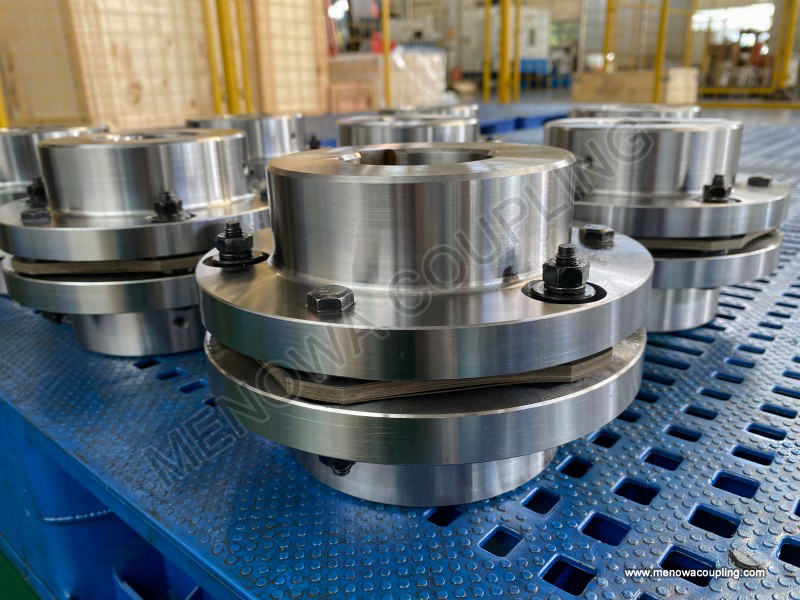
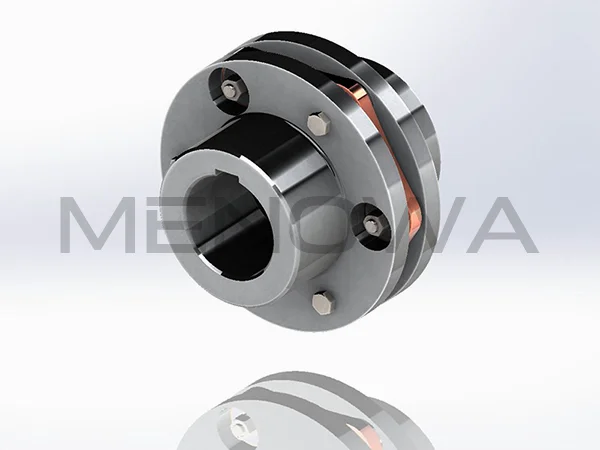
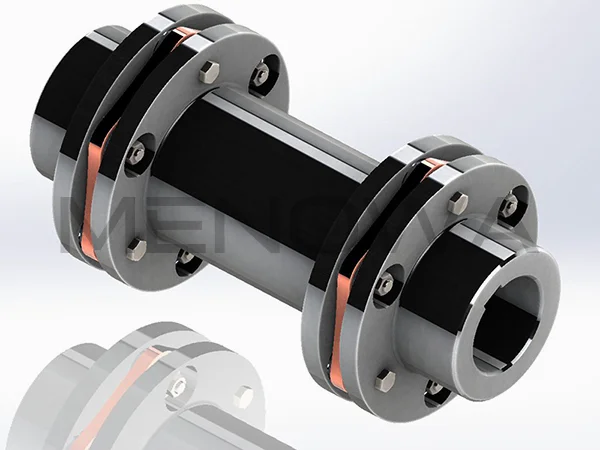
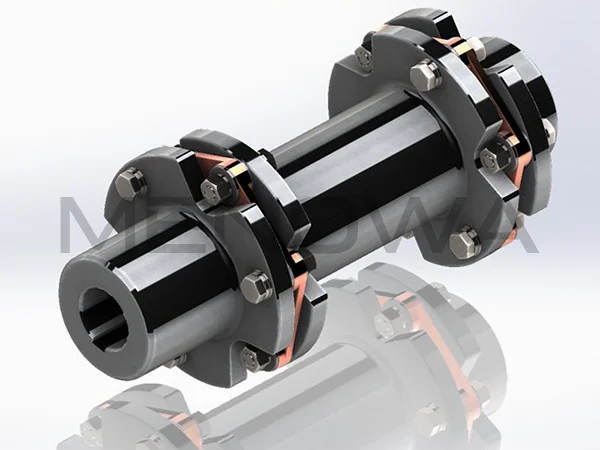
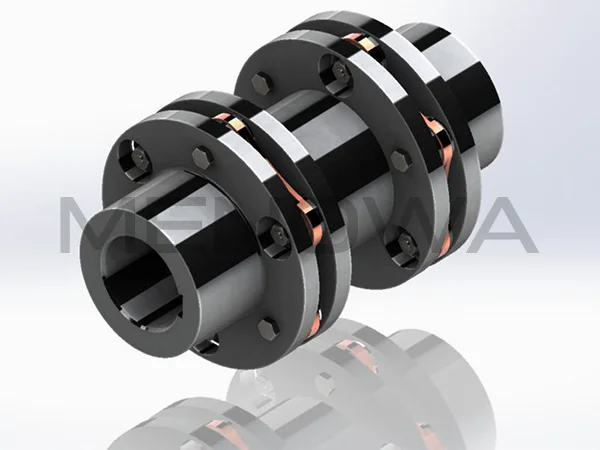
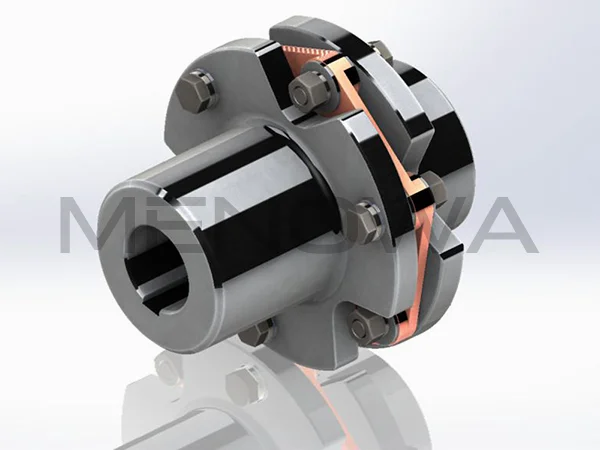
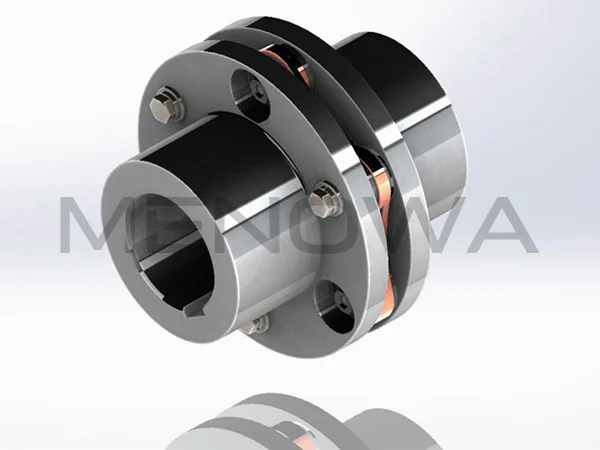
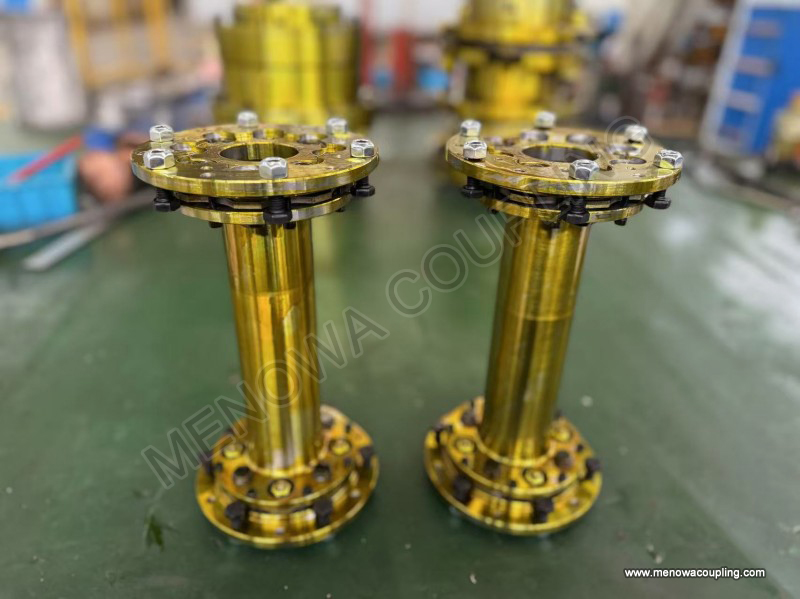
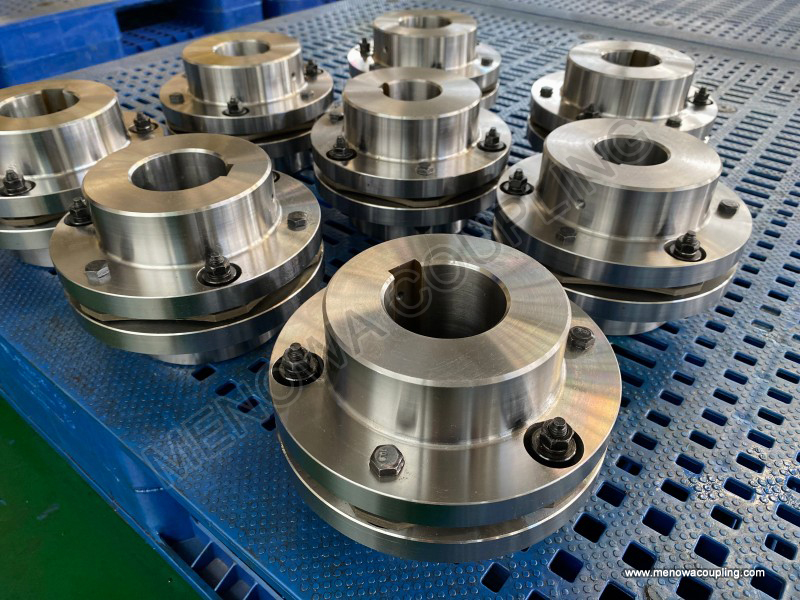
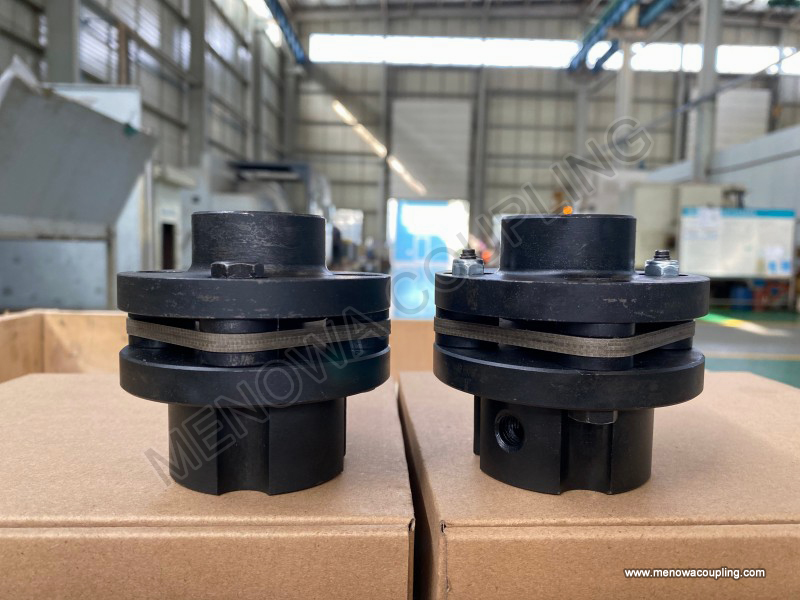
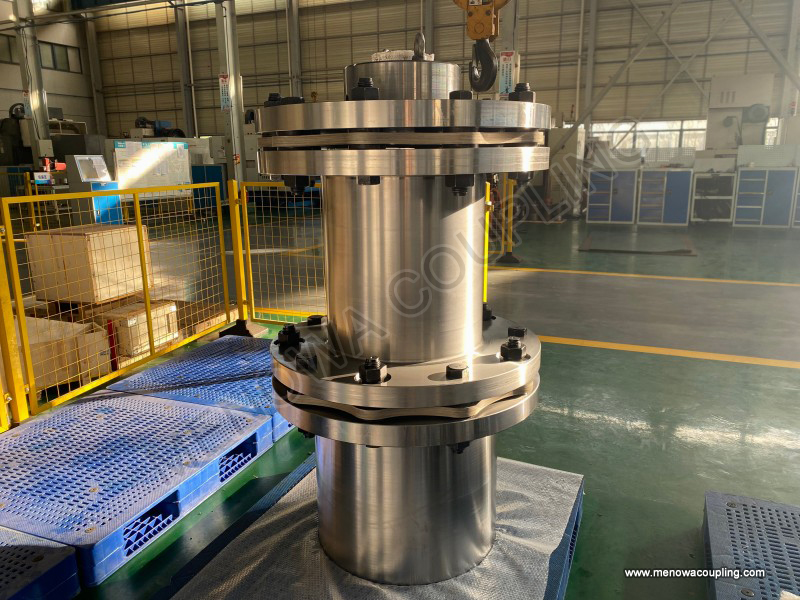
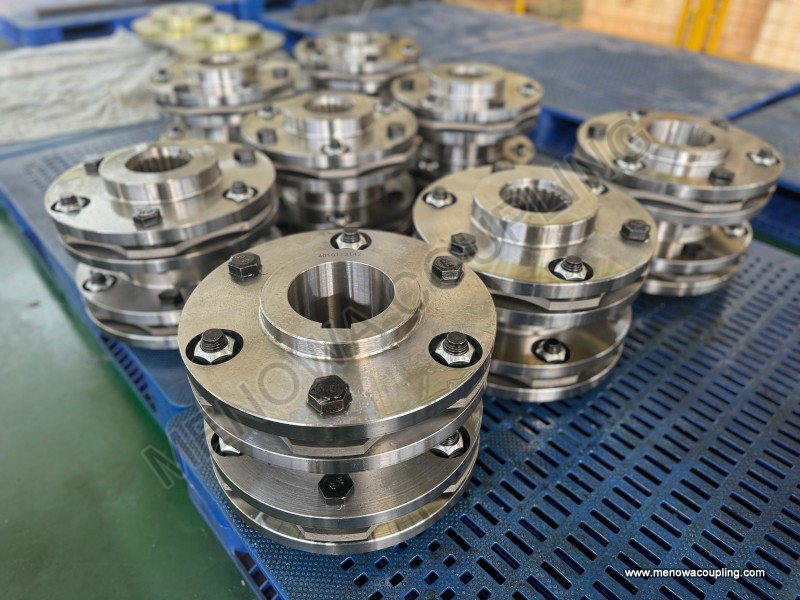
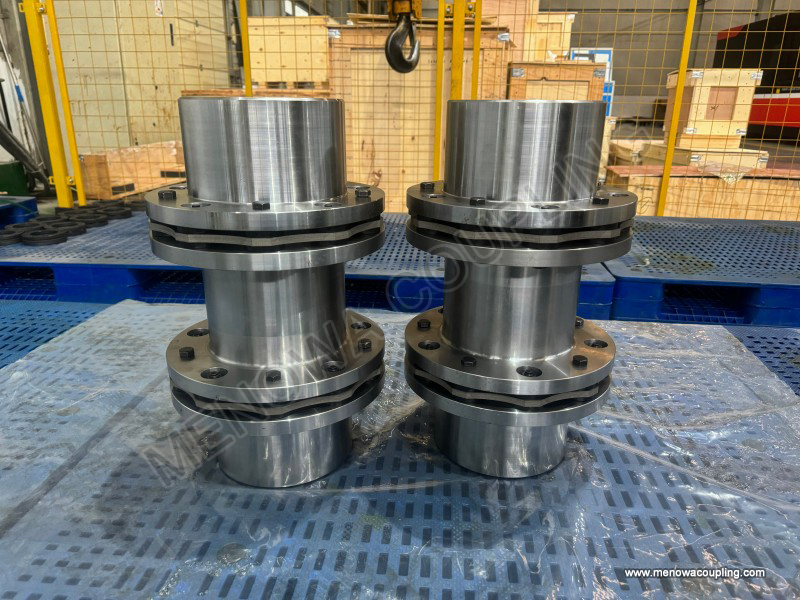
To deeply understand the inherent advantages and application value of lamina coupling in mechanical transmission systems, it is first necessary to start with its basic structural composition and clarify the functional division and matching relationship of each component in the overall operation process. The overall structure of lamina coupling follows a simple and practical mechanical design logic, without redundant auxiliary parts and complex transmission structures, and the whole is composed of two main shaft connecting hubs, precision fastening connecting parts, and a core stacked lamina group that undertakes flexible deformation and torque transmission tasks. The two shaft connecting hubs are symmetrically arranged on both sides of the coupling, and their main function is to closely connect the coupling with the driving shaft and driven shaft of the mechanical equipment respectively, ensuring that the torque generated by the power source can be smoothly transmitted from the driving end to the coupling and then stably output to the driven mechanical equipment. The structural design of the connecting hub fully conforms to the mechanical characteristics of shaft connection, with precise machining on the inner hole to ensure a tight and matching assembly state with the equipment shaft, avoiding relative rotation and displacement between the hub and the shaft during high-speed operation, which may cause transmission failure and component wear. The surface of the connecting hub is processed with a certain number of precision mounting holes, which are used for penetrating and fixing the stacked lamina group through fastening bolts, realizing the stable connection between the hub and the core deformation component, and ensuring that torque can be efficiently transferred between the hub and the lamina group without power loss.
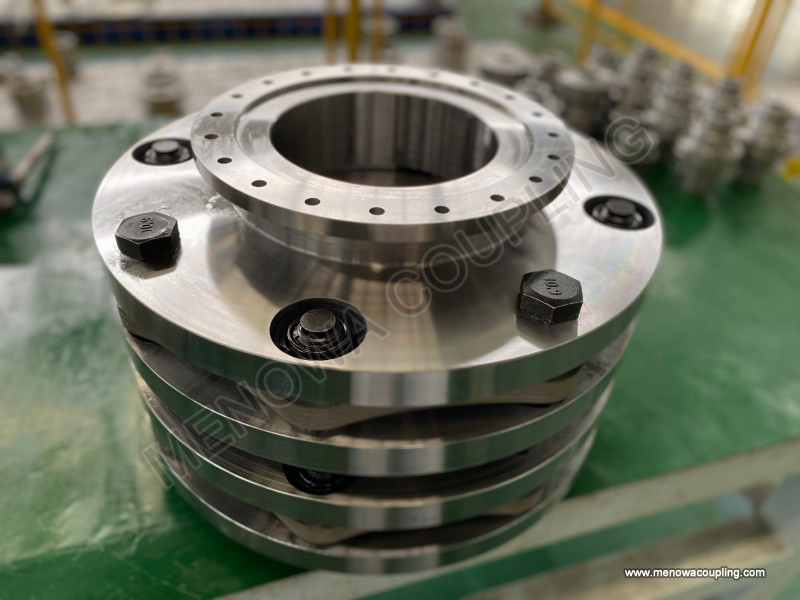
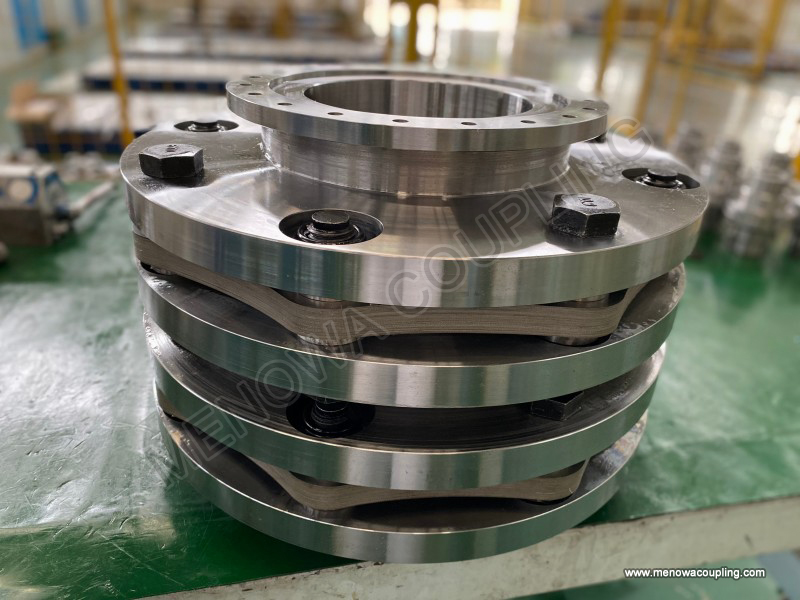
The stacked lamina group is the most critical functional core of the entire lamina coupling, and all flexible deformation and displacement compensation functions in the operation process are completed by the elastic deformation of this part alone. The lamina group is formed by stacking multiple layers of ultra-thin metal thin plates in a regular arrangement, and each single metal lamina is processed into a specific planar shape through precision stamping and cutting technology, with smooth surface and uniform thickness, ensuring consistent elastic deformation performance of each lamina under force. The number of stacked laminae can be adjusted according to the actual torque transmission demand and working condition requirements of different mechanical equipment, and different stacking quantities will bring different torque bearing capacity and flexible deformation space to the coupling. Each metal lamina is also processed with corresponding matching mounting holes at fixed positions, which correspond to the mounting holes on the connecting hub one by one, so that the fastening bolts can pass through the hub and all stacked laminae in sequence to form a whole connected structure. In the actual assembly process, the installation and fixation of the lamina group follow a staggered stress-bearing design logic, so that each lamina can bear the torque evenly during the torque transmission process, avoiding local stress concentration caused by uneven force on a single lamina, which leads to deformation fatigue and early damage. The thin-plate structural characteristics of the metal lamina enable it to have strong flexibility in multiple spatial directions, which can produce subtle elastic bending and torsional deformation under the action of external force, and this deformation will not cause permanent structural damage to the metal material, and can automatically recover to the initial state after the external force disappears, laying a solid structural foundation for the long-term repeated stable operation of the coupling.
The precision fastening connecting parts represented by high-strength bolts play an important role in maintaining the overall structural stability of the lamina coupling and ensuring the safety of torque transmission. All fastening bolts used in lamina coupling are made of high-strength alloy materials with excellent tensile resistance and shear resistance, and undergo strict thermal processing and surface treatment processes to ensure that they will not loose, deform or break under the action of long-term high-speed operation and alternating torque. The fastening bolts are installed in a staggered and symmetrical distribution state, which can evenly distribute the fastening pressure on the connecting hub and the lamina group, ensuring that the contact surface between each component is closely fitted without gaps. Sufficient fastening pretightening force can prevent relative sliding and friction between the stacked laminae and between the lamina group and the connecting hub during equipment operation, effectively avoiding mechanical vibration and torque loss caused by relative displacement between components. At the same time, the matching design of bolts and mounting holes adopts a precision reaming structure, which can reduce the radial displacement of the bolts in the holes, further improve the overall structural rigidity of the coupling during torque transmission, and ensure the stability and accuracy of the transmission process. The cooperative matching of the connecting hub, the stacked lamina group and the fastening bolts forms a complete and compact overall structure of the lamina coupling, and each component complements and restricts each other, jointly realizing the dual basic functions of torque transmission and displacement compensation.
The core working mechanism of lamina coupling is based on the elastic deformation principle of metal thin plates, relying on the flexible characteristics of the stacked lamina group to organically combine rigid torque transmission and flexible misalignment compensation, which is the fundamental reason why it can adapt to complex and changeable industrial working conditions. In the normal operation process of mechanical equipment, the power generated by the driving device is transmitted to the connecting hub at the driving end through the driving shaft, and the driving hub transfers the torque to the stacked lamina group fixed by the fastening bolts. Under the action of torque, each metal lamina in the lamina group undergoes micro torsional elastic deformation, and the torque is gradually transmitted from the driving end lamina to the driven end lamina, and finally transferred to the driven connecting hub, and then output to the driven shaft and the subsequent mechanical equipment, completing the whole process of power transmission. In this torque transmission link, the metal lamina always maintains a micro elastic deformation state, and the overall structural rigidity of the coupling ensures that there is no obvious torsional deformation in the transmission process, realizing efficient and stable torque transmission without obvious power attenuation.
In the actual operation of industrial mechanical equipment, due to various objective factors, it is difficult to achieve absolute coaxial alignment between the driving shaft and the driven shaft in the installation process, and various shaft misalignments will inevitably occur. These misalignments mainly include angular misalignment, radial parallel misalignment and axial displacement misalignment, and these deviations will be further amplified with the long-term operation, vibration and thermal expansion and contraction of the equipment. If the shaft connection component cannot effectively compensate for these misalignments, additional radial and axial reaction forces will be generated between the shafts, which will directly act on the bearings, shaft sleeves and other key parts of the equipment, resulting in increased component wear, intensified equipment vibration, increased operating noise, and even serious problems such as shaft system deformation and equipment shutdown failure. The flexible structural design of lamina coupling perfectly solves this problem. When various misalignments occur between the driving shaft and the driven shaft, the stacked metal lamina group can produce corresponding adaptive elastic bending and stretching deformation according to the deviation direction and magnitude. For angular misalignment between shafts, the lamina group produces uneven bending deformation in the circumferential direction to adapt to the angle difference between the two shafts; for radial parallel misalignment, the lamina undergoes lateral flexible stretching and bending to offset the parallel displacement between the shafts; for axial displacement caused by thermal expansion and contraction of equipment parts, the lamina produces axial telescopic elastic deformation to buffer and compensate the axial position change of the shafts.
The whole misalignment compensation process is completed automatically by the elastic deformation of the metal lamina itself without any manual intervention and additional auxiliary power assistance. After compensating for the shaft misalignment, the lamina can always maintain a stable elastic stress state, and will not transmit the additional reaction force generated by the shaft deviation to the equipment bearings and other components, effectively protecting the key parts of the transmission system from abnormal stress and wear. This working mechanism of integrating rigid transmission and flexible compensation makes lamina coupling different from rigid couplings that have no deformation compensation ability and easily cause equipment component wear, and also different from elastic couplings that rely on non-metal parts for buffering and have poor high-temperature and aging resistance. The all-metal flexible deformation mode enables the coupling to maintain stable working performance in various complex environments, and the repeated elastic deformation will not affect the structural stability and service life of the lamina, ensuring long-term reliable operation of the shaft transmission system.
The selection of manufacturing materials and processing technology of lamina coupling determines its comprehensive working performance, environmental adaptability and long-term service life in different working conditions, and the material matching and processing precision are strictly optimized according to the actual industrial application requirements. The core stacked lamina group is mostly made of high-quality stainless steel or low-alloy high-strength steel materials. These metal materials have excellent elastic fatigue resistance, high-temperature stability and corrosion resistance, and can maintain stable elastic deformation performance under long-term alternating load and high-speed operation. The metal materials used for the lamina have good toughness and strength matching, which can not only bear the torque pressure generated by mechanical transmission without plastic deformation, but also withstand the repeated elastic bending and torsion deformation for a long time without fatigue fracture. In some special working scenarios such as high-temperature heating, chemical corrosion and humid industrial environments, the surface of the lamina will also be treated with special anti-corrosion and high-temperature resistant processing technology to further enhance the environmental adaptability of the material and avoid rust, corrosion and material performance attenuation caused by the harsh external environment, which affects the normal operation of the coupling.
The connecting hub of lamina coupling is made of high-strength cast steel or forged steel materials. These materials have high structural rigidity and pressure resistance, and can bear the impact load and torque pressure generated during equipment startup, shutdown and operation. The forged steel hub has better internal structural density and mechanical strength, and is suitable for heavy-duty and high-torque transmission working conditions, while the cast steel hub has cost advantages and is more suitable for conventional medium and small torque transmission scenarios. The inner hole and mounting hole of the connecting hub are processed by precision CNC machining technology, with high machining dimensional accuracy and smooth surface finish, ensuring the assembly matching accuracy between the hub and the equipment shaft, as well as the assembly coordination between the hub and the fastening bolts and lamina group. The high-strength fastening bolts are made of special alloy steel through quenching and tempering thermal treatment, which improves the tensile strength and shear resistance of the bolts, and the surface is treated with anti-rust and anti-loosening treatment to prevent the bolts from loosening and rusting during long-term outdoor or harsh environmental operation. The whole manufacturing and processing process strictly controls the dimensional tolerance and structural symmetry of each component, ensuring that each batch of couplings has consistent working performance and stable operation effect after installation and use.
Compared with other types of flexible couplings commonly used in the market, lamina coupling has prominent comprehensive performance advantages in structural design, operating characteristics and later maintenance, which are reflected in all links from installation and commissioning to long-term operation and daily maintenance. First of all, the all-metal structural design of lamina coupling realizes maintenance-free operation in the whole service cycle. Many traditional flexible couplings using rubber or plastic elastic parts need regular lubrication maintenance, replacement of worn elastic parts and tightness inspection of connecting parts during use, which not only increases the daily operation and maintenance cost of enterprise equipment, but also requires frequent equipment shutdown for maintenance, affecting the continuous production efficiency of industrial production lines. Lamina coupling does not contain any non-metal vulnerable parts and does not need grease lubrication and regular replacement of parts. After installation and commissioning are completed, it can operate stably for a long time without daily special maintenance work, effectively reducing the manpower and material resources investment in equipment maintenance, and improving the continuous operation rate and production efficiency of mechanical equipment.
Secondly, lamina coupling has excellent high-speed operation stability and low vibration and noise performance. In high-speed rotating mechanical transmission equipment, the dynamic balance performance of the coupling is very important. Poor dynamic balance will cause severe vibration of the shaft system, increase equipment operating noise, and even affect the operating precision and service life of the whole machine. The stacked lamina structure of lamina coupling has good dynamic balance characteristics after precision processing and assembly. The overall structure is compact and symmetrical, with small rotating inertia, and will not generate unbalanced centrifugal force during high-speed operation. The flexible deformation of the lamina can also absorb and buffer the vibration generated during equipment operation and torque transmission, reduce the vibration amplitude of the shaft system, make the equipment operate more smoothly, and reduce the mechanical noise generated by transmission operation. This advantage makes lamina coupling widely used in high-speed precision transmission equipment that has strict requirements on vibration and noise.
In addition, lamina coupling has strong environmental adaptability and can work normally in various harsh working conditions. Different from elastic couplings using non-metal materials which are easy to aging, deform and fail in high temperature, low temperature, chemical corrosion and humid environments, the all-metal structure of lamina coupling is not affected by temperature changes and conventional chemical corrosive media. It can maintain stable working performance in high-temperature production workshops, low-temperature cold processing environments, and humid and dusty industrial sites, and the material performance will not be attenuated due to environmental changes. At the same time, the structural design of the coupling has good dustproof and anti-fouling performance, and external dust, debris and dirt are not easy to enter the internal connection parts, avoiding the impact of dirt accumulation on the flexible deformation and torque transmission effect of the lamina group, and ensuring the long-term stable operation of the coupling in complex industrial environments.
Moreover, lamina coupling has high transmission precision and small torque loss, which can meet the high-precision transmission requirements of modern intelligent mechanical equipment. In the transmission process of many precision mechanical devices, small torque loss and accurate torque transmission are required to ensure the processing precision and operation accuracy of the equipment. The rigid torque transmission design of lamina coupling ensures that the torque transmitted from the driving end to the driven end has no obvious attenuation, and the micro elastic deformation of the lamina will not cause torsional angle deviation in the transmission process, realizing high-precision synchronous transmission of torque and speed. This characteristic makes lamina coupling widely used in precision manufacturing equipment and automated production lines that have high requirements for transmission synchronization and positioning accuracy.
Lamina coupling has a wide range of practical application scenarios, covering almost all industrial fields that require shaft torque transmission and shaft misalignment compensation, and can meet the transmission needs of different working conditions such as heavy load, high speed, precision and harsh environment. In the energy and power industry, lamina coupling is applied to the shaft connection of power generation equipment, fan equipment and water pump equipment. These equipment need long-term continuous uninterrupted operation, and the shaft system is prone to misalignment and vibration during operation. The maintenance-free and high stability characteristics of lamina coupling can ensure the long-term stable operation of power equipment, reduce equipment shutdown failures, and ensure the stable supply of energy and power. The high torque transmission capacity of the coupling can also meet the power transmission needs of large-scale power machinery and equipment, and the flexible deformation function can effectively protect the power equipment bearings and motors from abnormal stress damage.
In the chemical industry, most of the production equipment operates in high-temperature, humid and chemically corrosive working environments, and the requirements for the corrosion resistance and structural stability of shaft connection parts are extremely high. Lamina coupling with all-metal anti-corrosion structure can adapt to the harsh chemical production environment, and will not be corroded and failed by chemical media. The long-term maintenance-free operation feature also avoids the frequent shutdown maintenance of chemical production equipment due to coupling problems, ensuring the continuous and stable progress of chemical production processes. At the same time, the displacement compensation function of the coupling can adapt to the shaft misalignment caused by thermal expansion and contraction of chemical production equipment during heating and cooling, ensuring the safe operation of the transmission system.
In the metallurgical and heavy industry field, mechanical equipment usually bears heavy load and impact load during operation, and the torque transmission demand is large, and the shaft system is prone to large misalignment and vibration. Lamina coupling with multi-layer stacked lamina design has high torque bearing capacity and good impact resistance, and can withstand the torque impact generated by heavy machinery during startup and operation. The flexible deformation compensation function can buffer the impact force generated by heavy load operation, reduce the wear of heavy machinery parts, and prolong the service life of heavy equipment. The compact structural design of the coupling is also suitable for the limited installation space of heavy industrial equipment, facilitating the installation and layout of mechanical transmission systems.
In the precision manufacturing and intelligent automation industry, with the continuous improvement of industrial manufacturing precision and automation level, the requirements for the synchronization and accuracy of mechanical transmission are getting higher and higher. Many precision processing machine tools, automated production line transmission equipment, and precision testing equipment need couplings with high transmission precision and low vibration operation. Lamina coupling has the characteristics of high synchronization transmission, low operation vibration and small torque loss, which can ensure the precise operation and positioning accuracy of precision manufacturing equipment, and meet the high-precision transmission needs of intelligent automated production processes. The small rotating inertia of the coupling can also adapt to the frequent startup and speed regulation operation of automated equipment, ensuring the flexible and stable operation of intelligent production lines.
In the installation, commissioning and daily use management of lamina coupling, standardized operation and correct use methods are crucial to giving full play to its working performance and prolonging its service life. In the equipment installation and coupling assembly stage, it is necessary to ensure the coaxiality of the driving shaft and the driven shaft is adjusted to the reasonable range specified by the process, reduce the initial installation misalignment of the shaft system as much as possible, and reduce the long-term deformation stress of the lamina group caused by excessive initial deviation. When installing the fastening bolts, it is necessary to tighten them in a symmetrical and staggered order, and control the pretightening force of the bolts according to the installation specifications, avoiding excessive pretightening force leading to excessive compression deformation of the lamina, or insufficient pretightening force leading to relative sliding between components. After the installation is completed, it is necessary to conduct no-load trial operation and load test operation of the equipment, check the operation vibration, noise and torque transmission status of the coupling, and adjust and optimize the installation position in time if abnormal operation is found.
In the daily use process, although lamina coupling has maintenance-free characteristics, regular regular inspection and condition monitoring can further ensure its long-term reliable operation. The inspection work mainly includes checking whether the surface of the lamina group has obvious deformation, cracks and corrosion, whether the fastening bolts have loosening and rusting, and whether the connecting hub has abnormal wear and deformation. For the coupling operating in harsh working conditions, the inspection cycle can be appropriately shortened to timely find potential hidden dangers of equipment operation. Once abnormal problems such as lamina fatigue deformation, bolt loosening and serious corrosion are found, targeted replacement and adjustment maintenance should be carried out in time to avoid small faults evolving into large equipment failures and affecting the normal production and operation.
With the continuous progress of industrial manufacturing technology and the continuous development of high-end equipment manufacturing industry, the development trend of lamina coupling is gradually moving towards lightweight structure, higher transmission precision, stronger environmental adaptability and more intelligent condition monitoring. In the future, with the application of new high-strength and high-elasticity metal materials, the structural weight of lamina coupling will be further reduced on the premise of ensuring torque transmission capacity, reducing rotating inertia and improving high-speed operation performance. The continuous optimization of structural design and processing technology will further improve the displacement compensation accuracy and transmission synchronization of the coupling, meeting the higher precision transmission needs of future high-end intelligent equipment. At the same time, with the integration of intelligent monitoring technology, lamina coupling will be equipped with real-time monitoring components for operating stress, vibration and deformation, realizing real-time perception and early warning of operating status, making the operation and maintenance management of the coupling more intelligent and efficient.
In conclusion, as a high-performance all-metal flexible transmission connection component, lamina coupling relies on its unique stacked lamina elastic deformation structure, reliable torque transmission mechanism and excellent misalignment compensation function, and has become an important basic part supporting the stable operation of modern industrial mechanical transmission systems. Its advantages of maintenance-free operation, strong environmental adaptability, high transmission precision and stable high-speed operation make it widely used in various industrial fields, solving many practical pain points in traditional shaft connection transmission. With the continuous upgrading of industrial equipment and the continuous improvement of operation requirements, lamina coupling will continue to play an irreplaceable core role in mechanical transmission work, and continuously adapt to the new development needs of modern industrial manufacturing through continuous technological innovation and structural optimization, providing solid basic guarantee for the efficient, stable and long-term operation of various mechanical equipment.
https://www.menowacoupling.com/industrial-coupling/lamina-coupling.html
 WeChat
 WhatsApp