In the complex and interconnected operating system of modern industrial machinery, the stability and reliability of power transmission components directly determine the overall operating efficiency, service life, and operational safety of the entire mechanical equipment. Every link in the mechanical transmission chain bears the important task of transferring rotational torque, coordinating the operation of different functional components, and buffering various mechanical stresses generated during equipment operation. Among numerous key transmission connecting parts, drum couplings occupy an irreplaceable core position in heavy-duty mechanical transmission scenarios by virtue of their unique structural design, excellent torque transmission performance, and reliable displacement compensation capacity. As a professional connecting component specially developed for matching reducer output shafts, winding drum components and other core mechanical parts, drum couplings integrate the dual functions of efficient torque transmission and reasonable bearing of radial mechanical loads, effectively solving various connection and operation pain points that are difficult to adapt to ordinary connecting parts in long-term, high-load, and variable working condition industrial production environments. With the continuous upgrading of industrial production automation and the continuous expansion of heavy engineering machinery operation scenarios, the performance requirements for basic transmission connecting components such as drum couplings are becoming increasingly stringent, and their structural design optimization, material selection matching, installation and commissioning standards, and daily operation and maintenance management have gradually become important research contents in the field of mechanical basic parts manufacturing and industrial equipment operation management. Understanding the internal working mechanism, structural composition characteristics, performance adaptation rules, and scientific application and maintenance methods of drum couplings is not only conducive to giving full play to the inherent performance advantages of the equipment itself, but also can effectively reduce the failure rate of mechanical transmission systems, extend the overall service cycle of industrial equipment, and create stable and reliable basic conditions for the sustainable and efficient operation of various industrial production and engineering construction activities.
The essential working logic of barrel couplings is based on the ingenious combination of mechanical meshing transmission and elastic deformation compensation, realizing the organic connection between two adjacent rotating shafts in the mechanical transmission system and the stable transfer of rotational power and torque. Different from some simple rigid connecting parts that only realize fixed connection and single power transmission, drum couplings do not pursue absolute rigid fixing between connected shafts in the structural design concept, but focus on balancing the dual core needs of efficient torque transmission and flexible displacement coordination in actual mechanical operation. In the actual operation of industrial machinery, due to various objective factors such as equipment installation deviation, mechanical component processing tolerance, thermal expansion and contraction of metal materials during long-term operation, and slight structural deformation of the frame under heavy load, the two rotating shafts that need to be connected and matched will inevitably produce different degrees of relative displacement in the axial, radial and angular directions. This kind of unavoidable relative displacement is a key hidden danger leading to increased operation friction, local stress concentration, accelerated component wear, and even sudden mechanical failure in the transmission system. The core structural design of drum couplings is precisely aimed at this common mechanical operation problem. The special drum-shaped tooth surface profile and reasonable internal meshing clearance design enable the internal meshing structure of the coupling to produce mild and controllable adaptive deformation and position adjustment during operation. When relative misalignment and displacement occur between the connected two shafts, the contact position between the internal and external teeth of the drum coupling can be smoothly adjusted along the drum-shaped tooth flank, always maintaining uniform and stable contact between the meshing tooth surfaces, avoiding dangerous edge contact and local stress overload that are easy to occur in traditional straight-tooth transmission structures. This adaptive adjustment mode relying on structural characteristics can effectively offset the adverse effects of various installation and operation displacements, ensure that the torque transmission process is always stable and uniform, and will not cause additional mechanical vibration and impact load due to shaft misalignment, thus maintaining the smooth operation state of the entire mechanical transmission system for a long time.
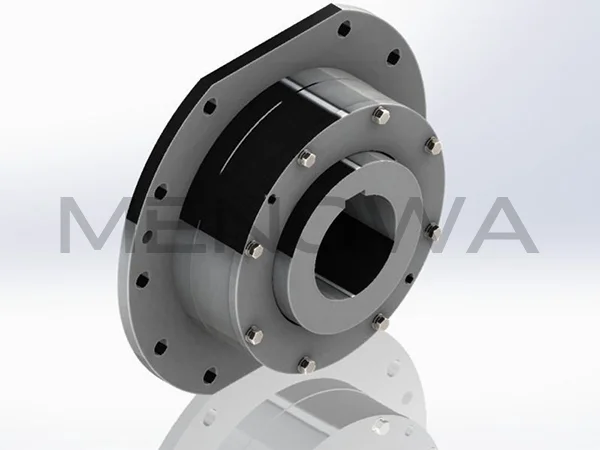
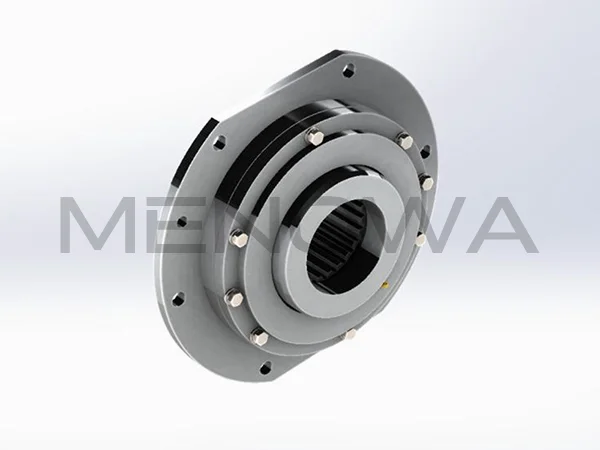
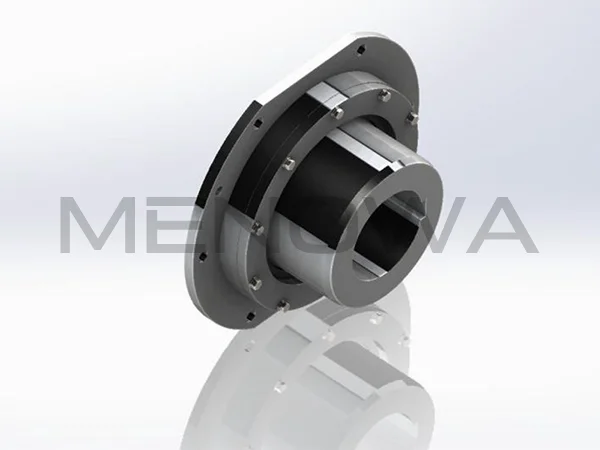
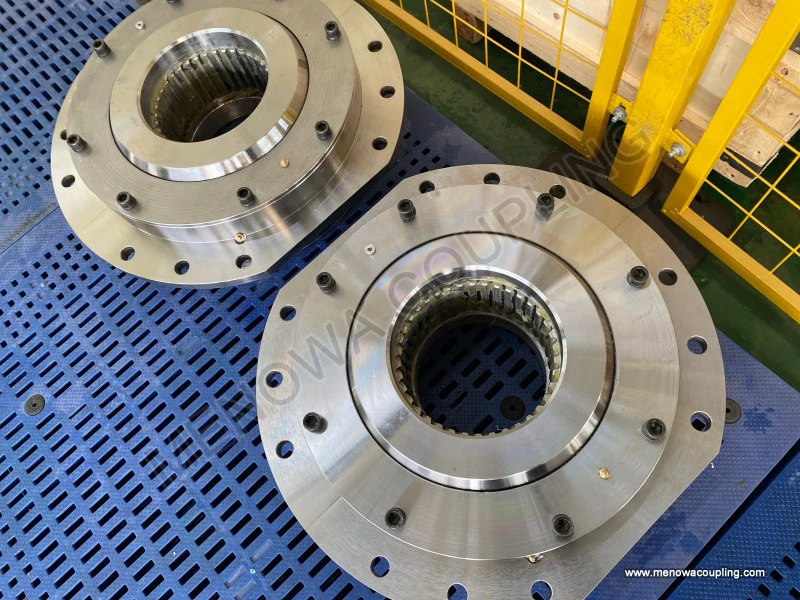
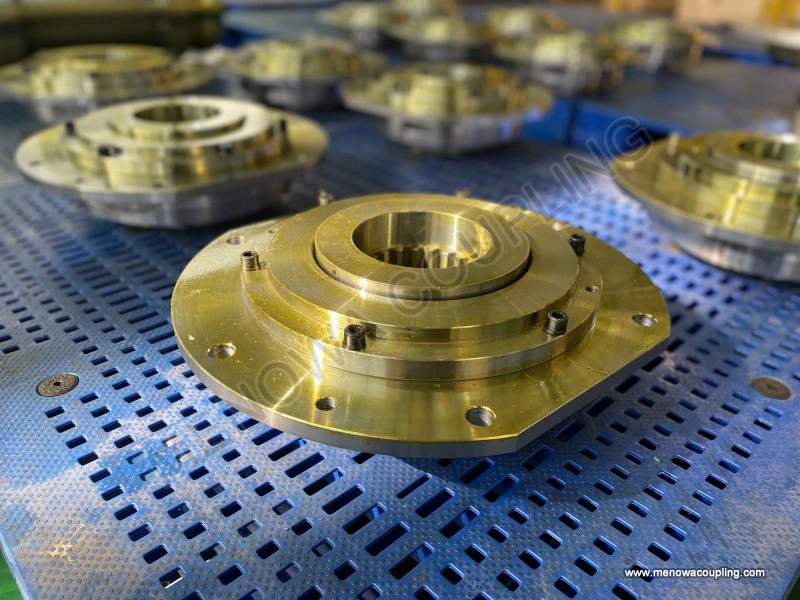
The basic structural composition of drum couplings is concise and rigorous, and each component has clear functional division and close cooperative matching, and every structural detail is designed around the core goals of improving torque transmission efficiency, enhancing displacement compensation capability, strengthening structural load-bearing performance and optimizing sealing and protection effects. The main body of the drum coupling is composed of two core parts, the inner gear ring and the outer tooth sleeve with drum-shaped teeth, which form the core meshing transmission pair of the entire coupling and undertake the main torque transmission task. The outer contour of the teeth on the outer tooth sleeve is processed into a smooth drum-shaped arc structure, and the center of the spherical surface corresponding to the arc tooth surface is always kept on the central axis of the gear shaft. This unique drum-shaped tooth processing technology is the most obvious structural feature that distinguishes drum couplings from ordinary straight-tooth gear couplings, and it is also the fundamental guarantee for the coupling to have excellent angular displacement compensation performance. The internal tooth ring is matched with the drum-shaped outer teeth in size and structure, forming a precise meshing relationship with reasonable clearance. The reserved meshing clearance between the inner and outer teeth is scientifically optimized through mechanical calculation and repeated practical verification, which is neither too large to cause loose transmission, rotational shaking and increased vibration noise, nor too small to affect the adaptive displacement adjustment function of the coupling and cause structural jamming and inflexible operation. In addition to the core meshing transmission components, the drum coupling is also equipped with supporting end cover components and professional sealing devices. The end cover plays the role of fixed assembly and external protection, effectively limiting the axial displacement range of the internal meshing components, preventing the relative position deviation of the internal parts during high-speed rotation and heavy-load operation, and avoiding the risk of component falling off and transmission failure. The sealing device arranged inside the coupling is designed according to the actual industrial working environment, which can effectively isolate external dust, particulate impurities, moisture and corrosive media from entering the internal meshing area of the coupling. The internal meshing operation area of the drum coupling needs to be kept in a clean and lubricated state for a long time, and the sealing structure can lock the internal lubricating medium, prevent the loss of lubricating grease or lubricating oil, ensure that the meshing tooth surfaces are always in a good lubrication state, reduce friction and wear between metal components, and delay the aging and wear rate of key transmission parts. Some drum couplings used in special heavy-duty working conditions are also equipped with auxiliary spherical bearing structures and matching inner spherical sleeve parts, forming a self-aligning auxiliary bearing structure inside the coupling. This structural design can not only further improve the self-aligning ability of the coupling when the shaft system is misaligned, but also bear the huge radial load generated by the tension of steel wire ropes and other components during the operation of winding equipment, realizing the integrated coordination of torque transmission and radial load bearing, and greatly expanding the application scope and operation stability of the coupling in heavy-duty mechanical equipment.
The prominent performance advantages of barrel couplings in industrial mechanical transmission are gradually reflected in long-term practical operation and application comparison, and these inherent performance characteristics make them show better adaptability and durability than many other types of connecting couplings in heavy-load, variable-load and long-term continuous operation scenarios. First of all, drum couplings have strong overall load-bearing capacity and excellent overload resistance. Due to the optimized design of the drum-shaped tooth surface structure, the contact area between the meshing tooth surfaces is more reasonable, the stress distribution on each tooth surface during torque transmission is uniform, and there will be no local stress concentration and excessive pressure on individual teeth. This uniform stress bearing mode enables the coupling to transmit large torque stably for a long time, and can withstand instantaneous impact load and short-term overload conditions that often occur in the start-up, braking and load switching stages of mechanical equipment, without tooth surface deformation, tooth body fracture and other damage problems affecting normal transmission. Secondly, drum couplings have a large angular displacement compensation range and excellent axial and radial displacement adaptation performance. Compared with traditional straight-tooth couplings that can only bear small displacement deviation and are prone to edge wear and tooth surface extrusion damage under slight angular misalignment, the drum-shaped tooth structure of drum couplings can allow a larger range of angular displacement between connected shafts, and can flexibly adapt to axial telescoping and radial offset changes caused by thermal expansion and contraction of equipment and structural deformation under load. This good displacement compensation performance greatly reduces the installation accuracy requirements of mechanical equipment, reduces the difficulty and time cost of equipment installation and alignment debugging, and also avoids mechanical fatigue and component damage caused by long-term forced alignment operation of the shaft system. Thirdly, the operation process of drum couplings is stable and low-noise, with small friction loss and long stable operation cycle. The smooth arc contact of the drum-shaped tooth surface makes the meshing process of the coupling more gentle and stable, without sudden meshing impact and violent friction vibration during rotation. The matching sealing and lubricating structure ensures long-term effective lubrication of the meshing parts, reduces friction resistance and mechanical wear in the transmission process, makes the equipment run more smoothly, reduces the operating noise of the transmission system, and creates a better on-site working environment for industrial production. In addition, the overall structural firmness of drum couplings is high, the assembly firmness is good, and the disassembly and maintenance operations are convenient. The modular structural design makes each component independent and matched reasonably, without complex assembly procedures and easily damaged vulnerable parts. Daily inspection, lubrication replenishment and later component replacement and maintenance work can be completed quickly, which will not cause long-term shutdown and production interruption of industrial equipment, and effectively improve the continuous operation efficiency of industrial production lines and engineering machinery equipment.
The material selection of barrel couplings is a key link that directly affects their mechanical performance, service life and environmental adaptability, and the material configuration of each core component needs to be scientifically matched according to different working load levels, operating environmental conditions and equipment operation cycle requirements. The core meshing parts such as the inner gear ring and the outer tooth sleeve, which bear torque transmission and mechanical impact for a long time, are mostly made of high-strength alloy steel materials with good comprehensive mechanical properties. This type of alloy steel has high hardness, good wear resistance, strong fatigue resistance and excellent impact resistance after professional forging and heat treatment processes. Through forging processing, the internal metal structure of the material is more compact, the internal defects such as pores and cracks inside the raw material are eliminated, and the overall structural strength and toughness of the component are improved. The subsequent heat treatment processes such as quenching and tempering and surface carburizing and quenching can further improve the surface hardness and wear resistance of the meshing tooth surface, ensure that the tooth surface is not easy to wear and scratch during long-term meshing operation, while maintaining the internal toughness of the tooth body, avoiding brittle fracture of the tooth body under sudden impact load, and realizing the perfect coordination of surface wear resistance and internal impact resistance. The end cover and other protective and fixed structural parts can be made of medium-strength carbon steel or ordinary alloy steel according to the actual load demand. These materials have moderate strength and good processing performance, which can meet the basic fixed protection and structural connection needs, and effectively control the overall manufacturing cost of the coupling on the premise of ensuring structural safety. The sealing components in the coupling are mostly made of high-quality rubber materials or polymer composite sealing materials with good oil resistance, wear resistance and aging resistance. These special sealing materials can maintain stable physical and chemical properties for a long time in the environment of contact with lubricating oil and industrial dust, will not be easily deformed, aged and failed due to long-term high-temperature operation and environmental corrosion, and can continuously play a good sealing and isolation role. For drum couplings used in special harsh working environments such as high temperature, low temperature, strong corrosion and high humidity, the material selection of each component will be further optimized and adjusted. For high-temperature working conditions, high-temperature resistant alloy materials are selected to avoid material softening and strength reduction under high-temperature operation; for corrosive working conditions, surface anti-corrosion treatment such as galvanizing and anti-corrosion coating is carried out on the surface of metal components, and corrosion-resistant sealing materials are matched to prevent component corrosion and structural damage, ensuring that the drum coupling can maintain stable working performance in various harsh industrial environments.
Barrel couplings have a wide range of application scenarios in modern industrial production and engineering construction fields, and they play an indispensable core connection role in almost all mechanical equipment that needs heavy-duty torque transmission and winding drum matching operation. In the field of hoisting and conveying machinery, which is the most widely used scenario for drum couplings, various cranes, gantry cranes, portal cranes and bulk material conveying winding equipment all rely on drum couplings to realize the stable connection between the reducer power output shaft and the winding steel wire rope drum. In the operation of hoisting machinery, the winding drum needs to bear huge tension load generated by heavy objects, and frequent start-up, braking and forward and reverse rotation operations will produce alternating torque and impact load in the transmission system. The excellent load-bearing performance, displacement compensation capacity and impact resistance of drum couplings can well adapt to this frequent variable-load operation mode, ensure the stable transmission of power in the hoisting process, avoid transmission failure caused by shaft misalignment and load impact, and guarantee the safety and stability of hoisting operation. In the field of mining machinery and metallurgical industrial equipment, various mining winding hoists, mineral processing conveying winding equipment, and metallurgical rolling auxiliary winding machinery also need to be equipped with drum couplings as core transmission connecting parts. The working environment of mining and metallurgical industry is harsh, with large on-site dust, serious mechanical vibration, long-term continuous equipment operation, and high requirements for the durability and anti-failure performance of basic parts. Drum couplings can adapt to the harsh on-site working conditions, maintain stable transmission performance under long-term heavy-load continuous operation, reduce the frequency of equipment failure and shutdown maintenance, and improve the continuous production capacity of mining and metallurgical enterprises. In the field of port machinery and marine engineering equipment, port loading and unloading winding machinery, ship shore connection winding equipment and offshore engineering hoisting auxiliary equipment are all equipped with drum couplings. The port and marine working environment has the characteristics of high humidity, strong salt spray corrosion and large equipment operation load, and the good sealing performance and structural stability of drum couplings can resist the adverse effects of humid and corrosive environment, ensuring the reliable operation of transmission components for a long time. In addition, in the field of building construction engineering machinery, water conservancy and hydropower engineering equipment, and large-scale industrial production line winding transmission equipment, drum couplings are also widely used, providing stable and reliable power transmission connection guarantee for the normal operation of various mechanical equipment.
The installation, commissioning and daily operation management of barrel couplings are important links to give full play to their performance advantages and extend their service life, and standardized operation and scientific management can effectively avoid premature failure and abnormal wear of the coupling caused by human operation errors and management omissions. In the installation and commissioning stage, the first thing to do is to check the quality and integrity of all components of the drum coupling, carefully inspect the meshing tooth surface for processing defects, scratches and deformation, check whether the sealing parts are complete and undamaged, and confirm whether the dimensional matching degree between the coupling and the connected shaft parts meets the assembly requirements. Before formal installation, the surface of the connected shaft head and the inner hole of the coupling must be thoroughly cleaned to remove impurities such as rust, oil stains and processing debris, ensuring that the assembly contact surface is clean and flat, avoiding assembly deviation and poor connection firmness caused by impurity participation in assembly. In the formal assembly process, the coaxiality and alignment accuracy of the two connected shafts need to be strictly controlled. Although drum couplings have good displacement compensation performance, excessive installation misalignment will still increase the long-term operation load of the coupling, aggravate tooth surface wear and mechanical vibration, and reduce the overall service life. After the assembly of the coupling components is completed, the fastening parts need to be evenly tightened according to the standard assembly torque to ensure firm assembly and no loose displacement during operation. After the installation is completed, appropriate lubricating medium should be injected into the inside of the coupling according to the equipment operation requirements, and the type and dosage of lubricating grease or lubricating oil should be selected in combination with the working load and operating temperature conditions to ensure that the internal meshing parts are fully lubricated. In the daily operation and use stage, the operation status of the drum coupling should be regularly inspected in the daily equipment inspection work, focusing on checking whether the coupling has abnormal vibration, abnormal noise, oil leakage and loose assembly during operation. If abnormal operation phenomena are found, the equipment should be shut down in time for inspection and troubleshooting, and hidden dangers should be eliminated in the initial stage of failure to avoid small faults evolving into large-scale mechanical failures affecting production and operation. Regular maintenance and lubrication renewal work should be done well according to the equipment operation time and working environment. The aging and deteriorated lubricating medium should be replaced regularly, the inside of the coupling should be cleaned, and the worn sealing parts should be replaced in time to maintain the good sealing and lubrication state of the coupling for a long time.
In the long-term service process of barrel couplings, some common abnormal wear and failure problems may occur due to long-term load operation, poor maintenance management, improper installation and commissioning and other reasons. Timely summarizing the common failure manifestations, analyzing the root causes of failures, and formulating targeted maintenance and repair measures are of great significance to maintaining the stable operation of the transmission system. The common abnormal problems in the operation of drum couplings mainly include excessive wear of meshing tooth surfaces, oil leakage of sealing parts, loose assembly fastening, abnormal vibration and noise during operation, and structural fatigue deformation of components. Excessive wear of the meshing tooth surfaces is mostly caused by long-term lack of lubrication, deterioration of lubricating medium, excessive installation misalignment, and long-term overload operation. The direct manifestation is that the transmission operation is not smooth, the vibration and noise increase, and the torque transmission efficiency decreases. For this kind of problem, it is necessary to replace the lubricating medium in time, correct the installation alignment deviation, control the equipment operation load, and repair or replace the severely worn coupling components according to the wear degree. Oil leakage of sealing parts is mainly due to aging and deformation of sealing materials, improper assembly of sealing structures, and damage to sealing parts caused by external impact. Oil leakage will lead to loss of internal lubricating medium, entry of external impurities, and accelerated wear of meshing parts. It is necessary to replace the aging and damaged sealing parts in time, re-assemble and adjust the sealing structure to ensure the sealing effect is tight and reliable. Loose assembly fastening is caused by long-term mechanical vibration and alternating load impact, which will lead to relative displacement of coupling components, increased operation vibration and even transmission failure. It is necessary to regularly check the fastening status of all connecting fasteners and re-tighten them according to the standard torque. Abnormal vibration and noise during operation are usually the comprehensive manifestation of installation misalignment, poor lubrication, excessive tooth surface wear and loose fastening. It is necessary to conduct comprehensive inspection and troubleshooting from multiple aspects of installation accuracy, lubrication status, component wear and assembly firmness, and take targeted adjustment and maintenance measures to restore the stable operation state of the coupling. Structural fatigue deformation of components mostly occurs in couplings that have been overloaded for a long time and used beyond the service cycle. It is necessary to regularly check the structural deformation of key components, eliminate hidden dangers of aging components in time, and replace aging and failed couplings regularly to ensure the safety and stability of mechanical transmission operation.
With the continuous progress of mechanical manufacturing technology and the continuous development of industrial intelligent production mode, the manufacturing process and design concept of drum couplings are also constantly optimized and upgraded, and the future development direction is more inclined to structural lightweighting, performance high efficiency, maintenance simplification and operation intelligence. In terms of manufacturing process optimization, with the popularization of precision numerical control processing technology and advanced forging and heat treatment technology, the processing accuracy of drum-shaped tooth surfaces of couplings will be further improved, the structural stress distribution will be more reasonable, and the comprehensive mechanical performance and service life of products will be continuously enhanced. In terms of material innovation application, with the continuous research and development of new high-strength wear-resistant alloy materials and high-performance sealing composite materials, drum couplings will have stronger environmental adaptability and load-bearing capacity, and can adapt to more extreme working condition scenarios. In terms of structural design upgrading, on the premise of maintaining the core performance advantages of displacement compensation and heavy-load torque transmission, the overall structural volume and self-weight of drum couplings will be appropriately optimized, realizing lightweight design on the basis of ensuring structural strength, reducing the overall load of mechanical equipment, and improving the energy utilization efficiency of the transmission system. In terms of operation and maintenance intelligence, with the integration of modern mechanical monitoring and sensing technology, more drum couplings will be equipped with real-time operation status monitoring components in the future, which can realize real-time monitoring of coupling operation vibration, temperature, wear degree and other key data, timely feed back potential failure hidden dangers, realize predictive maintenance of equipment, reduce manual inspection workload, and improve the intelligent management level of industrial equipment operation. As an indispensable basic core component in modern industrial mechanical transmission systems, drum couplings will always adapt to the changing development needs of industrial machinery, continuously carry out technological innovation and performance optimization, and provide more solid and reliable basic guarantee for the efficient, stable and safe operation of various heavy-duty mechanical equipment and industrial production systems.
 WeChat
 WhatsApp