Industrial Cardan Shaft
In the complex and interconnected operational system of modern industrial production, power transmission stands as one of the most fundamental and indispensable foundational links that determine the stable operation, continuous production and operational efficiency of all types of mechanical equipment. All mechanical production activities, from the raw material processing links of heavy industrial manufacturing to the finished product conveying and finishing links of light industrial processing, rely on stable and efficient power transmission components to transmit rotational torque and kinetic energy between different mechanical modules, power sources and working execution ends. Among numerous power transmission mechanical parts developed and optimized along with the progress of industrial technology, the industrial cardan shaft has always occupied an irreplaceable core position in the field of flexible power transmission by virtue of its unique structural design, excellent adaptive adjustment capability and strong load-bearing adaptability to complex working conditions. Unlike rigid transmission shafts that can only operate under strict coaxial alignment conditions and simple coupling parts that are limited by small-angle transmission ranges, the industrial cardan shaft is specially designed to solve the power transmission problem between two mechanical shafts with inevitable angular deviation, axial displacement and radial offset in actual industrial operation scenarios. It can maintain continuous and stable transmission of rotational motion and torque output under the premise of accommodating various misalignment states generated during equipment operation, assembly and load changes, effectively avoiding transmission failure, mechanical component wear and equipment shutdown losses caused by rigid connection misalignment, and providing reliable basic guarantee for the long-term stable operation of various industrial mechanical equipment.
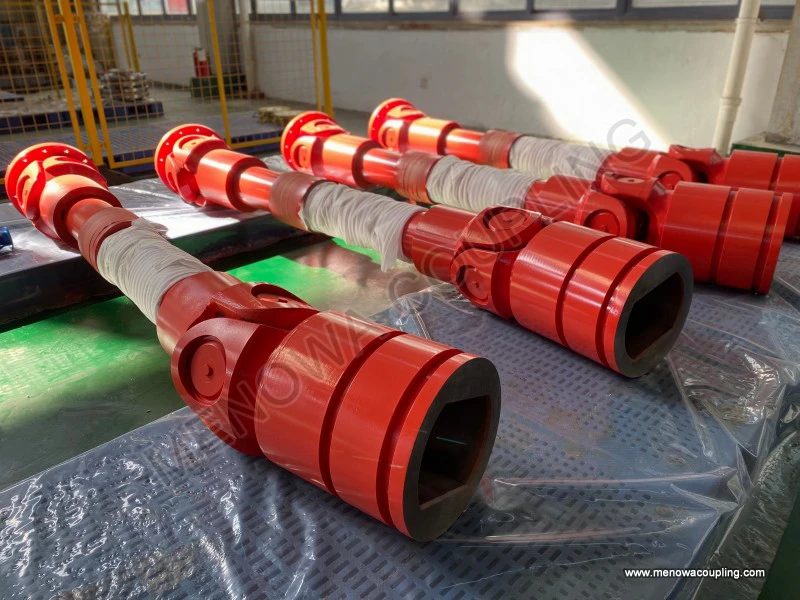
The development and iterative upgrading of industrial cardan shafts have always been closely synchronized with the evolution of industrial production modes and the upgrading of mechanical equipment performance. In the early stage of industrial mechanical development, the mechanical equipment used in production had relatively single functional requirements, low operating power, slow rotational speed and simple structural layout. The power transmission links between equipment components mostly adopted rigid fixed connection structures, and the misalignment generated during equipment operation was small, which could be compensated by the assembly tolerance of mechanical parts itself. With the continuous expansion of industrial production scale, the gradual improvement of mechanical equipment automation and integration level, and the increasingly complex and diverse production and processing working conditions, the operating parameters of industrial machinery have been continuously improved, the load borne by power transmission components has increased day by day, and the structural layout of equipment has become more compact and complex. A large number of mechanical equipment need to arrange power sources and working execution components in different spatial positions, and will produce continuous vibration, displacement and angular position changes under the influence of operating load, mechanical vibration, thermal expansion and contraction of metal materials and long-term operation wear. In this context, the traditional rigid transmission connection mode can no longer meet the actual production needs, and mechanical failures such as shaft body deformation, connection part fracture, bearing rapid wear and transmission power attenuation frequently occur in the production process, seriously affecting the continuity of industrial production and increasing the maintenance and replacement cost of mechanical equipment. It is against this industrial development background that the industrial cardan shaft with flexible transmission and multi-dimensional misalignment compensation functions has been continuously optimized in structure, upgraded in materials and improved in process, gradually developing from the initial simple universal joint connection structure to a professional and refined industrial power transmission component integrating high-strength bearing, flexible adjustment, dynamic balance operation and long-term durable use, and widely applied to almost all industrial production fields involving rotational power transmission.
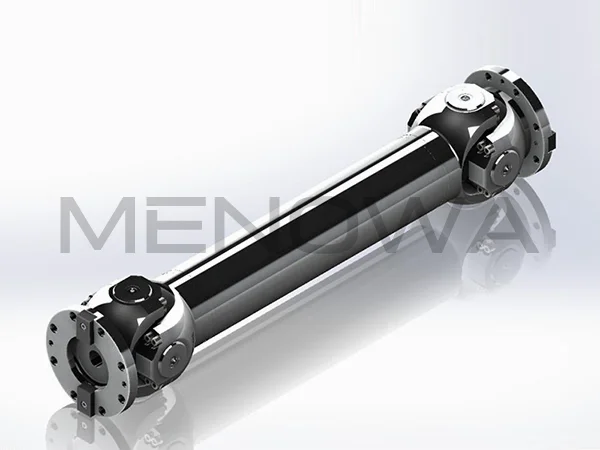
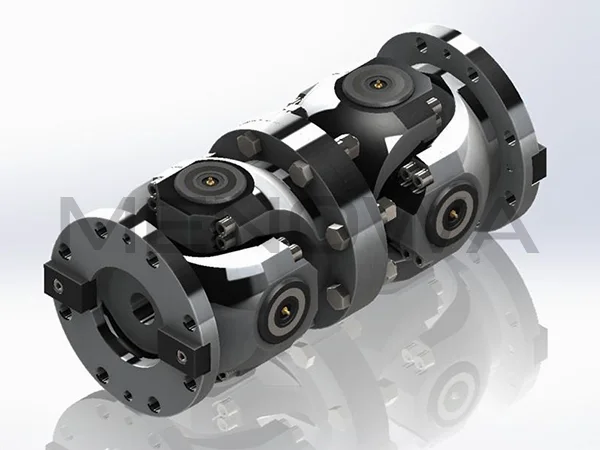
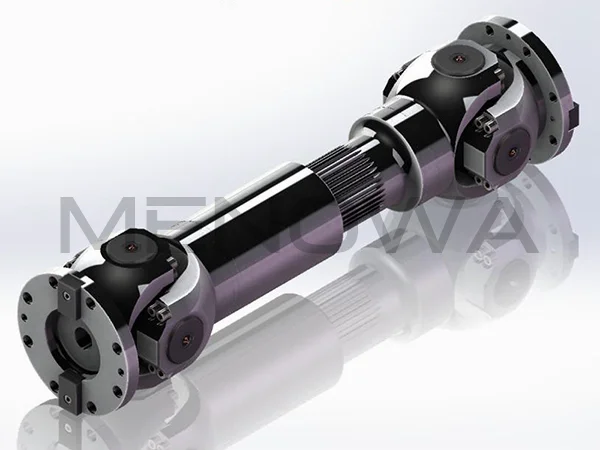
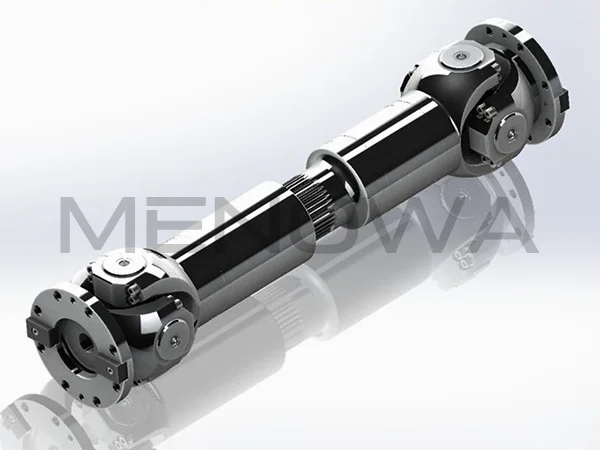
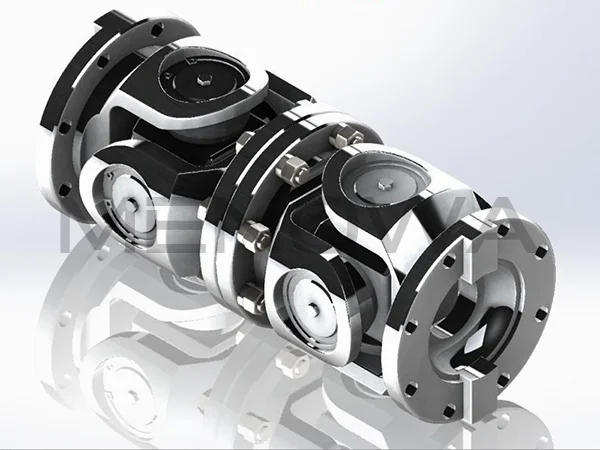
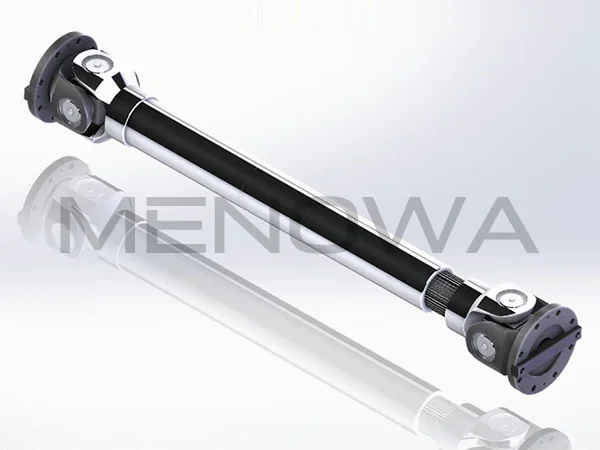
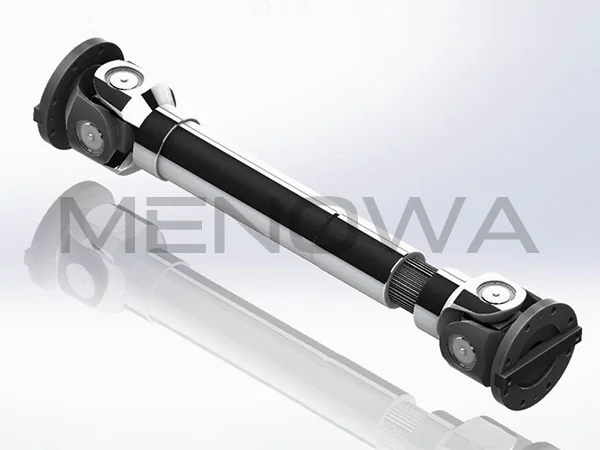
The core working principle of the industrial cardan shaft is based on the mechanical motion characteristics of the universal joint structure and the collaborative matching operation of multiple functional components, realizing the flexible transmission of torque and rotational motion between non-coaxial shafts without relying on external auxiliary power or complex control systems. The basic mechanical logic of its operation is that the universal joint assemblies arranged at both ends of the middle shaft body use the hinged connection structure of cross shaft and bearing components to connect the driving end connected with the power source and the driven end connected with the working equipment. When the driving end shaft body rotates under the drive of power equipment, the cross shaft structure inside the universal joint can flexibly rotate and deflect within a certain angle range according to the relative position change between the driving shaft and the driven shaft, converting the rotational motion of the driving end with angular deviation into stable rotational motion output of the driven end, and ensuring that the torque can be efficiently transmitted without obvious attenuation and fluctuation in the transmission process. In order to solve the problem of uneven instantaneous rotational speed transmission easily caused by the single universal joint structure in the transmission process, the conventional industrial cardan shaft adopts a double universal joint matching design in the structural layout. The two universal joint assemblies at the two ends of the shaft body are arranged in a symmetrical and matching angle state, so that the speed fluctuation generated by the first universal joint in the rotation process can be offset and compensated by the second universal joint, and the final rotational speed transmitted to the driven shaft remains uniform and stable, avoiding the impact and vibration of mechanical components caused by speed fluctuation in the high-speed rotation process. At the same time, the telescopic spline structure arranged in the middle section of the industrial cardan shaft can effectively adapt to the axial distance change between the driving end and the driven end generated by equipment vibration, thermal expansion and contraction and mechanical displacement in the operation process. The spline pair can slide freely in the axial direction within a certain range while transmitting torque, realizing automatic compensation of axial displacement, ensuring that the shaft body will not be subjected to additional axial tension or pressure during operation, and protecting the cardan shaft itself and the connected mechanical equipment from additional mechanical stress damage.
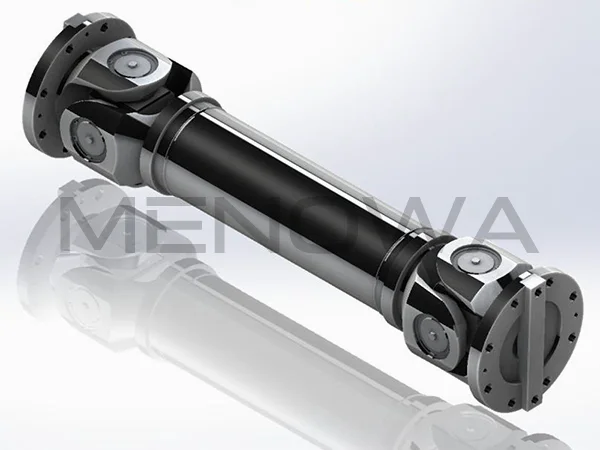
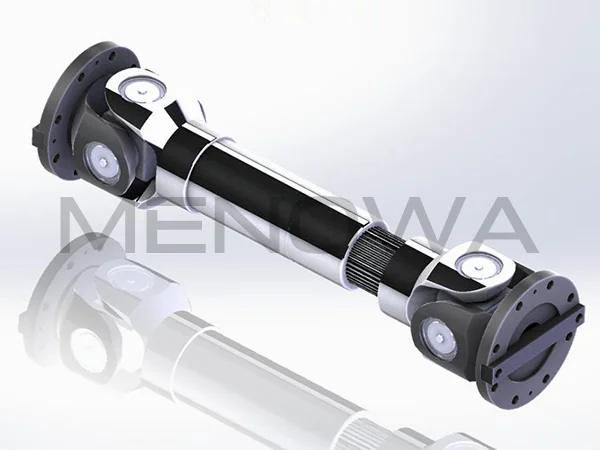
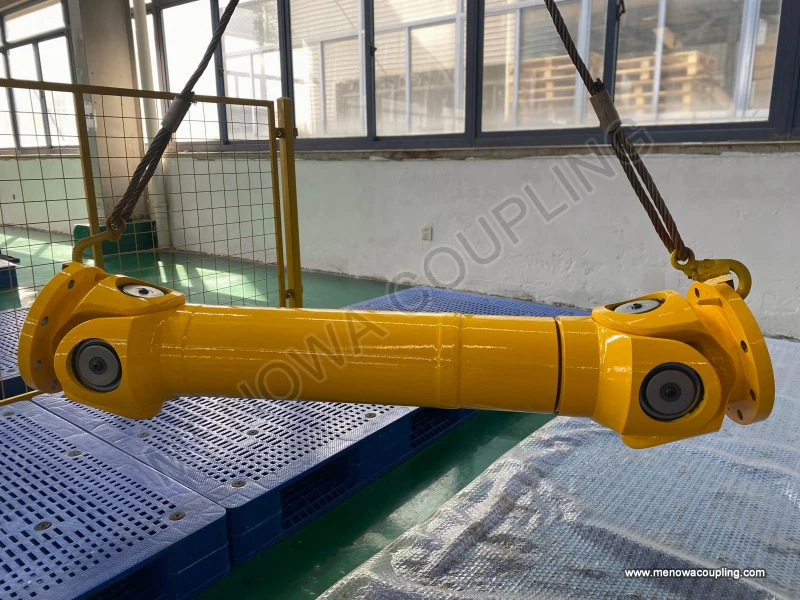
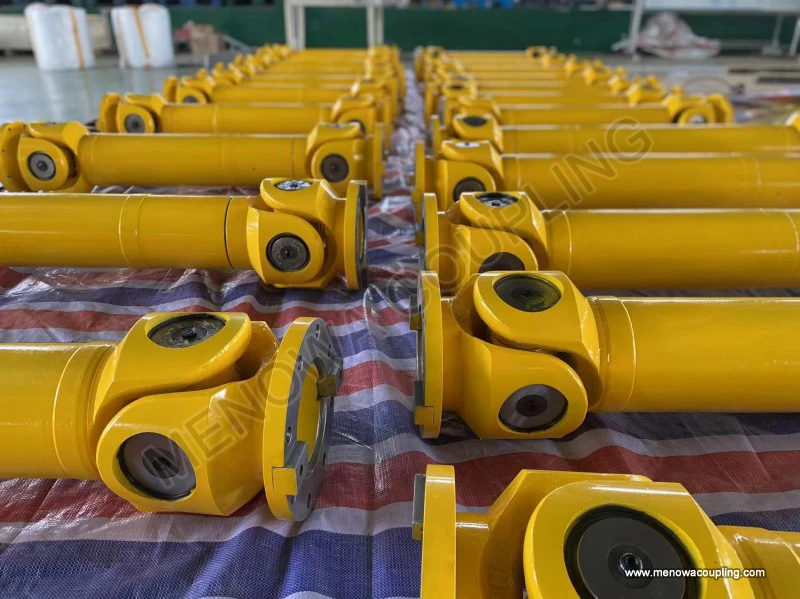
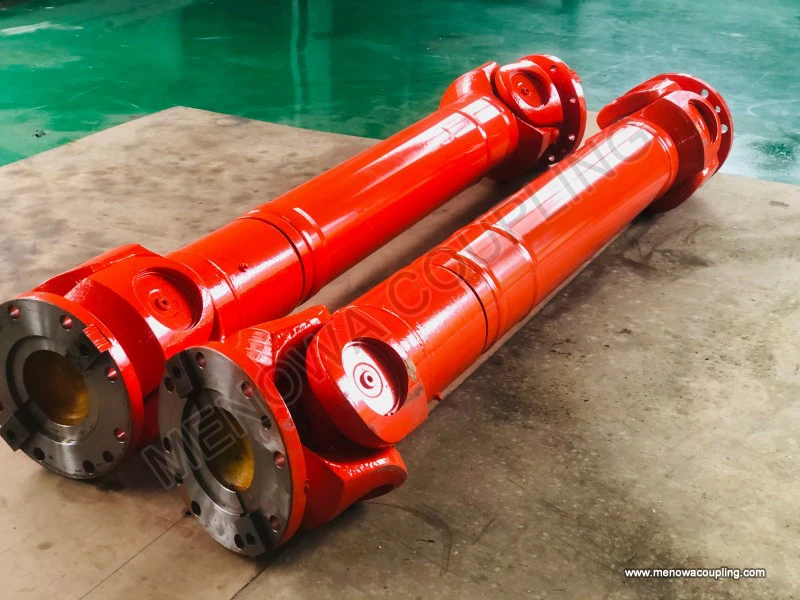
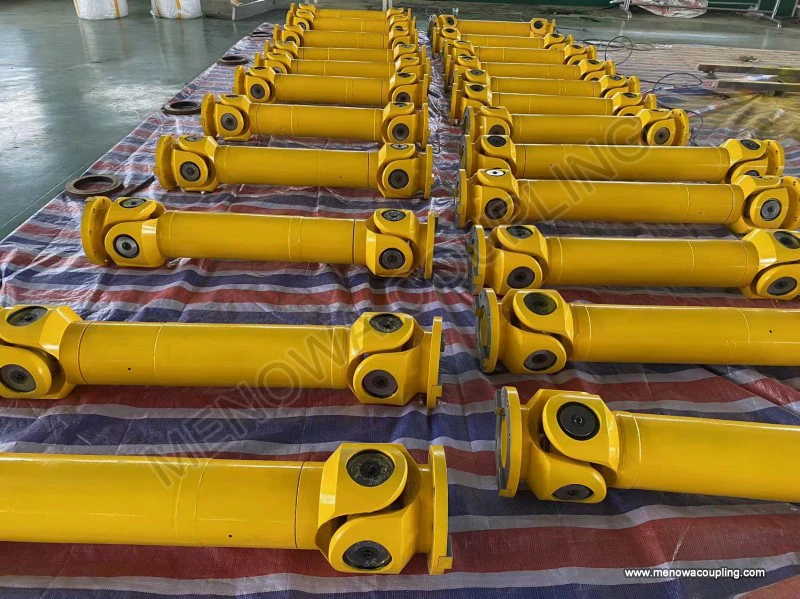
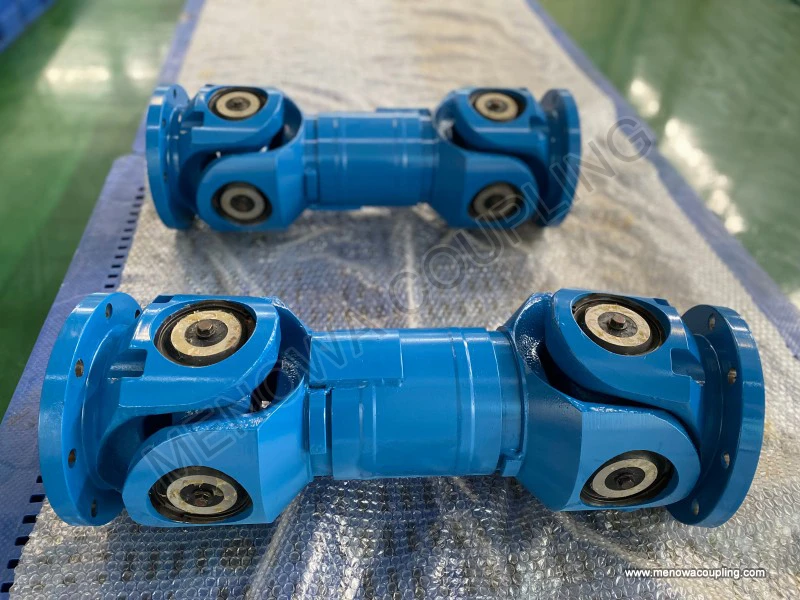
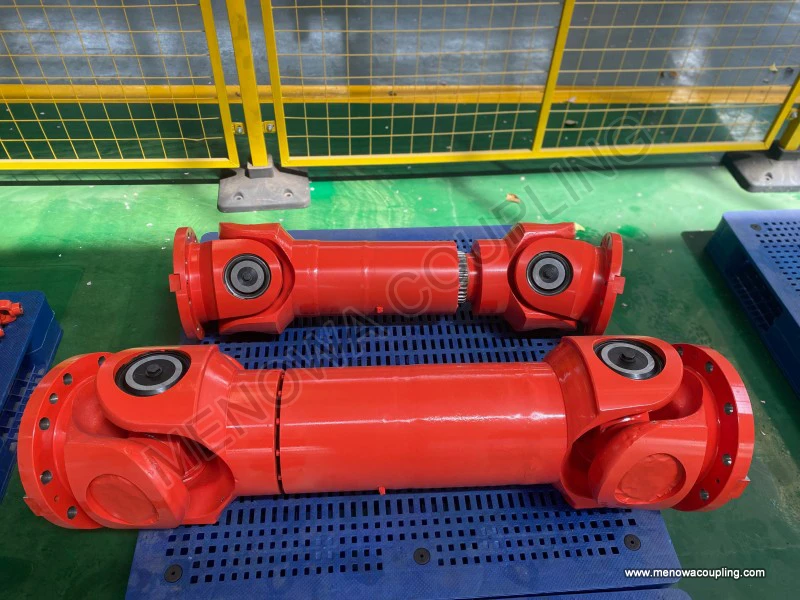
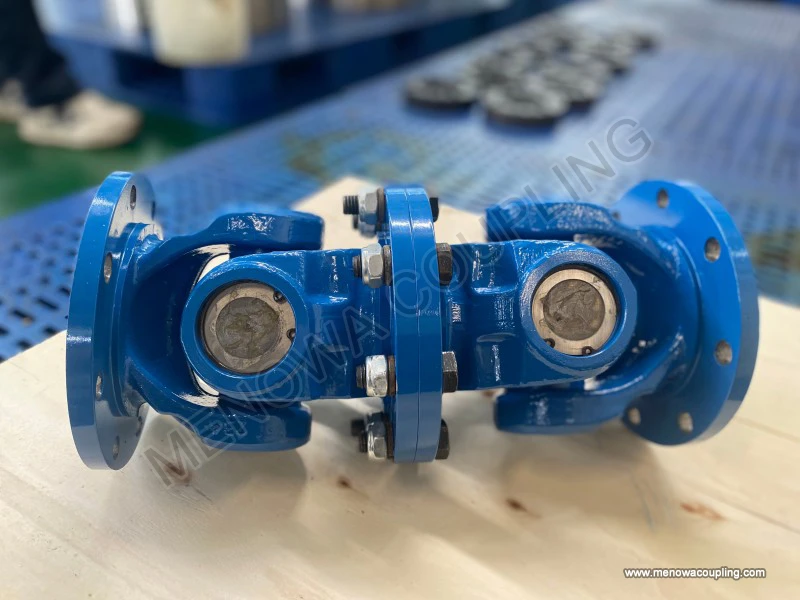
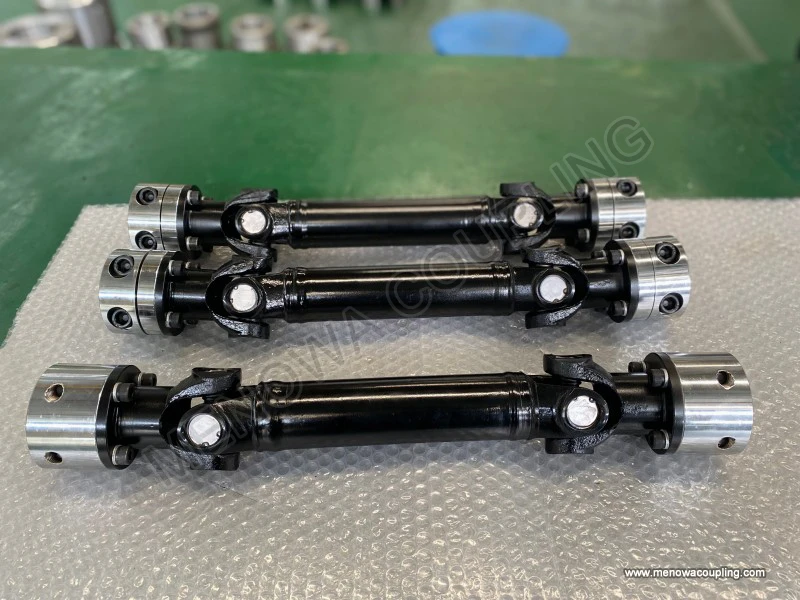
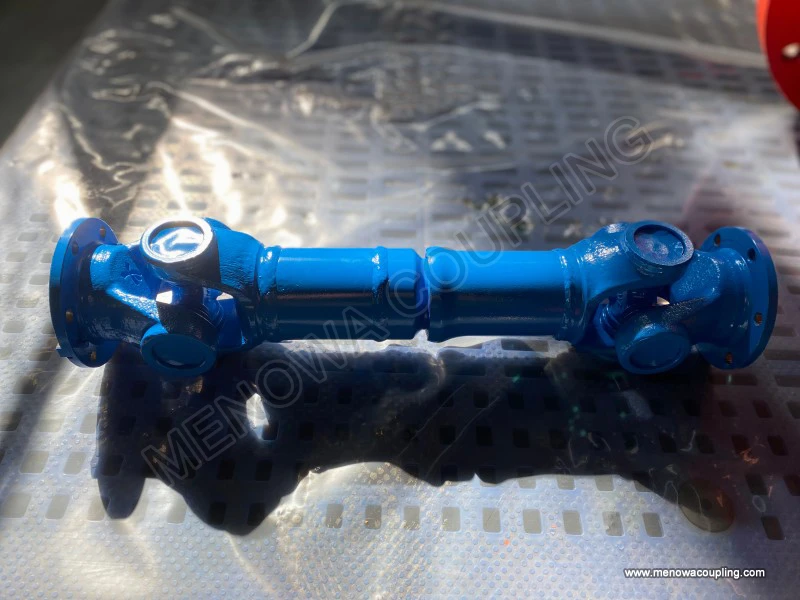
The overall structural composition of the industrial cardan shaft follows the design concept of combining functional independence and structural integration, and each component has its own unique functional positioning and mechanical bearing characteristics, and all components are closely matched and coordinated with each other to jointly complete the power transmission and misalignment compensation work. The main structural components of a complete industrial cardan shaft include flange yoke assemblies at both ends, universal joint cross shaft and bearing assemblies, middle telescopic shaft body, spline connection pairs and all fastening and sealing auxiliary parts. The flange yoke assemblies located at the outermost ends of the cardan shaft are the core connecting parts responsible for docking and fixing with the driving equipment and driven equipment. These components are made of high-strength alloy materials through integral forging and precision machining, with thickened structural design and high structural rigidity, which can bear huge torque load and mechanical impact generated in the power transmission process. The flange surface is processed with standard bolt connecting holes, which can realize stable and firm connection with the output shaft end of various power equipment and the input shaft end of working machinery, ensuring no loosening or displacement of the connection position during long-term high-load operation. The universal joint assembly composed of cross shaft and precision bearings is the core functional component of the entire industrial cardan shaft and the key to realizing angular misalignment compensation and flexible transmission. The cross shaft is the central force-bearing and hinged connecting part of the universal joint, with four mutually perpendicular shaft necks processed with high precision, which are respectively matched with the bearings installed inside the yoke holes of the flange yoke and the middle shaft yoke. The precision bearings adopt a sealed and wear-resistant structural design, which can reduce the friction coefficient in the rotation and deflection process of the cross shaft, ensure the flexible rotation of the universal joint at various angles, and avoid mechanical jamming and transmission resistance increase caused by excessive friction.
The middle shaft body part of the industrial cardan shaft is the main bearing and torque transmission component connecting the two end universal joints, and its structural form is divided into integral type and telescopic type according to different industrial application requirements. The integral middle shaft body is mostly used in industrial equipment application scenarios where the relative position between the driving end and the driven end is fixed and the axial displacement change is small. The overall structure is simple and the structural rigidity is high, which can meet the needs of high-torque stable transmission under fixed working conditions. The telescopic middle shaft body is equipped with a spline connection pair inside, which is composed of an inner spline shaft and an outer spline sleeve processed with precision matching dimensions. The spline structure adopts a multi-tooth uniform distribution design, which can evenly disperse the torque load on each spline tooth in the torque transmission process, avoid local stress concentration and spline tooth wear and fracture, and ensure the stability and durability of axial telescopic adjustment while transmitting torque. All sealing auxiliary parts installed at the connection and rotation positions of each component of the industrial cardan shaft play a vital role in protecting the internal working environment of the shaft body and prolonging the overall service life. The sealing components can effectively isolate external dust, moisture, industrial corrosive media and particulate impurities from entering the inside of the universal joint and the spline pair, prevent the lubricating grease inside from leakage and loss, ensure that all friction and rotating parts are always in a good lubrication state, reduce friction and wear between components, and avoid mechanical failures such as bearing corrosion, spline jamming and universal joint rotation failure caused by the invasion of external impurities.
Material selection is a key link that determines the overall mechanical performance, load-bearing capacity, wear resistance and service life of the industrial cardan shaft, and all key bearing components need to be selected and matched according to the actual industrial working conditions and transmission load requirements. The flange yoke, cross shaft and middle shaft body and other main load-bearing components are mostly made of high-quality alloy structural steel with high strength, high toughness and good hardenability. This type of material has excellent mechanical properties such as high tensile strength, good impact toughness and strong fatigue resistance after forging forming and heat treatment. It can withstand long-term alternating torque load, mechanical impact load and vibration load in industrial operation processes, and will not produce plastic deformation, structural fracture and fatigue damage under continuous high-load working conditions. The precision bearings inside the universal joint are made of high-carbon chromium bearing steel with high hardness and good wear resistance. After special quenching and tempering heat treatment processes, the surface hardness of the bearing parts is improved, the wear resistance and compression resistance are enhanced, and the dimensional stability of the bearings can be maintained during long-term high-speed rotation and frequent deflection movement, avoiding bearing failure caused by wear and deformation. The spline pair contact surface and the rotating friction surface of each component are processed by surface strengthening processes such as carburizing and quenching and surface grinding, so that the surface of the component has high hardness and wear resistance, while the core part maintains good toughness, realizing the complementary advantages of surface wear resistance and core impact resistance. The sealing auxiliary parts are made of high-quality rubber and polymer wear-resistant materials, which have good aging resistance, corrosion resistance and elastic deformation recovery ability, can adapt to different industrial temperature environments and corrosive working conditions, and maintain stable sealing performance for a long time.
Dynamic balance processing is an indispensable technological process in the production and manufacturing of industrial cardan shafts, and it is also an important guarantee to ensure the stable operation of the cardan shaft at high speed and reduce mechanical vibration and noise. In the actual production and processing process, due to the influence of raw material density deviation, machining dimensional tolerance, forging forming deformation and component assembly position deviation, the mass distribution of the processed and assembled cardan shaft is inevitably uneven. If the dynamic balance treatment is not carried out, the unbalanced mass will generate large centrifugal force during the high-speed rotation of the cardan shaft. This centrifugal force will cause the shaft body to vibrate violently, increase the vibration and noise of the entire mechanical equipment, aggravate the wear of bearings and connecting parts, and even cause the shaft body to bend and deform and connection bolts to loosen and break in severe cases, affecting the safe operation of industrial equipment. Therefore, after the completion of the assembly of all components of the industrial cardan shaft, professional dynamic balance detection and correction equipment must be used to carry out high-precision dynamic balance testing. According to the unbalanced position and unbalanced mass data detected by the equipment, the corresponding weight removal or counterweight treatment is carried out on the shaft body, so that the mass distribution of the cardan shaft in the rotating state tends to be uniform, the centrifugal force generated during rotation is controlled within a reasonable small range, the vibration and noise during operation are reduced, and the smoothness and stability of the cardan shaft in high-speed operation are ensured. Different dynamic balance accuracy standards are adopted for cardan shafts used in different industrial application scenarios. Cardan shafts used in high-speed rotating and precision transmission equipment need higher dynamic balance accuracy, while those used in low-speed and heavy-load rough processing equipment can adopt relatively conventional dynamic balance standards to meet actual production and use needs.
Industrial cardan shafts have extremely wide application coverage in modern industrial production, involving heavy industry manufacturing, light industrial processing, material conveying, metallurgical rolling, papermaking and textile, woodworking processing, chemical production and many other industrial fields, and play an irreplaceable role in the power transmission links of various mechanical equipment. In the heavy machinery manufacturing and engineering machinery industry, industrial cardan shafts are applied to the power transmission systems of various large processing machinery and engineering operation equipment. This type of equipment has large overall volume, heavy working load and complex and changeable operation working conditions, and will generate large vibration and position displacement during operation. The industrial cardan shaft can adapt to the harsh working environment of heavy load and strong vibration, stably transmit the power output by the power system to the working execution components, and ensure the normal operation of mechanical processing and engineering operation. In the metallurgical and steel rolling industry, the production and processing equipment such as steel rolling mills, smelting auxiliary machinery and metal forging machinery need to operate continuously for a long time with high torque and high load. The internal temperature of the equipment is high, and the mechanical thermal expansion and contraction displacement is obvious. The industrial cardan shaft can compensate the angular and axial displacement generated by thermal deformation and load vibration, maintain the continuity and stability of power transmission, and avoid production interruption and equipment damage caused by transmission connection failure in the continuous rolling production process.
In the material conveying and automated production line industry, various conveyor systems, automated assembly lines and material handling equipment need to realize synchronous power transmission between multiple transmission rollers and driving motors. The equipment layout is scattered, and the relative position of each transmission component is easy to shift during long-term operation. The industrial cardan shaft can realize synchronous and consistent power transmission between multiple spaced mechanical shafts, ensure the stable operation of material conveying and automated production processes, and avoid material accumulation and production line shutdown caused by asynchronous transmission. In the papermaking, textile and printing industries, the production and processing equipment has high requirements for transmission stability and rotational speed uniformity. The operation process requires smooth and uniform rotational motion transmission to ensure the processing quality of paper products, textile fabrics and printed materials. The industrial cardan shaft can offset the rotational speed fluctuation and transmission vibration in the power transmission process, maintain the stable and consistent operation speed of each processing roller and processing component, and effectively guarantee the surface flatness and processing precision of finished products. In the woodworking processing and building materials production industry, the mechanical equipment has harsh working conditions, more dust and particulate impurities in the working environment, and large impact load during processing. The industrial cardan shaft with good sealing performance and strong impact resistance can adapt to the harsh working environment, maintain long-term stable operation, and reduce the frequency of equipment maintenance and component replacement.
In the chemical industry and environmental protection equipment field, many production and treatment equipment need to operate in corrosive media, high temperature or humid working environments. The mechanical power transmission components are easy to be corroded and worn, and the equipment operation continuity requirements are high. The industrial cardan shaft can adopt targeted material selection and anti-corrosion surface treatment technology according to the actual working environment, effectively resist the corrosion of chemical media and humid environment, maintain the stability of structural performance and transmission function, and ensure the long-term continuous operation of chemical production and environmental protection treatment equipment. In addition, in the food processing, pharmaceutical production and other light industrial fields with high environmental hygiene requirements, the industrial cardan shaft with smooth surface, good sealing performance and easy cleaning and maintenance is selected to avoid dust and material residue, meet the production hygiene standards, and ensure the safe and standardized production of food and pharmaceutical products.
Daily maintenance and scientific maintenance management are important prerequisites to ensure the long-term stable operation and extended service life of industrial cardan shafts. Although the industrial cardan shaft is designed with high strength, high wear resistance and high durability, it will still produce normal wear and performance attenuation of components after long-term continuous operation under high load, vibration and complex environmental conditions. If regular maintenance and inspection are not carried out, minor wear and potential hidden dangers will gradually evolve into serious mechanical failures, resulting in equipment shutdown and production loss. The daily maintenance work of industrial cardan shafts mainly includes regular lubrication maintenance, sealing condition inspection, connection fastening inspection, component wear detection and regular cleaning treatment. Lubrication maintenance is the most basic and core maintenance work. The universal joint bearing assembly and spline pair of the cardan shaft need to be filled with professional high-temperature and wear-resistant lubricating grease regularly. The lubricating grease can form a protective oil film on the friction surface of the components, reduce the friction resistance between rotating and sliding parts, reduce wear and heat generation, and avoid component ablation and jamming caused by dry friction. The lubrication cycle needs to be formulated according to the operating frequency, load size and working environment of the equipment. The cardan shaft operating under high load and harsh environment needs to shorten the lubrication cycle appropriately to ensure good lubrication effect.
The inspection of the sealing condition of the industrial cardan shaft mainly checks whether the sealing parts at each connection and rotating position are aged, deformed, damaged or leaked. Damaged sealing parts will lead to the loss of internal lubricating grease and the invasion of external dust, moisture and corrosive impurities, accelerating component wear and corrosion. Once aging or damaged sealing parts are found, they need to be replaced in a timely manner to ensure the good sealing performance of the entire shaft body. The connection fastening inspection focuses on checking whether the connecting bolts of the flange yoke and the fastening parts of each component are loose or displaced. Long-term vibration and load impact during equipment operation may cause the fastening bolts to loosen, affecting the connection firmness of the cardan shaft, leading to transmission vibration and even connection detachment in severe cases. It is necessary to regularly tighten the fastening bolts and check the bolt fastening torque to ensure that all connecting parts are firmly installed in place. The component wear detection needs to regularly check the wear degree of the universal joint cross shaft, bearing, spline tooth surface and other easily worn components. For components with excessive wear, deformation or fatigue damage, they need to be replaced in a timely manner to avoid affecting the transmission performance and safe operation of the cardan shaft. The regular cleaning work is to clean the dust, impurities and dirt accumulated on the surface of the cardan shaft and the surrounding working environment to prevent impurities from entering the internal moving parts and affecting the normal operation of the components.
In addition to daily routine maintenance, the industrial cardan shaft also needs to be inspected and maintained regularly during equipment shutdown and maintenance every year, including professional dynamic balance re-detection, component performance testing and overall structural overhaul. For the cardan shaft that has been used for a long time, the overall structural deformation and fatigue damage of the shaft body need to be detected. The shaft body with bending deformation and fatigue cracks needs to be repaired or replaced in a timely manner. The universal joint assembly with reduced rotation flexibility and increased transmission resistance needs to be disassembled, inspected and maintained, and the worn bearings and cross shaft components need to be replaced to restore the flexible transmission performance of the cardan shaft. Scientific and standardized maintenance management can not only effectively reduce the failure rate of industrial cardan shafts, reduce the maintenance cost and replacement cost of mechanical equipment, but also maintain the stable transmission performance of the cardan shaft for a long time, ensure the continuous and efficient operation of industrial production, and create stable production benefits for industrial production enterprises.
With the continuous progress of industrial manufacturing technology and the continuous upgrading of industrial production requirements, the development trend of industrial cardan shafts is gradually moving towards lightweight structure, high transmission efficiency, strong environmental adaptability, long service life and intelligent monitoring and early warning. In terms of structural design, with the continuous application of computer simulation optimization design technology, the structural layout of industrial cardan shafts is more reasonable, the structural size is optimized, the self-weight of the shaft body is reduced on the premise of ensuring load-bearing performance, the centrifugal force and operation vibration during high-speed rotation are further reduced, and the transmission efficiency is improved. In terms of material application, new high-strength, light-weight and corrosion-resistant alloy materials and composite materials are gradually applied to the production and manufacturing of cardan shafts, which further improve the mechanical performance and environmental adaptability of the product, and reduce the overall weight and production manufacturing cost. In terms of processing technology, the continuous popularization of precision machining technology, integral forging technology and surface strengthening treatment technology makes the dimensional accuracy and structural strength of cardan shaft components higher, the component matching gap smaller, and the operation stability and durability better.
In terms of intelligent operation and maintenance, with the development of industrial intelligent monitoring technology, more and more industrial cardan shafts are equipped with vibration detection, temperature monitoring and torque sensing components. These monitoring components can collect the operating vibration data, temperature change data and transmission torque data of the cardan shaft in real time during the operation process, transmit the data to the industrial control system for real-time analysis and processing, realize real-time monitoring of the operating state of the cardan shaft, automatic early warning of potential faults, and predictive maintenance of equipment. This intelligent operation and maintenance mode can effectively avoid sudden mechanical failures of cardan shafts, realize precise maintenance and scientific management, further reduce equipment downtime and maintenance costs, and adapt to the development needs of modern industrial intelligent production and unmanned production. In the future, with the continuous innovation and development of industrial technology, the performance of industrial cardan shafts will be further improved, the application scope will be further expanded, and it will continue to play an important core role in the power transmission links of modern industrial production, providing solid and reliable basic mechanical support for the high-quality development of various industrial fields.
https://www.menowacoupling.com/industrial-coupling/industrial-cardan-shaft.html
 WeChat
 WhatsApp