Disc Membrane Coupling
In the complex and interconnected operating system of modern industrial mechanical equipment, the stability and efficiency of power transmission between rotating shafts directly determine the overall operating state, service cycle, and operational stability of the entire production line. Every mechanical transmission link that connects driving equipment and driven equipment undertakes the core task of torque transfer, speed synchronization, and operational buffering, and subtle deviations and vibrations in the shafting operation process will be continuously amplified along the transmission chain if not effectively adjusted and compensated, eventually leading to abnormal wear of key components, increased operating resistance of equipment, shortened service life of core mechanical parts, and even unexpected shutdown of production equipment in severe cases. Among various flexible transmission components developed to solve the above shafting operation problems, disc membrane coupling has gradually become a key connecting component widely used in high-speed operation, heavy-load transmission, and harsh working condition scenarios by virtue of its all-metal flexible structural design, reliable torque transmission capacity, excellent displacement compensation performance, and long-term stable operating characteristics. Different from traditional rigid coupling structures that lack deformation tolerance and ordinary elastic coupling structures that rely on non-metal flexible materials for buffering, disc membrane coupling integrates the high-precision transmission advantages of rigid connecting structures and the flexible deformation compensation characteristics of elastic connecting structures, achieving a balanced coordination between efficient torque transmission and shafting misalignment correction, and adapting to the diversified and high-standard operation requirements of industrial equipment under different working environments and operating loads. With the continuous upgrading of industrial manufacturing technology and the continuous improvement of equipment operation precision requirements, the technical optimization and application expansion of disc membrane coupling have also been continuously promoted, and its structural design logic, material selection matching, deformation working mechanism, and long-term operation reliability have become important research and application focuses in the field of modern mechanical power transmission design.
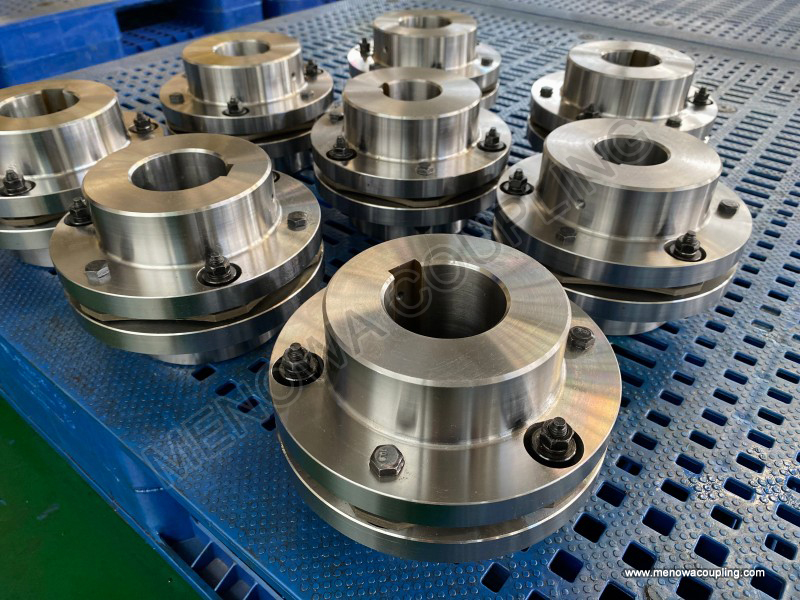
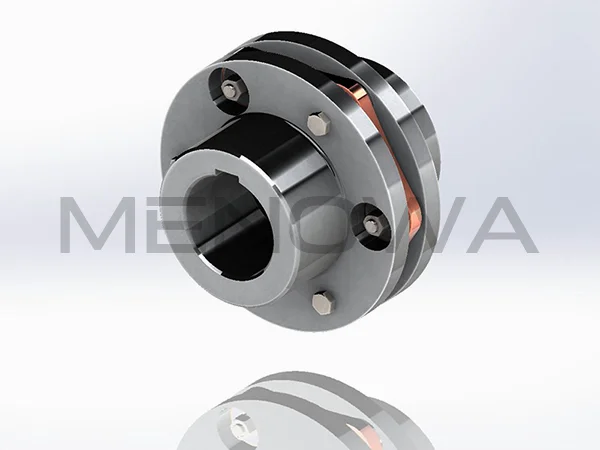
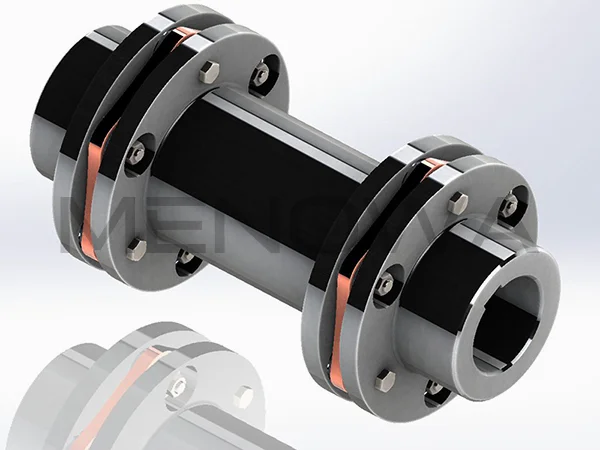
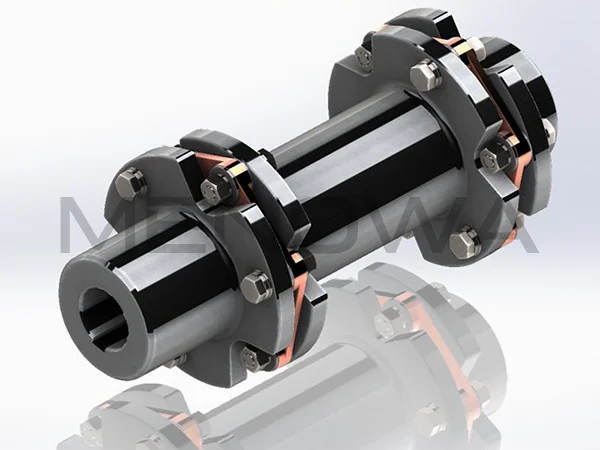
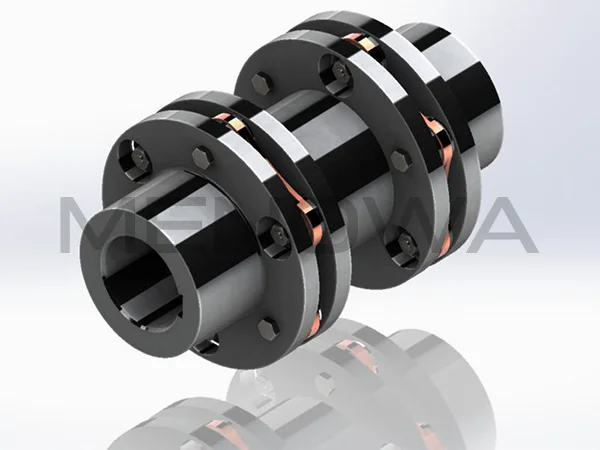
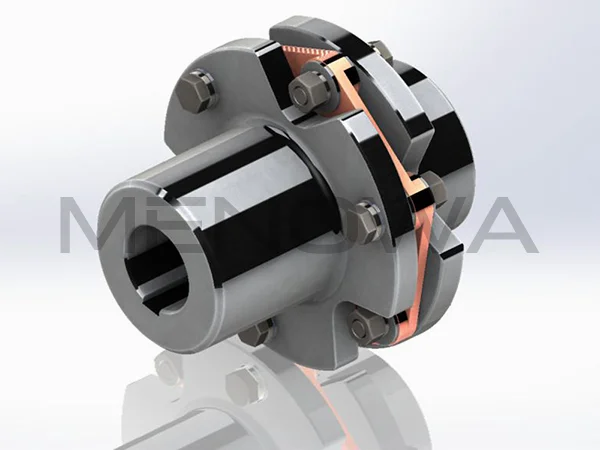
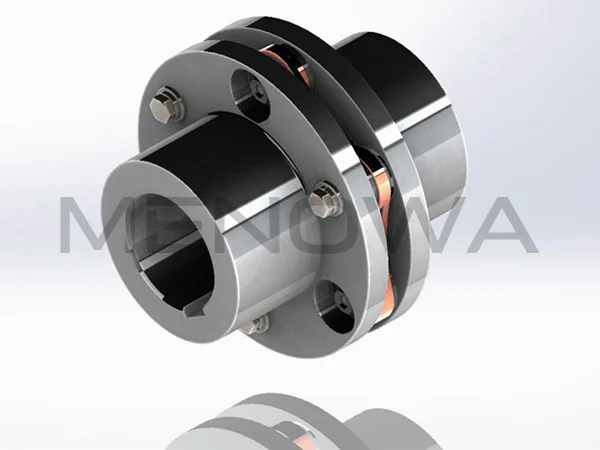
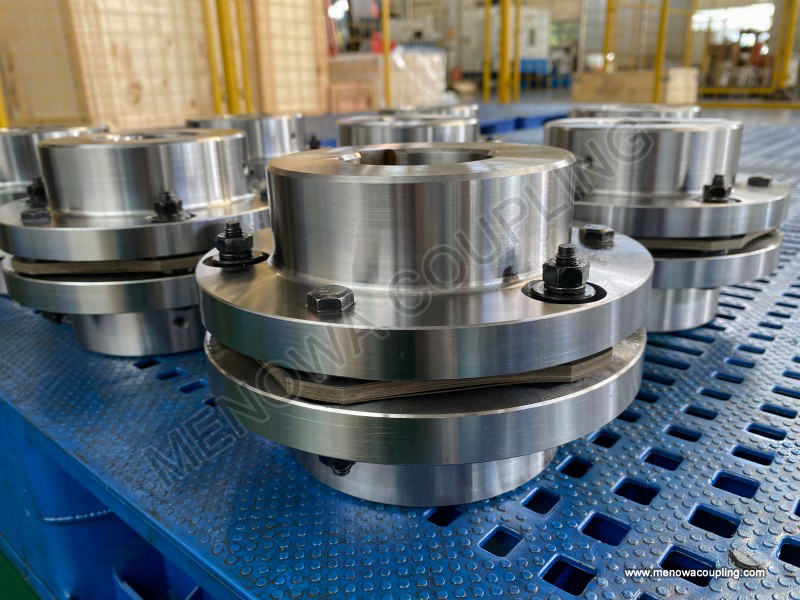
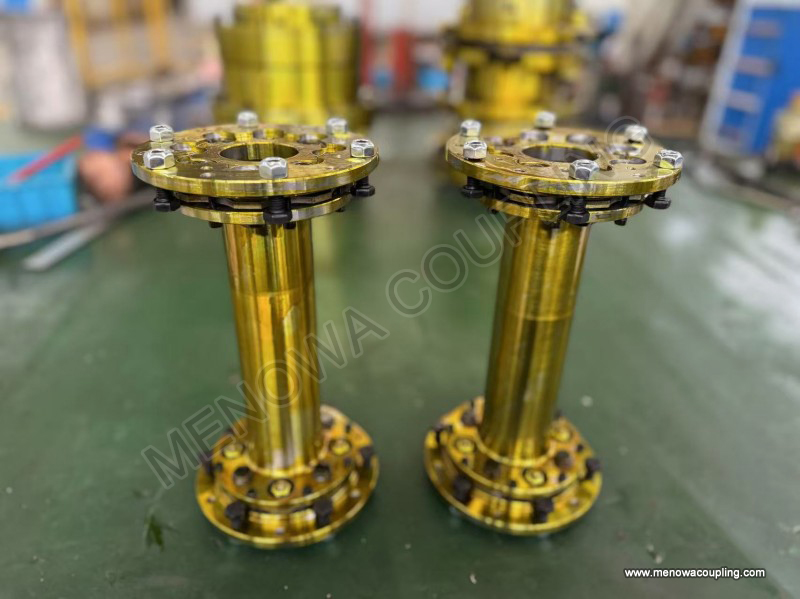
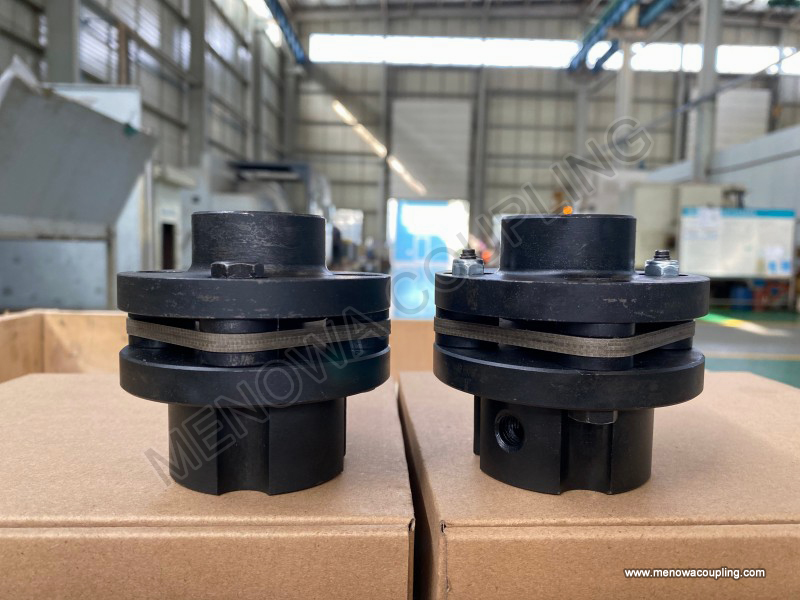
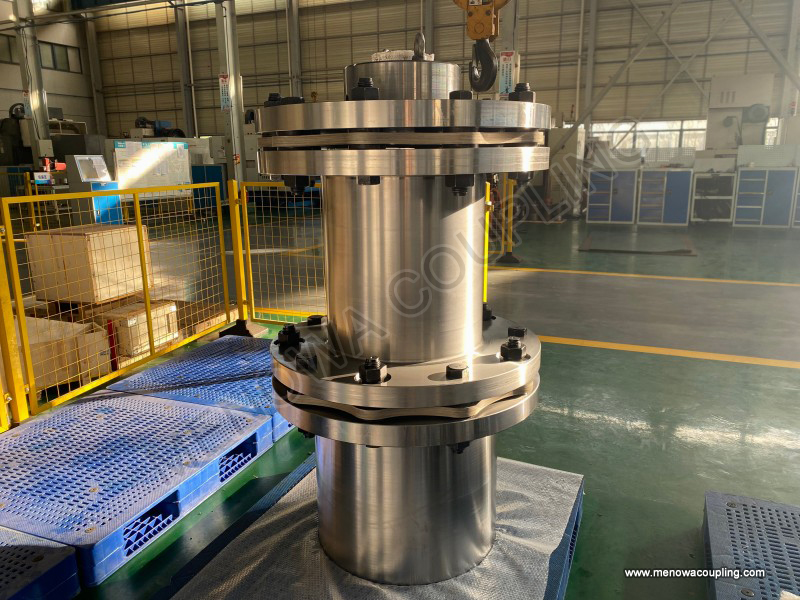
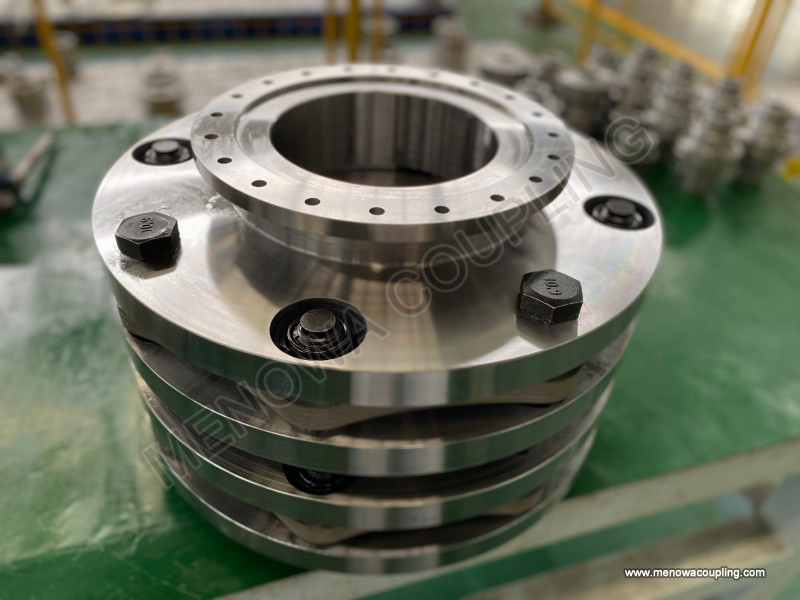
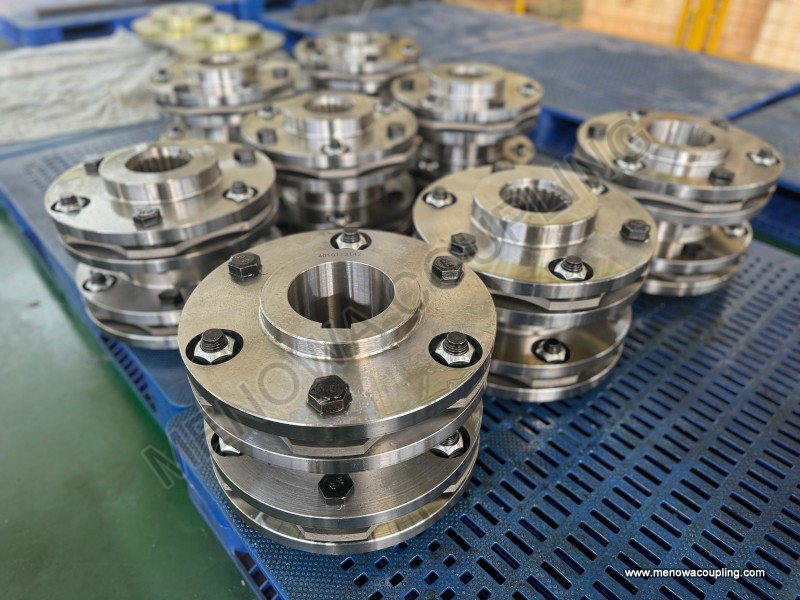
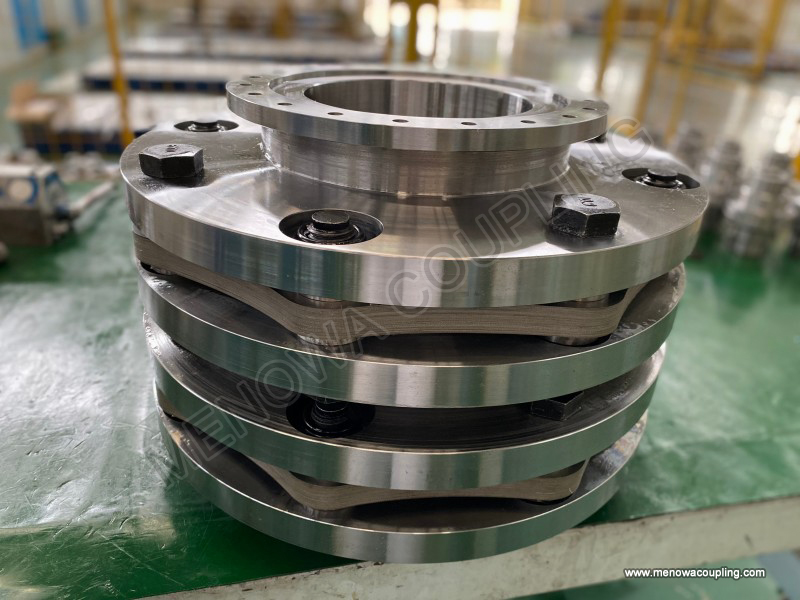
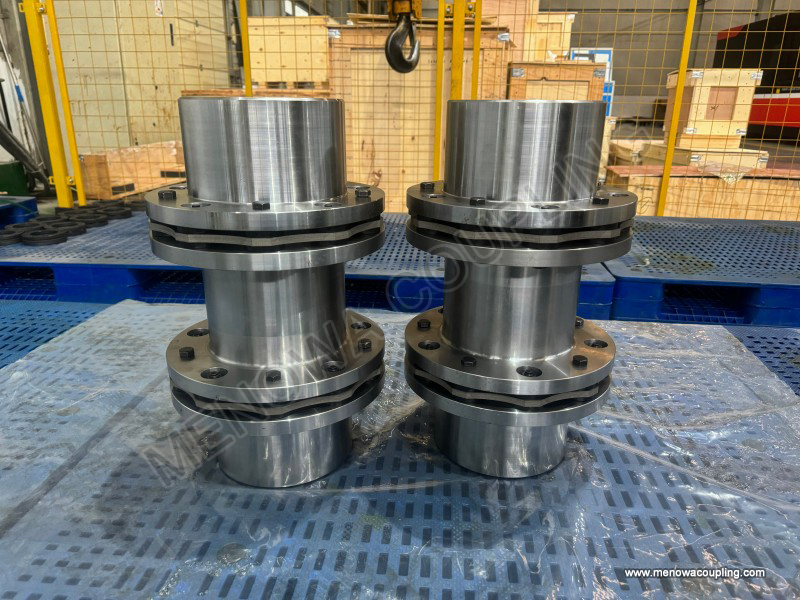
The basic composition and structural design logic of disc membrane coupling are derived from the actual demand of shafting transmission for both rigid connection stability and flexible deformation adaptability in industrial operation. The overall structure of this type of coupling adopts a compact integrated assembly design without complex transmission auxiliary structures or additional transmission accessories, and the main structural components are composed of two shaft hubs connected with the driving shaft and driven shaft respectively, a middle connecting sleeve arranged between the two shaft hubs, and a multi-layer disc membrane group assembled and fixed by high-strength fasteners. All core load-bearing and deformation functional parts adopt all-metal structural design, abandoning non-metal elastic materials such as rubber and plastic used in many traditional flexible couplings, which fundamentally avoids the performance attenuation and aging failure problems of non-metal materials under high temperature, low temperature, chemical corrosion, and long-term alternating load working conditions. The disc membrane group, as the core functional component of the entire coupling, is formed by stacking multiple layers of thin metal discs with uniform thickness and special molded profiles. The common profile designs of the metal discs include linear structure, conical structure, and curved structure, and different profile designs can adjust the stress distribution state and deformation coordination degree of the membrane discs during torque transmission and displacement compensation according to different load characteristics and misalignment compensation requirements of equipment operation. All membrane discs are precisely processed to ensure consistent structural size and uniform stress bearing performance, and are tightly connected with the shaft hubs and middle sleeve through staggered assembly of high-strength bolts, forming an integrated force transmission and deformation structure. The bolt connection mode adopts pre-tightening assembly technology, which can maintain stable connection tightness under long-term alternating torque and vibration conditions, avoiding connection looseness, position deviation, and abnormal impact caused by insufficient pre-tightening force during equipment operation. The overall structural layout of disc membrane coupling does not occupy excessive installation space, and the axial and radial dimensions are reasonably optimized, which is convenient for installation and layout in compact mechanical equipment shafting systems, and will not cause additional structural burden and space occupation pressure on the main equipment. The ingenious structural design makes each component perform its own duties in the operation process: the shaft hubs are responsible for stably connecting with the rotating shafts of driving and driven equipment to realize the fixed transmission of power input and output; the middle connecting sleeve plays a transitional connecting role to ensure the synchronous rotation of the two sets of membrane disc groups on both sides; and the multi-layer membrane disc group undertakes the dual core functions of torque transmission and shafting misalignment compensation, realizing the coordinated operation of rigid power transmission and flexible deformation adjustment in the same component.
The core working principle of disc membrane coupling is based on the elastic deformation characteristics of high-strength metal materials, relying on the tensile, compression, and bending elastic deformation of the multi-layer disc membrane group to complete the efficient transmission of torque and the automatic compensation of various misalignment displacements between the driving shaft and the driven shaft. In the actual operation of mechanical equipment, due to inevitable factors such as installation errors during equipment assembly, mechanical vibration during long-term operation, thermal expansion and contraction of components caused by temperature changes in the working environment, and slight foundation settlement of equipment installation, the coaxiality between the driving shaft and the driven shaft connected by the coupling will always have certain deviations, which are mainly divided into axial displacement deviation, angular displacement deviation, and radial displacement deviation. These three types of misalignment deviations will generate additional bending moment and alternating stress on the shafting and connecting components during the rotation operation. If the coupling cannot effectively compensate for these deviations, the additional stress will act on the rotating shaft, bearings, and other key parts for a long time, accelerating fatigue wear and structural damage of components. When the disc membrane coupling is in operation, the torque output by the driving equipment is first transmitted to the shaft hub on the driving side, and then evenly transmitted to the multi-layer disc membrane group through the pre-tightened fastening bolts. Under the action of torque, the metal membrane discs produce micro tensile and compressive elastic deformation along the torque transmission direction, and the torque is continuously transmitted to the middle connecting sleeve and the driven side membrane disc group through the deformation coordination between the membrane discs, and finally transmitted to the driven shaft to realize the synchronous rotation and power transmission of the entire shafting system. In this whole torque transmission process, the metal membrane discs only produce controllable elastic deformation without relative sliding and friction between components, so there is no mechanical wear and friction loss inside the coupling itself. At the same time, when various misalignment deviations occur between the two shafts, the disc membrane group can produce corresponding bending and telescopic elastic deformation according to the deviation type and deviation degree, flexibly absorbing and adapting to axial stretching changes, angular deflection changes, and radial offset changes between the shafts. This passive deformation compensation mode does not require external control power and auxiliary adjustment equipment, and can automatically and dynamically adjust with the real-time operation state of the equipment, always maintaining the stable alignment state of the shafting transmission system, reducing the additional bending moment and alternating stress generated by misalignment on the shafting and bearings, and ensuring that the torque transmission process is always efficient and stable. The elastic deformation of the metal membrane discs is within the elastic limit range of the material during the whole operation process, and after the external load and displacement deviation disappear, the membrane discs can automatically return to the initial structural state without permanent deformation and structural damage, which lays a foundation for the long-term repeated stable operation of the coupling.
Material selection is the key factor determining the service performance, operating temperature adaptability, corrosion resistance, and fatigue life of disc membrane coupling, and different structural components have targeted material matching principles according to their respective stress characteristics and operating environment requirements. The multi-layer disc membrane group, as the core deformation and force-bearing component, bears long-term alternating torque, cyclic elastic deformation, and complex stress superposition caused by misalignment compensation, so the selected materials need to have high tensile strength, excellent fatigue resistance, good elastic recovery performance, and stable structural performance under temperature changes and harsh environmental conditions. High-strength stainless steel materials are the most widely used matching materials for membrane discs, which have balanced mechanical strength and elastic deformation performance, can maintain stable structural toughness and deformation coordination ability under long-term cyclic load, and are not easy to produce fatigue cracks and structural failure after millions of times of elastic deformation cycles. For special working scenarios such as high-temperature operation, low-temperature cold resistance, and strong chemical corrosion environment, the material composition of the membrane discs will be appropriately adjusted and optimized, and alloy materials with better high-temperature oxidation resistance, low-temperature toughness, and chemical corrosion resistance will be selected to ensure that the membrane discs will not have performance attenuation and structural failure under extreme working temperature and corrosive medium erosion. The shaft hubs and middle connecting sleeve, as the main load-bearing connecting structural parts, need to have high structural rigidity and impact resistance, and bear the torque load and connection fastening force for a long time without structural deformation and connection distortion. High-quality alloy steel and cast steel materials are mostly used for processing and production. These materials have high structural hardness and compressive strength, can resist the impact load and vibration generated during equipment startup, shutdown, and sudden load changes, and maintain the stable geometric size and connection accuracy of the structural parts for a long time. The high-strength fastening bolts used for assembly and connection need to have high pre-tightening force retention and anti-loosening performance, and high-strength alloy bolt materials with high tensile strength and fatigue resistance are selected to avoid bolt loosening, thread deformation, and connection failure caused by long-term vibration and alternating load. All materials used for disc membrane coupling do not contain easily aging and deteriorating components, and the all-metal material matching mode enables the coupling to adapt to a wide temperature operating range, and can maintain stable working performance in both low-temperature cold working environments and high-temperature continuous operation environments without performance degradation caused by material aging, deterioration, or thermal deformation. Compared with ordinary elastic couplings that rely on non-metal materials, disc membrane coupling has obvious advantages in material durability and environmental adaptability, and can maintain stable transmission performance and structural integrity in harsh working conditions such as humidity, dust, chemical corrosion, and temperature alternation for a long time.
Disc membrane coupling has outstanding comprehensive performance advantages in actual industrial power transmission applications, covering transmission efficiency, operating stability, maintenance cost, and environmental adaptability, and these advantages make it gradually replace many traditional couplings in high-standard industrial transmission scenarios. In terms of torque transmission efficiency, due to the all-metal rigid force transmission structure and no relative sliding friction between internal components, the torque transmission process of disc membrane coupling has almost no power loss, and the transmission efficiency remains at a high level during long-term operation. The synchronous rotation performance of the driving shaft and driven shaft is excellent, there is no rotation slip and transmission hysteresis, which can accurately transmit speed and torque, and meet the high-precision synchronous operation requirements of various precision mechanical equipment and high-speed rotating equipment. In terms of misalignment compensation performance, the multi-layer membrane disc flexible deformation structure can simultaneously adapt to axial, angular, and radial composite misalignment deviations, with small additional reaction force generated during deformation, and will not cause excessive load impact on the connected shafting and bearing components. Compared with gear couplings and other rigid flexible couplings, disc membrane coupling has larger allowable angular displacement compensation range and smaller radial displacement reaction force, and can effectively buffer the vibration and impact generated by equipment operation, reducing the vibration amplitude and operating noise of the entire transmission system. In terms of operating wear and maintenance management, the internal structure of disc membrane coupling has no sliding friction parts and wearing parts, no lubricating oil and grease lubrication maintenance is required in the whole service process, and there is no wear particle generation and lubricant deterioration and replacement problems. After professional installation and calibration in accordance with the assembly process requirements, the coupling can run stably for a long time without regular daily maintenance and regular accessory replacement work, effectively reducing the daily operation and maintenance workload and maintenance cost of enterprise equipment, and avoiding production shutdown and economic loss caused by coupling maintenance and replacement. In terms of operating life and operational reliability, the all-metal structural design and high-quality material matching enable the coupling to have excellent fatigue resistance and impact resistance, and can withstand long-term high-speed operation, heavy-load transmission, and frequent startup and shutdown working conditions. Under normal use and standard installation conditions, the structural performance of the coupling will not fail due to long-term operation, and the service life is synchronized with the main mechanical equipment to a large extent, avoiding frequent replacement of coupling parts and repeated installation and calibration work. In terms of environmental adaptability, the all-metal structure is not affected by ultraviolet radiation, humid air, dust erosion, and chemical medium corrosion in the working environment, and can work stably in various harsh industrial production environments, which is far superior to elastic couplings using non-metal flexible materials that are easy to age and deteriorate.
The application scope of disc membrane coupling covers multiple core industrial fields involving high-speed rotation, heavy-load power transmission, and high-precision shafting transmission, and it has targeted application value and practical adaptability in different industrial scenarios. In the field of petrochemical and chemical production equipment, many production equipment need to operate continuously for a long time under high temperature, high pressure, and chemical corrosion working conditions, and the power transmission shafting of pumps, compressors, fans, and other core equipment requires couplings with corrosion resistance, high temperature resistance, and maintenance-free performance. Disc membrane coupling can adapt to the harsh working environment of chemical production, stably transmit power for long-term continuous operation equipment, compensate shafting misalignment caused by thermal expansion and contraction and equipment vibration, reduce the failure rate of chemical production equipment, and ensure the continuous and stable operation of chemical production processes. In the field of power energy equipment, including power generation units, power transmission and transformation supporting equipment, and new energy power generation supporting mechanical equipment, the power transmission system has high requirements for transmission stability and operational safety, and equipment shutdown will cause large-scale power supply impact and economic loss. Disc membrane coupling is used for the shafting connection of power generation equipment and supporting transmission equipment, ensuring the efficient and stable transmission of power torque, reducing the vibration and impact of power generation equipment operation, improving the overall operational stability of power generation units, and avoiding power generation equipment failure caused by coupling problems. In the field of metallurgical and mining industrial equipment, the production equipment has the characteristics of heavy-load operation, frequent startup and shutdown, and large vibration impact, and the shafting transmission components need to have strong impact resistance and fatigue resistance. Disc membrane coupling can withstand the alternating load and impact load generated by metallurgical rolling equipment and mining transmission equipment, compensate the shafting deviation caused by equipment heavy-load operation and mechanical vibration, reduce the wear of rolling bearings and rotating shafts, and extend the service life of metallurgical and mining core production equipment. In the field of precision mechanical manufacturing and high-speed rotating machinery equipment, including precision processing machine tools, high-speed testing equipment, and automated production line transmission equipment, the shafting transmission has high requirements for rotation synchronization and transmission precision, and small transmission errors and vibration deviations will affect the processing precision and operation accuracy of equipment. Disc membrane coupling realizes high-precision synchronous transmission without rotation slip, and its good vibration damping and misalignment compensation performance ensures the stable operation of precision equipment, meets the high-precision production and processing requirements of modern mechanical manufacturing, and improves the product processing qualification rate and production efficiency. In the field of marine engineering and offshore mechanical equipment, the equipment operating environment is humid and salty, with strong environmental corrosion and complex equipment vibration conditions. The all-metal corrosion-resistant structure of disc membrane coupling can adapt to the marine harsh working environment, resist salt fog corrosion and humid environmental erosion, and stably complete the power transmission task of marine mechanical equipment, ensuring the safe and reliable operation of marine engineering equipment.
The installation, commissioning and daily operation management of disc membrane coupling are important links to ensure its long-term stable performance and give full play to its structural advantages. Although the coupling itself has excellent misalignment compensation performance and operational reliability, unreasonable installation and inaccurate shafting calibration will still cause additional excessive stress on the membrane disc group, affecting the service life and transmission effect of the coupling. In the equipment installation and assembly stage, the coaxiality calibration of the driving shaft and driven shaft is the core key work. Professional calibration tools and measuring methods need to be used to accurately adjust the installation position of the two shafts, minimize the initial installation misalignment deviation, and avoid long-term operation of the coupling under excessive deviation load. In the bolt pre-tightening and assembly process, the pre-tightening force of all fastening bolts needs to be kept uniform and consistent in accordance with the assembly process requirements, and staggered symmetrical tightening methods should be adopted to avoid uneven pre-tightening force leading to eccentric stress on the membrane disc group and local excessive deformation. After the installation and assembly are completed, it is necessary to conduct no-load trial operation and load trial operation of the equipment, observe the operation vibration state and rotation stability of the coupling, check whether there is abnormal noise and abnormal vibration during operation, and fine-tune the shafting alignment state in time if abnormal operation conditions are found. In the daily operation process, although the disc membrane coupling does not need regular lubrication and maintenance, regular routine inspection work can be carried out regularly to observe the overall structural integrity of the coupling, check whether the fastening bolts are loose, whether the membrane disc group has obvious deformation and abnormal stress marks, and timely handle potential hidden dangers found in the inspection. For the equipment working in extremely harsh working conditions and long-term high-load continuous operation, the inspection cycle can be appropriately adjusted according to the actual operation state of the equipment to ensure that the coupling always operates within the normal stress and deformation range. In the equipment maintenance and component replacement link, the disassembly and assembly of the coupling need to follow the standard operation process, avoid violent disassembly and assembly causing structural damage to the membrane disc group and shaft hub positioning structure, and ensure that the installation accuracy and connection tightness are restored after reassembly, so as to maintain the continuous and stable transmission performance of the coupling.
With the continuous progress of industrial manufacturing technology and the continuous upgrading of equipment energy-saving and high-efficiency operation requirements, the technical optimization and development trend of disc membrane coupling are constantly advancing towards lightweight structure, higher precision transmission, stronger environmental adaptability and longer service life. In terms of structural optimization design, through finite element stress simulation analysis and mechanical structure dynamic simulation technology, the structural profile of the membrane disc and the overall assembly structure of the coupling are continuously optimized, the stress distribution of the membrane disc during deformation and torque transmission is more uniform, the deformation coordination ability is further improved, and the overall weight of the coupling is reduced on the premise of ensuring torque transmission capacity and structural rigidity, reducing the moment of inertia of the coupling operation, adapting to the higher-speed operation requirements of modern mechanical equipment. In terms of material technology upgrading, with the continuous research and development of new high-strength alloy materials and special corrosion-resistant materials, the material performance of the membrane disc and structural parts is continuously improved, the fatigue life and extreme temperature adaptability of the coupling are enhanced, and the coupling can maintain stable performance in more extreme working conditions and special industrial scenarios. In terms of precision manufacturing and processing technology, the continuous improvement of precision machining and fine assembly technology makes the geometric dimensional accuracy and assembly matching accuracy of the coupling components higher, the torque transmission synchronization and misalignment compensation accuracy are further optimized, and the application scope in high-precision precision machinery and high-end intelligent equipment is continuously expanded. In terms of intelligent operation monitoring matching, combined with modern industrial intelligent monitoring technology, the operating vibration, deformation state and stress change of disc membrane coupling can be monitored in real time, the operation state data of the coupling can be collected and analyzed, potential operation hidden dangers can be early warned, and the intelligent management level of coupling operation and maintenance can be improved. As an indispensable core connecting component in modern industrial power transmission systems, disc membrane coupling will continue to rely on structural innovation, material upgrading and process optimization to continuously adapt to the diversified and high-standard development needs of modern industrial equipment, provide stable, efficient and reliable power transmission guarantee for all walks of industrial production, and play an important basic supporting role in the stable operation and efficient production of industrial mechanical equipment.
https://www.menowacoupling.com/industrial-coupling/disc-membrane-coupling.html
 WeChat
 WhatsApp