Extended Drive Shaft
In the entire mechanical power transmission system, the extended drive shaft stands as an indispensable and foundational mechanical component that undertakes the vital task of connecting power output terminals and power receiving terminals across relatively long spatial distances. Unlike conventional standard-length drive shafts that adapt to short-distance power transmission layouts, the extended drive shaft is specially engineered and manufactured to meet the structural layout requirements of large-span installation spaces, long wheelbase mechanical equipment, and distributed power transmission scenarios. Its core operational logic remains consistent with basic drive shaft transmission principles, focusing on the stable transfer of rotational torque and kinetic energy between driving components and driven components, while its structural optimization, material selection, dynamic balance design, and adaptive deformation resistance are all upgraded and adjusted in a targeted manner to cope with the additional mechanical stress, vibration resonance risks, and alignment deviation challenges brought by the extended overall length. Whether in commercial road transportation vehicles, large engineering construction machinery, agricultural field operation equipment, or general industrial mechanical transmission systems, the extended drive shaft maintains the continuity and stability of the power transmission chain, ensuring that the power generated by power sources can be efficiently and continuously delivered to the execution working components without power interruption, torque attenuation, or mechanical failure caused by excessive transmission distance. The rational design, standardized production, scientific type selection, and regular maintenance of the extended drive shaft are directly related to the overall operational stability, service life of supporting mechanical equipment, and the safety and efficiency of daily production and operation work, making it a key link that cannot be ignored in the whole lifecycle management of mechanical power transmission systems.
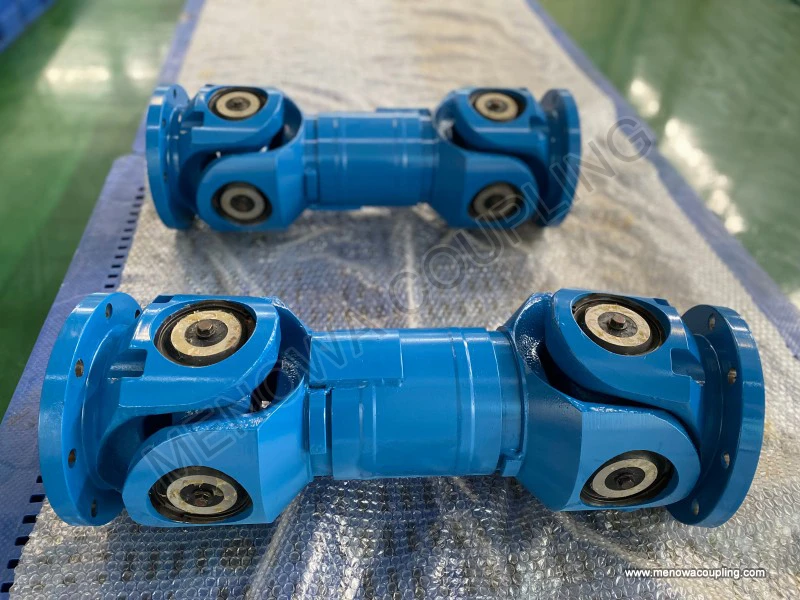
To fully understand the practical value and working characteristics of the extended drive shaft, it is first necessary to clarify its basic positioning and essential differences from ordinary drive shafts in mechanical layout and functional design. A standard drive shaft is usually designed according to the compact installation space of small and medium-sized mechanical equipment, with a relatively short single-section length, simple structural configuration, and low requirements for auxiliary balance and deformation resistance, suitable for power transmission scenarios where the distance between the transmission device and the execution component is small and the relative position of each part is fixed with minimal displacement fluctuation. The extended drive shaft, by contrast, is developed for application scenarios where the horizontal or vertical distance between the power output end and the load-bearing execution end is large, and the relative position of mechanical components will produce regular or irregular displacement changes during operation. In most practical application environments, the increase in the length of a single drive shaft will bring a series of adverse mechanical effects, including increased rotational bending stress, reduced overall structural rigidity, more obvious rotational vibration amplitude, and higher probability of resonance with the operating frequency of supporting equipment. For this reason, the extended drive shaft rarely adopts a single-piece integral shaft structure in most cases; instead, it adopts a multi-piece combined structure matched with connecting accessories such as intermediate support bearings and flexible connecting joints. This optimized structural form effectively decomposes the overall length of the long transmission shaft into multiple relatively short shaft sections, disperses the mechanical stress generated during rotation, reduces the vibration inertia of a single long shaft body, and fundamentally improves the overall structural stability and operational smoothness of the drive shaft under long-distance transmission conditions. Each shaft section of the extended drive shaft is connected through flexible universal joints, and the intermediate support bearings are used to fix the middle position of the combined shaft body on the vehicle frame or mechanical base, which can effectively bear the radial load generated during the rotation of the extended shaft body, avoid shaft body sagging and deformation caused by excessive length, and ensure that each shaft section can maintain a good coaxial state during high-speed rotation.
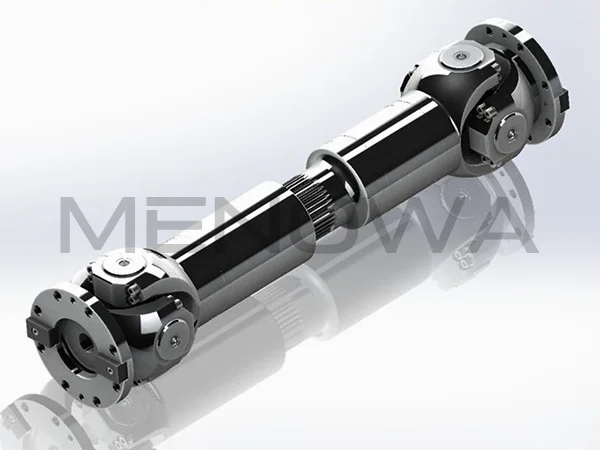
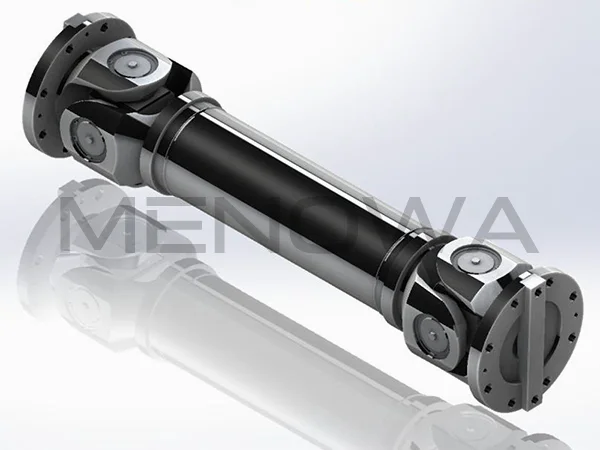
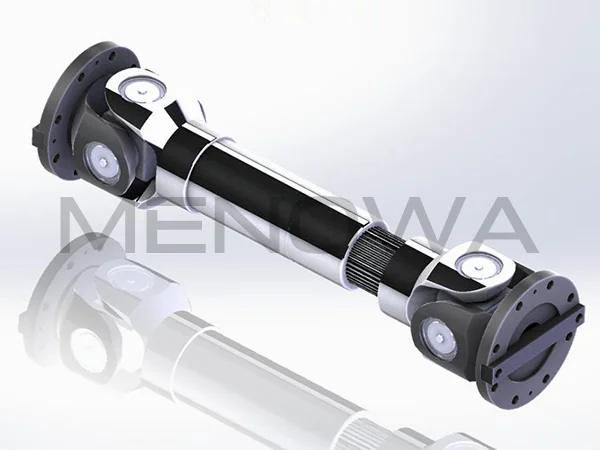
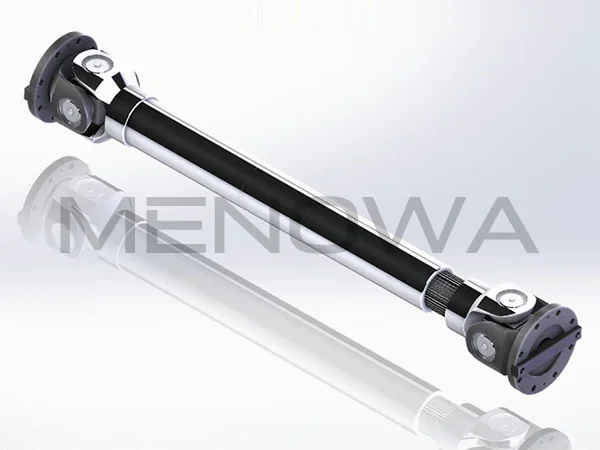
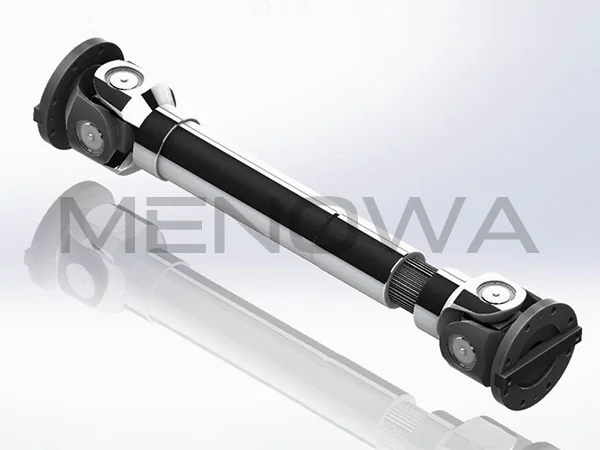
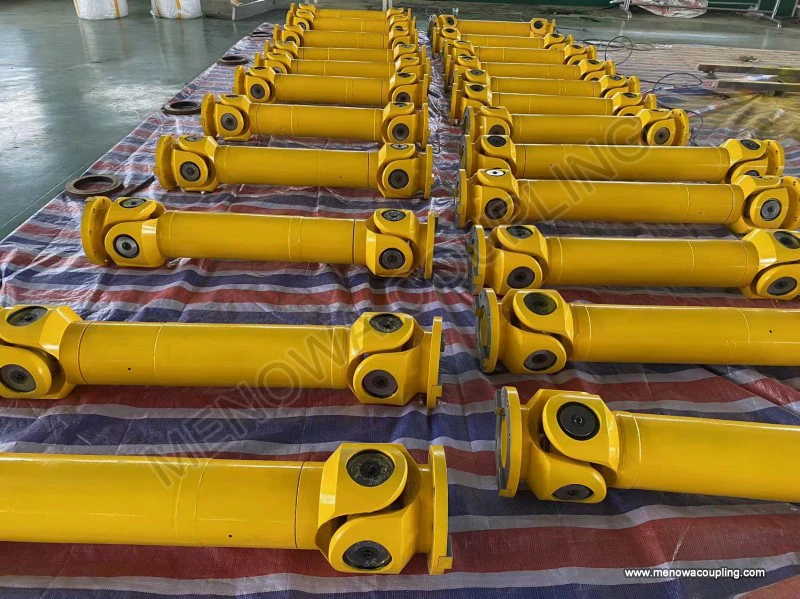
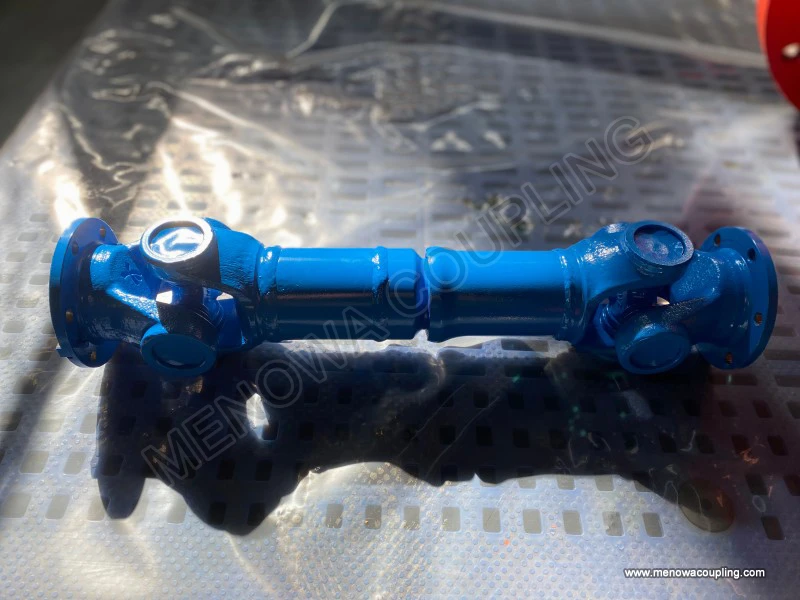
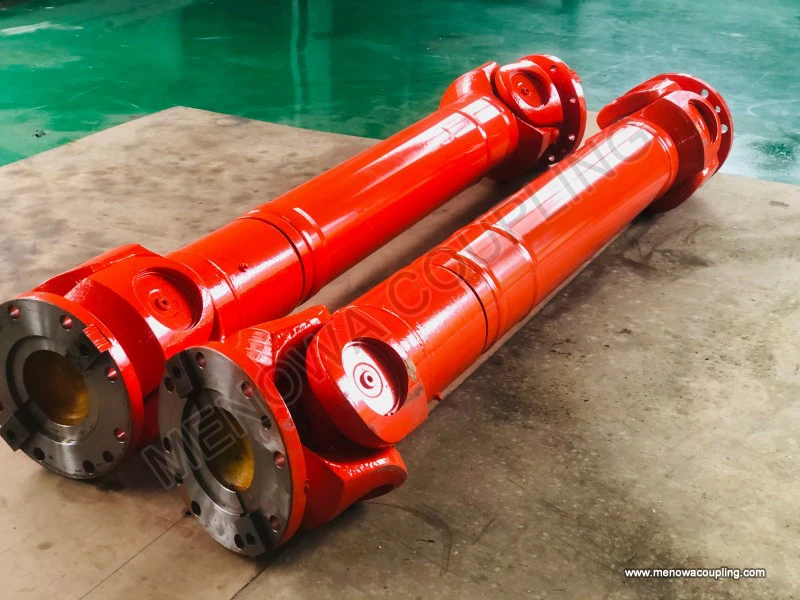
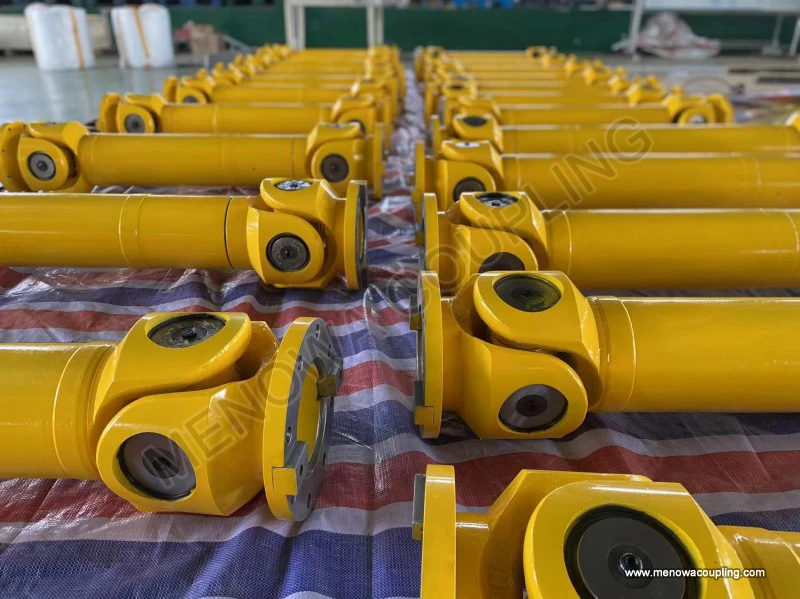
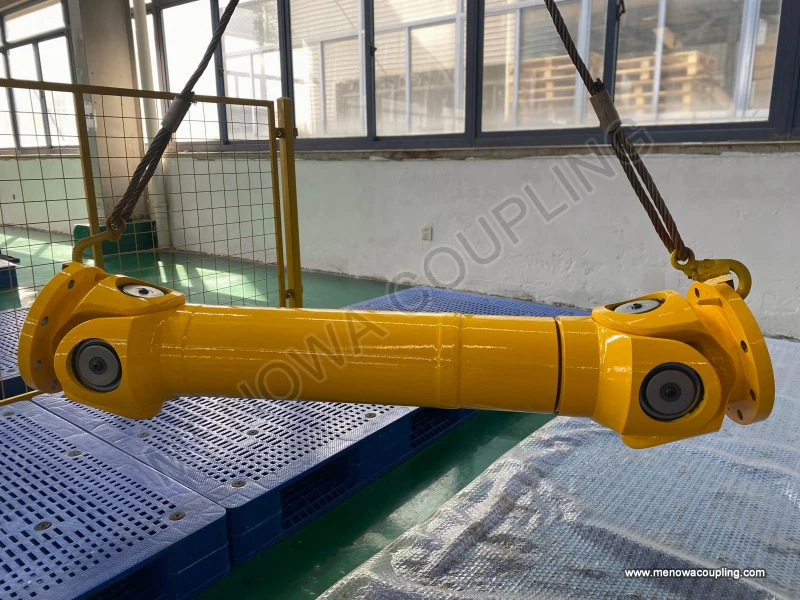
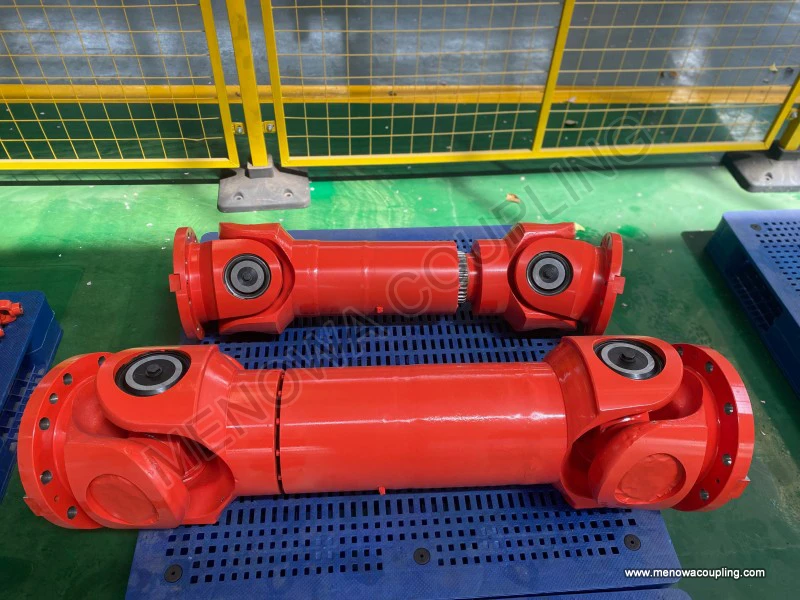
The internal structural composition of the extended drive shaft follows the basic mechanical configuration of traditional drive transmission components, while carrying out targeted structural reinforcement and functional expansion for the long-length working characteristics. The main structural components include the shaft body tube, universal joints, slip spline assemblies, intermediate support bearings, connecting flanges, and fixed fasteners, each of which undertakes an irreplaceable independent function and cooperates with each other to complete the whole process of power transmission and adaptive deformation compensation. The shaft body tube is the main bearing and torque transmission part of the extended drive shaft, and its wall thickness, tube body diameter, and manufacturing material determine the basic torque bearing capacity and structural rigidity of the entire drive shaft. In the production and manufacturing process, the shaft body tube of the extended drive shaft usually adopts high-strength alloy steel materials processed by integral seamless forming technology; this kind of material has excellent tensile strength, torsional resistance, and fatigue resistance, and can withstand long-term high-load rotation and alternating mechanical stress without permanent deformation or structural cracking. Compared with ordinary thin-walled shaft tubes, the shaft body tube of the extended drive shaft is appropriately optimized in wall thickness and tube body diameter according to the actual transmission torque demand and extension length, ensuring that while meeting the length extension demand, it will not reduce the overall structural stability due to insufficient rigidity. The surface of the shaft body tube will also undergo anti-rust and anti-corrosion treatment such as paint spraying and galvanizing, to adapt to complex and harsh working environments such as outdoor exposure, muddy road conditions, and humid industrial workshops, and avoid shaft body corrosion and metal fatigue damage caused by long-term exposure to adverse environmental factors.
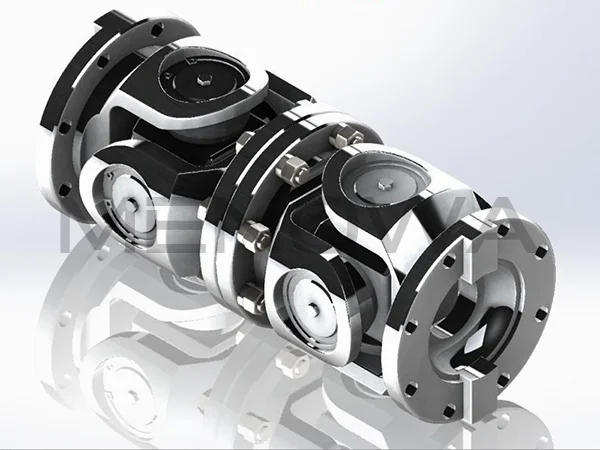
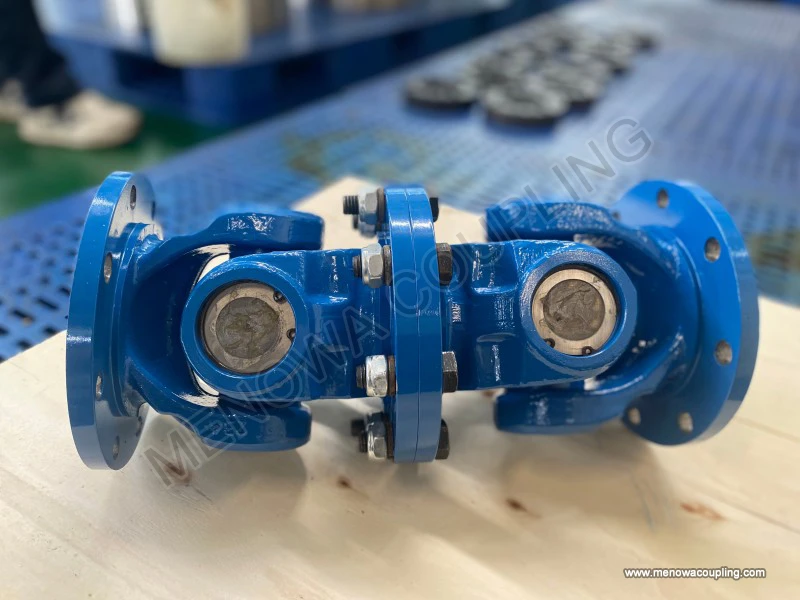
Universal joints are the core flexible connection components of the extended drive shaft, and play a key role in compensating for angular deviation and position displacement between the driving end and the driven end during power transmission. In the actual operation of mechanical equipment, especially vehicles and mobile engineering machinery, the relative position and angle between the transmission output end and the differential or working component end will change constantly with suspension jitter, road surface fluctuation, and mechanical operation displacement. The rigid shaft body cannot adapt to this real-time angular change, and universal joints can rely on their own flexible rotational structure to allow a certain range of angular deflection between the connected shaft sections, ensuring that torque can be transmitted smoothly without jamming or torque loss even when the two connected ends are not in a complete coaxial state. The extended drive shaft is equipped with multiple groups of universal joints according to the number of shaft sections and transmission distance, and each connecting position between shaft sections and between the shaft body and the power input and output ends is equipped with matched universal joint components. The internal structure of the universal joint includes cross shafts, bearing rollers, and sealing protective sleeves; the bearing rollers can reduce the friction resistance during rotational deflection, and the sealing protective sleeves can isolate external dust, sediment, and moisture, preventing internal lubricant leakage and abrasive particle wear, so as to extend the service life of the universal joint and maintain the flexibility of long-term deflection operation. Reasonable configuration of the number and installation position of universal joints can effectively offset the vibration and torque unevenness caused by the long-distance extension of the drive shaft, and ensure the synchronization and continuity of power transmission.
The slip spline assembly is another essential functional component of the extended drive shaft, mainly used to compensate for the linear length change of the drive shaft caused by the relative displacement of mechanical components during operation. When the mechanical equipment is running, the distance between the power output end and the load end will change dynamically due to suspension compression and rebound, mechanical vibration, and structural deformation. If the drive shaft maintains a fixed overall length, it will be subjected to extrusion or tension load, resulting in shaft body deformation, component damage, or power transmission failure. The slip spline assembly is composed of inner spline shaft and outer spline sleeve, which can produce relative telescopic sliding in the axial direction within a certain range. When the mechanical spacing increases or decreases, the spline structure automatically stretches or shortens to adapt to the length change, avoiding additional mechanical tension and pressure on the extended drive shaft. The spline surface is processed with high-precision finishing technology to ensure close fitting and smooth sliding between the inner and outer splines, while maintaining stable torque transmission without relative rotation and power slipping. The outer part of the slip spline assembly is equipped with a telescopic protective rubber sleeve, which can prevent dust and sediment from entering the spline fit gap, avoid spline tooth wear and jamming, and keep the telescopic adjustment function sensitive and effective for a long time.
Intermediate support bearings are special supporting components uniquely configured for extended drive shafts, and are also key structures that distinguish multi-piece extended drive shafts from ordinary single-piece drive shafts. Due to the excessive overall length of the extended drive shaft, even if the shaft body is made of high-rigidity materials, it is easy to produce downward sagging deformation under the action of its own weight and rotational centrifugal force, resulting in poor coaxiality of each shaft section, increased rotational vibration, and accelerated wear of connecting joints. The intermediate support bearing is installed at the middle split position of the multi-piece extended drive shaft, and fixed on the vehicle frame or mechanical equipment base through a fixed bracket. It can stably bear the radial load of the middle shaft body, support the overall structure of the extended drive shaft, reduce the sagging degree of the long shaft body, and ensure that each shaft section can rotate around the central axis stably. The interior of the intermediate support bearing is equipped with high-precision rolling bearings and wear-resistant rubber damping parts; the rolling bearings ensure the low-friction rotation of the shaft body, and the rubber damping parts can absorb the vibration and impact generated during the operation of the drive shaft, reduce the vibration transmission between the drive shaft and the equipment base, and further optimize the dynamic balance performance of the entire transmission system. The structural design of the intermediate support bearing fully considers the long-term continuous working demand, with good load-bearing capacity and damping effect, and can maintain stable supporting performance under high-speed rotation and harsh working conditions.
The manufacturing and processing technology of the extended drive shaft has a direct impact on its overall performance and service life, and each production link has strict process standards and precision control requirements. The processing of the shaft body tube needs to go through multiple processes such as raw material cutting, integral forging, precision turning, dynamic balance correction, and surface heat treatment. The heat treatment process can improve the hardness and toughness of the shaft body material, eliminate the internal stress generated during forging and processing, and prevent the shaft body from bending deformation and fatigue fracture during long-term high-load operation. Dynamic balance correction is a particularly important processing link for extended drive shafts. Due to the long length of the shaft body, even tiny deviations in material density and processing size will produce obvious centrifugal force during high-speed rotation, causing severe vibration of the drive shaft and the entire mechanical system. Professional dynamic balance detection equipment is used to detect the unbalanced amount of each shaft section of the extended drive shaft, and the unbalanced weight is eliminated by drilling and weight reduction or welding counterweight correction, so that each shaft section can maintain a high balance accuracy during rotation. The assembly of universal joints, slip splines, and intermediate support bearings also needs to be carried out in a dust-free precision assembly environment, with strict control of assembly clearance and fastening torque to ensure the close fit of each component, no loose connection, and flexible and stable relative movement. After the assembly of the entire extended drive shaft is completed, it will also undergo overall rotation testing and load simulation testing to verify the stability of power transmission, the flexibility of adaptive deformation, and the durability of structural bearing, and only products that meet all performance standards can be delivered and applied.
The application scenarios of extended drive shafts cover multiple fields such as road transportation, engineering construction, agricultural production, and industrial manufacturing, and show different adaptive characteristics and working requirements in different usage environments. In the field of commercial road transportation, extended drive shafts are widely used in long-wheelbase cargo vehicles, passenger transport vehicles, and special engineering transport vehicles. Such vehicles have a long wheelbase design to increase cargo carrying space and passenger carrying capacity, resulting in a long distance between the transmission at the front of the vehicle and the driving axle at the rear. The extended drive shaft can stably transmit the power generated by the engine from the transmission to the rear driving axle, adapting to the long-distance power transmission demand of long-wheelbase vehicles. During the driving process of the vehicle on different road surfaces, the extended drive shaft relies on universal joints and slip spline assemblies to adapt to the jitter and displacement of the vehicle suspension, ensuring stable power output during driving, acceleration, and climbing, without power attenuation or abnormal vibration affecting driving safety and power performance.
In the field of engineering construction machinery, extended drive shafts are applied to large excavators, loaders, bulldozers, and mobile crushing equipment. This kind of engineering machinery usually works in harsh working environments such as mountainous areas, construction sites, and muddy terrain, with heavy working load and strong mechanical vibration during operation. The mechanical structure of engineering machinery is complex, and the installation distance between the power system and the working execution component is long, requiring the drive shaft to have high torsional resistance, impact resistance, and structural stability. The extended drive shaft for engineering machinery is optimized in material thickness and structural strength, can withstand high torque impact and frequent vibration load, and can adapt to complex working conditions such as uneven terrain and frequent start and stop operations. It ensures that the power of the engine can be accurately transmitted to the walking mechanism and working device of the engineering machinery, maintaining the continuous and efficient operation of construction work.
In the field of agricultural production equipment, extended drive shafts are installed in large agricultural machinery such as tractors, harvesters, and rotary tillers. Agricultural machinery needs to work in farmland environments such as muddy fields, rugged ridges, and crop covered ground, with complex and changeable working terrain and large displacement and jitter of mechanical components during operation. The long fuselage design of large agricultural machinery leads to a long transmission distance between the power output end and the field operation working parts. The extended drive shaft can adapt to the long-span power transmission demand of agricultural machinery, and its good adaptive deflection and telescopic performance can cope with the violent jitter and position change of agricultural machinery during field operation. At the same time, the surface anti-corrosion and wear-resistant treatment of the extended drive shaft can resist the erosion of mud, water, and crop residues in the farmland, reducing component wear and corrosion damage, and ensuring the stable operation of agricultural machinery during seasonal intensive farming and harvesting work.
In the field of general industrial manufacturing, extended drive shafts are used in production line transmission equipment, large fan equipment, conveyor machinery, and industrial processing equipment. Industrial mechanical equipment usually has a fixed installation position, but the power transmission path is long, requiring the drive shaft to maintain long-term stable continuous operation. The extended drive shaft for industrial use focuses on dynamic balance performance and long-term operational durability, with low vibration and low noise characteristics during operation. It can meet the long-term uninterrupted power transmission demand of industrial production lines, ensure the synchronous operation of each link of the production line, and avoid production interruption and efficiency reduction caused by drive shaft failure. Whether it is high-speed continuous rotation or low-speed high-torque operation, the extended drive shaft can maintain stable transmission performance and adapt to diverse industrial production working conditions.
In the actual long-term operation process, the extended drive shaft will be affected by load changes, environmental factors, operation habits, and component aging, resulting in different degrees of wear, fatigue, and performance attenuation. Understanding the main causes of extended drive shaft failure and mastering scientific daily maintenance and regular inspection methods are crucial to prolonging the service life of the drive shaft and avoiding mechanical operation failures. The common adverse factors affecting the service life of the extended drive shaft mainly include long-term overload operation, insufficient lubrication of moving components, loose connecting fasteners, damage to damping and sealing parts, and unbalanced shaft body rotation. Long-term overload operation will make the drive shaft bear torque load exceeding the design standard, resulting in increased torsional stress of the shaft body, accelerated wear of universal joints and spline components, and easy occurrence of shaft body deformation and component fracture. Insufficient lubrication of universal joints and slip spline assemblies will increase the friction between moving parts, produce dry wear and high-temperature heating, leading to accelerated aging and damage of bearing rollers and spline tooth surfaces, affecting the flexible rotation and telescopic adjustment function of the drive shaft.
Loose connecting fasteners will cause relative displacement and vibration between the shaft body and connecting components during operation, resulting in increased wear of connecting flanges and fixed parts, and even component falling off in serious cases, leading to power transmission interruption. Damage to damping rubber parts and sealing protective sleeves will make external dust, sediment, and moisture enter the interior of moving components, causing abrasive wear and internal corrosion, and the damping effect will be reduced after the aging of rubber parts, resulting in increased vibration of the drive shaft and easy resonance with supporting equipment. Long-term lack of dynamic balance correction will lead to increased unbalanced weight of the shaft body, severe vibration during rotation, accelerated fatigue damage of the entire drive shaft structure, and affecting the operational stability of the entire mechanical equipment.
The daily maintenance work of the extended drive shaft is simple and practical, focusing on regular inspection, timely lubrication, and minor fault handling in place. In the daily use of mechanical equipment, the operator should regularly observe the operating state of the extended drive shaft, check whether there is abnormal vibration, abnormal noise, and shaft body shaking during equipment operation. If obvious vibration and noise are found, the equipment should be shut down in time for inspection to find out the cause of the problem and deal with it immediately. Regularly check the fastening state of all connecting fasteners and fixing brackets of the extended drive shaft, and tighten the loose bolts and nuts in time to ensure that all connecting parts are firmly connected without relative displacement. Regularly replenish professional lubricating grease for universal joints and slip spline assemblies to ensure that the friction parts are well lubricated, reduce wear and high-temperature heating, and keep the flexible movement of components sensitive. Check the integrity of the sealing protective sleeves and damping rubber parts, and replace the aging, damaged, and cracked parts in time to prevent external impurities from entering the interior of the components and ensure the damping and protective effects are normal.
The regular professional inspection and maintenance of the extended drive shaft need to be carried out according to a fixed cycle combined with the frequency of equipment use and working environment conditions. For mechanical equipment working in harsh environments with high load and frequent operation, the inspection and maintenance cycle should be appropriately shortened. Professional maintenance personnel need to disassemble and inspect the key components of the extended drive shaft regularly, check the wear degree of universal joint cross shafts, bearing rollers, and spline tooth surfaces, and replace the severely worn components in time to avoid hidden troubles of failure. Detect the deformation degree and balance accuracy of the shaft body tube, and perform dynamic balance correction again if the unbalanced amount exceeds the standard to ensure the rotational stability of the drive shaft. Check the working state of the intermediate support bearing, replace the failed bearing components and aging damping rubber parts, and ensure that the supporting and damping functions are normal. After the completion of all inspection and maintenance work, the extended drive shaft needs to be reinstalled and debugged, and the no-load and load rotation test should be carried out to confirm that the power transmission is stable, the vibration and noise are within the normal range, and all adaptive adjustment functions work normally before the equipment is put back into use.
With the continuous progress of mechanical manufacturing technology and the continuous upgrading of mechanical equipment performance, the design and production technology of extended drive shafts are also constantly optimized and improved, developing towards lighter weight, higher transmission efficiency, stronger durability, and better environmental adaptability. In terms of material selection, new high-strength lightweight alloy materials and composite materials are gradually applied to the production of extended drive shaft shaft bodies. While ensuring structural rigidity and torque bearing capacity, the overall weight of the drive shaft is reduced, the rotational centrifugal force and vibration inertia are lowered, and the energy consumption of mechanical equipment operation is effectively reduced. In terms of structural design, the integrated optimized design of multi-piece shaft sections and intelligent damping structures are adopted to further improve the adaptive deformation compensation ability and vibration reduction effect of the extended drive shaft, adapting to more complex working conditions and higher standard mechanical operation requirements.
In terms of production and processing technology, the application of intelligent precision processing equipment and automated assembly lines improves the processing precision and assembly accuracy of extended drive shafts, reduces manual processing errors, and ensures the consistency and stability of product quality. In terms of maintenance and use management, with the popularization of intelligent mechanical monitoring technology, real-time monitoring sensors can be installed on the extended drive shaft to monitor the operating vibration, temperature, and load state of the drive shaft in real time, realize early warning of potential faults, and change from passive maintenance after failure to active preventive maintenance, further improving the operational reliability and service life of the extended drive shaft.
Throughout the entire mechanical power transmission industry, the extended drive shaft, as a basic and core transmission component, although inconspicuous in the overall mechanical structure, undertakes the important mission of connecting power sources and working components and maintaining the continuity of power transmission. Its structural design rationality, manufacturing process level, type selection matching degree, and maintenance management quality are all important factors affecting the overall operational efficiency and service life of mechanical equipment. In different application scenarios and working environments, the extended drive shaft shows strong adaptability and practicality, and provides reliable basic support for the normal operation of various road transportation, engineering construction, agricultural production, and industrial manufacturing equipment. With the continuous development of the mechanical industry and the continuous improvement of equipment operation requirements, the extended drive shaft will continue to carry out technological innovation and performance optimization, constantly adapt to the new mechanical design concepts and diverse working condition needs, and always play an irreplaceable core role in the field of long-distance mechanical power transmission, escorting the stable and efficient operation of various mechanical equipment in various industries.
Post Date: Apr 26, 2026
https://www.menowacoupling.com/coupling-supplier/extended-drive-shaft.html
Products
Tags
Related Articles
Characteristics of Universal Coupling
A universal coupling, also commonly referred to as a universal joint or U-joint, is a critical mechanical component designed to connect two rigid shafts whose axes are inclined to each other, enabling the transmission of rotary motion and torque even when the shafts are not perfectly aligned. This versatile component ha…Types of Universal Coupling
In the complex and interconnected mechanical transmission systems that power modern industrial production, automotive operation, engineering machinery movement, and various precision mechanical equipment, universal couplings stand as indispensable basic mechanical components that undertake the core task of transmitting …Universal Coupling Factory
In the intricate ecosystem of modern mechanical transmission systems, universal couplings stand out as indispensable foundational components, serving as the critical bridge that connects rotating shafts and ensures stable power transmission across complex operating conditions. As core mechanical parts designed to resolv…Material of Universal Coupling
Universal couplings serve as indispensable mechanical transmission components in modern industrial and mechanical systems, dedicated to transmitting torque and rotational power between two misaligned rotating shafts. Their core operational value lies in adapting to angular deviation, axial displacement and radial offset…Universal Coupling For Sale
A universal coupling, also commonly referred to as a universal joint or U-joint, is a critical mechanical component designed to connect two rigid shafts whose axes are inclined to each other, enabling the transmission of rotary motion and torque even when there is a misalignment between the two shafts. This versatile co…Universal Coupling Price
Universal coupling manufacture stands as a sophisticated and precise mechanical production discipline focused on crafting flexible transmission components that serve as critical connecting parts in mechanical power systems. These specialized mechanical structures are designed to transmit rotational torque and motion bet…Parts of Universal Coupling
A universal coupling, widely recognized as a flexible mechanical transmission component, serves as a critical connection between two rotating shafts in diverse mechanical systems. Its core value lies in its ability to transmit continuous torque and rotational motion while accommodating angular misalignment, axial displa…Classification of Universal Coupling
Universal couplings are indispensable mechanical transmission components widely applied in modern mechanical systems, serving the core function of transmitting rotational torque and motion between two shafts with angular misalignment, parallel offset, or axial displacement. Unlike rigid couplings that require precise sh…Universal Coupling Manufacture
In the complex landscape of mechanical power transmission, universal couplings stand out as indispensable components that bridge the gap between misaligned shafts, enabling the seamless transfer of torque and rotational motion across a wide range of industrial and mechanical applications. Unlike rigid couplings that dem…Universal Coupling Production
Universal couplings stand as indispensable mechanical components in modern industrial transmission systems, serving as flexible connection units that enable stable torque and rotational motion transfer between misaligned rotating shafts. Unlike rigid connecting structures that demand precise coaxial alignment of paired …
 WeChat
 WhatsApp