Cardan Shaft Coupling
In the entire field of mechanical power transmission systems, the stable and efficient transfer of torque and rotational motion between adjacent rotating shafts serves as the fundamental guarantee for the normal operation of all types of mechanical equipment. Various mechanical coupling devices have been developed and optimized for different operating conditions, installation environments and transmission requirements, among which the cardan shaft coupling stands out as a vital flexible transmission component widely adopted across industrial production, transportation equipment, heavy engineering machinery and many other core sectors. Unlike rigid coupling structures that require precise coaxial alignment of connected shafts and elastic couplings that mainly rely on elastic deformation to compensate for minor displacement deviations, the cardan shaft coupling is designed with a unique hinged universal joint structure, enabling it to achieve continuous and stable power transmission under complex working conditions where driving shafts and driven shafts have obvious angular misalignment, axial displacement and radial offset. This inherent structural advantage makes it irreplaceable in mechanical systems where shaft position deviation is inevitable due to installation errors, equipment operation deformation, mechanical vibration and structural motion changes. The development history of cardan shaft coupling can be traced back to the early exploration of flexible transmission technology, and after long-term structural iteration, material upgrading and process improvement, its overall performance has been continuously optimized, adapting from simple low-speed and low-torque transmission scenarios to modern high-load, high-speed and long-cycle continuous industrial production environments. Its core design logic has always centered on balancing flexible displacement compensation capability, reliable torque transmission efficiency and long-term structural operational stability, ensuring that power transmission links do not suffer from motion interruption, torque attenuation or excessive component wear even under non-ideal shaft alignment conditions.
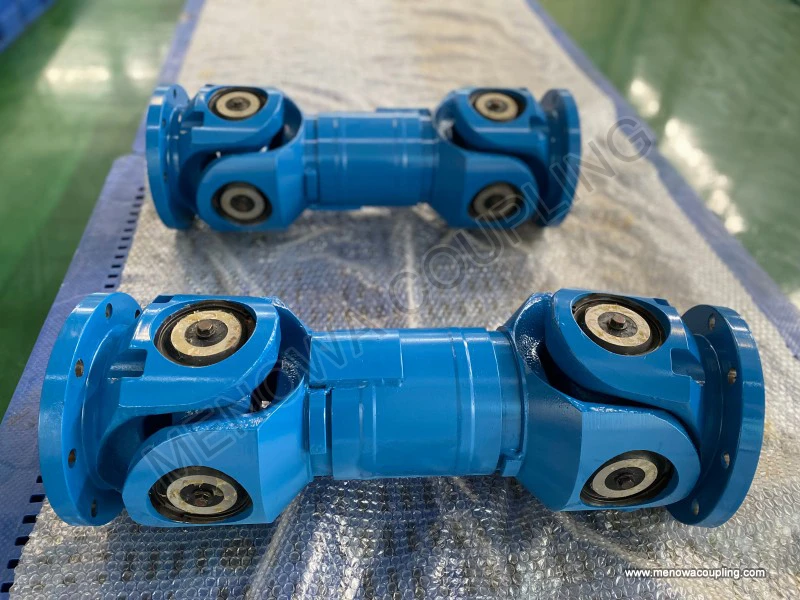
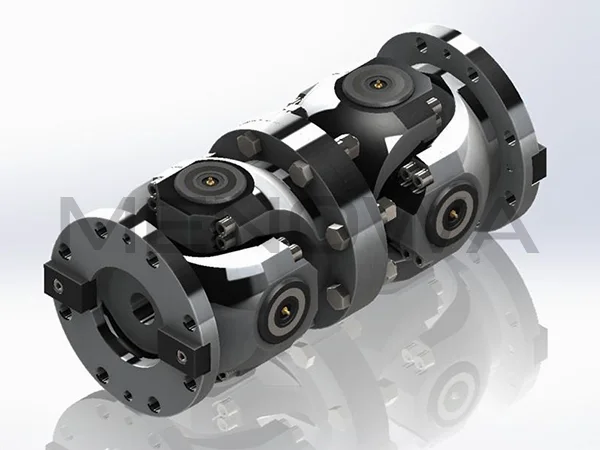
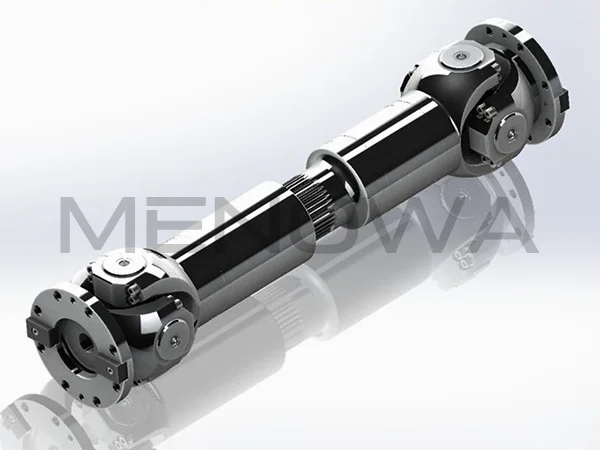
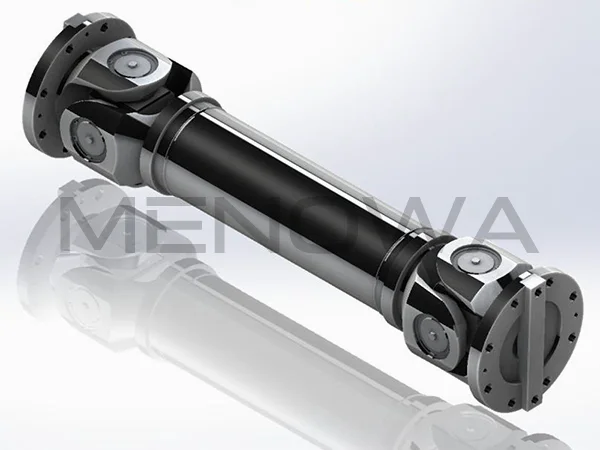
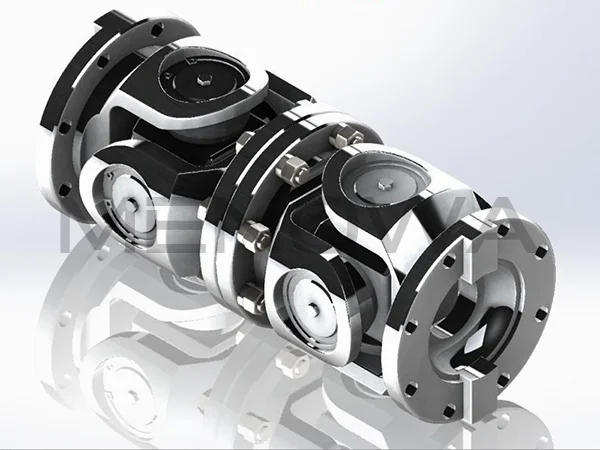
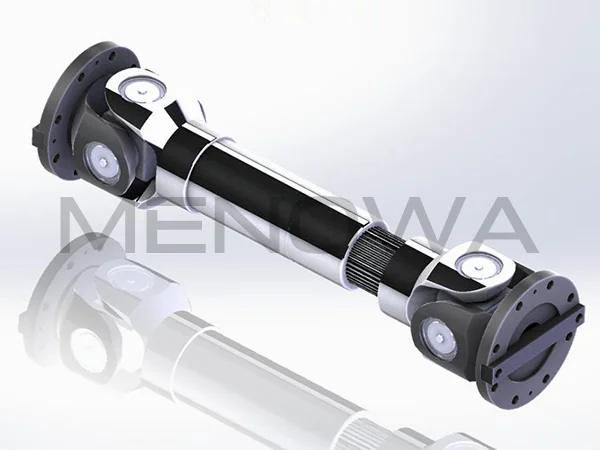
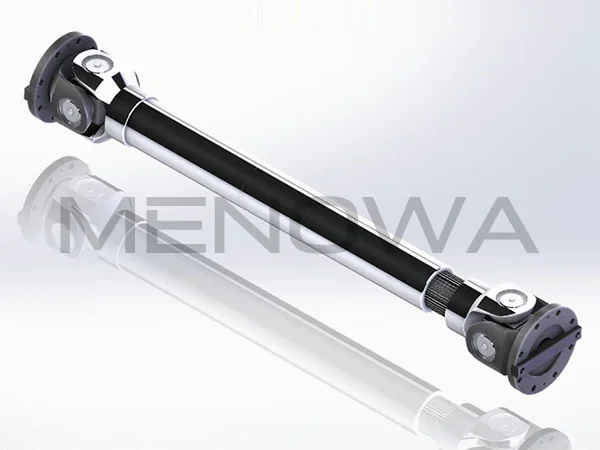
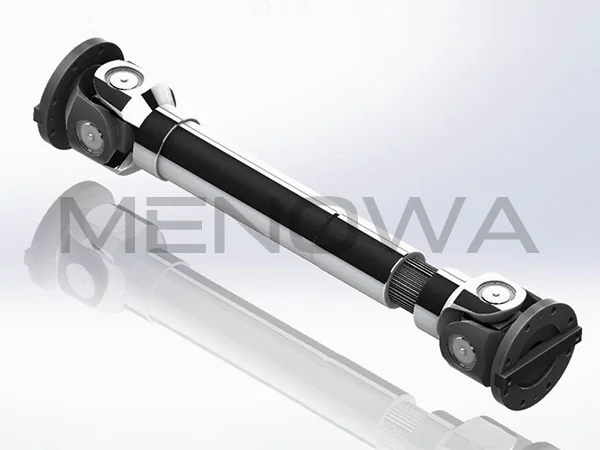
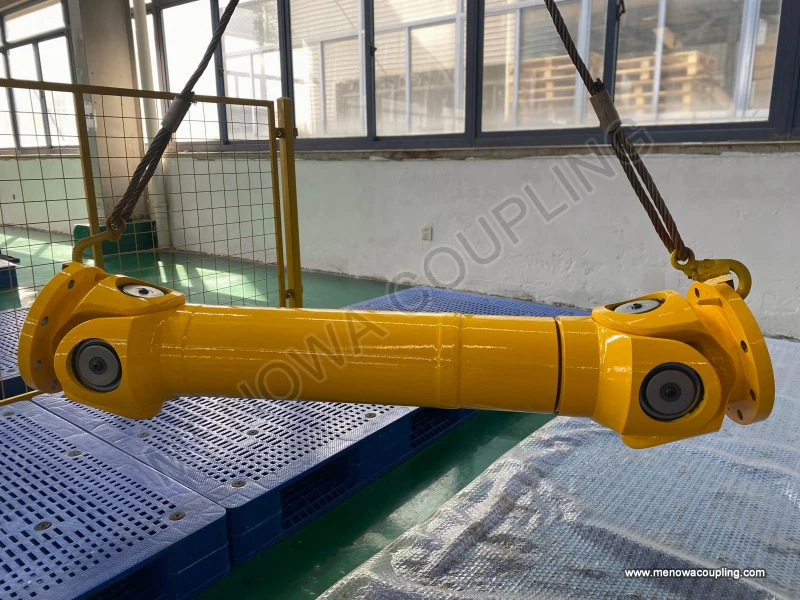
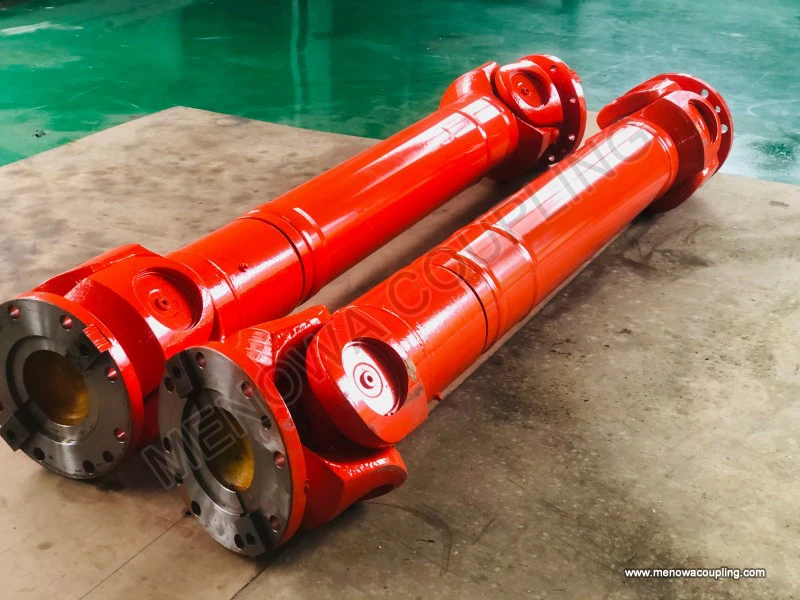
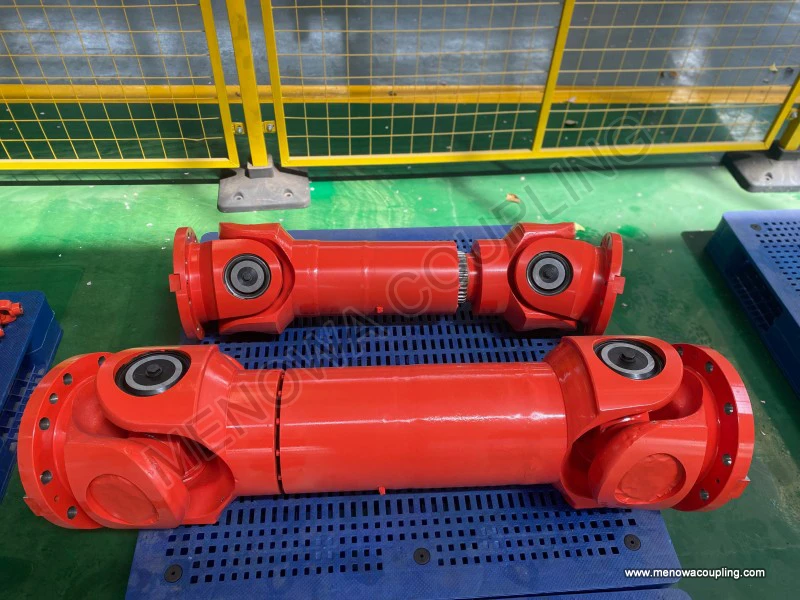
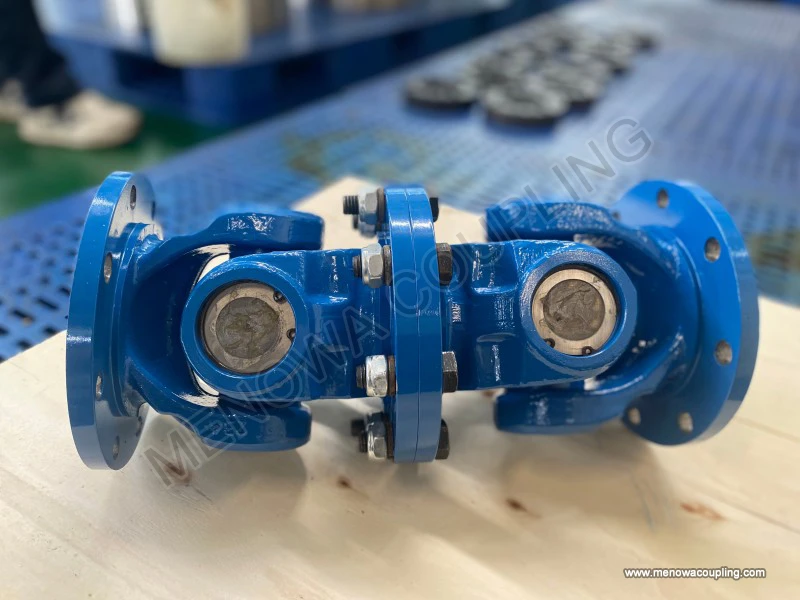
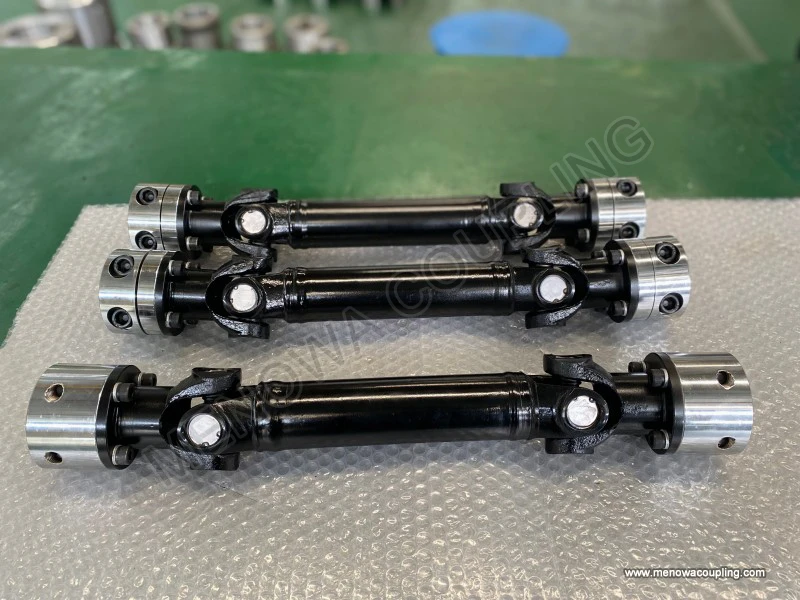
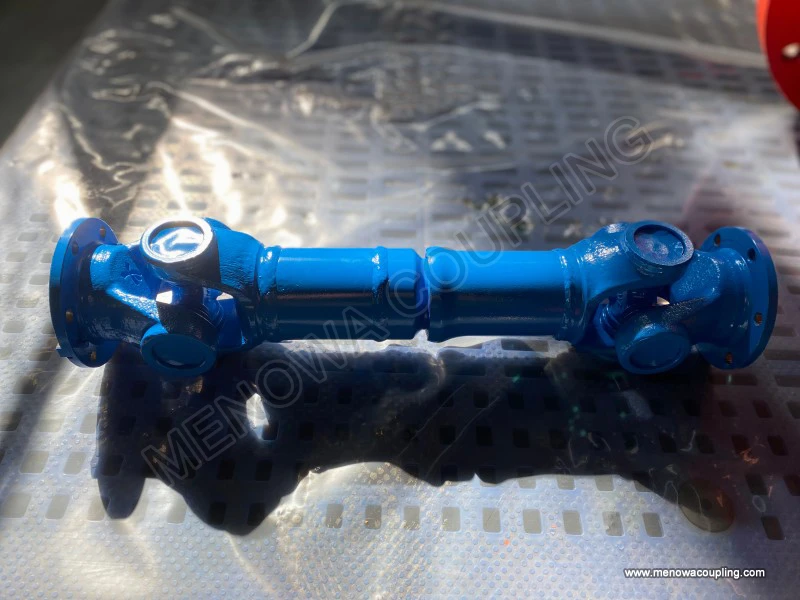
To fully understand the practical value and application advantages of cardan shaft couplings, it is essential to start with their basic structural composition, as all functional characteristics and performance attributes are derived from the scientific matching and coordinated operation of each core component. The overall structure of a standard cardan shaft coupling follows a modular integrated design concept, mainly including universal joint assemblies, intermediate shaft body, yoke connection structures, bearing assemblies, spline telescopic mechanisms and fastening connection parts. Each component undertakes independent functional responsibilities and interacts closely with each other to jointly complete the whole process of torque input, flexible transmission and power output. The universal joint assembly is the most core functional part of the entire cardan shaft coupling, usually adopting a cross shaft hinged structure, which is the key structure to realize angular deflection compensation between shafts. The cross shaft, processed with high-precision forging and finishing technology, serves as the force-bearing and rotating hinge center, with four mutually perpendicular shaft necks distributed around it, each connected to the yoke structures of the driving end and driven end through matching bearing components. The bearing assemblies mostly adopt needle roller bearing structures with compact layout and high load-bearing capacity, which can effectively reduce the friction resistance during the rotation and deflection process of the universal joint, avoid excessive mechanical wear and heat generation caused by frequent relative motion, and maintain the flexibility and stability of the hinged connection for a long time. The yoke structures are arranged at both ends of the universal joint, integrally forged with high-strength alloy materials, with good structural rigidity and impact resistance. One end of the yoke is connected and fixed with the driving shaft or driven shaft of the equipment through flanges or clamping structures, and the other end is hinged with the cross shaft, realizing the flexible connection between the fixed shaft end and the rotatable universal joint.
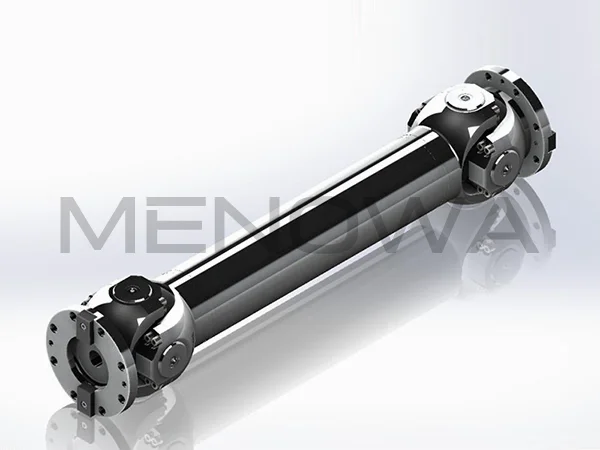
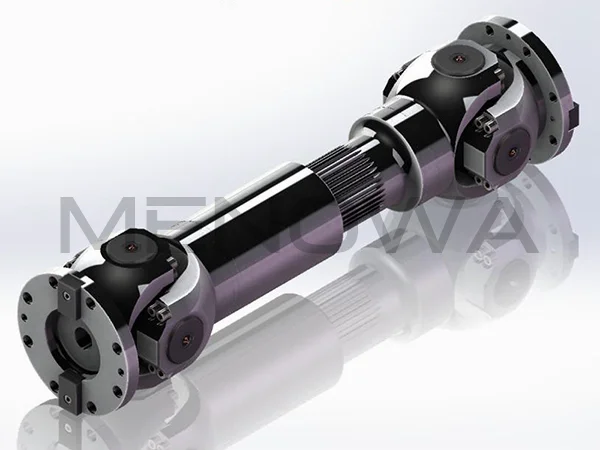
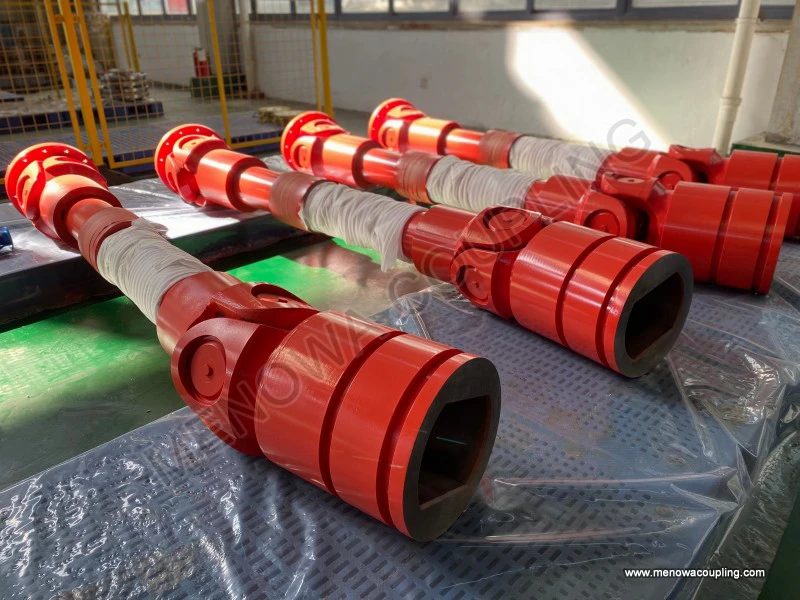
The intermediate shaft body is the main force-transmitting connecting part between the two universal joint assemblies at the front and rear ends of the cardan shaft coupling, and its structural form and material selection are determined by the actual transmission torque, rotating speed and installation distance requirements of the equipment. For medium and small torque transmission scenarios with short transmission distances, solid shaft bodies are usually adopted, which feature simple structure, good overall rigidity and strong torsional resistance; for heavy-load transmission scenarios and long-distance power transmission working conditions, tubular hollow shaft bodies are more commonly used. The tubular shaft body can effectively reduce the overall self-weight of the coupling while ensuring sufficient torsional strength and structural stability, reducing the additional rotational inertia generated during high-speed operation, and avoiding excessive energy consumption and mechanical vibration caused by the self-weight of the component. The spline telescopic mechanism is an indispensable auxiliary functional structure of the cardan shaft coupling, mainly composed of internal spline sleeves and external spline shafts matched with each other. This mechanism is mainly used to compensate for axial displacement changes between the driving shaft and the driven shaft during equipment operation. In the actual operation of mechanical equipment, affected by thermal expansion and contraction of components under long-term load operation, slight vibration displacement of the frame and structural deformation under dynamic load, the axial distance between the connected two shafts will produce small real-time changes. The spline telescopic mechanism can freely stretch and contract within a certain range along the axial direction without affecting the normal transmission of torque, avoiding additional axial tension or compression stress on the coupling and connected shafts, and protecting the transmission shaft system and related equipment components from structural damage caused by axial force extrusion. All fastening connection parts adopt high-strength anti-loosening fasteners, and the connection surfaces are processed with precise positioning and anti-slip treatment to ensure that each connecting component does not loosen or displace during long-term high-speed rotation and variable load operation, maintaining the overall structural integrity and transmission reliability of the coupling.
The working mechanism of the cardan shaft coupling is based on the geometric motion principle of the cross shaft universal joint and the coordinated motion matching of double universal joint structures, realizing flexible torque transmission under angular misalignment conditions. A single universal joint structure can realize power transmission when there is a certain angular deflection between the driving shaft and the driven shaft, but it has the characteristic of periodic change of angular velocity during rotation. When the driving shaft rotates at a constant speed, the rotation angular velocity of the driven shaft will produce regular periodic fluctuation with the rotation angle, and the fluctuation range of angular velocity increases with the increase of the angular deflection between the two shafts. This periodic angular velocity fluctuation will generate certain torsional vibration and dynamic load in the transmission system, which may cause adverse effects on the transmission stability of equipment with high requirements for rotational speed uniformity. To solve this problem and achieve constant-speed and stable power transmission under angular deflection conditions, most practical application scenarios adopt a double universal joint structure layout for cardan shaft couplings. By arranging two universal joint assemblies at both ends of the intermediate shaft body and keeping the two universal joints with equal angular deflection angles and symmetrical installation positions, the periodic angular velocity fluctuation generated by the front universal joint can be completely offset by the rear universal joint. The angular velocity change generated in the first hinge transmission process is compensated and corrected in the second hinge transmission process, so that the final output rotational speed of the driven shaft remains consistent and stable with the input rotational speed of the driving shaft, eliminating torsional vibration and impact load caused by speed fluctuation. This unique working principle enables the cardan shaft coupling to not only adapt to various angular misalignment, axial displacement and radial offset comprehensive deviation conditions, but also maintain smooth and consistent power transmission quality without generating additional dynamic vibration and mechanical impact, providing stable power support for the normal operation of mechanical equipment.
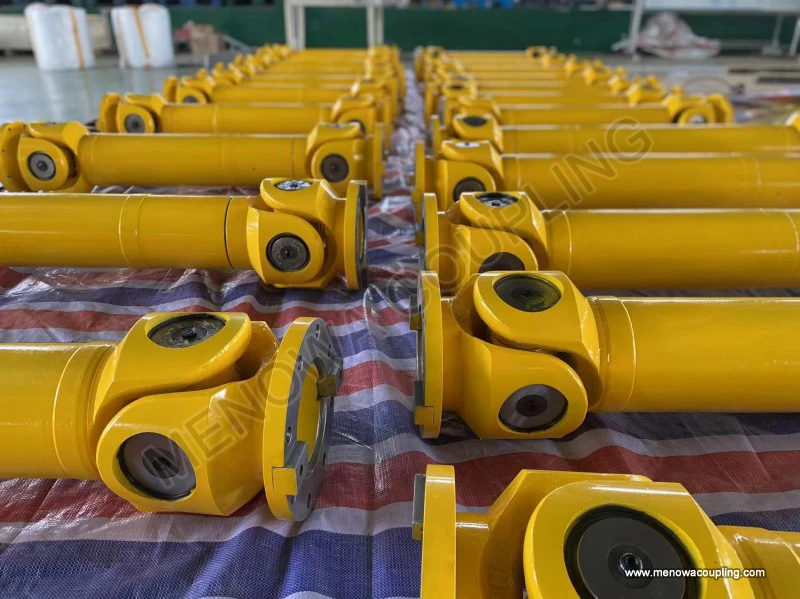
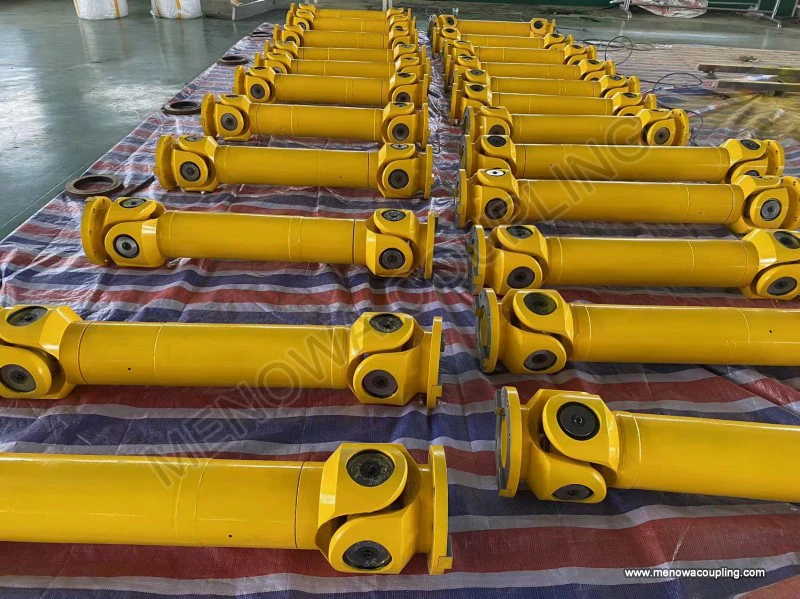
According to different structural forms, connection modes, load-bearing capacities and application working conditions, cardan shaft couplings can be divided into multiple classification types, each with targeted structural design and applicable scenario positioning to meet the differentiated transmission needs of various mechanical equipment. According to the number of universal joint assemblies, they can be divided into single-section cardan shaft couplings and double-section cardan shaft couplings. Single-section products only have one universal joint assembly, with a simple overall structure and small installation space occupation, suitable for working conditions with small angular deflection range, low transmission torque and low rotational speed stability requirements, mostly used in simple auxiliary mechanical transmission links. Double-section products are equipped with two matched universal joint assemblies, with good constant-speed transmission performance and large angular deflection compensation range, which is the most widely used type in industrial production and main mechanical equipment. According to the connection mode with the equipment shaft end, they can be divided into flange-connected cardan shaft couplings and clamping-connected cardan shaft couplings. Flange connection adopts integral flange disc structure for bolt fastening connection, with high connection strength, good positioning accuracy and strong load-bearing capacity, suitable for heavy-load, high-speed and long-term continuous operation working conditions; clamping connection adopts hoop clamping and fixing mode, with simple installation and disassembly process and convenient later maintenance and replacement, suitable for light and medium-load mechanical equipment that needs frequent disassembly and assembly adjustment. According to the structural strength and torque transmission level, they can be divided into light-duty, medium-duty and heavy-duty cardan shaft couplings. Light-duty products are small in size and light in weight, suitable for small mechanical equipment and low-power transmission links; medium-duty products balance structural size and load-bearing performance, widely used in general industrial machinery and conventional transportation equipment; heavy-duty products adopt thickened structural design and high-strength special materials, with strong torsional resistance and impact load resistance, suitable for large heavy engineering machinery, mining equipment and marine mechanical transmission systems.
The application scope of cardan shaft couplings covers almost all mechanical fields that need flexible power transmission between misaligned shafts, showing strong environmental adaptability and working condition compatibility in different industry scenarios. In the field of industrial manufacturing and production machinery, cardan shaft couplings are widely used in production line conveying equipment, mechanical processing machine tools, metallurgical rolling equipment, papermaking machinery and textile machinery. In these production equipment, affected by long-term operation vibration, workshop foundation settlement and equipment installation cumulative errors, the driving shafts and driven shafts of the transmission system are difficult to maintain long-term precise coaxial alignment. The cardan shaft coupling can effectively compensate for various misalignment deviations, ensure the continuous and stable operation of the production and processing transmission system, avoid production interruption and product processing quality problems caused by transmission failure, and improve the overall operational efficiency of the production line. In the field of engineering and construction machinery, such as excavators, loaders, cranes and road construction machinery, the working environment is harsh and changeable, the equipment often bears complex variable loads and impact loads during operation, and the relative position of each transmission shaft will change in real time with the movement and working action of the equipment. The excellent angular deflection compensation and heavy-load transmission performance of cardan shaft couplings can adapt to the dynamic position changes of the shaft system under complex working conditions, ensuring reliable power output of the equipment in various construction operations and improving the working stability and service life of engineering machinery.
In the field of transportation equipment, cardan shaft couplings are applied to the transmission systems of special transport vehicles, engineering transport vehicles and rail auxiliary transportation equipment. In these transportation equipment, the power output end of the power unit and the driving end of the walking mechanism are often not on the same axis, and the jolt and vibration during driving will cause real-time displacement changes of the transmission shaft system. The flexible transmission performance of cardan shaft couplings can effectively buffer the vibration and impact in the transmission process, maintain the stability of power transmission during vehicle driving, and reduce the wear and damage of transmission components. In the field of marine and port machinery, due to the humid and corrosive working environment and the large vibration and load impact of equipment operation, cardan shaft couplings with anti-corrosion treatment and high-strength structure are adopted in ship power auxiliary transmission systems and port handling machinery transmission links. These products can resist the corrosion of humid marine climate and chemical media, adapt to the harsh marine working conditions, and ensure the long-term reliable operation of marine and port mechanical transmission systems. In the field of mining and energy equipment, mining conveying machinery, coal mining equipment and wind power auxiliary transmission equipment all need to operate under high-load and harsh environment for a long time. The strong load-bearing capacity and stable structural performance of cardan shaft couplings can meet the long-term continuous operation needs of energy and mining equipment, reduce the failure rate of transmission links, and ensure the safe and efficient operation of energy production and mining operations.
The scientific and reasonable selection of cardan shaft coupling is the primary premise to ensure its stable operation and long service life in the matching mechanical system, and the selection process needs to comprehensively consider multiple key factors related to equipment working conditions and transmission parameters, rather than blindly selecting according to structural size or simple load parameters. The first core factor is the actual transmission torque of the equipment, including the rated torque under normal operation and the peak torque under starting, braking and impact load conditions. The selected coupling needs to have sufficient torque bearing margin to avoid structural deformation and component damage caused by long-term overload operation or instantaneous impact torque. The second factor is the rotating speed of the transmission shaft system. Different structural types of cardan shaft couplings have different applicable rotating speed ranges, and high-speed transmission scenarios need to prioritize products with balanced structural design and small rotational inertia to avoid excessive vibration and dynamic unbalance problems during high-speed operation. The third factor is the misalignment deviation range between the driving shaft and the driven shaft, including the maximum angular deflection, axial displacement and radial offset generated during equipment operation. The coupling model needs to be selected according to the actual maximum deviation value to ensure that the displacement compensation range of the product meets the actual operation needs of the equipment and avoid transmission failure caused by insufficient compensation capacity.
In addition, the selection of cardan shaft coupling also needs to take into account the working environment conditions of the equipment, including ambient temperature, environmental humidity, corrosive media exposure and dust pollution degree. For high-temperature working environments, it is necessary to select products made of high-temperature resistant alloy materials and high-temperature resistant lubricating grease to avoid material performance attenuation and lubrication failure under high temperature conditions; for humid and corrosive environments, couplings with surface anti-corrosion coating and anti-rust treatment should be selected to prevent structural corrosion and component rust; for dusty and harsh working environments, products with good sealing performance are needed to prevent dust and impurities from entering the universal joint and bearing interior, affecting the normal rotation and wear resistance of components. The installation space and disassembly and maintenance convenience of the equipment also need to be considered in the selection process. For equipment with limited installation space, compact structural cardan shaft couplings should be selected; for equipment that needs regular maintenance and component replacement, products with simple installation and disassembly structures should be prioritized to reduce maintenance time and operation cost. Only by comprehensively balancing all the above factors and selecting the coupling matching the actual working conditions of the equipment can the optimal transmission effect and long-term operational stability be achieved.
Daily maintenance and scientific maintenance management are crucial to extending the service life of cardan shaft couplings and maintaining their stable transmission performance. Although the cardan shaft coupling has a simple and durable structural design, it is in a dynamic load and friction operation state for a long time during the working process, and the universal joint hinges, bearing components and spline telescopic structures are all wearing parts that need regular maintenance and inspection. Lubrication management is the core content of the daily maintenance of cardan shaft couplings. The needle roller bearings and cross shaft hinge parts inside the universal joint need long-term and stable lubrication protection to reduce friction and wear between moving parts, reduce heat generation during operation, and prevent component rust and corrosion. It is necessary to select lubricating grease suitable for the working temperature and load conditions of the equipment, and regularly replenish and replace the lubricating grease according to the operation time and working environment of the coupling. For couplings operating under high temperature, high load and dusty conditions, the lubrication cycle should be appropriately shortened, and the old and deteriorated lubricating grease should be cleaned up in time to avoid lubrication failure caused by grease aging, pollution and deterioration. During the lubrication process, it is necessary to ensure that the lubricating grease fully fills the interior of the bearing and the hinge gap, forming a stable lubricating oil film to protect the moving friction surface.
Regular visual inspection and structural fastening inspection are also essential maintenance work for cardan shaft couplings. Operators and maintenance personnel should regularly check the overall structural state of the coupling, observe whether there is abnormal vibration, abnormal noise and surface damage during the operation of the coupling, and check whether the surface of the shaft body, universal joint and yoke structure has cracks, deformation, corrosion and wear marks. At the same time, it is necessary to check the fastening state of all connecting fasteners to ensure that all bolts and clamping parts are not loose, slipped or missing. For fasteners found to be loose, they should be tightened in time according to the standard torque requirements; for damaged and failed fasteners, they should be replaced immediately to avoid structural connection looseness affecting transmission stability and causing equipment failure. The sealing performance of the coupling also needs regular inspection. The sealing elements of the universal joint and spline mechanism can prevent external dust, impurities and moisture from entering the interior and prevent internal lubricating grease from leaking out. If aging, damage and oil leakage of the sealing elements are found, they should be replaced in time to ensure the good sealing state of the coupling and avoid lubrication failure and component wear caused by sealing failure.
Timely fault diagnosis and scientific troubleshooting are important links to ensure the safe operation of cardan shaft couplings and avoid major equipment accidents. In the actual operation process, cardan shaft couplings may have some common abnormal faults due to long-term wear, improper maintenance, overload operation and unreasonable selection, and each fault has corresponding abnormal manifestations and targeted treatment methods. Abnormal vibration and abnormal noise during coupling operation are the most common abnormal phenomena, which are mainly caused by loose connecting fasteners, excessive wear of bearing and universal joint hinge parts, unbalanced shaft body rotation and insufficient lubrication. When such faults occur, the equipment should be stopped in time for inspection, loose fasteners should be tightened, severely worn components should be replaced, the dynamic balance of the shaft body should be corrected, and lubricating grease should be replenished to eliminate vibration and noise problems. Torque transmission attenuation and insufficient power output of the coupling are usually caused by serious wear of spline telescopic mechanism, deformation of universal joint structure and long-term overload operation leading to reduced structural rigidity. It is necessary to check the wear degree of spline parts and universal joint components, replace severely worn and deformed parts, and adjust the equipment load to avoid long-term overload operation.
Local overheating of the coupling during operation is mostly caused by insufficient lubrication, deteriorated lubricating grease, blocked bearing rotation and excessive friction between components. The overheating problem should be dealt with in time by replacing the lubricating grease, cleaning the bearing interior impurities and repairing the blocked rotating parts to prevent component burnout and structural damage caused by long-term overheating. Structural corrosion and rust of the coupling mostly occur in humid and corrosive working environments, and it is necessary to remove rust and anti-corrosion treatment on the corroded parts in time, replace severely corroded components, and strengthen the daily anti-corrosion protection work of the coupling. For all faults of cardan shaft couplings, the principle of early discovery and early treatment should be followed, and delayed maintenance and blind operation should be avoided, so as to prevent minor faults from evolving into major equipment failures, affecting normal production and operation, and causing unnecessary economic losses.
With the continuous progress of mechanical manufacturing technology and the continuous upgrading of industrial production equipment, the performance requirements for cardan shaft couplings in various application fields are constantly improving, and the future development direction of cardan shaft couplings will focus on material optimization, structural upgrading, performance improvement and intelligent maintenance. In terms of material application, with the continuous promotion of new high-strength, wear-resistant and corrosion-resistant alloy materials and advanced heat treatment processes, the overall structural strength, wear resistance and environmental adaptability of cardan shaft couplings will be further improved, realizing longer service life and stronger load-bearing capacity under harsh working conditions. In terms of structural design, through finite element simulation analysis and optimized structural design, the weight of couplings will be further reduced on the premise of ensuring structural strength, reducing rotational inertia and energy consumption during operation, and improving transmission efficiency. At the same time, the sealing structure and lubrication structure will be continuously optimized to reduce maintenance frequency and simplify maintenance operation steps.
In terms of intelligent development, with the integration of sensor monitoring technology and mechanical transmission components, more cardan shaft couplings will be equipped with real-time monitoring sensors for operating temperature, vibration amplitude and component wear degree in the future. The real-time operating state data of the coupling can be transmitted to the equipment control system, realizing real-time monitoring of operating state, early warning of potential faults and predictive maintenance management, avoiding sudden failure of the coupling and ensuring the continuous and stable operation of mechanical equipment. In terms of application adaptation, with the rapid development of new energy equipment, intelligent manufacturing equipment and special engineering machinery, cardan shaft couplings will be further optimized and customized for special working conditions such as low temperature, high temperature, strong corrosion and ultra-high speed to meet the diversified and personalized transmission needs of emerging mechanical equipment. As an indispensable core flexible transmission component in the mechanical industry, the cardan shaft coupling will continue to rely on technological innovation and structural optimization to adapt to the changing development needs of the mechanical transmission field, providing more reliable and efficient power transmission guarantee for all types of mechanical equipment operation.
https://www.menowacoupling.com/industrial-coupling/cardan-shaft-coupling.html
 WeChat
 WhatsApp