In the intricate and interconnected world of mechanical engineering, power transmission stands as one of the most foundational and indispensable disciplines, serving as the vital link that converts raw rotational energy generated by prime movers into usable mechanical motion for countless types of equipment and machinery across all industrial and mobility sectors. Among the vast array of mechanical components designed to facilitate the seamless transfer of torque and rotational force between separate mechanical parts, the cardan shaft emerges as a uniquely versatile and structurally essential element, engineered specifically to address one of the most persistent and common challenges in mechanical system design: the reliable transmission of power between driving and driven units that cannot be maintained in perfect linear alignment during normal operation. Unlike rigid shaft connections that rely entirely on precise stationary positioning of connected components to function effectively, the cardan shaft integrates articulated joint structures and adaptive shaft body designs to accommodate natural angular deflection, axial displacement, and minor radial offset that inevitably occur in both stationary industrial machinery and moving mobile equipment throughout their operational lifecycles. This inherent adaptability does not compromise the core function of consistent torque delivery; instead, it harmonizes mechanical flexibility with structural robustness, making the cardan shaft a cornerstone component that supports stable, long-term, and efficient operation across extremely diverse working environments, from heavy-duty industrial processing lines to everyday mobility devices and large-scale engineering operational equipment. The evolution of the universal joint drive shaft traces back centuries of mechanical innovation, with early conceptual designs rooted in basic articulated mechanical motion principles that were gradually refined and optimized through continuous engineering practice, material science advancements, and precision manufacturing improvements to meet the growing and increasingly complex power transmission demands of modern mechanical systems. Every structural detail, material selection choice, and dimensional design parameter incorporated into a modern cardan shaft is the result of accumulated mechanical engineering experience, targeted at balancing dynamic motion flexibility, structural load-bearing capacity, operational stability, and long-term service reliability under varying and often harsh working conditions.
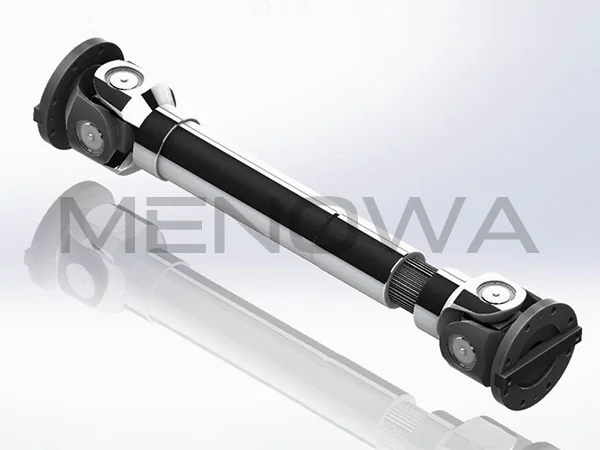
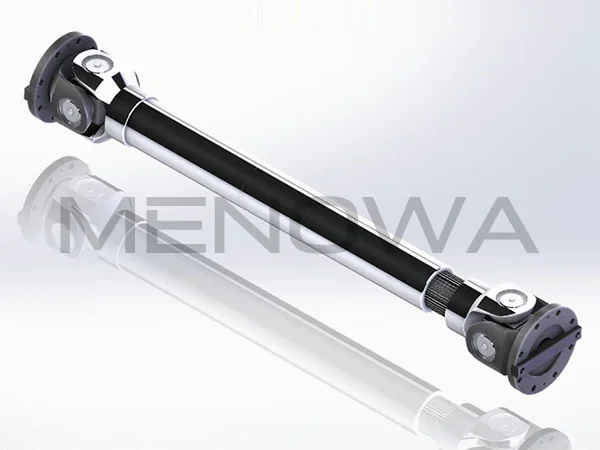
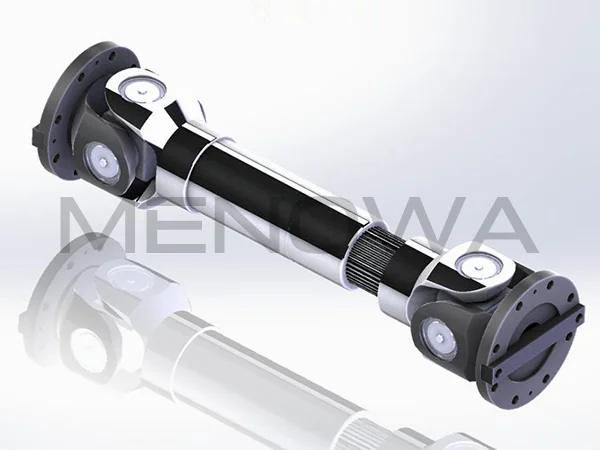
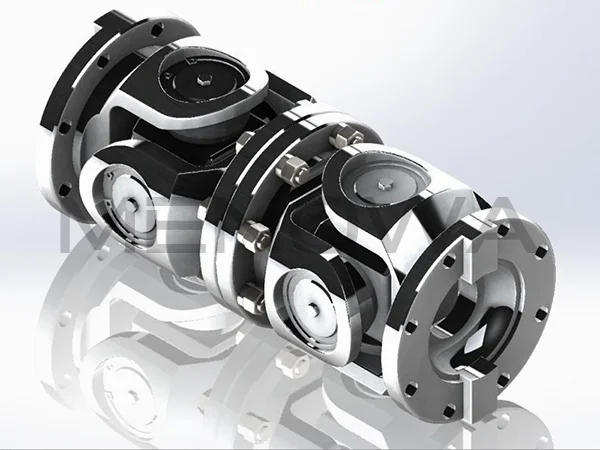
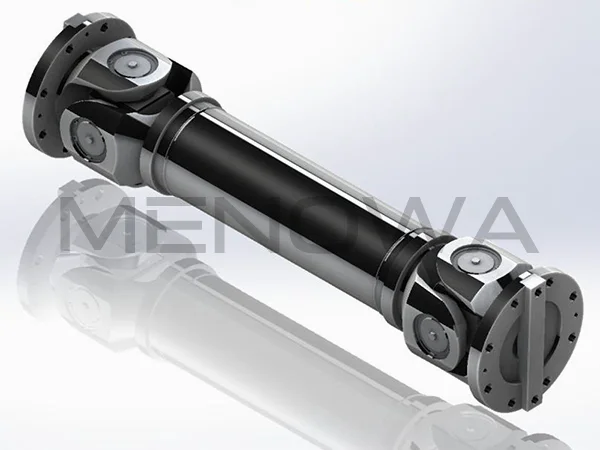
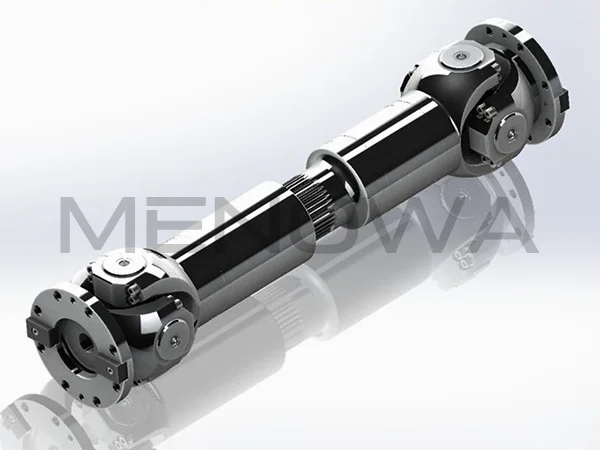
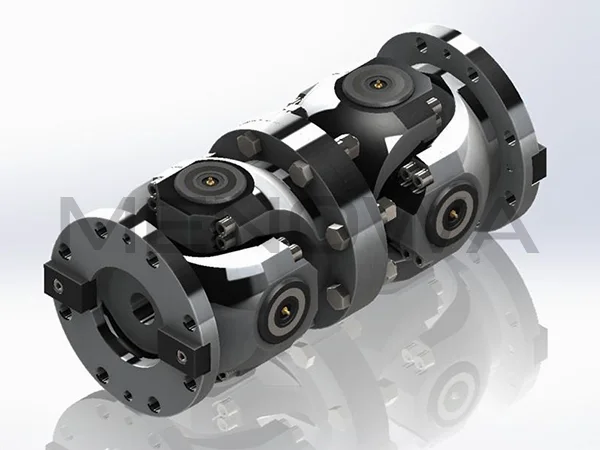
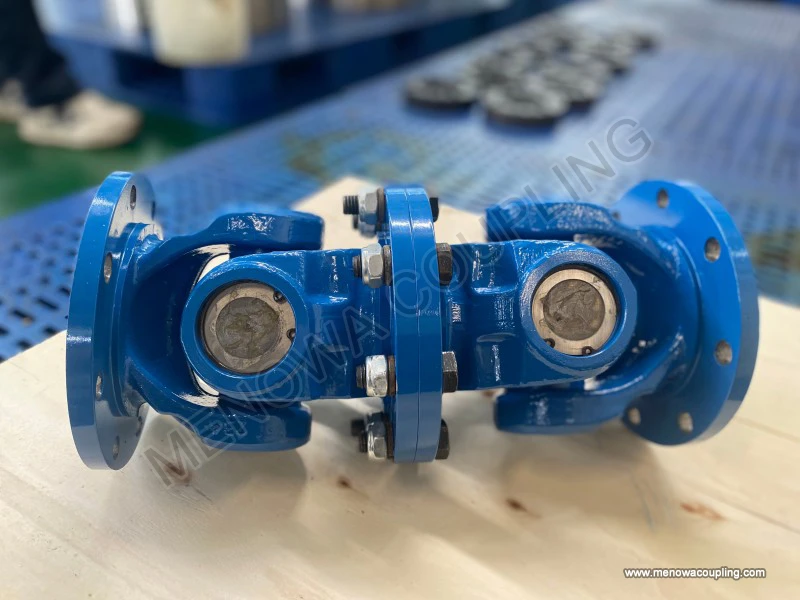
To fully comprehend the practical value and engineering significance of the cardan propshaft, it is essential to start with its core working principle and the basic mechanical logic that enables its unique adaptive power transmission capability. At the heart of every cardan shaft system lies the fundamental mechanical principle of the universal joint, also widely recognized as the Hooke hinge, a simple yet ingenious articulated structure that allows rotational motion and torque to be transmitted between two shafts positioned at a variable angle to one another. The basic mechanical configuration of this hinge structure consists of two fork-shaped connecting components and a central cross-shaped shaft component, with each end of the cross shaft fitted with rotating bearing assemblies that connect seamlessly to the inner mounting positions of the two fork structures respectively. This structural arrangement forms a multi-directional hinge connection that permits free rotational movement in multiple planes simultaneously, rather than limiting motion to a single fixed rotational plane like traditional rigid shaft couplings. When the driving end connected to a power source begins to rotate continuously, the rotational torque is transferred sequentially through the driving fork, the cross shaft assembly, and the driven fork to the connected driven shaft, ensuring that rotational motion is consistently transmitted even when a clear angular deviation exists between the central axes of the driving and driven shafts. What distinguishes this transmission process from ordinary rigid transmission structures is that the universal joint hinge mechanism can naturally compensate for angular misalignment within a reasonable operational range, eliminating the mechanical stress, vibration amplification, and transmission efficiency loss that would inevitably occur if rigid shaft connections were forced to operate under misaligned conditions. A single universal joint can accommodate basic angular deflection for simple power transmission scenarios, but most practical application scenarios require more stable and uniform rotational speed output, which is why the vast majority of cardan joint drive shaft designs adopt a dual universal joint layout, with one universal joint installed at each end of the central shaft body. This dual-joint configuration effectively offsets the minor rotational speed fluctuations inherent in single universal joint operation, ensuring that the input rotational speed and output rotational speed remain highly consistent throughout the entire transmission process, delivering smooth and steady power output to the driven mechanical components at all times. Beyond angular deviation compensation, most cardan shafts also incorporate a splined telescopic section within the shaft body structure, a key auxiliary design that addresses axial distance changes between driving and driven equipment during operation. In many mechanical systems, especially those involving moving parts or equipment subjected to operational vibration and thermal expansion and contraction, the linear distance between connected components is not permanently fixed and will produce continuous small changes during working cycles; the splined telescopic structure allows the overall length of the cardan shaft to adjust freely within a designed range, absorbing axial displacement without generating additional mechanical tension or compression stress on the shaft body and connected joints, further protecting the stability and structural integrity of the entire power transmission system.
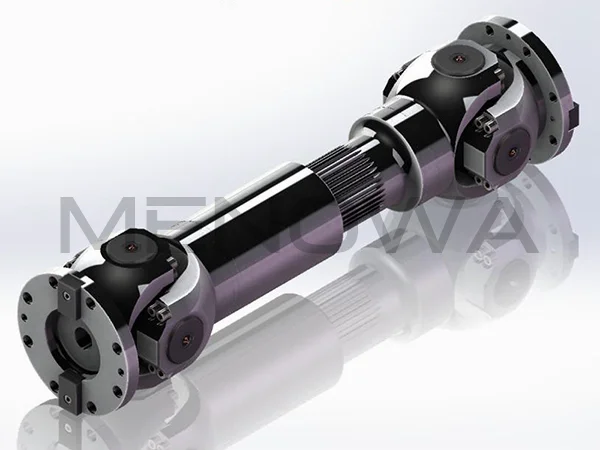
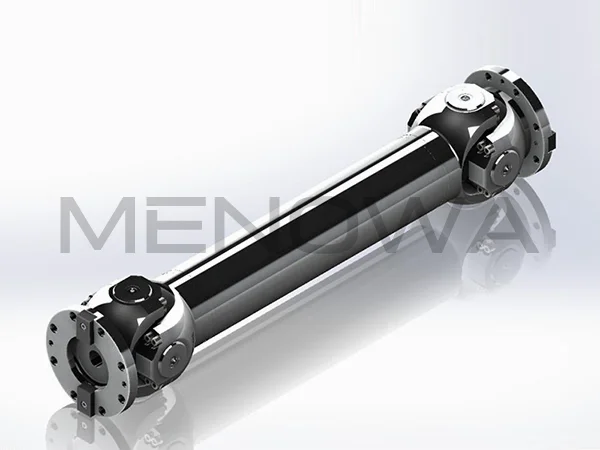
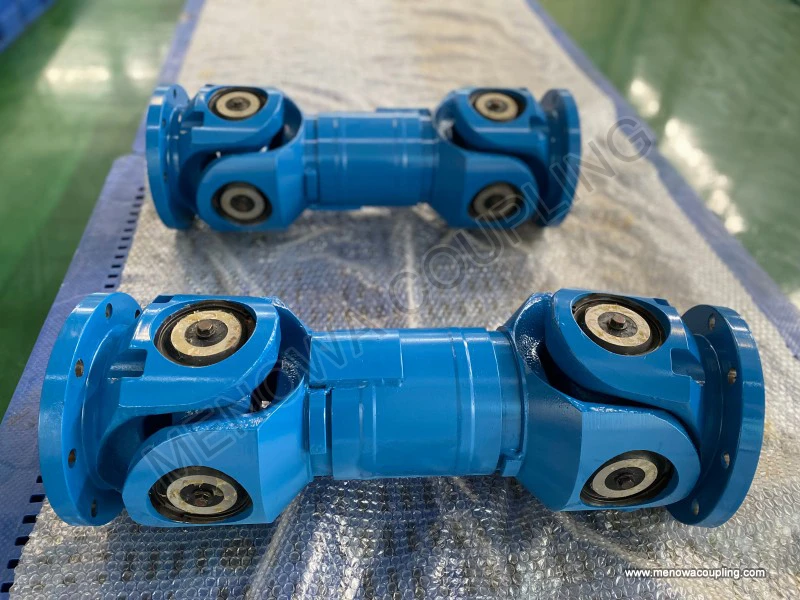
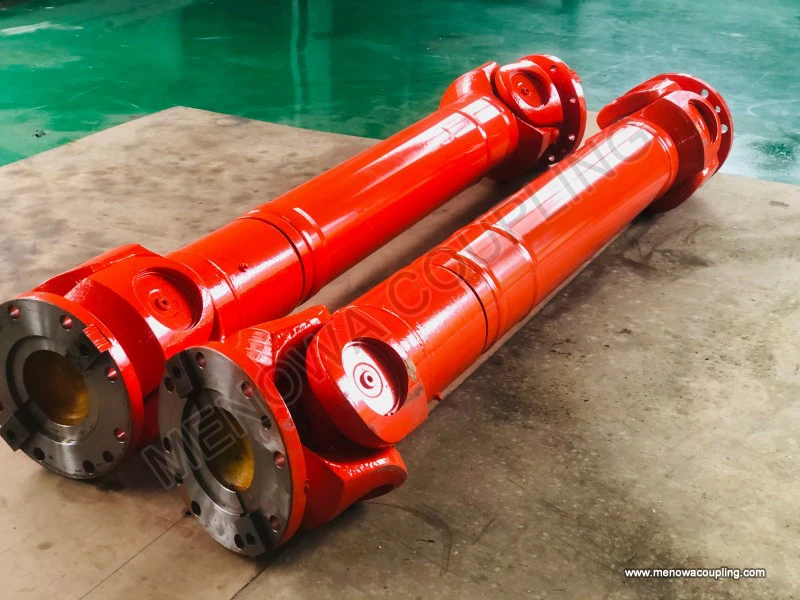
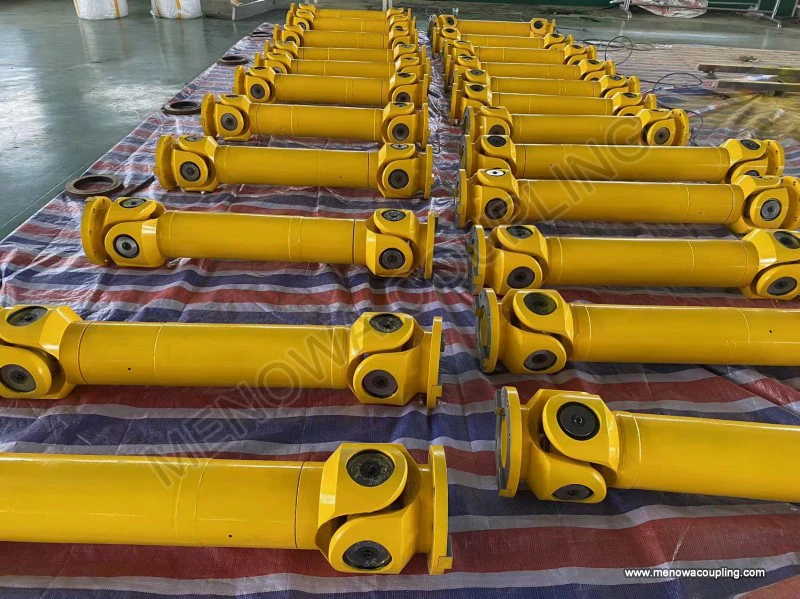
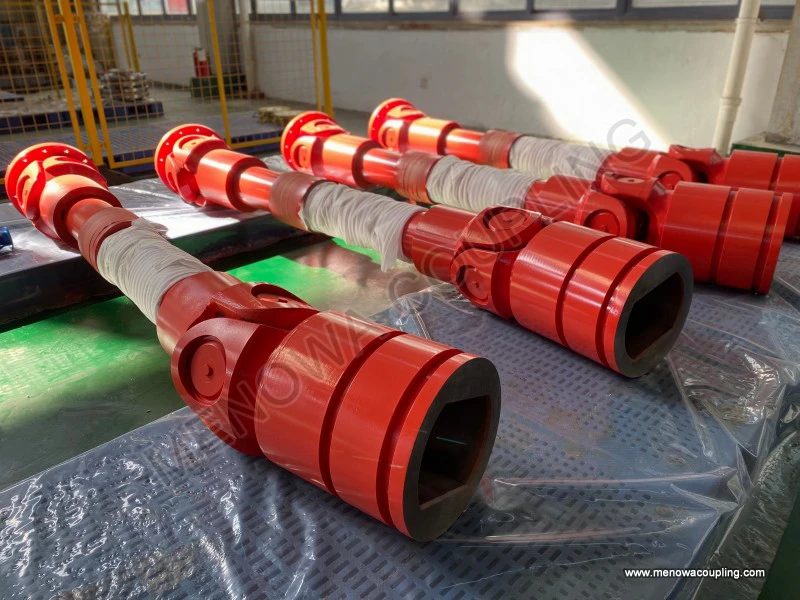
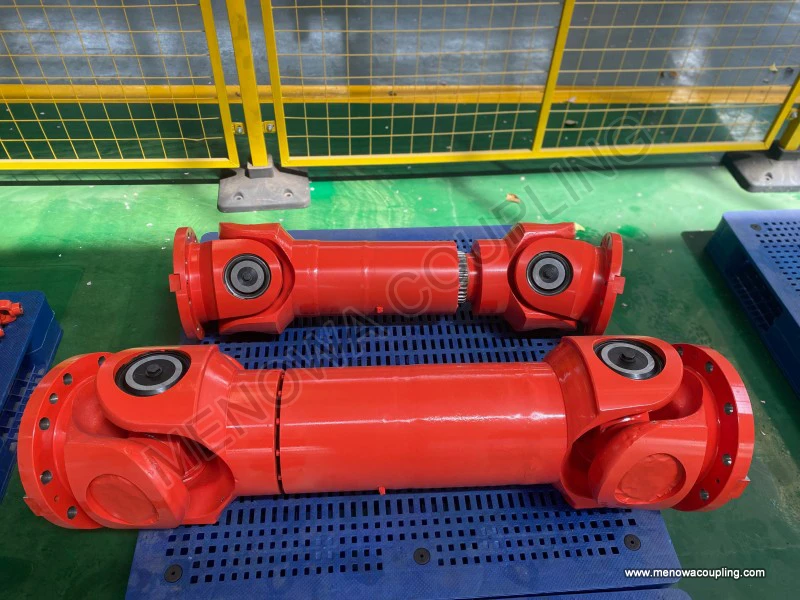
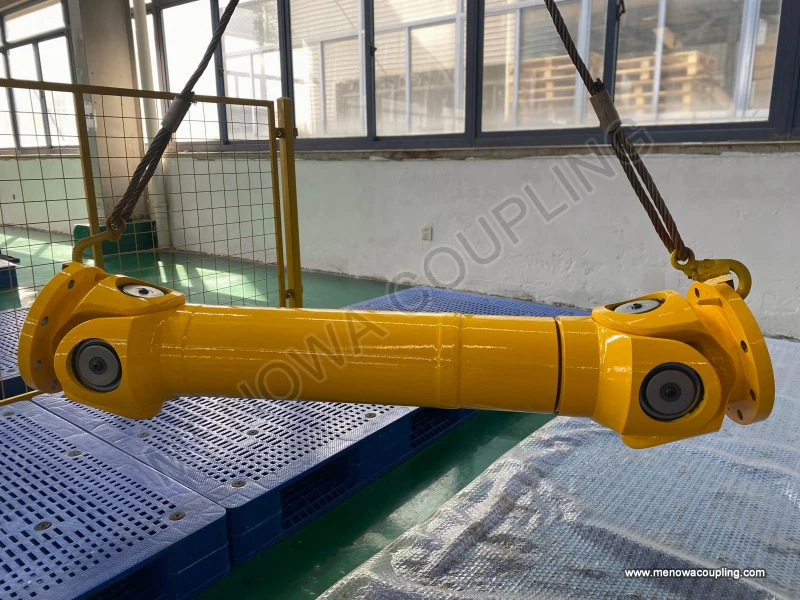
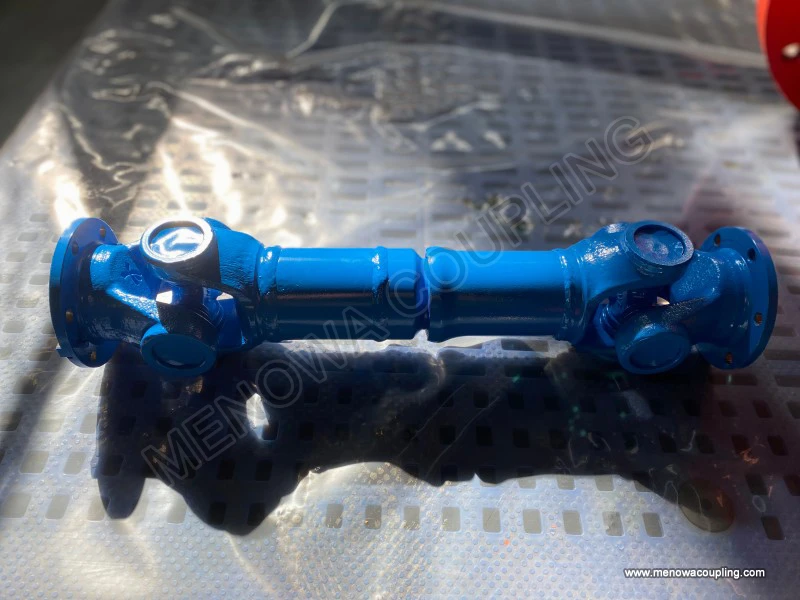
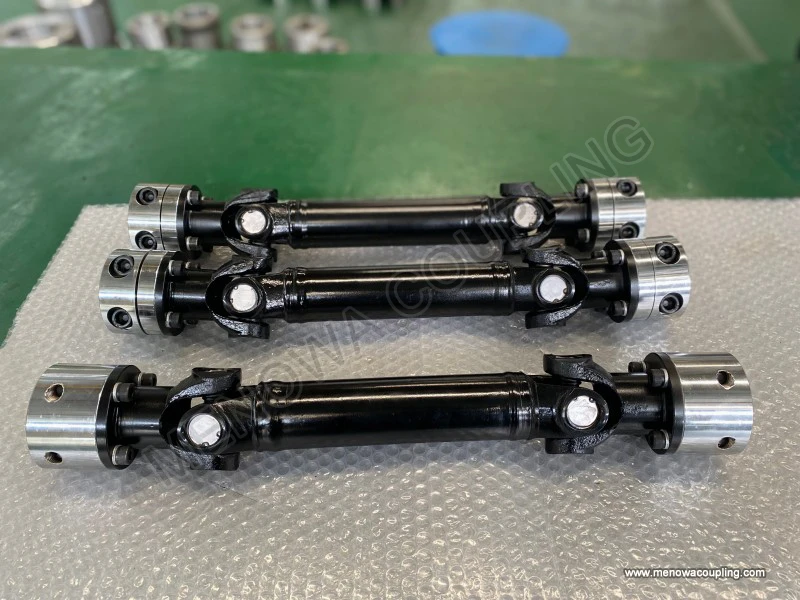
The complete structural composition of a standard cardan joint coupling is a meticulously integrated assembly of multiple precision-engineered core components, each undertaking distinct and irreplaceable functional responsibilities that collectively determine the overall transmission performance, load-bearing capacity, and service lifespan of the entire shaft system. The central shaft body serves as the primary load-bearing and torque-transmitting main structure, typically manufactured from high-strength alloy steel materials selected for their excellent mechanical properties including high tensile strength, strong torsional resistance, good fatigue resistance, and stable structural durability under long-term cyclic load operation. The dimensional specifications of the shaft body, including outer diameter, wall thickness for hollow shaft designs, and overall length, are precisely calculated and designed according to the maximum torque transmission requirements and operational load characteristics of specific application scenarios, ensuring the shaft body can withstand continuous torsional force and occasional impact loads without permanent deformation, structural bending, or material fatigue damage. Hollow shaft body designs are widely adopted in many modern cardan shaft applications, as this structural form effectively reduces the overall weight of the shaft while maintaining equivalent torsional strength, lowering the overall dynamic load on the connected mechanical equipment and reducing additional energy consumption during high-speed rotation. At both ends of the central shaft body are the universal joint assemblies, the core functional structures responsible for angular deflection compensation and flexible motion transmission, each composed of connecting yokes, cross shafts, precision bearing sets, and sealing protection components. The connecting yokes are forged into a stable fork-shaped structure with high structural rigidity, providing a firm and reliable connecting base for mounting the cross shaft and subsequent connection to external driving and driven equipment interfaces. The cross shaft, as the central connecting core of the universal joint, undergoes strict precision machining and surface strengthening treatment to ensure smooth rotational coordination with the matching bearings and strong resistance to wear and impact friction during long-term continuous operation. The bearing assemblies fitted at each end of the cross shaft are designed to reduce rotational friction resistance to the lowest possible level, enabling flexible and smooth relative rotational movement between the two yoke components while supporting radial and axial load forces generated during power transmission. Sealing components surrounding the bearing and cross shaft assembly play a critical protective role, preventing external dust, moisture, corrosive media, and mechanical debris from entering the internal moving parts of the universal joint, while also locking internal lubricating grease in place to maintain continuous lubrication of friction surfaces and avoid wear and tear caused by dry friction operation. Between the central shaft body and one of the universal joint assemblies is the splined telescopic section, composed of matching internal and external spline structures that mesh tightly together to transmit torque while allowing free sliding and length adjustment along the axial direction. The spline surfaces are precision machined to ensure close fit and smooth sliding motion, with surface hardening treatment applied to enhance wear resistance and prevent spline tooth deformation or abrasion under high torque transmission conditions. At the outermost ends of the universal joint yokes are standardized connecting flanges or direct mounting interfaces, designed to facilitate simple, stable, and firm connection and fastening to the output end of driving equipment and the input end of driven equipment, ensuring no loose connection or power transmission gap occurs during high-load and high-speed operation. Every component of the universal drive shaft is processed to strict precision tolerances and assembled under standardized operating procedures, with each structural detail mutually coordinated and restricted to form a unified and reliable power transmission whole.
Material selection for cardan shaft production is a decisive factor that directly influences operational performance, structural durability, and adaptability to different working conditions, with all material choices based on comprehensive consideration of load characteristics, operational speed, environmental conditions, and long-term service requirements of different application scenarios. The central shaft body, bearing the main torsional load and cyclic fatigue stress, relies primarily on high-quality alloy steel materials with balanced mechanical properties, featuring excellent torsional rigidity, high fatigue resistance, and good impact toughness to cope with continuous cyclic torque and occasional sudden impact loads during equipment startup, shutdown, and variable load operation. These alloy steel materials undergo specialized heat treatment processes including quenching and tempering to optimize internal material structure, eliminating internal stress generated during forging and machining, improving overall structural stability, and preventing shaft body deformation or fracture during long-term high-intensity operation. For universal joint core components such as cross shafts and bearing raceways, materials with higher surface hardness and wear resistance are selected, paired with surface carburizing and quenching treatment to ensure the surface of moving parts has strong anti-wear performance while maintaining sufficient internal material toughness to avoid brittle fracture under impact load. Bearing rolling elements and internal precision contact parts use high-hardness bearing steel materials with precise dimensional stability and low friction coefficient, ensuring long-term stable rotational operation and minimizing friction loss during power transmission. Sealing protection components are made of high-elasticity, aging-resistant rubber and polymer composite materials, which can maintain stable sealing performance under wide temperature variation ranges, resist corrosion from various industrial oils, cooling liquids, and environmental moisture, and avoid sealing failure caused by long-term compression and repeated deformation. In special application environments such as high-temperature industrial production lines, humid marine operational scenarios, or corrosive chemical processing workshops, cardan shaft surfaces and key components are equipped with additional anti-corrosion and high-temperature resistant surface treatment processes, including specialized coating protection and anti-rust treatment, to adapt to harsh external environmental conditions and extend overall service life. The scientific matching of different materials for different components ensures that each part of the universal shaft can give full play to its material performance advantages, avoiding premature aging, wear, or damage of individual components that could affect the normal operation of the entire power transmission system.
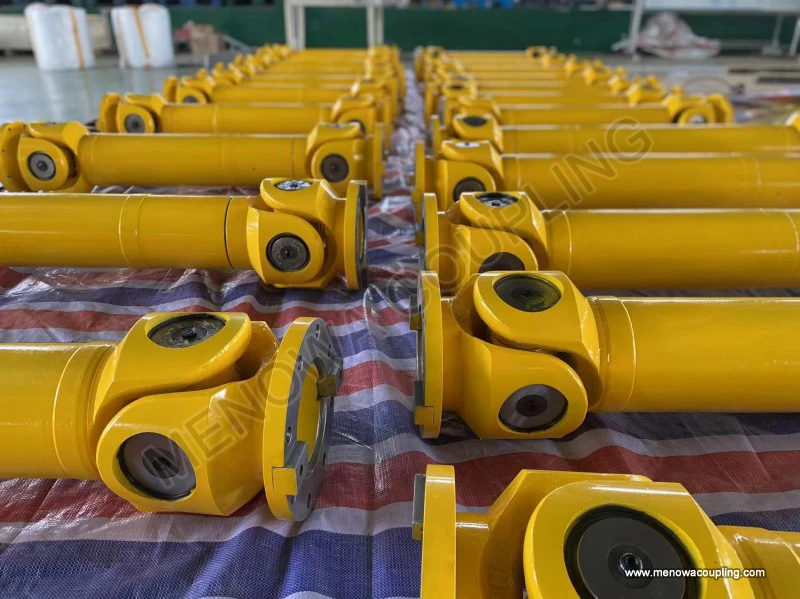
The application scope of cardan shafts covers almost all mechanical fields that require flexible power transmission between misaligned driving and driven components, spanning industrial manufacturing, mobile engineering equipment, transportation systems, and special mechanical operation scenarios, with each application scenario putting forward targeted performance requirements for cardan shaft design and manufacturing. In general industrial production fields, cardan shafts are widely used in various production and processing equipment such as steel rolling mills, metallurgical machinery, mining machinery, papermaking equipment, and textile production lines. In steel rolling and metallurgical production processes, mechanical equipment needs to transmit large torque to complete metal rolling, forging, and processing operations, while equipment installation errors, operational vibration, and thermal deformation during high-temperature production will cause continuous angular and axial displacement between driving motors and processing rollers; heavy-duty cardan shafts with high load-bearing capacity are used in these scenarios to ensure stable power transmission under high torque and harsh high-temperature working conditions, maintaining the continuous and stable operation of industrial production lines and avoiding production interruption caused by power transmission failure. In mining and quarrying machinery, equipment often operates in complex and harsh working environments with severe vibration, dust pollution, and variable load impact, and the relative position between power components and working components changes frequently during equipment operation; cardan shafts used in mining machinery are designed with enhanced structural rigidity and protective performance, adapting to strong vibration and impact working conditions, ensuring reliable power transmission and reducing equipment failure rates in harsh mining environments. In papermaking, textile, and light industrial production equipment, the operational load is relatively stable but requires high transmission smoothness and low vibration operation to ensure product processing quality; cardan shafts for these scenarios adopt precision balancing design and low-vibration structural optimization, achieving stable and low-noise power transmission to meet the precise operational requirements of light industrial processing equipment.
In the field of road and off-road mobility equipment, cardan shafts occupy an irreplaceable core position in vehicle power transmission systems, serving as the key transmission component connecting the vehicle transmission system and the rear drive axle. During vehicle driving operation, the vehicle suspension system will produce continuous up and down telescopic movement due to road surface unevenness, driving speed changes, and vehicle load variation, leading to constant changes in the relative angular position and linear distance between the transmission output end and the drive axle input end. Rigid shaft structures cannot adapt to this dynamic position change and would quickly generate severe mechanical stress, vibration, and structural damage, while universal shaft couplings rely on the angular compensation of universal joints and the telescopic adjustment of splined sections to perfectly adapt to the dynamic position changes of vehicle components during driving. Whether in ordinary road vehicles, large transport vehicles, or off-road engineering vehicles facing complex road conditions, cardan shafts can steadily transmit engine power to the drive wheels, ensuring smooth vehicle power output and normal driving operation. Off-road vehicles and engineering transport vehicles face more complex road conditions and larger load changes, requiring cardan shafts to have higher impact resistance and structural robustness; such universal joint couplings adopt reinforced structural design and high-strength material configuration to cope with severe impact loads and large angular deflection changes during off-road driving, maintaining stable power transmission performance under complex working conditions. In addition to land vehicles, cardan shafts are also used in some marine propulsion auxiliary machinery and construction engineering machinery, adapting to the vibration and position displacement changes of mechanical components during marine navigation and engineering construction operation, providing reliable flexible power transmission support for various types of mobile engineering equipment.
The dynamic balance performance of cardan shafts is a key technical indicator that directly affects operational stability, vibration level, and overall mechanical system lifespan, especially for cardan shafts used in high-speed rotation scenarios such as vehicle power transmission and high-speed industrial processing equipment. Due to the inevitable tiny deviations in material density distribution, machining dimensional errors, and assembly position deviations during production and manufacturing, the mass distribution of the cardan shaft cannot be completely uniform, resulting in unbalanced centrifugal force during high-speed rotation. This unbalanced centrifugal force will cause continuous mechanical vibration of the cardan shaft and connected equipment, leading to increased operational noise, accelerated component wear, and even affecting the normal operation and service life of the entire mechanical equipment in severe cases. For this reason, all finished industrial cardan shafts must undergo strict dynamic balance testing and correction processing after assembly, with professional dynamic balance equipment used to detect unbalanced mass distribution positions and unbalanced magnitudes of the shaft body during rotation. Corresponding weight removal or weight addition correction measures are then carried out according to test results to reduce the unbalanced degree of the cardan shaft to within the allowable design range. Cardan shafts used in high-speed working conditions require higher dynamic balance accuracy standards, with more precise correction processing to ensure minimal vibration and smooth rotation during long-term high-speed operation. Good dynamic balance performance not only reduces operational vibration and noise but also reduces additional fatigue stress on the shaft body and connected components, effectively extending the overall service life of the cross cardan shaft and improving the operational stability and comfort of the entire mechanical system.
Daily maintenance and scientific operational management are essential prerequisites to ensure the long-term stable operation and extended service life of cardan shafts, as the working performance and service lifespan of the component are closely related to regular maintenance and standardized use throughout the operational cycle. The core focus of cardan shaft maintenance lies in lubrication management and sealing protection inspection, as the internal universal joint moving parts and splined telescopic parts rely on high-quality lubricating grease to reduce friction and wear. Regular lubricating grease replenishment and replacement must be carried out according to operational time and working condition requirements, ensuring sufficient and effective lubrication of all friction contact surfaces; long-term lack of lubrication will lead to dry friction between moving parts, causing rapid wear of cross shafts, bearings, and spline structures, resulting in increased transmission vibration, abnormal noise, and even structural jamming and transmission failure. At the same time, the sealing components of the universal joints and telescopic sections need regular inspection to check for aging, deformation, damage, or grease leakage; damaged sealing parts must be replaced in a timely manner to prevent external dust, moisture, and corrosive substances from entering the internal structure and causing internal component wear and corrosion damage. In addition to lubrication and sealing maintenance, regular visual inspection and operational condition checking are also necessary, including checking for loose connecting fasteners, shaft body surface deformation, crack damage, and abnormal vibration or noise during equipment operation. Loose fasteners need to be tightened promptly to avoid connection gaps and power transmission instability; any slight deformation or crack on the shaft body must be addressed timely to prevent structural damage from expanding under continuous load operation. For cardan shafts operating under high-load and harsh working conditions, the frequency of maintenance and inspection should be appropriately increased to adapt to severe operational environments and reduce the risk of sudden failure. Standardized maintenance management can not only maintain the optimal working performance of cardan shafts but also effectively reduce equipment maintenance costs and avoid production and operational losses caused by unexpected component failure.
With the continuous progress of modern mechanical engineering technology and the continuous upgrading of industrial and mobile equipment performance, the design and manufacturing technology of cardan shafts are also constantly evolving and optimizing, adapting to increasingly higher power transmission requirements and more complex working condition demands. Modern cardan shaft coupling design increasingly incorporates computer-aided design and finite element simulation analysis technology, allowing engineers to accurately simulate the stress distribution, torsional deformation, and dynamic operational state of cardan shafts under different load and working condition parameters in the design stage. This enables targeted optimization of structural design, material matching, and dimensional parameters, improving the overall mechanical performance and structural rationality of products while reducing unnecessary material consumption and optimizing structural weight distribution. The application of advanced precision manufacturing technology and intelligent processing equipment has also greatly improved the machining accuracy and assembly precision of cardan shaft components, reducing assembly errors and unbalanced mass generated during the production process, further enhancing the transmission efficiency and operational stability of finished cardan shafts. In terms of material innovation, the continuous emergence of new high-strength, wear-resistant, and corrosion-resistant engineering materials provides more options for cardan drive shaft manufacturing, enabling cardan shafts to adapt to more extreme working environments such as ultra-high temperature, ultra-low temperature, and strong corrosion, expanding their application scope in emerging industrial fields. At the same time, the optimization of structural design tends to be more refined and lightweight, ensuring high load-bearing capacity while reducing overall structural weight, helping downstream mechanical equipment reduce energy consumption and improve overall operational efficiency. The continuous technological iteration of cardan couplings always focuses on the core goals of improving transmission reliability, enhancing environmental adaptability, extending service life, and reducing operational maintenance costs, keeping pace with the overall development trend of modern mechanical engineering towards high efficiency, stability, and intelligence.
Looking at the entire mechanical power transmission industry, the cardan shaft, as a simple in principle but sophisticated in engineering application mechanical component, has maintained irreplaceable practical value after centuries of development and technological evolution. It does not rely on complex mechanical control systems or expensive auxiliary equipment, but realizes efficient and reliable flexible power transmission through mature and stable mechanical structural design, solving the core engineering problem of power transmission between misaligned mechanical components that cannot be avoided in various mechanical systems. From large-scale industrial production lines related to national industrial development to daily used mobile transportation equipment, from conventional room temperature and dry working environments to harsh working conditions such as high temperature, high humidity, strong vibration, and strong corrosion, universal couplings can always maintain stable working performance, providing solid and reliable power transmission basic support for the normal operation of various mechanical equipment. The unique structural design characteristics, flexible adaptive compensation capability, wide material adaptability, and diverse application scalability make the cardan shaft an indispensable fundamental component in modern mechanical engineering. With the continuous development of industrial modernization and the continuous expansion of mechanical equipment application scenarios, the market demand for high-performance, high-reliability cardan shafts will continue to grow, and the related design, manufacturing, and maintenance technology will also continue to innovate and progress. Always adhering to the core mechanical engineering logic of balancing flexibility and rigidity, stability and adaptability, the cardan shaft will continue to play an important backbone role in the field of mechanical power transmission, supporting the stable operation and innovative development of various mechanical systems in the long term.
 WeChat
 WhatsApp