Elastic Coupling
In the intricate and interconnected ecosystem of modern mechanical transmission systems, the smooth and stable transfer of rotational power and torque between adjacent rotating shafts serves as the fundamental guarantee for the continuous and efficient operation of all types of industrial and civil mechanical equipment. Every mechanical device composed of power sources, transmission components, and execution terminals relies on reliable connection structures to link discrete shaft parts into a coordinated and integrated operating whole, ensuring that the kinetic energy generated by the power end can be accurately and stably transmitted to the load execution end without unnecessary power loss or mechanical structural damage during the operation process. Among all the connecting components applied to shaft connection and torque transmission, elastic coupling stands out as a core basic component that integrates power transmission, displacement compensation, vibration damping, and impact buffering functions, playing an irreplaceable key role in optimizing the dynamic operating state of shaft systems and extending the overall service cycle of mechanical equipment. Unlike rigid connection structures that pursue absolute rigidity and fixed positioning between connected shafts and can only achieve simple torque transmission without any adaptive adjustment capability, elastic coupling relies on the inherent elastic deformation characteristics of its core functional components to realize flexible connection between driving shafts and driven shafts, perfectly balancing the basic demand of efficient torque transmission and the practical adaptive demand of coping with various inevitable deviations and dynamic loads generated during the long-term operation of mechanical equipment. In the actual assembly and long-term service process of all mechanical transmission equipment, it is almost impossible to achieve an absolutely ideal coaxial state between the driving shaft and the driven shaft connected by any coupling structure. Whether it is tiny position errors caused by mechanical processing and assembly operations, structural deformation of equipment frames and shaft components caused by long-term continuous load operation, thermal expansion and contraction displacement of metal materials caused by changes in operating temperature and environmental conditions, or subtle position offset changes caused by mechanical vibration and alternating impact loads during equipment startup, shutdown, and variable speed operation, various forms of misalignment and displacement deviations between connected shafts will inevitably occur. These deviations, if not effectively buffered and compensated by flexible connecting structures, will directly lead to rigid friction and extrusion between shaft components, excessive bearing load concentration, accelerated wear and fatigue damage of transmission parts, continuous amplification of mechanical vibration and noise, and even cause frequent equipment failure and unexpected shutdown in severe cases, bringing unnecessary operational risks and additional maintenance burdens to industrial production and mechanical operation. The emergence and continuous technical iteration of elastic coupling fundamentally solve these practical pain points in mechanical shaft transmission, using controllable elastic deformation of flexible materials and structural designs to absorb and offset various axial, radial, and angular misalignments between shafts, isolate and weaken vibration and impact energy generated during transmission operation, maintain the stability and continuity of power transmission under complex dynamic working conditions, and protect the safety and stability of the entire mechanical transmission system and its auxiliary supporting components.
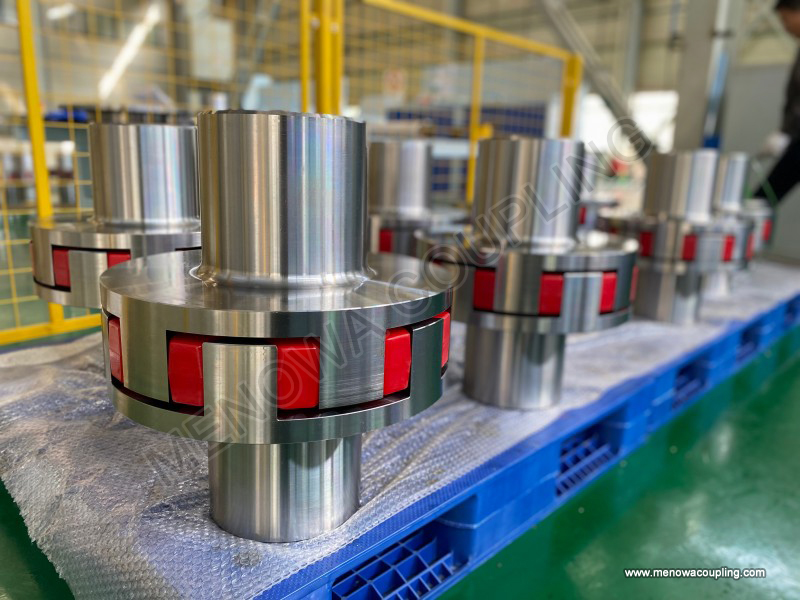
The working mechanism of elastic coupling is fundamentally based on the basic principles of elastic mechanics and shaft system dynamics, taking elastic deformation as the core medium to realize the dual core functions of torque transmission and displacement compensation between connected rotating shafts. The overall structural composition of most elastic coupling configurations follows a simple and practical integrated design logic, mainly including two rigid half coupling bodies connected to the driving shaft and driven shaft respectively, and intermediate elastic elements that undertake deformation buffering and power connection tasks. In the normal operation of mechanical equipment, the driving shaft driven by the power source drives one half coupling to perform synchronous rotational motion, and the rotational torque and power are gradually transmitted to the intermediate elastic elements through the rigid connection structure of the half coupling. Under the action of torque load, the elastic elements produce regular and controllable elastic deformation including tension, compression, shear, and torsion within their material elastic limit range, and the deformed elastic elements further transmit the rotational motion and torque to the other half coupling connected to the driven shaft, finally realizing the synchronous rotation and power output of the entire shaft transmission system. This unique torque transmission mode relying on elastic deformation is essentially different from the rigid contact and rigid extrusion transmission mode of traditional rigid couplings. In the whole power transmission process, there is no hard rigid collision and direct friction between the two half couplings, and all the adaptive adjustment and dynamic buffering work in the shaft system operation are completed by the reversible elastic deformation of the intermediate elastic elements. When the connected shafts produce tiny axial displacement, radial offset, and angular deflection due to assembly errors or operating dynamic changes, the elastic elements can automatically adjust their deformation form and deformation amplitude according to the actual deviation state of the shaft position. For axial misalignment formed by the relative front and back movement of the two shafts, the elastic elements produce stretching or compression deformation along the axial direction to adapt to the distance change between the half couplings; for radial offset formed by the up, down, left, and right position deviation of the shaft center, the elastic elements produce shear and bending deformation in the radial plane to offset the center distance difference between the rotating shafts; for angular deviation formed by the non-parallel and non-coaxial deflection of the two shaft axes, the elastic elements produce torsional and swing deformation to adapt to the angle difference between the rotating shafts. All these deformation processes are completed within the safe elastic range of the material, and the elastic elements can quickly recover to their original initial state after the deviation disappears or the operating state is stable, ensuring that the basic state of the coupling structure and the continuous transmission capacity of torque will not be affected by temporary deformation and deviation adjustment. At the same time, in the process of equipment startup, sudden load change, frequent speed regulation and shutdown, the mechanical impact and vibration waves generated by the instantaneous change of torque load will not be directly transmitted between the driving shaft and the driven shaft. Instead, most of the impact energy and vibration fluctuation energy are absorbed and dissipated through the repeated elastic deformation and internal material damping effect of the elastic elements, effectively reducing the dynamic load peak value borne by the shaft system, bearings, and related transmission parts, and making the whole transmission process more stable and smooth with lower operating noise.
The performance differentiation and application scenario matching of elastic coupling are largely determined by the material characteristics of its core elastic elements, and different elastic materials show obvious differences in stiffness, damping performance, deformation recovery capacity, fatigue resistance, temperature adaptability, and corrosion resistance, which directly determine the applicable working conditions, transmission load range, and service life of different types of elastic couplings. In the current industrial mechanical transmission field, the elastic element materials commonly used in elastic couplings are mainly divided into two major categories: polymer elastomer materials and metal elastic materials, each with unique performance advantages and targeted application positioning, forming a comprehensive product system that can meet the needs of light-load low-speed, medium-load conventional, and heavy-load high-strength transmission working conditions. Polymer elastomer materials represented by rubber and polyurethane are the most widely used elastic materials in medium and light-duty elastic couplings, with excellent comprehensive damping performance, good low-temperature deformation flexibility, strong impact absorption capacity, and relatively low production and processing cost. The molecular structure characteristics of such materials determine that they have good elastic deformation ability and internal friction damping effect, which can effectively convert the mechanical vibration energy and impact energy generated during transmission operation into internal heat energy for dissipation, achieving a significant vibration and noise reduction effect. In the actual operation of mechanical equipment with frequent vibration and small impact loads, elastic couplings equipped with polymer elastomer elements can well buffer the dynamic fluctuation of torque, reduce the resonance risk of the shaft system, and protect precision mechanical components from vibration damage. In addition, polymer elastomer materials have good processing and forming performance, and can be made into various structural shapes such as solid blocks, annular sleeves, and special-shaped connecting bodies according to the structural design needs of couplings, adapting to different coupling overall layout and installation space requirements. However, such non-metal elastic materials also have certain inherent performance limitations, mainly reflected in poor high-temperature resistance, easy aging and deformation under long-term high-temperature working environment and continuous alternating load, limited bearing capacity for heavy torque and strong impact load, and easy corrosion and performance attenuation in harsh working environments with chemical media such as acid and alkali. These characteristics make polymer elastomer-based elastic couplings more suitable for conventional industrial transmission scenarios with normal temperature environment, medium and small torque load, stable operating conditions, and no harsh corrosive media, such as general mechanical processing equipment, civil ventilation and water supply equipment, and light industrial transmission machinery.
Different from polymer elastomer materials, metal elastic materials represented by alloy steel sheets, spring steel, and special alloy structural materials rely on the metal elastic deformation characteristics of their own structure to realize displacement compensation and torque transmission, and are mainly used in high-strength, high-speed, high-temperature, and heavy-load harsh working condition transmission scenarios. Metal elastic elements have extremely high structural stiffness and torque bearing capacity, excellent high-temperature resistance and low-temperature resistance performance, stable mechanical properties that are not easy to age and deform under long-term continuous operation, and strong fatigue resistance and corrosion resistance after special processing and heat treatment. Elastic couplings using metal elastic elements can maintain stable elastic deformation performance and reliable torque transmission capacity under extreme working conditions such as high-speed rotation, heavy torque impact, high-temperature heat radiation, and long-term continuous operation, and will not experience performance attenuation and structural failure due to environmental temperature changes and long-term load action. In terms of deformation and damping characteristics, metal elastic elements have higher structural rigidity and smaller deformation amplitude under the same torque load, so their displacement compensation accuracy is higher, which can meet the high-precision transmission and micro-deviation adjustment needs of high-precision mechanical equipment. Although the internal damping effect of metal materials is weaker than that of polymer elastomers and the vibration absorption and noise reduction effect is relatively general, through reasonable structural optimized design such as laminated assembly and special-shaped bending structure arrangement, the vibration buffering and impact absorption performance of metal elastic couplings can be effectively improved, balancing the dual needs of high load-bearing capacity and dynamic stability. The main limitations of metal elastic couplings lie in relatively complex processing and manufacturing technology, higher production cost, and larger structural weight, so they are mostly applied in heavy industrial equipment, high-speed power transmission systems, metallurgical and mining mechanical equipment, and aerospace supporting transmission structures that require high structural reliability and long service life. The reasonable selection of elastic element materials is the primary link in the type selection and application of elastic couplings. Only by matching the material performance characteristics with the actual working condition parameters such as equipment operating load, rotating speed, environmental temperature, and vibration intensity can the elastic coupling give full play to its comprehensive performance advantages and ensure the long-term stable and reliable operation of the mechanical transmission system.
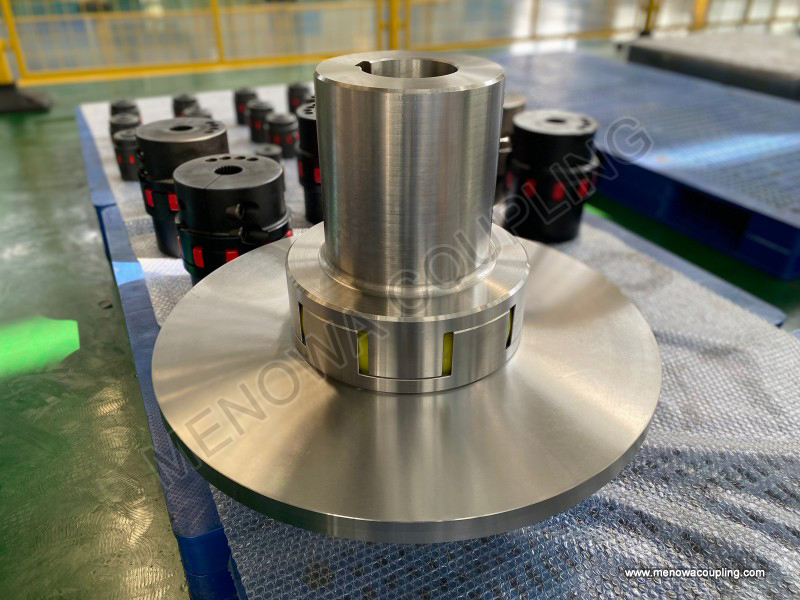
After determining the core elastic element materials, the structural design form of elastic coupling further optimizes and adjusts its displacement compensation range, torque transmission efficiency, dynamic damping effect, and installation and maintenance convenience, and various differentiated structural designs derive multiple types of elastic couplings adapted to different refined working condition needs. Among the common structural forms, the jaw type elastic coupling with simple and compact structure has become one of the most widely used basic types in conventional mechanical transmission. Its structural design adopts two half couplings with symmetric jaw structures and intermediate elastic spacer elements matched with the jaws. During operation, the jaws of the two half couplings clamp the elastic spacer tightly, and torque transmission and displacement compensation are realized through the extrusion and deformation of the elastic spacer between the jaws. This structural design has the advantages of small overall size, light weight, simple installation and disassembly, no need for complex lubrication and daily maintenance, and good adaptive capacity to small axial, radial, and angular misalignments between shafts. It can effectively buffer the slight vibration and impact generated during equipment startup and variable speed operation, and is very suitable for conventional general machinery and equipment with compact installation space and stable operating conditions. The sleeve type elastic coupling adopts an integrated annular elastic sleeve as the core deformation component, and the two half couplings are connected through the interference fit or bolt connection of the elastic sleeve. The elastic sleeve produces uniform overall deformation during torque transmission, with stable deformation stress distribution, good concentricity retention during high-speed rotation, small operating vibration and noise, and suitable for medium and high-speed continuous rotating shaft transmission occasions. The laminated elastic coupling assembled by multiple metal elastic sheets relies on the superimposed deformation of multiple thin metal sheets to realize torque transmission and micro-displacement compensation. The laminated structure design can accurately control the structural stiffness and deformation amount of the coupling, with high transmission precision and good high-speed dynamic balance performance, and can maintain stable operating state under long-term high-speed rotation and frequent load fluctuation, which is widely used in high-precision transmission equipment and high-speed mechanical shaft systems.
The spring type elastic coupling uses spiral spring or special-shaped spring components as elastic connecting parts, with large elastic deformation range and strong displacement compensation capacity, especially suitable for mechanical equipment with large shaft misalignment and obvious impact load during operation. The spring structure can produce large-scale reversible deformation to absorb strong impact energy and large displacement deviation, effectively protecting the shaft system and bearing components from impact damage. The tire type elastic coupling uses an integral elastic tire structure as the core connecting element, with excellent comprehensive compensation performance for all kinds of misalignments, good damping and shock absorption effect, strong adaptability to harsh working environments, and can maintain stable performance in dusty, humid and slightly corrosive working conditions, suitable for mining, construction machinery and other harsh industrial transmission scenarios. Different structural designs correspond to different deformation characteristics and performance emphases, some focus on compact structure and convenient maintenance, some focus on high precision and high-speed stability, some focus on large displacement compensation and strong impact resistance, and some focus on environmental adaptability and long service life. In the actual selection process, mechanical design and operation personnel need to comprehensively consider various key factors such as equipment transmission power, rated rotating speed, shaft misalignment degree, operating environmental conditions, load fluctuation frequency and maintenance cycle requirements, and select the elastic coupling with matching structural form and material configuration, so as to achieve the optimal matching effect between coupling performance and equipment operating needs.
In the actual operation and application of mechanical transmission systems, the important value of elastic coupling is not only reflected in the basic functions of torque transmission and shaft misalignment compensation, but more importantly in the comprehensive optimization and protection of the overall dynamic performance of the mechanical system, effectively reducing the operating failure rate of equipment, lowering long-term maintenance and operation costs, and extending the overall service life of mechanical equipment and core components. In any mechanical shaft transmission system, the connected bearings, gears, shafts and other core components are very sensitive to additional load and vibration impact. Rigid connection without flexible buffering will cause additional alternating load to act on these precision components for a long time, resulting in continuous fatigue wear and structural fatigue damage, shortening the service life of components and increasing the frequency of equipment maintenance and parts replacement. After the application of elastic coupling, the elastic deformation and damping buffering effect can isolate most of the vibration and impact load between the driving end and the driven end, avoid the long-term action of additional alternating stress on precision transmission components, reduce the wear degree of bearings and gear meshing parts, maintain the good meshing precision and rotating stability of the transmission system, and make the equipment run in a stable and low-load dynamic state for a long time. At the same time, the displacement compensation function of elastic coupling can offset the position deviation caused by assembly errors and structural deformation, avoid local stress concentration of shaft components caused by forced alignment, reduce the bending deformation and shear stress of the shaft, prevent shaft fatigue fracture and structural deformation failure caused by long-term eccentric operation, and greatly improve the overall operation safety and stability of mechanical equipment.
In the industrial production process, the stable operation of mechanical equipment is directly related to production efficiency and production safety. Unplanned equipment shutdown and frequent maintenance will not only interrupt the continuous production process and reduce production output, but also bring additional manpower, material and financial cost consumption, affecting the overall economic benefits of production and operation. The application of elastic coupling effectively reduces the failure probability of mechanical transmission system, reduces the times of equipment shutdown maintenance and parts replacement, prolongs the maintenance cycle of equipment, ensures the continuous and stable operation of production line mechanical equipment, and creates stable production conditions for industrial production. In addition, with the continuous improvement of modern industrial production requirements for mechanical equipment energy saving and consumption reduction, the flexible transmission characteristics of elastic coupling can reduce the power loss caused by rigid friction and rigid impact in the transmission process, improve the effective utilization rate of transmission power, reduce the energy consumption of equipment operation, and meet the development needs of energy saving and efficient operation of modern mechanical equipment. In the field of precision mechanical equipment and intelligent mechanical systems, the vibration isolation and stability maintenance function of elastic coupling can avoid the influence of mechanical vibration on the operation precision of precision processing components and detection components, ensure the processing accuracy and operation stability of precision equipment, and provide reliable basic guarantee for high-precision mechanical processing and intelligent equipment operation.
In the daily use and long-term operation management of elastic coupling, standardized installation, regular inspection and scientific maintenance management are important prerequisites to ensure that the elastic coupling maintains good performance and long service life, and unreasonable installation and neglect of daily maintenance will easily lead to premature performance attenuation and structural failure of the coupling, affecting the normal operation of the entire mechanical transmission system. The installation quality of elastic coupling directly determines its displacement compensation effect and operating stability. Before installation, it is necessary to strictly check the processing dimensional accuracy and surface integrity of the coupling components and the connected shaft parts, remove burrs, rust and sundries on the connecting surface to ensure the matching accuracy of the installation connection part. In the formal installation process, it is necessary to ensure the coaxiality of the driving shaft and the driven shaft within the allowable deviation range of the coupling design, avoid excessive installation misalignment exceeding the compensation limit of the elastic coupling, and prevent the elastic elements from bearing excessive deformation load in the initial operation stage, which will accelerate fatigue damage. The fastening bolts and connecting parts of the coupling need to be tightened evenly in accordance with the standard installation process to ensure firm connection without looseness, preventing bolt looseness and structural displacement caused by vibration during operation, which will lead to abnormal vibration and impact of the transmission system. After the installation is completed, it is necessary to conduct no-load test operation and load test operation of the equipment, observe the operating vibration, noise and rotating state of the coupling, check whether there is abnormal friction and structural jitter, and adjust the installation position in time if abnormal conditions are found to ensure that the coupling operates in a good working state.
Daily inspection and maintenance work of elastic coupling should be formulated according to the equipment operating intensity and working environmental conditions, and regular inspection and maintenance should be done well in daily, weekly and monthly cycles. The daily inspection work mainly focuses on observing the operating state of the coupling during equipment operation, checking whether there is abnormal vibration, abnormal noise and surface temperature overheating, and finding and dealing with obvious abnormal problems in a timely manner. The regular maintenance work needs to focus on checking the deformation state, wear degree and aging condition of the core elastic elements, checking whether the connecting bolts and fastening parts are loose, rusted and damaged, and checking whether the coupling overall structure has displacement and deformation. For elastic couplings using polymer elastomer elements, it is necessary to regularly check whether the elastic elements have aging hardening, cracking, deformation and wear, and replace the aging and failed elastic parts in a timely manner to avoid the reduction of damping compensation performance and structural failure during operation. For metal elastic couplings, it is necessary to regularly check whether the metal elastic sheets and spring components have fatigue deformation, crack damage and corrosion, and do a good job in anti-corrosion and lubrication maintenance according to the working environment to ensure the stability of metal elastic deformation performance. For elastic couplings operating in harsh working environments such as high temperature, humidity and dust, the frequency of inspection and maintenance should be appropriately increased, and dust removal, decontamination and anti-corrosion protection work should be done well to reduce the impact of harsh environment on the performance and service life of the coupling. Scientific and standardized installation and maintenance management can not only effectively extend the service life of elastic coupling, reduce the frequency of replacement and maintenance, but also ensure that the coupling always maintains good displacement compensation and vibration damping performance, and provides stable and reliable flexible connection protection for the long-term operation of mechanical transmission system.
With the continuous progress of modern mechanical manufacturing technology and the continuous upgrading of industrial mechanical equipment towards high speed, high precision, high efficiency and high reliability, the technical research and product optimization and iteration of elastic coupling are also constantly advancing, and the future development direction of elastic coupling is more closely combined with new material technology, structural optimization design technology and intelligent monitoring technology to adapt to the increasingly complex and diversified mechanical transmission working condition needs. In terms of material research and development, with the continuous emergence of new composite elastic materials and special alloy materials, the elastic elements of elastic couplings will have better comprehensive performance, realizing the simultaneous improvement of high temperature resistance, corrosion resistance, fatigue resistance, damping performance and load-bearing capacity, breaking the performance limitations of traditional single materials, and enabling elastic couplings to adapt to more extreme harsh working conditions. In terms of structural design, with the help of computer simulation analysis and finite element dynamic optimization design technology, the internal stress distribution, deformation law and dynamic response characteristics of elastic coupling under different load and working conditions are accurately simulated and analyzed, the structural size and deformation structure of the coupling are optimized and adjusted, the transmission efficiency and displacement compensation accuracy of the coupling are further improved, the structural weight and production cost are reduced, and the comprehensive structural performance of the coupling is optimized. In terms of intelligent operation and maintenance, with the integration of sensor monitoring technology and mechanical operation intelligent management system, real-time monitoring of the operating temperature, vibration state, deformation degree and load change of elastic coupling can be realized, the operating state and performance attenuation trend of the coupling can be accurately judged, early warning of potential failure risks can be realized, and scientific and reasonable maintenance and replacement plans can be formulated, realizing the transformation from passive maintenance after failure to active early warning maintenance, and further improving the operation reliability and management efficiency of mechanical transmission system.
Throughout the entire modern mechanical transmission field, elastic coupling, as a small and basic core connecting component, undertakes the important mission of connecting shaft transmission, buffering dynamic load and protecting mechanical equipment, and its performance quality and application matching degree are directly related to the operating stability, service life and operation efficiency of various mechanical equipment. From conventional light industrial and civil mechanical equipment to heavy industrial production equipment, from high-speed precision transmission systems to harsh working condition mining and metallurgical machinery, all mechanical transmission scenarios involving shaft connection and power transmission cannot do without the auxiliary protection and flexible connection function of elastic coupling. Relying on the elastic deformation characteristics of core materials and diversified structural design forms, elastic couplings effectively solve various practical problems such as shaft misalignment compensation, vibration and impact buffering, and dynamic load reduction in mechanical transmission, make the mechanical transmission process more stable and reliable, reduce equipment operating failure and maintenance costs, and create favorable conditions for the efficient and safe operation of modern mechanical equipment. With the continuous development of mechanical industry technology and the continuous improvement of equipment operation requirements, elastic coupling will continue to carry out technological innovation and performance optimization, constantly adapt to the new development needs of modern mechanical transmission systems, and always play an indispensable basic supporting role in the steady operation and technological progress of the mechanical industry.
https://www.menowacoupling.com/industrial-coupling/elastic-coupling.html
Related Articles
What is Elastic Coupling
May 14, 2026Elastic coupling is a critical component in mechanical transmission systems, designed to connect two rotating shafts while accommodating misalignments, absorbing vibrations, and protecting machinery from damage. Unlike rigid couplings that require precise alignment and offer no flexibility, elastic couplings utilize ela…Specification of Elastic Coupling
May 14, 2026An elastic coupling is a critical mechanical component designed to connect two rotating shafts in a power transmission system, enabling the transfer of torque while accommodating various forms of misalignment and dampening vibrations. Unlike rigid couplings that require precise alignment and offer no flexibility, elasti…Parts of Elastic Coupling
May 14, 2026Elastic couplings are essential components in mechanical transmission systems, designed to connect two rotating shafts while accommodating misalignments, absorbing vibrations, and protecting connected equipment from damage. Unlike rigid couplings that require precise alignment and offer no flexibility, elastic couplings…Material of Elastic Coupling
May 14, 2026Elastic couplings play a crucial role in mechanical transmission systems, serving as a vital connection between driving and driven shafts to transmit torque while compensating for axial, radial, and angular misalignments. The performance, durability, and suitability of an elastic coupling for specific applications are l…Gap Chart of Elastic Coupling
May 14, 2026In the realm of mechanical power transmission, elastic couplings serve as critical components that bridge the gap between driving and driven shafts, accommodating misalignments while ensuring efficient torque transfer. Among the various tools and methodologies used to optimize the performance and longevity of elastic co…Dimensions of Elastic Coupling
May 14, 2026The dimensions of elastic couplings are a critical factor that directly determines their performance, compatibility, and service life in mechanical transmission systems. Unlike rigid couplings, which rely on precise alignment and rigid connections to transmit torque, elastic couplings integrate flexible elements that al…Components of Elastic Coupling
May 14, 2026Elastic couplings are essential mechanical components widely used in various industrial applications to connect two rotating shafts, transmitting torque while accommodating misalignments, absorbing vibrations, and protecting connected equipment from damage. Unlike rigid couplings that require precise alignment and offer…Classification of Elastic Coupling
May 14, 2026Elastic couplings are essential mechanical components designed to connect two rotating shafts while transmitting power efficiently, compensating for misalignments, and dampening vibrations and shock loads. Unlike rigid couplings, which require near-perfect alignment between shafts and offer no flexibility, elastic coupl…Characteristics of Elastic Coupling
May 14, 2026Elastic coupling is a critical component in mechanical transmission systems, designed to connect two rotating shafts while accommodating various forms of misalignment, absorbing vibrations, and transmitting torque efficiently. Unlike rigid couplings that require precise alignment and offer no flexibility, elastic coupli…Working Principle of Elastic Coupling
May 11, 2026In the complex and interconnected world of mechanical power transmission, elastic couplings stand as indispensable components that bridge the gap between driving and driven shafts, ensuring the smooth, efficient, and protected transfer of torque. Unlike rigid couplings that demand precise alignment and offer no flexibil…
 WeChat
 WhatsApp