Water Pump Coupling
In the entire fluid transportation industrial system and daily water supply and drainage operational scenarios, water pumps stand as fundamental mechanical equipment responsible for driving the continuous circulation and directional transmission of various water media, covering clean domestic water, industrial circulating water, sewage treatment medium, and cooling water for mechanical supporting systems. Every complete water pump operating system cannot achieve independent operation solely relying on the pump body itself, as it requires matching power drive equipment to provide stable rotational torque and continuous power output, and the connection and power transmission component between the drive end and the pump body end is the water pump coupling, a seemingly simple but mechanically critical intermediate connecting part. Although the water pump coupling does not directly participate in the compression and transportation work of water flow, it undertakes the core task of connecting two independent rotating shafts, realizing efficient and stable transmission of rotational power, and bearing multiple auxiliary mechanical protection functions throughout the long-term operation of the equipment. The operating state of the coupling is closely linked to the overall operating efficiency of the water pump unit, the service life of core supporting components such as bearings and mechanical seals, the stability of equipment operation, and the frequency of later maintenance and repair work. Many common faults in water pump operation, including abnormal vibration of the unit, harsh operating noise, rapid wear of shaft bearings, frequent damage of mechanical seals, and even unstable water supply flow and pressure fluctuations, are not directly caused by the failure of the pump body or the drive motor itself, but stem from long-term unreasonable selection of water pump couplings, non-standard installation and alignment operation, insufficient daily maintenance management, and untimely handling of minor wear and early failure problems. Understanding the basic working mechanism, structural classification, performance characteristics, installation and alignment specifications, daily maintenance essentials, common fault causes and troubleshooting methods of water pump couplings is an essential professional foundation for equipment operation and maintenance personnel, mechanical design and engineering installation practitioners, and water pump system management personnel to ensure the long-term stable and efficient operation of water pump units, reduce unnecessary equipment loss and maintenance costs, and extend the overall service cycle of mechanical equipment.
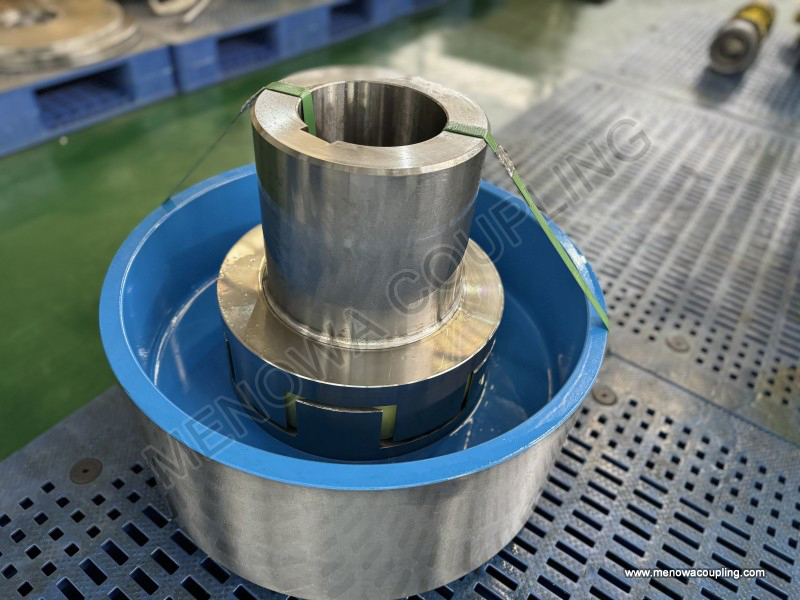
The essential working principle of the water pump coupling is straightforward in mechanical logic, yet extremely rigorous in practical application and engineering implementation. Its most basic and core function is to serve as a reliable mechanical connection bridge between the driving shaft of the power motor and the driven shaft of the water pump, realizing the seamless transmission of rotational torque and rotational motion between the two shafts, so that the rotational power generated by the normal operation of the motor can be stably transmitted to the internal rotating components of the water pump such as the impeller, driving the impeller to rotate continuously at a set speed, and then completing the acceleration, pressurization and directional transportation of water medium. In the ideal mechanical design state, the driving shaft of the motor and the driven shaft of the water pump should be kept on the same absolute central axis, with completely consistent rotation center, no radial deviation, angular inclination and axial displacement, and the two shafts rotate synchronously without any relative displacement and mechanical friction interference. However, in actual production processing, equipment manufacturing, on-site installation and long-term operation process, this ideal alignment state can never be permanently maintained. There are inevitable tiny dimensional deviations in the casting and machining process of the pump body and motor base, subtle position deviations will occur during the on-site fixing and installation of the equipment base, and after the equipment is put into operation for a period of time, affected by mechanical vibration, thermal expansion and contraction of metal components, slight foundation settlement and long-term alternating load impact, the relative position between the motor shaft and the pump shaft will gradually change, resulting in different degrees of misalignment between the two shafts. This inherent misalignment is the key reason why water pump units must be equipped with professional couplings instead of simple rigid welding or direct flange connection between the two shafts. A qualified and properly selected water pump coupling can effectively compensate for various minor misalignment deviations generated between the driving shaft and the driven shaft during installation and operation, including parallel radial offset, angular deflection between shaft ends and axial telescopic displacement caused by thermal expansion, ensuring that the power transmission process will not produce additional mechanical stress and torque loss due to shaft misalignment, and maintaining the synchronous and stable rotation of the two shafts all the time.
Beyond the basic power transmission and shaft misalignment compensation capabilities, water pump couplings also undertake vital vibration damping, noise reduction and mechanical overload protection functions in the entire water pump operating system. During the start-stop phase and continuous high-speed operation of the water pump unit, the motor will produce certain rotational vibration due to the rotation of internal rotor components, and the water pump will generate hydraulic vibration due to the impact of water medium on the impeller and the periodic change of internal flow pressure. These two types of vibration will be transmitted along the respective shafts to the connection position of the two equipment. Without the buffering and isolation of a professional coupling, the vibration from the motor and the pump will be directly transmitted and superimposed between the two equipment, forming resonance phenomenon in severe cases, which will not only generate harsh operating noise and affect the on-site operating environment, but also cause long-term alternating impact load on the bearings, mechanical seals and shaft bodies of the motor and water pump, accelerating the wear and aging of these precision components, shortening their normal service life, and increasing the frequency of equipment failure and shutdown maintenance. The structural design of most water pump couplings, especially flexible couplings, incorporates elastic buffer components made of elastic materials or special mechanical structures, which can effectively absorb and weaken the vibration generated during the operation of the unit, block the mutual transmission of vibration between the motor and the pump body, reduce the overall vibration amplitude of the equipment operation, and lower the operating noise level to maintain a stable and low-noise operating state of the water pump unit. In addition, when the water pump encounters unexpected working conditions during operation, such as sudden blockage of the internal flow channel by foreign matter, instantaneous overload of water medium resistance, abnormal jamming of the impeller, and sudden voltage fluctuation causing unstable motor output torque, the instantaneous torque load borne by the coupling will rise sharply. Under such overload conditions, the coupling can buffer the sudden impact torque through its own structural characteristics or elastic deformation, avoiding the direct action of excessive instantaneous torque on the motor shaft and pump shaft, preventing shaft deformation, shaft breakage or internal component damage caused by sudden overload, and playing a good mechanical buffering and overload protection role for the core equipment of the entire water pump system.
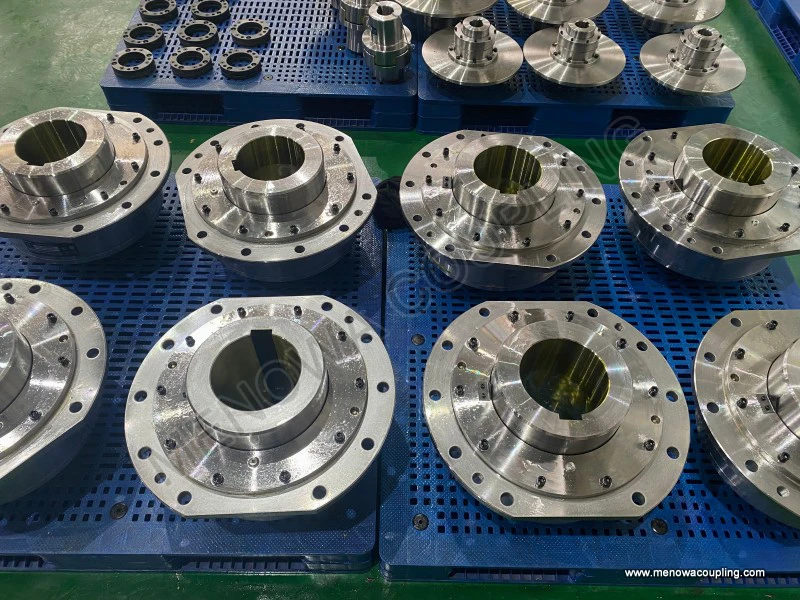
According to different structural design forms, material selection, misalignment compensation capacity, vibration damping effect and applicable working condition scenarios, water pump couplings can be roughly divided into two main categories: rigid couplings and flexible couplings, and each category includes multiple structural forms adapted to different power levels, rotational speeds and operating environments. Rigid water pump couplings are the simplest in structural design, mainly composed of two rigid coupling halves made of integral metal materials, which are respectively fixed on the motor shaft and the water pump shaft through fastening bolts or set screws, and the two coupling halves are tightly connected by high-strength bolts to realize rigid fixation and synchronous rotation of the two shafts. This type of coupling has extremely high structural rigidity, good torque transmission efficiency, no power transmission loss in the working process, and can bear relatively large torque load, suitable for water pump equipment with low rotational speed, small power, fixed installation position, stable foundation and basically no shaft misalignment deviation. The obvious limitation of rigid couplings is that they have no elastic buffer performance and no misalignment compensation function at all. Once there is slight parallel offset or angular inclination between the motor shaft and the pump shaft, additional bending stress and shear stress will be directly generated on the shafts, bearings and connecting bolts. Long-term operation under this stress state will lead to rapid bearing wear, shaft fatigue deformation, bolt loosening and fracture, and even mechanical seal failure and water leakage of the pump body in a short time. Therefore, rigid couplings are only used in some simple low-power small water pump scenarios with low operating requirements and infrequent start-stop operations, and are rarely used in medium and large industrial water pump units and water supply equipment that operate continuously for a long time.
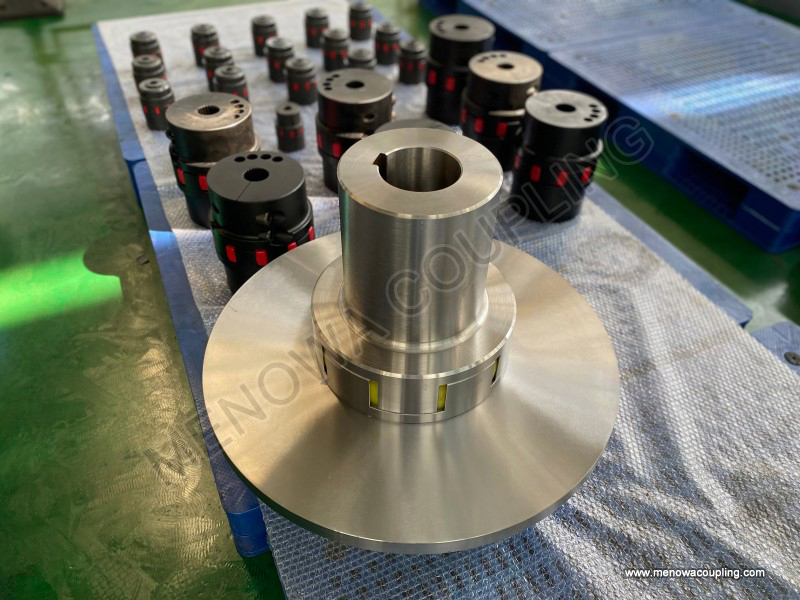
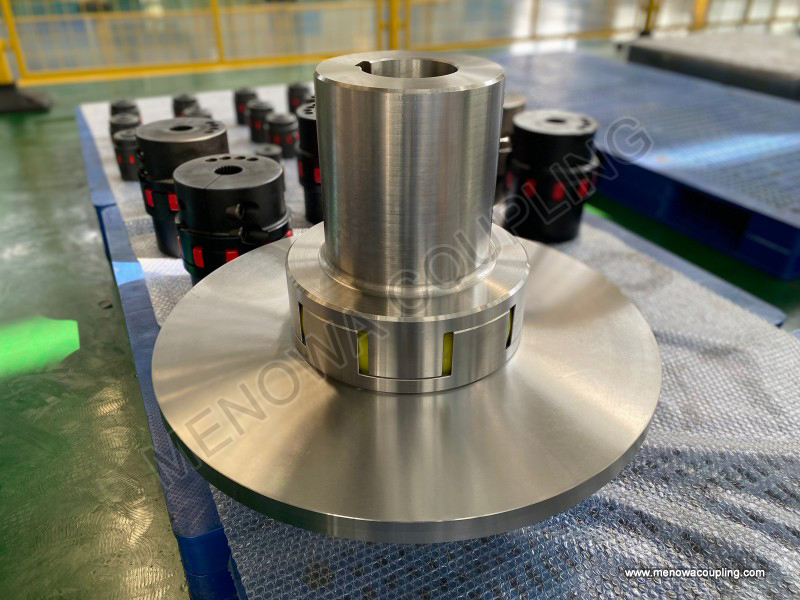
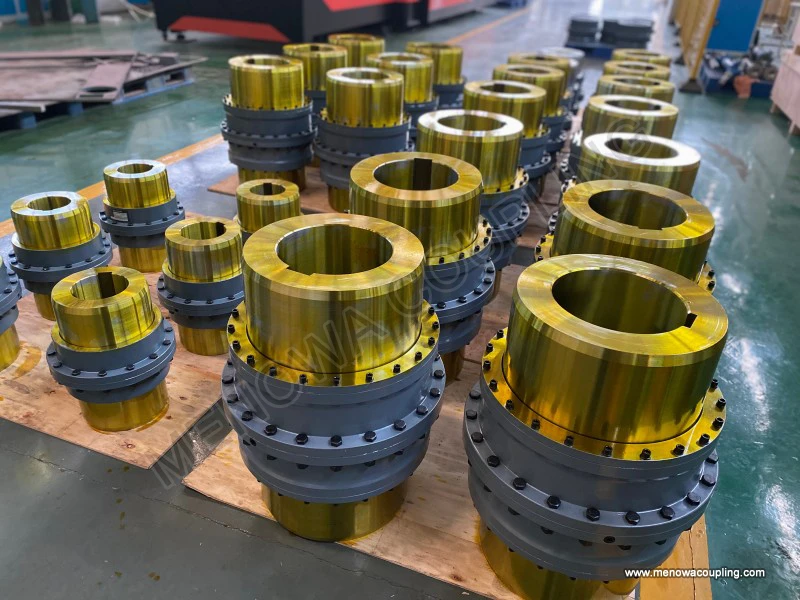
Flexible water pump couplings are the most widely used type in various water pump supporting applications, with diverse structural forms and strong adaptive performance, and are designed with elastic buffer structures or flexible connecting parts to realize misalignment compensation and vibration damping functions. Among various flexible couplings, elastic body flexible couplings are the most common, including plum blossom elastic couplings, rubber sleeve pin couplings, diaphragm couplings and beam couplings, all of which rely on elastic components made of rubber, polyurethane or special elastic metal materials to connect the two coupling halves. Plum blossom elastic couplings adopt an integral plum blossom-shaped elastic buffer body clamped between two coupling halves with corresponding tooth-shaped structures. The elastic body can effectively bear torque transmission, and at the same time allow certain angular misalignment and small parallel offset between the two shafts, with good vibration damping and noise reduction effects, simple overall structure, convenient installation and disassembly, and low daily maintenance difficulty. This type of coupling is mostly suitable for medium and small power water pumps such as pipeline circulating water pumps and domestic water supply booster pumps with medium rotational speed and not too harsh working environment. Rubber sleeve pin couplings connect the two coupling halves through pins and rubber elastic sleeves sleeved on the pins. The rubber elastic sleeve can buffer vibration, compensate minor shaft misalignment, and also has good impact resistance during equipment start-stop. The replacement cost of internal rubber vulnerable parts is low, and the later maintenance operation is extremely convenient, suitable for various conventional industrial water pumps and sewage water pump equipment that start and stop frequently and operate continuously for a long time.
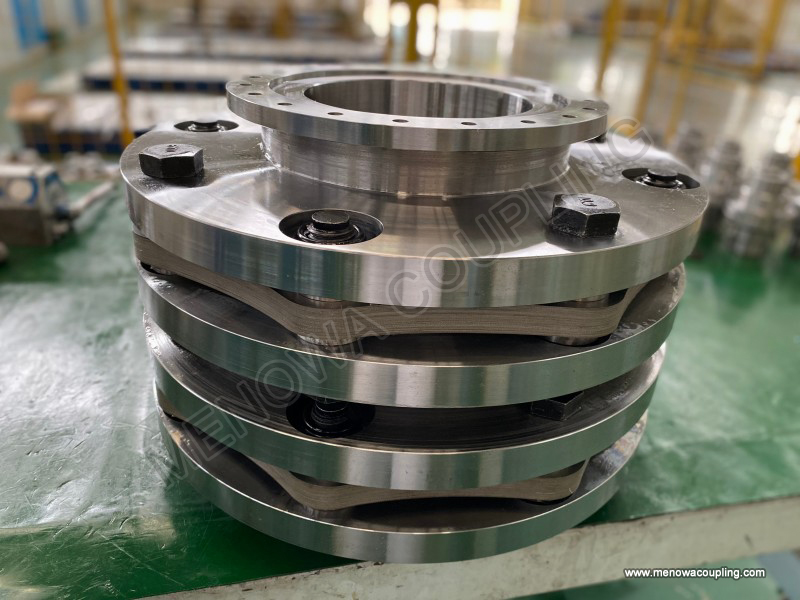
Diaphragm couplings and beam couplings belong to metal flexible couplings, without any non-metal elastic components, relying on the elastic deformation of thin metal diaphragms or integral metal helical beam structures to realize misalignment compensation and torque transmission. This type of flexible coupling has high structural strength, high temperature resistance, corrosion resistance, long service life, no aging and failure of non-metal elastic parts, stable performance under high-speed rotation and harsh working conditions, and can maintain accurate synchronous rotation of the two shafts while compensating for tiny misalignment deviations. Metal flexible couplings are mostly used in high-speed, high-power, high-precision industrial water pump equipment such as multistage centrifugal water pumps and industrial high-pressure water supply pumps, which have high requirements for transmission accuracy and continuous operation stability. In addition, there are special structural flexible couplings such as universal joint couplings for water pumps, which have multi-directional adjustment capabilities, can compensate for large angular deviation and axial displacement between the two shafts, reduce the requirements for equipment installation alignment accuracy, and are suitable for some special installation positions and water pump equipment with large shaft position deviation that is difficult to adjust accurately on site. Different types of water pump couplings have their own unique performance advantages and applicable scope, and the correct selection of coupling type matching the actual working conditions is the primary prerequisite to ensure the stable operation of the water pump unit and give full play to the protective effect of the coupling.
The installation and alignment operation of water pump couplings is the most critical link in the whole coupling application process, and the standardization and accuracy of installation and alignment directly determine the actual service effect and service life of the coupling, as well as the overall operating state of the water pump unit. No matter how excellent the structural performance and material quality of the selected coupling are, if the installation is not standardized and the shaft alignment deviation exceeds the allowable range of the coupling, even the high-quality coupling will quickly wear and fail, and the water pump unit will have vibration, noise and component damage problems in a short time. Before the formal installation of the coupling, relevant preparation work needs to be completed first, including checking the appearance integrity of the two coupling halves and internal elastic parts to ensure no cracks, deformation, aging and damage, cleaning the surface of the motor shaft and pump shaft installation position to remove rust, oil dirt and sundries, checking the fixation firmness of the motor and pump body base to ensure that the foundation is stable without loosening and shaking, and adjusting the initial position of the motor and pump body to make the two shafts basically kept on the same horizontal line. After the preparation work is completed, the two coupling halves are respectively sleeved on the motor driving shaft and the water pump driven shaft, and the initial fixation is carried out through set screws or fastening bolts. At this time, the fastening parts do not need to be fully tightened, and a certain adjustable margin should be reserved for subsequent fine alignment work.
The core of coupling installation is precision alignment operation, which mainly includes angular alignment and parallel alignment of the two coupling halves, and axial gap adjustment between the two halves. Angular alignment is to ensure that the end faces of the two coupling halves are kept parallel, with no inclination angle deviation. During operation, a feeler gauge or dial indicator can be used to measure the gap between the end faces of the coupling halves at multiple uniform positions around the circumference. By adjusting the height of the motor or pump body base, adding or removing base gaskets, the gap values at all measuring positions are kept consistent, eliminating the angular deflection between the two shafts. Parallel alignment is to ensure that the outer circular surfaces of the two coupling halves are kept on the same central axis, with no radial parallel offset. A straight edge or laser alignment tool can be used to fit the outer circle of the two coupling halves, and the horizontal and vertical position of the motor or pump body is finely adjusted according to the measured gap deviation until the outer circle of the two coupling halves is completely fitted without obvious gap deviation, realizing the coincidence of the rotation center of the two shafts. After the completion of angular and parallel alignment, the axial gap between the two coupling halves needs to be adjusted according to the structural characteristics of the coupling, reserving a reasonable telescopic gap to adapt to the axial displacement caused by thermal expansion and contraction during the operation of the equipment, avoiding the direct contact and extrusion friction between the two coupling halves during rotation. After all alignment and gap adjustment work meet the standard requirements, the set screws and connecting bolts of the coupling are tightened symmetrically and evenly in sequence to ensure uniform stress on all fastening parts, preventing deviation reoccurrence caused by one-sided excessive tightening.
It is worth noting that after the initial installation and fastening of the water pump coupling, secondary alignment inspection must be carried out again. The process of tightening the fastening bolts will cause tiny position displacement of the coupling halves and the shafts, resulting in slight changes in the previous alignment state. Secondary inspection and fine adjustment can eliminate the alignment deviation caused by fastening operation and ensure that the final alignment accuracy of the coupling is within the allowable standard range. After the installation and alignment work is fully completed, the water pump unit can be tested and operated. During the test operation period, the operating vibration, noise and rotation flexibility of the coupling should be closely observed. If there is abnormal vibration, obvious noise or inflexible rotation, the machine should be stopped immediately for re-inspection and adjustment, and the formal long-term continuous operation can only be carried out after the test operation is stable and no abnormal problems exist.
Daily maintenance and regular inspection management are important guarantees to extend the service life of water pump couplings and maintain the long-term stable operation of water pump units. Water pump couplings are in a high-speed rotating working state for a long time, bearing alternating torque, vibration impact and environmental erosion, and minor wear and performance aging will gradually occur during operation. Timely daily inspection and regular maintenance can detect potential hidden dangers and early wear problems in advance, and deal with them in a timely manner before minor problems evolve into major faults, avoiding equipment shutdown and maintenance caused by coupling failure, and reducing unnecessary operating losses. In daily routine inspection work, equipment operators only need to conduct simple visual observation and tactile inspection during the daily start-up and shutdown of the unit. Check whether the outer surface of the coupling has obvious cracks, deformation, rust and corrosion, whether the connecting bolts and set screws are loose, falling off and rusting, whether the elastic components inside the flexible coupling have obvious aging deformation, cracking and extrusion damage, and whether there is abnormal friction and collision sound during the rotation of the coupling. For couplings operating in humid, dusty or corrosive working environments, it is also necessary to regularly clean the dust, dirt and corrosive attachments on the coupling surface to prevent long-term environmental corrosion from damaging the coupling structure and affecting its normal use performance.
In addition to daily simple inspection, regular comprehensive maintenance and disassembly inspection should be carried out according to the actual operating intensity and working environment conditions of the water pump unit. For water pump equipment that operates continuously for a long time with high load and frequent start-stop, the cycle of regular maintenance can be appropriately shortened; for water pump equipment with low operating frequency, stable load and good working environment, the maintenance cycle can be appropriately extended. During regular maintenance, the fastening state of all connecting bolts of the coupling should be comprehensively checked, and all loose bolts should be re-tightened symmetrically to ensure uniform fastening force. For flexible couplings equipped with non-metal elastic buffer parts such as rubber and polyurethane, the aging degree, wear degree and deformation state of the elastic parts should be carefully inspected. Once obvious aging hardening, cracking, excessive compression deformation and elastic fatigue are found, the elastic parts should be replaced in a timely manner. The elastic parts are the core vulnerable components of flexible couplings, and regular replacement can avoid vibration damping failure and misalignment compensation failure caused by elastic part failure. For metal rigid couplings and metal flexible couplings, the wear degree of the shaft connection part and the deformation state of the metal structure should be checked regularly, and lubricating grease should be properly applied to the movable connection parts to reduce mechanical friction wear during operation.
At the same time of maintenance, the alignment state of the coupling should be rechecked regularly. Affected by long-term vibration and foundation settlement, the alignment accuracy of the coupling will gradually decrease after long-term operation. Regular re-alignment and fine adjustment can keep the coupling in the best working state all the time, avoiding additional mechanical stress caused by long-term misalignment operation. In the daily operation management of the coupling, it is also necessary to avoid frequent sudden start and sudden stop of the water pump unit as much as possible. Sudden start and stop will generate huge instantaneous impact torque on the coupling, causing excessive instantaneous deformation and fatigue damage to the coupling and internal elastic parts, accelerating the aging and wear speed of the coupling. Maintaining stable start-up and shutdown operation and stable load operation of the water pump is conducive to reducing the operating load of the coupling and extending its overall service cycle.
In the long-term operation process of water pump couplings, various common abnormal faults are prone to occur due to improper selection, non-standard installation, insufficient maintenance and long-term wear and tear. Accurate judgment of fault causes and targeted troubleshooting and repair are crucial to quickly restore the normal operation of water pump units. Abnormal vibration and excessive operating noise of the coupling are the most common faults, which are mainly caused by excessive shaft misalignment after installation or long-term operation, loosening of coupling fastening bolts, serious aging and damage of internal elastic parts of flexible couplings, and unbalanced rotation of the coupling itself. When such faults occur, the operation of the unit should be stopped immediately, the alignment state of the coupling should be rechecked and adjusted, all loose fastening parts should be tightened, and the damaged and aged elastic buffer parts should be replaced in a timely manner. Another common fault is excessive temperature rise of the coupling during operation, which is mostly caused by too small axial gap of the coupling leading to direct friction and extrusion between the coupling halves, excessive installation alignment deviation leading to increased friction stress, and lack of lubrication at the movable connection parts. It is necessary to adjust the axial gap of the coupling, re-align and add appropriate lubricating grease to solve the temperature rise problem.
Coupling bolt loosening and even fracture is also a frequent mechanical fault, mainly due to asymmetric and uneven fastening during installation, long-term vibration impact leading to bolt fatigue loosening, and excessive instantaneous torque overload during equipment operation. After the bolt is loose or broken, it is necessary to replace the damaged bolt with a new high-strength bolt, fasten it symmetrically and evenly, and check whether the water pump unit has frequent overload operation problems to avoid repeated bolt damage due to unstable load. For flexible couplings with elastic parts, the failure and damage of elastic buffer parts is the core vulnerable fault. After the elastic parts fail, the coupling will lose vibration damping and misalignment compensation functions, resulting in increased unit vibration, aggravated component wear, and even direct damage to the coupling main body. Regular inspection and timely replacement of elastic parts are the most effective way to solve this fault. In the process of fault handling, blind disassembly and random assembly should be avoided. All disassembly, replacement and assembly operations must be carried out in accordance with mechanical operation specifications, and alignment inspection must be carried out again after each maintenance and disassembly replacement to ensure that the coupling returns to the normal working state.
The reasonable selection of water pump coupling matching working conditions is the premise to reduce coupling faults and extend service life, and different application scenarios and operating parameters correspond to the most suitable coupling type and specification model. When selecting a water pump coupling, the first factor to consider is the torque load and rotational speed of the water pump unit. High-power and high-speed water pump equipment needs to select couplings with high structural strength, large torque bearing capacity and high rotation stability, such as metal diaphragm flexible couplings and high-strength rigid couplings; medium and small-power conventional water pumps can select economical and practical elastic body flexible couplings with good vibration damping effect. The second factor is the installation and use environment of the water pump. For high-temperature, low-temperature, corrosive and humid harsh environments, non-metal elastic parts that are easy to age and corrode should be avoided, and metal flexible couplings with strong environmental adaptability should be selected; for conventional indoor normal temperature environments, various elastic flexible couplings with good vibration damping effect and low maintenance cost can be selected.
The third factor is the start-stop frequency and operating cycle of the water pump unit. Water pump equipment with frequent start-stop and long-term continuous operation should select couplings with good impact resistance and fatigue resistance and replaceable vulnerable parts; water pumps with intermittent operation and low start-stop frequency can select couplings with relatively simple structure and low cost. In addition, the installation space and alignment adjustment conditions on site should also be considered. For on-site installation positions with limited space and difficult accurate alignment adjustment, flexible couplings with strong misalignment compensation capacity should be selected; for installation scenarios with sufficient space and convenient alignment adjustment, the coupling type can be selected according to power and load requirements. Scientific and reasonable selection not only can meet the power transmission and mechanical protection needs of the water pump unit, but also can effectively reduce the later maintenance frequency and use cost, and maximize the comprehensive use benefit of the coupling.
Throughout the entire water pump fluid transportation system, the water pump coupling, as a small intermediate connecting component, bears an irreplaceable core mechanical function, although it is not a core component directly related to the water pumping capacity of the pump body. From basic power transmission and shaft misalignment compensation to vibration damping and noise reduction and mechanical overload protection, from standardized installation and precision alignment to daily maintenance management and scientific fault troubleshooting, every link is related to the operating efficiency, operation stability and service life of the entire water pump unit. Many equipment management and operation personnel often ignore the importance of water pump couplings in actual work, focusing only on the maintenance and repair of the pump body and motor main equipment, and neglecting the selection optimization, installation standardization and daily maintenance of couplings, resulting in frequent minor faults of the water pump unit, shortened service life of precision components, increased maintenance costs and reduced operating efficiency. Only by fully understanding the working principle and performance characteristics of different types of water pump couplings, strictly implementing standardized installation and precision alignment operations, doing a good job in daily inspection and regular maintenance management, scientifically selecting couplings according to actual working conditions, and accurately handling various common faults, can the coupling always maintain a good working state, give full play to its due mechanical connection and protection functions, ensure that the water pump unit operates efficiently, stably and continuously for a long time, and provide reliable mechanical guarantee for the stable operation of various fluid transportation and water supply and drainage systems.
Post Date: Apr 26, 2026
https://www.menowacoupling.com/coupling-supplier/water-pump-coupling.html
Tags
Related Articles
Advantages Of Flexible Coupling
In the complex and interconnected world of mechanical power transmission, the seamless transfer of torque and rotational motion between rotating shafts stands as a foundational requirement for the steady operation of all types of industrial and commercial machinery. Every mechanical system that relies on motors, engines…
 WeChat
 WhatsApp