Cardan Propshaft
In the entire field of mechanical power transmission, the reasonable transfer of rotational torque and kinetic energy between power generating components and load executing components has always been the core foundation to ensure the normal operation of various mechanical equipment and mobile machinery. Many mechanical systems face unavoidable objective conditions during operation, including structural position deviation caused by equipment installation errors, real-time position displacement generated by mechanical vibration and suspension movement, and angle change between power input ends and output ends under different working strokes. Under these complex and changeable operating conditions, a rigid fixed connection shaft cannot complete stable and continuous power transmission at all, and it is easy to cause component deformation, mechanical vibration, power transmission attenuation and even structural damage to key parts. The cardan propshaft has become an indispensable key connecting component in modern mechanical transmission systems by virtue of its unique structural design and flexible power transmission characteristics. It can effectively adapt to angular deviation, axial displacement and radial position changes between connected shafts, maintain the continuity and stability of torque transmission in various complex working environments, and connect power sources and working mechanisms that cannot be arranged on the same straight line or have dynamic position changes in the working process. From various road transportation vehicles and engineering construction machinery to industrial production transmission equipment and special mobile operation devices, cardan propshafts are widely used, and their operating state and structural performance directly determine the overall operating efficiency, running stability and service life of the entire mechanical system. Understanding the internal structural composition, basic working principle, application adaptation logic, wear and failure causes and scientific maintenance management methods of cardan propshafts is of great practical significance for mechanical operation management personnel, equipment maintenance technicians and mechanical design and optimization practitioners to ensure long-term stable operation of equipment, reduce operating costs and avoid unexpected mechanical failures.
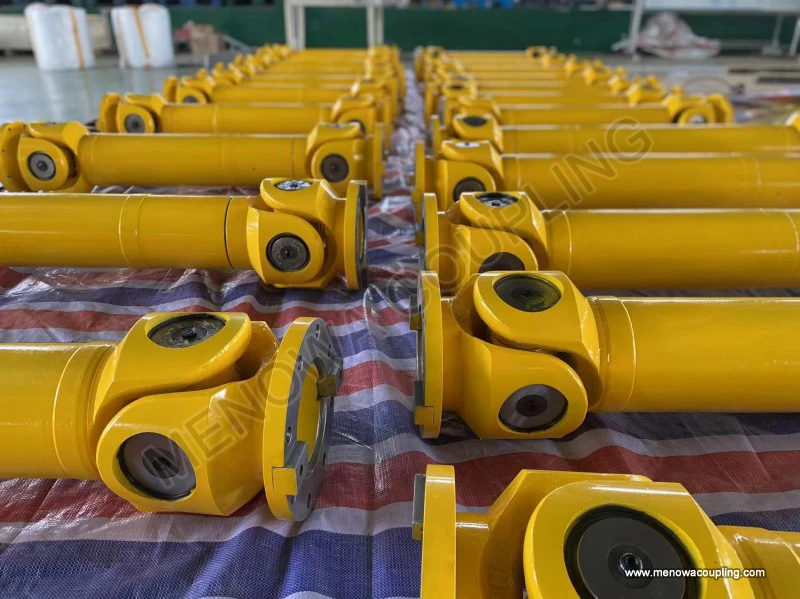
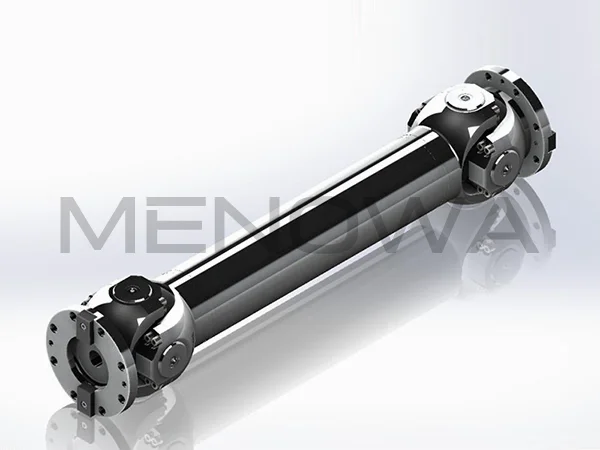
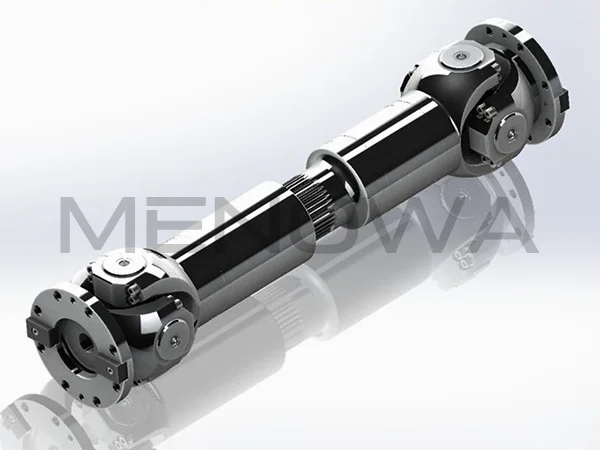
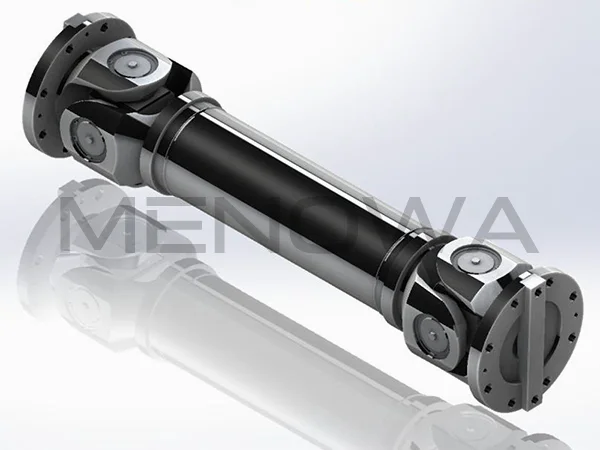
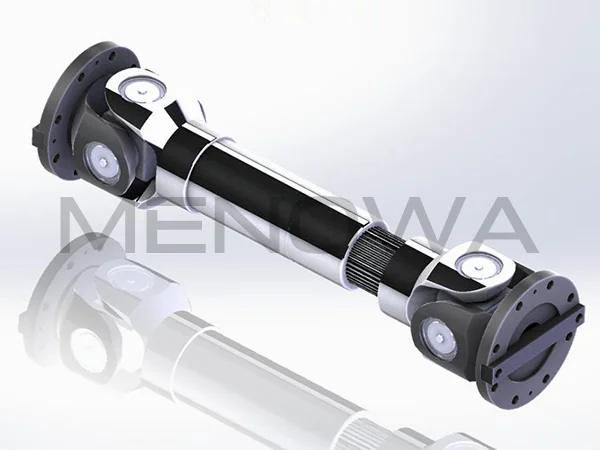
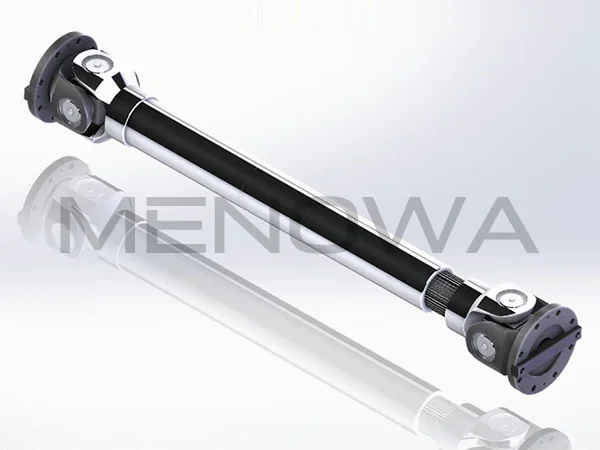
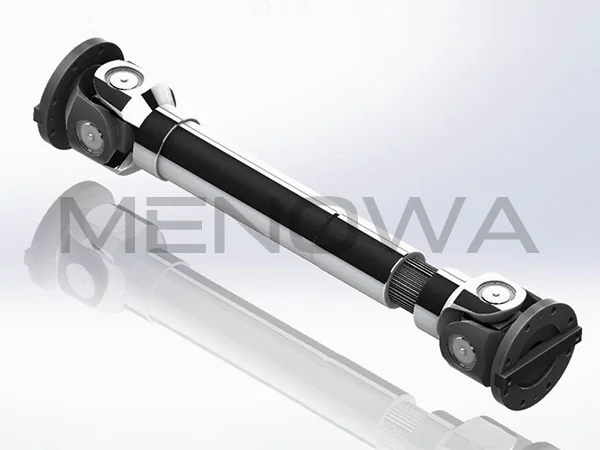
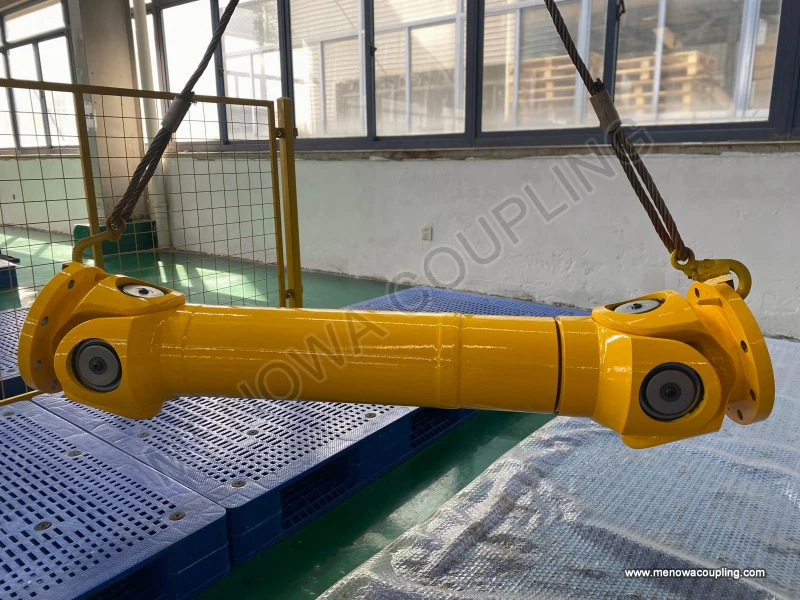
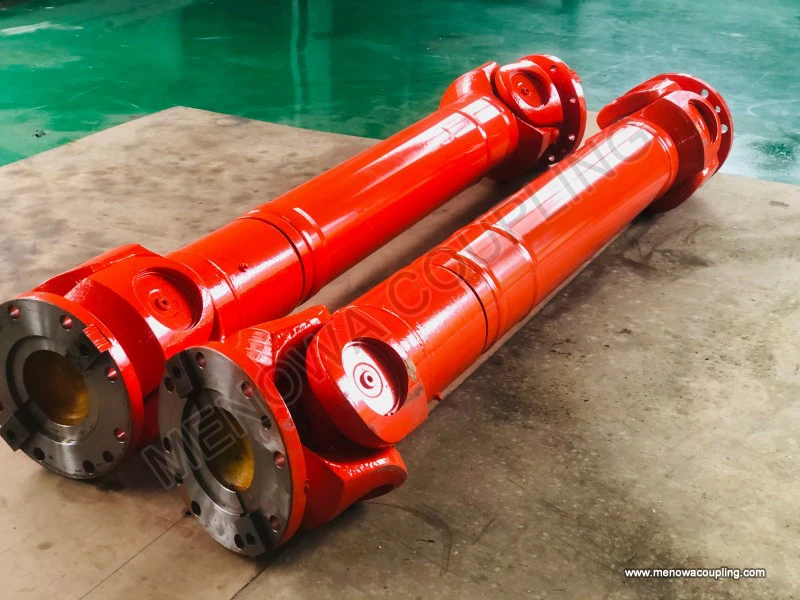
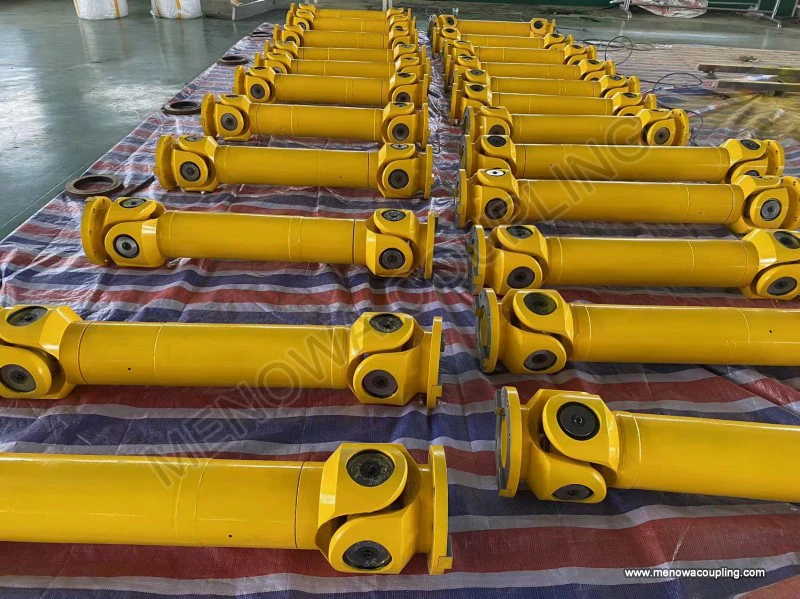
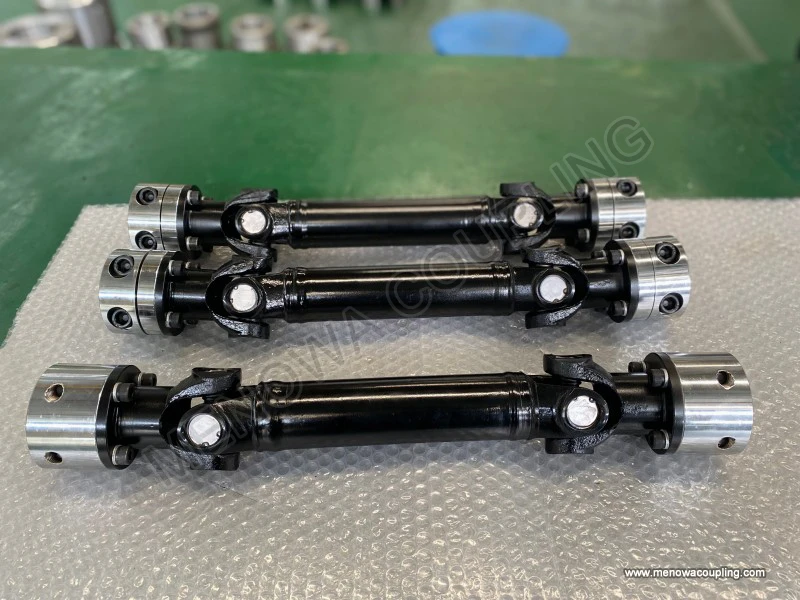
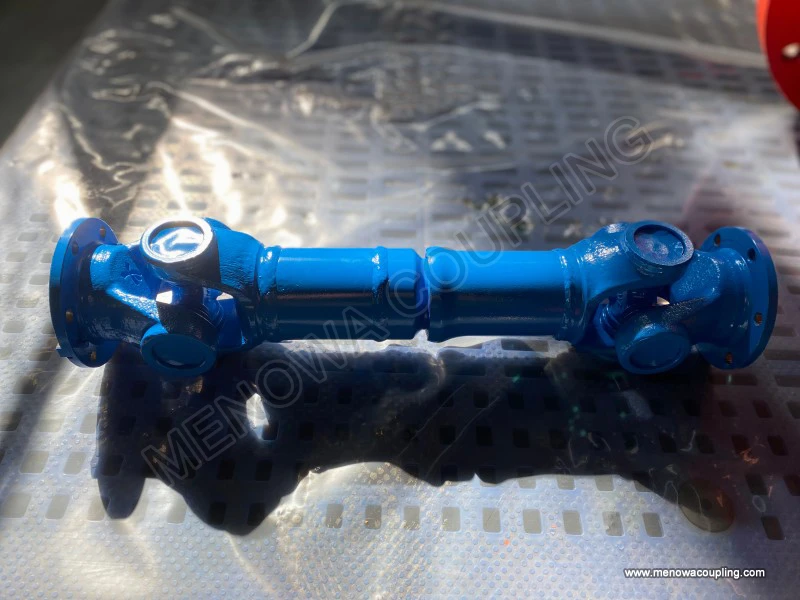
The basic form and core structural prototype of the cardan propshaft have been continuously summarized and optimized in the long-term practice of mechanical application. Different from ordinary rigid transmission shafts that only rely on a single solid shaft tube to transmit torque, the cardan propshaft adopts a combined assembled structural design, and each component has independent functional division and mutual coordination and matching relationship, jointly realizing flexible and efficient power transmission functions under variable position conditions. The main structural components of a standard cardan propshaft include the main shaft tube body, universal joint assemblies arranged at both ends or multiple positions, telescopic spline components, connecting flange structures and rotating bearing accessories. Each part is processed and manufactured according to strict mechanical processing standards and material performance requirements, and the matching precision between parts is strictly controlled in the assembly process to ensure that there is no excessive mechanical clearance or transmission jitter during high-speed rotation and torque transmission. The main shaft tube body is the main bearing and torque transmission carrier of the entire propshaft. It is usually made of high-strength alloy steel materials with good torsional resistance, bending resistance and structural rigidity. The structural design of the shaft tube needs to balance the two key indicators of overall weight and mechanical bearing capacity. Excessively thick shaft tube wall will increase the overall weight of the propshaft, increase the rotational inertia during operation, and cause additional power consumption and mechanical load; while excessively thin shaft tube wall will reduce the torsional resistance and fatigue resistance of the shaft body, and it is easy to produce structural deformation and metal fatigue damage under long-term high-load torque impact and alternating rotation working conditions. Therefore, in the actual design and processing process, the wall thickness, outer diameter and internal structural form of the shaft tube will be optimized and adjusted according to the actual transmission torque demand, operating rotating speed and working environment intensity of different application scenarios, so as to ensure that the shaft tube can maintain stable structural performance under long-term continuous operation and intermittent impact load working conditions.
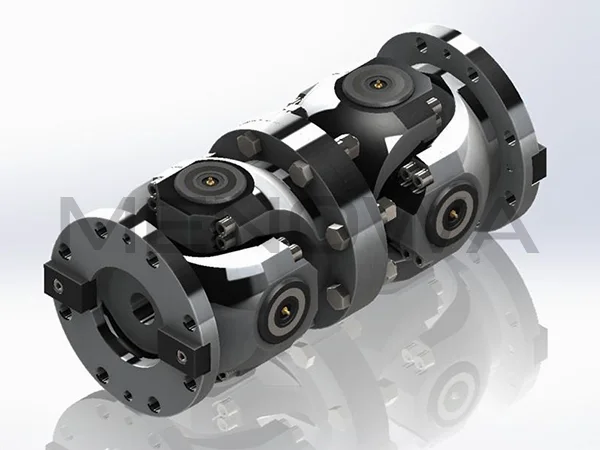
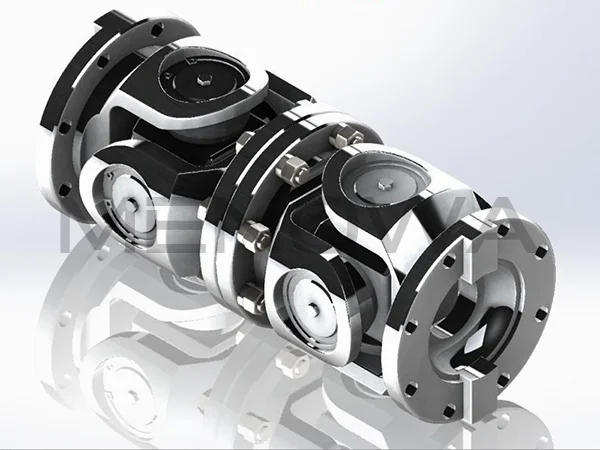
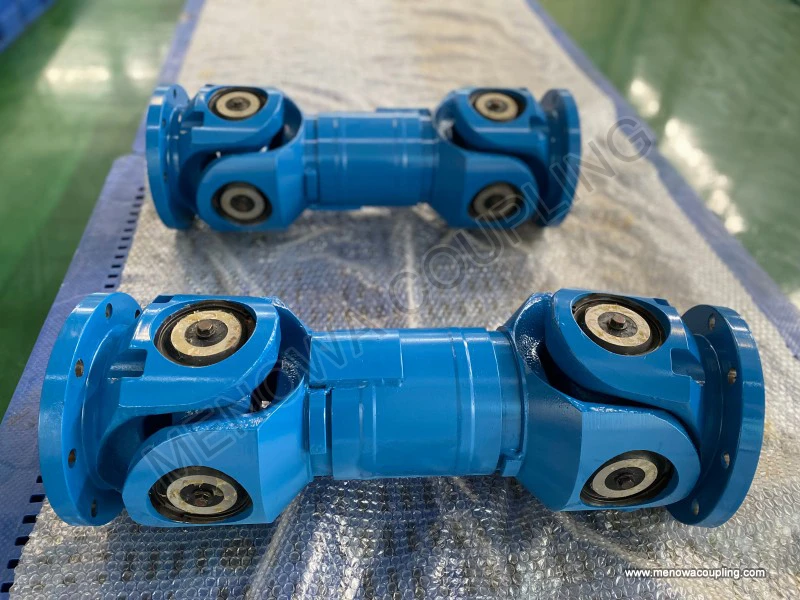
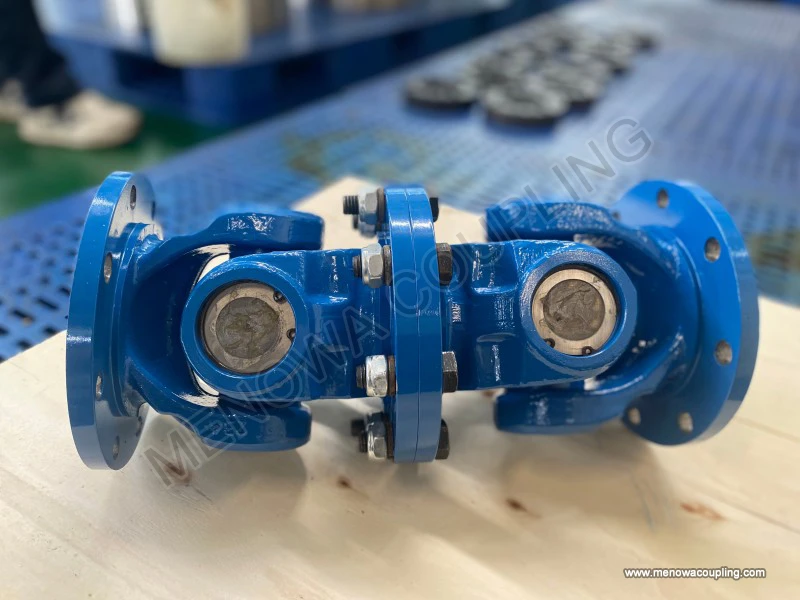
The universal joint assembly is the most core functional component of the cardan propshaft and the key structure to realize angular deviation adaptation and flexible power transmission. The conventional universal joint assembly mainly consists of cross shaft parts, bearing rollers, joint yokes and sealing protection structures. The cross shaft is the central connecting part of the universal joint, which connects the driving side joint yoke and the driven side joint yoke together through the matching of roller bearings. The special structural design of the cross shaft enables the two connected joint yokes to produce a certain range of angular deflection in multiple spatial directions without affecting the normal transmission of rotational torque. The roller bearings installed on each shaft head of the cross shaft can reduce the friction resistance during the relative rotation and deflection movement of the joint yokes, avoid excessive mechanical wear and heat generation caused by dry friction between metal parts, and ensure the flexibility and smoothness of the angle adjustment process during the operation of the propshaft. The external part of the universal joint is equipped with reliable sealing and dust-proof protective structures, which can effectively isolate external dust, sediment, moisture and other corrosive and abrasive impurities from entering the internal matching gap of the universal joint. In the actual working process, especially in the working scenarios of engineering machinery and off-road vehicles, the equipment often operates in harsh environments such as muddy roads, construction sites and dusty workshops. If the protective sealing structure fails, external impurities will enter the bearing and cross shaft matching parts, causing accelerated wear of bearing rollers, increased rotation resistance, and even jamming of the universal joint in serious cases, directly affecting the power transmission effect and causing mechanical failure of the equipment. Therefore, the structural design and material selection of the sealing and dust-proof parts of the universal joint need to have good wear resistance, aging resistance and environmental adaptability, so as to ensure long-term stable protection effect in different temperature and environmental conditions.
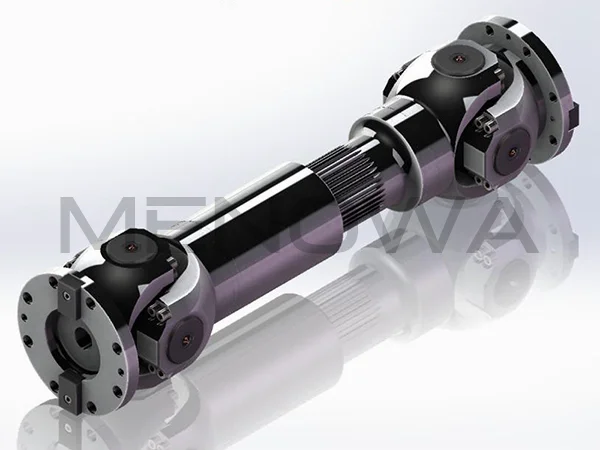
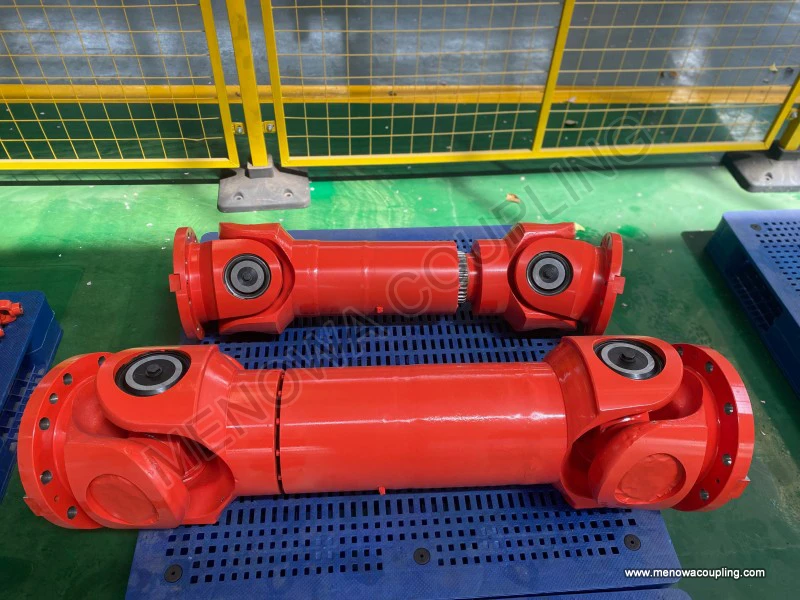
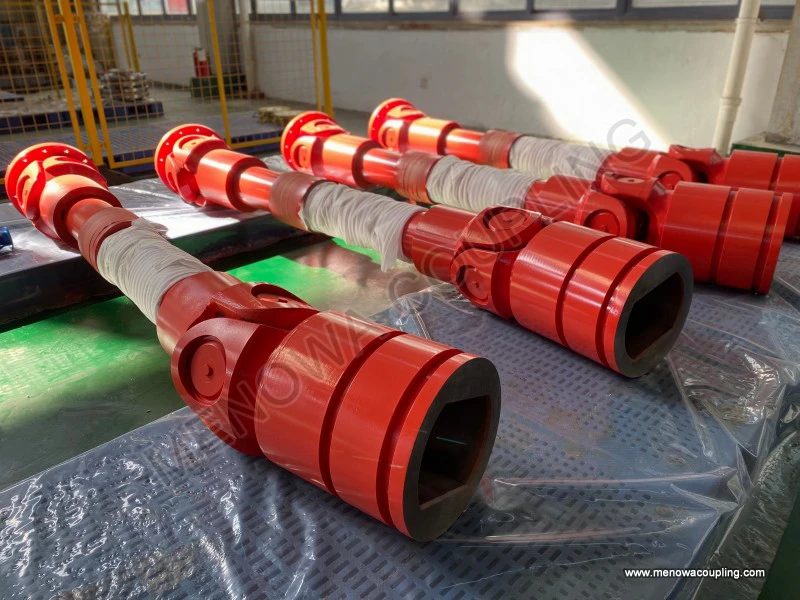
The telescopic spline component is another important functional structure of the cardan propshaft, which is mainly responsible for adapting to the axial distance change between the power input end and the power output end during the operation of mechanical equipment. In many application scenarios, the relative position between the power source and the load mechanism is not fixed. For example, in road vehicles, the suspension system will produce continuous compression and rebound movement with the change of road surface conditions during driving, which will cause the axial distance between the transmission and the drive axle to change dynamically at any time; in some industrial mechanical transmission equipment, the vibration of the equipment during operation and the thermal expansion and contraction of metal components after long-term operation will also lead to small changes in the axial spacing between the connected transmission shafts. If the propshaft adopts a fixed integrated structure without telescopic adjustment function, the axial position change will cause additional extrusion tension on the propshaft and connected components, resulting in structural deformation of the propshaft, damage to connecting parts, and even affect the normal operation of the power transmission system. The telescopic spline component is composed of internal spline shaft and external spline sleeve through precise meshing assembly. The spline structure can not only ensure the synchronous rotation of the two parts and stable transmission of torque, but also realize free telescopic sliding in the axial direction within a certain stroke range. The meshing precision of the spline directly affects the torque transmission efficiency and running stability. Too large meshing clearance will cause impact and jitter during torque transmission, produce abnormal mechanical noise and vibration, and accelerate the wear of spline teeth; too small meshing clearance will lead to inflexible telescopic sliding, unable to effectively adapt to axial distance changes, and easy to cause clamping stagnation and structural stress concentration. The surface of the spline parts is usually treated with special wear-resistant and anti-corrosion treatment to improve the surface hardness and wear resistance, reduce the wear degree during long-term telescopic sliding and rotation meshing, and extend the overall service life of the telescopic assembly.
The connecting flange structure is the connecting and fixing part between the cardan propshaft and the power input and output equipment. It is fixedly connected with the output shaft of the power component and the input shaft of the load component through fastening bolts, realizing the reliable fixation and torque transmission connection between the propshaft and the external equipment. The flange structure needs to have high structural rigidity and connection stability, and the bolt hole position and connection surface flatness are processed with high precision to ensure the coaxiality and connection tightness after assembly. During the operation of the equipment, the flange connection part needs to bear the alternating torque and vibration load generated by rotation. If the flange structural rigidity is insufficient or the assembly fastening tightness is not up to standard, it is easy to cause bolt loosening, flange connection surface displacement, resulting in abnormal vibration of the propshaft during operation, torque transmission loss, and even flange fracture and bolt failure in serious cases, leading to sudden interruption of power transmission. In the actual assembly and installation process, the fastening torque of the flange connecting bolts needs to be controlled within a reasonable range, and regular inspection and fastening maintenance are required to avoid bolt loosening caused by long-term vibration. At the same time, the surface of the flange connection part will be properly treated with anti-rust and anti-corrosion measures to prevent the flange from rusting and corroding in humid and harsh environments, which will affect the connection precision and structural strength.
The working principle of the cardan propshaft is based on the mechanical motion coordination and torque transmission characteristics of the universal joint and telescopic spline structure, realizing stable power transmission under the combined conditions of angular misalignment and axial displacement. When the power source drives the input end of the cardan propshaft to rotate, the torque is first transmitted to the universal joint assembly at the input end through the connecting flange, and the cross shaft structure inside the universal joint transmits the rotational torque to the main shaft tube body through the cooperation of bearings and joint yokes. Then the main shaft tube body transmits the torque to the universal joint assembly at the output end, and finally transmits the torque to the load equipment through the output end connecting flange, driving the load mechanism to operate normally. In this whole transmission process, when there is an angular deviation between the input shaft and the output shaft, the universal joint assembly can rely on the deflection rotation of the cross shaft and joint yokes to automatically adapt to the angle change, ensuring that the rotational motion and torque can be continuously transmitted without being affected by the angular deviation. A single universal joint will produce small periodic angular velocity fluctuation during the transmission process under the condition of large angular deflection. In order to further improve the stability of power transmission and reduce rotation jitter and torque fluctuation, most of the cardan propshafts used in high-speed and high-stability requirement scenarios adopt double universal joint matching design. By arranging the two universal joints at a reasonable phase angle, the angular velocity fluctuation generated by the single universal joint can be mutually offset, so that the angular velocity of the input end and the output end can be kept basically consistent, and the overall operation of the transmission system is more stable and smooth.
The telescopic spline component works synchronously during the power transmission process. When the axial distance between the power input end and the output end changes due to equipment operation and vibration, the internal and external spline structures slide relatively in the axial direction, automatically adjusting the overall effective length of the propshaft, avoiding the generation of additional axial stress inside the propshaft and connected components. This automatic length adjustment function ensures that the propshaft only undertakes torque transmission work in the working process, and will not bear unnecessary extrusion and tension load, which effectively protects the structural safety of the propshaft and related connecting parts. The various structural components of the entire cardan propshaft cooperate with each other and work in coordination. The rigid shaft tube bears the main torque transmission, the universal joint adapts to the angular misalignment, the telescopic spline adapts to the axial displacement, and the connecting flange ensures the stable connection. Multiple functional structures jointly form a complete flexible power transmission system, which can cope with various complex installation and working condition changes, and maintain the efficiency and stability of power transmission all the time.
The application scope of cardan propshaft covers many fields such as transportation, engineering construction, industrial production and special mechanical equipment, and different application scenarios have different performance requirements and working condition adaptation standards for the structural design and material selection of cardan propshaft. In the field of road transportation vehicles, cardan propshafts are widely used in rear-wheel drive and four-wheel drive vehicles. In these vehicles, the engine and transmission are arranged at the front of the vehicle body, while the drive axle and driving wheels are arranged at the rear. Affected by the vehicle body structure and suspension system, the transmission output shaft and the drive axle input shaft cannot be arranged on the same straight line, and the relative position and angle between the two shafts will change constantly during the driving process of the vehicle with the jolt of the road surface and the up and down movement of the suspension. The cardan propshaft perfectly meets the power transmission needs of this kind of vehicle structure. It stably transmits the power generated by the engine from the transmission to the drive axle, adapts to the dynamic angle and distance changes during vehicle driving, and ensures the normal driving and power output of the vehicle. The cardan propshafts used in passenger vehicles pay more attention to light weight, low vibration and low noise performance, so as to improve the riding comfort of the vehicle; while the propshafts used in heavy-duty transport vehicles need to focus on high torsional resistance and fatigue resistance, to meet the power transmission needs of long-term heavy-load driving and complex road conditions.
In the field of engineering construction machinery, such as excavators, loaders, cranes, road rollers and other equipment, the application working environment of cardan propshafts is more harsh, and the working load is more complex and changeable. Engineering machinery often needs to operate on uneven construction sites, with frequent forward and reverse rotation, intermittent impact load and long-term high-load operation. The power transmission system of this kind of equipment has large angular misalignment and axial displacement variation range, and the equipment is often affected by dust, sediment, moisture and other harsh environmental factors during operation. The cardan propshafts used in engineering machinery are designed with enhanced structural strength, thicker shaft tube wall, more durable universal joint bearings and better sealing and dust-proof structure, which can adapt to high-load impact operation and harsh working environment, reduce the failure rate of components, and ensure the continuous and reliable operation of engineering machinery in the construction process. Once the cardan propshaft of engineering machinery fails, it will directly lead to the shutdown of the equipment, affect the construction progress, and even bring potential safety hazards to the construction operation.
In the field of industrial production transmission equipment, cardan propshafts are widely used in various production line transmission systems, mechanical processing equipment, metallurgical transmission equipment and mining machinery and equipment. In industrial production workshops, many mechanical equipment needs to be arranged in a decentralized manner according to the production process layout. The power motor and the working machinery cannot be installed in a coaxial position, and the equipment will generate vibration and thermal expansion and contraction during long-term continuous operation, resulting in small changes in the relative position of the transmission shaft. The cardan propshaft can realize stable power transmission between decentralized arranged equipment, adapt to small position and angle changes during equipment operation, ensure the synchronous operation of each link of the production line, and maintain the continuity and stability of industrial production. The cardan propshafts used in industrial production equipment usually need to have long service life and low maintenance frequency, so as to avoid frequent equipment shutdown and maintenance affecting production efficiency. At the same time, according to the different production process requirements, some industrial propshafts also need to adapt to high-speed continuous rotation or low-speed high-torque transmission working conditions, and the structural design and material selection will be adjusted accordingly.
In addition to the above mainstream application fields, cardan propshafts also have important application value in special mechanical equipment such as agricultural machinery, port handling machinery and military mobile equipment. Agricultural machinery needs to operate in farmland environments such as muddy soil and uneven land, with complex working conditions and large load changes; port handling machinery needs to bear frequent start-stop operations and heavy-load material handling work; military mobile equipment has higher requirements for the reliability and environmental adaptability of propshafts, and needs to adapt to various extreme complex working environments. In all these special fields, the flexible transmission performance and strong environmental adaptability of cardan propshafts can meet the special power transmission needs of different equipment, and provide reliable mechanical connection guarantee for the normal operation of various special equipment.
During the long-term operation of cardan propshaft, affected by working load, operating environment, assembly precision and maintenance conditions, various forms of wear, aging and fatigue damage will inevitably occur inside the components. Understanding the main causes of wear and failure of cardan propshaft is the premise and basis for doing a good job in equipment maintenance and failure prevention. The most common wear part of cardan propshaft is the universal joint assembly. The cross shaft and roller bearings inside the universal joint are in frequent friction and rotating motion during the operation of the propshaft. Long-term friction will cause gradual wear of the bearing rollers and the surface of the cross shaft shaft head, resulting in increased matching clearance between parts. With the continuous increase of wear clearance, the propshaft will produce obvious mechanical jitter and abnormal noise during rotation, the power transmission efficiency will decrease, and the impact load during torque transmission will further accelerate the wear speed, forming a vicious cycle. The main reasons for the accelerated wear of the universal joint include insufficient internal lubricating grease, aging and failure of sealing and dust-proof structure leading to the entry of external impurities, long-term operation under excessive load, and excessive angular deflection of the universal joint beyond the design range.
The telescopic spline component is also a prone wear part of the cardan propshaft. The spline teeth are in frequent meshing rotation and axial telescopic sliding for a long time, and the surface of the spline teeth will produce gradual friction wear. When the wear degree is serious, the meshing clearance of the spline increases, resulting in impact and jitter during torque transmission, abnormal vibration of the propshaft, and even axial displacement and rotation slipping in serious cases, which affects the normal power transmission. The wear of spline parts is mainly related to insufficient surface lubrication, poor surface wear resistance treatment, frequent telescopic movement and long-term high-load torque impact. In addition, the main shaft tube body of the cardan propshaft will produce metal fatigue damage after long-term alternating torque and vibration load. Although the shaft tube body is made of high-strength materials, long-term repeated torsion and vibration will lead to the generation of tiny fatigue cracks inside the metal materials. With the extension of operation time, the cracks will gradually expand, and finally lead to the deformation or fracture of the shaft tube body, resulting in serious mechanical failure.
The connecting flange and fastening bolt parts are prone to loosening and corrosion failure. Long-term mechanical vibration during equipment operation will cause the gradual loosening of flange connecting bolts, resulting in reduced connection tightness, displacement of flange connection surface, abnormal vibration of propshaft and torque transmission loss. In humid and corrosive working environments, the flange and bolt metal surface will produce rust and corrosion, reducing the structural strength and connection stability, and easy to cause bolt fracture and flange damage. In addition, improper installation and debugging in the early stage is also an important cause of propshaft failure. If the coaxiality of the propshaft installation does not meet the standard, the angle deflection of the universal joint is too large, and the fastening torque of the bolts is inconsistent during assembly, it will lead to uneven stress on all parts of the propshaft, increased vibration and wear during operation, and greatly shortened service life.
Scientific and reasonable daily maintenance and regular maintenance management are key measures to prolong the service life of cardan propshaft, reduce failure probability and ensure stable operation of the transmission system. The maintenance work of cardan propshaft should adhere to the combination of daily inspection and regular maintenance, formulate targeted maintenance plans according to different application scenarios and operating intensity, and implement maintenance work in place. Daily inspection work is mainly carried out before and after the operation of the equipment every day. The operators need to visually check the overall appearance of the propshaft to observe whether there is obvious deformation, crack, damage and oil leakage on the surface of the shaft tube, universal joint and telescopic spline parts. Check whether the sealing and dust-proof structure of the universal joint is intact, whether there is falling off and damage, and prevent external impurities from entering the internal components. At the same time, listen to whether there is abnormal mechanical noise and obvious vibration during the operation of the propshaft. If abnormal conditions are found, stop the equipment in time for inspection and troubleshooting, and do not operate the equipment with faults to avoid expanding the failure scope and causing more serious component damage.
Regular maintenance work needs to be carried out according to the operating time and working intensity of the equipment, including regular lubrication maintenance, fastening inspection, wear detection and component replacement maintenance. Lubrication maintenance is one of the most important maintenance links of cardan propshaft. The universal joint bearing and telescopic spline parts need to be filled with special high-quality lubricating grease regularly. The lubricating grease can form a protective oil film on the friction surface of parts, reduce friction resistance and mechanical wear, reduce heat generation during operation, and play a certain role in anti-corrosion and rust prevention. When filling lubricating grease, ensure that the grease is filled uniformly and fully, avoid insufficient lubrication or excessive grease accumulation, and replace the aging and deteriorated lubricating grease regularly to ensure the lubrication effect. Regular fastening inspection is to check the fastening degree of all flange connecting bolts and fixing parts, tighten the loose bolts in time, ensure that the fastening torque meets the assembly requirements, and avoid equipment vibration and power transmission failure caused by bolt loosening.
Regular wear detection work needs to use professional detection tools to check the wear clearance of universal joint bearings, cross shaft and telescopic spline parts, record the wear degree of each part, and evaluate the remaining service life of components. For parts with serious wear and exceeding the allowable clearance range, replace them in time to avoid failure during operation. For the main shaft tube body, regular nondestructive testing can be carried out to check whether there are fatigue cracks inside the shaft tube, and replace the shaft tube body with potential hidden dangers in time. For the sealing and dust-proof aging parts and corroded flange and bolt parts, regular replacement and anti-corrosion maintenance should be done to ensure the protective effect and connection stability of the components. In addition, in the daily use and operation process, avoid long-term overload operation and frequent sudden start and stop of the equipment, reduce the impact load on the cardan propshaft, and reduce the fatigue wear degree of the components. For the equipment that has been parked for a long time, before restarting operation, comprehensive inspection and maintenance of the propshaft should be carried out to avoid component rust and lubrication failure caused by long-term parking, which affecting the normal operation.
With the continuous progress of mechanical design technology, material processing technology and intelligent manufacturing level, the design and manufacturing technology of cardan propshaft is also constantly optimized and upgraded, and the overall performance and application adaptation ability are continuously improved. In the early stage of mechanical development, the structural design of cardan propshaft is relatively simple, the processing precision is low, the material performance is general, the wear resistance and fatigue resistance of the propshaft are poor, the failure rate in the use process is high, and the service life is short, which cannot meet the needs of high-intensity and long-term mechanical operation. With the continuous innovation of metal material smelting technology, high-strength, high-toughness and wear-resistant alloy materials are gradually applied to the production and processing of cardan propshaft. The overall structural strength, torsional resistance and fatigue resistance of the propshaft are significantly improved, and the service life is effectively prolonged. At the same time, the mechanical processing technology is constantly upgraded, and advanced precision processing equipment and heat treatment processes are adopted to process the shaft tube, universal joint, spline and other key parts. The processing precision and matching accuracy of components are greatly improved, the running friction and vibration jitter of the propshaft are reduced, and the power transmission efficiency and running stability are enhanced.
In recent years, with the development of lightweight mechanical design and energy-saving and emission-reduction concept, the structural optimization design of cardan propshaft has become an important development direction. On the premise of ensuring structural strength and load-bearing performance, optimizing the shaft tube structure and component layout, reducing the overall weight of the propshaft, reducing rotational inertia and additional power consumption, which can not only save mechanical energy consumption, but also reduce the overall load of the equipment and improve the operating flexibility of the equipment. At the same time, the sealing protection structure of the propshaft is continuously optimized, adopting new wear-resistant and aging-resistant sealing materials and multi-layer sealing design, which further improves the dust-proof, waterproof and anti-corrosion ability of the propshaft, and adapts to more harsh working environments. In addition, with the development of intelligent equipment monitoring technology, more and more mechanical equipment begins to be equipped with real-time monitoring devices for the operating state of cardan propshaft. Through real-time monitoring of the vibration amplitude, operating temperature and torque transmission state of the propshaft, the operating state of the propshaft can be grasped in real time, potential failure hidden dangers can be found in advance, and predictive maintenance can be realized, which further reduces the failure rate and maintenance cost of the propshaft, and improves the overall operation reliability of the mechanical system.
In the future, with the continuous development of new energy mechanical equipment, intelligent engineering machinery and high-efficiency industrial production lines, the market demand for high-performance, high-reliability and long-life cardan propshaft will continue to grow, and the technical requirements for propshaft design, material selection, processing and manufacturing and maintenance management will be higher and higher. The cardan propshaft, as a basic and core flexible power transmission component, will always play an irreplaceable important role in the field of mechanical transmission. Through continuous structural optimization, material innovation, processing technology upgrading and scientific maintenance management, the comprehensive performance of cardan propshaft will be continuously improved to adapt to the increasingly complex mechanical operation conditions and diverse application needs. For all mechanical related practitioners, attaching importance to the research and management of cardan propshaft, doing a good job in daily use, maintenance and maintenance work, can not only effectively ensure the stable and efficient operation of various mechanical equipment, but also reduce equipment operation and maintenance costs, extend the service life of mechanical equipment, and create more stable and reliable operation benefits for various production and operation activities.
https://www.menowacoupling.com/industrial-coupling/cardan-propshaft.html
 WeChat
 WhatsApp